World

Biden promotes US biotech, cancer fight in new 'Moonshot'

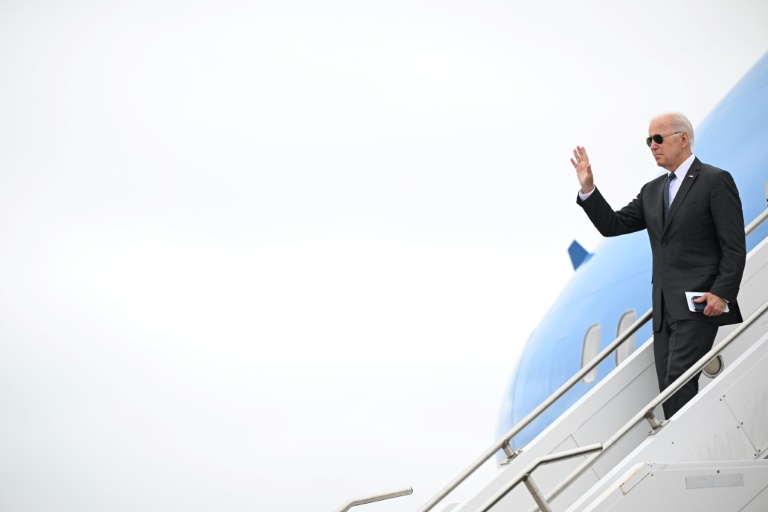
President Joe Biden issued an executive order Monday boosting the US biotech sector as part of his Cancer Moonshot initiative, which invokes the national effort to land a man on the Moon 60 years ago.

The Democrat was in Boston for an address deliberately set to echo John F. Kennedy’s famous 1962 “Moonshot speech” in which he called for landing an American on the lunar surface — something achieved in 1969.

This time, Biden is pushing for government-backed efforts to coordinate and fund a multilayered fight against cancer, with the goal of halving cancer death rates in the next 25 years.

As he set off from Washington, Biden issued an order meant to bolster the trailblazing US biotech sector’s efforts to take on growing commercial rivals in China.

The order brings federal support for “areas that will define US biotechnology leadership and our economic competitiveness in the coming decades,” a senior Biden administration official told reporters.

The official said that while US biotech research leads the world, the industrial applications are increasingly in the hands of other countries.

“Unless we translate biotechnology innovation into economic and societal benefits for all Americans, other countries, including and especially China, are aggressively investing in this sector,” posing a “risk,” the official said.

The White House says the US biotech industry is on the cutting edge of medical advances — recently seen in the rapid development of vaccines, tests and therapeutics to help manage the Covid-19 pandemic — but that the potential scope goes much further.

The official speaking to reporters cited studies suggesting that “before the end of the decade, engineering biology holds the potential to be used in manufacturing industry that accounts for more than one third of global output. That’s equivalent to almost $30 trillion in terms of value.”

Growing areas for biotech industry include new plastics and rubbers, jet fuel, and environmentally friendly fertilizers.

– Personal issue for Biden –

The battle against cancer is personal for Biden: his son Beau died of brain cancer in 2015 when Biden was vice president to Barack Obama.

In his speech at the John F. Kennedy Library and Museum in Boston, Biden will lay out how his administration is seeking to slash cancer rates through a systemic revamp of government funding and support for everything from medical research to improving access to healthcare and better environmental conditions.

The linkage to the Moon program will seek to raise public awareness and support ahead of midterm congressional elections where the Democrats face the possibility of a Republican sweep in Congress, something which would severely complicate the next two years of Biden’s first term.

Caroline Kennedy, the US ambassador to Australia and daughter of the assassinated JFK, told CNN she approved of the parallels drawn by Biden in the struggle to conquer the deadly disease.

“Sixty years after my father challenged Americans to land on the moon, President Biden is welcoming great challenges as new opportunities by setting us on a bold course to end cancer as we know it,” she said.

Biden’s focus on the cancer fight comes as NASA is once again looking to return to the Moon.

Biden promotes US biotech, cancer fight in new 'Moonshot'

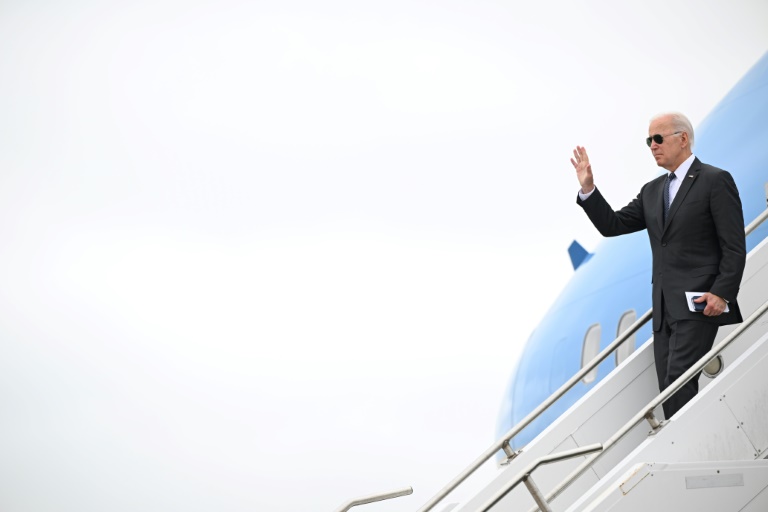
President Joe Biden issued an executive order Monday boosting the US biotech sector as part of his Cancer Moonshot initiative, which invokes the national effort to land a man on the Moon 60 years ago.

The Democrat was in Boston for an address deliberately set to echo John F. Kennedy’s famous 1962 “Moonshot speech” in which he called for landing an American on the lunar surface — something achieved in 1969.

This time, Biden is pushing for government-backed efforts to coordinate and fund a multilayered fight against cancer, with the goal of halving cancer death rates in the next 25 years.

As he set off from Washington, Biden issued an order meant to bolster the trailblazing US biotech sector’s efforts to take on growing commercial rivals in China.

The order brings federal support for “areas that will define US biotechnology leadership and our economic competitiveness in the coming decades,” a senior Biden administration official told reporters.

The official said that while US biotech research leads the world, the industrial applications are increasingly in the hands of other countries.

“Unless we translate biotechnology innovation into economic and societal benefits for all Americans, other countries, including and especially China, are aggressively investing in this sector,” posing a “risk,” the official said.

The White House says the US biotech industry is on the cutting edge of medical advances — recently seen in the rapid development of vaccines, tests and therapeutics to help manage the Covid-19 pandemic — but that the potential scope goes much further.

The official speaking to reporters cited studies suggesting that “before the end of the decade, engineering biology holds the potential to be used in manufacturing industry that accounts for more than one third of global output. That’s equivalent to almost $30 trillion in terms of value.”

Growing areas for biotech industry include new plastics and rubbers, jet fuel, and environmentally friendly fertilizers.

– Personal issue for Biden –

The battle against cancer is personal for Biden: his son Beau died of brain cancer in 2015 when Biden was vice president to Barack Obama.

In his speech at the John F. Kennedy Library and Museum in Boston, Biden will lay out how his administration is seeking to slash cancer rates through a systemic revamp of government funding and support for everything from medical research to improving access to healthcare and better environmental conditions.

The linkage to the Moon program will seek to raise public awareness and support ahead of midterm congressional elections where the Democrats face the possibility of a Republican sweep in Congress, something which would severely complicate the next two years of Biden’s first term.

Caroline Kennedy, the US ambassador to Australia and daughter of the assassinated JFK, told CNN she approved of the parallels drawn by Biden in the struggle to conquer the deadly disease.

“Sixty years after my father challenged Americans to land on the moon, President Biden is welcoming great challenges as new opportunities by setting us on a bold course to end cancer as we know it,” she said.

Biden’s focus on the cancer fight comes as NASA is once again looking to return to the Moon.

King Charles leads queen's coffin procession in Scotland

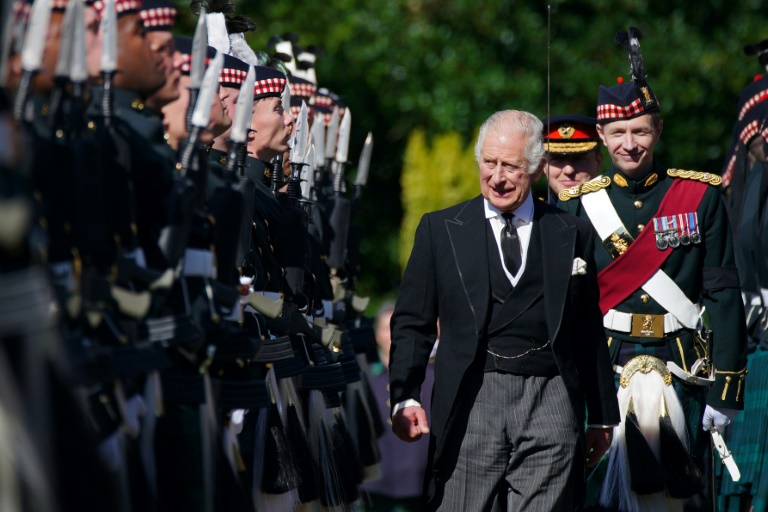
On foot and flanked by his three siblings, King Charles III on Monday led a sombre procession carrying Queen Elizabeth II’s body through hushed Edinburgh streets packed with mourners.

The queen’s oak coffin had on Sunday been driven to the Scottish capital from the Balmoral estate where she died last week aged 96, and held overnight at the royal residence of the Palace of Holyroodhouse.

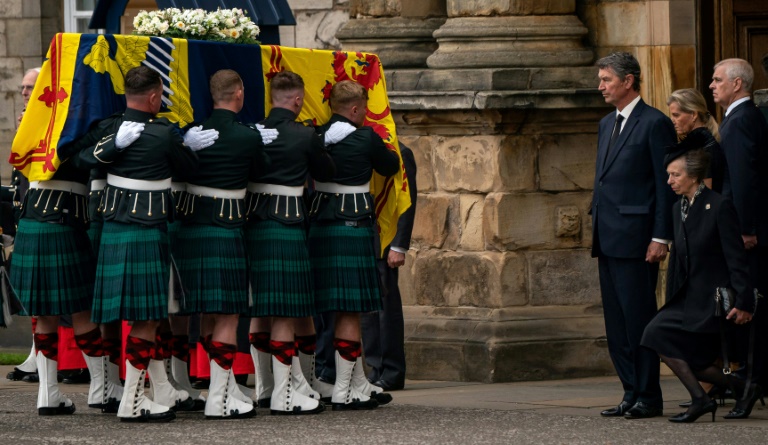
After a regimental band played “God Save The King”, her four children — Charles, Princess Anne, Princes Edward and Andrew — stepped out behind the hearse flanked by kilted soldiers.

Thousands of people lined the route to watch as the procession made its way to the 12th-century St Giles’ Cathedral as cannon fired at one-minute intervals from Edinburgh Castle. 

The royals were joined by Prime Minister Liz Truss and Scottish First Minister Nicola Sturgeon for a service of prayer and reflection for the monarch who reigned for a record-breaking 70 years.

Later, the king and senior royals will stand vigil at the cathedral, with the coffin draped in the Royal Standard of Scotland and topped with a wreath including heather from Balmoral, and the ancient Crown of Scotland.

The public will also be able to pay their respects to the monarch known as “Queen of Scots” until the coffin is flown to London on Tuesday ahead of the state funeral at Westminster Abbey on September 19.

Prince Andrew was not wearing his military uniform, unlike his siblings, after stepping back from public life following a scandal over his links to US sex offender Jeffrey Epstein.

But his presence represented a show of unity, as did the joint appearance at the weekend by Charles’ warring sons William and Harry, as they surveyed flowers and cards left outside Windsor Castle.

Harry, the youngest, who renounced royal duties in 2020 and moved to the United States, had earlier paid tribute to his grandmother, calling her his “guiding compass”.

“You are already sorely missed,” the 37-year-old said in his first statement since her death on Thursday, adding that he and his American wife Meghan “now honour my father in his new role”.

– All our lives –

The huge numbers who have turned out for the queen in Edinburgh are a taster of the crowds expected in London when the late monarch lies in state for four days at Westminster Hall from Wednesday. 

Around 750,000 people are expected, while the first person arrived for the queue on Monday — more than 48 hours before the line opens.

“I just felt I had to do something. I just wanted to come today,” said Steve Crofts, 47, waiting for the royals outside St Giles’.

Many people were up early to queue for wristbands that will allow them to file past the closed coffin, guarded by the king’s bodyguard in Scotland, the Royal Company of Archers.

Sue Stevens, 79, recalled being at school when King George VI died in 1952, resulting in his daughter, Elizabeth, becoming queen aged just 25.

“It’s the end of an era,” Stevens said. “But having listened to him (Charles) over the last few days, I think he’s well prepared for the task.”

Britain has been plunged into mourning by the death of its longest-serving monarch, who has been a fixture of the nation’s life and consciousness.

While the government said organisations need not cancel events, everything from strikes to football matches have been postponed in honour of the only monarch most British people have ever known.

Flowers, cards and candles have been left at royal residences across the country, where crowds have massed to pay tribute to the late queen and hail their new king. 

Many were left by tourists and well-wishers from abroad.

“We’ve known her face all of our lives,” said Aurelie Mortet, a 46-year-old Frenchwoman at London’s Columbia Road flower market, which has seen a huge rise in demand.

– Weight of history –

The queen’s funeral is also expected to draw unprecedented numbers to London, as well as some 500 world leaders and heads of state, including US President Joe Biden.

Millions more are expected to watch it live on television.

Decades in the planning, the aftermath of the queen’s death has been full of pomp and ceremony.

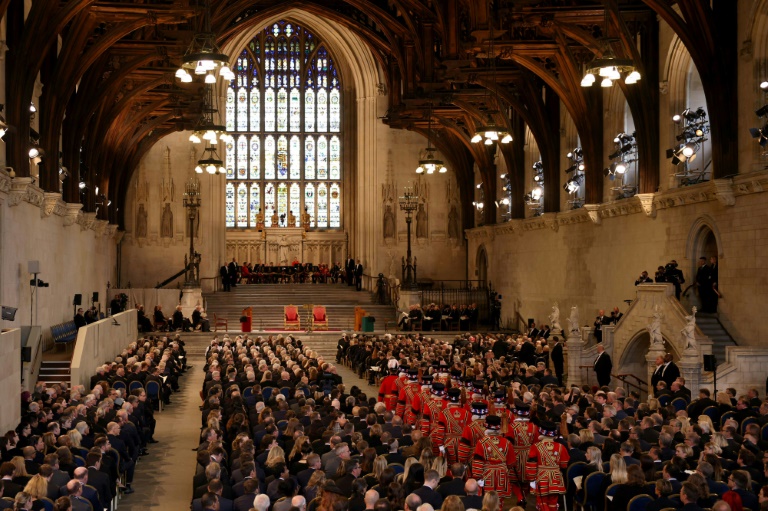
Earlier Charles and his Queen Consort, Camilla, sat on gold thrones in London’s 900-year-old Westminster Hall to receive the formal condolences of the UK parliament.

“I cannot help but feel the weight of history which surrounds us,” the king replied to the assembled lords and MPs, vowing to follow the “example of selfless duty” set by his “darling late mother”.

The monarch is a largely ceremonial figurehead in Britain but retains constitutional powers, from officially appointing governments to approving legislation and meeting weekly with prime ministers.

“Parliament is the living and breathing instrument of our democracy,” Charles said.

As he takes on what he has called the “heavy responsibilities” of kingship, he will also make his first visits as monarch to Northern Ireland and Wales this week in a show of national unity.

While the emotional scenes in Scotland showed the deep affection for the queen there, her death has also reignited a debate over Scottish independence from the United Kingdom.

First Minister Nicola Sturgeon — who was to have her first audience with the new king on Monday — said it was “sad and poignant” to see the coffin leaving Balmoral. 

But the pro-independence leader has been pushing nonetheless for a new referendum on the divisive issue.

“I’m not for independence. We’ve been together for hundreds of years. Why stop now?” said mourner Anne Johnston, 68, from Edinburgh.

She added, however: “No offence to Charles but I don’t think he’ll ever live up to the queen.”

– Queen of the world –

Charles has seen his popularity recover since the death of his former wife Diana in a 1997 car crash. But he has been embroiled in several scandals in recent years.

He takes the throne at a moment of deep anxiety in Britain over the spiralling cost of living and international instability caused by the war in Ukraine.

With republican movements gaining ground from Australia to the Bahamas, the new king also faces a challenge keeping the Commonwealth realms in the royal fold.

Charles hosted his first reception on Sunday for representatives of the 14 former colonies over which he reigns in addition to Britain — at least for now. 

In Barbados, which cut ties with the British Crown last year after nearly four centuries, there were mixed reactions at her death.

“It’s tragic in a sense because we have lost a page in history,” said retired Bridgetown resident Alfred McClean.

Meanwhile in Hong Kong, a British colony for more than 150 years until it was returned to China in 1997, crowds gathered in sweltering heat to pay their respects.

Emily Ng, 30, clutched a portrait she painted of the queen, describing how her grandmother used to tell her stories about the royals.

“I hence felt very connected to the royal family and even after the handover I would like to maintain that connection,” she told AFP.

burs-ar/phz/lcm

Sweden's far right makes strong gains in cliffhanger election

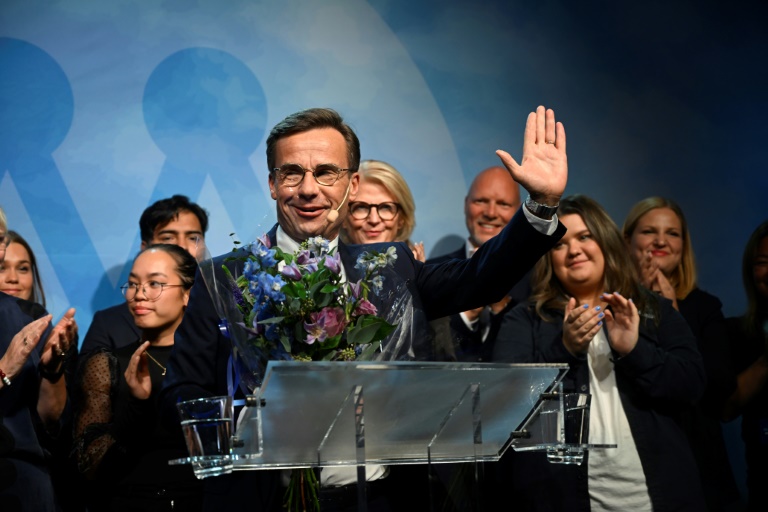
Sweden on Monday began a days-long wait for the final results of a too-close-to-call general election, with an unprecedented right-wing and far-right bloc in position to wrest power from Prime Minister Magdalena Andersson’s Social Democrats.

The Scandinavian country has seen mounting political instability in recent years as the gradual rise of the far right has upset the traditional balance of power in parliament.

Sweden again found itself in a delicate parliamentary situation after Sunday’s legislative election, with the right seen holding a razor-thin lead over Andersson’s outgoing left bloc.

“The close result in parliament suggests Sweden is heading for yet another messy mandate”, newspaper of reference Dagens Nyheter wrote on Monday.

Election authorities said a final result would be ready at the earliest on Wednesday, once the last ballots from abroad and from advance voting had been counted.

Editorialist Anders Lindberg of daily Aftonbladet told AFP it appeared “impossible for the left to win because the votes from abroad are… usually in favour of the right”.

With 95 percent of votes counted on Monday, the right led by conservative Moderates leader Ulf Kristersson was credited with an absolute majority of 175 of 349 seats in parliament. 

Andersson’s left bloc trailed with 174.

If confirmed, the Social Democrats would be out after eight years in power.

Kristersson, who vowed during the campaign to crack down on law and order amid soaring crime rates, said he was “ready to build a new and strong government”.

– Far-right gains –

The election’s big winner was, however, the anti-immigration, nationalist Sweden Democrats party, led by Jimmie Akesson.

It was credited with 20.6 percent of votes, making it the biggest party on the right and the second biggest in the country behind the Social Democrats.

“It’s looking pretty damn good now”, 43-year-old Akesson told cheering supporters late Sunday.

The right bloc — made up of the Sweden Democrats, Moderates, Christian Democrats and Liberals — were seen winning 49.7 percent.

The left, comprised of the Social Democrats, the Left, the Greens and the Centre parties, were meanwhile credited with 48.9 percent.

Prime Minister Andersson, 55, has refused to throw in the towel just yet. 

“We’re not going to have a final result tonight,” she told supporters late Sunday as her party was seen posting a strong result of around 30 percent of votes.

She called on Swedes to “have patience” and “let democracy run its course”.

The election marked a major shift in Swedish politics. 

For the first time, the Moderates, Christian Democrats and Liberals tied up with the far right, long treated as “pariahs” by other political parties.

Kristersson orchestrated the change, initiating exploratory talks in 2019 with the Sweden Democrats and then deepening their cooperation.

The Christian Democrats, and to a lesser extent the Liberals, later followed suit.

“Our goal is to sit in government. Our goal is a majority government,” Akesson said late Sunday.

– Tensions on the right –

Even before the final results were in, the right began their first meetings on Monday, with both Akesson and Liberal leader Johan Pehrson seen arriving at the Moderates offices for separate talks.

The right-wing bloc is, however, rife with internal divisions, and Kristersson could struggle to form a stable coalition government.

The Liberals have opposed the idea of the Sweden Democrats being given cabinet posts — a position they reiterated on Monday — and would prefer for them to remain in the background providing informal support in parliament.

Akesson has insisted his party be in government or he will present a litany of demands in exchange for his support.

That could be too much for the Liberals to stomach.

“It would suffice for one of the Liberal party’s far-right-critical MPs to dissent for Ulf Kristersson’s government to find itself in serious trouble,” Dagens Nyheter wrote on Monday.

Political analyst Ulf Bjereld agreed.

A Kristersson-led government “will have to deal with very strong internal tensions and some Liberals will demand that they start to cooperate with the Social Democrats instead”, he told AFP.

The Sweden Democrats “have their roots in neo-Nazism and on the other side the Liberals stand for everything the Sweden Democrats don’t”, he added.

Analysts stressed Sweden was in need of political stability amid a busy docket in the coming months.

The country faces a looming economic crisis, is in the midst of a historic and delicate NATO application process and is due to take over the EU presidency in 2023.

Queen's death ignites debate over Africa's colonial past

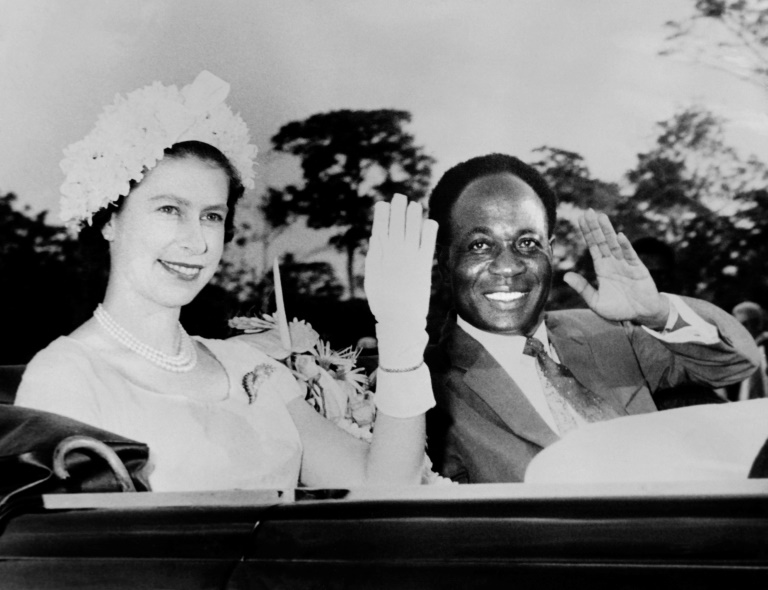
From Kenya and Nigeria to South Africa and Uganda, Queen Elizabeth’s death met with an outpouring of official condolences, mourning and memories of her frequent visits to Africa during her seven decades on the throne. 

But the British monarch’s passing also revived a sensitive debate over Africa’s colonial past.

Her death came at a time when European countries are under pressure to reckon with their colonial histories, atoning for past crimes and returning stolen African artefacts held for years in museums from London and Paris.

Nigerian President Muhammadu Buhari and Kenyan President Uhuru Kenyatta were among those expressing condolences for the loss of an “icon.”

But many Africans reflected more on the tragedies from colonial times, including events that occurred in the first decade of her rule.

Kenya gained independence from Britain in 1963, after an eight-year-long rebellion that left at least 10,000 people dead.

Britain agreed in 2013 to compensate over 5,000 Kenyans who had suffered abuse during the Mau Mau revolt, in a deal worth nearly 20 million pounds ($23 million). 

“The Queen leaves a mixed legacy of the brutal suppression of Kenyans in their own country and mutually beneficial relations,” The Daily Nation, Kenya’s biggest newspaper, wrote in a weekend editorial.

Elizabeth was visiting Kenya in 1952 when her father died and she became queen.

“What followed was a bloody chapter in Kenya’s history, with atrocities committed against a people whose only sin was to demand independence.”

“While the ties with Britain have been useful, it is difficult to forget those atrocities.”

– Treasures, Biafra war –

As part of recent restorations for the past, Nigeria and neighbouring Benin have seen the return from Britain and France of the first of thousands of artefacts plundered during colonial times.

Nigeria’s so-called Benin Bronzes — 16th to 18th century metal plaques and sculptures — were looted from the palace of the ancient Benin Kingdom and ended up in museums across the US and Europe.

Nigeria’s Buhari said the country’s history “will never be complete without a chapter on Queen Elizabeth II”.

While some praised her role leading up to Nigeria’s independence, others pointed out she was head of state when Britain supported the Nigerian army during the country’s civil war.

More than one million people died between 1967-1970, mostly from starvation and disease, during the conflict after ethnic Igbo officers declared independence in the southeast.

“If anyone expects me to express anything but disdain for the monarch who supervised a government sponsored genocide…you can keep wishing upon a star,” Nigerian-born US-based professor Uju Anya said, in a Twitter reference to the Biafra war that triggered fierce debate on social media.

Similar mixed reactions were expressed in South Africa, where President Cyril Ramaphosa called her an “extraordinary” figure.

But the opposition Economic Freedom Fighters or EFF movement was more dismissive, recalling decades of apartheid, in which Britain, the former coloniser, was often passive.

“We do not mourn the death of Elizabeth, because to us her death is a reminder of a very tragic period in this country and Africa’s history,” EFF said in a statement.

– Ugandan legacy –

In Uganda, some went back further, recalling the Bunyoro Kingdom’s ruler Omukama Kabalega, who resisted British rule in the late 1890s. 

He was deposed and exiled to the Seychelles and the kingdom was then absorbed into the British empire.

“As much as the queen was able to maintain cohesion of the former British colonies, she had not addressed adequately the injustices meted out on some of the states including Uganda,” said former intelligence director and now political analyst, Charles Rwomushana.

Last month, the Uganda Tourism Association called for a committee to lead the return of Ugandan artefacts from British and other foreign museums, including some 300 from Bunyoro, according to the parliament.

Charles Onyango-Obbo, writer and Uganda government critic, said on Twitter many long-ruling African leaders used Queen Elizabeth’s 70-year reign to justify their own decades in power. 

“Now that she has passed, they are scrambling to learn how to make their case convincingly in the past tense.” 

Mukoma Wa Ngugi, the son of Kenya’s world renowned writer Ngugi wa Thiong’o and who is himself a novelist as well as an associate professor of English at Cornell University, also questioned the Queen’s legacy in Africa.

“If the queen had apologised for slavery, colonialism and neocolonialism and urged the crown to offer reparations for the millions of lives taken in her/their names, then perhaps I would do the human thing and feel bad,” he wrote on Twitter. 

“As a Kenyan, I feel nothing. This theater is absurd.”

Stock markets rally, as euro briefly surges

Stock markets rallied Monday, building on pre-weekend momentum as investors priced in the expectation of further interest rate hikes aimed at taming decades-high inflation.

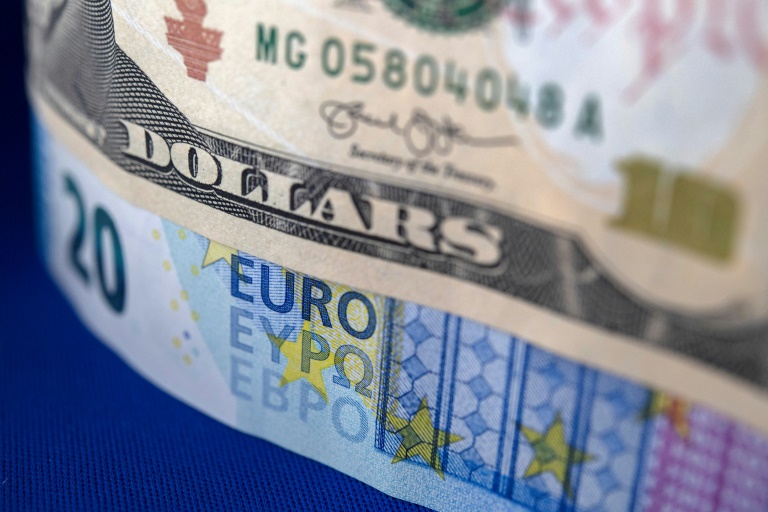
The euro surged against main rivals, a day after German central bank chief Joachim Nagel signalled that the European Central Bank (ECB) would probably continue raising its key rate.

The European single currency rocketed more than 1.4 percent against the dollar and 1.6 percent versus the yen before trimming gains around midday.

The ECB raised the key rate by a historic 75 basis points last week, and markets expect a similar-sized hike at an October meeting.

Paris and Frankfurt stock markets rose by more than two percent in mid-afternoon trading, with London not far behind as data showed the British economy rebounded slightly in July.

Tokyo closed with a gain of more than one percent thanks to a weaker yen. Markets in Hong Kong, mainland China and South Korea were closed for a public holiday.

Investors worldwide are awaiting key US inflation data for August, due Tuesday, with the consumer price index (CPI) expected to ease slightly to eight percent — still well above the Fed’s two-percent target.

Traders expect the Fed to impose another large rate hike next week, after two 75-basis-point increases already.

Clifford Bennett, chief economist at ACY Securities, said he expected stocks to “continue to drift higher” ahead of Tuesday’s CPI data.

The inflation print “may well see further improvement as petrol prices have continued to pull back”, he said. 

Oil prices gained more than one percent Monday but remain pressured by the possibility of global demand weakening as growth slows and China’s harsh zero-Covid policy continues to sap economic activity.

– ‘Soft landing’ hopes –

US Treasury Secretary Janet Yellen on Sunday said she was hopeful the US economy could avoid a recession, but that the Fed would need to skilfully manage interest rates and also rely on “some good luck to achieve what we sometimes call a soft landing”.

“My hope is we will achieve a soft landing, but Americans know it’s essential to bring inflation down and, over the longer run, we can’t have a strong labour market without inflation under control,” she told CNN.

Yellen said that while the US economy’s growth rate was slowing, the labour market remained “exceptionally strong”, with almost two openings for every jobseeker.

The release on Tuesday of the consumer price index will “provide some telling inflation data that will influence the market’s perspective on the Fed’s monetary policy approach”, analyst Patrick O’Hare of Briefing.com said.

– Key figures at around 1355 GMT –

London – FTSE 100: UP 1.5 percent at 7,462.13  points

Frankfurt – DAX: UP 2.2 percent at 13,368.57 

Paris – CAC 40: UP 2.1 percent at 6,341.10 

EURO STOXX 50: UP 1.96 percent at 3,640.18

New York – Dow: UP 0.7 percent at 32,387.10 

Tokyo – Nikkei 225: UP 1.2 percent at 28,542.11 (close) 

Hong Kong – Hang Seng Index: closed for public holiday

Shanghai – Composite: closed for public holiday

Euro/dollar: UP at $1.0116 from $1.0046 

Pound/dollar: UP at $1.1679 from $1.1587  

Euro/pound: DOWN at 86.60 pence from 86.84 pence

Dollar/yen: UP at 142.66 yen from 142.56 yen 

Brent North Sea crude: UP 1.5 percent at $94.20 per barrel

West Texas Intermediate: UP 1.4 percent at $88.02 per barrel

Indonesia, Norway ink deal to reward rainforest protection

Indonesia and Norway signed a deal Monday to reward deforestation reduction months after the collapse of a similar $1-billion agreement that was part of a UN-backed global initiative criticised for its ineffectiveness.

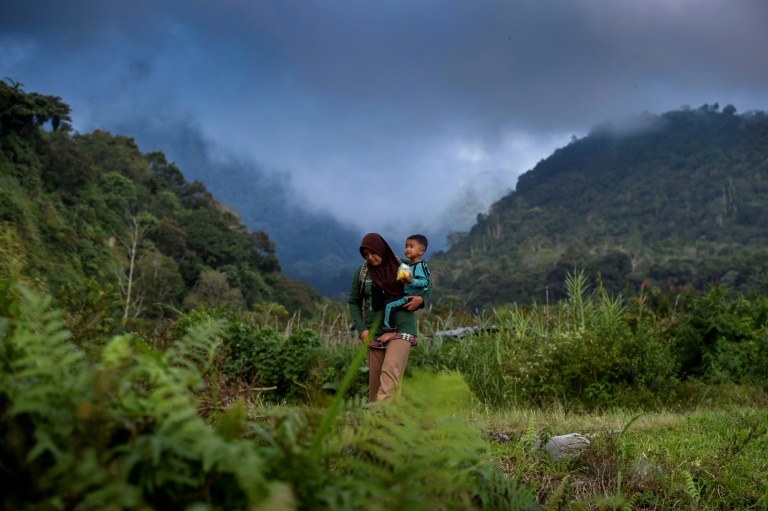
Protecting trees is key to meeting climate goals but environmentalists blame Indonesia — home to the world’s third-largest rainforest area — for a deforestation free-for-all by allowing companies to clear land for plantations.

Jakarta has made some progress by reducing the rate of primary forest loss for five straight years up to 2021, according to monitor Global Forest Watch, and in 2020 claimed its lowest deforestation rate for two decades. 

Oslo will now reward Indonesia with “results-based contributions” for cutting deforestation and emissions, Norway’s ministry of climate and environment said in a statement.

“Today we are proud to embark on a new partnership to support the Indonesian government’s impressive results and ambitious plans,” said Norwegian Minister for Climate and Environment Espen Barth Eide in a statement. 

But environmental activists say the deal will not change the situation in Indonesia with vast swathes of rainforest still being destroyed to make way for palm and timber plantations that threaten endangered species and push indigenous people off their lands.

“The agreement does not solve existing problems, including recognition of indigenous people,” Greenpeace Indonesia forest campaigner Iqbal Damanik told AFP.

“The point made is ‘successfully reducing deforestation’, not zero deforestation. It means there is still deforestation in Indonesia going forward.”

The countries had signed a landmark deforestation deal in 2010 with Norway offering Indonesia $1 billion to slash its emissions. 

But Jakarta cancelled it last year saying it didn’t see enough of the money, while research showed it only made a small dent in Indonesia’s carbon-cutting targets. 

Critics of the United Nations-backed REDD+ mechanism under which the deal was struck said it was ineffective and trampled on indigenous communities’ rights.

– Mangrove diplomacy –

Under the new agreement Norway will send Jakarta an initial $56 million payment for its deforestation reduction in the year 2016 to 2017, the Norwegian minister said.

It will then pay Indonesia for years of reductions that followed after verifying the drops in deforestation, meaning it could be worth hundreds of millions of dollars to Jakarta.

Norway’s International Climate and Forest Initiative will pay the instalments directly to Indonesia’s Environment Fund.

Norway has not specified the total amount it has allotted for the partnership.

Indonesia has an ambitious goal to reach a net carbon sink in its forestry sector — storing more carbon than it releases into the atmosphere — by 2030 but its vast forests are still shrinking. 

The country’s tree cover has decreased by 18 percent since 2000, a loss that accounts for 6.5 percent of the global total since then, according to Global Forest Watch.

A day before the deal was signed at a signing ceremony in Jakarta, Eide and his counterpart Siti Nurbaya Bakar planted mangroves in East Kalimantan near Indonesia’s planned new capital.

Siti said Eide’s arrival and participation were a symbol of the cooperation between Indonesia and Norway on the climate and environment, according to local media.

New capital Nusantara is scheduled to open its doors in 2024 as the nation plans a move away from slowly sinking, traffic-clogged Jakarta.

But environmentalists have warned it could accelerate the destruction of tropical jungles home to long-nosed monkeys and orangutans.

Overnight queue, strict rules for Queen Elizabeth II's lying in state

Britons have a reputation for patiently waiting in line but the queue for Queen Elizabeth II’s lying in state is likely to be unprecedented even by their standards.

A huge queue is expected to stretch through the night as people pay their respects to the queen in parliament’s Westminster Hall in London this week, the British government warned.

Mourners will also face airport-style security and obey strict rules, including an edict to wear appropriate clothing and a ban on filming, taking photographs or using mobile phones.

They will be allowed to file past the late monarch’s coffin non-stop from 5:00 pm (1600 GMT) on Wednesday night until 6:30 am on the morning of her state funeral on September 19.

“Please note that the queue is expected to be very long. You will need to stand for many hours, possibly overnight, with very little opportunity to sit down, as the queue will keep moving,” said the government guidelines issued on Monday.

“Please consider this before you decide to attend or bring children with you.”

Around 750,000 people are expected to descend on the queen’s lying in state. The queue could stretch for five miles (eight kilometres) and the waiting time last for up to 20 hours, The Times newspaper said. 

The numbers are expected to be “far more” than the 200,000 people who filed past the coffin of the queen’s mother when she died in 2002, Prime Minister Liz Truss’s spokesman said on Monday.

He declined to give the overall anticipated.

Like her mother’s, Queen Elizabeth II’s closed coffin will rest on a raised platform known as a catafalque, and people will file past on both sides to pay their respects.

– No barbecues –

But it is likely to prove something of an endurance test to get that far.

The government advised people to wear “suitable clothing” for the weather conditions, including either warm clothing or an umbrella if it is wet, or sunscreen if it is hot.

They should also bring food and drinks to consume in the queue as there will only be limited places to buy refreshments in line. 

They are also advised to bring a portable mobile phone charger.

In case people need to go to the toilet, they will be given wristbands allowing them to leave the queue for short periods, Downing Street said.

Fearing that people may try to camp out while in line, the government has also banned tents or gazebos and “barbecues or fires”.

Details for the route of the queue will be released on Tuesday.

When they finally reach the Palace of Westminster, mourners must pass an “airport-style security search point”. 

They will be given a wristband allowing them to enter the building, which they must take off when they leave.

Inside, they face a forbiddingly long list of rules. 

People should “dress appropriately” for the occasion and “respect the dignity of this event”, the guidelines said, adding: “Do not wear clothes with political or offensive slogans.”

Only small bags only are allowed. Large items must be left in a luggage-drop area but there is no guarantee there will be space. 

Flowers, soft toys and other tributes are banned from inside the building. The government said they should instead be left in a special area in Green Park, near Buckingham Palace.

Anyone hoping to record for posterity their moment with the body of Britain’s longest-serving monarch will also be disappointed.

“You must not film, photograph or use mobile phones or other handheld devices” inside the hall, the guidelines said.

'Not something you can just make in a day': the queen's coffin

Queen Elizabeth II’s coffin, which will lie in state in London for four days later this week before her funeral next Monday, was reportedly crafted more than three decades ago.

The casket will rest closed on a raised platform known as a catafalque inside Westminster Hall — the oldest part of the centuries-old parliamentary estate — from Wednesday, after lying at rest in Edinburgh for a day from later Monday.

Here are more details about the coffin of Britain’s longest-serving monarch:

– English oak and lead –

The queen’s coffin was made at least 32 years ago of English oak, which is increasingly rare these days with most wooden caskets now made from American oak, The Times reported Monday. 

It is lined with lead, a royal tradition to help preserve the corpse for longer after its burial in a crypt — on this occasion inside the King George VI Memorial Chapel at St George’s Chapel in Windsor, west of London.

Lead is said to make the casket airtight, helping to stop moisture from getting in but making it significantly heavier. The queen’s coffin requires eight pallbearers to move it.

It matches another made for the late queen’s husband, Prince Philip, who died last year and was interred at the crypt where she will soon be buried alongside him.

Leverton & Sons, the London undertakers for the royal family since 1991, told The Times they inherited the coffins at that time and are unaware who had crafted them before then.

“It is made from English oak, which is very difficult to get hold of,” Andrew Leverton, who runs the company, added to the newspaper.

“I don’t think we could use American oak for a coffin now. It would be too expensive.”

– Unique features –

The coffin has been specifically designed to hold precious fitments securely on its lid. 

At the lying in state and funeral, that will include the Imperial State Crown, orb and sceptre, representing different aspects of the sovereign’s powers.

Meanwhile, the brass handles on the coffin are also uniquely designed for royal caskets, with a company in the central English city of Birmingham responsible for them, according to The Times.

“It is not something you can just make in a day,” noted Leverton. 

– Final journey –

Queen Elizabeth II’s coffin first emerged on Sunday, covered with the Scottish royal standard and a wreath of white heather, dahlias and sweet peas from the gardens of the Balmoral estate where she died Thursday.

It rested overnight Sunday in the Palace of Holyroodhouse in the Scottish capital Edinburgh.

On Monday, it travels by hearse — followed by a procession including King Charles III and other senior royals — to St Giles’ Cathedral on the Royal Mile, where it will remain for 24 hours.

It will then travel by a Royal Air Force plane to London, where it will sit at Buckingham Palace before being transferred to Westminster Hall on Wednesday.

Queen's death ignites debate over Africa's colonial past

From Kenya and Nigeria to South Africa and Uganda, Queen Elizabeth’s death met with an outpouring of official condolences, mourning and memories of her frequent visits to Africa during her seven decades on the throne. 

But the British monarch’s passing also revived a sensitive debate over Africa’s colonial past.

Her death came at a time when European countries are under pressure to reckon with their colonial histories, atoning for past crimes and returning stolen African artefacts held for years in museums from London and Paris.

Nigerian President Muhammadu Buhari and Kenyan President Uhuru Kenyatta were among those expressing condolences for the loss of an “icon.”

But many Africans reflected more on the tragedies from colonial times, including events that occurred in the first decade of her rule.

Kenya gained independence from Britain in 1963, after an eight-year-long rebellion that left at least 10,000 people dead.

Britain agreed in 2013 to compensate over 5,000 Kenyans who had suffered abuse during the Mau Mau revolt, in a deal worth nearly 20 million pounds ($23 million). 

“The Queen leaves a mixed legacy of the brutal suppression of Kenyans in their own country and mutually beneficial relations,” The Daily Nation, Kenya’s biggest newspaper, wrote in a weekend editorial.

Elizabeth was visiting Kenya in 1952 when her father died and she became queen.

“What followed was a bloody chapter in Kenya’s history, with atrocities committed against a people whose only sin was to demand independence.”

“While the ties with Britain have been useful, it is difficult to forget those atrocities.”

– Treasures, Biafra war –

As part of recent restorations for the past, Nigeria and neighbouring Benin have seen the return from Britain and France of the first of thousands of artefacts plundered during colonial times.

Nigeria’s so-called Benin Bronzes — 16th to 18th century metal plaques and sculptures — were looted from the palace of the ancient Benin Kingdom and ended up in museums across the US and Europe.

Nigeria’s Buhari said the country’s history “will never be complete without a chapter on Queen Elizabeth II”.

While some praised her role leading up to Nigeria’s independence, others pointed out she was head of state when Britain supported Nigerian army during the country’s civil war.

More than one million people died between 1967-1970, mostly from starvation and disease, during the conflict after ethnic Igbo officers declared independence in the southeast.

“If anyone expects me to express anything but disdain for the monarch who supervised a government sponsored genocide…you can keep wishing upon a star,” Nigerian-born US-based professor Uju Anya said, in a Twitter reference to the Biafra war that triggered fierce debate on social media.

Similar mixed reactions were expressed in South Africa, where President Cyril Ramaphosa called her an “extraordinary” figure.

But the opposition Economic Freedom Fighters or EFF movement was more dismissive, recalling decades of apartheid, in which Britain, the former coloniser, was often passive.

“We do not mourn the death of Elizabeth, because to us her death is a reminder of a very tragic period in this country and Africa’s history,” EFF said in a statement.

– Ugandan legacy –

In Uganda, some went back further, recalling the Bunyoro Kingdom’s ruler Omukama Kabalega, who resisted British rule in the late 1890s. 

He was deposed and exiled to the Seychelles and the kingdom was then absorbed into the British empire.

“As much as the queen was able to maintain cohesion of the former British colonies, she had not addressed adequately the injustices meted out on some of the states including Uganda,” said former intelligence director and now political analyst, Charles Rwomushana.

Last month, the Uganda Tourism Association called for a committee to lead the return of Ugandan artefacts from British and other foreign museums, including some 300 from Bunyoro, according to the parliament.

Charles Onyango-Obbo, writer and Uganda government critic, said on Twitter many long-ruling African leaders used Queen Elizabeth’s 70-year reign to justify their own decades in power. 

“Now that she has passed, they are scrambling to learn how to make their case convincingly in the past tense.” 

Mukoma Wa Ngugi, the son of Kenya’s world renowned writer Ngugi wa Thiong’o and who is himself a novelist as well as an associate professor of English at Cornell University, also questioned the Queen’s legacy in Africa.

“If the queen had apologised for slavery, colonialism and neocolonialism and urged the crown to offer reparations for the millions of lives taken in her/their names, then perhaps I would do the human thing and feel bad,” he wrote on Tweeter. 

“As a Kenyan, I feel nothing. This theater is absurd.”

Close Bitnami banner
Bitnami