World

Ukraine recaptures more ground as Russia strikes back

Ukraine forces said Monday their lightning counter-offensive took back more ground in the past 24 hours, as Russia replied with strikes on some of the recaptured ground.

The territorial shifts were one of Russia’s biggest reversals since its forces were turned back from Kyiv in the earliest days of the nearly seven months of fighting, yet Moscow signalled it was no closer to agreeing a negotiated peace.

“Ukraine has turned the tide in its favour, but the current counter-offensive will not end the war,” US think tank Institute for the Study of War tweeted.

Moscow announced air, rocket and artillery attacks on reclaimed areas in the Kharkiv region on Monday, a day after Kyiv said Russian strikes on electricity infrastructure caused power failures.

The retaliatory fire came as Ukraine said forces had recaptured more than 20 additional settlements, claiming “Russian troops are hastily abandoning their positions and fleeing”.

Kyiv had already announced the recapture of the strategic city of Izyum in the country’s east, one of a series of victories claimed against Russia’s army.

Ukraine said on Monday its forces recaptured 500 square kilometres (193 square miles) in the southern Kherson region which were in addition to the huge gains in the east over the weekend.

Moscow conceded having lost territory, which experts saw as a serious blow to its war ambitions, but Kremlin spokesman Dmitry Peskov saw no prospects for negotiations.

“The special military operation continues and will continue until the objectives that were originally set are achieved,” he added, using Russia’s terminology for the internationally condemned war.

Eastern parts of Ukraine were hit with widespread electricity blackouts on Sunday evening, which President Volodymyr Zelensky said deliberately hit civilian infrastructure. He blamed “Russian terrorists”.

“A total blackout in the Kharkiv and Donetsk regions, a partial one in the Zaporizhzhia, Dnipropetrovsk and Sumy regions,” Zelensky said in a statement on social media.

“No military facilities,” he added. “The goal is to deprive people of light and heat.”

– ‘Weapon, weapons, weapons’ –

Local Ukrainian authorities pointed to Russian strikes on their power infrastructure, but some districts reported later that power had been restored.

In Kharkiv region, a Russian strike on a power station killed one employee, Governor Oleg Synegubov said. He added that power had been partially brought back.

Ukraine’s foreign ministry spokesman Oleg Nikolenko said the Russian attacks were an “act of desperation following Russia’s immense losses and retreat in eastern Ukraine”.

The Russian strikes hit 15 locations on Sunday, from Kramatorsk in the east to Mykolaiv in the south and Dnipro in between, Ukraine’s military said.

The blackouts hit regions with an estimated combined population of nine million people — including territory controlled by Russia.

The Russian attacks also disrupted railway services. Ukraine’s national train service announced delays throughout the east including the country’s second-largest city, Kharkiv.

Ukraine had already lost all power from the Russian-controlled Zaporizhzhia nuclear plant.

The country’s nuclear energy agency said the final reactor at the plant, Europe’s largest nuclear power station, had been shut off as a safety measure.

The speed of Ukraine’s fightback has apparently caught Russia’s military off-guard, bringing swathes of territory Moscow had controlled for months back into Kyiv’s fold.

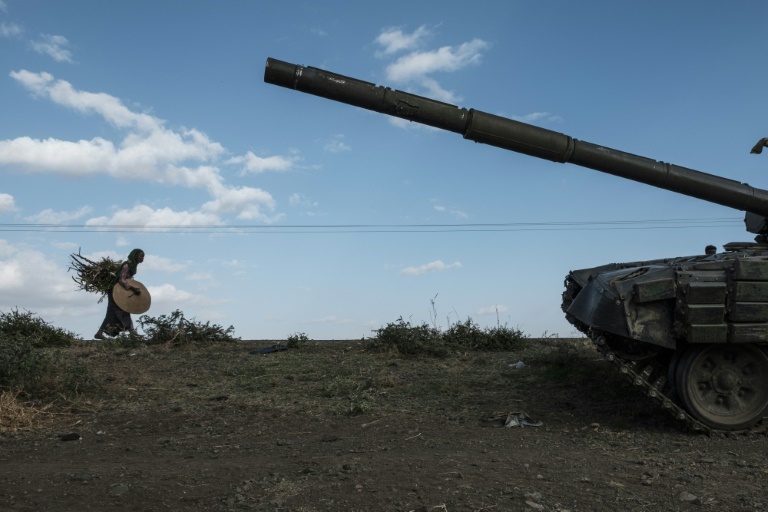
Images posted by the Ukrainian military showed crates of munitions and military hardware scattered across territory abandoned by Russian forces.

In his evening address Sunday, Zelensky praised the soldiers who had “liberated hundreds of our cities and villages… and most recently Balakliya, Izyum and Kupiansk”.

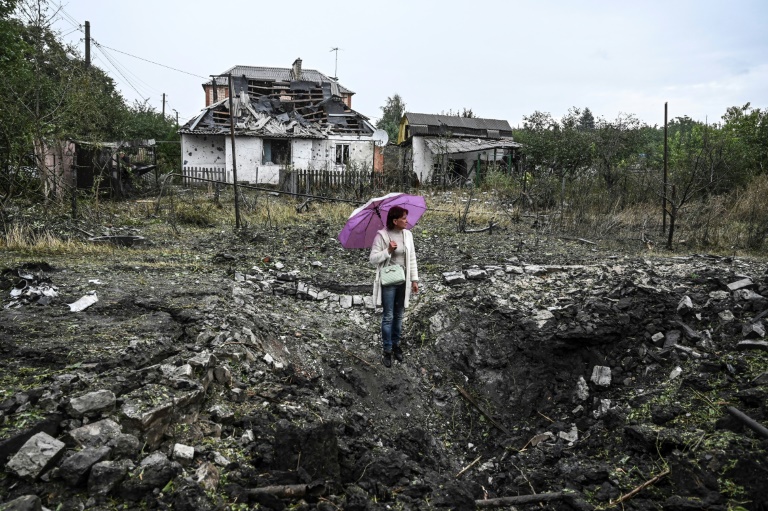
Around Balakliya, one of the first towns to be retaken by Ukrainian troops, AFP journalists saw evidence of fierce battles, with buildings destroyed or damaged and streets mostly deserted.

The country’s foreign minister used the momentum to appeal to Western allies for more stockpiles of sophisticated weapons.

“Weapons, weapons, weapons have been on our agenda since spring. I am grateful to partners who have answered our call: Ukraine’s battlefield successes are our shared ones,” Dmytro Kuleba said.

Russia’s military made the surprise announcement Saturday that it was “regrouping” its forces from Kharkiv to the Donetsk region just south to focus its military efforts there.
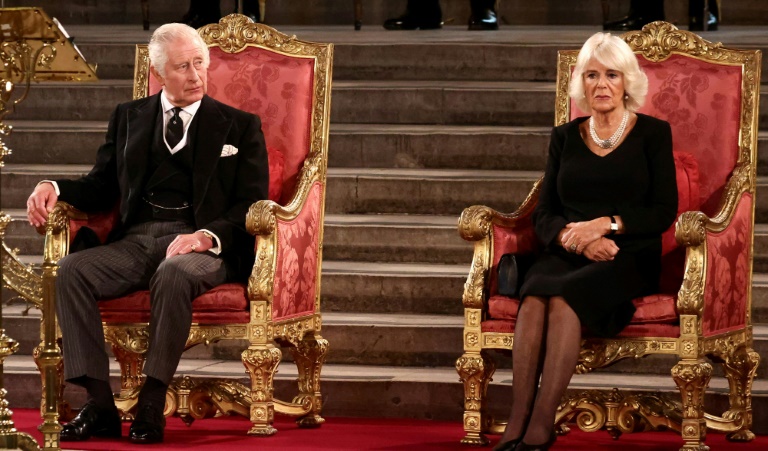
Charles III addresses parliament as mourners gather to see queen's coffin

King Charles III made his first address to the British parliament on Monday before heading to Scotland, where crowds of mourners massed for a chance to pay their respects before Queen Elizabeth II’s coffin.

“I cannot help but feel the weight of history which surrounds us,” the 73-year-old king told lawmakers at Westminster Hall in London, where he received parliament’s formal condolences.

He vowed to follow the “example of selfless duty” set by his “darling late mother”, who died last Thursday aged 96 after a record-breaking 70 years on the throne.

Charles then headed to Edinburgh, where he will walk in procession with other senior royals behind his mother’s coffin from the Palace of Holyroodhouse, where it rested overnight, to St Giles’ Cathedral.

On Monday evening, the monarch will lead a family vigil at the 12-century cathedral. The public will also be able to pay their respects there before the coffin is flown to London ahead of the funeral on September 19.

Prince Harry — Charles’ younger son, who renounced royal duties in 2020 and moved to the United States — paid tribute to his grandmother, his “guiding compass”.

“You are already sorely missed,” the 37-year-old Harry said in his first public statement since the queen’s death. He added that he and his American wife Meghan “now honour my father in his new role”.

Thousands of people, many in tears, had packed the streets of the Scottish capital on Sunday to see the hearse carrying the queen’s oak coffin arrive from the Balmoral estate in the Scottish Highlands where she died.

It was a taste of the crowds expected in London when the late monarch lies in state at Westminster Hall. Her coffin will be there for four days from Wednesday, with reports suggesting there could be queues of up to 20 hours for people wishing to pay their respects.

– All our lives –

“I just felt I had to do something. I just wanted to come today,” said Steve Crofts, 47, outside St Giles’ on Monday.

Many were up early to queue for wristbands that will allow them to file past the closed coffin, guarded by the Royal Company of Archers, from 5:30 pm (1630 GMT).

Sue Stevens, 79, recalled being at school when king George VI died in 1952, resulting in his daughter, Elizabeth, becoming queen aged just 25.

“It’s the end of an era,” Stevens said. “But having listened to him (Charles) over the last few days, I think he’s well prepared for the task.”

Britain has been plunged into mourning by the death of its longest-serving monarch, who has been part of the backdrop of national life almost since World War II.

While the government said organisations need not cancel events, everything from strikes to football matches have been cancelled or postponed in honour of the only monarch most British people have ever known.

A National Moment of Reflection involving a minute’s silence will be held at 8:00 pm (1900 GMT) on the eve of the funeral, Prime Minister Liz Truss’s spokesman told reporters.

Flowers, cards and candles have been left at royal residences across the country, where crowds have massed to pay tribute to the late queen and hail their new king. 

Many were left by tourists and well-wishers from abroad.

“We’ve known her face all of our lives,” said Aurelie Mortet, a 46-year-old Frenchwoman at London’s Columbia Road flower maket, which has seen a huge rise in demand.

The queen’s funeral is expected to draw unprecedented numbers to London, as well as some 500 world leaders and heads of state, including US President Joe Biden.

Millions more are expected to watch it live on television.

Decades in the planning, the aftermath of the queen’s death has been full of the pomp and ceremony that Britain does so well.

Charles and his Queen Consort, Camilla, sat on gold thrones in the 900-year-old Westminster Hall on Monday while the speakers of the two Houses of Parliament offered their condolences.

– Constitutional role –

The monarch is a largely ceremonial figurehead in Britain but retains constitutional powers, from officially appointing governments to approving legislation and meeting weekly with prime ministers.

“Parliament is the living and breathing instrument of our democracy,” Charles said on Monday in his brief address.

As he takes on what he has called the “heavy responsibilities” of kingship, he will also make his first visits as monarch to Northern Ireland and Wales this week in a show of national unity.

While the emotional scenes in Scotland showed the deep affection for the queen there, her death has also reignited a debate over Scottish independence from the United Kingdom.

Scotland’s First Minister Nicola Sturgeon — who was to have her first audience with the new king on Monday — said it was a “sad and poignant moment” to see the coffin leaving Balmoral. 

But the pro-independence leader has been pushing nonetheless for a new referendum on the divisive issue.

“I’m not for independence. We’ve been together for hundreds of years. Why stop now?” said mourner Anne Johnston, 68, from Edinburgh.

She added, however: “No offence to Charles but I don’t think he’ll ever live up to the queen.”

– Last respects –

Charles has seen his popularity recover since the death of his former wife Diana in a 1997 car crash. But he has been embroiled in several scandals in recent years.

He takes the throne at a moment of deep anxiety in Britain over the spiralling cost of living and international instability caused by the war in Ukraine.

With republican movements gaining ground from Australia to the Bahamas, the new king also faces a challenge keeping the Commonwealth realms in the royal fold.

Charles hosted his first reception on Sunday for representatives of the 14 former colonies over which he reigns in addition to Britain — at least for now. 

After walking with the queen’s coffin to St Giles on Monday, where she will be received with a prayer service, the king and senior royals will mount a vigil by her side at 7:20 pm (1820 GMT).

The coffin will stay in the cathedral for 24 hours “to enable people of Scotland to pay their last respects”, a palace official said.

The queen’s body will be flown to London on Tuesday by Royal Air Force jet to an airfield near London, accompanied by the queen’s daughter Princess Anne. It will then be driven to Buckingham Palace.

The following day, royals will follow the coffin, carried atop a gun carriage, to Westminster Hall, where it will lie in state from 5:00 pm (1600 GMT).

Officials have warned that people should expect to wait “many hours” and possibly even to queue overnight to file past the coffin and must go through “airport-style security”.

Meanwhile, one previously unanswered question was resolved on Sunday, when it emerged that scandal-hit Prince Andrew and his ex-wife Sarah Ferguson will look after the queen’s two beloved remaining corgis.

Stock markets rally, as euro briefly surges

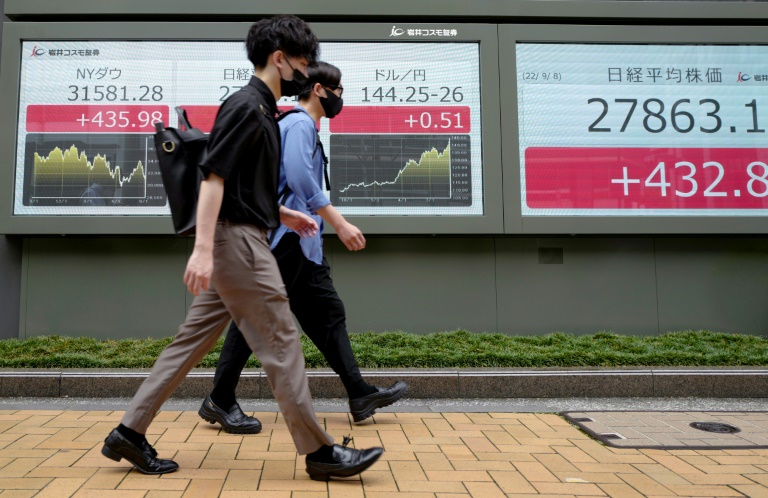
Stock markets rallied Monday, building on pre-weekend momentum as investors priced in the expectation of further interest rate hikes aimed at taming decades-high inflation.

The euro surged against main rivals, a day after German central bank chief Joachim Nagel signalled that the European Central Bank (ECB) would probably continue raising its key rate.

The European single currency rocketed more than 1.4 percent against the dollar and 1.6 percent versus the yen before trimming gains around midday.

The ECB raised the key rate by a historic 75 basis points last week, and markets expect a similar-sized hike at an October meeting.

London, Paris and Frankfurt stock markets were up about 1.5 percent nearing the half-way stage, with Tokyo closing with a gain of more than one percent thanks to a weaker yen.

Markets in Hong Kong, China and South Korea were closed for a public holiday.

Investors worldwide are awaiting key US inflation data for August, due Tuesday, with the consumer price index (CPI) expected to ease slightly to eight percent — still well above the Fed’s two-percent target.

Traders expect the Fed to impose another large rate hike next week, after two 75-basis-point increases already.

Clifford Bennett, chief economist at ACY Securities, said he expected stocks to “continue to drift higher” ahead of Tuesday’s CPI data.

The inflation print “may well see further improvement as petrol prices have continued to pull back”, he said. 

Oil prices gained one percent Monday but remain pressured by the possibility of global demand weakening as growth slows and China’s harsh zero-Covid policy continues to sap economic activity.

– ‘Soft landing’ hopes –

US Treasury Secretary Janet Yellen on Sunday said she was hopeful the US economy could avoid a recession, but that the Fed would need to skilfully manage interest rates and also rely on “some good luck to achieve what we sometimes call a soft landing”.

“My hope is we will achieve a soft landing, but Americans know it’s essential to bring inflation down and, over the longer run, we can’t have a strong labour market without inflation under control,” she told CNN.

Yellen said that while the US economy’s growth rate was slowing, the labour market remained “exceptionally strong”, with almost two openings for every jobseeker.

– Key figures at around 1100 GMT –

London – FTSE 100: UP 1.3 percent at 7,449.84 points

Frankfurt – DAX: UP 1.6 percent at 13,302.93

Paris – CAC 40: UP 1.3 percent at 6,292.35

EURO STOXX 50: UP 1.4 percent at 3,621.58

Tokyo – Nikkei 225: UP 1.2 percent at 28,542.11 (close) 

Hong Kong – Hang Seng Index: closed for public holiday

Shanghai – Composite: closed for public holiday

New York – Dow: UP 1.2 percent at 32,151.71 (close)

Euro/dollar: UP at $1.0145 from $1.0046 

Pound/dollar: UP at $1.1683 from $1.1587  

Euro/pound: FLAT at 86.84 pence

Dollar/yen: UP at 142.62 yen from 142.56 yen 

Brent North Sea crude: UP 1.1 percent at $93.86 per barrel

West Texas Intermediate: UP 1.0 percent at $87.66 per barrel

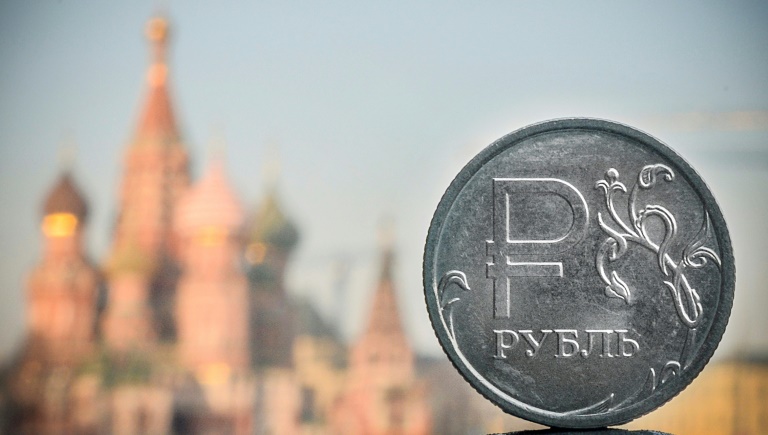
Auction to be held on Russia debt default insurance

An auction to pay out insurance on Russia’s unpaid debt was due to take place on Monday, an event formally marking the sanctions-hit country’s first foreign default in more than a century.

Moscow was unable to transfer funds to creditors in June due to Western sanctions over its invasion of Ukraine.

The failure to pay its debt kicked off a complicated process to compensate investors who bought credit default swaps (CDS), a sort of insurance that bondholders purchase to protect against default by borrowers.

But the auction was repeatedly delayed as organisers had to ensure that the sanctions would not block the CDS payouts.

The country last defaulted on its foreign debt in 1918, when Bolshevik revolution leader Vladimir Lenin refused to recognise the massive debts of the deposed tsar’s regime.

Russia defaulted on domestic debt in 1998 when, due to a drop in commodity prices, it faced a financial squeeze that prevented it from propping up the ruble and paying off debts that accumulated during the first war in Chechnya.

The latest default follows a series of unprecedented Western sanctions that have isolated Russia from the global financial system, including a freeze on Moscow’s $300 billion in foreign currency reserves held abroad.

Russia lost the last avenue to service its foreign-currency loans after the United States removed an exemption in May that had allowed US investors to receive Moscow’s payments.

Russian authorities have insisted throughout that they have the funds to honour the country’s debt, calling the predicament a “farce” and accusing the West of pushing an “artificial” default.

Moscow’s foreign currency debt is relatively low, at around $40 billion.

But the sanctions prevented it from paying bond holders in June.

– ‘Credit event’ –

International ratings agencies, the institutions that decide whether are country is in default, were unable to officially declare whether Russia was in default due to sanctions prohibiting them from covering Moscow’s debt.

But Moody’s ratings agency released a less formal “issuer comment” saying missed payments on interest totalling $100 million amounted to a default.

The official ruling was therefore left in the hands of a little-known panel of investors, the Credit Derivatives Determinations Committee (CDDC), which organises CDS auctions.

In late June, the London-based CDDC — made up of 15 leading banks and financial firms — declared that Russia’s missed payment constituted a “credit event”.

CDS auctions are usually held around 30 days after the committee declares a credit event, but doubts over whether the sanctions allowed the process to take place caused the three-month delay.

Foreign investors are no longer able to trade Russian bonds, and the auctions are essentially transactions involving such assets.

But the US Treasury Department issued a waiver in July to allow the auction on eight Russian bonds to take place this month.

JPMorgan, the investment firm, says the CDS against Russian default are worth almost $2.4 billion.

The auction takes place in two stages. The first stage will set an initial price on the eight bonds, which will serve as a base to fix the final price for compensation in a second stage open more widely to investors.

The CDDC said the settlement dates for the auction could be slightly delayed due to a bank holiday for the funeral of Queen Elizabeth II on September 19.

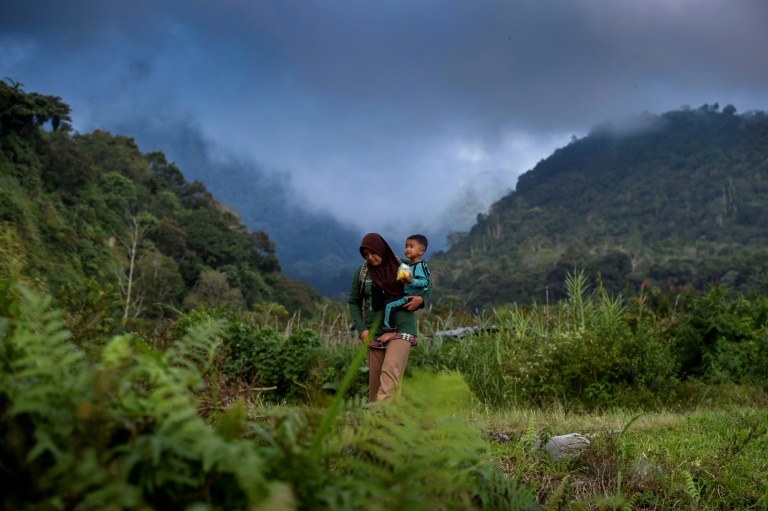
Indonesia, Norway ink deal to reward rainforest protection

Indonesia and Norway signed a deal Monday to reward deforestation reduction months after the collapse of a similar $1-billion agreement that was part of a UN-backed global initiative criticised for its ineffectiveness.

Protecting trees is key to meeting climate goals but environmentalists blame Indonesia — home to the world’s third-largest rainforest area — for a deforestation free-for-all by allowing companies to clear land for new plantations.

Jakarta claims it has made progress by reducing the rate of primary forest loss for five straight years and Oslo will now reward it with “results-based contributions” for cutting emissions, Norway’s ministry of climate and environment said in a statement.

“Today we are proud to embark on a new partnership to support the Indonesian government’s impressive results and ambitious plans,” said Norwegian Minister for Climate and Environment Espen Barth Eide in a statement. 

But environmental activists say the deal will not change the situation in Indonesia with vast swathes of rainforest still being destroyed to make way for palm and timber plantations that threaten endangered species and push indigenous people off their lands.

“The agreement does not solve existing problems, including recognition of indigenous people,” Greenpeace Indonesia forest campaigner Iqbal Damanik told AFP.

“The point made is ‘successfully reducing deforestation’, not zero deforestation. It means there is still deforestation in Indonesia going forward.”

The countries had signed a landmark deforestation deal in 2010 with Norway offering Indonesia $1 billion to slash its emissions. 

But Jakarta cancelled it last year saying it didn’t see enough of the money, while research showed it only made a small dent in Indonesia’s carbon-cutting targets. 

Critics of the United Nations-backed REDD+ mechanism under which the deal was struck said it was ineffective and trampled on indigenous communities’ rights.

Under the new agreement Norway will send Jakarta an initial $56 million payment for its deforestation reduction in the year 2016 to 2017, the statement said.

It will then pay Indonesia for years of reductions that followed after verifying the drops in deforestation, meaning it could be worth hundreds of millions of dollars to Jakarta.

Indonesia has an ambitious goal to reach a net carbon sink — storing more carbon than it releases into the atmosphere — by 2030 but its vast forests are still shrinking. 

The country’s tree cover has decreased by 18 percent since 2000, a loss that accounts for 6.5 percent of the global total since then, according to Global Forest Watch, a monitoring programme of the environmental research group World Resources Institute.

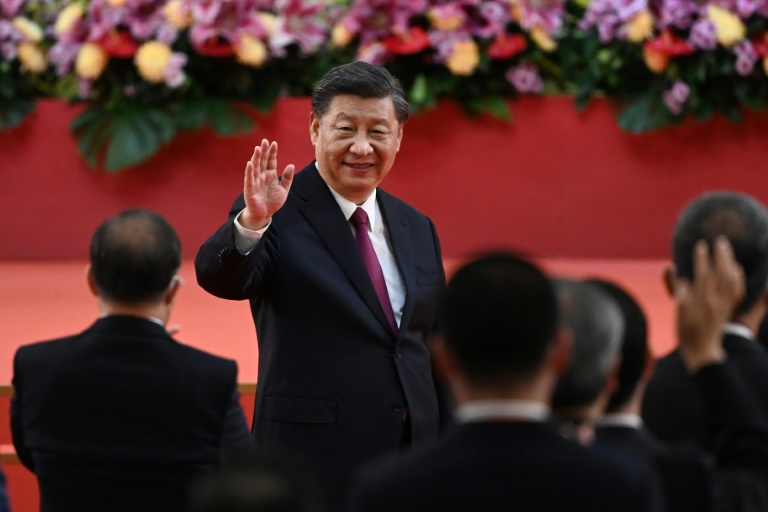
China's Xi to visit Kazakhstan, Uzbekistan this week

China’s President Xi Jinping will make state visits to Kazakhstan and Uzbekistan this week, Beijing said Monday — his first trip abroad since the early days of the coronavirus pandemic.

Russia had already announced last week Xi will meet with President Vladimir Putin at a leaders’ summit of the Shanghai Cooperation Organization (SCO) in Uzbekistan, as Moscow seeks to bolster ties with Beijing after being slapped with unprecedented Western sanctions over its invasion of Ukraine.

Beijing on Monday confirmed Xi’s attendance at the summit in the Uzbek city of Samarkand.

The Chinese president will also “pay state visits to Kazakhstan and Uzbekistan” from Wednesday to Friday at the invitation of Presidents Kassym-Jomart Tokayev and Shavkat Mirziyoyev, the foreign ministry said in a statement. 

The SCO is made up of China, Russia, India, Pakistan, as well as four Central Asian countries — Kazakhstan, Kyrgyzstan, Uzbekistan and Tajikistan. 

The summit in Samarkand, a stop on the ancient silk road, will take place on Thursday and Friday. 

Putin and Xi last met in early February in Beijing ahead of the Winter Olympic Games, days before the Russian president sent troops into Ukraine.

Beijing has not condemned Moscow’s interventions in Ukraine and provided diplomatic cover by blasting Western sanctions and arms sales to Kyiv.

India’s Prime Minister Narendra Modi will also take part in the summit in Samarkand, the Indian government said Sunday, without saying whether Modi would hold bilateral talks with Putin or Xi.

India’s relations with China have been frosty since fighting in 2020 on their disputed Himalayan border left at least 20 Indian and four Chinese soldiers dead. Modi and Xi have not held bilateral talks since 2019.

Pakistan’s Prime Minister Shehbaz Sharif, who took over as leader in April, will also attend the summit, a foreign office official who asked not to be named told AFP.

China is Pakistan’s closest economic ally, although relations have strained recently over the scaled-back CPEC project and attacks by separatist militants on Chinese nationals and interests.

– Pivotal period –

The trip will be Xi’s first outside China’s borders in more than two and a half years.

The Chinese president last went overseas in January 2020 for a state visit to Myanmar. A few days after his return, the entire city of Wuhan was locked down over a Covid outbreak.

Since then, Xi has largely conducted his diplomacy virtually. 

But in February, he received several foreign leaders during the Beijing Winter Olympics — his first in-person meetings with heads of state since the pandemic.

Xi is readying for a pivotal twice-a-decade Congress of the ruling Communist Party in October, where he is widely expected to secure an unprecedented third term as president.

The event, which opens on October 16 in Beijing, will also unveil a new top leadership lineup and likely consolidate Xi’s hold on the party.

Previous Chinese leaders generally refrained from making overseas trips in the weeks before the Party Congress, when behind-the-scenes power struggles frequently intensified.

Formerly Cold War allies with a tempestuous relationship, China and Russia have drawn closer in recent years as part of what they call a “no limits” relationship acting as a counterweight to the global dominance of the United States.

Last week, Beijing’s top legislator Li Zhanshu became the highest-ranking Communist Party politician to travel to Russia since the Ukraine invasion.

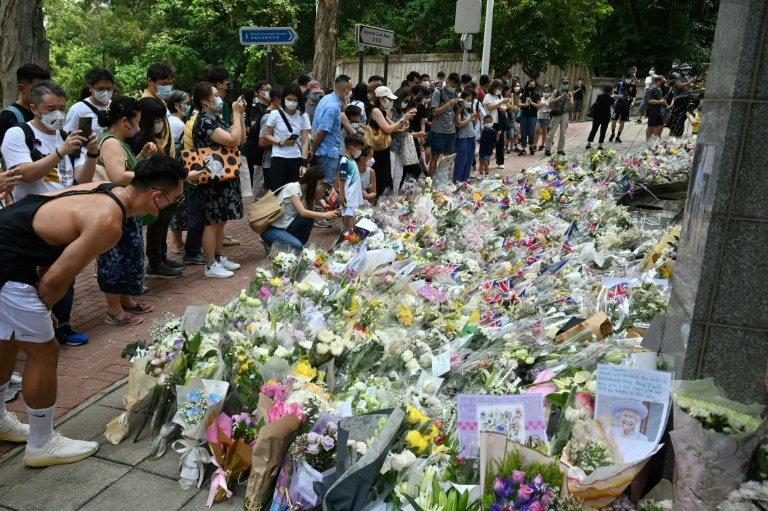
Huge queue as Hong Kongers mourn Elizabeth II

Crowds of Hong Kongers queued in sweltering heat on Monday to pay tribute to Britain’s Queen Elizabeth II, some expressing nostalgia for the city’s colonial past at a time when China is seeking to purge dissent.

Public gatherings of more than four people are banned under coronavirus rules while opposition to Beijing’s rule has been swept aside in a major crackdown following huge and sometimes violent democracy protests three years ago.

But on Monday, a public holiday in Hong Kong, a line of people hundreds of metres long snaked through the business district to the British consulate where a condolence book had been opened for residents to sign.

The wait was three to four hours long but the crowds kept coming despite the 32 degree Celsius (90 Fahrenheit) heat and an air pollution warning.

Hong Kong was a British colony for over 150 years and while the financial hub was returned to China in 1997, the past is engraved into its landscape, from street names and the ubiquity of English to the common law legal system.

Emily Ng, 30, was in the queue clutching a portrait she painted of Elizabeth II.

Her grandmother, she said, collected stamps with the queen’s image and “used to tell me a lot of stories about the royal family”.

Ng said she had written to the queen repeatedly over the years and received replies from Buckingham Palace.

“I hence felt very connected to the royal family and even after the handover I would like to maintain that connection,” she told AFP.

Ng’s friend, who gave just her surname Ho, said they had both been born in Princess Margaret Hospital, named after the late queen’s sister.

“I don’t think coming here today is a form of missing colonisation,” she said. 

“It’s more for my private memory.”

– ‘Mourning the past not a crime’ –

Britain never gave Hong Kongers universal suffrage and many democracy veterans now in jail used to campaign against colonial rule.

But growing anger in recent years over Beijing’s treatment of the city — which exploded with the 2019 protests — has incubated a sense of nostalgia among some Hong Kongers.

A 19-year-old engineering student, who gave his first name as Gordon, said he had no illusions about how Britain built its wealth on the backs of others. 

“Colonialism brought a lot of suffering to many people, not only in Hong Kong, but also and particularly in Africa,” he told AFP.

“But it also brought Hong Kong new culture and institutions, which shaped the city into what it is today.”

He rejected the idea that remembering a former colonial monarch was disloyal.

“Mourning the past is normal and common, not a crime,” he added.

A business executive who gave her surname So admitted that Elizabeth II’s death had made her nostalgic and that she felt “less of a connection” with China’s Communist Party leaders in Beijing.

“I only realised how good it was after I lost it,” she said, referring to the city since its handover.

An 80-year-old retiree, who gave his surname Poon, was holding a bunch of red lilies and spoke bluntly.

“In the past we had human rights, equality before the law, and protections in many aspects,” he said.

“But now, I would not comment on the present, I dare not.”

Appeal trial opens over 2015 Charlie Hebdo attack in France

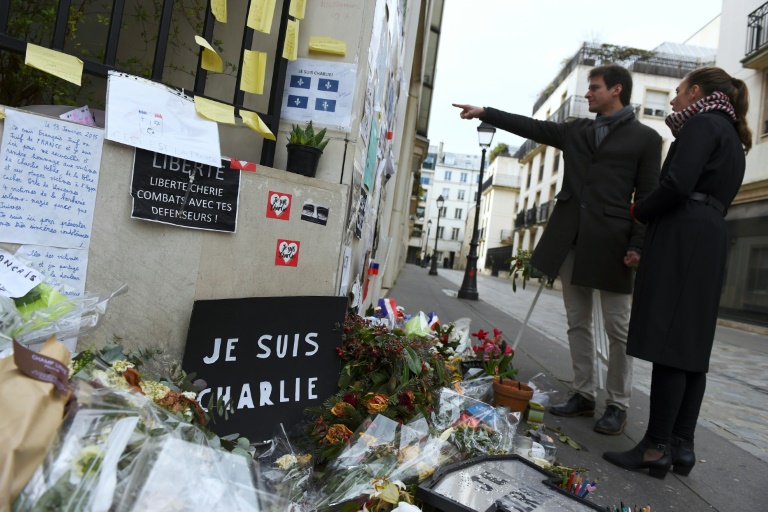
The appeal trial opened in Paris on Monday for two men suspected of helping the gunmen who stormed the Charlie Hebdo satirical weekly and a Jewish supermarket in January 2015, the first of a wave of Islamist terror attacks that have rocked France in recent years.

Twelve people were massacred at Charlie Hebdo’s Paris offices by the brothers Said and Cherif Kouachi, who said they were acting on behalf of Al-Qaeda to avenge the paper’s decision to publish cartoons of the Prophet Mohammed.

A day later, Amedy Coulibaly killed a 27-year-old police officer during a traffic check outside Paris, before killing four Jewish men during a hostage-taking at the Hyper Cacher supermarket on January 9, claiming to act in the name of the Islamic State group.

All three were killed by police, and in December 2020 a French court convicted 14 people of helping to carry out the attacks.

Two men who were given the heaviest sentences appealed, notably Ali Riza Polat, who received a 30-year prison term on charges he helped find weapons for the killers.

Both he and Amar Ramdani, accused of conspiring with the attackers, deny the charges, and want the court to examine documents they say were neglected during the inquiry.

“This trial is the last chance to correct the errors of a justice system overwhelmed by the scope of these attacks, and return to reason with regards to the exact role of M Polat, a common criminal who’s been wrongly accused of a role he never had,” his lawyers said.

A lawyer for Charlie Hebdo, Richard Malka, dismissed the claims.

“These crimes have a purpose, they are political, ideological — these aren’t crimes carried out by barbarians or ‘lone wolves’ or crazy people,” he said at the Paris courthouse ahead of the trial’s opening.

The paper’s editor Laurent “Riss” Sourisseau, injured in the attack, attended the hearing, and the widow of one of the victims carried a poster of the others killed.

– ‘I am Charlie’ –

The killings signalled the start of a deadly wave of Islamist attacks around Europe, in particular the harrowing killing spree a few months later at the Bataclan concert hall and at Paris bars and cafes in November 2015.

The first Charlie Hebdo and Hyper Cacher trial was held in 2020 with 14 defendants — some tried in their absence — accused of helping the gunmen prepare and organise the attacks.

Jail terms ranging from four years to life were handed out for those convicted of helping the Kouachi brothers and Coulibaly, who were killed during police assaults.

The appeal court will have six weeks to weigh up the degree of responsibility of Polat and Ramdani.

Several days at the start of the trial will be given to hearing testimony from survivors of the attack and relatives of the victims.

Those shot dead in the Charlie Hebdo office included some of France’s most celebrated cartoonists including Jean Cabut, known as Cabu, 76, Georges Wolinski, 80, and Stephane “Charb” Charbonnier, 47.

The massacre triggered a global outpouring of solidarity with France under the “I am Charlie” slogan.

Ethiopia rivals urged to seize moment for peace

The international community on Monday urged warring sides in Ethiopia to seize the moment for peace after Tigrayan rebels said they were ready for talks led by the African Union to end almost two years of brutal warfare.

There has been a flurry of diplomatic efforts to push for negotiations after fighting flared in northern Ethiopia in late August for the first time in several months, torpedoing a humanitarian truce and cutting off aid deliveries to war-stricken Tigray.

Tigrayan authorities said Sunday they were “prepared to participate in a robust peace process under the auspices of the African Union,” after previously rejecting AU mediation and saying they wanted Kenya to lead any talks.

“We are ready to abide by an immediate and mutually agreed cessation of hostilities,” Tigray’s regional government said in a statement coinciding with Ethiopia’s new year.

The government has not formally commented on the Tigrayan stance but has previously said it was ready for unconditional talks “anytime, anywhere,” brokered by the AU, which is headquartered in Addis Ababa.

The Tigray People’s Liberation Front (TPLF) had until now vehemently opposed the role of the AU’s Horn of Africa envoy Olusegun Obasanjo, protesting his “proximity” to Ethiopian Prime Minister Abiy Ahmed.

Untold numbers of civilians have been killed since the war erupted in Africa’s second most populous country in November 2020, and the fighting has left millions of people across northern Ethiopia in need of emergency aid.

UN Secretary-General Antonio Guterres urged “the parties to seize this opportunity for peace and to take steps to end the violence definitively and opt for dialogue”.

– ‘Unique opportunity’ –

AU Commission chief Moussa Faki Mahamat also welcomed the development as a “unique opportunity towards the restoration of peace” and urged “both parties to urgently work towards an immediate ceasefire, engage in direct talks”.

Similar messages were issued by US Secretary of State Antony Blinken and EU foreign policy chief Josep Borrell.

“We call on the country’s leaders to put Ethiopia on a path that ends the suffering and achieves a lasting peace,” Blinken said in a statement.

Ethiopia’s international partners were ready to support the peace process, he said, but added: “Eritrea and others should cease fuelling the conflict.”

Fighting has raged on several fronts in northern Ethiopia since hostilities resumed on August 24, with both sides accusing the other of firing first and breaking a March truce.

The TPLF also accused Ethiopia and neighbouring Eritrea — whose forces were involved in the early phase of the war — of having launched a massive joint offensive on Tigray on September 1.

Access to northern Ethiopia is severely restricted and it is not possible to verify what is happening on the ground.

– ‘Unfettered humanitarian access’ –

The Tigray statement made no mention of preconditions for talks, although it said the Tigrayans expected a “credible” peace process with “mutually acceptable” mediators as well as international observers.

TPLF leader Debretsion Gebremichael last week proposed a conditional truce calling for “unfettered humanitarian access” and the restoration of essential services in Tigray, whose six million people are suffering food shortages and a lack of electricity, communications and banking services.

In a letter to Guterres, he also called for the withdrawal of Eritrean forces from across Ethiopia, and for troops to pull out of western Tigray, a disputed region claimed by both Tigrayans and Amharas, the country’s second-largest ethnic group.

Debretsion had disclosed last month that two rounds of confidential face-to-face meetings had taken place between top civilian and military officials, the first acknowledgement by either side of direct contacts.

Sunday’s statement said a negotiating team including TPLF spokesman Getachew Reda and General Tsadkan Gebretensae, a former Ethiopian army chief now in Tigray’s central military command, was “ready to be deployed without delay”.

The March truce had allowed humanitarian convoys to travel to Tigray’s capital Mekele for the first time since mid-December.

But the United Nations said last week that the renewed fighting had forced a halt to aid deliveries to Tigray, both by road and air.

Abiy, a Nobel Peace laureate, sent troops into Tigray in November 2020 to topple the TPLF in response to what he said were attacks by the group on federal army camps.

But the TPLF recaptured most of Tigray in a surprise comeback in June 2021.

It then expanded into the neighbouring regions of Afar and Amhara before the fighting reached a stalemate.

Sweden's far right makes strong gains in cliffhanger election

Sweden on Monday began a days-long wait for the final results of its too-close-to-call general election, with an unprecedented right-wing and far-right bloc in position to wrest power from Prime Minister Magdalena Andersson’s Social Democrats.

The Scandinavian country has seen mounting political instability in recent years as the gradual rise of the far-right has upset the traditional balance of power in parliament.

Sweden again found itself in a delicate parliamentary situation after Sunday’s legislative election, with the right-wing seen holding a razor-thin lead over Andersson’s outgoing left bloc.

“The close result in parliament suggests Sweden is heading for yet another messy mandate”, newspaper of reference Dagens Nyheter wrote on Monday.

With the vote deemed too close to call, election authorities said a final result would only be ready on Wednesday, when the last ballots from abroad and from advance voting had been counted.

Editorialist Anders Lindberg of daily Aftonbladet said it appeared “impossible for the left to win because the votes from abroad are… usually in favour of the right”.

With 95 percent of votes counted on Monday, the right-wing led by conservative Moderates leader Ulf Kristersson was credited with an absolute majority of 175 of 349 seats in parliament. 

Andersson’s left bloc trailed with 174.

If confirmed, the Social Democrats would be out after eight years in power.

Kristersson, who vowed during the campaign to crack down on law and order amid soaring crime rates, said late Sunday he was “ready to build a new and strong government” if the results were confirmed.

– Far-right gains –

The election’s big winner was, however, the anti-immigration, nationalist Sweden Democrats party, led by Jimmie Akesson.

It was credited with 20.7 percent of votes, making it the biggest party on the right and the second biggest in the country behind the Social Democrats.

“It’s looking pretty damn good now”, 43-year-old Akesson told cheering supporters late Sunday.

The right bloc — made up of the Sweden Democrats, Moderates, Christian Democrats and Liberals — were seen winning 49.8 percent of votes.

The left, comprised of the Social Democrats, the Left, the Greens and the Centre parties, were meanwhile credited with 48.8 percent, trailing by around 47,000 votes out of 7.8 million eligible voters.

Prime Minister Andersson, 55, has refused to throw in the towel just yet. 

“We’re not going to have a final result tonight”, she told supporters late Sunday as her party was seen posting a strong result of around 30 percent of votes.

She called on Swedes to “have patience” and “let democracy run its course”.

The election marked a major shift in Swedish politics. 

For the first time, the Moderates, Christian Democrats and Liberals tied up with the far-right, long treated as “pariahs” by other political parties.

Kristersson orchestrated the change, initiating exploratory talks in 2019 with the Sweden Democrats and then deepening their cooperation.

The Christian Democrats, and to a lesser extent the Liberals, later followed suit.

“Our goal is to sit in government. Our goal is a majority government,” Akesson said late Sunday.

– Tensions on the right –

The right-wing bloc is, however, rife with internal divisions, and Kristersson could struggle to form a stable coalition government.

The Liberals have opposed the idea of the Sweden Democrats being given cabinet posts, and would prefer for them to remain in the background providing informal support in parliament.

Akesson has previously insisted his party sit in government, or else he will present a long list of costly demands in exchange for his support.

That could be too much for the Liberals to stomach.

“It would suffice for one of the Liberal party’s far-right-critical MPs to dissent for Ulf Kristersson’s government to find itself in serious trouble,” Dagens Nyheter wrote on Monday.

Political analyst Ulf Bjereld agreed.

A Kristersson-led government “will have to deal with very strong internal tensions and some Liberals will demand that they start to cooperate with the Social Democrats instead”, he told AFP.

The Sweden Democrats “have their roots in neo-Nazism and on the other side the Liberals stand for everything the Sweden Democrats don’t,” he added.

Analysts stressed Sweden was in need of political stability amid a busy docket in the coming months.

The country faces a looming economic crisis, is in the midst of a historic and delicate NATO application process and is due to take over the EU presidency in 2023.

Close Bitnami banner
Bitnami