World

Jimmie Akesson leads Sweden's soaring far-right

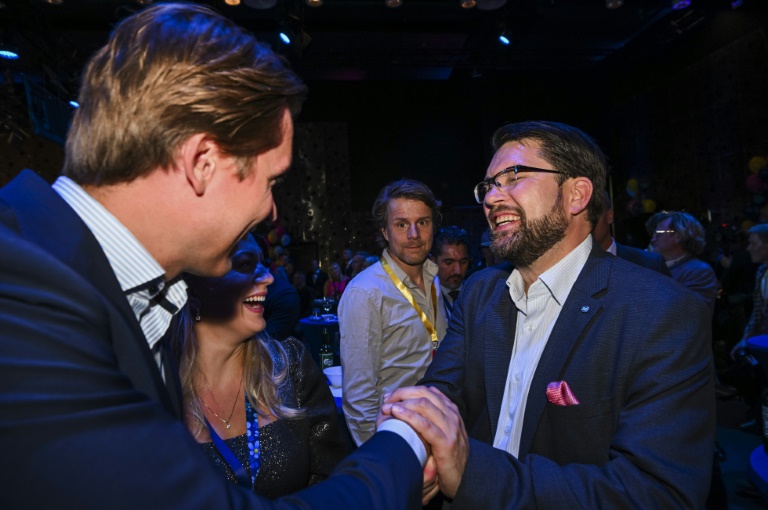
As leader of the far-right Sweden Democrats, Jimmie Akesson has steered his party from “pariah” to heavyweight whose support is indispensable if the right-wing bloc wants to govern after Sunday’s election.

The anti-immigration Sweden Democrats soared to become the country’s second-biggest party in the legislative vote, garnering 20.7 percent with 94 percent of electoral districts counted.

With his impeccably coiffed brown hair, glasses and neatly-trimmed beard, the casually-dressed 43-year-old looks like your average Swede.

That’s par for the course for someone who in 17 years as party leader has transformed an often-violent neo-Nazi movement known as “Keep Sweden Swedish” into a nationalist party with a flower as its logo.

“He wants to give the impression that he’s an ordinary guy… who grills sausages, talks normally and goes on charter trips to the Canary Islands”, Jonas Hinnfors, a political science professor at Gothenburg University, told AFP.

“He does everything he can to not come across as an intellectual or well-educated,” he added.

Akesson was raised in a middle-class family with an entrepreneur father and a mother who worked as a nursing assistant in Solvesborg, a town of 9,000 people in southern Sweden.

It was there, in rural Scania’s small towns and farmsteads, that SD built its stronghold, amid concerns about the heavily immigrant-populated city of Malmo nearby.

– ‘Zero tolerance’ –

Akesson joined the Sweden Democrats in the 1990s after a disappointing teenage stint in the main right-wing party, the conservative Moderates.

After leaving Lund University without a degree, he took over the SD party leadership in 2005, when voter support was steadily around one percent.

The party underwent a major makeover, replacing its blue-and-yellow torch logo with an anemone, and vowing to rid itself of its racist and violent roots.

It later announced a “zero tolerance” policy against racism in 2012, though critics regularly denounce the attempts as superficial.

In August, an investigative report by Swedish research group Acta Publica found that 289 politicians from parties represented in parliament were involved in either racist or Nazi activities, a large majority of them — 214 — from the Sweden Democrats.

Controversies regularly flare over the party’s errant members, but it has managed to steadily climb in the polls nonetheless.

It won 5.7 percent of votes when it entered parliament in 2010, 12.9 percent in 2014 when it became Sweden’s third biggest party in parliament, and 17.5 percent in 2018.

Its rise has come alongside Sweden’s heavy immigration. The country of 10.3 million people has welcomed around half a million asylum seekers in the past decade.

The party has stolen voters from both the conservative Moderates as well as the Social Democrats, especially among working class men.

In addition, the fight against crime, which has long been one of the party’s main issues, was for the first time one of voters’ top concerns in Sunday’s election amid a soaring rise in gang shootings.

“I think (our success) can be explained by the fact that people don’t think the other parties take their problems seriously”, Akesson told AFP at an election rally in Stockholm in August.

– ‘The most influence’ –

Akesson, who once said Muslims were “the biggest foreign threat since World War II”, has over the years watered down the party’s rhetoric and policies, like other nationalist parties in Europe, according to analysts.

Once in favour of a “Swexit”, the party in 2019 abandoned the idea of leaving the European Union due to a lack of public support.

And while other European far-right parties have expressed support for Russian President Vladimir Putin, SD has come out in favour of Ukraine in the war and expressed support for Sweden’s NATO membership bid, a notion it had opposed until Moscow’s invasion of Ukraine.

According to Hinnfors, the Sweden Democrats have gone from a party “that says no to everything to a party that considers the parliamentary situation and is beginning to see where they can have the most influence, possibly cooperate, and make the fewest possible compromises”. 

Akesson’s meteoric career success has, however, taken its toll.

In 2014, he admitted to an online gambling addiction, and then took a six-month leave from politics after suffering from burnout.

A fan of crime novels and whose favourite foods are pizza and fries, Akesson is divorced and has an eight-year-old son.
Sweden's right wing poised for election victory on far-right gains

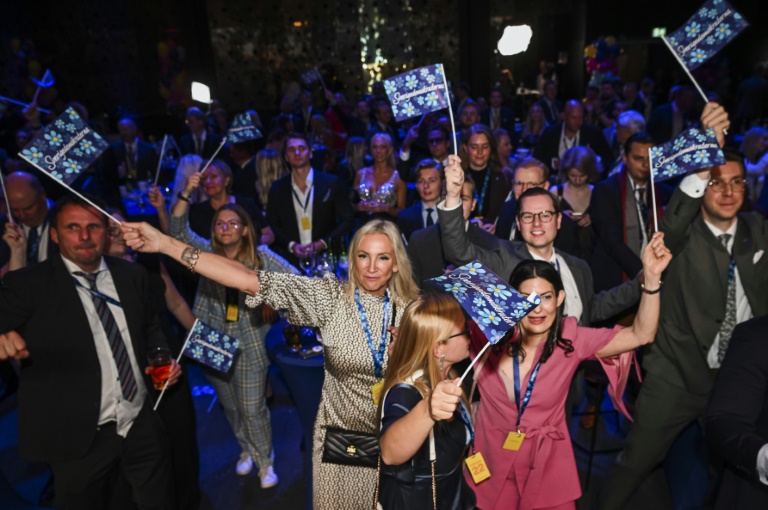
Sweden’s right wing looked set to oust Prime Minister Magdalena Andersson’s left-wing bloc in Sunday’s general election on strong gains by the far-right, clinging to a slim lead with 94 percent of electoral districts counted. 

The right wing bloc was credited with a majority of 176 of 349 seats in parliament, with the left bloc trailing with 173.

With the vote deemed too close to call, election authorities said they did not expect a final result until Wednesday when the last ballots from abroad and from advance voting had been counted. 

“We’re not going to have a final result tonight”, Andersson, 55, told her cheering supporters as the outcome hung in the air, calling on Swedes to “have patience” and “let democracy run its course”.

Andersson’s challenger Ulf Kristersson of the conservative Moderates and the leader of the right-wing bloc, said that while the election results could still change, “I am ready to build a new and strong government”.

The Moderates and two other smaller right-wing parties have for the first time tied up with the anti-immigration and nationalist Sweden Democrats, which looked set to post their best election score yet.

The far-right party, which entered parliament in 2010 with 5.7 percent of votes and have long been treated as “pariahs” by other political parties, was seen garnering around 20.7 percent of votes.

That makes them the country’s second-biggest party for the first time, overtaking the Moderates, the traditional leaders on the right.

The election campaign was dominated by issues close to right-wing voters and especially the far-right, including rising gang shootings, immigration and integration issues.

While Andersson’s Social Democrats looked set to remain the country’s biggest party with 30.5 percent, the Moderates slipped to third position, at 19 percent. 

That is a setback for Kristersson, who orchestrated a major shift in Swedish politics by initiating exploratory talks in 2019 with the Sweden Democrats.

The two other small right-wing parties, the Christian Democrats and to a lesser extent the Liberals, later followed suit.

– ‘Looking good now’ –

“Our goal is to sit in government. Our goal is a majority government,” Sweden Democrats party leader Jimmie Akesson told a crowd of cheering supporters on Sunday evening.

“It’s looking pretty damn good now”, he said.

Party secretary Richard Jomshof told public television SVT he “didn’t believe” other parties would be able to freeze out the Sweden Democrats again and expected to have a strong influence on the country’s politics.

“We are so big now… it is clear we should have a spot on parliamentary committees”, he said.

He said the party had “a chance to be an active part of a government that would move politics in a completely different direction”.

Prime Minister Andersson, a former finance minister, campaigned on building a government with the support of the small Left, Centre and Green parties.

The Social Democrats have governed Sweden since 2014 and dominated the political landscape since the 1930s.

“We Social Democrats have had a good election”, she told party members late Sunday, adding: “Swedish Social Democracy stands strong”.

– ‘Enormous shift’ –

Both blocs are beset by internal divisions that could lead to lengthy negotiations to build a coalition government.

On the right wing, the Liberals have said they are opposed to the Sweden Democrats being given cabinet posts, political scientist Katarina Barrling noted.

They would prefer for the far-right to remain in the background providing informal support in parliament.

But for a number of reasons there is “pressure to have a united and effective government” in place quickly, she said.

Sweden faces a looming economic crisis, is in the midst of a historic NATO application process and is due to take over the EU presidency in 2023.

The end of the Sweden Democrats’ political isolation, and the prospect of it becoming the biggest right-wing party, is “an enormous shift in Swedish society”, said Anders Lindberg, an editorialist at left-wing tabloid Aftonbladet.

Born out of a neo-Nazi movement at the end of the 1980s, the party’s rise has come alongside a large influx of immigrants. The country of around 10 million people has taken in almost half a million asylum seekers in a decade.

It also comes as Sweden struggles to combat escalating gang shootings attributed to battles over the sale of drugs and weapons. 

Crime was one of far-right voters’ top concerns.

New monarch gives fresh impetus to Scotland's independence debate

Queen Elizabeth II’s death in Scotland indelibly associates the nation with the handover to a new monarch, but her passing also reignites the debate over Scottish independence from the UK.

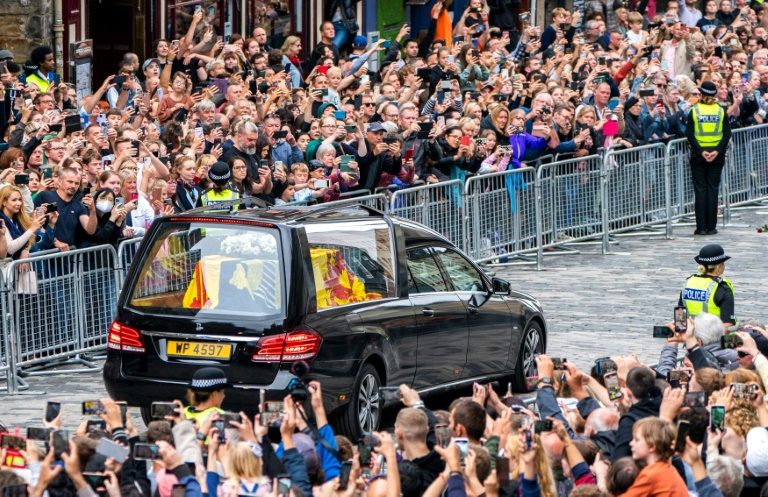
Thousands of people stood for hours on Sunday to see the 96-year-old’s coffin arrive from her Balmoral estate to Edinburgh’s Palace of Holyroodhouse, and the formal proclamation of Charles as king. 

But there is a strong vein of republicanism in Scotland, and a few heckles could be heard amid the crowds massed along the Royal Mile.

One 22-year-old woman was detained for a breach of the peace for holding a placard with an obscene anti-monarchy slogan just before the proclamation, while there was also some booing.

For some in the crowd, Elizabeth — and her son King Charles III — represent the strength of the United Kingdom of Scotland, England, Northern Ireland and Wales.

She was “one of the things that held (the UK) together”, noted Archie Nicol, 67, who had earlier paid his respects at the royal Balmoral estate where the queen died Thursday.

Yet many others who expressed their admiration for the late monarch saw it as separate from their desire to be an independent nation.

“The queen clearly had a respect for Scotland,” said Nicola Sandilands, 46, a primary teacher.

“The royal family is as much Scottish as they are anything else,” she told AFP, while urging them to become “more relevant and current”.

However, she acknowledged that the monarch’s death “will maybe make it easier to become a republic”.  

“Some Scots will consider this end of an era a natural moment for a fresh start,” Scottish journalist Alex Massie wrote in The Times. 

– Queen of Scots –

The governing Scottish National Party (SNP), which wants another independence referendum following the 2014 “no” vote, is not calling for a republic.

Its founder Alex Salmond coined the term “Queen of Scots” and built close ties with Charles. 

And SNP First Minister Nicola Sturgeon was quick to express her “deepest condolences” when the queen died, praising her “extraordinary dedication and service”.

But the transition to another monarch based in England — albeit one educated at a Scottish boarding school, with several Scottish residences and a penchant for kilts — risks fraying ties.

“The Union is probably in more jeopardy now she is gone,” noted veteran journalist Andrew Neil in the Daily Mail newspaper.

“King Charles will love Scotland just as much as the queen. But he simply doesn’t have her authority.”

A poll by the British Future think tank in June suggested that 45 percent of Scots supported the monarchy while 36 percent wanted a republic. 

Meanwhile 51 percent wanted to stay as part of the United Kingdom.

– Discretion –

Before becoming king, Charles was known for speaking out on a range of issues, including climate change — a stance praised by Scotland’s Daily Record tabloid, which urged him to make the environment his “defining mission” as king.

But as constitutional monarch, he will have to steer clear of anything remotely political, particularly independence.

“The passing of the Crown is a moment of frailty, perhaps even fragility,” Adam Tomkins, a constitutional lawyer and professor at the University of Glasgow, noted in The Herald newspaper.

The “burning question”, he said, was whether Charles could “emulate his mother in maintaining the discretion by which the monarchy stands or falls”.

Queen Elizabeth II never spoke out about independence, although before the 2014 referendum, she told a member of the public she hoped Scots would “think very carefully about the future”.

Then-prime minister David Cameron was caught saying that she “purred down the phone” when he reported victory for the anti-independence campaign — an indiscretion for which he subsequently apologised.

– Scottish audience –

Charles will have his first audience with Sturgeon on Monday when he returns to Scotland to lead a procession of his mother’s coffin to St Giles’ Cathedral in Edinburgh, and then hold a vigil.

On Tuesday, her coffin will be flown to London for four days of lying-in-state ahead of the funeral on September 19.

Charles will also visit Northern Ireland and then Wales, completing his tour of all four nations in the UK.

Back in Edinburgh, Theresa Brown, a 51-year-old receptionist, said she was happy for him to stay Scotland’s king.

“It’s mainly from Westminster I want independence. I don’t mind the royal family,” she said.

video-am/ar/jj/it

The royals and Scotland: a special relationship

Queen Elizabeth was particularly attached to Scotland, but it will now be forever linked to a turning point for her son Charles and the United Kingdom.

It was in Scotland, at Balmoral Castle, that Queen Elizabeth died Thursday at the age of 96, sealing the rise to the throne of Charles III.

In his maiden speech as monarch on Friday, Charles pointed out that his son William, now heir to the crown, also inherited the Scottish titles which “meant so much” to him.

At the forefront is that of the Duke of Rothesay, a title carried by the heir to the British monarchy and which now goes to William, 40, his eldest son.

Charles was the longest holder of the title, for 70 years, matching the length of his mother’s reign, a record for the British monarchy.

Earlier this month Prince Charles wore, as he often does, the kilt at the Braemar Royal Highland Gathering, an event celebrating Scottish heritage, with traditional events such as tug of war. 

– ‘Colditz in kilts’  –


At 13, Charles was sent to Gordonstoun, the stark Scottish boarding school his father attended. Desperately lonely, he hated it, describing his years there as “absolute hell”, a “prison sentence” and “Colditz in kilts”.

But in 1975, he recalled that his years at boarding school taught him to “accept challenges and take the initiative”.

Always a nature lover, Charles, who has a private residence on the Balmoral estate, painted watercolours of Scottish landscapes.

He travelled through those same landscapes as he skied or hunted, always with a flask filled with Bruichladdich or Laphroaig whisky, according to Whisky Magazine.

In 1994 Prince Charles awarded Laphroaig distillery the Royal Warrant, which allows it to place the royal arms on its products.

Anxious to preserve Scottish heritage, Charles intervened to save Dumfries House, an old residence bought in 2007 by a consortium led by the prince, who integrated it into his foundation in 2018.


– Picnics in the Cairngorms –

Queen Elizabeth not only had Scottish ancestry — both of her parents had a common ancestor in Robert II, King of Scots in the 14th century — but spent much of her childhood at Balmoral, her summer residence where she breathed her last.

“Scotland has played a very special role in our lives and those of my family over the years,” she said in 2012 during a visit to Perth.

The queen, who appeared all smiles in a photo published recently with her late husband Prince Philip in the Cairngorms massif where she liked to have picnics, had gone to Scotland on the occasion of her Silver, Gold and Diamond jubilees.

But she was also there in times of tragedy, such as the plane bombing over Lockerbie which killed 270 people in 1988, or the Dunblane school shooting, where 16 children and their teacher were killed in 1996.

On the way to her annual visits to Balmoral, the queen also took part in a week of royal events at the official residence of Holyroodhouse, in Edinburgh, where her coffin arrived on Sunday.

Britons get first chance to view Queen Elizabeth II's coffin

Mourners will on Monday get the first opportunity to pay respects before the coffin of Queen Elizabeth II, as it lies in an Edinburgh cathedral where King Charles III himself will mount a vigil.

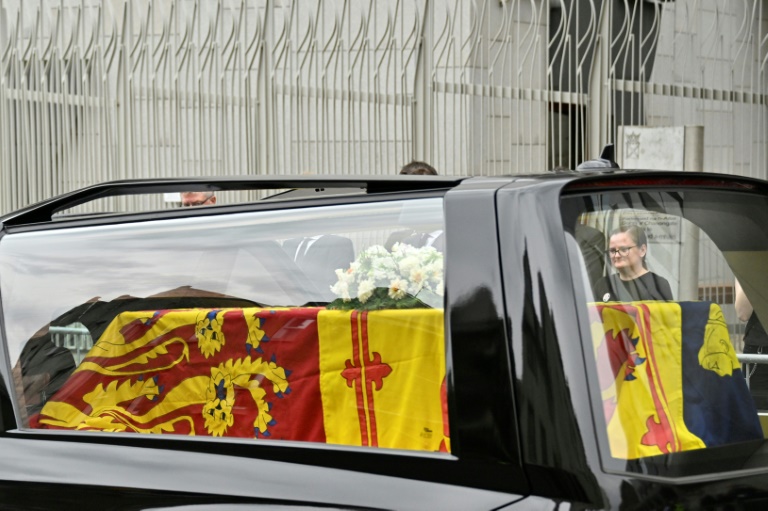
Thousands of people are expected to line up for the chance to see the flag-draped casket at St Giles’ Cathedral in the Scottish capital, a week before her funeral in London.

The new monarch will walk behind his mother’s coffin in a sombre procession leading from Holyroodhouse palace, where it arrived on Sunday after making a six-hour road journey from Balmoral Castle, to the church.

The new king will also address British lawmakers in London for the first time since ascending the throne, as the pageantry continues ahead of the queen’s September 19 state funeral.

The lengthy mourning period comes with Britain trying to reconcile itself to the death of its longest-serving monarch, who has been part of the backdrop of national life almost since World War II.

“To see her pass, in front of us, I think actually gave a bit of closure,” said Lucy Hampshire, who came to Edinburgh with her boyfriend from the English city of York to see the queen’s coffin.

Crowds 10 deep turned out in Edinburgh as the hearse carrying the queen drove through the city, with some cheering, some throwing flowers and a few shedding tears in an outpouring of respect for the queen.

People also lined the streets of towns and villages along the 180-mile (290-kilometre) route from the queen’s beloved Balmoral estate, where she died on Thursday aged 96 after seven decades on the throne.

– ‘Last respects’ –

Elizabeth II’s oak casket rested overnight Sunday in the throne room of Holyroodhouse palace, with Charles and his queen consort Camilla flying to Edinburgh on Monday after his visit to parliament.

The king and senior royals will then follow on foot behind her hearse, flanked by soldiers, in a procession to take her along historic Edinburgh’s Royal Mile to the 12th century St Giles’ Cathedral.

The coffin will be carried into the imposing grey stone cathedral, where it will be topped with the Crown of Scotland, before a minister leads a service of “prayer and reflection” for the queen.

Her coffin will remain there for 24 hours “to enable people of Scotland to pay their last respects”, a palace official said. Reports said there would be tight security and long queues were expected.

King Charles III and senior royals will mount a vigil beside the late queen at 7:20 pm (1820 GMT), while soldiers from the Royal Company of Archers will stay on guard throughout.

The queen’s body will be flown to London on Tuesday by Royal Air Force jet to an airfield near London, accompanied by the queen’s daughter Princess Anne, and driven to Buckingham Palace.

The following day the royals will follow the coffin, carried atop a gun carriage, to Westminster Hall where it will lie in state from 5:00 pm (1600 GMT) until the day of the funeral.

At least a million people are expected to come to see the coffin in London. Officials warning that people should expect to wait “many hours” and possibly even to queue overnight.

The funeral itself is set to be watched worldwide and attended by numerous heads of state including US President Joe Biden.

– ‘Why stop now?’ –

As Charles III takes on what he has called the “heavy responsibilities” of kingship, the new monarch’s traditional visit to parliament will enshrine his role as constitutional head of state.

In the ceremony at Westminster Hall, the same place that the queen will lie in state, both chambers of the British parliament will express their condolences at the “demise of the queen”. 

Charles will then give a formal reply.

Charles will also make his first visits as king to Northern Ireland and Wales this week in a show of national unity.

While the emotional scenes in Scotland showed the deep affection for the queen there, her passing has also reignited a debate over Scottish independence from the United Kingdom.

Scotland’s First Minister Nicola Sturgeon said it was a “sad and poignant moment” to see the coffin leaving Balmoral but the pro-independence leader has been pushing for a new referendum on the divisive issue.

“I’m not for independence — we’ve been together for hundreds of years. Why stop now?” said mourner Anne Johnston, 68, from Edinburgh.

She added, however, that “no offence to Charles, but I don’t think he’ll ever live up to the queen.”

– Republican realms? –

Britons have lost the only monarch that most of them have ever known, a figure familiar to them and millions around the world from banknotes, stamps and annual Christmas televised messages.

Charles has seen his popularity recover since the death of his former wife Diana in a 1997 car crash, but he takes the throne at a moment of deep anxiety in Britain over the spiralling cost of living and international instability caused by the war in Ukraine.

With republican movements gaining ground from Australia to Antigua, the new king also faces the challenge of how to keep together the worldwide royal family that the queen so loved.

Charles hosted his first reception Sunday for representatives of the Commonwealth realms, the 14 former colonies over which he reigns in addition to Britain — at least for now.

Just hours earlier, Australia and New Zealand had officially named Charles king.

But one question hanging over the royal family was resolved on Sunday — when it emerged that scandal-hit Prince Andrew and his ex-wife Sarah Ferguson will look after the queen’s beloved corgis.

The prince — who stepped back from royal duties in 2021 over his association with convicted US paedophile Jeffrey Epstein — will take on Muick and Sandy, the dogs that he had gifted to the queen that same year.

Iraq ancient ruins open up to tourism after IS atrocities

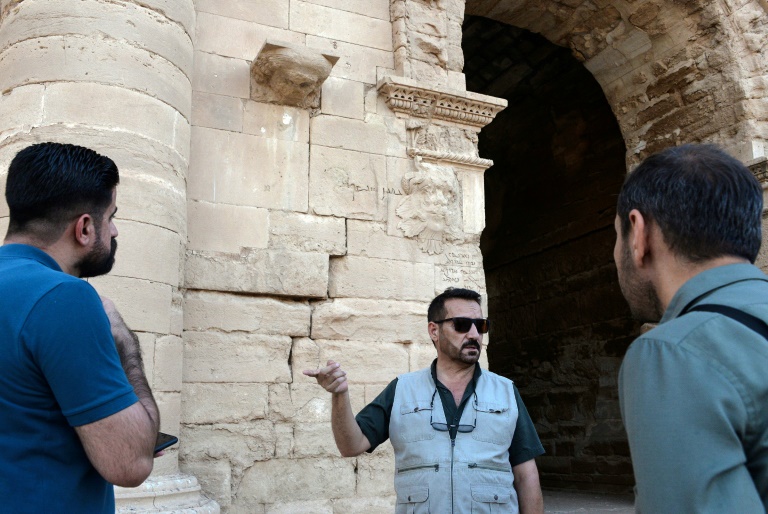
Strolling along the ancient ruins of Hatra in Iraq’s north, dozens of visitors admired the site, where local initiatives seek to turn over a new leaf after a brief but brutal jihadist rule.

Designated an endangered world heritage site by UNESCO, Hatra dates back to the 2nd and 3rd centuries BC.

It is a two-hour drive from Mosul, the former “capital” proclaimed by the Islamic State (IS) group, which was recaptured in 2017 by Iraqi forces and an international coalition that backed them.

A tour of the site on Saturday, the first of its kind organised by a private museum in Mosul, aimed to boost tourism in the area.

Some 40 visitors, most of them Iraqis, were allowed to walk around the more than 2,000-year-old archaeological site in the golden hour of twilight.

The tourists took selfies in front of impressive colonnades and inspected the reliefs vandalised by IS jihadists.

“It has great history” allowing a peek into an ancient civilisation, said Luna Batota, a 33-year-old on tour with her Belgian husband.

“A lot of history but at the same time a lot of unfortunate events took place here with IS,” she told AFP.

Batota works for a pharmaceutical company in Belgium, where she has lived since the age of nine.

Twenty-four years later, this is the first time she returns to her homeland.

Visiting Hatra stirred up “mixed feelings” for her, she said. “You see bullet holes, you see many empty bullets.”

An important religious and trading centre under the Parthian empire, Hatra had imposing fortifications and magnificent temples, blending Greek and Roman architectural styles with oriental decorative elements.

In 2015, IS released a video showing its militants destroying a series of reliefs, firing at them and hacking away at a statue with a pickaxe.

In February, the authorities unveiled three restorations at the site: a Roman-style sculpture of a life-size figure and reliefs on the side of the great temple.

– ‘Not only war’ –

Five years after the defeat of IS, Mosul and its surroundings have regained a sense of normalcy, even as rehabilitation efforts suffer setbacks and many areas still bear the scars of the fight against the jihadists.

The tour of Hatra was organised by the Mosul Heritage House, a private museum inaugurated in June.

But even before it, the site drew individual visitors, according to one of the organisers, Fares Abdel Sattar, a 60-year-old engineer. 

This new initiative seeks to “showcase the heritage and identity” of Mosul and its broader Nineveh province, he said.

After its rise to power in 2014 and the conquest of swathes of Iraq and Syria, IS faced counteroffensives in both countries. Iraqi forces finally claimed victory in late 2017.

As Iraq gradually opens up to foreign tourism, dozens of visitors — particularly from the West — are now exploring the country, with some even venturing into Mosul.

The Hatra group are pioneers, visiting at a time when the US, British and other governments are warning their citizens against travel to Iraq, citing the risks of terrorism, kidnapping, armed conflict and civil unrest.

The tourism sector also suffered a setback with the case of British pensioner James Fitton, who was detained and condemned to 15 years in jail over pottery shards he picked at an archaeological site, before a court in July overturned the sentence and he flew back home.

Religious tourism to the Shiite holy cities of Karbala and Najaf has been thriving, mostly from Iran.

However, challenges remain and tourist infrastructure is still basic in Iraq, a country rich in oil but ravaged by decades of fighting.

“Mosul isn’t only war, IS, terrorism,” said Beriar Bahaa al-Din, a doctoral student in anthropology at the University of Exeter in Britain, on the Hatra visit.

“Mosul is a civilisation, heritage, culture,” he added.

“This impressive site should be full of tourists from across the globe.”

Ethiopia's Tigray rebels say ready for AU-led peace talks

Ethiopia’s Tigray rebels said Sunday they were ready for a ceasefire and would accept a peace process led by the African Union, removing an obstacle to negotiations with the government to end almost two years of brutal warfare.

The announcement was made amid a flurry of international diplomacy after fighting flared last month for the first time in several months in northern Ethiopia, torpedoing a humanitarian truce.

“The government of Tigray is prepared to participate in a robust peace process under the auspices of the African Union,” said a statement by the Tigrayan authorities.

“Furthermore, we are ready to abide by an immediate and mutually agreed cessation of hostilities in order to create a conducive atmosphere.”

The Ethiopian government has previously said it was ready for unconditional talks “anytime, anywhere,” brokered by the Addis Ababa-headquartered AU.

The Tigray People’s Liberation Front (TPLF) had until now vehemently opposed the role of the AU’s Horn of Africa envoy Olusegun Obasanjo, protesting his “proximity” to Ethiopian Prime Minister Abiy Ahmed.

AU Commission chief Moussa Faki Mahamat issued a statement welcoming the development as a “unique opportunity towards the restoration of peace” and urged “both parties to urgently work towards an immediate ceasefire, engage in direct talks”.

UN Secretary-General Antonio Guterres called in a statement for “the parties to seize this opportunity for peace and to take steps to end the violence definitively and opt for dialogue.” 

He said the United Nations is ready to support the AU-led peace process.

Taye Dendea, Ethiopia’s state minister for peace, described the TPLF announcement as a “nice development” on Twitter but insisted the “so-called TDF (Tigray Defence Forces) must be disarmed before peace talks start. Clear stand!”

– Seeking ‘credible’ peace process –

The TPLF statement, which coincided with Ethiopia’s new year, made no mention of preconditions, although it said the Tigrayans expected a “credible” peace process with “mutually acceptable” mediators as well as international observers.

TPLF leader Debretsion Gebremichael earlier this month proposed a conditional truce calling for “unfettered humanitarian access” and the restoration of essential services in Tigray, which is suffering food shortages and a lack of electricity, communications and banking.

In a letter to Guterres, he also called for the withdrawal of Eritrean forces from across Ethiopia, and for troops to pull out of western Tigray, a disputed region claimed by both Tigrayans and Amharas, the country’s second-largest ethnic group.

Sunday’s statement said a negotiating team including TPLF spokesman Getachew Reda and General Tsadkan Gebretensae, a former Ethiopian army chief now in Tigray’s central military command, was “ready to be deployed without delay”.

Debretsion had disclosed last month that two rounds of confidential face-to-face meetings had taken place between top civilian and military officials, the first acknowledgement by either warring side of direct contacts.

– ‘Choose talks over fighting’ –

The AU’s Faki had held talks Saturday with both Obasanjo, the former Nigerian president, and visiting US envoy for the Horn of Africa, Mike Hammer.

“May the parties in the conflict have the courage to choose talks over fighting, and participate in an African Union-led process that produces a lasting peace,” Hammer said in a new year’s message for Ethiopians on Sunday.

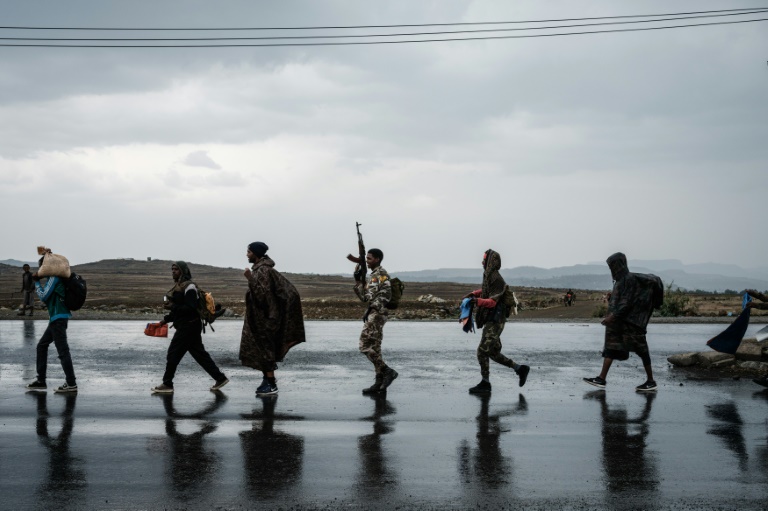
Fighting has raged on several fronts in northern Ethiopia since hostilities resumed on August 24, with both sides accusing the other of firing first and breaking a March truce.

The latest combat first broke out around Tigray’s southeastern border but has since spread to areas west and north of the initial clashes, the TPLF accusing Ethiopian and Eritrean forces of having launched a massive joint offensive on Tigray on September 1.

The United Nations said on Thursday that the renewed fighting had forced a halt to desperately needed aid deliveries to Tigray, both by road and air.

The March truce had allowed aid convoys to travel to Tigray’s capital Mekele for the first time since mid-December.

Untold numbers of civilians have been killed since the war erupted in Africa’s second most populous country, and millions of people across northern Ethiopia are in need of emergency aid.

Abiy, a Nobel Peace laureate, sent troops into Tigray in November 2020 to topple the TPLF in response to what he said were attacks by the group on federal army camps.

The TPLF recaptured most of Tigray in a surprise comeback in June 2021 and expanded into Afar and Amhara, before the fighting reached a stalemate.

Styles stokes sexuality debate with 'My Policeman' premiere in Toronto

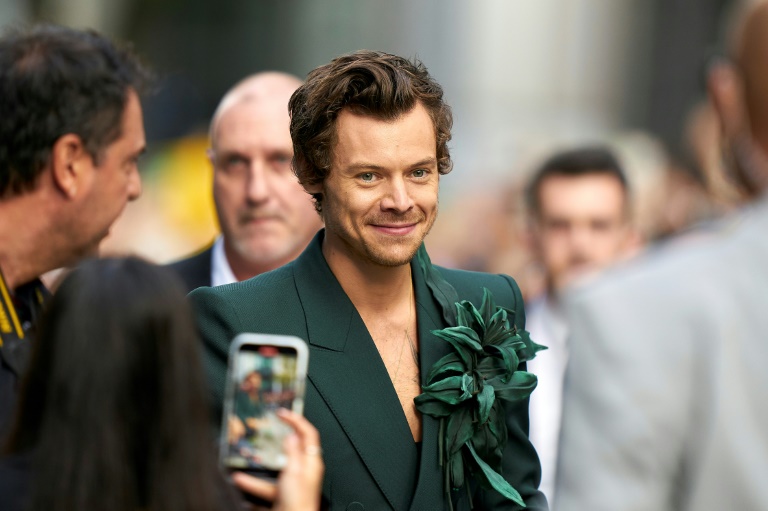
Pop superstar Harry Styles discussed the complexities of sexuality and said he found the closeted gay man he plays in 1950s drama “My Policeman” depressing, as his latest movie premiered at the Toronto film festival Sunday.

“My Policeman” is one of several LGBTQ-themed movies in what organizers have hailed as a “breakthrough” year at North America’s biggest film festival, along with Billy Eichner’s rom-com “Bros” and critically praised gay military drama “The Inspection.”

But the world premiere of Styles’s latest movie comes as the British actor-singer faces allegations from some high-profile critics of appropriating queer culture, including his gender-non-conforming fashion choices, while keeping his own sexuality ambiguous. 

In the film, he plays Tom, a policeman caught in a forbidden love triangle with a young woman and an urbane art gallery curator in 1950s Britain, when homosexuality was illegal.

“I think there’s so much nuance to them, and so much complexity that comes for people in real life around sexuality and finding themselves,” Styles told a Toronto press conference.

The movie, which also stars Emma Corrin and Rupert Everett, jumps between 1957 and 1999, depicting the trio at two different stages of their lives, when Britain’s attitude and laws about homosexuality had radically changed.

It deals with the consequences for all three of Tom’s being forced to hide his love for curator Patrick.

“I think Tom’s version of acceptance is a pretty depressing one — I think he accepts that he’s gonna deny this part of himself for a really long time,” said Styles.

He noted: “For me, the reason why the story is so devastating is because ultimately to me, the whole story is about wasted time.

“I think wasted time is the most devastating thing, because it’s the only thing we can’t control. It’s the one thing we can’t have back.”  

– LGBTQ actors – 

Styles has been praised by some for normalizing gender fluidity and speaking out for LGBTQ rights, and famously stoked speculation about his sexuality by telling a concert audience, “We’re all a little bit gay, aren’t we?”

But his position has drawn criticism from prominent LGBTQ figures such as actor-singer Billy Porter, who has accused Styles of “just doing it because it’s the thing to do.”

The topic of actors who do not openly identify as LGTBQ playing gay roles was raised and even ridiculed earlier at the Toronto festival with the world premiere of “Bros” — billed as the first gay rom-com from a major Hollywood studio.

“The entire cast is openly LGBTQ actors, even in the straight roles in the movie, which is rare,” star Eichner told AFP on the red carpet.

The movie itself contains several quips about allegedly Oscars-hungry straight actors taking on gay roles in films, such as “Brokeback Mountain” and last year’s “The Power of the Dog” starring Benedict Cumberbatch.

“I mean it’s absurd and kind of infuriating that it took this long, that we haven’t had more of these movies; there should be tons of these movies by now,” said Eichner, about “Bros.”

“But still, I’m very grateful that Universal finally decided that it was time.” 

Director Nicholas Stoller added that he hoped the film about a commitment-phobic gay New York podcaster reluctantly seeking love will resonate with “not just an LGBTQ audience, but a straight audience.”

– ‘I see you’ –

Ahead of the festival, the event’s CEO Cameron Bailey told AFP there had been a “breakthrough this year” for films packed with “LGBTQ stories being told in maybe places that they haven’t been before, and in a much more mainstream way. 

“The biggest companies that make films have often been the most cautious, shall we say, when it comes to this kind of representation,” he said.

“That seems to be changing.”

Among those was “The Inspection” from writer-director Elegance Bratton, who drew on his own experiences as a Black gay man who joined the US Marines to escape homelessness and was forced to endure at-times brutal homophobia.

Jeremy Pope, who plays Bratton’s alter ego Ellis and is openly gay, told Deadline that his performance came “from a place of truth and honesty.”

“It ended up being something very beautiful and — for me and for him — very healing, to be able to look across the room at my writer and director, that was Black and queer, and say ‘I see you.'”

TIFF runs until September 18.

Israel PM arrives in Berlin for fresh pitch against Iran deal

Israeli Prime Minister Yair Lapid arrived in Germany on Sunday in his latest diplomatic effort to persuade Western powers to ditch their tattered nuclear deal with the Jewish state’s arch nemesis Iran.

Israel has long opposed a revival of the 2015 accord, which has been moribund since then US president Donald Trump unilaterally withdrew in 2018 and reimposed biting sanctions on Tehran.

Momentum that built towards a restored agreement last month appears to have slowed, after the three European nations party to the agreement — Germany, France and Britain — on Saturday raised “serious doubts” about Iran’s sincerity in restoring the deal.

Meeting his cabinet before flying to Berlin, Lapid thanked the three countries for the “strong position” they had voiced in a tripartite statement on Saturday.

The European nations charged that Tehran “has chosen not to seize this critical diplomatic opportunity”, adding that “instead, Iran continues to escalate its nuclear programme way beyond any plausible civilian justification”. Iran’s foreign ministry criticised those comments as “unconstructive.”

Lapid told his cabinet that “Israel is conducting a successful diplomatic campaign to stop the nuclear agreement and prevent the lifting of sanctions on Iran. 

“It is not over yet,” he added. “There is still a long way to go, but there are encouraging signs.” 

A senior Israeli official told AFP: “Our understanding is that there will be no return to the JCPOA at least until mid-November. We are working with our partners to develop a new strategy.”

The official added: “It’s important to continue to coordinate positions and to influence the European position. Germany has an important role in this”.

Lapid is scheduled to meet Chancellor Olaf Scholz, Foreign Minister Annalena Baerbock and President Frank-Walter Steinmeier before returning to Israel late Monday.

The 2015 agreement, known formally as the Joint Comprehensive Plan of Action (JCPOA) , gave Iran sanctions relief in return for restricting its nuclear programme.

Negotiations underway in Vienna since April 2021 have sought to restore the agreement, by lifting the sanctions on Tehran and pushing Iran to fully honour its prior nuclear commitments.

Israel insists Iran would use revenue from sanctions relief to bolster allied groups capable of attacking Israelis, notably Lebanese Shiite group Hezbollah, and Hamas and Islamic Jihad, two key Palestinian militant organisations. 

Last month, the European Union, which acts as the mediator of the nuclear talks, put forward a “final” draft of the agreement.

Iran and the US then took turns to respond to the text, with Washington saying on Friday that Tehran’s reply was a step “backwards”.

Lapid, whose late father survived the Holocaust, is also travelling with a delegation of survivors who will join him and Scholz on a visit to Wannsee, site of a 1942 conference where top Nazi officials finalised plans to send Jews to death camps.

With republicans at the gates, Charles III meets realm envoys

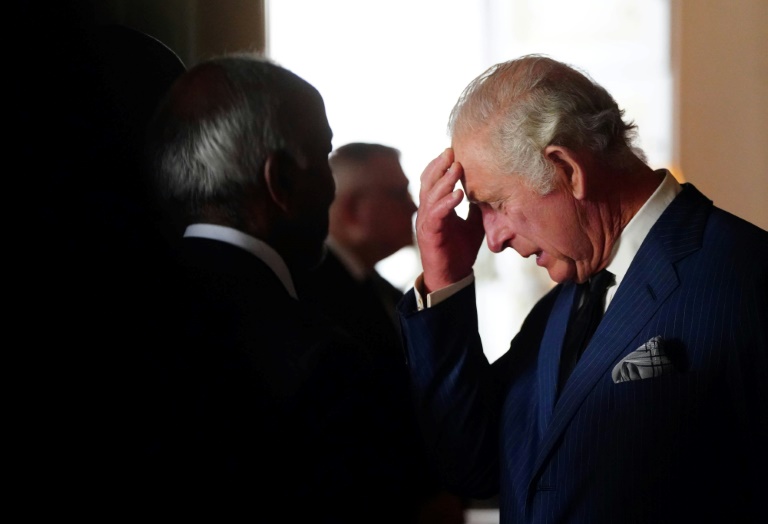
King Charles III hosted his first reception Sunday for representatives of the Commonwealth realms, the 14 former colonies over which he reigns in addition to Britain — at least for now.

With republican movements gaining ground from Australia to Antigua, one of the 73-year-old’s biggest challenges will be how to keep together the worldwide family that his late mother Queen Elizabeth II so loved.

On his third full day as monarch, the king received Patricia Scotland, the secretary general of the 56-nation Commonwealth, at Buckingham Palace before a reception with realm high commissioners and their spouses.

Just hours earlier, Australia and New Zealand had officially named Charles king, following a pomp-filled proclamation in London on Saturday.

But while the effusive tributes to “Mama Queen” — as she was known in Papua New Guinea — left no doubt as to the widespread love for his mother, there are questions as to whether Charles can inspire the same devotion.

The Caribbean island nation of Barbados last year became the latest nation to declare itself a republic, and others are heading in that direction.

A sizeable proportion of Australians want to become a republic, including Prime Minister Anthony Albanese, but for now he is focusing on mourning the late queen.

“The important thing is to commemorate the moment that we’re in now,” he told Britain’s Sky News, ruling out a referendum in his first term.

Shortly after Charles was confirmed king of Antigua and Barbuda, Prime Minister Gaston Browne said he intended to hold a republic referendum “within the next three years”.

“This is not an act of hostility or any difference between Antigua and Barbuda and the monarchy, but it is the final step to complete that circle of independence,” he told ITV News.

In Canada republicans are in a minority, but a poll last April found 67 percent opposed Charles succeeding his mother.

Calls for change are also growing in Jamaica, where Prime Minister Andrew Holness told Charles’ son William in March that the nation was “moving on” as an independent country.

William’s tour of the Caribbean with his wife Kate was met with protests and demands for the monarchy to apologise and pay reparations for its role in the slave trade.

– ‘In my blood’ –

The realms are among a total of 56 mostly former British colonies that make up the Commonwealth, a voluntary association covering 2.5 billion people across the globe.

Togo and Gabon became the latest members this year, despite never having been under British rule.

Most of the others became independent after Queen Elizabeth II took the throne in 1952, and many have since thrown off the monarchy, but she saw the Commonwealth as a way to keep the diverse nations together.

At a summit in 2018, Commonwealth leaders confirmed that Charles would follow her as head of the organisation when she died.

He has already laid the groundwork, visiting 45 of the 56 nations so far, and represented his mother at the most recent heads of government summit in Rwanda in June.

There, he addressed the issue of republicanism head on, telling an audience of presidents and prime ministers it was “purely a matter for each member country to decide”.

At the 2013 Sri Lanka summit, where he also stood in for the queen, he recalled a life spent as part of what the Commonwealth “family”, saying it was “in my blood”.

He recalled how former Ghana president Kwame Nkrumah, visiting the queen’s Scottish estate of Balmoral when he was a boy, gave him a bow and set of arrows that he promptly fired off into the trees.

Charles has also described water-skiing with Malta former prime minister Dom Mintoff and dancing with the wife of Bahamas prime minister Lynden Pindling at a 1973 independence ball.

Such ties could help ensure that even if they throw off the monarchy, the realms will stay in the Commonwealth.

Former British prime minister David Cameron remarked that, like his mother, Charles is a “superb diplomat”.

“I saw him in action at Commonwealth heads of government meetings and he knows every leader personally. He interacts with them brilliantly,” he told BBC television.

Close Bitnami banner
Bitnami