World

Queen's coffin arrives in Edinburgh on solemn final journey

Thousands of mourners thronged the route for the final journey of Queen Elizabeth II on Sunday as her coffin arrived in Edinburgh from the Scottish retreat where she died. 

Huge crowds packed the streets of Scotland’s capital as the hearse bearing Britain’s longest-serving monarch completed the first leg of a sombre odyssey that will culminate with her state funeral in London on September 19. 

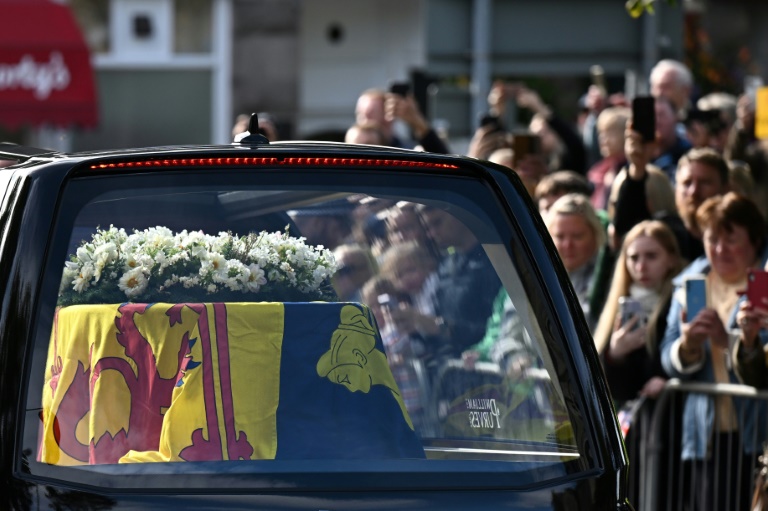
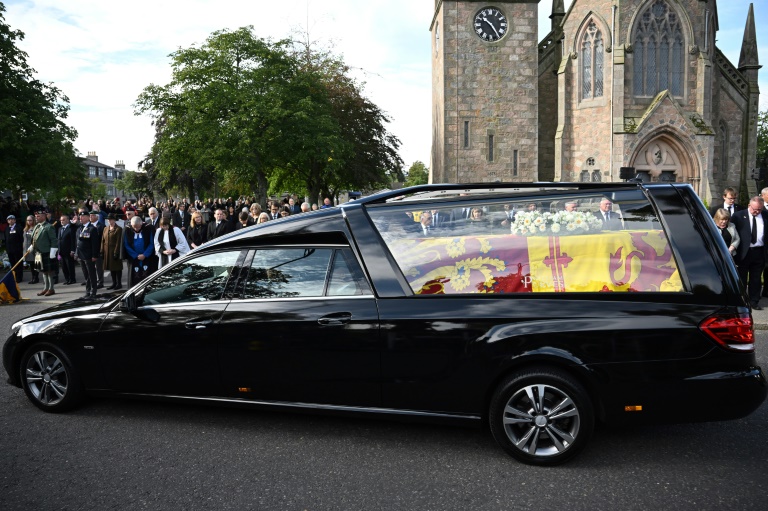
Soldiers in kilts stood to attention as the seven-car cortege arrived at Holyroodhouse palace after a six-hour drive from the queen’s Balmoral residence where she passed away on Thursday, aged 96. 

Some of the well-wishers along the way had thrown flowers or applauded, while others were in tears as the convoy including the queen’s only daughter Princess Anne went by. 

“It is history, history in the making. We lived so long with the queen — 70 years,” said former soldier Stuart Mackay. 

“It’s the only Monarch we’ve known and I think it’s my duty to be here to wave her goodbye.”

The queen’s coffin will rest in Holyroodhouse Palace, the monarch’s official residence in Scotland, for a day before being moved to St Giles’ cathedral for the public to pay their respects. 

Her son Charles III — formally proclaimed monarch on Saturday — will travel to Edinburgh on Monday for a prayer service and to mount a vigil by her coffin along with other members of the royal family.

The body of the queen will be flown to London the day after to lie in state for four days, which is expected to draw at least a million people, ahead of a funeral set to be watched worldwide and attended by numerous heads of state.

– ‘Poignant moment’ –

The symbolism of the queen’s last journey will be heavy for Scotland — a nation with deep royal links, but where there is also a strong independence movement intent on severing the centuries-old union with the United Kingdom.

Scotland’s First Minister Nicola Sturgeon wrote on Twitter that it was a “sad and poignant moment” to see the queen leave her cherished Balmoral refuge for the final time. 

Charles — also declared monarch in Scotland at a pomp-filled ceremony on Sunday — and other royals will on Monday take part in a procession to convey her coffin along Edinburgh’s Royal Mile to St Giles’ Cathedral.

The following day the coffin will be flown by Royal Air Force jet to Northolt airfield near London, and driven to Buckingham Palace. Then, on Wednesday, it will be moved to Westminster Hall to lie in state.

King Charles will also visit Northern Ireland and Wales in a show of national unity. The new monarch will be joined at memorial services by British Prime Minister Liz Truss, who was only appointed by the late queen on Tuesday.

Charles has seen his popularity recover since the death of his former wife Diana, Princess of Wales, in a 1997 car crash, but he takes the throne at a moment of deep anxiety in Britain over the spiralling cost of living and international instability caused by the war in Ukraine.

– William and Harry together –

While Charles’ accession has pushed Britain into what newspapers have called the new “Carolean” era, Britain and the royal family are still coming to terms with the end of the Elizabethan age.

Prince William broke his silence with an emotional tribute to his beloved “Grannie” on Saturday.

“She was by my side at my happiest moments. And she was by my side during the saddest days of my life,” said William, who has now become the Prince of Wales.

But the queen’s death also brought a surprise show of unity from William, 40, and his younger brother Harry, 37, when they emerged with their wives to speak to well-wishers outside Windsor Castle.

The sight of the two couples, who have barely seen each other since 2020, together — even if they separated to speak and shake hands with different sides of the cheering crowds — will likely spark rumours of a reconciliation.

Pictures of the four were splashed on the fronts of Sunday’s newspapers.

“Reunited for granny,” read the Sunday Mirror’s headline, while the Telegraph ran with “Reunited in sorrow” and the Sun with “All 4 One”.

The Sunday Times focussed on the apparent frostiness, with the headline: “Warring Windsors’ awkward truce to honour the Queen”.

– ‘Inspiring example’ –

Charles vowed at the formal Accession Council at St James’s Palace on Saturday that he would “strive to follow the inspiring example I have been set” by his mother during her “lifetime of service”.

Thousands of people have gathered outside Buckingham Palace and other royal residences in recent days to lay flowers and messages of condolence, or simply to experience history in the making.

But officials expect far more people to pay their respects while the queen lies in state, before the televised funeral service at Westminster Abbey opposite.

The funeral for the queen — who came to the throne aged just 25 in 1952 — will be attended by national leaders including US President Joe Biden, Australian Prime Minister Anthony Albanese and possibly Japanese Emperor Naruhito. 

China’s President Xi Jinping, who is not expected to attend, said he was willing to “expand friendly exchanges and mutually beneficial cooperation” as he congratulated Charles on ascending to the throne.

Charles was formally named king in Australia and New Zealand — former British colonies that have been independent for decades but retain the monarchy — in tandem ceremonies on Sunday. 

He hosted his first reception Sunday for representatives of the Commonwealth realms, the 14 former colonies over which he reigns in addition to Britain.

With republican movements gaining ground from Australia to Antigua, one of the 73-year-old’s biggest challenges will be how to keep together the worldwide family that his late mother Queen Elizabeth II so loved. 

The queen’s record 70 years on the throne were a constant during a turbulent time for Britain, from a world of post-war deprivation and the loss of its empire, to more recent upheavals like Brexit and the coronavirus pandemic.

Charles’s coronation, an elaborate ritual steeped in tradition and history, will take place in the same historic surroundings of Westminster Abbey, as it has for centuries, on a date to be fixed.
Swedes vote in tight election race as far right surges

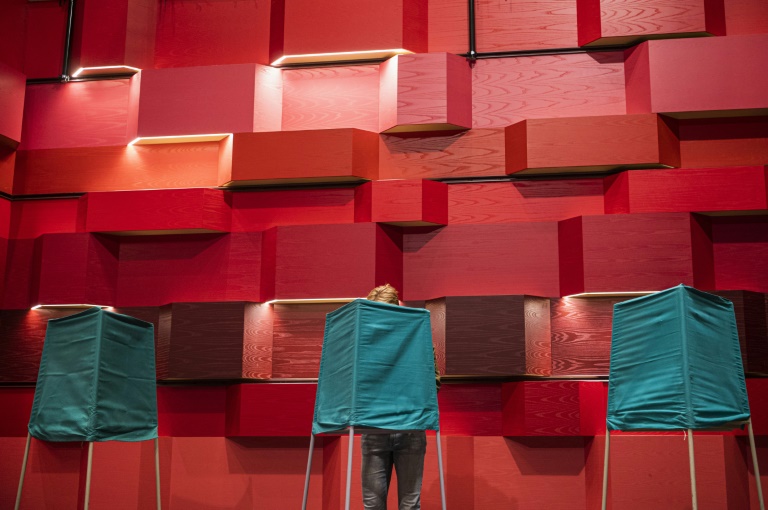
Swedes voted in a general election Sunday that will either pave the way for an unprecedented right-wing government supported by the far right or a third straight mandate for the ruling Social Democrats.

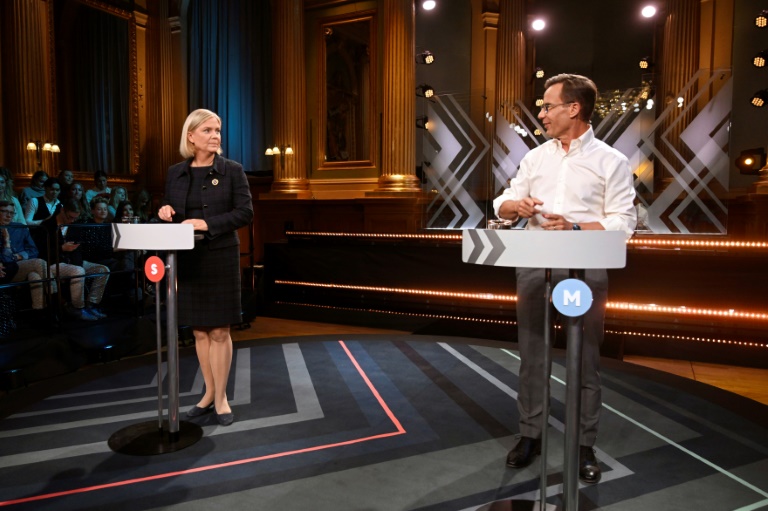
Opinion polls have predicted a close race with a razor-thin lead for Prime Minister Magdalena Andersson’s Social Democrats and the left bloc, following a campaign dominated by rising gang shootings and soaring electricity prices.

Polling stations were to close at 8:00 pm (1800 GMT), with final results due by midnight.

At a voting station in Stockholm’s Central Station, 34-year-old IT worker Erwin Marklund said he was concerned about the rise of the far right and had voted for the small Left Party.

“It’s important to not get the far right into the system”, he told AFP. 

The right-wing bloc has never before agreed to cooperate with the nationalist and anti-immigration Sweden Democrats, long treated as “pariahs” by other political parties.

The far right has leapt to second place in opinion polls behind the Social Democrats in the final weeks of the campaign, credited with around a fifth of intended votes.

Their surge — overtaking the traditional leaders of the right-wing bloc, the conservative Moderates — was attributed to an election race focused on issues including crime, segregation and the integration of immigrants. 

Prime Minister Andersson, 55, hopes however to hang onto power with the support of the small Left, Centre and Green parties.

“It’s going to be very, very close”, she told reporters as she cast her ballot in the Stockholm suburb of Nacka on Sunday. 

More than 80 percent of Sweden’s 7.8 million eligible voters were expected to cast ballots, and more than 2.8 million voted in advance, election officials said.

– Tough days ahead –

Andersson, whose party has dominated Swedish politics since the 1930s, enjoys broad support among Swedes.

She has consistently led her challenger for the post of prime minister, Moderates leader Ulf Kristersson, by a wide margin in opinion polls.

Yet pollsters put the two blocs in an almost dead heat, predicting 49.7 to 51.6 percent of voter support for the left and 47.6 to 49.4 percent for the right.

While online betting sites meanwhile gave Andersson as the favourite, Kristersson said Sunday he felt confident.

“It feels like we have a lot of support and wind in our sails”, he said as he cast his ballot.

Kristersson is the architect behind a major U-turn for the right wing.

He launched exploratory talks with the Sweden Democrats in 2019 and deepened their cooperation before the two other small right-wing parties, the Christian Democrats and to a lesser extent the Liberals, followed suit.

Sweden Democrats’ leader Jimmie Akesson told reporters as he queued in a long line to vote in Stockholm that “we hope to be in the government”, and his first priority would be to “push back crime”. 

“As it stands, we have two fairly clear blocs,” political scientist Katarina Barrling told AFP, noting it should be fairly easy to predict the next prime minister after election night.

However, both blocs are beset by internal divisions that could make for lengthy negotiations to build a coalition government.

Barrling noted there was “pressure to have a united and effective government” in place quickly, as Sweden faces a looming economic crisis, is in the midst of a historic NATO application process and is due to take over the EU presidency in 2023.

– ‘Enormous shift’ –

The end of the Sweden Democrats’ political isolation, and the prospect of it becoming the biggest right-wing party, is “an enormous shift in Swedish society”, said Anders Lindberg, an editorialist at left-wing tabloid Aftonbladet.

Born out of a neo-Nazi movement at the end of the 1980s, the Sweden Democrats entered parliament in 2010 with 5.7 percent of votes. They won 17.5 percent in 2018.

The party’s surge comes as Sweden struggles to combat escalating gang shootings attributed to battles over the sales of drugs and weapons.

The country now tops European statistics for firearm deaths.

While the violence was once contained to locations frequented by criminals, it has spread to public spaces such as parks and shopping centres, sparking concern among ordinary Swedes in a country long known as safe and peaceful.

Israel PM heads to Berlin for fresh pitch against Iran deal

Israeli Prime Minister Yair Lapid was headed to Germany Sunday in his latest diplomatic effort to persuade Western powers to ditch their tattered nuclear deal with the Jewish state’s arch nemesis Iran.

Israel has long opposed a revival of the 2015 accord, which has been moribund since then US president Donald Trump unilaterally withdrew in 2018 and reimposed biting sanctions on Tehran.

Momentum that built towards a restored agreement last month appears to have slowed, after the three European nations that are party to the agreement — Germany, France and Britain — on Saturday raised “serious doubts” about Iran’s sincerity in restoring the deal.

Meeting his cabinet before flying to Berlin, Lapid thanked these three powers for the “strong position” they had voiced in a tripartite statement on Saturday.

The European parties charged that Tehran “has chosen not to seize this critical diplomatic opportunity”, adding that “instead, Iran continues to escalate its nuclear programme way beyond any plausible civilian justification”. Iran’s foreign ministry criticised those comments as “unconstructive.”

Lapid told his cabinet that “Israel is conducting a successful diplomatic campaign to stop the nuclear agreement and prevent the lifting of sanctions on Iran. 

“It is not over yet,” he added. “There is still a long way to go, but there are encouraging signs.” 

An Israeli diplomatic official, who requested anonymity, told AFP that Iran will be the focus of the talks when the delegation lands in Berlin. 

“It’s important to continue to coordinate positions and to influence the European position. Germany has an important role in this,” the official said. 

Lapid, who was travelling with senior security officials, is scheduled to meet Chancellor Olaf Scholz, Foreign Minister Annalena Baerbock and President Frank-Walter Steinmeier before returning to Israel late Monday.

The 2015 agreement, known formally as the Joint Comprehensive Plan of Action, gave Iran sanctions relief in return for restricting its nuclear programme.

Negotiations underway in Vienna since April 2021 have sought to restore the agreement, by lifting the sanctions on Tehran and pushing Iran to fully honour its prior nuclear commitments.

Israel insists Iran would use revenue from sanctions relief to bolster allied groups capable of attacking Israelis, notably Lebanese Shiite group Hezbollah, and Hamas and Islamic Jihad, two key Palestinian militant organisations. 

Last month, the European Union, which acts as the mediator of the nuclear talks, put forward a “final” draft of the agreement.

Iran and the US then took turns to respond to the text, with Washington saying on Friday that Tehran’s reply was a step “backwards”.

Lapid, whose late father survived the Holocaust, is also travelling with a delegation of survivors who will join him and Scholz on a visit to Wannsee, site of a 1942 conference where top Nazi officials finalised plans to send Jews to death camps.  

Swedes vote in tight election race as far right surges

Swedes voted in legislative elections Sunday that will either pave the way for an unprecedented right-wing government supported by the far right or a third straight mandate for the ruling Social Democrats.

Opinion polls have predicted a close race with a razor-thin lead for Prime Minister Magdalena Andersson’s Social Democrats and the left bloc, following a campaign dominated by rising gang shootings and soaring electricity prices.

Polling stations were to close at 8:00 pm (1800 GMT), with final results due around midnight.

At a voting station set up in Stockholm’s Central Station, 34-year-old IT worker Erwin Marklund said he was concerned about the rise of the far right and had voted for the small Left Party.

“It’s important to not get the far right into the system”, he told AFP. 

The right-wing bloc has never before agreed to cooperate with the nationalist and anti-immigration Sweden Democrats, long treated as “pariahs” by other political parties.

The far right has leapt to second place in opinion polls behind the Social Democrats in the final weeks of the campaign, credited with around a fifth of votes.

Their surge — overtaking the traditional leaders of the right-wing bloc, the conservative Moderates — was attributed to an election race focused on issues close to their voters, including crime, segregation and the integration of immigrants. 

Prime Minister Andersson, 55, hopes however to hang onto power with the support of the small Left, Centre and Green parties.

“It’s going to be very, very close”, she told reporters as she cast her ballot in the Stockholm suburb of Nacka on Sunday. 

– Tough days ahead –

Andersson, whose party has dominated Swedish politics since the 1930s, enjoys broad support among Swedes.

She has consistently led her challenger for the post of prime minister, Moderates leader Ulf Kristersson, by a wide margin in opinion polls.

Yet pollsters put the two blocs in an almost dead heat, predicting 49.7 to 51.6 percent of voter support for the left and 47.6 to 49.4 percent for the right.

While online betting sites meanwhile gave Andersson as the favourite, Kristersson said Sunday he felt confident.

“It feels like we have a lot of support and wind in our sails”, he said as he cast his ballot.

Kristersson is the architect behind a major U-turn for the right wing.

He launched exploratory talks with the Sweden Democrats in 2019 and deepened their cooperation before the two other small right-wing parties, the Christian Democrats and to a lesser extent the Liberals, followed suit.

Sweden Democrats’ leader Jimmie Akesson told reporters as he queued to vote in Stockholm that “we hope to be in the government” and his first priority would be to “push back crime”. 

“As it stands, we have two fairly clear blocs,” political scientist Katarina Barrling told AFP, noting it should be fairly easy to predict the next prime minister after election night.

However, both blocs are beset by internal divisions that could make for lengthy negotiations to build a coalition government.

Barrling noted there was “pressure to have a united and effective government” in place quickly, as Sweden faces a looming economic crisis, is in the delicate process of joining NATO and is due to take over the EU presidency in 2023.

– ‘Enormous shift’ –

The end of the Sweden Democrats’ political isolation, and the prospect of it becoming the biggest right-wing party, is “an enormous shift in Swedish society”, said Anders Lindberg, an editorialist at left-wing tabloid Aftonbladet.

Born out of a neo-Nazi movement at the end of the 1980s, the Sweden Democrats entered parliament in 2010 with 5.7 percent of votes. They won 17.5 percent in 2018.

The party’s surge comes as Sweden struggles to combat escalating gang shootings attributed to battles over the drugs and weapons market.

The country now tops European statistics for firearm deaths.

While the violence was once contained to locations frequented by criminals, it has spread to public spaces such as parks and shopping centres, sparking concern among ordinary Swedes in a country long known as safe and peaceful.

“My country totally changed from maybe the safest in the world” to one where “no one can go out without fear”, 56-year-old Ulrika told AFP at a far-right rally late Saturday.

She blamed “other cultures (that) are coming to our country”.

Ingrid Schmidt, a 62-year-old researcher, disagreed.

“It is important to express your voice against these right-wing values,” she said as she voted at Central Station on Sunday. 

More than 80 percent of Sweden’s 7.8 million eligible voters are expected to cast ballots.

Queen Elizabeth II embarks on solemn final journey

Thousands of mourners lined the route to pay their respects as Queen Elizabeth II’s coffin on Sunday headed from the Scottish retreat where she died to Edinburgh on the first leg of her sombre final journey. 

A hush fell over the gathered crowd as the cortege carrying the queen’s casket exited the gates of Balmoral Castle at the start of an odyssey of mourning in the United Kingdom that will culminate in her state funeral in London on September 19.

Some well-wishers threw flowers or applauded, while others were in tears as the long convoy led by a black hearse wound its way slowly on a six-hour journey to Scotland’s capital, where it will stay for two days.

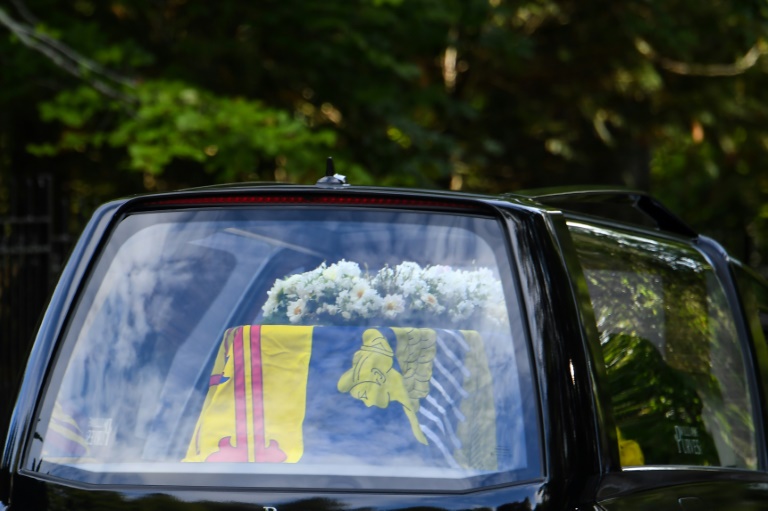
Six groundskeepers had loaded the oak coffin — draped with a Scottish Royal Standard and a floral wreath — into the hearse that was followed by a Bentley carrying the queen’s only daughter Princess Anne.

The first glimpse of the queen’s coffin for a grieving nation came a day after her son Charles III was formally proclaimed king, and after her warring grandsons William and Harry, and their wives Kate and Meghan, briefly reunited for a walkabout.

The king himself will travel to Edinburgh on Monday for a prayer service, before the body of the queen, who died at Balmoral on Thursday aged 96, is flown to London on Tuesday.

Britain’s longest-serving monarch will then lie in state for four days which is expected to draw at least a million people, ahead of a funeral set to be watched worldwide and attended by numerous heads of state.

“We want to say thank you that we can honour the memory of the Queen,” said Ukrainian Viktoriia Saienko, who fled Kharkiv, one of the cities devastated by Russia’s invasion, and is working in Scotland. 

“We wanted to say thank you very much to Britain, to the Queen and all her family,” the 29-year-old said as she waited in Edinburgh with a group of her compatriots clutching bouquets of roses. 

– ‘Poignant moment’ –

The symbolism of the queen’s last journey will be heavy for Scotland — a nation with deep royal links, but where there is also a strong independence movement intent on severing the centuries-old union with the United Kingdom.

“A sad and poignant moment as Her Majesty, The Queen leaves her beloved Balmoral for the final time,” Scotland’s First Minister Nicola Sturgeon wrote on Twitter. 

“Today, as she makes her journey to Edinburgh, Scotland will pay tribute to an extraordinary woman.”

The queen’s coffin will be taken to the Holyroodhouse Palace, the monarch’s official residence in Scotland, where it will rest for a day.

King Charles — who was formally proclaimed monarch in Scotland at a pomp-filled ceremony on Sunday — and other royals will on Monday take part in a procession to convey her coffin along Edinburgh’s Royal Mile to St Giles’ Cathedral.

The following day the coffin will be flown by Royal Air Force jet to Northolt airfield near London, and driven to Buckingham Palace. Then, on Wednesday, it will be moved to Westminster Hall to lie in state.

King Charles will also visit Northern Ireland and Wales in a show of national unity. The new monarch will be joined at memorial services by British Prime Minister Liz Truss, who was only appointed by the late queen on Tuesday.

Charles has seen his popularity recover since the death of his former wife Diana, Princess of Wales, in a 1997 car crash, but he takes the throne at a moment of deep anxiety in Britain over the spiralling cost of living and international instability caused by the war in Ukraine.

– William and Harry together –

While Charles’ accession has pushed Britain into what newspapers have called the new “Carolean” era, Britain and the royal family are still coming to terms with the end of the Elizabethan age.

Prince William broke his silence with an emotional tribute to his beloved “Grannie” on Saturday.

“She was by my side at my happiest moments. And she was by my side during the saddest days of my life,” said William, who has now become the Prince of Wales.

But the queen’s death also brought a surprise show of unity from William, 40, and his younger brother Harry, 37, when they emerged with their wives to speak to well-wishers outside Windsor Castle, near London.

The sight of the two couples, who have barely seen each other since 2020, together — even if they separated to speak and shake hands with different sides of the cheering crowds — will likely spark rumours of a reconciliation.

Pictures of the four were splashed on the fronts of Sunday’s newspapers.

“Reunited for granny,” read the Sunday Mirror’s headline, while the Telegraph ran with “Reunited in sorrow” and the Sun with “All 4 One”.

The Sunday Times focussed on the apparent frostiness, with the headline: “Warring Windsors’ awkward truce to honour the Queen”.

– ‘Inspiring example’ –

Charles vowed at the formal Accession Council at St James’s Palace on Saturday that he would “strive to follow the inspiring example I have been set” by his mother during her “lifetime of service”.

The centuries-old tradition was televised live for the first time, featuring a fanfare of trumpets and a court official wearing a feathered hat to declare him king from a palace balcony.

Thousands of people have gathered outside Buckingham Palace and other royal residences in recent days to lay flowers and messages of condolence, or simply to experience history in the making.

But officials expect far more people to pay their respects while the queen lies in state, before the televised funeral service at Westminster Abbey opposite.

The funeral for the queen — who came to the throne aged just 25 in 1952 — will be attended by national leaders including US President Joe Biden, Australian Prime Minister Anthony Albanese and possibly Japanese Emperor Naruhito. 

Charles was formally named king in Australia and New Zealand — former British colonies that have been independent for decades but retain the monarchy — in tandem ceremonies on Sunday. 

China’s President Xi Jinping, who is not expected to attend the funeral, said he was willing to “expand friendly exchanges and mutually beneficial cooperation” as he congratulated Charles on ascending to the throne. 

The queen’s record 70 years on the throne were a constant during a turbulent time for Britain, from a world of post-war deprivation and the loss of its empire, to more recent upheavals like Brexit and the coronavirus pandemic.

Charles’s coronation, an elaborate ritual steeped in tradition and history, will take place in the same historic surroundings of Westminster Abbey, as it has for centuries, on a date to be fixed.
Queen Elizabeth II begins solemn final journey

Queen Elizabeth II’s coffin on Sunday left the Scottish retreat where she died as the late monarch embarked on her final journey with thousands of her mourning subjects expected to line the route.

A hush fell over the gathered crowd as the cortege carrying the queen’s casket exited the gates of Balmoral Castle for Edinburgh at the start of an odyssey of mourning in the United Kingdom, culminating in her state funeral in London on September 19.

Six groundskeepers had loaded the oak coffin — draped with a Scottish Royal Standard and a floral wreath — into the black hearse that was to wind its way slowly on a six-hour journey to Scotland’s capital.

Security escort vehicles and a mauve Bentley carrying the queen’s only daughter Princess Anne made up the cortege passing through a series of towns before reaching Edinburgh, where it will rest for two days so people can pay tribute.

The first glimpse of her coffin for a grieving nation came a day after her son Charles III was formally proclaimed king, and after her warring grandsons William and Harry, and their wives Kate and Meghan, briefly reunited for a walkabout.

The king himself will travel to Edinburgh on Monday for a prayer service, before the body of the queen, who died at Balmoral on Thursday aged 96, is flown to London on Tuesday.

Britain’s longest-serving monarch will then lie in state for four days which is expected to draw at least a million people, ahead of a funeral set to be watched worldwide and attended by numerous heads of state.

“It’s the end of an era, it’s quite a big moment for the country and the world,” said Nia Gray-Wannell, a scientist, who brought her two children to Balmoral to pay their respects. 

“It felt like it would be worth coming.”

– Show of unity –

While Charles’ accession has pushed Britain into what newspapers have called the new “Carolean” era, Britain and the royal family are still coming to terms with the end of the Elizabethan age.

Prince William broke his silence with an emotional tribute to his beloved “Grannie” on Saturday.

“She was by my side at my happiest moments. And she was by my side during the saddest days of my life,” said William, who has now become the Prince of Wales.

But the queen’s death also brought a surprise show of unity from William, 40, and his younger brother Harry, 37, when they emerged with their wives to speak to well-wishers outside Windsor Castle, near London.

The sight of the two couples who have barely seen each other since 2020, together — even if they separated to speak and shake hands with different sides of the cheering crowds — will likely spark rumours of a reconciliation.

Pictures of the four were splashed on the covers of Sunday’s newspapers.

“Reunited for granny,” read the Sunday Mirror’s headline, while the Telegraph ran with “Reunited in sorrow” and the Sun with “All 4 One”.

The Sunday Times focussed on the apparent frostiness, with the headline: “Warring Windsors’ awkward truce to honour the Queen”.

Senior royals including the queen’s children, Princess Anne and Princes Andrew and Edward and their families also inspected flowers outside Balmoral, where the queen’s body lay in the ballroom.

– ‘Many, many people’ –

The symbolism of the queen’s last journey will be heavy for Scotland — a nation with deep royal links, but where there is also a strong independence movement intent on severing the centuries-old union with the United Kingdom.

Dedicated viewing points are being set up along the route, although mourners will be asked not to throw flowers at the convoy as it passes.

“We anticipate many, many people will be keen to pay their respects,” First Minister Nicola Sturgeon said.

The queen’s coffin will be taken to the Holyroodhouse Palace, the monarch’s official residence in Scotland, where it will rest for a day.

King Charles and other royals will on Monday take part in a procession to convey her coffin along Edinburgh’s Royal Mile to St Giles’ Cathedral.

The following day the coffin will be flown by Royal Air Force jet to Northolt airfield near London, and driven to Buckingham Palace. Then, on Wednesday, it will be moved to Westminster Hall to lie in state.

King Charles will also visit Northern Ireland and Wales in a show of national unity, accompanied by British Prime Minister Liz Truss, who was only appointed by the late queen on Tuesday.

He has seen his popularity recover since the death of his former wife Diana, Princess of Wales, in a 1997 car crash, but he takes the throne at a moment of deep anxiety in Britain over the spiralling cost of living and international instability caused by the war in Ukraine.

– ‘Inspiring example’ –

Charles vowed at the formal Accession Council at St James’s Palace on Saturday that he would “strive to follow the inspiring example I have been set” by his mother during her “lifetime of service”.

The centuries-old tradition was televised live for the first time, featuring a fanfare of trumpets and a court official wearing a feathered hat to declare him king from a palace balcony.

Thousands of people have gathered outside Buckingham Palace and other royal residences in recent days to lay flowers and messages of condolence, or simply to experience history in the making.

But officials expect far more people to pay their respects while the queen lies in state, before the televised funeral service at Westminster Abbey opposite.

The funeral for the queen — who came to the throne aged just 25 in 1952 — will be attended by national leaders including US President Joe Biden, Australian Prime Minister Anthony Albanese and possibly Japanese Emperor Naruhito. 

Her record 70 years on the throne were a constant during a turbulent time for Britain, from a world of post-war deprivation and the loss of its empire, to more recent traumas like the coronavirus pandemic.

Charles’s coronation, an elaborate ritual steeped in tradition and history, will take place in the same historic surroundings of Westminster Abbey, as it has for centuries, on a date to be fixed.
Five dead in 'massive' Papua New Guinea quake

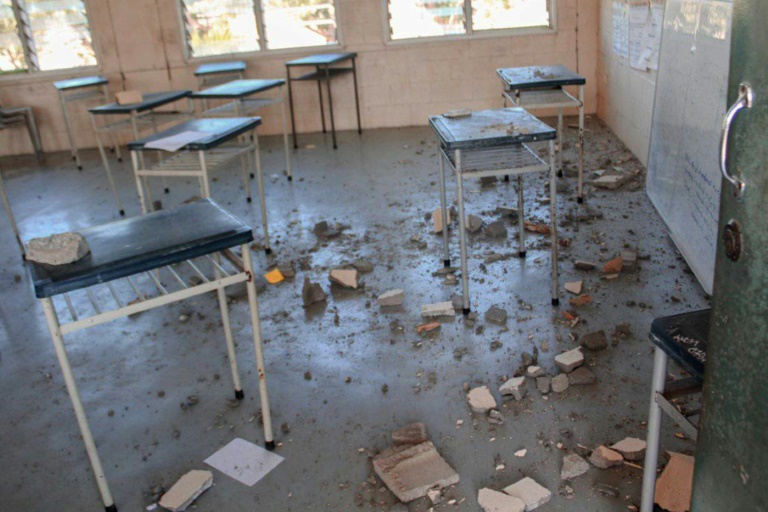
A 7.6-magnitude earthquake shook Papua New Guinea Sunday, damaging buildings, triggering landslides and killing at least five people, with several others severely injured.

Residents in northern towns near the epicentre reported intense shaking mid-morning that cracked roads and rattled the cladding off buildings. 

Local member of parliament Kessy Sawang said at least two people had died in remote mountain villages, with four others airlifted to hospital in critical condition. 

“There has been widespread damage,” she told AFP, adding that a landslide had buried homes and “split” one village where people had “lost their houses”.

In nearby Wau, Koranga Alluvial Mining said three miners had been buried alive.

There are limited communications in the area, few government resources and very few paved roads, making assessment and rescue efforts difficult. 

Small aviation companies and missionary groups were involved in airlifting some of the injured across the rugged jungle landscape.

“It’s very difficult, the terrain, the weather. It’s challenging,” said Nellie Pumai of Manolos Aviation, which had transported one person out and was trying to return.

In the eastern highland town of Goroka, residents captured images of window awnings falling off the cracked walls of a local university.

It was “very strong”, said Hivi Apokore, a worker at the Jais Aben Resort near the coastal town of Madang. 

“Everything was like sitting on a sea — just floating.” 

The quake was felt as far as the capital Port Moresby about 300 miles (480 kilometres) away.

The US Geological Survey initially issued a tsunami warning for nearby coastal areas, but subsequently said the threat had passed. 

But fearful locals near the sea nevertheless fled for higher ground — reporting that the water level had suddenly dropped. 

– ‘Massive’ –

The nation’s leader, James Marape, said the quake was “massive” and told people to be cautious, but said he expected the damage to be less than that from a 2018 quake and series of aftershocks, which killed an estimated 150 people.

However, the scale of the damage and number of casualties from Sunday’s quake was still unclear.

“National and provincial disaster agencies, as well as leaders, have been asked to assess the damage and injuries to people and attend to these as soon as possible,” Marape said.

State-backed communications firm DataCo said it was experiencing “multiple service disruptions” to the operation of a domestic undersea communications cable as well as the PIPE Pacific Cable 1 that runs from Sydney to Guam.

It was not yet clear if there was any damage to regional airports.

The quake struck at a depth of 61 kilometres (38 miles), about 67 kilometres from the town of Kainantu, according to the US Geological Survey.

Papua New Guinea sits on the Pacific “Ring of Fire”, causing it to experience frequent earthquakes. 

Earlier Sunday, the US Geological Survey also reported two strong quakes in the remote Mentawai Islands off the western coast of Sumatra in neighbouring Indonesia. 

Swedes vote in tight election race as far right surges

Swedes began voting in legislative elections Sunday that will either pave the way for an unprecedented right-wing government supported by the far right or a third straight mandate for the ruling Social Democrats.

Opinion polls have predicted a close race with a razor-thin lead for Prime Minister Magdalena Andersson’s Social Democrats and the left bloc, following a campaign dominated by rising gang shootings and soaring electricity prices.

Polling stations opened at 8:00 am (0600 GMT) and will close at 8:00 pm, with final results due around midnight.

At a voting station set up in Stockholm’s Central Station, 34-year-old IT worker Erwin Marklund said he was concerned about the rise of the far right and had voted for the small Left Party.

“It’s important to not get the far right into the system”, he told AFP. 

The right-wing bloc has never before agreed to cooperate with the nationalist and anti-immigration Sweden Democrats, long treated as “pariahs” by other political parties.

The far right has leapt to second place in opinion polls behind the Social Democrats in the final weeks of the campaign, credited with around a fifth of votes.

Their surge — overtaking the traditional leaders of the right-wing bloc, the conservative Moderates — was attributed to an election race focused on issues close to their voters, including crime, segregation and the integration of immigrants. 

Prime Minister Andersson, 55, hopes however to hang onto power with the support of the small Left, Centre and Green parties.

Speaking to reporters at a rally on the eve of the vote, she said she hoped she had convinced voters “that the Social Democrats are a party for ordinary people, for workers, with good safety nets, good jobs and a good future.”

– Tough days ahead –

Andersson, whose party has dominated Swedish politics since the 1930s, enjoys broad support among Swedes.

She has consistently led her challenger for the post of prime minister, Moderates leader Ulf Kristersson, by a wide margin in opinion polls.

Yet pollsters put the two blocs in an almost dead heat, predicting 49.7 to 51.6 percent of voter support for the left and 47.6 to 49.4 percent for the right.

Kristersson is the architect behind a major U-turn for the right wing.

He launched exploratory talks with the Sweden Democrats in 2019 and deepened their cooperation before the two other small right-wing parties, the Christian Democrats and to a lesser extent the Liberals, followed suit.

“As it stands, we have two fairly clear blocs,” political scientist Katarina Barrling told AFP, noting it should be fairly easy to predict the next prime minister after election night.

However, both blocs are beset by internal divisions that could make for laborious negotiations to build a coalition government.

The previous 2018 election resulted in a four-month stalemate that ended with the Social Democrats forming a minority government.

That would be a nightmare scenario this time around.

In addition to a looming economic crisis, Sweden is currently in the delicate process of joining NATO and is due to take over the EU presidency in 2023.

“The pressure to have a united and effective government is larger today than in the last election”, Barrling noted.

– ‘Enormous shift’ –

The end of the Sweden Democrats’ political isolation, and the prospect of it becoming the biggest right-wing party, is “an enormous shift in Swedish society”, said Anders Lindberg, an editorialist at left-wing tabloid Aftonbladet.

Born out of a neo-Nazi movement at the end of the 1980s, the Sweden Democrats entered parliament in 2010 with 5.7 percent of votes. They won 17.5 percent in 2018.

The party’s surge comes as Sweden struggles to combat escalating gang shootings attributed to battles over the drugs and weapons market.

The country now tops European statistics for firearm deaths.

While the violence was once contained to locations frequented by criminals, it has spread to public spaces such as parks and shopping centres, sparking concern among ordinary Swedes in a country long known as safe and peaceful.

“My country totally changed from maybe the safest in the world”, 56-year-old Ulrika told AFP at a far-right rally late Saturday.

“I’m so happy about my childhood… in that kind of a safe country but today no one can go out without fear”, she said.

“We know it’s because other cultures are coming to our country”.

Ingrid Schmidt, a 62-year-old researcher, disagreed.

“It is important to express your voice against these right-wing values,” she said as she voted at Central Station on Sunday. 

More than 80 percent of Sweden’s 7.8 million eligible voters are expected to cast ballots.

'It came from the gut': New mother Jennifer Lawrence returns with 'Causeway'

When Jennifer Lawrence was offered a script about a wounded US Army engineer who returns from Afghanistan to a strained relationship with her mother, she was on a sabbatical from acting and not yet a parent.

The Oscar-winning “Silver Linings Playbook” star, 32, whose fame had rocketed ever since the wildly popular “The Hunger Games” movies, had been a near-ubiquitous presence with a prolific run of movies, before announcing a pause because “everybody had gotten sick of me.”

But when she read a script for “Causeway” — then entitled “Red, White, and Water” — something changed.

“It was really just something that came from the gut, just like this urgency,” she told AFP at the Toronto film festival.

“I was very clear that I didn’t want to work, and then somehow it landed on my desk, and I just had this sense of urgency, like ‘let’s make it, let’s do this.'”

The subtle, character-driven indie movie — which also became the first project for Lawrence’s fledgling production company — follows military engineer Lynsey’s return to her mother’s home in New Orleans.

A debilitating brain injury following an IED explosion in Afghanistan is not the only trauma she must overcome, as issues from her childhood and family life flood to the surface.

Lawrence chose the film in part to showcase “what these heroes go through to keep us safe.”

“It was wonderful to be able to talk to the amazing men and women who have served, to try to get some more information and background,” she said on the red carpet of the film’s world premiere Saturday.

– Motherhood –

But she also partly drew on her own childhood for the role in “Causeway,” in which Lynsey has a fractious relationship with her unreliable mother.

“I have complications in my childhood just like everybody else does — so it was more kind of working that out,” she said of the film, which began shooting in 2019 before it was interrupted by the pandemic and eventually resumed in 2021.

During that delay Lawrence also filmed and promoted doomsday comedy “Don’t Look Up.”

And she has since become a mother herself, giving birth earlier this year to her son Cy.

“Oh God, everything changes after you become a mom!” she told AFP.

“How am I complicating his life? I don’t know yet,” she joked.

The film sees Lynsey build an unlikely friendship with James, played by Brian Tyree Henry, an auto repair worker who fixes her truck when it breaks down. 

While both grew up in New Orleans, their backgrounds are very different.

But he too has a family trauma buried deeply in his past, which the two bond over, in a relationship which soon forms the emotional anchor of the film.

– ‘Invisible injury’ –

“This film is an excavation of how we begin to process, how we manage, how we actually change, how we start to connect again,” said director Lila Neugebauer, making her film debut after success on Broadway.

“Both Jen and Brian connect so deeply with their characters on this film, as actors and as human beings.”

For Lawrence, there was “something about this woman who has been through so much, and is suffering from this invisible injury, and trying to rebuild her home and where she belongs.”

“There was something that deeply connected with me,” she said. 

“Causeway” will be released November 4 in select theaters and on Apple TV+. The Toronto International Film Festival runs through September 18.

Ethereum blockchain set for 'monumental' overhaul

An army of computer programmers scattered across the globe is set to attempt one of the biggest software upgrades the crypto sector has ever seen this week to reduce its environmentally unfriendly energy consumption.

Developers have spent years working on a more energy-efficient version of the ethereum blockchain, a digital ledger that underpins a multibillion dollar ecosystem of cryptocurrencies, digital tokens (NFTs), games and apps.

Ethereum — the second most important blockchain after bitcoin — burns through more power each year than New Zealand.

Experts say the changeover, expected to take place between Tuesday and Thursday, would slash energy consumption by more than 99 percent.

Enthusiasts hope a greener ethereum will spur wider adoption, particularly as a way of enabling banks to automate transactions and other processes.

But so far the technology has been used largely to create speculative financial products.

The ING bank said in a recent note that the switchover might help ethereum gain acceptability among policymakers and regulators. 

“This in turn may provide a boost to traditional financial institutions’ willingness to develop ethereum-based services,” the bank said.

– ‘Technological milestone’ –

The switchover, dubbed “the merge”, will change the way transactions are logged.

At the moment, so-called crypto miners use energy-guzzling rigs of computers to solve puzzles that reward them with new coins — a system known as “proof of work”.

The new system will get rid of those miners and their computer stacks overnight.

Instead, “validators” will have to put up 32 ether (worth $55,000) — ethereum’s cryptocurrency — to participate in the new “proof of stake” system where they earn rewards for their work.

But the merge process will be risky.

Blockchain company Consensys called it a “monumental technological milestone” and the biggest update to ethereum since it was launched in 2015.

Critics have questioned whether such an upgrade will pass off without incident, given the sector’s history of instability.

Ethereum went offline in May for three hours when a new NFT project sparked a surge in buyers that overwhelmed the network.

Several exchanges and crypto companies said they would halt transactions during the merge process.

– ‘Decentralised and complicated’ –

The upgrade also faces a possible rebellion from crypto mining companies whose business will be severely damaged.

They can try to hijack the process or create a “fork”, basically a smaller blockchain that would continue with the old mechanism.

And even if the “merge” is successful, ethereum will still face major hurdles before it can be more widely adopted.

For example, it is expensive to use and the update will not reduce fees.

And the wider crypto sector is beset by wildly fluctuating prices, security flaws and an array of scams.

Crypto lawyer Charles Kerrigan from the firm CMS told AFP that ethereum was “decentralised and complicated” and had not yet been tested enough for governments and banks to get onboard.

“There have been questions about how easily it could deal with upgrades of the type that traditional software vendors provide to customers,” he said. 

“A successful merge will answer those questions.”

Close Bitnami banner
Bitnami