World

Denmark's Margrethe now Europe's longest serving monarch

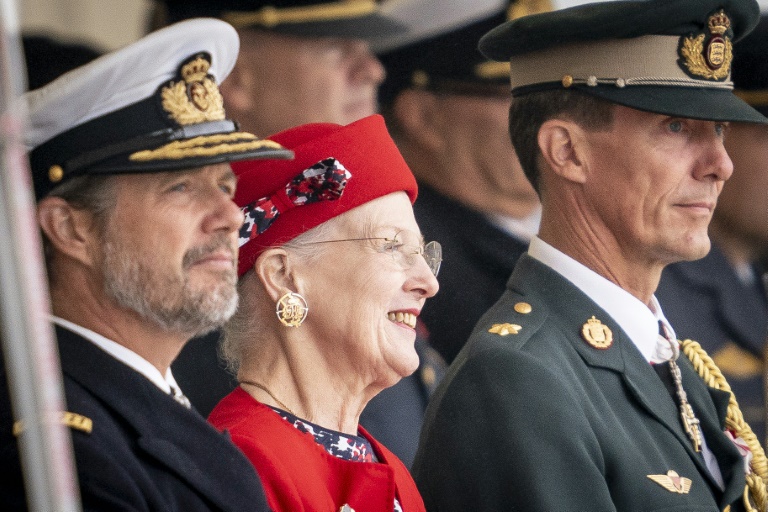
Denmark’s popular Queen Margrethe II is now Europe’s longest-serving monarch and also its only reigning queen after the death of Britain’s Queen Elizabeth II. 

The artistic and chain-smoking 82-year-old, always impeccably coiffed with her white hair swept up in a bun and hailed for unifying and modernising the Danish monarchy in her 50 years on the throne, has scaled back golden jubilee festivities this weekend following the death Thursday of Britain’s head of state.

Margrethe came to the throne at the age of 31 in January 1972 on the death of her father, Frederik IX, becoming the first woman to hold the position of reigning queen in Denmark.

She took her reign name Margrethe II in recognition of Margrethe I, who ruled Denmark from 1375-1412 but never formally held the title.

At the time of her accession, only 45 percent of Danes were in favour of the monarchy, most believing it had no place in a modern democracy.

During her reign, however, Margrethe has managed to stay away from scandal and helped to modernise the institution — allowing her two sons to marry commoners, for example.

Today, the Danish monarchy is one of the most popular in the world, enjoying the support of more than 80 percent of Danes.

At 50 years and seven months on the throne, she is now the longest-reigning monarch in Europe following the death of her third cousin, Queen Elizabeth.

She is trailed by her first cousin, Carl XVI Gustaf of Sweden, who has been king for 48 years.

Margrethe is also Europe’s only reigning queen, although four countries — Belgium, the Netherlands, Spain and Sweden — have crown princesses.

– ‘Until I drop’ –

Margrethe was born in Copenhagen on April 16, 1940, just one week after Nazi Germany’s invasion of Denmark.

She eventually became the eldest of three sisters, but when she was born Denmark’s law of succession barred women from inheriting the throne.

The law was changed in 1953 following a referendum, under pressure from successive Danish governments mindful of a need to modernise society.

“She has managed to be a queen who has united the Danish nation in a time of large changes: globalisation, the appearance of the multicultural state, economic crises in the 1970s, 1980s and again in 2008 to 2015, and the pandemic,” historian Lars Hovebakke Sorensen told AFP.

“The basis of her popularity is that the queen is absolutely non-political,” he said. 

Margrethe marked the 50th anniversary of her accession in January with a scaled-down celebration due to Covid.

The full festivities had been postponed until this weekend but were again downsized considerably after the death of Queen Elizabeth, with a carriage procession through the streets of Copenhagen and a balcony appearance cancelled.

The queen, affectionately nicknamed ‘Daisy’ by her family and subjects, has managed to keep the monarchy relevant without diminishing its status.

Widowed in 2018, she has repeatedly insisted that she will never step down from her duties.

“I will stay on the throne until I drop,” she says.

Denmark has no tradition of abdication — and given her robust health the question has never been raised seriously.

In May, she rode a roller-coaster at Copenhagen’s famed Tivoli amusement park, her hat fastened securely on her head.

Her eldest son, 54-year-old Crown Prince Frederik, is due to succeed her when the time comes.

– Queen of arts –

With sparkling blue eyes and a broad smile, she is known for her relaxed and playful side, as well as for her involvement in Denmark’s cultural scene.

A painter as well as a costume and set designer, she has worked with the Royal Danish Ballet and Royal Danish Theatre on numerous occasions.

She has studied at Cambridge and the Sorbonne, and is a fluent speaker of English, French, German and Swedish.

She has participated in elaborate translation projects, including the 1981 Danish version of Simone de Beauvoir’s “All Men are Mortal” under a pseudonym in cooperation with her French-born husband, Prince Henrik.

But it is primarily her paintings and drawings that have caught the public’s eye.

She has illustrated several books, including a Danish 2002 edition of J.R.R. Tolkien’s “The Lord of the Rings”, and her paintings have been exhibited in museums and galleries in Denmark and abroad.
UK rail, postal staff halt strikes after queen's death

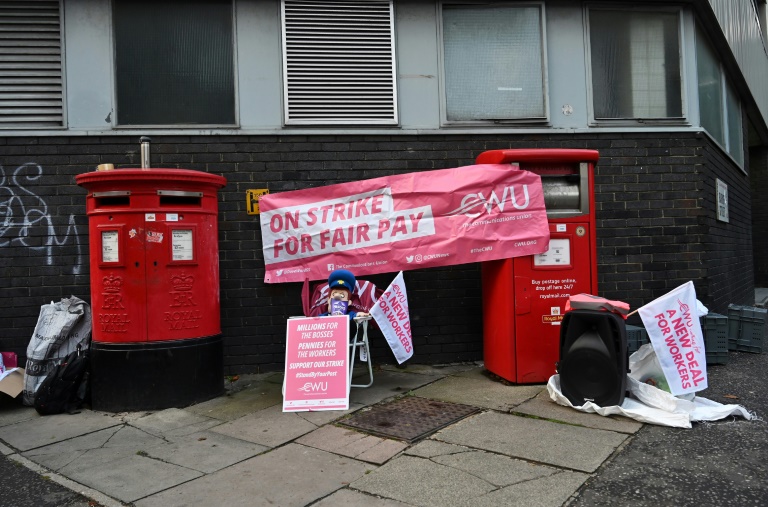
British railway and postal workers, at the forefront of sector-wide strikes over a cost-of-living crisis, have halted upcoming walkouts following the death of Queen Elizabeth II.

The Communication Workers Union had planned to continue a 48-hour stoppage Friday but it was called off “out of respect for” the queen, CWU general secretary Dave Ward said in a statement following the queen’s passing in Scotland on Thursday.

The Trades Union Congress said it had postponed its four-day annual conference due to have begun Sunday.

“The UK’s trade union movement sends our condolences to the Royal Family on the death of the Queen, and recognises her many years of dedicated service to the country,” the TUC added in a statement.

The RMT rail union said it was suspending walkouts planned for next week and the TSSA transport union has called off its September strikes.

Train drivers’ union Aslef has also suspended a planned stoppage.

“RMT joins the whole nation in paying its respects to Queen Elizabeth,” its general secretary Mick Lynch said in a statement.

“The planned railway strike action on 15 and 17 September is suspended. 

“We express our deepest condolences to her family, friends and the country,” Lynch added.

Network Rail, which manages Britain’s railways, said it welcomed “the unions’ decision to call off” strikes.

In Scotland, refuse collectors had already decided a week ago to suspend walkouts as they mull an improved pay offer.

– Summer of strikes –

Tens of thousands of workers went on strike across Britain over the summer as decades-high inflation erodes earnings.

The walkouts have been spearheaded by the rail sector, which has carried out its biggest industrial action in 30 years.

Some proposed non-rail strikes were halted after unions and companies agreed pay deals at the eleventh hour.

But walkouts have still gone ahead by Amazon warehouse staff and criminal lawyers in recent weeks.

Analysts are forecasting sector-wide stoppages to continue this year as inflation keeps on rising.

New Prime Minister and Conservative party leader Liz Truss is seen as wanting to take on the unions, which are traditionally allied to the main opposition Labour party.

In a bid to ease the cost-of-living crisis, Truss this week announced a huge financial package that will cap domestic energy bills.

This will eventually help to trim inflation but not before many households and business first see bills increase in October.

Teachers and health workers have meanwhile hinted at possible walkouts should they not receive new pay deals deemed acceptable.

UN chief slams climate change 'insanity' on Pakistan flood visit

United Nations Secretary General Antonio Guterres called the lack of global attention to climate change “insanity” Friday as he visited Pakistan to mobilise help for millions of people affected by devastating monsoon floods.

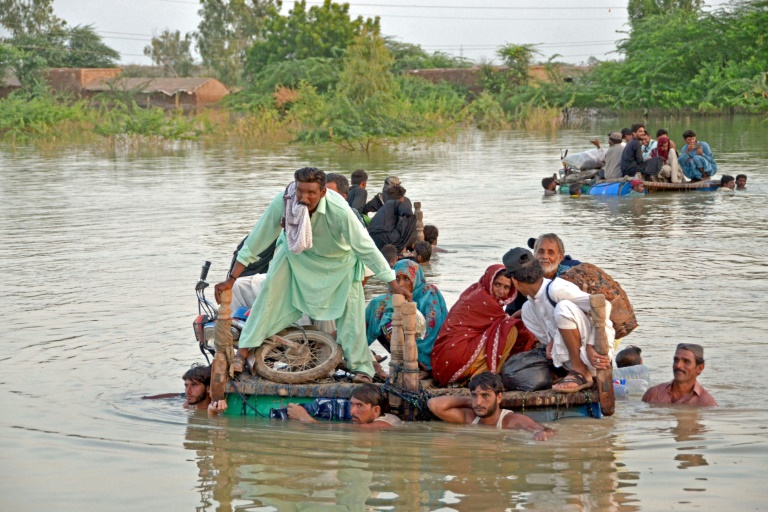
Nearly 1,400 people have died in flooding that covers a third of the country — an area the size of the United Kingdom — wiping out crops and destroying homes, businesses, roads and bridges.

Pakistan says it will cost at least $10 billion to rebuild and repair — an impossible sum for the deeply indebted nation — but the priority is food and shelter for 33 million people affected.

Guterres said he hoped his visit would galvanise international help, noting Pakistan had always shown generosity towards others, hosting millions of refugees for decades from neighbouring Afghanistan at enormous cost.

Pakistan receives heavy — often destructive — rains during its annual monsoon season, which are crucial for agriculture and water supplies.

But downpours as intense as this year’s have not been seen for decades, and Pakistan officials blame climate change, which is increasing the frequency and intensity of extreme weather around the world.

“This is insanity, this is collective suicide,” Guterres told a press conference in the capital, lamenting the lack of attention the world gave to climate change — particularly the industrialised nations that scientists blame.

Pakistan is responsible for less than one percent of global greenhouse gas emissions, but is eighth on a list compiled by the NGO Germanwatch of countries most vulnerable to extreme weather caused by climate change.

Guterres plans to tour flood-hit parts of the south on Saturday, and also visit Mohenjo-daro, a centuries-old UNESCO-designated world heritage site threatened by the deluge.

– Tents and tarpaulins needed –

“If he comes and sees us, Allah will bless him,” Rozina Solangi, a 30-year-old housewife from a flooded village near Sukkur, told AFP Friday.

“All the children, men and women are roasting in this scorching heat. We have nothing to eat, there is no roof on our heads. So he must do something for us poor.”

A flood relief plan compiled by the Pakistan government and UN calls for an immediate $160 million in international funding, and aid is already arriving.

On Thursday, a US Air Force C-17 landed — the first American military plane in Pakistan for years — bringing desperately needed tents and tarpaulins for temporary shelter.

While Washington is a key supplier of military hardware to Islamabad, relations have been fractious as a result of conflicting interests in neighbouring Afghanistan — especially since the Taliban returned to power in August last year.

The meteorological office says Pakistan received five times more rain than normal in 2022. Padidan, a small town in Sindh province, has been drenched by more than 1.8 metres (71 inches) since the monsoon began in June.

The effect of the rains has been twofold — flash floods in rivers in the mountainous north that washed away roads, bridges and buildings in minutes, and a slow accumulation of water in the southern plains that has submerged hundreds of thousands of square kilometres of land.

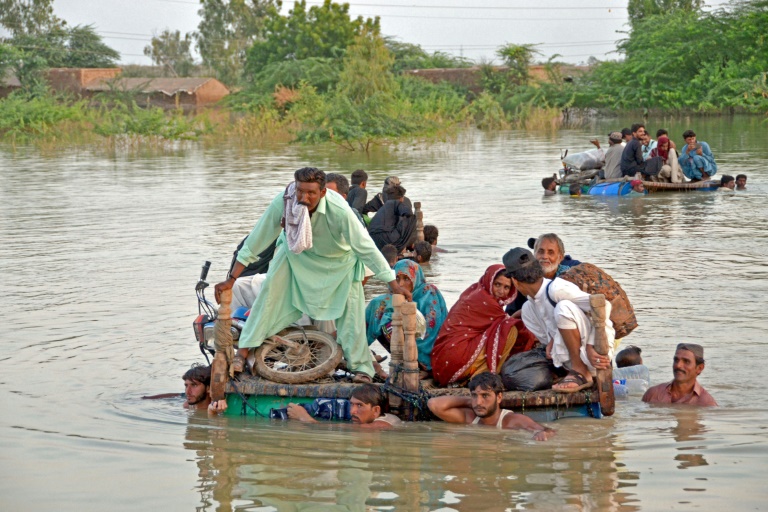
In Jaffarabad district of Balochistan on Thursday, villagers were fleeing their homes on makeshift rafts made from upturned wooden “charpoy” beds.

Thousands of temporary campsites have mushroomed on slivers of dry land in the south and west — often roads and railway tracks are the only ground in a landscape of water.

With people and livestock cramped together, the camps are ripe for outbreaks of disease, with many cases of mosquito-borne dengue reported, as well as scabies.

UN chief slams climate change 'insanity' on Pakistan flood visit

United Nations Secretary General Antonio Guterres called the lack of global attention to climate change “insanity” Friday as he visited Pakistan to mobilise help for millions of people affected by devastating monsoon floods.

Nearly 1,400 people have died in flooding that covers a third of the country — an area the size of the United Kingdom — wiping out crops and destroying homes, businesses, roads and bridges.

Pakistan says it will cost at least $10 billion to rebuild and repair — an impossible sum for the deeply indebted nation — but the priority is food and shelter for 33 million people affected.

Guterres said he hoped his visit would galvanise international help, noting Pakistan had always shown generosity towards others, hosting millions of refugees for decades from neighbouring Afghanistan at enormous cost.

Pakistan receives heavy — often destructive — rains during its annual monsoon season, which are crucial for agriculture and water supplies.

But downpours as intense as this year’s have not been seen for decades, and Pakistan officials blame climate change, which is increasing the frequency and intensity of extreme weather around the world.

“This is insanity, this is collective suicide,” Guterres told a press conference in the capital, lamenting the lack of attention the world gave to climate change — particularly the industrialised nations that scientists blame.

Pakistan is responsible for less than one percent of global greenhouse gas emissions, but is eighth on a list compiled by the NGO Germanwatch of countries most vulnerable to extreme weather caused by climate change.

Guterres plans to tour flood-hit parts of the south on Saturday, and also visit Mohenjo-daro, a centuries-old UNESCO-designated world heritage site threatened by the deluge.

– Tents and tarpaulins needed –

“If he comes and sees us, Allah will bless him,” Rozina Solangi, a 30-year-old housewife from a flooded village near Sukkur, told AFP Friday.

“All the children, men and women are roasting in this scorching heat. We have nothing to eat, there is no roof on our heads. So he must do something for us poor.”

A flood relief plan compiled by the Pakistan government and UN calls for an immediate $160 million in international funding, and aid is already arriving.

On Thursday, a US Air Force C-17 landed — the first American military plane in Pakistan for years — bringing desperately needed tents and tarpaulins for temporary shelter.

While Washington is a key supplier of military hardware to Islamabad, relations have been fractious as a result of conflicting interests in neighbouring Afghanistan — especially since the Taliban returned to power in August last year.

The meteorological office says Pakistan received five times more rain than normal in 2022. Padidan, a small town in Sindh province, has been drenched by more than 1.8 metres (71 inches) since the monsoon began in June.

The effect of the rains has been twofold — flash floods in rivers in the mountainous north that washed away roads, bridges and buildings in minutes, and a slow accumulation of water in the southern plains that has submerged hundreds of thousands of square kilometres of land.

In Jaffarabad district of Balochistan on Thursday, villagers were fleeing their homes on makeshift rafts made from upturned wooden “charpoy” beds.

Thousands of temporary campsites have mushroomed on slivers of dry land in the south and west — often roads and railway tracks are the only ground in a landscape of water.

With people and livestock cramped together, the camps are ripe for outbreaks of disease, with many cases of mosquito-borne dengue reported, as well as scabies.

Voice-operated smartphones target Africa's illiterate

Voice-operated smartphones are aiming at a vast yet widely overlooked market in sub-Saharan Africa — the tens of millions of people who face huge challenges in life because they cannot read or write.

In Ivory Coast, a so-called “Superphone” using a vocal assistant that responds to commands in a local language is being pitched to the large segment of the population — as many as 40 percent — who are illiterate.

Developed and assembled locally, the phone is designed to make everyday tasks more accessible, from understanding a document and checking a bank balance to communicating with government agencies.

“I’ve just bought this phone for my parents back home in the village, who don’t know how to read or write,” said Floride Jogbe, a young woman who was impressed by adverts on social media.

She believed the 60,000 CFA francs ($92) she forked out was money well spent.

The smartphone uses an operating system called “Kone” that is unique to the Cerco company, and covers 17 languages spoken in Ivory Coast, including Baoule, Bete, and Dioula, as well as 50 other African languages. 

Cerco hopes to expand this to 1,000 languages, reaching half of the continent’s population, thanks to help from a network of 3,000 volunteers.

The goal is to address the “frustration” illiterate people feel with technology that requires them to be able to read or write or spell effectively, said Cerco president Alain Capo-Chichi, a Benin national.

“Various institutions set down the priority of making people literate before making technology available to them,” he told AFP. 

“Our way skips reading and writing and goes straight to integrating people into economic and social life.”

Of the 750 million adults around the world who cannot read or write, 27 percent live south of the Sahara, according to UN figures for 2016, the latest year for which data is available.

The continent also hosts nearly 2,000 languages, some of which are spoken by tens of millions of people and are used for inter-ethnic communication, while others are dialects with a small geographical spread.

Lack of numbers or  economic clout often means these languages are overlooked by developers who have already devised vocal assistants for languages in bigger markets.

– Twi and Kiswahili –

Other companies investing in the voice-operation field in Africa include Mobobi, which has created a Twi language voice assistant in Ghana called Abena AI, while Mozilla is working on an assistant in Kiswahili, which has an estimated 100 million speakers in East Africa.

Telecommunications expert Jean-Marie Akepo questioned whether voice operation needed the platform of a dedicated mobile phone.

Existing technology “manages to satisfy people”, he said.

“With the voice message services offered by WhatsApp, for example, a large part of the problem has already been solved.”

Instead of a new phone, he recommended “software with local languages that could be installed on any smartphone”.

The Ivorian phone is being produced at the ICT and Biotechnology Village in Grand-Bassam, a free-trade zone located near the Ivorian capital.

It  came about through close collaboration with the government. The company pays no taxes or customs duties and the assembly plant has benefited from a subsidy of more than two billion CFA francs.

In exchange, Cerco is to pay 3.5 percent of its income to the state and train around 1,200 young people each year.

The company says it has received 200,000 orders since launch on July 21.

Thanks to a partnership with French telecommunications giant Orange, the phone will be distributed in 200 shops across Ivory Coast.

King Charles III starts reign as mourning begins for late queen

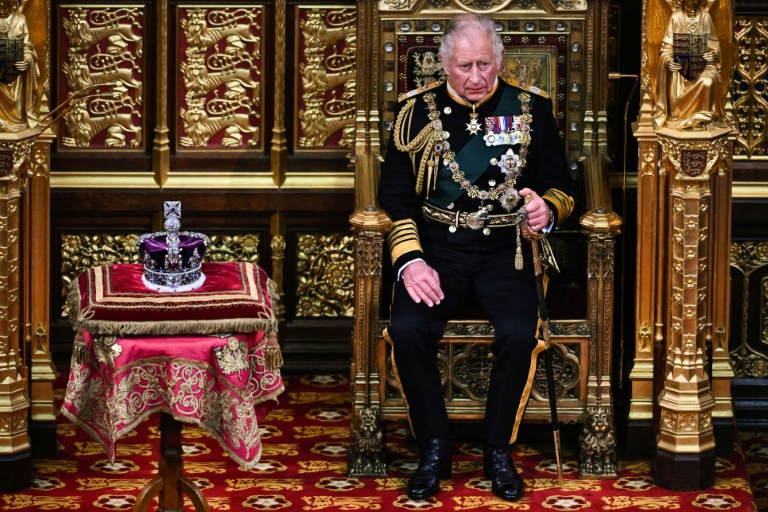
Church bells tolled across the UK on Friday as King Charles III readied to address his mourning subjects on the first full day of his new reign following the death of his mother, Queen Elizabeth II.

The 73-year-old Charles — the oldest monarch yet to ascend the throne — headed to London from the remote Scottish estate of Balmoral, where his “cherished” mother died on Thursday.

He will make his first televised address as king at 6:00 pm (1700 GMT) before being formally proclaimed king to the public at 11:00 am Saturday morning.

Church bells rang out across the UK at midday Friday in honour of the 96-year-old queen who died “peacefully” after a year-long period of ill-health.

Elizabeth II had reigned for a record-breaking 70 years, a source of stability in a period of extraordinary change whose death sparked heartfelt tributes from across the world.

“During this period of mourning and change, my family and I will be comforted and sustained by our knowledge of the respect and deep affection in which the queen was so widely held,” Charles said in a statement.

Buckingham Palace said the king and other members of the royal family would observe an extended mourning period from now until seven days after her funeral.

The date of the funeral, which will be attended by heads of state and government, has yet to be officially announced but is expected to be on Monday, September 19.

– World leader –

While Britons adjusted to the shock of the departure of their only head of state since the aftermath of World War II, tributes poured in for one of the planet’s most recognisable people.

US President Joe Biden described the queen, whom he met for tea at Windsor Castle last year, as “a stateswoman of unmatched dignity”.

New York’s Empire State Building was illuminated after sunset in silver and royal purple, while the Eiffel Tower in Paris dimmed its lights in tribute. 

News of the death of the only British monarch most people alive today had ever known dominated global headlines, while the popular UK tabloid the Daily Mail declared: “Our hearts are broken.”

Flowers were left at British embassies around the world, including in Moscow — currently at odds with London over the war in Ukraine.

“A change of eras: first Mikhail Gorbachev, now Elizabeth II. The world is changing,” 18-year-old history student Mikhail Afrosin said, referring to the last leader of the Soviet Union, who died last month at the age of 91.

The new king was expected to hold his first audience Friday with Prime Minister Liz Truss, who was only appointed on Tuesday in one of the queen’s last official acts before her death.

In a televised address after the queen’s death Thursday, Truss had offered the nation’s support for Charles — support backed unanimously by her cabinet on Friday.

“We offer him our loyalty and devotion just as his mother devoted so much to so many for so long,” she said, adding: “God save the king.”

On Friday, Truss opened the start of two days of special tributes in parliament, saying the queen was “one of the greatest leaders the world has ever known”.

“Her legacy will endure through the countless people she met, the global history she witnessed and the lives that she touched,” the premier said.

Charles was also due to meet officials in charge of the arrangements for his mother’s elaborate state funeral, which will take place before she is laid to rest in the King George VI memorial chapel at Windsor Castle.

Church bells tolled at Westminster Abbey, St Paul’s Cathedral and at Windsor, among other places, and Union flags flew at half-mast across the UK.

Gun salutes — one round for every year of the queen’s life — were fired Friday across Hyde Park in central London and from the Tower of London on the River Thames.

While the government has said there is no obligation on organisations to suspend business during the period of national mourning, many are doing so as a mark of respect.

The Premier League postponed all matches this weekend, the TUC umbrella body of trade unions postponed its congress due to begin on Sunday, while railway and postal workers halted upcoming strikes over pay, as Britain is gripped by soaring inflation and spiralling energy prices.

The queen’s death and its ceremonial aftermath comes as the government strives to rush through emergency legislation to tackle the kind of war-fuelled economic privation that marked the start of Elizabeth’s reign in 1952.

– Tearful tributes –

Elizabeth’s public appearances had become rarer in the months since she spent an unscheduled night in hospital in October 2021 for undisclosed health tests.

She was seen smiling in her last official photographs from Tuesday when she appointed Truss as the 15th prime minister of her reign, which started with Winston Churchill in Downing Street.

But the queen, visibly thinner and stooped, leant on a walking stick. Her hand was also bruised dark blue-purple, sparking concern. 

Jane Barlow, the photographer who took the last public pictures of the queen on Tuesday, said she was “frail” but in “good spirits”.

“I got a lot of smiles from her,” said Barlow, who works for the UK’s domestic Press Association news agency.

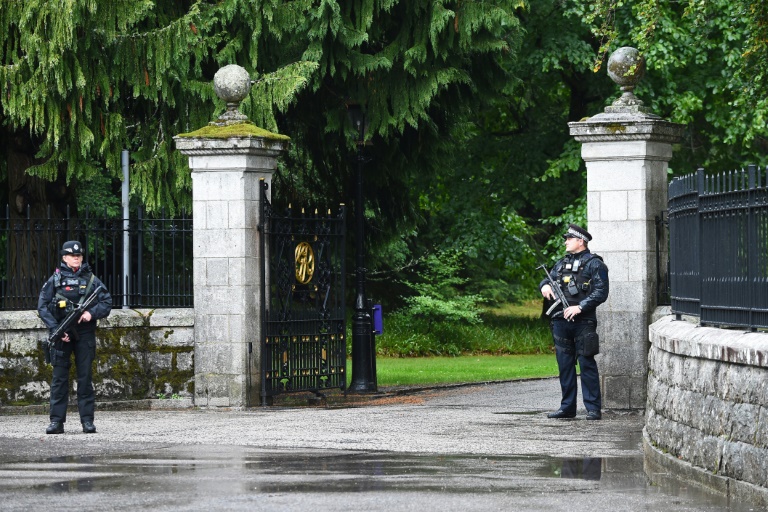
The queen’s closest family members had rushed to be at her bedside at Balmoral, a private residence set among thousands of acres (hectares) of rolling grouse moors and forests in the Scottish Highlands.

Her body is expected to remain there initially before being taken Sunday to the Palace of Holyroodhouse in Edinburgh. 

From the Scottish capital, her coffin is due to be flown to London on Tuesday for a lying in state accessible to the public. 

Officials expect more than one million people to file past the catafalque in Westminster Hall, the oldest part of the parliamentary complex, before the televised funeral service at Westminster Abbey opposite.

Since news of her death broke, crowds have gathered outside Buckingham Palace in London, and Windsor Castle west of the capital, placing flowers and reflecting on the queen’s long reign.

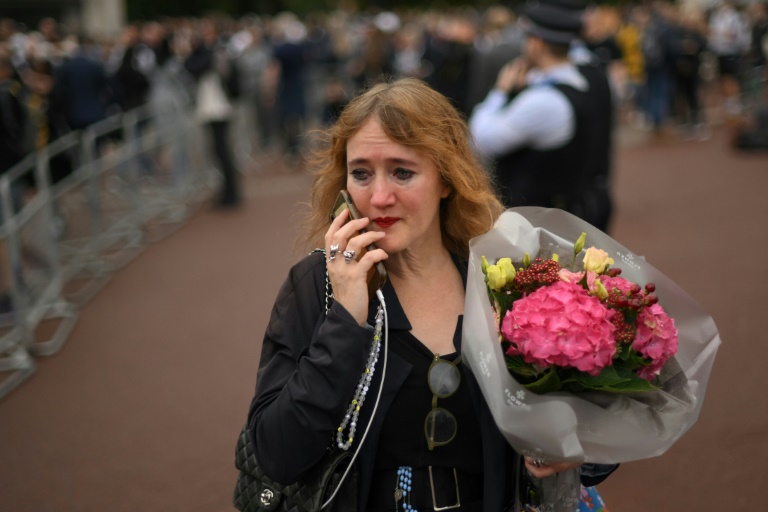
As day broke on Friday, Joan Russell, a 55-year-old project manager from Hackney, northeast London, had tears running down her cheeks as she looked at the flowers outside the palace. 

“I think I came to say a prayer. She has been our monarch all my life and she has led by example, she has learnt, she has listened, wherever you go, she is our stamp,” she told AFP.

“Charles has had such a great example to follow. I believe he will do his very utmost to continue the legacy of his parents — his mum and dad — have set before him.”

At the gates of Balmoral, a contingent of Buddhist monks chanted as a mark of respect for the late queen.

– Consistently popular –

Queen Elizabeth II came to the throne aged just 25 in the exhausted aftermath of World War II, joining a world stage dominated by political figures from Churchill to Mao Zedong and Joseph Stalin.

In the ensuing decades, the last vestiges of Britain’s vast empire crumbled. 

At home, Brexit shook the foundations of her kingdom, and her family endured a series of scandals.

But throughout, she remained consistently popular and was head of state not just of the United Kingdom but 14 former British colonies, including Australia and Canada. 

New Zealand proclaimed Charles its new king. But Australia’s new government looks set to revive a push to ditch the monarchy, casting doubt on his inheritance even as it mourns the queen.

The final public farewell at Westminster Abbey in London will be a public holiday in the form of a Day of National Mourning.

Charles’s coronation, an elaborate ritual steeped in tradition and history, will take place in the same historic surroundings, as it has for centuries, on a date to be fixed.

burs-jit-ar/phz/jv

Buckingham Palace becomes shrine for a grieving nation

A stream of mourners laid flowers and tributes outside Buckingham Palace on Friday, as it became the focal point of a country grieving the death of Queen Elizabeth II.

Stony-faced soldiers in red coats and bearskin hats stood guard by the palace, the late queen’s London headquarters during her 70-year reign.

Mourners stood silently and watched, while some placed bouquets in the black railings of the landmark residence.

“We just wanted to pay tribute to the queen,” said Natalie Vehring, a violinist who has performed at concerts attended by the queen. 

She was at the palace with her husband and two sons in school uniform, while on a video call with her mother in Australia.

“My mum says she remembers the king dying,” added the 46-year-old, referring to the queen’s father, George VI, who died in 1952.

“I grew up in Australia, the monarchy was a very huge part of our childhood, we sang the national anthem every day at school.

“It’s amazing how she was working a day before her passing,” she added.

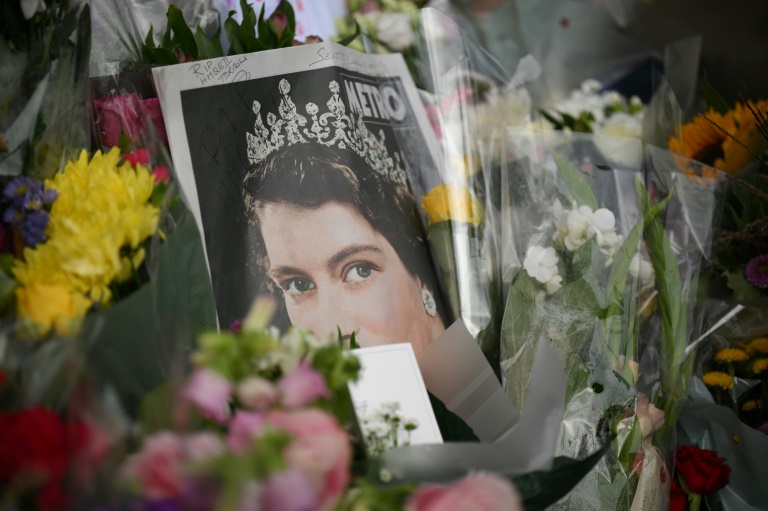
People left candles in glass jars, rain-sodden Union Jack flags, newspapers bearing the late queen’s image and personal notes.

“Thank you. You served our country to the end. Faithful in God,” said one message.

“Thank you for your service Ma’am. You were a guiding light in dark times, the foundation of a nation, our strength and stay. Rest in peace,” read another.

One note, signed by “the coffee ladies”, said: “Beautiful Queen. Thank you, thank you for your constancy, your loyalty and long reign”.

– ‘Devastated’ –

Joan Russell, 55, a project manager from east London, had tears running down her cheeks as she looked at the flowers.

“I came to say a prayer,” she told AFP. 

“Charles has had such a great example to follow. I believe he will do his very utmost to continue the legacy of his parents.”

There were similar scenes in Windsor, west of London, as well-wishers, many crying, left hundreds of bouquets and lit candles outside the gates of the late queen’s beloved castle. 

One of those in tears was Marina Flynn, 79, whose husband used to work with the queen’s husband, the Duke of Edinburgh.

“She was wonderful, she’s done nothing wrong. I met her a couple of times with the Duke and they were always really nice. I just feel devastated,” said Flynn, dressed in black.

Others expressed concern about the new King Charles III.

“Oh I’m worried about what he would do,” said Estrella Linch, 78.

“He is not a decisive man, he doesn’t know how to take big decisions,” she added.

In Scotland, the former queen’s residence at Holyroodhouse in Edinburgh, which will house Elizabeth’s coffin before it travels to London, also became a focus of tributes.

Locals and curious tourists came to contemplate silently and lay flowers, as preparations began to welcome the queen’s coffin.

Gardeners were hard at work getting the lawns in order, with the smell of cut grass and rain wafting across the Scottish capital.

“All this pomp and glory is going to be a nice thing and a very sad thing,” said Rebecca Evans, 44, who works for a climate change think-tank.

“It’s going be an interesting few days.”

am-vg-spe-jwp/phz/lcm

The queen's last hours as family dashed to deathbed

It began with a short but worrying statement. Less than 48 hours after a frail but smiling Queen Elizabeth II was photographed appointing new Prime Minister Liz Truss, her doctors said they were “concerned”.

An unprecedented medical bulletin issued by Buckingham Palace said the 96-year-old queen was under “medical supervision” but “remained comfortable” at her Scottish retreat, Balmoral Castle.

The announcement at 12:32 pm (1132 GMT) sent shockwaves through parliament, where MPs had gathered to hear Truss announce a two-year freeze on energy bills.

Within minutes, the office of heir to the throne Prince Charles had announced that he and his wife Camilla, who were already staying on the Balmoral estate, had arrived at Balmoral Castle.

It is believed the queen’s daughter, Princess Anne, also made it to Balmoral in time as she too was in Scotland.

Both are thought to have been by the queen’s side when she died on Thursday afternoon.

Other members of the family, however, faced a long and ultimately unsuccessful dash from London.

The second in line to the throne, Prince William; the queen’s other two sons, Princes Andrew and Edward; and Edwards’ wife Sophie, who was particularly close to the monarch; arrived in a cold, grey Aberdeen aboard a special RAF plane late in the afternoon.

William, who has now become the heir, then took the wheel of the car for the 80-kilometre (50-mile) drive to Balmoral.

But by the time the grim-faced royals swept through the gate of Balmoral just after 5:00 pm, it was already too late.

Around half an hour earlier, at 4:30 pm, the prime minister had been informed the queen had died that afternoon.

Prince Harry, Charles’ second son, meanwhile was still en route from London.

Initial announcements by the couple’s spokesperson said both he and his wife Meghan would travel to Balmoral.

In the end Harry made the journey alone and was still in the air when the official palace announcement was made to the world at 6:30 pm.

He did not arrive at Balmoral until much later.

BBC royal correspondent Nicholas Witchell speculated live on air that Meghan — who has made a string of damaging criticisms of the royal family — did not make the journey in the end, for fear “she might not be terribly warmly welcomed”.

The palace statement said the queen had died “peacefully” but in line with royal tradition did not give any cause of death.

Sources told the Daily Mail newspaper there had been “no chronic condition”.

The queen had been undertaking far less work in recent months, but on Tuesday she nevertheless met both the outgoing Prime Minister Boris Johnson and the incoming Liz Truss.

The sources told the daily the queen had been in good spirits — despite her recent and well-documented “mobility issues” — but took a sudden turn for the worse duting the night of Wednesday to Thursday.

Death of Queen Elizabeth II: What happens next?

The death of Queen Elizabeth II sets in motion a finely choreographed plan honed and planned to the last detail over decades.

Full details are yet to be confirmed but here is what we know so far about how the coming days will unfold.

– Friday, September 9 –

The new King and Queen Consort — Charles and Camilla — return to London. 

The queen’s coffin draped in the Royal Standard flag is expected to remain at her Scottish estate, Balmoral, where she died for a few days.

King Charles III will make his inaugural address to the nation as king on television on Friday evening.

Gun salutes will be fired in Hyde Park and at the Tower of London at 1:00 pm (1200 GMT). 

The new monarch will hold his first audience with Prime Minister Liz Truss.

Church bells will toll across the country, with churches, chapels and cathedrals encouraged by the Church of England to open for prayers or a special service for mourners.

The prime minister and senior ministers will attend a public service of remembrance at St Paul’s Cathedral.

An online book of condolence has been opened for members of the public to leave messages.  

– Saturday, September 10 –

Day 1: The 10-day plan for the days after the queen’s death begins with the Accession Council convening for Charles to be formally proclaimed king.

Three trumpeters announce the proclamation with a fanfare. The proclamation is read out from a balcony at St James’s Palace in London, then across the country.

Charles will hold audiences, and the media will be briefed by the Earl Marshal, a high-ranking royal official in charge of the accession and the queen’s state funeral, in the coming days.

– Sunday, September 11-

Day 2: The queen’s coffin is expected to be transported from Balmoral to the Palace of Holyroodhouse, her official Scottish residence in Edinburgh.

The journey by road will pass through many small towns and villages, giving members of the public their first chance to pay their respects.

Preparations for the queen’s death in Scotland are codenamed “Operation Unicorn” after the country’s national animal.

– Monday, September 12 –

Day 3: Charles is expected to begin a tour of England, Scotland, Wales and Northern Ireland, the four nations of the United Kingdom in an operation codenamed “Spring Tide”.

The queen’s coffin is expected to be taken in a procession up Edinburgh’s Royal Mile from Holyrood to St Giles’ Cathedral, where there will be a service and a vigil attended by royal family members.

– Tuesday, September 13 –   

Day 4: The coffin is expected to be flown to the capital and transported by road to Buckingham Palace in London.

Members of the public will likely line the route.


– Wednesday, September 14 –

Day 5: A ceremonial procession of the coffin through London is expected followed by a lying in state in parliament’s Westminster Hall, codenamed “Operation Feather”.

Senior members of the royal family are expected to stand guard around the coffin in a tradition known as the Vigil of the Princes.

– September 15-17 –

Days 6,7 and 8: Lying in state. Public can pay their respects, filing past the coffin on its catafalque.

– Sunday, September 18 –

Day 9: A reception to be held for visiting dignitaries and heads of state who have arrived for the funeral.

– Monday, September 19 –

Day 10: The state funeral is expected to take place in Westminster Abbey with huge crowds gathering in central London.

Senior members of the royal family are likely to walk behind coffin as it is taken on a gun carriage to the abbey with a two-minute silence observed.

Afterwards, the queen’s coffin will be taken to Windsor Castle for a televised committal service at St George’s Chapel.

She will then be interred privately at the King George VI memorial chapel, alongside her husband, Prince Philip, the ashes of her sister Princess Margaret, their mother, also called Elizabeth, and father George VI.

Stocks and oil prices rally, as dollar drops

Stock markets and oil prices rallied Friday, with investors largely pricing in more interest rate hikes aimed at taming runaway inflation.

The dollar slid one percent versus the pound and euro after recent hefty gains.

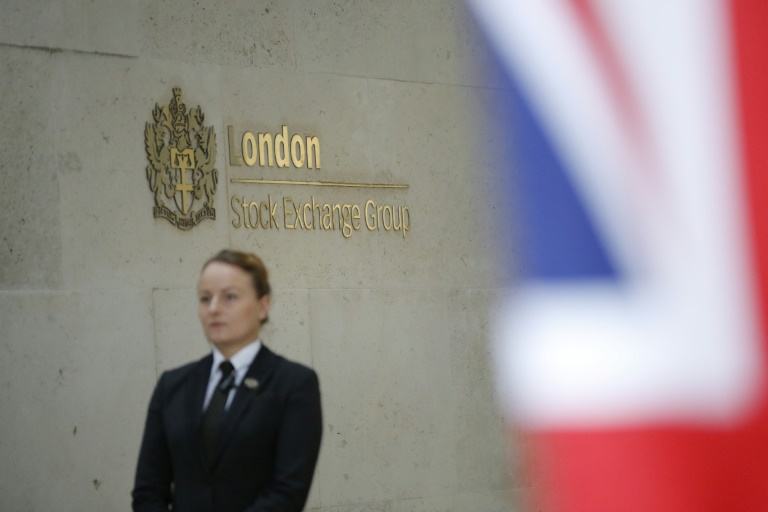
London’s stock market jumped more than 1.5 percent in morning deals, mirroring advances in Paris and Frankfurt, while the British capital’s exchange mourned the death of Queen Elizabeth II.

“We are deeply saddened at the passing of Her Majesty Queen Elizabeth II,” the London Stock Exchange said in a message posted on its website.

“Our sympathies and condolences are with The Royal Family.”

The LSE is expected to shut on the day of the queen’s funeral following her death on Thursday.

“Markets are being very British about the whole thing, carrying on in a fashion that I suspect she would have approved of,” said IG analyst Chris Beauchamp.

– Dollar off highs –

The more confident mood across equity and oil markets was reflected in a cooler dollar, which had surged to multi-decade highs against major peers in recent weeks owing to the Federal Reserve’s hawkish tilt to tighter monetary policy.

The greenback’s softness came even after Federal Reserve chief Jerome Powell reasserted the US central bank’s determination to keep hiking interest rates to fight prices, even at the cost of economic growth.

His warning that “we need to act now forthrightly, strongly” followed comments from his deputy Lael Brainard, who said policymakers would lift borrowing costs for as long as it takes to bring inflation down from 40-year highs.

Still, Wall Street ended in positive territory Thursday, putting markets on course for a weekly gain and easing some pressure after hefty losses in August caused by worries that rising rates would spark a recession.

New York’s rise filtered through to Asia, where Hong Kong rose close to three percent heading into a long weekend.

Edward Moya, analyst at trading platform OANDA, said traders cheered as “Powell stuck to his hawkish script and affirmed the commitment to tighten policy until inflation is back towards their target.

“Wall Street is expecting to see some pricing pressure relief with next week’s inflation report, but that shouldn’t derail the current 75 basis-point pace of tightening.”

There was also some cheer from news that inflation in China had eased slightly in August, giving the government more room to introduce more economy-supporting measures, though the recovery remains hostage to leaders’ strict zero-Covid strategy of growth-sapping lockdowns.

The euro was holding well above parity with the dollar, one day after the European Central Bank announced its own 75 basis-point rise as it warned inflation was “far too high” and likely to stay above target for “an extended period”.

ECB chief Christine Lagarde suggested policy would continue to be tightened for some time.

The yen strengthened as officials began speaking up after the unit approached a 32-year low versus the greenback.

The pick-up came after Bank of Japan chief Haruhiko Kuroda met Prime Minister Fumio Kishida on Friday before saying “the rapid weakening of the yen is undesirable”. 

The talks were used as a sign of intent to act in support of the currency if it continued to weaken. 

– Key figures at around 1045 GMT –

London – FTSE 100: UP 1.6 percent at 7,378.05 points

Frankfurt – DAX: UP 1.5 percent at 13,092.83

Paris – CAC 40: UP 1.8 percent at 6,233.32

EURO STOXX 50: UP 1.8 percent at 3,576.28

Tokyo – Nikkei 225: UP 0.5 percent at 28,214.75 (close)

Hong Kong – Hang Seng Index: UP 2.7 percent at 19,362.25 (close)

Shanghai – Composite: UP 0.8 percent at 3,262.05 (close)

New York – Dow: UP 0.6 percent at 31,774.52 (close)

Euro/dollar: UP at $1.0090 from $1.0001 on Thursday

Pound/dollar: UP at $1.1621 from $1.1500

Euro/pound: DOWN at 86.84 pence from 86.93 pence

Dollar/yen: DOWN at 142.13 yen from 144.07 yen 

Brent North Sea crude: UP 2.0 percent at $90.89 per barrel

West Texas Intermediate: UP 1.5 percent at $84.77 per barrel

burs/bcp/rfj/lth

Close Bitnami banner
Bitnami