World

GM unveils electric SUV aimed at middle class

General Motors unveiled an electric sport utility vehicle Thursday with a starting price tag of $30,000, positioning the model for consumers priced out of the growing segment.

The 2024 Equinox EV, which will be available in fall 2023 has a starting price of $30,000, less than half the average price of EVs now available in the market.

“We are at a turning point where EVs will be the mainstream choice for the next generation of customers and Equinox EV will lead this charge for us,” said GM Chief Executive Mary Barra.

The launch is part of an aggressive EV build-out strategy by the auto giant amid a gradual industry-wide shift towards emission-free vehicles, which includes battery plants and massive investment under its Ultium banner.

“With the flexibility of GM’s Ultium Platform, we are bringing to market vehicles at nearly every price point and for every purpose.”

The gasoline version of the Equinox was GM’s second most popular vehicle in 2021 after the Chevrolet Silverado, a pickup truck. 

GM described the model as part of the “compact SUV segment,” where it will be “the most affordable EV in its class,” the company said in a news release.

However, GM’s initial affordable EV offering, the Chevy Bolt, suffered from recalls due to battery problems.

GM had previously disclosed that the Equinox would be intended for middle-income consumers, saying in January the vehicle would start at $30,000 at an event to launch the electric Silverado.

The average price of a new electric vehicles was nearly $67,000, according to a July 2022 Kelly Blue Book estimate.

Charles to inherit queen's private fortune

King Charles inherits not just the throne after the death of his mother, Queen Elizabeth II, but also her private fortune — without having to pay inheritance tax.

British monarchs are not required to reveal their private finances but according to the Sunday Times Rich List 2022, the queen was worth some £370 million ($426 million), up £5 million on the previous year.

The bulk of the late sovereign’s personal wealth will pass to Charles intact, without the British government getting a slice.

The real royal wealth — the Crown Estate lands and the Royal Collection of art and jewellery, plus official residences and the Royal Archives — is held by the monarchy as an institution.

As such, they will only pass to Charles in trust.

Similarly, The Crown Jewels, estimated to be worth at least £3 billion, only belonged symbolically to the queen and are automatically transferred to her successor.

The queen’s private wealth will be added to Charles’ own, which has been estimated at some $100 million by the site celebritynetworth.com.

In comparison, Elizabeth’s late husband, Prince Philip, left a more modest estate worth £10 million, including an art collection of some 3,000 works, most of which were given to family and friends, the Sunday Times reported.

A court in 2021 ordered his will to be sealed for 90 years.

As king, Charles inherits the Duchy of Lancaster, a private estate of commercial, agricultural and residential assets owned by royalty since the Middle Ages.

The monarch is entitled to use its income and largely uses it to meet official expenditure. In the financial year 2021-22, it delivered a net surplus of £24.0 million.

On the other hand, Charles will lose the Duchy of Cornwall, another private estate, in southwest England. It brought in a revenue surplus of some £23 million in 2021-22. 

The duchy, created in 1337 by Edward III for his son and heir, prince Edward, will go to Charles’ eldest son, Prince William, who is now heir to the throne.

– Grants and profits –

Charles will also receive the annual Sovereign Grant from the UK Treasury, which is set at 15 percent of the profits from the Crown Estate, and which the monarch surrenders to the government under a deal dating back to 1760.

The Sovereign Grant covers costs of official engagements for the monarch and other senior members of the royal family, paying the salaries of their staff and the upkeep of royal palaces.

In 2021-22, it was set at £86.3 million — equivalent to £1.29 per person in the UK — and included funding for the renovation of Buckingham Palace.

The Crown Estate’s portfolio includes commercial and retail properties, including prime locations in central London, as well as rural and coastal land across the country, and the waters around England and Wales.

That makes it one of Europe’s biggest property empires, with a huge commercial interest in areas such as developing offshore wind power generation.

In the financial year to March 2022, it posted a net revenue profit of £312.7 million, up from £269.3 million in 2020-21.

Inheritance tax in Britain is charged at 40 percent on estates above a £325,000 threshold.

But the new king will not pay inheritance tax on the personal wealth he will inherit from his mother due to rules drawn up in 1993.

Those assets passed from one sovereign, or a consort of a sovereign, to the next monarch, are exempt.

The rules were drawn up to avoid wiping out the royals’ private wealth in the event that a series of monarchs died in quick succession and their estate was reduced by 40 percent every time.

The rules, set out in a 2013 government memorandum of understanding, also ensure the monarch has his or her own private money and thus financial independence from the state.

Sex Pistols and 'The Simpsons': The queen in pop culture

From a Sex Pistols single to “The Simpsons”, “The Crown” and Andy Warhol works, Queen Elizabeth’s pop culture cameos were frequent and often unforgettable. 

Some depictions were affectionate, others more hostile, but the monarch’s indelible image in art, music and film cemented her status as one of the most recognisable people in the world. 

Here are some of her most memorable appearances: 

– ‘God Save The Queen’ –

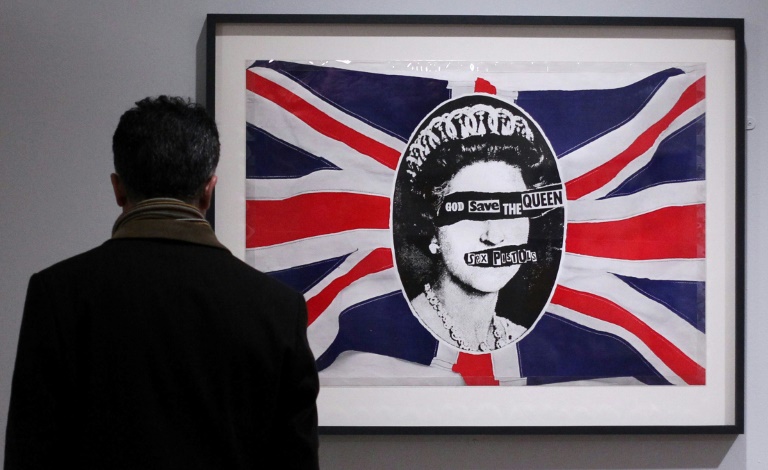
With her eyes and mouth covered with collaged words, the cover of the 1977 Sex Pistols single “God Save The Queen” is one of the most iconic images of the punk movement — and of Elizabeth II.

The artist, Jamie Reid, also created a version depicting the queen with a safety pin through her mouth and Nazi swastika symbols on her eyes.

Of the many other songs about the queen, the gentle “Her Majesty” by The Beatles in 1969 contrasts with “Elizabeth My Dear” on the 1989 debut album by The Stone Roses, where they declared they would not rest until she lost the throne.

“The Queen Is Dead”, the title track from the 1986 hit album by The Smiths, featured lead singer Morrissey railing against media fascination with the royal family.

“The very idea of the monarchy and the queen of England is being reinforced and made to seem more useful than it really is,” Morrissey told NME magazine.

“The whole thing seems like a joke. A hideous joke.”

In 2005, electronic dance act Basement Jaxx imagined the queen on a night out in London for the music video for “You Don’t Know Me”, showing her visiting a strip club and getting into a fight.

– Warhol’s silkscreens –

The queen sat for numerous artists during her reign, including Cecil Beaton, Lucian Freud and Annie Leibovitz, showing her in full regalia, at work or with her family.

But few captured the public imagination like Andy Warhol’s technicolour silkscreens, as part of a 1985 series about reigning queens.

Warhol used an official photograph that he customised in a range of colours and styles — a treatment also used to depict stars such as Marilyn Monroe.

– Screen time – 

Readily identified by her cut-glass accent and boldly-coloured outfits, the queen was much depicted in cartoons, television shows and films.

She popped up several times in cult US series “The Simpsons”, including in one episode where the main character, Homer, drove into her golden carriage on the grounds of Buckingham Palace.

The monarch featured in British satirical puppet show “Spitting Image” and in children’s television hit “Peppa Pig”, where she jumped in muddy puddles.

She also featured in the movies “Minions”, “Austin Powers in Goldmember” and “The Naked Gun” among many others — in some of them played by Jeannette Charles, her most famous British lookalike.

– Private life –

The queen rarely gave interviews and never retailed details about her most private moments.

But cinematic portrayals of the life she was presumed to lead behind the palace gates were many.

Laid out in films, plays and television programmes, all helped to shape public perceptions of the royal family.

She was depicted as a child in the Oscar-winning movie “The King’s Speech”, about her father King George VI’s struggle to overcome his stammer, and as a monarch, facing public anger after the 1997 death of her daughter-in-law Princess Diana, in “The Queen”.

One of the most influential was Netflix’s big-budget TV series “The Crown”, which told in luxurious detail the story of the queen and her husband Philip from before she ascended to the throne, complete with family rows, scandals and political crises.

– Olympic spoof –

After years of her image being used and abused, the queen took to the screen herself in 2012 in a sketch for the opening ceremony of the London Olympic Games.

She was filmed surrounded by her beloved corgis at Buckingham Palace as she met James Bond star Daniel Craig, who was dressed as the suave spy in black tie.

“Good evening, Mr Bond”, she said, before the pair appeared to get in a helicopter, fly across London and then parachute into the stadium.

In 2016, she also appeared in a video with her grandson Prince Harry which also featured former US president Barack Obama, to promote the prince’s veterans sports championship, the Invictus Games.

One of her last appearances was with the popular animated children’s television character, Paddington Bear, at her Platinum Jubilee celebrations in June.

The pair shared a love of marmalade sandwiches and tapped out the beat to Queen’s anthem “We Will Rock You” to kickstart a star-studded pop concert.

Risk of climate tipping points escalates at 1.5C warming: study

Failing to achieve the Paris agreement goal of limiting global warming to 1.5C could trigger multiple dangerous “tipping points” where changes to climate systems become self-sustaining, according to a major new study published in Science.

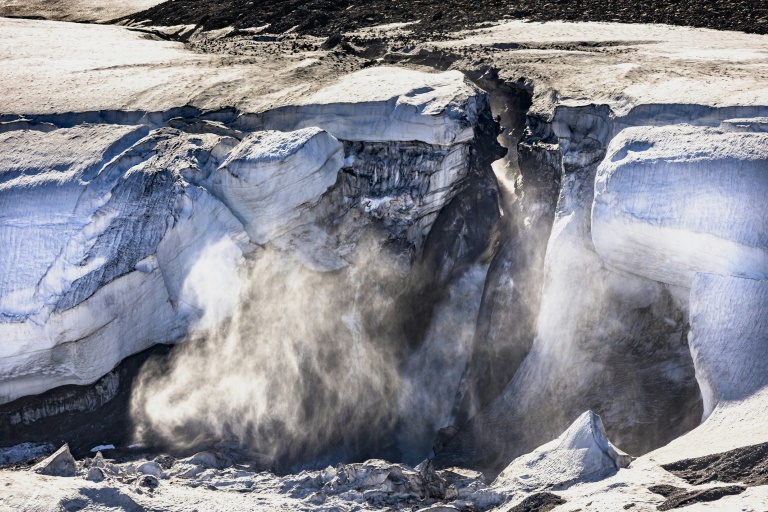
Even current levels of warming have already put the world at risk of five major tipping points — including the collapse of the Antarctic and Greenland ice sheets — but it’s not too late to change course, the authors stress.

“The way I think about it is it’ll change the face of the world — literally if you were looking at it from space,” given long term sea-level rise, rainforest death and more, senior author Tim Lenton of the University of Exeter told AFP.

Lenton authored the first major research on tipping points in 2008. 

These points are defined as a reinforcing feedback in a climate system that is so strong it becomes self-propelling at a certain threshold — meaning even if warming stopped, an ice sheet, ocean or rainforest would keep changing to a new state.

While early assessments said these would be reached in the range of 3-5C of warming, advances in climate observations, modeling and paleoclimate reconstructions of periods of warming in the deep past have found the thresholds much lower.

The new paper is a synthesis of more than 200 studies to produce new estimates for when common tipping points might happen.

It identifies nine global “core” tipping elements contributing substantially to planetary system functioning, and seven regional tipping points, which contribute substantially to human welfare, for a total of 16.

Five of the 16 may be triggered at today’s temperatures: the collapse of the Greenland and West Antarctic ice sheets; widespread abrupt permafrost thaw; collapse of convection in the Labrador Sea; and massive die-off of tropical coral reefs.

Four of these move from “possible” events to “likely” at 1.5C global warming, with five more becoming possible around this level of heating.

– 10 meters of sea rise –

Passing the tipping points for the Greenland and West Antarctic ice sheets is “making a commitment eventually to an extra 10 meters of global sea level,” said Lenton, though this particular change may take hundreds of years.

Coral reefs are already experiencing die-offs due to warming-induced bleaching, but at current temperatures they are also able to partly recover.

At a particular level of heating, recoveries would no longer be possible, devastating equatorial coral reefs and the 500 million people globally who depend on them.

The Labrador Sea convection is responsible for warming Europe and changes could result in much more severe winters, comparable to the “Little Ice Age” from the early 14th century through the mid-19th century.

Abrupt permafrost thaw — impacting Russia, Scandinavia, and Canada — would further amplify carbon emissions in addition to drastically altering landscapes.

Systems that may come into play around 1.5C also include the Atlantic Meridional Overturning Circulation, closely linked to sea levels on the US East Coast.

Starting from 2C, monsoon rains in West Africa and the Sahel could be severely disrupted, and the Amazon rainforest could face widespread “dieback,” turning to savanna. 

First author David Armstrong McKay stressed that even if the planet did hit 1.5C warming, much would depend on how long it stayed there, with the worst impacts coming if the temperature remained that hot for five or six decades.

Further, “these tipping points happening at 1.5 degrees don’t add a vast amount of global warming as a feedback — and that’s quite important because it means we’re not on a runaway train situation at 1.5C.”

That means humanity can still control further warming, and it’s “still worthwhile cutting emissions as fast as we possibly can,” he added.

Lenton said what gave him hope was the idea that human society might have its own “positive” tipping points, where years of incremental change are followed by urgent, widespread action.

“That’s how I can get out of bed in the morning… Can we transform ourselves and the way we live?” he said.

Risk of climate tipping points escalates at 1.5C warming: study

Failing to achieve the Paris agreement goal of limiting global warming to 1.5C could trigger multiple dangerous “tipping points” where changes to climate systems become self-sustaining, according to a major new study published in Science.

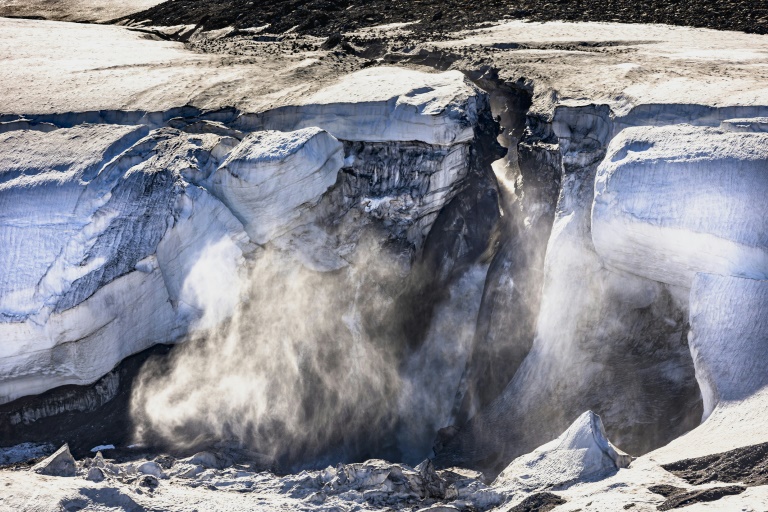
Even current levels of warming have already put the world at risk of five major tipping points — including the collapse of the Antarctic and Greenland ice sheets — but it’s not too late to change course, the authors stress.

“The way I think about it is it’ll change the face of the world — literally if you were looking at it from space,” given long term sea-level rise, rainforest death and more, senior author Tim Lenton of the University of Exeter told AFP.

Lenton authored the first major research on tipping points in 2008. 

These points are defined as a reinforcing feedback in a climate system that is so strong it becomes self-propelling at a certain threshold — meaning even if warming stopped, an ice sheet, ocean or rainforest would keep changing to a new state.

While early assessments said these would be reached in the range of 3-5C of warming, advances in climate observations, modeling and paleoclimate reconstructions of periods of warming in the deep past have found the thresholds much lower.

The new paper is a synthesis of more than 200 studies to produce new estimates for when common tipping points might happen.

It identifies nine global “core” tipping elements contributing substantially to planetary system functioning, and seven regional tipping points, which contribute substantially to human welfare, for a total of 16.

Five of the 16 may be triggered at today’s temperatures: the collapse of the Greenland and West Antarctic ice sheets; widespread abrupt permafrost thaw; collapse of convection in the Labrador Sea; and massive die-off of tropical coral reefs.

Four of these move from “possible” events to “likely” at 1.5C global warming, with five more becoming possible around this level of heating.

– 10 meters of sea rise –

Passing the tipping points for the Greenland and West Antarctic ice sheets is “making a commitment eventually to an extra 10 meters of global sea level,” said Lenton, though this particular change may take hundreds of years.

Coral reefs are already experiencing die-offs due to warming-induced bleaching, but at current temperatures they are also able to partly recover.

At a particular level of heating, recoveries would no longer be possible, devastating equatorial coral reefs and the 500 million people globally who depend on them.

The Labrador Sea convection is responsible for warming Europe and changes could result in much more severe winters, comparable to the “Little Ice Age” from the early 14th century through the mid-19th century.

Abrupt permafrost thaw — impacting Russia, Scandinavia, and Canada — would further amplify carbon emissions in addition to drastically altering landscapes.

Systems that may come into play around 1.5C also include the Atlantic Meridional Overturning Circulation, closely linked to sea levels on the US East Coast.

Starting from 2C, monsoon rains in West Africa and the Sahel could be severely disrupted, and the Amazon rainforest could face widespread “dieback,” turning to savanna. 

First author David Armstrong McKay stressed that even if the planet did hit 1.5C warming, much would depend on how long it stayed there, with the worst impacts coming if the temperature remained that hot for five or six decades.

Further, “these tipping points happening at 1.5 degrees don’t add a vast amount of global warming as a feedback — and that’s quite important because it means we’re not on a runaway train situation at 1.5C.”

That means humanity can still control further warming, and it’s “still worthwhile cutting emissions as fast as we possibly can,” he added.

Lenton said what gave him hope was the idea that human society might have its own “positive” tipping points, where years of incremental change are followed by urgent, widespread action.

“That’s how I can get out of bed in the morning… Can we transform ourselves and the way we live?” he said.

Elizabeth II: Queen of the world

Elizabeth Alexandra Mary Windsor was not just Queen Elizabeth II. She was simply The Queen.

For billions of people, she was the one constant in a world of bewildering change, an omnipresent matriarch linking the past with the present.

While the enormous British Empire she once presided over shrank, her symbolic influence only seemed to grow, her mystique bolstered by films like “The Queen” and the Netflix series “The Crown”.

Against the tide of history and logic, she made a medieval anachronism somehow modern, a stoic old lady in a hat onto whom so much could be projected.

Perhaps only the pope held as much sway, and she saw seven of them come and go during her record-breaking seven-decade reign.

– Accident of history –

Although Elizabeth Windsor became the very definition of the word, she was not born to be queen. 

An accident of history brought her to the throne.

Until her “Uncle David” — Edward VIII — abdicated to marry the twice-divorced American Wallis Simpson in 1936, she had only an outside chance of reigning. 

Even as heir apparent, the birth of a baby brother would have sent her back into relative aristocratic obscurity under succession laws in place at the time that gave precedence to males.

All changed for “Lilibet” when she was 10 and her reluctant, stammering father became George VI. 

Until the “shock” of the abdication, she had been brought up exactly like her more outgoing younger sister Margaret. The two were often dressed like twins.

Her tough-minded mother, also called Elizabeth, was her emotional lodestar. She made sure the girls had an “insulated and care-free childhood” in contrast to the suffocating Palace strictures their father suffered.

Nevertheless, she learned duty early. 

“Princess Elizabeth was quite a good tap dancer and mimic and could be very funny when she wanted to be,” said royal biographer Andrew Morton, whose study of her close but often strained relationship with Margaret appeared in 2021.

And she “could be depended upon to do what was asked, keeping her toys and clothes in perfect order”.

– ‘Magnificent isolation’ –

An introvert, she adapted easily to the “magnificent isolation” of royal life spent surrounded by scores of servants and courtiers.

The royal family — George VI, Queen Elizabeth, princess Elizabeth and princess Margaret — referred to themselves as “we four”, Morton said, and were close.

Yet as queen, Elizabeth looked more to her steely and stolid grandfather George V — a reformer who believed in leading by example.

Her biographer, Robert Lacey, told AFP that like him she saw the decline of the English class system, and wanted to establish a direct relationship with the people.

George V began the royal broadcasts, which the queen used to hone her own mix of mystery and intimacy, inviting television viewers into Buckingham Palace or Windsor Castle for rather stilted fireside chats surrounded by photographs of her children, dogs and horses.

– Young queen –

Her coronation on June 2, 1953 was the first major event of the television age. 

The news that morning of New Zealander Edmund Hillary’s conquest of Everest made the celebrations all the more giddy.

The Union Jack had been planted on the top of world, as Britain financed the expedition, alongside that of the United Nations and Nepal. 

But for all the glamour of the young queen — then just 25 — and talk of a second Elizabethan age, Imperial Britain was in trouble. 

India — the so-called “Jewel in the Crown” — had already gained independence in 1947. 

Hard-won victory in World War II had left the country exhausted and virtually bankrupt, its cities bomb-scarred and rationing was in its 14th year.

The Suez Crisis in 1956 would deal Britain’s status as a world power a final shattering blow.

While the Tudor-era Elizabeth I in the 16th century oversaw the birth of England’s imperial project, Elizabeth II’s fate was to watch the flag come down on the biggest empire the world has ever seen.

The latest to go was Barbados, which cut ties with the British Crown after nearly four centuries in 2021.

– Quiet reformer –

Such a retreat would have carried other monarchies with it, but the queen was the embodiment of British stiff upper lip and its “keep calm and carry on” spirit.

She had already done her dynastic duty by giving birth to an “heir and a spare” — a successor and a younger sibling — by the time she was crowned. 

With the ageing Winston Churchill — the first of 15 British prime ministers to serve under her — at her side, she began to slowly reinvent the institution. 

Decades sidestepping diplomatic bear traps on never-ending royal tours and state visits made her a formidable operator.

Those skills have been “capital” in holding the Commonwealth of incredibly diverse mostly former British colonies together, Lacey insisted.

Despite crises and conflicts, it still counts 54 countries with a combined population of 2.57 billion people.

– Princess in love –

The queen was 13 when she fell for her 18-year-old third cousin Philip in 1939, then a dashing naval cadet preparing to go to war.

Her nanny noted that “she never took her eyes off him”. Letters were soon flying back and forth.

Despite the constant threat, the future queen experienced her greatest freedom during those teenage wartime years.

Relatively safe behind the thick walls of Windsor Castle, west of London, she became a volunteer driver and mechanic.

When victory was declared in 1945, the 19-year-old princess joined the crowds celebrating in central London along with her friends and her sister Margaret.

She later described it as “one of the most memorable nights of my life. I remember we were terrified of being recognised.”

Two years later, despite her mother’s reservations — the Queen Mother referred to plain-speaking Philip as “the Hun” because of his German wider family — she married the impecunious Danish-Greek prince.

She gave birth to Charles 11 months later and Anne followed in 1950. Andrew — said to be her favourite — arrived in 1960, with Edward born four years later.

The queen was a one-man woman, who “never looked at anyone else”, her cousin and confidant Margaret Rhodes said.

Philip’s marital fidelity was reportedly less sure, but his sense of duty was equally iron cast. 

Their 73-year partnership, which lasted until his death in April 2021, was her “strength and stay”, the queen later confessed.

Both loved horses. The queen’s racing stables turned out some 1,700 winners, with the Racing Post occupying pride of place on her desk alongside state papers.

She only missed two Epsom Derbies in her entire reign.

Philip played polo into his 50s and raced carriages into his 90s. Fittingly both were obsessed with breeding.

On her highly sensitive royal visit to Ireland in 2011 — the first by a British royal since its independence — the queen met almost as many horses as people after asking to take in two famous stud farms.

– Humanising the royals –

Thoroughbreds can be difficult to handle. And this was also to prove true with members of the royal family, known as “The Firm”, who would become more visible than ever under Elizabeth’s reign.

The world got its first glimpse of their private lives in 1969 when BBC cameras were allowed around the Buckingham Palace breakfast table.

The documentary was part of a bid to “humanise” the monarchy masterminded by Philip’s uncle, Lord Louis Mountbatten, and the former viceroy of India’s son-in-law, film producer John Knatchbull, the seventh Baron Brabourne.

Since the beginning of her reign, the Palace had sought to portray the royals as a family like any other, a more well-born, well-appointed version of a modern British household.

But “Royal Family” lifted the veil further than ever before, revealing some surprising quirks — behind her shy and dutiful exterior, the queen was actually a rather racy driver. 

Not for the last time, it was Prince Philip who delivered the biggest bombshell, telling viewers how the queen’s father King George VI would take out his rage on the rhododendrons.

“Sometimes I thought he was mad,” he deadpanned.

Critics, including Princess Anne — who called the film “rotten” — blamed it for opening the door to the tabloid voyeurism that would soon dog the clan.

– Tabloid troubles –

The queen’s rather unruly and resentful sister, Margaret, was first in the firing line, her colourful private life making her prime paparazzi material.

All the royals, apart from the “untouchable” queen herself and Prince Philip, would in time feel the swipe of the media’s double-edged sword.

Yet the queen seemed to float above it all, her life a carefully guarded secret.

Beyond her love of horses and rather snappy Corgi dogs, along with a fondness for crossword puzzles and a Dubonnet and gin cocktail before lunch, very little about her private life was known. 

In later life she developed a fondness for television soap operas, and while self-isolating in Windsor during the coronavirus lockdown is said to have become a fan of the police corruption drama “Line of Duty”.

She even reportedly watched the upper-class period drama “Downton Abbey”.

In 2021, when she was forced to slow down because of ill health, The Times reported that late-night television had left her “knackered”.

She even stopped drinking her lunchtime gin and martini in the evening.

– ‘Annus horribilis’ –

For a time, there was much to celebrate in her children’s lives. 

The “fairytale” marriage of Charles to Lady Diana Spencer in 1981 was a massive global media event, as was the wedding of Andrew to Sarah Ferguson five years later.

Yet the couples’ private lives would soon provide endless fodder for the voracious British tabloids. 

Both marriages very publicly fell apart in 1992, as did Anne’s to Captain Mark Phillips. To top it all, Windsor Castle was badly damaged by fire.

The queen called it her “annus horribilis”.

In an effort to win back public support, she began paying tax and Buckingham Palace was opened to the public for the first time.

But the rancour between Charles and Diana became poisonous as they settled scores in rival TV interviews in what became known as the “War of the Waleses”.

And then the unimaginable happened. Diana’s tragic end in a car crash in Paris in 1997 not only shook confidence in the monarchy, but in the queen herself.

– Diana –

A series of missteps in the days after her daughter-in-law’s death left the queen looking cold, uncaring and out of touch.

“Show us you care,” said one newspaper front page after the queen opted to stay in her Scottish summer retreat of Balmoral rather return to London. 

“Speak to us Ma’am,” headlined another, in criticism that would have been unthinkable only a few years before.

And her decision to strip the so-called “People’s Princess” of her royal status in the wake of Diana’s bombshell 1995 BBC interview came back to haunt the monarch.

But through it all, the queen kept her counsel, sticking doggedly to the royals’ reputed mantra of “never complain, never explain”. 

It may have helped maintain the institution’s mystique in past but here it badly backfired. 

A major Palace overhaul followed. 

Help in restoring faith in the monarch was to come from an unlikely source — the self-confessed “old republican left-winger” Stephen Frears.

His Oscar-winning 2008 movie “The Queen”, set against the backdrop of the Diana crisis, did much to explain her position and rewrite the narrative.

Helen Mirren — another republican — won an Oscar for her moving portrayal of the queen’s struggle between duty and family, winning her sympathy even from people who had little time for the monarchy. 

– The problem with Charles –

Rehabilitating Charles would be trickier. As early as 1977, during her Silver Jubilee marking 25 years on the throne, the queen had vowed to rule until her death.

While this promised stability, it also seemed to undermine the Prince of Wales, whom some saw as unfit to follow her.

His buttonholing of politicians over his hobby horse causes seemed to challenge the unwritten rule that the royals stay out of politics.

However, as many of his once “fringe” ideas, such as on the environment, became mainstream, Charles has shown a more relaxed, self-deprecating side, particularly after his 2005 marriage to his lifelong lover Camilla.

With his mother in her 90s, he began to take over her duties as the most senior royal on overseas trips.

– Family –

Despite the consolation of grandchildren and great grandchildren in the twilight of her reign, her greatest headaches continued to come from within her own family.

Now the longest serving British monarch ever, the marriages of both of her grandsons William and Harry to commoners seemed to offer another phase of modernisation and renewal.

However, within three years of Harry’s mould-breaking marriage to the mixed-race American actress Meghan Markle in 2018, a rift with the Palace became horribly public. 

A month after allegations of racism within the family were raised in a television interview with Oprah Winfrey, Philip died aged 99 in April 2021, leaving her ever more alone.

With Andrew also mired in underage sex allegations over links with convicted sex offender Jeffrey Epstein, it was another “annus horribilis”.

– Last of her kind? –

Yet the monarch herself remained hugely popular and admired, an embodiment of traditional values and all that seemed eternal about England.

In his book on her and her sister, Morton recounts how Margaret burst in on the queen’s weekly audience with the prime minister early in her reign.

“If you weren’t queen, nobody would talk to you,” Margaret fumed, angry at being left out.

Time and again since, Elizabeth proved the contrary, that she was infinitely worthy — the first and perhaps the “last global monarch”, as the New York Times put it in 2021.

The unknowable mystique she cultivated in a world ever more demanding of transparency may well die with her.

Queen Elizabeth II's top quotes

Queen Elizabeth II was one of the most recognisable people on earth, seen often but not always heard from.   

Here are some of her most memorable quotes:

– ‘Salad days’ –

“You mean forever?” 

— What the then princess Elizabeth reportedly asked her nanny when told her family was moving to Buckingham Palace after her father became king in 1936.

“I declare before you all that my whole life, whether it be long or short, shall be devoted to your service.”

— Dedicating herself to a life of service to the Commonwealth in a radio broadcast from Cape Town, aged 21.

“Throughout all my life and with all my heart, I shall strive to be worthy of your trust.”

— The new Queen Elizabeth II speaks in a radio broadcast to mark her coronation in 1953.

“When I was 21, I pledged my life to the service of our people and I asked for God’s help to make good that vow. Although that vow was made in my salad days, when I was green in judgement, I do not regret nor retract one word of it.”

— Reaffirming her lifetime commitment to the job in a speech to mark her 25 years on the throne, in 1977.

“The time for words has now moved to the time for action.”

— Urging world leaders to leave a legacy for future generations at the United Nations climate change summit in 2021.

– Royal intrusion –

“What are you doing here?”

— The queen’s reported response to finding Michael Fagan in her bedroom on July 9, 1982, according to the intruder himself.

“I remember we were terrified of being recognised.”

— Recalling in a 1985 BBC interview how she, her younger sister Margaret and a group of friends celebrated the end of World War II with crowds on the streets of central London.

– Troubled times –

“1992 is not a year I shall look back on with undiluted pleasure. In the words of one of my more sympathetic correspondents, it has turned out to be an ‘annus horribilis’.”

— From the queen’s Christmas message in the year three of her children’s marriages collapsed and there was a major fire at Windsor Castle.

“No one who knew Diana will ever forget her. Millions of others who never met her, but felt they knew her, will remember her. I, for one, believe that there are lessons to be drawn from her life and from the extraordinary and moving reaction to her death.”

— Facing public criticism for the slowness of her response, the queen addresses the public in a highly unusual live television broadcast after the death of princess Diana in a Paris car crash in 1997.

“Nothing that can be said can begin to take away the anguish and the pain of these moments. Grief is the price we pay for love.”

— From a message from the queen read out at a church service in New York following the September 11, 2001, attacks.

“We should take comfort that while we may have more still to endure, better days will return. We will be with our friends again. We will be with our families again. We will meet again.”

— Rallying the nation in a rare televised address at the height of Britain’s coronavirus lockdown, in April 2020.

– Long life and dedication –

“He is someone who doesn’t take easily to compliments but he has, quite simply, been my strength and stay all these years, and I owe him a greater debt than he would ever claim, or we shall ever know.”

— The queen on her husband, Prince Philip, in a 1997 speech to mark their golden wedding anniversary.

“Gratitude, respect and pride, these words sum up how I feel about the people of this country and the Commonwealth — and what this Golden Jubilee means to me.”

— On marking 50 years as monarch, in 2002.

“It is not one to which I have ever aspired. Inevitably, a long life can pass by many milestones, my own is no exception.” 

— On becoming Britain’s longest-reigning monarch on September 9, 2015.

“None of us will live forever.”

— The queen acknowledges mortality while urging world leaders to halt global warming in a speech to the UN climate change summit, in October 2021.

– Quick wit –

“Less dressy? What do you think this is?”

— Her response to Annie Leibovitz in a 2007 photoshoot when the celebrity photographer suggested she remove her tiara.

“Well, I’m still alive.”

— Her response to Northern Ireland’s deputy first minister Martin McGuinness, who asked how she was on meeting her in 2016. McGuinness was a former senior figure in the Irish Republican Army, which killed her cousin, Louis Mountbatten in 1979.

“Are you supposed to look like you’re enjoying yourself?”

— Joking with G7 leaders in Cornwall, southwest England, 2021.

– Cameo roles –

“Good evening, Mr Bond.”

— The queen greets Daniel Craig playing James Bond in a spoof sketch for the opening ceremony of the London 2012 Olympics.

“Boom? Really, please!”

— Responding to a light-hearted challenge from the Obamas at the 2016 launch of grandson Prince Harry’s Invictus Games for wounded, disabled and sick military personnel and veterans.

“I keep mine in here.”

— Taking a marmalade sandwich from her handbag during tea with Paddington Bear during her 2022 Platinum Jubilee celebrations.

Queen Elizabeth II dies aged 96

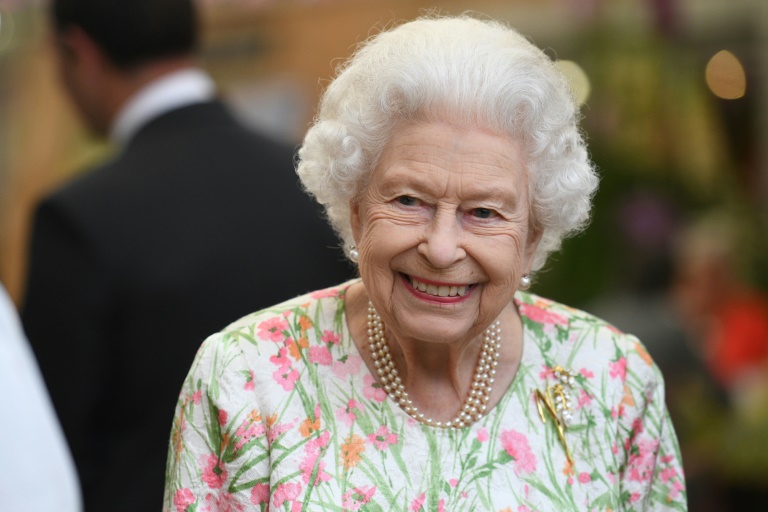
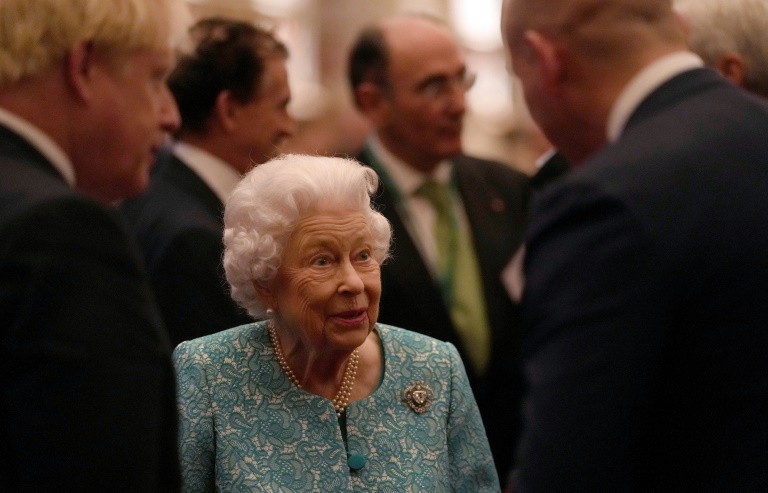
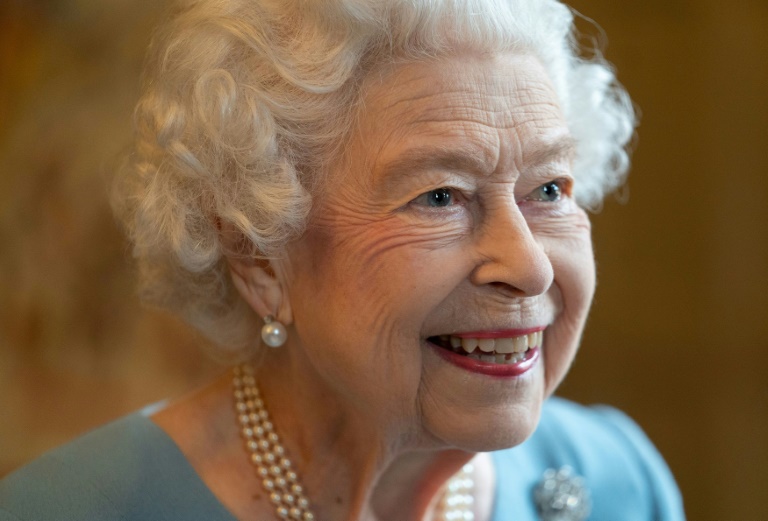
Queen Elizabeth II, the longest-serving monarch in British history and an icon instantly recognisable to billions of people around the world, died on Thursday. She was 96.

Buckingham Palace announced her death in a short statement, triggering 10 days of national mourning and an outpouring of tributes to her long life and record-breaking reign.

“The Queen died peacefully at Balmoral this afternoon,” Buckingham Palace said in a statement at 6:30 pm (1730 GMT).

“The King and The Queen Consort will remain at Balmoral this evening and will return to London tomorrow.”

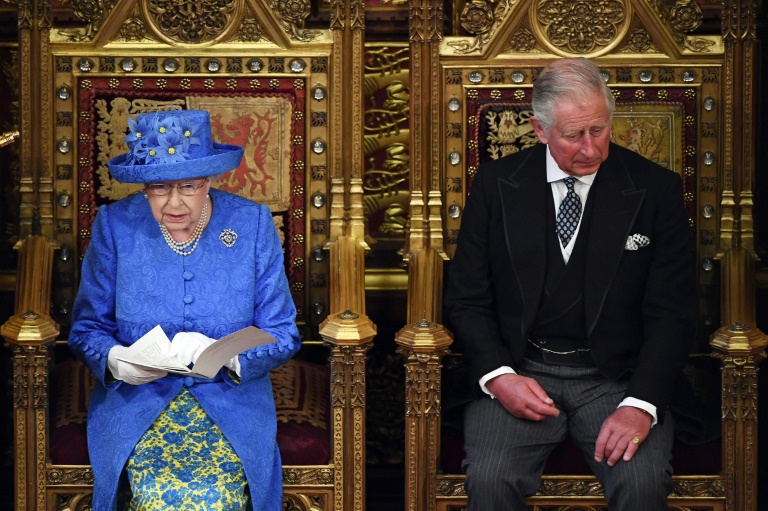
The eldest of her four children, Charles, Prince of Wales, who at 73 is the oldest heir apparent in British history, becomes king immediately.

The queen’s death came after the palace announced on Thursday that doctors were “concerned” for her health and recommended she stayed under medical supervision.

All her children — Charles, Princess Anne, 72, Prince Andrew, 62, and Prince Edward, 58, flocked to her Scottish Highland retreat, Balmoral.

They were joined by Charles’s sons, Prince William, and his estranged brother Prince Harry.

Two days earlier the queen appointed Liz Truss as the 15th prime minister of her reign and was seen smiling in photographs but looking frail and using a walking stick. 

One photograph of the meeting sparked alarm, showing a deep purple bruise on the monarch’s right hand.

– Seismic change –

Queen Elizabeth II came to the throne aged just 25 in 1952 in the aftermath of World War II, joining a world stage dominated by political figures from China’s Mao Zedong to Soviet leader Joseph Stalin and US president Dwight D. Eisenhower.

Her 70-year reign straddled two centuries of seismic social, political and technological upheaval. 

The last vestiges of Britain’s vast empire crumbled. At home, Brexit shook the foundations of her kingdom, and her family endured a series of scandals.

But throughout, she remained consistently popular and was queen and head of state not just of the United Kingdom but 14 former British colonies, including Australia, Canada and New Zealand.

She was also head of the 56-nation Commonwealth, which takes in a quarter of humanity, and supreme governor of the Church of England, the mother church of the worldwide Anglican communion. 

But questions will be asked about whether the golden age of the British monarchy has now passed, how an ancient institution can remain viable in the modern era and whether Charles will command the same respect or reign in his mother’s shadow.

– Official mourning –

Television and radio stations interrupted regular programming to broadcast the news, with long-rehearsed special schedules set in place to remember her long life and reign.

The national anthem, “God Save the Queen”, was played. Flags were lowered and church bells tolled to remember a woman once described as the “last global monarch”.

The national mourning period will culminate in a final public farewell at Westminster Abbey in central London.

Charles’ coronation, an elaborate ritual steeped in tradition and history, will take place in the same historic surroundings, as it has for centuries, on a date to be fixed.

– Longevity – 

Elizabeth Alexandra Mary Windsor was for most of her subjects the only monarch they have ever known — an immutable figurehead on stamps, banknotes and coins. 

Diminutive in stature yet an icon of popular culture, she was instantly recognisable in her brightly coloured suits and matching hat, with pearls, gloves and a handbag.

During her reign, the royals went from stiff, remote figures to tabloid fodder and were then popularised anew in television dramas such as “The Crown,” watched by tens of millions worldwide.

Her time on the throne spanned an era of remarkable change, from the Cold War to the 9/11 attacks, from climate change to coronavirus, “snail mail” and steam ships to email and space exploration. 

She became seen as the living embodiment of post-war Britain and a link between the modern era and a bygone age. 

The mother of one of the most famous families in the world, she retained huge public support throughout, surviving even a backlash in the wake of the death of Charles’ first wife, Diana, in 1997.

More recently, the royal family was rocked by claims from Prince Harry and his mixed-race wife Meghan of racism in the royal family.

She also endured a scandal involving her second son Prince Andrew, whose friendship with convicted sex offenders Jeffrey Epstein and Ghislaine Maxwell saw him settle a civil claim for sexual assault in the United States. 

– ‘None of us will live forever’ – 

Britons were jolted into recognising the beginning of the end of her reign when in April 2021 she lost her beloved husband of 73 years, Prince Philip, Duke of Edinburgh.

Yet the palace had long recognised her mortality and the transition to Charles was already well under way.

He, his eldest son Prince William, who now becomes heir, and his wife, Catherine, began to assume more of the queen’s official roles.

The coronavirus pandemic and her advanced years forced her into the splendid isolation of Windsor Castle, west of London.

But from behind its stately walls, she remained a reassuring presence, popping up on video calls with members of the public.

In a rare, televised address during the first lockdown, she recalled the “Blitz spirit” of Britain under siege during World War II that defined her generation.

“We will meet again,” she said.

She cast off the shroud of Philip’s death and her enforced confinement to resume public duties, but age and ill-health forced her slow down. 

After a unscheduled night in hospital in October 2021 following undisclosed health tests, her appearances became rarer.

“None of us will live forever,” she told world leaders attending a UN climate change summit soon afterwards, urging them to leave a legacy for generations to come.

One of her last decisive acts was to settle an unanswered question for the succession, giving her blessing for Charles’ second wife, Camilla, to be called “queen consort”.

Aid halted to Ethiopia's Tigray, UN says, as fighting escalates

Renewed clashes in northern Ethiopia have forced desperately needed aid deliveries to a halt in war-torn Tigray, the United Nations said, as fighting escalated Thursday between Tigrayan rebels and pro-government forces.

The resumption of combat last month shattered a March truce and sparked international concern, with frantic diplomatic efforts now under way to find a peaceful resolution to the nearly two-year war.

The truce had allowed aid convoys to travel to Tigray’s capital Mekele for the first time since mid-December.

But in its first situation report since clashes broke out on August 24, the UN’s humanitarian agency OCHA said the violence was “already impacting the lives and livelihood of vulnerable people, including the delivery of lifesaving humanitarian assistance”.

“The last humanitarian convoy to enter Tigray before the interruption was the humanitarian convoy on 23 August consisting of 158 trucks with humanitarian and operational supplies,” the UN’s Office for the Coordination of Humanitarian Affairs said late Wednesday.

It said twice-weekly UN humanitarian flights between Addis Ababa and Mekele have also come to a halt since August 26.

Fighting erupted around Tigray’s southeastern border, but has since spread along the region’s southern border to areas west and north of the initial clashes.

A diplomatic source and a foreign source, who spoke to AFP on condition of anonymity, said fighting had intensified along Tigray’s northern border, with pro-government forces and troops from neighbouring Eritrea — which backed Ethiopia’s army in the early stages of the war — targeting rebel positions.

Both sources described heavy artillery fire near Adigrat, a town in northern Tigray not far from the Eritrean border.

There is “intense shelling from Eritrea into the Adigrat area, around the border”, said the diplomatic source. The second source confirmed the details.

Both sources said pro-government forces had captured the town of Mai Tsebri in Tigray, but Kindeya Gebrehiwot, spokesman for the Tigray People’s Liberation Front (TPLF), denied the claim, telling AFP: “It’s incorrect.”

AFP was not able to independently verify the claims. Access to northern Ethiopia is severely restricted and Tigray has been under a communications blackout for over a year.

– Diplomatic efforts –

The uptick in violence has sparked international concern, with the US envoy to the Horn of Africa, Mike Hammer, extending his stay in Ethiopia, according to diplomatic sources.

The European envoy to the region, Annette Weber, is also expected to visit the country soon, diplomatic sources told AFP, without elaborating.

The warring sides have traded blame for starting the latest round of hostilities, with the TPLF accusing the government and Eritrea of launching a joint offensive against Tigray.

Ethiopia’s northernmost region has been suffering from severe food shortages and limited access to basic services such as electricity, communications and banking.

The fighting has also hit access to aid in neighbouring regions, with the OCHA report saying that “humanitarian operations in hard-to-reach areas in Amhara region, such as in parts of Wag Hemra, were put on hold due to security concerns”.

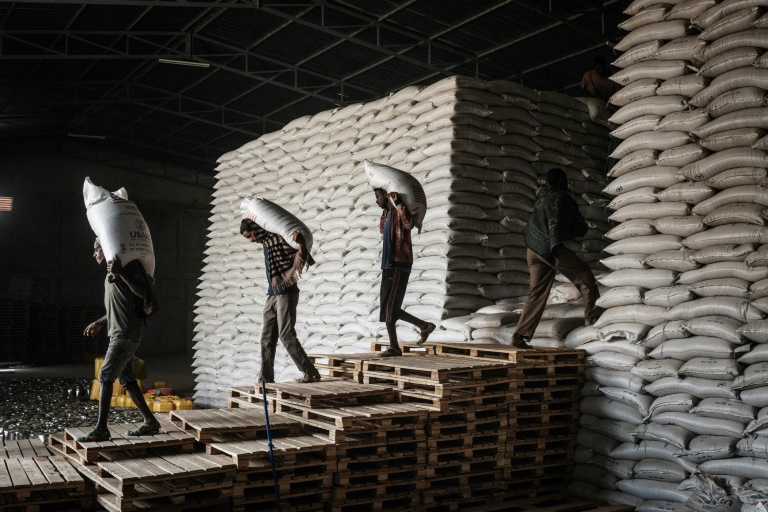
Even before the latest clashes, Tigray was in the grip of a hunger crisis, with the UN’s World Food Programme warning last month that nearly half of the region’s six million people were “severely food insecure”.

“Hunger has deepened, rates of malnutrition have skyrocketed, and the situation is set to worsen as people enter peak hunger season until this years’ harvest in October,” WFP said in its latest assessment covering November 2021 to June 2022.

The war erupted in November 2020 when Prime Minister Abiy Ahmed sent troops to topple the TPLF, the region’s former ruling party, saying the move came in response to attacks by the group on army camps. 

The TPLF mounted a comeback, recapturing most of Tigray in June 2021 and expanding into Afar and Amhara, before the fighting reached a stalemate.

Unknown numbers of civilians have died and millions need humanitarian aid.

Jeep's first electric SUV to arrive in Europe in 2023: CEO

Jeep will launch its first all-electric SUV for Europe, the “Avenger”, next year, CEO Christian Meunier told AFP on Thursday, as its parent company Stellantis moves away from fossil fuel vehicles.

“We have very strong DNA — electrification is a means of reinforcing it,” the French director of the US automaker told AFP as the company presented its first electric models to the media.

Jeep plans to sell only electric vehicles in Europe by 2030 under the Dare Forward plans of its parent company, Stellantis, a US-European group whose other brands include Peugeot, Fiat, Chrysler and Alfa Romeo.

Battery electric vehicles will account for half of Stellantis car sales in the United States by the end of the decade.

The small and rugged Avenger has a range of 400 kilometres (250 miles) per charge.

Compared with petrol models it will be a “little heavier given its batteries, but the acceleration and the fun will be there,” Meunier said.

Another electric model adding to the Jeep line-up is the boxier, more off road-orientated “Recon”, replete with power-sliding roof and removable doors.

Recon will be launched in North America in 2024.

Jeep is also releasing an electric variant of its largest sport-utility vehicle, the 600-horsepower Wagoneer S, with a range of 600 kilometres.

– Made in Poland –

The Avenger is slated to debut at the Paris Motor Show on October 17 and appear in showrooms from the first half of next year.

Production is due to begin in Tychy, Poland, in November at the Stellantis factory which rolls out the Fiat 500.

“We are designing and developing the most capable and sustainable Jeep SUVs to date, on our path to becoming the leading zero-emission SUV brand in the world,” said Meunier.

“Electrification is great for our brand, making it even more capable, exciting, sustainable and fun,” he said.

The electric line-up aims to help Jeep gain a bigger market share in Europe, as North America accounts for 60 percent of its sales.

“The all-new Avenger will offer Jeep brand capability that is rightsized for the European market,” said Antonella Bruno, head of Jeep Europe at Stellantis.

It “will appeal to a growing set of customers who are looking for a capable, compact, modern and all-electric Jeep brand alternative to the current players.”

Meunier said the new models would enable the producer to grow its long-term profile similarly to its recent inroads in Italy, home to one of the group’s founders, Fiat, and where Jeep assembles the Renegade and Compass SUV models.

It has carved out a four-percent market share in Italy.

In contrast, it requires a rethink in China following the collapse of a joint venture with Guangzhou Automobile Group (GAC).

Globally, Meunier said that “two or three years ago, when we were talking about electrification that was unimaginable for Jeep fans”.

But today 25 percent of Wrangler sales are plug-in hybrids, he said.

Close Bitnami banner
Bitnami