World

NASA eyes two more dates in September for possible Moon launch

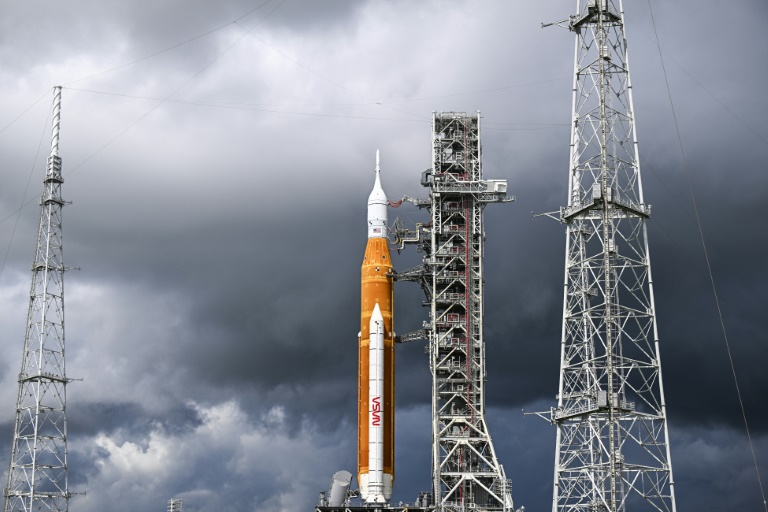
NASA is looking at September 23 and September 27 as possible dates for its next attempt at launching its Artemis 1 mission to the Moon, senior official Jim Free told reporters Thursday.

Two previous attempts were scrapped after the giant Space Launch System rocket experienced technical glitches including a fuel leak.

The launch window for the 23rd would open at 6:47am (1047 GMT), while the 27th would open at 11:37am (1537 GMT), added Free, associate administrator for the agency’s exploration systems development directorate.

The dates were chosen to avoid a conflict with the DART mission, in which a probe will strike an asteroid on September 26 to test its ability to divert the object. 

Both missions require use of an international array of antennas called the Deep Space Network.

The launch dates still depend, however, on NASA receiving a special waiver to avoid retesting batteries on an emergency flight system that is used to destroy the rocket if it strays from its designated range to a populated area.

If it does not receive the waiver, the rocket will have to be wheeled back to its assembly building, pushing the timeline back several weeks.

Mike Bolger, exploration ground systems manager, added that teams were working to replace seals to fix the hydrogen leak issue — work that could be completed by the end of Thursday, which would pave the way for a tanking test on September 17.

The Artemis 1 space mission hopes to test the SLS as well as the unmanned Orion capsule that sits atop, in preparation for future Moon-bound journeys with humans aboard.

Once launched, it will take several days for the spacecraft to reach the Moon, flying around 60 miles (100 kilometers) at its closest approach.

The capsule will fire its engines to get to a distant retrograde orbit (DRO) of 40,000 miles beyond the Moon, a record for a spacecraft rated to carry humans.

The trip is expected to last several weeks, and one of its main objectives is to test the capsule’s heat shield, which at 16 feet (5 meters) in diameter is the largest ever built.

Artemis is named after the twin sister of the Greek god Apollo, after whom the first Moon missions were named.

The next mission, Artemis 2, will take astronauts to the Moon without landing on its surface, while the third — set for the mid-2020s — would see the first woman and person of color on lunar soil.

NASA wants to build a lunar space station called Gateway and keep a sustained presence on the Moon to gain insight into how to survive very long space missions, ahead of a mission to Mars in the 2030s.
Euro slides as Fed chief steals ECB's rate hike thunder

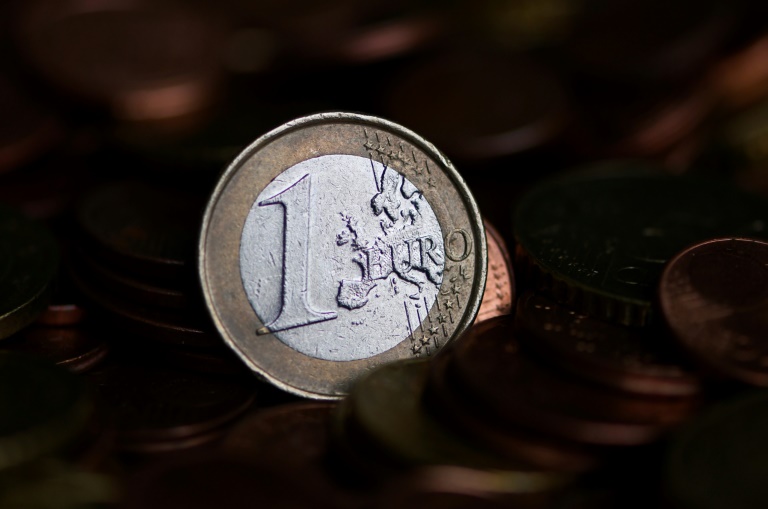
The euro slid on Thursday despite a record interest rate hike by the European Central Bank as US Fed chief Jerome Powell made hawkish comments.

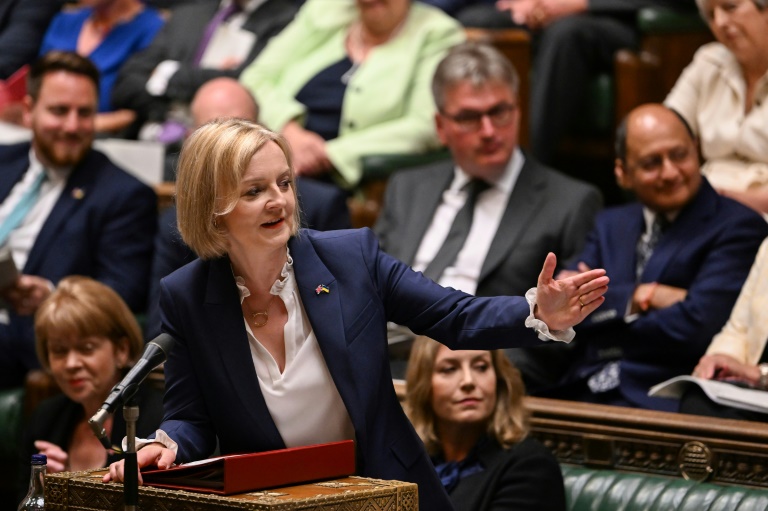
Meanwhile, the pound remained close to a 37-year low against the dollar that was struck Wednesday, as new British Prime Minister Liz Truss announced that she will freeze domestic fuel bills for two years to help ease the burden of a UK cost-of-living crisis.

The ECB warned Thursday that inflation was “far too high” and likely to stay above target for “an extended period” as it announced its record 0.75 percentage point hike.

ECB chief Christine Lagarde made clear interest rates were far from where they need be to bring inflation down.

“We actually took the decision today that we would continue to raise interest rates… because we believe that we are far away from the rate at which we hope we’ll see inflation return to the two percent medium term target,” she said.

Lagarde also warned the eurozone risks recession if Russia completely cuts off gas, which it has nearly done.

But comments by Fed chief Jerome Powell were seen as even more hawkish than those by Lagarde.

“We need to act now forthrightly, strongly as we have been doing and we need to keep at it until the job is done to avoid … the kind of very high social costs” of the surge in inflation in the 1970s and 1980s, Powell told a US think tank.

– Greenback ‘more attractive’ –

Chris Beauchamp, chief market analyst at online trading platform IG, said “Investors clearly believe that the Fed is more committed to higher rates than the ECB, while the stronger economic performance of the US means the greenback and not the euro seems the more attractive prospect.”

The euro, which had broken back above parity with the dollar, slid down as far as $0.9934 before recovering some ground.

The Fed has made it clear it plans to continue to aggressively raise interest rates to rein in surging inflation, even at the cost of causing some economic pain.

The dollar has moved ever higher against its major peers in recent weeks as investors flood into the currency hoping for better returns as the Fed raises rates and as they seek a haven in the face of economic turmoil.

The euro on Wednesday touched a fresh 20-year dollar low.

The US unit is closing in on a 32-year peak against the yen owing to the Bank of Japan’s refusal to raise interest rates.

Observers expect the dollar to keep attracting strong interest as long as the Federal Reserve keeps ramping up US interest rates by sizeable amounts.

The Fed holds its next policy meeting on September 21, with a third successive 75-basis-point lift forecast.

In equities trading, eurozone stocks closed the day mostly higher, and Wall Street was also up in morning trading.

“It has been slow going, but stocks look like they are in a mood to continue yesterday’s rebound,” said IG’s Beauchamp.

“The selling of late August and early September seems to have been exhausted for now, although the broader outlook is still less than encouraging,” he added.

– Key figures at around 1530 GMT –

New York – Dow: UP 0.5 percent at 31,736.76 points

EURO STOXX 50: UP 0.3 percent at 3,512.38

London – FTSE 100: UP 0.3 percent at 7,262.06 (close) 

Frankfurt – DAX: DOWN less than 0.1 percent at 12,904.32 (close)

Paris – CAC 40: UP 0.3 percent at 6,125.90 (close)

Tokyo – Nikkei 225: UP 2.3 percent at 28,065.28 (close)

Hong Kong – Hang Seng Index: DOWN 1.0 percent at 18,854.62 (close)

Shanghai – Composite: DOWN 0.3 percent at 3,235.59 (close)

Euro/dollar: DOWN at $0.9960 from $1.0012 on Wednesday

Pound/dollar: DOWN at $1.1492 from $1.1535

Euro/pound: DOWN at 86.66 pence from 86.74 pence

Dollar/yen: UP at 143.94 yen from 143.79 yen 

West Texas Intermediate: UP 1.7 percent at $83.29 per barrel

Brent North Sea crude: UP 1.0 percent at $88.87 per barrel

burs-rl/cdw

India unveils statue to Nazi-allied independence hero

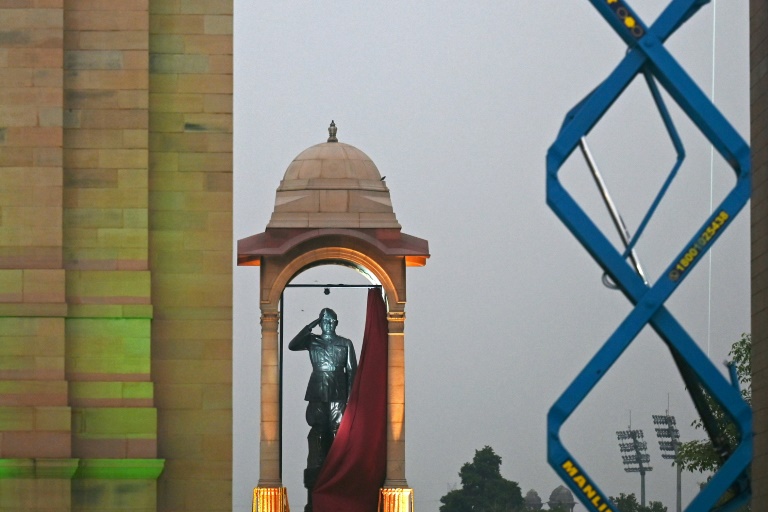
Indian Prime Minister Narendra Modi on Thursday unveiled a statue of an independence hero venerated for taking up arms against the British, but controversial for his collaboration with Nazi Germany’s war machine.

Subhas Chandra Bose was a charismatic and popular contemporary of Mahatma Gandhi but broke with the pacifist leader to forge alliances with Germany and Japan during World War II, as he sought to overthrow the colonial regime in India.

He made propaganda broadcasts from Berlin encouraging Indians to fight alongside Axis forces — on one occasion meeting Adolf Hitler — and raised an anti-British legion from captured Indian PoWs before sailing in a submarine to Japan.

The statue of “Netaji” — or “leader”, as Bose is commonly known — was erected near the India Gate war memorial in New Delhi, and replaces a statue of Britain’s King George V torn down nearly half a century ago. 

It is part of a long and expensive renovation of the capital’s administrative district, coinciding with this year’s 75th anniversary of independence.

“Today we are leaving the past behind,” Modi said at the inauguration ceremony on Thursday.

“The country today set up Netaji’s statue at the same spot and has given a boost to modern, independent and confident India,” he added.

Modi’s ruling Bharatiya Janata Party (BJP) espouses a muscular Hindu nationalism that champions historical figures who opposed outside influence and domination.

The BJP has lionised Bose as an anti-colonial hero while downplaying the influence of Gandhi and inaugural Prime Minister Jawaharlal Nehru, two men whose legacies are closely associated with India’s main opposition party. 

Modi opened a museum to Bose in Delhi’s UNESCO world heritage-listed Red Fort in 2019 and called him the “grand hero of independence” earlier this year.

Bose’s courtship of fascist powers tarnished his image elsewhere but he remains widely revered at home for his role in the struggle for independence — and the subject of conspiracy theories over his untimely death.

He was killed when the Japanese bomber he was travelling in crashed in Taiwan at the close of the war in 1945.

But many Indians at the time thought the crash had been faked to help Bose go underground, as he was wanted as a war criminal by British authorities.

In the decades that followed, many insisted Bose was still alive and several alternative theories flourished to account for his whereabouts, including capture and detention in a Soviet gulag, or an anonymous return to India for a quiet life.

NASA may attempt Moon launch on September 23: official

NASA is looking at September 23 and September 27 as possible dates for its next attempt at launching its Artemis 1 mission to the Moon, senior official Jim Free told reporters Thursday.

Two previous attempts were scrapped after the giant Space Launch System rocket experienced technical glitches including a fuel leak.

“The 23rd is a 6:47am window open for 80 minutes, and the 27th is an 11:37am window with a 70-minute duration,” said Free, associate administrator for the agency’s exploration systems development directorate.

The dates were chosen to avoid a conflict with the DART (Double Asteroid Redirection Test), in which a probe is set to strike an asteroid on September 26.

The launch dates depend, however, on NASA receiving a special waiver to avoid having to retest batteries on an emergency flight system that is used to destroy the rocket if it strays from its designated range to a populated area.

If it does not receive the waiver, the rocket will have to be wheeled back to its assembly building, pushing the timeline back several weeks.

Mike Bolger, exploration ground systems manager, added that teams were working to replace seals to fix the hydrogen leak issue — work that could be completed by the end of Thursday, which would pave the way for a tanking test on September 17.

The Artemis 1 space mission hopes to test the SLS as well as the unmanned Orion capsule that sits atop, in preparation for future Moon-bound journeys with humans aboard.

Royal family gathers as Queen Elizabeth under 'medical supervision'

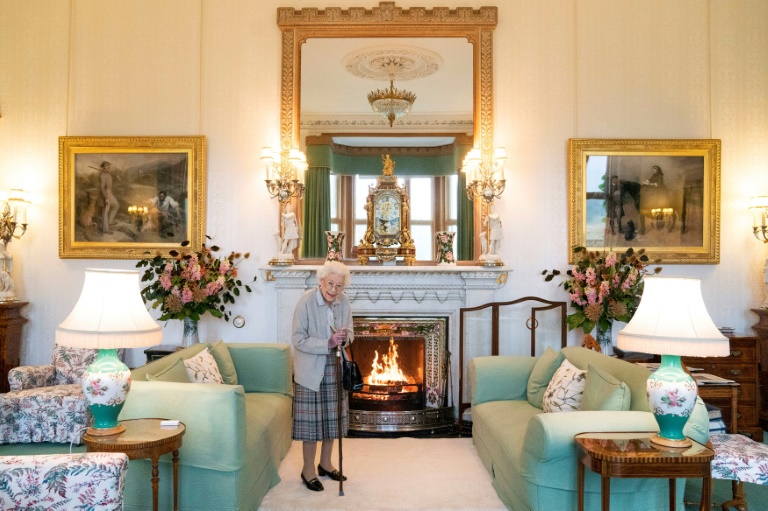
Queen Elizabeth II’s closest family rushed to Scotland on Thursday, after doctors placed the 96-year-old monarch under medical supervision, prompting concern from British political and religious leaders.

Britain’s longest-serving monarch has been dogged by health problems since last October that have left her struggling to walk and stand.

Her children — heir to the throne Prince Charles, 73, Princess Anne, 72, Prince Andrew, 62, and Prince Edward, 58, were either already at or quickly headed to Balmoral after the announcement.

They were joined by Charles’s elder son Prince William plus his younger son Prince Harry and his wife, Meghan, who have been on a rare visit to Britain after abandoning royal life to move to the United States.

The queen — an instantly recognisable figure to billions of people across the world — is in her Platinum Jubilee year, marking 70 years since she succeeded her father king George VI in 1952.

Moments before Thursday’s announcement, notes were passed in the House of Commons to Prime Minister Liz Truss, her ministers and opposition leaders, prompting them to leave the chamber.

“The whole country will be deeply concerned by the news from Buckingham Palace this lunchtime,” the new premier tweeted, just two days after the queen appointed her at Balmoral to succeed Boris Johnson.

“My thoughts — and the thoughts of people across our United Kingdom — are with Her Majesty The Queen and her family at this time,” Truss added, echoed by leaders in Scotland, Wales and Northern Ireland.

One photograph of the queen greeting Truss at Balmoral on Tuesday had already sparked alarm, showing a deep purple bruise on the monarch’s right hand.

– Rare bulletin –

Archbishop of Canterbury Justin Welby, the highest-ranking cleric in the Church of England headed by the queen, said she was in his prayers.

“May God’s presence strengthen and comfort Her Majesty, her family, and those who are caring for her at Balmoral,” he tweeted in comments echoed by other faith leaders.

On Wednesday, a day after Truss’s appointment as the 15th prime minister of her reign, the queen pulled out of a planned meeting with her council of political advisers, after being told to rest.

“Following further evaluation this morning, the queen’s doctors are concerned for her majesty’s health and have recommended she remain under medical supervision,” Buckingham Palace said in a statement.

“The queen remains comfortable and at Balmoral,” the palace added.

The palace statement about the queen’s health is highly unusual. 

“The palace does not issue bulletins on the queen’s health unless it’s significant,” royal commentator and author Robert Hardman told the BBC.

– ‘Exhausted’ –

It comes after she has looked visibly frailer in recent months, and a succession of withdrawals from public engagements.

She has taken to walking with the help of a stick and was also seen earlier this year at the Chelsea Flower Show touring the site in a motorised buggy. 

In February she was laid low by a bout of Covid, which she admitted afterwards had left her “exhausted”.

Officially, the palace has said only that the queen has been suffering from “episodic mobility problems” but given no further details.

She spent an unscheduled night in hospital in central London in October 2021 and was advised to slow down.

She has pulled out of ceremonial engagements, delegating more to Charles, including the State Opening of Parliament and the Trooping the Colour military parade to mark her official birthday.

– Global figure –

Four days of public events were held in June to mark the queen’s record-breaking Platinum Jubilee, but she made only two appearances to acknowledge the huge crowds in central London.

As well as the United Kingdom, the queen is also head of state in 14 Commonwealth countries around the world, including Canada, Australia and New Zealand.

She further heads the Commonwealth grouping, which comprises 56 nations and takes in more than a quarter of humanity.

For most of her subjects, she is the only monarch they have ever known, featuring on stamps, banknotes and coins, and immortalised in popular culture.

But Britons were forced to face up to the reality that her reign was in her twilight years, when her husband of 73 years, Prince Philip, died in April 2021, just weeks shy of his 100th birthday.

“She is just part of our lives… She’s been the queen for all our lives really. She’s so calm and measured,” said Maureen Barnett, 66, outside Buckingham Palace as news filtered through.

“I’ve been concerned since yesterday when I heard she couldn’t do the Privy Council meeting,” added Elizabeth Jackson, also 66. 

“I was hoping the Scottish air might do her good. The issues have accelerated this year. It is quite worrying.”

In recent years, the queen has been forced to face a succession of scandals involving senior royals, including her second son Prince Andrew for links to the convicted paedophile Jeffrey Epstein.

Harry and Meghan also rocked the palace by quitting royal life, and criticising the institution, even accusing it of racism.

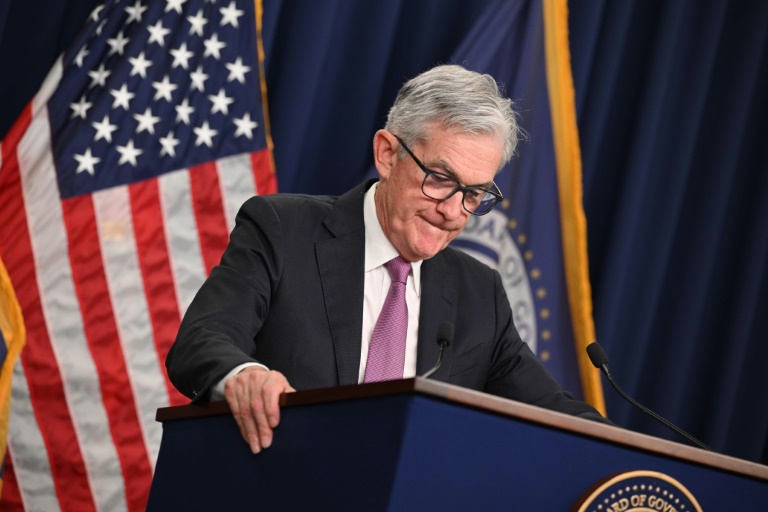
Fed Must act 'strongly' to avoid repeat of 1980s inflation spike: Powell

The Federal Reserve must continue to act “strongly” to cool demand and contain price pressures to avoid a repeat of the inflation surge the US economy suffered in the 1970s and 1980s, Fed Chair Jerome Powell said Thursday.

With soaring prices in recent months pushing US annual inflation to the fastest in four decades, Powell’s Fed has raised the benchmark lending rate four times this year, with a third massive, three-quarter point hike possible later this month.

His predecessor from that era, Paul Volcker, had to take extreme measures because high inflation had become entrenched, resurging and surpassing the peak of the mid-1970s after repeated failed efforts to tame the price increases.

“We need to act now forthrightly, strongly as we have been doing and we need to keep at it until the job is done to avoid … the kind of very high social costs” of the Volcker era, Powell said.

The comments, which reaffirm his steadfast commitment to bring inflation back down, come as the European Central Bank announced its first ever increase of 75 basis points — underscoring the pressure on policymakers worldwide to combat the global threat of rising prices.

American families have been struggling with the prices sparked initially by high demand but exacerbated by supply chain woes, Covid lockdowns in China and surging gasoline prices due to Russia’s war in Ukraine.

Powell said inflation would not have spiked the way it did without the pandemic effects, which included a shortage of labor. The inflation rate this year hit 9.1 percent in June, before slowing to 8.5 percent in July. Data for August are due to be released next week.

The US jobs market remains tight, with nearly two openings for everyone looking for work, and Powell noted that even with new data last week showing more people joined the labor force last month, it remains well below the pre-pandemic level.

With many people remaining on the sidelines, that has driven up worker pay, which policymakers fear could fuel a dangerous wage-price spiral.

Though the Fed is hoping the world’s largest economy will continue growing, Powell has acknowledged that the Fed’s aggressive inflation-fighting campaign could cause some pain.

But he has stressed repeatedly that acting now will prevent more damaging consequences down the road.

“The clock is ticking,” Powell warned.

US annual inflation spiked to a painful 12.3 percent in December 1974 before trending down, but then resurged. It peaked at 14.8 percent in early 1980 and didn’t fall into single digits until late the following year amid Volcker’s campaign. 

Powell said “history cautions strongly against prematurely loosening policy,” once again dousing hopes the central bank might cut interest rates next year as the economy slows.

2022 Europe's hottest summer on record: EU monitor

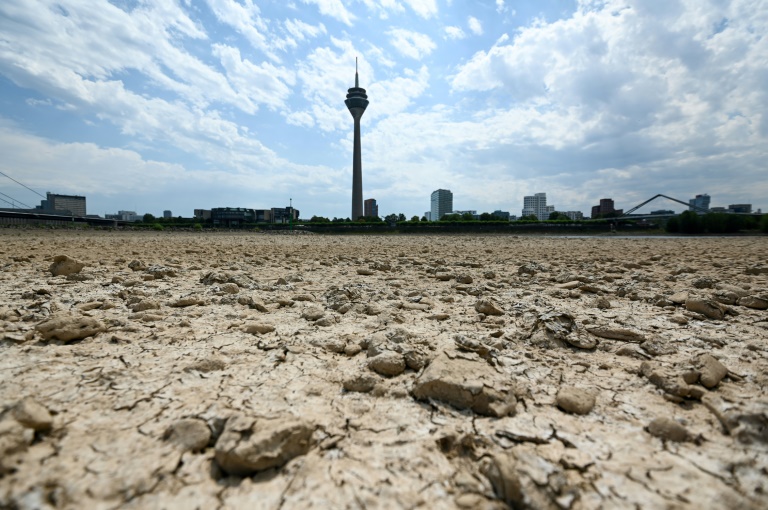
The summer of 2022 was the hottest in Europe’s recorded history, with the continent suffering blistering heatwaves and the worst drought in centuries, the European Commission’s satellite monitor said on Thursday.

The five hottest years on record have all come since 2016 as climate change drives ever longer and stronger hot spells and drier soil conditions.

And that created tinderbox forests, increasing the risk of devastating and sometimes deadly wildfires.

The Copernicus Climate Change Service (C3S) said temperatures in Europe had been the “highest on record for both the month of August and the summer (June-August) as a whole”.

Data showed August was the hottest on the continent since records began in 1979 by a “substantial margin”, beating the previous record set in August 2021 by 0.4 degrees Celsius (0.72 Fahrenheit). 

Temperatures from June through to August 2022 were 1.34C hotter than the historical 1991-2020 average, while August itself was 1.72C higher than average.

That puts summer in Europe well within the temperature range at which the Paris Agreement on climate change seeks to limit global heating.

The 2015 accord commits nations to cap average global temperatures at “well below” 2C above pre-industrial levels and to strive for a safer guardrail of 1.5C.

Although satellite data only stretches back a few decades, a Copernicus spokeswoman told AFP the service was confident that 2022 was the hottest summer in Europe going as far back as 1880 — at the early stage of the industrial age.

Europe has been battered by a string of heatwaves this year, with temperature records tumbling in many countries and the mercury topping 40C for the first time in Britain. 

The Copernicus Atmosphere Monitoring Service (CAMS) said last month that 2022 was already a record year for wildfires, with nearly 660,000 hectares torched in Europe since January.

– ‘Summer of extremes’ –

CAMS said fires in France had seen the highest levels of carbon pollution from wildfires since records began in 2003.

The EU said last month that the current drought parching the continent was the worst in at least 500 years. 

The European Commission’s Global Drought Observatory latest bulletin said 47 percent of the continent is currently covered by drought warnings — meaning the soil is drying out. 

An additional 17 percent is under drought alert, meaning that vegetation is showing signs of stress, fuelling concerns about the continent’s autumn harvest. 

“An intense series of heatwaves across Europe, paired with unusually dry conditions, have led to a summer of extremes with records in terms of temperature, drought and fire activity in many parts of Europe, affecting society and nature in various ways,” said senior C3S scientist Freja Vamborg. 

“Data shows that we’ve not only had record August temperatures for Europe but also for summer, with the previous summer record only being one year old.”

On a global level, August 2022 was the joint warmest August on record. The average temperature was 0.3C higher than the 1991-2020 average for the month, the monitor said. 

UK's Truss freezes energy bills in first big policy shift

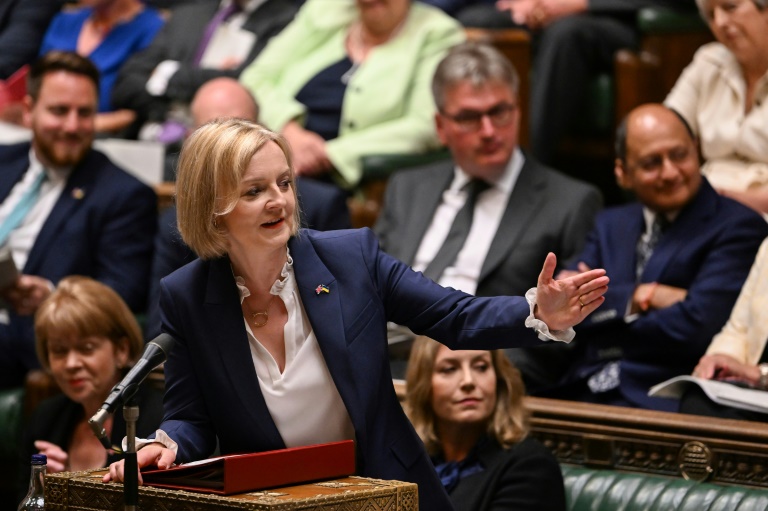
New British Prime Minister Liz Truss on Thursday said domestic fuel bills would be frozen for two years, marking her first week in office with a costly plan to tackle a worsening cost-of-living crisis.

Two days after taking over, Truss unveiled emergency measures that include authorising more oil and gas drilling in the North Sea and lifting a ban on fracking, a controversial method to dig for fossil fuels.

The government said it would also review progress towards its legally enshrined target to achieve net-zero carbon emissions by 2050, to ensure no “undue burdens on businesses or consumers”, but stressed it remained committed to the goal.

Households are facing an 80-percent hike in gas and electricity bills next month due to the rise in the cost of wholesale energy made worse by a squeeze on supplies after Russia’s invasion of Ukraine.

Businesses whose bills are not capped have warned they could go to the wall because of even bigger rises, while inflation has reached 40-year highs of 10.1 percent and is predicted to go worsen.

“Extraordinary challenges call for extraordinary measures, ensuring that the United Kingdom is never in this situation again,” Truss said.

The government expects the state-backed energy scheme to cost tens of billions of pounds (dollars), but Truss and new finance minister Kwasi Kwarteng insisted it would have “substantial benefits” to the economy.

It would curb inflation by four to five percentage points, they said in a statement.

Kwarteng said the freeze means worried households and businesses “can now breathe a massive sigh of relief”.

– No windfall tax –

Tackling the cost-of-living crisis, which has led to widespread strike action over pay, threatens to define Truss’s premiership, who succeeded Boris Johnson on Tuesday.

Truss said energy bills for an average British household would be capped at £2,500 ($2,872) a year — £1,000 less than October’s planned level.

Non-domestic energy users, including businesses, charities, and public sector organisations such as schools and hospitals, will see a six-month freeze.

Analysts predict the plan, which will likely be in place at the next general election expected in 2024, could top well over £100 billion, surpassing Britain’s Covid-era furlough jobs scheme.

Truss confirmed that the government will pay energy suppliers the difference in price but did not put an exact figure on how much it could cost the public purse, pending a mini-budget this month by Kwarteng.

Truss, a former Shell employee, has rejected opposition calls to impose windfall taxes on energy giants whose profits have surged on the back of higher wholesale prices. 

In her campaign to succeed Johnson, she had also ruled out direct handouts to consumers, but the new scheme reverses course on that.

Paying for the freeze by increased borrowing has stoked concern on the financial markets about the prospect of worsening public finances already damaged by emergency Covid spending.

On bond markets, the UK’s 10-year borrowing rate topped three percent on Tuesday for the first time since 2014, and the pound has slumped to its lowest dollar level since 1985.

– Fracking –

The end to the fracking moratorium comes despite Truss’s Conservative party having pledged in 2019 to keep it in place, after onshore drilling for shale gas had caused seismic tremors in northern England.

She said that lifting the ban “could get gas flowing in as soon as six months”.

But Kwarteng himself wrote in March that it could take up to a decade to get enough gas from fracking. At the same time, there is concern about the environmental damage of restarting the process.

Like Johnson, Truss committed to diversifying Britain’s energy sources to renewables and nuclear.

But to the anger of environmentalists, the new support package offered nothing about insulating UK buildings better, to reduce Europe’s highest rates of energy leakage.

“Millions of people will breathe a sigh of relief at being pulled back from the brink of fuel poverty, but it’s the fossil fuel giants that will be uncorking the bubbly,” Rosie Rogers of Greenpeace UK said.

And by capping prices without curbing usage, observers said the plan could trigger power blackouts this winter.

“Liz Truss needs to start levelling with the British public,” a senior Conservative backbencher told AFP. 

“We’re ducking the hard choices, and we’re staring at a 1970s energy crisis at this rate.”

UK's Truss freezes energy bills in first big policy shift

New British Prime Minister Liz Truss on Thursday said domestic fuel bills would be frozen for two years, marking her first week in office with a costly plan to tackle a worsening cost-of-living crisis.

Two days after taking over, Truss unveiled emergency measures that include authorising more oil and gas drilling in the North Sea and lifting a ban on fracking, a controversial method to dig for fossil fuels.

The government said it would also review progress towards its legally enshrined target to achieve net-zero carbon emissions by 2050, to ensure no “undue burdens on businesses or consumers”, but stressed it remained committed to the goal.

Households are facing an 80-percent hike in gas and electricity bills next month due to the rise in the cost of wholesale energy made worse by a squeeze on supplies after Russia’s invasion of Ukraine.

Businesses whose bills are not capped have warned they could go to the wall because of even bigger rises, while inflation has reached 40-year highs of 10.1 percent and is predicted to go worsen.

“Extraordinary challenges call for extraordinary measures, ensuring that the United Kingdom is never in this situation again,” Truss said.

The government expects the state-backed energy scheme to cost tens of billions of pounds (dollars), but Truss and new finance minister Kwasi Kwarteng insisted it would have “substantial benefits” to the economy.

It would curb inflation by four to five percentage points, they said in a statement.

Kwarteng said the freeze means worried households and businesses “can now breathe a massive sigh of relief”.

– No windfall tax –

Tackling the cost-of-living crisis, which has led to widespread strike action over pay, threatens to define Truss’s premiership, who succeeded Boris Johnson on Tuesday.

Truss said energy bills for an average British household would be capped at £2,500 ($2,872) a year — £1,000 less than October’s planned level.

Non-domestic energy users, including businesses, charities, and public sector organisations such as schools and hospitals, will see a six-month freeze.

Analysts predict the plan, which will likely be in place at the next general election expected in 2024, could top well over £100 billion, surpassing Britain’s Covid-era furlough jobs scheme.

Truss confirmed that the government will pay energy suppliers the difference in price but did not put an exact figure on how much it could cost the public purse, pending a mini-budget this month by Kwarteng.

Truss, a former Shell employee, has rejected opposition calls to impose windfall taxes on energy giants whose profits have surged on the back of higher wholesale prices. 

In her campaign to succeed Johnson, she had also ruled out direct handouts to consumers, but the new scheme reverses course on that.

Paying for the freeze by increased borrowing has stoked concern on the financial markets about the prospect of worsening public finances already damaged by emergency Covid spending.

On bond markets, the UK’s 10-year borrowing rate topped three percent on Tuesday for the first time since 2014, and the pound has slumped to its lowest dollar level since 1985.

– Fracking –

The end to the fracking moratorium comes despite Truss’s Conservative party having pledged in 2019 to keep it in place, after onshore drilling for shale gas had caused seismic tremors in northern England.

She said that lifting the ban “could get gas flowing in as soon as six months”.

But Kwarteng himself wrote in March that it could take up to a decade to get enough gas from fracking. At the same time, there is concern about the environmental damage of restarting the process.

Like Johnson, Truss committed to diversifying Britain’s energy sources to renewables and nuclear.

But to the anger of environmentalists, the new support package offered nothing about insulating UK buildings better, to reduce Europe’s highest rates of energy leakage.

“Millions of people will breathe a sigh of relief at being pulled back from the brink of fuel poverty, but it’s the fossil fuel giants that will be uncorking the bubbly,” Rosie Rogers of Greenpeace UK said.

And by capping prices without curbing usage, observers said the plan could trigger power blackouts this winter.

“Liz Truss needs to start levelling with the British public,” a senior Conservative backbencher told AFP. 

“We’re ducking the hard choices, and we’re staring at a 1970s energy crisis at this rate.”

ECB unleashes historic rate hike to battle record inflation

The European Central Bank announced the largest rate hike in its history Thursday and said there were more to come as it scrambles to pull inflation down from record heights.

Policymakers lifted the ECB’s key rates by 75 basis points, a leap matched only by a technical move made in 1999 shortly after the central bank’s founding.

Eurozone inflation hit a record 9.1 percent in August, as steep increases in the price of energy in the wake of the Russian invasion of Ukraine heaped pressure on households and businesses.

Consumer prices were likely to continue to rise quickly “for an extended period”, the ECB said in a statement, with its latest forecasts expecting inflation to average 8.1 percent in 2022.

The “major step” quickened the ECB’s move away from a “highly accommodative level of policy rates” to one that would bring inflation back to its two-percent target, it said.

The Frankfurt-based institution was on a “journey” to raise interest rates and tame inflation, ECB President Christine Lagarde said at a press conference.

The ECB already exceeded expectations at its July meeting with a 50-basis-point increase in interest rates, its first hike in more than a decade.

Thursday’s drastic increase was not the end of the ECB’s work, however, with the central bank saying it “expects to raise interest rates further” at its next meetings.

The ECB had “given up on inflation targeting and forecasting and has joined the group of central banks focusing on bringing down actual inflation”, said Carsten Brzeski, head of macro at the ING bank

– ‘Serious’ –

Ahead of the meeting, a growing chorus of voices called for the central bank to show greater “determination” in the face of inflation.

Thursday’s gathering marked the beginning of a new “meeting-by-meeting” approach for the ECB. 

In July, policymakers scrapped so-called forward guidance, which had limited the ECB’s room for manoeuvre, giving them a free hand for more aggressive hikes.

The ECB is playing catch-up with central banks in the United States and Britain, which started raising rates harder and faster in response to inflation.

The 75-basis-point increase matches the largest step taken by the Federal Reserve in its current hiking cycle.

The bumper hike was not “the norm”, Lagarde said, but the governing council had been “unanimous” in their support for the move.

The ECB was still “so far away” from interest rates that would bring inflation back to its two-percent target, she said, with more hikes to come.

“We want all economic actors to understand that the ECB is serious about returning inflation back to two percent,” Lagarde said.

– Growth struggles –

In an updated set of economic forecasts, the ECB said it expected inflation to fall back to 5.5 percent in 2023 and 2.3 percent in 2024.

The central bank also slashed its forecast for economic growth in 2023 to 0.9 percent, from its previous prediction of 2.1 percent.

Recent gloomy economic data meant the eurozone was “expected to stagnate later in the year and in the first quarter of 2023”, the ECB said.

“Very high energy prices are reducing the purchasing power of people’s incomes and, although supply bottlenecks are easing, they are still constraining economic activity,” said the bank. 

The war in Ukraine was also still weighing on the confidence of businesses and consumers, it added.

The eurozone risked slipping into a recession in 2023 in a “downside” scenario that included the full cut off of Russian gas supplies, Lagarde said.

Repeated upwards revisions to the inflation forecast have drawn criticism of the ECB’s economic models.

“I take the blame,” Lagarde said of the prediction errors, but stressed that “all the international institutions” had been caught out by the surge.

Close Bitnami banner
Bitnami