World

ECB unleashes historic rate hike to battle record inflation

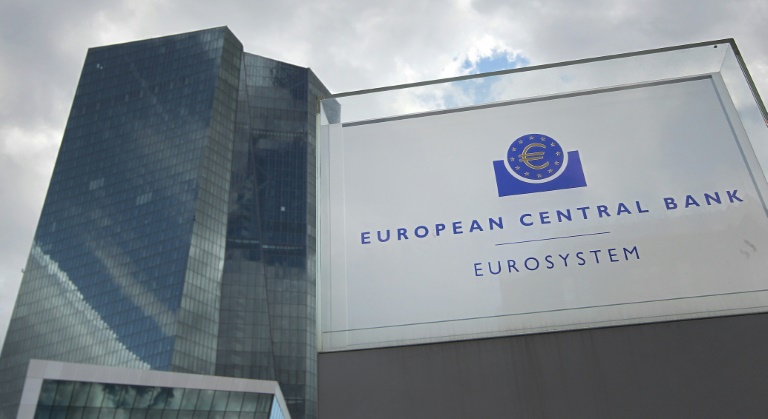
The European Central Bank announced the largest rate hike in its history Thursday and said there were more to come as it scrambles to pull inflation down from record heights.

Policymakers lifted the ECB’s key rates by 75 basis points, a leap matched only by a technical move made in 1999 shortly after the central bank’s founding.

Eurozone inflation hit a record 9.1 percent in August, as steep increases in the price of energy in the wake of the Russian invasion of Ukraine heaped pressure on households and businesses.

Consumer prices were likely to continue to rise quickly “for an extended period”, the ECB said in a statement, with its latest forecasts expecting inflation to average 8.1 percent in 2022.

The “major step” quickened the ECB’s move away from a “highly accommodative level of policy rates” to one that would bring inflation back to its two-percent target, it said.

The Frankfurt-based institution was on a “journey” to raise interest rates and tame inflation, ECB President Christine Lagarde said at a press conference.

The ECB already exceeded expectations at its July meeting with a 50-basis-point increase in interest rates, its first hike in more than a decade.

Thursday’s drastic increase was not the end of the ECB’s work, however, with the central bank saying it “expects to raise interest rates further” at its next meetings.

The ECB had “given up on inflation targeting and forecasting and has joined the group of central banks focusing on bringing down actual inflation”, said Carsten Brzeski, head of macro at the ING bank

– ‘Serious’ –

Ahead of the meeting, a growing chorus of voices called for the central bank to show greater “determination” in the face of inflation.

Thursday’s gathering marked the beginning of a new “meeting-by-meeting” approach for the ECB. 

In July, policymakers scrapped so-called forward guidance, which had limited the ECB’s room for manoeuvre, giving them a free hand for more aggressive hikes.

The ECB is playing catch-up with central banks in the United States and Britain, which started raising rates harder and faster in response to inflation.

The 75-basis-point increase matches the largest step taken by the Federal Reserve in its current hiking cycle.

The bumper hike was not “the norm”, Lagarde said, but the governing council had been “unanimous” in their support for the move.

The ECB was still “so far away” from interest rates that would bring inflation back to its two-percent target, she said, with more hikes to come.

“We want all economic actors to understand that the ECB is serious about returning inflation back to two percent,” Lagarde said.

– Growth struggles –

In an updated set of economic forecasts, the ECB said it expected inflation to fall back to 5.5 percent in 2023 and 2.3 percent in 2024.

The central bank also slashed its forecast for economic growth in 2023 to 0.9 percent, from its previous prediction of 2.1 percent.

Recent gloomy economic data meant the eurozone was “expected to stagnate later in the year and in the first quarter of 2023”, the ECB said.

“Very high energy prices are reducing the purchasing power of people’s incomes and, although supply bottlenecks are easing, they are still constraining economic activity,” said the bank. 

The war in Ukraine was also still weighing on the confidence of businesses and consumers, it added.

The eurozone risked slipping into a recession in 2023 in a “downside” scenario that included the full cut off of Russian gas supplies, Lagarde said.

Repeated upwards revisions to the inflation forecast have drawn criticism of the ECB’s economic models.

“I take the blame,” Lagarde said of the prediction errors, but stressed that “all the international institutions” had been caught out by the surge.

US begins clinical trial to test monkeypox vaccine

US health authorities announced Thursday they would carry out a clinical trial to test different dosing strategies of the Jynneos monkeypox vaccine, amid uncertainty over its effectiveness.

The trial will enroll 200 adults aged 18-50 across the country, and is sponsored by the National Institute of Allergy and Infectious Diseases.

The Jynneos vaccine, manufactured by Denmark-based Bavarian Nordic, has been approved by the United States for the prevention of smallpox and monkeypox in people aged 18 and older. 

But while the highest-risk group, men who have sex with men, are encouraged to get the vaccine, there is no clear picture of how well it works in real world settings.

The new trial isn’t designed to produce an efficacy estimate, but rather measure the immune response of different dosing levels and administration methods.

“NIAID’s trial of JYNNEOS will provide important information on the immunogenicity, safety, and tolerability of alternative dosing approaches that would expand the current supply of vaccine,” said NIAID director Anthony Fauci in a statement.

Among the participants, one group will be injected subcutaneously — that is, under the skin. The vaccine is based on attenuated virus that is modified so it can’t replicate, and is given in two doses 28 days apart.

A second group will receive their shots intradermally, meaning between the layers of the skin. This strategy is meant to expand the availability of vaccines because it uses one-fifth of the standard dose.

A third group will also receive their shots intradermally, but at half the dosing level of the second group.

Scientists will test the peak immune responses and compare the side effects across the groups.

President Joe Biden’s administration has bet heavily on the Jynneos vaccine to stem the spread of monkeypox, which has affected more than 20,000 people in the United States since May.

But the question of how well the shot prevents infection versus minimizing disease would require further study to answer.

The current global outbreak is primarily affecting gay and bisexual men.

Historically, the virus has been spread via direct contact with lesions, body fluids and respiratory droplets, and sometimes through indirect contamination via surfaces such as shared bedding. 

But in this outbreak, there is preliminary evidence that sexual transmission may also play a role.

The virus causes painful skin lesions and flu-like symptoms. 

Most people fully recover, but the disease can cause serious complications, including bacterial infections, brain inflammation and death.

UAE firm to manage air traffic over Afghanistan

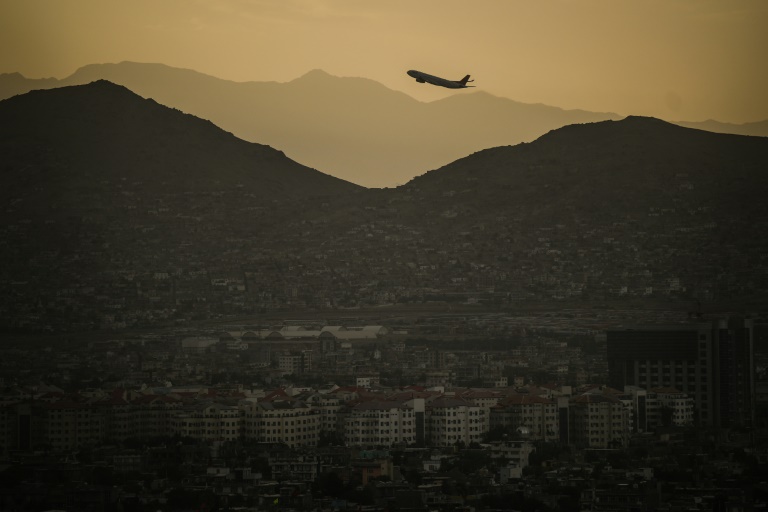
A United Arab Emirates firm signed a contract with Afghanistan on Thursday to manage air traffic across the country as the Taliban authorities seek to expand international flights.

While some flights are operating out of Kabul airport, significant extra support is needed for major foreign airlines to resume full service.

The full operation of the capital’s airport — which was trashed in August last year during a mass evacuation of civilians after the Taliban stormed back to power — is seen as crucial to reviving Afghanistan’s shattered economy.

On Thursday, Abu Dhabi-based GAAC signed an agreement that it expects will help bring back major international airlines.

The contract is part of more than $300 million that GAAC aims to invest in Afghanistan over a 10-year period to develop the country’s aviation sector.

The deal allows GAAC to “operationalise airspace to allow the passage of international carriers”, the company’s regional head Ibrahim Moarafi told reporters at a press conference.

He said it also permits GAAC “to restore the navigation services required for the return of major international airlines to Afghanistan’s airports”.

This includes air traffic control, communication and surveillance systems and meteorological services.

The agreement is the third signed by GAAC with Afghanistan’s ministry of civil aviation and transport this year.

GAAC, which operated in Afghanistan before the Taliban returned to power, has already been awarded separate contracts for ground handling services and the screening of passengers at Kabul and other airports.

“Despite our two previous contracts, we still had some vacuum in our operations when it came to guiding flights crossing through Afghanistan’s airspace,” said deputy minister for aviation and transport Ghulam Jelani Wafa.

“We were short of equipment, while some equipment was broken, and it used to restrict our operations,” he added.

No country has yet formally recognised the Taliban government, which has increasingly stripped away the freedoms of Afghans, particularly women. 

Air traffic control at Kabul airport is currently being handled by a team of Afghans trained by experts from Uzbekistan and Qatar.

Fears as Queen's doctors 'concerned' for her health

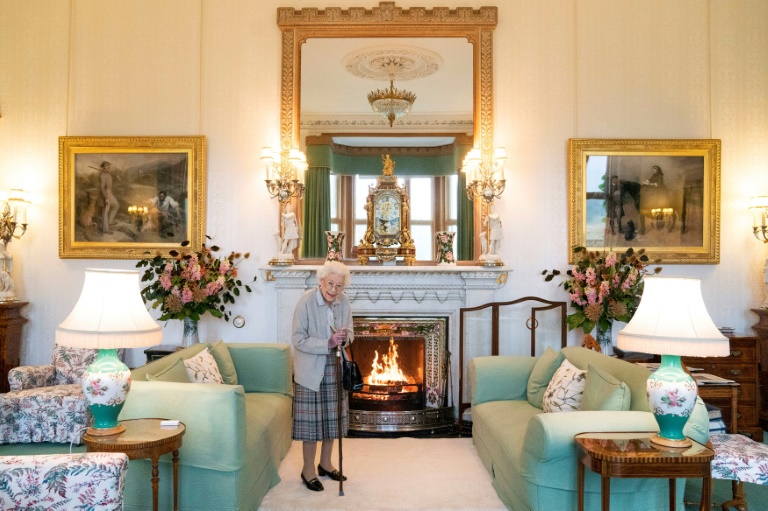
Fears grew on Thursday for Queen Elizabeth II after Buckingham Palace said her doctors were “concerned” for her health and recommended that she remain under medical supervision.

The 96-year-old head of state — Britain’s longest-serving monarch — has been dogged by health problems since last October that have left her struggling to walk and stand.

The queen — an instantly recognisable figure to billions of people across the world — is in her Platinum Jubilee year, marking 70 years since she succeeded her father king George VI in 1952.

All her children — heir to the throne Prince Charles, 73, Princess Anne, 72, Prince Andrew, 62, and Prince Edward, 58, were either at or heading to Balmoral, royal officials said.

On Wednesday, the queen pulled out of a planned meeting with her senior political advisors, after being told to rest.

The previous day she held audiences at her Scottish Highlands retreat, Balmoral, with outgoing prime minister Boris Johnson and appointed his successor, Liz Truss.

“Following further evaluation this morning, the queen’s doctors are concerned for Her Majesty’s health and have recommended she remain under medical supervision,” Buckingham Palace said in a statement.

“The queen remains comfortable and at Balmoral,” the palace added.

The palace statement about the queen’s health is highly unusual. 

“The palace does not issue bulletins on the queen’s health unless it’s significant,” royal commentator and author Robert Hardman told the BBC.

– ‘Deeply concerned’ –

It comes after she has looked visibly frailer in recent months, and a succession of withdrawals from public engagements.

She has taken to walking with the help of a stick and was also seen earlier this year at the Chelsea Flower Show touring the site in a motorised buggy. 

In February she was laid low by a bout of Covid, which she admitted afterwards had left her “exhausted”.

Officially, the palace has said only that the queen has been suffering from “episodic mobility problems” but given no further details.

She spent an unscheduled night in hospital in central London in October 2021 and was advised to slow down.

She has pulled out of ceremonial engagements, delegating more to Charles, including the State Opening of Parliament and the Trooping the Colour military parade to mark her official birthday.

Moments before Thursday’s announcement, notes were passed to Truss and senior members of her team in parliament, prompting them to leave the chamber.

Truss tweeted almost immediately afterwards: “The whole country will be deeply concerned by the news from Buckingham Palace this lunchtime,” she added.

“My thoughts — and the thoughts of people across our United Kingdom — are with Her Majesty The Queen and her family at this time.”

– Global figure –

Archbishop of Canterbury Justin Welby, the highest-ranking cleric in the Church of England that the queen heads, said the queen was in his prayers.

“May God’s presence strengthen and comfort Her Majesty, her family, and those who are caring for her at Balmoral,” he tweeted.

Political leaders from Britain’s devolved nations in Scotland, Wales and Northern Ireland, also sent their best wishes.

Four days of public events were held in June to mark the queen’s record-breaking Platinum Jubilee, but she made only two appearances to acknowledge the huge crowds in central London.

As well as the United Kingdom, the queen is also head of state in 14 Commonwealth countries around the world, including Canada, Australia and New Zealand.

She also heads the Commonwealth grouping, which comprises 56 nations and takes in more than a quarter of humanity.

For most of her subjects, she is the only monarch they have ever known, featuring on stamps, banknotes and coins, and immortalised in popular culture.

But Britons were forced to face up to the reality that her reign in her twilight years, when her husband of 73 years, Prince Philip, died in April 2021, just weeks shy of his 100th birthday.

In recent years, she has been forced to face a succession of scandals involving senior royals, including her second son Prince Andrew for links to the convicted paedophile Jeffrey Epstein.

Grandson Prince Harry and his wife, Meghan, also rocked the palace by quitting royal life, and criticising the institution, even accusing it of racism.

ECB unleashes historic rate hike to battle record inflation

The European Central Bank announced the largest rate hike in its history Thursday, as runaway energy prices drove eurozone inflation to new heights. 

Policymakers resolved to raise the ECB’s key rates by 75 basis points, a leap matched only by a technical move made in 1999 shortly after the central bank’s founding. 

The “major step” quickened the ECB’s move away from a “highly accommodative level of policy rates” to one that would bring inflation back to its two-percent target, it said in a statement.

Eurozone inflation hit a record 9.1 percent in August, as steep increases in the price of energy in the wake of the Russian invasion of Ukraine heaped pressure on households and businesses.

Consumer prices were likely to continue to rise at a very quick pace “for an extended period”, the ECB predicted, with its latest forecasts expecting inflation to average 8.1 percent for 2022.

“Given the level of inflation and the uncertainties about its evolution, for the ECB, there is less risk in doing more than in doing less,” said Franck Dixmier, head of fixed income at Allianz Global Investors.

The ECB already exceeded expectations at its July meeting with a 50-basis-point increase in interest rates, its first hike in more than a decade.

Thursday’s drastic increase was not the end of the ECB’s work, however, with the central bank saying it “expects to raise interest rates further” in its next meetings.

– ‘Determination’ –

Ahead of the meeting, ECB board member Isabel Schnabel called on her colleagues to show “determination” to tame price rises.

Speaking at the annual Jackson Hole central banking symposium at the end of August, Schnabel urged the central bank to respond “more forcefully to the current bout of inflation, even at the risk of lower growth and higher unemployment”.

The ECB is playing catch-up with central banks in the United States and Britain, which started raising rates harder and faster in response to inflation.

The 75-basis-point increase matches the largest step taken by the Federal Reserve in its current hiking cycle.

Meanwhile, a weak euro, which fell below $0.99 for the first time in 20 years this week, has bolstered the case for bigger interest rate hikes.

The gathering Thursday also marked the beginning of a new “meeting-by-meeting” approach by the ECB. In July, policymakers scrapped so-called forward guidance, which had limited the ECB’s room for manoeuvre, giving them a free hand for more aggressive hikes.

– Recession rising –

In an updated set of economic forecasts, the ECB said it expected inflation to fall back to 5.5 percent in 2023 and 2.3 percent in 2024.

The central bank also slashed its forecast for economic growth in 2023 to 0.9 percent, from its previous prediction of 2.1 percent.

Recent gloomy economic data meant the eurozone was “expected to stagnate later in the year and in the first quarter of 2023”, the ECB said.

“Very high energy prices are reducing the purchasing power of people’s incomes and, although supply bottlenecks are easing, they are still constraining economic activity,” said the bank. 

The war in Ukraine was also still weighing on the confidence of businesses and consumers, it added.

With energy prices still soaring unabated and winter approaching, EU economic affairs commissioner Paolo Gentiloni warned Wednesday that the threat of a recession in Europe was “rising”.

“We may well be heading into one the most challenging winters in generations,” he added.

ECB unleashes historic rate hike to battle record inflation

The European Central Bank announced the largest rate hike in its history Thursday, as runaway energy prices drove eurozone inflation to new heights. 

Policymakers resolved to raise the ECB’s key rates by 75 basis points, a leap matched only by a technical move made in 1999 shortly after the central bank’s founding. 

The “major step” quickened the ECB’s move away from a “highly accommodative level of policy rates” to one that would bring inflation back to its two-percent target, it said in a statement.

Eurozone inflation hit a record 9.1 percent in August, as steep increases in the price of energy in the wake of the Russian invasion of Ukraine heaped pressure on households and businesses.

Consumer prices were likely to continue to rise at a very quick pace “for an extended period”, the ECB predicted, with its latest forecasts expecting inflation to average 8.1 percent for 2022.

“Given the level of inflation and the uncertainties about its evolution, for the ECB, there is less risk in doing more than in doing less,” said Franck Dixmier, head of fixed income at Allianz Global Investors.

The ECB already exceeded expectations at its July meeting with a 50-basis-point increase in interest rates, its first hike in more than a decade.

Thursday’s drastic increase was not the end of the ECB’s work, however, with the central bank saying it “expects to raise interest rates further” in its next meetings.

– ‘Determination’ –

Ahead of the meeting, ECB board member Isabel Schnabel called on her colleagues to show “determination” to tame price rises.

Speaking at the annual Jackson Hole central banking symposium at the end of August, Schnabel urged the central bank to respond “more forcefully to the current bout of inflation, even at the risk of lower growth and higher unemployment”.

The ECB is playing catch-up with central banks in the United States and Britain, which started raising rates harder and faster in response to inflation.

The 75-basis-point increase matches the largest step taken by the Federal Reserve in its current hiking cycle.

Meanwhile, a weak euro, which fell below $0.99 for the first time in 20 years this week, has bolstered the case for bigger interest rate hikes.

The gathering Thursday also marked the beginning of a new “meeting-by-meeting” approach by the ECB. In July, policymakers scrapped so-called forward guidance, which had limited the ECB’s room for manoeuvre, giving them a free hand for more aggressive hikes.

– Recession rising –

In an updated set of economic forecasts, the ECB said it expected inflation to fall back to 5.5 percent in 2023 and 2.3 percent in 2024.

The central bank also slashed its forecast for economic growth in 2023 to 0.9 percent, from its previous prediction of 2.1 percent.

Recent gloomy economic data meant the eurozone was “expected to stagnate later in the year and in the first quarter of 2023”, the ECB said.

“Very high energy prices are reducing the purchasing power of people’s incomes and, although supply bottlenecks are easing, they are still constraining economic activity,” said the bank. 

The war in Ukraine was also still weighing on the confidence of businesses and consumers, it added.

With energy prices still soaring unabated and winter approaching, EU economic affairs commissioner Paolo Gentiloni warned Wednesday that the threat of a recession in Europe was “rising”.

“We may well be heading into one the most challenging winters in generations,” he added.

Philippines asks ICC not to resume drug war probe

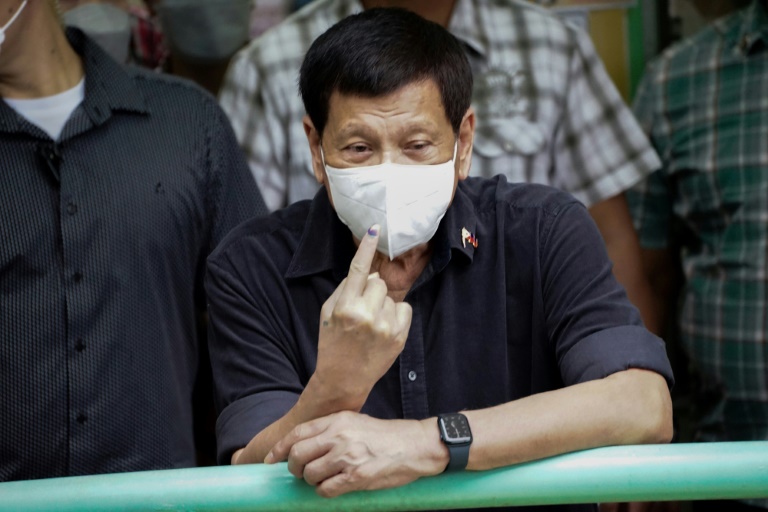
The Philippines on Thursday called on the International Criminal Court not to resume its investigation into former president Rodrigo Duterte’s deadly drug war, insisting the tribunal has no jurisdiction.

The appeal came on the day of ICC prosecutor Karim Khan’s deadline for Manila to respond to his request to restart the probe into the anti-narcotics campaign that killed thousands of people. 

Duterte pulled the Philippines out of the Hague-based tribunal in 2019 after it began a preliminary probe into the crackdown. His successor President Ferdinand Marcos has ruled out rejoining.

A government statement said the alleged murders did not amount to “crimes against humanity” and were being handled by the country’s “proper agencies”. 

Last year, the ICC authorised a full investigation into the drug war, saying it appeared to be an illegitimate and systematic attack on civilians.

Rights groups say Duterte created a climate of impunity that led to an estimated tens of thousands of deaths at the hands of police, hitmen and vigilantes, even without proof that victims were involved in drugs. 

The ICC, which only gets involved in prosecutions if member states are unable or unwilling to investigate, suspended the probe two months after Manila said it was looking into the alleged crimes.

Under pressure from the UN Human Rights Council and the ICC, the Duterte government began examining several hundred cases of drug operations that led to deaths.

Those efforts led to charges being filed in a handful of cases and the conviction of three police officers of wrongdoing.

Shortly before Duterte left office in June, Khan asked the court to restart the inquiry “as quickly as possible”.

“With a handful of exceptions, the Philippine government has failed to provide any documentation to substantiate that the investigations are ongoing or complete, nor any details regarding concrete investigative or prosecutorial steps that have been taken,” Khan said.

The UN Human Rights Council is expected to discuss the Philippines at its session starting next week, but rights groups have warned that drug war killings continue under Marcos.

“Our own monitoring and reporting on the Philippines shows that the situation is not improving since that last resolution,” said Lucy McKernan, Deputy Director for the United Nations at Human Rights Watch, during an online briefing on Wednesday.

McKernan urged council members to “send a strong message” that Marcos, son and namesake of the late Philippine dictator, “does not have a clean slate to commit new abuses”.

Downpours and mudslides hamper China earthquake rescue mission

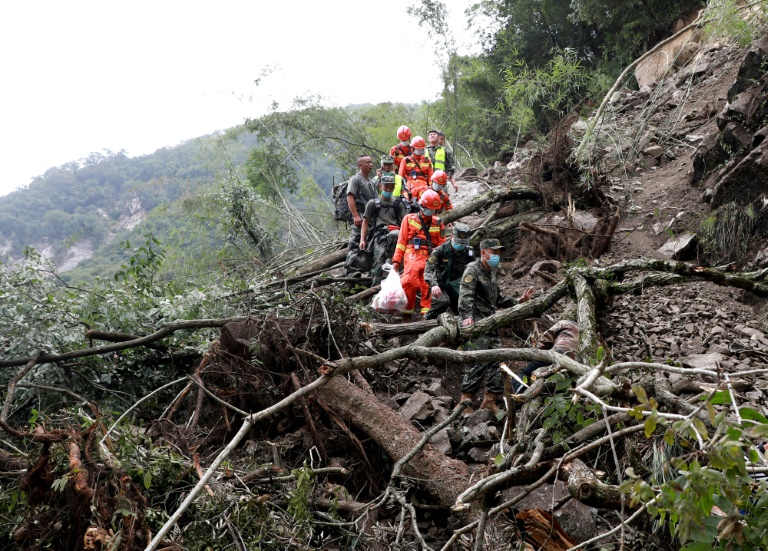
Rain, flash floods and mudslides threatened the search for dozens of people still missing on Thursday, days after a strong earthquake rocked mountainous southwest China, killing at least 86.

The 6.6-magnitude quake hit about 43 kilometres (26 miles) southeast of the city of Kangding in Sichuan province at a depth of 10 kilometres on Monday, according to the US Geological Survey, forcing thousands to be resettled into temporary camps.

State-run newspaper People’s Daily said that 50 people died in Ganzi prefecture near the epicentre, while 36 deaths were reported in neighbouring Ya’an city. 

Around 270 others were injured while the number of missing remained at 35, state broadcaster CCTV reported without giving more details about the conditions of those unaccounted for.

A yellow alert issued by the national weather service — warning of a “risk of geological disaster” — was in force until Thursday night, and moderate rain was forecast to continue to Friday with heavy showers in some areas.

“Since the post-earthquake geological conditions are inherently fragile, and the impact of additional rainfall may lead to landslides and mudslides, the local area needs to beware of secondary disasters,” China’s meteorological administration said.

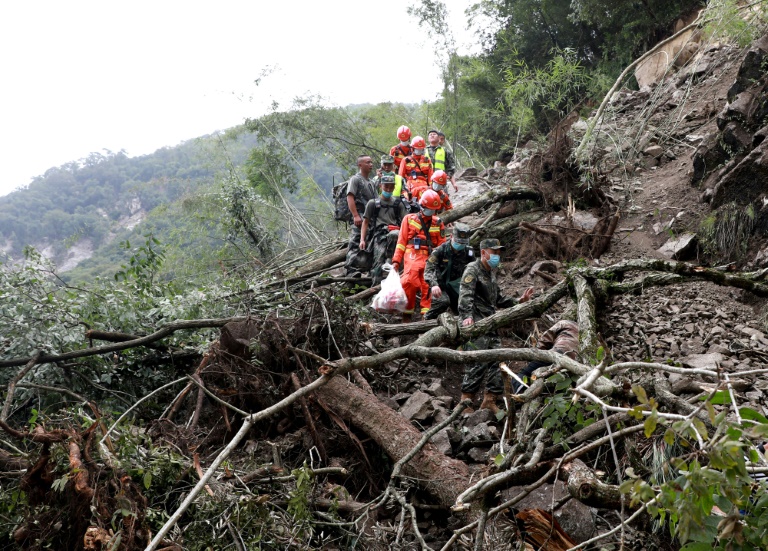
The People’s Liberation Army, paramilitary police and fire rescue services dispatched more than 10,000 workers who continued search operations and landslide clean-up efforts in the remote countryside.

– Mountain torrents –

Rescuers braved flash floods and landslides caused by aftershocks to relocate villagers from destroyed homes, often having to haul them through mountainous terrain on ropes and stretchers.

CCTV images showed soldiers in military fatigues and orange life jackets using a zip-line to ferry people across river rapids.

“We also waded through the water to get to Xingfu village. The mountain torrents contain rocks… the stones you can’t see in the water pose the greatest threat to us,” a rescue team member named Tan Ke told CCTV.

“We quickly used ropes to build a human ladder… when we first started wading, the water reached our knees and thighs. By the time we got to a safe place, the flash flood had reached waist level.” 

Over 22,000 people have so far been moved into 124 temporary sites across Ganzi and Ya’an, People’s Daily reported. 

The paper said over 21,000 students and staff at a school in Shimian county, where Ya’an is located, were safely evacuated within one minute of the quake. 

Nearly 1,800 schools in the area had reopened by Wednesday, it added. 

Workers raced to fix hundreds of kilometres of power and optical cables, with communications in affected areas “basically restored” as of Thursday, the China Youth Daily reported. 

Local authorities have received over 100 million yuan ($14 million) in disaster relief donations so far, the report said, and the Sichuan government issued an emergency notice requiring local authorities to dish out hardship allowances for affected people.

The quake also rocked buildings in the provincial capital of Chengdu — where millions are confined to their homes under a strict Covid-19 lockdown — and in the nearby megacity of Chongqing, residents told AFP.

Downpours and mudslides hamper China earthquake rescue mission

Rain, flash floods and mudslides threatened the search for dozens of people still missing on Thursday, days after a strong earthquake rocked mountainous southwest China, killing at least 86.

The 6.6-magnitude quake hit about 43 kilometres (26 miles) southeast of the city of Kangding in Sichuan province at a depth of 10 kilometres on Monday, according to the US Geological Survey, forcing thousands to be resettled into temporary camps.

State-run newspaper People’s Daily said that 50 people died in Ganzi prefecture near the epicentre, while 36 deaths were reported in neighbouring Ya’an city. 

Around 270 others were injured while the number of missing remained at 35, state broadcaster CCTV reported without giving more details about the conditions of those unaccounted for.

A yellow alert issued by the national weather service — warning of a “risk of geological disaster” — was in force until Thursday night, and moderate rain was forecast to continue to Friday with heavy showers in some areas.

“Since the post-earthquake geological conditions are inherently fragile, and the impact of additional rainfall may lead to landslides and mudslides, the local area needs to beware of secondary disasters,” China’s meteorological administration said.

The People’s Liberation Army, paramilitary police and fire rescue services dispatched more than 10,000 workers who continued search operations and landslide clean-up efforts in the remote countryside.

– Mountain torrents –

Rescuers braved flash floods and landslides caused by aftershocks to relocate villagers from destroyed homes, often having to haul them through mountainous terrain on ropes and stretchers.

CCTV images showed soldiers in military fatigues and orange life jackets using a zip-line to ferry people across river rapids.

“We also waded through the water to get to Xingfu village. The mountain torrents contain rocks… the stones you can’t see in the water pose the greatest threat to us,” a rescue team member named Tan Ke told CCTV.

“We quickly used ropes to build a human ladder… when we first started wading, the water reached our knees and thighs. By the time we got to a safe place, the flash flood had reached waist level.” 

Over 22,000 people have so far been moved into 124 temporary sites across Ganzi and Ya’an, People’s Daily reported. 

The paper said over 21,000 students and staff at a school in Shimian county, where Ya’an is located, were safely evacuated within one minute of the quake. 

Nearly 1,800 schools in the area had reopened by Wednesday, it added. 

Workers raced to fix hundreds of kilometres of power and optical cables, with communications in affected areas “basically restored” as of Thursday, the China Youth Daily reported. 

Local authorities have received over 100 million yuan ($14 million) in disaster relief donations so far, the report said, and the Sichuan government issued an emergency notice requiring local authorities to dish out hardship allowances for affected people.

The quake also rocked buildings in the provincial capital of Chengdu — where millions are confined to their homes under a strict Covid-19 lockdown — and in the nearby megacity of Chongqing, residents told AFP.

Japan says ready for 'necessary response' as yen dives

Japan is ready to take action if the yen’s plummeting value remains volatile, officials repeated on Thursday, after the currency hit 24-year lows.

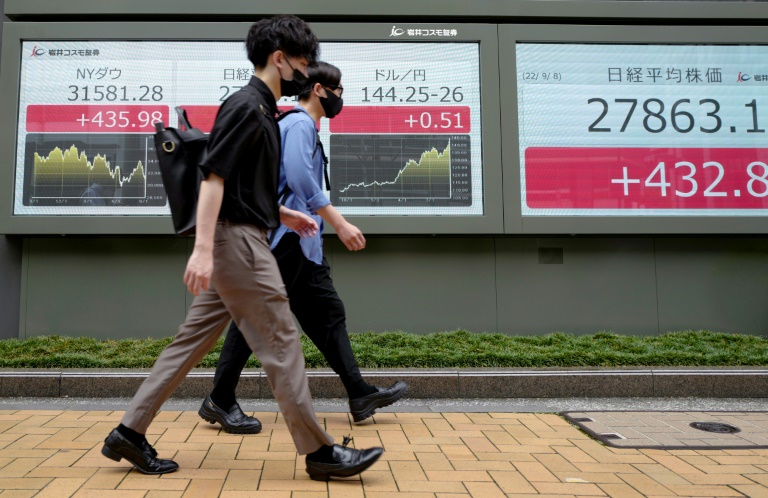
The yen has tumbled from around 115 per dollar in March to lower than 140 last week, as the Bank of Japan (BoJ) sticks with its monetary easing policies in contrast to rate hikes from other central banks including the US Federal Reserve.

It has continued to drop fast, nearly touching 145 per dollar overnight in New York, as investors flooded into the US currency hoping for better returns and as a safe-haven hedge.

Japan has not announced any specific measures to bolster the yen, such as instructing the central bank to buy it against other currencies.

But on Thursday, officials from the BoJ, the finance ministry and the government’s fiscal services agency held a meeting while the yen hovered close to 144 per dollar.

“If (the yen) continues to fluctuate like this, the government is ready to take the necessary response in financial markets,” Masato Kanda, Vice-Minister of Finance for International Affairs, told reporters after the meeting.

“Various measures” are on the table, he said without giving details. His comments closely echoed remarks made Wednesday by Japan’s finance minister, who said rapid shifts in foreign exchange rates were “not desirable”.

Ray Attrill, head of FX strategy at National Australia Bank, said the rhetoric would have little effect.

“The market’s not buying what the Japanese officials are selling in terms of their public concerns about the moves in the yen. They’ve basically been singing from exactly the same hymn sheet,” he told AFP.

A weaker yen can help Japanese companies to sell products overseas, but “at these levels, the disadvantages of a weak yen are starting to outweigh the benefits,” with households and businesses facing higher import prices, Attrill said.

Inflation more broadly has risen to seven-year highs in Japan, partly due to the impact of the war in Ukraine on energy prices, but it is still less severe than in many major economies.

Prime Minister Fumio Kishida announced Thursday that the government will use 3.5 trillion yen ($24 billion) of reserve funds to address the domestic impact of inflation, and will deliver cash relief packages to low-income households.

Close Bitnami banner
Bitnami