World

US boosts Ukraine aid, sees battlefield 'success'

The United States on Thursday announced $675 million in additional military equipment for Ukraine, as it said allies’ efforts in bolstering Kyiv were now visibly paying off on the battlefield.

Hosting a new round of talks with partners in Germany, US Defense Secretary Lloyd Austin said Kyiv was now not only resisting Russian invaders, but is mounting a counter-offensive in the south.

“It’s fitting that we’re meeting back here at Ramstein,” he said, referring to the US airbase in western Germany where the first of the “Ukraine Defence Contact Group” meetings on coordinating armaments support for Kyiv took place.

“Now, we’re seeing the demonstrable success of our common efforts on the battlefield,” he said, stressing that allies are in it “for the long haul”.

The meeting came hours after Ukraine President Volodymyr Zelensky said his forces had recaptured several settlements in the northeastern Kharkiv region from the Russians.

Ukraine has also claimed it had retaken several villages in the south of the country where it has been waging a counter-offensive since last week.

Kyiv has repeatedly urged its allies for more heavy weapons as it pursues its pushback. Prime Minister Denys Shmygal reiterated the request when he visited Germany on Sunday. 

– ‘Significant consumption’ –

Among the issues to be raised at Ramstein are the challenges of producing and restocking arms, as “there is a significant consumption of munitions in the conduct of this war that’s occurring in Ukraine”, said top US General Mark Milley.

The aim would be to look at what stocks are available in which countries and what would need to be sourced from industry, he said.

Artillery is proving decisive in the war and projectiles of all sorts are in huge demand.

With Ukraine and Russia fighting a war of attrition of munitions, stocks are similarly a crucial factor.

Having already exhausted all its Russian-made armaments, Ukraine is now entirely dependent on Western military support.

Russia, under heavy sanctions, is meanwhile turning to North Korea for huge quantities of rocket and artillery shells, said Washington.

– ‘More effective’ –

The United States has been Ukraine’s biggest armaments supplier. 

Its latest package would include 105mm howitzers, precision-guided GMLRS rockets and artillery ammunition. 

It comes on top of $13.5 billion worth of various weapons, including anti-tank Javelin missiles and shells compatible with NATO’s artillery systems.

Among the most efficient weapons sent lately by Washington are the HIMAR multiple rocket launch systems, paired with GMLRS rockets that can reach targets up to 80 kilometres (50 miles) away.

But Kyiv is seeking ATACMS — precision-guided, medium range tactical missile that can be launched by the HIMAR systems and which are capable of striking at 300 kilometres.

The United States has so far refused, as it fears the missiles could land in Russian territory, sparking an even bigger conflict.

“Right now, the policy of the United States government is that we’re not sending ATACMS,” said Milley. 

“We’ve had this conversation several times with my counterpart and others in the Ukrainian government.”

Rather, he noted that the HIMARS and GMLRS have “proven to be very, very effective systems… against Russian forces”. 

“The range of the HIMARS is sufficient to meet the needs of the Ukrainians as they are currently fighting,” he added. 

US command spokesman Dave Butler also assessed that while Russia was firing its artillery at a higher rate than Ukraine, Kyiv’s “are more effective”.

– Russia taking Ukrainian children –

Zelensky has declined to name the settlements recaptured by Kyiv forces, but the US Institute for the Study of War, which follows in detail the fighting, said the Ukraine counterattack was near Balakliya and probably drove Russian forces back to the north side of the Siverskyi Donets and Serednya Balakliika rivers.

It appeared Ukraine forces also recaptured Verbivka and that Russian forces may have destroyed bridges to prevent Ukrainian fighters from pursuing them, ISW said.

“Russia’s deployment of forces from Kharkiv and eastern Ukraine to Ukraine’s south is likely enabling Ukrainian counterattacks of opportunity,” it said.

In the territories occupied by Russian forces, the United Nations said there were “credible accusations” that Ukrainian children were being forcibly taken to Russia.

Some Ukrainians judged as close to the Ukraine government or military have also been tortured and forcibly removed and sent to Russian penal colonies and other detention centres, Ilze Brands Kehris, the assistant UN secretary general for human rights, told the Security Council.

But Russian UN Ambassador Vasily Nebenzya called the allegations unfounded and said what was labelled “filtration” was simply registering Ukrainians willingly fleeing the war to Russia.

Former Trump advisor Bannon to face fraud charges in New York

Donald Trump’s former advisor Steve Bannon is due to appear in court Thursday to be charged with fraud in a case of alleged misappropriation of funds for the construction of a wall between the United States and Mexico, US media reported. 

Bannon, 68, a popular ideologue who was closely involved in Trump’s rise to the American presidency, was en route Wednesday night to New York to surrender to the office of Manhattan’s prosecutor and to face the charges, his lawyer Robert Costello told CNBC television.

The Manhattan prosecutor’s office did not respond to AFP’s request for comment. 

Details about the exact nature of the charges were not public, as the indictment is sealed, but the Washington Post, CNBC and CNN reported that they relate to the same case that saw Bannon indicted in 2020 for financial fraud. 

The former White House advisor was arrested in August 2020 in that case, where he was accused alongside three others of fraud and embezzling a part of $25 million of donor funds set aside to build a wall between the US and Mexico.

The construction of the wall was a key campaign promise by Trump in his run to the presidency in 2016. 

Bannon was never tried for those charges, after then president Trump pardoned him in January last year, a day before he left the White House. 

In a statement, Bannon denounced “bogus lawsuits” against him 60 days before the November 8 midterm legislative elections.

He blasted “an armed partisan politicization of the criminal justice system.” 

The criminal indictment comes six weeks after Bannon was convicted in a federal court in Washington of obstructing the investigative powers of Congress. 

He had refused to cooperate with the House committee investigating the January 6, 2021 assault on Capitol Hill. 

Even after leaving the White House in August 2017, Bannon had remained close to Trump, speaking with him the day before the Capitol riot. 

Four killed in Memphis shooting rampage, suspect arrested

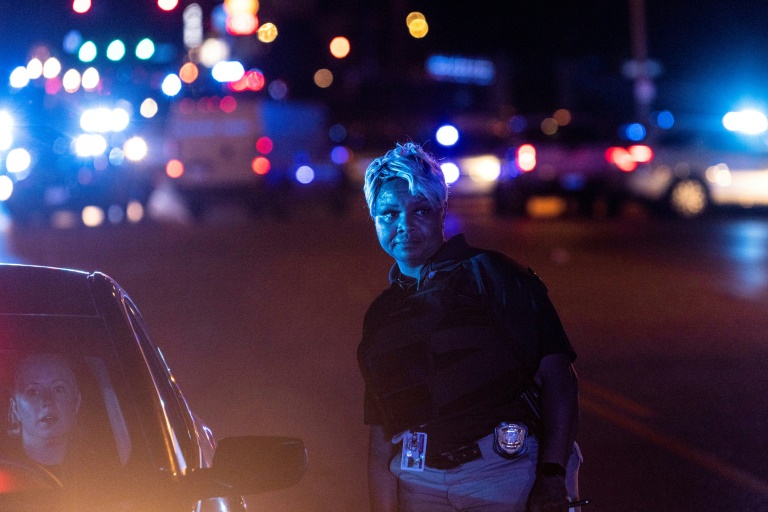
A man killed at least four people and wounded three others in an hours-long shooting rampage across Memphis on Wednesday, before a high-speed chase that ended with his arrest, police in the US city said.

Officers identified the suspect as Ezekiel Kelly, 19, and said he was apprehended with two weapons in his vehicle at approximately 9:00 pm local time (01:00 GMT on Thursday).

“(Kelly) was taken into custody without incident by the Memphis police department and the Shelby County sheriff’s office,” said Memphis police chief Cerelyn Davis at a news conference.

Kelly is alleged to have killed his first victim just after midnight on Wednesday, and gone on a shooting spree across the Tennessee city in the afternoon and early evening, Davis said.

There were at least eight different crime scenes, police said, including carjackings and a shooting at a local store, and Kelly had live-streamed parts of his spree.

“Ezekiel Kelly was on Facebook Live when he opened fire inside the store,” said Davis.

Authorities issued a “shelter in place” order while the shootings were ongoing, effectively locking down parts of the city. 

The United States regularly sees mass shootings and other gun violence, but Congress has been reluctant to pass strict gun control legislation as the issue remains politically divisive.

At least 490 people have been killed in mass shootings and mass murders in the US in 2022 so far, according to the Gun Violence Archive, with 14,050 people dying in gun-related incidents over the same period, excluding suicides.

Memphis has seen a string of high-profile killings in recent months, including the murder of a pastor during a carjacking and the abduction and murder last week of a woman who was on a pre-dawn run.

“I am angry. I am angry for (the victims) and I’m angry for our citizens who had to shelter in place for their own safety until this suspect was caught,” said Memphis Mayor Jim Strickland following Wednesday’s shootings. 

“This is no way for us to live, and it is not acceptable.”

Markets see much-needed bounce, but nerves remain

Most markets enjoyed a rare advance on bargain-buying Thursday, tracking a Wall Street rally after a series of losses, while dovish comments on future interest rate hikes by Australia’s central bank boss provided a boost to sentiment.  

The dollar resumed its upward march with the Federal Reserve and European Central Bank expected to announce more bumper increases in borrowing costs.

Equities have been ravaged for weeks by fears that global central bank moves to rein in runaway inflation by ratcheting up borrowing costs will spark fresh recessions in some leading economies.

In turn, the greenback has moved ever higher against its major peers as investors flood into the currency hoping for better returns and as a safe-haven hedge against uncertainty and worldwide turmoil.

On Wednesday, the US unit hit a 37-year high against sterling, while it was also closing in on a 32-year peak above 147.60 yen owing to the Bank of Japan’s refusal to tighten its monetary policy, seen as the key driver of that rally.

Still, Japanese officials said they were tracking the price movements and hinted at possible action if things did not improve.

The euro dipped ahead of an expected hefty rate hike by the European Central Bank later in the day.

However, there was some light, where Reserve Bank of Australia head Philip Lowe said the case for a weaker pace of monetary tightening gained momentum as rates rise. The comments provided a little hope that central banks could be ready at some point for a change of course.

Australian bond yields and the country’s dollar fell, while US Treasury yields also slipped.

For now, observers are certain the US dollar will continue to attract strong interest for as long as the Fed keeps ramping up interest rates.

Those views were justified by Vice Chair Lael Brainard, who warned that policymakers would keep hiking rates until they have finally brought prices under control.

“We are in this for as long as it takes to get inflation down,” she said in comments prepared for a conference in New York, adding that she understood this would have a severe impact on families. 

The Fed holds its next policy meeting on September 21, with a third successive 75-basis-point lift forecast.

– ‘Dead-cat bounce’ –

Equity traders mostly followed their US counterparts in returning to buying, with many believing the market had fallen too far too fast.

Tokyo led the gains, helped by data showing the Japanese economy performed better than initially thought in the second quarter, while Sydney was also boosted by the prospect of a slowdown in the pace of Australian rate hikes.

There were also gains in Seoul, Singapore, Wellington, Taipei, Manila, Mumbai, Bangkok and Jakarta.

London rose ahead of an expected announcement by new Prime Minister Liz Truss that she will cap energy bills to fight a cost-of-living crisis. Paris and Frankfurt were also well up.

However, Hong Kong and Shanghai fell.

Still, the mood on trading floors remains downbeat, with OANDA’s Craig Erlam saying: “Given the economic backdrop, this could be nothing more than a dead-cat bounce. Of course, there may be more potential next week if the US delivers a favourable inflation report.”

News that China had extended a lockdown in the megacity of Chengdu added to worries about the world’s number-two economy as officials stick rigidly to their growth-killing zero-Covid strategy.

The shutdowns in China, which have impacted tens of millions across the country, were adding to hefty oil sales as traders fret over the impact on demand.

The commodity was already under pressure owing to bets on a recession caused by bank rate hikes, with both main contracts down around $50 from the peaks seen in the immediate aftermath of Russia’s invasion of Ukraine. They are now around eight-month lows.

And while Brent and WTI rose Thursday, they were nowhere near recovering the previous day’s rout of more than five percent, which came despite Russian President Vladimir Putin warning he would cut off energy to Europe if it imposed price cap sanctions.

“Some bargain-hunting buying is to be expected after a dive like” Wednesday’s, said Vandana Hari at Vanda Insights.

– Key figures at around 0810 GMT –

Tokyo – Nikkei 225: UP 2.3 percent at 28,065.28 (close)

Hong Kong – Hang Seng Index: DOWN 1.0 percent at 18,854.62 (close)

Shanghai – Composite: DOWN 0.3 percent at 3,235.59 (close)

London – FTSE 100: UP 0.3 percent at 7262.17

Dollar/yen: UP at 143.83 yen from 143.79 yen on Wednesday

Euro/dollar: DOWN at $0.9983 from $1.0012 

Pound/dollar: DOWN at $1.1487 from $1.1535

Euro/pound: UP at 86.90 pence from 86.74 pence

West Texas Intermediate: UP 0.7 percent at $82.49 per barrel

Brent North Sea crude: UP 0.5 percent at $88.42 per barrel

New York – Dow: UP 1.4 percent at 31,581.28 (close)

'We thought we would die': Vietnam fire survivors recount terror

Survivors of a karaoke bar blaze in Vietnam spoke Thursday of their terror as they tried to escape an inferno which killed over 30 people and has raised questions over fire safety standards in the Southeast Asian nation.

The fire in a dense residential neighbourhood of Thuan An city, north of commercial hub Ho Chi Minh City, spread rapidly through the three-storey building, engulfing the second floor and trapping customers and staff as dense smoke filled the staircase.

Thirty two people were killed and 17 were injured, police said, with many suffering broken bones after the flames forced them to jump from the roof.

Due to the intensity of the flames, firefighters struggled to enter the building and were forced to knock down part of a wall to get inside. Eight people were found dead in the bar’s toilet.

Do Thanh Tu, who worked at the An Phu karaoke parlour, told state media that he was convinced he would die in the inferno.

“When the fire broke out, I tried to run down to the first floor, but I saw too much fire there, so I ran to the rooftop to find shelter,” he told the VNexpress news site as he lay in hospital in Thuan An.

“I saw people up there, many of them were screaming. We thought we would die. Many people jumped. 

“Around half an hour later, rescuers came for us. There was so much smoke I could not breathe.”

Sixty people were inside the 30-room bar when the fire erupted on Tuesday evening. Many employees were sleeping on the highest floor at the time, waiting for their next shift, and saw smoke creeping up the stairs.

Ngan, 20, told VNexpress it stung her nose and eyes, trapping her and her colleagues inside the room. Eventually forced onto the roof, they tried to poke their heads through metal bars and wave their hands, hoping someone would see them.

– Safety worries –

The initial cause was said to be an electrical short circuit, according to authorities in Binh Duong province.

The bar’s fire safety standards had been checked three times — in 2019, 2021 and this year — and had met all the regulation’s requirements, authorities added.

But it comes after several deadly fires in recent years, including two at Karaoke bars in Hanoi, prompting Vietnam’s prime minister to order an investigation as well as an inspection of all high-risk venues.

Police partly blamed drunken singers for the tragedy during a press conference. 

“They were drunk. So when the staff at the karaoke bar informed them about the fire… people in some karaoke rooms didn’t listen,” provincial police chief Trinh Ngoc Quyen said.

“There was one room in which a customer pulled an employee into the room and closed the door.”

Outside the hospital’s morgue, family members of the victims — some clutching flowers and pictures of their loved ones — queued up to identify their relatives.

Tran Thi Bich Van, 32, lost her husband, brother and brother-in-law in the blaze.

She told AFP that her brother had been visiting them from his home on the southern island of Phu Quoc and all three men had left for the karaoke bar after dinner.

“At around 10.40 pm the police called me, and at that moment I knew they had been in the fire,” she said.

“His body is badly disfigured,” she said of her husband, through tears. “But his face remains bright.”

The hungry bugs fighting Uganda's fertiliser crisis

As fertiliser prices shot up following Russia’s invasion of Ukraine, Ugandan villager Peter Wakisi fretted for the future of his small farm and his young family.

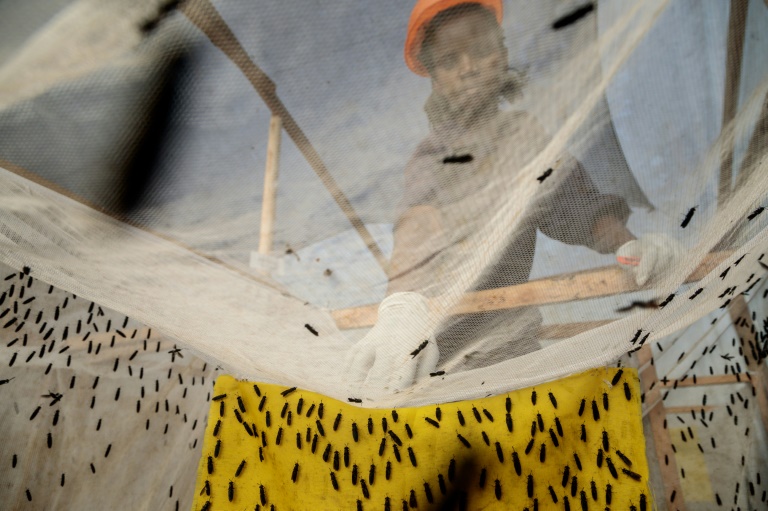
Little did he know that the answer to his prayers would arrive in the form of bugs — specifically the black soldier fly, an insect introduced to the East African nation by scientists who see it as the solution to farmers’ woes.

Wakisi, 36, is one of over 1,200 villagers enrolled in a programme to grow and sell the larvae of the black soldier fly, or BSF, a tiny creature whose powerful stomach enzymes turn food waste into fertiliser.

The food digested and excreted by the larvae is used to nourish plants.

The benefits are plain to see, father-of-four Wakisi said, pointing to a row of black plastic containers — home to the young larvae he buys and raises before selling back to the scientists for a threefold profit.

“The manure from the waste generated by the BSF, mixed with organic waste and pig droppings, is safe to the soil and much cheaper compared to inorganic fertilisers whose prices increased due to the war between Russia and Ukraine,” Wakisi said. 

“Organic fertilisers have reduced the expenses I used to incur on chemical fertilisers by almost 60 percent. My plants are healthier and yields are better now,” he told AFP in his village of Kawoomya Nyiize in central Uganda’s Kayunga district.

The programme, which is partly funded by the government of the Netherlands, is run by Kampala-based Dutch startup Marula Proteen Limited in partnership with Ugandan agricultural firm Enimiro. 

“A soil that doesn’t replenish its organic stock will eventually deplete and the plant yields will diminish significantly,” said Tommie Hooft, director at Marula Proteen.

The fertiliser produced by the black soldier flies “is full of healthy microbes that provide essential nutrients like nitrogen, phosphorous and potassium” to plants, making it an excellent option for farmers, he said.

– The ‘ick’ factor –

But first, there’s the ‘ick’ factor to consider, at least in the eyes of some.

Scola Namataka, a 30-year-old single mother in Kayunga’s Nakirubi village, said she could never have imagined raising insects, especially ones known to feast on faeces.

“I said that can’t be possible, rearing these maggots,” she told AFP, reaching into a plastic container to grab a handful of wriggling larvae.

But with money falling short and the soil on her family’s farm becoming increasingly depleted of nutrients, Namataka was running out of options when she heard about the programme in March this year.

Since enrolling, her plants are thriving, she said, and she’s even managed to get used to the pungent scent of the larvae feeding factory in her backyard.

After the war in Ukraine highlighted the worrying dependence of many agricultural economies on Russian fertiliser, the plentiful supply of these insects is a boon to farmers, said Hooft.

Adult females lay hundreds of eggs during their days-long life cycle and the larvae’s voracious appetite means there’s little risk of running out of manure.

“Being so dependent on an imported product is detrimental to farmers’ profitability. Our organic fertiliser is locally produced, and always available,” Hooft said.

Apart from subsistence farmers, the company sells BSF fertiliser to bigger enterprises like Clarke Farms, a 1500-acre coffee estate around 300 kilometres (190 miles) west of Kampala.

The firm has also teamed up with the Kampala Capital City Authority to help with waste disposal, collecting between 8-10 tonnes of garbage daily from food markets and feeding it to larvae.

– ‘More sustainable’ –

The programme aims to solve several problems at once, said Ruchi Tripathi of VSO, one of the non-profits which has partnered with Marula Proteen.

“Feeding the soil through adding organic nutrients is much more sustainable and will build the resilience of the soils which (will) in turn feed the plants,” she told AFP.

“This helps improve food security, reduce dependence on expensive imported chemical fertilisers, and reduces demand for oil-based fertilisers, helping fight against climate change,” she added.

For Wakisi, these black bugs have transformed his family’s fortunes, enabling him to hire a tractor, feed his children and pay school fees for his four younger siblings.

Though the cost of fertiliser continues to soar in Uganda, he no longer worries about it.

“I have abandoned the use of chemical fertilisers,” he said.

Downpours and mudslides hamper China earthquake rescue mission

Rain, flash floods and mudslides threatened the search for dozens of people still missing on Thursday, days after a strong earthquake rocked mountainous southwest China, killing at least 82.

The magnitude 6.6 quake hit about 43 kilometres (26 miles) southeast of the city of Kangding in Sichuan province at a depth of 10 kilometres on Monday, according to the US Geological Survey, forcing thousands to be resettled into temporary camps.

State broadcaster CCTV said that 46 people died in Ganzi prefecture near the epicentre, while 36 deaths were reported in neighbouring Ya’an city. 

More than 270 others were injured while the number of missing remained at 35, CCTV reported without giving more details about the situations of those unaccounted for.

A yellow alert issued by the national weather service — warning of a “risk of geological disaster” — was in force until Thursday night, and moderate rain was forecast to continue to Friday with heavy showers in some areas.

“Since the post-earthquake geological conditions are inherently fragile, and the impact of additional rainfall may lead to landslides and mudslides, the local area needs to beware of secondary disasters,” China’s meteorological administration said.

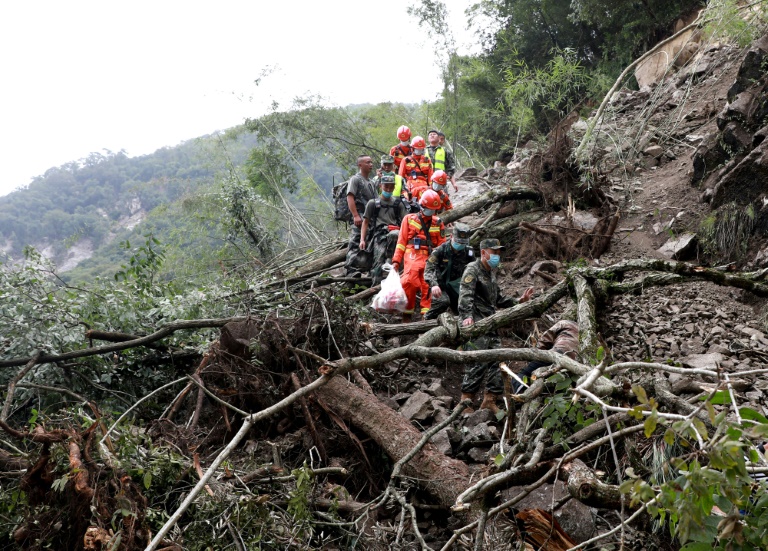
The People’s Liberation Army, paramilitary police, and fire rescue services dispatched more than 10,000 workers to the area, who continued search operations and landslide clean-up efforts in the remote countryside.

– Mountain torrents –

Rescuers braved flash floods and landslides caused by aftershocks to relocate villagers from destroyed homes, often having to haul them through mountainous terrain on ropes and stretchers.

CCTV images showed soldiers in military fatigues and orange life jackets using a zip-line to ferry people across river rapids.

“We also waded through the water to get to Xingfu village. The mountain torrents contain rocks… the stones you can’t see in the water pose the greatest threat to us,” a rescue team member named Tan Ke told CCTV.

“We quickly used ropes to build a human ladder… when we first started wading, the water reached our knees and thighs. By the time we got to a safe place, the flash flood had reached waist level.” 

Over 22,000 people have so far been moved into 124 temporary sites across Ganzi and Ya’an, the state-owned People’s Daily newspaper reported. 

The paper said over 21,000 students and staff at a school in Shimian county, where Ya’an is located, were safely evacuated within one minute of the quake. 

Nearly 1,800 schools in the area had reopened by Wednesday, it added. 

Workers raced to fix hundreds of kilometres of power and optical cables, with communications in affected areas “basically restored” as of Thursday, the China Youth Daily reported. 

Local authorities have received over 100 million yuan ($14 million) in disaster relief donations so far, the report said, and the Sichuan government issued an emergency notice requiring local authorities to dish out hardship allowances for affected people.

The quake also rocked buildings in the provincial capital of Chengdu — where millions are confined to their homes under a strict Covid-19 lockdown — and in the nearby megacity of Chongqing, residents told AFP.

Facing beleaguered Europe, Norway keen to protect energy windfall

Norway, a major producer and supplier of energy, is well placed to help alleviate Europe’s energy crisis — and reap the profits, a situation not all of its European partners welcome.

The Nordic country was already a leading exporter of electricity thanks to its many hydroelectric dams.

But since the cut in natural gas supplies from Russia following the invasion of Ukraine, it has now emerged as Europe’s main supplier in that field.

Offshore, Norwegian platforms and facilities are running at full capacity to make up at least some of the shortfall.

“The most important contribution Norway can make in the current situation is to maintain high gas production,” oil and energy minister Terje Aasland told parliament last month.

The country is set to increase its gas exports by eight percent this year, bringing production to a record 122 billion cubic metres, according to Aasland. 

But the sharp rise in gas prices also means greater profits.

The state’s oil and gas revenues are expected to smash last year’s record 830 billion Norwegian kroner ($83 billion), potentially reaching 1.5 trillion in 2022 and 1.9 trillion next year, according to projections by Nordea Markets.

– ‘Gigantic profit’ –

With such a spectacular windfall, there are those who worry that the country risks being viewed as a “war profiteer”.

Already in May, Polish Prime Minister Mateusz Morawiecki said Norway should share “this excess, gigantic profit”.

The country was “indirectly preying”, albeit unintentionally, from “the war started by Putin”, Morawiecki argued.

So far, Oslo has turned a deaf ear to calls for a cap on gas prices, instead emphasising its role as a stable and predictable supplier.

“Without imports from Norway, the situation in the European gas market would have been much more serious” Elisabeth Saether, state secretary for Norway’s petroleum and energy ministry, told AFP.

Some countries are also worried however that Oslo is considering limiting electricity exports to Europe, when there are already concerns about winter power supplies.

Norway is not a member of the European Union, but it is closely associated through its membership of the European Economic Area.

Its power grid is linked to its Nordic neighbour Sweden and Finland, and to Denmark, Germany and the UK via long undersea cables.

However, Norway’s water reservoirs this week were only 68,5 percent full, 12 percent lower than normal, after two years of low rainfall, according to the Norwegian Water Resources and Energy Directorate (NVE).

A lower production output and a higher share of the electricity going abroad means much higher energy bills for households and businesses in the south of the country, which were used to cheap kilowatt hours.

In this context then, not all Norwegians are happy about electricity being exported.

Analysts at Volue Insight have calculated that Norwegians would pay 25 percent less for their electricity this winter without the cables to Germany and the UK, which came into operation last year.

– Nordic concerns –

Norway does not support the idea of countries being left to fend for themselves in the energy market. It also opposes manipulating the market prices.

But when it comes to electricity exports, the message is a little different.

“Norway is considering measures that could limit export short term when the multi-year reservoir levels are low, to secure supply,” Saether confirmed.

“This has never been done before.”

The details of the restrictions have yet to be unveiled, but she gave assurances that they would respect EEA rules guaranteeing the free movement of services and goods, including electricity, between member states.

Nevertheless, the news alarmed energy grid operators in Sweden, Denmark and Finland enough to prompt them to publish a joint letter in August.

Svenska kraftnat, Energinet and Fingrid said they were “deeply concerned” that the Norwegian plan “seems not to acknowledge that it is through a well-functioning market that electricity security of supply is ensured in the most efficient way”.

Eyeing tourism boom, Saudi scrambles to train hotel staff

Under the watchful eye of an instructor, Munira al-Rubaian spreads fresh bed linen in a mock hotel room in the Saudi capital, aiming to land a job in the desert kingdom’s growing tourism sector.

The unemployed 25-year-old is one of thousands of Saudis enrolled in the state-run “Tourism Pioneers” programme, which aims to prepare 100,000 job-seekers for a field that government officials insist is set to take off.

At two facilities in Riyadh, Rubaian and other trainees study tasks like welcoming hotel guests, plating food in upscale restaurants and keeping luxury suites squeaky-clean.

Others are sent abroad for short courses in countries with far more advanced tourism industries, including the Netherlands, Spain, Switzerland and France.

This army of newly minted bellboys, cleaners and higher-paid hospitality managers is expected to help Saudi Arabia — a famously conservative and closed-off Gulf kingdom that only opened its doors to tourism three years ago — make a positive impression on first-time visitors.

The scheme also supports the government’s goal of employing more Saudis in roles traditionally occupied by migrant labourers.

The niqab-wearing Rubaian signed up for Tourism Pioneers after her own efforts to find a job at a hotel went nowhere.

She is optimistic the experience will help her get a foot in the door.

“I’ve had the opportunity to learn and improve my capabilities for employment,” she told AFP. 

“I will now have the experience and self-confidence to deal with people.”

– Aiming high –

Crown Prince Mohammed bin Salman, Saudi Arabia’s 37-year-old de facto ruler, is counting on a tourism boom to diversify the economy of the world’s largest oil exporter.

In 2019, two years after Prince Mohammed became first in line to the throne, the country introduced tourist visas, but the coronavirus pandemic dashed hopes of an immediate influx.

Authorities nonetheless remain committed to their eyebrow-raising goal of drawing 30 million foreign guests annually by 2030, up from just four million last year.

That’s on top of 70 million targeted domestic trips each year by Saudis and foreign residents.

Of the combined 100 million a year hoped-for tourists, officials project some 30 million will be making religious pilgrimages, largely to Mecca and Medina, Islam’s two holiest sites, in western Saudi Arabia.

The rest, officials hope, will be partially powered by new attractions like Al-Ula, a budding arts hub set amongst ancient Nabatean tombs, and the Red Sea Project, a Maldives-style resort destination.

But while the kingdom has in recent years relaxed rules barring cinemas, mixed-gender concerts and sports events, other regulations including an alcohol ban remain in place, potentially denting its appeal.

In a bid to lure more Arab tourists and better compete with regional rivals like the United Arab Emirates, the tourism ministry announced last week that residents of the Gulf Cooperation Council could apply for electronic tourism visas.

That right has already been granted to 49 countries, mainly in Europe and North America.

– Overseas exposure –

To make their dreams a reality, Saudi leaders recognise the need to dramatically increase the number of people working in tourism.

Some 850,000 currently work in the sector, only 26 percent of them Saudis, according to official figures.

Prince Mohammed’s Vision 2030 reform agenda aims to create one million new tourism jobs and boost the portion of Saudis filling them to 70 percent.

Tourism Pioneers, launched in June, has a budget of $100 million, with programmes for 52 specific jobs from entry-level to management.

“We need to build the knowledge, the skills, the competencies for Saudis at the highest levels,” said Mohammed Bushnag, deputy tourism minister for human capital development.

Al-Waleed al-Zaidi, who works as a sales manager in Riyadh for a foreign hotel chain, visited Switzerland for a week-long course and got a taste of what it’s like to serve leisure travellers — an altogether different challenge from the business clientele he’s accustomed to.

Instead of questions about dry-cleaning services and international call rates, he was being pressed for recommendations on attractions and how best to use public transportation.

The experience “opened my understanding of the different needs of tourists in terms of activities, food and places they would like to visit”, he said.

For Bushnag, this kind of education will ensure Saudis can provide a high level of service.

“We are extremely keen about quality and global exposure for Saudis” who, until now, have seen little of how other countries’ tourism industries operate, he said.

“We need to bridge this gap.”

'A matter of honour': Women forced to stay in flooded Pakistan village

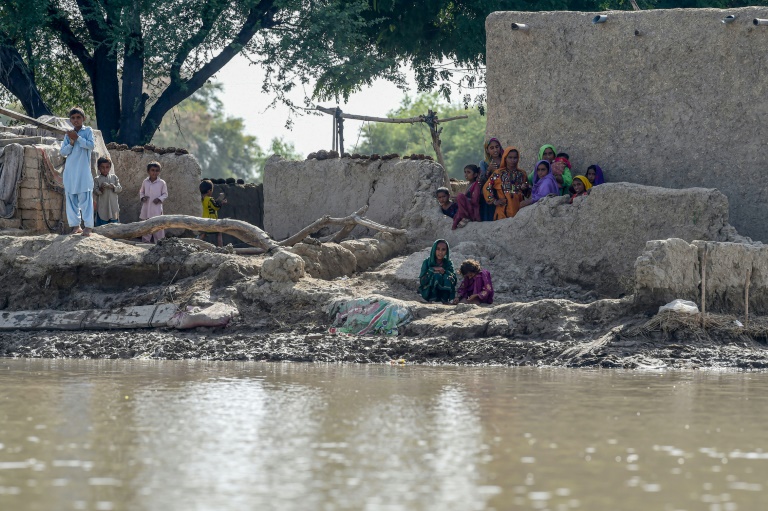
The 400 residents of Basti Ahmad Din, a tiny Pakistani village left surrounded by floodwater after torrential monsoon rains, are facing starvation and disease.

But they have refused pleas to evacuate.

Leaving for a relief camp would mean the women of the village mingling with men outside their families, residents told AFP, and that would violate their “honour”.

The women of Basti Ahmad Din do not get a say.

“It is up to the village elders to decide,” said Shireen Bibi, 17, when asked if she would prefer to go to the safety of a camp on dry land.

Catastrophic monsoon rains blamed on climate change have left vast swathes of Pakistan under water this summer, with villagers such as those in Basti Ahmad Din grappling with the destruction of their homes and livelihoods.

More than half of the 90 homes in Basti Ahmad Din, located in the Rojhan area of Punjab province, have been destroyed.

The cotton crops that surrounded the village when the rains started in June are now rotting in flooded fields, and the dirt road that once connected to the nearest city is under three metres (10 feet) of water.

Rickety wooden rowboats are the only way for villagers to head out to purchase food and supplies.

They are also expensive, with their operators charging fares far higher than normal.

Basti Ahmad Din’s families have worryingly low amounts of food left, and they have decided to pool and ration whatever wheat and grain they managed to salvage after the rains.

Numerous volunteers who come to the village to drop off aid packages have pleaded with the residents to leave for safety, to no avail.

– ‘Would rather starve’ –

“We are Baloch. Baloch don’t allow their women to go out,” said Basti Ahmad Din resident Muhammad Amir, referring to the dominant ethnic group in the village.

“The Baloch would rather starve and make do than let their families go out.”

In many parts of conservative, deeply patriarchal Pakistan, women live under a strict system of so-called honour.

It severely limits their freedom of movement and how they interact — if at all — with men outside their families.

Women can even be killed for bringing “shame” by interacting with men or marrying someone they, rather than their families, choose. 

And in a disaster situation such as the floods in Pakistan, this code can completely cut off women and girls from basic needs such as food and medical care.

Instead of taking their families there, the men of Basti Ahmad Din make the expensive boat trip to the nearest relief camp for aid and supplies once a week.

The village elders — all men — say it is only acceptable for women to leave in “emergency” situations such as ill health.

Natural disasters do not count, and one elder named Mureed Hussain said they did not evacuate during the last catastrophic floods in 2010.

“We didn’t leave our village then,” he told AFP.

“We don’t allow our women to go out. They can’t stay in those camps. It’s a matter of honour.”

Close Bitnami banner
Bitnami