World

Attacker and girlfriend 'planned' attempted hit on Argentine VP

The man accused of trying to shoot Argentine Vice President Cristina Kirchner last week planned the attack with his girlfriend, according to preliminary charges filed by a judge, local media reported Wednesday.

The alleged shooter in the attack at point blank range, Fernando Sabag Montiel, and his girlfriend, Brenda Uliarte, both in custody, are accused of trying to assassinate Kirchner “with planning and prior agreement,” Judge Maria Eugenia Capuchetti said in an indictment of the two, according to the Telam news agency.

Kirchner, the 69-year-old former president and current vice president, survived the assassination attempt as she mingled with supporters outside her home last Thursday night, when a gun brandished by Sabag Montiel failed to fire.

He was taken into custody on the spot and video of the incident quickly spread online.

The charges seen by media Wednesday are preliminary and can still be modified, but they mark the first official charge that the attack on Kirchner was premeditated.

Kirchner enjoys a loyal support base among followers of the center-left Peronist movement inherited from former president Juan Peron. But she is disliked in equal measure by the political opposition.

Tens of thousands of Argentines took to the streets after the shooting attempt.

– Girlfriend near crime scene –

Sabag Montiel, 35, a Brazilian national who has been living in Argentina since his youth, has not told investigators what his motivations were.

Ulliarte, his 23-year-old companion, was arrested Sunday night in a Buenos Aires train station.

Following the attack, she said in television interviews that she had not seen Sabag Montiel for two days, but analysis of video surveillance images has since shown that they were both at the scene of the attack that evening, according to judicial sources cited by the media.

The indictment seen Wednesday night, according to reports, says that Uliarte “was present in the vicinity of the place where they arrived together, and it was determined that they were in possession of the seized firearm with its ammunition, from an earlier date, at least since August 5.”

Kirchner, who is currently on trial for corruption and accused of accepting bribes in her Patagonian stronghold, was greeting supporters outside her Buenos Aires home when Sabag Montiel, standing amid the crowd, pointed a gun directly at her head.

For reasons yet unknown, the weapon did not go off despite being loaded and the trigger being pulled.

Messages of support for Kirchner and condemnation of the attack have poured in from the Pope, the UN, United States and Latin American leaders.

Sabag Montiel had previously been arrested on March 17, 2021, for carrying a knife, but the case was later closed. 

In photos on his Instagram account, he appears to bear numerous tattoos. Some — like one of a black sun and another resembling the Iron Cross — are associated with Nazi symbolism, though no signs of radicalization have so far been proven.

Asian markets bounce after sell-off, dollar closes on new highs

Most Asian markets enjoyed a rare advance on bargain-buying Thursday, tracking a Wall Street rally after a series of losses, though the dollar resumed its upward march with the Federal Reserve expected to announce another bumper interest rate hike.

Equities have been ravaged for weeks by fears that global central bank moves to rein in runaway inflation by ratcheting up borrowing costs will spark fresh recessions in some leading economies.

In turn, the greenback has moved ever higher against its major peers as investors flood into the currency hoping for better returns and as a safe-haven hedge against uncertainty and worldwide turmoil.

On Wednesday, the US unit hit a 37-year high against sterling, while it was also closing in on a 32-year peak above 147.60 yen owing to the Bank of Japan’s refusal to tighten its monetary policy, seen as the key driver of that rally.

Still, Japanese officials said they were tracking the price movements and hinted at possible action if things did not improve.

The euro is holding its own for now, ahead of a hefty expected rate hike by the European Central Bank later in the day.

While the dollar saw a brief moment of weakness Wednesday, observers are certain it will continue to attract strong interest for as long as the Fed keeps ramping up interest rates.

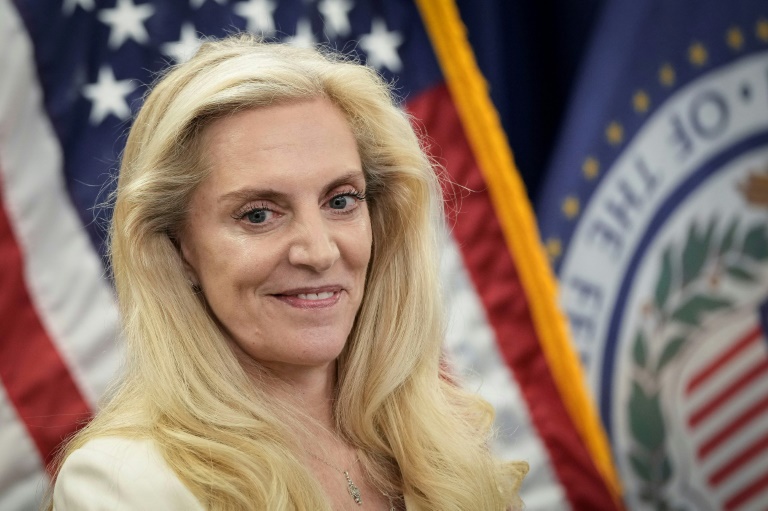
Those views were justified by Vice Chair Lael Brainard, who warned that policymakers will keep hiking rates until they have finally brought prices under control.

“We are in this for as long as it takes to get inflation down,” she said in comments prepared for a conference in New York, adding that she understood this would have a severe impact on families. 

The rate “will need to rise further” and “policy will need to be restrictive for some time to provide confidence that inflation is moving down to target”, she said.

The Fed holds its next policy meeting on September 21, with a third successive 75-basis-point lift forecast.

– Oil under pressure –

Equity traders mostly followed their US counterparts in returning to buying, with many believing the market had fallen too far too fast.

Tokyo led the gains, helped by data showing the Japanese economy performed better than initially thought in the second quarter, while there were also gains in Shanghai, Sydney, Seoul, Singapore, Wellington, Taipei, Manila and Jakarta.

Hong Kong bucked the trend.

Still, the mood on trading floors remains downbeat, with news that China had extended a lockdown in the megacity of Chengdu adding to worries about the world’s number two economy as officials stick rigidly to their growth-killing zero-Covid strategy.

The shutdowns in China, which have impacted tens of millions across the country, were adding to hefty oil sales as traders fret over the impact on demand.

The commodity was already under pressure owing to bets on a recession caused by bank rate hikes, with both main contracts down around $50 from the peaks seen in the immediate aftermath of Russia’s invasion of Ukraine. They are now around eight-month lows.

And while Brent and WTI rose Thursday, they were nowhere near recovering the previous day’s rout of more than five percent, which came despite Russian President Vladimir Putin warning he would cut off energy to Europe if it imposed price cap sanctions.

“Some bargain-hunting buying is to be expected after a dive like” Wednesday’s, said Vandana Hari at Vanda Insights. 

Still, she added that “the approach of the September 21 Fed meeting, where another 75-basis-point rate hike is expected”, could add headwinds to crude.

– Key figures at around 0230 GMT –

Tokyo – Nikkei 225: UP 2.1 percent at 27,992.25 (break)

Hong Kong – Hang Seng Index: DOWN 0.3 percent at 18,993.00

Shanghai – Composite: UP 0.1 percent at 3,249.99

Dollar/yen: UP at 144.12 yen from 143.79 yen on Wednesday

Euro/dollar: DOWN at $0.9989 from $1.0012 

Pound/dollar: DOWN at $1.1509 from $1.1535

Euro/pound: UP at 86.79 pence from 86.74 pence

West Texas Intermediate: UP 0.8 percent at $82.61 per barrel

Brent North Sea crude: UP 0.7 percent at $88.64 per barrel

New York – Dow: UP 1.4 percent at 31,581.28 (close)

London – FTSE 100: DOWN 0.9 percent at 7,237.83 (close)

ECB to match historic inflation with bumper rate hike

European Central Bank policymakers could reach for a historically large interest rate hike at their meeting on Thursday as they seek to tame soaring inflation.

Steep increases in the price of energy in the wake of the Russian invasion of Ukraine have heaped pressure onto households and businesses.

Inflation hit 9.1 percent in August, an all-time high for the eurozone and more than four times the two-percent rate targeted by the ECB.

“We expect a 75-basis-points rate hike,” said Franck Dixmier, head of fixed income at Allianz Global Investors.

“Given the level of inflation and the uncertainties about its evolution, for the ECB, there is less risk in doing more than in doing less,” he said. 

If confirmed, that would be the largest regular interest rate hike in the history of the ECB since its founding in 1998.

At its last meeting in July the ECB exceeded expectations with a 50-basis-point increase in interest rates, its first hike in more than a decade.

The increase also brought an end to eight years of negative interest rates, leaving its key rates sitting in a range between zero and 0.75 percent.

– ‘Determination’ –

The July hike set the stage for policymakers to take a new “meeting-by-meeting” approach, with the ECB ditching so-called forward guidance, which had constrained its response to rising inflation.

The ECB’s chief economist Philip Lane has counselled his colleagues on the governing council to raise rates at a “steady pace” and to go “neither too slow nor too fast”.

But a growing chorus of voices from within the central bank have called on the bank to show greater “determination”, in the words of board member Isabel Schnabel. 

Speaking at the annual Jackson Hole central banking symposium at the end of August, Schnabel urged the central bank to respond “more forcefully to the current bout of inflation, even at the risk of lower growth and higher unemployment”.

August’s red-hot inflation reading called for a “strong rise in interest rates in September”, said Joachim Nagel, the influential head of the German central bank.

“Further interest rate steps are to be expected in the following months,” the Bundesbank president predicted.

The ECB is already playing catch-up with the US and British central banks that started raising rates harder and faster in response to inflation.

Meanwhile, a weak euro, which fell below $0.99 for the first time in 20 years this week, has bolstered the case for bigger interest rate hikes.

– Recession rising –

While needing to quickly tame inflation, the ECB is also faced with the quandary of a weakening economy that could speak against over-hiking rates. 

A updated set of economic forecasts for the eurozone is due to be unveiled Thursday that would guide the ECB’s monetary policy decisions.

In its last estimates, published in June, the ECB said it expected inflation to sit at 6.8 percent in 2022 before falling to 3.5 percent next year, while growth would slow from 2.8 percent this year to 2.1 in 2023.

The threat of a recession in Europe was “rising”, EU economic affairs commissioner Paolo Gentiloni said Wednesday.

“We may well be heading into one the most challenging winters in generations,” he added.

A more severe energy shock could push the eurozone into a “deeper winter recession” and hold growth to zero percent in 2023, said Frederik Ducrozet, head of macroeconomic research at Pictet.

At the same time, the soaring cost of energy would drive inflation close to double digits by the end of the year, he predicted.

The ECB had “no choice but to commit to faster monetary tightening as long as inflation keeps rising”, even as a recession looms, said Ducrozet.

'Help wanted': businesses struggle to fill jobs

Germany has a shortage of plumbers. The United States needs more postal workers. Australia is lacking engineers. In Canada, hospitals are looking for more nurses. 

“The Great Resignation” that countries have experienced since Covid pandemic restrictions were eased is not over yet.

Michael Blume, chief executive of a software company in eastern Germany, said he had “a lot of difficulties finding workers”.

“Wherever we look, we are lacking qualified workers,” Blume, whose firm Currentsystem23 is based in eastern Germany, told AFP.

There were 887,000 job vacancies in Germany — Europe’s biggest economy — in August, some 108,000 openings more than last year.

“Help Wanted” signs are plastered in front of restaurants and other businesses in the United States, where there were more than 11 million job openings in late July, or two for every employment seeker.

“Vacancy rates are very high across the world. Surveys and firms are saying it is still very hard to fill positions,” said Ariane Curtis, a Toronto-based economist at research firm Capital Economics. 

Countries in Western Europe and North America are having a particularly tough time filling jobs, though the problem is also present in eastern Europe, Turkey and Latin America, Curtis said.

Vacancy-to-unemployed rates rose sharply in Australia, Canada and Britain in later 2021 compared to pre-pandemic levels, an OECD report said in July.

– Businesses closing early –

The shortages have persisted even as the world economy has begun to slow since Russia invaded Ukraine earlier this year.

It affects a broad range of sectors: from a lack of teachers in Texas to not enough staff in the hospitality industry in Italy or the Canadian health system.

The shortages have forced businesses to adapt.

Pharmacies in the US state of Wisconsin, services at hospitals in Canada’s province of Alberta and restaurants in Australia’s Sunshine Coast have had to close for parts of the day, according to local news reports.

White-collar workers are also in short supply.

Clement Verrier, who co-heads an executive recruiting firm in Paris, said it used to be difficult to find companies looking to hire. Now it’s the opposite. 

“We’re seeing an unprecedented number of candidates who disappear in the middle of the recruitment process, without calling back,” Verrier said.

– ‘Shift in mindset’ –

Aging populations were already starting to cause shortages before Covid, but the problem exploded with the pandemic.

There are multiple factors behind the phenomenon: some people have chosen to retire early, while others have struggled with long Covid symptoms. Others have simply had enough of poor working conditions or low salaries.

Other factors include a drastic drop in immigration due to lockdowns, people moving out of cities and workers seizing the moment to rethink their career choices.

“The pandemic drove a fundamental shift in mindset and priorities, and employers aren’t keeping pace with that change,” said Bonnie Dowling, expert associate partner at McKinsey, a global consultancy that conducted a study on the wave of resignations around the world.

To keep or woo workers, companies are offering higher salaries. Other benefits that have emerged include the option of working from home, “bonus” holidays and more personal days.

Some countries are easing their immigration rules to attract more workers.

Germany unveiled plans Wednesday to make it easier for people to hold multiple nationalities and make naturalisation of foreigners easier.

“The big question is if what we have seen in the last months will cool down or not,” said Mike Smith, CEO of Netherlands-based international recruiter Randstad Sourceright.

“From our position we don’t believe it is transitory,” he said.

“We think it is a structural change in the way employees are looking to interact with work. Trends continue to point to that. The shift in worker expectations is here to stay.”

'Help wanted': businesses struggle to fill jobs

Germany has a shortage of plumbers. The United States needs more postal workers. Australia is lacking engineers. In Canada, hospitals are looking for more nurses. 

“The Great Resignation” that countries have experienced since Covid pandemic restrictions were eased is not over yet.

Michael Blume, chief executive of a software company in eastern Germany, said he had “a lot of difficulties finding workers”.

“Wherever we look, we are lacking qualified workers,” Blume, whose firm Currentsystem23 is based in eastern Germany, told AFP.

There were 887,000 job vacancies in Germany — Europe’s biggest economy — in August, some 108,000 openings more than last year.

“Help Wanted” signs are plastered in front of restaurants and other businesses in the United States, where there were more than 11 million job openings in late July, or two for every employment seeker.

“Vacancy rates are very high across the world. Surveys and firms are saying it is still very hard to fill positions,” said Ariane Curtis, a Toronto-based economist at research firm Capital Economics. 

Countries in Western Europe and North America are having a particularly tough time filling jobs, though the problem is also present in eastern Europe, Turkey and Latin America, Curtis said.

Vacancy-to-unemployed rates rose sharply in Australia, Canada and Britain in later 2021 compared to pre-pandemic levels, an OECD report said in July.

– Businesses closing early –

The shortages have persisted even as the world economy has begun to slow since Russia invaded Ukraine earlier this year.

It affects a broad range of sectors: from a lack of teachers in Texas to not enough staff in the hospitality industry in Italy or the Canadian health system.

The shortages have forced businesses to adapt.

Pharmacies in the US state of Wisconsin, services at hospitals in Canada’s province of Alberta and restaurants in Australia’s Sunshine Coast have had to close for parts of the day, according to local news reports.

White-collar workers are also in short supply.

Clement Verrier, who co-heads an executive recruiting firm in Paris, said it used to be difficult to find companies looking to hire. Now it’s the opposite. 

“We’re seeing an unprecedented number of candidates who disappear in the middle of the recruitment process, without calling back,” Verrier said.

– ‘Shift in mindset’ –

Aging populations were already starting to cause shortages before Covid, but the problem exploded with the pandemic.

There are multiple factors behind the phenomenon: some people have chosen to retire early, while others have struggled with long Covid symptoms. Others have simply had enough of poor working conditions or low salaries.

Other factors include a drastic drop in immigration due to lockdowns, people moving out of cities and workers seizing the moment to rethink their career choices.

“The pandemic drove a fundamental shift in mindset and priorities, and employers aren’t keeping pace with that change,” said Bonnie Dowling, expert associate partner at McKinsey, a global consultancy that conducted a study on the wave of resignations around the world.

To keep or woo workers, companies are offering higher salaries. Other benefits that have emerged include the option of working from home, “bonus” holidays and more personal days.

Some countries are easing their immigration rules to attract more workers.

Germany unveiled plans Wednesday to make it easier for people to hold multiple nationalities and make naturalisation of foreigners easier.

“The big question is if what we have seen in the last months will cool down or not,” said Mike Smith, CEO of Netherlands-based international recruiter Randstad Sourceright.

“From our position we don’t believe it is transitory,” he said.

“We think it is a structural change in the way employees are looking to interact with work. Trends continue to point to that. The shift in worker expectations is here to stay.”

Bolivian indigenous women break barriers through mountaineering

A sudden gale drowns out the crunching sound of footsteps on the ice and makes skirts billow in the freezing night.

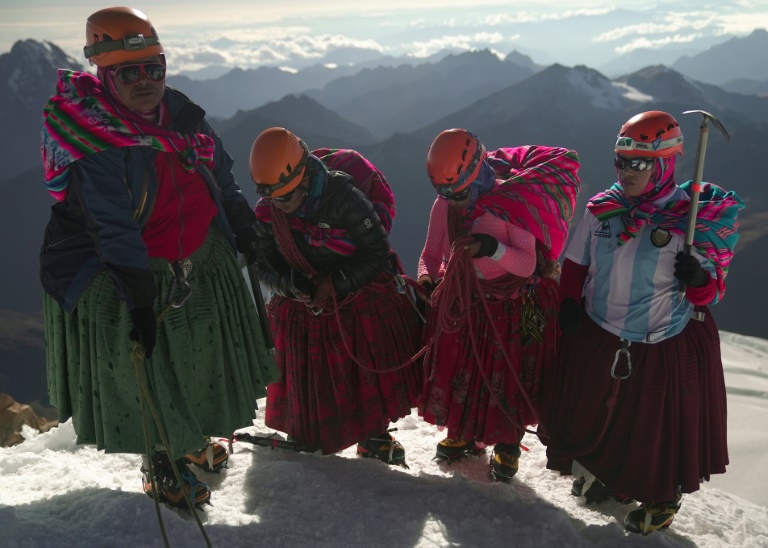
Ten indigenous Aymara women slowly trek up a Bolivian mountainside in their traditional dress as a statement of their emancipation.

The Climbing Cholitas of Bolivia Warmis is a group dedicated to campaigning for the rights of Indigenous women through mountaineering.

Cecilia Llusco, 36, is the daughter of a mountain guide and dreamt since she was young of climbing the snow-capped Huayna Potosi that rises over 6,000 meters above sea level.

However, for many years she limited herself to cooking for other mountaineers and packing their backpacks.

That was until she and several other rural women, including some of her sisters, decided to change their destiny.

“Why can’t we climb mountains?” she said they asked themselves, while drawing dismissive reactions from some men.

“What are these women doing here, on the mountain?” Llusco recalls them saying.

Seven years after their initial expedition, and after climbing nearly a dozen peaks in Bolivia, Peru and Argentina, the Cholita Climbers, named after indigenous Bolivian women called “cholas” or “cholitas,” are tackling Huayna Potosi again on this austral winter night.

And they did not compromise on their style.

“We wanted to show that women are strong and brave, that we can do it with our clothing,” said LLusco, who wears her hair in long braids decorated with brown wool.

– ‘A lot of discrimination’ –

Whenever they can, and often helped by funding from NGOs and private businesses, they hire a minivan to drive two hours from their homes in El Alto — the satellite overlooking La Paz, to the wall of ice they plan to scale.

There are 14 members and every time they climb they share an ‘aptapi’ — a banquet in which every person brings some food to share.

After resting for a couple of hours in a refuge, the Cholitas get up at 11:00 pm and start dressing in their traditional colored pleated skirts, called polleras.

A ragbag of home-makers, carriers and tourist guides, they start climbing the glacier at midnight so as to reach the summit at sunrise.

Over their woollen clothing they carry typical mountaineering equipment: helmets, crampons, ice axes, boots and leggings.

But instead of a backpack, they carry their equipment in a traditional cloth sack slung over their shoulders and tied around the neck.

“There has been a lot of discrimination against the pollera woman,” said Llusco, pointing to the femicide rate in Bolivia being the highest in South America, according to international organizations.

Indigenous people, who make up almost half of Bolivia’s population, have long been marginalized.

– ‘Flying between clouds’ –

In the dark of night, all that is visible is an ant-like line of lanterns lighting up the ice on either side.

One by one the Cholitas cling to a safety harness and carefully dig their crampons into the ice to avoid tumbling 30 meters into an abyss.

The oxygen levels drop and temperatures plunge to minus 10 degrees Celsius.

In the distance, 30 kilometers way, the lights of El Alto are visible.

With the first light of the day, the coppery faces of these women — aged between 18 and 42 — become visible.

As a couple of snowy peaks poke through the low-lying cloud, several Cholitas stop to take photos of the dawn sun poking out from spectacular landscapes with their mobile phones.

The extreme altitude brings on head and stomach aches which the Cholitas try to alleviate by chewing coca and chocolate leaves.

Close to the summit, two exhausted climbers decide they have had enough and abandon.

The final path is steep and narrow. Clinging to a rope they push on slowly.

At the top it is all smiles, hugs and dancing.

“When we reach the mountain peak it is as if we were flying between clouds,” said Llusco.

Her daughter Camila Tarqui, a new recruit, says she likes “how the pollera flutters” at this altitude.

“You’re almost able to touch a star when you come up here at night,” she said.

On a plain a few meters below the summit, the Cholitas play a football match.

High altitude football is nothing new in Bolivia, whose national team plays its matches in La Paz on the highest pitch in the world used for international matches.

Having already scaled South America’s highest peak in 2019 — the Aconcagua in Argentina — the Cholitas now dream of tackling Mount Everest.

“We women have broken down several barriers … and we want to go further, always carrying high the Aymara culture,” said Llusco.

'A matter of honour': Women forced to stay in flooded Pakistan village

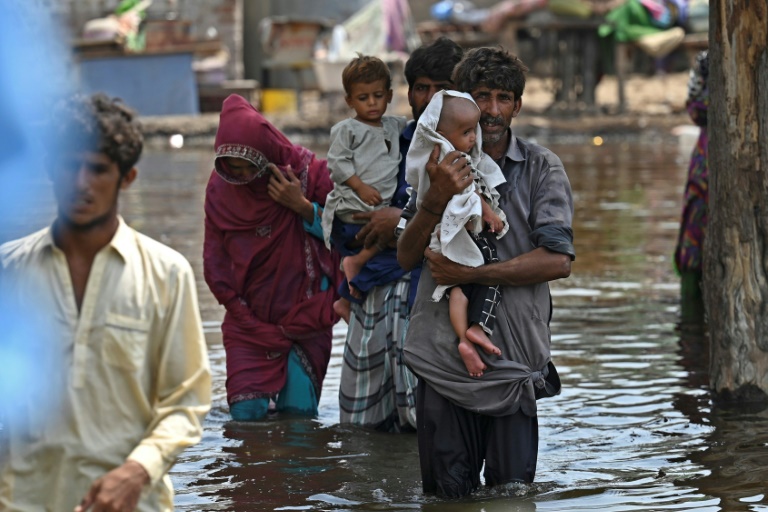
The 400 residents of Basti Ahmad Din, a tiny Pakistani village left surrounded by floodwater after torrential monsoon rains, are facing starvation and disease.

But they have refused pleas to evacuate.

Leaving for a relief camp would mean the women of the village mingling with men outside their families, residents told AFP, and that would violate their “honour”.

The women of Basti Ahmad Din do not get a say.

“It is up to the village elders to decide,” said Shireen Bibi, 17, when asked if she would prefer to go to the safety of a camp on dry land.

Catastrophic monsoon rains blamed on climate change have left vast swathes of Pakistan under water this summer, with villagers such as those in Basti Ahmad Din grappling with the destruction of their homes and livelihoods.

More than half of the 90 homes in Basti Ahmad Din, located in the Rojhan area of Punjab province, have been destroyed.

The cotton crops that surrounded the village when the rains started in June are now rotting in flooded fields, and the dirt road that once connected to the nearest city is under three metres (10 feet) of water.

Rickety wooden rowboats are the only way for villagers to head out to purchase food and supplies.

They are also expensive, with their operators charging fares far higher than normal.

Basti Ahmad Din’s families have worryingly low amounts of food left, and they have decided to pool and ration whatever wheat and grain they managed to salvage after the rains.

Numerous volunteers who come to the village to drop off aid packages have pleaded with the residents to leave for safety, to no avail.

– ‘Would rather starve’ –

“We are Baloch. Baloch don’t allow their women to go out,” said Basti Ahmad Din resident Muhammad Amir, referring to the dominant ethnic group in the village.

“The Baloch would rather starve and make do than let their families go out.”

In many parts of conservative, deeply patriarchal Pakistan, women live under a strict system of so-called honour.

It severely limits their freedom of movement and how they interact — if at all — with men outside their families.

Women can even be killed for bringing “shame” by interacting with men or marrying someone they, rather than their families, choose. 

And in a disaster situation such as the floods in Pakistan, this code can completely cut off women and girls from basic needs such as food and medical care.

Instead of taking their families there, the men of Basti Ahmad Din make the expensive boat trip to the nearest relief camp for aid and supplies once a week.

The village elders — all men — say it is only acceptable for women to leave in “emergency” situations such as ill health.

Natural disasters do not count, and one elder named Mureed Hussain said they did not evacuate during the last catastrophic floods in 2010.

“We didn’t leave our village then,” he told AFP.

“We don’t allow our women to go out. They can’t stay in those camps. It’s a matter of honour.”

Queen calls off meeting after 'full day' appointing UK's new PM

Queen Elizabeth II has postponed a meeting of her Privy Council advisory group after doctors advised her to rest, Buckingham Palace said Wednesday, the day after she appointed Liz Truss as Britain’s new prime minister.

“After a full day yesterday, Her Majesty has this afternoon accepted doctors’ advice to rest,” the palace said in a statement.

“This means that the Privy Council meeting that had been due to take place this evening will be rearranged.”

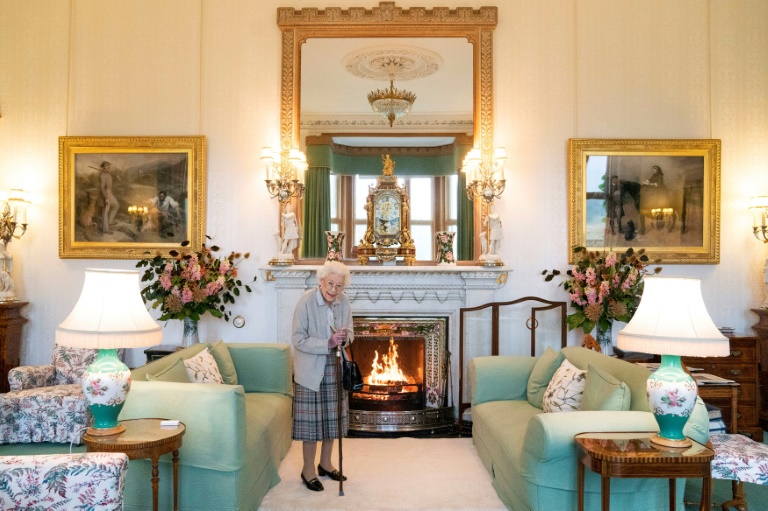
The 96-year-old monarch, who is currently on her traditional summer retreat at Balmoral in the Scottish Highlands, has been dogged by problems walking and standing since last year, forcing her to cancel a series of public engagements.

Fears about a flare-up of what royal officials call “episodic mobility problems” prevented her returning to London to accept outgoing leader Boris Johnson’s resignation and to appoint Truss on Tuesday.

The elderly sovereign, looking frail and holding a walking stick for support, was seen in an official photograph of the symbolic ceremony shaking hands with Truss as she invited her to lead a new government.

The constitutional role — the so-called “kissing of the hands” ceremony — usually takes place at Buckingham Palace in London.

It was the first time it had been held outside London since 1952, when Winston Churchill met the new queen at Heathrow Airport after the death of her father, George VI.

The last time the handover of power took place at Balmoral was in 1885 when Victoria was on the throne. 

The current queen also carried out another duty after Tuesday’s prime ministerial handover, Britain’s Press Association reported.

Wednesday evening’s scheduled Privy Council meeting, to be held virtually, would have seen Truss take an oath and new cabinet ministers sworn into their roles, and also admitted new ministers to be privy counsellors if they were not already.

Meetings of the council, a royal advisory body dating back hundreds of years and comprising hundreds of members, including religious and political leaders, usually happen monthly. 

Last week, Britain’s longest-serving monarch skipped the Highland Games event, a traditional highlight of her summer in Scotland.

The latest cancellations will revive concerns about her health.

She has cut back on public engagements since last October after an unscheduled overnight stay in hospital for an undisclosed condition.

She was also hit by a bout of Covid earlier this year, that she said left her “exhausted”.

During her Platinum Jubilee celebrations this summer, the monarch travelled to Buckingham Palace just twice and made only fleeting appearances during the four days of events.

UN: evidence of Russia taking Ukrainian children

The United Nations cited “credible accusations” Wednesday that Moscow’s forces have forcibly taken Ukrainian children to Russia, while Russian President Vladimir Putin accused the West of benefitting from the eased grain blockade.

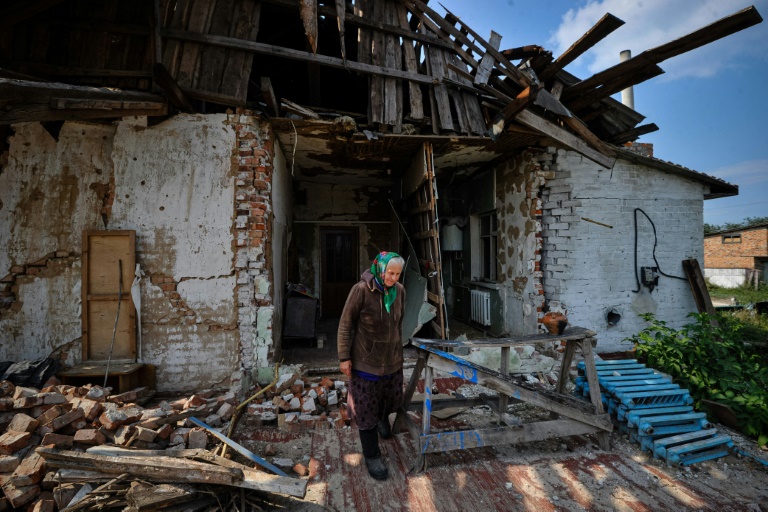
Kyiv meanwhile said its forces had recaptured significant territory in a counter-offensive southeast of Kharkiv that experts say could threaten key Russian supply routes.

As Europe girded for the prospect of winter with diminished energy supplies, the European Commission proposed a series of measures to control energy skyrocketing prices and punish Moscow for invading Ukraine, including a price cap on Russian gas.

“We are facing an extraordinary situation, because Russia is an unreliable supplier and is manipulating our energy markets,” warned EU chief Ursula von der Leyen.

“Our unity and our solidarity will ensure that we will prevail,” she added.

– Abusive ‘filtration’ program –

In Washington and at a UN Security Council meeting, Moscow was accused of forcing large numbers of Ukrainian non-combatants into detention camps and even prisons via a Kremlin-directed “filtration” program, and removing children from the war zone to hand over to adoptive parents inside Russia.

“We are concerned that the Russian authorities have adopted a simplified procedure to grant Russian citizenship to children without parental care, and that these children would be eligible for adoption by Russian families,” Ilze Brands Kehris, the assistant UN secretary-general for human rights, told the Security Council.

She said Russian forces are putting Ukrainians in occupied territories through invasive security checks that have involved numerous human rights violations.

Some Ukrainians judged as close to the Ukraine government or military have been tortured and forcibly removed and sent to Russian penal colonies and other detention centers, she said.

The US State Department said Russian President Vladimir Putin’s office is directly managing the relocation of Ukrainians into Russia, and doing it as part of a plan to annex occupied territory.

“Russia has systematically used the practice of forced deportations previously, and the fear and misery it evokes for people forced to live under the Kremlin’s control are hard to overstate,” said State Department deputy spokesman Vedant Patel.

But Russian UN Ambassador Vasily Nebenzya called the allegations unfounded and said what was labelled “filtration” was simply registering Ukrainians willingly fleeing the war to Russia.

“As far as we can judge similar procedures are applied in Poland and other countries of the European Union against Ukrainian refugees,” he told the Security Council.

– Putin says Europe taking the grain –

Putin accused Europe of taking advantage of Russia’s lifting of a blocked on Ukraine grain exports to help itself while poorer countries were being deprived of essential food.

Official data collected by a joint centre in Istanbul monitoring implementation of the recent grain export agreement showed 30 percent of the grain reaching low and lower-middle income countries.

Data compiled as of Wednesday showed Turkey receiving 20 percent of the grain followed by Spain (15 percent) and Egypt (10 percent).

But much of the grain reaching Turkey and some other destinations is then re-sold under agreements not monitored by the Istanbul centre.

“Almost all the grain exported from Ukraine is sent not to the poorest developing countries, but to EU countries,” Putin alleged.

European countries were acting as “colonialists,” he said, “once again simply deceived developing countries.”

“Maybe we should think about limiting the export of grain and other produce along this route?” he said.

A US official dismissed Putin’s remarks as untrue, noting that some grain sent to Europe was then processed for poor nations.

– Ukraine advances near Kharkiv –

Late Wednesday Ukrainian President Volodymyr Zelensky said that Kyiv troops have recaptured several settlements in the Kharkiv region, though he declined to name them.

The US Institute for the Study of War, which follows in detail the fighting, said  the Ukraine counterattack was near Balakliya and probably drove Russian forces back to the north side of the Severskyi Donets and Serednya Balakliika rivers.

It appeared Ukraine forces also recaptured Verbivka and that Russian forces may have destroyed bridges to prevent Ukrainian fighters from pursuing them, ISW said.

“Russia’s deployment of forces from Kharkiv and eastern Ukraine to Ukraine’s south is likely enabling Ukrainian counterattacks of opportunity,” it said.

British cinema chain Cineworld files for US bankruptcy

Britain’s Cineworld, the world’s second biggest cinema chain, announced Wednesday that it has filed for bankruptcy protection in the United States as it seeks to restructure after facing low audience numbers.

The group, which operates hundreds of movie theatres in the United States, said in a statement that it filed for Chapter 11 at a bankruptcy court in Texas.

Chapter 11 of the US bankruptcy code is a court-supervised restructuring process that provides companies time to negotiate with its creditors to reach a settlement on the reduction of debts.

Cineworld said it “will seek to implement a de-leveraging transaction that will significantly reduce the Group’s debt, strengthen its balance sheet and provide the financial strength and flexibility to accelerate, and capitalise on, Cineworld’s strategy in the cinema industry.”

The statement said it hoped to emerge from bankruptcy proceedings in the first quarter of next year, and had $1.94 billion in financing from existing lenders to help it through that period.

The company also warned existing shareholders that their holdings would likely be considerably diluted as part of the bankruptcy process.

Eric Snyder, a bankruptcy expert at Wilk Auslander, said Cineworld’s creditors aren’t giving them “a lot of time to make the decision between reorganizing or selling it”. 

A big problem for the company is that “travelling to a movie theatre to watch a movie for two to three hours, and spending $20 to $25, is just not attractive anymore for a lot of people, especially young people,” Snyder added.

Cineworld’s shares had been sliding since the beginning of the year as the company’s position deteriorated when people didn’t return to cinemas in droves after Covid lockdowns were eased.

They plummeted last month when the company acknowledged it was considering filing for bankruptcy.

Cineworld shares rose 10 percent on Wednesday to 4.29 pence, but were still down 87 percent from the start of the year.

Analysts argue that Cineworld’s 2018 takeover of American peer Regal left it saddled with too much debt, putting it in a poor position to weather the pandemic.

Close Bitnami banner
Bitnami