World

Countries growing 70% of world's food face 'extreme' heat risk by 2045

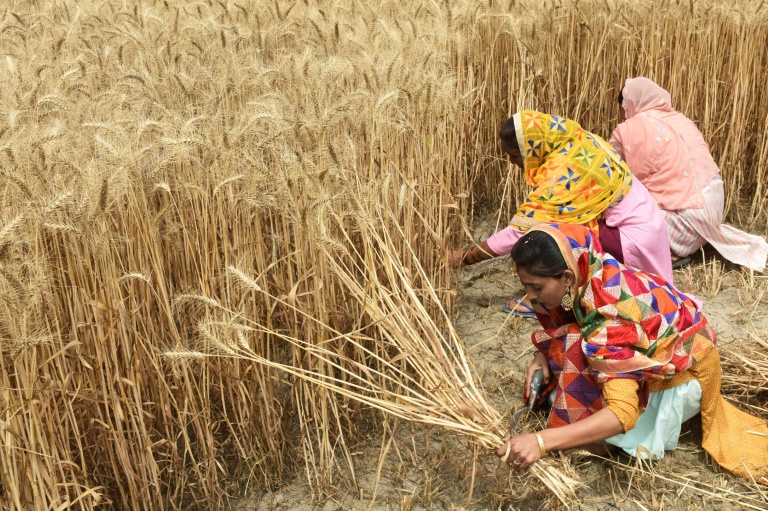
Blistering crop-withering temperatures that also risk the health of agricultural workers could threaten swathes of global food production by 2045 as the world warms, an industry analysis warned Thursday.

Climate change is already stoking heatwaves and other extreme weather events across the world, with hot spells from India to Europe this year expected to hit crop yields.

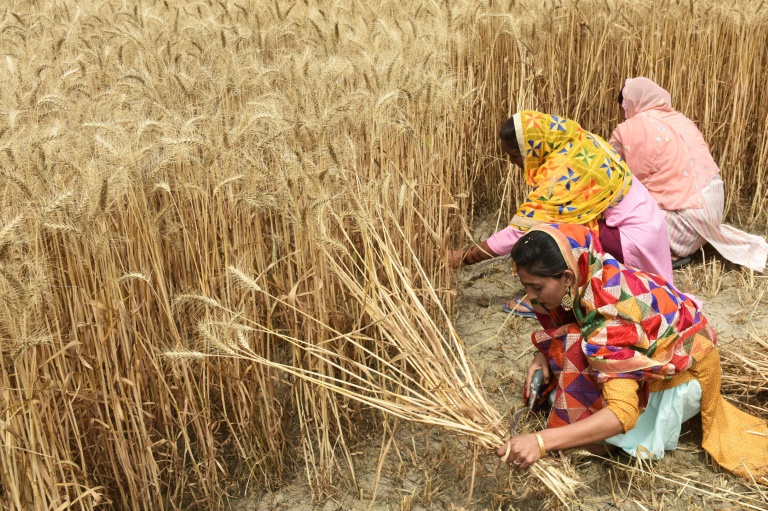
Temperature spikes are causing mounting concern for health, particularly for those working outside in sweltering conditions, which is especially dangerous when humidity levels are high. 

The latest assessment by risk company Verisk Maplecroft brings those two threats together to calculate that heat stress already poses an “extreme risk” to agriculture in 20 countries, including agricultural giant India.

But the coming decades are expected to expand the threat to 64 nations by 2045 — representing 71 percent of current global food production — including major economies China, India, Brazil and the United States. 

“With the rise in global temperatures and rise in global heat stress, we’re going to see crops in more temperate countries as well start being affected by this,” said Will Nichols, head of climate and resilience at Verisk Maplecroft. 

Rice is particularly at risk, the assessment said, with other crops like cocoa and even tomatoes also singled out as of concern.

– Growing risk –

Maplecroft’s new heat stress dataset, using global temperature data from the UK Met Office, feeds into its wider risk assessments of countries around the world. 

It is based on a worst-case emissions scenario leading to around 2 degrees Celsius of warming above pre-industrial levels as soon as 2045. 

However, the authors stress that in projections to mid-century, even scenarios that assume higher levels of carbon-cutting action could still result in temperatures nearing 2C.

India — responsible for 12 percent of global food production in 2020 and heavily reliant on outdoor labour productivity — is already rated as at extreme risk, the only major agricultural nation in that category at current temperatures. 

“There’s a very real worry that people in rural areas, which are obviously highly dependent on agriculture, are going to be much more vulnerable to these kinds of heat events going forward,” Nichols told AFP. 

That could impact productivity and in turn exports — and have potentially “cascading” knock-on effects on issues such as the country’s credit rating and even political stability, he said.

By 2045, the list grows much longer.   

Nine of the top ten countries affected in 2045 are in Africa, with the world’s second largest cocoa producer Ghana, as well as Togo and Central African Republic receiving the worst possible risk score.

The top 20 at-risk countries in the coming decades include key Southeast Asian rice exporters Cambodia, Thailand and Vietnam, the authors said, noting that rice farmers in central Vietnam have already taken to working at night to avoid the high temperatures.

The assessment highlights that major economies like the US and China could also see extreme risk to agriculture in 2045, although in these large countries the impacts vary by region.  

Meanwhile, Europe accounts for seven of the 10 countries set to see the largest increase in risk by 2045. 

“I think what it reinforces is that, even though a lot of us are sort of sitting in sort of Western countries, where we might think we’re a bit more insulated from some of these threats, actually we are not necessarily,” Nichols said.  

“Both in terms of the sort of physical risks that we’re facing, but also in terms of the kind of knock on effects down the supply chain.” 
Countries growing 70% of world's food face 'extreme' heat risk by 2045

Blistering crop-withering temperatures that also risk the health of agricultural workers could threaten swathes of global food production by 2045 as the world warms, an industry analysis warned Thursday.

Climate change is already stoking heatwaves and other extreme weather events across the world, with hot spells from India to Europe this year expected to hit crop yields.

Temperature spikes are causing mounting concern for health, particularly for those working outside in sweltering conditions, which is especially dangerous when humidity levels are high. 

The latest assessment by risk company Verisk Maplecroft brings those two threats together to calculate that heat stress already poses an “extreme risk” to agriculture in 20 countries, including agricultural giant India.

But the coming decades are expected to expand the threat to 64 nations by 2045 — representing 71 percent of current global food production — including major economies China, India, Brazil and the United States. 

“With the rise in global temperatures and rise in global heat stress, we’re going to see crops in more temperate countries as well start being affected by this,” said Will Nichols, head of climate and resilience at Verisk Maplecroft. 

Rice is particularly at risk, the assessment said, with other crops like cocoa and even tomatoes also singled out as of concern.

– Growing risk –

Maplecroft’s new heat stress dataset, using global temperature data from the UK Met Office, feeds into its wider risk assessments of countries around the world. 

It is based on a worst-case emissions scenario leading to around 2 degrees Celsius of warming above pre-industrial levels as soon as 2045. 

However, the authors stress that in projections to mid-century, even scenarios that assume higher levels of carbon-cutting action could still result in temperatures nearing 2C.

India — responsible for 12 percent of global food production in 2020 and heavily reliant on outdoor labour productivity — is already rated as at extreme risk, the only major agricultural nation in that category at current temperatures. 

“There’s a very real worry that people in rural areas, which are obviously highly dependent on agriculture, are going to be much more vulnerable to these kinds of heat events going forward,” Nichols told AFP. 

That could impact productivity and in turn exports — and have potentially “cascading” knock-on effects on issues such as the country’s credit rating and even political stability, he said.

By 2045, the list grows much longer.   

Nine of the top ten countries affected in 2045 are in Africa, with the world’s second largest cocoa producer Ghana, as well as Togo and Central African Republic receiving the worst possible risk score.

The top 20 at-risk countries in the coming decades include key Southeast Asian rice exporters Cambodia, Thailand and Vietnam, the authors said, noting that rice farmers in central Vietnam have already taken to working at night to avoid the high temperatures.

The assessment highlights that major economies like the US and China could also see extreme risk to agriculture in 2045, although in these large countries the impacts vary by region.  

Meanwhile, Europe accounts for seven of the 10 countries set to see the largest increase in risk by 2045. 

“I think what it reinforces is that, even though a lot of us are sort of sitting in sort of Western countries, where we might think we’re a bit more insulated from some of these threats, actually we are not necessarily,” Nichols said.  

“Both in terms of the sort of physical risks that we’re facing, but also in terms of the kind of knock on effects down the supply chain.” 
Countries growing 70% of world's food face 'extreme' heat risk by 2045

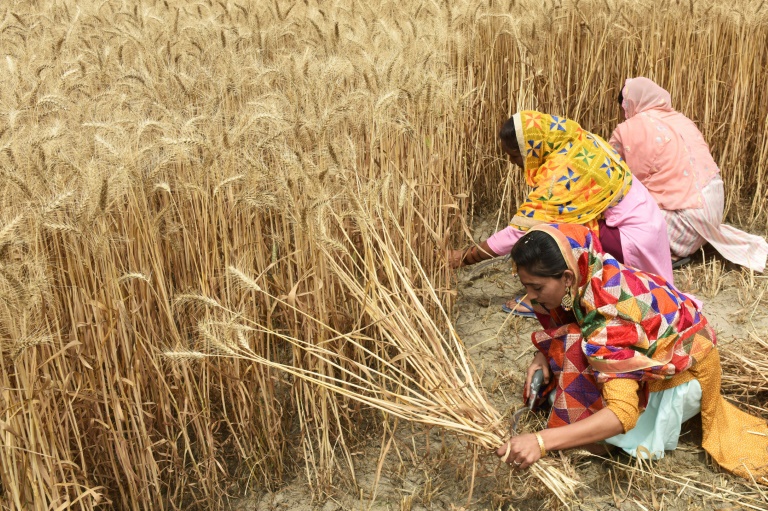
Blistering crop-withering temperatures that also risk the health of agricultural workers could threaten swathes of global food production by 2045 as the world warms, an industry analysis warned Thursday.

Climate change is already stoking heatwaves and other extreme weather events across the world, with hot spells from India to Europe this year expected to hit crop yields.

Temperature spikes are causing mounting concern for health, particularly for those working outside in sweltering conditions, which is especially dangerous when humidity levels are high. 

The latest assessment by risk company Verisk Maplecroft brings those two threats together to calculate that heat stress already poses an “extreme risk” to agriculture in 20 countries, including agricultural giant India.

But the coming decades are expected to expand the threat to 64 nations by 2045 — representing 71 percent of current global food production — including major economies China, India, Brazil and the United States. 

“With the rise in global temperatures and rise in global heat stress, we’re going to see crops in more temperate countries as well start being affected by this,” said Will Nichols, head of climate and resilience at Verisk Maplecroft. 

Rice is particularly at risk, the assessment said, with other crops like cocoa and even tomatoes also singled out as of concern.

– Growing risk –

Maplecroft’s new heat stress dataset, using global temperature data from the UK Met Office, feeds into its wider risk assessments of countries around the world. 

It is based on a worst-case emissions scenario leading to around 2 degrees Celsius of warming above pre-industrial levels as soon as 2045. 

However, the authors stress that in projections to mid-century, even scenarios that assume higher levels of carbon-cutting action could still result in temperatures nearing 2C.

India — responsible for 12 percent of global food production in 2020 and heavily reliant on outdoor labour productivity — is already rated as at extreme risk, the only major agricultural nation in that category at current temperatures. 

“There’s a very real worry that people in rural areas, which are obviously highly dependent on agriculture, are going to be much more vulnerable to these kinds of heat events going forward,” Nichols told AFP. 

That could impact productivity and in turn exports — and have potentially “cascading” knock-on effects on issues such as the country’s credit rating and even political stability, he said.

By 2045, the list grows much longer.   

Nine of the top ten countries affected in 2045 are in Africa, with the world’s second largest cocoa producer Ghana, as well as Togo and Central African Republic receiving the worst possible risk score.

The top 20 at-risk countries in the coming decades include key Southeast Asian rice exporters Cambodia, Thailand and Vietnam, the authors said, noting that rice farmers in central Vietnam have already taken to working at night to avoid the high temperatures.

The assessment highlights that major economies like the US and China could also see extreme risk to agriculture in 2045, although in these large countries the impacts vary by region.  

Meanwhile, Europe accounts for seven of the 10 countries set to see the largest increase in risk by 2045. 

“I think what it reinforces is that, even though a lot of us are sort of sitting in sort of Western countries, where we might think we’re a bit more insulated from some of these threats, actually we are not necessarily,” Nichols said.  

“Both in terms of the sort of physical risks that we’re facing, but also in terms of the kind of knock on effects down the supply chain.” 
Energy majors exaggerating green performance: analysis

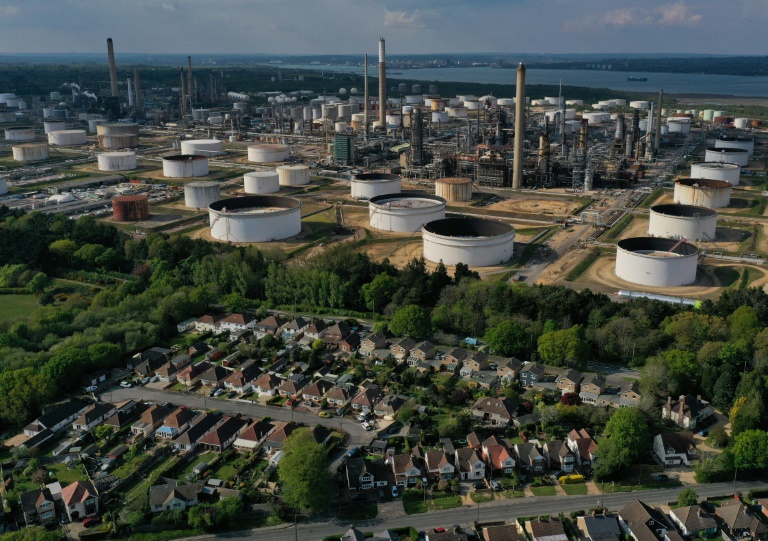
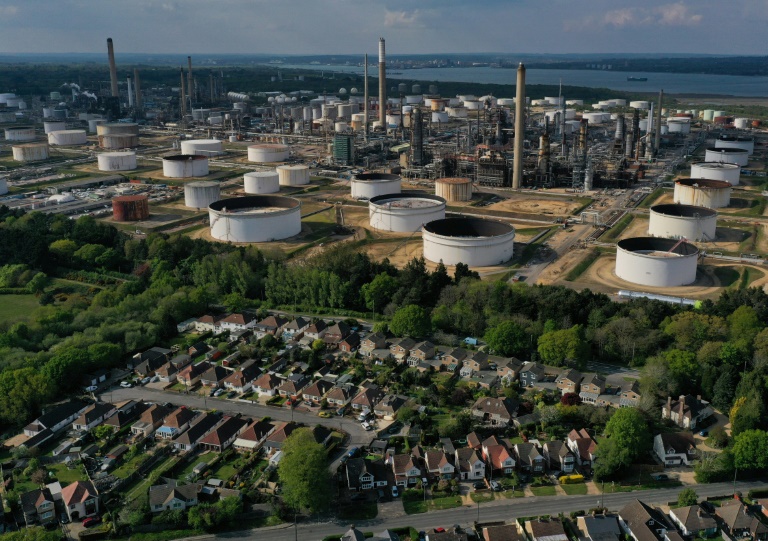
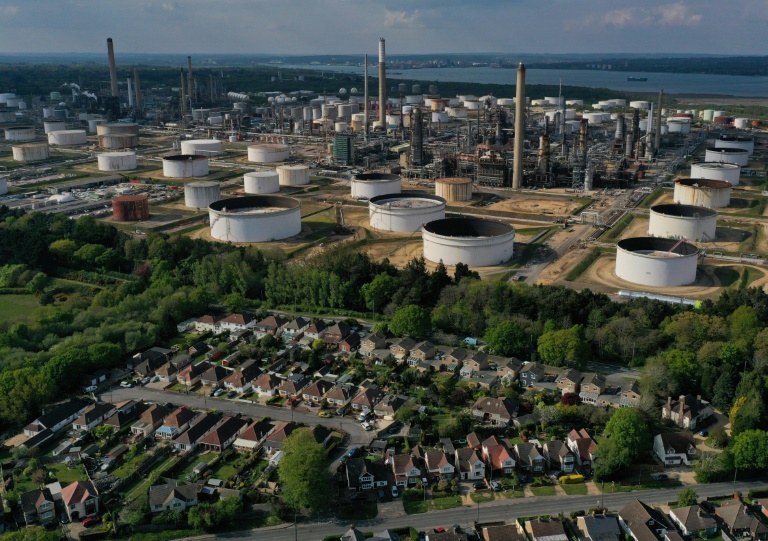
Energy majors are exaggerating their green credentials in public messaging while continuing to allocate the majority of new investment to oil and gas projects, according to an industry analysis released Thursday.

Campaigners say this “significant misalignment” between communication strategies and business plans could allow five of the biggest privately-owned energy firms to continue to delay the decarbonisation needed to avoid the worst impacts of climate change. 

Industry watchdog InfluenceMap analysed the content of more than 3,400 public communications from BP, Chevron, ExxonMobil, Shell and TotalEnergies in 2021, from press releases, speeches and company and CEO social media accounts. 

They found that 60 percent of all messages contained at least one “green” claim — such as emissions reduction targets, transitioning the energy mix, or promoting fossil gas as part of a clean energy solution.

These public communications were found to contrast with the five’s planned capital expenditure for 2022, with just 12 percent of new investments earmarked for low-carbon activities. 

“You can see this real difference between a high use of green claims in public communications versus this ongoing strategy to kind of undermine and block climate policy,” report co-author and program manager Faye Holder told AFP.

She said the gap between what the majors advertised and what they were investing in was misleading the public as to their role in battling climate change.  

“Based on the public communications, and particularly social media, it would be fair enough if you walked away with the impression that these companies are acting to solve climate change, because that’s what you’re hearing from them,” she said.

– ‘Climate disinformation’ –

The analysis found that Shell had the largest disparity between its green talk and actual low-carbon investment. 

InfluenceMap said that 70 percent of Shell’s communications last year contained at least one green claim, compared with just 10 percent of planned investment in low-carbon activities this year.

A spokesman for Shell told AFP the major was already investing “billions of dollars in low-carbon energy”.

“To help alter the mix of energy Shell sells, we need to grow these new businesses rapidly. That means letting our customers know through advertising or social media what lower-carbon solutions we offer now or are developing.”

The analysis found that 62 percent of TotalEnergies’ communications mentioned green activities, while it planned to allocate 25 percent of 2022 capital expenditure on low-carbon projects. 

A TotalEnergies spokeswoman countered that 30 percent of the firm’s investments are devoted to “decarbonised energy”.

“Our public announcements policy reflects the transformation of TotalEnergies in a multi-energy company,” she told AFP. 

An ExxonMobil spokesman said it “continues to mitigate emissions from its operations and achieved its 2025 emission-reduction plans four years earlier than planned”.

BP and Chevron did not respond to requests for comment. 

The analysis found that overall the five corporations had spent $750 million on climate-related messaging last year alone. 

Report co-author Ed Collins said that represented good business for the majors, as it was significantly cheaper than decarbonising their business models and would encourage governments to continue subsidising their products.

“The costs seem huge, but the investment is tiny in comparison to the potential reward in terms of favourable policy conditions and subsidisation of building assets,” he said. 

Some of the firms analysed plan to increase oil and gas production by 2026, something the analysts said would see their emissions “significantly overshoot” the International Energy Agency’s recommended net-zero pathway. 

Gwendoline Delbos-Corfield, a Greens member of the European Parliament, said Thursday’s analysis proved that the firms studied were engaged in “climate disinformation”.

“It shows the lengths oil and gas companies are willing to go to mislead citizens and protect their own interests.”

Energy majors exaggerating green performance: analysis

Energy majors are exaggerating their green credentials in public messaging while continuing to allocate the majority of new investment to oil and gas projects, according to an industry analysis released Thursday.

Campaigners say this “significant misalignment” between communication strategies and business plans could allow five of the biggest privately-owned energy firms to continue to delay the decarbonisation needed to avoid the worst impacts of climate change. 

Industry watchdog InfluenceMap analysed the content of more than 3,400 public communications from BP, Chevron, ExxonMobil, Shell and TotalEnergies in 2021, from press releases, speeches and company and CEO social media accounts. 

They found that 60 percent of all messages contained at least one “green” claim — such as emissions reduction targets, transitioning the energy mix, or promoting fossil gas as part of a clean energy solution.

These public communications were found to contrast with the five’s planned capital expenditure for 2022, with just 12 percent of new investments earmarked for low-carbon activities. 

“You can see this real difference between a high use of green claims in public communications versus this ongoing strategy to kind of undermine and block climate policy,” report co-author and program manager Faye Holder told AFP.

She said the gap between what the majors advertised and what they were investing in was misleading the public as to their role in battling climate change.  

“Based on the public communications, and particularly social media, it would be fair enough if you walked away with the impression that these companies are acting to solve climate change, because that’s what you’re hearing from them,” she said.

– ‘Climate disinformation’ –

The analysis found that Shell had the largest disparity between its green talk and actual low-carbon investment. 

InfluenceMap said that 70 percent of Shell’s communications last year contained at least one green claim, compared with just 10 percent of planned investment in low-carbon activities this year.

A spokesman for Shell told AFP the major was already investing “billions of dollars in low-carbon energy”.

“To help alter the mix of energy Shell sells, we need to grow these new businesses rapidly. That means letting our customers know through advertising or social media what lower-carbon solutions we offer now or are developing.”

The analysis found that 62 percent of TotalEnergies’ communications mentioned green activities, while it planned to allocate 25 percent of 2022 capital expenditure on low-carbon projects. 

A TotalEnergies spokeswoman countered that 30 percent of the firm’s investments are devoted to “decarbonised energy”.

“Our public announcements policy reflects the transformation of TotalEnergies in a multi-energy company,” she told AFP. 

An ExxonMobil spokesman said it “continues to mitigate emissions from its operations and achieved its 2025 emission-reduction plans four years earlier than planned”.

BP and Chevron did not respond to requests for comment. 

The analysis found that overall the five corporations had spent $750 million on climate-related messaging last year alone. 

Report co-author Ed Collins said that represented good business for the majors, as it was significantly cheaper than decarbonising their business models and would encourage governments to continue subsidising their products.

“The costs seem huge, but the investment is tiny in comparison to the potential reward in terms of favourable policy conditions and subsidisation of building assets,” he said. 

Some of the firms analysed plan to increase oil and gas production by 2026, something the analysts said would see their emissions “significantly overshoot” the International Energy Agency’s recommended net-zero pathway. 

Gwendoline Delbos-Corfield, a Greens member of the European Parliament, said Thursday’s analysis proved that the firms studied were engaged in “climate disinformation”.

“It shows the lengths oil and gas companies are willing to go to mislead citizens and protect their own interests.”

Energy majors exaggerating green performance: analysis

Energy majors are exaggerating their green credentials in public messaging while continuing to allocate the majority of new investment to oil and gas projects, according to an industry analysis released Thursday.

Campaigners say this “significant misalignment” between communication strategies and business plans could allow five of the biggest privately-owned energy firms to continue to delay the decarbonisation needed to avoid the worst impacts of climate change. 

Industry watchdog InfluenceMap analysed the content of more than 3,400 public communications from BP, Chevron, ExxonMobil, Shell and TotalEnergies in 2021, from press releases, speeches and company and CEO social media accounts. 

They found that 60 percent of all messages contained at least one “green” claim — such as emissions reduction targets, transitioning the energy mix, or promoting fossil gas as part of a clean energy solution.

These public communications were found to contrast with the five’s planned capital expenditure for 2022, with just 12 percent of new investments earmarked for low-carbon activities. 

“You can see this real difference between a high use of green claims in public communications versus this ongoing strategy to kind of undermine and block climate policy,” report co-author and program manager Faye Holder told AFP.

She said the gap between what the majors advertised and what they were investing in was misleading the public as to their role in battling climate change.  

“Based on the public communications, and particularly social media, it would be fair enough if you walked away with the impression that these companies are acting to solve climate change, because that’s what you’re hearing from them,” she said.

– ‘Climate disinformation’ –

The analysis found that Shell had the largest disparity between its green talk and actual low-carbon investment. 

InfluenceMap said that 70 percent of Shell’s communications last year contained at least one green claim, compared with just 10 percent of planned investment in low-carbon activities this year.

A spokesman for Shell told AFP the major was already investing “billions of dollars in low-carbon energy”.

“To help alter the mix of energy Shell sells, we need to grow these new businesses rapidly. That means letting our customers know through advertising or social media what lower-carbon solutions we offer now or are developing.”

The analysis found that 62 percent of TotalEnergies’ communications mentioned green activities, while it planned to allocate 25 percent of 2022 capital expenditure on low-carbon projects. 

A TotalEnergies spokeswoman countered that 30 percent of the firm’s investments are devoted to “decarbonised energy”.

“Our public announcements policy reflects the transformation of TotalEnergies in a multi-energy company,” she told AFP. 

An ExxonMobil spokesman said it “continues to mitigate emissions from its operations and achieved its 2025 emission-reduction plans four years earlier than planned”.

BP and Chevron did not respond to requests for comment. 

The analysis found that overall the five corporations had spent $750 million on climate-related messaging last year alone. 

Report co-author Ed Collins said that represented good business for the majors, as it was significantly cheaper than decarbonising their business models and would encourage governments to continue subsidising their products.

“The costs seem huge, but the investment is tiny in comparison to the potential reward in terms of favourable policy conditions and subsidisation of building assets,” he said. 

Some of the firms analysed plan to increase oil and gas production by 2026, something the analysts said would see their emissions “significantly overshoot” the International Energy Agency’s recommended net-zero pathway. 

Gwendoline Delbos-Corfield, a Greens member of the European Parliament, said Thursday’s analysis proved that the firms studied were engaged in “climate disinformation”.

“It shows the lengths oil and gas companies are willing to go to mislead citizens and protect their own interests.”

Ancient skeleton reveals amputation surgery 31,000 years ago

A skeleton discovered in a remote corner of Borneo rewrites the history of ancient medicine and proves amputation surgery was successfully carried out about 31,000 years ago, scientists said Wednesday.

Previously, the earliest known amputation involved a 7,000-year-old skeleton found in France, and experts believed such operations only emerged in settled agricultural societies.

The finding also suggests that Stone Age hunter-gatherers living in what is now Indonesia’s East Kalimantan province had sophisticated medical knowledge of anatomy and wound treatment.

“It rewrites our understanding of the development of this medical knowledge,” said Tim Maloney, a research fellow at Australia’s Griffith University, who led the work. 

The skeleton was uncovered in 2020 in the imposing Liang Tebo cave known for its wall paintings dating back 40,000 years.

Surrounded by bats, terns and swiftlets, and interrupted by the occasional scorpion, scientists painstakingly removed sediment to reveal an astoundingly well-preserved skeleton.

It was missing just one notable feature: its left ankle and foot.

The base of the remaining leg bone had a surprising shape, with knobbly regrowth over an apparently clean break, strongly indicating that the ankle and foot were removed deliberately.

“It’s very neat and oblique, you can actually see the surface and shape of the incision through the bone,” Maloney told a press briefing.

Other explanations, like an animal attack, crushing injury, or fall, would have created bone fractures and healing different from those seen in the skeleton’s leg.

A tooth and surrounding sediment showed the skeleton is at least 31,000 years old and belongs to a person who died at around 20 years old.

Despite the incredible trauma of amputation, they appear to have survived six to nine years after the operation, based on the regrowth on the leg bone, and suffered no major post-operative infection.

That suggests “detailed knowledge of limb anatomy and muscular and vascular systems,” the research team wrote in a paper published Wednesday in the journal Nature.

“Intensive post-operative nursing and care would have been vital… the wound would have regularly been cleaned, dressed and disinfected.”

– ‘A hotspot of human evolution’ –

Humans have been operating on each other for centuries, pulling teeth and drilling skull holes in a process called trepanation.

But amputation is so complex that in the West it only became an operation people could reasonably hope to survive about a century ago.

The oldest previous example was a 7,000-year-old skeleton with a forearm found in France in 2010.

It appeared to confirm that humans only developed sophisticated surgery after settling in agricultural societies, freed from the daily grind of hunting food.

But the Borneo find demonstrates hunter-gatherers could also navigate the challenges of surgery, and did so at least 24,000 years earlier than once thought.

For all that the skeleton reveals, many questions remain: how was the amputation carried out and why? What was used for pain or to prevent infection? Was this operation rare or a more common practice?

The team speculates that a surgeon might have used a lithic blade, whittled from stone, and the community could have accessed rainforest plants with medicinal properties. 

The study “provides us with a view of the implementation of care and treatment in the distant past,” wrote Charlotte Ann Roberts, an archeologist at Durham University, who was not involved in the research.

It “challenges the perception that provision of care was not a consideration in prehistoric times,” she wrote in a review in Nature.

Further excavation is expected next year at Liang Tebo, with the hope of learning more about the people who lived there.

“This is really a hotspot of human evolution and archeology,” said Renaud Joannes-Boyau, an associate professor at Southern Cross University who helped date the skeleton.

“It’s certainly getting warmer and warmer, and the conditions are really aligned to have more amazing discoveries in the future.”

Ancient skeleton reveals amputation surgery 31,000 years ago

A skeleton discovered in a remote corner of Borneo rewrites the history of ancient medicine and proves amputation surgery was successfully carried out about 31,000 years ago, scientists said Wednesday.

Previously, the earliest known amputation involved a 7,000-year-old skeleton found in France, and experts believed such operations only emerged in settled agricultural societies.

The finding also suggests that Stone Age hunter-gatherers living in what is now Indonesia’s East Kalimantan province had sophisticated medical knowledge of anatomy and wound treatment.

“It rewrites our understanding of the development of this medical knowledge,” said Tim Maloney, a research fellow at Australia’s Griffith University, who led the work. 

The skeleton was uncovered in 2020 in the imposing Liang Tebo cave known for its wall paintings dating back 40,000 years.

Surrounded by bats, terns and swiftlets, and interrupted by the occasional scorpion, scientists painstakingly removed sediment to reveal an astoundingly well-preserved skeleton.

It was missing just one notable feature: its left ankle and foot.

The base of the remaining leg bone had a surprising shape, with knobbly regrowth over an apparently clean break, strongly indicating that the ankle and foot were removed deliberately.

“It’s very neat and oblique, you can actually see the surface and shape of the incision through the bone,” Maloney told a press briefing.

Other explanations, like an animal attack, crushing injury, or fall, would have created bone fractures and healing different from those seen in the skeleton’s leg.

A tooth and surrounding sediment showed the skeleton is at least 31,000 years old and belongs to a person who died at around 20 years old.

Despite the incredible trauma of amputation, they appear to have survived six to nine years after the operation, based on the regrowth on the leg bone, and suffered no major post-operative infection.

That suggests “detailed knowledge of limb anatomy and muscular and vascular systems,” the research team wrote in a paper published Wednesday in the journal Nature.

“Intensive post-operative nursing and care would have been vital… the wound would have regularly been cleaned, dressed and disinfected.”

– ‘A hotspot of human evolution’ –

Humans have been operating on each other for centuries, pulling teeth and drilling skull holes in a process called trepanation.

But amputation is so complex that in the West it only became an operation people could reasonably hope to survive about a century ago.

The oldest previous example was a 7,000-year-old skeleton with a forearm found in France in 2010.

It appeared to confirm that humans only developed sophisticated surgery after settling in agricultural societies, freed from the daily grind of hunting food.

But the Borneo find demonstrates hunter-gatherers could also navigate the challenges of surgery, and did so at least 24,000 years earlier than once thought.

For all that the skeleton reveals, many questions remain: how was the amputation carried out and why? What was used for pain or to prevent infection? Was this operation rare or a more common practice?

The team speculates that a surgeon might have used a lithic blade, whittled from stone, and the community could have accessed rainforest plants with medicinal properties. 

The study “provides us with a view of the implementation of care and treatment in the distant past,” wrote Charlotte Ann Roberts, an archeologist at Durham University, who was not involved in the research.

It “challenges the perception that provision of care was not a consideration in prehistoric times,” she wrote in a review in Nature.

Further excavation is expected next year at Liang Tebo, with the hope of learning more about the people who lived there.

“This is really a hotspot of human evolution and archeology,” said Renaud Joannes-Boyau, an associate professor at Southern Cross University who helped date the skeleton.

“It’s certainly getting warmer and warmer, and the conditions are really aligned to have more amazing discoveries in the future.”

Putin says Ukraine grain deal mostly helping rich EU

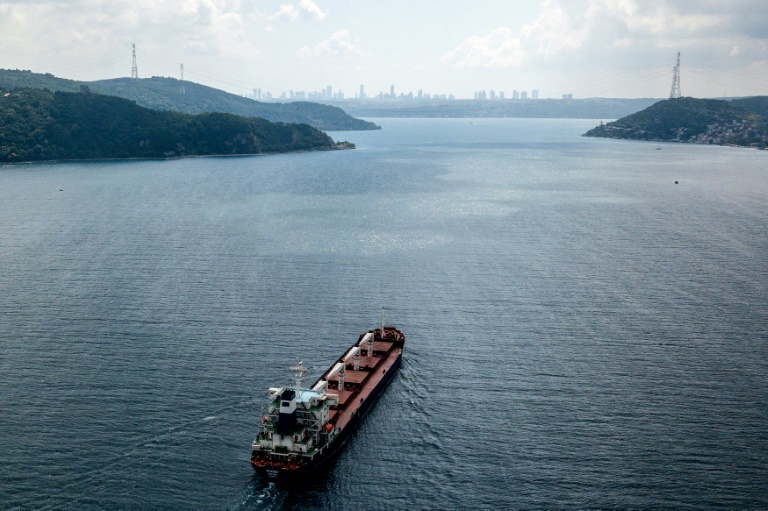
Russian President Vladimir Putin said Wednesday that “almost all” the Ukrainian grain shipped under a UN-backed deal to ease a global food crisis was reaching rich European nations, an accusation denied by Kyiv.

Data compiled by a joint centre in Istanbul monitoring the July agreement showed slightly more than a third of the grain delivered to European countries and another 20 percent arriving in Turkey.

It also showed 30 percent reaching “low and lower-middle income countries” across the world.

More shipments are expected to start arriving in famine-stricken parts of Africa and the Middle East under the UN World Food Programme (WFP) whose implementation is just getting underway.

But Moscow has voiced growing frustration with how the agreement was being applied.

An amendment to the deal also allowed Russia to get open access to fertiliser shipments and have some economic sanctions lifted to allow it to export its own grain.

The United Nations hailed the deal as the world’s best chance to ease an acute global food crisis stoked by the Black Sea grain blockade.

But Putin said its current implementation was helping richer European countries at the expense of the developing world.

“Almost all the grain exported from Ukraine is sent not to the poorest developing countries, but to EU countries,” he told an economic forum in Russia’s Pacific port of Vladivostok. 

Ukraine’s Foreign Minister Dmytro Kuleba denied Putin’s claim, saying “in total, two-thirds of the ships sent are directed to Asia, Africa, and the Middle East”.

He said recovery of Ukrainian food exports through the “grain corridor” had a positive effect on the reduction of prices as in August, after first shipments completed, wheat prices fell by at least five percent.

Ukraine and Russia are two of the world’s biggest exporters of wheat and other grain.

– ‘Colonialists’ –

Putin accused European countries of acting as “colonialists” and said they “once again simply deceived developing countries”.

“With this approach, the scale of food problems in the world will only grow,” Putin said.

“Maybe we should think about limiting the export of grain and other produce along this route?” Putin asked.

The July agreement brokered with the help of Turkey is valid for 120 days and may be automatically renewed without further negotiations.

But it requires both Moscow and Kyiv to sign off on an extension.

Data compiled as of Wednesday and released to AFP showed Turkey receiving the largest share of the grain — 20 percent — followed by Spain (15 percent) and Egypt (10 percent).

But much of the grain that reaches Turkey and some other destinations is then re-sold under commercial agreements not monitored by the Istanbul centre.

A separate famine relief effort spearheaded by WFP is focused on delivering wheat and maize to Africa and other areas suffering shortages.

US officials dismissed Putin’s remarks as untrue and noted that some grain sent to Europe was then processed for poor nations.

“Maybe the deal is working better than expected and Ukrainians are benefiting more from this than he had hoped in terms of the revenues going to Ukraine,” the official said on condition of anonymity.

“I think he may have multiple motives here. He doesn’t want to help Ukrainians, he would love to get a better deal,” she said.

– Drought –

The first UN-chartered vessel docked in Djibouti on August 30 as part of a response to the drought gripping the Horn of Africa.

A second UN ship reached Turkey last week. The wheat is now being milled into flour and will then be loaded onto a new vessel and sent to Yemen at an undisclosed date.

“A third WFP-chartered vessel is today anchored at Istanbul planning to head to Ukraine and collect a further shipment of wheat,” the Istanbul centre said.

Putin said he hoped “the situation will improve somehow”.

“We will continue insisting that this whole affair with the export of grain and our food be directed primarily to developing markets,” he said. 

Western US heat wave to wane, but more fire danger ahead: forecast

A ferocious heat wave scorching the western United States could finally begin to wane in the coming days, forecasters said Wednesday, but they warned of dangerous fire conditions as howling winds sweep through the bone-dry region.

California and neighboring states have endured a week of triple digit temperatures that have already brought deadly wildfires and the daily threat of power blackouts as the electricity grid struggles to cope with soaring demand.

But a predicted cooling as a cold front barrels in from Canada looks set to bring its own dangers, the National Weather Service said.

“This cold front will also aid in producing gusty winds throughout the northern Great Basin and northern High Plains today. Combined with low relative humidity, conditions are likely to support the potential for new wildfires to start and existing fires to spread uncontrollably,” the NWS warned.

The Storm Prediction Center “has issued an Extremely Critical fire weather area over north-central Montana, where winds could gust up to 60 miles (95 kilometers) per hour.”

A number of wildfires are already burning all over the western United States, including two deadly blazes that erupted over the long Labor Day weekend.

The Mill Fire in northern California killed two people, and destroyed over 100 buildings as it tore through 4,000 acres (1,600 hectares) of Siskiyou County.

To the southeast of Los Angeles, the Fairview Fire was continuing to grow and remained out of control, fire officials said Wednesday.

Two people are known to have perished as they tried to flee the blaze, which exploded from a standing start during soaring temperatures on Monday. It has now consumed 7,000 acres.

Local fire chief Josh Janssen said efforts to dowse the inferno would expand after a difficult day that saw flames “outpace our efforts.”

The blaze continues to spread with “all sides of the fire still threatening several communities.”

More than 10,000 people have been told to evacuate, but the Riverside County Sheriff’s Department said not everyone had heeded the warnings — despite the deployment of dozens of deputies going door-to-door.

“You would think more people would take it seriously because it’s so fast-moving, and that’s why we try and do such a large evacuation area because the shift in winds, the weather is unpredictable, and fire moves fast,” department spokeswoman Brandi Swan told the Los Angeles Times.

– Weather whiplash –

More than two decades of drought has left the US West tinder dry and vulnerable to fast-moving fires that burn hotter and are more destructive.

Scientists say human-caused global warming is interfering with the natural weather cycle, amping up the hots and making the storms wetter and more unpredictable.

The kind of weather whiplash climatologists say is becoming more frequent could be on display later in the week, with forecasters predicting the heat wave in the southwest could give way to torrential rain.

While Wednesday and Thursday were expected to continue to be very hot, with the mercury topping 110 Fahrenheit (43 Celsius) in several places, a hurricane looming off the Pacific coast of Mexico looked set to bring up to six inches (15 centimeters) of rain to some parts of Arizona and California.

“This amount of rainfall is likely to produce scattered instances of flash flooding, particularly near recent burn scars,” the NWS said.

The soaring temperatures have put enormous pressure on California’s creaking power grid, with record demand for electricity to cool homes.

Rolling blackouts were narrowly avoided on Tuesday after the California Independent System Operator, which runs the grid, issued an emergency call to cell phone users for households to turn up their air conditioner thermostats and switch off unnecessary lights.

California ISO called again Wednesday for economising.

“The emergency alert has been declared to help the grid secure more supplies and urge market participants to lower demand on the system. The state and much of the West is enduring an historically long and record-breaking heat wave, straining the grid from high electricity use,” the body said.

California has abundant solar installations, including on homes, which typically provide for around a third of the state’s power requirements during daylight.

But when the sun goes down, that supply falls quickly, leaving traditional generation to plug the gap. The problem is particularly acute in the early evening when temperatures are still high, but solar starts dropping out of the power mix.

Close Bitnami banner
Bitnami