World

Oil tumbles on recession worries as US stocks rebound

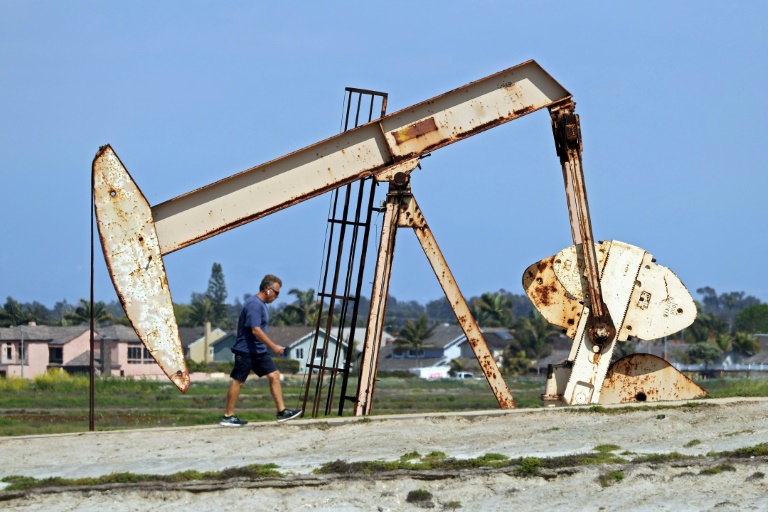
US oil prices finished Wednesday at their lowest level since January on growing recession fears, while US stocks rebounded after a weak stretch left the market “oversold,” as analysts put it.

Oil prices briefly climbed early on Wednesday as Russia’s President Vladimir Putin said his country would stop delivering oil and gas supplies to countries that introduce price caps.

But then oil prices then turned sharply lower, with Brent crude, the main international contract, passing under $90 per barrel for the first time since February.

US benchmark West Texas Intermediate slid 5.7 percent to end at $81.94, its lowest closing price since January.

“The oil market is a blood bath as the crude demand outlook took a major hit after Chinese and US trade data showed global demand is sharply weakening,” said Oanda’s Edward Moya. 

“It appears the risk of losing Russian energy supplies is no longer keeping oil prices supported and that has energy traders solely fixated on the demand side drivers.” 

Recession concerns also dampened sentiment towards equities, but Briefing.com analyst Patrick O’Hare said those worries were competing for investors’ attention with “the idea that the stock market is oversold on a short-term basis and due for a bounce”.

US stocks finished firmly higher, with the S&P 500 winning 1.8 percent.

On Wednesday, Federal Reserve Vice Chair Lael Brainard warned that the US central bank will stay the course on its aggressive fight against high inflation “for as long as it takes” to bring prices down.

She said interest rates need to rise further, again knocking down hopes of a rate cut next year as the economy slows.

The aggressive Fed posture has bolstered the dollar, which rose further against the Japanese yen even as it retreated against the euro.

“The reason that we are seeing this much strength in the dollar against the yen is purely because of the difference in two central banks’ policies,” noted Naeem Aslam, chief market analyst at AvaTrade. 

“The Fed is as hawkish as it can be, and the BoJ still doesn’t seem to be bothered much about inflation or changing its stance on monetary policy.”

Japan’s finance minister, Shunichi Suzuki, on Wednesday expressed concern about the yen’s drop.

“For now, we’re monitoring with a sense of urgency how it’s developing, but if this continues, it makes sense that we will take necessary measures,” he said, without detailing what the measures might be.

– Key figures at around 2110 GMT –

Brent North Sea crude: DOWN 5.2 percent at $88.00 per barrel

West Texas Intermediate: DOWN 5.7 percent at $81.94 per barrel

New York – Dow: UP 1.4 percent at 31,581.28 (close)

New York – S&P 500: UP 1.8 percent at 3,979.87 (close)

New York – Nasdaq: UP 2.1 percent at 11,791.90 (close)

London – FTSE 100: DOWN 0.9 percent at 7,237.83 (close)

Frankfurt – DAX: UP 0.4 percent at 12,915.97 (close)

Paris – CAC 40: FLAT at 6,105.92 (close)

EURO STOXX 50: UP 0.1 percent at 3,502.09 (close)

Tokyo – Nikkei 225: DOWN 0.7 percent at 27,430.30 (close)

Hong Kong – Hang Seng Index: DOWN 0.8 percent at 19,044.30 (close)

Shanghai – Composite: UP 0.1 percent at 3,246.29 (close)

Dollar/yen: UP at 143.79 yen from 142.80 yen on Tuesday

Euro/dollar: UP at $1.0012 from $0.9904 

Pound/dollar: UP at $1.1535 from $1.1520

Euro/pound: UP at 86.74 pence from 85.97 pence

burs-jmb/st

Apple unveils new gadgets despite supply chain woes

Apple launched new smartphones Wednesday at prices similar to recent models despite inflation and supply chain woes, while unveiling a premium digital watch with a price tag to match.

While a 90-minute presentation at the company’s California headquarters did not include any surprise reveals, the tech giant did unveil new digital identification system to obviate the need for a physical sim card.

The company’s newest smartphone, the iPhone 14, costs $799 for the base model — the same price as the current version, while a premium iPhone 14 Pro Max will go for $1,100.

The set of updated products, which also includes new earbuds, is designed to keep customers loyal to its lucrative technology ecosystem.

“Apple continued its strong growth in the first half of 2022, driven by robust demand for the iPhone 13 — which was the best-selling smartphone worldwide,” said Le Xuan Chiew, an analyst at Canalys.

The ability to keep the iPhone prices flat reflected the benefits of diversifying the supply chain to India after China’s zero-tolerance Covid policies crimped production there, the analyst said.

Wedbush analyst Dan Ives said the launch event underscored Apple’s logistics strength.

“Taking a step back, launching 3 new core hardware products within the Apple ecosystem despite the biggest supply chain crisis seen in modern history is a major feat for Cook & Co. especially with the zero Covid shutdowns in China seen in April/May,” Ives said.

Features of the new iPhone 14 include a more durable battery and new photographic capacities to capture “ultra wide” scenes and low-light settings.

The phones also contain an “emergency SOS” function to enable messaging to emergency services when outside of Wifi coverage.

The iPhone 14 Plus comes in a giant 6.7-inch (17-centimeter) screen that offers a better experience when playing games or watching videos.

Company officials touted new digital watch products with enhanced features. The Apple Watch Series 8 — which can monitor body temperature and other body functions — prices at $400.

The company also unveiled the Apple Watch Ultra, priced at $800, which includes a battery with enough lifespan for hardcore athletes “to complete a long-course triathlon,” according to an Apple press release.

Neil Saunders, analyst at GlobalData Retail, described the new offerings as having “incremental improvements rather than groundbreaking new innovations,” adding that the company “has done enough to drive demand by persuading consumers to upgrade and indulge in its new products.”

Western US heat wave to wane, but more fire danger ahead: forecast

A ferocious heat wave scorching the western United States could finally begin to wane in the coming days, forecasters said Wednesday, but they warned of dangerous fire conditions as howling winds sweep through the bone-dry region.

California and neighboring states have endured a week of triple digit temperatures that have already brought deadly wildfires and the daily threat of power blackouts as the electricity grid struggles to cope with soaring demand.

But a predicted cooling as a cold front barrels in from Canada looks set to bring its own dangers, the National Weather Service said.

“This cold front will also aid in producing gusty winds throughout the northern Great Basin and northern High Plains today. Combined with low relative humidity, conditions are likely to support the potential for new wildfires to start and existing fires to spread uncontrollably,” the NWS warned.

The Storm Prediction Center “has issued an Extremely Critical fire weather area over north-central Montana, where winds could gust up to 60 miles (95 kilometers) per hour.”

A number of wildfires are already burning all over the western United States, including two deadly blazes that erupted over the long Labor Day weekend.

The Mill Fire in northern California killed two people, and destroyed over 100 buildings as it tore through 4,000 acres (1,600 hectares) of Siskiyou County.

To the southeast of Los Angeles, the Fairview Fire was continuing to grow, and remained out of control, fire officials said Wednesday.

Two people are known to have perished in the blaze, which exploded from a standing start during soaring temperatures on Monday, and has now consumed 5,000 acres.

More than 10,000 people have been told to evacuate, but the Riverside County Sheriff’s Department said not everyone had heeded the warnings — despite the deployment of dozens of deputies going door-to-door.

“You would think more people would take it seriously because it’s so fast-moving, and that’s why we try and do such a large evacuation area because the shift in winds, the weather is unpredictable, and fire moves fast,” department spokeswoman Brandi Swan told the Los Angeles Times.

– Weather whiplash –

More than two decades of drought has left the US West tinder dry and vulnerable to fast-moving fires that burn hotter and are more destructive.

Scientists say human-caused global warming is interfering with the natural weather cycle, amping up the hots and making the storms wetter and more unpredictable.

The kind of weather whiplash climatologists say is becoming more frequent could be on display later in the week, with forecasters predicting the heat wave in the southwest could give way to torrential rain.

While Wednesday and Thursday were expected to continue to be very hot, with the mercury topping 110 Fahrenheit (43 Celsius) in several places, a hurricane looming off the Pacific coast of Mexico looked set to bring up to six inches (15 centimeters) of rain to some parts of Arizona and California.

“This amount of rainfall is likely to produce scattered instances of flash flooding, particularly near recent burn scars,” the NWS said.

The soaring temperatures have put enormous pressure on California’s creaking power grid, with record demand for electricity to cool homes.

Rolling blackouts were narrowly avoided on Tuesday after the California Independent System Operator, which runs the grid, issued an emergency call for households to turn up their air conditioner thermostats and switch off unnecessary lights.

“Consumer conservation played a big part in protecting electric grid reliability,” the body tweeted. “Thank you, California!”

California has abundant solar installations, including on homes, which typically provide for around a third of the state’s power requirements during daylight.

But when the sun goes down, that supply falls quickly, leaving traditional generation to plug the gap. The problem is particularly acute in the early evening when temperatures are still high, but solar starts dropping out of the power mix.

Mexico's Baja California braces for Hurricane Kay

Hurricane Kay gathered strength in the Pacific Ocean on Wednesday and was on course to bring strong winds and heavy rain to Mexico’s Baja California Peninsula, forecasters said.

The storm has become a Category Two hurricane — the second lowest on a scale of five, according to the US National Hurricane Center (NHC).

At 1800 GMT, Kay packed maximum sustained winds of around 105 miles (170 kilometers) per hour and was located about 210 miles southwest of Baja California’s southern tip, the NHC said.

Hurricane or tropical storm warnings were in effect for much of the peninsula’s coastline, and there was a risk of flash flooding, landslides and destructive waves, it said.

Authorities opened storm shelters in the state of Baja California Sur, home to several beach resorts including Cabo San Lucas.

The center of Kay was expected to pass to the west of southern Baja California on Wednesday before moving north close to the peninsula’s western coast,  the NHC said.

Heavy rain and large swells could also affect the US state of California in the coming days, it warned.

Mexico is regularly lashed by tropical storms on both its Pacific and Atlantic coasts, generally between the months of May and November.

This year was the first since 1997 that no tropical cyclones formed in the North Atlantic, Caribbean Sea or the Gulf of Mexico in August, according to the NHC.

Queen calls off meeting after 'full day' appointing UK's new PM

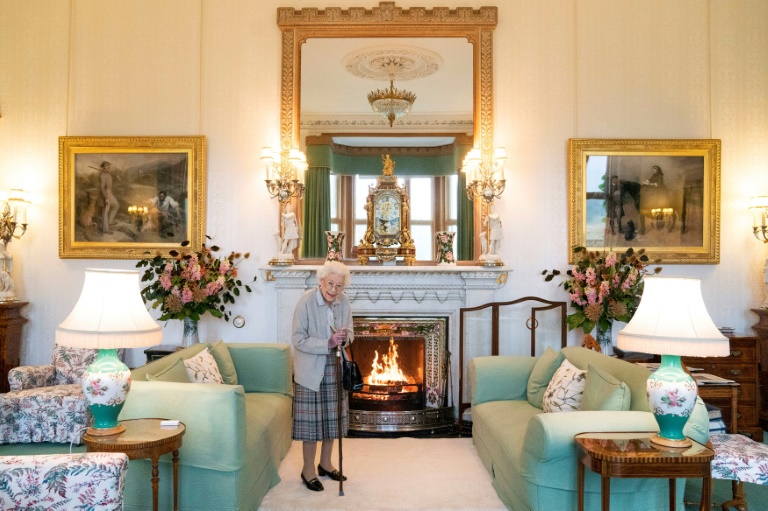
Queen Elizabeth II has postponed a meeting of her Privy Council advisory group after doctors advised her to rest, Buckingham Palace said Wednesday, the day after she appointed Liz Truss as Britain’s new prime minister.

“After a full day yesterday, Her Majesty has this afternoon accepted doctors’ advice to rest,” the palace said in a statement.

“This means that the Privy Council meeting that had been due to take place this evening will be rearranged.”

The 96-year-old monarch, who is currently on her traditional summer retreat at Balmoral in the Scottish Highlands, has been dogged by problems walking and standing since last year, forcing her to cancel a series of public engagements.

Fears about a flare-up of what royal officials call “episodic mobility problems” prevented her returning to London to accept outgoing leader Boris Johnson’s resignation and to appoint Truss on Tuesday.

The elderly sovereign, looking frail and holding a walking stick for support, was seen in an official photograph of the symbolic ceremony shaking hands with Truss as she invited her to lead a new government.

The constitutional role — the so-called “kissing of the hands” ceremony — usually takes place at Buckingham Palace in London.

It was the first time it had been held outside London since 1952, when Winston Churchill met the new queen at Heathrow Airport after the death of her father, George VI.

The last time the handover of power took place at Balmoral was in 1885 when Victoria was on the throne. 

The current queen also carried out another duty after Tuesday’s prime ministerial handover, Britain’s Press Association reported.

Wednesday evening’s scheduled Privy Council meeting, to be held virtually, would have seen Truss take an oath and new cabinet ministers sworn into their roles, and also admitted new ministers to be privy counsellors if they were not already.

Meetings of the council, a royal advisory body dating back hundreds of years and comprising hundreds of members, including religious and political leaders, usually happen monthly. 

Last week, Britain’s longest-serving monarch skipped the Highland Games event, a traditional highlight of her summer in Scotland.

The latest cancellations will revive concerns about her health.

She has cut back on public engagements since last October after an unscheduled overnight stay in hospital for an undisclosed condition.

She was also hit by a bout of Covid earlier this year, that she said left her “exhausted”.

During her Platinum Jubilee celebrations this summer, the monarch travelled to Buckingham Palace just twice and made only fleeting appearances during the four days of events.

Putin says Ukraine grain deal mostly helping rich EU

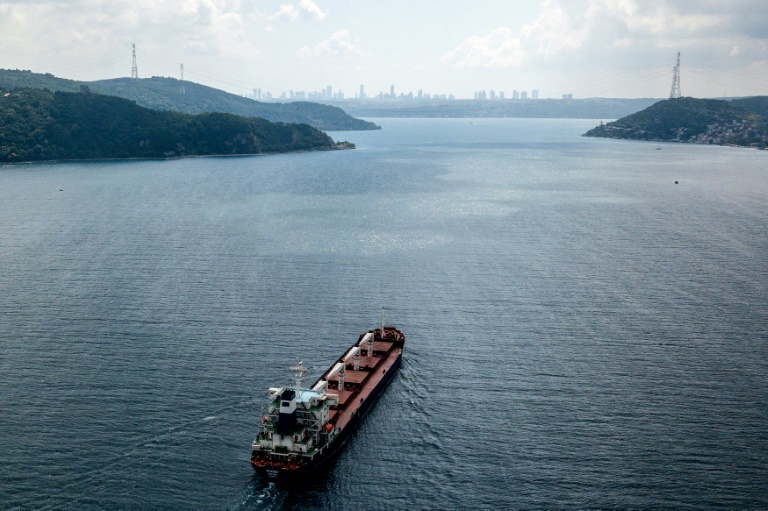
Russian President Vladimir Putin said Wednesday that “almost all” the Ukrainian grain shipped under a UN-backed deal to ease a global food crisis was reaching rich European nations and accused the West of deceiving developing countries.

Data compiled by a joint centre in Istanbul monitoring the July agreement showed slightly more than a third of the grain delivered to European countries and another 20 percent arriving in Turkey.

It also showed 30 percent reaching “low and lower-middle income countries” across the world.

More shipments are expected to start arriving in famine-stricken parts of Africa and the Middle East under the UN World Food Programme whose implementation is just getting underway.

But Moscow has voiced growing frustration with how the agreement was being applied.

An amendment to the deal also allowed Russia to get open access to fertiliser shipments and have some economic sanctions lifted to allow it to export its own grain.

The UN hailed the deal as the world’s best chance to ease an acute global food crisis stoked by the Black Sea grain blockade.

But Putin said its current implementation was helping richer European countries at the expense of the developing world.

“Almost all the grain exported from Ukraine is sent not to the poorest developing countries, but to EU countries,” he told an economic forum in Russia’s Pacific port of Vladivostok. 

Both Ukraine and Russia are two of the biggest exporters of wheat and other grain.

– ‘Colonialists’ –

Putin accused European countries of acting as “colonialists” and said they “once again simply deceived developing countries”.

“With this approach, the scale of food problems in the world will only grow,” Putin said. 

“Maybe we should think about limiting the export of grain and other produce along this route?” Putin asked.

The July agreement brokered with the help of Turkey is valid for 120 days and may be automatically renewed without further negotiations.

But it requires both Moscow and Kyiv to sign off on an extension.

Data compiled as of Wednesday and released to AFP showed Turkey receiving the largest share of the grain — 20 percent — followed by Spain (15 percent) and Egypt (10 percent).

But much of the grain that reaches Turkey and some other destinations is then re-sold under commercial agreements not monitored by the Istanbul centre.

A separate famine relief effort spearheaded by the UN’s World Food Programme (WFP) is focused on delivering wheat and maize to Africa and other parts of the world suffering shortages.

US officials dismissed Putin’s remarks as untrue and noted that some grain sent to Europe was then processed for poor nations.

“Maybe the deal is working better than expected and Ukrainians are benefiting more from this than he had hoped in terms of the revenues going to Ukraine,” the official said on condition of anonymity.

“I think he may have multiple motives here. He doesn’t want to help Ukrainains, he would love to get a better deal,” she said.

The first UN-chartered vessel docked in Djibouti on August 30 as part of a response to the drought gripping the Horn of Africa.

A second UN ship reached Turkey last week. The wheat is now being milled into flour and will then be loaded onto a new vessel and sent to Yemen at an undisclosed date.

“A third WFP-chartered vessel is today anchored at Istanbul planning to head to Ukraine and collect a further shipment of wheat,” the Istanbul centre said.

Putin said he hoped “the situation will improve somehow”.

“We will continue insisting that this whole affair with the export of grain and our food be directed primarily to developing markets,” he said. 

Israel PM opposes prosecuting soldier who likely shot Jazeera reporter

Israel Prime Minister Yair Lapid on Wednesday pushed back against suggestions of prosecuting a soldier who likely shot dead Palestinian-American journalist Shireen Abu Akleh during an army operation this year.

The veteran Al Jazeera reporter was wearing a bulletproof vest marked “Press” and a helmet when she was shot in the head during the army operation in Jenin refugee camp, in the Israeli-occupied West Bank.

The Israeli army conceded Monday for the first time that one of its soldiers had likely shot Abu Akleh, after having mistaken her for a militant.

“There is a high possibility that Ms Abu Akleh was accidentally hit by IDF (army) gunfire that was fired toward suspects identified as armed Palestinian gunmen,” said the army’s final report into her May 11 death.

The acknowledgement comes after months in which the army had insisted it was impossible to determine the source of the deadly shot that killed the celebrated Al Jazeera journalist, saying it could have been militant fire.

“I will not allow an IDF (army) soldier that was protecting himself from terrorist fire to be prosecuted just to receive applause from abroad,” Lapid told a military ceremony.

“No one will dictate our rules of engagement to us,” he said.

“Our soldiers have the full backing of the government of Israel and the people of Israel.”

US State Department spokesman Vedant Patel had told a press briefing Tuesday: “We’re going to continue to press our Israeli partners to closely review its policies and practices on rules of engagement and consider additional steps to mitigate the risk of civilian harm”.

A United Nations investigation concluded in June that there was “no evidence of activity by armed Palestinians close by” when Abu Akleh was shot.

Israel’s military advocate said Monday that the circumstances of the incident “do not raise the suspicion of a crime having been committed which would justify the opening of a criminal investigation”.

The Abu Akleh family said that Israel had “refused to take responsibility for the murder” of the journalist.

Al Jazeera has denounced the findings of the Israeli investigation and demanded a probe by an “independent international body”.

US State Department spokesman Ned Price on Monday had underscored “the importance of accountability in this case… to prevent similar incidents from occurring in the future.”

French court upholds Assad uncle's conviction over ill-gotten assets

France’s top judicial  court on Wednesday confirmed the conviction of Rifaat al-Assad, uncle of Syrian President Bashar al-Assad, in an “ill-gotten gains” case over wealth estimated at 90 million euros ($89 million).

Rifaat al-Assad, 85, is the younger brother of Bashar’s father and former Syrian dictator Hafez al-Assad, and himself held the office of vice president but fled the country in 1984 after a failed coup.

He had made a final appeal to France’s Court of Cassation after a lower court last year confirmed his four-year jail sentence for conspiracy to launder Syrian public funds between 1996 and 2016.

In the same judgement, he was convicted of concealing serious tax fraud and employing servants off the books, with authorities confiscating a slew of his properties.

Rifaat, who has not attended hearings due to ill health, insists his property empire stretching across Spain, France and Britain stems from gifts from Saudi crown prince and later king Abdullah, who died in 2015.

The case is the second in France under a law passed last year targeting fortunes fraudulently amassed by foreign leaders.

Teodorin Obiang, the eldest son of the president of Equatorial Guinea, last year had his conviction to a three-year suspended sentence and 30 million euros in fines confirmed at appeal.

– War crimes case –

In Syria, Rifaat al-Assad was the head of the elite Defence Brigades, internal security forces that violently quashed a 1982 Islamist uprising in the city of Hama.

Having stayed away for three decades following his failed attempt to seize power, pro-government media reported that he returned to Syria last autumn.

In 1984, he fled first to Switzerland then France, where he received the Legion of Honour — the country’s top award — in 1986 for “services rendered”.

French investigators opened a probe into his property holdings in 2014 after complaints from watchdogs Transparency International and Sherpa.

They seized two Paris townhouses, dozens of apartments in chic neighbourhoods of the French capital and office spaces.

Since then, around 80 of his former employees living at an estate outside Paris have been mostly without water and electricity as no one was paying the bills.

– Aid to populations –

While Rifaat’s age and poor health mean he is unlikely ever to serve jail time in France, Wednesday’s ruling confirms the confiscation of the properties for good.

That could set up Syria as one of the first countries to potentially benefit from a scheme to return funds recovered under the ill-gotten gains law.

“The confiscation… is the first necessary condition to be able to plan for restitution of the ill-gotten gains,” Transparency International France chief Patrick Lefas said in a statement welcoming the court ruling.

But he added that it would be vital to get the resources to ordinary Syrians rather than simply returning them to the Assad regime — which Transparency says could be achieved using another French law passed last year.

“Restoring ill-gotten gains requires guarantees, without which it would be naive to hope to give them back to the populations of their countries of origin,” Lefas said.

Rifaat al-Assad also faces a court case in Spain over far larger suspicions of ill-gotten gains covering 500 properties, as well as a prosecution in Switzerland for war crimes dating back to the 1980s.

France to send latest nuclear shipment to Japan

The departure of a shipment of reprocessed nuclear fuel from France to Japan has been delayed due to the breakdown of loading equipment, a French nuclear technology company announced Wednesday.

The setback came as environmental campaigners denounced the practice of transporting such highly radioactive materials.

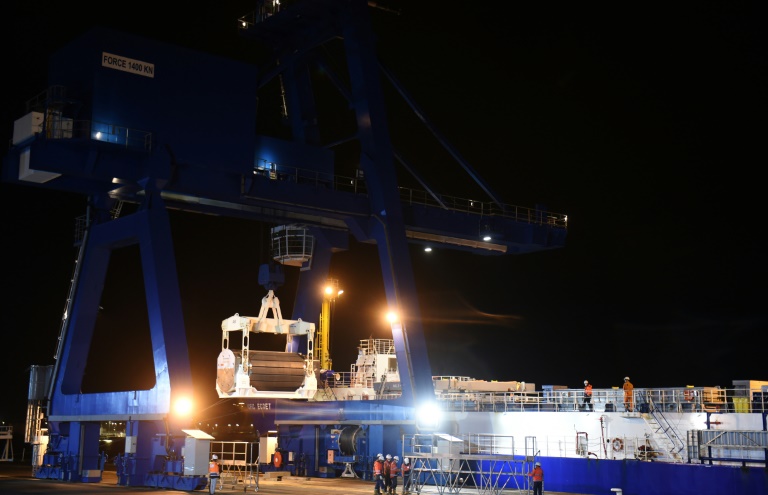
The shipment arrived on two separate lorries under heavy security in the small hours of Wednesday morning at the French port city of Cherbourg. It was bound for Japan for use in a power plant.

But French nuclear technology group Orano, which is handling the transport, said Wednesday that the breakdown of one of its lifting gantries had prevented the loading of one of the two packages.

It would therefore be returned to the Orano site 20 kilometres (13 miles) from the port. 

The company was doing what it could to organise a fresh sea transport as soon as possible, Orano added.

The previous transport of Mox fuel to Japan, in September 2021, drew protests from environmental group Greenpeace. 

Yannick Rousselet of Greenpeace France had already denounced the latest planned shipment.

“Transporting such dangerous materials from a nuclear proliferation point of view is completely irresponsible,” he said.

He described the latest development, in which part of the shipment had had to be returned to the Orano facility as unprecedented.

“A boat loaded with Mox is going to circle in the water while they make a round trip (of 40 kilometres) with a container of Mox,” he said.

– Highly radioactive –

Japan lacks facilities to process waste from its own nuclear reactors and sends most of it overseas, particularly to France.

The load of highly radioactive Mox, a mixture of reprocessed plutonium and uranium, was transported overnight from a plant in the Hague in secure containers on two trucks, Orano said.

The convoy arrived around 3:45 am (0145 GMT) at the port surrounded by law enforcement vehicles, according to an AFP photographer. 

Shortly after 6:00 am, the first fuel package was loaded aboard a specially designed ship from British company PNTL, which has extensive experience with this type of transport, Orano said.

That ship has taken up a holding position out at sea, said the company. Armed British police were still on board the vessel, it added.

It will take a little more than two months for the ship to reach Japan, said Orano — the eighth such shipment from France since 1999. 

Mox is composed of 92 percent uranium oxide and eight percent plutonium oxide, according to Orano. 

The plutonium “is not the same as that used by the military,” it said.

Biden to evoke JFK's moon speech in cancer fight

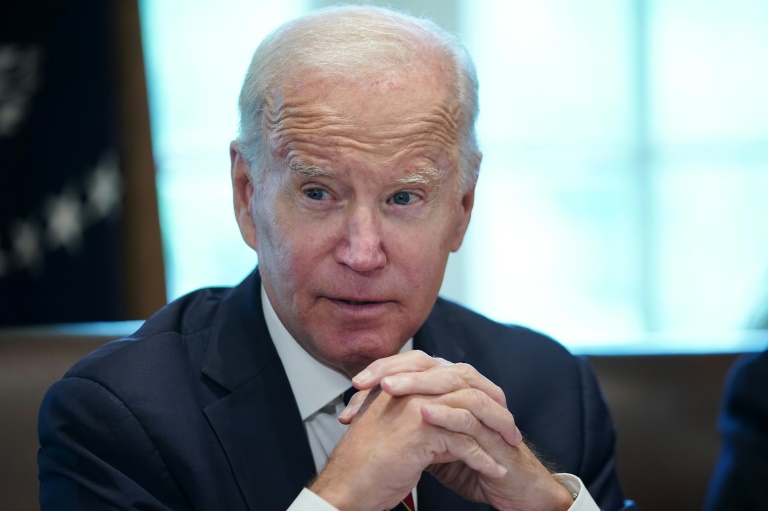
President Joe Biden will evoke John F. Kennedy’s famous 1962 speech on putting an American on the moon next week when he outlines his government’s goal of halving cancer deaths, the White House said Wednesday.

Biden will mark the 60th anniversary of JFK’s “Moonshot” speech with an event at the John F. Kennedy Library and Museum in Boston “to deliver remarks on the Cancer Moonshot and the goal of ending cancer as we know it,” the White House said.

While Kennedy used his speech to announce the program that ultimately put a human on the Moon for the first time in 1969, Biden will discuss what he calls the Cancer Moonshot initiative, which seeks to cut cancer death rates by half in the next 25 years.

Caroline Kennedy, the US ambassador to Australia and daughter of the assassinated JFK, told CNN she approved of the parallels drawn by Biden in the struggle to conquer space and the deadly disease.

“Sixty years after my father challenged Americans to land on the moon, President Biden is welcoming great challenges as new opportunities by setting us on a bold course to end cancer as we know it,” she said.

Biden’s son Beau died of brain cancer in 2015 when Biden was vice president to Barack Obama.

The following year, Obama asked Biden to lead the Cancer Moonshot plan. In February of this year, Biden relaunched the program, which seeks to provide government funding and support for everything from medical research to improving access to healthcare and better environmental conditions.

Biden’s focus on the cancer fight comes as NASA is once again looking to return to the Moon.

Two attempts to launch the agency’s huge Artemis 1 rocket from the Kennedy Space Center in Florida were shelved last week due to problems with a fuel leak. The next possible launch window is between September 19 and October 4.

The rocket is to carry an empty capsule in a test flight before an eventual crewed mission back to the lunar surface.

Close Bitnami banner
Bitnami