World

Kim Kardashian launches private equity firm

Reality TV star-turned-entrepreneur Kim Kardashian announced Wednesday she is branching into a new business arena with the launch of a private equity firm co-founded with a former partner at industry giant Carlyle.

“I’m pleased to announce the launch of @SKKYPartners with private equity veteran Jay Sammons as co-founder and co-managing partner,” Kardashian wrote on Twitter.

Kardashian said her mother, Kris Jenner, would also serve as partner.  

According to the new firm’s Instagram account, SKKY Partners will focus on investments in consumer and media companies in sectors including “consumer products, digital and e-commerce, consumer media, hospitality and luxury.” 

It is the latest of a series of business ventures for megastar Kardashian, who came to fame with the US reality show “Keeping Up With the Kardashians,” which tracked the lives of her family members in Los Angeles.

The 41-year-old has steadily built her business empire in recent years — most visibly with her apparel and beauty brands — and has a net worth of $1.8 billion, according to Forbes. 

Jay Sammons, who in the summer left his long-time role as head of consumer, media and retail at Carlyle — one of the top private equity companies in the world — told The Wall Street Journal he approached Kardashian and her mother about launching the firm this year.

Kardashian told the Journal she liked the idea of working closely with entrepreneurs to help them grow their vision.

“The exciting part is to sit down with these founders and figure out what their dream is,” Kardashian told the paper, adding the firm plans to make its first investment before the end of 2022.  

“I want to support what that is, not change who they are in their DNA, but just support and get them to a different level.”

SKKY did not immediately respond to AFP’s request for comment. 

British cinema chain Cineworld files for US bankruptcy

Britain’s Cineworld, the world’s second biggest cinema chain, announced Wednesday that it has filed for bankruptcy protection in the United States as it seeks to restructure after facing low audience numbers.

The group, which operates hundreds of movie theatres in the United States, said in a statement that it filed for Chapter 11 at a bankruptcy court in Texas.

Chapter 11 of the US bankruptcy code is a court-supervised restructuring process that provides companies time to negotiate with its creditors to reach a settlement on the reduction of debts.

Cineworld said it “will seek to implement a de-leveraging transaction that will significantly reduce the Group’s debt, strengthen its balance sheet and provide the financial strength and flexibility to accelerate, and capitalise on, Cineworld’s strategy in the cinema industry.”

The statement said it hoped to emerge from bankruptcy proceedings in the first quarter of next year, and had $1.94 billion in financing from existing lenders to help it through that period.

The company also warned existing shareholders that their holdings would likely be considerably diluted as part of the bankruptcy process.

Cineworld’s shares had been sliding since the beginning of the year as the company’s position deteriorated when people didn’t return to cinemas in droves after Covid lockdowns were eased.

They plummeted last month when the company acknowledged it was considering filing for bankruptcy.

Cineworld shares rose 10 percent on Wednesday to 4.29 pence, but were still down 87 percent from the start of the year.

Analysts argue that Cineworld’s 2018 takeover of American peer Regal left it saddled with too much debt, putting it in a poor position to weather the pandemic.

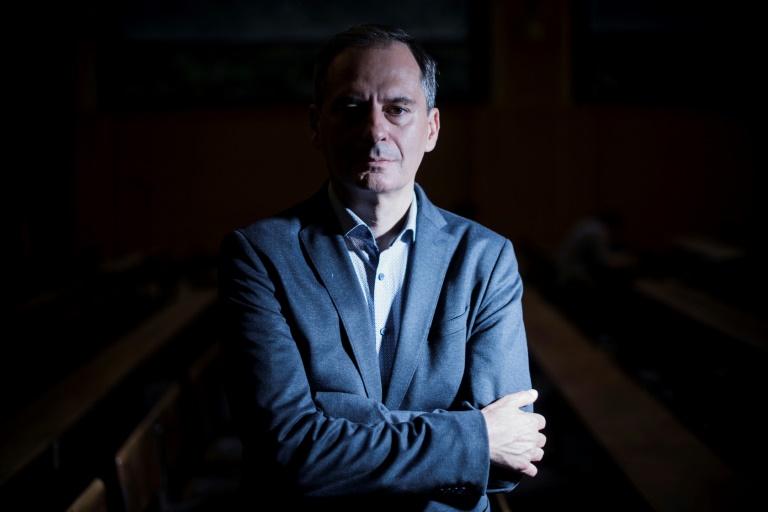
How Bellingcat became Russia's 'biggest nightmare'

Digital investigators from the Bellingcat group have spent eight years exposing the lies of the powerful and gathering evidence of their crimes – work that has a grave human cost, the organisation’s chief told AFP in an interview.

Bulgarian journalist Christo Grozev said he and his colleagues received regular threats but he was driven to continue by “adrenalin” and “the feeling you can do something that law enforcement does not do”.

The investigative group has been closely associated with uncovering misdeeds by Russian agents across Europe, including intelligence involvement in the poisoning of opposition figure Alexei Navalny.

“When you get stopped in the street by Russian citizens, telling you thank you for what you are doing once a day, I think that it is enough to continue,” he said.

During a meeting in Paris earlier this week, he described the organisation as the “Kremlin’s biggest nightmare” though he stressed to AFP that Russia was not the main focus of their work.

“Russia today produces a lot of government crime and that’s why a lot of our investigations are focused on Russia,” he said.

“But we equally try to pay attention to bad actors from wherever they come.”

He cites investigations into the Syrian war, EU border agency Frontex and others focused on Greece, Turkey, Hungary and the far right in the United States and Europe.

– ‘Undesirable’ in Russia –

Bellingcat was founded in July 2014 by a British blogger, Eliot Higgins, along with a band of internet “nerds”, said Grozev, who joined later and brought a wealth of journalism experience from his career in the Bulgarian media.

They used information freely available to the public –- anything from satellite images to telephone directories -– to piece together evidence of wrongdoing.

Their work on the downing of Air Malaysia flight MH17 over Ukraine in 2014 — which killed 298 people and sparked global outrage — won plaudits around the world and brought the group to the attention of the Kremlin.

The investigators pieced together photos, videos and public documents that supported the theory that the plane was shot down by a Russian missile from an area controlled by pro-Russian separatists.

Since then, the group has identified Russian agents responsible for poisoning opposition figure Alexei Navalny and other dissidents, exposed alleged war crimes in Ukraine and helped uncover many more scandals.

One of its main focuses right now is the war in Ukraine, where it has a two-track approach.

Grozev said one approach uses journalistic methods to debunk false information, the other is more judicial, gathering evidence of war crimes for eventual use in the courts.

The Netherlands-based platform, which takes its name from a fable in which mice join forces to hang a bell around a cat’s neck, has rarely been out of the Kremlin’s firing line.

Russia recently described it as a security threat and deemed it “undesirable”.

– Legal challenges –

One of the main lines of attack has been to accuse Bellingcat of being funded by Western governments or NGOs, particularly the US National Endowment for Democracy.

Grozev said in its early years the group took some money from American NGOs for training, but later decided to stop.

He said it had not taken any money from governments since last year and relied instead on smaller funders.

“Most of our funders are individuals who spend 100 euros to 5,000 euros,” he said.

Beyond the financial constraints, Grozev pointed to the difficult legal environment.

“International law is handicapped because it assumes that governments look out for their citizens,” said Grozev.

Even a tribunal like the International Criminal Court, which seeks to hold individuals to account rather than countries, has long been hobbled by disagreements over its remit and powers of investigation.

And national governments are hamstrung by the idea of national sovereignty, so if a poisoning happens on Russian territory, only Russia can investigate.

It is precisely in this legal blackhole that Bellingcat finds the greatest need.

“We investigate generally bad actors, governments who commit crimes, because we think nobody else is investigating them,” said Grozev.

“There are no tribunals, no law enforcement agencies that investigate governments.”

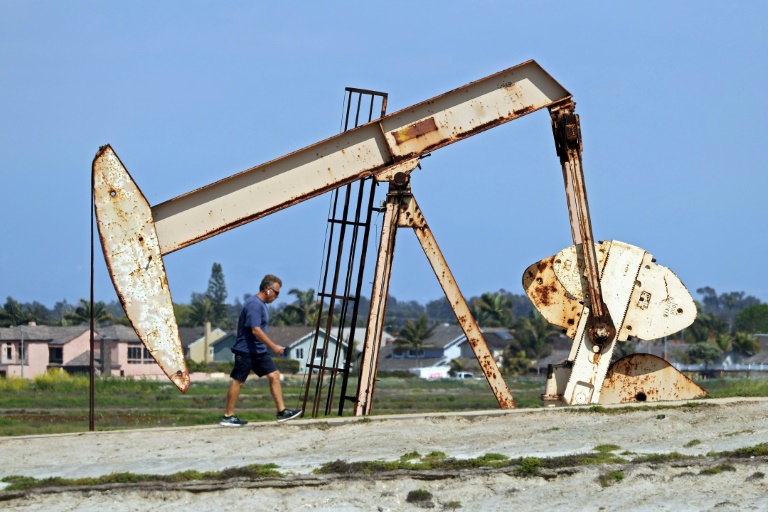
Oil tumbles to pre-war level on recession fears

Oil prices tumbled back to pre-war levels Wednesday as recession fears returned to the forefront.

Stocks were also hit by the negative outlook for the global economy but perked up as energy prices and bond yields fell, while currency markets were gripped by the prospect for interest rate hikes.

Oil prices briefly climbed early on Wednesday as Russia’s President Vladimir Putin said his country would stop delivering oil and gas supplies to countries that introduce price caps.

G7 industrialised powers have vowed to move urgently towards implementing a price cap on Russian oil imports to cut off a major source of funding for Moscow’s military action in Ukraine.

But then oil prices then turned sharply lower, with Brent crude, the main international contract, passing under $90 per barrel for the first time since February.

OPEC and its allies earlier this week cut production targets for the first time in more than a year in a bid to lift prices.

“While the 100,000 barrel cut wasn’t fundamentally significant, it was clearly intended as a warning not to drive the price lower or face further cuts,” said OANDA trading platform analyst Craig Erlam.

“Unfortunately, it seems traders are in no mood to be told what to do and growth fears are instead dictating the price direction.”

Recession concerns also dampened sentiment towards equities, but Briefing.com analyst Patrick O’Hare said those worries were competing for investors’ attention with “the idea that the stock market is oversold on a short-term basis and due for a bounce”.

Recession fears have been driven in large part by central banks moving aggressively to rein in surging inflation.

The dollar continues to gain strength from expectations of a third-straight blockbuster hike to US interest rates later this month.

US Federal Reserve officials have lined up in recent weeks to say their main focus is bringing inflation down from four-decade highs, even if that means tipping the economy into recession.

The different pace in lifting rates taken by central banks is fuelling swings in currency values.

The European Central Bank is Thursday forecast to deliver another bumper rate increase, mirroring aggressive moves by the Fed and Bank of England.

Nevertheless, it has moved slower and the euro remains lodged below parity with the dollar.

Meanwhile, the dollar rose to 144.99 yen — the Japanese currency’s weakest showing since 1998.

“The reason that we are seeing this much strength in the dollar against the yen is purely because of the difference in two central banks’ policies,” noted Naeem Aslam, chief market analyst at AvaTrade. 

“The Fed is as hawkish as it can be, and the BoJ still doesn’t seem to be bothered much about inflation or changing its stance on monetary policy.”

Japan’s finance minister, Shunichi Suzuki, on Wednesday expressed concern about the yen’s drop.

“For now, we’re monitoring with a sense of urgency how it’s developing, but if this continues, it makes sense that we will take necessary measures,” he said, without detailing what the measures might be.

The greenback also struck a 37-year peak against sterling after a Bank of England official said plans by new PM Liz Truss to cap energy bills would reduce inflation pressures, leading markets to believe the central bank may let up on rate hikes. 

– Key figures at around 1530 GMT –

Brent North Sea crude: DOWN 3.4 percent at $89.80 per barrel

West Texas Intermediate: DOWN 3.8 percent at $83.55 per barrel

Dollar/yen: UP at 144.44 yen from 142.80 yen on Tuesday

Euro/yen: UP at 143.66 yen from 141.43 yen

Euro/dollar: UP at $0.9946 from $0.9905 

Pound/dollar: DOWN at $1.1444 from $1.1519

Euro/pound: UP at 86.72 pence from 85.97 pence

New York – Dow: UP 0.8 percent at 31,385.35 points

EURO STOXX 50: UP less than 0.1 percent at 3,502.09

London – FTSE 100: DOWN 0.9 percent at 7,237.83 (close)

Frankfurt – DAX: UP 0.4 percent at 12,915.97 (close)

Paris – CAC 40: FLAT at 6,105.92 (close)

Tokyo – Nikkei 225: DOWN 0.7 percent at 27,430.30 (close)

Hong Kong – Hang Seng Index: DOWN 0.8 percent at 19,044.30 (close)

Shanghai – Composite: UP 0.1 percent at 3,246.29 (close)

burs-rl/jj

Search for Canada stabbing suspect widens as community mourns

Police on Wednesday widened their search for the second suspect in a deadly stabbing spree in western Canada, as a shattered Indigenous community ventured out of lockdown to mourn its dead.

The Sunday attack in the James Smith Cree Nation Indigenous community and the town of Weldon — the motive for which remains unknown — killed 10 people and wounded 18.

A manhunt for two brothers believed to be responsible for one of the worst incidents of mass violence in Canada has taken police from the remote Indigenous community across a vast Prairies region, to Saskatchewan province’s capital Regina 300 kilometers (185 miles) to the south, and back.

It turned up the body of one of the brothers, 31-year-old Damien Sanderson, on Monday in a grassy field in the Cree community. Authorities said he very likely had been killed by his fugitive sibling, Myles Sanderson, 32.

The community locked down late Tuesday after reports of a possible sighting of the older Sanderson, as police in heavily armed vehicles and a helicopter swooped in.

But it was soon lifted after police said a search came up empty.

“Further investigation has determined that Myles Sanderson is not located in the community of James Smith Cree Nation and the RCMP continues to search for him,” the Royal Canadian Mounted Police said in an alert. 

“As his whereabouts remain unknown, we urge the public to take appropriate precautions,” it added.

Regina police Chief Evan Bray said in a video address that a “reliable” tip led them to believe Myles Sanderson may have been hiding in that city.

But by Tuesday, new information contradicted that assessment.

“We’ve received (new) information that is leading us to believe he may no longer be in this community,” Bray said Tuesday evening.

“As a result, investigations continue and although we don’t know his whereabouts, we are still looking not only within the city of Regina, but expanded into the province as well.”

– Six men, four women killed –

Several vigils were scheduled Wednesday evening.

The Saskatchewan Coroner’s Service has released the names of the deceased victims — six men and four women aged 23 to 78 years old. 

All but one were members of the Cree community. The other was a widower who lived with his adult grandson in Weldon.

Those wounded in the attack were seventeen adults and one young teen, federal police said.

Several of the deceased victims had previously been identified by families and friends on social media, including a veteran, an addiction counselor, and a mother of two who worked as a security guard at a local casino.

“I lost a lot of family yesterday, bodies everywhere on rez, some deceased and many others with severe knife wounds and bleeding,” Michael Brett Burns posted on Facebook.

“It was a war zone. The look in their eyes couldn’t express the pain and suffering for those who were assaulted,” he said.

Dillon Burns said in another post that his mother Gloria died tragically “protecting a young man while he was being attacked,” adding that “she would’ve done the same for any of us… (even) for the man who has taken her life.”

She was found “lying in her driveway” with two others, her brother Ivor Burns told local broadcasters. “They were massacred.”

Police believe some of the victims were targeted and others were attacked randomly.

Ten people — some of whom had been airlifted on Sunday — remain hospitalized, including three in critical condition, according the Saskatchewan Health Authority. Seven others have been discharged.

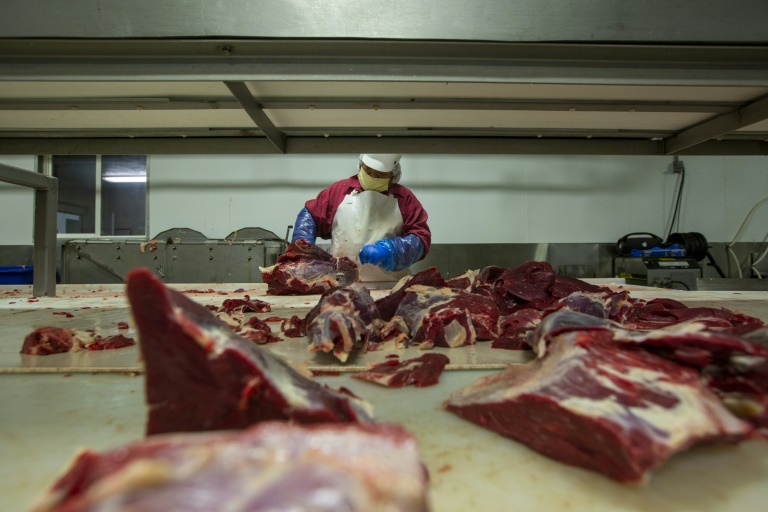
Dutch city to ban meat ads in world first claim

The Dutch city of Haarlem is set to become the first in the world to ban advertisements for most meat because of its impact on climate change, officials said Wednesday.

The city of 160,000 people near Amsterdam has agreed to outlaw ads for intensively farmed meat on public places like buses, shelters and screens from 2024.

The move was approved by the city council in November, but went unnoticed until last week when a councillor announced he had officially notified advertising agencies.

“It will be the first city in the Netherlands — and in fact Europe and indeed the world — to ban ‘bad’ meat ads in public places,” Ziggy Klazes, councillor for the GroenLinks (Green-Left) party who drafted the motion, told AFP.

She said it went against the city’s politics to “earn money by renting the city’s public space to products which accelerate global warming”.

The ban would target all “cheap meat from intensive farming”, Klazes said, adding, “as far as I’m concerned that includes ads from fast food chains.”

The city had not yet decided whether to outlaw ads for organic meat.

Amsterdam and The Hague have already banned ads for air travel, petrol-driven cars and fossil fuels but now Haarlem is set to add meat to that list.

The ban has been criticised by the Dutch meat industry and some political parties who see it as a form of censorship and stigmatisation of meat eaters.

“Banning ads for political reasons is nearly dictatorial,” Joey Rademaker, a Haarlem councillor for the right-wing BVNL party, said in a statement.

The Dutch meat industry body, the Centrale Organisatie voor de Vleessector, said Haarlem authorities were “going too far in telling people what’s best for them,” the Trouw newspaper said.

The sector recently launched its own campaign called “Netherlands Meatland” to promote meat-eating.

– ‘Going too far’ –

Haarlem’s ban comes at a sensitive time for the Netherlands, which has seen months of protests by farmers angry at government plans to cut nitrogen emissions to meet EU environmental targets.

The Dutch government wants to reduce the country’s herd of four million cows by nearly a third, and possibly shut some farms.

Angry farmers have blocked roads with manure and trash, set fires and held huge tractor rallies to protest — drawing support from right-wingers worldwide including former US President Donald Trump.

Meanwhile the legal status of the carnivorous crackdown is also uncertain.

A ban could be challenged as an attack on freedom of expression, administrative law professor Herman Broering of Groningen University told Trouw newspaper.

Haarlem council must still study the legal issues before the ban can come into force, added Ziggy Klazes.

“You can’t ban adverts for a business, but you can ban adverts for a group of products” for public health, she said.

“Take the example of cigarette ads.”

Agriculture contributes to deforestation, climate change and emissions of greenhouse gases, loss of biodiversity and ecosystems, and is a major user of fresh water.

The EU has suggested that people cut down on consumption of meat and dairy products.

Some 95 percent of Dutch people eat meat, including 20 percent every day, according to the Dutch central statistics office.

Other countries are banning advertising for certain types of food, including junk food, although for health reasons rather than climate.

Britain is banning television ads for foods that are high in fat, sugar and salt before 9:00 pm from 2023 to help cut child obesity.

Singapore has banned ads for the most unhealthy sugary drinks.

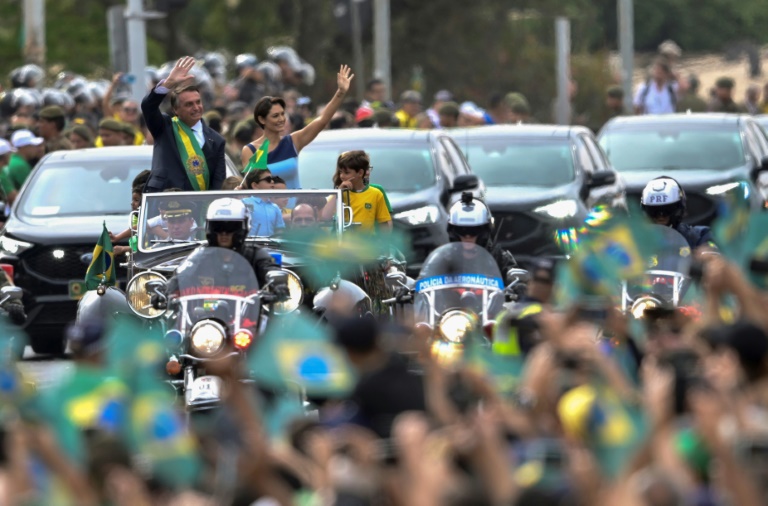
Bolsonaro leads controversial bicentennial celebration in Brazil

Brushing off accusations of abusing Brazil’s national day to bolster his reelection campaign, President Jair Bolsonaro presided over massive, politically charged festivities Wednesday, telling supporters that polls showing him trailing are “a lie.”

Brazil is deeply divided heading into October’s elections, with the far-right incumbent behind leftist ex-president Luiz Inacio Lula da Silva in opinion polls but looking determined to flex his muscle with an Independence Day show of strength, including military parades in Brasilia and Rio de Janeiro and rallies by his supporters across the country.

After taking in a giant procession of soldiers, tanks and tractors down the Esplanade of Ministries in Brasilia, Bolsonaro gave a fiery speech to a sea of green-and-yellow clad supporters massed in the capital.

The ex-army captain denounced polls from leading public opinion institute Datafolha — whose latest shows him trailing Lula 45 percent to 32 percent — as “a lie,” and called the election campaign “a battle of good against evil.”

“They won’t return to the scene of the crime,” he said, referring to the controversial corruption charges that have dogged Lula, the charismatic ex-metal worker who led Brazil from 2003 to 2010. “The people are on our side — the side of good.”

Bolsonaro was later due to attend another military parade in Rio, where backers had already flooded the avenue along iconic Copacabana beach as throngs prepared massive motorcycle and jet-ski processions — two of the president’s favorite hobbies.

Bolsonaro’s open hostility toward the Supreme Court and electoral authorities was a recurring theme.

“Brazil is facing huge tension because they’re trying to install communism, with help from the courts,” said one Bolsonaro supporter in Rio, 53-year-old businessman Claudio Berrios, draped in the Brazilian flag and sporting a military-style camouflage shirt.

“Bolsonaro, activate the military to depose the Supreme Court,” said one banner, carried by 64-year-old supporter Suely Ferreira.

“Our country is being ruined by the (high) court’s dictatorship,” she told AFP. “We love our president. Everyone I know supports him. He’s going to win. There’s no way he could lose.”

– ‘Tense, potentially violent’ –

Last year on Brazil’s national day, Bolsonaro caused controversy with a fiery speech saying “only God” could remove him from office and vowing to stop heeding rulings by Supreme Court Justice and top electoral official Alexandre de Moraes, whom the president considers an enemy.

That September 7, Bolsonaro supporters broke through a security cordon in Brasilia on the eve of the festivities and threatened to invade the Supreme Court.

“September 7 will be politicized by definition this year, coming in the home stretch of the campaign,” said political scientist Paulo Baia of the Federal University of Rio de Janeiro (UFRJ).

“It will be tense and potentially violent,” he told AFP.

Critics accuse the president of blurring the line between his official duties and his campaign with the festivities.

In Rio, a group of pastors from Brazil’s powerful Evangelical Christian community has rented a stage where the commander in chief is expected to address the crowd.

Donations have also poured in from another largely pro-Bolsonaro group, Brazil’s giant agribusiness sector, to help fund Independence Day events across the country.

The Bolsonaro camp has been highly active on social networks, urging supporters to turn out en masse for the day.

Bolsonaro’s congressman son Eduardo raised eyebrows on Twitter Monday by calling on Brazilians “who have legally purchased guns” — a contingent his father has sought to expand with aggressive gun-control rollbacks — to enlist as “volunteers for Bolsonaro.”

Such comments have added to fears of violence around the election if Bolsonaro, who regularly attacks Brazil’s voting system as fraud-ridden — without evidence — follows in the footsteps of his political role model, former US president Donald Trump, and refuses to accept the result.

Lula apparently plans to keep a low profile Wednesday, but has rallies scheduled for Thursday and a meeting with Evangelicals, a key voting bloc, on Friday.

UK's new PM vows imminent action on energy crisis

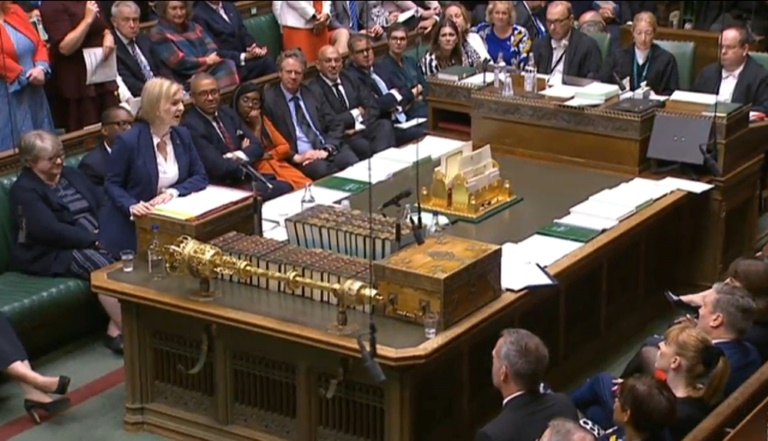
At her first parliamentary grilling as British prime minister, Liz Truss on Wednesday confirmed plans to stem huge rises in the cost of energy that threaten to plunge her new government into a winter of discontent.

Jousting with opposition Labour chief Keir Starmer for the first time since she succeeded Boris Johnson, Truss also revelled in her status as the UK government’s third female prime minister, noting Labour has still to elect a woman leader.

Truss ruled out a windfall tax on energy firms’ gargantuan profits, but said details of her plan would be released on Thursday to ensure consumers and businesses can still afford heating in the coming months.

Whereas Johnson used the weekly session of “Prime Minister’s Questions” to theatrically attack Starmer, Truss was more business-like as she pledged a right-wing programme of tax cuts to revitalise the UK economy.

Starmer cast Truss as the inheritor of 12 years of Tory government leading up to the present crisis in inflation, which is tied to Russia’s war in Ukraine, and said there was “nothing new” about her policies.

“There’s nothing new about a Labour leader who is calling for more tax rises,” Truss retorted, earning roars of approval from Conservative MPs — most of whom had initially backed her leadership rival, Rishi Sunak.

Johnson’s predecessor Theresa May archly asked Truss why only the Conservatives had managed to elect women leaders — May herself, and Margaret Thatcher. One Tory backbencher shouted “3-0!”

Starmer’s deputy Angela Rayner looked on with a pained expression as Truss said it was “extraordinary” that Labour could not find a woman leader, or one who did not live in left-leaning North London.

– Historic diversity –

Earlier Wednesday, Truss convened her new-look cabinet, which includes the most diverse top team in British history: Kwasi Kwarteng as finance minister, James Cleverly as foreign secretary and Suella Braverman as interior minister.

Under the costly plans developed by Truss and Kwarteng, gas and electricity bills for both households and businesses are expected to be capped near current levels for the coming winter at least.

The government would lend or guarantee private-sector loans to energy providers to make up the difference they pay from soaring global wholesale prices, which have driven UK inflation above 10 percent.

The spike in inflation to 40-year highs has stoked a wave of strikes, including by railway workers and criminal lawyers, with more sectors threatening to walk out in an early challenge to Truss’s administration.

On the eve of Truss’s energy plan announcement, the British pound slumped to its lowest dollar level since 1985, tanking to $1.1406 at about 1400 GMT.

Along with the urgent issue of energy prices, Truss’s government must also navigate the combustible problem of post-Brexit trading arrangements in Northern Ireland. 

In her first contacts with foreign leaders, the new Conservative leader spoke late Tuesday by phone to Ukraine’s Volodymyr Zelensky and then US President Joe Biden.

– ‘Imbecile’ –

According to Downing Street, she agreed with Biden “on the importance of protecting” peace in Northern Ireland.

In parliament, Truss said she was “determined” to break through the impasse, and favoured a “negotiated settlement” with the EU.

To Zelensky, Truss vowed to maintain the full-throated support for Ukraine against Russia given by Johnson before he was forced out following a series of scandals.

Truss, 47, won an internal ballot of Tory members on Monday, securing 57 percent of the vote, after a gruelling contest against former finance minister Sunak that began in July.

She now faces a tough challenge reuniting the ruling Tories following the leadership battle, but observers noted that she had expelled almost every Sunak supporter from the cabinet.

Ex-soldier Johnny Mercer said he was “disappointed” to be sacked as veterans affairs minister.

His wife Felicity Cornelius-Mercer went further, calling Truss an “imbecile” as she tweeted a picture mocking the new prime minister as a dim-witted character from “The Muppets”.

The Times quoted one of her incoming ministers as saying: “I doubt she’ll last two years.”

Labour has a double-digit lead in the polls but may have to wait two years to test its popularity.

A general election is due by January 2025 at the latest. Truss on Wednesday again ruled out an early election, mindful perhaps that she needs time to win over a sceptical electorate after Johnson’s defenestration.

A new poll by Ipsos found just a third of people expect Truss to do a good job as prime minister, while another third say she will do a bad job.

UK's new PM vows imminent action on energy crisis

At her first parliamentary grilling as British prime minister, Liz Truss on Wednesday confirmed plans to stem huge rises in the cost of energy that threaten to plunge her new government into a winter of discontent.

Jousting with opposition Labour chief Keir Starmer for the first time since she succeeded Boris Johnson, Truss also revelled in her status as the UK government’s third female prime minister, noting Labour has still to elect a woman leader.

Truss ruled out a windfall tax on energy firms’ gargantuan profits, but said details of her plan would be released on Thursday to ensure consumers and businesses can still afford heating in the coming months.

Whereas Johnson used the weekly session of “Prime Minister’s Questions” to theatrically attack Starmer, Truss was more business-like as she pledged a right-wing programme of tax cuts to revitalise the UK economy.

Starmer cast Truss as the inheritor of 12 years of Tory government leading up to the present crisis in inflation, which is tied to Russia’s war in Ukraine, and said there was “nothing new” about her policies.

“There’s nothing new about a Labour leader who is calling for more tax rises,” Truss retorted, earning roars of approval from Conservative MPs — most of whom had initially backed her leadership rival, Rishi Sunak.

Johnson’s predecessor Theresa May archly asked Truss why only the Conservatives had managed to elect women leaders — May herself, and Margaret Thatcher. One Tory backbencher shouted “3-0!”

Starmer’s deputy Angela Rayner looked on with a pained expression as Truss said it was “extraordinary” that Labour could not find a woman leader, or one who did not live in left-leaning North London.

– Historic diversity –

Earlier Wednesday, Truss convened her new-look cabinet, which includes the most diverse top team in British history: Kwasi Kwarteng as finance minister, James Cleverly as foreign secretary and Suella Braverman as interior minister.

Under the costly plans developed by Truss and Kwarteng, gas and electricity bills for both households and businesses are expected to be capped near current levels for the coming winter at least.

The government would lend or guarantee private-sector loans to energy providers to make up the difference they pay from soaring global wholesale prices, which have driven UK inflation above 10 percent.

The spike in inflation to 40-year highs has stoked a wave of strikes, including by railway workers and criminal lawyers, with more sectors threatening to walk out in an early challenge to Truss’s administration.

On the eve of Truss’s energy plan announcement, the British pound slumped to its lowest dollar level since 1985, tanking to $1.1406 at about 1400 GMT.

Along with the urgent issue of energy prices, Truss’s government must also navigate the combustible problem of post-Brexit trading arrangements in Northern Ireland. 

In her first contacts with foreign leaders, the new Conservative leader spoke late Tuesday by phone to Ukraine’s Volodymyr Zelensky and then US President Joe Biden.

– ‘Imbecile’ –

According to Downing Street, she agreed with Biden “on the importance of protecting” peace in Northern Ireland.

In parliament, Truss said she was “determined” to break through the impasse, and favoured a “negotiated settlement” with the EU.

To Zelensky, Truss vowed to maintain the full-throated support for Ukraine against Russia given by Johnson before he was forced out following a series of scandals.

Truss, 47, won an internal ballot of Tory members on Monday, securing 57 percent of the vote, after a gruelling contest against former finance minister Sunak that began in July.

She now faces a tough challenge reuniting the ruling Tories following the leadership battle, but observers noted that she had expelled almost every Sunak supporter from the cabinet.

Ex-soldier Johnny Mercer said he was “disappointed” to be sacked as veterans affairs minister.

His wife Felicity Cornelius-Mercer went further, calling Truss an “imbecile” as she tweeted a picture mocking the new prime minister as a dim-witted character from “The Muppets”.

The Times quoted one of her incoming ministers as saying: “I doubt she’ll last two years.”

Labour has a double-digit lead in the polls but may have to wait two years to test its popularity.

A general election is due by January 2025 at the latest. Truss on Wednesday again ruled out an early election, mindful perhaps that she needs time to win over a sceptical electorate after Johnson’s defenestration.

A new poll by Ipsos found just a third of people expect Truss to do a good job as prime minister, while another third say she will do a bad job.

French lawmakers visit Taiwan after China's war drill threats

A group of French lawmakers landed in Taiwan on Wednesday, the first high-level European delegation since China conducted huge war drills to protest a visit to the island by US House Speaker Nancy Pelosi.

The trip came as Taiwan held two days of live fire drills on a strategic island that lies between its coast and China.

Taiwan is under constant threat of an invasion by China, which claims the self-ruled island as part of its territory to be seized one day.

Beijing lashes out at any diplomatic action that might lend Taiwan legitimacy, and has responded with growing anger to visits by Western officials and politicians.

The delegation of five French lawmakers is being led by Senator Cyril Pellevat, Taiwan’s foreign ministry said, adding it was the fourth visit by French politicians in the past 12 months.

Last month, China sent warships, missiles and fighter jets into the waters and skies around Taiwan in a show of opposition to Pelosi’s presence — its largest and most aggressive exercises since the mid-1990s.

Pelosi, a veteran Beijing critic, was the most senior US politician to visit Taiwan in 25 years. She was followed by multiple separate US delegations in August.

Another US delegation, this one of congressional representatives, will visit the island from September 7-9, the American Institute in Taiwan — Washington’s de facto embassy on the island — said Wednesday. 

China’s huge war drills triggered widespread support in the United States for solidarity with Taiwan, which already has rare bipartisan support on Capitol Hill.

Many European powers have also grown more vocal in support of Taiwan in recent years, while Russia invading Ukraine has deepened fears China might do the same to its neighbour.

Politicians from European countries regularly visit the island.

Beijing has adopted an increasingly bellicose approach to Taiwan under President Xi Jinping, China’s most authoritarian leader in a generation.

Xi, who is on the cusp of securing an unprecedented third term, has hitched Taiwan’s fate to his landmark “great rejuvenation of the Chinese nation” policy.

Like most nations, the United States and France officially recognise Beijing over Taipei. 

But they both remain key allies of Taiwan and maintain de facto diplomatic ties with the island.

Washington’s official policy opposes both Taiwan declaring independence and China forcibly changing the island’s status.

– ‘Prepare but not seek war’ –

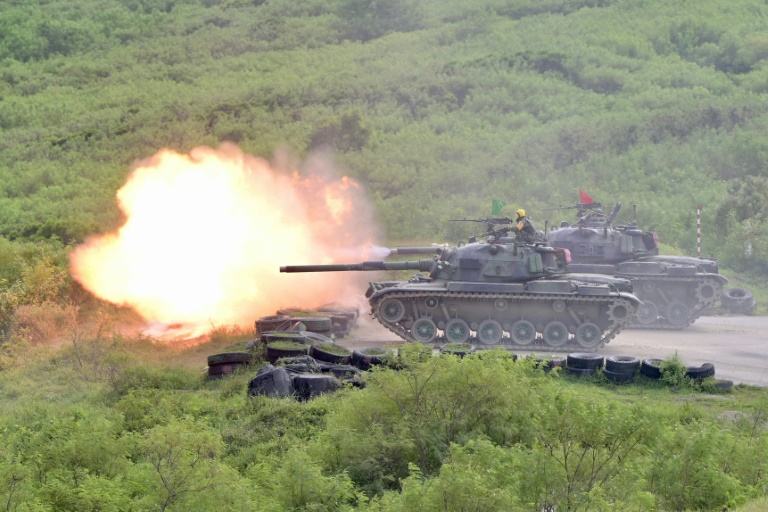
On Tuesday, Taiwanese troops carried out dramatic nighttime live fire drills on the island of Pingtung, which lies between the Chinese mainland and Taiwan and which would need to be seized in any invasion.

Tanks were illuminated by sudden flashes of flame as they fired shells while tracer rounds arced across the night sky.

“We will prepare for war but will not seek war,” Huang Jing-feng, Battalion Commanding Officer, told reporters. 

“We will carry on training to elevate each soldier’s combat skills.”

The drills continued Wednesday — with tanks, combat helicopters and mobile missile launchers conducting firing exercises. 

Close Bitnami banner
Bitnami