World

French court upholds Assad uncle's conviction over ill-gotten assets

France’s top administrative court on Wednesday confirmed the conviction of Rifaat al-Assad, uncle of Syrian President Bashar al-Assad, in an “ill-gotten gains” case over wealth estimated at 90 million euros ($89 million).

Rifaat al-Assad, 85, is the younger brother of Bashar’s father and former Syrian dictator Hafez al-Assad, and himself held the office of vice president but fled the country in 1984 after a failed coup.

He had made a final appeal to France’s Court of Cassation after a lower court last year confirmed his four-year jail sentence for conspiracy to launder Syrian public funds between 1996 and 2016.

In the same judgement, he was convicted of concealing serious tax fraud and employing servants off the books, with authorities confiscating a slew of his properties.

Rifaat, who has not attended hearings due to ill health, insists his property empire stretching across Spain, France and Britain stems from gifts from Saudi crown prince and later king Abdullah, who died in 2015.

The case is the second in France under a law passed last year targeting fortunes fraudulently amassed by foreign leaders.

Teodorin Obiang, the eldest son of the president of Equatorial Guinea, last year had his conviction to a three-year suspended sentence and 30 million euros in fines confirmed at appeal.

– War crimes case –

In Syria, Rifaat al-Assad was the head of the elite Defence Brigades, internal security forces that violently quashed a 1982 Islamist uprising in the city of Hama.

Having stayed away for three decades following his failed attempt to seize power, pro-government media reported that he returned to Syria last autumn.

In 1984, he fled first to Switzerland then France, where he received the Legion of Honour — the country’s top award — in 1986 for “services rendered”.

French investigators opened a probe into his property holdings in 2014 after complaints from watchdogs Transparency International and Sherpa.

They seized two Paris townhouses, dozens of apartments in chic neighbourhoods of the French capital and office spaces.

Since then, around 80 of his former employees living at an estate outside Paris have been mostly without water and electricity as no one was paying the bills.

– Aid to populations –

While Rifaat’s age and poor health mean he is unlikely ever to serve jail time in France, Wednesday’s ruling confirms the confiscation of the properties for good.

That could set up Syria as one of the first countries to potentially benefit from a scheme to return funds recovered under the ill-gotten gains law.

“The confiscation… is the first necessary condition to be able to plan for restitution of the ill-gotten gains,” Transparency International France chief Patrick Lefas said in a statement welcoming the court ruling.

But he added that it would be vital to get the resources to ordinary Syrians rather than simply returning them to the Assad regime — which Transparency says could be achieved using another French law passed last year.

“Restoring ill-gotten gains requires guarantees, without which it would be naive to hope to give them back to the populations of their countries of origin,” Lefas said.

Rifaat al-Assad also faces a court case in Spain over far larger suspicions of ill-gotten gains covering 500 properties, as well as a prosecution in Switzerland for war crimes dating back to the 1980s.


US judge lets Musk amend Twitter claims, rejects delaying case

A US judge permitted Elon Musk to amend his complaint against Twitter on Wednesday, but rejected delaying the lawsuit over the disintegration of the billionaire’s deal to acquire the social media company.

In a mixed ruling, Kathaleen McCormick, the chancellor of the Delaware court, said Musk could add whistleblowing revelations from a Twitter ex-security chief that surfaced in August.

But she denied his request to push back the litigation, saying prolonging the suit “would risk further harm to Twitter too great to justify.”

Musk has been locked in a bitter legal battle with Twitter since announcing in July that he was pulling the plug on his $44 billion purchase of the company following a complex, volatile, months-long courtship.

Musk has said he canceled the deal because he was misled by Twitter concerning the number of bot accounts on its platform, allegations rejected by the company.

Revelations from Twitter former security chief Peiter Zatko criticizing Twitter’s security practices first became public in August following a report in the Washington Post.

In a hearing Tuesday, attorneys for Musk sought to amend his appeal and be granted additional time for document discovery to investigate Zatko’s assertions.

Twitter attorneys argued Musk’s request was another delay tactic designed to derail the takeover.

McCormick said Musk had cleared the relatively low legal bar to amend his complaint against Twitter, adding that she was “reticent” to weigh on the merits of Musk’s arguments “before they have been fully litigated.”

But she said Musk’s side would be permitted “only incremental discovery” to follow up on the new allegations in light of the need for a speedy resolution of the case.

“The longer the delay until trial, the greater the risk of irreparable harm to Twitter,” McCormick said, noting the company has suffered employee attrition while it “has been forced for months to manage under the constraints of a repudiated merger agreement.”

The five-day trial is due to go ahead beginning October 17 in the Delaware court. 

32 dead in Vietnam karaoke bar fire

The death toll from a fire that tore through a karaoke bar in southern Vietnam has risen to 32, state media said Wednesday.

The blaze engulfed the second floor of the building on Tuesday night, trapping customers and staff as dense smoke filled the staircase and blocked the emergency exit, reports said.

Many crowded onto a balcony to escape the flames, which grew quickly as they caught the wooden interior, while others were forced to jump from the building, state media added.

Photos showed plumes of smoke billowing out of the bar — located in a crowded residential neighbourhood in Thuan An city, north of commercial hub Ho Chi Minh City — as firefighters on cranes tried to extinguish the blaze.

Cong An Nhan Dan newspaper, the official mouthpiece of the Public Security Ministry, said the death toll from the karaoke fire had risen to 32, with 17 men and 15 women killed.

Mai Hung Dung, a top official with the ruling Communist Party in Binh Duong province where the bar is located, earlier put the death toll at 23, with 11 injured. He told AFP officials were still searching for more victims.

State media reported that eight people were found dead in the toilet.

The initial cause of the fire was said to be an electrical short circuit, according to a report by Binh Duong authorities cited by state media.

Witness Nguyen Sang, who lives near the karaoke bar, told the VnExpress news site that when fire trucks arrived at the scene a receptionist said there were 40 people stuck inside.

“Many people ran outside through the main entrance, but many others could not stand the heat and they jumped down, breaking their hands and legs,” Sang said.

Rescue workers searched through the night for anyone trapped in the 30-room bar, according to state media.

The karaoke facility’s fire prevention regulations had been checked prior to the blaze, police told state media.

In what was previously Vietnam’s deadliest fire, 13 people died in a 2018 blaze in an apartment complex in Ho Chi Minh City.

In 2016, a fire at a karaoke facility in the capital Hanoi left 13 people dead, prompting a country-wide assessment of fire prevention measures at bars and clubs.

Vietnamese Prime Minister Pham Minh Chinh on Wednesday ordered a further inspection of high-risk venues, especially karaoke bars.

Last month, three firefighters died after trying to extinguish a fire at another karaoke bar in Hanoi.

Oil tumbles to pre-war level on recession fears

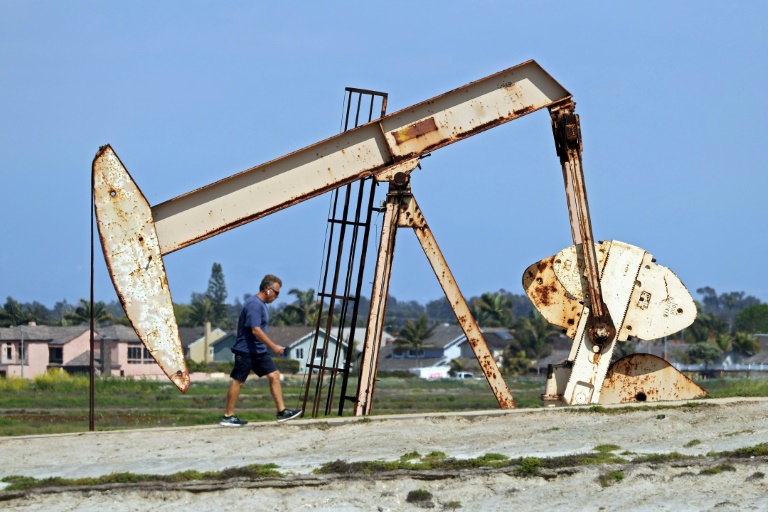
Oil prices tumbled back to pre-war levels Wednesday as recession fears returned to the forefront.

Stocks were also hit by the negative outlook for the global economy, while currency markets were gripped by the prospect for interest rate hikes.

Oil prices briefly climbed on Wednesday as Russia’s President Vladimir Putin said his country would stop delivering oil and gas supplies to countries that introduce price caps.

G7 industrialised powers have vowed to move urgently towards implementing a price cap on Russian oil imports to cut off a major source of funding for Moscow’s military action in Ukraine.

But oil prices then turned sharply lower, with Brent crude, the main international contract, passing under $90 per barrel for the first time since February.

OPEC and its allies earlier this week cut production targets for the first time in more than a year in a bid to lift prices.

“While the 100,000 barrel cut wasn’t fundamentally significant, it was clearly intended as a warning not to drive the price lower or face further cuts,” said OANDA trading platform analyst Craig Erlam.

“Unfortunately, it seems traders are in no mood to be told what to do and growth fears are instead dictating the price direction.”

Recession concerns also dampened sentiment towards equities, with European indices lower, although Wall Street managed small gains at the open.

“Investors appear reluctant to buy anything in this macro environment, where inflation is soaring, global growth is weakening, and central banks are tightening,” said City Index and FOREX.com analyst Fawad Razaqzada. 

“Something must fundamentally change before we see the onset of a serious recovery,” he added.

Recession fears are being driven in large part by central banks moving aggressively to rein in surging inflation.

The dollar continues to gain strength from expectations of a third-straight blockbuster hike to US interest rates later this month.

US Federal Reserve officials have lined up in recent weeks to say their main focus is bringing inflation down from four-decade highs, even if that means tipping the economy into recession.

The different pace in lifting rates taken by central banks is fuelling swings in currency values.

The European Central Bank is Thursday forecast to deliver another bumper rate increase, mirroring aggressive moves by the Fed and Bank of England.

Nevertheless, it has moved slower and the euro remains lodged below parity with the dollar.

Meanwhile, the dollar rose to 144.99 yen — the Japanese currency’s weakest showing since 1998.

“The reason that we are seeing this much strength in the dollar against the yen is purely because of the difference in two central banks’ policies,” noted Naeem Aslam, chief market analyst at AvaTrade. 

“The Fed is as hawkish as it can be, and the BoJ still doesn’t seem to be bothered much about inflation or changing its stance on monetary policy.”

Japan’s finance minister, Shunichi Suzuki, on Wednesday expressed concern about the yen’s drop.

“For now, we’re monitoring with a sense of urgency how it’s developing, but if this continues, it makes sense that we will take necessary measures,” he said, without detailing what the measures might be.

The greenback also struck 37-year peak against sterling, plagued by recession fears on the eve of new Prime Minister Liz Truss’s economic stimulus plan.

– Key figures at around 1330 GMT –

Brent North Sea crude: DOWN 3.1 percent at $89.92 per barrel

West Texas Intermediate: DOWN 3.5 percent at $83.86 per barrel

Dollar/yen: UP at 144.78 yen from 142.80 yen on Tuesday

Euro/yen: UP at 143.44 yen from 141.43 yen

Euro/dollar: UP at $0.9907 from $0.9905 

Pound/dollar: DOWN at $1.1478 from $1.1519

Euro/pound: UP at 86.65 pence from 85.97 pence

London – FTSE 100: DOWN 1.1 percent at 7,222.53 points

Frankfurt – DAX: DOWN 0.4 percent at 12,816.13

Paris – CAC 40: DOWN 0.6 percent at 6,066.06

EURO STOXX 50: DOWN 0.7 percent at 3,477.31

New York – Dow: DOWN 0.1 percent at 31,109.95

Tokyo – Nikkei 225: DOWN 0.7 percent at 27,430.30 (close)

Hong Kong – Hang Seng Index: DOWN 0.8 percent at 19,044.30 (close)

Shanghai – Composite: UP 0.1 percent at 3,246.29 (close)

burs-rl/lth

Scientists fight to protect DR Congo rainforest as threats increase

A tower bristling with sensors juts above the canopy in northern Democratic Republic of Congo, measuring carbon dioxide emitted from the world’s second-largest tropical rainforest. 

Spanning several countries in central Africa, the Congo Basin rainforest covers an immense area and is home to a dizzying array of species. 

But there are growing concerns for the future of the forest, deemed critical for sequestering CO2, as loggers and farmers push ever deeper inside.

Scientists at the Yangambi Biosphere Reserve in the DRC’s Tshopo province are studying the rainforest’s role in climate change — a subject that received scant attention until recently.

Standing 55 metres tall, the CO2-measuring flux tower came online in 2020 in the lush reserve of 250,000 hectares (620,000 acres).

Yangambi was renowned for tropical agronomy research during the Belgian colonial era. 

This week, it also hosted scientists as part of meetings in the DRC dubbed pre-COP 27, ahead of the COP27 climate summit in Egypt in November.

Thomas Sibret, who runs the CongoFlux CO2 measuring project, said that flux towers are common worldwide.

But until one was set up in Yangambi, there had been none in Congo, which had “limited our understanding of this ecosystem”, he said.

Around 30 billion tonnes of carbon are stored across the Congo Basin, researchers estimated in a study in Nature in 2016. The figure is roughly equivalent to three years’ of global emissions.

Sibret said more time is required to draw definitive conclusions from the data gathered by DRC’s flux tower, but one thing is certain: The rainforest sequesters more greenhouse gases than it emits.

– ‘No more trees’ –

Paolo Cerutti, the head of the Center for International Forestry Research’s operations in Congo, said this was good news.

In Latin America, “we’re starting to see evidence that the Amazon (rainforest) is becoming more of an emitter,” he said.

“We’re betting a lot on the Congo Basin, especially the DRC, which has 160 million hectares of forest still capable of absorbing carbon.”

But Cerutti warned that slash-and-burn agriculture poses a particular threat to the future of the rainforest, pointing out that half a million hectares of forest were lost last year.

Slash-and-burn agriculture sees villagers cultivate lands until they become depleted, then clear forests to create new lands, and repeat the cycle. 

With the DRC’s population of about 100 million people set to expand, many worry the forest is in dire threat. 

Jean-Pierre Botomoito, the head of the Yanonge area about 40 kilometres (24 miles) from Yangambi, said that he once thought the forest was inexhaustible.

But “here, there are no trees,” he said.

Villagers in his once-forested region now have to travel long distances along narrow muddy paths to find tree-dwelling caterpillars — a local delicacy. 

Charcoal used for cooking in the absence of electricity and gas is similarly hard to obtain.

There are efforts to help farmers in the remote and impoverished region to make a living while sustaining the environment.

A largely EU-financed project, for example, trains farmers to rotate cassava and groundnut crops between fast-growing acacia trees. 

Farmers can harvest the acacia trees to make charcoal after six years.

Experts also encourage the use of more efficient kilns to produce more charcoal and teach loggers how to select which trees to fell.

– Vandalism –

Jean Amis, the head of a local farmers’ organisation, was enthusiastic about the project.

“We didn’t necessarily have the right practices” before, he said.

Others are too.

Helene Fatouma, the president of a women’s association, says fishponds on the edge of the forest now yield 1,450 kilos of fish in six months, as opposed to 30 previously.

But not all residents of the surrounding area support the various schemes.

Some people believe that the flux tower is stealing oxygen, for example, or that it is a prelude to land appropriation.

Researchers often find dendrometers — devices that measure tree dimensions — vandalised, and some traditional chiefs think the forest will grow back by itself without outside interference. 

The Indonesia-based Center for International Forestry Research says that resistance to the schemes can be overcome through raising awareness. 

Dieu Merci Assumani, the director of the DRC’s National Institute for Agricultural Research, agreed.

But he said there needs to be more financing for locals, who have seen little benefit from promised funds to protect the rainforest.

Assumani pointed as an example to the $500-million deal to protect the Congo Basin rainforest, signed by President Felix Tshisekedi and then British prime minister Boris Johnson in Glasgow last year.

“Commitments are all very well, but they need to be disbursed,” he said. 

India's Gandhi channels namesake in 'long march'

Emulating Indian independence hero Mahatma Gandhi, Rahul Gandhi on Wednesday began his “long march” seeking to halt the seemingly inexorable slow decline of his once-mighty Congress party.

The Grand Old Party, which governed for decades after India’s 1947 independence from Britain, is a shadow of its former self, discredited and crushed under the electoral juggernaut of Prime Minister Narendra Modi’s Hindu nationalist Bharatiya Janata Party (BJP).

The BJP thrashed Congress at the last two elections, with Modi deriding Gandhi — descended not from the Mahatma but from India’s first prime minister Jawaharlal Nehru — as an out-of-touch pampered princeling and playboy.

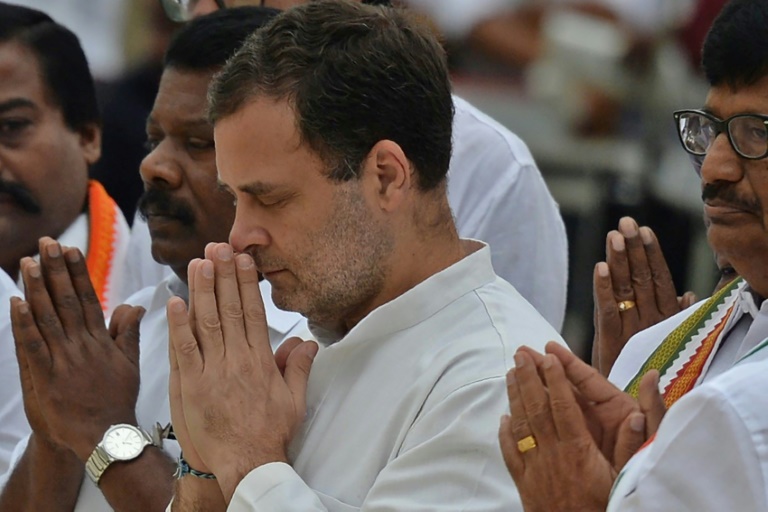
Before setting off on the trek Gandhi prayed at a monument in Sriperumbudur in the southern state of Tamil Nadu where in 1991 his father Rajiv Gandhi was assassinated — like his grandmother Indira seven years earlier.

“I lost my father to the politics of hate and division. I will not lose my beloved country to it too,” Gandhi, 52, said on Twitter.

He then headed to the southernmost tip of India, before traversing the nation, covering 3,500 kilometres (2,175 miles) across 150 days and ending in Kashmir — although it was unclear if he will actually walk all the way.

The aim, he said, is to highlight rampant unemployment, soaring inflation and growing polarisation between majority Hindus and religious minorities like Muslims under Modi, 71.

“I want to ask you whether price rises or hatred strengthens the country… Narendra Modi and the BJP are weakening the country,” Rahul told a rally in New Delhi on Sunday ahead of the mega march.

“The Congress party, on the other hand, unites the country. We erase hatred and when hatred is erased, the country moves faster.”

– Reluctant leader –

Mahatma Gandhi famously trekked some 380 kilometres (240 miles) in 1930 to protest a salt tariff imposed by British rulers, in a seminal moment in the independence struggle.

But Rahul, dubbed an “empty suit” in leaked 2005 US diplomatic cables, is seen as a reluctant leader despite being the great-grandson, grandson and son of three past premiers of the world’s biggest democracy.

Gandhi quit as party president after the 2019 election debacle and was replaced on an interim basis by his mother Sonia Gandhi, 75, widow of Rajiv.

If he returns as president, which remains unclear, he faces a huge battle to revive the party, in power in just two out of 28 states and in coalition in four others. 

Analysts say Congress lacks Modi’s common touch and is missing a counter-narrative to the BJP’s politics which is infused with a heavy dose of “Hindutva” — an ideology that believes in making India an exclusive Hindu state.

The march “is not a gimmick. Rahul Gandhi sincerely believes in religious harmony. But the people are not interested. So, it will fail,” said political analyst Parsa Venkateshwar Rao Junior. 

“Rahul and Congress would have to work hard on the ground, find out the problems people are facing in different parts of the country,” he told AFP.

“(The people) need someone to voice their dissatisfaction.”

US trade gap drops sharply in July on lower imports

A steep drop in imports, especially of consumer goods, narrowed the US trade deficit in July to its lowest level since October, the government reported Wednesday.

Exports rose only slightly, boosted by an increase in international travel, but the gain was enough to set yet another record, the Commerce Department reported.

The overall trade deficit fell by more than $10 billion to $70.6 billion compared to June, almost entirely due to the decline in imports, the report said.

Companies in recent months rushed to replenish depleted inventories amid strong demand from American shoppers — but sky-high inflation has raised concerns that consumers will pull back, causing firms to become more cautious.

The Federal Reserve is raising interest rates aggressively to dampen demand and cool inflation, and many families are having to spend a greater share of their incomes on staple goods.

Higher interest rates have strengthened the US dollar, making American goods relatively more expensive, which could trim exports, but so far the data are likely to boost growth in the world’s largest economy.

Goods and services exports edged up to $259.3 billion, just enough to beat the record set in June, according to the report.

Imports fell $8.5 billion, including a $3 billion plunge in pharmaceuticals, and $1.8 billion drop in industrial supplies including crude oil, while auto imports jumped $1.8 billion.

Exports are likely to again contribute to economic growth in the third quarter, said Rubeela Farooqi of High Frequency Economics. 

But she cautioned “a strong dollar, dimming global growth prospects, and slowing domestic demand should have implications for trade flows going forward.”

The US deficit with China decreased $3.9 billion to $33.0 billion in July due largely to falling imports, the data showed.

UK PM rules out windfall tax to fund energy price freeze

Liz Truss on Wednesday faced her first parliamentary grilling as British Prime Minister, ruling out a windfall tax to fund any freeze on energy bills to offset huge rises in the cost of gas and electricity. 

Truss, who formally took over from Boris Johnson on Tuesday, said she would spell out her plans on Thursday for an economic support package to forestall a growing crisis in the months ahead.

She is preparing measures reportedly worth upwards of £130 billion ($150 billion) to freeze energy bills for hard-pressed households and businesses, many of whom risk going to the wall this winter.

But when asked by opposition Labour leader Keir Starmer if this would be funded by a windfall tax on energy companies’ profits, Truss responded: “I am against a windfall tax.

“I believe it is the wrong thing to be putting companies off investing in the United Kingdom, just when we need to be growing the economy.”

She added: “This country will not be able to tax its way to growth.”

The exchange set the tone for the debate over how to tackle the predicted economic pain ahead, with inflation already in double digits at 40-year highs.

Truss campaigned on a promise to cut taxes, despite warnings that it could further fuel inflation and questions over where funds will come from.

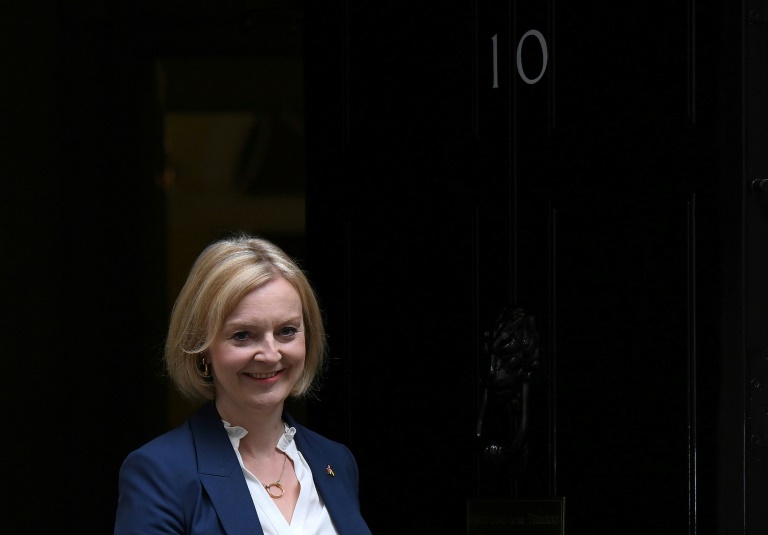
Truss was bullish about the economic outlook as she entered Downing Street for the first time as premier on Tuesday.

“I am confident that together we can ride out the storm,” she said.

But Starmer said that ordinary people faced paying for her policies.

– Biden call –

Truss convened her new-look cabinet earlier Wednesday, which includes the most diverse top team in British history: Kwasi Kwarteng as finance minister, James Cleverly as foreign secretary and Suella Braverman as interior minister.

Along with the urgent issue of energy prices, Truss’s government must also navigate the combustible problem of post-Brexit trading arrangements in Northern Ireland. 

In her first contacts with foreign leaders, the new Conservative leader spoke late Tuesday by phone to Ukraine’s Volodymyr Zelensky and then US President Joe Biden.

According to Downing Street, she agreed with Biden “on the importance of protecting” peace in Northern Ireland.

In parliament, Truss said she was “determined” to break through the impasse, and favoured a “negotiated settlement” with the EU.

To Zelensky, Truss vowed to maintain the full-throated support for Ukraine against Russia given by her scandal-tainted predecessor, Boris Johnson.

Truss, 47, won an internal ballot of Tory members on Monday, securing 57 percent of the vote, after a gruelling contest against former finance minister Rishi Sunak that began in July.

But the initial stage of the contest saw her net the support of less than a third of the parliamentary party.

She now faces a tough challenge reuniting the ruling Tories following a bitter leadership battle, but observers noted that she had expelled almost every Sunak supporter from the cabinet.

Ex-soldier Johnny Mercer said he was “disappointed” to be sacked as veterans affairs minister.

His wife Felicity Cornelius-Mercer went further, calling Truss an “imbecile” as she tweeted a picture mocking the new prime minister as a dim-witted character from “The Muppets”.

Conservative MPs are “almost ungovernable” and have “no appetite to cope with difficult decisions”, one government insider told the Financial Times.

“They did for Boris, and they may do for Liz, too,” the source told the paper.

The Times quoted one of her incoming ministers as saying: “I doubt she’ll last two years.”

Labour has a double-digit lead in the polls but may have to wait two years to test their popularity.

A general election is due by January 2025 at the latest. Truss on Monday vowed to lead the Conservatives to victory “in 2024”.

– ‘Dreadful policy’ –

Truss pitched herself to the Tory grassroots as a tax-cutting free-trade champion ready to slash taxes immediately to turbo-charge growth.

Under her mooted plans, gas and electricity bills for both households and businesses would be capped near current levels for the coming winter at least.

The government would lend or guarantee private sector loans to energy providers to make up the difference they pay with soaring global wholesale prices.

It remains unclear whether the government will pay for the plan through extra borrowing or ask consumers to pick up the tab over the coming years through levies on their energy bills.

Paul Johnson, of the respected Institute for Fiscal Studies think-tank, said it was “a dreadful policy” but likely necessary. 

UK PM rules out windfall tax to fund energy price freeze

Liz Truss on Wednesday faced her first parliamentary grilling as British Prime Minister, ruling out a windfall tax to fund any freeze on energy bills to offset huge rises in the cost of gas and electricity. 

Truss, who formally took over from Boris Johnson on Tuesday, said she would spell out her plans on Thursday for an economic support package to forestall a growing crisis in the months ahead.

She is preparing measures reportedly worth upwards of £130 billion ($150 billion) to freeze energy bills for hard-pressed households and businesses, many of whom risk going to the wall this winter.

But when asked by opposition Labour leader Keir Starmer if this would be funded by a windfall tax on energy companies’ profits, Truss responded: “I am against a windfall tax.

“I believe it is the wrong thing to be putting companies off investing in the United Kingdom, just when we need to be growing the economy.”

She added: “This country will not be able to tax its way to growth.”

The exchange set the tone for the debate over how to tackle the predicted economic pain ahead, with inflation already in double digits at 40-year highs.

Truss campaigned on a promise to cut taxes, despite warnings that it could further fuel inflation and questions over where funds will come from.

Truss was bullish about the economic outlook as she entered Downing Street for the first time as premier on Tuesday.

“I am confident that together we can ride out the storm,” she said.

But Starmer said that ordinary people faced paying for her policies.

– Biden call –

Truss convened her new-look cabinet earlier Wednesday, which includes the most diverse top team in British history: Kwasi Kwarteng as finance minister, James Cleverly as foreign secretary and Suella Braverman as interior minister.

Along with the urgent issue of energy prices, Truss’s government must also navigate the combustible problem of post-Brexit trading arrangements in Northern Ireland. 

In her first contacts with foreign leaders, the new Conservative leader spoke late Tuesday by phone to Ukraine’s Volodymyr Zelensky and then US President Joe Biden.

According to Downing Street, she agreed with Biden “on the importance of protecting” peace in Northern Ireland.

In parliament, Truss said she was “determined” to break through the impasse, and favoured a “negotiated settlement” with the EU.

To Zelensky, Truss vowed to maintain the full-throated support for Ukraine against Russia given by her scandal-tainted predecessor, Boris Johnson.

Truss, 47, won an internal ballot of Tory members on Monday, securing 57 percent of the vote, after a gruelling contest against former finance minister Rishi Sunak that began in July.

But the initial stage of the contest saw her net the support of less than a third of the parliamentary party.

She now faces a tough challenge reuniting the ruling Tories following a bitter leadership battle, but observers noted that she had expelled almost every Sunak supporter from the cabinet.

Ex-soldier Johnny Mercer said he was “disappointed” to be sacked as veterans affairs minister.

His wife Felicity Cornelius-Mercer went further, calling Truss an “imbecile” as she tweeted a picture mocking the new prime minister as a dim-witted character from “The Muppets”.

Conservative MPs are “almost ungovernable” and have “no appetite to cope with difficult decisions”, one government insider told the Financial Times.

“They did for Boris, and they may do for Liz, too,” the source told the paper.

The Times quoted one of her incoming ministers as saying: “I doubt she’ll last two years.”

Labour has a double-digit lead in the polls but may have to wait two years to test their popularity.

A general election is due by January 2025 at the latest. Truss on Monday vowed to lead the Conservatives to victory “in 2024”.

– ‘Dreadful policy’ –

Truss pitched herself to the Tory grassroots as a tax-cutting free-trade champion ready to slash taxes immediately to turbo-charge growth.

Under her mooted plans, gas and electricity bills for both households and businesses would be capped near current levels for the coming winter at least.

The government would lend or guarantee private sector loans to energy providers to make up the difference they pay with soaring global wholesale prices.

It remains unclear whether the government will pay for the plan through extra borrowing or ask consumers to pick up the tab over the coming years through levies on their energy bills.

Paul Johnson, of the respected Institute for Fiscal Studies think-tank, said it was “a dreadful policy” but likely necessary. 

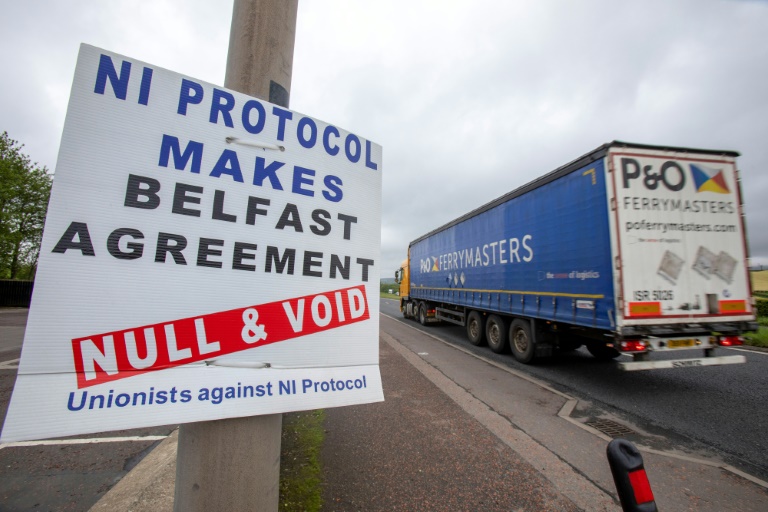
UK PM hopes for 'negotiated solution' with EU to N.Ireland row

New UK Prime Minister Liz Truss on Wednesday said she hoped talks with the EU could help resolve a dispute over post-Brexit trade in Northern Ireland.

“My preference is for a negotiated solution,” she told MPs in parliament, in her first appearance as premier since formally taking office on Tuesday.

“But it does have to deliver all of the things we set out in the Northern Ireland Protocol Bill,” she added.

The bill, spearheaded by Truss in her former role as foreign secretary, proposes scrapping parts of the deal that London signed with Brussels as part of the UK’s departure from the bloc.

It is currently winding its way through parliament, despite EU warnings that it breaks international law and could spark retaliatory trade sanctions.

The UK government opposes internal border checks on goods heading from mainland Great Britain — England, Scotland and Wales — to Northern Ireland.

The EU has stipulated checks are needed to prevent goods getting to the European single market via neighbouring member state the Republic of Ireland.

Removing hard border infrastructure between Northern Ireland and the republic was a condition of the 1998 peace deal that ended 30 years of violence over British rule.

But pro-UK unionist parties say that the checks cut Northern Ireland adrift from the rest of the UK, heightening the risk of a united Ireland.

Truss said her “number one priority” was “protecting the supremacy” of the peace deal, against a backdrop of concern from US President Joe Biden’s administration in Washington.

She vowed to resolve the issue, which has led unionist parties to withdraw from the power-sharing devolved government in Belfast.

“I want to work with all of the parties in Northern Ireland to get the executive and the assembly back up and running,” Truss added.

“But in order to do that, we do need to fix the issues of the Northern Ireland protocol, which has damaged the balance between the communities in Northern Ireland. 

“I’m determined to get on with doing that and I’m determined to work with all parties to find that resolution.”

Close Bitnami banner
Bitnami