World

Preparing for harsh winter in Ukraine's Donbas

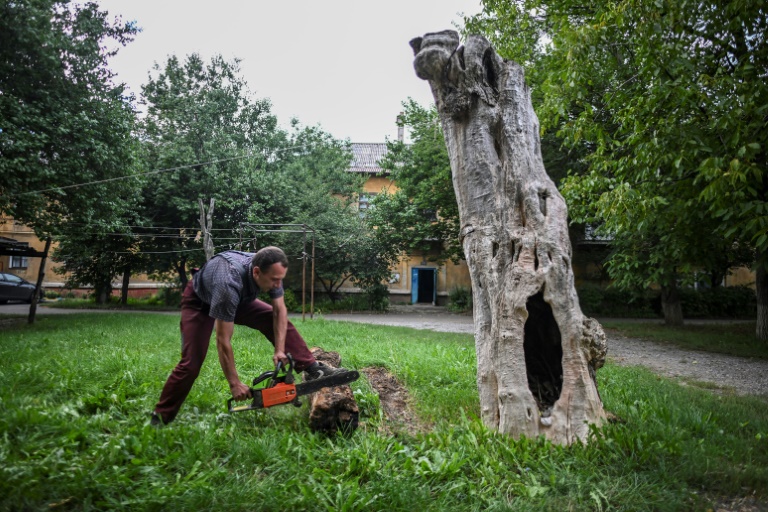
In a lush garden between two apartment blocks in the city of Kramatorsk, Oleskandr Matviyevsky chops dead trees into kindling.

Everyone in this part of the city around 25 kilometres (16 miles) from the front line, knows that winter will be harsh.

The gas has been cut off and the fighting shows no signs of stopping, with soldiers around the city preparing for battle.

Residents are stocking up on wood for the brick furnaces that have been set up in front of each building and for their heating stoves.

“We will group together to stay warm… and what will be, will be,” said Matviyevsky, chainsaw in hand, as artillery fire echoes in the background and air-raid sirens blare out.

“We were friendly before, we’ve only grown closer,” the 42-year-old worker said.

The gas was cut off in May in the Donetsk region, which is partly controlled by Russian forces, and in the neighbouring occupied Lugansk region after damage to infrastructure.

Ukrainian President Volodymyr Zelensky called for mandatory evacuation of civilians from the Donetsk region in July, both to avoid the fighting and ahead of the winter season.

“Please, evacuate,” Zelensky urged.

– ‘We are standing strong’ –

But Olga, 60, said she had no intention of leaving her flat, even though a strike recently hit a building in her neighbourhood.

Local media have reported that some residents have been asked to sign waivers stating their decision to stay despite the warnings.

“I’m not signing anything,” said Olga.

“We will all die here together. If it’s one grave for everyone, then so be it. But we are standing strong,” she said, raising her fist in the air.

After living in Kramatorsk for 36 years, she has nowhere else to go.

Sitting on a bench in front of her building, surrounded by her neighbours and her cat, she said she feared her young grandchildren would struggle in the cold winter.

Around 60,000 people remain in Kramatorsk, out of the 220,000 living there before the war, according to local officials.

“We don’t have the resources to heat up the residential areas,” said Igor Yeskov, a spokesman for the city council.

But the city has been making preparations, including asking a local businessman to provide around a thousand traditional wood stoves to help those who remain.

The stoves are not suited to heating the city’s numerous apartment blocks, however.

– ‘Trying to live with dignity’ –

Olga’s cousin Andrii Kasionkin, 54, has opted for another solution.

Since February, he has been living in his cellar with his family both to protect them from the bombing and in the hope that it will provide some warmth in winter.

He said temperatures inside the cellar could be kept at 10 degrees Celsius (50 Fahrenheit) in winter even when it is minus 10 degrees Celsius outside.

“We live here for now and we try not to think about tomorrow,” he said.

“We are trying to live with dignity. Even in this situation.”

In the city of Sloviansk, closer to the front line, a local hospital has been preparing by installing a new heater that can burn waste, coal or wood.

Valentyna Glushchenko, the director of the hospital, said she was “very worried”.

“A healthy person can feel comfortable in different conditions, but a sick person requires a certain temperature. They need warmth during their treatment.”
How Bellingcat became Russia's 'biggest nightmare'

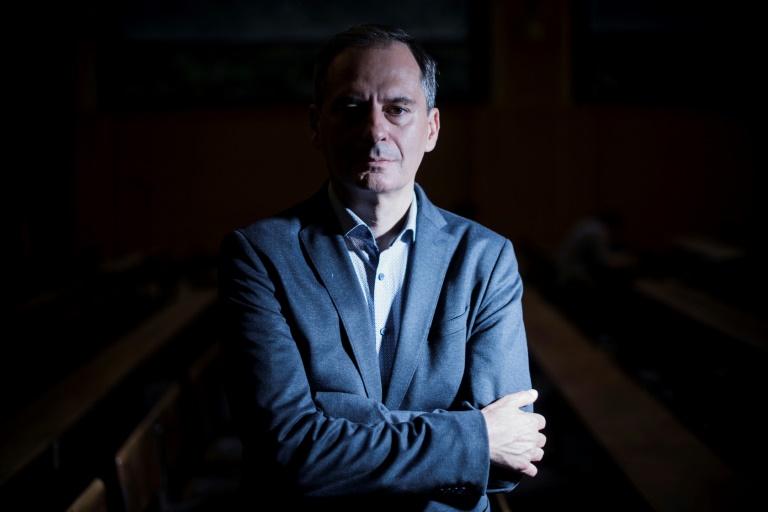
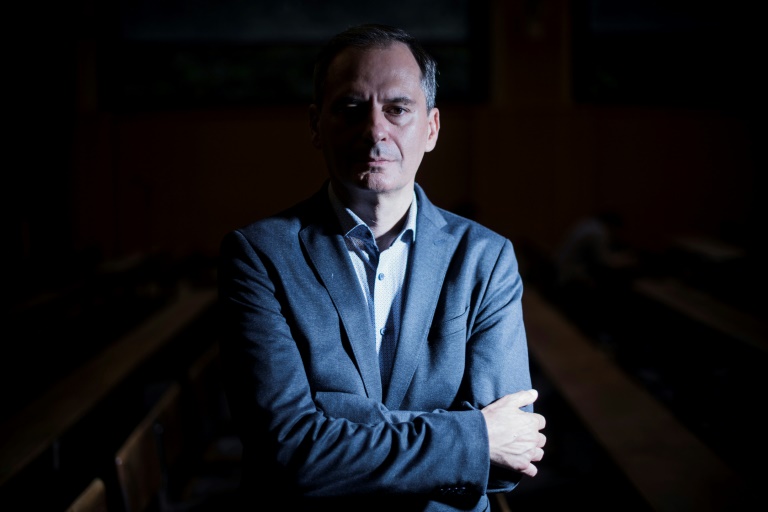
Digital investigators from the Bellingcat group have spent eight years exposing the lies of the powerful and gathering evidence of their crimes – work that has a grave human cost, the organisation’s chief told AFP in an interview.

Bulgarian journalist Christo Grozev said he and his colleagues received regular threats but he was driven to continue by “adrenalin” and “the feeling you can do something that law enforcement does not do”.

The investigative group has been closely associated with uncovering misdeeds by Russian agents across Europe, including intelligence involvement in the poisoning of opposition figure Alexei Navalny.

“When you get stopped in the street by Russian citizens, telling you thank you for what you are doing once a day, I think that it is enough to continue,” he said.

During a meeting in Paris earlier this week, he described the organisation as the “Kremlin’s biggest nightmare” though he stressed to AFP that Russia was not the main focus of their work.

“Russia today produces a lot of government crime and that’s why a lot of our investigations are focused on Russia,” he said.

“But we equally try to pay attention to bad actors from wherever they come.”

He cites investigations into the Syrian war, EU police agency Europol and others focused on Greece, Turkey, Hungary and the far right in the United States and Europe.

– ‘Undesirable’ in Russia –

Bellingcat was founded in July 2014 by a British blogger, Eliot Higgins, along with a band of internet “nerds”, said Grozev, who joined later and brought a wealth of journalism experience from his career in the Bulgarian media.

They used information freely available to the public –- anything from satellite images to telephone directories -– to piece together evidence of wrongdoing.

Their work on the downing of Air Malaysia flight MH17 over Ukraine in 2014 — which killed 298 people and sparked global outrage — won plaudits around the world and brought the group to the attention of the Kremlin.

The investigators pieced together photos, videos and public documents that supported the theory that the plane was shot down by a Russian missile from an area controlled by pro-Russian separatists.

Since then, the group has identified Russian agents responsible for poisoning opposition figure Alexei Navalny and other dissidents, exposed alleged war crimes in Ukraine and helped uncover many more scandals.

One of its main focuses right now is the war in Ukraine, where it has a two-track approach.

Grozev said one approach uses journalistic methods to debunk false information, the other is more judicial, gathering evidence of war crimes for eventual use in the courts.

The Netherlands-based platform, which takes its name from a fable in which mice join forces to hang a bell around a cat’s neck, has rarely been out of the Kremlin’s firing line.

Russia recently described it as a security threat and deemed it “undesirable”.

– Legal challenges –

One of the main lines of attack has been to accuse Bellingcat of being funded by Western governments or NGOs, particularly the US National Endowment for Democracy.

Grozev said in its early years the group took some money from American NGOs for training, but later decided to stop.

He said it had not taken any money from governments since last year and relied instead on smaller funders.

“Most of our funders are individuals who spend 100 euros to 5,000 euros,” he said.

Beyond the financial constraints, Grozev pointed to the difficult legal environment.

“International law is handicapped because it assumes that governments look out for their citizens,” said Grozev.

Even a tribunal like the International Criminal Court, which seeks to hold individuals to account rather than countries, has long been hobbled by disagreements over its remit and powers of investigation.

And national governments are hamstrung by the idea of national sovereignty, so if a poisoning happens on Russian territory, only Russia can investigate.

It is precisely in this legal blackhole that Bellingcat finds the greatest need.

“We investigate generally bad actors, governments who commit crimes, because we think nobody else is investigating them,” said Grozev.

“There are no tribunals, no law enforcement agencies that investigate governments.”

How Bellingcat became Russia's 'biggest nightmare'

Digital investigators from the Bellingcat group have spent eight years exposing the lies of the powerful and gathering evidence of their crimes – work that has a grave human cost, the organisation’s chief told AFP in an interview.

Bulgarian journalist Christo Grozev said he and his colleagues received regular threats but he was driven to continue by “adrenalin” and “the feeling you can do something that law enforcement does not do”.

The investigative group has been closely associated with uncovering misdeeds by Russian agents across Europe, including intelligence involvement in the poisoning of opposition figure Alexei Navalny.

“When you get stopped in the street by Russian citizens, telling you thank you for what you are doing once a day, I think that it is enough to continue,” he said.

During a meeting in Paris earlier this week, he described the organisation as the “Kremlin’s biggest nightmare” though he stressed to AFP that Russia was not the main focus of their work.

“Russia today produces a lot of government crime and that’s why a lot of our investigations are focused on Russia,” he said.

“But we equally try to pay attention to bad actors from wherever they come.”

He cites investigations into the Syrian war, EU police agency Europol and others focused on Greece, Turkey, Hungary and the far right in the United States and Europe.

– ‘Undesirable’ in Russia –

Bellingcat was founded in July 2014 by a British blogger, Eliot Higgins, along with a band of internet “nerds”, said Grozev, who joined later and brought a wealth of journalism experience from his career in the Bulgarian media.

They used information freely available to the public –- anything from satellite images to telephone directories -– to piece together evidence of wrongdoing.

Their work on the downing of Air Malaysia flight MH17 over Ukraine in 2014 — which killed 298 people and sparked global outrage — won plaudits around the world and brought the group to the attention of the Kremlin.

The investigators pieced together photos, videos and public documents that supported the theory that the plane was shot down by a Russian missile from an area controlled by pro-Russian separatists.

Since then, the group has identified Russian agents responsible for poisoning opposition figure Alexei Navalny and other dissidents, exposed alleged war crimes in Ukraine and helped uncover many more scandals.

One of its main focuses right now is the war in Ukraine, where it has a two-track approach.

Grozev said one approach uses journalistic methods to debunk false information, the other is more judicial, gathering evidence of war crimes for eventual use in the courts.

The Netherlands-based platform, which takes its name from a fable in which mice join forces to hang a bell around a cat’s neck, has rarely been out of the Kremlin’s firing line.

Russia recently described it as a security threat and deemed it “undesirable”.

– Legal challenges –

One of the main lines of attack has been to accuse Bellingcat of being funded by Western governments or NGOs, particularly the US National Endowment for Democracy.

Grozev said in its early years the group took some money from American NGOs for training, but later decided to stop.

He said it had not taken any money from governments since last year and relied instead on smaller funders.

“Most of our funders are individuals who spend 100 euros to 5,000 euros,” he said.

Beyond the financial constraints, Grozev pointed to the difficult legal environment.

“International law is handicapped because it assumes that governments look out for their citizens,” said Grozev.

Even a tribunal like the International Criminal Court, which seeks to hold individuals to account rather than countries, has long been hobbled by disagreements over its remit and powers of investigation.

And national governments are hamstrung by the idea of national sovereignty, so if a poisoning happens on Russian territory, only Russia can investigate.

It is precisely in this legal blackhole that Bellingcat finds the greatest need.

“We investigate generally bad actors, governments who commit crimes, because we think nobody else is investigating them,” said Grozev.

“There are no tribunals, no law enforcement agencies that investigate governments.”

Head of Hong Kong journalist union arrested

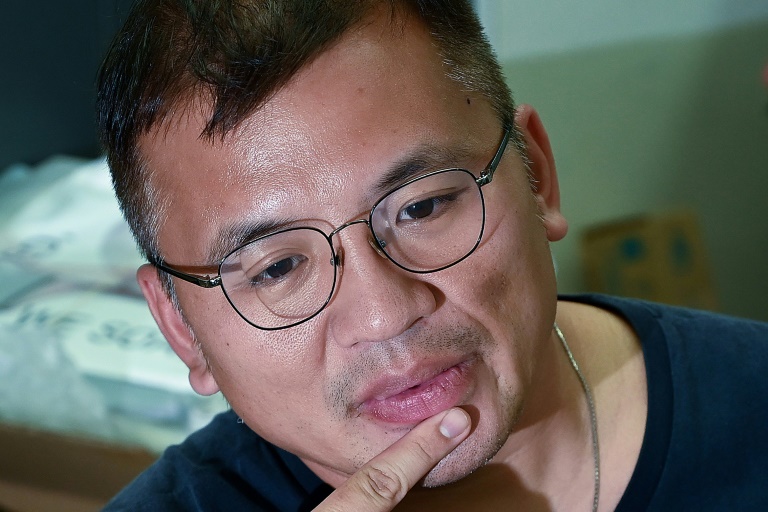
The head of Hong Kong’s journalist union was arrested on Wednesday, just weeks before he was set to leave the city and begin an overseas fellowship.

Ronson Chan, chairman of the Hong Kong Journalists Association (HKJA), was arrested for allegedly obstructing a police officer and disorderly conduct in a public place.

Channel C, the online news outlet Chan works for, said the veteran reporter was taken away by police officers who asked to check his identity while he was reporting on a meeting of public housing flat owners.

Police said a 41-year-old man surnamed Chan was arrested after he refused to show officers his ID card and behaved in an “uncooperative” way despite multiple warnings.

Chan was set to leave Hong Kong at the end of September for the six-month Reuters Institute fellowship programme at Oxford University.

Authorities have used a national security law and colonial-era sedition charges to crack down on dissent in Hong Kong after democracy protests three years ago.

Local media deemed critical of the government have faced a surge of police investigations and the city has plummeted down global press freedom rankings.

Like many now-shuttered civil society groups and pro-democracy unions, both Chan and the HKJA have faced repeated criticism from media outlets that answer to Beijing’s Liaison Office in the city.

Police action has often followed such media coverage.

Local tabloid Apple Daily and online news platform StandNews — which Chan used to work for — were forced to close last year after executives were charged with national security violations, leaving hundreds of journalists out of work.

When Reporters Without Borders (RSF) released its annual press freedom ranking in May, Hong Kong had plunged 68 places to 148th in the world.

In RSF’s first report in 2002, Hong Kong had some of the freest media in Asia and ranked 18th worldwide.

The Foreign Correspondents’ Club of Hong Kong gave up Asia’s largest annual human right press awards earlier this year, citing risks posed by the security law — a decision that caused controversy among many journalist members.

The club recently published a watered-down statement on press freedom on its website. 

One of the removed sentences from the statement read: “Facing unprecedented attacks on the media, never has our club’s role been more vital -– nor our commitment been stronger.”

Yen extends slide, oil rises tracking central banks and Putin

The yen slumped to a 24-year low against the dollar and shed more than one percent versus the euro Wednesday as Japan refuses to hike interest rates to combat sky-high inflation.

The European Central Bank is Thursday forecast to deliver another bumper rate increase, mirroring aggressive moves by the US Federal Reserve and Bank of England.

Elsewhere Wednesday, oil prices climbed as Russia’s President Vladimir Putin said his country would stop delivering oil and gas supplies to countries that introduce price caps.

G7 industrialised powers have vowed to move urgently towards implementing a price cap on Russian oil imports to cut off a major source of funding for Moscow’s military action in Ukraine.

In stock market trading, European and Asian indices mostly retreated but Shanghai closed slightly up.

On foreign exchange markets, one dollar was worth 144.38 yen — the Japanese currency’s weakest showing since 1998.

“The reason that we are seeing this much strength in the dollar against the yen is purely because of the difference in two central banks’ policies,” noted Naeem Aslam, chief market analyst at AvaTrade. 

“The Fed is as hawkish as it can be, and the BoJ still doesn’t seem to be bothered much about inflation or changing its stance on monetary policy.”

Japan’s finance minister, Shunichi Suzuki, on Wednesday expressed concern about the yen’s drop.

“For now, we’re monitoring with a sense of urgency how it’s developing, but if this continues, it makes sense that we will take necessary measures,” he added.

The dollar continues to gain strength from expectations of a third-straight blockbuster hike to US interest rates next month.

Several top Fed officials — including head Jerome Powell — have lined up in recent weeks to say their main focus is bringing inflation down from four-decade highs, even if that means tipping the economy into recession.

The euro remained lodged below parity with the dollar, despite the European Central Bank preparing to further ramp up rates.

And the greenback was also pushing towards a 37-year peak against sterling, which saw a brief rally Tuesday on reports new UK Prime Minister Liz Truss was planning a £130 billion ($150 billion) package to freeze a looming surge in household energy costs.

– Key figures at around 1045 GMT –

Dollar/yen: UP at 144.50 yen from 142.80 yen on Tuesday

Euro/yen: UP at 143.10 yen from 141.43 yen

Euro/dollar: DOWN at $0.9902 from $0.9905 

Pound/dollar: DOWN at $1.1475 from $1.1519

Euro/pound: UP at 86.33 pence from 85.97 pence

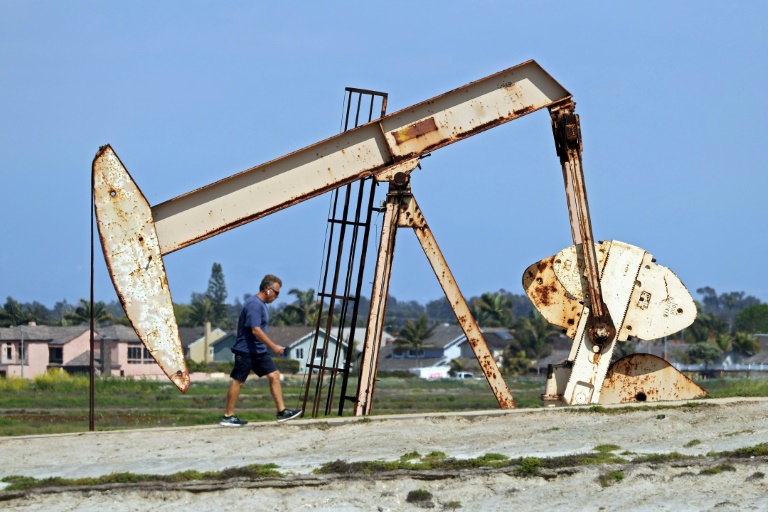
Brent North Sea crude: UP 0.7 percent at $93.43 per barrel

West Texas Intermediate: UP 0.5 percent at $87.33 per barrel

London – FTSE 100: DOWN 0.7 percent at 7,252.44 points

Frankfurt – DAX: DOWN 0.4 percent at 12,818.98

Paris – CAC 40: DOWN 0.4 percent at 6,077.91

EURO STOXX 50: DOWN 0.5 percent at 3,484.33

Tokyo – Nikkei 225: DOWN 0.7 percent at 27,430.30 (close)

Hong Kong – Hang Seng Index: DOWN 0.8 percent at 19,044.30 (close)

Shanghai – Composite: UP 0.1 percent at 3,246.29 (close)

New York – Dow: DOWN 0.6 percent at 31145.30 (close)

burs-bcp/rfj/lth

Green groups demand loss and damage money ahead of COP27

Hundreds of environmental groups called Wednesday for the issue of loss and damage finance to be on the formal agenda of the forthcoming COP27 UN climate summit in Egypt.

Developing nations have for years called for funding from rich polluters to help them reduce emissions while growing their economies and adapt to the impacts of global heating. 

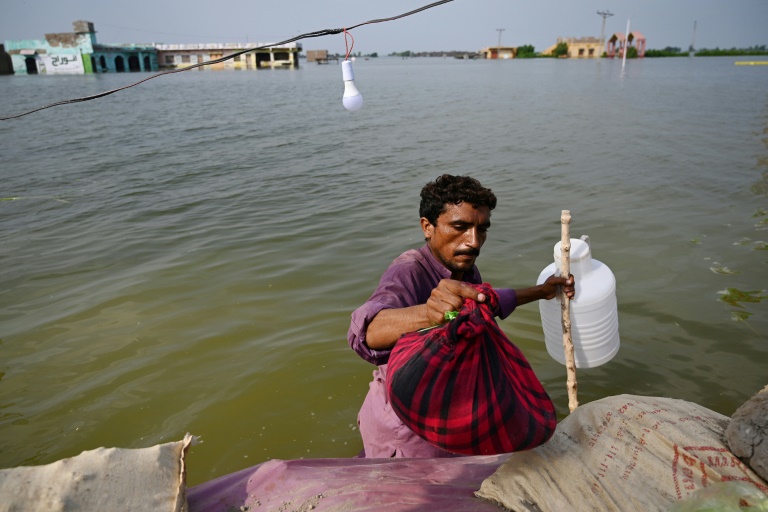
They argue that historic polluters also have a moral imperative to pay for the loss and damage — impacts already being felt that countries cannot adapt to, such as Pakistan’s devastating floods — that their emissions are accelerating.

At the last UN climate summit, COP26 in Glasgow in 2021, countries representing six out of every seven people on the planet called for the establishment of a dedicated loss and damage “facility” that at-risk nations could instantly access to help them recover from extreme events.

That was shot down by richer nations, however. A loss and damage “dialogue” was offered as an alternative ahead of COP27, which begins in November in Sharm el-Sheikh.

More than 400 aid agencies and activist groups on Wednesday signed an open letter demanding that loss and damage finance be added to the official negotiating agenda. 

They said discussions around money for impacted nations was needed “to ensure a meaningful outcome at COP27 to respond to the intensifying suffering of people facing climate and connected crises”.

Harjeet Singh, head of global political strategy at Climate Action Network International, said that the conference’s credibility was “hanging by a thread”.

“The COP27 conference will be counted as a failure, if developed nations continue to ignore the demand from developing countries to establish a loss and damage finance facility to help people recover from worsening floods, wildfires and rising seas,” he said.

Hong Kong court convicts five of sedition over children's books

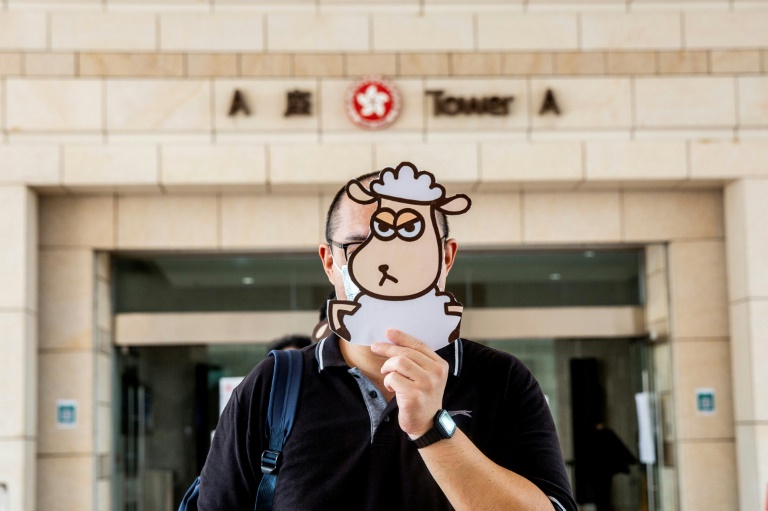
Five Hong Kong unionists were found guilty of sedition on Wednesday for producing a series of illustrated children’s books that portrayed the city’s democracy supporters as sheep defending their village from wolves.

The convictions are the latest using a colonial-era sedition offence which authorities have deployed alongside a new national security law to stamp out dissent.

The prosecution focused on members of a speech therapists’ union who produced three illustrated e-books aimed at explaining Hong Kong’s democracy movement to children.

In one book, called “Defenders of the Sheep Village”, a group of wolves try to occupy a village of sheep, who fight back and drive their attackers away.

In another, the wolves are portrayed as dirty and bringing disease to the sheep’s village.

Lai Man-ling, Melody Yeung, Sidney Ng, Samuel Chan and Fong Tsz-ho, all founding members of the union, were charged with sedition and held in jail for more than a year ahead of their verdict.

After a two-month trial Kwok Wai-kin, a District Court judge handpicked by the government to try national security cases, found the five guilty of conspiring to spread seditious content. 

“The seditious intention stems not merely from the words, but from the words with the proscribed effects intended to result in the mind of children,” Kwok wrote in his judgement.

“Children will be led into belief that the PRC (People’s Republic of China) Government is coming to Hong Kong with the wicked intention of taking away their home and ruining their happy life with no right to do so at all,” he added. 

– ‘Unrelenting repression’ –

Amnesty International, which recently left Hong Kong because of the national security law, described the convictions as “an absurd example of unrelenting repression”. 

“Writing books for children is not a crime, and attempting to educate children about recent events in Hong Kong’s history does not constitute an attempt to incite rebellion,” Amnesty’s China campaigner Gwen Lee said.

During the trial, prosecutors argued the books contained “anti-China sentiment” and were aimed at “inciting readers’ hatred against the mainland authorities”.

They also said the books were meant to encourage Hong Kongers to discriminate against “mainland Chinese people living in Hong Kong”.

The defence argued that the sedition offence was vaguely defined and that each reader should be allowed to make up their own mind about what the characters in the books represent. 

They also warned that a guilty verdict would further criminalise political criticism and have a chilling effect on society.

– Political crackdown  –

Until recently Hong Kong was a bastion of free expression within China and home to a vibrant and outspoken publishing industry.

But Beijing has unleashed a sweeping political crackdown on the city in response to huge and sometimes violent democracy protests three years ago.

Sedition was originally a law from the British colonial era and carries a sentence of up to two years in prison.

Until recently, it had not been used for decades.

But it has been embraced by police and prosecutors over the last two years, alongside the national security law which Beijing imposed on Hong Kong in 2020.

Since then the city’s once-popular democracy movement has been dismantled. 

Most prominent local democracy activists either are in jail, are awaiting trial or have fled overseas. 

Dozens of civil society groups, including multiple trade unions, have folded while a mainland-style censorship rule has been created for the film industry.

Books have been removed from libraries and curriculums rewritten with authorities ordered to instil patriotism into the city’s children.

Only people deemed “staunch patriots” are now allowed to run for office.

Even before the latest crackdown, publishing had become a key target for Chinese authorities.

In 2015, five Hong Kong publishers behind a bookstore that put out salacious tomes on leaders of the Chinese Communist Party went missing, later reappearing in mainland custody.

The missing bookseller case was itself a partial catalyst for the 2019 democracy protests, which began as a movement against a law allowing extraditions to the mainland’s party-controlled court system. 

Ukraine backs UN peacekeeping force at occupied nuclear plant

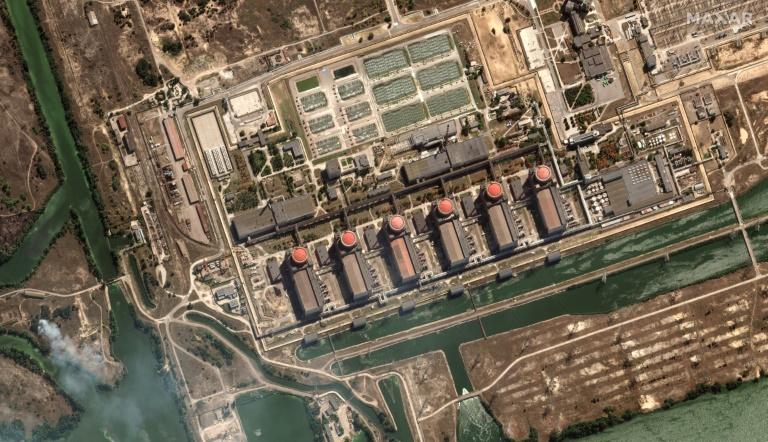
Ukraine’s nuclear operator said Wednesday it would support the deployment of UN peacekeepers at the Russian-occupied Zaporizhzhia plant, a day after the UN atomic watchdog called for a security zone around the site.

The International Atomic Energy Agency (IAEA) released a report Tuesday saying the situation at the nuclear power plant, Europe’s largest, was “untenable”. The agency sent a team to the site last week.

It called for a demilitarised security zone to be established at the plant in southern Ukraine, which the Russians took over in March.

There has been repeated shelling around the site, sparking fears of a nuclear disaster.

Ukraine’s nuclear operator Energoatom said Wednesday it would support the deployment of UN peacekeepers to the facility and called for Russian troops to leave. 

“One of the ways to create a security zone at the (plant) could be to set up a peacekeeping contingent there and withdraw Russian troops” Energoatom chief Petro Kotyn said in remarks broadcast by Ukrainian TV.

Ukraine and Russia have traded blame for shelling at the site, which continued Tuesday even as the IAEA report was released. 

The head of Ukraine’s nuclear security agency warned Wednesday that a nuclear accident at the site could affect neighbouring countries.

Damage to the active zone of the reactor would “have consequences not only in Ukraine, but also definitely beyond its borders” Oleg Korikov told reporters. 

Russian President Vladimir Putin said Wednesday there was “no military equipment” at the plant in southern Ukraine, adding that he “certainly trusts” the IAEA report. 

But earlier, Moscow had said it wanted “clarifications” from the IAEA. 

“There is a need to get additional clarifications because the report contains a number of issues,” Foreign Minister Sergei Lavrov told Interfax news agency.

“I will not list them but we requested these clarifications from the IAEA Director General.” 

– ‘Fukushima-like’ –

A 14-strong team from the IAEA visited Zaporizhzhia last week, and at least two members of the team were to remain there on a permanent basis to ensure the facility’s safety.

But on Monday, the last working reactor was disconnected from the grid after shelling caused a fire.

Karine Herviou, the head of the Institute for Radiation Protection and Nuclear Safety in France, warned of the risk of a “Fukushima-type scenario”, referring to the 2011 Japanese nuclear disaster.

“We are not immune to strikes (at the plant) which, even if they do not directly affect the reactors, could lead to radioactive releases into the environment,” she told FranceInfo radio on Wednesday.

– Gas, grain –

As the war rages into its seventh month, with tens of thousands killed and millions displaced, the global cost of the crisis is unfolding. Countries are confronted with skyrocketing energy prices and serious grain shortages.

Europe in particular is bracing for a tough winter ahead, especially after Russia halted natural gas deliveries via the key Nord Stream pipeline to the continent. 

Putin on Wednesday denied Russia was using energy as a weapon, as it faces a barrage of Western sanctions over its February 24 invasion of Ukraine. 

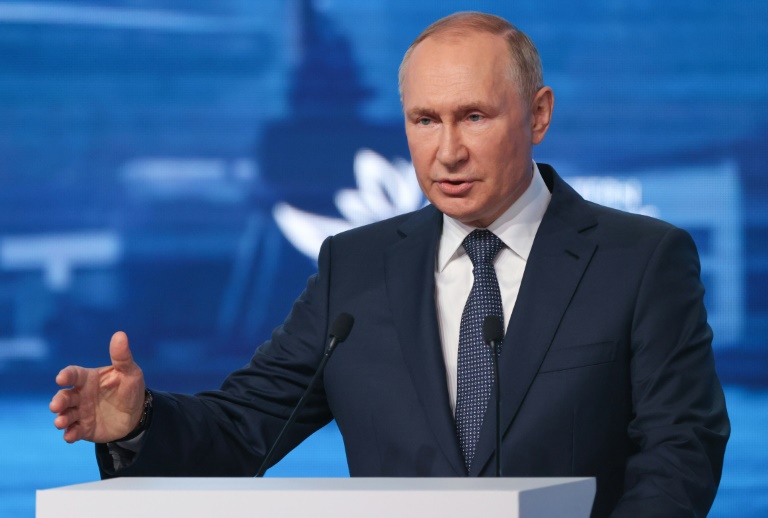
“They say that Russia uses energy as a weapon. More nonsense! What weapon do we use? We supply as much as required according to requests” from importers, Putin told the Eastern Economic Forum in the Pacific port city of Vladivostok. 

He added that Moscow would stop delivering oil and gas supplies to countries that introduced price caps, as some Western countries are considering. 

“We will not supply anything at all if it is contrary to our interests, in this case economic (interests),” he told the forum. 

“No gas, no oil, no coal, no fuel oil, nothing.”

The invasion has also wrought havoc on grain exports from Ukraine, one of the world’s largest grain exporters, which was forced to halt almost all deliveries after the invasion, sparking a global food crisis. 

Grain exports across Black Sea ports resumed in July after Kyiv and Moscow signed a deal with the United Nations and Turkey acting as guarantors. 

But Putin on Wednesday said most of the grain had been shipped to EU countries, not developing nations. 

“With this approach, the scale of food problems in the world will only grow,” Putin said, warning that it could lead to “an unprecedented humanitarian catastrophe”. 

Ukraine backs UN peacekeeping force at occupied nuclear plant

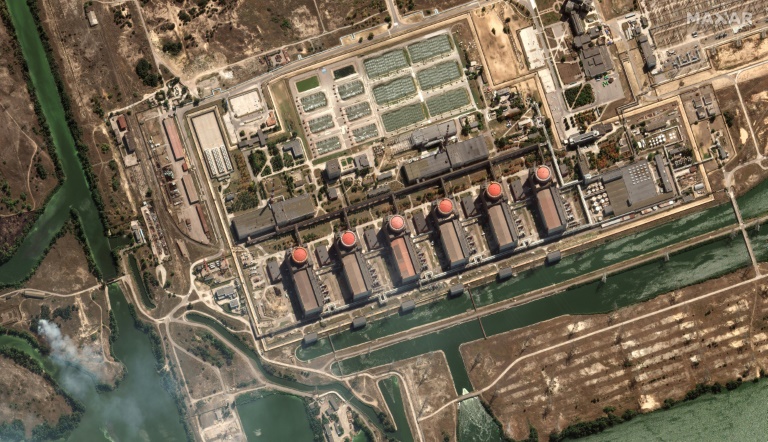
Ukraine’s nuclear operator said Wednesday it would support the deployment of UN peacekeepers at the Russian-occupied Zaporizhzhia plant, a day after the UN atomic watchdog called for a security zone around the site.

The International Atomic Energy Agency (IAEA) released a report Tuesday saying the situation at the nuclear power plant, Europe’s largest, was “untenable”. The agency sent a team to the site last week.

It called for a demilitarised security zone to be established at the plant in southern Ukraine, which the Russians took over in March.

There has been repeated shelling around the site, sparking fears of a nuclear disaster.

Ukraine’s nuclear operator Energoatom said Wednesday it would support the deployment of UN peacekeepers to the facility and called for Russian troops to leave. 

“One of the ways to create a security zone at the (plant) could be to set up a peacekeeping contingent there and withdraw Russian troops” Energoatom chief Petro Kotyn said in remarks broadcast by Ukrainian TV.

Ukraine and Russia have traded blame for shelling at the site, which continued Tuesday even as the IAEA report was released. 

The head of Ukraine’s nuclear security agency warned Wednesday that a nuclear accident at the site could affect neighbouring countries.

Damage to the active zone of the reactor would “have consequences not only in Ukraine, but also definitely beyond its borders” Oleg Korikov told reporters. 

Russian President Vladimir Putin said Wednesday there was “no military equipment” at the plant in southern Ukraine, adding that he “certainly trusts” the IAEA report. 

But earlier, Moscow had said it wanted “clarifications” from the IAEA. 

“There is a need to get additional clarifications because the report contains a number of issues,” Foreign Minister Sergei Lavrov told Interfax news agency.

“I will not list them but we requested these clarifications from the IAEA Director General.” 

– ‘Fukushima-like’ –

A 14-strong team from the IAEA visited Zaporizhzhia last week, and at least two members of the team were to remain there on a permanent basis to ensure the facility’s safety.

But on Monday, the last working reactor was disconnected from the grid after shelling caused a fire.

Karine Herviou, the head of the Institute for Radiation Protection and Nuclear Safety in France, warned of the risk of a “Fukushima-type scenario”, referring to the 2011 Japanese nuclear disaster.

“We are not immune to strikes (at the plant) which, even if they do not directly affect the reactors, could lead to radioactive releases into the environment,” she told FranceInfo radio on Wednesday.

– Gas, grain –

As the war rages into its seventh month, with tens of thousands killed and millions displaced, the global cost of the crisis is unfolding. Countries are confronted with skyrocketing energy prices and serious grain shortages.

Europe in particular is bracing for a tough winter ahead, especially after Russia halted natural gas deliveries via the key Nord Stream pipeline to the continent. 

Putin on Wednesday denied Russia was using energy as a weapon, as it faces a barrage of Western sanctions over its February 24 invasion of Ukraine. 

“They say that Russia uses energy as a weapon. More nonsense! What weapon do we use? We supply as much as required according to requests” from importers, Putin told the Eastern Economic Forum in the Pacific port city of Vladivostok. 

He added that Moscow would stop delivering oil and gas supplies to countries that introduced price caps, as some Western countries are considering. 

“We will not supply anything at all if it is contrary to our interests, in this case economic (interests),” he told the forum. 

“No gas, no oil, no coal, no fuel oil, nothing.”

The invasion has also wrought havoc on grain exports from Ukraine, one of the world’s largest grain exporters, which was forced to halt almost all deliveries after the invasion, sparking a global food crisis. 

Grain exports across Black Sea ports resumed in July after Kyiv and Moscow signed a deal with the United Nations and Turkey acting as guarantors. 

But Putin on Wednesday said most of the grain had been shipped to EU countries, not developing nations. 

“With this approach, the scale of food problems in the world will only grow,” Putin said, warning that it could lead to “an unprecedented humanitarian catastrophe”. 

Eyeing Asia pivot, Putin says 'impossible' to isolate Russia

President Vladimir Putin said Wednesday it was “impossible” to isolate Russia and hailed Asia’s growing global influence, as Moscow looks east in the face of unprecedented Western sanctions over Ukraine.

Washington and Brussels have pummelled Moscow with a barrage of economic and personal sanctions after Putin sent troops into Ukraine on February 24. 

Facing deteriorating ties with Western capitals, Moscow is seeking to pivot the country towards the Middle East, Asia and Africa. 

“No matter how much someone would like to isolate Russia, it is impossible to do this,” Putin told the Eastern Economic Forum in Russia’s Pacific port city of Vladivostok.

He said the coronavirus pandemic has been replaced by other global challenges “threatening the whole world”, including “sanctions fever in the West”.

Putin blamed the “elusive dominance” of the United States and “the stubborn refusal of Western elites to see and recognise objective facts”.

He added that Russia is “coping with the technological, financial and economic aggression of the West”, insisting the economic situation in Russia is “stabilising”. 

Putin has repeatedly said that Russia’s economy is weathering the barrage of sanctions well, as the Kremlin’s ties with the West sink to new lows. 

As Moscow seeks to instead bolster ties with Asia — especially key ally China — Putin welcomed the growing role of the Asia-Pacific region in global affairs.

“The role… of the countries of the Asia-Pacific region has significantly increased,” he said at the forum, adding that partnerships will create “colossal new opportunities for our people”.

Putin was joined at the forum by China’s top legislator Li Zhanshu — who ranks third in the Chinese government hierarchy — with a bilateral meeting scheduled for later in the day.

Putin also met Myanmar junta chief Min Aung Hlaing, whose government is facing diplomatic isolation as well.

Putin hailed Myanmar as a “long-standing and reliable partner”, while Min Aung Hlaing called the Russian president “a leader of the world”.

– Putin-Xi meeting –

Putin’s participation in the forum in the Far East — a region with close geopolitical and economic ties to Russia’s Asian neighbours — comes a day after the Russian president oversaw large-scale military drills there.

The week-long manoeuvres, called Vostok-2022, were concluding on Wednesday and involved several Kremlin-friendly countries, including China.

Putin is expected next week to hold an in-person meeting with Chinese counterpart Xi Jinping, who has not left China since 2020 due to the coronavirus pandemic. 

The two leaders will meet at a summit of the Shanghai Cooperation Organisation (SCO) held in Uzbekistan on September 15 and 16, a Russian diplomat said Wednesday. 

Beijing and Moscow have drawn closer in recent years, ramping up cooperation as part of what they call a “no limits” relationship, acting as a counterweight to the global dominance of the United States.

Beijing has refused to condemn Moscow’s intervention in Ukraine and provided diplomatic cover by blasting Western sanctions and arms sales to Kyiv, heightening tensions between China and the West.

Tensions were further strained during the August visit of US House Speaker Nancy Pelosi to self-ruled, democratic Taiwan, which China considers its territory.

Moscow was in full solidarity with Beijing during the visit, with Putin accusing Washington of “destabilising” the world. 

In a sign of further rapprochement, Russia announced Tuesday that China will be switching from US dollars to the national currencies of the two countries — yuan and rubles — to pay for deliveries of Russian natural gas.

Putin said Wednesday that “confidence has been lost” in US dollars, euros and British pounds, and Russia is distancing itself from such “unreliable, compromised” currencies. 

Close Bitnami banner
Bitnami