World

Former Pakistan PM Khan accuses govt of 'unacceptable' censorship

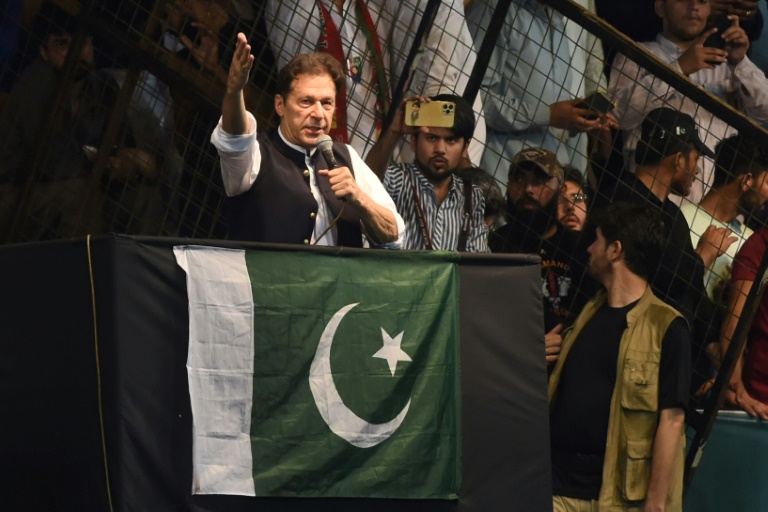
Former Pakistan prime minister Imran Khan accused the government Wednesday of “unacceptable” censorship after authorities apparently blocked national access to YouTube to prevent a rally speech from being broadcast live.

Khan retains widespread support despite his April ousting and has staged mass rallies across the country calling for early elections and railing against the government.

His speeches frequently draw top ratings on television, with highlights trending on social media in Pakistan.

On Tuesday night, however, YouTube was down across much of the country as Khan addressed a rally in Peshawar, with London-based internet outage monitor Netblocks confirming the disruption.

“Access was restored after the speech concluded,” Netblocks told AFP.

YouTube has not commented on the matter, while a representative of the Pakistan Telecoms Authority said they had “no idea about it”.

Last month the government’s media regulatory body banned Khan’s speeches from being broadcast live, on the grounds they were inciting unrest, but this week the high court ruled the order illegal.

Still, no TV channels broadcast Tuesday’s speech.

On Wednesday Khan accused the government of censoring him, saying the move would damage the country’s reputation.

“They are imposing complete blackout of my speeches not only from mainstream media but also by blocking YouTube,” he tweeted.

“This fascist govt of cabal of crooks & their backers are willing to harm the interests of Pakistan simply out of fear of (his party) PTI’s soaring popularity. Utterly callous & unacceptable.”

Last month ARY News, a pro-Khan television station critical of the current government, was taken off air but a court last week also ordered the ruling illegal.

Another private TV channel, Bol News, was suspended last week — ostensibly for operating with an expired licence — and insisted later it was being “punished for showing what the government doesn’t like”.

Free speech campaigners have long criticised the creeping censorship and control of Pakistan’s internet, printed and electronic media.

“It is digital martial law,” said Usama Khilji, a digital rights activist.

Khan is due in court on Thursday for a hearing on one of a slew of cases and charges brought against him since he was booted from office by a vote of no confidence in the national assembly.

The country has a history of those in power using the police and courts to stifle their political opponents, and current premier Shehbaz Sharif also has several pending cases from when he was in opposition.

Pakistan’s political crisis comes as the country grapples with the worst floods in its history, with some 33 million people affected by record monsoon rains that have left almost a third of the nation under water.
Burundi appoints new PM after president warns of 'coup' plot

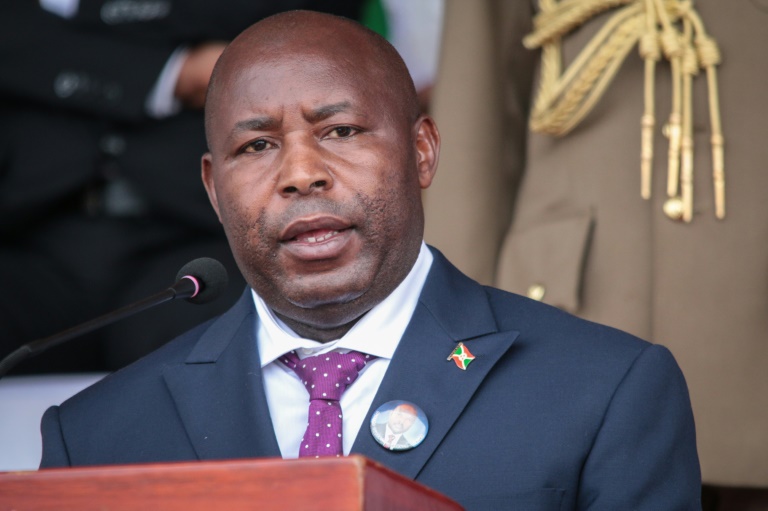
Burundi’s parliament on Wednesday approved the appointment of a new prime minister after President Evariste Ndayishimiye warned last week of a possible coup plot against him.

Security Minister Gervais Ndirakobuca has replaced Alain Guillaume Bunyoni as prime minister after a unanimous vote in parliament, the national broadcaster RTNB said.

Bunyoni’s departure came after Ndayishimiye, who has been in power for just over two years, had last week warned of a coup plot against him.

“Do you think an army general can be threatened by saying they will make a coup?  Who is that person? Whoever it is should come and in the name of God I will defeat him,” Ndayishimiye had warned at a meeting of government officials on Friday.

Ndayishimiye took power in the troubled nation in June 2020 after his predecessor Pierre Nkurunziza died of what the Burundian authorities said was heart failure.

The country had been plunged into deadly turmoil in 2015 when then president Nkurunziza launched a bid for a third term in office, despite concerns over the legality of such a move.

New PM Ndirakobuca was sanctioned in 2015 by the US for “silencing those opposed” to Nkurunziza’s third term bid.

Burundi’s history is littered with presidential assassinations, coups, ethnic massacres and a long civil war that ended in 2006 and left some 300,000 dead.

India's Gandhi channels namesake in 'long march'

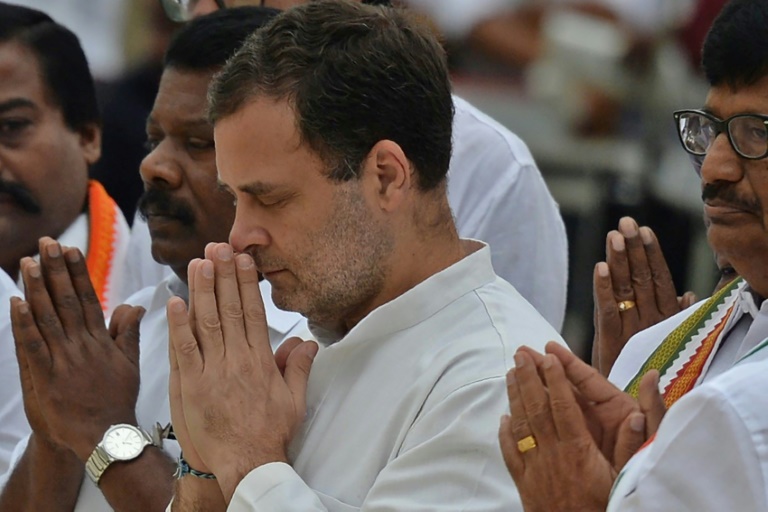
Emulating Indian independence hero Mahatma Gandhi, Rahul Gandhi was set Wednesday to begin a “long march” seeking to halt the seemingly inexorable slow decline of his once-mighty Congress party.

The Grand Old Party, which governed for decades after India’s 1947 independence from Britain, is a shadow of its former self, discredited and crushed under the electoral juggernaut of Prime Minister Narendra Modi’s Hindu nationalist Bharatiya Janata Party (BJP).

The BJP thrashed Congress at the last two elections, with Modi deriding Gandhi — descended not from the Mahatma but from India’s first prime minister Jawaharlal Nehru — as an out-of-touch pampered princeling and playboy.

Before setting off on the trek Gandhi prayed at a monument in Sriperumbudur in the southern state of Tamil Nadu where in 1991 his father Rajiv Gandhi was assassinated — like his grandmother Indira seven years earlier.

“I lost my father to the politics of hate and division. I will not lose my beloved country to it too,” Gandhi, 52, said on Twitter.

He then headed to the southernmost tip of India, before traversing the nation, covering 3,500 kilometres (2,175 miles) across 150 days and ending in Kashmir — although it was unclear if he will actually walk all the way.

The aim, he said, is to highlight rampant unemployment, soaring inflation and growing polarisation between majority Hindus and religious minorities like Muslims under Modi, 71.

“I want to ask you whether price rises or hatred strengthens the country… Narendra Modi and the BJP are weakening the country,” Rahul told a rally in New Delhi on Sunday ahead of the mega march.

“The Congress party, on the other hand, unites the country. We erase hatred and when hatred is erased, the country moves faster.”

– Reluctant leader –

Mahatma Gandhi famously trekked some 380 kilometres (240 miles) in 1930 to protest a salt tariff imposed by British rulers, in a seminal moment in the independence struggle.

But Rahul, dubbed an “empty suit” in leaked 2005 US diplomatic cables, is seen as a reluctant leader despite being the great-grandson, grandson and son of three past premiers of the world’s biggest democracy.

Gandhi quit as party president after the 2019 election debacle and was replaced on an interim basis by his mother Sonia Gandhi, 75, widow of Rajiv.

If he returns as president, which remains unclear, he faces a huge battle to revive the party, in power in just two out of 28 states and in coalition in four others. 

Analysts say Congress lacks Modi’s common touch and is missing a counter-narrative to the BJP’s politics which is infused with a heavy dose of “Hindutva” — an ideology that believes in making India an exclusive Hindu state.

The march “is not a gimmick. Rahul Gandhi sincerely believes in religious harmony. But the people are not interested. So, it will fail,” said political analyst Parsa Venkateshwar Rao Junior. 

“Rahul and Congress would have to work hard on the ground, find out the problems people are facing in different parts of the country,” he told AFP.

“(The people) need someone to voice their dissatisfaction.”

Germany can 'survive' winter despite energy turmoil: Scholz

Chancellor Olaf Scholz voiced confidence Wednesday that Germany was well prepared to “survive” the winter despite turmoil in the energy markets in the wake of Russia’s invasion of Ukraine.

In a speech heavily critical of his predecessor chancellor Angela Merkel’s energy policies that left Germany dependent on Russia for power, Scholz said Germany will keep moving “at great speed” to shed the reliance in the wake of Moscow’s invasion of Ukraine.

Germany has not only raced to fill up its gas storage tanks, but also sped up the building of terminals to receive liquefied natural gas, Scholz told parliament.

“Because we started so early, when it wasn’t even such a big awareness of the problem in Germany, we are now in a situation that we can head into the winter courageously and bravely — our country can survive,” he said.

As Germany turns its back on Russian supplies, it was sealing new cooperation with its closest European partners, said Scholz. 

“We have spoken with our friends on the west European coast, with the Netherlands and Belgium for them to expand (LNG) terminals and pipeline capacities with France which will for the first time deliver gas to us.

“What we have achieved with the terminals in the north and with those on the German west European coasts, we will guarantee a secure energy supply for Germany,” he said.

Europe’s biggest economy has also restarted mothballed coal power plants, and this week decided to keep two nuclear plants on stand-by through mid-April instead of completely ending the usage of atomic energy by the end of the year.

But Friedrich Merz, the leader of Merkel’s CDU conservatives, said it was “insanity” to keep the atomic plants only on standby and not on the grid.

The power plants needed to be active “in order for us to bring down prices and costs for companies,” he said.

Merz’s criticisms earned a sharp rebuke from Scholz, who said it was under the conservatives leadership that Germany had failed to make the right decision for its future.

The conservatives, who were in power from 2005 to 2021, are “completely responsible for the fact that Germany made decisions to exit coal and nuclear but without engaging in anything else,” said Scholz, who was finance minister in Merkel’s coalition.

Rather, the conservatives “fought against every wind power installation,” said Scholz, saying it was “irresponsible CDU policies that have brought us to our current situation”.

French lawmakers visit Taiwan after China's war drill threats

A group of French lawmakers landed in Taiwan on Wednesday, the first high-level European delegation since China conducted huge war drills to protest a visit to the island by US House Speaker Nancy Pelosi.

The trip came as Taiwan held two days of live fire drills on a strategic island that lies between its coast and China.

The democracy exists under constant threat of an invasion by authoritarian China, which claims the self-ruled island as part of its territory to be seized one day.

Beijing lashes out at any diplomatic action that might lend Taiwan legitimacy, and has responded with growing anger to visits by Western officials and politicians.

The delegation of five French lawmakers is being led by Senator Cyril Pellevat, Taiwan’s foreign ministry said, adding it was the fourth visit by French politicians in the past 12 months.

Last month China sent warships, missiles and fighter jets into the waters and skies around Taiwan in a show of opposition to Pelosi’s presence — its largest and most aggressive exercises since the mid-1990s.

Pelosi, a veteran Beijing critic, was the most senior US politician to visit Taiwan in 25 years. She was followed by multiple separate US delegations in August.

China’s huge war drills triggered widespread support in the United States for solidarity with Taiwan, which already has rare bipartisan support on Capitol Hill.

Many European powers have also grown more vocal in support of Taiwan in recent years, while Russia invading Ukraine has deepened fears China might do the same to its neighbour.

Politicians from European countries regularly visit the island.

Beijing has adopted an increasingly bellicose approach to Taiwan under President Xi Jinping, China’s most authoritarian leader in a generation.

Xi, who is on the cusp of securing an unprecedented third term, has hitched Taiwan’s fate to his landmark “great rejuvenation of the Chinese nation” policy.

Like most nations, the United States and France officially recognise Beijing over Taipei. 

But they both remain key allies of Taiwan and maintain de facto diplomatic ties with the island.

Washington’s official policy opposes both Taiwan declaring independence and China forcibly changing the island’s status.

– ‘Prepare but not seek war’ –

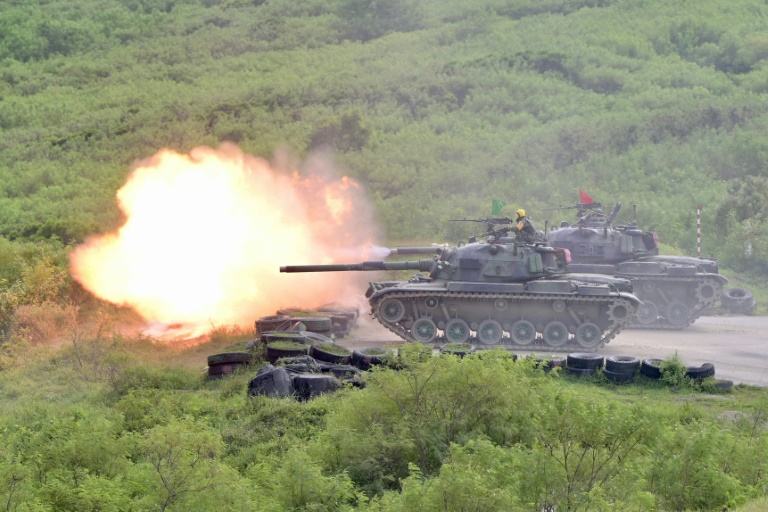
On Tuesday Taiwanese troops carried out dramatic nighttime live fire drills on the island of Pingtung, which lies between the Chinese mainland and Taiwan and would need to be seized in any invasion.

Tanks were illuminated by sudden flashes of flame as they fired shells while tracer rounds arced across the night sky.

“We will prepare for war but will not seek war,” Huang Jing-feng, Battalion Commanding Officer, told reporters. 

“We will carry on training to elevate each soldier’s combat skills.”

The drills continued Wednesday — with tanks, combat helicopters and mobile missile launchers conducting firing exercises. 

Dollar rallies, stocks sink as traders prepare for big rate hikes

The dollar surged Wednesday against other major currencies and equities sank after a forecast-beating US economic report gave new life to talk of a third straight blockbuster interest rate hike next month.

The services sector data showed the world’s top economy remained resilient in the face of surging prices and borrowing costs, highlighting the job the Federal Reserve has in taming inflation while trying to prevent a recession — a goal many observers doubt can be achieved.

The reading added to the gloom blanketing trading floors as investors face a range of headwinds including a worsening energy crisis in Europe, Russia’s war in Ukraine and Chinese economic woes caused by Covid-19 lockdowns.

“Overall, the (services) survey paints a picture of solid activity in the services sector of the US economy supported by wages growth suggesting the Fed still has more work to do in order to cool the economy,” said National Australia Bank’s Rodrigo Catril.

All three main indexes on Wall Street finished in the red Tuesday as they reopened after a long weekend, with expectations growing that the Fed will announce a third successive 75 basis-point rate hike later this month.

Several top Fed officials — including head Jerome Powell — have lined up in recent weeks to say their main focus is bringing inflation down from four-decade highs, even if that means tipping the economy into recession.

The prospect of more big rate hikes has sent the dollar soaring this year, and on Wednesday it hit a new 24-year high of 144.38 yen before easing back slightly.

The yen’s losses continued to mount despite comments from government officials hinting at possible intervention to provide support, though there was no sign the Bank of Japan would shift from its ultra-loose monetary policies aimed at kickstarting the economy.

The euro remained lodged below parity with the dollar and at a 20-year low, even as the European Central Bank prepares to ramp up rates, having done so in July for the first time in eight years.

And the greenback was also pushing towards a 37-year peak against sterling, which saw a brief rally Tuesday on reports new UK Prime Minister Liz Truss was planning a £130 billion ($150 billion) package to freeze energy bills.

– China export weakness –

The losses in New York were tracked by Asia, where Hong Kong, Tokyo, Sydney, Seoul, Singapore, Taipei, Wellington, Mumbai, Jakarta and Manila all fell, though Shanghai and Bangkok edged up.

London, Paris and Frankfurt joined the sell-off in early business.

“The September swoon is in play as a resilient economy paves the way for more Fed tightening,” said OANDA’s Edward Moya. 

“Stocks are going to struggle because too much of the (US) economy is doing well. The dovish pivot and the end of interest rate hikes with the December (Fed meeting) is not how this will play out.”

In a sign of the weakness in the global economy and the impact China’s zero-Covid policies are having, Beijing released data showing the country’s exports grew far sharper in August than in July.

The figures, which were also well off forecasts, “merely serve to underscore how weak domestic demand still is, and how far away that end of year GDP target of 5.5 percent is”, said CMC Markets’ Michael Hewson.

“The target may well have been downgraded to an aspiration only last month, but it’s further away than ever after today’s data and we could be lucky to see half that number at this rate.”

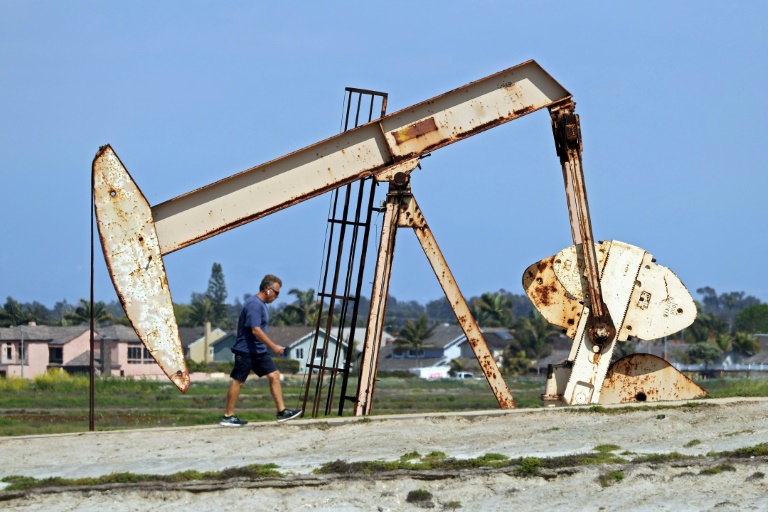
China’s lockdown and the stronger dollar and expectations that leading economies will tip into recession continue to push oil prices lower, with both main contracts down more than one percent Wednesday.

Bets on a plunge in demand have seen the commodity tank about 20 percent in recent months, putting them below the levels seen just before Russia invaded Ukraine and sent prices skyrocketing.

And while concerns remain about supplies, OANDA’s Moya added: “The short-term crude demand outlook appears to be poised for another wave of China Covid-related lockdowns.

“Despite some better-than-expected US services data, global growth isn’t looking good at all and that is trouble for crude prices.”

– Key figures at around 0810 GMT –

Tokyo – Nikkei 225: DOWN 0.7 percent at 27,430.30 (close)

Hong Kong – Hang Seng Index: DOWN 0.8 percent at 19,044.30 (close)

Shanghai – Composite: UP 0.1 percent at 3,246.29 (close)

London – FTSE 100: DOWN 0.9 percent at 7,236.86

Euro/dollar: UP at $0.9910 from $0.9905 on Tuesday

Pound/dollar: DOWN at $1.1497 from $1.1519

Dollar/yen: UP at 144.10 yen from 142.80 yen

Euro/pound: UP at 86.14 pence from 85.97 pence

West Texas Intermediate: DOWN 1.6 percent at $85.53 per barrel

Brent North Sea crude: DOWN 1.4 percent at $91.56 per barrel

New York – Dow: DOWN 0.6 percent at 31145.30 (close)

Head of Hong Kong journalist union arrested: police source

The head of Hong Kong’s journalist union was arrested on Wednesday, a police source said, just weeks before he was set to leave the city and begin an overseas fellowship.

Ronson Chan, president of the Hong Kong Journalists Association (HKJA), was arrested for allegedly obstructing a police officer and disorder in a public place, a police source told AFP.

Channel C, the online news outlet Chan works for, said the veteran reporter was taken away by police officers who asked to check his identity while he was reporting on a meeting of public housing flat owners.

Chan was set to leave Hong Kong at the end of September for the six-month Reuters Institute fellowship programme at Oxford University.

Authorities have used a national security law and colonial-era sedition charges to crack down on dissent in Hong Kong after democracy protests three years ago.

Local media deemed critical of the government have faced a surge in police investigations and the city has plummeted down global press freedom rankings.

Like many now-shuttered civil society groups and pro-democracy unions, both Chan and the HKJA have faced repeated criticism from media outlets that answer to Beijing’s Liaison Office in the city.

Police action often follows such media coverage. 

Local tabloid Apple Daily and online news platform StandNews — which Chan used to work for — were forced to close last year after executives were charged with national security violations, leaving hundreds of journalists out of work.

When Reporters Without Borders (RSF) released its annual press freedom ranking in May, Hong Kong had plunged 68 places to 148th in the world.

In RSF’s first report in 2002, Hong Kong had some of the freest media in Asia and ranked 18th worldwide.

The Foreign Correspondents’ Club of Hong Kong gave up Asia’s largest annual human right press awards earlier this year, citing risks posed by the security law — a decision that caused controversy among many journalist members.

The club recently published a watered-down statement on press freedom on its website. 

One of the removed sentences from the statement read: “Facing unprecedented attacks on the media, never has our club’s role been more vital -– nor our commitment been stronger.”

Scientists fight to protect DR Congo rainforest as threats increase

A tower bristling with sensors juts above the canopy in northern Democratic Republic of Congo, measuring carbon dioxide emitted from the world’s second-largest tropical rainforest. 

Spanning several countries in central Africa, the Congo Basin rainforest covers an immense area and is home to a dizzying array of species. 

But there are growing concerns for the future of the forest, deemed critical for sequestering CO2, as loggers and farmers push ever deeper inside.

Scientists at the Yangambi Biosphere Reserve in the DRC’s Tshopo province are studying the rainforest’s role in climate change — a subject that received scant attention until recently.

Standing 55 metres tall, the CO2-measuring flux tower came online in 2020 in the lush reserve of 250,000 hectares (620,000 acres).

Yangambi was renowned for tropical agronomy research during the Belgian colonial era. 

This week, it also hosted scientists as part of meetings in the DRC dubbed pre-COP 27, ahead of the COP27 climate summit in Egypt in November.

Thomas Sibret, who runs the CongoFlux CO2 measuring project, said that flux towers are common worldwide.

But until one was set up in Yangambi, there had been none in Congo, which had “limited our understanding of this ecosystem”, he said.

Around 30 billion tonnes of carbon are stored across the Congo Basin, researchers estimated in a study in Nature in 2016. The figure is roughly equivalent to three years’ of global emissions.

Sibret said more time is required to draw definitive conclusions from the data gathered by DRC’s flux tower, but one thing is certain: The rainforest sequesters more greenhouse gases than it emits.

– ‘No more trees’ –

Paolo Cerutti, the head of the Center for International Forestry Research’s operations in Congo, said this was good news.

In Latin America, “we’re starting to see evidence that the Amazon (rainforest) is becoming more of an emitter,” he said.

“We’re betting a lot on the Congo Basin, especially the DRC, which has 160 million hectares of forest still capable of absorbing carbon.”

But Cerutti warned that slash-and-burn agriculture poses a particular threat to the future of the rainforest, pointing out that half a million hectares of forest were lost last year.

Slash-and-burn agriculture sees villagers cultivate lands until they become depleted, then clear forests to create new lands, and repeat the cycle. 

With the DRC’s population of about 100 million people set to expand, many worry the forest is in dire threat. 

Jean-Pierre Botomoito, the head of the Yanonge area about 40 kilometres (24 miles) from Yangambi, said that he once thought the forest was inexhaustible.

But “here, there are no trees,” he said.

Villagers in his once-forested region now have to travel long distances along narrow muddy paths to find tree-dwelling caterpillars — a local delicacy. 

Charcoal used for cooking in the absence of electricity and gas is similarly hard to obtain.

There are efforts to help farmers in the remote and impoverished region to make a living while sustaining the environment.

A largely EU-financed project, for example, trains farmers to rotate cassava and groundnut crops between fast-growing acacia trees. 

Farmers can harvest the acacia trees to make charcoal after six years.

Experts also encourage the use of more efficient kilns to produce more charcoal and teach loggers how to select which trees to fell.

– Vandalism –

Jean Amis, the head of a local farmers’ organisation, was enthusiastic about the project.

“We didn’t necessarily have the right practices” before, he said.

Others are too.

Helene Fatouma, the president of a women’s association, says fishponds on the edge of the forest now yield 1,450 kilos of fish in six months, as opposed to 30 previously.

But not all residents of the surrounding area support the various schemes.

Some people believe that the flux tower is stealing oxygen, for example, or that it is a prelude to land appropriation.

Researchers often find dendrometers — devices that measure tree dimensions — vandalised, and some traditional chiefs think the forest will grow back by itself without outside interference. 

The Indonesia-based Center for International Forestry Research says that resistance to the schemes can be overcome through raising awareness. 

Dieu Merci Assumani, the director of the DRC’s National Institute for Agricultural Research, agreed.

But he said there needs to be more financing for locals, who have seen little benefit from promised funds to protect the rainforest.

Assumani pointed as an example to the $500-million deal to protect the Congo Basin rainforest, signed by President Felix Tshisekedi and then British prime minister Boris Johnson in Glasgow last year.

“Commitments are all very well, but they need to be disbursed,” he said. 

Truss to meet cabinet, face MPs on first full day in power

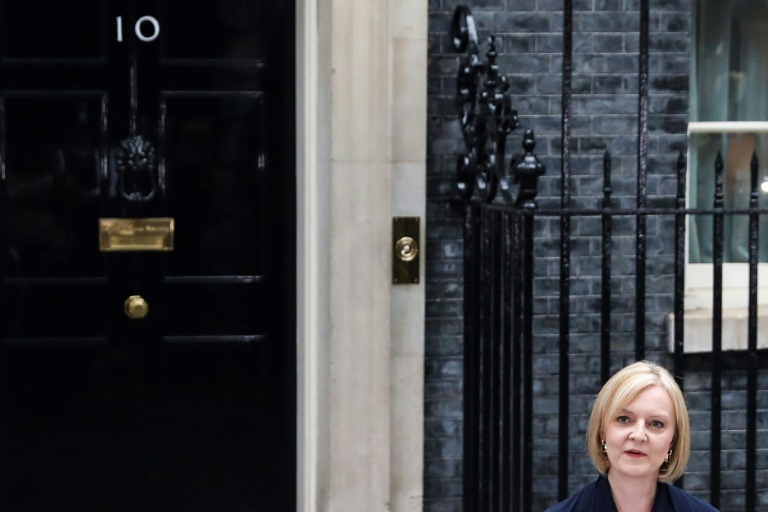
Britain’s new prime minister Liz Truss convenes her senior ministers for an inaugural cabinet meeting on Wednesday on her first full day in office, before she faces a barrage of questions in parliament.

Truss, who officially became leader Tuesday at an audience with head of state Queen Elizabeth II in Scotland after the resignation of Boris Johnson, is set to meet her top team at a morning meeting. 

They include the most diverse top team in British history ever: Kwasi Kwarteng as Chancellor of the Exchequer, James Cleverly as foreign secretary and Suella Braverman as interior minister.

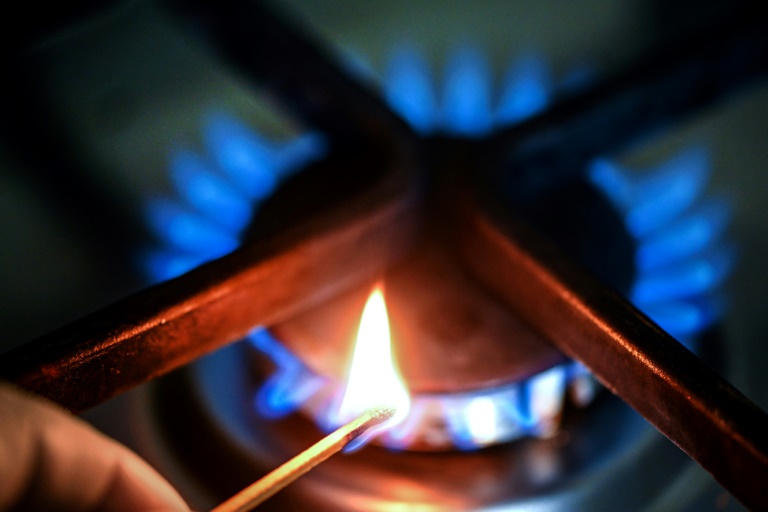
They face a daunting in-tray of issues, most notably decades-high inflation and how to deal with energy bills set to rise by 80 percent next month and then  again in January.

Meanwhile, the Bank of England has tipped the country to fall into recession later this year.

She must also navigate the combustible issue of post-Brexit trading arrangements in Northern Ireland, and in one of her first calls with a foreign leader late Tuesday, she agreed with US President Joe Biden “on the importance of protecting” peace in the province.

In its readout of the call, the White House also said Truss and Biden addressed “the challenges posed by China (and) preventing Iran from ever acquiring a nuclear weapon.” 

But Truss was bullish as she entered Downing Street for the first time as premier, narrowly avoiding a heavy downpour.

“I am confident that together we can ride out the storm,” she said.

Her new ministers may be asked to sign off immediately on a plan to freeze energy bills for the coming winter, possibly longer, a measure that would cost tens of billions of pounds, according to reports.

Tax cuts and diverting some health funding to social care could also reportedly be on the agenda.

“I will cut taxes to reward hard work and boost business-led growth and investment,” Truss promised, while also vowing “action this week” on gas and electricity bills and broader energy policy.

– ‘Almost ungovernable’ –

After Cabinet, Truss will travel to the House of Commons to spar with opposition Labour leader Keir Starmer, in the rival pair’s first Prime Minister’s Questions session.

The often rowdy weekly session, which sees the prime minister quizzed by MPs, will test Truss’s political mettle and rhetorical skills as well as her level of Conservative support.

The 47-year-old won an internal ballot of Tory members on Monday, securing 57 percent of the vote, after a gruelling contest against former finance minister Rishi Sunak that began in July.

But the initial stage of the contest saw her net the support of less than a third of the parliamentary party.

She now faces a tough challenge reuniting the ruling Tories following a bitter leadership battle.

Conservative MPs are “almost ungovernable” and have “no appetite to cope with difficult decisions,” according to a government insider quoted by the Financial Times on Monday.

“They did for Boris and they may do for Liz, too,” the source told the paper.

Truss will likely face a volley of hostile questions from Starmer and the Labour ranks, as they look to capitalise on months of Tory disarray.

Labour has opened up a double-digit lead in the polls but may have to wait two years for the next general election. 

Truss vowed Monday to lead the Conservatives to victory “in 2024”, with an election due by January 2025 at the latest.

– ‘Dreadful policy’ –

Truss, who pitched herself to the Tory grassroots as a tax-cutting free-trade champion ready to slash taxes immediately to turbo-charge growth, faces warnings that these moves could make inflation worse.

The UK has already seen prices rise this year at their steepest rate for four decades, driven by spiralling energy costs.

Under her mooted plans to tackle the situation, gas and electricity bills for both households and businesses would be capped near current levels for the coming winter at least.

The government would lend or guarantee private sector loans to energy providers to make up the difference they pay with soaring global wholesale prices.

It remains unclear whether the government will pay for the plan through extra borrowing or ask consumers to pick up the tab over the next two decades through levies on their energy bills.

Paul Johnson, of the respected Institute for Fiscal Studies (IFS) think-tank, said it was “a dreadful policy” but likely necessary. 

“Hugely expensive, untargeted, increases risk of shortages,” he noted on Twitter. 

But he warned the scale of the problem “means there may just be no practical alternative.”

China export growth slows sharply in August: official data

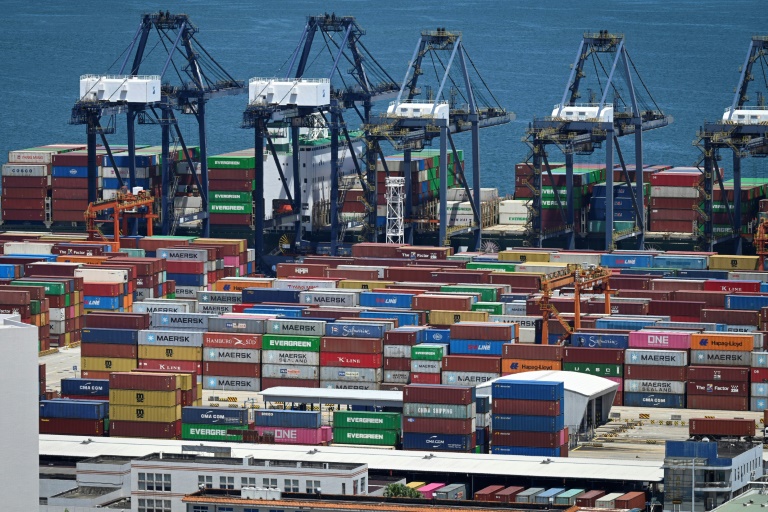
China’s export growth slowed significantly in August, customs authorities said Wednesday, as economic uncertainty is exacerbated by strict Covid-19 lockdowns across the country.

The weakness in trade comes as global demand for Chinese products weakens with energy prices soaring and the United States facing the threat of recession.

At the same time the domestic property sector — which accounts for about a quarter of the world’s number-two economy — continues to struggle with firms staggering under vast amounts of debt.

Overseas shipments increased 7.1 percent on-year, against 18 percent growth in July, China’s General Administration of Customs said, while imports were up only 0.3 percent, compared with a 2.3 percent.

Analysts surveyed by Bloomberg forecast export growth of 13 percent and a 1.1 percent increase in imports.

Sporadic Covid-19 lockdowns around China have dampened consumer enthusiasm and business confidence, while searing temperatures across large parts of the country this summer prompted power rationing for factories.

China’s factory activity shrank for the second month in a row in August, but officials are showing few signs of relaxing strict pandemic curbs, with southwestern megacity Chengdu locking down its 21 million inhabitants last week.

And while officials have announced a range of measures aimed at bolstering the economy, commentators warned that there will not likely be any concerted recovery until the tough Covid measures are removed for good.

“As rising energy prices and monetary policy tightening hit US and Western European households, demand for Chinese manufacturing exports is cooling,” Rajiv Biswas, APAC Chief Economist at S&P Global Market Intelligence told AFP.

Biswas said he expected these factors to continue dampening Chinese exports for the rest of the year, while the country faces “continued weak domestic demand due to the ongoing impact of pandemic-related restrictive measures on consumer spending as well as the residential construction slowdown”.

“Single-digit export growth is more likely for the rest of the year,” Zhang Zhiwei, chief economist at Pinpoint Asset Management, told Bloomberg News.

Chinese leaders had originally set a full-year GDP growth target of around 5.5 percent, but with economic expansion of just 0.4 percent in the second quarter, analysts believe it is unlikely to hit that goal.

Michael Hewson of CMC markets said the latest figures “merely serve to underscore how weak domestic demand still is, and how far away that end of year GDP target of 5.5 percent is”.

“The target may well have been downgraded to an aspiration only last month, but it’s further away than ever after today’s data and we could be lucky to see half that number at this rate.”

Nomura analysts on Tuesday lowered their 2022 growth forecast for China to 2.7 percent from an earlier estimate of 2.8 percent, with nearly every province in the country fighting Covid outbreaks in recent days.

“The picture is not pretty, as China continues to battle the broadest wave of Covid infections thus far,” analysts wrote in a note.

At the same time, China’s property market, a major driver of growth, is struggling with a debt crisis and disruptions to construction.

China’s central bank last month cut the five-year Loan Prime Rate — a benchmark for mortgages — in an effort to boost the flagging sector.

Close Bitnami banner
Bitnami