World

Pakistan's brick workers need kilns reignited after floods

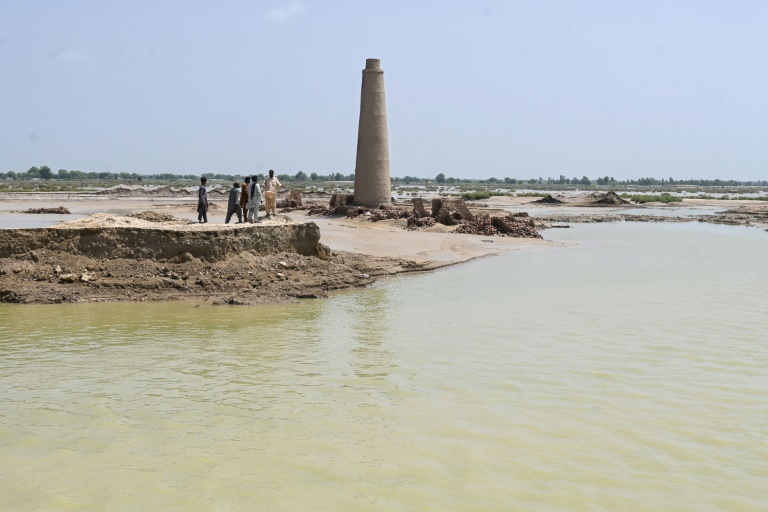
The brick kilns that dominate the small village of Aqilpur in Pakistan’s Punjab province now lie abandoned, furnaces extinguished by weeks of torrential rain that have caused the worst floods in the country’s history.

Though the floods that engulfed Aqilpur and its surrounding fields have receded from the highs of a week ago, the kilns are still surrounded by water.

Most of those who lived on-site — part of the country’s millions-strong workforce known as “daily wagers” because of their piecemeal salaries — abandoned their homes for higher, dry ground.

“I come here daily on my bicycle and go from one kiln to another to look for work but find nothing,” said Muhammad Ayub, an itinerant labourer.

Now, a road that runs through the village has become a kind of town square for the kiln workers, who find themselves both homeless and out of work. 

Ayub, 40, has a sick mother and an eight-year-old daughter to provide for.

When his home was destroyed in the torrential rains that preceded the flood, he sent them to a relative’s house close to the village.

But once the flood hit, his family was forced to take refuge at a makeshift campsite on higher ground outside the village. 

More than 33 million people in Pakistan have been affected by the flooding, brought on by record monsoon rains that have swamped a third of the country, causing at least 1,300 deaths.

The floods have destroyed or badly damaged nearly two million homes or business premises, and for the rebuilding process to begin, kilns like those in Aqilpur will have to fire up again.

– Earning less than $3 a shift –

There are thousands of small brick factories and kilns scattered across much of Pakistan — a vital supplier of building materials for the nation of 220 million.

For now, mounds of bricks that should be making their way to building sites across the country lie partially submerged in floodwater.

Ayub worked 12 hours a night making bricks, earning less than $3 (600 rupees) a shift for his labours.

He would spend the mornings working the fields surrounding the village, and was only able to sleep briefly in the afternoon before his shift began again.

With the kilns shut down and the fields submerged, his daily wage is gone. 

“Where should a labourer go? he asked AFP.

“Wherever the workers go to look for work, they come back empty-handed.”

Daily wagers make up one of the poorest segments of Pakistan’s society and many in rural areas are exploited by unscrupulous large-scale farmers and factory owners who keep them in virtual servitude.

The brickworks in particular are notorious for hiring child labour — illegal under Pakistan law.

One of the youngest among the 50 or so kiln workers camped near Aqilpur is Muhammad Ismail, who joined his father at the brickworks almost a year ago when he turned 12.

He helped mould the clay that makes the bricks before they went into the furnace, hoping his labours would help his parents feed his six younger siblings.

After fleeing their home in the flood, Ismail’s father had to borrow money to buy flour and other necessities for his family.

“But now we are in debt,” Ismail said.

“I have been searching for work with my father every day. We need to pay off our debt, but I’m losing hope.”

It is not uncommon in parts of Pakistan for those who incur debt and fail to pay it back to be forced into bonded labour for years, as interest on the original sum keeps mounting.

This debt can often be handed down from one generation to another.

The kiln workers of Aqilpur have petitioned the owner to spark up the furnaces so they can resume work, but Ayub thinks they are asking for the impossible.

“The water collected here isn’t going to dry up for at least three months,” he said.

“And after the water dries, it will take another two or two-and-half months for the repairs.”
Rescuers scour for survivors after dozens killed in China quake

Rescuers scoured through the rubble of remote villages in mountainous southwestern China Tuesday in a race to find survivors of an earthquake that claimed at least 65 lives, with hundreds of people believed stranded or missing.

The magnitude 6.6 quake hit about 43 kilometres (26 miles) southeast of the city of Kangding in Sichuan province at a depth of 10 kilometres on Monday, according to the US Geological Survey.

At least 65 people were killed, state media reported Tuesday morning, with more than 200 still cut off from rescuers in a remote scenic area and scores missing elsewhere.

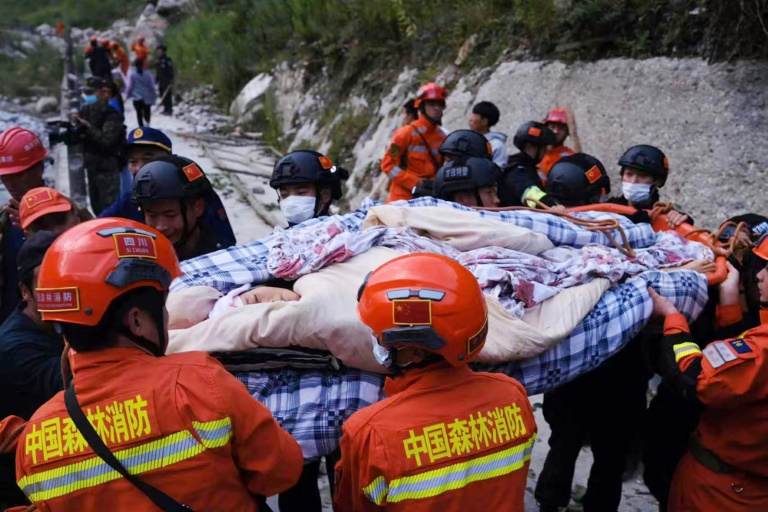
Video from state broadcaster CCTV showed firefighters pulling a bruised and bloodied woman from the rubble and carrying a survivor on a stretcher across a river on a makeshift bridge as well as damaged buildings and streets strewn with fallen masonry.

The China Meteorological Administration warned that quake-stricken areas will experience “significant rainfall” until Thursday and that landslides could hamper rescue work.

Footage shared by the China Earthquake Networks Center (CENC) on Monday showed boulders thundering down mountainsides in Luding county, kicking up clouds of dust as the tremors swayed roadside telephone wires.

At least one town suffered “severe damage” from landslides triggered by the quake, CCTV reported.

“Before 5 o’clock, I heard a rumbling sound. The house shook so badly that I woke up immediately,” one woman surnamed Zheng from Sichuan’s Lu county told Beijing News.

“My brother’s house collapsed. His house is an old one built more than 10 years ago. My house is newly built, so the situation is better.”

– ‘All-out to rescue people’ –

The quake also rocked buildings in the provincial capital of Chengdu — where millions are confined to their homes under a strict Covid-19 lockdown — and in the nearby megacity of Chongqing, residents told AFP.

At least 10 aftershocks of magnitude 3.0 and above had been detected as of 7 am local time (2300 GMT), CCTV said.

More than 200 people are reportedly cut off from rescuers in the Hailuogou Scenic Resort, with CCTV airing footage of bulldozers clearing boulders and other debris blocking access to the area.

And over 100 people have been told to evacuate due to fears of a flash flood after a landslide cut off a tributary to the Dadu river, the Luding government said on its official Weibo account.

Rescuers in kayaks were seen transporting villagers downstream from a dammed lake formed by the landslide, CCTV said.

China’s cabinet last night said it has dispatched a special team to lead the efforts, with CCTV reporting more than 6,500 people had been sent as part of the emergency rescue response. 

And President Xi Jinping called for local authorities to “make saving lives the first priority, go all-out to rescue people in disaster-stricken areas and minimise loss of life”, according to CCTV.

Local officials have launched a public appeal for donations to help with relief work.

– Quake-prone region  –

Earthquakes are fairly common in China, especially in the country’s seismically active southwest.

A smaller magnitude 4.6 tremor hit eastern Tibet less than an hour after the initial quake, according to the USGS.

A magnitude 8.0 quake in 2008 in Sichuan’s Wenchuan county left tens of thousands dead and caused enormous damage.

In June, at least four people were killed and dozens more injured after two earthquakes in southwestern China.

That month, a shallow 6.1-magnitude shock hit a sparsely populated area about 100 kilometres west of Chengdu.

It was followed three minutes later by a second quake of magnitude 4.5 in a nearby county, where the deaths and injuries occurred.

Authorities in Chengdu extended the city’s lockdown on Sunday as they fight a Covid flare-up with hundreds of cases.

The region has also suffered a summer of extreme weather, with a record-breaking heatwave noticeably drying rivers in Chongqing.

School gardens a lifeline for hungry Cambodian children

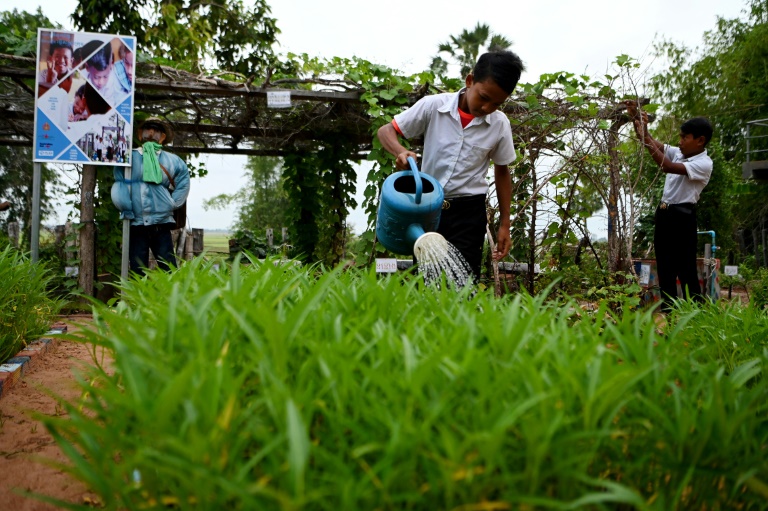
Among the spinach crops at a rural Cambodian school garden, children test their maths skills while weighing produce — but as food prices rise, the vegetable patch has become a safety net for struggling families.

Long before Covid restrictions ravaged the economy, malnutrition and poverty stalked Cambodia’s youth — the legacy of decades of conflict and instability following the Khmer Rouge’s genocidal rule in the 1970s.

Food insecurity has worsened since Russia’s invasion of Ukraine stoked global shortages and inflation. 

The World Food Programme (WFP) says the prices of local staples have shot up in the past year: duck eggs by more than 20 percent and cooking oil by almost 40 percent.

Noodle seller Chhon Puthy, 31, has lost half her income during the pandemic and worries about her children’s health.

“We parents had to reduce our rations sometimes,” said the mother-of-two from the village of Chroy Neang Nguon, about two hours from Siem Reap.

In recent months, her family has come to rely on the garden and free breakfast programme at her children’s school to ease the financial pressure.

“This community depends on the meal because every morning parents are busy with farming and could not cook for their kids,” she said.

– Garden lifeline –

Remote schools in Siem Reap province use the gardens to teach pupils life skills such as cultivation and cooking.

“I learn about growing vegetables, making organic fertiliser, how to work in soil,” 12-year-old Seyha told AFP, adding that the know-how has helped improve her family’s own vegetable patch.

More than 1,000 schools around Cambodia have meal programmes supported by the WFP, with around 50 learning gardens set up with help from global rights group Plan International.

Before each day’s lessons, students are served a free breakfast of rice and fish soup with vegetables grown in the garden.

Long Tov, principal of the school in Chroy Neang Nguon, said the garden and meal programme helped improve students’ concentration levels, memory and test results.

“It (also) hugely reduces the school dropout rate,” he told AFP.

Vireak, 12, said he was happy to eat at school with his classmates. 

“I feel stronger and smarter and I can learn things much easier than before,” he said.

– Impact –

Malnutrition costs the Cambodian economy more than $400 million a year — about 2.5 percent of GDP — according to a study backed by UNICEF.

The country has made progress on tackling the issue — chronic malnutrition in children under five fell from 32 percent in 2014 to 22 percent — but there are fears that inflation could stall momentum.

“Rising food prices are likely to exacerbate the already high levels of childhood malnutrition, just as the country started showing signs of recuperating from the pandemic’s economic impacts,” the United Nations Nutrition office in Cambodia said in a statement.

At Angkor Hospital for Children in Siem Reap, nutrition team leader Sroeu Phannsy told AFP that some poor families were being forced to water down infant milk formula, which can have devastating consequences for a baby’s health.

The fight against malnutrition takes her team of health workers into remote areas, where they treat children with ready-to-eat, energy-dense snacks.

“We worry about their growth in the future, particularly their brain development will be weakened as they prepare to go to school at the age of five or six,” she said.

Children and infants not receiving enough nutrients can go on to suffer low IQs, blindness, stunted growth and weak immune systems.

Back at the learning garden, a teacher shows a class, with full bellies after breakfast, when vegetables are ready to harvest.

“In the learning garden, we are happy and learn important skills… Back home I grow morning glory, cucumber, beans and tomatoes,” 12-year-old Vireak said.

One suspect dead, another on the run after Canada stabbing rampage

One of two brothers who were the target of a massive manhunt in Canada after allegedly carrying out a stabbing spree that left 10 dead and 18 wounded has been found dead, police said Monday.

The killings in the remote James Smith Cree Nation Indigenous community and the town of Weldon in Saskatchewan province in western Canada are among the deadliest incidents of mass violence to ever hit the nation.

Police have been scouring Saskatchewan and two neighboring provinces for the men, identified as Myles and Damien Sanderson, aged 30 and 31 respectively, since early Sunday.

On Monday afternoon, Damien Sanderson’s body was “located outdoors in a heavily grassed area in proximity to a house that was being examined” by authorities in the James Smith Cree Nation, federal police Assistant Commissioner Rhonda Blackmore told a news conference.

He had “visible injuries” that were not self-inflicted, she said.

“We can’t say for sure how Damien came to be deceased,” Blackmore said, adding that he “could potentially” have been killed by his brother Myles who remains at large and is “strongly believed” to have also sustained injuries.

The manhunt for Myles Sanderson continues, with border officials alerted to the possibility he may try to sneak into the United States.

Evan Bray, police chief of provincial capital Regina, said authorities were still operating under the assumption that he was hiding out in the city — 300 kilometers (185 miles) from the site of the attack — after suspected sightings in the area.

He urged residents “to be very aware of your surroundings and report anything that’s unusual or any information that you might have” in a video posted to Twitter Monday evening, adding that the search would continue through the night.

Earlier, federal police announced that murder, attempted murder and burglary charges were laid against the pair, adding that further charges are anticipated as the investigation progresses.

Myles Sanderson has also been wanted since May for breaching parole, after reportedly serving part of a five-year sentence for assault and robbery.

– Attacks ‘all too commonplace’ –

In an address in Ottawa, after ordering the flag on parliament lowered in memory of the victims, Prime Minister Justin Trudeau said the attacks were shocking and heartbreaking.

“This kind of violence has no place in our country,” he said. “Sadly, over these past years, tragedies like these have become all too commonplace.”

Since 2017, Canada has witnessed a rampaging gunman masquerading as a policeman kill 22 people in Nova Scotia, another kill six worshippers at a Quebec City mosque, and a driver of a van kill 11 pedestrians in Toronto.

Residents of the James Smith Cree Nation and Weldon spoke of their shock and devastation, and have identified two of the victims as 77-year-old widower Wes Petterson and a 49-year-old mother of two.

Weldon’s Diane Shier told the daily Saskatoon Star Phoenix her neighbor Petterson lived with his adult grandson, who hid in the basement and called the police.

“It was about 7:30 am. My husband was in the garden. He saw police cars and an ambulance come to town. It’s a little town. This is terrible, terrible. We’ve still got our doors locked, staying inside, not going out,” she told the newspaper.

Fellow resident Ruby Works said the killings would haunt the town.

“No one in this town is ever going to sleep again. They’re going to be terrified to open their door,” Works said.

Another resident, Robert Rush, said he had left his granddaughter at home to go buy a birthday cake for his wife. 

“I gave her two guns and a bat,” he said.

Thirteen of the wounded remained hospitalized as of Monday evening, with four in critical condition, Saskatchewan authorities said in a statement.

– 13 crime scenes –

Blackmore said authorities believe some of the victims were targeted and others were attacked randomly.

Maximum police resources were being deployed for the manhunt, she added. “We are using every human, investigational and technological resource we have available to locate and arrest the persons responsible for this tragedy,” she said earlier.

Forensic teams could be seen in broadcast images combing 13 crime scenes in the Indigenous community and Weldon for clues.

Federation of Sovereign Indigenous Nations Chief Bobby Cameron lamented “the unspeakable violence that claimed the lives of innocent people” and blamed “harmful illegal drugs (that) invade our communities” for the destruction.

He urged Saskatchewan residents to come forward with any relevant information.

“The uncertainty continues to cause immeasurable stress and panic among our families, friends and neighbors,” he said. 

“They have already gone through enough.”

Japan to spend $12mn on ex-PM Abe's state funeral

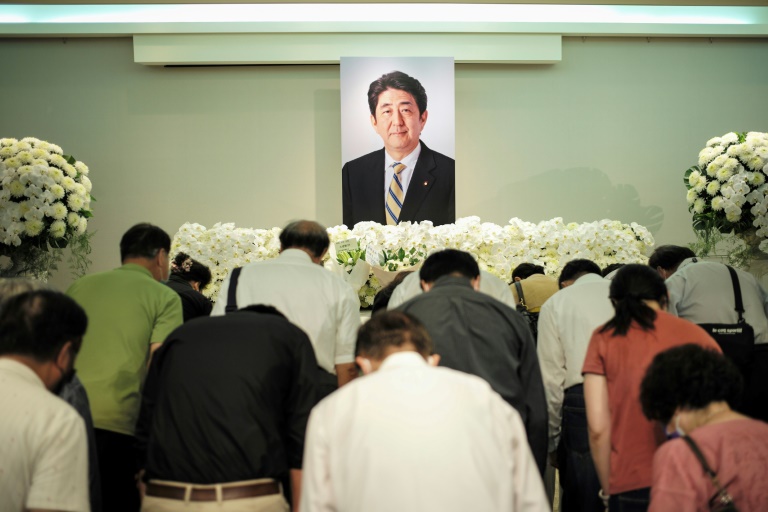
Japan expects to spend around 1.7 billion yen ($12 million) on a state funeral for assassinated former premier Shinzo Abe, the government said Tuesday, despite controversy over the plan.

Abe was shot dead on the campaign trail in July, and the government expects dozens of current and former heads of state to pay condolences at the September 27 service in Tokyo.

But recent polls show about half of Japanese voters oppose the publicly funded event.

Security is expected to cost around 800 million yen, with another 600 million to be spent on hosting and 250 million for the ceremony, top government spokesman Hirozaku Matsuno said Tuesday.

“Delegates from more than 190 foreign (countries and regions) will likely participate,” he told reporters at a regular briefing.

The funeral will be held at Tokyo’s Nippon Budokan, a venue used for concerts and sports events that also hosted Japan’s last state funeral for a former prime minister in 1967.

Prime Minister Fumio Kishida has said the domestic and international accomplishments of Abe, the country’s longest-serving prime minister, make a state ceremony appropriate.

But state funerals for former politicians are rare in Japan, and a weekend poll published Monday by the Yomiuri Shimbun newspaper found that 56 percent of voters oppose the event, against 38 percent in favour.

Other recent polls have shown similar levels of opposition, and Kishida has said he is ready to answer questions on the issue in parliament.

His government’s approval ratings have taken a hit in recent weeks, in part due to the funeral decision.

Some opponents are against spending public money on an event honouring a politician, while others think a state funeral effectively forces public mourning or minimises Abe’s nationalist views and alleged links to cronyism.

Abe’s accused killer, Tetsuya Yamagami, who is in custody, targeted the former leader believing he was linked to the Unification Church.

Yamagami’s mother reportedly made large donations to the church, which her son blamed for the family’s financial difficulties.

A small private funeral for Abe was held at a temple in Tokyo shortly after his death, with thousands of people gathering outside to lay flowers and offer respects.

Shelling forces Ukraine nuclear plant off grid as Zelensky warns of 'disaster'

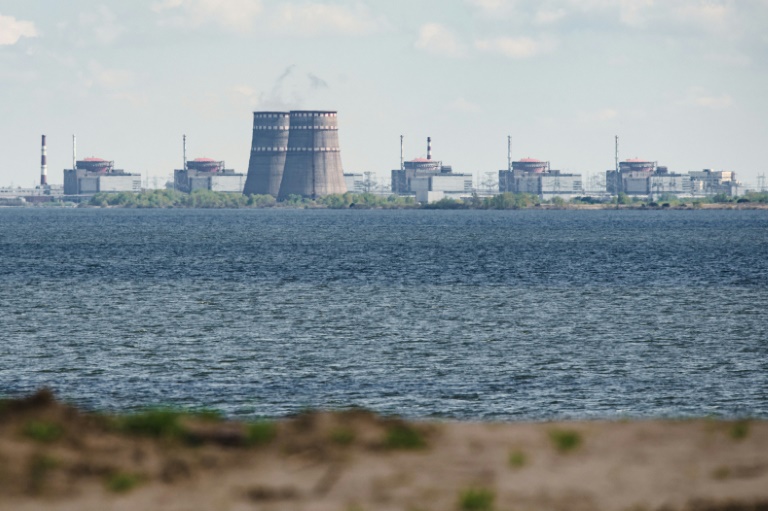
The last working reactor at Ukraine’s Zaporizhzhia nuclear plant was disconnected from the grid after shelling caused a fire, with the UN’s atomic watchdog due to brief the Security Council about the crisis on Tuesday.

Soon after it invaded in February, Moscow largely took control of the Kherson and Zaporizhzhia regions of southern Ukraine and is now aiming to absorb them into Russia through referendums — as it did with Crimea in 2014.

Russia also blamed Western sanctions for its halting of gas supplies to Germany and on top of the crisis in Europe, there are fears of a nuclear disaster at Zaporizhzhia — Europe’s biggest atomic facility.

“Today the last power transmission line connecting the plant to the energy system of Ukraine was damaged due to another Russian provocative shelling,” Ukrainian President Volodymyr Zelensky said in an address on Monday.

“Due to Russian provocation, the Zaporizhzhia plant is one step away from a radiation disaster.”

The Zaporizhzhia nuclear plant (ZNPP) has been shelled in recent weeks, with Ukraine and Russia blaming each other for the attacks as fears grow of a possible nuclear incident.

Ukraine’s state-run power company Energoatom said Monday that the last working reactor — Power Unit No. 6 — was disconnected from the grid because shelling had started a fire.

The IAEA said it was informed by Ukraine that the line would be reconnected when the fire is extinguished.

The atomic watchdog was due to release a report Tuesday on its mission to the plant last week, with its chief Rafael Grossi scheduled to also brief the UN Security Council on the situation.

In 1986, Ukraine — a part of the Soviet Union at the time — was the scene of the world’s worst nuclear disaster, when a reactor at the Chernobyl plant exploded and spewed radiation into the atmosphere.

The attacks at ZNPP have prompted comparisons with that disaster, and the European Union’s foreign policy chief Josep Borrell on Monday accused Russia of “reckless behaviour”.

– Kherson referendum on hold –

After failing to capture Kyiv in the first weeks of the war, Russia has focused its attacks on the south and east of Ukraine.

Authorities installed by Moscow in the Kherson region of Ukraine on Monday suggested that plans for a referendum on joining Russia had been delayed.

Kirill Stremousov, a pro-Moscow official in Kherson, told Russian state TV that the referendum plans were on hold — but later moderated his comments saying it was not a pause, without mentioning a date for the vote.

“The referendum will take place no matter what. No one will cancel it,” Stremousov said in a video posted on Telegram.

Ukrainian forces have claimed gains in their counter-offensive in the south, saying they have recaptured several areas and destroyed targets including a warehouse containing referendum ballot papers.

Russia’s defence ministry said meanwhile it continued to inflict heavy losses on the Ukrainian army.

At his vineyard in southern Ukraine, near the city of Mykolaiv, Pavlo Magalias oversaw the harvest of his grapes with the sound of artillery resonating behind him.

“I’m the winegrower closest to the frontline”, said the 59-year-old, who is originally from Moldova.

Despite the bombs, Magalias said he has never thought of leaving.

“The war isn’t going to kill everybody,” he told AFP. “Life will win out.”

– Europe’s energy crisis –

Russia is a major energy exporter, and it has slashed gas supplies to Europe following Western sanctions over the invasion.

Power bills have soared across Europe, fuelling already rocketing inflation.

The Kremlin has blamed the “collective West — in this case the European Union, Canada and Britain” for the halt of Russian gas supplies to Germany, after key infrastructure was closed indefinitely for repairs.

Fears are growing of crippling winter gas shortages in Europe.

German Economy Minister Robert Habeck said Monday that it would keep two nuclear plants on standby beyond the end of the year “in case needed” for electricity — partly delaying a nuclear exit planned under former chancellor Angela Merkel.

Germany has already moved to restart mothballed coal power plants and fill gas storage ahead of the winter to guard against an energy shortfall.

Earlier Monday, Chancellor Olaf Scholz spoke with French President Emmanuel Macron, who said France was ready to deliver more gas to allow Germany to export more electricity.

burs-qan/dhc

Rescuers scour for survivors after dozens killed in China quake

Rescuers scoured through rubble for hundreds of missing people in parts of southwestern China on Tuesday after an earthquake killed more than 60, as local weather services warned rain was set to inundate the area.

The magnitude 6.6 quake hit about 43 kilometres (26 miles) southeast of the city of Kangding in Sichuan province at a depth of 10 kilometres on Monday, according to the US Geological Survey.

At least 65 people were killed, state media reported Tuesday morning, with more than 200 still trapped in a remote scenic area and scores missing elsewhere.

Video from state broadcaster CCTV showed firefighters pulling a bruised and bloodied woman from the rubble and carrying a survivor on a stretcher across a river on a makeshift bridge as well as damaged buildings and streets strewn with fallen masonry.

And footage shared by the China Earthquake Networks Center (CENC) showed boulders thundering down mountainsides in Luding county, kicking up clouds of dust as the tremors swayed roadside telephone wires.

At least one town suffered “severe damage” from landslides triggered by the quake, CCTV reported.

“Before 5 o’clock, I heard a rumbling sound. The house shook so badly that I woke up immediately,” one woman surnamed Zheng from Sichuan’s Lu county told Beijing News.

“My brother’s house collapsed. His house is an old one built more than 10 years ago. My house is newly built, so the situation is better.”

– ‘All-out to rescue people’ –

The quake also rocked buildings in the provincial capital of Chengdu — where millions are confined to their homes under a strict Covid-19 lockdown — and in the nearby megacity of Chongqing, local residents told AFP.

At least 10 aftershocks of magnitude 3.0 and above had been detected as of 7 am local time (2300 GMT), CCTV said.

The local meteorological department has said Luding county — the epicentre of the quake — will experience rain for three days, potentially hampering rescue work.

China’s cabinet last night said it has dispatched a special team to lead the efforts, with CCTV reporting more than 6,500 people had been sent to emergency rescue. 

And President Xi Jinping called for local authorities to “make saving lives the first priority, go all-out to rescue people in disaster-stricken areas and minimise loss of life”, according to CCTV.

Local officials have launched a public appeal for donations to help with relief work.

– Quake-prone region  –

Earthquakes are fairly common in China, especially in the country’s seismically active southwest.

A smaller magnitude 4.6 tremor hit eastern Tibet less than an hour after the initial quake, according to the USGS.

A magnitude 8.0 quake in 2008 in Sichuan’s Wenchuan county left tens of thousands dead and caused enormous damage.

In June, at least four people were killed and dozens more injured after two earthquakes in southwestern China.

That month, a shallow 6.1-magnitude shock hit a sparsely populated area about 100 kilometres west of Chengdu.

It was followed three minutes later by a second quake of magnitude 4.5 in a nearby county, where the deaths and injuries occurred.

Authorities in Chengdu extended the city’s lockdown on Sunday as they fight a Covid flare-up with hundreds of cases.

The region has also suffered a summer of extreme weather, with a record-breaking heatwave noticeably drying rivers in Chongqing.

Asian markets mixed as bargain-buying tempers fears over outlook

Asian investors struggled Tuesday to recover from the previous day’s losses on growing fears over Europe’s worsening energy crisis, China’s economic slowdown and central bank efforts to contain surging inflation.

However, the dollar lost some of its momentum against its major peers on profit-taking, with the euro finding some support ahead of an expected European Central Bank interest rate hike and sterling lifted by the election of a new prime minister.

Russia’s decision not to resume gas supplies to Europe — in retaliation for sanctions over Ukraine — sent shock waves through trading floors Monday as it ramped up expectations of a painful recession in major economies.

European bourses took the brunt of the selling, though they pared their earlier losses as commentators said the shutoff had been expected to come at some point.

With Wall Street closed for a holiday, Asia had few new catalysts to drive buying.

In early trade, markets fluctuated between gains and losses, with Hong Kong, Seoul and Wellington down, while Shanghai, Sydney, Singapore, Taipei and Jakarta edged up. Tokyo and Manila were flat.

“A lot of clients are asking, have we seen the bottom yet and are we going into a global recession?” Grace Tam, of BNP Paribas Wealth Management Hong Kong, told Bloomberg Television.

“We do think the risk of a global recession, especially next year, is actually quite high” and that the energy crisis “is not fully priced” into markets, she said.

The next key event for investors is the ECB rate decision Thursday, with some observers tipping a 75 basis point hike to bring down record-high inflation.

That is followed later in the month by the Federal Reserve’s meeting, where policymakers will debate a similar move, which would be the third rise in a row.

However, while central banks are lifting borrowing costs to fight surging prices, they have little power over the cost of oil, a key driver of the rises.

And on Monday OPEC and other major producers announced a surprise cut in output, sending both main contracts rising. The move came after the crude market fell in recent months on demand fears caused by a possible recession.

“In absolute terms, the 100,000 barrels a day supply cut doesn’t matter that much to global supply balances,” said Noah Barrett of Janus Henderson Investors.

“However, in terms of signalling, the move is important as it indicates that OPEC+ is watching demand very closely and is trying to manage supply to keep a floor on oil prices.”

Several countries including the United States had earlier called for a rise in production, which was followed by a small lift of 100,000 barrels.

“The modest increase we got a month ago is now gone, so OPEC+ is clearly sending a message that they are not bowing to external demands,” said Barrett.

“We should expect continued volatility in oil prices, with global demand indicators driving price movements.”

Brent and WTI were both down from Monday’s levels.

– Key figures at around 0230 GMT –

Tokyo – Nikkei 225: FLAT at 17,624.96 (break)

Hong Kong – Hang Seng Index: DOWN 0.3 percent at 19177.54

Shanghai – Composite: UP 0.4 percent at 3213.31

Euro/dollar: UP at $0.9960 from $0.9921 on Monday

Dollar/yen: DOWN at 140.40 yen from 140.53 yen

Pound/dollar: UP at $1.1587 from $1.1507

Euro/pound: DOWN at 85.96 pence from 86.22 pence

West Texas Intermediate: DOWN 1.0 percent at $88.54 per barrel

Brent North Sea crude: DOWN 1.0 percent at $94.80 per barrel

New York – Dow: Closed for public holiday

London – FTSE 100: UP 0.1 percent at 7,287.43 (close)

Asian markets mixed as bargain-buying tempers fears over outlook

Asian investors struggled Tuesday to recover from the previous day’s losses on growing fears over Europe’s worsening energy crisis, China’s economic slowdown and central bank efforts to contain surging inflation.

However, the dollar lost some of its momentum against its major peers on profit-taking, with the euro finding some support ahead of an expected European Central Bank interest rate hike and sterling lifted by the election of a new prime minister.

Russia’s decision not to resume gas supplies to Europe — in retaliation for sanctions over Ukraine — sent shock waves through trading floors Monday as it ramped up expectations of a painful recession in major economies.

European bourses took the brunt of the selling, though they pared their earlier losses as commentators said the shutoff had been expected to come at some point.

With Wall Street closed for a holiday, Asia had few new catalysts to drive buying.

In early trade, markets fluctuated between gains and losses, with Hong Kong, Seoul and Wellington down, while Shanghai, Sydney, Singapore, Taipei and Jakarta edged up. Tokyo and Manila were flat.

“A lot of clients are asking, have we seen the bottom yet and are we going into a global recession?” Grace Tam, of BNP Paribas Wealth Management Hong Kong, told Bloomberg Television.

“We do think the risk of a global recession, especially next year, is actually quite high” and that the energy crisis “is not fully priced” into markets, she said.

The next key event for investors is the ECB rate decision Thursday, with some observers tipping a 75 basis point hike to bring down record-high inflation.

That is followed later in the month by the Federal Reserve’s meeting, where policymakers will debate a similar move, which would be the third rise in a row.

However, while central banks are lifting borrowing costs to fight surging prices, they have little power over the cost of oil, a key driver of the rises.

And on Monday OPEC and other major producers announced a surprise cut in output, sending both main contracts rising. The move came after the crude market fell in recent months on demand fears caused by a possible recession.

“In absolute terms, the 100,000 barrels a day supply cut doesn’t matter that much to global supply balances,” said Noah Barrett of Janus Henderson Investors.

“However, in terms of signalling, the move is important as it indicates that OPEC+ is watching demand very closely and is trying to manage supply to keep a floor on oil prices.”

Several countries including the United States had earlier called for a rise in production, which was followed by a small lift of 100,000 barrels.

“The modest increase we got a month ago is now gone, so OPEC+ is clearly sending a message that they are not bowing to external demands,” said Barrett.

“We should expect continued volatility in oil prices, with global demand indicators driving price movements.”

Brent and WTI were both down from Monday’s levels.

– Key figures at around 0230 GMT –

Tokyo – Nikkei 225: FLAT at 17,624.96 (break)

Hong Kong – Hang Seng Index: DOWN 0.3 percent at 19177.54

Shanghai – Composite: UP 0.4 percent at 3213.31

Euro/dollar: UP at $0.9960 from $0.9921 on Monday

Dollar/yen: DOWN at 140.40 yen from 140.53 yen

Pound/dollar: UP at $1.1587 from $1.1507

Euro/pound: DOWN at 85.96 pence from 86.22 pence

West Texas Intermediate: DOWN 1.0 percent at $88.54 per barrel

Brent North Sea crude: DOWN 1.0 percent at $94.80 per barrel

New York – Dow: Closed for public holiday

London – FTSE 100: UP 0.1 percent at 7,287.43 (close)

Lula voters nostalgic for social gains in Brazil

Former president Luiz Inacio Lula da Silva’s social programs helped lift tens of millions of people from poverty and chip away at deep-rooted inequality and discrimination in Brazil — gains supporters hope will now resume.

AFP spoke to Lula voters about the October 2 election pitting the leftist ex-president (2003-2010) against far-right incumbent Jair Bolsonaro.

– Fed-up producer –

Writer, producer and cultural commentator Jonathan Raymundo, 33, is fed up with Bolsonaro’s Brazil.

“I can’t take it anymore. Violence against women, blacks and the LGTB+ community has reached alarming levels in this country. We need love, affection, happiness… and Bolsonaro is the opposite of that,” says Raymundo, a black history and philosophy teacher with bright pink hair.

Raymundo is the founder of an Afro-Brazilian cultural festival in Rio de Janeiro, “Wakanda in Madureira,” inspired by the fictional kingdom of the Black Panther superhero.

Explaining his outrage, he cites some of Bolsonaro’s most controversial remarks: saying a woman was “not worth raping” because she was “too ugly;” talking about weighing black people in “arrobas,” a unit of measurement used for animals and, in centuries past, for slaves; saying he could not do anything about Brazil’s soaring Covid-19 deaths because he was “not a gravedigger.”

Raymundo is nostalgic for the “fundamental advances” for historically disadvantaged groups under Lula and his Workers’ Party (PT), he says.

“Brazil is at a crossroads, with the chance to transform itself into a great country. But that will only happen if it knows how to include its racial diversity in the spheres of power,” he says.

Raymundo wants to see a new generation of leaders emerge, but “for now, there’s no alternative,” he says.

“We need Lula as president again.”

– Teacher activist –

In the northeastern city of Salvador, computer science teacher Messias Figueiredo, 56, is a well-known figure at left-wing protests — instantly recognizable with his rectangular glasses and an ever-present red boom box emblazoned with Lula’s picture.

“It’s an instrument of peaceful political struggle,” says Figueiredo, who blasts campaign jingles and pro-Lula commentary from his sound system as he marches.

“He enabled millions of Brazilians to escape poverty. He led the best government in this country’s history.”

Above all, he loves Lula because he, too, is from the impoverished northeast, “a region that has always lagged behind the rest of the country,” he says.

He praises the former president for bringing investment to the region, opening universities there and launching construction of a massive canal to bring water from the Sao Francisco river to the semi-arid Sertao region.

“We can’t take this fascist, genocidal, inhuman government anymore,” he says through his loudspeaker, accusing Bolsonaro of “decimating” the environment and “massacring” Brazil’s indigenous peoples.

– Grateful union leader –

Public health worker and union leader Aline Xavier, 33, credits Lula with helping her “beat the statistics,” get an education and make a career for herself, despite being a black woman from the poor suburbs of Sao Paulo.

The PT “opened the door for me to have a voice… and not be excluded because I was a woman and black,” she says.

Xavier, head of a municipal employees’ union, believes in “everything Lula does,” she says.

A graduate of a public school that opened under the PT, she disdains the Bolsonaro administration for its “neoliberal policies, attacks on workers’ rights and intolerance for minorities.”

Lula, she hopes, will restore “a government that goes into marginal areas, that gives opportunities to blacks, to working and single moms, that recognizes you can’t have meritocracy if you don’t have equality.”

“Lula is the only one who can get our country back,” she says.

Close Bitnami banner
Bitnami