World

Brazil's Bolsonaro still the 'Bibles, bullets and beef' candidate

Four years after President Jair Bolsonaro rode to victory on a groundswell of support from Brazil’s “Bibles, bullets and beef” coalition, that powerful trio of groups is still the core of his base.

AFP spoke to Bolsonaro backers from the “BBB” constituencies — conservative Christians, security hardliners and farmers — about the October 2 election pitting the far-right incumbent against leftist ex-president Luiz Inacio Lula da Silva (2003-2010).

– Proud cop –

Former Rio de Janeiro police officer Elitusalem Gomes Freitas, 42, says his admiration for Bolsonaro began well before the ex-army captain’s 2018 campaign, when the now-president was still a congressman for Rio.

“When officers were killed in the line of duty, other politicians never sent condolences. Bolsonaro did,” says Freitas.

“He went to the funerals and paid tribute to our colleagues.”

Freitas, a powerfully built man who spent two decades as a cop before getting into local politics, is now running to represent Rio in Congress, as Bolsonaro once did.

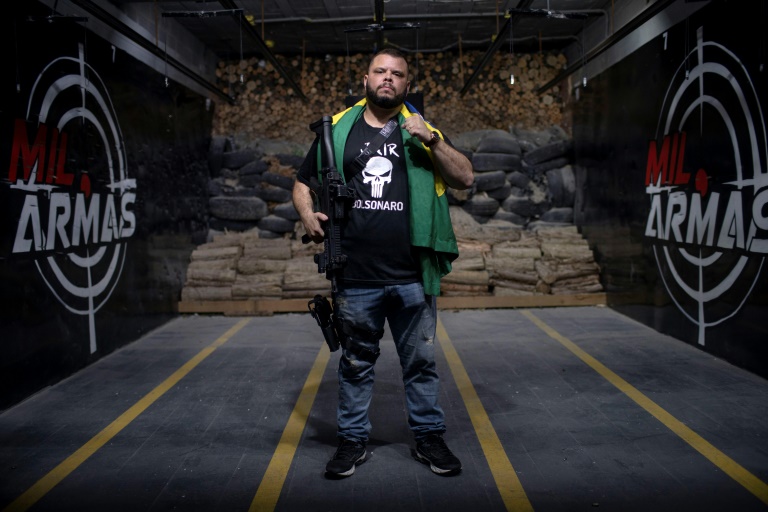
Pictures on his social networks show him with a stern face, a rifle, a Brazilian flag and a black T-shirt stamped with the word “Bolsonaro.”

He calls himself a pro-gun father, conservative and “terror of the left.”

Bolsonaro’s win four years ago “generated huge expectations among conservatives,” he says.

“But problems that have been dragging on for 30 years don’t get solved in four.”

Still, he loves Bolsonaro’s “integrity,” after what he calls the “robbery” of Lula and his Workers’ Party.

Like Bolsonaro, he alleges nefarious powers are plotting a “secret vote count” to steal the election.

“The people accusing Bolsonaro of planning a coup are inverting the narrative. They’re the real coup-mongers,” he says.

– Values voter –

Retired math teacher Mariza Russo Feres, 68, says she prays every day “for Brazil and the president God will choose.”

The Evangelical pastor’s wife fears Lula returning to power.

“I’m afraid of communism,” she says, sitting in a pew at the church where her husband preaches in the upscale Sao Paulo neighborhood of Pinheiros.

She sees Bolsonaro as the defender of family values, and Lula as a threat.

“For example, abortion is anti-Christian, and we’re worried about a candidate… imposing it on us,” she says, referring to pro-abortion rights statements by Lula, who later back-tracked, facing negative reactions in a country that remains largely conservative on the issue.

Feres also cites the left’s supposed imposition of “gender ideology” in schools.

Bible in hand, she kneels, closes her eyes and prays for the country.

– Happy farmer –

Farmer Carlos Alberto Moresco, 47, says he is far from “idolizing” Bolsonaro. You won’t find any campaign posters for the incumbent on his farm, Fazenda Onca.

But the facts speak for themselves, he says: Bolsonaro has been the best president in recent history for Brazil’s agribusiness industry, opening new markets in Asia and investing in infrastructure that helped boost exports.

“He was very smart in choosing his ministers. Our (former) agriculture minister (Tereza Cristina) was an agricultural engineer,” says Moresco, who grows corn and soybeans on the 1,500 hectares (3,700 acres) he rents outside the central-western farm town of Luziania.

He is also a fan of the Bolsonaro administration’s program to regularize land titles for more than 350,000 farmers who lacked legal deeds.

“He gave dignity to these people who were barely scraping by. Today, with titles to their land, they can take out loans and farm with dignity,” he says.

“When someone’s loyal to my values and principles, I’m loyal to them. Our president values rich and poor alike, that’s why I say he deserves four more years.”
Power outages, damage as Typhoon Hinnamnor hits South Korea

Typhoon Hinnamnor made landfall in South Korea early Tuesday, causing power outages and leaving one person missing, but with few early reports of major damage as it headed back to sea.

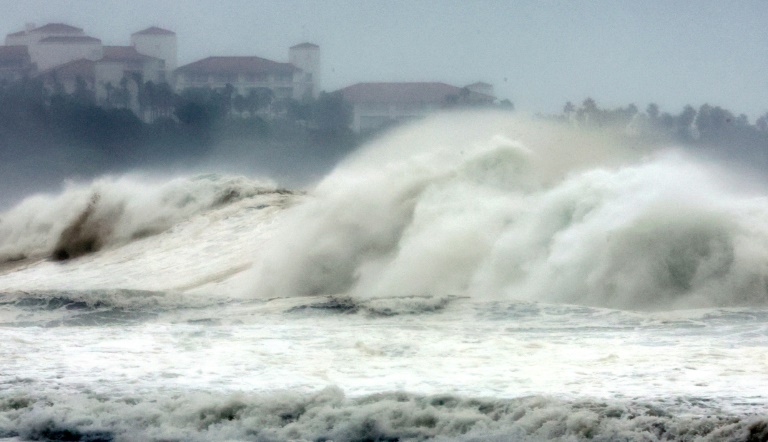
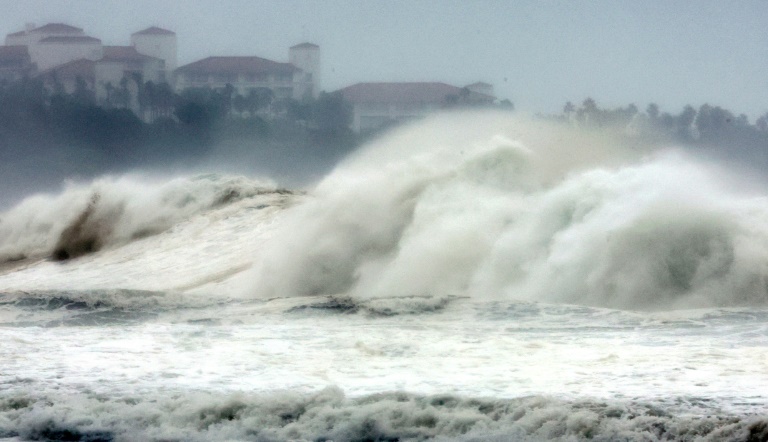
The typhoon, one of the most powerful to bear down on the country in decades, hit the country’s southern island of Jeju overnight before making landfall near the port city of Busan, which was battered by huge waves and heavy rain, damaging beachfront roads and shops.

The typhoon was moving at a speed of 43 metres per second when it made landfall, authorities said.

A 25-year-old man went missing after falling into a rain-swollen stream in the eastern coastal city of Ulsan, the Central Disaster and Safety Countermeasures Headquarters said.

As a precaution, authorities closed more than 600 schools nationwide, and local carriers grounded some 250 domestic flights — but service gradually resumed Tuesday as Hinnamnor headed towards Japan.

North Korea had also been bracing for the storm, with leader Kim Jong-un overseeing a meeting in Pyongyang to assess the country’s disaster response preparedness, official state media reported Tuesday.

Kim said boosting Pyongyang’s disaster response was crucial as “nothing is more precious… than the people’s life and safety,” the Korean Central News Agency said.

Experts say North Korea is particularly vulnerable to flooding and heavy rains due to deforestation and poor irrigation. 

On Tuesday morning, the typhoon was over the Sea of Japan, known as the East Sea in Korea, 100 kilometres (62 miles) off Tsushima island of Nagasaki prefecture in southwestern Japan, according to the Japan Meteorological Agency.

More than 35,000 households were without power in Japan’s southwestern Kyushu region, Kyushu Electricity said in a statement.

Packing gusts of up to 180 kilometres per hour, it was moving northeast at a speed of 45 kph and was expected to bring heavy rains to western Japan on Tuesday.

Some of Japan’s famed bullet trains were suspended due to strong winds and rain, and many local trains also paused service, operator JR Kyushu said.

At least 120 flights departing and landing at Kyushu’s airport were cancelled, public broadcaster NHK reported.

Power outages, damage as Typhoon Hinnamnor hits South Korea

Typhoon Hinnamnor made landfall in South Korea early Tuesday, causing power outages and leaving one person missing, but with few early reports of major damage as it headed back to sea.

The typhoon, one of the most powerful to bear down on the country in decades, hit the country’s southern island of Jeju overnight before making landfall near the port city of Busan, which was battered by huge waves and heavy rain, damaging beachfront roads and shops.

The typhoon was moving at a speed of 43 metres per second when it made landfall, authorities said.

A 25-year-old man went missing after falling into a rain-swollen stream in the eastern coastal city of Ulsan, the Central Disaster and Safety Countermeasures Headquarters said.

As a precaution, authorities closed more than 600 schools nationwide, and local carriers grounded some 250 domestic flights — but service gradually resumed Tuesday as Hinnamnor headed towards Japan.

North Korea had also been bracing for the storm, with leader Kim Jong-un overseeing a meeting in Pyongyang to assess the country’s disaster response preparedness, official state media reported Tuesday.

Kim said boosting Pyongyang’s disaster response was crucial as “nothing is more precious… than the people’s life and safety,” the Korean Central News Agency said.

Experts say North Korea is particularly vulnerable to flooding and heavy rains due to deforestation and poor irrigation. 

On Tuesday morning, the typhoon was over the Sea of Japan, known as the East Sea in Korea, 100 kilometres (62 miles) off Tsushima island of Nagasaki prefecture in southwestern Japan, according to the Japan Meteorological Agency.

More than 35,000 households were without power in Japan’s southwestern Kyushu region, Kyushu Electricity said in a statement.

Packing gusts of up to 180 kilometres per hour, it was moving northeast at a speed of 45 kph and was expected to bring heavy rains to western Japan on Tuesday.

Some of Japan’s famed bullet trains were suspended due to strong winds and rain, and many local trains also paused service, operator JR Kyushu said.

At least 120 flights departing and landing at Kyushu’s airport were cancelled, public broadcaster NHK reported.

Army taking on gangs in Colombia's biggest port

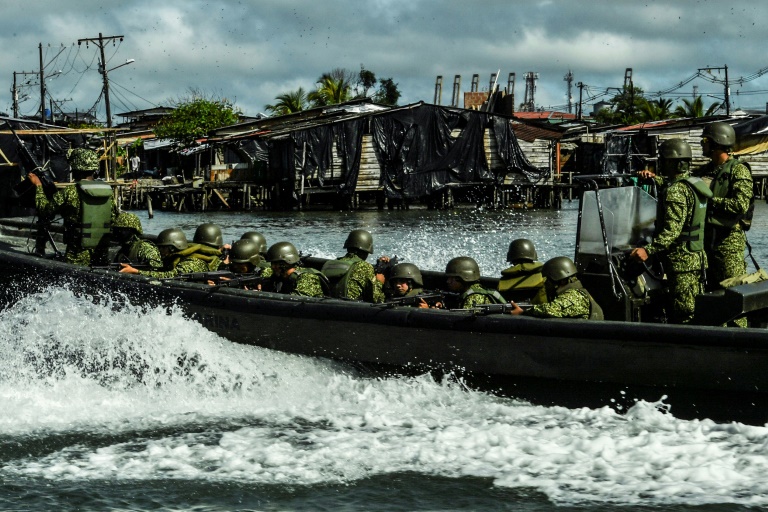
Colombia’s army put on a show of force at the weekend in a town whose population is at the mercy of two warring gangs.

The “Shottas” and “Spartanos” gangs have been fighting for months over control of Buenaventura’s drug trafficking trade, and other illegal activities such as micro-trafficking, extortion and kidnappings.

But the army has tried to assert some state control by coming out in force in several neighborhoods in Colombia’s main port city.

Buenaventura is where 40 percent of the country’s international trade takes place and the departure point of most of the cocaine destined for the United States.

In recent years, it has become one of the most violent cities in the country, with 576 murders between 2017 and 2021, according to the Pares foundation, along with forced disappearances and kidnappings.

On August 30, the two gangs were involved in a shoot-out using automatic weapons that lasted several hours.

It was a “night of terror,” said local media.

Surrounded by mangroves, Buenaventura is a city of between 350,000 and 500,000 people, with 90 percent claiming African descent.

The city extends along an avenue flanked by poor neighborhoods down to the port at the end of a lagoon.

Those are places where it is too unsafe to venture alone due to the kidnapping risk.

Shottas and Spartanos share control of these neighborhoods of modest brick homes, unfinished buildings surrounded by steel fences, wooden huts on stilts and metal shacks perched over water and garbage.

The gangs swept in and replaced the right-wing paramilitaries and left-wing guerrillas that used to reign here and were already self-financed by drug trafficking and terrorising the local population.

– ‘New urban war’ –

Formed from a schism in the La Local criminal group, these two gangs markedly stepped up their actions from the end of 2020 and their territory extends to the marshlands on the edge of town.

Buenaventura has since been a hive of shoot-outs, kidnappings and extortion.

Locals speak too of sinister so-called “slaughterhouse” homes, where the bodies of kidnap victims are dismembered before being disposed of in the laguna, far from prying eyes.

“The two groups made themselves with legal businesses, above all food: eggs, cheese, fruit… nothing got away from them. They were even prepared to fix prices on certain basic foods,” Juan Manuel Torres, a researcher at the country’s peace and reconciliation commission, told AFP.

“What we’re living through now is a new urban war, one in which control of the neighborhoods is at play.”

With new left-wing President Gustavo Petro due to visit Buenaventura on Tuesday to implement his “total peace” policy aimed at negotiating with, rather than crushing, criminal groups, police and the army patrolled the city’s streets night and day.

They were most present in streets known for being conflict zones between the rival gangs, known as “invisible borders.”

In one such neighborhood, Jean XXIII, shootings are a near-daily occurrence and terrified residents barricade themselves inside their homes once night falls.

The sudden appearance of soldiers has generated apprehension and curiosity.

Heads pop out of doorways and eyes peer from behind curtains, as heavily armed soldiers carefully make their way down roads and alleyways.

“The criminals could shoot at us at any time,” warned lieutenant colonel Samuel Aguilar, commander of the 24th marine infantry battalion.

“The two gangs are at war here and they don’t like seeing us interfering in their business.”

Alongside the police, they are trying to prevent the gangs from asserting their authority on the streets.

“There have been many changes in Buenaventura in one year, and unfortunately not to the benefit of the community,” added Aguilar.

UK's Johnson to quit as PM, Truss to take over

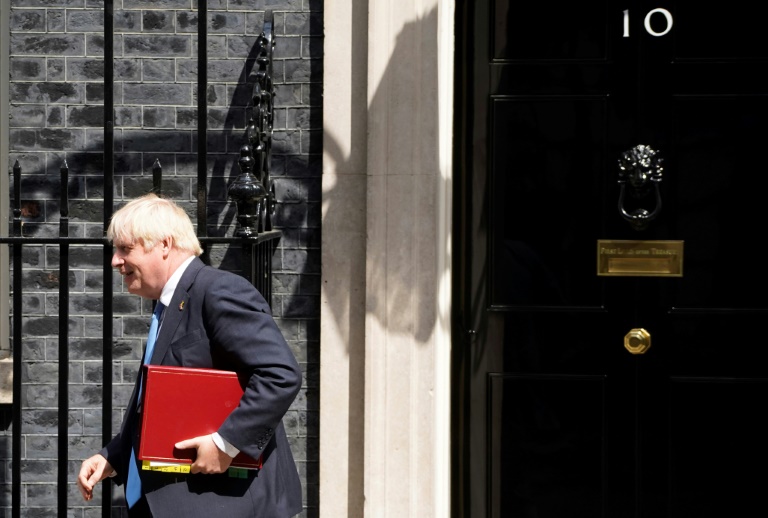
British Prime Minister Boris Johnson formally tenders his resignation to Queen Elizabeth II on Tuesday, handing over power to Liz Truss after his momentous tenure dominated by Brexit and Covid was cut short by scandal.

Johnson, who was forced to quit after losing the support of dozens of his ministers, bids farewell from Downing Street before jetting to northeast Scotland to see the 96-year-old monarch.

Normally the handover of power is a swift affair, with the outgoing and incoming leaders making a short trip to Buckingham Palace in central London.

But both Johnson and Truss face a 1,000-mile (1,600-kilometre) round trip to the head of state’s remote Balmoral retreat in the Scottish Highlands.

The queen opted not to return from her annual summer break for the brief ceremonial audience, after persistent health issues that have affected her ability to walk and stand.

Johnson is due to arrive at 11:20 am (1020 GMT) at Balmoral, with Truss expected at 12:10 pm, royal officials said.

At the meeting, which should last about 30 minutes, she will ask Truss, as the leader of the largest party in parliament, to form a government.

Truss, 47, was announced winner of an internal vote of Conservative party members on Monday, after a gruelling contest that began in July.

All eyes will be on her return to the British capital and first address as prime minister, which is expected to take place outside 10 Downing Street on Tuesday afternoon — weather permitting.

Heavy rain and storms are forecast, mirroring the gloomy economic situation that she and her new senior ministers will have to tackle from day one.

The appointments are due to be finalised before she hosts her first cabinet meeting and faces questions in parliament on Wednesday.

– To-do list –

Business secretary Kwasi Kwarteng is expected to become finance minister, with attorney general Suella Braverman moved to the tricky brief of home secretary, and James Cleverly to foreign affairs.

If confirmed, it would mean no white men in any of Britain’s four main ministerial posts for the first time ever.

Truss faces a daunting to-do list, with the UK in the grip of its worst economic crisis in decades.

Inflation is rampant and running at 40-year highs of 10.1 percent, with predictions of worse to come and recession as winter bites.

Households face an 80 percent increase in gas and electricity bills from October, while businesses warn they could go to the wall from even bigger hikes.

Truss, who touts herself as a free-market liberal, has promised tax cuts to stimulate growth, despite warnings that greater borrowing could make inflation worse.

The contrast to her beaten leadership rival Rishi Sunak’s more cautious approach has opened another rift in the Conservative party that was already divided by Johnson’s departure.

Recent opinion polls suggest a sizeable chunk of the British public have no faith in her ability to tackle the cost-of-living crisis.

A new poll by YouGov said only 14 percent expect Truss to do a better job than Johnson. 

Johnson, 58, remains popular among grassroots Tories as a charismatic election winner, who took the country out of the European Union.

Despite repeated accusations of corruption and cronyism during his tenure, and an unprecedented police fine for breaking his own lockdown rules, Johnson is said to be smarting at having to leave.

Speculation has swirled that he could bide his time for a comeback, particularly if Truss struggles to overcome the country’s many problems.

But on Monday he gave his full-throated backing to his successor and urged the party: “Now is the time for all Conservatives to get behind her 100 percent.”

In her acceptance speech on Monday, Truss ruled out seeking her own mandate from the public at an early general election, vowing victory in 2024.

Irish data watchdog fines Instagram 405 mn euros over children

Ireland’s Data Protection Commission on Monday said it had fined Instagram a record 405 million euros ($402 million) for breaching regulations on the handling of children’s data.

“We adopted our final decision last Friday and it does contain a fine of 405 million euros,” the DPC said in a statement. Full details of the decision will be published next week, it added.

The DPC launched an investigation in late 2020 into concerns about how the image-sharing social media platform handles children’s personal data.

The probe centred on the “appropriateness” of Instagram profile and account settings for children, and the firm’s “responsibility to protect the data protection rights of children as vulnerable persons”.

It was conducted under the General Data Protection Regulation (GDPR) — the EU charter of data rights which came into effect in May 2018.

The GDPR gives data regulators the power to impose stiff fines for breaches.

As Instagram is owned by Meta, which has its European headquarters in Dublin, it falls to the DPC to enforce the regulations.

Last year, it fined WhatsApp, also owned by Meta, a then-record 225 million euros for breaking data protection rules. 

Meta, which also owns Facebook, was in March slapped with a 17-million-euro fine for 12 data breaches.

There was no immediate response from Meta when contacted by AFP.

But a company spokesperson was quoted by Irish state broadcaster RTE as saying the Instagram inquiry “focused on old settings that we updated over a year ago”.

“We’ve since released many new features to help keep teens safe and their information private,” they added.

“Anyone under 18 automatically has their account set to private when they join Instagram, so only people they know can see what they post, and adults can’t message teens who don’t follow them.”

The company disagreed with how the fine was calculated and plans to appeal, they added.

Germany puts two nuclear plants on standby in energy U-turn

Germany said Monday it would keep two nuclear plants on standby beyond the end of the year in a policy U-turn, as the shut-off of Russian gas supplies sends Europe scrambling for energy sources.

Following a new network stress test, two of the three remaining power plants would “remain available until mid-April 2023 in case needed”, Economy Minister Robert Habeck said in a statement.

The move partly delays a nuclear exit planned under former chancellor Angela Merkel.

The plants would be kept in reserve to potentially “make a further contribution to the electricity grid in southern Germany”, where the development of renewable power was lagging the north.

Habeck said such a crisis was still “extremely unlikely” and assured that Germany had a “very high security of supply”.

The Green minister also underlined that Germany was not wavering from its plan to move on from nuclear energy, with all plants being unplugged from the grid at the end of the year. 

“New fuel rods will not be put in and after mid-April 2023 it is also over for the reserve,” Habeck said.

An initial stress test in March had found that the remaining nuclear fleet was not needed to ensure energy security, leading to the conclusion that they could be phased out by year’s end as originally planned. 

But the electricity market has since been upended by Russia’s invasion of Ukraine, with power bills soaring in part because Moscow has slashed energy supplies to Europe.

“War and the climate crisis are having a very concrete impact,” Habeck said, referring to a summer drought that has dried up Germany’s rivers and impeded fuel transport.

– Pipeline cut –

Merkel spectacularly decided to ditch atomic energy in 2011 following the Fukushima nuclear disaster in Japan.

Extending the lifetime of the plants, which account for six percent of the country’s electricity output, has set off a heated debate in Germany, where nuclear power has been a source of controversy stretching back before Merkel’s decision.

The move is especially sensitive for Habeck, whose Green party has its roots in the anti-nuclear movement. 

But Germany has already moved to restart mothballed coal power plants and fill gas storage ahead of the winter to guard against an energy shortfall.

Last week, Russian energy giant Gazprom said it would not restart gas deliveries via the Nord Stream 1 pipeline Saturday as planned after a three-day maintenance, pinning the blame on Western sanctions. 

“Problems with pumping (gas) arose due to sanctions that were imposed against our country,” Kremlin spokesman Dmitry Peskov told reporters Monday.

Germany no longer takes Russian supplies into account in its energy security considerations, said Habeck, saying it was “not a surprise” that Moscow did not restart gas flows via Nord Stream 1.

“The only thing that is reliable from Russia is lies,” he said, adding that “we will have to solve our problems without consideration of (Russian President Vladimir) Putin’s erratic decisions, and that’s what we will do.” 

– Bill squeeze –

Swift government action meant Germany would “get through this winter” with the energy it needed, Chancellor Olaf Scholz said Sunday.

But soaring bills meant “rapid” changes were needed to the electricity market at a European level, he said at the unveiling of a 65-billion-euro ($65-billion) inflation relief package.

Hundreds of demonstrators rallied in the eastern city of Leipzig on Monday evening to protest what they see as the insufficiency of the government’s support measures.

The demonstrations called by the far-left Die Linke party could mark the start of a “hot autumn” of protest in Germany as bill payers feel the squeeze from rising prices.

Earlier Monday, Scholz spoke with French President Emmanuel Macron, who said France was ready to deliver more gas to Germany to allow Berlin to export more electricity.

France, which has long leaned on nuclear power, is itself struggling after a number of its reactors were shut down due to corrosion issues.

Other countries have re-evaluated their stance on nuclear energy in the wake of the Russian invasion, including disaster-struck Japan.

Japanese Prime Minister Fumio Kishida called at the end of August for a push to revive the country’s nuclear power industry, and build new atomic plants.

Germany puts two nuclear plants on standby in energy U-turn

Germany said Monday it would keep two nuclear plants on standby beyond the end of the year in a policy U-turn, as the shut-off of Russian gas supplies sends Europe scrambling for energy sources.

Following a new network stress test, two of the three remaining power plants would “remain available until mid-April 2023 in case needed”, Economy Minister Robert Habeck said in a statement.

The move partly delays a nuclear exit planned under former chancellor Angela Merkel.

The plants would be kept in reserve to potentially “make a further contribution to the electricity grid in southern Germany”, where the development of renewable power was lagging the north.

Habeck said such a crisis was still “extremely unlikely” and assured that Germany had a “very high security of supply”.

The Green minister also underlined that Germany was not wavering from its plan to move on from nuclear energy, with all plants being unplugged from the grid at the end of the year. 

“New fuel rods will not be put in and after mid-April 2023 it is also over for the reserve,” Habeck said.

An initial stress test in March had found that the remaining nuclear fleet was not needed to ensure energy security, leading to the conclusion that they could be phased out by year’s end as originally planned. 

But the electricity market has since been upended by Russia’s invasion of Ukraine, with power bills soaring in part because Moscow has slashed energy supplies to Europe.

“War and the climate crisis are having a very concrete impact,” Habeck said, referring to a summer drought that has dried up Germany’s rivers and impeded fuel transport.

– Pipeline cut –

Merkel spectacularly decided to ditch atomic energy in 2011 following the Fukushima nuclear disaster in Japan.

Extending the lifetime of the plants, which account for six percent of the country’s electricity output, has set off a heated debate in Germany, where nuclear power has been a source of controversy stretching back before Merkel’s decision.

The move is especially sensitive for Habeck, whose Green party has its roots in the anti-nuclear movement. 

But Germany has already moved to restart mothballed coal power plants and fill gas storage ahead of the winter to guard against an energy shortfall.

Last week, Russian energy giant Gazprom said it would not restart gas deliveries via the Nord Stream 1 pipeline Saturday as planned after a three-day maintenance, pinning the blame on Western sanctions. 

“Problems with pumping (gas) arose due to sanctions that were imposed against our country,” Kremlin spokesman Dmitry Peskov told reporters Monday.

Germany no longer takes Russian supplies into account in its energy security considerations, said Habeck, saying it was “not a surprise” that Moscow did not restart gas flows via Nord Stream 1.

“The only thing that is reliable from Russia is lies,” he said, adding that “we will have to solve our problems without consideration of (Russian President Vladimir) Putin’s erratic decisions, and that’s what we will do.” 

– Bill squeeze –

Swift government action meant Germany would “get through this winter” with the energy it needed, Chancellor Olaf Scholz said Sunday.

But soaring bills meant “rapid” changes were needed to the electricity market at a European level, he said at the unveiling of a 65-billion-euro ($65-billion) inflation relief package.

Hundreds of demonstrators rallied in the eastern city of Leipzig on Monday evening to protest what they see as the insufficiency of the government’s support measures.

The demonstrations called by the far-left Die Linke party could mark the start of a “hot autumn” of protest in Germany as bill payers feel the squeeze from rising prices.

Earlier Monday, Scholz spoke with French President Emmanuel Macron, who said France was ready to deliver more gas to Germany to allow Berlin to export more electricity.

France, which has long leaned on nuclear power, is itself struggling after a number of its reactors were shut down due to corrosion issues.

Other countries have re-evaluated their stance on nuclear energy in the wake of the Russian invasion, including disaster-struck Japan.

Japanese Prime Minister Fumio Kishida called at the end of August for a push to revive the country’s nuclear power industry, and build new atomic plants.

Israel concedes soldier likely shot Al Jazeera journalist

The Israeli army conceded Monday for the first time that one of its soldiers had likely shot Palestinian-American reporter Shireen Abu Akleh after having mistaken her for a militant.

“There is a high possibility that Ms Abu Akleh was accidentally hit by IDF (Israel Defence Forces) gunfire that was fired toward suspects identified as armed Palestinian gunmen,” said the army’s final investigation report into her May 11 death.

The acknowledgement comes after months in which the army had insisted it was impossible to determine the source of the deadly shot that killed the celebrated Al Jazeera journalist in the occupied West Bank, saying it could have been militant fire.

“Our conclusion is that it’s not possible to determine unequivocally which gunfire killed her, but there’s a higher probability that she was hit by an errant shot of an IDF soldier who did not identify her as a journalist,” a senior Israeli military officer said.

Abu Akleh was wearing a bulletproof vest marked “Press” and a helmet when she was shot in the head during an Israeli army operation.

The Abu Akleh family said that Israel had “refused to take responsibility for the murder” of the journalist, in a press release issued in the wake of the  army’s report.

“We remain deeply hurt, frustrated and disappointed,” the family said, calling for a “credible” US investigation.

The Palestinian Authority accused Israel of intentionally killing the reporter in the Jenin refugee camp, in the northern West Bank, whereas Israel has insisted that even if a soldier fired the fatal shot it was not deliberate.

Al-Jazeera said it denounced the findings of the Israeli investigation and demanded a probe by an “independent international body”.

“Al Jazeera condemns the Israeli occupation forces’ reluctance to explicitly admit their crime and attempts to evade the prosecution of the perpetrators,” it said in a statement. 

– ‘Call for accountability’ –

On Monday, the senior army officer told reporters that the soldiers were under heavy fire and aimed to hit Abu Akleh because they had mistaken her for a Palestinian militant.

“When they fired in her direction they didn’t know she was a journalist, it was a mistake, they thought they were firing at terrorists shooting at them,” the officer said.

“He’s sorry about it and I’m sorry about it too,” the officer said of the soldier who shot in the direction of Abu Akleh. 

“He didn’t do it on purpose, it’s totally clear,” he added.

But the New York-based Committee to Protect Journalists was critical of the army’s report.

Its “admission of guilt is late and incomplete. They provided no name for Shireen Abu Akleh’s killer and no other information than his or her own testimony that the killing was a mistake,” said Sherif Mansour, CPJ’s Middle East and North Africa programme coordinator.

Israeli rights group B’Tselem, a campaigner against Israeli settlement expansion, condemned the army’s report as a “whitewash”. The killing was “no mistake, it’s policy”, it said.

A United Nations investigation concluded in June that there was “no evidence of activity by armed Palestinians close by” when Abu Akleh was shot.

The United States on July 4 said she was likely shot by Israeli fire but that there was no evidence her killing was intentional and that the bullet was too damaged for a conclusive finding.

After the release of the army report on Monday, State Department spokesman Ned Price said: “We welcome Israel’s review of this tragic incident, and again underscore the importance of accountability in this case, such as policies and procedures to prevent similar incidents from occurring in the future.”

The US statement in July outraged Abu Akleh’s family and Palestinian leaders who accused Washington of failing to seek accountability from Israel over the killing of the journalist, who also held US citizenship.

“We are continuing to call for accountability and for justice for Shireen,” Lina Abu Akleh, the journalist’s niece, said in Washington after meeting US Secretary of State Antony Blinken.

In May, Israel’s military advocate had said there was no suspicion of criminal activity since the event took place in an active combat zone.

The military advocate said Monday that the circumstances of the incident “do not raise the suspicion of a crime having been committed which would justify the opening of a criminal investigation”.

One brother dead, other on the run after Canada stabbing rampage

One of two brothers who were the target of a massive manhunt in Canada after allegedly carrying out a stabbing spree that left 10 dead and 18 wounded has been found dead, police said Monday.

The killings in the remote James Smith Cree Nation Indigenous community and the town of Weldon in Saskatchewan province in western Canada are among the deadliest incidents of mass violence to ever hit the nation.

Police have been scouring Saskatchewan and two neighboring provinces for the men, identified as Myles and Damien Sanderson, aged 30 and 31 respectively, since early Sunday.

On Monday afternoon, Damien Sanderson’s body was “located outdoors in a heavily grassed area in proximity to a house that was being examined” by authorities in the James Smith Cree Nation, federal police Assistant Commissioner Rhonda Blackmore told a news conference.

He had “visible injuries” that were not self-inflicted, she said.

“We can’t say for sure how Damien came to be deceased,” Blackmore said, adding that he “could potentially” have been killed by his brother Myles who remains at large and is “strongly believed” to have also sustained injuries.

Sanderson’s exact cause of death will be determined by the Saskatchewan coroner’s office, which has yet to set a date and time for the examination. 

The manhunt for Myles Sanderson continues, with border officials alerted to the possibility he may try to sneak into the United States.

Evan Bray, police chief of provincial capital Regina, said he is still believed to be hiding out in the city — 300 kilometers (185 miles) from the site of the attack — after suspected sightings in the area.

“We are still operating under the impression that Myles is in the city of Regina,” he said.

– Attacks ‘all too common’ –

Earlier, federal police announced that murder, attempted murder and burglary charges were laid against the pair, adding that further charges are anticipated as the investigation progresses.

Myles Sanderson has also been wanted since May for breaching parole, after reportedly serving part of a five-year sentence for assault and robbery.

In a video address in Ottawa, after ordering the flag on parliament lowered in memory of the victims, Prime Minister Justin Trudeau said the attacks were shocking and heartbreaking.

“This kind of violence has no place in our country,” he said. “Sadly, over these past years, tragedies like these have become all too commonplace.”

Since 2017, Canada has witnessed a rampaging gunman masquerading as a policeman kill 22 people in Nova Scotia, another kill six worshippers at a Quebec City mosque, and a driver of a van kill 11 pedestrians in Toronto.

Residents of the James Smith Cree Nation and Weldon spoke of their shock and devastation, and have identified two of the victims as a 77-year-old widower and a 49-year-old mother of two.

Weldon’s Diane Shier told the daily Saskatoon Star Phoenix her neighbor — the widower — lived with his adult grandson, who hid in the basement and called police.

“It was about 7:30 am. My husband was in the garden. He saw police cars and an ambulance come to town. It’s a little town. This is terrible, terrible. We’ve still got our doors locked, staying inside, not going out,” she told the newspaper.

Fellow resident Ruby Works said the killings would haunt the town.

“No one in this town is ever going to sleep again. They’re going to be terrified to open their door,” Works said.

Another resident, Robert Rush, said he had left his granddaughter at home to go buy a birthday cake for his wife. “I gave her two guns and a bat,” he said.

– 13 crime scenes –

Blackmore said that authorities believe some of the victims were targeted and others were attacked randomly.

Federation of Sovereign Indigenous Nations Chief Bobby Cameron lamented “the unspeakable violence that claimed the lives of innocent people.”

He blamed “harmful illegal drugs (that) invade our communities” for the destruction.

Blackmore said maximum police resources were being deployed for the manhunt. “We are using every human, investigational and technological resource we have available to locate and arrest the persons responsible for this tragedy,” she’d said earlier.

Forensic teams could be seen in broadcast images combing 13 crime scenes in the Indigenous community and Weldon for clues.

Close Bitnami banner
Bitnami