World

Truss named UK leader as embattled Tories urged to unite

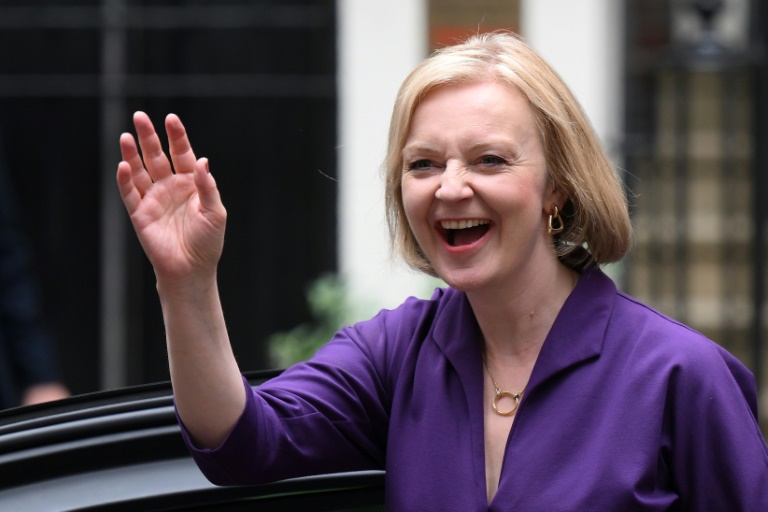
Britain’s new Conservative leader Liz Truss Monday vowed “bold” action to fix the country’s worst economic crisis in decades, as she was confirmed as Prime Minister Boris Johnson’s successor after a gruelling party contest.

The foreign secretary resisted pressure for a politically perilous early election to confirm her new mandate, vowing instead to “deliver a great victory for the Conservative party in 2024”.

Truss beat her rival, former finance minister Rishi Sunak, by about 57 to 43 percent after a summer-long contest decided by just over 170,000 Conservative members — a tiny sliver of Britain’s electorate.

Sunak — who has been lukewarm about whether he would serve in Truss’s cabinet — tweeted that now was the time for the party to unite as “one family”.

But Truss ignored her applauding rival as she marched up to the stage of the central London convention hall, calling it an “honour” to be elected after undergoing “one of the longest job interviews in history”.

“I campaigned as a conservative, and I will govern as a conservative,” she said, touting Tory values of low taxes and personal responsibility.

Truss vowed a “bold plan” to address tax cuts and the energy crisis, which she has indicated will be financed by much higher borrowing — even at the risk of stoking double-digit inflation.

Truss, 47, will be the UK’s third woman to become prime minister following Theresa May and Margaret Thatcher.

– Public mistrust –

She will formally take office Tuesday, after Johnson tenders his resignation to Queen Elizabeth II.

“I know she has the right plan to tackle the cost-of-living crisis, unite our party and continue the great work of uniting and levelling up our country,” Johnson tweeted.

“Now is the time for all Conservatives to get behind her 100 percent.”

The leadership contest began in July after Johnson announced his departure following a slew of scandals and resignations from his government, including Sunak’s.

Truss reserved a portion of her short speech to praising Johnson’s record, including on Brexit and the Covid pandemic, and said he was “admired from Kyiv to Carlisle”.

That won applause from the Tory faithful present. The right-wing ideologue, however, faces a tough task in winning over public opinion.

A snap poll by YouGov found only one in seven people thought Truss would be a better prime minister than Johnson, mirroring other recent surveys showing her low popularity.

One last month found 43 percent did not trust her “at all” to deal with the cost-of-living crisis, as energy prices rocket amid Russia’s war in Ukraine.

– ‘Ready to work’ –

Truss is also viewed with mistrust among some of Britain’s allies, after taking a hard line against the European Union over post-Brexit trading rules for Northern Ireland.

“I look forward to a constructive relationship, in full respect of our agreements,” European Commission president Ursula von der Leyen said, flagging climate change and Ukraine as areas for cooperation.

On the campaign trail last month, Truss meanwhile refused to identify French President Emmanuel Macron as a friend to Britain.

He said he was “ready to work together as friends and allies” after Truss’s election.

Ireland’s government also gave Truss a wary welcome, but the scale of the challenges ahead saw the Smarkets betting exchange give her a 25 percent chance of failing to last through 2023.

Millions say that with energy bills set to rise by 80 percent from October — and even higher from January — they face a painful choice between eating and heating this winter, according to surveys.

Polls show public support for an early general election, and the Conservatives face a growing challenge to retain their grip on power.

Opposition Labour leader Keir Starmer sent his own congratulations to Truss.

– Storm clouds –

“But after 12 years of the Tories all we have to show for it is low wages, high prices, and a Tory cost-of-living crisis,” Starmer tweeted.

“Only Labour can deliver the fresh start our country needs.”

On Tuesday morning, Johnson will deliver a farewell speech at Downing Street before flying to Scotland — where heavy rain is forecast — to hand his resignation to Queen Elizabeth.

For the first time in her 70-year reign, the 96-year-old monarch will appoint the prime minister at her Scottish retreat, Balmoral, rather than at Buckingham Palace in London.

Truss is expected to fly separately to accept the queen’s invitation to take over, to ensure continuity of government in case of any mishaps.

On her return to Downing Street, the new prime minister will then give a short address to the nation. By tradition, that happens on the steps of Number 10.

But it may have to be moved indoors with forecasts for thundery downpours, matching Britain’s dismal outlook as the Truss government starts life.
Germany puts two nuclear plants on standby in energy U-turn

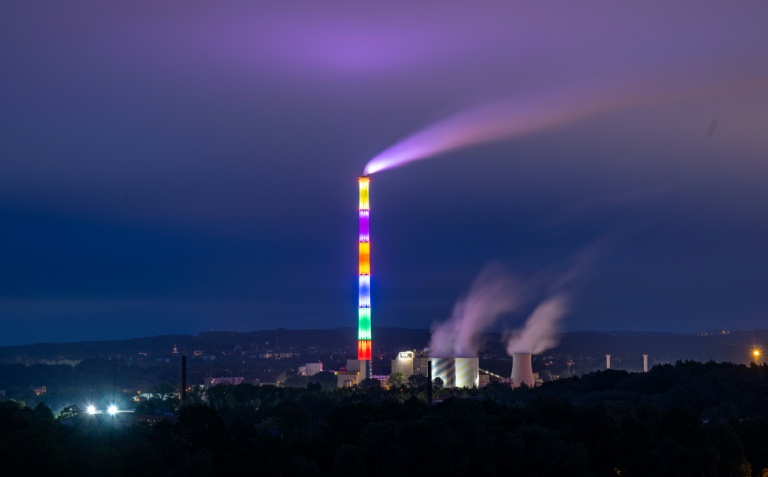
Germany said Monday it would keep two nuclear plants on standby beyond the end of the year in a policy U-turn, as the shut-off of Russian gas supplies sends Europe scrambling for energy sources.

Following a new network stress test, two of the three remaining power plants would “remain available until mid-April 2023 in case needed”, Economy Minister Robert Habeck said in a statement.

The move partly delays a nuclear exit planned under former chancellor Angela Merkel.

The plants would be kept in reserve to potentially “make a further contribution to the electricity grid in southern Germany”, where the development of renewable power was lagging the north.

Habeck said such a crisis was still “extremely unlikely” and assured that Germany had a “very high security of supply”.

The Green minister also underlined that Germany was not wavering from its plan to move on from nuclear energy, with all plants being unplugged from the grid at the end of the year. 

“New fuel rods will not be put in and after mid-April 2023 it is also over for the reserve,” Habeck said.

An initial stress test in March had found that the remaining nuclear fleet was not needed to ensure energy security, leading to the conclusion that they could be phased out by year’s end as originally planned. 

But the electricity market has since been upended by Russia’s invasion of Ukraine, with power bills soaring in part because Moscow has slashed energy supplies to Europe.

“War and the climate crisis are having a very concrete impact,” Habeck said, referring to a summer drought that has dried up Germany’s rivers and impeded fuel transport.

– Pipeline cut –

Merkel spectacularly decided to ditch atomic energy in 2011 following the Fukushima nuclear disaster in Japan.

Extending the lifetime of the plants, which account for six percent of the country’s electricity output, has set off a heated debate in Germany, where nuclear power has been a source of controversy stretching back before Merkel’s decision.

The move is especially sensitive for Habeck, whose Green party has its roots in the anti-nuclear movement. 

But Germany has already moved to restart mothballed coal power plants and fill gas storage ahead of the winter to guard against an energy shortfall.

Last week, Russian energy giant Gazprom said it would not restart gas deliveries via the Nord Stream 1 pipeline Saturday as planned after a three-day maintenance, pinning the blame on Western sanctions. 

“Problems with pumping (gas) arose due to sanctions that were imposed against our country,” Kremlin spokesman Dmitry Peskov told reporters Monday.

Germany no longer takes Russian supplies into account in its energy security considerations, said Habeck, saying it was “not a surprise” that Moscow did not restart gas flows via Nord Stream 1.

“The only thing that is reliable from Russia is lies,” he said, adding that “we will have to solve our problems without consideration of (Russian President Vladimir) Putin’s erratic decisions, and that’s what we will do.” 

– Bill squeeze –

Swift government action meant Germany would “get through this winter” with the energy it needed, Chancellor Olaf Scholz said Sunday.

But soaring bills meant “rapid” changes were needed to the electricity market at a European level, he said at the unveiling of a 65-billion-euro ($65-billion) inflation relief package.

Hundreds of demonstrators rallied in the eastern city of Leipzig on Monday evening to protest what they see as the insufficiency of the government’s support measures.

The demonstrations called by the far-left Die Linke party could mark the start of a “hot autumn” of protest in Germany as bill payers feel the squeeze from rising prices.

Earlier Monday, Scholz spoke with French President Emmanuel Macron, who said France was ready to deliver more gas to Germany to allow Berlin to export more electricity.

France, which has long leaned on nuclear power, is itself struggling after a number of its reactors were shut down due to corrosion issues.

Other countries have re-evaluated their stance on nuclear energy in the wake of the Russian invasion, including disaster-struck Japan.

Japanese Prime Minister Fumio Kishida called at the end of August for a push to revive the country’s nuclear power industry, and build new atomic plants.

After referendum rout, Chile leader pursues quest for new constitution

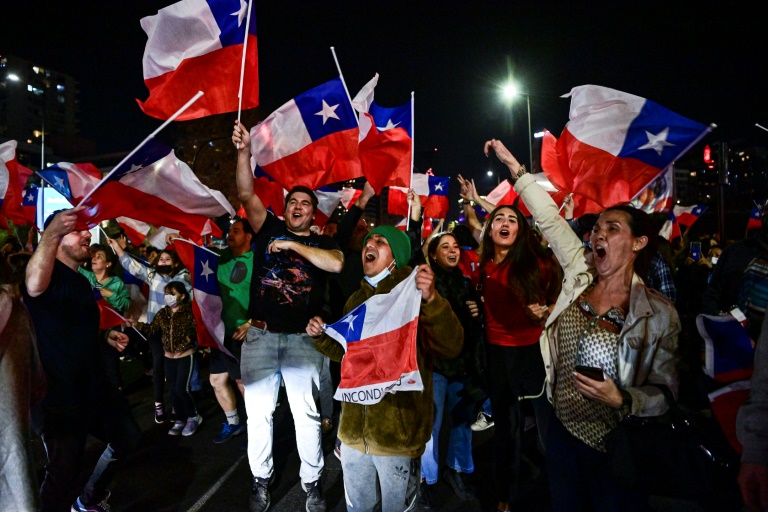
President Gabriel Boric vowed Monday to press ahead with efforts to replace Chile’s dictatorship-era constitution, hours after voters rejected a first draft in a setback to his leftist reform agenda.

Boric, 36, met the rejection by 61.8 percent of voters with “humility,” he said, while adding there was “latent discontent” against deep-rooted social inequality in the country.

Sunday’s “No” majority vote — by a far larger margin than projected by pollsters — was the latest in a wave of recent political and social showdowns in the country.

It started with protests in 2019 for a fairer, more equal society, which led to a referendum in 2020 in which 80 percent voted for replacing the constitution.

A left-leaning convention was elected last year to do the drafting work, and in December, Boric took office after beating a right-wing rival by campaigning against Chile’s neoliberal economic model — protected by the constitution.

The constitution, which dates from the rule of dictator Augusto Pinochet, is widely blamed for making companies and the elite richer at the expense of the poor, working classes.

Among the proposals that proved most controversial, the text would have entrenched the right to elective abortion and guaranteed stronger protections for Indigenous rights.

– Try again –

After the overwhelming rejection, Boric called on politicians to “put Chile ahead of any legitimate differences and agree as soon as possible on the deadlines and parameters for a new constitutional process.”

He invited party representatives to talks starting Monday, but none of the right-wing opposition have indicated whether they would attend.

According to analysts, most Chileans and political parties want a new constitution, but not the one they got to vote on. 

One exception is far-right politician Jose Antonio Kast — Boric’s vanquished rival in December elections — who is against a constitutional change.

“The right is split among the more moderate sectors, which have committed to changes and reforms… and the most extreme sectors, which I believe are not ready for that change,” said analyst Cecilia Osorio of the University of Chile.

The referendum was “disappointing” for public servant Carola, who said the draft was “very progressive on environmental issues” and women’s rights.

“It is a bit difficult” to accept the rejection, she told AFP.

But Pablo Valdez, a 43-year-old lawyer among those celebrating the rejection, said the outcome made him “hopeful” that “tensions will be reduced.”

The Chilean Stock Exchange opened 3.65 percent higher Monday and the peso strengthened 3.2 percent to 885.52 to the US dollar.

Boric, Chile’s youngest-ever president painted by his detractors as a “communist”, had won his election with promises creating rights-driven “welfare state” in one of the world’s most unequal countries.

– ‘Pinochet is alive’ –

Proposals to protect the environment and natural resources such as water — which some say is exploited by private mining companies — garnered much attention in the constitutional debate.

The new constitution would also have overhauled Chile’s Congress, while requiring women to hold at least half of positions in public institutions.

Many had feared the new text would generate instability and uncertainty, which could harm the economy.

But supporters believed it would prompt necessary changes in a conservative country marked by social and ethnic tensions.

Although the constitution has undergone several reforms since its adoption in 1980, it retains the stigma of having been introduced during the military dictatorship of Pinochet.

The draft new text was drawn up by an elected, left-leaning constitutional convention made up of 154 members, split equally between men and women and with 17 places reserved for Indigenous people.

Colombia’s President Gustavo Petro, an ally of Boric, tweeted after the rejection on Monday that: “Pinochet is alive in some political sectors of the Americas.”

The European Union for its part, said it took “note of the commitment expressed by President Boric and across the political spectrum on the need to pursue the constitutional process.”

Israel concedes soldier likely shot Al Jazeera journalist

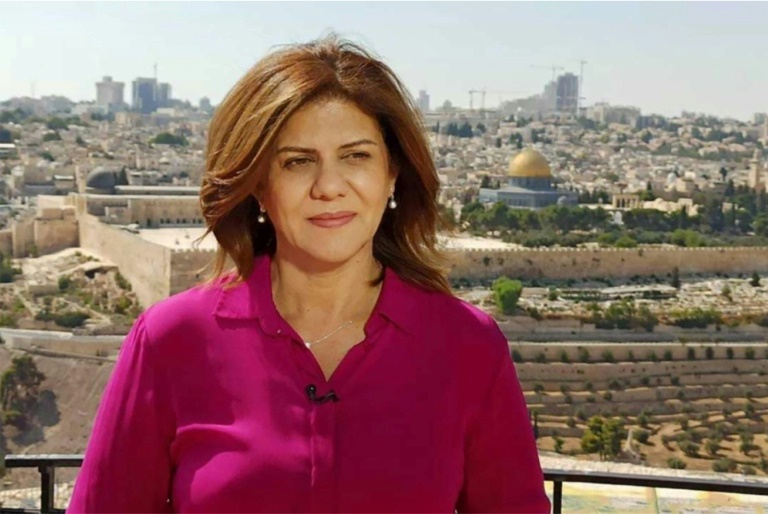
The Israeli army conceded Monday for the first time that one of its soldiers had likely shot Palestinian-American reporter Shireen Abu Akleh after having mistaken her for a militant.

“There is a high possibility that Ms Abu Akleh was accidentally hit by IDF (Israel Defence Forces) gunfire that was fired toward suspects identified as armed Palestinian gunmen,” said the army’s final investigation report into her May 11 death.

The acknowledgement comes after months in which the army had insisted it was impossible to determine the source of the deadly shot that killed the celebrated Al Jazeera journalist in the occupied West Bank, saying it could have been militant fire.

“Our conclusion is that it’s not possible to determine unequivocally which gunfire killed her, but there’s a higher probability that she was hit by an errant shot of an IDF soldier who did not identify her as a journalist,” a senior Israeli military officer said.

Abu Akleh was wearing a bulletproof vest marked “Press” and a helmet when she was shot in the head during an Israeli army operation.

The Abu Akleh family said that Israel had “refused to take responsibility for the murder” of the journalist, in a press release issued in the wake of the  army’s report.

“We remain deeply hurt, frustrated and disappointed,” the family said, calling for a “credible” US investigation.

The Palestinian Authority accused Israel of intentionally killing the reporter in the Jenin refugee camp, in the northern West Bank, whereas Israel has insisted that even if a soldier fired the fatal shot it was not deliberate.

Al-Jazeera said it denounced the findings of the Israeli investigation and demanded a probe by an “independent international body”.

“Al Jazeera condemns the Israeli occupation forces’ reluctance to explicitly admit their crime and attempts to evade the prosecution of the perpetrators,” it said in a statement. 

– ‘Call for accountability’ –

On Monday, the senior army officer told reporters that the soldiers were under heavy fire and aimed to hit Abu Akleh because they had mistaken her for a Palestinian militant.

“When they fired in her direction they didn’t know she was a journalist, it was a mistake, they thought they were firing at terrorists shooting at them,” the officer said.

“He’s sorry about it and I’m sorry about it too,” the officer said of the soldier who shot in the direction of Abu Akleh. 

“He didn’t do it on purpose, it’s totally clear,” he added.

But the New York-based Committee to Protect Journalists was critical of the army’s report.

Its “admission of guilt is late and incomplete. They provided no name for Shireen Abu Akleh’s killer and no other information than his or her own testimony that the killing was a mistake,” said Sherif Mansour, CPJ’s Middle East and North Africa programme coordinator.

Israeli rights group B’Tselem, a campaigner against Israeli settlement expansion, condemned the army’s report as a “whitewash”. The killing was “no mistake, it’s policy”, it said.

A United Nations investigation concluded in June that there was “no evidence of activity by armed Palestinians close by” when Abu Akleh was shot.

The United States on July 4 said she was likely shot by Israeli fire but that there was no evidence her killing was intentional and that the bullet was too damaged for a conclusive finding.

The US statement outraged Abu Akleh’s family and Palestinian leaders who accused Washington of failing to seek accountability from Israel over the killing of the journalist, who also held US citizenship.

“We are continuing to call for accountability and for justice for Shireen,” Lina Abu Akleh, the journalist’s niece, said in Washington after meeting US Secretary of State Antony Blinken.

In May, Israel’s military advocate had said there was no suspicion of criminal activity since the event took place in an active combat zone.

The military advocate said Monday that the circumstances of the incident “do not raise the suspicion of a crime having been committed which would justify the opening of a criminal investigation”.

EU signs deal with Ukraine for further 500 mn euros in aid

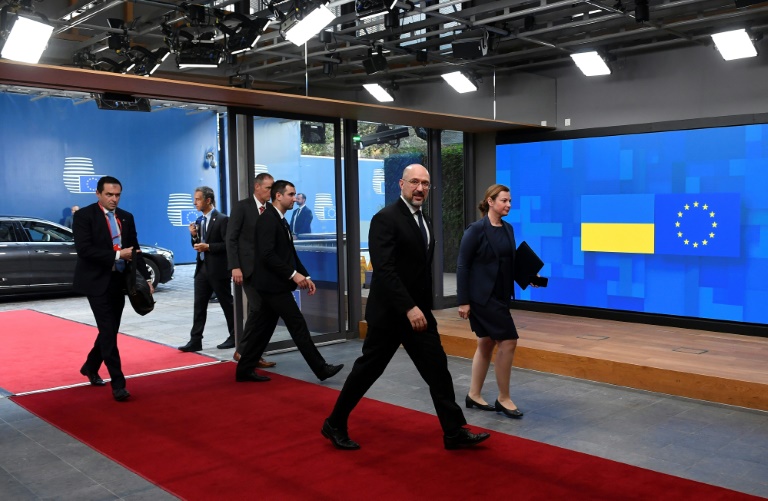
The European Union signed a deal with war-torn Ukraine on Monday to release a further 500 million euros ($497 million) in planned aid, this time to support housing, education and agriculture.

The European Commission — the EU’s executive arm — announced the package as senior officials hosted a meeting in Brussels of the EU-Ukraine Association Council with Ukrainian Prime Minister Denys Shmygal. 

“This EU grant funding will help ensure housing and education for internally displaced persons and returnees and support Ukraine’s agriculture sector,” spokesman Eric Mamer said.

In addition to the latest slice of aid — part of a larger support programme begun in April — Ukraine will also be able to apply to the EU digital economy fund to develop high-tech training and industry.

Monday’s meeting of the association council will be the first since Ukraine, which was invaded by Russia in February, was accepted as a formal candidate to join the EU.

The Brussels meeting was being chaired by EU foreign policy chief Josep Borrell and EU enlargement commissioner Oliver Varhelyi, and seek to advance Ukraine’s participation in EU programmes.

Full membership may be years away but the EU and most of its member states are backing Kyiv’s struggle with Moscow by providing weapons, economic aid and sanctions against Russia.

“Among our current priorities is the introduction of a total energy embargo against Russia,” Shmygal said on his Telegram account, as he was welcomed to EU headquarters.

“Ukraine has the largest underground deposits for storing gas and could become Europe’s gas vault,” he said. 

“After obtaining the status of candidate country, the government aspires to accelerate integration into the EU energy market.”

OPEC+ agrees oil output cut to prop up prices

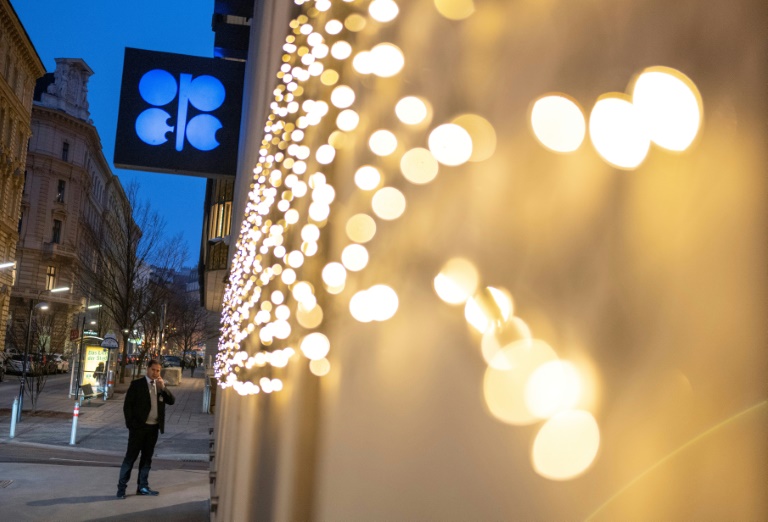
The OPEC+ oil cartel agreed Monday to cut production for the first time in more than a year as it seeks to lift prices that have tumbled due to recession fears.

The move could irk the United States as it has pressed the group to increase output in order to bring down energy prices that have fuelled decades-high inflation.

OPEC+, a 23-nation coalition led by Saudi Arabia and Russia, had agreed to huge cuts in output in 2020 when the Covid pandemic sent oil prices crashing, but it began to increase production modestly again last year as the market improved.

Oil prices soared to almost $140 a barrel in March after Russia invaded Ukraine.

But they have since receded below $100 per barrel amid recession fears, Covid lockdowns in major consumer China and Iran nuclear talks that could bring Iranian crude back into the market.

While analysts had expected another modest increase at Monday’s ministerial meeting, OPEC+ said in a statement it decided to reduce output by 100,000 barrels per day in October, returning to the production level of August.

The group also left the door open to holding talks prior to its next scheduled meeting on October 5 “to address market developments, if necessary”.

Saudi Energy Minister Prince Abdulaziz bin Salman told Bloomberg in an interview after the decision that it demonstrated OPEC+ was ready to adjust production in both directions to achieve its objectives.

“The simple tweak shows that we will be attentive, preemptive and pro-active in terms of supporting the stability and the efficient functioning of the market,” he said.

Bjarne Schieldrop, chief commodities analyst at SEB research group, told AFP the decision sent a clear message: “OPEC+ will not allow the oil price to slide. Further cuts will be initiated if necessary.” 

While analysts said the cut was mostly symbolic, oil prices rose by more than three percent following the announcement, with the international benchmark, Brent, exceeding $96 per barrel while the US contract, WTI, reached almost $90.

At its last meeting, OPEC+ agreed to a small rise of 100,000 barrels per day for September after US President Joe Biden travelled to Saudi Arabia to plead for a production bump — although it was six times lower than its previous decisions. 

But after oil prices fell back on growing recession worries, the cartel began to raise the possibility of reversing course.

The United States said after the OPEC+ decision that oil production must be kept up to bolster global economic growth.

President Joe Biden “has been clear that energy supply should meet demand to support economic growth and lower prices for American consumers and consumers around the world”, White House Press Secretary Karine Jean-Pierre said in a statement.

Craig Erlam, analyst at OANDA trading platform, said the cut was “also a blow to President Biden as the hike last month was viewed as a token gesture after his visit.”

“Now it’s clear how valuable that actually was, or wasn’t as it turns out. The political damage it caused was a waste and if anything, it looks worse than if nothing had changed in the first place,” Erlam said.

– Iran talks –

Caroline Bain, commodities expert at Capital Economics, said the cut was not a total surprise and “little more than symbolic” as OPEC+ has struggled to meet its quotas due to lacklustre production in some of its member countries.

“The bigger picture is that OPEC+ is producing well below its output target and this looks unlikely to change given that Angola and Nigeria, in particular, appear unable to return to pre-pandemic levels of production,” Bain said.

In efforts to curb rising oil prices, the United States and its allies have released crude from their emergency reserves.

And in a bid to curb Russia’s war funding, the G7 group of industrialised powers agreed Friday to move “urgently” towards capping the price of Russian oil. 

Moscow has warned it will no longer sell oil to countries that adopt the unprecedented mechanism and called it a destabilising force in the market.

Another geopolitical issue is clouding the outlook.

Negotiations aimed at reviving a landmark nuclear deal between Tehran and world powers could lead to an easing of oil sanctions in return for curbs to the atomic activities.

However, Washington said Thursday that Tehran’s latest response to a European Union draft was “unfortunately… not constructive”.

The EU’s foreign policy chief Josep Borrell, who is shepherding attempts to save the suspended Iran nuclear deal, said Monday that recent exchanges left him “less confident” about reaching an agreement.

burs-rl/raz

US judge orders review of material seized at Trump's home

A US judge on Monday granted Donald Trump’s request for the appointment of a “special master” to independently review material seized in an FBI raid on his Florida home, dealing a blow to prosecutors.

Government attorneys had opposed Trump’s request, arguing that the appointment of a special master to screen for privileged material could harm national security, and was also unnecessary as a team had already completed a screening.

The decision could delay the investigation into Trump’s handling of classified materials and is a boost for the former president, who has denounced the August 8 raid as “one of the most egregious assaults on democracy in the history of our country,” and denied all wrongdoing.

Judge Aileen Cannon wrote in her order that “a special master shall be appointed to review the seized property, manage assertions of privilege and make recommendations thereon, and evaluate claims for return of property.”

The ruling — which temporarily blocks the government from reviewing or using materials seized in the raid — made an exception for “intelligence classification and national security assessments.”

The judge gave both sides until Friday to come up with a list of candidates for the role of special master.

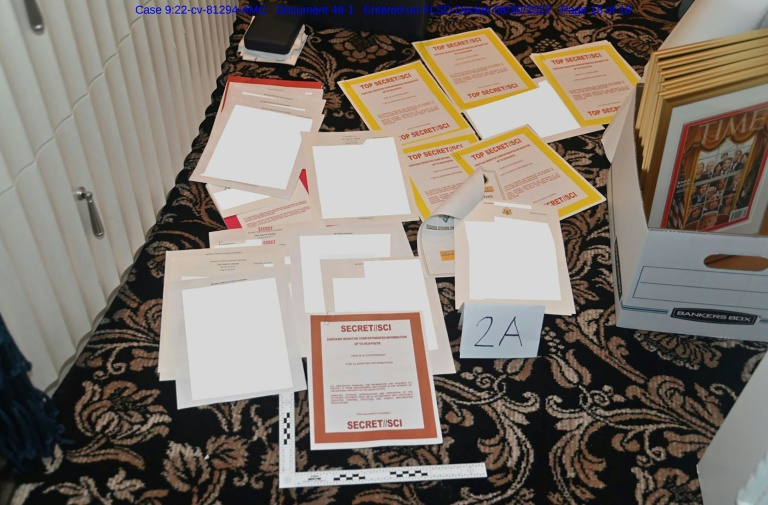
Trump is facing mounting legal pressure, with the Department of Justice saying top secret documents were “likely concealed” to obstruct an FBI probe into Trump’s potential mishandling of classified materials.

When agents searched Trump’s Mar-a-Lago resort, they found material so sensitive that “even the FBI counterintelligence personnel and DOJ attorneys conducting the review required additional clearances before they were permitted to review certain documents,” a government court filing said.

– ‘Highly classified’ –

The FBI raid came after a review of “highly classified” records that Trump finally surrendered to authorities in January after months of back and forth with the National Archives and Records Administration.

The 15 boxes handed over by Trump were found to contain 184 documents marked as confidential, secret or top secret.

After prompting from the FBI, Trump’s lawyer eventually turned over an additional 38 classified documents — and provide “sworn certification” that they represented the last of the material.

But the FBI went on to uncover “multiple sources of evidence” showing classified documents remained at Mar-a-Lago.

Attorney General Merrick Garland said he personally approved the Mar-a-Lago raid, and the decision on whether Trump is charged with a crime ultimately rests with him.

Bill Barr, who held the same post during Trump’s presidency, has said the government appeared justified in raiding Trump’s home, and that he suspected authorities have “good” evidence of obstruction.

In addition to the documents probe, Trump faces investigations in New York into his business practices, as well as legal scrutiny over his efforts to overturn results of the 2020 election, and for the January 6, 2021 attack on the US Capitol by his supporters. 

Trump was impeached for a historic second time by the House of Representatives after the Capitol riot — he was charged with inciting an insurrection — but was acquitted by the Senate.

Germany seeks 'forgiveness' 50 years after Munich Olympics massacre

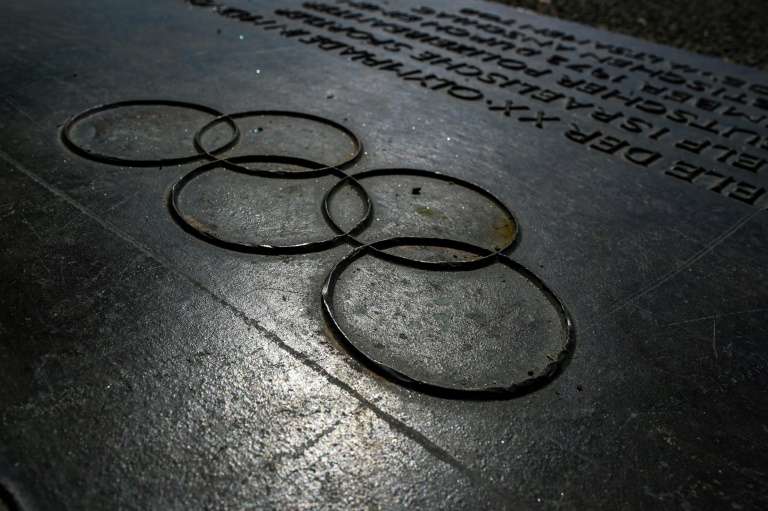
Germany on Monday sought “forgiveness” from families of victims in the 1972 Munich Olympics attack, admitting responsibility for a litany of failings that led to the deaths of 11 Israelis.

The apology by President Frank-Walter Steinmeier on behalf of Germany 50 years on came after a bitter and long fight by bereaved relatives for appropriate compensation and for Berlin to own up to mistakes made that led to the massacre. 

“We cannot make up for what has happened, not even for what you have experienced and suffered in terms of defensiveness, ignorance and injustice. I am ashamed of that,” said Steinmeier at a solemn ceremony at the Fuerstenfeldbruck airbase where the attack reached its tragic climax.

“As head of state of this country and in the name of the Federal Republic of Germany, I ask you for forgiveness for the lack of protection of the Israeli athletes at the time of the Olympic Games in Munich, and for the lack of clarification afterwards, and for the fact that what happened happened.”

Israel’s President Isaac Herzog hailed Steinmeier for what he described as a “brave and historic speech”.

“It represents, half a century later, an important step of morality and justice for the victims, for the families, and for history itself,” said the president, who is in Germany for a state visit.

– ‘Hardheartedness’ –

On September 5, 1972, eight gunmen of the Palestinian militant group Black September stormed into the Israeli team’s flat at the Olympic village, shooting dead two and taking nine Israelis hostage.

West German police responded with a bungled rescue operation in which all nine hostages were killed, along with five of the eight hostage-takers and a police officer.

Despite the devastation, the International Olympic Committee announced on the morning of September 6 that the Games would go on.

Steinmeier summarised the entire episode as a triple failing: in the preparation of the Games and its security concept; the events of September 5 and 6; and the third failure that “began the day after the assassinations — the silence, the suppression and the forgetting”. 

For decades, there was disregard for the victims’ suffering, he said, calling it “years of hardheartedness”. 

The Games were meant to showcase a new Germany 27 years after the Holocaust, and to be a marked difference from Hitler’s 1936 propaganda showcase. But instead, they opened a deep rift with Israel.

In 2012, Israel released 45 official documents on the killings, including specially declassified material, which lambasted the performance of the German security services.

Included in the reports is an official account from the former Israeli intelligence head Zvi Zamir who said the German police “didn’t make even a minimal effort to save human lives”.

– ‘Inhuman and incomprehensible’ –

Bereaved relatives have over the years battled to obtain an official apology from Germany, access to official documents and appropriate compensation beyond an initial 4.5 million euros.

As recently as just two weeks ago, relatives of the victims said they were offered 10 million euros — including the sum that had already been given.

Herzog said grieving relatives simply “hit a wall” whenever they tried to raise the issue with Germany or even with the International Olympic Committee. 

“I think there was tragic suppression here,” he said on Sunday, noting the slew of failings that were “inhuman and incomprehensible” such as “the fact that the hostages were being led to slaughter and the Games went on.”

After families threatened to boycott Monday’s ceremonies, a deal was finally agreed last Wednesday for Berlin to provide 28 million euros ($28 million) in compensation. 

Steinmeier had admitted that it was “shameful” that a deal was so late in coming.

Ankie Spitzer, whose husband Andre Spitzer was killed in the hostage-taking only a year and three months after they married, said that she managed to make a life for herself over the decades, but “could not find peace because justice hadn’t been done”. 

“You would think that mighty Germany would have done everything in its power not to add Jewish blood to its already bloody soil,” she told the ceremony.

“Everybody is asking now if I finally feel closure. They don’t understand that there will never be closure. The hole in my heart will never ever heal.”

Russia revokes print licence of independent paper, jails ex-reporter for treason

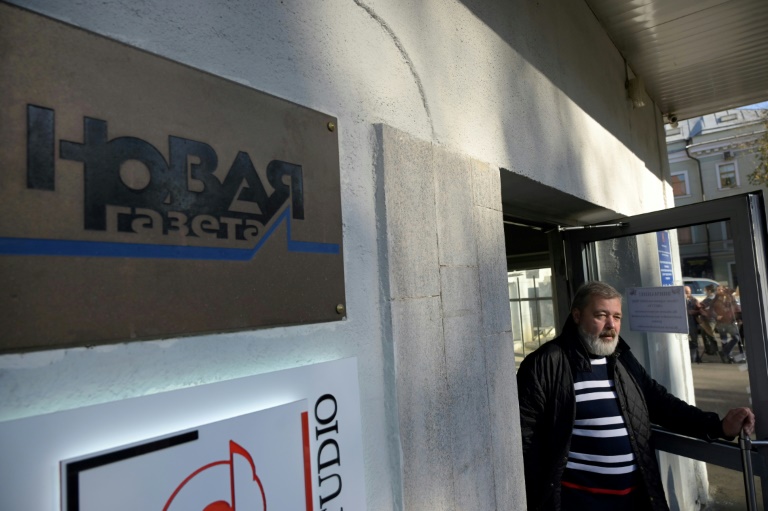
Russian courts on Monday revoked the print licence of top independent newspaper Novaya Gazeta and jailed a respected ex-reporter for 22 years for treason, in the latest moves against the media and journalists.

Russian independent media have in recent years faced unprecedented pressure, with authorities further tightening the screws since the start of Moscow’s February offensive in Ukraine.

All main independent media outlets have been shut down in Russia or suspended their domestic operations after a series of media restrictions were imposed on coverage of the Ukraine conflict.

A Moscow court “invalidated the registration certificate of the print version of Novaya Gazeta”, the outlet, which suspended publication in late March, said on social media.

It later said the decision “killed” the newspaper.

“The newspaper was killed today. They stole 30 years of life from its employees. Deprived readers of the right to receive information,” Novaya Gazeta said, adding that its “free spirit” will continue to exist. 

UN Human Rights Office spokeswoman Ravina Shamdasani said the decision was “another blow to the independence of Russian media”.

In a statement, the court confirmed the verdict which followed legal proceedings initiated by Russia’s media watchdog Roskomnadzor.

The media regulator is also seeking to shut down Novaya Gazeta’s website and a print magazine it launched in July. 

Two court hearings are scheduled for later this month.

Monday’s ruling came less than a week after the death of the last Soviet leader Mikhail Gorbachev, who helped in the founding of Novaya Gazeta in the early 1990s.

Novaya Gazeta chief editor Dmitry Muratov led the procession at Gorbachev’s Moscow funeral on Saturday.

Novaya Gazeta has paid a heavy price for its independent stance and investigative coverage over the years.

Since 2000, six of its journalists and contributors have been killed in connection with their work, including top investigative reporter Anna Politkovskaya.

– Ex-reporter jailed for treason –

Also on Monday, a Moscow court jailed respected former defence reporter Ivan Safronov for 22 years on treason charges for divulging state secrets. 

The judge said Safronov will serve the time in a “strict regime penal colony”, AFP reported from court.

The 32-year-old worked for business newspapers Kommersant and Vedomosti and was one of Russia’s most respected journalists covering defence, politics and the country’s space programme. 

Safronov appeared in court on Monday inside a glass cage for defendants wearing a grey tracksuit and black puffy vest, his hands in handcuffs. 

Around a hundred people gathered in the Moscow courthouse for the verdict, applauding Safronov and chanting “Freedom!” after the sentence was read out. 

Safronov smiled and shouted out “I love you!” before he was taken out of the courtroom, an AFP reporter saw. 

His lawyer Dmitry Kachev said the verdict cannot be called “anything other than inadequate” and said Safronov was sentenced for his “journalistic work”. 

Safronov’s lawyers told reporters that they will appeal the verdict.

Safronov was arrested in July 2020, after leaving journalism to serve as an adviser to the head of the state space agency.

He was accused of collecting confidential information about Russian military, defence and security and handing it over to foreign intelligence.

Safronov’s case was heard behind closed doors based on evidence that was also kept secret.

Prosecutors last week requested a sentence of 24 years in jail for Safronov, after he reportedly turned down a plea deal for a shorter sentence. 

At the start of his trial in April, Safronov called the case a “complete travesty of justice” and said he was not guilty. 

The ex-journalist has said his reporting was based on analysis of open sources and conversations with officials.

Safronov’s case triggered a backlash from independent journalists and his former colleagues.

On Monday, a dozen independent media, including Novaya Gazeta, published a statement demanding Safronov’s release, saying the harsh sentence was “revenge” for his work.

UN warns famine 'at the door' in Somalia

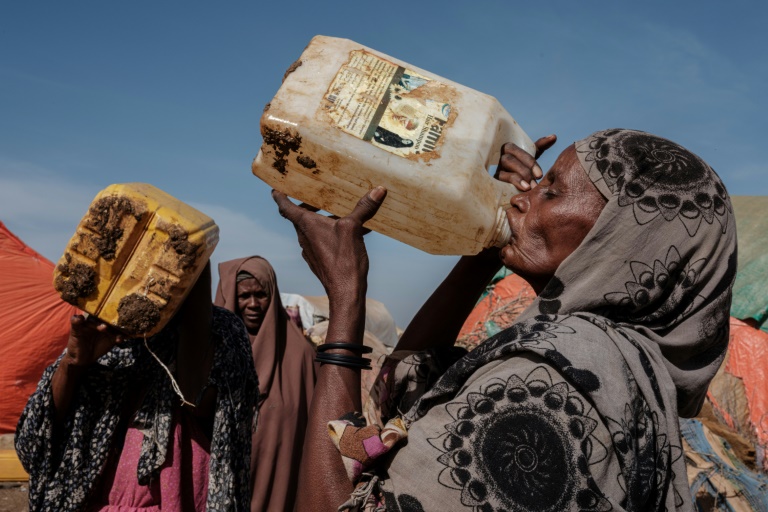
The United Nations warned Monday that Somalia was on the brink of famine for the second time in just over a decade, and that time was running out to save lives in the drought-stricken country. 

“Famine is at the door and we are receiving a final warning,” visiting UN humanitarian chief Martin Griffiths told a press conference in the Somali capital Mogadishu. 

“The unprecedented failure of four consecutive rainy seasons, decades of conflict, mass displacement, severe economic issues are pushing many people to… the brink of famine.”

Millions of people are at risk of starvation across the Horn of Africa which is in the grip of the worst drought in four decades after four failed rainy seasons wiped out livestock and crops.

There are “concrete indications” that famine will strike Baidoa and Burhakaba in the Bay region of south-central Somalia between October and December, said Griffiths, the head of the UN Office for the Coordination of Humanitarian Affairs (OCHA).

“I’ve been shocked to my core these past few days by the level of pain and suffering we see so many Somalis enduring,” he added. 

“We are in the last moment of the 11th hour to save lives.”

Humanitarian agencies have been ringing alarm bells for months and say the situation across the Horn of Africa — including Kenya and Ethiopia — is likely to deteriorate with a likely fifth failed rainy season in the offing.

In Somalia alone, about 7.8 million people or half the population face crisis hunger levels, including about 213,000 in danger of famine, UN agencies say. 

Around one million have fled their homes on a desperate quest for food and water.

– ‘World must act now’ –

Griffiths said the situation was worse than during Somalia’s last famine in 2011 when 260,000 people died, more than half of them children under the age of six. 

He described scenes of heart-rending suffering during a visit to Baidoa, describing it as the epicentre of the crisis where he saw “children so malnourished they could barely speak” or cry.

Around 1.5 million children across the largely pastoral country were at risk of acute malnutrition by October if nothing changed, he warned. 

The conflict-wracked nation is considered one of the most vulnerable to climate change but is particularly ill-equipped to cope with the crisis.

A deadly 15-year insurgency by the radical Islamist Al-Shabaab group against the fragile central government is limiting humanitarian access to many areas.

A long-running political crisis also diverted attention away from the drought, but new President Hassan Sheikh Mohamud used his inauguration speech in June to appeal for international help to stave off disaster.

In recent years, increasingly extreme droughts and floods have added to the devastation caused by a locust invasion and the Covid-19 pandemic.

The UN’s World Food Programme (WFP) last month said the number of people facing hunger across the Horn had increased to 22 million.

“Our worst fears for Somalia are now a reality: Famine is imminent if funds do not arrive immediately,” WFP executive director David Beasley said on Twitter Monday.

“The world MUST act now – this is a global call to action.”

– ‘Sleepwalking’ to catastrophe – 

A joint report by UN and other humanitarian agencies published Monday said famine conditions in Somalia, facing its fifth straight failed rainy season in the final months of this year, “are likely to last until at least March 2023”.

The UN said at the end of August it had received 67 percent of its $1.5 billion aid target for Somalia.

Funds were initially slow in coming, with Russia’s invasion of Ukraine among other crises drawing attention from the disaster in the Horn.

The war has also sent global food and fuel prices soaring, making aid delivery more expensive.

In June, British charity Save the Children had issued an alert that the international community was “sleepwalking towards another catastrophic famine” in Somalia.

Last month, OCHA said about 2.3 million children were at risk of “violence, exploitation, abuse, neglect, and death from severe acute malnutrition” across the country.

In 2017, more than six million people in Somalia, more than half of them children, needed aid because of a prolonged drought across East Africa.

But early humanitarian action averted famine that year.

Close Bitnami banner
Bitnami