World

China accuses US of 'tens of thousands' of cyberattacks

Beijing on Monday accused the United States of launching “tens of thousands” of cyberattacks on China and pilfering troves of sensitive data, including from a public research university.

Washington has accused Beijing of cyberattacks against US businesses and government agencies, one of the issues over which ties between the two powers have nosedived in recent years.

China has consistently denied the claims and in turn lashed out against alleged US cyber espionage, but has rarely made public disclosures of specific attacks.

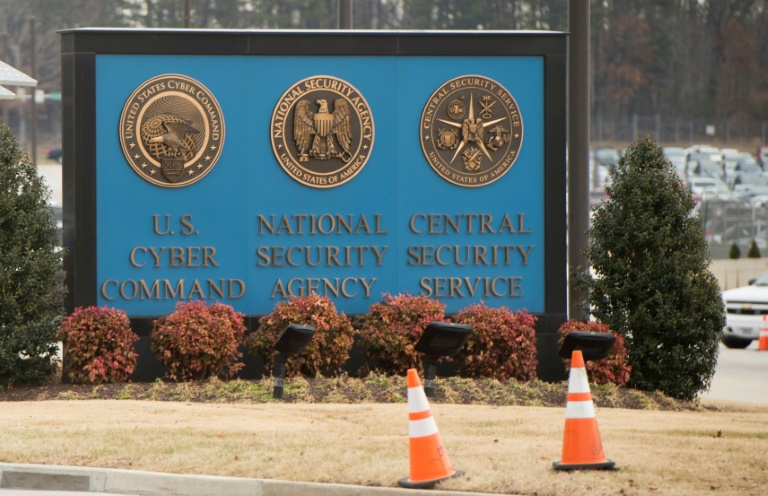
But a report released Monday by its National Computer Virus Emergency Response Center (CVERC) accused the US National Security Agency (NSA) of carrying out “tens of thousands of malicious attacks on network targets in China in recent years”.

It specifically accused the NSA’s Office of Tailored Access Operations (TAO) of infiltrating the Northwestern Polytechnical University in the city of Xi’an.

The university is funded by China’s Ministry of Industry and Information Technology, and specialises in aeronautical and space research.

CVERC alleged that TAO infiltrated the university’s networks and took “control of tens of thousands of network devices” including servers, routers and network switches.

Using dozens of cyber weapons and exploiting previously unknown flaws in the SunOS operating system, the unit gained access to “core technical data” including passwords and the operations of key network devices, the report said.

TAO has “stolen over 140 gigabytes of high-value data” in recent years and received assistance from groups in Europe and South Asia, CVERC said in the report, which was co-authored by the private Chinese cybersecurity firm Qihoo 360.

The foreign ministry in Beijing on Monday condemned the alleged hack, saying it “seriously endangers China’s national security and users’ personal data security”.

“We ask the US to provide an explanation and urge them to stop immediately this illegal move,” Mao Ning, a spokeswoman for the foreign ministry, said at a regular press conference.

The NSA did not immediately respond to an AFP request for comment.

In June, Xi’an authorities said they had launched an investigation into a reported cyberattack at Northwestern Polytechnical University that carried the hallmarks of “overseas hacking groups and unlawful elements”.

The attacks “caused significant risks and hidden dangers for normal work and life at our school”, a university cybersecurity official told state broadcaster CCTV in comments published on Monday.

Last year, Washington accused Beijing of carrying out a massive attack on Microsoft’s email software that affected at least 30,000 US organisations — including local governments — as well as customers in other countries.

China denied the allegations and countered that Washington was the “world champion” of cyber espionage.

At least 10 dead, 15 wounded in Canada stabbing rampage

A stabbing spree in an Indigenous community and a nearby town in Canada’s Saskatchewan province left at least 10 people dead and 15 wounded on Sunday, police said, as they launched a manhunt for two suspects in one of the nation’s deadliest incidents of mass violence.

Police responding to emergency calls found 10 dead in the remote Indigenous community of James Smith Cree Nation and the nearby town of Weldon, Saskatchewan, Royal Canadian Mounted Police Assistant Commissioner Rhonda Blackmore told a news conference.

She said at least 15 other people had been wounded and transported to hospitals.

“It is horrific what has occurred in our province today,” she said. “We are actively looking for the two suspects.”

The alleged attackers fled in a vehicle and have been identified as Myles and Damien Sanderson, aged 30 and 31 respectively, both with black hair and brown eyes.

The James Smith Cree Nation, with a population of 2,500, declared a local state of emergency, while many residents of Saskatchewan province were urged to shelter in place.

Prime Minister Justin Trudeau called the attacks “horrific and heartbreaking” in a tweet, offering condolences and urging residents to heed authorities’ instructions.

Blackmore said authorities believe “some of the victims were targeted by the suspects and others were attacked randomly.”

“To speak to a motive would be extremely difficult at this point in time,” she added. No information was released about the victims.

Television images showed a few rural homes in fields of tall grass and trees, cordoned off with police tape, while on social media locals shared images of the attacks’ aftermath, such as the broken door handle to a burgled home.

Weldon resident Diane Shier told local media her neighbor, a man who lived with his grandson, was killed in the attack. 

“I am very upset because I lost a good neighbor,” she told the Canadian Press news agency.

– ‘Maximum’ police resources –

In recent years, Canada has witnessed a rampaging gunman masquerading as a policeman kill 22 people in Nova Scotia, another kill six and wound five worshippers at a Quebec City mosque, and a driver of a van mow down pedestrians in Toronto killing 10 and injuring 16. 

The death toll from the van attack rose to 11 when an injured woman who had spent more than three years in hospital also succumbed to her injuries.

“There are no words to adequately describe the pain and loss caused by this senseless violence,” said Saskatchewan Premier Scott Moe after Sunday’s attack. 

A “dangerous person” alert had been issued in the morning in Saskatchewan, as police responded to multiple stabbings in multiple locations in the Indigenous community and Weldon.

Police received a call at 5:40 am (11:40 GMT) about a stabbing at the James Smith Cree Nation, followed quickly by more calls reporting further stabbings, at a total of 13 separate locations, Blackmore said.

The callers identified the suspects, she said.

“Maximum” police resources were deployed for the search for the suspects, she said, but added that “their location and direction of travel is unknown.”

After reported sightings of the two men in Regina, the provincial capital that is more than 300 kilometers (185 miles) to the south, the alert and search expanded to include neighboring Manitoba and Alberta provinces — a vast region.

In Regina, police chief Evan Bray said authorities were on high alert with additional officers deployed as sports fans descended on the city for a sold-out Labour Day weekend match between the Canadian Football League’s Saskatchewan Roughriders and Winnipeg Blue Bombers.

The Saskatchewan Health Authority told AFP in a statement it had activated emergency protocols to deal with “a high number of critical patients.”

“We can confirm that multiple people are being triaged and cared for at multiple sites and that a call for additional staff to help respond to this situation has occurred,” it added.

Three helicopters were dispatched from Saskatoon and Regina to the remote northern communities to transport stabbing victims and bring a doctor to the scene.

European markets, euro tumble as Russia fans energy crisis

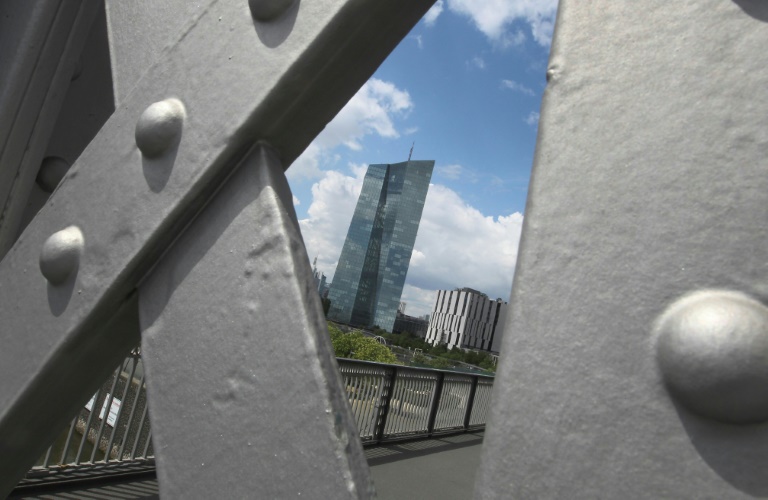
European markets tumbled Monday and the euro hit a fresh 20-year low on growing fears about an energy crisis after Russia said it would not restart gas flows to the continent, while traders are also preparing for another interest rate hike this week.

The selling came after a mixed day in Asia, where the positive vibes from a US jobs report were offset by growing fears about the European outlook as well as Chinese Covid lockdowns and geopolitical tensions.

Paris, Frankfurt and London all sank sharply at the open after Russia’s Gazprom said it would not restart gas supplies to Europe, citing problems with a pipeline.

The announcement came the same day as the G7 nations said they would work to quickly implement a price cap on Russian oil exports, a move that would starve the Kremlin of critical revenue for its war effort.

The news ramped up an energy crisis in the continent caused by sanctions on Moscow for its invasion of Ukraine in February.

It has sent shockwaves through the eurozone economy and fanned expectations it will sink into recession, while sending the euro tanking to a 20-year low against the dollar. The single currency hit a nadir of $0.9878 at one point.

“Russia’s ongoing weaponisation of energy supplies continues to increase downside risks for European economies and the euro,” said Lee Hardman, currency analyst at financial services group MUFG. 

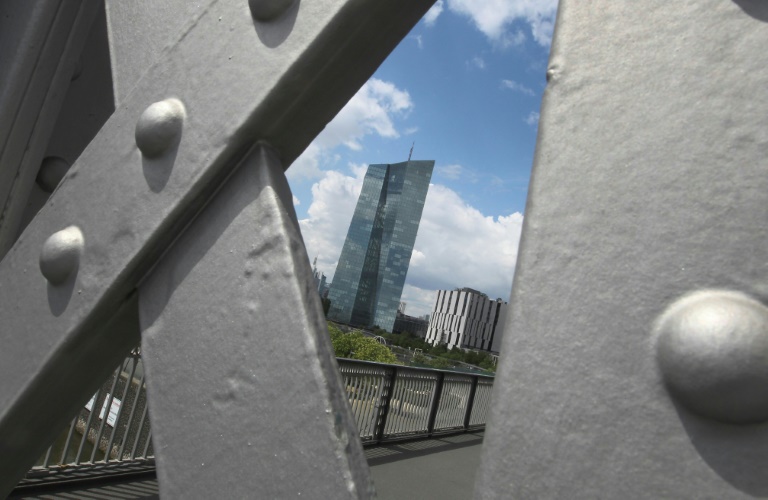
The issue has given the European Central Bank a huge headache. It is forced to lift interest rates as it struggles to contain runaway inflation.

Policymakers are due to announce a second straight lift at its meeting this week, with some observers betting on a 0.75 percentage point rise.

“The outlook is poor for Europe. It started to get choppy at the tail end of last week, and it is almost certainly going to get worse,” Gordon Shannon, of TwentyFour Asset Management, said.

“The ECB had only just started to catch up with the Fed in terms of hiking rates, but if we are going into a prolonged recession, I think this slows down their attempts.”

The move offset a broadly positive payrolls report showing US employment growth moderating and unemployment ticking higher, easing pressure on the Federal Reserve to sharply lift interest rates. 

In response to the figures, traders lowered their expectations for a third successive three-quarter point hike this month, with many now predicting 50 basis points.

“The increase in the participation rate and a softening in average hourly earnings may be a tentative sign that intense labour market tightness is starting to ease slightly,” said National Australia Bank’s Tapas Strickland.

He added that it “eases some of the fears stemming from other indicators such as job openings. Markets interpreted the print as lessening the chances of a 75 basis point hike”.

Still, the dollar continued to strengthen across the board, holding above 140 yen — a 24-year high — while the pound was on in on its way to hitting levels not seen since 1985.

However, all three main indexes in New York reversed their gains after the Gazprom announcement.

And in Asia on Monday, Hong Kong was the biggest loser, with tech firms hit by reports that the United States was considering imposing fresh limits on investments in Chinese firms.

Tokyo, Seoul, Taipei, Manila, Bangkok and Wellington also fell but there were gains in Shanghai, Sydney, Mumbai Singapore and Jakarta.

The Gazprom move helped lift oil prices Monday, with buying also supported by talk that OPEC and other major producers are considering cutting output at their meeting later Monday.

Investors were also dealing with more bad news out of China, where tens of millions of people across several cities have been thrown into lockdown as part of officials’ zero-Covid strategy.

The measures follow an extended shutdown in Shanghai earlier in the year that battered the world’s number two economy.

Observers said Chinese authorities were unlikely to budge ahead of a key Communist Party meeting in October, where Xi Jinping is expected to be handed a third five-year term as president.

“Following this, it is unclear whether China will start to pivot away from its zero-Covid policy,” said NAB’s Strickland.

“For as long as the policy exists, any stimulus measures are unlikely to gain traction, amid a challenging time for the Chinese property market and the economy in general.”

– Key figures at around 0810 GMT –

Frankfurt – DAX: DOWN 2.9 percent at 12,674.36

Paris – CAC 40: DOWN 2.0 percent at 6,046.66

EURO STOXX 50: DOWN 2.3 percent at 3,463.47

London – FTSE 100: DOWN 0.8 percent at 7,221.53

Tokyo – Nikkei 225: DOWN 0.1 percent at 27,619.61 (close)

Hong Kong – Hang Seng Index: DOWN 1.2 percent at 19,225.70 (close)

Shanghai – Composite: UP 0.4 percent at 3,199.91 (close)

Dollar/yen: UP at 140.57 yen from 140.16 yen on Friday

Euro/dollar: DOWN at $0.9911 from $0.9957

Pound/dollar: DOWN at $1.1479 from $1.1515

Euro/pound: DOWN at 86.34 pence from 86.45 pence

West Texas Intermediate: UP 2.4 percent at $88.91 per barrel

Brent North Sea crude: UP 2.5 percent at $95.35 per barrel

New York – Dow: DOWN 1.1 percent at 31,318.44 (close)

European markets, euro tumble as Russia fans energy crisis

European markets tumbled Monday and the euro hit a fresh 20-year low on growing fears about an energy crisis after Russia said it would not restart gas flows to the continent, while traders are also preparing for another interest rate hike this week.

The selling came after a mixed day in Asia, where the positive vibes from a US jobs report were offset by growing fears about the European outlook as well as Chinese Covid lockdowns and geopolitical tensions.

Paris, Frankfurt and London all sank sharply at the open after Russia’s Gazprom said it would not restart gas supplies to Europe, citing problems with a pipeline.

The announcement came the same day as the G7 nations said they would work to quickly implement a price cap on Russian oil exports, a move that would starve the Kremlin of critical revenue for its war effort.

The news ramped up an energy crisis in the continent caused by sanctions on Moscow for its invasion of Ukraine in February.

It has sent shockwaves through the eurozone economy and fanned expectations it will sink into recession, while sending the euro tanking to a 20-year low against the dollar. The single currency hit a nadir of $0.9878 at one point.

“Russia’s ongoing weaponisation of energy supplies continues to increase downside risks for European economies and the euro,” said Lee Hardman, currency analyst at financial services group MUFG. 

The issue has given the European Central Bank a huge headache. It is forced to lift interest rates as it struggles to contain runaway inflation.

Policymakers are due to announce a second straight lift at its meeting this week, with some observers betting on a 0.75 percentage point rise.

“The outlook is poor for Europe. It started to get choppy at the tail end of last week, and it is almost certainly going to get worse,” Gordon Shannon, of TwentyFour Asset Management, said.

“The ECB had only just started to catch up with the Fed in terms of hiking rates, but if we are going into a prolonged recession, I think this slows down their attempts.”

The move offset a broadly positive payrolls report showing US employment growth moderating and unemployment ticking higher, easing pressure on the Federal Reserve to sharply lift interest rates. 

In response to the figures, traders lowered their expectations for a third successive three-quarter point hike this month, with many now predicting 50 basis points.

“The increase in the participation rate and a softening in average hourly earnings may be a tentative sign that intense labour market tightness is starting to ease slightly,” said National Australia Bank’s Tapas Strickland.

He added that it “eases some of the fears stemming from other indicators such as job openings. Markets interpreted the print as lessening the chances of a 75 basis point hike”.

Still, the dollar continued to strengthen across the board, holding above 140 yen — a 24-year high — while the pound was on in on its way to hitting levels not seen since 1985.

However, all three main indexes in New York reversed their gains after the Gazprom announcement.

And in Asia on Monday, Hong Kong was the biggest loser, with tech firms hit by reports that the United States was considering imposing fresh limits on investments in Chinese firms.

Tokyo, Seoul, Taipei, Manila, Bangkok and Wellington also fell but there were gains in Shanghai, Sydney, Mumbai Singapore and Jakarta.

The Gazprom move helped lift oil prices Monday, with buying also supported by talk that OPEC and other major producers are considering cutting output at their meeting later Monday.

Investors were also dealing with more bad news out of China, where tens of millions of people across several cities have been thrown into lockdown as part of officials’ zero-Covid strategy.

The measures follow an extended shutdown in Shanghai earlier in the year that battered the world’s number two economy.

Observers said Chinese authorities were unlikely to budge ahead of a key Communist Party meeting in October, where Xi Jinping is expected to be handed a third five-year term as president.

“Following this, it is unclear whether China will start to pivot away from its zero-Covid policy,” said NAB’s Strickland.

“For as long as the policy exists, any stimulus measures are unlikely to gain traction, amid a challenging time for the Chinese property market and the economy in general.”

– Key figures at around 0810 GMT –

Frankfurt – DAX: DOWN 2.9 percent at 12,674.36

Paris – CAC 40: DOWN 2.0 percent at 6,046.66

EURO STOXX 50: DOWN 2.3 percent at 3,463.47

London – FTSE 100: DOWN 0.8 percent at 7,221.53

Tokyo – Nikkei 225: DOWN 0.1 percent at 27,619.61 (close)

Hong Kong – Hang Seng Index: DOWN 1.2 percent at 19,225.70 (close)

Shanghai – Composite: UP 0.4 percent at 3,199.91 (close)

Dollar/yen: UP at 140.57 yen from 140.16 yen on Friday

Euro/dollar: DOWN at $0.9911 from $0.9957

Pound/dollar: DOWN at $1.1479 from $1.1515

Euro/pound: DOWN at 86.34 pence from 86.45 pence

West Texas Intermediate: UP 2.4 percent at $88.91 per barrel

Brent North Sea crude: UP 2.5 percent at $95.35 per barrel

New York – Dow: DOWN 1.1 percent at 31,318.44 (close)

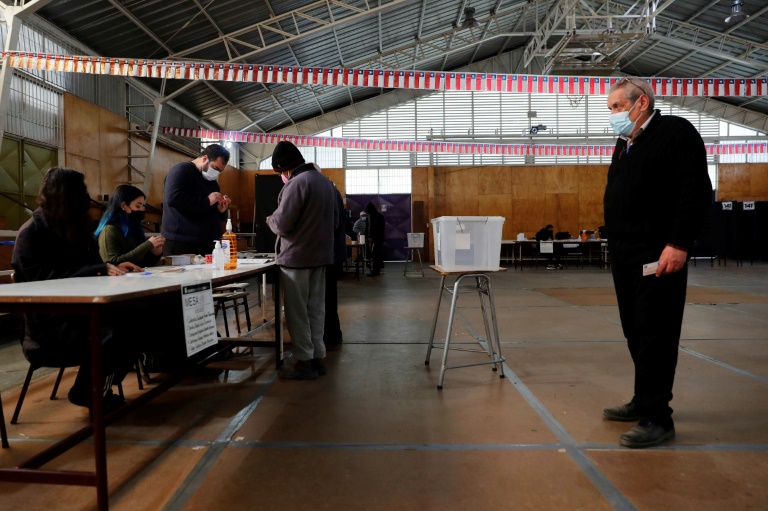
President vows to work for change after Chileans reject new constitution

President Gabriel Boric vowed to continue working to reform the political landscape after Chileans on Sunday emphatically rejected a proposed new constitution to replace the one adopted during the Augusto Pinochet dictatorship.

With more than 99 percent of votes counted, the reject camp led with almost 62 percent compared to just over 38 percent for those in favor, in a result that exceeded the expectations of the conservative opposition.

Leftist Boric, who supported the new text, accepted the defeat but pledged to “do everything on my part to build a new constituent itinerary.”

He said the people had demonstrated “that they want and value democracy, they are counting on it to overcome our differences and to progress.”

He then called on “all political forces to put Chile ahead of any legitimate differences and agree as soon as possible on the deadlines and parameters for a new constitutional process.”

The result is a far greater margin of victory than was predicted by opinion polls, which had suggested the constitution would be rejected by up to 10 percentage points.

“President Boric: this defeat is also your defeat,” said far-right leader Jose Antonio Kast, an outspoken admirer of Pinochet who last December lost an election run-off to Boric.

Opponents of the constitutional change poured onto the streets, waving Chilean flags to celebrate their victory.

Although celebrating the “defeat for the refounding of Chile,” Javier Macaya, president of the conservative UDI party, said his party would fulfil its commitment to work towards a new constitution.

More than 15 million people were eligible to vote in the compulsory election.

Social upheaval that began in 2019 provided the impulse to overhaul the constitution, but the 388-article draft proved controversial and often confusing for voters.

The proposed constitution aimed to build a more welfare-based society, boost Indigenous rights and legalize abortion.

In October 2019, protests sprung up mostly in the capital led by students initially angered by a proposed metro fare hike.

Those demonstrations spiraled into wider discontent with the country’s neoliberal economic system as well as growing inequality.

– ‘Resounding failure’ –

Among the chief concerns of opponents was the prominence given to the country’s Indigenous peoples, who make up close to 13 percent of the 19 million-strong population.

Proposals to enshrine reproductive rights and protect the environment as well as natural resources such as water, which some say is exploited by private mining companies, had also garnered much attention.

The new constitution would have overhauled Chile’s government, replacing the Senate with a less powerful “chamber of regions,” and requiring women to hold at least half of positions in public institutions.

Some feared the new text would generate instability and uncertainty, which could then harm the economy.

“Here people are more in favor of rejection,” said Alfredo Tolosa, 47, a woodworker in Tucapel, a small town in the southern Biobio region.

“They think it’s the best path because they are afraid of change. They have something to eat, they have work and they think they would lose those,” he told AFP.

Sociologist Marta Lagos called it a “tremendous victory for reject” and a “resounding failure” for the approve camp.

“No one expected such a gap of over 20 percentage points,” she wrote on Twitter.

– Social tensions –

Those in favor of the new constitution believed it would have prompted changes in a conservative country marked by social and ethnic tensions and lay the foundation for a more egalitarian society.

They say the current constitution gives private enterprise free rein over crucial industries and creates a fertile breeding ground for the rich to prosper and the poor to struggle.

“It’s a disaster, I’m super sad. I can’t believe this. We have been through a lot in the streets to end up like this,” María José Pérez, 33, told AFP in Plaza Italia, where hundreds who supported the new constitution gathered to share their sadness.

Although the 1980 constitution has undergone several reforms since it was adopted, it retains the stigma of having been introduced during a dictatorship.

Sunday’s poll was the third time in just two years that Chileans have voted on the referendum, having already elected to rewrite the constitution and then elected the representatives to do so.

The new text was drawn up by a constitutional convention made up of 154 members — mostly with no political affiliation — split equally between men and women and with 17 places reserved for Indigenous people.

The resulting proposal recognized 11 Indigenous peoples and offered them greater autonomy, particularly on judicial issues.

Some critics accused the authors of trying to turn the traditionally marginalized Indigenous people into a higher class of citizens.

Conservatives to reveal UK's new prime minister — Truss or Sunak

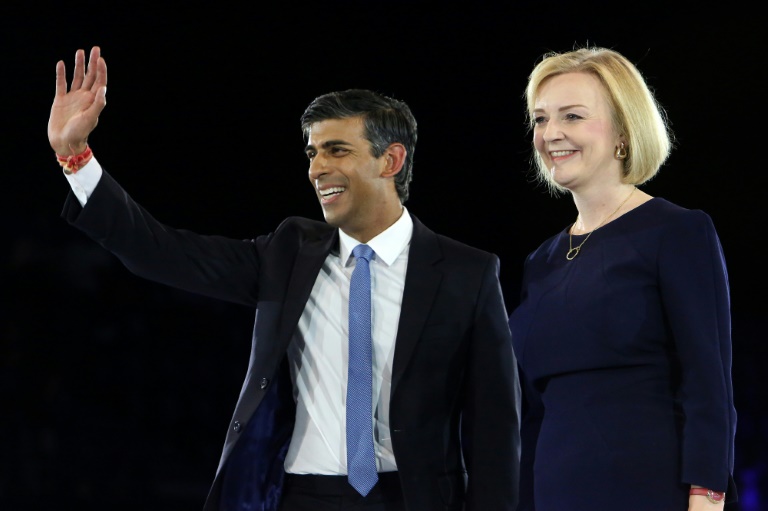
The next British prime minister will be announced Monday with Liz Truss the favourite to succeed Boris Johnson and take charge as the nation battles a spiralling cost-of-living crisis.

The result will be unveiled at 12:30 pm (1130 GMT), after foreign minister Truss and her rival, former finance minister Rishi Sunak, spent the summer rallying support among Conservative Party members who cast the final vote.

If she wins, Truss will become the UK’s third female prime minister following Theresa May and Margaret Thatcher.

The 47-year-old has consistently led 42-year-old Sunak in polling among the estimated 200,000 Tory members eligible to vote. 

The leadership contest began in July after Johnson announced his departure following a slew of scandals and resignations from his government.

Postal and online voting closed Friday after eight weeks of campaigning that Truss described to the BBC as “the longest job interview in history”.

Truss told the Daily Mail that as prime minister she would “do everything in my power to make sure everyone, no matter where they are from, has the opportunity to go as far as their talent and hard work takes them”.

However, she faces a tough task in winning over general public opinion.

A YouGov poll in late August found 52 percent thought Truss would make a “poor” or “terrible” prime minister.

Forty-three percent said they did not trust her “at all” to deal with the burning issue of the rise in the cost of living.

– ‘Worst in-tray’ –

Whoever emerges as winner faces “the worst in-tray for a new prime minister since Thatcher”, The Sunday Times wrote.

The UK is gripped by its worst cost-of-living crisis in generations, with inflation soaring into double digits and energy prices shooting up on the back of Russia’s war in Ukraine. 

Millions say that with bills set to rise by 80 percent from October — and even higher from January — they face a painful choice between eating and heating this winter, according to surveys. 

“If I’m elected prime minister, I will act immediately on bills and on energy supply,” Truss told the BBC on Sunday, while declining to go into details.

British newspapers, including the Times and Daily Telegraph, reported Monday that she was considering freezing energy bills for consumers, with the government reimbursing suppliers.

Truss has campaigned on a promise to slash taxes and prioritise economic growth, with Britain tipped to enter recession later this year.

She said Sunday she would “within a month present a full plan for how we are going to reduce taxes” and “get the British economy going”.

Sunak has vowed further government support to help people pay their energy bills and said curbing inflation would be his priority, attacking Truss’s tax-slashing plans as reckless. 

“We shouldn’t rule anything out. I mean, we’re facing a genuine emergency. I think anyone pretending that that isn’t the situation isn’t being straight with the country,” he told the BBC on Sunday.

Polls show public support for an early general election and the Conservatives face a growing challenge to retain their 12-year grip on power.

Truss became foreign minister a year ago after holding a series of ministerial posts in departments including education, international trade and justice.

She began her political journey as a teenage member of the centrist Liberal Democrats before switching to the right-wing Conservatives.

In 2016, she campaigned for the UK to remain in the European Union but quickly switched allegiance when Britons backed Brexit.

Her dress sense and love of photo opportunities — posing in a tank in Estonia and wearing a fur hat in Moscow — have earned her comparisons to Tory icon Thatcher.

Her sometimes stiff style has become visibly more relaxed and allies have sought to soften her image, revealing her love of karaoke and socialising.

– Highland ceremony –

The announcement Monday by Conservative Party officials of who will take over the leadership sets in motion a chain of events.

On Tuesday, Johnson will deliver a farewell speech at Downing Street.

He will then formally tender his resignation to Queen Elizabeth II, and she will appoint his successor in a so-called kissing of hands ceremony. 

For the first time in her reign, the 96-year-old monarch will appoint the prime minister at her Scottish retreat, Balmoral, rather than at Buckingham Palace in London.

This comes as the queen has suffered mobility problems and been forced to cancel a number of public engagements.

The next prime minister will be the 15th since the queen took the throne.

Cryptocurrency sceptics look to bend the ear of regulators

Cryptocurrency critics, including economists and researchers, will gather in London and online this week to get their message across to regulators about the booming but volatile sector.

A number of governments have expressed concerns over cryptocurrencies, but those behind the first Crypto Policy Symposium say they hope the event will prompt much more “critical discourse” of the sector.

“There are so many crypto conferences but they are funded by the crypto industry,” said Martin Walker, a co-organiser.

“The goal is to dispel some myths created by the crypto industry and to make policy makers start asking the right questions.”

But Walker, a banking IT expert, is quick to reject claims that Monday and Tuesday’s event is an “anti-crypto conference”.

Instead he says it is a chance to hear the critical voices of specialists in financial bubbles, researchers who have evaluated the industry’s carbon footprint and engineers who question the effectiveness of decentralised technologies. 

“We’ve got regulators from all over the world,” he said.

About 1,000 people have signed up to watch the conference online and UK officials are expected to attend a live event in London on Tuesday.

The conference comes as the price of bitcoin has plunged from a peak of nearly $69,000 last October to around $20,000.

The risky nature of the ultra-volatile and poorly regulated market for retail investors will be particularly highlighted. 

– Uninformed users –

Many central banks and financial market regulators have warned about the dangers posed by cryptocurrencies.

But in the absence of a clear legislative framework, users are rarely informed when making their investments, say crypto critics.

The collapse of cryptocurrency investment platform Celsius left customers in despair and unable to recover investments that sometimes included life savings.

The firm faced mounting troubles until it froze withdrawals in mid-June and a court filing showed it owed $4.7 billion to its users.

“People didn’t understand that their money wasn’t secure and they still don’t understand why they can’t get it back,” said Amy Castor, a respected freelance journalist who is among the most vocal of cryptocurrency critics. 

“We wanted to have our voices heard because it’s important for regulators to understand the risks, how crypto-currencies work, the scam inherent in it, so that they can do more to protect retail investors (and) the public,” she said.

Castor, who used to work for cryptocurrency media outlets, became known during the 2017 price surge and subsequent crash for her criticism of the so-called “stablecoin” Tether.

Tether’s price is pegged to the US dollar but its cash flow remains murky. 

“The problem is that crypto-currency has become so big that now there is a lot of money going into lobbying… to support politicians,” Castor added.

– Critic not a hater –

In the United States some elected officials have proudly shown support for the sector, especially at the local level.

The mayors of Miami and New York have said they want to make their cities cryptocurrency capitals, and there are municipality-specific currency projects in various stages of development.

“Officials are making broad statements about the good of cryptocurrencies,” said Tonantzin Carmona, a researcher at the Brookings Institution.

“They focus on what good could come from that tech and they ignore the real risks.”

In March, Carmona published a research paper on the potential danger posed by the mayors’ enthusiasm for cryptocurrencies. 

She feared being attacked on social networks but instead says her arguments found favour with the small community of crypto-sceptics, who helped her see that she was not a lone voice.

“There’s a difference between being a hater and being critical,” she said.

Cryptocurrency sceptics look to bend the ear of regulators

Cryptocurrency critics, including economists and researchers, will gather in London and online this week to get their message across to regulators about the booming but volatile sector.

A number of governments have expressed concerns over cryptocurrencies, but those behind the first Crypto Policy Symposium say they hope the event will prompt much more “critical discourse” of the sector.

“There are so many crypto conferences but they are funded by the crypto industry,” said Martin Walker, a co-organiser.

“The goal is to dispel some myths created by the crypto industry and to make policy makers start asking the right questions.”

But Walker, a banking IT expert, is quick to reject claims that Monday and Tuesday’s event is an “anti-crypto conference”.

Instead he says it is a chance to hear the critical voices of specialists in financial bubbles, researchers who have evaluated the industry’s carbon footprint and engineers who question the effectiveness of decentralised technologies. 

“We’ve got regulators from all over the world,” he said.

About 1,000 people have signed up to watch the conference online and UK officials are expected to attend a live event in London on Tuesday.

The conference comes as the price of bitcoin has plunged from a peak of nearly $69,000 last October to around $20,000.

The risky nature of the ultra-volatile and poorly regulated market for retail investors will be particularly highlighted. 

– Uninformed users –

Many central banks and financial market regulators have warned about the dangers posed by cryptocurrencies.

But in the absence of a clear legislative framework, users are rarely informed when making their investments, say crypto critics.

The collapse of cryptocurrency investment platform Celsius left customers in despair and unable to recover investments that sometimes included life savings.

The firm faced mounting troubles until it froze withdrawals in mid-June and a court filing showed it owed $4.7 billion to its users.

“People didn’t understand that their money wasn’t secure and they still don’t understand why they can’t get it back,” said Amy Castor, a respected freelance journalist who is among the most vocal of cryptocurrency critics. 

“We wanted to have our voices heard because it’s important for regulators to understand the risks, how crypto-currencies work, the scam inherent in it, so that they can do more to protect retail investors (and) the public,” she said.

Castor, who used to work for cryptocurrency media outlets, became known during the 2017 price surge and subsequent crash for her criticism of the so-called “stablecoin” Tether.

Tether’s price is pegged to the US dollar but its cash flow remains murky. 

“The problem is that crypto-currency has become so big that now there is a lot of money going into lobbying… to support politicians,” Castor added.

– Critic not a hater –

In the United States some elected officials have proudly shown support for the sector, especially at the local level.

The mayors of Miami and New York have said they want to make their cities cryptocurrency capitals, and there are municipality-specific currency projects in various stages of development.

“Officials are making broad statements about the good of cryptocurrencies,” said Tonantzin Carmona, a researcher at the Brookings Institution.

“They focus on what good could come from that tech and they ignore the real risks.”

In March, Carmona published a research paper on the potential danger posed by the mayors’ enthusiasm for cryptocurrencies. 

She feared being attacked on social networks but instead says her arguments found favour with the small community of crypto-sceptics, who helped her see that she was not a lone voice.

“There’s a difference between being a hater and being critical,” she said.

Kenya in tense wait for Supreme Court verdict on election

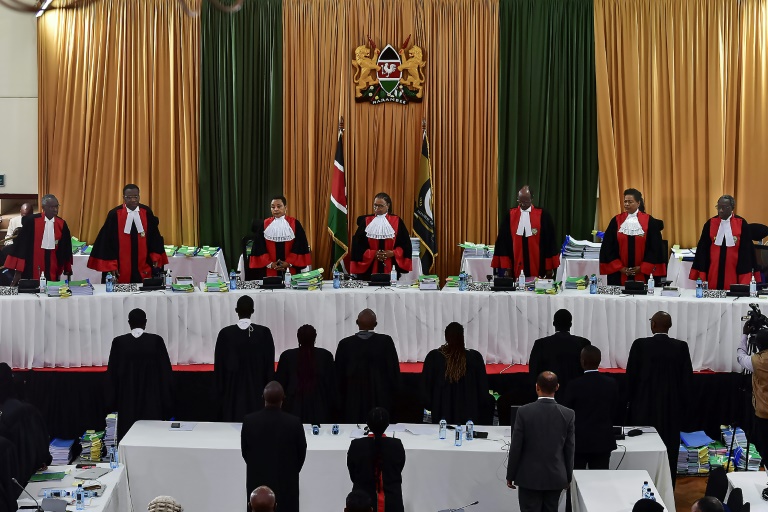
Kenyans anxiously awaited a Supreme Court ruling Monday on petitions challenging the outcome of the August presidential election, with weeks of political uncertainty looming if the poll is annulled.

Deputy President William Ruto was declared the winner of the tightly fought race, scraping to victory by a narrow margin of less than two percentage points against Raila Odinga, a veteran opposition politician now backed by the ruling party.

Odinga filed a petition to Kenya’s top court last month, alleging fraud in the vote tallying process and claiming he had “enough evidence” to show he had in fact won the August 9 election, which ranks as one of Africa’s most expensive polls.

“Judgment day,” was the front-page headline in The Standard, while People Daily declared: “Moment of Truth”.  

Although voting day passed off peacefully, the results sparked angry protests in some Odinga strongholds and there are fears a drawn-out dispute may deepen widespread economic malaise and lead to violence in a country with a history of post-poll unrest.

“We have already wasted a lot of time and money so if we go back to election we will waste (even more) time and resources,” said Anne Karanja, a fruit seller in the capital Nairobi.

“I voted but I feel like I can’t vote again,” she told AFP, echoing the frustration felt by many Kenyans.

The court will examine whether any irregularities were substantial enough to nullify the election, as was the case with the August 2017 presidential poll, which Odinga also challenged.

Judges have spent the last two weeks rifling through boxes of evidence to figure out if the technology used by the election commission met the “standards of integrity, verifiability, security and transparency”.

Both the Ruto and Odinga camps have pledged to respect the court’s decision, which is due to be delivered at 12:00 pm (0900 GMT).

– Cost of living crisis –

After 2017’s annulment, the Independent and Electoral Boundaries Commission was under heavy pressure to deliver a clean poll.

But this year’s outcome sparked a rift within the IEBC itself, with four of its seven commissioners accusing chairman Wafula Chebukati of running an “opaque” process.

Odinga’s 72-page petition alleges that hackers broke into IEBC servers and uploaded doctored result forms. His lawyers also claim that Chebukati failed to tally around 140,000 votes. 

Chebukati has denied the claims, insisting he carried out his duties according to the law of the land despite facing “intimidation and harassment”.

After assessing the transparency of the poll, the court will finally rule on whether Ruto met the constitutional threshold of 50 percent plus one of the valid votes cast.

If judges order an annulment, a fresh vote must be held within 60 days, but the run-up to a new election is likely to be fractious.

Odinga has insisted that any fresh poll must be supervised by a new chairman. The 77-year-old boycotted 2017’s court-ordered re-run, accusing the IEBC of lacking credibility.

Since 2002, no presidential poll outcome in Kenya has gone uncontested, with many fearing that a prolonged electoral process and the resulting uncertainty will only worsen the country’s cost of living crisis.

– Voter disenchantment –

Moses Mungai said his flower business — already hit hard by the Covid pandemic — had taken yet another knock, with Nairobi’s streets deserted for several days following the election.

“People did not come out of their houses,” the 55-year-old told AFP, adding that he expected similar scenes to unfold after Monday’s ruling.

“People fear there will be skirmishes. They will close (shops) and then wait for things to be OK.”

At around 65 percent, turnout was sharply lower than in the August 2017 election, with observers saying it reflected growing disillusionment among citizens.

Odinga, who previously said he was cheated of victory in the 2007, 2013 and 2017 polls, has framed the legal battle as a fight “for democracy and good governance”.

Ruto in turn has urged the court to throw out the petition, accusing Odinga of trying “to have another bite at the cherry through a judicially-forced re-run”.

The 2017 poll saw dozens of protesters killed at the hands of police. Kenya’s worst electoral violence occurred after the 2007 vote, when more than 1,100 people died in politically motivated clashes involving rival tribes.

If the court upholds the results, Ruto will become Kenya’s fifth president since independence from Britain in 1963, taking the reins of a country battling inflation, high unemployment and a crippling drought.

One century on, cult of Mussolini persists in Italy

One hundred years after he took power, the cult of Benito Mussolini persists in the small Italian town of Predappio, where his tomb draws tens of thousands of visitors each year.

Many are just curious but others are driven by nostalgia for a past that weighs heavily on the party tipped for victory in the general election on September 25 — Giorgia Meloni’s post-fascist Brothers of Italy.

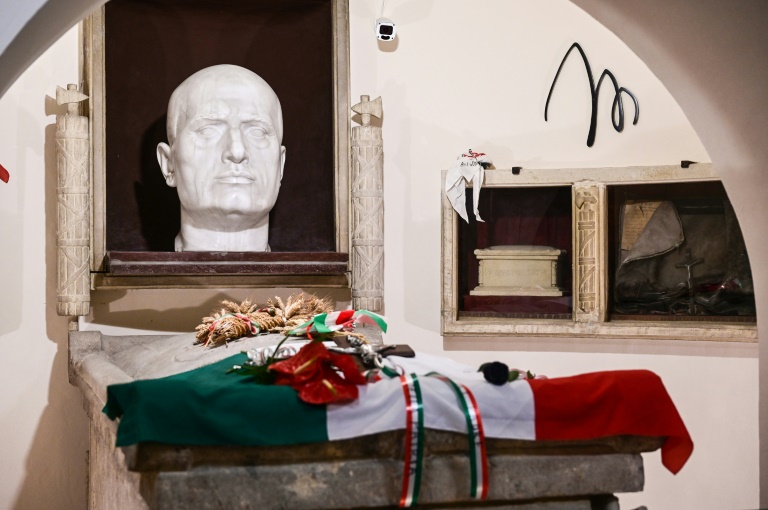
A white marble bust of “Il Duce” adorns the crypt in the family chapel in the cemetery of this northeastern town, where Mussolini was born, while his sarcophagus is draped with the tricolour Italian flag.

“We will never forget you!” says one message in the gold book of condolences, while others say: “We will be reborn” and “Come back!”

One young visitor with a shaved head, visibly moved, brushed the tombstone with one hand before giving the Fascist salute to the man described on one of the ribbons in the crypt as the “father of the country”.

Others who came with their families took a more nuanced view of the legacy of Mussolini, who took power after the so-called March on Rome in October 1922 before installing a dictatorship in 1925 that lasted until 1943.

“Mussolini was a great statesman. He promoted labour law and social protection. But he made mistakes with his alliance with Hitler and the shameful racial laws,” said Fabiana di Carlo, a 42-year-old civil servant visiting from Rome with her daughter.

Her view is typical of many Italians, who draw a line between what Mussolini did before and after his alliance with the Nazis and Italy’s entry into World War II.

An IPSOS survey last year found 66 percent of Italians between 16 and 25 agreed the Fascist regime was “a dictatorship to condemn in part but which also brought benefits”.

– Nostalgic attitudes –

The legacy of Fascism is being reexamined in this centenary year due to the surge in support for Meloni. 

Her party grew out of the Italian Social Movement, which was itself founded by Mussolini supporters after his death in April 1945.

In Predappio, many visitors said they would be voting for Meloni. 

They included di Carlo, who said the Brothers of Italy leader was “intelligent and competent”, and voiced hope she would become Italy’s first female prime minister.

Meloni insists there is “no room for nostalgic attitudes of Fascism” in her party — which advocates a eurosceptic, nationalist Christian programme — although it has rejected calls to remove the MSI’s tricolour flame from its logo. 

Her likely ascent to power is causing concern both at home and across Europe. But she is polling at around 24 percent, as part of a right-wing coalition that together commands around 47 percent support.

“I don’t think there is any risk of returning to historic Facism,” said Gianfranco Miro Gori, a local leader of the National Association of Italian Partisans, the name for the WWII anti-fascist fighters.

“But it is possible there will be a crackdown in the authoritarian sense and a restriction of freedoms, such as freedom of the press,” he said.

However, 39-year-old Ivano, an admirer of Mussolini who works in a vineyard in Cuneo in northwest Italy and was visiting Predappio, insisted there was nothing to fear from Meloni.

“She isn’t Fascist. She’s Atlanticist and anti-Putin,” he said.

– Fascist souvenirs –

Mussolini’s tomb draws more than 70,000 visitors a year and there is a lively tourist trade in Predappio, where numerous shops sell fascist souvenirs.

There are “anti-Communist” bracelets, swastikas, bottles of wine adorned with the dictator’s image, posters proclaiming “Italy for the Italians” and even a “Fascist Handbook”.

A 40-something couple from Milan, Giovanna and Alessandro, left one shop bearing a Mussolini calendar. 

“We are hoping for a Meloni win in the election. She will enforce respect for the rules and security,” Alessandro said.

Near the home where Mussolini was born and where his father had a blacksmith’s workshop, an exhibition dedicated to the March on Rome takes visitors through the dark history of Facism.

Among 170 objects borrowed from private collectors, there are uniforms, bladed weapons, guns and yellowed photos that illustrate the insurrection by Mussolini’s blackshirts, their links to the Catholic church and industry.

“It’s a cultural event which, in an objective, documented manner, invites us to reflect on what the March on Rome was. It’s not an apology for Fascism,” said Franco d’Emilio, one of the exhibition’s curators.

The goal is to “make Predappio known for what it is — that is, the Italian capital of the history of Fascism”, commented Francesco Minutillo, a former leader of Brothers of Italy.

Close Bitnami banner
Bitnami