World

Pregnant women caught in Pakistan floods desperate for aid

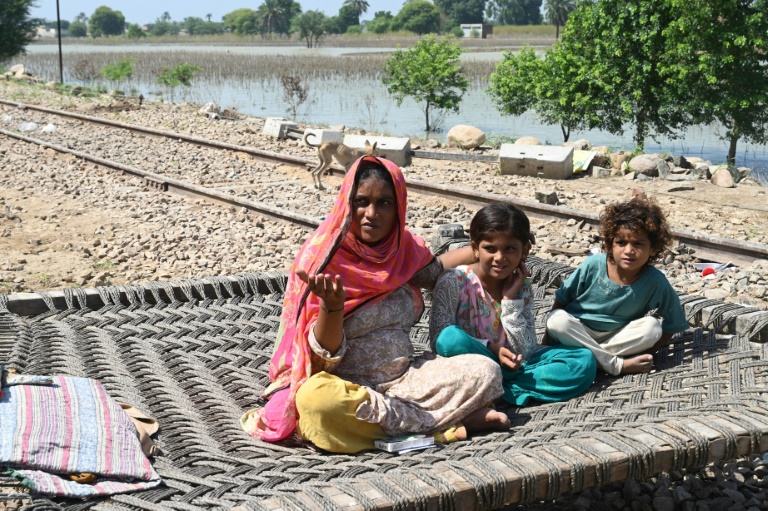
With a swollen belly, aching feet and her four-year-old daughter in tow, Fahmidah Bibi keeps an eye out for a doctor who is rumoured to be due a visit at the campsite she now calls home, after being forced to flee her village because of flooding.

The camp, in the grounds of a small railway station on the outskirts of Fazilpur in Pakistan’s Punjab province, is the only high ground in a landscape of water, and accommodates around 500 people.

They include Fahmidah, 40, who arrived with her five children just over a week ago, along with her husband’s relatives.

“I need a doctor or a midwife. What if something happens to my child?” Fahmidah — nine months pregnant and due any day — told AFP at the weekend.

More than 33 million people in Pakistan have been affected by the flooding, brought on by record monsoon rains that have also caused at least 1,300 deaths, according to government data.

The United Nations Population Fund said Saturday at least 128,000 pregnant women in flood-hit areas urgently need care — with 42,000 expected to give birth in the next three months.

Fahmidah’s last visit to a doctor was a month ago, and according to her report — which she keeps close along with a prescription for medicine she cannot afford — her baby is in breech position.

She sleeps in the open, sharing a traditional wooden charpoy bed with her five children, aged four to 12.

The sprawling makeshift station campsite is home to at least five other pregnant women.

They all complain of a lack of women doctors and midwives to help them. 

– Perilous journey –

Most of the women have resisted being examined by volunteer male doctors who have visited with aid convoys. In conservative Pakistan, it is often deemed inappropriate for women to consult male doctors, especially for gynaecological issues. 

Desperate for attention, Fahmidah tried striking out across flooded fields to reach the city for help, but slipped and fell multiple times and eventually gave up.

She pales at the thought of giving birth at the campsite, where stranded villagers and their livestock live side-by-side without sanitation.

The buzzing of flies and mosquitoes is incessant, as is the stench from the surrounding murky brown water, filled with rotting vegetation and excrement. 

“I have nothing prepared for when the baby comes,” Fahmidah said.

“I don’t even have swaddling clothes. It was all washed away in the flood.”  

Like Fahmidah, five-months pregnant Saira Bibi is desperate for a doctor — she has been experiencing shooting pain along the side of her belly. 

Just 25 years old, Saira already has four daughters, but is under pressure from her husband and his family to produce a son. He has threatened to get another wife if she fails him again. 

“I had a son after four daughters, but he died,” she told AFP, adding that she subsequently underwent fertility treatment for ten months to get pregnant again.

Now, her desperate situation has put her chances of carrying this pregnancy to term in jeopardy. 

While Saira prays to successfully deliver a healthy boy, Fahmidah already knows she will be giving birth to a son.

She has decided to name him Ali Raza, and hopes that he will grow up to be an important government officer and take her on a pilgrimage.

“I know he will take his mother to Mecca,” she says.
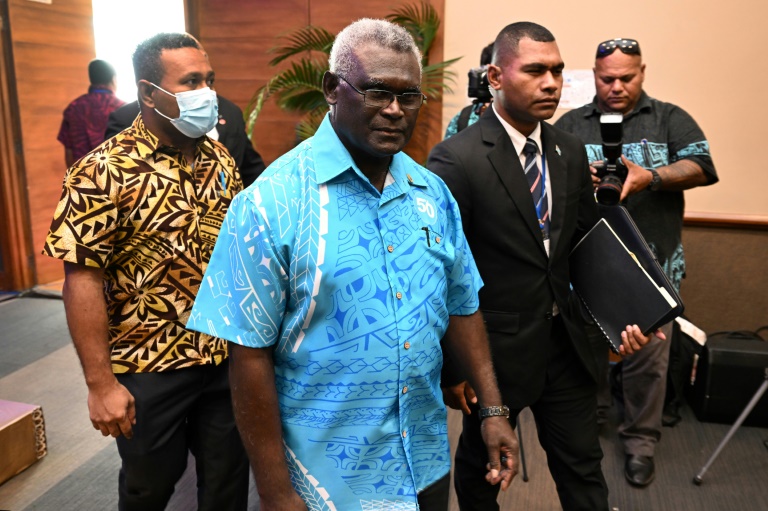
Solomon Islands PM says to lift ban on foreign navy ships soon

A snap ban on foreign military vessels docking in Solomon Islands is poised to be lifted, the Pacific nation’s leader told parliament Monday.

Prime Minister Manasseh Sogavare said a review of the makeshift ban was “progressing very well. We do not expect the temporary moratorium to last for a long time”.

Two weeks ago, US Coast Guard ship Oliver Henry opted to turn away from Honiara, capital of the Solomons, after a lengthy delay to their request to dock.

The HMS Spey, a British naval patrol vessel, also left Solomons waters before getting a late answer to their docking request.

Sogavare’s office then confirmed a snap ban on military vessels from “all countries” while naval approval processes were reviewed.

When asked on Monday about the Oliver Henry incident, Sogavare said it had not been refused permission but instead opted to leave “our waters prior to being informed of approval” to dock.

He said the “temporary” ban was because the Pacific nation had seen “a sudden increase” in requests for visits by military vessels.

“In many cases, service requests are made at short notice and there is expectation that all requests will always be approved,” Sogavare added.

“Each request needs proper assessment, including of the benefits and risks to Solomon Islands.”

He told parliament the review was nearly complete.

Sogavare has deepened his South Pacific nation’s ties with China, and faced street protests against his decision to switch diplomatic recognition from Taipei to Beijing.

After widespread rioting in Honiara and demands for his ouster last year, his government signed a secretive defence pact with Beijing that — according to a leaked draft — allows him to call in Chinese security forces to quell unrest.

Last month, Sogavare’s office accused Western media organisations in the Solomons of “spreading anti-China sentiment”.

A statement issued by the office threatened to ban or deport reporters for “disrespectful and demeaning” coverage and said some foreign media were trying to “engineer regime change”.

At least 10 dead, 15 wounded in Canada stabbing rampage

A stabbing spree in an Indigenous community and a nearby town in Canada’s Saskatchewan province left at least 10 people dead and 15 wounded on Sunday, police said, as they launched a manhunt for two suspects in one of the nation’s deadliest incidents of mass violence.

Police responding to emergency calls found 10 dead in the remote Indigenous community of James Smith Cree Nation and the nearby town of Weldon, Saskatchewan, Royal Canadian Mounted Police Assistant Commissioner Rhonda Blackmore told a news conference.

She said at least 15 other people had been wounded and transported to hospitals.

“It is horrific what has occurred in our province today,” she said. “We are actively looking for the two suspects.”

The alleged attackers fled in a vehicle and have been identified as Myles and Damien Sanderson, aged 30 and 31 respectively, both with black hair and brown eyes.

The James Smith Cree Nation, with a population of 2,500, declared a local state of emergency, while many residents of Saskatchewan province were urged to shelter in place.

Prime Minister Justin Trudeau called the attacks “horrific and heartbreaking” in a tweet, offering condolences and urging residents to heed authorities’ instructions.

Blackmore said authorities believe “some of the victims were targeted by the suspects and others were attacked randomly.”

“To speak to a motive would be extremely difficult at this point in time,” she added. No information was released about the victims.

Television images showed a few rural homes in fields of tall grass and trees, cordoned off with police tape, while on social media locals shared images of the attacks’ aftermath, such as the broken door handle to a burgled home.

Weldon resident Diane Shier told local media her neighbor, a man who lived with his grandson, was killed in the attack. 

“I am very upset because I lost a good neighbor,” she told the Canadian Press news agency.

– ‘Maximum’ police resources –

In recent years, Canada has witnessed a rampaging gunman masquerading as a policeman kill 16 people in Nova Scotia, another kill six and wound five worshippers at a Quebec City mosque, and a driver of a van mow down pedestrians in Toronto killing 10 and injuring 16.

“There are no words to adequately describe the pain and loss caused by this senseless violence,” said Saskatchewan Premier Scott Moe after Sunday’s attack. 

A “dangerous person” alert had been issued in the morning in Saskatchewan, as police responded to multiple stabbings in multiple locations in the Indigenous community and Weldon.

Police received a call at 5:40 am (11:40 GMT) about a stabbing at the James Smith Cree Nation, followed quickly by more calls reporting further stabbings, at a total of 13 separate locations, Blackmore said.

The callers identified the suspects, she said.

“Maximum” police resources were deployed for the search for the suspects, she said, but added that “their location and direction of travel is unknown.”

After reported sightings of the two men in Regina, the provincial capital that is more than 300 kilometers (185 miles) to the south, the alert and search expanded to include neighboring Manitoba and Alberta provinces — a vast region.

In Regina, police chief Evan Bray said authorities were on high alert with additional officers deployed as sports fans descended on the city for a sold-out Labour Day weekend match between the Canadian Football League’s Saskatchewan Roughriders and Winnipeg Blue Bombers.

The Saskatchewan Health Authority told AFP in a statement it had activated emergency protocols to deal with “a high number of critical patients.”

“We can confirm that multiple people are being triaged and cared for at multiple sites and that a call for additional staff to help respond to this situation has occurred,” it added.

Three helicopters were dispatched from Saskatoon and Regina to the remote northern communities to transport stabbing victims and bring a doctor to the scene.

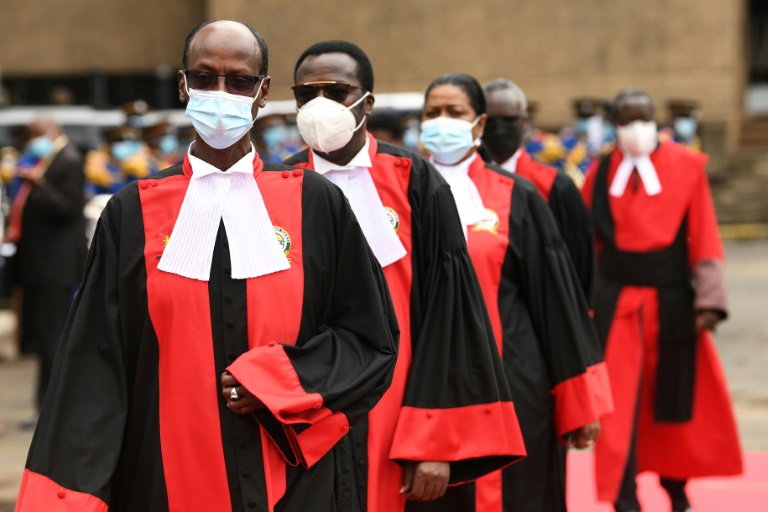
Kenya in tense wait for Supreme Court verdict on election

Kenyans anxiously awaited a Supreme Court ruling Monday on petitions challenging the outcome of the August presidential election, with weeks of political uncertainty looming if the poll is annulled.

Deputy President William Ruto was declared the winner of the tightly fought race, scraping to victory by a narrow margin of less than two percentage points against Raila Odinga, a veteran opposition politician now backed by the ruling party.

Odinga filed a petition to Kenya’s top court last month, alleging fraud in the vote tallying process and claiming he had “enough evidence” to show he had in fact won the August 9 election, which ranks as one of Africa’s most expensive polls.

Although voting day passed off peacefully, the results sparked angry protests in some Odinga strongholds and there are fears a drawn-out dispute may deepen widespread economic malaise and lead to violence in a country with a history of post-poll unrest.

“We have already wasted a lot of time and money so if we go back to election we will waste (even more) time and resources,” said Anne Karanja, a fruit seller in the capital Nairobi.

“I voted but I feel like I can’t vote again,” she told AFP, echoing the frustration felt by many Kenyans.

The court will examine whether any irregularities were substantial enough to nullify the election, as was the case with the August 2017 presidential poll, which Odinga also challenged.

Judges have spent the last two weeks rifling through boxes of evidence to figure out if the technology used by the election commission met the “standards of integrity, verifiability, security and transparency”.

– Economic slump –

After 2017’s annulment, the Independent and Electoral Boundaries Commission was under heavy pressure to deliver a clean poll.

But this year’s election outcome sparked a rift within the IEBC itself, with four of its seven commissioners accusing chairman Wafula Chebukati of running an “opaque” process.

Odinga’s 72-page petition alleges that hackers broke into the IEBC servers and uploaded doctored result forms. His lawyers also claim that Chebukati failed to tally around 140,000 votes. 

Chebukati has denied the claims, insisting he carried out his duties according to the law of the land despite facing “intimidation and harassment”.

After assessing the transparency of the poll, the court will finally rule on whether Ruto met the constitutional threshold of 50 percent plus one of the valid votes cast.

If judges order an annulment, a fresh vote must be held within 60 days, but the run-up to a new election is likely to be fractious.

Odinga has insisted that any fresh poll must be supervised by a new chairman. The 77-year-old boycotted 2017’s court-ordered re-run, accusing the IEBC of lacking credibility.

Since 2002, no presidential poll outcome in Kenya has gone uncontested, with many fearing that a prolonged electoral process and the resulting uncertainty will only worsen the country’s cost of living crisis.

Moses Mungai said his flower business — already hit hard by the Covid pandemic — had taken yet another knock, with Nairobi’s streets deserted for several days following the election.

“People did not come out of their houses,” the 55-year-old said, telling AFP that he expected similar scenes to unfold after Monday’s ruling.

“People fear there will be skirmishes. They will close (shops) and then wait for things to be ok.”

– Disillusionment –

At around 65 percent, turnout was sharply lower than in the August 2017 election, with observers saying it reflected growing disillusionment among citizens.

Both Odinga and Ruto — who has been named as a defendant in the case — assembled huge legal teams.

Odinga, who previously said he was cheated of victory in the 2007, 2013 and 2017 polls, has framed the legal battle as a fight “for democracy and good governance”.

Ruto in turn has urged the court to throw out the petition, accusing Odinga of trying “to have another bite at the cherry through a judicially-forced re-run”.

On the campaign trail, both men pledged to resolve any disputes in court rather than on the streets.

But worries about violence persist.

The 2017 poll saw dozens of protesters killed at the hands of police. Kenya’s worst electoral violence occurred after the 2007 vote, when more than 1,100 people died in politically motivated clashes involving rival tribes.

If the court upholds the results, Ruto will become Kenya’s fifth president since independence from Britain in 1963, taking the reins of a country battling inflation, high unemployment and a crippling drought.

Asian markets mixed as US jobs offset by recession fears

Asian markets were mixed Monday as the positive vibes from a US jobs report were offset by growing fears about an energy crisis in Europe, Chinese Covid lockdowns and geopolitical tensions.

The closely watched payrolls for August showed employment growth moderating and unemployment ticking higher, easing pressure on the Federal Reserve to sharply lift interest rates. 

In response to the figures, traders lowered their expectations for a third successive three-quarter point hike this month, with many now predicting 50 basis points.

“The increase in the participation rate and a softening in average hourly earnings may be a tentative sign that intense labour market tightness is starting to ease slightly,” said National Australia Bank’s Tapas Strickland.

He added that it “eases some of the fears stemming from other indicators such as job openings. Markets interpreted the print as lessening the chances of a 75 basis point hike”.

The news helped send European markets surging and provided a boost to Wall Street.

However, all three main indexes in New York reversed after Russia’s Gazprom said it would not restart gas supplies to Europe citing problems with a pipeline.

The announcement came the same day as the G7 nations said they would work to quickly implement a price cap on Russian oil exports, a move that would starve the Kremlin of critical revenue for its war effort.

The news, which came after European trading ended, ramped up an energy crisis in the continent caused by sanctions on Moscow for its invasion of Ukraine in February.

It has sent shockwaves through the eurozone economy and fanned expectations it will sink into recession, while sending the euro tanking to a 20-year low against the dollar.

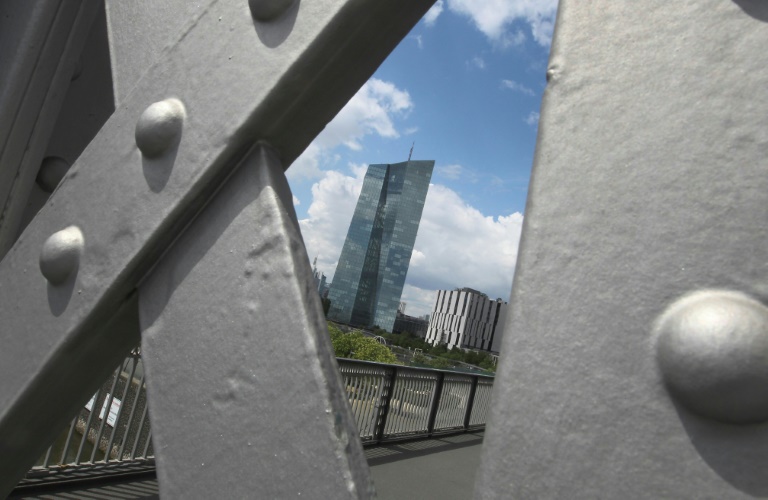
The issue has given the European Central Bank a huge headache — it is forced to lift interest rates as it struggles to contain runaway inflation.

Policymakers are due to announce a second straight lift at its meeting this week, with some observers betting on a 0.75 percentage point rise.

“The outlook is poor for Europe — it started to get choppy at the tail end of last week, and it is almost certainly going to get worse,” Gordon Shannon, of TwentyFour Asset Management, said.

“The ECB had only just started to catch up with the Fed in terms of hiking rates, but if we are going into a prolonged recession, I think this slows down their attempts.”

– ‘Challenging time’ for China –

The Gazprom move helped lift oil prices Monday, with buying also supported by talk that OPEC and other major producers are considering cutting output at their meeting later Monday.

Investors were also dealing with more bad news out of China, where tens of millions of people across several cities have been thrown into lockdown as part of officials’ zero-Covid strategy.

The measures follow an extended shutdown in Shanghai earlier in the year that battered the world’s number two economy.

Observers said Chinese authorities were unlikely to budge ahead of a key Communist Party meeting in October, where Xi Jinping is expected to be handed a third five-year term as president.

“Following this, it is unclear whether China will start to pivot away from its zero-Covid policy,” said NAB’s Strickland.

“For as long as the policy exists, any stimulus measures are unlikely to gain traction, amid a challenging time for the Chinese property market and the economy in general.”

In early Asian trade on Monday, Hong Kong was the biggest loser, with tech firms hit by reports that the United States was considering imposing fresh limits on investments in Chinese firms.

Shanghai, Tokyo, Taipei, Manila and Wellington also fell but there were gains in Sydney, Seoul, Singapore and Jakarta.

– Key figures at around 0230 GMT –

Tokyo – Nikkei 225: DOWN 0.1 percent at 27,610.75 (break)

Hong Kong – Hang Seng Index: DOWN 1.8 percent at 19,109.68

Shanghai – Composite: DOWN 0.1 percent at 3,184.25

Dollar/yen: UP at 140.32 yen from 140.16 yen on Friday

Euro/dollar: DOWN at $0.9908 from $0.9957

Pound/dollar: DOWN at $1.1470 from $1.1515

Euro/pound: DOWN at 86.37 pence from 86.45 pence

West Texas Intermediate: UP 1.6 percent at $88.24 per barrel

Brent North Sea crude: UP 1.5 percent at $94.41 per barrel

New York – Dow: DOWN 1.1 percent at 31,318.44 (close)

London – FTSE 100: UP 1.9 percent at 7,281.19 (close)

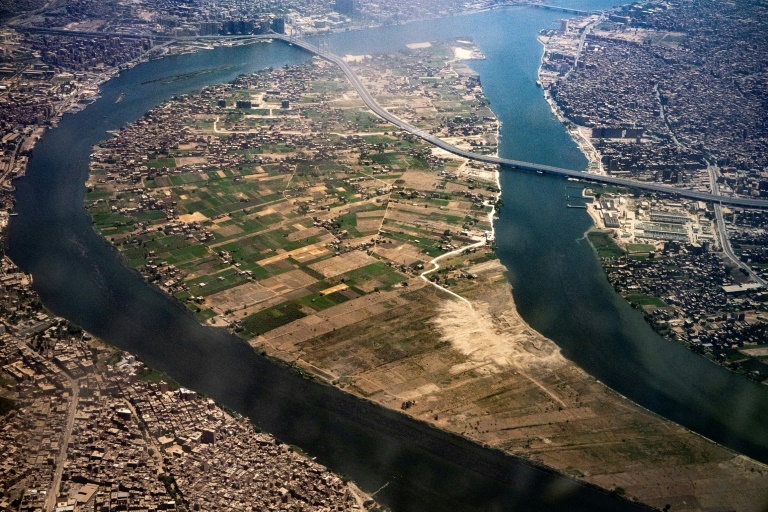
Nile islanders face eviction to make way for Egypt's latest grand plan

Residents of a Nile island in greater Cairo woke up in recent weeks to find officials taking measurements of their houses — a final step before enforcing demolition orders.

Since then, people from Warraq — some of whom have been on the working-class, agricultural island for generations — have renewed efforts to oppose a mega development project that would see the island’s character and their homes erased.

“Just give us a part of the island, even if it is behind a wall,” one resident in his thirties told AFP, requesting anonymity due to security concerns.

“We will not leave,” he added, insisting he has all the proper documentation for his house.

With its green fields, red-brick buildings, irrigation canals and livestock farming, Warraq — located in Giza governorate and home to around 100,000 people — is just a ferry ride away from Cairo’s traffic-choked streets. 

The government in late July evoked images of Manhattan as it unveiled an almost billion-dollar plan for the six-square-kilometre (over two-square-mile) island’s redevelopment, featuring glittering skyscrapers, helipads and marinas.

Minister of Housing Assem al-Gazzar has labelled those who oppose the redevelopment as “divisive forces of evil”, calling the old buildings “dilapidated”.

But residents like the man in his thirties remain defiant.

“We pay our taxes, our water and power bills, why can’t we benefit from the development of our island?” he said.

– ‘Ridiculous’ –

Authorities “gave some residents four days to leave their homes” in late July, a resident in his fifties told AFP, also requesting anonymity for security reasons.

The move triggered demonstrations, clashes and arrests the following month as the years-long fight against the project kicked off again.

The government has been promising massive returns on the redevelopment of Warraq since the administration of longtime president Hosni Mubarak, who was deposed in 2011.

The project for the capital’s largest island was reactivated under current President Abdel Fattah al-Sisi, whose other “mega projects” include a sparkling new capital rising from the sands 50 kilometres (30 miles) east of Cairo.

The general-turned-president has entrusted military engineers with the Warraq project — dubbed “Horus City” after the ancient Egyptian sky god.

In 2017, authorities moved to demolish “illegal” buildings on Warraq as part of a campaign aimed at restoring state-owned land.

At least one person was killed after the operation triggered clashes between residents and security forces.

Anti-eviction advocates defended residents’ legal rights to the land, with lawyer Khaled Ali sharing copies of residents’ property deeds on social media, as well as the birth certificate of one islander born there “100 years ago”.

But two years later, a committee of experts found the evictions to be “in the public interest”.

The Warraq resident in his fifties, who works in the agriculture sector, said he was not against relocating but demanded fair compensation, calling a recent government offer “ridiculous”.

“They proposed 1,400 Egyptian pounds ($73) per square metre,” he said. “You can’t buy anything off the island with that.”

– ‘Gentrification’ –

Residents of other islands fear the Warraq project is just the beginning.

This year, 17 Nile islands including Warraq were handed over to the army and subsequently lost their nature reserve status.

Opposing urban development projects can come at a cost.

Warraq activist Ramy Kamel spent more than two years in pre-trial detention on “terrorism” charges before being released in January.

“Kamel was one of the most committed activists in tracking state violations against Coptic displacement due to security concerns or urban development initiatives,” historian Amy Fallas told AFP, referring to Egypt’s main Christian minority.

While state bulldozers have recently targeted more affluent neighbourhoods, urban planner Ahmed Zaazaa said low socio-economic districts were the first to be razed.

“It’s a gentrification process — the city centre is being emptied of poverty to make way for investment,” he told AFP.

One-third of Egypt’s 103 million people live in poverty, according to World Bank figures, with another third vulnerable to becoming destitute.

Zaazaa says the Cairo redevelopments aim to prepare the city “to accommodate the new capital”.

“Historic and traditional districts of Cairo are being destroyed” so workers can reach the new area, he said. 

Some residents have been relocated to “mega public housing projects on the periphery”, but most find “other informal areas a better solution”, he added.

Using official statements, media reports and satellite imagery, Zaazaa has estimated that “15,000 buildings have been demolished” in Cairo since Sisi took power in 2013.

Residents of Warraq fear displacement will irrevocably rupture their tight-knit community, which is already feeling the pressure as development plans progress.

“Non-residents are not allowed on the island,” said the resident in his thirties.

“One of the ferries was recently closed,” he said, and the remaining two “are monitored by security services around the clock”.

President vows to work for change after Chileans reject new constitution

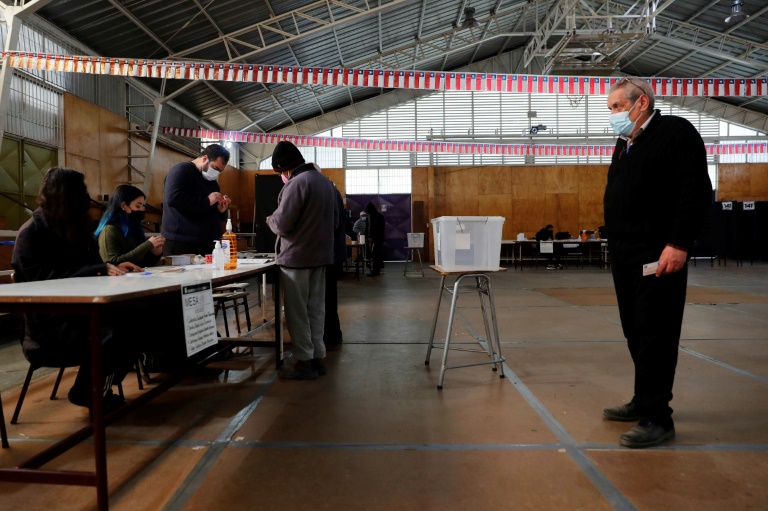
President Gabriel Boric vowed to continue working to reform the political landscape after Chileans on Sunday emphatically rejected a proposed new constitution to replace the one adopted during the Augusto Pinochet dictatorship.

With more than 99 percent of votes counted, the reject camp led with almost 62 percent compared to just over 38 percent for those in favor, in a result that exceeded the expectations of the conservative opposition.

Leftist Boric, who supported the new text, accepted the defeat but pledged to “do everything on my part to build a new constituent itinerary.”

He said the people had demonstrated “that they want and value democracy, they are counting on it to overcome our differences and to progress.”

He then called on “all political forces to put Chile ahead of any legitimate differences and agree as soon as possible on the deadlines and parameters for a new constitutional process.”

The result is a far greater margin of victory than was predicted by opinion polls, which had suggested the constitution would be rejected by up to 10 percentage points.

“President Boric: this defeat is also your defeat,” said far right leader Jose Antonio Kast, an outspoken admirer of Pinochet who last December lost an election run-off to Boric.

Although celebrating the “defeat for the refounding of Chile,” Javier Macaya, president of the conservative UDI party, said his party would fulfil their commitment to work towards a new constitution.

More than 15 million people were eligible to vote in the compulsory election, with polling stations opening at 8:00 am (1200 GMT) and closing 10 hours later.

Social upheaval that began in 2019 provided the impulse to overhaul the constitution, but the 388-article draft proved controversial and often confusing for voters.

The proposed constitution aimed to build a more welfare-based society, boost Indigenous rights and legalize abortion.

In October 2019, protests sprung up mostly in the capital led by students initially angered by a proposed metro fare hike.

Those demonstrations spiraled into wider discontent with the country’s neoliberal economic system as well as growing inequality.

– ‘Resounding failure’ –

Among the chief concerns of opponents was the prominence given to the country’s Indigenous peoples, who make up close to 13 percent of the 19 million-strong population.

Proposals to enshrine reproductive rights and protect the environment as well as natural resources such as water, which some say is exploited by private mining companies, had also garnered much attention.

The new constitution would have overhauled Chile’s government, replacing the Senate with a less powerful “chamber of regions,” and requiring women to hold at least half of positions in public institutions.

“Here people are more in favor of rejection,” said Alfredo Tolosa, 47, a woodworker in Tucapel, a small town in the southern Biobio region.

“They think it’s the best path because they are afraid of change. They have something to eat, they have work and they think they would lose those,” he told AFP.

Some feared the new text would generate instability and uncertainty, which could then harm the economy.

Sociologist Marta Lagos called it a “tremendous victory for reject” and a “resounding failure” for the approve camp.

“No one expected such a gap of over 20 percentage points,” she wrote on Twitter.

– Social tensions –

Those in favor of the new constitution believed it would have prompted changes in a conservative country marked by social and ethnic tensions and lay the foundation for a more egalitarian society.

They say the current constitution gives private enterprise free rein over crucial industries and creates a fertile breeding ground for the rich to prosper and the poor to struggle.

Although the 1980 constitution has undergone several reforms since it was adopted, it retains the stigma of having been introduced during a dictatorship.

Sunday’s poll was the third time in just two years that Chileans have voted on the referendum, having already elected to rewrite the constitution and then elected the representatives to do so.

The new text was drawn up by a constitutional convention made up of 154 members — mostly with no political affiliation — split equally between men and women and with 17 places reserved for Indigenous people.

The resulting proposal recognized 11 Indigenous peoples and offered them greater autonomy, particularly on judicial issues.

Some critics accused the authors of trying to turn the traditionally marginalized Indigenous people into a higher class of citizens.

Trial opens in France over 2016 Nice truck massacre

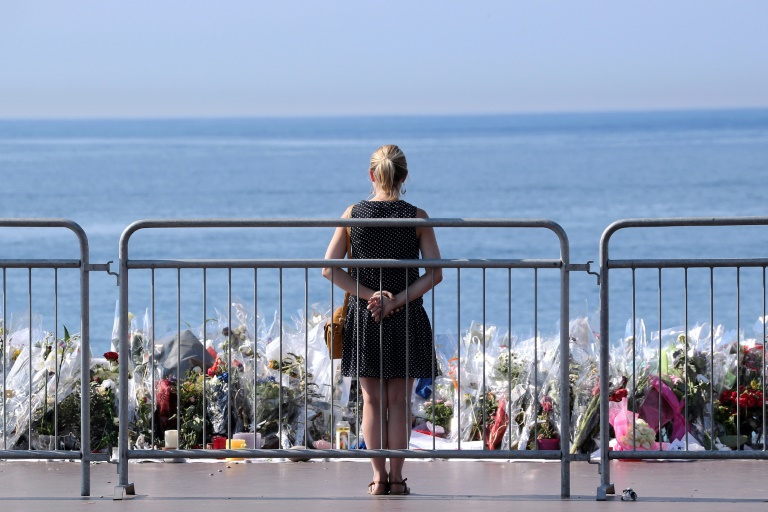
Eight suspects go on trial Monday over the July 2016 attack in the Mediterranean city of Nice, where a radical Islamist killed 86 people by driving a truck into thousands of locals and tourists celebrating France’s national day.

The attacker, a 31-year-old Tunisian named Mohamed Lahouaiej-Bouhlel, was shot dead by police following the more than four-minute rampage down the seaside embankment of the Promenade des Anglais.

The seven men and one woman who will go on trial in Paris are accused of crimes from being aware of his intentions to providing logistical support and supplying weapons.

Only one suspect, Ramzi Kevin Arefa, faces the maximum penalty of life imprisonment if convicted as a recurring offender. The others risk between five and 20 years in prison.

The trial, which gets underway at 1:30 pm (1130 GMT) and due to last until mid-December, is the latest legal process over the Islamist attacks that have hit France since 2015.

A Paris court on June 29 convicted all 20 suspects in the trial over the November 2015 attacks in the French capital which left 130 dead.

The trial will take place within the historic Palais de Justice in Paris at the same purpose-built courthouse that hosted the November 2015 attacks hearings, and a special venue has been set up in Nice to allow victims to follow proceedings via a live broadcast.

– ‘Frustration’ –

While Lahouaiej-Bouhlel cannot now be brought to justice, the trial — as in the November 2015 case — marks a hugely important moment for survivors and relatives of the victims as they seek to move on with their lives.

The extremist Islamic State (IS) group rapidly claimed responsibility for the Nice attack, though French investigators ultimately did not find any links between the attacker and the jihadist organisation which at the time controlled swathes of Iraq and Syria.

Of the accused, three suspects are charged with association in a terrorist conspiracy and the five others with association in a criminal conspiracy and violating arms laws.

The attack, which saw 15 children and adolescents among the dead and 450 wounded, was the second most deadly postwar atrocity on French soil after the November 2015 Paris attacks.

Six years after the attack, “the fact that the sole perpetrator is not there will create frustration. There will be many questions that no one will be able to answer,” said Eric Morain, a lawyer for a victims’ association that is taking part in the trial.

“We are trying to prepare them for the fact that the sentences may not be commensurate with their suffering,” said Antoine Casubolo-Ferro, another lawyer for the victims.

In the November 2015 attacks trial, just one member of the assault team, Salah Abdeslam, was not killed during or in the wake of the strikes. 

He discarded his suicide belt on the night of the attacks and claimed to have changed his mind about attacking. But he was sentenced to life in prison with only a tiny chance of parole after 30 years, the toughest possible punishment under French law.

French Justice Minister Eric Dupond-Moretti commented: “I understand this frustration, it is human. But there will be a legal response. We respond to this barbarism through the law”. 

– ‘Wound will never heal’ –

Of the accused, only seven will appear in court after one suspect, Brahim Tritrou, being tried in absentia, fled judicial supervision to Tunisia where he is now believed to be under arrest.

Just three of the accused are currently under arrest with one held in connection with another case. The defendants are a mix of Tunisians, French-Tunisians and Albanians. 

Some 30,000 people had gathered on the seafront to watch a fireworks display celebrating France’s annual Bastille Day holiday on July 14 when Lahouaiej-Bouhlel began his rampage.

The attack left permanent scars on the city of Nice, a byword for urban seaside glamour on France’s Cote d’Azur but which like the neighbouring Mediterranean cities of Marseille and Toulon has seen rising immigration and social tension.

Nice was struck again in October 2020 when a Tunisian Islamist radical stabbed three people to death at a church.

Nice’s right-wing mayor, Christian Estrosi, said: “This wound will never heal, whatever the outcome of the trial. This wound is too deep.”

According to French and Tunisian press reports, the body of Lahouaiej-Bouhlel was repatriated to Tunisia in 2017 and buried in his hometown of M’saken, south of Tunis. This has never been confirmed by the Tunisian authorities.

'Social' investment strategies under fire in Republican-led US states

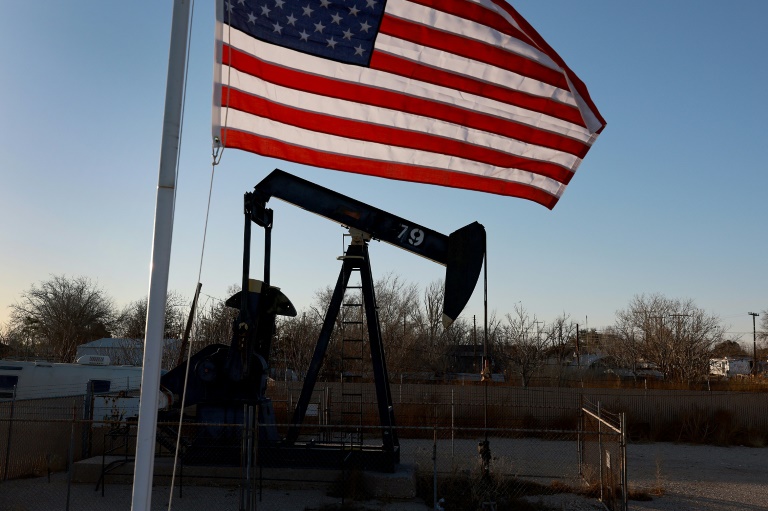
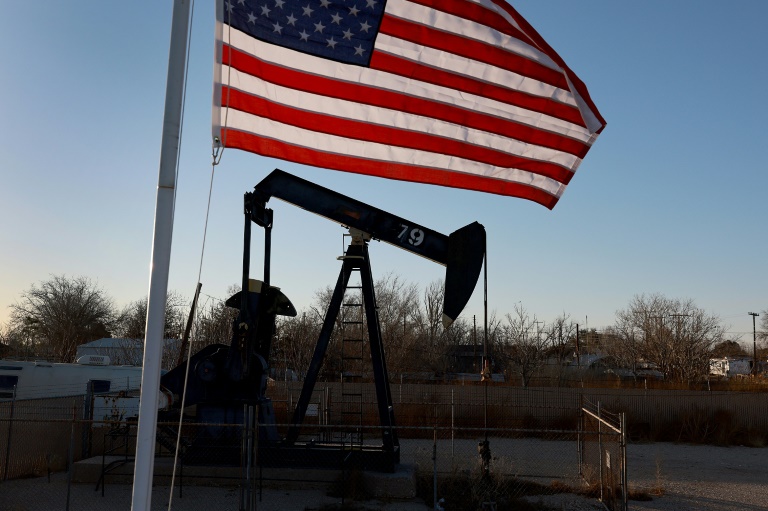
Republican-led US states such as Texas and West Virginia are piling pressure on firms including giant asset manager BlackRock for supposedly boycotting oil and gas companies as part of “responsible” investment strategies.

But the companies say the fossil fuel boycott claims are false and rules barring states from dealing with major financial firms could potentially backfire on taxpayers.

Basing investments partly on a company’s environmental, social and governance (ESG) practices is a sign of an unacceptable “ideological agenda,” says Florida Governor Ron DeSantis, who is seen as a potential 2024 Republican presidential nominee. 

Late last month, he ordered bankers managing the state’s huge pension fund to ignore those criteria and instead prioritize “the financial security of the people of Florida over whimsical notions of a utopian tomorrow.”

The state controller of Texas has, meanwhile, published a list of companies — including BlackRock and several European banks — deemed to be “boycotting” petroleum firms. State officials were instructed to no longer sign contracts with firms on the list.

West Virginia, a smaller state but one rich in coal and natural gas, similarly singled out not just BlackRock, but also such Wall Street pillars as JPMorgan Chase, Wells Fargo, Goldman Sachs and Morgan Stanley.

“Any institution with policies aimed at weakening our energy industries, tax base and job market has a clear conflict of interest in handling taxpayer dollars,” that state’s treasurer, Riley Moore, said in a statement.

– ‘Disconnected from reality’ –

The banks targeted, however, deny they are engaging in any such boycott.

While some of them have decided to stop financing oil exploration projects in the Arctic, for example, they are continuing to lend money to the industry.

JP Morgan decried West Virginia’s rule as “shortsighted and disconnected from the facts.”

BlackRock, the world’s biggest asset manager, says it has invested more than $108 billion in Texas oil companies, including ExxonMobil.

Referring to Texas’s new rule, the Wall Street firm said in a statement that “elected and appointed public officials have a duty to act in the best interests of the people they serve. Politicizing state pension funds, restricting access to investments, and impacting the financial returns of retirees, is not consistent with that duty.”

Joshua Lichtenstein, whose law firm Ropes & Gray tracks the way states are regulating ESG investments, said that the Republican-led attacks may be misguided.

“The political rhetoric is addressing a world that doesn’t exist,” he said.

The choice is not really between directing “investment capital towards ESG or investment capital towards returns,” Lichtenstein told AFP. “It’s really more about investing towards funds that are using ESG as part of a risk-mitigation strategy.”

And investors are pushed in that direction by a growing number of clients, not only in Democratic-led US states but in Europe and Japan.

The northeastern state of Maine in 2021 adopted a law requiring the state’s pension system to divest itself of shares in fossil fuel companies.

– A cost to taxpayers –

The new rules in Republican states could come at a cost to those states’ taxpayers, said Ben Cushing, a financial specialist with the environmental advocacy group the Sierra Club.

Texas, for example, last year adopted a law banning its cities from signing new contracts with banks that limit investment in petroleum companies or gun manufacturers. 

The result: the number of establishments participating in municipal bond issues in Texas has declined and negotiated rates have risen — costing taxpayers millions in extra interest — according to a June study by researchers at the University of Pennsylvania and the US Federal Reserve.

Lichtenstein said it is too early to know the broader impact of the Republican campaign.

He said it would not necessarily threaten an already well-established trend: clients are increasingly sensitive to climate change, for example, and investment managers still must take all risks into account.

But “the red states are probably the loudest,” Lichtenstein added, and if Republican states such as Florida actively enforce their new rules, fund managers may seek to avoid conflict. 

Ultimately, said the Sierra Club’s Cushing, that could compel financial establishments to slow their ESG efforts just as they “belatedly are beginning to address the climate crisis and recognize the very real financial implications of climate change.”

'Social' investment strategies under fire in Republican-led US states

Republican-led US states such as Texas and West Virginia are piling pressure on firms including giant asset manager BlackRock for supposedly boycotting oil and gas companies as part of “responsible” investment strategies.

But the companies say the fossil fuel boycott claims are false and rules barring states from dealing with major financial firms could potentially backfire on taxpayers.

Basing investments partly on a company’s environmental, social and governance (ESG) practices is a sign of an unacceptable “ideological agenda,” says Florida Governor Ron DeSantis, who is seen as a potential 2024 Republican presidential nominee. 

Late last month, he ordered bankers managing the state’s huge pension fund to ignore those criteria and instead prioritize “the financial security of the people of Florida over whimsical notions of a utopian tomorrow.”

The state controller of Texas has, meanwhile, published a list of companies — including BlackRock and several European banks — deemed to be “boycotting” petroleum firms. State officials were instructed to no longer sign contracts with firms on the list.

West Virginia, a smaller state but one rich in coal and natural gas, similarly singled out not just BlackRock, but also such Wall Street pillars as JPMorgan Chase, Wells Fargo, Goldman Sachs and Morgan Stanley.

“Any institution with policies aimed at weakening our energy industries, tax base and job market has a clear conflict of interest in handling taxpayer dollars,” that state’s treasurer, Riley Moore, said in a statement.

– ‘Disconnected from reality’ –

The banks targeted, however, deny they are engaging in any such boycott.

While some of them have decided to stop financing oil exploration projects in the Arctic, for example, they are continuing to lend money to the industry.

JP Morgan decried West Virginia’s rule as “shortsighted and disconnected from the facts.”

BlackRock, the world’s biggest asset manager, says it has invested more than $108 billion in Texas oil companies, including ExxonMobil.

Referring to Texas’s new rule, the Wall Street firm said in a statement that “elected and appointed public officials have a duty to act in the best interests of the people they serve. Politicizing state pension funds, restricting access to investments, and impacting the financial returns of retirees, is not consistent with that duty.”

Joshua Lichtenstein, whose law firm Ropes & Gray tracks the way states are regulating ESG investments, said that the Republican-led attacks may be misguided.

“The political rhetoric is addressing a world that doesn’t exist,” he said.

The choice is not really between directing “investment capital towards ESG or investment capital towards returns,” Lichtenstein told AFP. “It’s really more about investing towards funds that are using ESG as part of a risk-mitigation strategy.”

And investors are pushed in that direction by a growing number of clients, not only in Democratic-led US states but in Europe and Japan.

The northeastern state of Maine in 2021 adopted a law requiring the state’s pension system to divest itself of shares in fossil fuel companies.

– A cost to taxpayers –

The new rules in Republican states could come at a cost to those states’ taxpayers, said Ben Cushing, a financial specialist with the environmental advocacy group the Sierra Club.

Texas, for example, last year adopted a law banning its cities from signing new contracts with banks that limit investment in petroleum companies or gun manufacturers. 

The result: the number of establishments participating in municipal bond issues in Texas has declined and negotiated rates have risen — costing taxpayers millions in extra interest — according to a June study by researchers at the University of Pennsylvania and the US Federal Reserve.

Lichtenstein said it is too early to know the broader impact of the Republican campaign.

He said it would not necessarily threaten an already well-established trend: clients are increasingly sensitive to climate change, for example, and investment managers still must take all risks into account.

But “the red states are probably the loudest,” Lichtenstein added, and if Republican states such as Florida actively enforce their new rules, fund managers may seek to avoid conflict. 

Ultimately, said the Sierra Club’s Cushing, that could compel financial establishments to slow their ESG efforts just as they “belatedly are beginning to address the climate crisis and recognize the very real financial implications of climate change.”

Close Bitnami banner
Bitnami