World

NASA Moon rocket ready for second attempt at liftoff

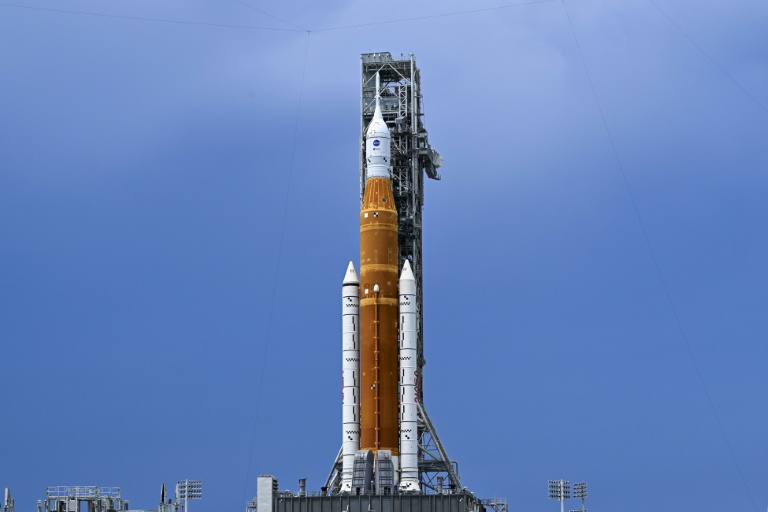
After technical issues halted its first launch attempt, NASA will try again on Saturday to get its new 30-story rocket off the ground and send its uncrewed test capsule toward the Moon.

If the massive Space Launch System (SLS) lifts off successfully, it will be historic for NASA, marking the first of its Artemis program plotting a return to the Moon, 50 years after the final Apollo mission.

The launch is scheduled for 2:17 pm (1817 GMT) from Kennedy Space Center in Florida, with a possible two-hour delay.

“Our team is ready,” said Jeremy Parsons, deputy manager of exploration ground systems at Kennedy Space Center, on Friday.

“They are getting better with every attempt and actually performed superbly during launch countdown number one… I think if the conditions with weather and the hardware align, we’ll absolutely go.”

Though the area around the launch site will be closed to the public, 400,000 people are expected to gather on beaches nearby to see — and hear — the most powerful vehicle that NASA has ever launched climb into space.

NASA’s initial launch attempt on Monday was halted after engineers detected a fuel leak and a sensor showed that one of the rocket’s four main engines was too hot.

Both issues have since been resolved, the launch team said.

Shortly before 06:00 am (1000 GMT), launch director Charlie Blackwell-Thompson gave the go-ahead to start filling the rocket’s tanks with cryogenic fuel.

About three million liters of ultra-cold liquid hydrogen and oxygen is expected to be pumped into the spacecraft.

And the weather appears to be cooperating: the US Space Force predicts a 60 percent chance of favorable weather at the scheduled liftoff time, growing to 80 percent later in the launch window.

If something requires NASA to stand down again on Saturday, there are backup opportunities on Monday or Tuesday. After that, the next launch window will not be until September 19, due to the Moon’s position.

The purpose of the Artemis 1 mission is to verify that the Orion capsule, which sits atop the SLS rocket, is safe to carry astronauts in the future.

Mannequins equipped with sensors are standing in for astronauts on the mission and will record acceleration, vibration and radiation levels.

– Apollo’s twin sister –

It will take several days for the spacecraft to reach the Moon, flying around 60 miles (100 kilometers) at its closest approach. The capsule will fire its engines to get to a distant retrograde orbit (DRO) of 40,000 miles beyond the Moon, a record for a spacecraft rated to carry humans.

The trip is expected to last around six weeks and one of its main objectives is to test the capsule’s heat shield, which at 16 feet in diameter is the largest ever built.

On its return to Earth’s atmosphere, the heat shield will have to withstand speeds of 25,000 miles per hour and a temperature of 5,000 degrees Fahrenheit (2,760 degrees Celsius) — roughly half as hot as the Sun.

Artemis is named after the twin sister of the Greek god Apollo, after whom the first Moon missions were named.

Unlike the Apollo missions, which sent only white men to the Moon between 1969 and 1972, Artemis missions will see the first person of color and the first woman step foot on the lunar surface.

Fittingly, NASA’s first woman launch director, Blackwell-Thompson, will give the final “go” for liftoff on Saturday.

A successful Artemis 1 mission will come as a huge relief to the US space agency, after years of delays and cost overruns.

A government audit estimates the program’s cost will grow to $93 billion by 2025, with each of its first four missions clocking in at a whopping $4.1 billion per launch.

The next mission, Artemis 2, will take astronauts to the Moon without landing on its surface.

The crew of Artemis 3 is to land on the Moon in 2025 at the earliest, with later missions envisaging a lunar space station and a sustainable presence on the lunar surface.

According to NASA chief Bill Nelson, a crewed trip to the red planet aboard Orion, which would last several years, could be attempted by the end of the 2030s.
NASA Moon rocket ready for second attempt at liftoff

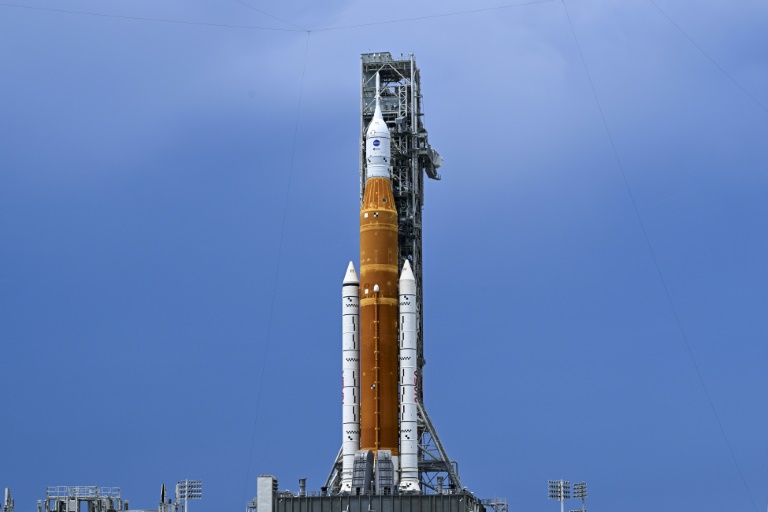
After technical issues halted its first launch attempt, NASA will try again on Saturday to get its new 30-story rocket off the ground and send its uncrewed test capsule toward the Moon.

If the massive Space Launch System (SLS) lifts off successfully, it will be historic for NASA, marking the first of its Artemis program plotting a return to the Moon, 50 years after the final Apollo mission.

The launch is scheduled for 2:17 pm (1817 GMT) from Kennedy Space Center in Florida, with a possible two-hour delay.

“Our team is ready,” said Jeremy Parsons, deputy manager of exploration ground systems at Kennedy Space Center, on Friday.

“They are getting better with every attempt and actually performed superbly during launch countdown number one… I think if the conditions with weather and the hardware align, we’ll absolutely go.”

Though the area around the launch site will be closed to the public, 400,000 people are expected to gather on beaches nearby to see — and hear — the most powerful vehicle that NASA has ever launched climb into space.

NASA’s initial launch attempt on Monday was halted after engineers detected a fuel leak and a sensor showed that one of the rocket’s four main engines was too hot.

Both issues have since been resolved, the launch team said.

Shortly before 06:00 am (1000 GMT), launch director Charlie Blackwell-Thompson gave the go-ahead to start filling the rocket’s tanks with cryogenic fuel.

About three million liters of ultra-cold liquid hydrogen and oxygen is expected to be pumped into the spacecraft.

And the weather appears to be cooperating: the US Space Force predicts a 60 percent chance of favorable weather at the scheduled liftoff time, growing to 80 percent later in the launch window.

If something requires NASA to stand down again on Saturday, there are backup opportunities on Monday or Tuesday. After that, the next launch window will not be until September 19, due to the Moon’s position.

The purpose of the Artemis 1 mission is to verify that the Orion capsule, which sits atop the SLS rocket, is safe to carry astronauts in the future.

Mannequins equipped with sensors are standing in for astronauts on the mission and will record acceleration, vibration and radiation levels.

– Apollo’s twin sister –

It will take several days for the spacecraft to reach the Moon, flying around 60 miles (100 kilometers) at its closest approach. The capsule will fire its engines to get to a distant retrograde orbit (DRO) of 40,000 miles beyond the Moon, a record for a spacecraft rated to carry humans.

The trip is expected to last around six weeks and one of its main objectives is to test the capsule’s heat shield, which at 16 feet in diameter is the largest ever built.

On its return to Earth’s atmosphere, the heat shield will have to withstand speeds of 25,000 miles per hour and a temperature of 5,000 degrees Fahrenheit (2,760 degrees Celsius) — roughly half as hot as the Sun.

Artemis is named after the twin sister of the Greek god Apollo, after whom the first Moon missions were named.

Unlike the Apollo missions, which sent only white men to the Moon between 1969 and 1972, Artemis missions will see the first person of color and the first woman step foot on the lunar surface.

Fittingly, NASA’s first woman launch director, Blackwell-Thompson, will give the final “go” for liftoff on Saturday.

A successful Artemis 1 mission will come as a huge relief to the US space agency, after years of delays and cost overruns.

A government audit estimates the program’s cost will grow to $93 billion by 2025, with each of its first four missions clocking in at a whopping $4.1 billion per launch.

The next mission, Artemis 2, will take astronauts to the Moon without landing on its surface.

The crew of Artemis 3 is to land on the Moon in 2025 at the earliest, with later missions envisaging a lunar space station and a sustainable presence on the lunar surface.

According to NASA chief Bill Nelson, a crewed trip to the red planet aboard Orion, which would last several years, could be attempted by the end of the 2030s.
Ousted Sri Lanka leader faces arrest calls after return

Deposed Sri Lankan president Gotabaya Rajapaksa faced calls for his arrest Saturday after returning home from self-imposed exile under the protection of his successor’s government.

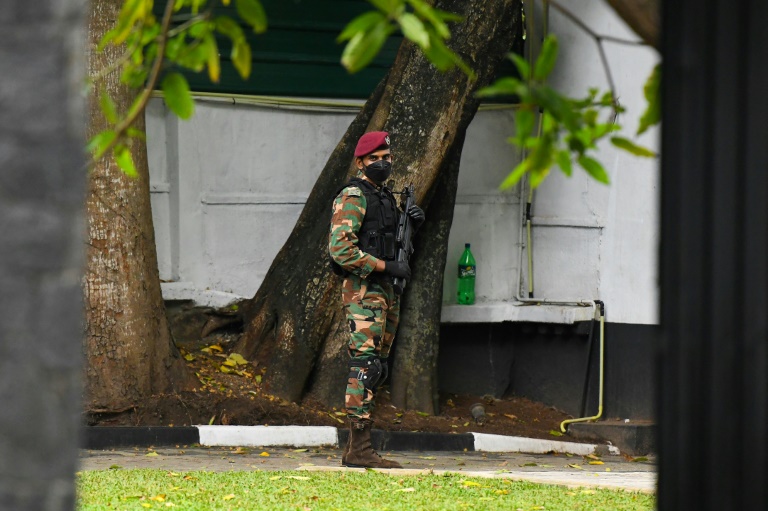
Rajapaksa fled the island nation under military escort in July after a huge crowd stormed his official residence following months of demonstrations sparked by an unprecedented economic crisis. 

The 73-year-old announced his resignation from Singapore and spent weeks under virtual house arrest at a Bangkok hotel before his return late on Friday. 

Leaders of the protest campaign that toppled his government said Rajapaksa, who lost his presidential immunity after leaving office, should now be brought to justice. 

“Gotabaya returned because no country is willing to accept him, he has no place to hide,” Joseph Stalin, the leader of a teachers’ trade union that helped mobilise demonstrators, told AFP. 

“He should be arrested immediately for causing such misery for the 22 million people of Sri Lanka,” he added. “He can’t live freely as if nothing has happened.”

Rajapaksa’s government was accused of chaotic mismanagement as the Sri Lankan economy spiralled into a blistering downturn.

The crisis saw acute shortages of food, lengthy blackouts and long queues at gas stations for scarce fuel supplies after the country ran out of foreign currency to pay for vital imports.

Sri Lanka’s main opposition alliance, the Samagi Jana Balawegaya (SJB), has yet to comment on Rajapaksa’s return, but a former minister from the bloc said the ousted leader needed to be prosecuted. 

“Gotabaya must be held to account for his crimes before and during his presidency,” Ajith Perera told reporters in Colombo.

Rajapaksa was garlanded with flowers by ministers and senior politicians after disembarking from his flight in Colombo.

He was driven in a security convoy to a new official residence in the capital provided to him by the government of President Ranil Wickremesinghe, his successor.

Wickremesinghe depends on Rajapaksa’s Sri Lanka Podujana Peramuna (SLPP) party to govern and on Friday passed an austerity budget — a precondition for an International Monetary Fund bailout — with the grouping’s support. 

“Gotabaya’s return demonstrates that the SLPP is still powerful despite the humiliation they suffered,” Hasith Kandaudahewa, a senior lecturer on international relations at the University of Colombo, told AFP. 

But Kandaudahewa said the return of the deeply unpopular Rajapaksa had the potential to undermine his successor.

Rajapaksa began receiving guests at his new home on Saturday with his elder brother — former president Mahinda Rajapaksa — one of the first to call on him, witnesses said.

Mahinda was serving as premier in his brother’s administration when too he was chased from his home by a mob incensed by an attack on protesters by government loyalists.

– ‘Bring him to justice’ –

Rights activists have vowed to press for Gotabaya’s prosecution on a litany of charges, including his alleged role in the 2009 assassination of prominent newspaper editor Lasantha Wickrematunge.

“We welcome his decision to return so that we can bring him to justice for the crimes he has committed,” Tharindu Jayawardhana, a spokesman for the Sri Lanka Young Journalists’ Association, said Friday.

Several corruption cases lodged against Rajapaksa stalled after he was elected president.

Rajapaksa also faces charges in a US court over Wickrematunge’s murder and the torture of Tamil prisoners at the end of the island’s traumatic civil war in 2009.

– ‘Prosperity and splendour’ –

Rajapaksa won a landslide election in 2019 after promising “vistas of prosperity and splendour” but saw his popularity nosedive as the country’s crisis worsened. 

His government was accused of introducing unsustainable tax cuts that drove up government debt and exacerbated the country’s economic problems. 

The coronavirus pandemic also dealt a hammer blow to the island’s tourism industry and dried up remittances from Sri Lankans working abroad — both key foreign exchange earners.

Wickremesinghe was elected by parliament to see out the remainder of Rajapaksa’s term. He has since cracked down on street protests and arrested leading activists. 

The government defaulted on its $51 billion foreign debt in April and the central bank forecasts a record eight percent GDP contraction this year. 

After months of negotiations, the International Monetary Fund agreed on Thursday to a conditional $2.9 billion bailout package to repair Sri Lanka’s battered finances. 

Russians bid farewell to Gorbachev, but without Putin

Russians on Saturday paid their final respects to the last leader of the Soviet Union, Mikhail Gorbachev, in a ceremony held in Moscow without much fanfare and with President Vladimir Putin notably absent.

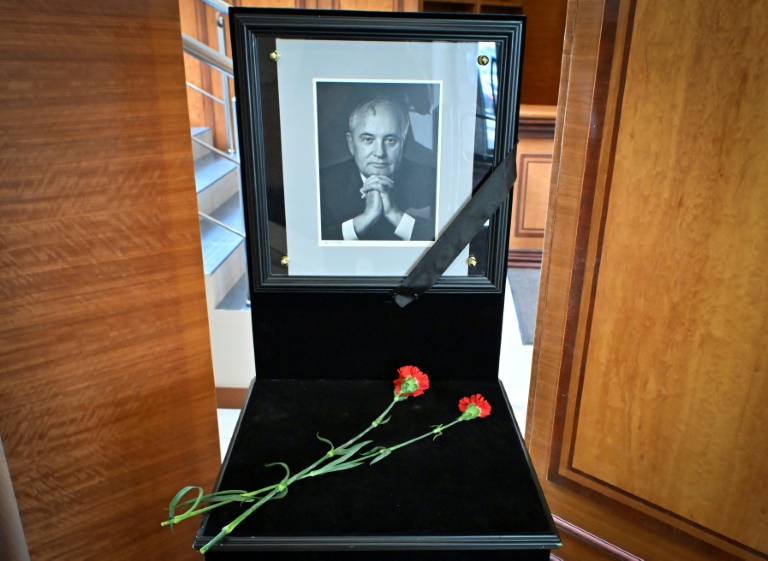
Hundreds of mourners lined up to quietly file past Gorbachev’s open casket as it was flanked by honour guards under the Russian flag in Moscow’s historic Hall of Columns.

The hall has long been used for the funerals of high officials in Russia and it was where the body of Joseph Stalin first lay in state during four days of national mourning after his death in 1953.

Gorbachev died on Tuesday at the age of 91 following a “serious and long illness”, the hospital where he was treated said. 

In power between 1985 and 1991, Gorbachev sought to transform the Soviet Union with democratic reforms, but eventually triggered its demise.

One of the great political figures of the 20th century, he was lionised in the West for helping to end the Cold War and trying to change the USSR, but despised by many in Russia for the economic chaos and loss of global influence that followed the Soviet collapse.

He had spent most of the last few decades out of the political limelight and his death this week was barely acknowledged in official circles in Russia.

State television on Thursday showed images of Putin, alone, laying a bouquet of red roses near Gorbachev’s open casket at the hospital where he died.

But the Kremlin said Putin would not attend Saturday’s funeral due to his “work schedule”.

There were few other signs of an official presence at the ceremony, where Gorbachev’s daughter Irina Virganskaya sat to the side of the coffin with other family members.

– Hungary’s Orban to attend –

Gorbachev was to be buried later Saturday at Moscow’s prestigious Novodevichy Cemetery next to his wife Raisa, who died from cancer in 1999.

With Russia isolated by its military campaign in Ukraine, the only senior foreign official to announce he would attend was Hungarian Prime Minister Viktor Orban of Hungary.

Before the Ukraine conflict, Orban had one of the closest relationships with Putin of any EU leader, but the Kremlin said there were no talks planned during his visit to Moscow.

After Gorbachev’s death, tributes poured in from Western capitals, where he is remembered for allowing countries in Eastern Europe to free themselves from Soviet rule and for signing a landmark nuclear arms reduction pact with the United States.

Known affectionately in the West as Gorby, he was awarded the Nobel Peace Prize in 1990. 

Flags were also flying at half-mast in Berlin on Saturday, in memory of the man who held back Soviet troops as the Berlin Wall fell in 1989. 

In Russia, Gorbachev’s steps towards peace and reform have been overshadowed by the economic troubles that followed the fall of the Soviet Union. 

Putin, who called the Soviet collapse the greatest geopolitical catastrophe of the 20th century, has spent much of his more than 20-year rule reversing parts of Gorbachev’s legacy.

By cracking down on independent media and political opposition, critics say, Putin has worked to undo Gorbachev’s efforts to bring “glasnost”, or openness, to the Soviet system.

And with the launch earlier this year of the military campaign in Ukraine, he has sought to reassert Russian influence in one of the countries that won its independence when the Soviet Union fell apart.

Gorbachev’s successor, Boris Yeltsin, who became the first president of modern Russia and led the country through years of painful transition to a market economy, was honoured with a state funeral and day of mourning when he died in 2007. 

Both Putin and Gorbachev were in attendance.

NASA Moon rocket ready for second attempt at liftoff

After technical issues halted its first launch attempt, NASA will try again on Saturday to get its new 30-story rocket off the ground and send its unmanned test capsule towards the Moon.

If the massive Space Launch System (SLS) lifts off successfully, it will not only be awe-inspiring but also historic for NASA, marking the first of its Artemis program plotting a return to the Moon, fifty years after the final Apollo mission.

The launch is scheduled for 2:17 pm local time (1817 GMT) from Kennedy Space Center in Florida, with a possible two-hour delay if necessary.

“Our team is ready,” said Jeremy Parsons, deputy manager of exploration ground systems at Kennedy Space Center, on Friday.

“They are getting better with every attempt and actually performed superbly during launch countdown number one… I think if the conditions with weather and the hardware align, we’ll absolutely go.”

Though the area around the launch site will be closed to the public, hundreds of thousands of people are expected to gather on beaches nearby to see — and hear — the most powerful vehicle that NASA has ever launched climb into space.

NASA’s initial launch attempt on Monday was halted after engineers detected a fuel leak and a sensor showed that one of the rocket’s four main engines was too hot.

Both issues have since been resolved, and the weather appears to be cooperating: the US Space Force predicts a 60 percent chance of favorable weather at the scheduled liftoff time, growing to 80 percent later in the launch window.

If something requires NASA to stand down again on Saturday, there are backup opportunities on Monday or Tuesday. After that, the next launch window will not be until September 19 at the earliest, due to the Moon’s position.

The purpose of the Artemis 1 mission is to verify that the Orion capsule, which sits atop the SLS rocket, is safe to carry astronauts in the future.

Mannequins equipped with sensors are standing in for astronauts on the mission and will record acceleration, vibration and radiation levels.

– Apollo’s twin sister –

It will take several days for the spacecraft to reach the Moon, flying around 60 miles (100 kilometers) at its closest approach. The capsule will fire its engines to get to a distant retrograde orbit (DRO) of 40,000 miles beyond the Moon, a record for a spacecraft rated to carry humans.

The trip is expected to last around six weeks and one of its main objectives is to test the capsule’s heat shield, which at 16 feet in diameter is the largest ever built.

On its return to Earth’s atmosphere, the heat shield will have to withstand speeds of 25,000 miles per hour and a temperature of 5,000 degrees Fahrenheit (2,760 degrees Celsius) — roughly half as hot as the Sun.

Artemis is named after the twin sister of the Greek god Apollo, after whom the first Moon missions were named.

Unlike the Apollo missions, which sent only white men to the Moon between 1969 and 1972, Artemis missions will see the first person of color and the first woman step foot on the lunar surface.

Fittingly, NASA’s first woman launch director, Charlie Blackwell-Thompson, will give the final “go” for liftoff on Saturday.

A successful Artemis 1 mission will come as a huge relief to the US space agency, after years of delays and cost overruns.

A government audit estimates the program’s cost will grow to $93 billion by 2025, with each of its first four missions clocking in at a whopping $4.1 billion per launch.

The next mission, Artemis 2, will take astronauts to the Moon without landing on its surface.

The crew of Artemis 3 is to land on the Moon in 2025 at the earliest, with later missions envisaging a lunar space station and a sustainable presence on the lunar surface.

According to NASA chief Bill Nelson, a manned trip to the red planet aboard Orion, which would last several years, could be attempted by the end of the 2030s.
NASA Moon rocket ready for second attempt at liftoff

After technical issues halted its first launch attempt, NASA will try again on Saturday to get its new 30-story rocket off the ground and send its unmanned test capsule towards the Moon.

If the massive Space Launch System (SLS) lifts off successfully, it will not only be awe-inspiring but also historic for NASA, marking the first of its Artemis program plotting a return to the Moon, fifty years after the final Apollo mission.

The launch is scheduled for 2:17 pm local time (1817 GMT) from Kennedy Space Center in Florida, with a possible two-hour delay if necessary.

“Our team is ready,” said Jeremy Parsons, deputy manager of exploration ground systems at Kennedy Space Center, on Friday.

“They are getting better with every attempt and actually performed superbly during launch countdown number one… I think if the conditions with weather and the hardware align, we’ll absolutely go.”

Though the area around the launch site will be closed to the public, hundreds of thousands of people are expected to gather on beaches nearby to see — and hear — the most powerful vehicle that NASA has ever launched climb into space.

NASA’s initial launch attempt on Monday was halted after engineers detected a fuel leak and a sensor showed that one of the rocket’s four main engines was too hot.

Both issues have since been resolved, and the weather appears to be cooperating: the US Space Force predicts a 60 percent chance of favorable weather at the scheduled liftoff time, growing to 80 percent later in the launch window.

If something requires NASA to stand down again on Saturday, there are backup opportunities on Monday or Tuesday. After that, the next launch window will not be until September 19 at the earliest, due to the Moon’s position.

The purpose of the Artemis 1 mission is to verify that the Orion capsule, which sits atop the SLS rocket, is safe to carry astronauts in the future.

Mannequins equipped with sensors are standing in for astronauts on the mission and will record acceleration, vibration and radiation levels.

– Apollo’s twin sister –

It will take several days for the spacecraft to reach the Moon, flying around 60 miles (100 kilometers) at its closest approach. The capsule will fire its engines to get to a distant retrograde orbit (DRO) of 40,000 miles beyond the Moon, a record for a spacecraft rated to carry humans.

The trip is expected to last around six weeks and one of its main objectives is to test the capsule’s heat shield, which at 16 feet in diameter is the largest ever built.

On its return to Earth’s atmosphere, the heat shield will have to withstand speeds of 25,000 miles per hour and a temperature of 5,000 degrees Fahrenheit (2,760 degrees Celsius) — roughly half as hot as the Sun.

Artemis is named after the twin sister of the Greek god Apollo, after whom the first Moon missions were named.

Unlike the Apollo missions, which sent only white men to the Moon between 1969 and 1972, Artemis missions will see the first person of color and the first woman step foot on the lunar surface.

Fittingly, NASA’s first woman launch director, Charlie Blackwell-Thompson, will give the final “go” for liftoff on Saturday.

A successful Artemis 1 mission will come as a huge relief to the US space agency, after years of delays and cost overruns.

A government audit estimates the program’s cost will grow to $93 billion by 2025, with each of its first four missions clocking in at a whopping $4.1 billion per launch.

The next mission, Artemis 2, will take astronauts to the Moon without landing on its surface.

The crew of Artemis 3 is to land on the Moon in 2025 at the earliest, with later missions envisaging a lunar space station and a sustainable presence on the lunar surface.

According to NASA chief Bill Nelson, a manned trip to the red planet aboard Orion, which would last several years, could be attempted by the end of the 2030s.
Russians bid to farewell to Gorbachev, but without Putin

Last Soviet leader Mikhail Gorbachev will be laid to rest Saturday in a Moscow ceremony, but without the fanfare of a state funeral and with the glaring absence of President Vladimir Putin. 

With Russia isolated by its military campaign in Ukraine, no foreign leaders are expected to attend what will be a relatively low-key affair to remember one of the great political figures of the 20th century.

Gorbachev — affectionately known in the West as Gorby — died on Tuesday at the age of 91 following a “serious and long illness”, the hospital where he was treated said. 

In power between 1985 and 1991, Gorbachev sought to transform the Soviet Union with democratic reforms, but also eventually triggered its demise. 

In Russia, many blame him for letting go of the Soviet empire and with it the country’s position as a global power.

But in the West, Gorbachev is viewed as the man who ended the Cold War and lifted the Iron Curtain — achievements recognised by a Nobel Peace Prize in 1990.

Gorbachev championed freedom and democratic reform, seeking closer ties with Western nations, a legacy that critics say Putin has dismantled during his more than two decades in power.

– ‘Elements’ of state funeral –

There will be no national day of mourning for Gorbachev — customary on the death of Soviet and Russian leaders — and the ceremony will have only “elements” of a state funeral such as an honour guard, according to the Kremlin.

Gorbachev will lay in state at the Hall of Columns inside a historic building in central Moscow, traditionally used for the funerals of high officials including Joseph Stalin in 1953. 

The ceremony is scheduled to start at 0700 GMT and will be open to the public, according to The Gorbachev Foundation. 

He will be buried the same day at Moscow’s prestigious Novodevichy Cemetery next to his wife Raisa, who died prematurely from cancer in 1999.

While it has not been announced who will attend the funeral, the Kremlin has said that Putin will be absent due to scheduling issues.

Shortly after the announcement on Thursday, state TV broadcast images of Putin, alone, laying a bouquet of red roses near Gorbachev’s open casket at the hospital where he died.

Putin’s planned absence from the funeral is a sign of Gorbachev’s controversial legacy in Russia, where the reaction to his death was in stark contrast to in the West. 

After his death, tributes poured in from Western capitals, where Gorbachev is remembered for allowing countries in Eastern Europe to free themselves from Soviet rule and for signing a landmark nuclear arms reduction pact with the United States.

Germany announced that flags would fly at half-mast in Berlin on Saturday in memory of Gorbachev, who held back Soviet troops as the Berlin Wall fell in 1989. 

In Russia, Gorbachev’s steps towards peace have been overshadowed by the economic troubles that followed the fall of the Soviet Union. Putin has described its demise as the greatest geopolitical catastrophe of the past century.

But even Gorbachev’s successor, Boris Yeltsin, who became the first president of modern Russia and led the country through years of painful transition to a market economy, was honoured with a state funeral and day of mourning when he died in 2007. 

Both Putin and Gorbachev were in attendance. 

Heat waves: what you need to know

A blistering heat wave is baking the western United States, the latest to blast the northern hemisphere in a summer that has brought extreme temperatures across Europe, Asia and North America.

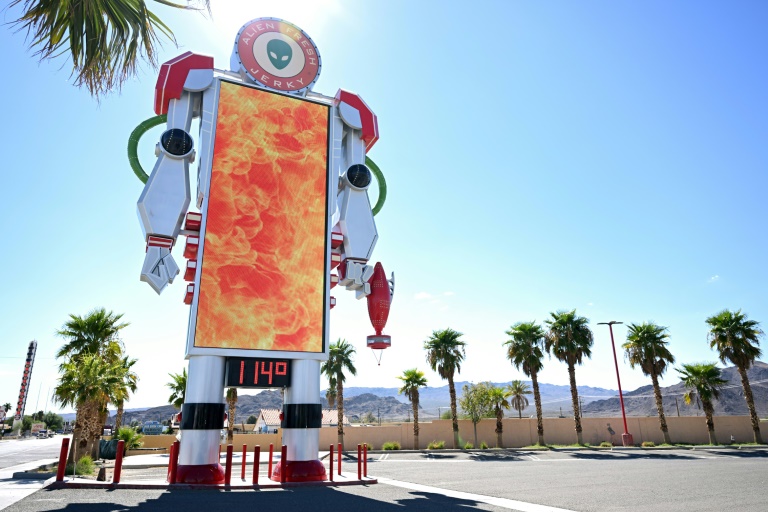
Climatologists say the kiln-like conditions in California, Nevada and Arizona are caused by a heat dome — a huge bubble of stationary high pressure that is trapping ever-hotter air.

And, they say, human-caused climate change is making these oppressive heat waves worse — hotter, longer and more frequent.

Here’s what you need to know about heat waves.

– What is a heat wave? –

Anyone suffering through sultry nights and sweltering days knows they’re in a heat wave, but there are a few technical definitions.

The one the US government chooses is: at least two consecutive days when the minimum temperature for the area is hotter than 85 percent of July and August days in the same area, based on historical averages.

That minimum usually comes at night, which is important — after a very hot day, our bodies tend to cool off at night. But if the temperature remains elevated, that’s much harder. This is when people get ill.

It’s also important to localize the definition. People accustomed to 85 Fahrenheit (29 Celsius) days are likely not fazed by 90 degrees. But if you live in a chilly, damp spot and the mercury hits 90, you’ll find it much harder to cope.

– What causes heat waves? –

Generally it’s an area of high pressure that parks itself in one spot, forming a heat dome — imagine a huge greenhouse that lets in the sun’s heat, but won’t let any air flow through.

The high pressure prevents clouds from forming as it pushes air downwards, compressing and heating the air — think of how a tire gets hot as you pump more air in.

Jet streams — air that flows high in the Earth’s atmosphere — usually move pressure systems around the planet.

But they can meander. As the waves of a jet stream widen, they slow and can even stop. This is what leaves a ridge of high pressure in one place.

– Are heat waves dangerous? –

Yes, very. More people die from the heat every year in the United States than from any other extreme weather, including floods, tornadoes, and cold snaps, according to government figures.

A ferocious heat wave in Spain and Portugal in July left more than 1,700 people dead.

And hundreds died last year when a heat wave frazzled Canada and the western US, with temperatures of up to 121F (49C).

When it’s very hot, our bodies find it more difficult to keep cool, which can result in a “cascade of illnesses,” according to the World Health Organization.

These include heat cramps, heat exhaustion, heatstroke, and hyperthermia.

“Deaths and hospitalizations from heat can occur extremely rapidly (same day), or have a lagged effect (several days later) and result in accelerating death or illness in the already frail,” the WHO says.

That means anyone who already suffers from problems with their heart or respiratory system is particularly at risk.

The effects of intense heat are not evenly felt across societies, and tend to be more acute in poorer, and more marginalized communities. 

Homeless people or those who work outside during the heat of the day are obviously at risk, but so are people living in neighborhoods without tree cover, or near to sources of pollution like roads.

– What is climate change doing? –

Like all weather phenomena, climate change is super-charging heat waves.

Human activity, specifically the burning of fossil fuels, has warmed the Earth by an average of around 1.9F (1.2C) since pre-industrial times. Much of this warming has happened in the last 50 years.

US government data shows heat waves worsening in concert with a warming planet: Every decade since the 1960s they have got longer, hotter and more frequent.

“Their frequency has increased steadily, from an average of two heat waves per year during the 1960s to six per year during the 2010s and 2020s,” the Environmental Protection Agency says.

“In recent years, the average heat wave in major US urban areas has been about four days long. This is about a day longer than the average heat wave in the 1960s.”

A study after last year’s record-breaking heat wave in Canada found it would have been “virtually impossible” without human-caused climate change.

The World Weather Attribution group said that global warming, caused by greenhouse gas emissions, made the heat wave at least 150 times more likely to happen.

California opens cooling centers for heat wave vulnerable

It is too hot in Nelly Amaya’s place when the mercury surges into triple digits, driven by the punishing heat wave gripping the western United States.

“We don’t have air conditioning at our house, we only have a fan,” Amaya, a retiree, told AFP. 

“We come here because we can’t stay at home.”

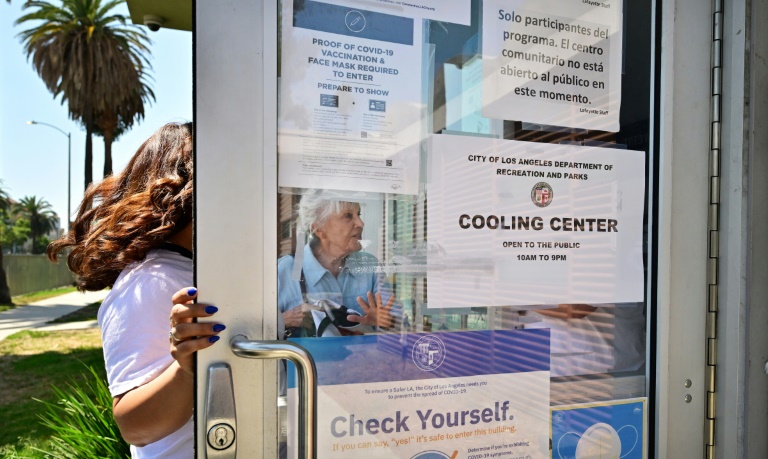
Amaya is one of hundreds of people in Los Angeles who are making use of the 40 cooling centers set up by the county’s emergency department as a fearsome heat dome sends temperatures soaring.

The centers have been established in libraries, recreation and park facilities, and senior living facilities, offering shelter in air-conditioned rooms and cold drinks during the heat of the day.

Forecasters have issued an excessive heat warning for most of California, as well as parts of Nevada and Arizona, with thermometers logging highs over 110 Fahrenheit (43 Celsius) in some places.

The oppressive heat is expected to last well into next week, smothering a holiday weekend, with little relief in the way of cooler nights.

Doctors say when temperatures remain elevated for long periods — particularly overnight — it puts strains on the human body that can cause a cascade of illness, sometimes even leading to death.

Joseph Riser of the Los Angeles emergency management department said the city was doing its best to look out for those in need of help when the mercury rises over 100 Fahrenheit.

“Once that hits that peak… then the plans we have for adverse weather kick in and we begin rallying the troops, getting the supplies, making sure which centers can be open and that we have enough,” he said.

– ‘Stay hydrated’ –

The effects of intense heat are not evenly felt across societies, and tend to be more acute in poorer and more marginalized communities. 

Homeless people or those who work outside during the heat of the day are obviously at risk, but so are people living in neighborhoods without tree cover, or near to sources of pollution like roads.

“It may be people who are living in homes where there’s no air conditioning, and maybe people who are unhoused,” Riser said.

“It may be just young people seeking shelter from the heat, from maybe a home where the air conditioning doesn’t work very well.”

For Ruth Rivera, the Lafayette Park center near downtown Los Angeles is a godsend.

“It helps a lot, we have to stay hydrated, because it’s really hot outside,” she said.

The operator of California’s creaking electricity grid on Friday called a third consecutive “Flex Alert,” asking households to conserve power and turn up their thermostats to help reduce power demand.

“Reducing energy use during a Flex Alert can help stabilize the power grid during tight supply conditions and prevent further emergency measures, including rotating power outages,” California Independent Service Operator said.

The heat dome is expected to last well into next week, with thermometers set to peak at 116 degrees Fahrenheit in some densely populated areas around Los Angeles over the upcoming Labor Day holiday weekend.

It is not unusual for southern California to experience heat waves in September, but temperatures above 100 degrees Fahrenheit are considered hot even for a place almost perpetually baked by sunshine.

Scientists say global warming, which is being driven chiefly by the unchecked burning of fossil fuels, is making natural weather variations more extreme.

Heat waves are getting hotter and more intense, while storms are getting wetter and, in many cases, more dangerous.

Thai Red Bull heir still at large a decade on from fatal Ferrari crash

A crashed Ferrari, a dead policeman and a fugitive heir to a multibillion-dollar fortune — 10 years on, Thailand is no closer to resolving one of its most notorious hit-and-run cases.

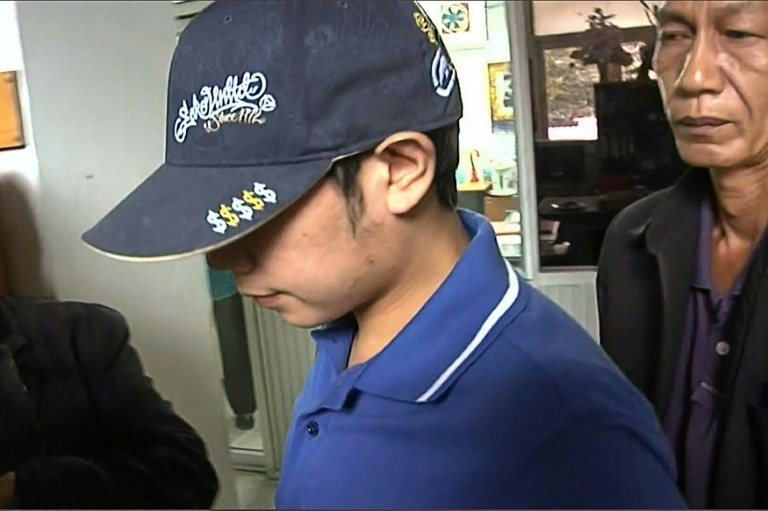
Vorayuth “Boss” Yoovidhya, princeling of the Red Bull energy drink family, is accused of ploughing his sports car into police officer Wichean Glanprasert’s motorbike in Bangkok’s wealthiest neighbourhood a decade ago on Saturday.

After dodging prosecutors and finally fleeing Thailand on a private jet in 2017, Vorayuth became a symbol of what critics say is the impunity enjoyed by the super-rich in the kingdom.

“The perception of different justice systems for different segments of society cripples people’s trust in the Thai state’s capacity to carry out its responsibility to protect human rights for all Thai people,” Amnesty International Thailand told AFP.

As the grandson of Red Bull co-founder Chaleo Yoovidhya, who died in 2012, Vorayuth is part of a clan with an estimated net worth of $26.4 billion — making it Thailand’s second-richest family, according to Forbes.

“This family is not only powerful in Thailand, but they are very powerful worldwide too,” Thai political analyst Pavin Chachavalpongpun from Kyoto University told AFP.

– Glamorous lifestyle –

Within hours of the crash, investigators followed a trail of brake fluid to the Yoovidhya family’s Bangkok compound, where they found a badly dented vehicle with a smashed windscreen.

Police initially accepted a claim that an employee was driving, but Vorayuth became the main suspect and his family later paid the victim’s relatives $100,000 compensation, according to the BBC and New York Times.

For five years, Vorayuth played a game of cat and mouse ducking court summonses — claiming through lawyers he was overseas on business or ill — while photographs documented a globetrotting lifestyle: living it up in London, attending Red Bull racing events, or going off on beach holidays and ski trips.

Charges of speeding, drunk driving and failing to render assistance expired, before a Bangkok court belatedly issued an arrest warrant in 2017. 

By then, Vorayuth had already fled.

In 2020, the Thai authorities dropped all charges against Vorayuth, triggering a huge public outcry — including a social media campaign to #BoycottRedBull.

Amid the backlash,  TCP Group — Red Bull Thailand’s parent company — distanced the firm from the case, saying the issue was a private matter.

As anger mounted, and with youth-led anti-government demonstrations growing in the streets, Prime Minister Prayut Chan-O-Cha’s office ordered a review, which concluded the entire investigation had been “compromised”.

Rights campaigners contrasted the foot-dragging in the Vorayuth case with the swift action meted out to anti-government protest leaders, many of whom were hit with multiple royal defamation charges, which carry a prison term of up to 15 years. 

Thailand’s Attorney General’s Office announced fresh charges against Vorayuth and, in September 2020, Interpol issued a Red Notice for his arrest.

An updated version from March last year said Vorayuth had made an attempt to access the Red Notice and was likely around France at the time.

The notice also cited Austria — where Red Bull has its headquarters — as a possible location.

– One charge left –

Last month, a charge of using cocaine expired, Thailand’s Attorney General’s office said, leaving only one avenue for prosecutors to pursue against Vorayuth: reckless driving causing death, which carries a maximum 10-year prison term.

The AG’s office told AFP that the charge is valid until 2027. Few, however, expect Vorayuth to face the courts.

“Even from the beginning, a lot of people expected how it would end,” Pavin said, noting intense public anger around the case.

“Rich people getting away with crime has become so normalised in Thai society. Thai people don’t accept that it’s OK.”

Close Bitnami banner
Bitnami