World

Sri Lanka's deposed ex-leader returns from exile

Sri Lanka’s deposed former president Gotabaya Rajapaksa returned to the country Friday, an airport official said, seven weeks after he fled amid the island’s worst-ever economic crisis.

Rajapaksa was festooned with flowers by a welcoming party of ministers and politicians as he disembarked at the main international airport, the official added — in a sign of his enduring influence in the Indian Ocean nation critics say he led to ruin.

“There was a rush of government politicians to garland him as he came out of the aircraft,” the official told AFP.

Rajapaksa fled Sri Lanka under military escort in mid-July after unarmed crowds stormed his official residence, following months of angry demonstrations blaming him for the nation’s unprecedented economic crisis.

He sent in his resignation from Singapore before flying on to Thailand, from where he had petitioned his successor Ranil Wickremesinghe to facilitate his return.

The 73-year-old leader arrived from Bangkok via Singapore on a commercial flight, ending his 52-day self-imposed exile.

“He has been living in a Thai hotel as a virtual prisoner and was keen to return,” a defence official, who asked not to be named, told AFP.

“We have just created a new security division to protect him after his return,” the official added. 

“The unit comprises elements from the army and police commandos.”

Opposition politicians have accused Wickremesinghe of shielding the once-powerful Rajapaksa family.

Sri Lanka’s constitution guarantees bodyguards, a vehicle and housing for former presidents, including Gotabaya and his elder brother and fellow ex-president Mahinda.

Gotabaya Rajapaksa’s resignation ended his presidential immunity, and rights activists said they would press for his arrest on multiple charges, including his alleged role in the 2009 assassination of prominent newspaper editor Lasantha Wickrematunge.

“We welcome his decision to return so that we can bring him to justice for the crimes he has committed,” said Tharindu Jayawardhana, a spokesman for the Sri Lanka Young Journalists’ Association.

Rajapaksa also faces charges in a court in the US state of California over Wickrematunge’s murder and the torture of Tamil prisoners at the end of the island’s traumatic civil war in 2009. 

– Tight security –

Singapore declined to extend Rajapaksa’s short-term visa and he travelled to Thailand in August, but authorities in Bangkok instructed him not to step out of his hotel for his own safety.

Rajapaksa’s youngest brother, Basil, the former finance minister, met with Wickremesinghe last month and requested protection to allow the deposed leader to return.

On Friday police deployed plainclothes officers and armed guards outside a government residence allocated to Rajapaksa in Colombo ahead of his arrival. 

Security at his private home was also stepped up, officials said, adding that he was expected to first visit the family residence.

Sri Lanka has endured months of shortages of crucial goods including food, fuel and medicines, along with lengthy electricity blackouts and skyrocketing inflation after running out of foreign currency to finance essential imports. 

The coronavirus pandemic dealt a hammer blow to the island’s tourism industry and dried up remittances from Sri Lankans working abroad — both key foreign exchange earners.

Rajapaksa, who was elected in 2019 promising “vistas of prosperity and splendour”, saw his popularity nosedive as hardships multiplied for the country’s 22 million people. 

His government was accused of introducing unsustainable tax cuts that drove up government debt and exacerbated the crisis. 

Wickremesinghe was elected by parliament to see out the remainder of Rajapaksa’s term. He has since cracked down on street protests and arrested leading activists. 

The government defaulted on its $51 billion foreign debt in April and the central bank forecasts a record eight percent GDP contraction this year. 

After months of negotiations, the International Monetary Fund agreed on Thursday to a conditional $2.9 billion bailout package to repair Sri Lanka’s battered finances. 

US hiring slows sharply in August, joblessness rises

American employers slowed the pace of hiring in August after the surprising surge in the prior month and the jobless rate edged up, according to government data released Friday, which could offer the central bank some relief that its inflation-fighting efforts are working.

The Federal Reserve is paying close attention to the progression of the hot job market, looking for signs of easing as it tries to cool the economy with steep interest rate hikes to tamp down inflation which has reached a 40-year high.

While the data showed wages continued to rise, the unemployment rate ticked up as more workers joined the labor force, a welcome development that could allow the Fed to opt for a smaller move later this month after two consecutive super-sized rate increases.

President Joe Biden, who has been riding a wave of legislative and economic victories, cheered the latest report.

“More great news: Our jobs market remains strong. Even more Americans are coming back to work,” Biden tweeted.

Even with the slowing pace, the job gains bring employment above the pre-pandemic level, the Labor Department said in the closely watched monthly report.

The US economy added 315,000 jobs last month, the report said, which was in line with what economists were expecting after 526,000 hires in July.

The unemployment rate moved back up to 3.7 percent, after dipping to 3.5 percent in the prior month, according to the data. And the labor force participation rate rose three-tenths to 62.4 percent.

But wages continued to climb in August, as average hourly earnings rose another 10 cents, or 0.3 percent, to $32.36 — slower from the pace in recent months. Over the past 12 months, worker pay has increased by 5.2 percent.

Continued upward pressure is a cause for concern since the Fed fears it could lead to a wage-price spiral and push inflation higher.

Surging inflation, exacerbated by high energy prices due to Russia’s war in Ukraine, as well as supply chain struggles and Covid-lockdowns in China, has prompted the Fed to raise the benchmark borrowing rate four times this year, including giant 0.75 percentage point increases in June and July.

However, the latest data “may tip the scale towards a 50-basis point rate hike” at the September 20-21 meeting, said Rubeela Farooqi of High Frequency Economics, although the next report on consumer price inflation also will be a key factor. 

Still, she said “these data are not going to change the Fed’s view that policy needs to move to a restrictive stance over coming months.”

Diane Swonk of KPMG agreed.

“The Fed is committed to reducing the demand for workers and increasing labor supply, via a much larger rise in the unemployment rate than we saw today,” she said in an analysis.

But other analysts see the central bankers on track for a third consecutive three-quarter point rate hike.

In July, there were still more than 11 million job openings, or two for every job seeker. 

– Soft landing possible –

US GDP contracted in the first two quarters of 2022, which is commonly viewed as a sign of a recession, but the robust job market defies that definition.

Companies have faced a labor shortage for months, prompting them to offer higher wages, which is in turn driving up prices. And there are signs firms are “hoarding” workers — holding onto seasonal employees for fear they might not be able to replace them later.

Fed officials have made it clear in repeated statements that they will continue to raise interest rates to cool the economy, even if monthly data show some signs of progress.

Fed Chair Jerome Powell hammered home this point last week at a conference in Jackson Hole, Wyoming, warning of “pain” ahead for American households and businesses.

The concern is that the aggressive actions will tip the world’s largest economy into recession.

US Treasury Secretary Janet Yellen said that although it will be difficult, she remains “hopeful that we can achieve a soft landing.”

But she acknowledged in an interview on MSNBC that “bringing down inflation is clearly a key priority.”

Yellen noted that “nearly 800,000 workers rejoined the labor market in August” which is an encouraging sign even amid an expected slowing of the economy.

“That’s important because it means the growth in our economy isn’t creating pressure on inflation,” she said.

Le Monde accused of 'censorship' for pulling op-ed on Macron

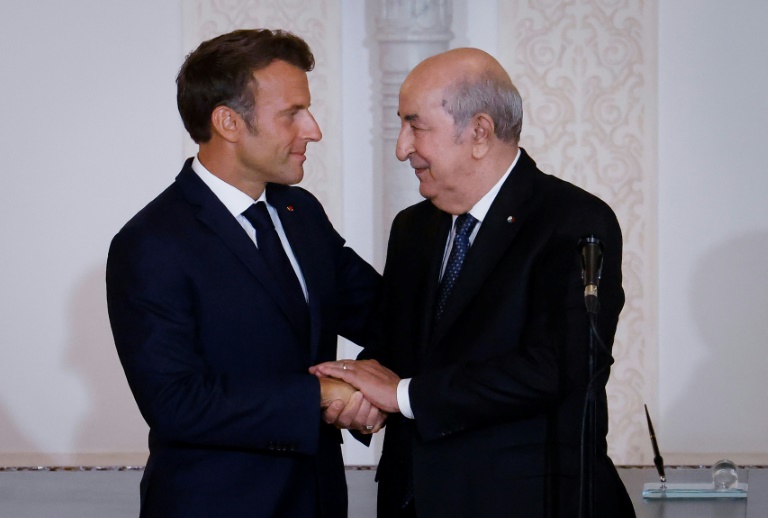
Leading French daily Le Monde on Friday faced accusations of censorship after it deleted an opinion piece that critically analysed President Emmanuel Macron’s stance on Algeria, although the newspaper insisted it had contained an error of interpretation.

Le Monde issued a hugely unusual personal apology to Macron over the article, written by the researcher Paul Max Morin after the president made a hugely sensitive visit to the former French colony late last month.

In his article, Morin argued that a comment made by Macron in Algeria about a “love story that has its tragic element” glorified the colonial past and represented a step back from his previous attempts for a more modern attitude towards the history of France in the North African country.

“Reducing colonisation in Algeria to a ‘love story’ is the culmination of Macron’s shift to the right on the memory question,” Morin argued in the piece.

But Le Monde said that it had later deleted the piece as Morin had misinterpreted the quote.

“While it could be subject to different interpretations, the phrase ‘a love story that has its tragic element’ used by Mr Macron did not specifically refer to colonisation — as was written in the piece — but the long history of relations between France and Algeria,” it said.

“Le Monde apologises to its readers as well as the president of the Republic,” it added.

– ‘Inexplicable and inexcusable’ –

But the move was followed by a torrent of criticism, especially from figures on the left.

“An op-ed was pulled for a quote Macron made which he did not like,” tweeted far-left leader Jean-Luc Melenchon. “It is a new low in the collapse of a newspaper that was once a point of reference.”

“Staggering censorship,” added Edwy Plenel, a former editor-in-chief of Le Monde who went on to found the investigative website Mediapart.

Morin himself told the Liberation daily that “pulling a piece is an abnormal practice and incomprehensible.” 

“Inexplicable and inexcusable censorship by Le Monde,” tweeted the leading French economist Thomas Piketty. “We can disagree with the piece, but not delete it because it displeases the Elysee.”

There was no immediate comment from Macron’s office.

The controversy is doubly sensitive given it was Le Monde which in October 2021 quoted closed-door comments by Macron describing Algeria’s system as “politico-military” that prompted a new crisis in relations with Algiers.

“When we make mistakes that are our fault, it’s normal to apologise to people who may have been offended, starting with our readers,” the director of Le Monde, Jerome Fenoglio, told AFP. 

Macron in his speeches portrays himself as a champion of the free press but there have been episodes in the past that, according to critics, reveal a more thin-skinned attitude.

In November 2020, the Financial Times pulled a piece that was bitterly critical of France’s policy in the fight against Islamist extremism. Macron followed up with a letter to the paper bitterly attacking the article.

Top cleric among 18 killed in Afghanistan mosque blast

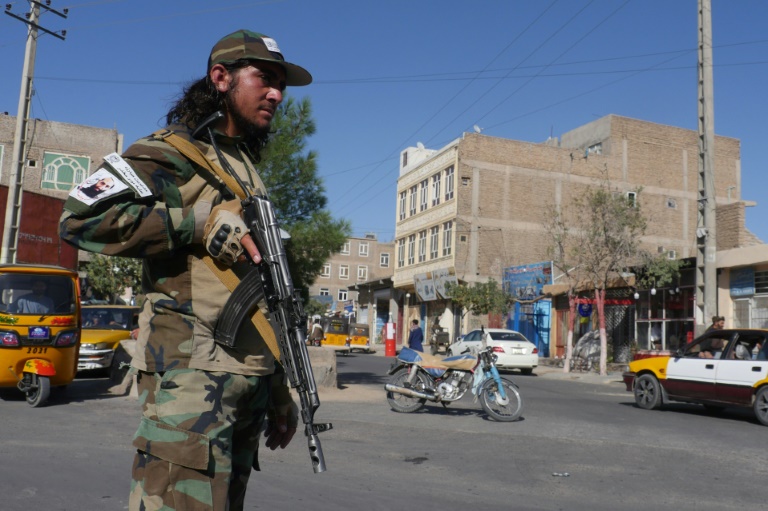
A suicide bomber struck one of western Afghanistan’s biggest mosques Friday, killing at least 18 people including an influential imam who this year called for those who commit “the smallest act” against the government to be beheaded.

Images posted on Twitter showed what appeared to be blood-stained bodies scattered around the compound of Gazargah Mosque in the city of Herat.

Violence has largely declined since the Taliban returned to power last year, but several bomb blasts — some targeting minority communities — have rocked the country in recent months, many claimed by the jihadist Islamic State (IS) group.

At least 18 people, including prominent pro-Taliban cleric Mujib ur Rahman Ansari, were killed and 23 wounded in Friday’s suicide attack, said Hameedullah Motawakel, spokesman for the governor of Herat province.

“The bomber came near Ansari and then set off his explosives-laden vest,” Motawakel told AFP. 

Deputy Prime Minister Abdul Ghani Baradar, who had met Ansari just hours earlier in the day at a separate gathering in Herat, condemned the cleric’s killing.

“A strong and brave religious scholar of the country was martyred while performing Friday prayers,” Baradar said on Twitter.

“The perpetrators of this heinous act will be punished.”

No group has so far claimed the attack.

Ansari, who was in his late 30s, was an influential cleric known for his fiery speeches.

In July, during a religious gathering in Kabul, he strongly defended Afghanistan’s new Taliban rulers.

“Whoever commits the smallest act against our Islamic government should be beheaded,” he said.

“This (Taliban) flag has not been raised easily, and it will not be lowered easily.”

– Cleric had security –

Even before the Taliban returned to power in August 2021, the ultra-conservative cleric had been calling for women to be fully covered in public, and for bans on musical concerts in Herat.

In his speeches, he regularly launched tirades against the previous US-backed governments.

Government spokesman Zabihullah Mujahid said authorities had provided Ansari with security given his high profile in the country.

“Ansari had been provided with bodyguards, bullet proof vehicles, and also weapons and equipment to guard his seminary,” Mujahid said in a statement.

Two days earlier the intelligence agency had killed a four-member group in Herat that was planning to assassinate Ansari, he added.

Ansari is the second pro-Taliban cleric to be killed in a blast in less than a month, after an August 11 suicide attack targeted Rahimullah Haqqani at his madrassa in Kabul.

Haqqani was known for angry speeches against IS, who later claimed responsibility for his death.

He had also spoken in favour of girls being allowed to attend secondary school, despite the government banning them from attending classes in most provinces.

Several mosques across the country have been targeted this year, some in attacks claimed by IS.

At least 21 people were killed and dozens more wounded on August 17 when a blast ripped through a mosque packed with worshippers in Kabul.

IS has primarily targeted minority communities such as Shiites, Sufis and Sikhs.

While IS is a Sunni Islamist group like the Taliban, the two are bitter rivals and greatly diverge on ideological grounds.

Government officials claim that IS has been defeated but experts say the group is the main security challenge for the country’s current Islamist rulers.

US says sending envoy to Ethiopia, condemns Eritrea return to war

The United States on Friday dispatched an envoy to Ethiopia to seek an end to renewed fighting and condemned neighboring Eritrea for re-entering the conflict in the northern region of Tigray.

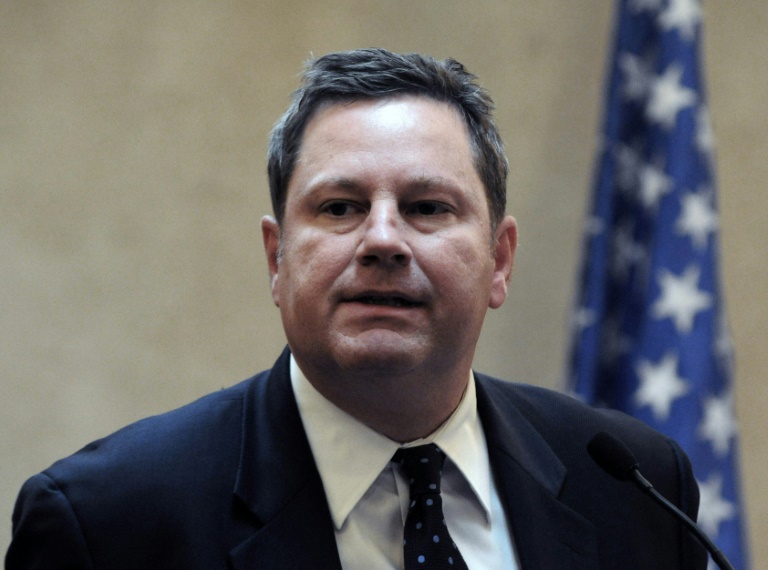
US special envoy Mike Hammer will head this weekend to Ethiopia and “convey that all parties should halt military operations and engage in peace talks,” White House Press Secretary Karine Jean-Pierre said.

“We condemn Eritrea’s re-entry into the conflict, the continuing TPLF offensive outside of Tigray and the Ethiopian government’s air strikes,” she told reporters.

Fighting resumed last week in the northern region after a five-month lull, dashing hopes of peacefully resolving the nearly two-year war and of ending a humanitarian crisis in which Tigray has suffered widespread hunger.

“There is no military solution to the conflict,” Jean-Pierre said.

“All parties should exercise restraint and we urge de-escalation by all actors, particularly so that there can be a resumption of humanitarian relief and basic services to all parties in need.”

The Ethiopian government and the rebel Tigray People’s Liberation Front (TPLF) have traded blame for starting the latest round of hostilities.

The TPLF, once Ethiopia’s dominant force, on Thursday accused historic rival Eritrea of again sending in forces as part of a major offensive with Ethiopian troops.

Russia halts gas supplies to Germany

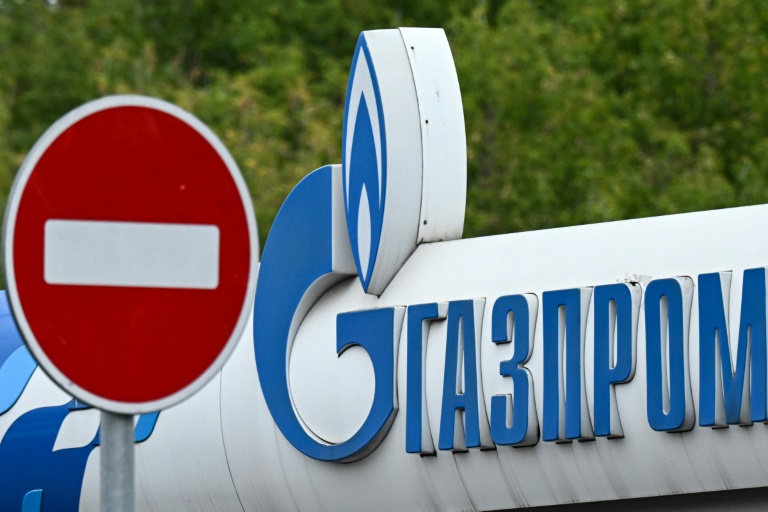
Russia has halted gas deliveries to Germany via a key pipeline an indefinite period after saying Friday it had found problems in a key piece of equipment, a development that will worsen Europe’s energy crisis.

Russian gas giant Gazprom said Friday that the Nord Stream pipeline due to reopen at the weekend would remain shut until a turbine is repaired.

In a statement, Gazprom indicated it had discovered “oil leaks” in a turbine during a planned three-day maintenance operation.

Gazprom added that “until it is repaired… the transport of gas via Nord Stream is completely suspended”.

Resumption of deliveries via the pipeline which runs from near St Petersburg to Germany under the Baltic Sea, had been due to resume on Saturday. 

Gazprom said it had discovered the problems while carrying out maintenance with representatives of Siemens, which manufactured the turbine in a compressor station that pushes gas through the pipeline.

On its Telegram page it published a picture of cables covered in a brown liquid.

Earlier in the day, the Kremlin warned the future operation of the Nord Stream pipeline, one of Gazprom’s major supply routes, was at risk due to a lack of spare parts.

“There are no technical reserves, only one turbine is working,” Kremlin spokesman Dmitry Peskov told reporters.

“So the reliability of the operation, of the whole system, is at risk,” he said, adding that it was “not through the fault” of Russian energy giant Gazprom.

Following the imposition of economic sanctions over the Kremlin’s invasion of Ukraine, Russia has reduced or halted supplies to different European nations, causing energy prices to soar.

The Kremlin has blamed the reduction of supplies via Nord Stream on European sanctions which it says have blocked the return of a Siemens turbine that had been undergoing repairs in Canada.

Germany, which is where the turbine is located now, has said Moscow is blocking the return of the critical piece of equipment.

Berlin has previously accused Moscow of using energy as a weapon.

The announcement by Gazprom comes the same day as the G7 nations said they would work to quickly implement a price cap on Russian oil exports, a move which would starve the Kremlin of critical revenue for its war effort.

Gazprom also announced the suspension of gas supplies to France’s main provider Engie from Thursday after it failed to pay for all deliveries made in July.

– ‘Much better position’ –

As winter approaches, European nations have been seeking to completely fill their gas reserves, secure alternative supplies, and put into place plans to reduce consumption. 

A long-term halt to Russian gas supplies would complicate efforts by some nations to avoid shortages and rationing, however.

Germany said Friday its gas supplies were secure despite the halt to deliveries via Nord Stream.

“The situation on the gas market is tense, but security of supply is guaranteed,” a spokeswoman for the economy ministry said in a statement. 

The spokeswoman did not comment on the “substance” of Gazprom’s announcement earlier Friday but said Germany had “already seen Russia’s unreliability in the past few weeks”.

German officials have in recent times struck a more positive tone about the coming winter.

Before the latest shutdown, Chancellor Olaf Scholz said Germany was now “in a much better position” in terms of energy security, having achieved its gas storage targets far sooner than expected.

Europe as a whole has also been pushing ahead with filling its gas storage tanks, while fears over throttled supplies have driven companies to slash their energy usage.

Germany’s industry consumed 21.3 percent less gas in July than the average for the month from 2018 to 2021, said the Federal Network Agency.

Agency chief Klaus Mueller has said such pre-emptive action “could save Germany from a gas emergency this winter”.

Europe as a bloc meanwhile has been preparing to take emergency action to reform the electricity market in order to bring galloping prices under control. 

Fear of shortages of natural gas has driven futures contracts for electricity in France and Germany to record levels.

European consumers are also bracing for huge power bills as utilities pass on their higher energy costs.

burs-rl/har

Russia halts gas supplies to Germany

Russia has halted gas deliveries to Germany via a key pipeline an indefinite period after saying Friday it had found problems in a key piece of equipment, a development that will worsen Europe’s energy crisis.

Russian gas giant Gazprom said Friday that the Nord Stream pipeline due to reopen at the weekend would remain shut until a turbine is repaired.

In a statement, Gazprom indicated it had discovered “oil leaks” in a turbine during a planned three-day maintenance operation.

Gazprom added that “until it is repaired… the transport of gas via Nord Stream is completely suspended”.

Resumption of deliveries via the pipeline which runs from near St Petersburg to Germany under the Baltic Sea, had been due to resume on Saturday. 

Gazprom said it had discovered the problems while carrying out maintenance with representatives of Siemens, which manufactured the turbine in a compressor station that pushes gas through the pipeline.

On its Telegram page it published a picture of cables covered in a brown liquid.

Earlier in the day, the Kremlin warned the future operation of the Nord Stream pipeline, one of Gazprom’s major supply routes, was at risk due to a lack of spare parts.

“There are no technical reserves, only one turbine is working,” Kremlin spokesman Dmitry Peskov told reporters.

“So the reliability of the operation, of the whole system, is at risk,” he said, adding that it was “not through the fault” of Russian energy giant Gazprom.

Following the imposition of economic sanctions over the Kremlin’s invasion of Ukraine, Russia has reduced or halted supplies to different European nations, causing energy prices to soar.

The Kremlin has blamed the reduction of supplies via Nord Stream on European sanctions which it says have blocked the return of a Siemens turbine that had been undergoing repairs in Canada.

Germany, which is where the turbine is located now, has said Moscow is blocking the return of the critical piece of equipment.

Berlin has previously accused Moscow of using energy as a weapon.

The announcement by Gazprom comes the same day as the G7 nations said they would work to quickly implement a price cap on Russian oil exports, a move which would starve the Kremlin of critical revenue for its war effort.

Gazprom also announced the suspension of gas supplies to France’s main provider Engie from Thursday after it failed to pay for all deliveries made in July.

– ‘Much better position’ –

As winter approaches, European nations have been seeking to completely fill their gas reserves, secure alternative supplies, and put into place plans to reduce consumption. 

A long-term halt to Russian gas supplies would complicate efforts by some nations to avoid shortages and rationing, however.

Germany said Friday its gas supplies were secure despite the halt to deliveries via Nord Stream.

“The situation on the gas market is tense, but security of supply is guaranteed,” a spokeswoman for the economy ministry said in a statement. 

The spokeswoman did not comment on the “substance” of Gazprom’s announcement earlier Friday but said Germany had “already seen Russia’s unreliability in the past few weeks”.

German officials have in recent times struck a more positive tone about the coming winter.

Before the latest shutdown, Chancellor Olaf Scholz said Germany was now “in a much better position” in terms of energy security, having achieved its gas storage targets far sooner than expected.

Europe as a whole has also been pushing ahead with filling its gas storage tanks, while fears over throttled supplies have driven companies to slash their energy usage.

Germany’s industry consumed 21.3 percent less gas in July than the average for the month from 2018 to 2021, said the Federal Network Agency.

Agency chief Klaus Mueller has said such pre-emptive action “could save Germany from a gas emergency this winter”.

Europe as a bloc meanwhile has been preparing to take emergency action to reform the electricity market in order to bring galloping prices under control. 

Fear of shortages of natural gas has driven futures contracts for electricity in France and Germany to record levels.

European consumers are also bracing for huge power bills as utilities pass on their higher energy costs.

burs-rl/har

It's raining diamonds across the universe, research suggests

It could be raining diamonds on planets throughout the universe, scientists suggested Friday, after using common plastic to recreate the strange precipitation believed to form deep inside Uranus and Neptune.

Scientists had previously theorised that extremely high pressure and temperatures turn hydrogen and carbon into solid diamonds thousands of kilometres below the surface of the ice giants.

Now new research, published in Science Advances, inserted oxygen into the mix, finding that “diamond rain” could be more common than thought.

Ice giants like Neptune and Uranus are thought to be the most common form of planet outside our Solar System, which means diamond rain could be occurring across the universe.

Dominik Kraus, a physicist at Germany’s HZDR research lab and one of the study’s authors, said that diamond precipitation was quite different to rain on Earth.

Under the surface of the planets is believed to be a “hot, dense liquid”, where the diamonds form and slowly sink down to the rocky, potentially Earth-size cores more than 10,000 kilometres (6,200 miles) below, he said.

There fallen diamonds could form vast layers that span “hundreds of kilometres or even more”, Kraus told AFP.

While these diamonds might not be shiny and cut like a “a nice gem on a ring”, he said they were formed via similar forces as on Earth.

Aiming to replicate the process, the research team found the necessary mix of carbon, hydrogen and oxygen in a readily available source — PET plastic, which is used for everyday food packaging and bottles. 

Kraus said that while the researchers used very clean PET plastic, “in principle the experiment should work with Coca-Cola bottles”.

The team then turned a high-powered optical laser on the plastic at the SLAC National Accelerator Laboratory in California.

“Very, very short X-ray flashes of incredible brightness” allowed them to watch the process of nanodiamonds — tiny diamonds too small to see with the naked eye — as they formed, Kraus said.

“The oxygen that is present in large amounts on those planets really helps suck away the hydrogen atoms from the carbon, so it’s actually easier for those diamonds to form,” he added.

– New way to make nanodiamonds? – 

The experiment could point towards a new way to produce nanodiamonds, which have a wide and increasing range of applications including drug delivery, medical censors, non-invasive surgery and quantum electronics.

“The way nanodiamonds are currently made is by taking a bunch of carbon or diamond and blowing it up with explosives,” said SLAC scientist and study co-author Benjamin Ofori-Okai.

“Laser production could offer a cleaner and more easily controlled method to produce nanodiamonds,” he added.

The diamond rain research remains hypothetical because little is known about Uranus and Neptune, the most distant planets in our Solar System.

Only one spacecraft — NASA’s Voyager 2 in the 1980s — has flown past the two ice giants, and the data it sent back is still being used in research.

But a NASA group has outlined a potential new mission to the planets, possibly launching next decade.

“That would be fantastic,” Kraus said.

He said he is greatly looking forward to more data — even if it takes a decade or two.

IAEA chief Rafael Grossi, a diplomat on the frontlines

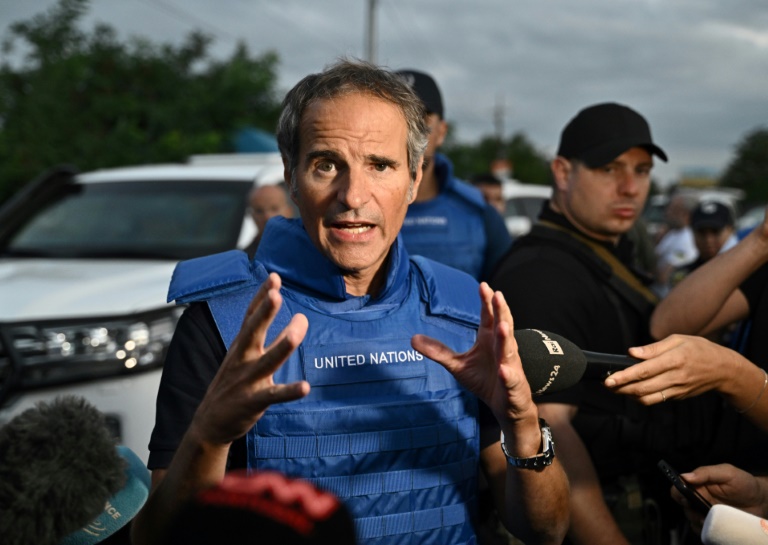
With his dynamic manner and high-risk visit to Ukraine’s Zaporizhzhia nuclear power station, International Atomic Energy Agency (IAEA) Director General Rafael Grossi has been at the centre of recent coverage of Russia’s invasion.

After weeks of intensive negotiations to secure the visit, he set off for Zaporizhzhia early on Monday morning.

The photo he tweeted announcing his visit could have been a poster for an action film, with 61-year-old Grossi wearing a steely expression in front of serried ranks of IAEA experts.

The Zaporizhzhia site has been occupied by the Russians since early on in the conflict and fears of a nuclear catastrophe have been raised on several occasions by bombardments in the vicinity.

Despite fresh shelling in the area earlier this week, a flak-jacketed Grossi insisted that “we are not stopping” with the visit.

“Wish us luck,” he told reporters at the plant, where he stayed for several hours.

The visit was criticised by Ukrainian President Volodymyr Zelensky, who said the IAEA had failed to push for the demilitarisation of the site and had not ensured access for independent media.

The Kremlin meanwhile called the visit “very positive”. 

Grossi had previously ventured to Ukraine in March and then again a month later to go to Chernobyl, the scene of the world’s worst nuclear catastrophe in 1986.

– ‘Perseverance’ –

Grossi will be glad to have established a permanent IAEA presence on site, with two inspectors expected to stay on there.

“Let the world know that the IAEA is staying at Zaporizhzhia,” he said after the visit, adding that his team had “a lot more to do” and would seek to provide impartial updates on the situation there.

Western diplomats have lauded Grossi for undertaking the mission.

“He explores all avenues, it’s very brave and I’m not sure another IAEA director general would have done the same,” a European source said.

Senior French diplomat Philippe Errera tweeted his praise for Grossi’s “perseverance”.

In a comment sent to AFP, the American ambassador to international organisations in Vienna Laura Holgate said the US was “extremely grateful to DG Grossi and his team for their visit”, calling it “a critical step in addressing nuclear safety” at the plant.

Kelsey Davenport from the Arms Control Association think-tank said that while “an on-site IAEA presence does not guarantee that a nuclear disaster will be averted… it should mitigate that risk and deescalate tensions”. 

Davenport said the “IAEA is facing unprecedented challenges” which constitute “a direct affront to the nuclear order”. 

“The agency needs leadership that will speak truth to power,” she said, adding: “Grossi is proving to be that leader.”   

– No backing down –

One of Grossi’s current challenges is navigating the IAEA’s role in the supremely complex and sensitive Iranian nuclear dossier.

After Iran and world powers struck deal on the country’s nuclear programme in 2015, it fell to the IAEA to monitor Tehran’s compliance with the deal’s restrictions on its nuclear activity. 

But since former US President Donald Trump pulled the US out of the deal in 2018, it has been gradually disintegrating and Iran has progressively abandoned those restrictions, as well as curbing access for IAEA inspectors to sites and data.

Grossi has warned that the agency risks “flying blind” in Iran, and has made several short-notice visits to Tehran to negotiate with senior Iranian officials.

While protracted diplomatic negotiations have been taking place to try to revive the 2015 accord, Iran has said an outstanding IAEA probe has to be concluded as part of the deal.

That investigation concerns the previous discovery of traces of enriched uranium at three sites not declared by Tehran.

Grossi has refused to back down, insisting that Iran has failed to adequately explain the presence of that material.

He has been head of the IAEA since 2019 and had previously served in high-ranking positions at the agency between 2010 and 2013.

The polyglot Argentinian father-of-eight is also rumoured to be in the running for the post of UN Secretary General when the incumbent Antonio Guterres’ term expires in 2026. 

Asked about this at a conference in New York last month, Grossi replied that “my plate is full of terribly important matters — that is occupying my time and waking me up in the night, and this is all I care for”.

Ukraine says bombed Russian base near occupied nuclear plant

Ukraine said on Friday it had bombed a Russian base in the town of Energodar, near the Russian-occupied Zaporizhzhia nuclear plant which is being assessed by United Nations inspectors because of safety concerns.

“Targeted strikes by our troops in the localities of Energodar and Kherson have destroyed three artillery systems of the enemy as well as an ammunition depot,” the Ukrainian army said.

Dmytro Orlov, the pro-Kyiv mayor of Energodar in southern Ukraine, told AFP from his location in exile that he had no information but added that phone services in the town were badly disrupted.

A 14-strong team from the UN’s nuclear watchdog, the International Atomic Energy Agency (IAEA), is visiting Zaporizhzhia — Europe’s largest nuclear power plant —  as global concern grows over its safety in a war raging ever-closer to its six reactors. 

The Ukrainian army said the Russian forces had removed “all their equipment” from the site before the UN team arrived on Thursday.

Russian troops seized control of the site in early March. There have been repeated attacks in the vicinity but both Moscow and Kyiv have denied responsibility and blamed each other.

A shelling attack on the area at dawn on Thursday forced one of the plant’s six reactors to shut down. 

Ukraine’s Energoatom nuclear agency said it was “the second time in 10 days” that Russian shelling had forced the closure of a reactor. 

UN inspectors spent their second day at Zaporizhzhia on Friday. At least two members of the team will remain there on a permanent basis to ensure its safety.  

IAEA head Rafael Grossi said on Thursday the site had been damaged by the fighting in Ukraine.

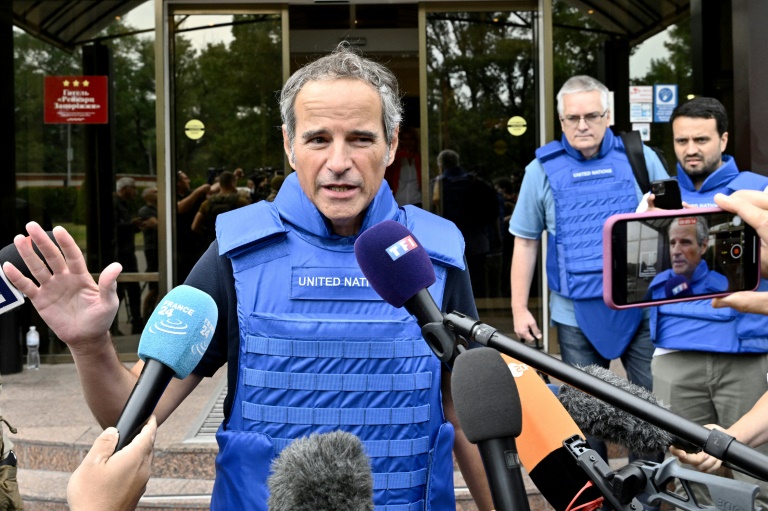
“It is obvious that the plant and physical integrity of the plant has been violated several times,” he said when he and part of his team returned from the Russian-held plant to Ukrainian-controlled territory after a first visit lasting around three hours. 

The Argentine said some of his inspectors would stay at the plant “until Sunday or Monday” to “dig deeper” into some of the observations the team had made and said the watchdog would retain a permanent presence there. 

“We have achieved something very important today, and the important thing is the IAEA is staying here,” he said.

Russia’s envoy to Vienna, Mikhail Ulyanov, said six IAEA inspectors had stayed behind and that two more would remain there “on a permanent basis”. 

“Six (IAEA) employees will stay at the plant … for a few more days and then they will return to Vienna,” he told Russian news agency RIA Novosti. 

“Two people will stay at the Zaporizhzhia nuclear power plant on a permanent basis.

“We welcome this because an international presence can dispel the many rumours about the state of affairs at the nuclear power plant.” 

The Kremlin described the inspectors’ arrival at the plant as “very positive”.

“In general, we are very positive about the fact that, despite all the difficulties and problems … the commission arrived and started to work,” spokesman Dmitry Peskov told reporters.

– ‘Stop playing with fire’ –

A shelling attack at dawn on Thursday forced one of the plant’s six reactors to shut down and damaged a back-up power supply.

Energoatom said the plant’s emergency protection system kicked in, shutting reactor five. That left only one of the six reactors working. 

Red Cross director general Robert Mardini on Thursday warned the consequences of hitting the plant could be “catastrophic”, saying “the slightest miscalculation could trigger devastation that we will regret for decades”.

“It is high time to stop playing with fire and instead take concrete measures to protect this facility … from any military operations,” he told reporters in Kyiv.

Both sides have traded repeated accusations over who was responsible for shelling the area around Energodar. 

Ukraine has accused Russia of storing ammunition at Zaporizhzhia and deploying hundreds of soldiers there. 

It also suspects Moscow intending to divert power from the plant to the nearby Crimean Peninsula, annexed by Russia in 2014. 

Meanwhile, Ukrainian troops pressed ahead with a counter-offensive in the nearby region of Kherson to retake areas seized by Russia at the start of the invasion.

In its morning update, the president’s office said explosions had been heard across Kherson throughout the night and that “heavy fighting” was taking place in two areas just up river from Kherson city, the regional capital. 

In the eastern Donetsk region, four people were killed and 10 wounded in various shelling incidents, while another died in the north east when a village was hit near Kharkhiv, Ukraine’s second city.

Despite the conflict, now in its seventh month, children started a new school year on September 1, although in several regions that meant lessons online due to the ongoing fighting.

“I’m happy to be back at school but I would be even happier if there was no war because I miss my teacher and my friends,” nine-year-old Antonina Sidorenko, told AFP, with the distant crackle of gunfire in the background. 

Close Bitnami banner
Bitnami