World

'Man of the hole' dies, last known survivor of Amazon tribe

For more than 20 years he lived alone in the Brazilian Amazon eating nuts, fruit and game — a symbol of the struggle of indigenous people who exist in isolation in the rainforest.

Now this man whose very name was unknown is dead, and his passing has made headlines around the world.

His life was marked by massacres that left him as the lone survivor of a small tribe attacked by gunmen apparently hired by ranchers seeking to exploit the pristine Amazon.

He was found dead lying in a hammock on August 23 in Tanaru Indigenous Territory. Authorities found no signs of violence and believe he died of natural causes.

The man was covered in the bright feathers of a bird called the guacamaya, a kind of macaw, local news reports said.

The Tanaru Indigenous Territory covers 8,000 hectares (30 square miles) of protected rainforest in Brazil’s southwestern Rondonia state, bordering Bolivia. The reserve is surrounded by sprawling cattle ranches.

Rife with rogue miners and wood cutters whose work is illegal, it is one of the most dangerous regions of Brazil, according to the Survival International NGP.

The Tanaru land “is like an oasis of green in the sea of destruction,” said NGO director Fiona Watson.

– An arrow shot –

The “man of the hole” was first spotted in 1996 by a documentary team traveling with officials of the National Indian Foundation, a government agency that was probing a massacre committed against his tribe.

Proving the presence of indigenous people in the Tanaru forest area was necessary in order to grant the area legal protection.

The footage was featured in a documentary called “Corumbiara” in 2009.

In it, the man’s eyes are seen peering out from inside a straw hut. A spear pokes out at one point, as if to scare visitors away. But no one utters a word.

Over the years Funai teams came back with representatives of neighboring tribes to try to determine what language the man spoke and learn more about his people.

But he made clear he did not want to engage anyone. Feeling threatened, one time he shot an arrow that left a visiting team member seriously wounded.

“One can only imagine what this man was thinking, going through, living on his own, not able to speak to anybody and I think very frightened because any outsider for him represented a threat, given his terrible experience,” Watson said.

After that, authorities just tried to patrol his territory and look for signs that he was still alive.

In the last known footage of him alive — shot in 2011 but not released until seven years later — he is seen semi-naked cutting down a tree with an axe.

Besides bows and arrows that showed he hunted, there were gardens where he grew fruit and vegetables, such as papaya and manioc.

“We saw one of his gardens and it was full of produce — very beautifully kept,” said Watson who visited the site in 2005.

But what most fascinated researchers were the many holes he dug — some two meters (seven feet) deep and with sharp spears at the bottom.

Funai said officials found 53 places that had been his home in the Tanaru territory, always with the same structure: a small straw hut with one door and a hole.

The holes were used to trap animals but experts think they may also been a place for him to hide from intruders or had some kind of spiritual purpose.

The holes, Watson said, are “a mystery that has died with him,” as is the history of the Tanaru people.

Funai has identified 114 indigenous groups that live in isolation in Brazil’s part of the Amazon.

'Man of the hole' dies, last known survivor of Amazon tribe

For more than 20 years he lived alone in the Brazilian Amazon eating nuts, fruit and game — a symbol of the struggle of indigenous people who exist in isolation in the rainforest.

Now this man whose very name was unknown is dead, and his passing has made headlines around the world.

His life was marked by massacres that left him as the lone survivor of a small tribe attacked by gunmen apparently hired by ranchers seeking to exploit the pristine Amazon.

He was found dead lying in a hammock on August 23 in Tanaru Indigenous Territory. Authorities found no signs of violence and believe he died of natural causes.

The man was covered in the bright feathers of a bird called the guacamaya, a kind of macaw, local news reports said.

The Tanaru Indigenous Territory covers 8,000 hectares (30 square miles) of protected rainforest in Brazil’s southwestern Rondonia state, bordering Bolivia. The reserve is surrounded by sprawling cattle ranches.

Rife with rogue miners and wood cutters whose work is illegal, it is one of the most dangerous regions of Brazil, according to the Survival International NGP.

The Tanaru land “is like an oasis of green in the sea of destruction,” said NGO director Fiona Watson.

– An arrow shot –

The “man of the hole” was first spotted in 1996 by a documentary team traveling with officials of the National Indian Foundation, a government agency that was probing a massacre committed against his tribe.

Proving the presence of indigenous people in the Tanaru forest area was necessary in order to grant the area legal protection.

The footage was featured in a documentary called “Corumbiara” in 2009.

In it, the man’s eyes are seen peering out from inside a straw hut. A spear pokes out at one point, as if to scare visitors away. But no one utters a word.

Over the years Funai teams came back with representatives of neighboring tribes to try to determine what language the man spoke and learn more about his people.

But he made clear he did not want to engage anyone. Feeling threatened, one time he shot an arrow that left a visiting team member seriously wounded.

“One can only imagine what this man was thinking, going through, living on his own, not able to speak to anybody and I think very frightened because any outsider for him represented a threat, given his terrible experience,” Watson said.

After that, authorities just tried to patrol his territory and look for signs that he was still alive.

In the last known footage of him alive — shot in 2011 but not released until seven years later — he is seen semi-naked cutting down a tree with an axe.

Besides bows and arrows that showed he hunted, there were gardens where he grew fruit and vegetables, such as papaya and manioc.

“We saw one of his gardens and it was full of produce — very beautifully kept,” said Watson who visited the site in 2005.

But what most fascinated researchers were the many holes he dug — some two meters (seven feet) deep and with sharp spears at the bottom.

Funai said officials found 53 places that had been his home in the Tanaru territory, always with the same structure: a small straw hut with one door and a hole.

The holes were used to trap animals but experts think they may also been a place for him to hide from intruders or had some kind of spiritual purpose.

The holes, Watson said, are “a mystery that has died with him,” as is the history of the Tanaru people.

Funai has identified 114 indigenous groups that live in isolation in Brazil’s part of the Amazon.
G7 to implement Russian oil price cap 'urgently'

G7 industrialised powers vowed Friday to move urgently towards implementing a price cap on Russian oil imports in a bid to cut off a major source of funding for Moscow’s war in Ukraine.

The G7 said it was working towards a “broad coalition” of support for the measure but officials in France urged caution, saying a final decision could only be taken once all 27 members of the European Union had given their assent.

Households on the continent have borne the brunt of rising energy prices, with governments under pressure to alleviate the pain of the resulting high inflation.

“Russia is benefitting economically from the uncertainty on energy markets caused by the war and is making big profits from the export of oil and we want to counter that decisively,” German Finance Minister Christian Lindner said in a press conference after the move was announced.

The aim of the price cap on oil exports was to “stop an important source of financing for the war of aggression and contain the rise in global energy prices”, he added.

Ahead of Friday’s decision, Kremlin spokesman Dmitry Peskov sounded a clear warning.

The adoption of a price cap “will lead to a significant destabilisation of the oil markets,” and force American and European consumers to pay the price, he said.

And Russia’s Deputy Prime Minister Alexander Novak had warned on Thursday that Moscow would “simply not supply oil and petroleum products to companies or states that impose restrictions,” according to Russian news agencies.

– ‘Powerful tool’ –

At a summit in June, the G7 leaders agreed to work towards implementing the ceiling on crude sales.

In their statement, finance ministers from the G7 said they would “urgently work on the finalisation and implementation” of the long-considered measure, without specifying the cap level.

The price cap was “one of the most powerful tools we have to fight inflation and protect workers and businesses in the United States”, US Treasury Secretary Janet Yellen said in a statement Friday. 

She said the measure already was beginning to influence prices, with countries that have not yet committed to join the cap able to negotiate lower prices from Russia.

“We’re already seeing this initiative pay off because countries that are buying Russian oil are signing deals with Russia to sell oil at greatly discounted prices,” Yellen said on MSNBC.

She said the capped price “will be set at a level that will continue to make it profitable for Russia to produce,” rather than follow through on Moscow’s threat to shut-in their oil and keep it off world markets.

The G7 move would block Russia from getting any kind of service, including maritime insurance, on its petroleum shipments unless the product is sold at or below the cap, she explained.

And Yellen noted that G7 countries provide the vast majority of such services, including maritime insurance, 90 percent of which come from Britain and the EU. 

A senior US Treasury official told reporters that the cap would include three prices, one for crude oil and two for refined petroleum products.

The French finance ministry said technical work on the price cap was still in progress.

“It is clear that no final decision can be taken until we have consulted and obtained unanimous support from all 27 member states of the European Union,” it said.

“We support all measures that reduce the income that Russia derives from the sale of oil,” French Finance Minister Bruno Le Maire added.

EU Commissioner Paolo Gentiloni said the bloc aims to find a deal by December 5 for crude oil and February 5 for petroleum products.

– ‘Broad coalition’ –

The G7 also voiced ambition to extend the measure beyond the bloc, saying it was seeking to form a “broad coalition” of support for the oil price cap to “maximise” the effectiveness of the measure.

The ministers urged “all countries that still seek to import Russian oil and petroleum products to commit to doing so only at prices at or below the price cap”.

The push to get as many countries as possible to go along with the cap is expected to be a key topic for discussion by leaders at the G20 summit in Bali on November 15 and 16.

The initial cap would be set “at a level based on a range of technical inputs” the G7 ministers said, adding that its effectiveness would be “closely monitored”.

Analysts warned, however, that the cap may yet fuel another rise in prices.

The cap would introduce new risks for the oil market by “potentially disrupting Russian energy supplies”, Capital Economics analyst Liam Perch said in June. “This could push global energy prices up further.”

burs-sea/hmn/lth/hs/dw

African countries to stand by 1.5C target at climate talks talks

African countries on Friday agreed on a common push to limit global warming to 1.5 degrees Celsius — a goal that scientists fear is increasingly elusive — at upcoming UN climate talks.

The five-day Africa Climate Week, held in the Gabonese capital of Libreville, is one of a series of regional confabs ahead of the COP27 in Sharm el-Sheik, Egypt, from November 6 to 18.

The talks “reiterated the need to further accelerate climate action on all fronts, namely in adaptation, loss and damage, climate finance, and adopting more ambitious mitigation measures to keep the 1.5-degree target within reach,” Egyptian Foreign Minister Sameh Shoukry, who will chair the COP27, said in a statement.

African countries are among the nations that are least to blame for the fossil-fuel gases that stoke global warming, accounting for less than four percent of global emissions of carbon dioxide.

But they are also among the countries that are most exposed to climate impacts, such as worsening drought, floods and cyclones.

Funding to help poorer countries curb their emissions and strengthen their resilience is traditionally one of the thorniest issues at COPs — Conferences of the Parties — under the UN Framework Convention on Climate Change.

According to the African Development Bank, Africa will need as much as $1.6 trillion between 2020-2030.

In many rich countries, catastrophic heatwaves and wildfires this year have strengthened demands for action on climate.

But Russia’s invasion of Ukraine and the threat to growth posed by the Covid-19 pandemic have also cast a shadow on prospects for meeting funding needs.

“The geopolitical realities and energy crisis confronting the world have opened the door for backtracking on climate commitments and we must do everything to ensure this does not happen,” warned Shoukry. 

In 2015, 196 UN members meeting in Paris set the goal of keeping warming to well below two degrees Celsius (3.6 degrees Fahrenheit) compared to pre-industrial levels, and preferably to 1.5C.

But experts say that surging carbon emissions have endangered the lower goal.

“Science tells us if we continue business as usual, global average temperature will rise… more than 3C by the end of the century,” said the UN’s deputy climate chief, Ovais Sarmad.

In May this year, the UN’s World Meteorological Organization said there was an even chance that the 1.5C target would be breached within the next five years.

The Libreville meeting brought together around 2,300 delegates from government, NGOs and the private sector from around 50 African countries.

Webb telescope captures its first image of exoplanet

The James Webb space telescope has taken its first image of an exoplanet — a planet outside our solar system — as astronomers hail the device’s performance since its launch last year.

Images from the most powerful space telescope ever built have thrilled observers in recent months as it orbits the Sun a million miles (1.6 million kilometers) from Earth.

Its latest pioneering pictures show the exoplanet, called HIP 65426 b, is a gas giant with no rocky surface and could not be habitable.

“This is a transformative moment, not only for Webb but also for astronomy generally,” said Sasha Hinkley, astronomy professor at the University of Exeter, who led the observation team.

Webb’s infrared gaze and coronagraphs — telescopic attachments that block out starlight — enable it to take direct images of exoplanets.

“It was really impressive how well the Webb coronagraphs worked to suppress the light of the host star,” Hinkley said in a NASA statement on Thursday.

The HIP 65426 b exoplanet is six to 12 times the mass of Jupiter and young — about 15 to 20 million years old, compared to the 4.5-billion-year-old Earth.

The telescope, which only released its first images in July, has already revealed dazzling new detail of the Phantom Galaxy and of the planet Jupiter.

The Hubble space telescope previously captured direct exoplanet images, but in far less detail.

“I think what’s most exciting is that we’ve only just begun,” said Aarynn Carter, of the University of California. “We may even discover previously unknown planets.”

The $10-billion Webb telescope is a collaboration between NASA, the European Space Agency and the Canadian Space Agency. It is expected to operate for approximately 20 years.

Selfridges targets 'circular' sales for almost half its goods

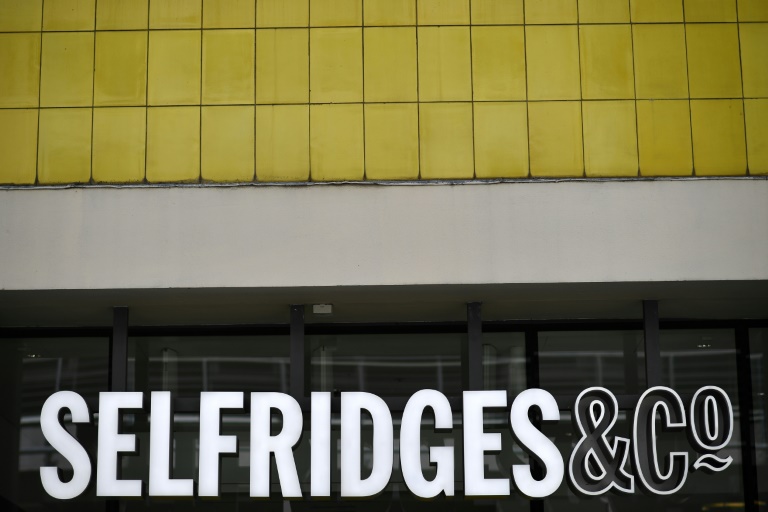
UK department store Selfridges said Friday that it wants almost half of its sales to be products given a new lease of life as part of the upmarket retailer’s efforts to improve sustainability.

Selfridges’ goal is for 45 percent of transactions to be for so-called “circular” goods and services — either second-hand, rented, repaired or recycled — by 2030, it said in a statement.

The “Reselfridges” initiative will form the “backbone” of its future business, the retailer added.

The world-famous chain, with its flagship branch on London’s Oxford Street, said the move was part of a scheme to help it reach zero-carbon by 2040.

The scheme, for Selfridges’ four physical branches as well as its website, is part of the group’s broader “Project Earth” policy launched three years ago to improve sustainability.

“Our vision is to reinvent retail and create a more sustainable future, and Project Earth and our new targets underpin this,” said managing director Andrew Keith.

It comes as the global fashion and luxury goods sectors face growing criticism over their increasingly harmful impact on the environment.

The advent of ultra-fast online fashion retailers, which encourage throwaway wasteful fashion items, has brought this into sharp focus in recent years. 

Selfridges has for some time been seeking to promote environment-friendly fashion, for example with a rental service for second-hand clothing.

The group’s key UK department store rival, John Lewis, is also aiming to develop the second-hand goods market.

John Lewis wants to roll out a so-called “buy back” or trade-in scheme for all product categories by 2025, as it also looks to hook up to the circular economy.

Selfridges added Friday that it would also extend its promise to stock only products that meet strict environmental and ethical standards to 2030.

The store chain was sold by Canada’s Weston family late last year to Thai retail giant Central Group and Austrian property firm Signa for £4 billion.

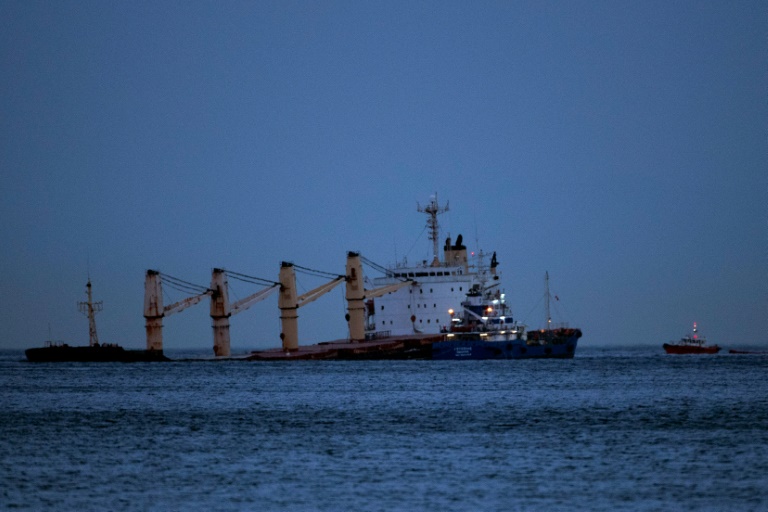
Oil slick from cargo ship off Gibraltar reaches shore

Small amounts of oil from a bulk carrier that collided with a gas tanker off Gibraltar has reached the shoreline of the British territory and neighbouring Spain, local officials said Friday.

The head of Gibraltar’s government, Fabian Picardo, told Spanish news radio Cadena Ser that a slick from the stricken vessel had reached “parts of the coast of Gibraltar.”

“But it was a small slick, we don’t want there to be any slick, but it was small,” he added.

Crews have been deployed to “begin the clean-up of oil from the shoreline,” the government of Gibraltar said in a statement.

Gibraltar’s department of environment has received reports “of small numbers of oiled birds,” it added.

Meanwhile the mayor of the Spanish town of La Linea de la Concepcion which borders Gibraltar said an oil slick from the carrier had reached its beach, forcing its closure.

“What has arrived is a slick which, frankly, is worrying but we are not talking about a tragedy,” Juan Franco told local reporters.

The carrier — the OS 35 — has been beached off Gibraltar since the two vessels collided late on Monday off the territory located on the southern tip of the Iberian peninsula.

The captain of the damaged ship was detained for questioning on Thursday for allegedly not obeying Gibraltar port orders initially after the collision.

No one was injured in the accident.

Booms were placed around the stricken cargo ship but some oil still managed to escape the floating barriers.

Gibraltar officials said Friday that all of the diesel on the ship had been removed, and the priority now was the removal of the heavy fuel oil that is still on board.

Divers on Thursday sealed two tank vents that leaked fuel from the bulk carrier and the amount of oil that is leaking is “significantly reduced”, the government of Gibraltar statement said.

Gibraltar, measuring just 6.8 square kilometres (2.6 square miles), overlooks the only entrance to the Mediterranean from the Atlantic Ocean, putting it on the key shipping route to the Middle East.

Its strategic location and low tax rates have helped turn it into one of the world’s busiest ports for ships to refuel.

Greenpeace said oil spills will “continue to be a threat” in the Strait of Gibraltar as long as it continues to be “the biggest ‘low cost’ fuel station in southern Europe.”

Stock markets jump on US jobs data

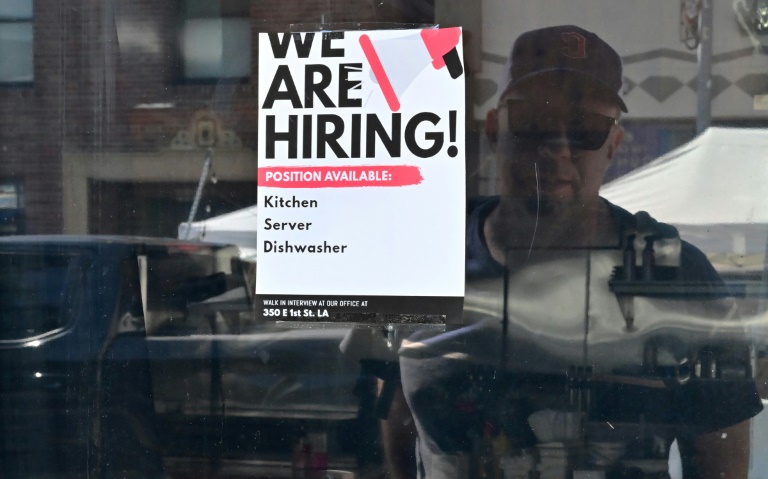
US and European stock markets shot higher on Friday following data that showed US job creation slowed but remained positive last month, belying fears of a recession induced by interest rates and inflation.

Labor Department data showed US employment increased by 315,000 jobs last month, which was in line with what economists were expecting but at a much slower pace than the 526,000 hires in July.

US Federal Reserve Chairman Jerome Powell signalled last week that the US central bank would continue to aggressively raise interest rates in order to bring surging inflation under control, even if it creates some short-term economic pain.

The latest jobs data show the Fed’s two 0.75-percentage-point interest rate hikes are having an impact on the US economy without completely derailing it.

“The key takeaway is that the labor market remains in pretty solid shape,” said market analyst Patrick O’Hare at Briefing.com.

“It didn’t function with the same zest it showed in August, but, objectively, it is running at a pace that is wholly inconsistent with an economy on the cusp of a recession,” he added.

Recent healthy readings on US factory activity, unemployment claims and private jobs creation have also indicated the world’s top economy remained strong despite rising interest rates and four-decade-high inflation.

“Traders believe that the jobs’ report is moving back to normal and the economy can handle some interest rate increases,” said Naeem Aslam, chief market analyst at Avatrade.

Wall Street’s main indices climbed, with the Dow up 1.1 percent in late morning trading, while both the S&P 500 and Nasdaq Composite rose 1.2 percent.

In Europe, Frankfurt soared 3.3 percent, while Paris jumped 2.2 percent and London climbed 1.9 percent.

– ‘Goldilocks scenario’ –

Analyst Craig Erlam at OANDA trading platform said “there are aspects of the report that will please the Fed and support the case for easing off the brake.”

Markets have been expecting a third 0.75-percentage-point hike later this month, but Avatrade’s Aslam also pointed to the unemployment creeping higher to 3.7 percent.

“This is a goldilocks scenario for traders who now know that the Fed is unlikely to increase the rate aggressively,” he said.

“This factor has pushed the dollar index lower and gold prices moved higher on the back of this,” he added.

The dollar had rallied this week to highs not seen for decades including against the pound, euro and yen on expectations that the Fed would continue to raise interest rates aggressively.

The yen hit a new 24-year low against the dollar on Friday.

Elsewhere on Friday, oil prices rallied on fading expectations for an Iran nuclear deal anytime soon, with the market shrugging off a declaration by G7 nations they intend to quickly impose a price cap on Russian oil exports as they tighten sanctions on the Kremlin over the invasion of Ukraine.

– Key figures at around 1530 GMT –

New York – Dow: UP 1.1 percent at 32,010.64 points

EURO STOXX 50: UP 2.5 percent at 3,544.38

London – FTSE 100: UP 1.9 percent at 7,281.19 (close)

Frankfurt – DAX: UP 3.3 percent at 13,050.27 (close)

Paris – CAC 40: UP 2.2 percent at 6,167.51 (close)

Tokyo – Nikkei 225: FLAT at 27,650.84 (close)

Hong Kong – Hang Seng Index: DOWN 0.7 percent at 19,452.09 (close)

Shanghai – Composite: UP 0.1 percent at 3,186.48 (close)

Dollar/yen: UP at 140.07 yen from 139.44 yen on Thursday

Euro/dollar: UP at $1.0031 from $0.9946

Pound/dollar: UP at $1.1577 from $1.1545

Euro/pound: UP at 86.63 pence from 86.14 pence

West Texas Intermediate: UP 1.9 percent at $88.27 per barrel

Brent North Sea crude: UP 1.9 percent at $94.10

burs-rl/lth

US hiring slows sharply in August, joblessness rises

American employers slowed the pace of hiring in August after the surprising surge in the prior month and the jobless rate edged up, according to government data released Friday, which could offer the central bank some relief that its inflation-fighting efforts are working.

The Federal Reserve is paying close attention to the progression of the hot job market, looking for signs of easing as it tries to cool the economy with steep interest rate hikes to tamp down inflation which has reached a 40-year high.

While the data showed wages continued to rise, the unemployment rate ticked up as more workers joined the labor force, a welcome development that could allow the Fed to opt for a smaller move later this month after two consecutive super-sized rate increases.

President Joe Biden, who has been riding a wave of legislative and economic victories, cheered the latest report.

“More great news: Our jobs market remains strong. Even more Americans are coming back to work,” Biden tweeted.

Even with the slowing pace, the job gains bring employment above the pre-pandemic level, the Labor Department said in the closely watched monthly report.

The US economy added 315,000 jobs last month, the report said, which was in line with what economists were expecting after 526,000 hires in July.

The unemployment rate moved back up to 3.7 percent, after dipping to 3.5 percent in the prior month, according to the data. And the labor force participation rate rose three-tenths to 62.4 percent.

But wages continued to climb in August, as average hourly earnings rose another 10 cents, or 0.3 percent, to $32.36 — slower from the pace in recent months. Over the past 12 months, worker pay has increased by 5.2 percent.

Continued upward pressure is a cause for concern since the Fed fears it could lead to a wage-price spiral and push inflation higher.

Surging inflation, exacerbated by high energy prices due to Russia’s war in Ukraine, as well as supply chain struggles and Covid-lockdowns in China, has prompted the Fed to raise the benchmark borrowing rate four times this year, including giant 0.75 percentage point increases in June and July.

However, the latest data “may tip the scale towards a 50-basis point rate hike” at the September 20-21 meeting, said Rubeela Farooqi of High Frequency Economics, although the next report on consumer price inflation also will be a key factor. 

Still, she said “these data are not going to change the Fed’s view that policy needs to move to a restrictive stance over coming months.”

Diane Swonk of KPMG agreed.

“The Fed is committed to reducing the demand for workers and increasing labor supply, via a much larger rise in the unemployment rate than we saw today,” she said in an analysis.

But other analysts see the central bankers on track for a third consecutive three-quarter point rate hike.

In July, there were still more than 11 million job openings, or two for every job seeker. 

– ‘Some pain’ –

US GDP contracted in the first two quarters of 2022, which is commonly viewed as a sign of a recession, but the robust job market defies that definition.

Companies have faced a labor shortage for months, prompting them to offer higher wages, which is in turn driving up prices. And there are signs firms are “hoarding” workers — holding onto seasonal employees for fear they might not be able to replace them later.

Fed officials have made it clear in repeated statements that they will continue to raise interest rates to cool the economy, even if monthly data show some signs of progress.

Fed Chair Jerome Powell hammered home this point last week at a conference in Jackson Hole, Wyoming, warning of “pain” ahead for American households and businesses.

New data this week from payroll firm ADP showed private firms ratcheted back hiring in the month to 132,000.

“We think that these numbers suggest a shift to a more moderate pace of hiring,” ADP chief economist Nela Richardson said.

But ADP data showed workers who left their jobs to find a new position saw a pay increase of more than 16 percent, compared to 7.6 percent gains for all workers over the past year.

UN inspectors to stay in Ukraine nuclear plant to ensure safety

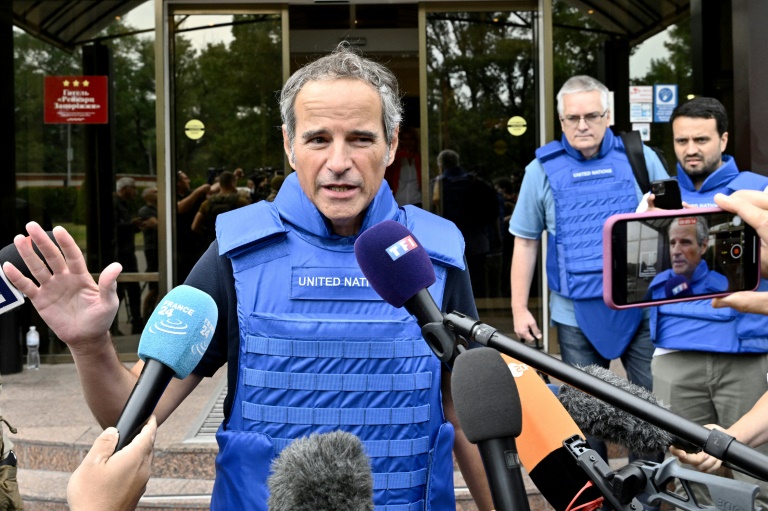
UN inspectors spent a second day Friday at a Russian-held nuclear plant and at least two will remain on a permanent basis to ensure safety after the United Nations atomic agency said the site had been “violated” by the fighting in Ukraine. 

A 14-strong team from the International Atomic Energy Agency (IAEA) visited the Zaporizhzhia nuclear power plant in southern Ukraine on Thursday as global concern grew over its safety in a war raging ever-closer to its six reactors. 

Russian troops seized control of the site — Europe’s biggest atomic facility — in early March. 

“It is obvious that the plant and physical integrity of the plant has been violated several times,” IAEA head Rafael Grossi said on Thursday as he and part of his team returned to Ukrainian-controlled territory after a productive first visit lasting around three hours. 

The Argentinian said some of his inspectors would stay at the plant “until Sunday or Monday” to “dig deeper” into some of the observations the team had made to draw up a report. 

He did not specify how many stayed behind but said the agency would retain a permanent presence there. 

“We have achieved something very important today, and the important thing is the IAEA is staying here.”

Russia’s envoy to Vienna, Mikhail Ulyanov said six IAEA inspectors had stayed behind and that two more would remain there “on a permanent basis”. 

“Six (IAEA) employees will stay at the plant.. for a few more days and then they will return to Vienna,” he told Russian news agency RIA Novosti. 

“Two people will stay at the Zaporizhzhia nuclear power plant on a permanent basis.

“We welcome this because an international presence can dispel the many rumours about the state of affairs at the nuclear power plant.” 

The Kremlin described the inspectors’ arrival at the plant as “very positive”.

“In general, we are very positive about the fact that, despite all the difficulties and problems… the commission arrived and started to work,” spokesman Dmitry Peskov told reporters.

– ‘Stop playing with fire’ –

A shelling attack on the area at dawn on Thursday had forced one of the plant’s six reactors to close in what Ukraine’s Energoatom nuclear agency said was “the second time in 10 days” that Russian shelling had forced the closure of a reactor. 

It said the plant’s emergency protection system kicked in, shutting reactor five, with the attack damaging a back-up power supply. 

The shelling left only one of the six reactors working. 

Red Cross chief Robert Mardini had on Thursday warned the consequences of hitting the plant could be “catastrophic” saying “the slightest miscalculation could trigger devastation that we will regret for decades.”

“It is high time to stop playing with fire and instead take concrete measures to protect this facility… from any military operations,” he reporters in Kyiv.

Both sides have traded repeated accusations over who was responsible for the shelling the area around Energodar, the town which lies next door to the plant on the south bank of the Dnipro River. 

Ukraine has accused Russia of storing ammunition at the plant and deploying hundreds of soldiers there. 

And it also suspects Moscow is intending to divert power from the plant to the nearby Crimean peninsula, annexed by Russia in 2014. 

Meanwhile, Ukrainian troops pressed ahead with a counter-offensive in the nearby region of Kherson to retake areas seized by Russia at the start of the invasion.

In its morning update, the presidency said explosions could be heard across Kherson throughout the night and that “heavy fighting” was taking place in two areas just upriver from Kherson city, the regional capital. 

In the eastern Donetsk region, four people were killed and 10 wounded in various shelling incidents, while another died when a village was hit near Kharkhiv, Ukraine’s second city in the country’s north east.

Despite the conflict, now in its seventh month, children started a new school year on September 1, although in several regions that meant being back online as all school attendance was cancelled due to the ongoing fighting.

“I’m happy to be back at school but I would be even happier if there was no war because I miss my teacher and my friends,” nine-year-old Antonina Sidorenko, told AFP as she started her online lessons with the distant crackle of gunfire in the background. 

Close Bitnami banner
Bitnami