Bloomberg

Ford Beats Tesla to the Punch With First Electric F-150 Delivery

(Bloomberg) — In the rural Michigan community Nicholas Schmidt lives, pickup trucks are a way of life.

On Thursday, Schmidt and the city he calls home — Standish, Michigan, population less than 1,500 — made history with the handover of a key fob. He became owner No. 1 of Ford Motor Co.’s first electric pickup, the F-150 Lightning.

Schmidt, the chief technology officer of a grid optimization startup, said the Lightning will replace the gas-powered F-150 that’s been in his driveway. For Ford, he’s a customer right out of central casting: a Tesla Model 3 owner who had a deposit down on the Cybertruck and considered a Rivian R1T.

“When I bought the Tesla a few years ago, my family was real apprehensive, as farmers, just not buying into it,” Schmidt, 38, said by phone. “So when there were pickup trucks coming out that were going to be EVs, I said, ‘whichever one comes first, I’ll buy it.’”

It’s difficult to overstate the significance of Ford fully electrifying what has been America’s best-selling vehicle for 40 years running. The automaker sells around 900,000 F-Series trucks in good years, generating more than $40 billion in revenue. In a Bloomberg Businessweek cover story last month, Chief Executive Officer Jim Farley likened the Lightning’s arrival to the days Ford was rolling out the Model A, the successor to the first affordable automobile.

Tesla’s meteoric rise to far and away the world’s most valuable automaker has put Ford and other established automakers on their back foot the last few years. While it didn’t exactly go to plan, the debut of the Cybertruck in November 2019 was a shot across the bows of Detroit’s biggest moneymakers.

Schmidt remembers putting in a reservation for a Cybertruck and showing up to the family’s Thanksgiving celebration that year. “Nobody could believe it because it was the ugliest thing they’d ever seen,” he said. “But it was $100 and I figured, you know, what’s the worst that could happen?”

Based on his familiarity with Tesla’s battery packs and the motor configuration, he suspected the Cybertruck will be fine at towing, and had the sense watching Elon Musk’s presentation of a prototype that it would be plenty big enough. His wife hated the idea of the Tesla truck and was relieved when Ford’s Lightning made it into production first.

For all its historical significance, Schmidt said the family won’t treat their F-150 Lightning — in silver, to match their Airstream — like an artifact.

“We live in the woods, and I’m looking at cornfield next to me here that was planted,” he said. “We’ll be chopping wood and hauling stuff back and forth, as well as towing a trailer.”

“We plan on using it as a truck.”

More stories like this are available on bloomberg.com

©2022 Bloomberg L.P.

Google Cloud Chief Says Work With Aramco Doesn’t Involve Oil

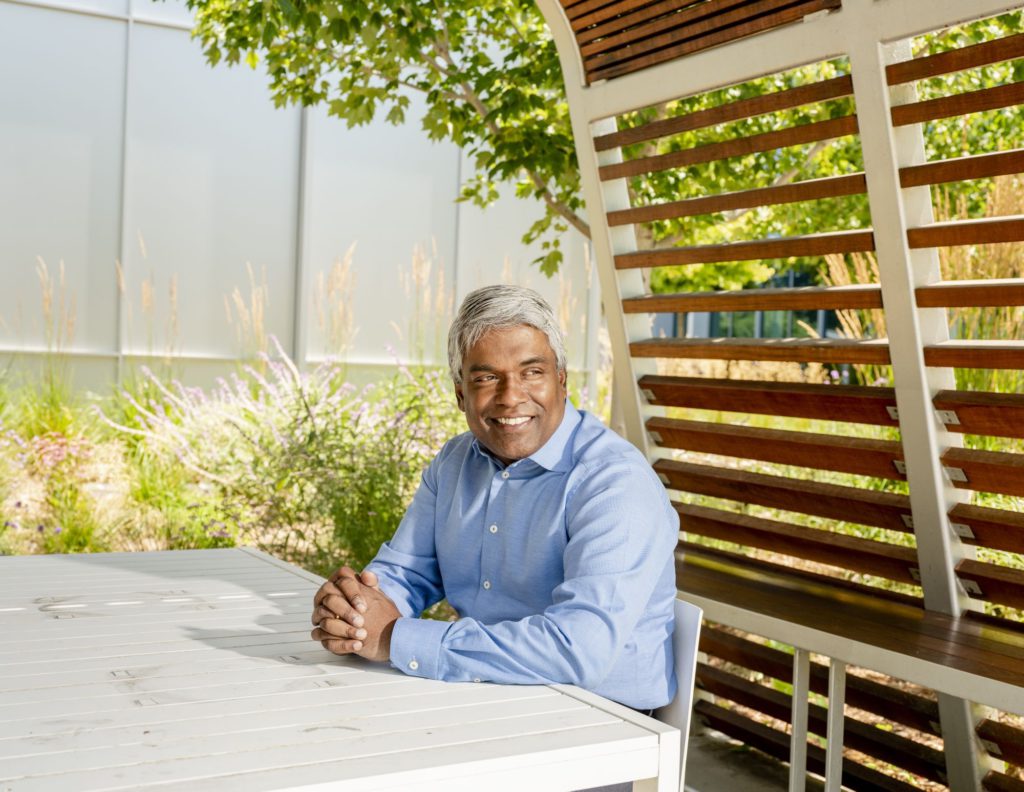
(Bloomberg) — Thomas Kurian, the head of Google’s cloud division, said the company’s work with oil giant Saudi Aramco doesn’t include oil production, offering some of his first public comments on the controversial deal. 

“We work with Aramco system integration division, not with the oil-and-gas division,” Kurian told Bloomberg TV on Thursday. “We have said that again and again.”

In 2020, Alphabet Inc.’s Google announced plans to expand its cloud business into Saudi Arabia with a new cloud data center. Saudi Aramco, the state-owned energy conglomerate, would re-sell Google’s cloud services to customers in the country, the companies said then. 

A Google spokesperson pointed to a 2020 company blog post that makes no mention of the Saudi Aramco divisions or oil and gas.

Google’s critics, including its own employees, have argued that providing cloud tools to oil-and-gas firms contradicts the company’s ambitious zero-carbon goals. Kurian’s division has touted itself as the “cleanest cloud in the industry.”

Kurian said he doesn’t see a contradiction in these partnerships. “We’re not doing work in the exploration and production business,” he said Thursday. “We’re also helping oil and gas companies decarbonize in a variety of ways.”

In addition environmental concerns, Google’s work in Saudi Arabia has been criticized for the nation’s track record on human rights. An activist group, SumOfUs, will raise a proposal at Alphabet’s shareholder meeting June 1 calling on the company board to release a human rights assessment of a Saudi data center. Alphabet attempted to remove the proposal from a vote, but the US Securities and Exchange Commission approved it.

Earlier this month, Saudi Aramco surpassed Apple Inc. to become the world’s most valuable company thanks to surging demand for oil.

More stories like this are available on bloomberg.com

©2022 Bloomberg L.P.

Trudeau Aims for Lower Internet Prices With New Telecom Policy

(Bloomberg) — Justin Trudeau’s government has issued a new policy that tries to make internet access less expensive in Canada by changing the rules for companies that own large communications networks. 

The government has asked the country’s telecommunications regulator to craft new regulations that would force major providers such as BCE Inc. and Rogers Communications Inc. to sell access to their wireline networks at regulated rates that will lead to “better prices and more choices” for consumers. 

Under the new directive, the Canadian Radio-television and Telecommunications Commission will also have to “ensure that wholesale internet access is available evenly across the market” and at speeds that consumers want. 

The proposal may help smaller companies that currently lease network capacity from Canada’s big telecommunications companies and resell internet services to consumers.

The government aims to finalize the policy direction by this fall. It didn’t elaborate on specific details of the plan, meaning it will be difficult to determine financial implications for telecommunications companies. 

(Updates with additional context)

More stories like this are available on bloomberg.com

©2022 Bloomberg L.P.

Broadcom to Buy VMware for $61 Billion in Record Chip Deal

(Bloomberg) — Broadcom Inc. agreed to buy cloud-computing company VMware Inc. for about $61 billion, sealing one of the largest technology deals in history and advancing the chipmaker’s quest to become a force in corporate software.

VMware shareholders can choose to receive either $142.50 in cash or 0.2520 shares of Broadcom stock for each VMware share, according to a statement on Thursday. The offer represents about a 44% premium to VMware’s closing price on May 20, the last trading day before Bloomberg News reported the takeover talks. 

The deal marks the biggest-ever takeover for a semiconductor maker and extends an acquisition spree for Broadcom Chief Executive Officer Hock Tan, who has built one of the largest and most diversified companies in the industry. VMware bolsters Broadcom’s software offerings — a key part of Tan’s strategy in recent years. He acquired corporate-software maker CA Technologies in 2018 and Symantec Corp.’s enterprise security business in 2019.

Broadcom’s offer — coming during a market downturn for tech stocks — has the support of key VMware shareholders Michael Dell and Silver Lake, and includes a so-called go-shop provision that allows VMware to solicit competing offers.

VMware will be required to pay a $1.5 billion breakup fee if it backs out of the deal, unless it secures a superior agreement by July 5. Then the amount will be just $750 million. Broadcom must pay VMware $1.5 billion if it terminates the deal or if the transaction fails to get regulatory clearance. 

VMware shares gained 3.2% to $124.36 at the close in New York on Thursday. Broadcom rose 3.6% to $550.66.

Broadcom, one of the most valuable companies in the chip industry, sells components for everything from the iPhone to industrial equipment. But it’s seeing some of its biggest growth from data centers — the massive server hubs that power cloud-computing services — and bulking up on software helps it further serve that market.

The purchase adds to a run of deals for the global tech industry this year. Microsoft Corp. agreed in January to buy video game publisher Activision Blizzard Inc. for $69 billion. A consortium backed by Vista Equity Partners is acquiring software maker Citrix Systems Inc. for $13 billion, and Elon Musk announced a $44 billion buyout of Twitter Inc. in April. The largest previous deal involving a chip-maker was AMD Inc.’s $34.1 billion takeover of Xilinx Inc.

Tan had warned investors in March that he was on the hunt for deals, saying at the time that the company had the capacity for a “good size” acquisition. Bloomberg News first reported that the VMware talks were underway on May 22, and that company’s shares soared 25% the next day.

Slashing expenses has been a key part of Tan’s strategy when he buys companies. Broadcom cut the cost base at CA and the Symantec business by 60% to 70%, according to Sanford C. Bernstein.

“Building upon our proven track record of successful M&A, this transaction combines our leading semiconductor and infrastructure software businesses with an iconic pioneer and innovator in enterprise software,” said Tan in a statement.

VMware has faced slowing revenue growth — a rate that’s now below 10% a year — as its flagship virtualization software line matures. But it’s a reliable source of profitable sales, Broadcom software head Tom Krause said in an interview. 

“Is it a double-digit growth business? I don’t think so,” he said. But it’s sustainable, Krause said. “When I think about our model, that’s the kind of businesses we run and run very well.”

Krause said Broadcom will also evaluate where VMware is spending research-and-development funds, as well as some of the newer businesses that the software maker has acquired. But units like its security business and end-user computing unit relate well to some of Broadcom’s existing product lines, he said.

Broadcom has received commitments from a consortium of banks for $32 billion in new, fully committed debt financing to help fund the deal, and is expected to be completed in Broadcom’s fiscal year 2023. Broadcom will also assume $8 billion of VMware net debt. 

Broadcom was previously in talks to purchase SAS Institute Inc., a closely held software company valued at $15 billion to $20 billion. But those discussions ended last year without agreement.

Broadcom’s most ambitious takeover attempt ever also failed to gain traction. The company tried to buy rival chipmaker Qualcomm Inc. but had to walk away from the deal in 2018 after resistance from the Trump administration. Broadcom’s Singapore headquarters was an issue for regulators at the time, but the company has since switched its domicile to the US. It’s now based in San Jose, California, about 20 miles from VMware’s Palo Alto headquarters.

The VMware acquisition “doesn’t appear to be a deal that raises antitrust concerns,” said Bloomberg Intelligence analyst Jennifer Rie. “But with the current antitrust climate and the FTC’s mission to be more vigilant on merger reviews, this will probably get in-depth scrutiny.” While there could be some concern that the portfolio of products the combination would give Broadcom would allow it to bundle or tie products and services in an anticompetitive way, Rie said, she doesn’t think the Federal Trade Commission would go to court to try to block the deal.

VMware is a pioneering Silicon Valley company that was founded in 1998, the same year as Google. It invented virtualization software, which consolidated applications and workloads on a smaller number of server computers. The innovation made it easier for servers to handle more than one program.

Such software was valuable when businesses managed their own servers, but as companies began relying more on giant cloud providers, VMware’s role was less clear. It struggled to maintain growth and ultimately forged a partnership with Amazon.com Inc., one of the biggest providers of cloud storage and services.

Even with the challenges, VMware could become the “crown jewel of Broadcom’s software division,” according to Angelo Zino, an analyst at CFRA.

VMware has already changed hands before. In 2004, it was acquired by storage technology giant EMC Corp., which then sold a portion of its stake as part of VMware’s initial public offering three years later. The business passed to Dell Technologies Inc. when that company acquired EMC in 2016. 

VMware spun off from Dell last year, but Dell and private equity backer Silver Lake remain top investors in the software company.

Software would help decrease Broadcom’s reliance on chips. But its earlier forays into that market haven’t always been cheered by investors. Tan has argued that he looks for businesses that are “franchises” — ones that hold a strong market position and can be made more profitable without pouring in huge investments.

Chipmakers like Broadcom have enjoyed booming sales in recent years, fueled by the spread of semiconductors into more products — as well as by the need for work-from-home technology during the pandemic. But Tan has warned that the boom times probably won’t last. 

Even after giving a rosy sales forecast in March, Tan said that the semiconductor industry won’t be able to stay on its current trajectory. He expects the chip business to decelerate to historical growth rates of about 5%.

“If anyone tells you otherwise, don’t believe it, because it has never happened,” he said on a conference call at the time. Industry leaders claiming that the semiconductor industry can grow at the current rate for an extended period are “dreaming,” he said.

Broadcom is targeting mid single-digit revenue growth for VMware along with Ebitda margins of the whole business in the mid 60% range, Tan said on a call with analysts. “We see a lot of benefits in putting all these various franchises we have, hardware and software, under one umbrella,” he said.

Goldman Sachs Group and JPMorgan Chase & Co.  are advising VMware while Broadcom is working with Barclays Plc, Bank of America Corp., Credit Suisse AG, Citigroup Inc, Morgan Stanley and Wells Fargo & Co.

(Updates with termination fee in fifth paragraph.)

More stories like this are available on bloomberg.com

©2022 Bloomberg L.P.

T-Mobile Raised Fees, Then Scolded Peers for ‘Jacked Up’ Prices

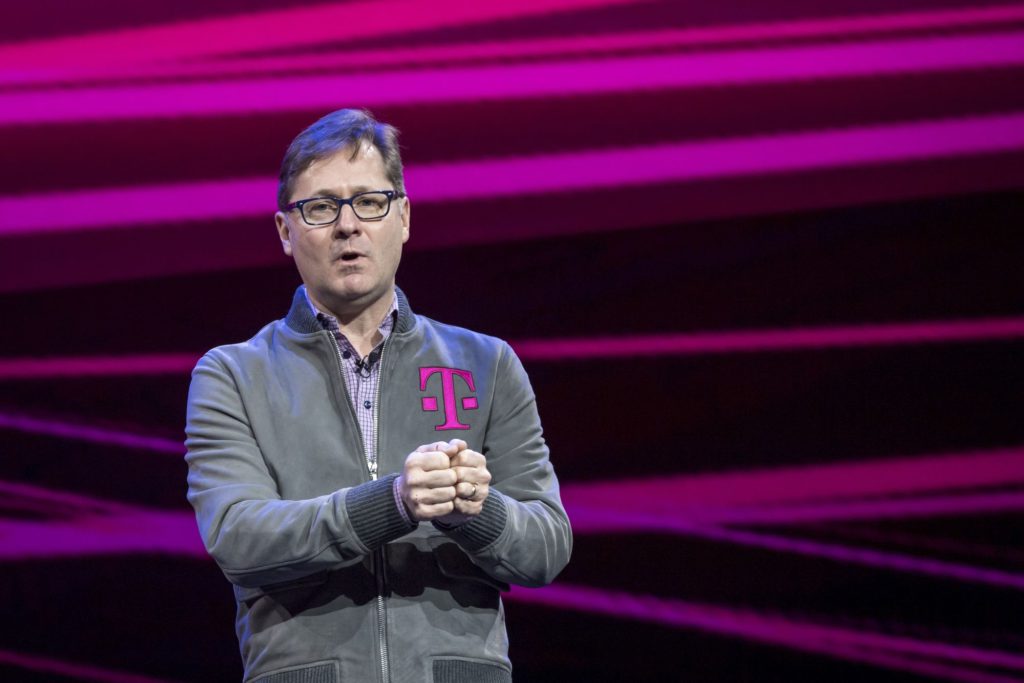
(Bloomberg) — T-Mobile US Inc. Chief Executive Officer Mike Sievert admonished Verizon Communications Inc. and AT&T Inc. this week for their recent price hikes. Turns out, his company raised fees on millions of wireless customer bills earlier this year. 

“AT&T and Verizon have both announced big price increases in the last month,” Sievert said at a May 23 investor conference. “Right here, right now, in the heart of consumer anxiety about inflation, they are announcing millions and millions of people getting jacked up prices.”

T-Mobile has grown faster than its competitors over the past decade by vanquishing service contracts, expensive international rates and hidden fees. But in February, citing higher costs, the company increased certain monthly charges by 31 cents per line and 24 cents per data device. Only customers on Magenta upper tier unlimited plans and One and One Plus packages, which have taxes and fees included, were exempt from the increases.

T-Mobile said a “substantial majority” of its customers weren’t affected and that subscribers were notified in January that the fees were going up. The company said it is passing along costs and charges imposed by other providers, and that they’re smaller than the competitors’ price hikes. Still, some customers didn’t like it.

With revenue growth nearly stalled and costs increasing, wireless carriers are under pressure. AT&T in May raised rates on older service plans by $6 a month for single lines and $12 for families. Verizon is increasing fees by $1.35 a line in June, and charging business customers $2.20 more each month for mobile service.

T-Mobile committed to a three-year rate-plan price freeze as a condition of its 2020 purchase of Sprint Corp. 

T-Mobile said it’s honoring that commitment but added that some fees are beyond its control. “Telco Recovery Fees are periodically reviewed and the amounts adjusted to reflect increased costs to T-Mobile over time, as these costs are not within T-Mobile’s control,” a company representative said in an email. 

More stories like this are available on bloomberg.com

©2022 Bloomberg L.P.
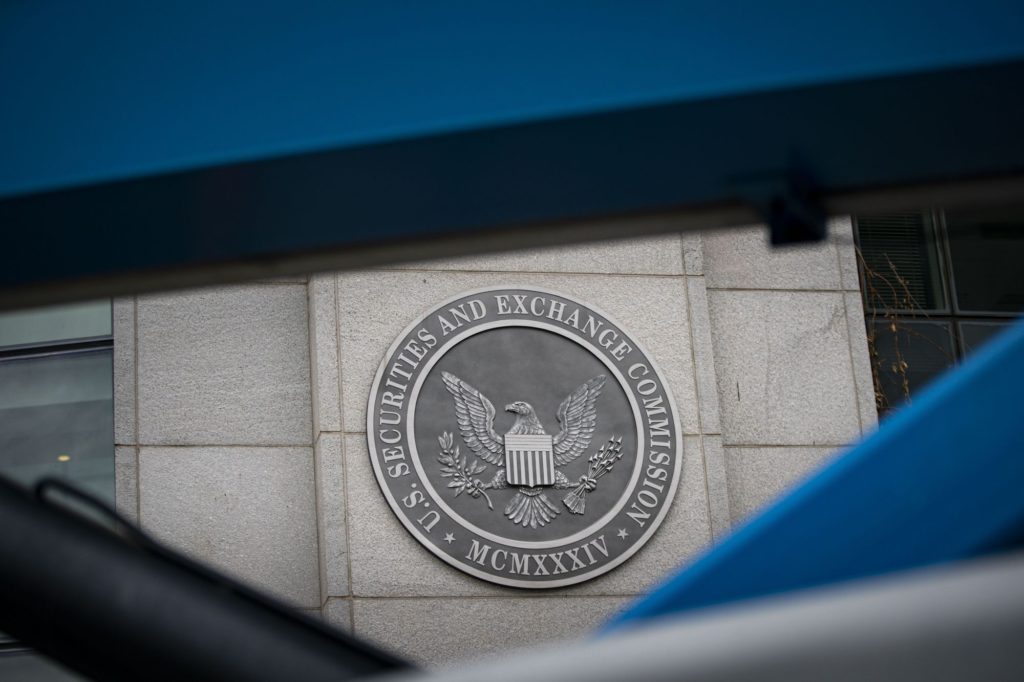
SEC Planned Crackdown on ‘Misleading’ Funds Goes Far Beyond ESG

(Bloomberg) — New proposals from the US Securities and Exchange Commission to crack down on money managers using misleading or deceptive fund names threaten to impact investing strategies of all stripes — not just those focused on ESG issues.

The Wall Street watchdog floated tighter rules Wednesday to ensure a product’s name is squarely focused on its actual strategy, with most observers fixating on what the restrictions mean for socially responsible investing. Yet the proposals could hit thousands more funds trading everything from value and growth stocks to bonds and emerging markets. 

Under the new rules, products with names featuring terms as diverse as “International,” “Income” or “Intermediate Term Bond” would be among a swath ultimately required to hold at least 80% of the value of their assets in that type of investment. 

It’s potentially a big deal. If the idea sees the light of day, asset managers would be forced to re-label products or adjust their portfolio holdings. While the process has a long way to go and final regulations could be months away, it’s the latest potential disruption from a watchdog flexing its muscles ever more, from cryptocurrencies to complex exchange-traded products.

“This is a very difficult thing to regulate as investment strategies are very subjective,” said Eric Balchunas, ETF analyst with Bloomberg Intelligence. “Should Apple be in an Electric Vehicles ETF? Should Exxon be in an ESG ETF? It depends on the methodology and they are all different.”

As it stands, names with certain terms like “value” or “growth” give a fund more leeway because those are treated as investment objectives rather than investment focuses — meaning the 80% rule does not apply.

“We are proposing to expand the rule’s 80% investment policy requirement beyond its current scope, to apply to any fund name with terms suggesting that the fund focuses in investments that have, or investments whose issuers have, particular characteristics,” the SEC said in the proposed rule change. “The proposed amendments provide as examples fund names with terms such as ‘growth’ or ‘value,’ or terms indicating that the fund’s investment decisions incorporate one or more ESG factors.”

It is unclear how many funds would be affected. Most focus on the SEC proposal so far has been directed at the significant portion of the 209-word document given over to investments pledging to meet higher environmental, social or governance standards — part of the regulator’s drive to stamp out so-called greenwashing.

Yet there are 1,211 mutual funds and ETFs with “value” or “growth” in their name alone, according Ben Johnson, Morningstar’s global director of ETF research. That compares with just 307 using “ESG” or “sustainable.”

“On that measure, the effect of these proposed changes would be more meaningful for value and growth funds than ESG ones,” Johnson said. However, clearer definitions around what constitutes value and growth investments should make applying the rules to those funds more straightforward, he said.

Read more: SEC to Crack Down on Misleading ESG Claims With Fund Rules

The proposals follow a 2020 request for public comment on the framework addressing fund names. The SEC says it is concerned that existing rules are “not currently well-suited to address ways in which the fund industry has evolved.” 

Assets under management have more than trebled since the SEC’s current rules were put in place two decades ago, and the regulator says competition creates an incentive for money managers to use names designed to attract investors. It also cites academic research indicating that a “significant number” of funds follow a strategy that doesn’t align with the strategy identified in their name.

Meanwhile, use of derivatives in funds has become widespread, and the current rules don’t address how that should be factored into a fund’s 80% requirement. The proposals also seek to fix that.

The investment industry will spend the coming weeks pouring over the details. The SEC will consider feedback it receives and may revise the proposal before holding a second vote to finalize the regulation several months from now. 

More stories like this are available on bloomberg.com

©2022 Bloomberg L.P.
Take-Two’s Hangar 13 Cuts Staff After Canceling a Major Game

(Bloomberg) — Video game developer Hangar 13, a subsidiary of Take-Two Interactive Software Inc. best known for developing the 2016 game Mafia 3, instituted a round of job cuts this week.

In a virtual meeting, the studio president, Nick Baynes, said some roles would be eliminated, called the news “horrible” and sought to reassure the remaining employees that he does not expect further layoffs. “All of you who are here now, you’re Hangar 13 still and will continue to be so,” he said in the meeting, a recording of which was heard by Bloomberg.

A spokesperson for Take-Two’s 2K publishing label confirmed the job cuts but declined to say how many people were affected.

“2K is fully committed to the future of Hangar 13 as the studio navigates a challenging but ultimately promising transition period,” the spokesperson said in an emailed statement. “We are doing all we can to work with the impacted employees to find them new roles on other projects and teams at 2K, and are providing full support to those who cannot be redeployed, connecting them with industry networks and resources to find new opportunities outside of 2K.”

The game studio, which has offices in Novato, California; Brighton, UK; and the Czech Republic, had recently told staff that it wasn’t planning layoffs following the cancellation of a major game, code-named Volt, Bloomberg reported in November. Then another project, code-named Mosaic, was quietly canceled this year, according to a person familiar with the company’s inner workings. The decision left several hundred people with little work to do.

Hangar 13 is developing two games. One is a new entry in the Mafia series, code-named Nero. The other is a tennis game code-named Hammer, said the person familiar with the projects, who asked not to be identified because the plans are private. Some Hangar 13 staff are also assisting other developers within Take-Two’s 2K publishing label. New York-based Take-Two had 7,800 employees as of March. Baynes said in the staff meeting that in the wake of Volt and Mosaic’s cancellation, the company had tried to find roles on these projects for everyone at Hangar 13 but that those who could not fit were let go.

The last few years have been turbulent for Hangar 13. Following Mafia 3’s release, the company went through several fits and starts as it tried to get approval for a new Mafia game. A series of shakeups led to multiple rounds of layoffs and uncertainty for those who remained at the studio. Hangar 13 eventually set out to make its own new franchise, going through multiple iterations before it landed on the ill-fated Volt.

Baynes became president earlier this month after the departure of Hangar 13 founder and former boss Haden Blackman. During the call, Baynes said he is aiming to green-light a sequel to Nero while it is still in development, largely to avoid repeating the same mistakes and having workers displaced once the project is finished.

Hangar 13’s office in Novato, where the company was founded, is located on a decommissioned Air Force base called Hamilton Army Airfield. Several Take-Two subsidiaries have worked on the base and had ill fates, such as a game developer known as 2K Marin that shut down in 2013, leading former employees to wonder whether the airfield is cursed.

(Updates with company comment and context starting in the third paragraph.)

More stories like this are available on bloomberg.com

©2022 Bloomberg L.P.
Crypto Scammers Pose as Journalists, NFT Projects on Twitter

(Bloomberg) — Internet scammers are using hijacked accounts on Twitter Inc. to promote dubious cryptocurrency platforms that, once installed, enable them to compromise victims’ sensitive data, according to new findings provided exclusively to Bloomberg News.

Since March, fraudsters have impersonated journalists, crypto apps and a variety of nonfungible token (NFT) projects on Twitter in order to steal users’ virtual currency, usernames and password credentials, according to research from Satnam Narang, a staff research engineer at the cybersecurity firm Tenable Inc. Many of the targeted accounts are verified, an indication to investigators that scammers are either hacking specific pages, paying for illicit access, or both.

As part of the alleged scam, thieves have masqueraded as members of the Bored Ape Yacht Club, a popular collection of NFTs, as well as the Azuki collection, the MoonBirds project and the Okay Bears NFT community, which has more than 150,000 Twitter followers, Narang found.

In one instance, scammers posed as a legal affairs reporter from the Age, an Australia-based news service, asking users to visit a suspicious link in order to claim a small amount of the virtual currency Ethereum, according to the research. Intruders also appear to have temporarily taken over the Twitter page of a freelance journalist who covers the gaming industry and created profiles that appear similar to real ones, according to the findings.

The imposter Twitter accounts have typically encouraged followers to visit specific links, or download new apps, Narang said. Those apps often persuade users to provide access to their mobile cryptocurrency wallets, from which the attackers can quickly extract funds. Each of the fraudsters’ pages, whether an app or a phishing link, are carefully designed to look like legitimate, trustworthy websites, according to the findings. 

The tactic represents an upgrade from a more traditional fraud technique of mass-spamming social media users, or impersonating famous people, such as Tesla Inc. Chief Executive Officer Elon Musk, an outdated tactic that’s relatively simple to detect, Narang said in an interview. The use of verified Twitter accounts adds a layer of legitimacy, and the chance to seize on a money-making opportunity in cryptocurrency adds some urgency to the scheme, said Narang.

“They look indistinguishable from real sites, and people just aren’t looking closely at the links,” he said.

When a Bloomberg News reporter analyzed an app that purported to be for Azuki, an anime-themed NFT project with more than 300,000 followers, it was flagged as malware. 

In May, scammers used a fraudulent Twitter page @OlthersideMeta, that tricked users into believing it was @OthersideMeta, a legitimate site that blends video games with the metaverse, according to the research.

Losses incurred from the scams are difficult to quantify, however the activity is the latest example of attackers leveraging cryptocurrency — and the hype surrounding popular projects — to generate funds. Americans reported more than $1.6 billion in cryptocurrency-related fraud in 2021, a massive uptick from the $246 million the year before, according to the FBI’s internet crime complaint center report. The true figure is likely to be much higher, as many would-be investors flock to speculation-style schemes and don’t report instances of fraud, Narang said.

“Scammers are so adept at pivoting into what people are interested in,” he added. “This is a small sampling of what’s happening across this space.”

(Updated to fix style issue, then to include a link to Tenable research.)

More stories like this are available on bloomberg.com

©2022 Bloomberg L.P.
Apple to Boost Retail and Corporate Pay in Face of Inflation

(Bloomberg) — Apple Inc. is raising salaries for retail workers in the US by 10% or more and upping its global companywide compensation budget as it faces a tight labor market and unionization efforts.

The company is hiking hourly pay for retail staff to at least $22 per hour, up from a previous $20 minimum, the company told employees on Wednesday. The move follows a pay bump in February after inflation grew more severe and some staffers complained about working conditions during the Covid-19 pandemic. 

Apple said the change for hourly workers “represents a 45% increase in starting rates since 2018, and reflects our deep gratitude for the extraordinary work of our valued team members.” The company also told both retail and some corporate teams that the increases will go into effect in July, about three months sooner than Apple typically issues annual raises.

Keeping workers happy has grown more difficult at a time of inflation, a resurgent pandemic and competition from other tech firms, which are eager to lure away Apple’s talent. The Cupertino, California-based company also has irked some employees by demanding that they return to the office three days a week, though it recently put that requirement on hold. 

In its retail division, Apple is contending with unionization efforts in many US states. The company’s retail chief, Deirdre O’Brien, recently warned employees about taking such a step.

“We have a relationship that is based on an open and collaborative and direct engagement,” she said in a video to staff. “I worry about what it would mean to put another organization in the middle of our relationship.”

Companies often announce improvements while battling unionization campaigns, but doing so may interfere with employees’ free choice, Seattle University labor law professor Charlotte Garden said.

“The risk is that workers perceive that keeping the improvements is contingent on voting against union representation, and that if they vote for the union, the company will play hardball,” Garden said in an email.

In the corporate world, Apple is facing angst from some employees over falling share prices. Competitors like Microsoft Corp. and Meta Platforms Inc., meanwhile, are trying to poach staff with strong compensation packages. 

Companies are suffering a shortage of talent after many employees chose flexible options or left the workforce during the pandemic. Rivals like Microsoft are spending more aggressively to stay competitive. It has plans to nearly double its budget for salary increases this year in an effort to retain employees.

Apple’s corporate compensation packages are typically a combination of base cash pay, cash bonuses and stock. The company’s shares have fallen about 20% this year, dealing a blow to what workers can expect to make. Apple also gives some equity to retail employees, but those packages are relatively small, typically ranging from $1,000 to $2,500 in shares annually. 

Inflation is playing a role in driving up pay expectations as well, with US consumer prices rising an annual 8.3% in April, according to government data released Wednesday.

Apple has about 170,000 employees, including retail workers, AppleCare technical-support staff and its corporate workforce. The company’s starting retail wage is comfortably above the US nationwide minimum, which has been $7.25 since 2009. In California, companies with at least 26 employees are required to pay $15 an hour. New York City also has a $15 wage floor.

Increasing pay isn’t Apple’s only recent move to improving working conditions. The company has expanded its vacation, sick leave and child-care perks for both full-time and part-time retail employees. The company has about 270 retail stores in the U.S.

Like other leading tech firms, the company has so far operated without a formal worker organization; however, successful moves to unionize at a New York Amazon.com Inc. warehouse and Starbucks Corp. cafes across the country have given impetus to new campaigns.

More stories like this are available on bloomberg.com

©2022 Bloomberg L.P.
Twitter Shakeup: Dorsey Exits Board, Silver Lake Co-CEO Fails to Get Enough Re-Election Votes

(Bloomberg) — Twitter Inc. director Egon Durban, the co-Chief Executive Officer of private equity firm Silver Lake, failed to get enough votes for re-election to the board during the company’s annual shareholder meeting Wednesday. 

Institutional Shareholders Services Inc., an advisory firm, had recommended against Durban’s re-election because he serves on the boards of “more than five publicly-traded companies.”

Durban, however, may still remain a Twitter director despite failing to receive a majority of shareholder votes, according to Twitter’s proxy statement. The company requires board nominees to offer an “irrevocable resignation” in advance of the voting, which would kick in if a nominee failed to win the approval of shareholders and the board accepted the resignation. But the board has the power to reject the resignation, leaving the nominee as a director, according to the proxy statement. 

“Egon Durban has tendered his resignation to the board,” a Twitter spokesperson said. “The Nominating and Corporate Governance Committee of the Board will promptly consider whether to recommend that the Board accept Mr. Durban’s resignation and provide an update in due course.”

Former Chief Executive Officer Jack Dorsey did not stand for re-election Wednesday, and is no longer a board member, ending his formal relationship with the social network he co-founded in 2006. He has been a director since 2007, and was most recently Twitter CEO from mid-2015 until his resignation last year.

It wasn’t a surprise that Dorsey didn’t stand for reinstatement to the panel — in November he said would step down as CEO as well as leave the board when his term expired. But Dorsey’s exit marks the first time in Twitter’s history that none of its co-founders is working at the company, or sitting on the board.

Twitter shareholders voted on a number of issues Wednesday, but didn’t weigh in on the biggest change confronting the San Francisco-based company: a looming buyout by billionaire Elon Musk. Twitter’s board accepted an offer from Musk in late April to take the company private for about $44 billion. The shareholder vote on whether to approve the deal will take place at a later date that hasn’t yet been announced.

Musk, the world’s richest person, has pledged dramatic changes at Twitter once he takes over, and the current board isn’t expected to stay in place once he takes the company private. Also declining to stand for re-electionwas Robert Zoellick, former president of the World Bank, who has been a Twitter director since 2018. Twitter board member Patrick Pichette, Google’s former finance chief, was re-elected. Twitter’s other seven director seats weren’t up for renewal this year.

A proposal that would have declassified the company’s board of directors and required members to stand for re-election each year was rejected by shareholders. Currently, board members receive three-year terms when they are elected, a strategy that makes it difficult for an outside activist investor to come in and force board changes in a short period of time. 

(Corrects day of the week to Wednesday in first paragraph.)

More stories like this are available on bloomberg.com

©2022 Bloomberg L.P.
Close Bitnami banner
Bitnami