

Bloomberg

Biden Says He Won’t Apologize for the Climate Law That Angers EU

(Bloomberg) — President Joe Biden said he wouldn’t apologize for a new climate and tax law that European leaders say unfairly subsidize American companies, threatening to overshadow a visit by his French counterpart Emmanuel Macron. 

Macron and European Union leaders have been outspoken over the Inflation Reduction Act, which they say provides an unfair advantage to North American electric-vehicle producers. The EU has said it may take the US to the World Trade Organization over the law. 

Biden said Thursday at a joint news conference with Macron that the law “was never intended to exclude folks who were cooperating with us” but that “the US makes no apology.” He added that he saw room for tweaks to “make it easier for European countries to participate.” 

“There’s obviously going to be glitches in it, and a need to reconcile changes in it,” Biden said.

It isn’t clear how the law might be revised, as Republicans are unlikely to be willing to amend it after they take control of the House next year.

Last week, Macron’s finance minister accused Washington of pursuing a “Chinese-style” industrial policy that discriminates against non-US companies.

Macron and the rest of the EU are struggling to maintain unity with the US as they coordinate their responses to Russia’s war in Ukraine and an intensifying energy crisis that threatens to throw the region into a recession. The EU’s competition chief warned of the risks a new trade war with the US could inflict on the bloc. 

Weakens Allies

Macron believes that the climate law weakens America’s allies and it’s not in the US interest to impoverish European countries, according to a person familiar with the president’s thinking who spoke on the condition of anonymity. Macron was planning to push for exemptions for the EU that would create a level playing field and better coordination on trade matters. 

French officials have said there is little hope the Americans will take concrete actions to allay their concerns. The law, which has drawn criticism from auto-making nations worldwide, is unlikely to be amended.

Macron has long pushed for a so-called Buy European Act, which would reserve public tender offers and subsidies for manufacturers on the continent. The idea has always run into opposition in the EU, but failure to win American concessions could give the bloc’s subsidy push new momentum.  

A senior administration official told reporters earlier this week that Washington sees a role for possible European subsidies to aid EU businesses who won’t benefit from tax credits in the American law. 

“We agreed to resynchronize our approaches, our agendas to invest in critical emerging industries — semiconductors, batteries, hydrogen, everything that is absolutely decisive,” Macron said. “We tasked our teams to continue this work in close cooperation, coordination to find solutions on the topics we have identified.” 

If the US law goes ahead as-is, France stands to attract €10 billion ($10.3 billion) less investment and create 10,000 fewer jobs, according to estimates by the French government. 

Margrethe Vestager told reporters in Paris on Thursday that the climate law could be very damaging for European businesses, as well as in other major economies, including Japan and South Korea. But she said avoiding a subsidy race in an absolute priority and the EU is working constructively with the US to find solutions as soon as possible.

“One war at a time is what we can master,” Vestager said, noting the energy crisis in Europe sparked by Russia’s invasion of Ukraine. “We have found solutions on very difficult issues before and we should be able to do it again because I don’t think the geopolitical situation we are in allows for big democracies to have a fallout.”

–With assistance from Ania Nussbaum, William Horobin and Josh Wingrove.

More stories like this are available on bloomberg.com

©2022 Bloomberg L.P.

SiriusXM to Cut Staff in Response to Faltering Growth in Revenue

(Bloomberg) — SiriusXM Holdings Inc., the satellite radio service controlled by billionaire John Malone, plans to fire staff in the coming weeks amid faltering sales growth, according to people familiar with the matter.

Chief Executive Officer Jennifer Witz is looking to reduce costs and get ahead of any potential economic slowdown, said the people, who asked not to be identified because the company is still assessing how deep the cuts will be.

Sirius had 5,590 employees at the end of last year, according to filings. The number of cuts wasn’t immediately known.

Slowing sales and concerns about a potential recession have led many large companies, especially in technology and media, to reduce staff. Amazon.com Inc. and Facebook Inc. are both firing more than 10,000 employees while Spotify Technology SA and Netflix Inc. have made smaller cuts. 

Read more: Where the tech industry is cutting jobs

Sirius gets a lot of customers from the automotive industry. Its so-called “trial funnel” of new listeners slipped to about 7 million in the third quarter, reflecting weaker auto sales in the period.

The company warned of potential cuts in a Nov. 28 town hall with employees, saying it was conducting a review of ways to reduce costs and increase efficiency.

“It may indicate the need for staff reductions,” management said.

Sales Growth

Sales at Sirius grew 3.7% in the third quarter and are forecast by analysts to advance just 1% in the current period. The company had about 40 million subscribers as of Sept. 30, roughly the same as three years ago. Revenue in 2021 totaled $8.7 billion.

Shares of Sirius were up 2.2% this year through the close Wednesday, performing far better than many of the largest technology and media companies. The stock was down less than 1% to $6.44 Thursday in New York. Malone’s Liberty Media Corp. owns 81% of the company, according to filings.

Sirius accelerated its growth with the 2019 purchase of Pandora, the online radio service, and by investing more in podcasting.

But Pandora has lost users since the purchase, and podcast advertising has suffered in recent months as major sponsors pulled back on spending.

More stories like this are available on bloomberg.com

©2022 Bloomberg L.P.

Stocks Struggle Around Key Mark Before Jobs Report: Markets Wrap

(Bloomberg) — Stocks are seeing a lot of instability near a key technical level, with traders awaiting the all-important jobs report for clues on the Federal Reserve’s next steps. The dollar fell with bond yields.

A big fight is unfolding around the S&P 500’s 200-day moving average — an indicator seen by some analysts as portending the continuation of a move when breached. The equity gauge crossed that mark after a massive rally driven by Jerome Powell’s signals of a downshift in the pace of tightening — but struggled to find solid footing on Thursday.

“The shallower the pullback, the better the odds of the market moving further higher,” said Fawad Razaqzada, market analyst at City Index and Forex.com. “The bears, meanwhile, will need to defend this bearish trend line and push the market back below the 200 day, if they want to keep this year’s bearish trend intact now that we are heading into the final month of the year.”

Equities posted mild losses after slumping on data showing American manufacturing contracted in November for the first time since May 2020. The report added to concern that Fed’s hikes will raise the odds of a recession and tempered optimism with news that consumer prices had the second-smallest increase this year.

The dollar sank to the lowest since August, while the Treasury rally gathered steam amid a pullback in expectations for Fed tightening. Bets on where the central bank rate will peak have now dropped below 4.9%, according to swap markets. The current benchmark sits in a range between 3.75% and 4%.

Read: BofA Stocks Indicator Hovers Near ‘Buy’ Signal as Bears Retreat

The remarkably resilient US jobs market is beginning to cool, but Friday’s employment report will fall far short of the turning point Fed officials are seeking in their battle to beat back inflation. There are signs labor demand is ebbing, but a bigger slowdown is needed to bring that demand more in line with labor supply in order to contain wage growth.

The median projection in a Bloomberg survey of economists calls for payrolls to rise 200,000 in November and hourly earnings to climb 4.6% from a year ago

Worries about how far central bankers will go to rein in inflation have kept investors on edge, and equities volatile. JPMorgan Chase & Co.’s Dubravko Lakos-Bujas said sharp declines await US stocks in the first half of 2023 against the backdrop of a mild recession and Fed hikes.

The prediction adds to calls from strategists at Goldman Sachs Group Inc. and Deutsche Bank AG that American equities are in for a wild ride next year.

“The next mountain needing to be conquered, and will be the 2023 focus I believe, is the economic consequences to such a sharp rise in interest rates, the higher cost of capital that both businesses and households have to deal with and the recession it creates,” said Peter Boockvar, chief investment officer at Bleakley Financial Group. 

“We do not think the macroeconomic conditions for a sustained market rally are yet in place,” said Mark Haefele, chief investment officer at UBS Global Wealth Management, who sees the cumulative impact of hikes weighing on economic growth and corporate profits.

From a technical standpoint, however, history offers encouraging signs for US stocks once they break above a longer-term trend line after spending months below it. 

In the previous 13 times the S&P 500 was beneath the 200-day moving average for more than six months and then closed above it, the index posted an average return of 12% over the next six months and 19% a year later, according to Ryan Detrick, chief market strategist at Carson Group.

Jonathan Krinsky at BTIG says that while a big rally got the US equity gauge through its 200-day moving average, it also took it right to the downtrend line from the January highs.

“The slope of the 200-DMA is often more important than whether price is above or below it,” he added. “Consider in 2002, there were several rally attempts that did get above the declining 200-DMA, only to fail and roll over to new lows.”

Key events this week:

  • US unemployment, nonfarm payrolls, Friday
  • ECB’s Christine Lagarde speaks, Friday

Some of the main moves in markets:

Stocks

  • The S&P 500 fell 0.3% as of 1:30 p.m. New York time
  • The Nasdaq 100 fell 0.1%
  • The Dow Jones Industrial Average fell 0.8%
  • The MSCI World index rose 0.7%

Currencies

  • The Bloomberg Dollar Spot Index fell 0.9%
  • The euro rose 1% to $1.0508
  • The British pound rose 1.6% to $1.2256
  • The Japanese yen rose 1.9% to 135.42 per dollar

Cryptocurrencies

  • Bitcoin fell 1% to $16,934.28
  • Ether fell 1.8% to $1,273.91

Bonds

  • The yield on 10-year Treasuries declined six basis points to 3.55%
  • Germany’s 10-year yield declined 12 basis points to 1.81%
  • Britain’s 10-year yield declined six basis points to 3.10%

Commodities

  • West Texas Intermediate crude rose 1.6% to $81.81 a barrel
  • Gold futures rose 3.1% to $1,814.60 an ounce

This story was produced with the assistance of Bloomberg Automation.

–With assistance from Vildana Hajric, Peyton Forte and Michael Msika.

More stories like this are available on bloomberg.com

©2022 Bloomberg L.P.

Spyware Developer NSO Group Sued by Salvadoran Journalists

(Bloomberg) — Fifteen staffers of El Faro, a Salvadoran online news outlet, sued the Israeli company NSO Group for allegedly providing spyware that was used to hack into journalists’ mobile phones.

“These spyware attacks were an attempt to silence our sources and deter us from doing journalism,” Carlos Dada, El Faro’s co-founder and director, said in a statement. “We are filing this lawsuit to defend our right to investigate and report, and to protect journalists around the world in their pursuit of the truth.”  

NSO Group has been under intense scrutiny for years. Human-rights groups and digital forensics researchers such as Amnesty International and Citizen Lab have accused the company of selling its products to oppressive governments that use it to surveil and intimidate critics, journalists, human-rights workers and others. 

NSO Group’s product, called Pegasus, can hack into phones without the target having to click on a link or download an attachment. The tool allows for the collection of data on the phone, including photos, location history, messages and other information. It can also surreptitiously capture audio and video from the phone’s microphone and camera. The lawsuit alleges that NSO Group and its clients, who aren’t identified, were behind the attacks.

Roman Gressier, an El Faro reporter who is a dual US and French citizen, was among those targets, according to the lawsuit.

The newspaper claimed that sources have expressed reticence to communicate with El Faro reporters as a result of the hacking and that advertisers have been deterred from doing business with the outlet.

Due to the hacks, reporters at El Faro have minimized contact with sources using their phones and have prioritized in-person meetings instead, according to the filing.

In a statement, an NSO spokesperson, Liron Bruck, said its critics “repeatedly recycle each other’s reports and knowingly release speculative, inaccurate and incomplete reports to the media.”

“These intentionally biased reports have repeatedly proven to be false, lack any independent verification and rely on probabilities and circumstantial protocols rather than on actual forensics and evidences,” Bruck said. NSO has previously asserted that its products are intended for law enforcement to combat terrorism and crime.

“We are proud that Pegasus remains in high demand by law enforcement and governments across the world for its proven ability to save lives,” he said.

Q Cyber Technologies Ltd. was also named as a defendant in the lawsuit. It is the parent company of NSO Group, according to the suit.

A representative for the Embassy of El Salvador in Washington didn’t respond to a request for comment.

The lawsuit, which was filed in San Jose, California on Wednesday, is the first filed by journalists against NSO Group in a US court, according to a press release by the Knight First Amendment Institute at Columbia University, which is representing the El Faro staffers. NSO has been sued by journalists abroad in at least one other instance: in January, Hungarian journalists who allege they were targeted by NSO spyware sued the Israeli firm, according to Deutsche Welle (DW), an international broadcaster based in Germany.

News of the lawsuit was previously reported by The New Yorker. 

The lawsuit filed by El Faro staffers alleges the hacking of its staffers was part of a sprawling campaign by NSO Group and its clients that targeted 35 people working in or around El Salvador, including the leaders of civil-rights groups. 

“These attacks went undetected at first, but subsequent analyses identified 226 Pegasus infections between June 2020 and November 2021 on devices used by El Faro employees,” according to the lawsuit. The attacks intensified around publication of major stories and resulted in the exfiltration of sensitive data, according to the lawsuit.

“Many of these attacks occurred when they were communicating with confidential sources, including US Embassy officials, and reporting on abuses by the Salvadoran government,” according to the lawsuit. A representative for the US State Department didn’t respond to a request for comment.

Carlos Martínez, a reporter at El Faro who was investigating negotiations between the Salvadoran government and the MS-13 gang, had his phone hacked by Pegasus at least 28 times, the lawsuit alleges. 

The Israeli company has also been sued by Apple Inc. and WhatsApp, which is owned by Meta Platforms Inc. Both of those cases are still pending. The technology companies allege that NSO Group improperly used the companies’ servers to deploy its spyware product, among other claims. NSO Group has denied the allegations. 

NSO Group was added to a US government export blacklist in November 2021. The company’s spyware was used to “maliciously target government officials, journalists, businesspeople, activists, academics and embassy workers,” according to a statement by the US Department of Commerce. 

(Updated to include additional context in sixth and seventh paragraphs.)

More stories like this are available on bloomberg.com

©2022 Bloomberg L.P.

Facebook Job Ads Illegally Discriminate, Female Truckers Say

(Bloomberg) — Meta Platforms Inc. “routinely discriminates” in steering job ads to specific age and gender groups on its Facebook platform, a women’s truckers organization alleged in a civil rights complaint.

“Facebook’s algorithm regularly acts like recruiters in the 1960s (and even later), who identified jobs as ‘Male’ or ‘Female’ based on gender stereotypes or indicated their preferences to hire younger workers,” the nonprofit Real Women in Trucking said Thursday in a filing with the US Equal Employment Opportunity Commission.

Data culled from Facebook’s own online ad library shows that the algorithm selected to receive certain job listings were more than 99% male and 99% younger than age 55, even though the employers had asked that they be shown to people of all ages and genders, according to the complaint.

On the platform, “older job seekers are usually far less likely than younger job seekers to receive job ads, and men receive the lion’s share of ads for blue-collar jobs, especially jobs in industries that have historically excluded women,” Real Women in Trucking claims. “Meanwhile, women receive a disproportionate share of ads for lower-paid jobs in social services, food services, education, and health care, especially administrative positions that are historically considered women’s jobs.”

A Meta spokesperson said the company is reviewing the complaint and has been working to prevent discrimination and make its ads more transparent. “Addressing fairness in ads is an industrywide challenge and we’ve been collaborating with civil rights groups, academics and regulators to advance fairness in our ads system,” the company said in an emailed statement. “We’re actively building technology designed to make additional progress in this area.”

Decades-old US civil rights laws prohibit job or housing ads that indicate a preference based on sex or age, and federal agencies have determined that using those criteria to target online ads violates such prohibitions. 

“While Facebook has been warned for years by civil rights advocates and regulators that algorithmic bias is likely to be a serious problem on its platform and would violate a range of civil rights laws, Facebook has failed to stop the algorithmic discrimination that occurs in most cases when Facebook publishes job ads throughout the nation,” the truckers group said in its complaint.

In June, Meta agreed to settle a lawsuit brought by the US Department of Justice that alleged Facebook’s housing ad system discriminated based on characteristics such as race, disability and sex. In 2019, the company settled lawsuits and complaints brought by groups that included the American Civil Liberties Union and the Communications Workers of America. As part of that agreement, Facebook said it would no longer let advertisers target job or housing postings based on age or gender.

Thursday’s complaint credits the company with taking “meaningful steps” required by that settlement. “But Facebook’s own algorithm has replicated the same problem,” the truckers’ group claims.

“This is a problem not just on Facebook, but likely on a lot of other platforms,” Real Women in Trucking attorney Peter Romer-Friedman, who also represented plaintiffs in the 2019 settlement, said in an interview. “What these extreme disparities tell us is that algorithmic bias is going to be a problem unless you prevent it and eliminate it consciously.”

(Updates with Meta comment in fifth paragraph.)

More stories like this are available on bloomberg.com

©2022 Bloomberg L.P.
Musk’s Neuralink Hopes to Implant Computer in Human Brain in Six Months

(Bloomberg) — Neuralink Corp. has yet to achieve its primary goal of implanting a computing device into the brain of a human. And yet, in typical fashion for an Elon Musk venture, the company is already bounding ahead, aiming implants at other body parts.

During an event Wednesday night at the company’s Fremont, California, headquarters, Musk revealed work on two major products in addition to the brain-computer interface, which would need to be drilled into a person’s skull and would initially be used to treat traumatic brain injuries. Neuralink is also developing implants that can go into the spinal cord and potentially restore movement in someone suffering from paralysis. And it has an ocular implant meant to improve or restore human vision.

“As miraculous as that may sound, we are confident that it is possible to restore full-body functionality to someone who has a severed spinal cord,” Musk said at the event. Turning to Neuralink’s vision work, he said, “Even if they have never seen before, we are confident they could see.”

In parallel, Neuralink has been refining the main product for the brain, which consists of a tiny device and electrode-laced wires, along with a robot that carves out a piece of a person’s skull and implants the wiring. Ongoing discussions with the US Food and Drug Administration have gone well enough for the company to set a target of its first human trials within the next six months, according to Musk.

The goal of the brain-computer interface, known as a BCI, is initially to allow a person with a debilitating condition — such as amyotrophic lateral sclerosis (ALS) or suffering the aftereffects of a stroke — to communicate via their thoughts. The company demonstrated that with a monkey “telepathically typing” on a screen in front of it. The Neuralink device translates neuronal spikes into data that can be interpreted by a computer. Musk’s hope is that the device could one day become mainstream and allow for the transfer of information between humans and machines. He has long argued that humans can only keep up with the advances being made by artificial intelligence with the help of computer-like augmentations.

“You are so used to being a de-facto cyborg,” Musk said. “But if you’re interacting with your phone, you’re limited.”

As has been the case with past Neuralink events, some of the things demonstrated by Musk and his team have already been accomplished in academic settings. The company’s critics have long accused Musk of overhyping Neuralink’s advances and over-promising what the technology will be able to do in the near future, if ever.

Brain-machine interface technology has been researched and advanced by academia for decades. Musk’s entry into the arena, however, has spurred a wave of investment from venture capitalists into startups and helped push the field forward at a much more rapid clip.

A couple of similar startups are ahead of Neuralink when it comes to human trials. Synchron Inc., for example, has been able to implant a small stent-like device into the brains of patients in Australia and the US. The product has made it possible for patients who were unable to move or speak to communicate wirelessly via computers and their thoughts. Onward Inc. has also done breakthrough work restoring some movement in people with spinal cord injuries.

The type of brain surgery proposed by Neuralink is far more invasive than that of Synchron or most other competitors in the industry. A patient must have a chunk of their skull removed and allow wires to be implanted into their brain tissue. Neuralink has been doing tests for years on primates to prove that the surgery is safe and that the implant can remain inside the brain for long periods of time without causing harm.

Animals rights groups have been critical of the primates’ past treatment when Neuralink relied on a partner laboratory for some of its experiments. Neuralink brought its animal husbandry program in-house years ago and has endeavored to make it an example for others to follow. Over the past two years, this reporter has visited the primates on a handful of occasions. They appeared well cared for and did not show any ill effects from the implants.

Neuralink’s advantage over its rivals is one of processing power. Musk’s bet is that the more invasive surgery coupled with greater computing capabilities will help Neuralink’s hardware achieve better results and restore more functions in humans than competing products.

Musk’s company has already missed some of the billionaire’s ambitious timelines for placing the BCI implant in people. In meetings with his team over the past several months, Musk, being Musk, urged his engineers in blunt terms to work faster and harder. “We will all be dead before something useful happens,” Musk told his team during a recent product review meeting. “We need to step it up. We need to ship useful products.” During the same meeting, Musk expressed fear that advances in AI would outpace the work being done at Neuralink, rendering the company’s efforts worthless.

Some of Neuralink’s main concerns with the BCI implant have been making sure that the robot can perform surgeries quickly and with minimal harm to the body. Musk foresees a day when people get brain implants as a quick outpatient procedure.

The paralysis and ocular work only started relatively recently, and Musk has been pressing his teams to advance the state-of-the-art in the technology at a record pace.

Autumn Sorrells, the animal care director at Neuralink, has been working to make sure that the experiments done on the primates and pigs are conducted in a safe manner and has been implementing new techniques to train them. Neuralink has an enclosure for the primates in Fremont that includes toys and televisions to keep the animals entertained as people check to see how their implants are functioning.

In recent months, the animals had to leave their cages and be restrained to have their implants recharged. More recently, however, Neuralink devised a more relaxed setup that lets the primates recharge under a helmet in their cages while they eat. The company is building out a much more expansive animal enclosure at a campus in Austin, Texas.

While still very much in its early days, the totality of work being done by Neuralink makes it the only general-purpose BCI company. Other startups have focused on the brain or the eye or the spinal cord. Meanwhile, Neuralink really hopes to do it all.

(Updates with context starting in the first paragraph.)

More stories like this are available on bloomberg.com

©2022 Bloomberg L.P.

McDonald’s Opens New Small-Format Test Restaurant in Texas

(Bloomberg) — McDonald’s Corp. has opened a small-format restaurant to test new technologies near Fort Worth, Texas. 

The location, operated by a franchisee in the city of White Settlement, is “considerably” smaller than a traditional restaurant, Chicago-based McDonald’s said Thursday in a statement. The inside is designed for customers who want to dine at home or on the go, and includes pickup shelves for orders. Outside, there are parking spots for delivery drivers and users of curbside pickup.

Technologies at the new site include an order-ahead car lane for diners who’ve ordered on the app to get their food via conveyor belt instead of from a person. McDonald’s has been trying to improve speed in its drive-thru lanes, which even before the pandemic accounted for roughly two-thirds of its business.

Restaurants are flocking to new kitchen layouts, smaller physical spaces and more drive-thru lanes to better serve people on the go. Hot-dog chain Portillo’s Inc. is experimenting with a triple drive-thru lane, while Chipotle Mexican Grill Inc. is expanding with its pickup window for cars.

More stories like this are available on bloomberg.com

©2022 Bloomberg L.P.

Fisker Cash Access Limited by Guarantees, Short Seller Says

(Bloomberg) — Fisker Inc.’s cash balance is less accessible than the electric-vehicle startup has led investors to believe, short seller Fuzzy Panda Research wrote in a new report.

The vast majority of the $825 million in cash that Fisker reported at the end of the third quarter is tied up in undisclosed bank guarantees to protect Magna Steyr, the contractor who is actually building the vehicles, Fuzzy Panda said, citing unidentified former employees from both companies. The short seller estimated that at least $790 million is pledged to ensure Magna Steyr is paid for tooling, manufacturing costs and margins.

A spokesperson for Los Angeles-based Fisker told Bloomberg News that the company believes there are “numerous false allegations in the report” and that the automaker will provide a “detailed statement later today addressing each of them.” Founder and CEO Henrik Fisker called the claims “largely misleading” in an email to staff, a copy of which was viewed by Bloomberg News, and told employees not to engage with social media posts about the matter.

“We are actively addressing the report at top levels of corporate and legal leadership,” he wrote.

A spokesperson for Magna International Inc., the parent of Magna Steyr, declined to comment. 

The claim is part of a longer report published Thursday morning about Fisker, making the startup the latest target of short sellers who say young EV makers have overpromised on their way to becoming public companies. Fisker completed a reverse merger in 2020, and just last month Magna began making the first few electric SUVs for the startup.

Shares Down

The company’s shares fell 4.7% at 12:36 p.m. in New York after earlier declining as much as 10%. Fisker had fallen about 51% this year through Wednesday, giving it a market valuation of about $2.41 billion.

Fuzzy Panda has previously published reports about Electric Last Mile Solutions Inc., which filed for bankruptcy in June, and Workhorse Group Inc., which has struggled since losing its bid in February 2021 to make electric trucks for the US Postal Service.

Fuzzy Panda said it is short Fisker shares. In such transactions, investors borrow stock from shareholders and sell it, hoping to profit by repurchasing the securities later at a lower price and returning them to the holder.

In total, about 52.3 million shares of Fisker have been sold short, for a short-interest ratio of 9.7%, according to data compiled by Bloomberg.

(Updates with response details from internal email)

More stories like this are available on bloomberg.com

©2022 Bloomberg L.P.
New York’s Financial Services Regulator Moves to Bill Crypto Firms for Supervision

(Bloomberg) — New York state’s financial regulator has proposed rules that would allow it to charge cryptocurrency companies it oversees for the costs related to supervising them.

The New York State Department of Financial Services said Thursday that it was seeking public comment on proposed changes that would allow for the charges and help the agency “continue adding top talent to its virtual currency regulatory team.”

Existing rules already allow the agency to assess other, non-crypto financial institutions in the state for such expenses. The agency identified itself in a statement detailing the rules as the only entity in the world with a “robust, prudential regulatory framework specifically for virtual currency companies.”

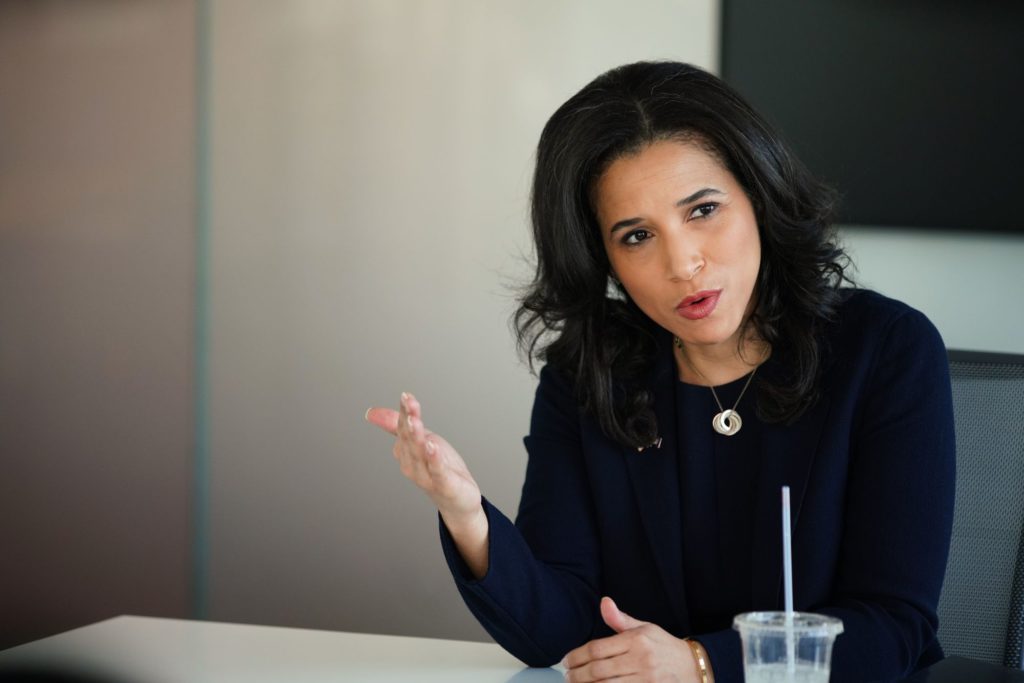
“The ability to collect supervisory costs will help the department continue protecting consumers and ensuring the safety and soundness of this industry,” Superintendent Adrienne Harris said in the statement.

Regulators around the world are grappling with how best to oversee firms that offer digital asset services to consumers and institutions, questions brought even more urgently to the fore by the collapse of Sam Bankman-Fried’s FTX. 

On Thursday, the day after Bankman-Fried told attendees at the New York Times DealBook Summit that he had spent “hundreds, even thousands, of hours meeting with regulators,” Commodity Futures Trading Commission chairman Rostin Behnam testified at a congressional oversight hearing dedicated to the FTX collapse. The CFTC and the Securities and Exchange Commission are locked in a debate over which agency should oversee crypto exchanges. 

Read more: Gary Gensler Says Crypto Investors Should Embrace SEC Regulation

More stories like this are available on bloomberg.com

©2022 Bloomberg L.P.
‘I Wouldn’t Bet Against Elon Musk,’ Morgan Stanley CEO Says

(Bloomberg) — Elon Musk’s time atop Twitter Inc. has been one of turbulence, with mass firings followed by fired workers being asked back, accounts suspended and accounts restored, experiments with paid membership, and celebrities quitting the social network. One person who isn’t giving up on its billionaire owner: the CEO of Morgan Stanley.

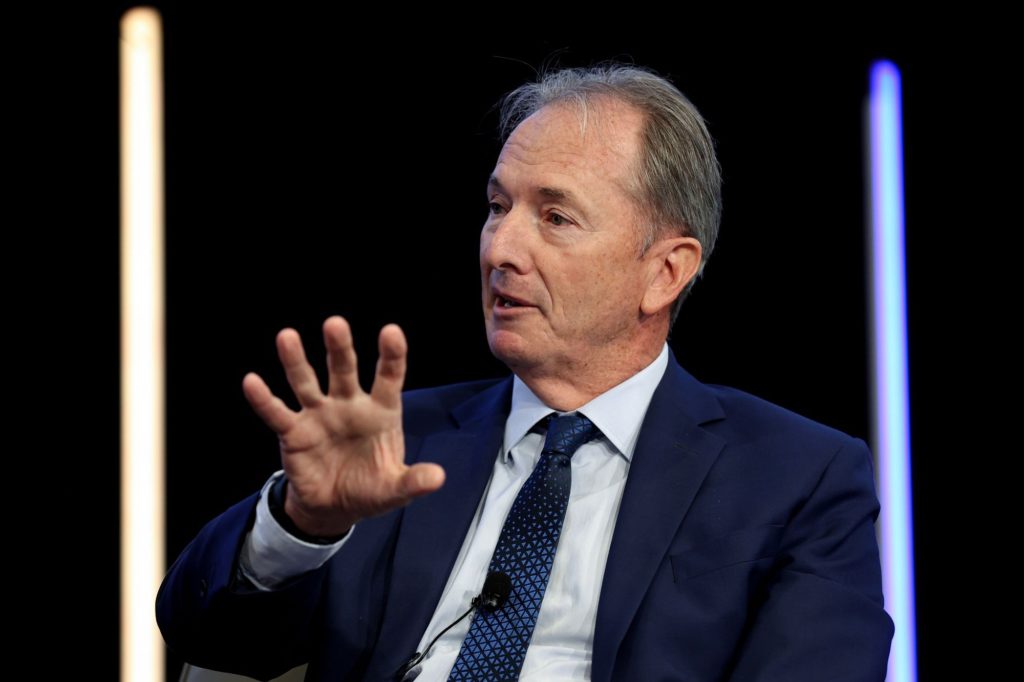
“I wouldn’t bet against Elon Musk,” James Gorman said Thursday at a Reuters conference in New York, calling Twitter “a great company” and Musk “an extraordinary executive,” and talking up a visit he made to a Tesla Inc. auto plant in the Los Angeles area.

Banks led by Morgan Stanley provided $13 billion of debt to Musk to help him buy Twitter and now face a challenge pitching that debt to investors. The biggest buyers of leveraged loans are already weighed down by technology-company debt, and Musk’s unusual approach to running Twitter has made it difficult for investors to value the company going forward.

Banks that jumped at the chance to help an important client now face losses running into several hundred million dollars on the unsold debt sitting on their balance sheets.

“Institutions like ours are not stupid. We don’t get behind that kind of business and that kind of opportunity unless it’s real — and it’s very real,” Gorman said. He said Musk ranks with Steve Jobs and Bill Gates among the most interesting entrepreneurs of the past 50 years. “Who would not want to do business with a person who has that kind of capability? Shame on an institution who’d walk away from that.”

More stories like this are available on bloomberg.com

©2022 Bloomberg L.P.

Close Bitnami banner
Bitnami
