Bloomberg

UBS’s Hassan to Take Charge of Americas Digital Wealth Teams

(Bloomberg) — UBS Americas President Naureen Hassan will add responsibility for several digital-focused teams that previously were part of the global wealth-management operation.

Hassan, who joined the Swiss bank in October, will oversee the expansion of UBS’s digitally customized banking services, the build-out of wealth management’s digital capabilities, electronic strategy and platforms, and smart technologies and advanced analytics, according to an internal memo. 

“The Americas region is increasingly demonstrating the important role that it plays in our firm’s strategy and future success,” Chief Executive Officer Ralph Hamers said in the memo, which was seen by Bloomberg News and confirmed by a spokeswoman.

Hassan joined UBS Group AG from the Federal Reserve Bank of New York, succeeding Tom Naratil as president of UBS Americas and chief executive officer of UBS Americas Holding LLC. 

–With assistance from Sridhar Natarajan.

More stories like this are available on bloomberg.com

©2022 Bloomberg L.P.

FTX’s Rapid Demise Stokes US Fight Over Who Will Regulate Crypto Exchanges

(Bloomberg) — If one of the chief US financial watchdogs has his way, the collapse of Sam Bankman-Fried’s FTX will shift into high gear a push to make his agency the main Bitcoin regulator and give it oversight of crypto exchanges.

On Thursday, Rostin Behnam, chairman of the Commodity Futures Trading Commission, testified at the first congressional oversight hearing on the spectacular implosion of crypto platform FTX. He told members of the Senate Agriculture committee about the need to move forward with legislation to bring more of the industry onto his agency’s turf.

“Failure to act will leave consumers who have made investments in digital commodities largely unprotected,” Behnam said in his opening remarks.

Though he says there’s a critical need for a comprehensive framework for digital assets due to gaps in regulation and the appetite for crypto, his call for fast action will likely run into resistance.

Bankman-Fried’s vocal support of the bipartisan Senate bill has cast a shadow over the legislation. Critics are wary of new powers going to an agency seen as the industry’s preferred regulator and one that has far fewer resources than the Securities and Exchange Commission.

Voting on legislation during the backlash against FTX also could put lawmakers in a tough spot, particularly if they can’t get the SEC’s Gary Gensler and a host of critics on board. Gensler has said that most crypto tokens are securities that fall under his agency’s jurisdiction. He has also urged crypto exchanges offering them to register with the SEC. 

More weigh-in from the Biden administration is almost certain. Earlier this week, Sherrod Brown, head of the Senate Banking Committee, urged Treasury Secretary Janet Yellen to work with lawmakers to craft crypto legislation.

Behnam has backed the Senate legislative effort led by Democrat Debbie Stabenow, the chair of the Agriculture committee who he had served as senior counsel, and Republican John Boozman. The bill would give the CFTC more power to directly oversee cryptocurrencies that are commodities, such as Bitcoin, as well as digital-asset exchanges.

Currently, the agency’s oversight abilities are primarily limited to crypto derivatives. The FTX-owned derivatives exchange that the agency oversees, LedgerX, has remained solvent and operational despite the troubles roiling the rest of Bankman-Fried’s crypto empire. Behnam said the derivatives exchange was under daily communication with the agency and was an example of how CFTC regulation of the crypto market can work well. 

Though not the only crypto legislation with industry champions, the Digital Commodities Consumer Protection Act was among the most significant for the CFTC. The bill would beef up resources and staffing for a markets regulator that has been chronically underfunded.

$100 Million

It would take at least an additional $100 million to support that expanded role, Behnam said earlier this year. The CFTC has requested $365 million in funding for fiscal 2023, which ends on Sept. 30, 2023. That compares with $320 million in 2022, excluding a one-time appropriation related to leases. By comparison, the SEC requested about $2.15 billion, up from about $2 billion in 2022.

Behnam says there’s a need to take a step back and reflect on what happened with FTX to make sure existing legislative proposals aren’t missing any important elements. But he said the crisis shouldn’t put those efforts on pause.

“We need to move quickly on a thoughtful regulatory approach to establish guardrails in these fast-growing markets of evolving risk, or they will remain an unsafe venture for customers and could present a growing risk to the broader financial system,” he said.

Gensler’s Warning

Gensler has repeatedly said existing securities laws apply to the crypto industry and underscored his agency’s need for more resources to go after bad actors and securities scofflaws. Soon after FTX.com showed signs of teetering, he cautioned Congress against passing legislation that might undermine the broader financial markets.

Regulators and lawmakers have faced public scrutiny of their relationships with Bankman-Fried. Behnam’s push to speed up legislation after FTX’s collapse could put him further in the hot seat with some. 

At the Thursday hearing, Stabenow said her bill doesn’t take authority away from other regulators, such as the SEC, and doesn’t make the CFTC the primary regulator. It simply fills in regulatory gaps by giving the CFTC the ability to regulate cryptocurrencies that are commodities, like Bitcoin and Ether, which currently aren’t subject to federal oversight, she said.

“Because crypto assets can be used in many different ways, no single financial regulator has the expertise or the authority to regulate the entire industry,” Stabenow said.

Boozman said he and his staff had at least 240 meetings this year from a wide variety of stakeholders to get input while drafting the legislation.

At the hearing, Behnam said that FTX was “dogged” in its pursuit of getting approval for an application to allow LedgerX, known as FTX US Derivatives, to clear crypto derivatives trades directly, without customers having to go through traditional intermediaries. He said he couldn’t speak to the exact number of meetings that FTX executives had with CFTC staff but “they were in the building quite a bit” talking about that application, which has since been withdrawn.

Behnam said he and his team met with Bankman-Fried and others at FTX 10 times over the past 14 months to discuss the proposal — all at the crypto firm’s request. Nine of the meetings were in Washington and one was at a conference in Florida earlier this year, he said.

“By law, by statute, we needed to address and respond to the application,” he said. “We did not have flexibility to put it on the side of the desk or disregard it.”

Campaign Donations

Millions of dollars in campaign donations to both Democrats and Republicans probably didn’t hurt Bankman-Fried’s quest to help stave off scrutiny. He gave $39.4 million during the US midterm elections. FTX US cut a $1 million check to the Republican-aligned Senate Leadership Fund on Oct. 27, just days before the elections and weeks before it filed for bankruptcy, according to Federal Election Commission filings. 

The crypto industry, investors and consumer advocates will be closely watching Congress’ next moves. 

FTX provides the opportunity to understand the distinctions between centralized crypto exchanges and “decentralized finance,” or DeFi, exchanges that aren’t under the control of any single party — and avoid giving one competitive advantages over the other, said Agnes Gambill West, visiting senior research fellow at the Mercatus Center at George Mason University.

Still others are hoping a consistent and specific conflict-of-interest rule for crypto will emerge out of the coming congressional postmortems on FTX.

“Without that, we’re going to continue to have messy activity,” said Sarah Hammer, a former senior Treasury official and now managing director of the Stevens Center Blockchain Laboratory at the University of Pennsylvania’s Wharton School.

(Updates with Stabenow, Behnam comments beginning in 16th paragraph)

More stories like this are available on bloomberg.com

©2022 Bloomberg L.P.

Macron Blasts US Subsidies Law Before Dinner at White House

(Bloomberg) — Emmanuel Macron took aim at a new US law that he says unfairly subsidizes North American electric-vehicle production, threatening to overshadow the French president’s trip to Washington.

The Inflation Reduction Act and a separate law meant to incentivize semiconductor production “are very good for the US economy, but they weren’t properly coordinated with European economies,” Macron said on Good Morning America on Thursday ahead of a meeting with President Joe Biden. “They create just the absence of a level playing field.”

The European Union has said it may take the US to the World Trade Organization over the climate and tax law, which aims to boost domestic production of electric cars. Last week, Macron’s finance minister accused Washington of pursuing a “Chinese-style” industrial policy that discriminates against non-US companies.

Macron and the rest of the EU are struggling to maintain unity with the US as they coordinate their responses to Russia’s war in Ukraine and an intensifying energy crisis that threatens to throw the region into a recession. The EU’s competition chief warned of the risks a new trade war with the US could inflict on the bloc. 

Weakens Allies

Macron believes that the climate law weakens America’s allies and it’s not in the US interest to impoverish European countries, according to a person familiar with the president’s thinking who spoke on the condition of anonymity. When Macron speaks with Biden, he’ll push for exemptions for the EU that would create a level playing field and better coordination on trade matters. 

French officials have said there is little hope the Americans will take concrete actions to allay their concerns. The law, which has drawn criticism from auto-making nations worldwide, is unlikely to be amended.

Macron has long pushed for a so-called Buy European Act, which would reserve public tender offers and subsidies for manufacturers on the continent. The idea has always run into opposition in the EU, but failure to win American concessions could give the bloc’s subsidy push new momentum.  

A senior administration official told reporters earlier this week that Washington sees a role for possible European subsidies to aid EU businesses who won’t benefit from tax credits in the American law. 

Speaking ahead of a White House meeting, Biden and Macron both praised the longstanding ties between their countries and said they’d discuss issues including the war in Ukraine, as well as cooperation in space and other matters.

“We want to fix the direct and indirect consequences of the war on our economies and our people,” Macron told reporters in the Oval Office. “At the same time we want to prepare for future generations a carbon-neutral economy, creating a lot of jobs, which means investing a lot in our economies and we have to synchronize our action on this issue.” 

If the US law goes ahead as-is, France stands to attract €10 billion ($10.3 billion) less investment and create 10,000 fewer jobs, according to estimates by the French government. 

Margrethe Vestager told reporters in Paris on Thursday that the climate law could be very damaging for European businesses, as well as in other major economies, including Japan and South Korea. But she said avoiding a subsidy race in an absolute priority and the EU is working constructively with the US to find solutions as soon as possible.

“One war at a time is what we can master,” Vestager said, noting the energy crisis in Europe sparked by Russia’s invasion of Ukraine. “We have found solutions on very difficult issues before and we should be able to do it again because I don’t think the geopolitical situation we are in allows for big democracies to have a fallout.”

–With assistance from Ania Nussbaum, William Horobin and Josh Wingrove.

(Updates with Macron comment in the 10th paragraph.)

More stories like this are available on bloomberg.com

©2022 Bloomberg L.P.

Online Wine Club Winc Files for Bankruptcy a Year After Going Public

(Bloomberg) — Online wine club Winc Inc. filed for Chapter 11 bankruptcy, just over a year after the company’s initial public offering. 

The subscription service listed $50.3 million of assets and $36.8 million in liabilities in its bankruptcy petition, which was filed Wednesday in Delaware. The company is arranging a buyer for its assets and has hired Canaccord Genuity Group Inc. as its investment banker, according to court papers. 

Chapter 11 bankruptcy allows firms to keep operating while they work out a plan to repay creditors. 

Winc was founded in 2012 as Club W. It’s aimed at helping younger consumers buy wine online, personalized to their tastes. It ships customers proprietary bottles based on results from an online quiz, and promising savings and convenience from cutting out middle men. The company garnered funding from backers including Bessemer Venture Partners.

Read more: The Secret to Selling Wine on the Internet is Making It Yourself

Winc raised $22 million in an initial public offering in November 2021, touting itself as “one of the fastest growing at scale wineries in the United States.” But it never turned a profit, and its shares slid 98% from their $13 debut to around 30 cents on Wednesday before the filing. 

Meta Platforms Inc. is listed as the company’s largest unsecured creditor, with a $724,000 trade claim. 

Representatives for the Santa Monica, California-based company didn’t immediately respond to requests for comment. 

The main case is Winc, Inc., 22-11238, US Bankruptcy Court for the District of Delaware. 

More stories like this are available on bloomberg.com

©2022 Bloomberg L.P.
NBC to Stream Local Sports Channels on Peacock Service This Year

(Bloomberg) — Comcast Corp.’s NBCUniversal plans to begin streaming the broadcaster’s regional sports networks later this year on Peacock, bolstering the programming lineup of its online video service.

The company has been negotiating streaming rights with teams and leagues, Mark Lazarus, chairman of NBCUniversal Television and Streaming, said Thursday at a conference sponsored by Sports Business Journal.

The new rights will give Peacock more sports programming to attract new subscribers. Philadelphia-based Comcast, the largest US cable company, owns regional networks carrying the San Francisco Giants MLB team, basketball’s Chicago Bulls and the NHL’s Philadelphia Flyers. 

The sports channels have struggled as more people cancel their cable TV, depriving them of the revenue they need to pay for broadcast rights. Lazarus said Comcast still profits from the networks but added, “We’re managing decline.”  

At some point teams carried by the networks will take a “haircut” on rights fees because of the shrinking cable business, he said.

“The ecosystem won’t support what we’re currently paying,” he said. 

Sinclair Broadcast Group Inc., the largest owner of regional sports channels, and NESN, which broadcasts the Boston Red Sox, launched streaming services earlier this year. 

Lazarus suggested that teams and channel owners could share the upside of the streaming business, with franchises that sell more subscriptions in their markets getting higher rights fees.

“It’s going to be more of a share-the-risk mentality,” he said.

More stories like this are available on bloomberg.com

©2022 Bloomberg L.P.
Manufacturing in US Contracts for First Time Since May 2020

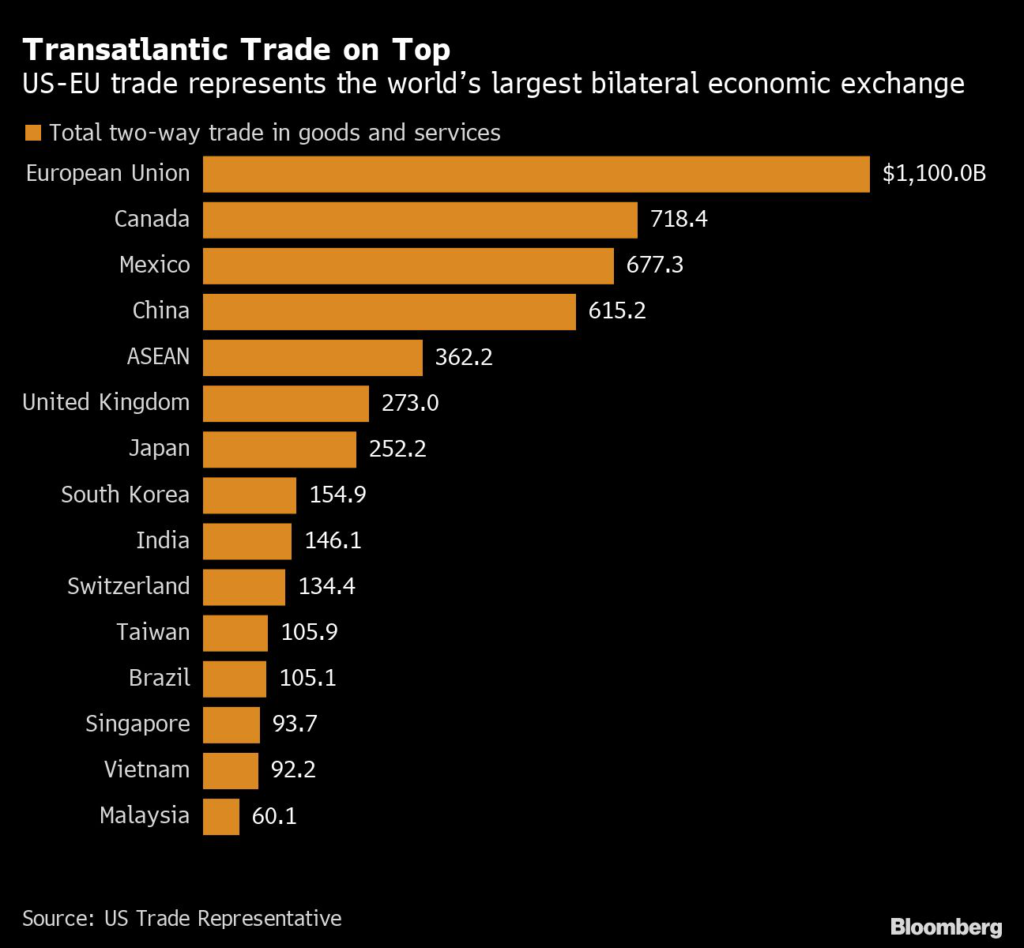
(Bloomberg) — US manufacturing contracted in November for the first time since May 2020 as output weakened in the face of a third-straight month of shrinking orders.

The Institute for Supply Management’s gauge of factory activity slid to 49 from 50.2 in the prior month, according to data released Thursday. The measure has fallen in five of the last six months and stands below 50, the threshold separating expansion and contraction, for the first time since the pandemic lockdowns.

“The November composite index reading reflects companies’ preparing for future lower output,” Timothy Fiore, chair of ISM’s Manufacturing Business Survey Committee, said in a statement. 

The median projection in a Bloomberg survey of economists called for a reading of 49.7. Just six manufacturing industries reported growth in November.

A measure of prices paid for materials used in the production process fell for an eighth straight month, the ISM report showed. Input prices shrank at the fastest pace since May 2020 in a welcome sign goods inflation is easing amid less stress on supply chains.

“Notably, 87% of respondents reported paying the same or lower prices in November, compared to 80% in October,” Fiore said.

The group’s measure of new orders has contracted for the fifth time in six months, while the production gauge retreated to 51.5 in November. The weakest readings for both order backlogs and imports in more than two years also indicated softer demand.

A measure of customer inventories showed stocks shrank at the slowest rate since April 2020. That may help explain the falloff in new orders to manufacturers and fuel concerns about the inventory glut seen at some retailers.

Factory Employment

The overall gauge was further weighed down by shrinking payrolls in the sector, as manufacturers cope with both labor shortages and a moderation in demand.

“Labor management sentiment continued to shift, with a number of panelists’ companies reducing employment levels through hiring freezes, attrition, and now layoffs,” Fiore said. “In November, layoffs were mentioned in 14% of employment comments, up from 6% in October.”

Select Industry Comments

“Customer demand is softening, yet suppliers are maintaining high prices and record profits. Pushing for cost reductions based on market evidence has been surprisingly successful.” – Computer & Electronic Products

“Future volumes are on a downward trend for the next 60 days.” – Chemical Products

“General economic uncertainty has created a slowdown in orders as we approach the end of the year, and many of our key customers are reducing their capital expenditures spend.” – Machinery

“Overall, things are worsening. Housing starts are down…We’re sitting on cash (that is) tied up in inventory.” – Electrical Equipment and Appliances

“The market remains consistent: sales match expectations; there are concerns about the impact of rising interest rates on customers; most suppliers have recovered on labor, but some are still struggling; and inflation seems to have peaked, but commodity price decreases have not been passed through to us” – Miscellaneous Manufacturing

“Looking into December and the first quarter of 2023, business is softening as uncertain economic conditions lie ahead.” – Plastics & Rubber Products

A separate manufacturing survey from S&P Global showed similar results. The group’s final November purchasing managers index fell from a month earlier to 47.7, the first contraction since mid-2020.

The US figures are consistent with a broader slowdown in manufacturing around the world. The S&P Global measure of factory activity in the euro area pointed to contraction, while in Japan, the gauge dropped below 50 for the first time in almost two years. Electronic hubs Taiwan and South Korea were also sluggish.

(Adds ISM comments on employment, prices)

More stories like this are available on bloomberg.com

©2022 Bloomberg L.P.

Stocks Get Reality Check After Weak Factory Data: Markets Wrap

(Bloomberg) — Stocks relinquished gains after weak factory data added to concern the Federal Reserve’s rate hikes will raise the odds of an economic recession.

The S&P 500 fell after a massive rally that put the gauge above a long-term technical indicator and was driven by Jerome Powell’s signals of a downshift in the pace of tightening. Salesforce Inc. weighed on the Dow Jones Industrial Average as the software company gave an outlook that reflects a weaker economy.

US manufacturing contracted in November for the first time since May 2020 as output weakened in the face of a third-straight month of shrinking orders. Earlier Thursday, data showed a key gauge of US consumer prices posted the second-smallest increase this year.

“Bottom line, seeing inflation roll over and the soon to be peak in Fed rate hikes was the first mountain to climb for both the economy and markets in 2022,” said Peter Boockvar, chief investment officer at Bleakley Financial Group. “The next mountain needing to be conquered, and will be the 2023 focus I believe, is the economic consequences to such a sharp rise in interest rates, the higher cost of capital that both businesses and households have to deal with and the recession it creates.”

Worries about how far central bankers will go to rein in inflation have kept investors on edge, and equities volatile. Markets are still pricing in rate hikes from the Fed until mid-2023. JPMorgan Chase & Co.’s Dubravko Lakos-Bujas said sharp declines await US stocks in the first half of 2023 against the backdrop of a mild recession and Fed rate hikes. 

The prediction adds to calls from strategists at Goldman Sachs Group Inc. and Deutsche Bank AG that American equities are in for a wild ride next year.

“Despite the recent rebound in equities, we do not think the macroeconomic conditions for a sustained market rally are yet in place,” said Mark Haefele, chief investment officer at UBS Global Wealth Management. “We maintain our view that the Fed will hike rates by 50bps in December and another 50bps in 1Q23, bringing the hiking cycle to an end, however the cumulative impact of prior rate rises will continue to weigh on economic growth and corporate profits.”

Key events this week:

  • US unemployment, nonfarm payrolls, Friday
  • ECB’s Christine Lagarde speaks, Friday

Some of the main moves in markets:

Stocks

  • The S&P 500 fell 0.5% as of 10:42 a.m. New York time
  • The Nasdaq 100 fell 0.6%
  • The Dow Jones Industrial Average fell 1.2%
  • The Stoxx Europe 600 rose 0.6%
  • The MSCI World index rose 0.3%

Currencies

  • The Bloomberg Dollar Spot Index fell 0.7%
  • The euro rose 0.8% to $1.0491
  • The British pound rose 1.6% to $1.2255
  • The Japanese yen rose 1.4% to 136.17 per dollar

Cryptocurrencies

  • Bitcoin fell 0.9% to $16,952.73
  • Ether fell 2.1% to $1,268.98

Bonds

  • The yield on 10-year Treasuries advanced one basis point to 3.61%
  • Germany’s 10-year yield declined 10 basis points to 1.83%
  • Britain’s 10-year yield declined five basis points to 3.11%

Commodities

  • West Texas Intermediate crude rose 3% to $82.97 a barrel
  • Gold futures rose 2.9% to $1,810.30 an ounce

This story was produced with the assistance of Bloomberg Automation.

More stories like this are available on bloomberg.com

©2022 Bloomberg L.P.

Airbus Won’t Rush Flying-Taxi Plan as Rival Models Garner Orders

(Bloomberg) — Airbus SE said it’s in no rush to bring a flying taxi to market and that hundreds of outline orders for rival craft will help the whole sector by encouraging progress on power systems and surface infrastructure.

The European manufacturer has yet to launch its CityAirbus design, and will instead focus on developing and maturing a prototype before entering commercial discussions with potential customers, Balkiz Sarihan, head of urban air mobility strategy, said in a briefing Thursday.

“We take, in contrast to others, a more mid- to long-term perspective,” Sarihan said in a briefing in Munich.

Airbus unveiled its CityAirbus NextGen model last year following a revamp to an earlier blueprint, and is targeting a first flight in 2023. The long gestation of a first flying taxi from the world’s biggest planemaker has seen a clutch of startups begin racking up orders and operating deals from airlines and city authorities while attracting billions of dollars in outside investment.

Airbus has no need to rush to market because its work on electric vertical takeoff and landing craft, as flying taxis are known, is 100% internally funded and not dependent on raising external finance or attracting orders, Sarihan said.

While Airbus is committed to urban air mobility and sees benefits across its wider portfolio from developing the technologies required, the sector must also pay its way, according to the executive, who sees air-medical services and eco-tourism as being among the likeliest early adopters.

“It’s not just for aerospace enthusiasts and professionals,” she said. “It absolutely has to create value.”

More stories like this are available on bloomberg.com

©2022 Bloomberg L.P.
The US Surgeon General’s Next Foe Is Holiday Chaos

(Bloomberg) — US Surgeon General Vivek Murthy first took bosses to task for making American workers’ lives too stressful. Now, he’s coming after holiday anxieties.

Murthy on Dec. 1 announced a series of online sessions in partnership with Calm, a mindfulness app. Called “Mindfulness Tools,” the series of five YouTube videos are designed to target holiday stress and loneliness, among other sources of chaos and instability.  Murthy said stressors such as loneliness and instability far predate the Covid-19 pandemic, which only exacerbated existing pain points. 

“Easy-to-use mental health tools and practices can help families address stress and strengthen one of the most powerful sources of healing —  our relationships with one another,” he said.

According to the National Alliance on Mental Illness, the holidays aren’t the most wonderful time of the year for everyone — in fact, they’re among the most stressful, and three in five Americans say holidays negatively impact their mental health. This year, shoppers will have to navigate the current pains of inflation alongside extra spending on holiday gifts, dinners and gatherings. End-of-year evaluations can also lead to increased stress levels, though some companies have begun to do away with the process which is largely viewed as ineffective.

Calm Chief Executive Officer David Ko said in a statement that he hopes the partnership with the nation’s doctor will give people tools to establish good habits for mental health, which is “more important than ever as we head into the holidays and begin a new year.”

Murthy has directed much of his efforts to the worsening mental health crisis in the US. In October, he took managers to task for stressing out their reports, and said workplaces can do better to support workers rather than expect workers to cope individually.

–With assistance from Ella Ceron.

More stories like this are available on bloomberg.com

©2022 Bloomberg L.P.
Macron Attacks Elon Musk for Ending Moderation on Twitter

(Bloomberg) — French President Emmanuel Macron criticized Elon Musk’s decision to relax Twitter Inc.’s content moderation policies around subjects like coronavirus disinformation and said speech on the platform deserves more regulation.

Macron, in an interview with ABC News ahead of his state visit with US President Joe Biden, said he believed democracies were under “very strong pressure” from forces including social media, where users could say “crazy things about a vaccine, a pandemic, the war.”

“Right now we’re facing a situation where just in the last couple of days Elon Musk said he will relax all the content moderation policies, Covid misinformation back on Twitter,” “Good Morning America” anchor George Stephanopoulos said. “He’s making it worse, isn’t he?”

“I think this is a big issue,” Macron responded. “I think it deserves to be largely engaged. What I push very much for, want, is exactly the opposite – more regulation.”

Macron said free speech in democracy should be “based on respect and political order.”

“You can demonstrate, you can have free speech, you can write what you want — but there is responsibilities and limits,” he said. “The limits is you cannot go in the streets and have racist speech, or antisemitic speech, you cannot put at risk the life of someone else. Violence is never legitimate in democracy.”

Macron went on to slam former US President Donald Trump — who was banned from Twitter after the January 6, 2021 attack on the US Capitol by supporters who sought to disrupt the certification of his electoral defeat to Biden. Musk recently reinstated Trump to the platform.

“When in one of the biggest democracies and oldest democracies in the world you can have a leader and supporters deciding on purpose to refuse the results because this is the one they didn’t want to see, this is just the beginning of the end of the democracy,” Macron said.

“I imagine a lot of Democrats where unhappy in 2016,” he continued. “Did they invade Capitol Hill? No.”

European Union regulators warned Musk on Wednesday that Twitter faced a ban within the European bloc unless it enforced content moderation regulations. Musk was also warned the company could face fines and should not arbitrarily reinstate accounts, the Financial Times reported.

Upon arriving at the White House, Macron said the US and France shared mutual challenges, including “politics and technology.”

“They’re in doubt in the face of relativism, hate speech, false information and today’s fears,” Macron said.


(Updates with new quotes, details from second paragraph)

More stories like this are available on bloomberg.com

©2022 Bloomberg L.P.

Close Bitnami banner
Bitnami
