Bloomberg

Guggenheim’s Minerd Sees Bitcoin Sinking to $8,000 With Crypto Now ‘Suspect’

(Bloomberg) — Guggenheim Partners Chief Investment Officer Scott Minerd said he expects Bitcoin to fall to $8,000 and that cryptocurrency has become a market of “a bunch of yahoos.” 

“Bitcoin and any cryptocurrency at this point has not really established itself as a credible institutional investment,” Minerd said Wednesday during a Bloomberg Television interview from the World Economic Forum in Davos, Switzerland. “Everything is suspect.”

Minerd said his firm bought Bitcoin at $20,000 and sold when it reached $40,000. Guggenheim no longer holds Bitcoin. If the firm were to take a position it would be to short the digital token, he said.

“No one has cracked the paradigm in crypto,” Minerd said. “We have 19,000 digital currencies … most of them are junk.”

Minerd’s comments represent a dramatic shift for an investor who once predicted Bitcoin would reach $400,000, fueled by the digital currency’s scarcity and the Federal Reserve’s “rampant money printing.” Bitcoin has fallen from a high of more than $65,000 in November to trade at less than $30,000. 

Other comments:

  • The Federal Reserve will probably remain committed to tightening unless there’s a big drop in the stock market. “Short of a sudden collapse in equity prices, I don’t believe the Federal Reserve is going to respond,” Minerd said
  • “If the Fed blinks because of financial panic, which I think there’s a high probability of toward the second half of the year, then I think the dollar will come under pressure”

(Updates with additional crypto comments in fourth paragraph.)

More stories like this are available on bloomberg.com

©2022 Bloomberg L.P.

Shopify Takes Heat From ISS Over Plan to Give CEO More Power

(Bloomberg) — Shopify Inc.’s proposal to give special voting rights to Chief Executive Officer Tobi Lutke has run into a powerful opponent, as another prominent advisory firm tells shareholders they should reject it. 

Institutional Shareholder Services Inc. said it opposes the company’s plan to grant Lutke a “founder share” that allows him to effectively control the Canadian company’s board, even if his ownership stake declines. Another proxy advisory firm, Glass Lewis & Co., is also against the proposal, which investors will vote on June 7. 

The founder share would give Lutke at least 40% of the voting rights at Shopify under certain conditions, including that he stays with the company. ISS noted that the CEO would keep those votes even if his equity stake is diluted to as little as 1.1%.  

“Canadian market best practices generally call for a following of a one share, one vote principle, with a view to alignment between economic interest and voting power at a given company,” ISS said in a report Tuesday to clients. The founder share for Lutke “requires minority shareholders to effectively embrace a multiple class share structure for even longer than was envisioned” at the time of the company’s initial public offering in 2015. 

Lutke and director John Phillips already have voting control of Shopify through their ownership of unlisted Class B shares, but they stand to lose it in the future if the company continues to issue new Class A shares. The founder share for Lutke is designed to prevent that from happening. 

Shopify fell 0.2% to $325.55 as of 10:23 a.m. in New York. The stock has fallen 76% this year. 

(Updates share price. An earlier version was corrected to remove an incorrect reference to the date of the ISS publication.)

More stories like this are available on bloomberg.com

©2022 Bloomberg L.P.

 The Next $1 Trillion US Tech Stock Is Far Away From Joining Exclusive Club

(Bloomberg) — It’s only been six months since Nvidia Corp. was being hailed as Wall Street’s next $1 trillion tech stock. The memory now seems distant.

Having soared to a record back in November, the chipmaker has pretty much given back all its gains of the last 12 months, rattled by this year’s rout in high-valuation stocks. For investors wondering where the stock is headed next, first-quarter earnings due after US markets close on Wednesday will provide a stern test.

Analysts expect the results to show robust growth with profit and revenue projected to climb more than 40% each in the three months ended March 31, according to data compiled by Bloomberg. Yet as the likes of Snap Inc. and Netflix Inc. have shown, the market has little tolerance for disappointment right now. And with Nvidia still trading at relatively high multiples, it can’t afford any slip ups.

“It’s hard to be negative about Nvidia’s long-term prospects, but the stock is still pretty damn expensive, and we don’t think the market has bottomed on growth stocks,” said Tom Plumb, manager of the Plumb Balanced Fund. “Given where sentiment is, there’s a high bar for what kind of results would be a positive catalyst, and a low bar for what would disappoint. An in-line report won’t be enough.”

Shares climbed 2.2% on Wednesday while the Philadelphia Stock Exchange Semiconductor Index rose 0.9%.

This earnings season, Wall Street has been rewarding companies that provide clear guidance on how they’ll handle slowing economic growth, supply chain issues and inflationary pressures, while punishing the rest. Earlier this month, Advanced Micro Devices Inc. gained after giving a strong sales forecast for the current quarter. In contrast, Snap posted its worst day on record Tuesday after the Snapchat parent cut its revenue and profit forecasts.

Nvidia’s stock has been pressured this year by many of the same factors that have weighed on the semiconductor industry this year, notably lockdowns in China that have exacerbated supply chain headwinds and contributed to sky-high inflation, which has prompted aggressive rate hikes from the Federal Reserve.

Yet despite being the worst performer in the Philadelphia Stock Exchange Semiconductor Index in 2022, the shares still aren’t cheap, trading at around 11 times projected sales with an earnings multiple of 27. That compares with multiples for the industry benchmark index of 4 times and 14, respectively.

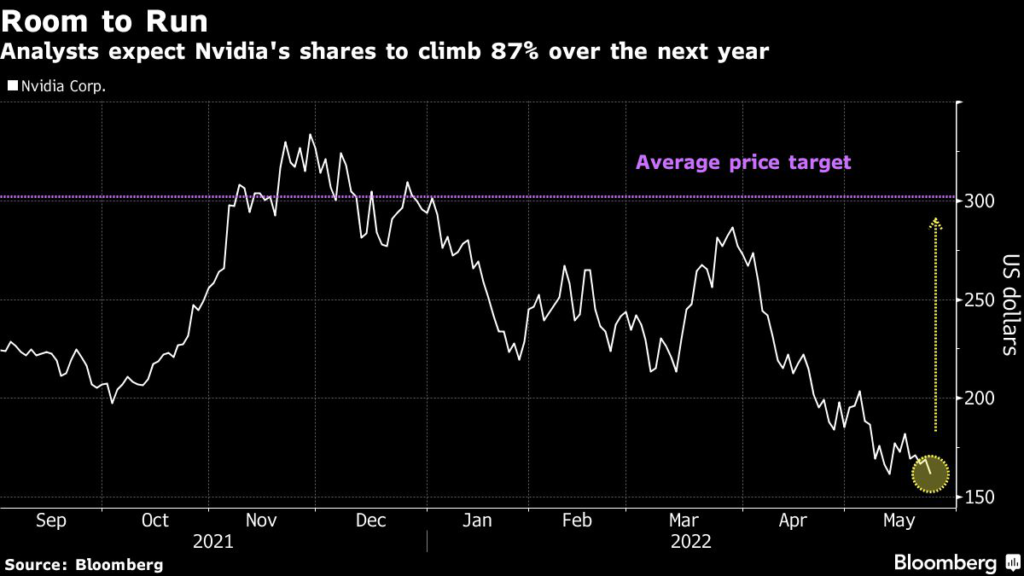
Wall Street analysts, however, remain bullish, even in a market that has turned on high-valuation growth names. All but one of the 50 brokerages that follow Nvidia recommend investors hang on to the stock or buy more, with an average expected return of 87% over the next year. Such a rally wouldn’t be unprecedented. In the past decade, the stock has soared almost 5,600%, including dividends, compared with a gain of 808% in the chipmaker index.

“Nvidia has historically paid you pretty well to get more aggressive,” said Eric Clark, portfolio manager at Accuvest Global Advisors, who looks for the stock to trade around $135 or $140 before adding to his own position. It last closed at $161.54.

“The macro is driving the bus right now, but it’s kind of a positive that sentiment is so bad,” Clark said in a phone interview. “Fundamentals don’t matter much right now, but there’s still a massive opportunity looking out over a five-year horizon.”

And long-term prospects continue to look strong. Nvidia is expected to report full-year revenue growth of about 29%, compared with the 19% growth expected for the overall semiconductor sector, according to data compiled by Bloomberg. Adjusted earnings are seen rising about 28% for Nvidia’s fiscal 2023, above the 19% earnings growth anticipated for the sector.

Tech Chart of the Day

Amazon.com Inc.’s market value is inching closer to falling below the $1 trillion milestone. Its shares collapsed last month, with a one-day loss in its market capitalization that ranked as one of the worst in Wall Street history, after the e-commerce giant gave an outlook that was seen as disappointing. That, combined with the selloff in richly valued tech stocks, has seen the share price drop 38% this year, cutting its value to $1.06 trillion.

Top Tech Stories

  • Broadcom Inc. is working toward announcing an agreement to acquire cloud-computing company VMware Inc. as soon as Thursday, according to a person familiar with the matter.
  • State-backed investment fund Japan Investment Corp. is considering a bid for Toshiba Corp., according to people with knowledge of the matter.
  • UK startup Paddle is making its first acquisition, spending more than $200 million in a mix of cash and equity to buy ProfitWell to grow its payments service.
  • Tesla Inc. shares struggled Tuesday as the electric-vehicle maker’s production woes in China refuse to go away, leading another analyst to slash his 12-month price target on the once high-flying stock.
  • Telegraph Media Group Ltd. Chief Executive Officer Nick Hugh is counting on Silicon Valley to pay the British newspaper for content, which could boost growing earnings.

(Updates to market open.)

More stories like this are available on bloomberg.com

©2022 Bloomberg L.P.

Elon Musk Sees Extinction of Italians on Persisting Low Birth-Rate

(Bloomberg) — The world’s richest man is concerned Italians could become extinct due to one of the world’s lowest birth-rates.

“Italy will have no people if these trends continue,” Tesla Inc. chief Elon Musk, who has warned about the dangers of global depopulation in the past, said on Tuesday. He was answering a tweet by Rome-based cyber security researcher Andrea Stroppa, who had published a demographic trend chart showing birth-rate falling for decades.

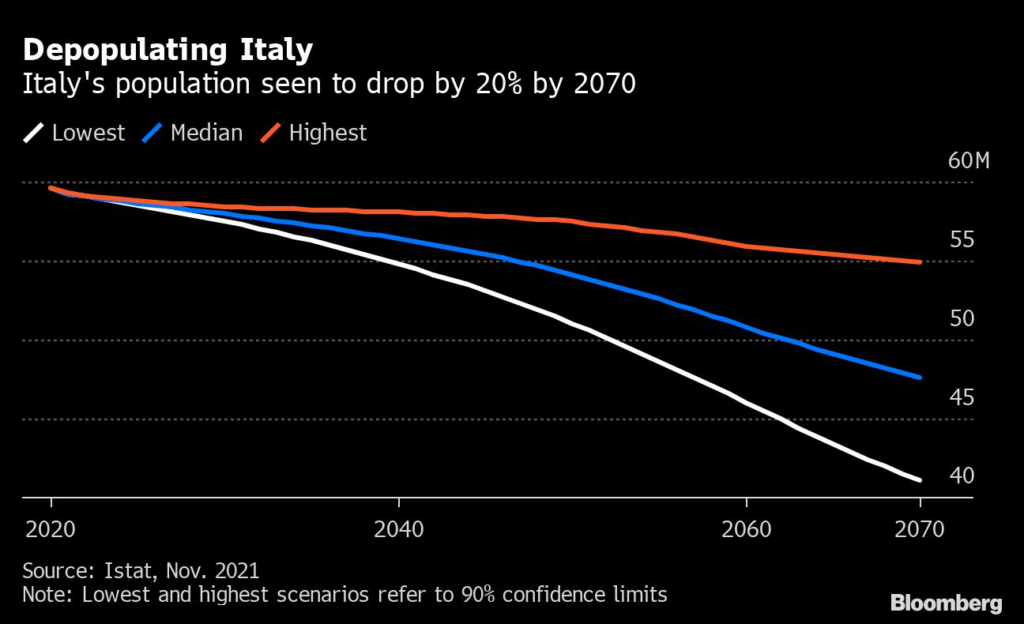
Last year Italy reported its lowest ever birth-rate at little more than one child per woman, according to Italian statistical institute Istat. That means Italy counted seven newborns and twelve deaths per thousand inhabitants in 2021, Istat said. While that was partly due to Covid mortality, Istat sees the country’s population dropping by 20% by 2070 — that’s 12 million fewer people.

Low birth rates have strained pension and health-care systems across Europe for years as the number of working-age adults to support an aging population shrinks. The pandemic only exacerbated that trend.

Musk isn’t new on the low birth-rate topic. 

“Most people believe that we have too many people on the planet. This is an outdated view,”  Musk said in 2019 at the World Artificial Intelligence Conference in Shanghai, debating with Alibaba Group Holding Ltd. Chairman Jack Ma. Assuming AI is fine, assuming there’s a benevolent AI, the biggest problem the world will face in 20 years is a population collapse, he had added.

(Updates with European trends in fourth paragraph. Earlier versions of the story corrected Musk’s title in second paragraph and a date in the third paragraph)

More stories like this are available on bloomberg.com

©2022 Bloomberg L.P.

Crypto Investing Shows Signs of Life With StarkWare, Babel Deals

(Bloomberg) — Blockchain startup StarkWare said its valuation quadrupled to $8 billion in a funding round, adding to tentative signs that venture capitalists are looking past a rout in cryptocurrency markets. 

The Israeli company, whose technology speeds up blockchain transactions, raised $100 million in the financing, which was led by Greenoaks Capital. Tiger Global and Coatue Management also invested in the round, according to a statement on Wednesday. StarkWare was valued at $2 billion as recently as November. 

StarkWare’s announcement came on the same day as Hong Kong-based crypto firm Babel Finance disclosed a funding round that valued it at $2 billion. In another sign that VC investors aren’t turning their backs on digital assets, Andreessen Horowitz said it raised a $4.5 billion crypto fund, the largest to date. 

Read more: Andreessen Horowitz Raises Record $4.5 Billion Crypto Fund

Even with the latest deals, VC investment in digital-asset startups this quarter looks unlikely to match the previous three months, when the sector raised $9.7 billion according to PitchBook data. So far this quarter, the tally stands at roughly $5.3 billion, the data show.

StarkWare was co-founded in 2018 by Chief Executive Officer Uri Kolodny, Eli Ben-Sasson, Michael Riabzev and Alessandro Chiesa. Ethereum co-founder Vitalik Buterin participated in the company’s seed funding round. StarkWare will use the proceeds to invest in areas such as product development and engineering, Kolodny said in an interview.  

The company’s blockchain technology speeds up digital transactions by alleviating congestion. Its StarkEx platform, which is used by companies such as Sorare and Immutable X, has handled more than $500 billion of transactions since it started two years ago, according to StarkWare.

StarkWare’s technology has been used to mint roughly 60 million nonfungible tokens on the Ethereum blockchain, Kolodny said. 

A string of high-profile misadventures — from the $600 million hack of play-to-earn crypto game Axie Infinity in March to this month’s collapse of the TerraUSD stablecoin — have left venture investors nursing large losses and highlighted the potential pitfalls of funding the boom-and-bust industry. A Bloomberg index of cryptocurrencies has plunged almost 50% this year. 

Still, crypto proponents like Andreessen Horowitz’s Chris Dixon have argued recently that bear markets like this one tend to serve as springboards for technological leaps. Some have drawn parallels with the dot-com shakeout of the early 2000s, out of which companies like Twitter Inc. and Facebook eventually rose. 

More stories like this are available on bloomberg.com

©2022 Bloomberg L.P.

Ukraine Latest: Zelenskiy Wants Russia to Pull Back Before Talks

(Bloomberg) — Ukrainian President Volodymyr Zelenskiy said the Kremlin should pull back its troops to their positions before the Feb. 24 invasion to show it is ready to resume talks, even as Russia amassed forces for an offensive near the city of Zaporizhzhia and continued attacks in the Donbas region.

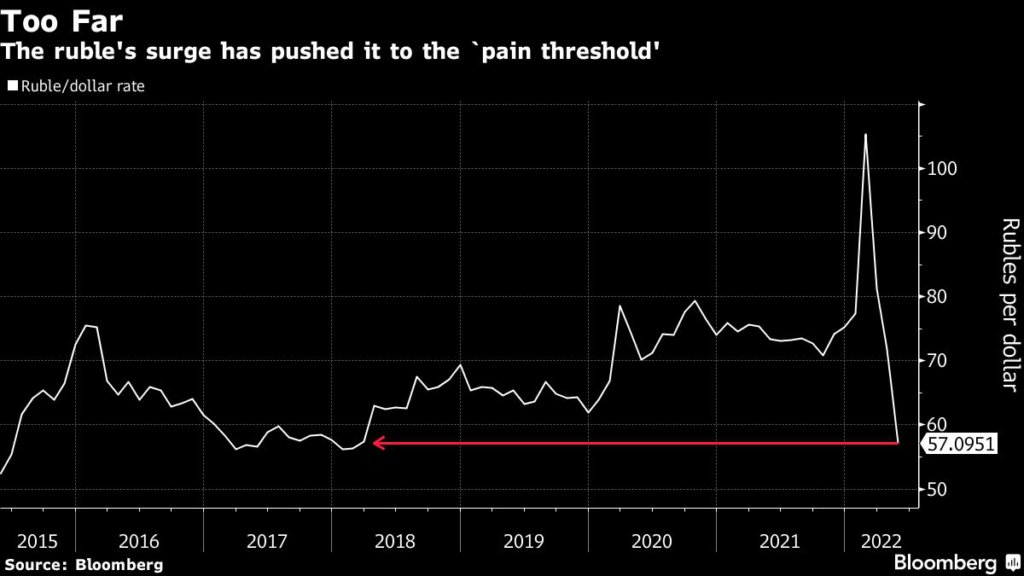
The Bank of Russia moved up its next interest-rate meeting by more than two weeks to Thursday as currency controls and high commodity prices have fueled the ruble’s surge against the dollar. Moscow may make foreign debt payments in local currency after the US Treasury Department let a waiver expire, pushing Russia closer to a default.  

Ukrainian Foreign Minister Dmytro Kuleba said NATO is unlikely to help secure safe passage for agricultural shipments, while a Russian official said his country is ready for dialog over blocked grain freighters. 

(See RSAN on the Bloomberg Terminal for the Russian Sanctions Dashboard.)

Key Developments

  • Mined Ports, Polish Red Tape Among Issues Stopping Ukraine Grain
  • Russian Billionaire Investigated by UK for Sanctions Violations
  • Russia Edges Closer to Default as US Says Key Waiver Will Expire
  • Russia Set to Step Up Actions to Tame Rampant Ruble Rally
  • Klitschko Boxing Heroes Warn That Returning to Kyiv Is Dangerous
  • Oil’s Most-Prized Barrels Soar as Europe Switches Out Russia

All times CET:

Mined Ports, Red Tape Stopping Ukraine Grain (3:22 p.m.)

Resuming Ukrainian gain shipments will be time consuming given challenges that include mine-clearing in Black Sea ports and the need for cooperation from the very country that kicked off the war, Lithuanian President Gitanas Nauseda said.

“It could take weeks, not months, but if there will be no will of the Russians to open this window, it will be impossible,” Nauseda said in an interview Wednesday. “The Russians could use this instrument as yet another leverage to destabilize the situation in the world. They are highly interested to do as much harm as possible.”

Another option, Nauseda said, is to reroute Ukrainian grain through other ports in the region by rail, though that channel would be daunting. An “experimental train” sent from Ukraine via Poland to the Lithuanian port of Klaipeda took three weeks, he said.

Ukraine Seeks More Rocket Launchers as Donbas Front Deteriorates (2:41 p.m.)

Ukraine needs multiple rocket launch systems as soon as possible, Kuleba said on the sidelines of World Economic Forum in Davos. Delay will worsen an “extremely bad” situation in Donbas and prevent Ukraine from liberating the region around Kherson in the south, he said.

“We cannot allow Russia to stay in Kherson because if they do, they will have a strategic position to pose a threat to central Ukraine but also to southwestern Ukraine in the direction of Odesa, and they will keep stealing our grain.”

Military spokesman Oleksandr Motuzyanyk said that, while Russia has achieved some “tactical successes” in different areas, they are result of Ukrainian maneuvering and shouldn’t be mistaken for retreat by Kyiv’s forces.

Russia Offers Fast-Track Citizenship in Occupied Ukraine (2:07 p.m.)

Russian President Vladimir Putin signed a decree on Wednesday offering fast-track citizenship to residents of two occupied southern Ukrainian regions — Kherson and Zaporizhzhia.

Russia offered a similar path to citizenship in the breakaway eastern Donetsk and Luhansk regions, which about 860,000 people received prior to the Feb. 24 invasion of Ukraine. Russia is moving to annex Ukrainian territory it controls, according to occupation authorities and people in Moscow familiar with the matter.

Moldova Frets of Being Left Behind as Ukraine Vies for EU Entry (1:25 p.m.)

With all eyes on Ukraine as it strives to mount the first rung of the process to join the European Union, neighbor Moldova worries that its own push to join the bloc may be forgotten.

Pressing the message that Moldovans were ready to anchor themselves to a European future, Prime Minister Natalia Gavrilita said her country was pushing ahead with strengthening its institutions and bolstering the rule of law, key requirements to be considered an EU candidate. 

“The time is now,” she said in an interview at the World Economic Forum in Davos, Switzerland. “The people of Moldova have voted massively for European integration a while before the war even started.”

Russia Welcomes Tribunal for Azovstal Defenders (1:20 p.m.)

Russia said it backs the establishment of a tribunal by its separatist allies to try Ukrainian defenders for war crimes after they surrendered at the Azovstal steel plant.

“We welcome the start of this process,” Russian Foreign Ministry spokeswoman Maria Zakharova said at her weekly briefing on Wednesday.

Russia said that 2,439 Ukrainian fighters surrendered last week at the final bastion of resistance in the port city of Mariupol. Moscow has said it is willing to consider swapping the detainees for captured Russians only after they are tried and convicted, a stance that may complicate Kyiv’s hopes of freeing its soldiers.

Citigroup Improves Russian 2022 Economic Forecast (1:18 p.m.)

Citigroup’s chief Russia economist revised the outlook for the country’s economic decline to 5.5% in 2022 from 9.6% previously due to recent data suggesting improved consumer strength and net-export performance.

“The original financial shock had weighed on sentiment, but the robust policy response by authorities supported a faster-than-anticipated return to normalcy,” Ivan Tchakarov wrote in a note.

Big Tech Lobbies EU to Send Ukraine Telecom Gear (12:21 p.m.)

A Tech lobby group that includes companies such as Amazon.com and Microsoft are urging the European Commission to do more to boost donations of telecom and data center equipment to Ukraine to replace infrastructure destroyed by the war.

Russia has targeted key communications infrastructure in Ukraine since the opening days of the invasion, when missiles struck TV towers and data centers around the country.

Belarus Exports Could Drop 30% This Year From War (11:22 a.m.)

Belarusian export revenue is poised to decline 30% this year, or by $14 billion, after the war led to foreign sanctions and a loss of access to Ukraine’s market, state-owned news agency Belta reported, citing First Deputy Prime Minister Nikolai Snopkov.

The country’s GDP declined 2.1% over the first four months of the year due to sanctions, Snopkov said. Belarus, which was already heavily sanctioned before the war, came under increased pressure as its authorities allowed the country to be used as a staging area for the invasion.

Lebedev Steps Down From UK News Board (11:01 a.m.)

Former KGB agent Alexander Lebedev stepped down from the board of a UK newspaper business that his son owns days after he was sanctioned by Canada, filings show. 

The move underscores a tightening focus on his family amid the war in Ukraine that has become politically awkward for Prime Minister Boris Johnson. Johnson appointed Lebedev’s son Evgeny to the UK’s upper chamber of parliament as a Lord in 2020. 

Russia, Iran Tighten Trade Ties (10:41 a.m.)

Russia said it is strengthening trade with Iran, boosting the economies of both nations as they contend with heavy US sanctions.

“We’re on track to raise trade, economic, logistics, investment, financial, banking cooperation, despite the unprecedented pressure that Russia is experiencing,” Deputy Prime Minister Alexander Novak said at a meeting with businesses in Tehran, Interfax reported. Trade between Russia and Iran rose by more than 10% in the first quarter, he said. 

Russia May Make Foreign Debt Payments in Rubles (10:32 a.m.) 

Russia plans to make foreign debt payments in rubles after the US Treasury Department let a key sanctions waiver that could force the country into default expire, State Duma Speaker Vyacheslav Volodin said, citing Russia’s experience requiring ruble payments for gas shipments. 

“First of all, we have all the necessary monetary resources for payments,” Volodin wrote on his Telegram channel. “Secondly, we will pay in rubles.”

Russian Cruise Missile Strike as Zaporizhzhia Offensive Ramps Up (10:03 a.m.) 

Cruise missiles hit industrial cities in Ukraine’s east as Russia intensified an offensive near Zaporizhzhia. The strikes killed one person and destroyed more than 60 houses in the city of more than 700,000 on the Dnipro river, the region’s administration said on Facebook. 

Three missiles damaged a factory in the steel-making hub Kryvyi Rih, Dnipro region governor Valentyn Reznichenko said on Telegram. Russian missiles also fell on residential areas in Kramatorsk north of Russia-controlled Donetsk, a local official said.

Russia May Allow Corridor For Grain Shipments (9:41 a.m.)

Russia is ready for a dialog to resolve the situation with blocked grain freighters in Ukraine, Deputy Foreign Minister Andrey Rudenko said, Interfax reported. He reiterated Russia’s claim that Kyiv is to blame for the problem because it mined its ports.

Moscow has effectively blockaded Ukrainian ports, leaving the government in Kyiv struggling to get grain shipments out and sending prices to near-record highs.  

Bank of Russia Reschedules Rate Meeting Amid Ruble Rally (9:04 a.m.)

Russia’s central bank moved its next interest-rate decision to 9:30 a.m. Thursday, after government officials suggested further monetary easing may be needed to help stem the ruble’s surge to highest since 2018.

The Bank of Russia has lowered the key rate twice since an emergency rate hike to 17% in the days after Russia’s invasion of Ukraine. The benchmark rate now stands at 14% and the next scheduled meeting wasn’t until June 10. The Economy Ministry said earlier this week that the ruble’s strengthening was nearing a peak. 

Ukraine Seeks to Return all of Its Territories, Zelenskiy Says (8:55 a.m.)

Ukraine will fight until it returns all of its territory, Zelenskiy said via video link at a breakfast organized by the Victor Pinchuk Foundation in Davos.

Talks with Russia have stalled and Kyiv doesn’t see prospects for diplomacy until the Kremlin pulls its troops back to positions held before the invasion, according to Zelenskiy. Putin doesn’t “realize to the very end what is happening, he lives in his informational world,” the Ukrainian leader said.

West Should Back Full Victory for Ukraine, Kuleba Says (8:44 a.m)

Kuleba said his nation’s efforts to withstand the Russian invasion were to credit for a “reinvigorated” West on the world stage, and it should in turn fully back Ukraine’s desire to achieve a complete victory. 

“We need the west primarily to finally accept the idea that the ultimate goal of this war should be the victory of Ukraine,” Kuleba said at the Victor Pinchuk Foundation breakfast. The government in Kyiv has previously expressed concern that some allies would prefer it agree to cede some territory.

Ukraine Sees No Will of NATO to Help With Naval Escorts (8:12 a.m.)

Kuleba said he saw no desire from NATO now to help secure safe passage of grains through the Black Sea, a crucial move as the world worries about food shortages and rising prices.

“I would wholeheartedly welcome the decision but I just don’t see the stamina and the bravery to take all the risks associated with this operation,” he said.

The interruption of Ukraine’s agricultural cycle risks a multi-year global food crisis, Kuleba said, “but in the end the problem is that you cannot trust Russia even if they sign papers guaranteeing safe passage.” 

Russia and China Air Drill Rankles Neighbors (7:19 a.m.)

Japan’s top government spokesman Hirokazu Matsuno condemned a joint exercise held by Chinese and Russian war planes as a “heightened provocation.” The countries conducted a military drill Tuesday as US President Joe Biden finished an Asia trip, sending bombers and other aircraft south of the Korean Peninsula and over waters between Japan and South Korea, Seoul said, as it criticized the move.

China said its joint strategic air patrol with Russia didn’t target any third party and had nothing to do with the current international and regional situations, according to a statement from the defense ministry. 

More stories like this are available on bloomberg.com

©2022 Bloomberg L.P.

Bitcoin Traders Move to Perpetual Contracts as Risk-Free Return Ends

(Bloomberg) — Interest in Bitcoin has waned since the golden days of 2021, with prices and volume slumping, and online searches nosediving. But one corner of the derivatives market has been a standout. 

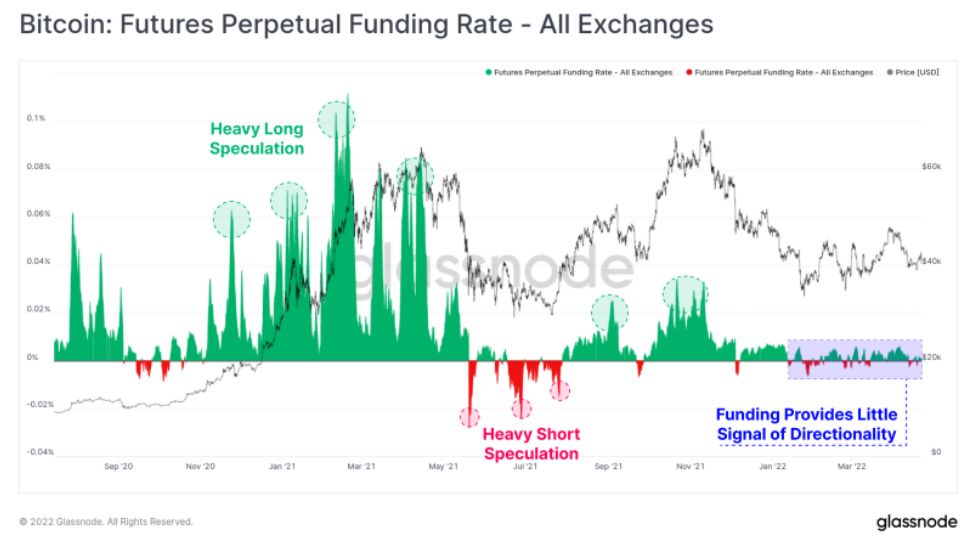
Bitcoin perpetual contracts — which, unlike traditional calendar futures, don’t expire — have long been a crypto retail-investor favorite, with a bigger number of professional and institutional traders also shifting toward them and away from traditional calendar futures. Such contracts have grown to account for around 66% of open interest and roughly 93% of trading volume, according to data from Glassnode. 

Traders say these instruments mimic the spot market, and are easy to use and access on exchanges. And their dominance has ballooned as they’ve become the preferred source of leverage, according to the researcher. 

“Perps are pretty much like spot,” said Darius Sit, co-founder of Singapore-based crypto trading shop QCP Capital. “You take less forward risk,” he said, adding that his firm does almost all of its futures trading in perpetual swaps.

Traders say another factor contributing to the growing dominance of perps, as they’re known, is that the so-called cash-and-carry trade in the crypto space has become less attractive.

In the Bitcoin futures market, the cash-and-carry arbitrage, a market-neutral strategy, has been one of the most popular trades used by pros looking to take advantage of the inefficiencies between the spot and futures market. During a bullish stretch, the strategy, which includes both a long position in the spot market and a short position in calendar futures, generates nearly risk-free returns for traders. But today, as the market has turned more bearish, such returns have narrowed dramatically. According to crypto data-provider Skew, Bitcoin futures annualized on a rolling three-month basis, or the price difference between the prices of futures contract and the spot, remains low, with an average of 2.57% as of May 24 on major exchanges.

To traders like Sit, with the premium on Bitcoin calendar futures coming down dramatically, it’s natural to see perpetual swaps become more favored.

Reed Werbitt, who is the head of cash trading at Genesis, says that given macro uncertainties and a risk-off mentality, traders are “less likely to express market views with the use of leverage.”

“Until there is a structural shift in sentiment, the carry trade is not very attractive compared to other opportunities in the ecosystem that yield considerably more,” he said. Meanwhile, liquidity in the perpetuals space is “deep,” and “assuming collateral management is efficient, they can be very effective tools for traders. Hence, perps are absorbing a significant amount of liquidity.” 

The Bitcoin futures market is an important part of the trading ecosystem — volumes there far surpass trading in the coin’s spot market, and derivatives products tend to be highly popular on exchanges. 

The perpetual contract was first introduced by crypto exchange BitMEX in 2016. Exchanges use the so-called funding rate — or the cost to trade — to tether the contracts to their underlying spot price. When the rate is positive, those who hold long positions are paying interest to investors who are short, and vice visa. The product originally gained popularity among retail traders given its simplicity, and many exchanges followed BitMEX with their own perpetual products.

“Crypto traders have a tendency to prefer simple products, ones that lack life-cycle events,” meaning expirations, said John Kramer, who’s leading derivatives, over-the-counter and decentralized-finance trading at crypto market-maker GSR. “That way you can set and forget a position if you so choose, rather than having to roll your futures positions.” Perpetual swaps are the most actively traded product at GSR, which is a major liquidity provider for it.

To be sure, though perpetuals have become super popular, the broader market is still mired in a downturn. Open interest — or the amount of open contracts — tends to be high during bullish periods because rising prices attract speculators to the market. But OI has declined roughly 40% since the fall. Aggregate futures trading volume has also declined — during the first half of 2021, it was typical to see trading volumes between $70 billion to $80 billion per day. As of the end of April, that had dropped by roughly 60% to around $30 billion daily, according to Glassnode, though it ticked up amid the last few weeks’ volatility.

Meanwhile, the funding rate on perpetuals has turned mostly negative across exchanges offering perp swaps for Bitcoin. Annualizing the funding rate and comparing it to the three-month rolling basis available in calendar futures suggests a reason why capital has been flowing out of Bitcoin: yields available in futures have compressed to around 3% — that’s comparable to yields on 10-year U.S. government bonds. Bitcoin was little changed at $29,535 on Wednesday. 

“It is likely that declining trade volumes and lower aggregate open interest is a symptom of capital flowing out of Bitcoin derivatives, and toward higher yield, and potentially lower perceived risk opportunities,” said James Check, lead analyst at Glassnode. 

The crypto derivatives space had been nirvana for thrill-seeking traders who thrive on volatility. Many had been drawn to crypto markets precisely because wild swings provided ample opportunity to make money. But now, they might look for opportunities elsewhere — wherever yields might be more attractive.

Dan Gunsberg, co-founder of Hxro Network, a decentralized derivatives primitive, says volatility is multiple levels higher than in equities markets. “It’s unlikely that we see a long-term permanent dampening of volatility to where it’s reaching equity-vol levels,” he said by phone. “Crypto is still very early in that sense,” he said, adding that even compressed yields might not necessarily be a bad thing. “There’s still significant trading opportunity. It’s just not as volatile as it may have been a year ago.”

(Adds the price of Bitcoin.)

More stories like this are available on bloomberg.com

©2022 Bloomberg L.P.
Amazon Opens First Brick-and-Mortar Clothing Store Near LA

(Bloomberg) — Amazon.com Inc. is opening its first physical clothing store on Wednesday, the latest brick-and-mortar initiative from the world’s largest online retailer. 

Called Amazon Style, the shop is located in Glendale, California, near Los Angeles. The Seattle-based company has pledged to open stores only when it has something original to offer customers. In Style’s case, the new wrinkle is an app that lets shoppers scan codes on displayed items, which employees fetch in the right size or color and then send to a fitting room or checkout counter.

Amazon has built a giant e-commerce business selling basic clothing items like packs of t-shirts. But it has had less success courting fashion brands, which have long balked at counterfeits on Amazon’s third-party marketplace. The new store will sell brands including Lacoste, Levi’s and Steve Madden, according to the outlet’s website.

The opening comes two months after Amazon said it was closing dozens of physical bookstores, “Amazon 4-Star” stores and mall pop-up kiosks so the company could focus on its chain of Fresh supermarkets and such initiatives as Style. 

More stories like this are available on bloomberg.com

©2022 Bloomberg L.P.

Apple Defends App Store by Pointing to Developers’ Revenue Gains

(Bloomberg) — Apple Inc., facing mounting criticism of its App Store policies, defended the platform Wednesday by pointing to the small-business jobs and revenue it generates.  

The company cited a study by Analysis Group that found developers who earn under $1 million from the App Store annually saw total revenue rise 113% over a two-year period starting in 2019. In the US, that number reached 118%, though it was lower in some countries such as the UK and Japan.

The study, commissioned by Apple, also found the App Store supports 2.2 million jobs in the US and that more than 90% of developers are considered small businesses. 

In 2020, Apple cut its commission in half for developers who generated under $1 million in the previous calendar year, which may be a factor in the revenue increase. Apple typically charges a 30% fee, but developers who enroll in the company’s small-business program pay just 15%.

Big Tech companies have routinely used small businesses — and their reliance on software platforms to grow — as a talking point against critics and regulators. Meta Platforms Inc., the owner of Facebook, has even used the tactic against Apple, saying that the iPhone maker’s privacy restrictions make it more expensive for small businesses to reach their customers.

The App Store is under intense scrutiny from government officials in the US and Europe, which also have been going after competitors like Meta and Alphabet Inc. The Digital Markets Act in Europe and potential new laws in the US are seeking to upend Apple’s App Store rules in a bid to make the market more competitive.

More stories like this are available on bloomberg.com

©2022 Bloomberg L.P.
M&S’s Quiet Aisles Show Retailer’s Turnaround Has More Ahead

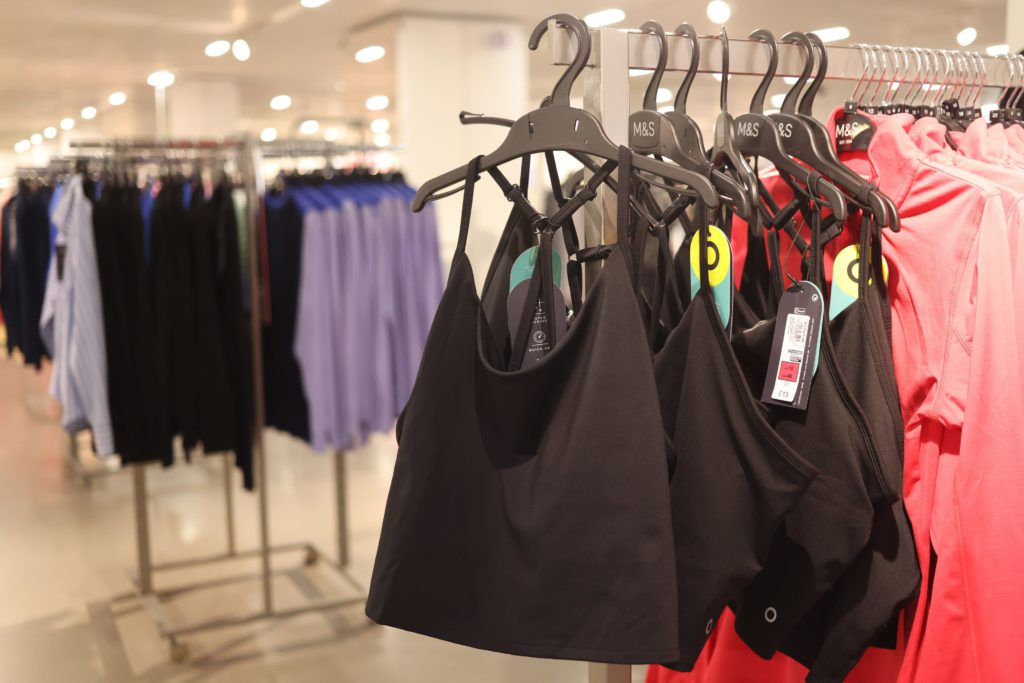
(Bloomberg) — The calm aisles of a Marks & Spencer Group Plc store in the City of London illustrate the challenges facing a retailer that has been trying to revive its performance since the turn of the millennium. 

On Tuesday afternoon, the large ground floor was packed with colorful womenswear and accessories. There was no shortage of shoes, ranging from £45 ($56.40) black heels ready for the office to beach-friendly flip-flops selling for nearly £13. In the Simply Food hall in the basement, shoppers had their pick of items like ginger and cayenne pepper cordial, Vietnamese-style pork belly, wild Canadian scallops and gooseberry and elderflower yogurt.

The one thing in noticeably short supply was shoppers, with only a dozen or so browsing the wares on the ground floor, and there was no line at the checkout counter. 

“M&S is nice but because their prices are so expensive I don’t really come here a lot,” said Mark Anthoneil, a London bus driver who popped into the Moorgate store to pick up a sandwich and his favorite sweets. “Every now and then I do come in because they’ve got nice stuff.”

Marks & Spencer warned on Wednesday that earnings won’t rise as sales growth is held back by the UK’s cost-of-living crisis and other factors. Though last year produced the fastest revenue gains in at least a decade and business so far this year has been strong, the downbeat forecast presents a challenge to new Chief Executive Officer Stuart Machin and co-CEO Katie Bickerstaffe as they take over.

The stock was little changed in London, having lost about two-thirds of its value under outgoing CEO Steve Rowe.

“People talked about the fact our store estate was an albatross around our necks,” Rowe said on a call with reporters. “In actual fact, it gives us a platform for a really strong omni-channel business, and it’s the reverse, it’s going to be one of the strengths of the new digital business.”

As inflation continues to rise, shoppers will have to choose between M&S’s premium offerings and its more budget items, which are still more expensive than the likes of value retailer Primark. In April M&S announced lower prices on its Remarksable value range including bread, milk and ground beef, seeking to focus the customer on a full-basket shop rather than just eye-catching items. 

Amid the cost-of-living squeeze, Anthoneil said he won’t do his main weekly shop in the store but will continue to purchase the items he really likes. 

Marks & Spencer’s food business, which sits alongside the clothing and home operation in the retailer’s portfolio, has done better. Specializing in ready meals and sandwiches, it weathered the pandemic and now benefits from return-to-office trends. In-store food sales grew by 10% in the financial year ended April 2 and clothing and home sales in stores improved to grow 5.6% in the final quarter — although they’re still down 11% in the full year.

“I think they will try to turn it into a predominantly food business with a smaller clothing offer on the side,” said Tony Shiret, an analyst at Panmure Gordon. 

Even the food business faces challenges, though. Ocado Group Plc warned Wednesday that growth at its home-delivery joint venture with M&S will be below expectations this year as the cost-of-living crisis hits home.

As consumers scale back online shopping and return to stores, the problem for M&S remains that too few of them are choosing its shops.


(Updates with in-store sales performance in 10th paragraph.)

More stories like this are available on bloomberg.com

©2022 Bloomberg L.P.
Close Bitnami banner
Bitnami