

Bloomberg

US’s Raimondo Urges More Action to Curb Inflation: Davos Update

(Bloomberg) — The current combination of threats to the global economy represents “a bit of a perfect storm,” Standard Chartered Plc Chairman Jose Vinals said, adding to a series of dire warnings about the outlook from the World Economic Forum in Davos.

“We’ve had big crises in the past but coming from so many different dimensions this may be quite unique,” he said in an interview with Bloomberg TV. US Commerce Secretary Gina Raimondo said more needs to be done to control inflation, adding that lowering tariffs could be an option and that the Federal Reserve may have to take further action.

Ukraine Foreign Minister Dmytro Kuleba, who is speaking at several events at the gathering in the Swiss Alps on Wednesday, said Kyiv will not trade territory for peace and the goal of the international community should be a complete victory over Russia. The war in Ukraine has overshadowed the first in-person Davos meeting in two years. Surging inflation, food shortages, climate change and migration risks have also been high on the agenda.

Key Developments

  • Moldova Frets of Being Forgotten as Ukraine Pushes for EU Entry
  • Europe Should “Flex Muscles” on World Stage, Lagarde Says
  • Cyber Attack on Genome Projects is the new Nuclear Threat
  • Klitschko Boxing Heroes Warn That Returning to Kyiv Is Dangerous
  • Pfizer Slashes Drug Prices for Poorest Nations, Expanding Access

All times CET:

Diess Cautious on EU Chip Policy (2:45 p.m.)

Europe building up its own chip capacity was a good development but it’s “dangerous” to talk about becoming “independent” from China and other countries or regions, Volkswagen AG CEO Herbert Diess said during a panel discussion.

“We need an industrial policy” but the goal of complete “autonomy” is the wrong mindset, Diess said. “A self-sufficient world in blocks is a much more dangerous world and a less innovative world, a world that cannot grow as fast and solve as many problems.”

Chip Shortage Carrier’s Biggest Challenge (1:15 p.m.)

The global shortage of semiconductors makes up “two-thirds” of the challenges facing Carrier Global Corp., Chief Executive Officer David Gitlin told Bloomberg TV.

“It’s the single biggest challenge we have,” said Gitlin, who runs the maker of air conditioning units and refrigerators. “The additional capacity cannot come online fast enough.” Carrier is working directly with manufacturers to switch to alternative types of chips that are more readily available, he said.

Climate Change Is Easiest Problem to Talk About (2 p.m.)

A war in Europe, food shortages in developing countries and surging global inflation haven’t stopped the rich and powerful at Davos from talking about the climate crisis, Bloomberg Green reporter Akshat Rathi writes in his latest newsletter.

That’s not to say the numerous panel discussions on the problem will lead to world-changing solutions right away or that they are even particularly revelatory. But spending time talking about climate change can be a form of therapy given there’s so much consensus on the issue at WEF.

WHO Slams Pfizer on Lack of Covid Research Support (1 p.m.)

Pfizer Inc. should make its Covid-19 medicine Paxlovid available for independent research, in particular into potential antiviral combinations, said Soumya Swaminathan, chief scientist of the World Health Organization.

“Ideally we should have more trials, both combinations as well as different durations of treatment and different patient groups,” Swaminathan said in an interview. She cited potential concerns of antiviral resistance as well as a rebound effect seen in some patients after an initial course of the drug, and said a few thousand doses would be enough for study. Pfizer is confident in its own trial results, and additional studies are “underway or being explored,” a spokeswoman said in an email.

Knot Supports Lagarde’s Policy Plan (12:20 p.m.)

European Central Bank Governing Council member Klaas Knot said he endorses President Christine Lagarde’s new policy timetable, which foresees an exit from negative rates by the end of the third quarter.

“I’m fully on board, I fully support everything that is in the blog,” the Dutch central banker said at panel discussion. “It nicely charts the policy course.”

The comments by Knot, a hawkish voice on the Governing Council, contrast with his Austrian counterpart Robert Holzmann, who on Tuesday called for a half-point hike in July. That’s double the magnitude implied by Lagarde. The ECB’s deposit rate has been negative since 2014 and currently stands at -0.5%.

Genome Manipulation ‘New Nuclear Threat’ (12 p.m.)

Bioterrorists using cyber attacks to target national genome projects pose a bigger threat than a nuclear strike, the global head of healthcare at KPMG LLP has warned. Were malicious hackers able to infiltrate gene editing experiments and manipulate a virus, the consequences would be worse than the Covid-19 pandemic, KPMG International’s Anna van Pouke said in an interview.

“Imagine that there is someone who finds out how to manipulate a genome,” she said. “We had a mutated virus. We don’t know where it mutated, whether it was in a market or a research lab in China, but you know what it did to the world,” she said.

“Just imagine if we have several cases even more severe than that because of genome manipulation in medication, coming from a lab,” van Pouke said. “If someone hacks the genome project with malicious intentions — a nuclear bomb is nothing compared to that. We need to have cyber security working very hard.”

Mitsotakis Shrugs Off Erdogan Jab (12 p.m.)

Greek Prime Minister Kyriakos Mitsotakis brushed off a statement by Turkey’s President Recep Tayyip Erdogan, saying there’s no one named Mitsotakis for him anymore. “We’re neighbors, we always need to talk and we always need to keep channels of communication open,” he said in a one-on-one discussion.

Regarding Turkey’s stance on Finland and Sweden’s accession to NATO, Mitsotakis said: “I think it is a mistake if Turkey continues to use these negotiations to extract sort of benefits for its own national interest.” The last thing we need now within the NATO “is another source of geopolitical instability in the eastern Mediterranean,” he added.

Lagarde: Europe Should ‘Flex Muscles’ (11:45 a.m.)

The war in Ukraine has shown Europe doesn’t understand how powerful it could be on the world stage and the bloc should “flex its muscles” more than it does, ECB’s Lagarde said.

She said the EU’s “monumental market” means it can set the conditions of trade and its competition laws mean it can block mergers around the world. She also noted potential strength as a unified purchasing group and huge pension fund resources that could be better deployed.

Siemens Energy Sees Grids Critical to Green Transition (11:35 a.m.)

Germany’s transition away from cheap Russian gas should take about three to five years with power infrastructure essential to speed up the process, Siemens Energy AG Chairman Joe Kaeser told Bloomberg TV. “If it takes eight years to build a grid, then you have a problem,” he said. “Construction of grids is the critical component to connect renewable energy supply.”

Wind-turbine suppliers such as Siemens Gamesa are currently stuck with a negative profit pool after the industry was caught out by massively rising input costs, Kaeser added. Siemens Energy over the weekend offered to buy the remaining shares in the loss-making unit for $4.3 billion.

Microsoft, Salesforce Add $300 Million for Carbon Removal (11:15 a.m.)

Microsoft Corp. and Salesforce Inc. are committing $200 million and $100 million, respectively, toward buying offsets using carbon-removal technologies before 2030. That adds to $2 billion committed to the sector last month, including investments from Stripe Inc. and Alphabet Inc.

The US government and WEF announced the expansion of First Movers Coalition, a buyers’ club that is supporting technologies to cut emissions from industry. It now boasts 50 global companies and eight countries partners, including India, Japan and the UK. The group is setting out advanced market commitments for green technologies in sectors such as aviation, shipping, trucking, aluminum, steel, cement, chemicals and carbon removal.

Green Shift Needs to Address Inequality, Spain Says (10:30 a.m.)

The climate transition has to address social aspects and inequality in order to ensure popular support, Spanish Minister for the Environmental Transition Teresa Ribera said. “We need to ensure that people benefit from the very first day from the changes,” she said. “Otherwise it’s going to be hard to have the support of the people.”

Ribera warned about a gap of understanding among those calling for climate action and implementing changes, and the workers that will be affected by these changes. “There has been no preparation to create the space for building consensus on how to change.”

EU Must Be More ‘Proactive’: Irish PM (11 a.m.)

The European Union needs to be more proactive in “promoting and supporting” countries that share its values and Albania and North Macedonia should be members of the bloc, according to Irish Prime Minister Micheal Martin.

Speaking on the same panel, Dutch Prime Minister Mark Rutte urged the EU to become a genuine “player” on the global stage and called for a short-term boost in military spending. “The problem we have is that the EU has for too long been a playing field instead of the player,” Rutte said. “I believe we should now step up our game.”

Raimondo Says Tariffs Can Combat Inflation (10:55 a.m.)

Raimondo said the administration is “looking at” reducing tariffs to help combat America’s “untenable” inflation rate. “Tariffs are obviously a tool in the toolbox that any president has to bring down costs,” Raimondo said in a Q&A. “It’s something we are analyzing.”

The US Federal Reserve has the most powerful tools to deal with inflation and “may need to take more action,” she said. “I’m glad I’m not Jay Powell. It’s a very hard job that he has to try to land the plane on inflation, which is is necessary, without putting the brakes on the economy.”

Accenture Sees Training Countering Great Resignation (10:50 a.m.)

The boss of Accenture says the firm is spending $1 billion on training staff in the increasingly competitive market for white-collar workers.

“That’s great for our current employees, but it’s really attractive if you’re going to join Accenture,” Julie Sweet said in an interview with Bloomberg TV. The firm has 700,000 employees, having added 200,000 in the past two years as businesses look to spend more on IT. “Wage inflation is real and paying market is absolutely critical. However, in a tight labor market it’s not all about wages,” she said.

Standard Chartered Chairman Sees ‘Perfect Storm’ (10:45 a.m.)

“What I worry about is the accumulation of different issues and crises,” Vinals told Bloomberg TV, citing challenges including stagflation, food and energy crises, “fragmentation in the global order of trade and capital flows,” and “cracks in global governance.”

“We’ve had big crises in the past but coming from so many different dimensions this may be quite unique,” he said.

HSBC Touts ‘Massive’ Climate Opportunities (10:40 a.m.)

The head of sustainability at HSBC Holdings Plc said the bank is repositioning itself for the “massive value creation” that’s set to come as the global economy decarbonizes.

Celine Herweijer, chief sustainability officer at HSBC in London, said achieving net-zero carbon emissions is “the focus of pretty much every single board meeting since I joined a year ago, every single executive meeting. It’s a huge transformation job across the bank,” she said during a panel.

Water Needs a Price to Be Valued, Coca-Cola CEO Says (10:20 a.m.)

Water needs to be attached to the climate discussion and be given value, Coca-Cola Co. CEO James Quincey said in a panel. One of the great barriers is that some 70% of the water is used by small-scale agricultural farmers and imposing a price on them would be very economically damaging, he said. 

“But unless water has a value, it’s going to be difficult,” Quincey said. “If we could value water in the same way we could value carbon, then the market will be the mechanism to drive the results.”

Gates: Risk of War Pulling Focus from Health (9:50 a.m. CET)

Russia’s war in Ukraine may pull the world’s focus away from key global health issues, exacerbating challenges that linger due to the Covid-19 pandemic, according to Bill Gates, co-chair of the Bill and Melinda Gates Foundation.

“The Ukrainian situation is stretching the world’s resources,” Gates said at a news conference, adding that the pandemic had already pressured budgets, with malaria deaths rising and routine vaccination rates down. “We see that both in terms of resources for health, resources for food, availability of fertilizer. The tragedy of the war goes far beyond the battlefield.”

Siemens Sees Green Investment Opportunities (9:40 a.m.)

Green is the best investment opportunity now, Siemens AG Chairman Jim Hagemann Snabe said on a panel on globalization’s role in decarbonization. Following technological advances over the past two decades — such as generating cheaper electricity with solar — a dramatic boost in investments in energy and food systems as well as transportation needs to happen, he said.

“We need a healthy inflation rate of 2%, then we need to shift investments to green,” Snabe said. “I am optimistic. We have the technologies to shift investments to decarbonization. It’s a leadership moment.” Putting a price on CO2 is the sharpest knife to decarbonize, he said, while high prices for coal and oil are helping too.

Looming Oil Boom ‘Will Wreck the Amazon’ (9:30 a.m.)

Ecuador is about to experience an expansion in oil production that will further damage the Amazon, according to environmental and human rights activist Helena Gualinga.

“Legal and illegal mining have expanded incredibly in Ecuador and there’s an oil expansion coming,” Gualinga told a panel. “We don’t know exactly where that oil will be coming from, but we know the Amazon will be affected.”

Improper drilling for oil means the Ecuadorian Amazon is currently seeing two to five spills per week, she said. Indigenous people are disproportionately affected by the pollution, with children suffering rashes on their bodies as authorities and companies fail to alert communities.

Drug Companies Lobby for Biotech (9:30 a.m.)

Europe needs to do better to promote biotech development, according to pharmaceutical executives. Regulators in Europe “should rather take an opportunity-focused stance. In North America, this is much better,” Bayer AG CEO Werner Baumann said at a panel. Governments need “to play a role and have an open mindset to bring forward biotech as great source of health for the planet,” Royal DSM NV CEO Dimitri de Vreeze said at the same panel.

Baumann pointed to Bayer’s BlueRock unit that is potentially developing a first curative treatment for Parkinson’s disease with stem-cell therapy and has already enrolled a number of patients in early-stage trials. “About 1 out of 100 stage one projects is successful” and that type of research need to be incentivized properly, he said.

IMF’s Gopinath See Uneven Recoveries (9:30 a.m.)

Advanced economies will recover more swiftly from the impact of the coronavirus pandemic than emerging and developing countries, according to the IMF’s Gopinath.

“We have the advanced economies that based on our projections will basically get back to where they would have been in the absence of pandemic in 2024, so literally no output losses,” Gopinath said on a Bloomberg panel. “But we have emerging and developing economies that will be around 5% below where they would have been in the absence of the pandemic.”

Nasdaq CEO Expects IPO Market to Pick Up in 2H (9:15 a.m.)

Nasdaq Inc. Chief Executive Officer Adena Friedman says the moribund IPO market may bounce back in the second half of the year if inflation is tamed by the Federal Reserve. She said Nasdaq has a pipeline of about 270 companies that have shown interest in listing at some point.

War Clouds Ownership of Europe’s Biggest Nuclear Plant (9:10 a.m.)

The head of the world’s nuclear watchdog said that Russian demands that Ukraine begin paying for electricity generated at an occupied atomic plant is adding new layers of complexity to the conflict. Russia wrested control over the Zaporizhzhya Nuclear Power Plant — Europe’s biggest such facility — in the early days of the war and has maintained control ever since.

“The plant is in Russian hands but is operated by Ukrainian people and is feeding the Ukrainian grid,” International Atomic Energy Agency Director General Rafael Mariano Grossi told Bloomberg TV. “That brings a lot of problems that are not technical but political in nature.”

While the Kremlin has yet to officially confirm its intentions, comments last week by Russian Deputy Prime Minister Marat Khusnullin suggested to some that the Kremlin may be preparing to hold onto the plant for the long term. IAEA monitors continue trying to gain access to Zaporizhzhya, in order to account for the 30,000 kilograms of plutonium and 40,000 kilograms of enriched uranium last reported at the site.

EU Oil Embargo Seen in ‘Coming Week’ (9 a.m.)

The European Union is pushing to overcome Hungary’s resistance to a ban on Russian oil imports, with Economy Commissioner Paolo Gentiloni hopeful of a deal within a week.

“We are all discussing that Hungary is not supporting the oil embargo, and it’s true but we are working on this,” Gentiloni told Bloomberg TV. Asked if the EU could move to halt Russian oil imports without Hungary, he added: “I don’t like to discuss Plan B when we are working on Plan A.”

Pfizer Slashes Drug Prices for Poorest Nations (9 a.m.)

Pfizer plans to sell its entire portfolio of brand-name drugs at cost in as many as 45 lower-income countries, one of the most comprehensive and ambitious drug-access programs ever announced by a large pharmaceutical manufacturer.

The initiative will start in five African countries with 23 drugs for cancer, rare illnesses, inflammatory conditions and infectious diseases. It will eventually include all of the New York-based company’s future therapies or vaccines. The drugs will be sold at the cost of manufacturing, Pfizer said, typically a fraction of their price in U.S. or European markets. Chief Executive Albert Bourla plans to speak about the drugmaker’s effort at Davos.

Ukraine Says West Shouldn’t Push Partial Victory (8:50 a.m.)

Ukraine’s Kuleba said the transatlantic alliance was “reinvigorated” only because of his nation’s efforts to withstand the Russian invasion and should in turn fully back Ukraine’s desire to achieve a complete victory. The government in Kyiv has previously expressed concern that some allies would prefer it agree to cede some territory in order to bring the war to a quick end.

“We need the West primarily to finally accept the idea that the ultimate goal of this war should be the victory of Ukraine,” Kuleba said at the Victor Pinchuk Foundation event.

“Even some very good friends of Ukraine who help us really a lot they are are still hesitant,” he said. “What is the end goal of their support for Ukraine? Is it not to allow Russia to win? Is it not to allow Ukraine to fail? No, the goal should be very simple and clear — Ukraine must win. Full stop. Period,” Kuleba said.

Ukraine Doesn’t See NATO Securing Grain Passage (8:15 a.m.)

Ukraine’s Kuleba said he saw no desire from NATO now to help secure safe passage of grains through the Black Sea, an effort seen as crucial to counter concerns about food shortages and rising prices.

“If NATO did not close the Ukrainian skies in the most tragic moments of the war, why should they dare to close the Ukrainian sea to allow the free passage of vessels with Ukrainian agricultural products,” he said. “I would wholeheartedly welcome the decision, but I just don’t see the stamina and the bravery to take all the risks associated with this operation.”

The interruption of the agricultural cycle of Ukraine risks a multi-year global food crisis, Kuleba told a breakfast organized by the Victor Pinchuk Foundation, “but in the end, the problem is that you cannot trust Russia even if they sign papers guaranteeing safe passage.”

More stories like this are available on bloomberg.com

©2022 Bloomberg L.P.

Terra Blockchain Will Split, Abandon Collapsed UST Stablecoin

(Bloomberg) — A proposal by the founder of the troubled Terra ecosystem to salvage the project was approved, averting a total collapse of one of the most-watched experiments in decentralized finance. 

Under the newly approved structure, the original blockchain will be known as Terra Classic, while its native token Luna, which plunged close to zero this month, will be renamed Luna Classic with the ticker LUNC. The new Terra blockchain will start running a coin under the existing Luna name and ticker, and won’t include the TerraUSD stablecoin. 

Terra’s unraveling, which started earlier this month with the implosion of the algorithmic stablecoin Kwon had touted relentlessly, marked one of the biggest busts in the crypto industry’s history. While the outcome of Wednesday’s vote represents a victory of sorts for Kwon and his supporters, doubts persist about whether Terra can ultimately be revived. 

Read more: Do Kwon Proposes Creating Another Blockchain From Terra’s Ashes

The process means Terraform Labs is effectively abandoning the stablecoin TerraUSD, or UST, which from now on will only trade on the Terra Classic blockchain. Designed to maintain a 1-to-1 peg to the dollar, it traded at around 7 cents on Wednesday.

Do Kwon, the crypto entrepreneur behind Terra, had proposed to split the blockchain in half, carrying out what is known in the industry as a “hard fork” of the network. His suggestion was later amended by Terraform Labs, the project’s main operator, to instead forge an entirely new Terra blockchain and leave the old network to be managed by users. 

Kwon said the new Luna tokens would be distributed to previous holders of Luna and UST in a so-called “air drop,” relying on a snapshot taken of the old Terra network to verify participants. All decentralized applications and assets built on the old Terra chain will need to migrate to the new one, Terraform Labs said, with Luna and UST holders advised to transfer their tokens to native Terra wallets rather than holding them on exchanges.

Doomed Mechanism

UST used a mix of algorithms and trader incentives to adjust its supply in relation to its sister token Luna and maintain its dollar peg. In theory, those mechanisms were supposed to guarantee that UST never deviated for long from its link. 

As UST began to lose its peg in the days following May 7, TerraForm labs was forced to dramatically increase the supply of Luna coins to restore the link. That, in turn, caused the price of Luna to collapse — ultimately dooming the effort and wiping out some $40 billion in total market value. 

Kwon’s proposal was met with criticism from many validators and investors, who sought restitution from the project’s leadership after watching the value of their holdings disintegrate. A final tally of the votes on the proposal on Wednesday showed 65% in favor and 21% abstaining. Some 13% of votes were “no with veto,” short of the 33.4% needed to scuttle the proposal. 

Terra also faced a questions over how it used a $3.2 billion reserve it had built up in Bitcoin and other cryptoassets to support UST, while major investors including Delphi Digital and Galaxy Digital said they erred in blindly supporting the ecosystem.

Competing Proposal

A competing proposal from the Terra community, voted on before Kwon’s, suggested deploying a so-called burn mechanism to effectively eradicate the overhang in UST supply and ease the pressure on Luna. The proposal was passed but failed to execute due to a numerical error, and was later replaced with a follow-up proposal for Terra Classic that’s still being voted upon.

On the Telegram channels of entities like Orion.Money, a Terra validator wielding 9.67% of the voting power, some individuals were petitioning those with the most influence to vote against Kwon’s proposal. In the end, Orion abstained from voting, while the second-largest validator Stake Systems voted against the idea with veto rights.

Some validators opposed Kwon’s proposal early in the seven-day voting process. Allnodes, which held 1.51% of the votes, said its research on Terra’s social networks showed that most of the community preferred the burn mechanism idea over building a second blockchain.

“We didn’t like the fact that the whole governance process of this proposal looks like a dictatorship model,” Allnodes Chief Executive Officer Konstantin Boyko-Romanovsky said in an email. “It looks like the launch of new chain is decided even before voting is finished. The way how this voting is managed is against what crypto stands for.”

(Updates with background from seventh paragraph.)

More stories like this are available on bloomberg.com

©2022 Bloomberg L.P.
Crypto Firm Babel Hits $2 Billion Valuation in Funding Round

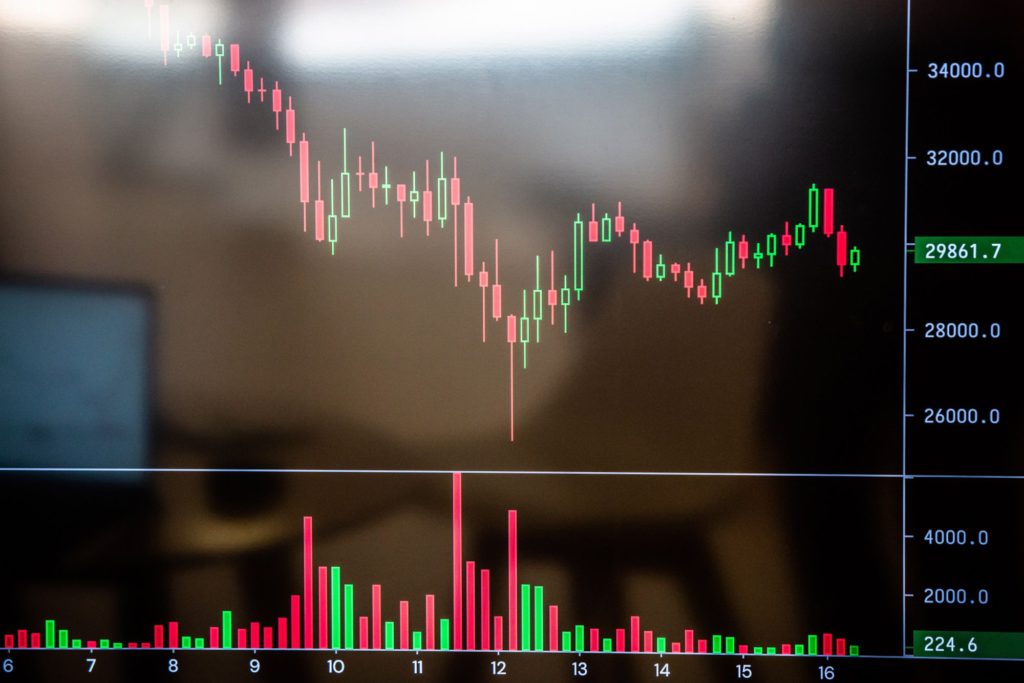
(Bloomberg) — Cryptocurrency lender and asset manager Babel Finance reached a $2 billion valuation in a funding round announced shortly after the implosion of the TerraUSD algorithmic stablecoin shook markets. 

Investors including Jeneration Capital and 10T Holdings, as well as existing shareholders Dragonfly Capital and BAI Capital, took part in the $80 million financing, Hong Kong-based Babel said in a statement Wednesday. The company’s valuation is up fivefold from its last funding round a year ago. 

Babel, which focuses on institutional clients and deals only in Bitcoin, Ether and stablecoins, pulled in money at a choppy time for crypto. A Bloomberg index of cryptocurrencies is down almost 50% this year, and the collapse of Terra has prompted renewed calls from regulators and politicians worldwide for stricter oversight. 

European Central Bank President Christine Lagarde said last week that cryptocurrencies are “based on nothing” and should be regulated to steer people away from speculating on them with their life savings. Days earlier, the deputy governor for the UK’s central bank said some retail investors who have put money into digital currencies probably don’t understand exactly what they bought or the risks involved.

Babel Chief Executive Officer Del Wang said he’s willing to forgo the higher profit margins that come from servicing retail investors. The firm’s focus on institutions “helps to overcome the many uncertainties in the early stage of the industry, including regulatory and market uncertainties,” he said in the statement. 

Babel, which serves around 500 clients, said it will use the proceeds to hire more traders and expand its compliance team. At the end of last year, it had an outstanding loan balance of more than $3 billion and was trading roughly an average $800 million in cryptocurrency derivatives a month, according to the release.

More stories like this are available on bloomberg.com

©2022 Bloomberg L.P.

Bitcoin Adopter’s African Crypto Hub Plan Has World Bank Vexed

(Bloomberg) — The World Bank is concerned about a plan by the Central African Republic to set up a crypto hub after it became the world’s second country to adopt Bitcoin, citing lack of transparency and the effect the move may have on financial inclusion. 

The African nation, which relies on donors for more than half of its budget, in April enacted a law making Bitcoin legal tender in the country. It now plans a “Crypto Economic Zone,” according to a post on President Faustin-Archange Touadera’s verified Twitter handle. The post included a presentation of the plan, which mentioned a $35 million grant pledged by the World Bank to digitize the nation’s public sector. 

The adoption of Bitcoin in the nation — with an internet penetration of about 11% — has been clouded in mystery. Its introduction was abrupt and non-consultative. The Bank of Central African States, which sets monetary policy for six countries in the region, said it wasn’t aware and pushed back against the plan. 

“It is important that the relevant regional institutions, such as the central bank and the banking authorities, are fully consulted and remain in the driver’s seat,” the World Bank said in an emailed response. “It will be physically impossible,” for the World Bank to fund the crypto project, it said. 

The $35 million funding that the World Bank approved May 5 is meant for improving CAR’s existing public financial management system through digitization of processes such as payments of salaries and tax collections — not the crypto project dubbed Sango, the lender said.

“The World Bank is not supporting “Sango – The First Crypto Initiative Project”,” the lender said. The digital governance loan “is unrelated to any crypto-currency initiative.”

Bitcoin’s volatility — it’s down 30% this year — may also be bad news for CAR, which the World Bank says is “one of the poorest and most fragile countries in the world.” The nation, rich in gold and diamond reserves, has been plagued by years of violence.

A CAR presidency spokesman declined to comment on the program when contacted by phone on Wednesday.

CAR is among central African countries including Cameroon, Chad, Equatorial Guinea, Gabon and the Republic of Congo that use one of two versions of the CFA franc. The region’s monetary rules require consultation on change in currency policies.

The crypto project could “reshape CAR’s financial system,” according to President Touadera’s Tweet on Tuesday.

With an economy worth about $2.3 billion, CAR is seeking ways to develop its resources. The government expects its plan to help crowd-fund infrastructure projects. It will also create a digital national bank, according to the presentation. 

“We have concerns regarding transparency as well as the potential implications for financial inclusion, the financial sector and public finance at large, in addition to environmental shortcomings,” the World Bank said.

More stories like this are available on bloomberg.com

©2022 Bloomberg L.P.
Microsoft, Salesforce Add $300 Million to Carbon Removal’s Growing Cash Pile

(Bloomberg) — A US-led initiative has attracted $300 million from Microsoft Corp. and Salesforce Inc. to pay for technologies that remove carbon dioxide from the air.

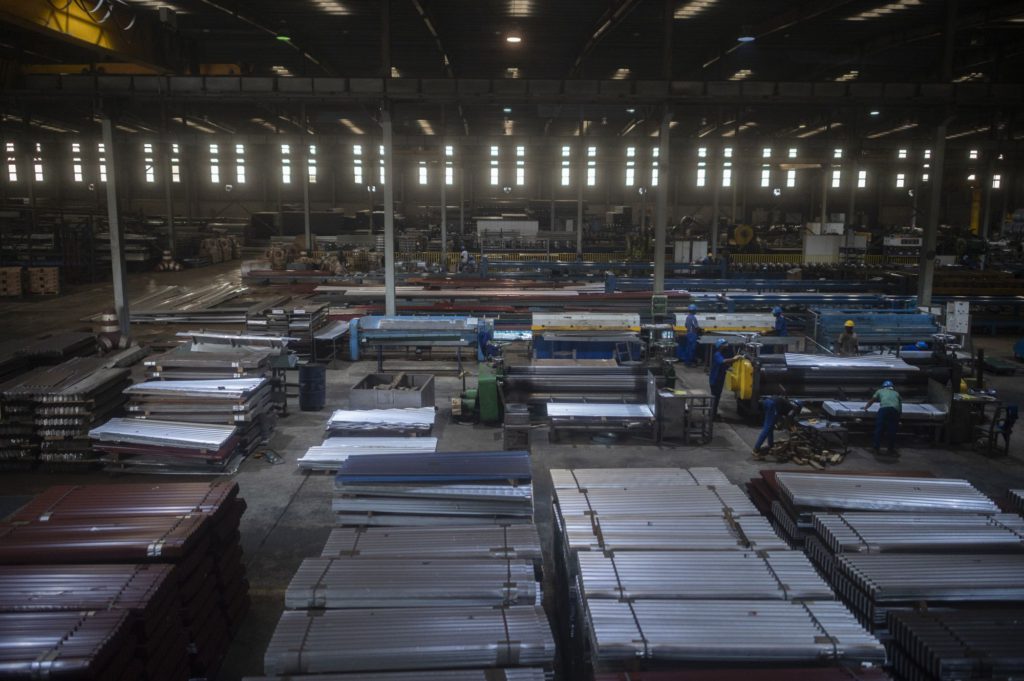
Since launching last year, the First Movers Coalition has gathered $10 billion in commitments to new technology developments — ranging from electric airplanes to green steel — across carbon-heavy industrial sectors. In partnership with the World Economic Forum, the FMC now has more than 50 companies and nine governments agreeing to push for green alternatives in aviation, shipping, steel and trucking. “It sends the strongest signal that we could send to the market about demand for clean alternatives,” said John Kerry, US climate envoy, in an interview at the WEF’s annual meeting in Davos, Switzerland.

Read: Kerry Lines Up Pledges to Scrub Emissions From Carbon-Heavy Industries

The $300 million sum comes on top of $2 billion in funding announcements made last month for carbon-removal technologies. In a statement today, the FMC also noted Alphabet Inc.’s $200 million in funding toward carbon removal, which was announced last month.

“Today is a great milestone in a very difficult longterm project,” said Bill Gates, who founded Breakthrough Energy, which is working to accelerate decarbonization technologies. Breakthrough Energy is also advising the FMC on operations, according to Kerry. Gates spoke at a press briefing hosted by the WEF in Davos on Wednesday.

While the world must reduce emissions to zero, reaching global climate goals is going to require pulling down existing greenhouse gases from the atmosphere. The recent injections of cash could give a nascent industry great momentum.

That’s what the FMC hopes to achieve in other sectors, including aluminum, cement and chemicals. Reducing the carbon footprint of these sectors, which are responsible for a third of global emissions, has so far been pushed away as too expensive a problem to solve. The world has mostly focused on technologies like solar and wind power or lithium-ion batteries that have become cost competitive with their fossil-fuel alternatives.

The US government under President Joe Biden has struggled to pass comprehensive domestic climate policies, but Kerry has notched up diplomatic wins abroad including a joint announcement with China at the COP26 meeting in Glasgow and signing up tens of countries to cut methane emissions within this decade.

Even then, he said the FMC initiative is one of the strongest climate achievements from his team.

The FMC’s country partners include, among others, India, Japan and the UK. The goal of the FMC is to not only get large companies like auto giant Ford Motor Co. and cement maker Holcim Ltd. to buy clean alternatives, but also motivate countries to set policies such as tax incentives or carbon pricing to aid the deployment of green technologies at a faster pace.

One might also view coalition membership as an insurance policy in case a country partner goes through political changes, such as the US electing a climate-skeptic president. “It wasn’t designed for that, but that’s obviously the byproduct,” said Kerry.

(Adds Gates comment after the third paragraph)

More stories like this are available on bloomberg.com

©2022 Bloomberg L.P.

Turkey Pushes for Bigger Say Over Crypto Market With Draft Bills

(Bloomberg) — Sign up for our Middle East newsletter and follow us @middleeast for news on the region.

Turkey is crafting legislation that would establish greater control over the cryptocurrency market and possibly impose a tax on some transactions involving digital assets, according to two officials.

The governing AK Party of President Recep Tayyip Erdogan is expected in the coming weeks to submit bills to parliament setting out new rules for local cryptocurrency exchange platforms, said the Turkish officials familiar with the matter.

Among the proposals is a requirement that companies have a minimum of 100 million liras ($6 million) in capital, they said, speaking on condition of anonymity to discuss plans that aren’t public. Another rule would mandate global cryptocurrency platforms to open branch offices that can be taxed in Turkey, according to the officials.

While the government is yet to decide on how to tax individuals, it’s leaning toward imposing a symbolic levy on the purchase of cryptocurrencies, the officials said. Turkish authorities are also considering ways to store cryptocurrencies safely, possibly within the infrastructure of the banking sector to prevent abuses, the officials said. 

Turkey Seeks Thousands of Years Jail Time for Missing Crypto CEO

Enactment of the landmark legislation would signal stiffer oversight in a country rattled by the collapse of several cryptocurrency exchanges last year. The new measures were on the agenda of a meeting held at the president’s office on Tuesday and attended by Deputy President Fuat Oktay along with Treasury and Finance Minister Nureddin Nebati and Trade Minister Mehmet Mus, the officials said.

Cryptocurrencies have grown in appeal for Turks as declines in the lira and spiraling inflation sap the value of their savings. But the asset class is also facing tougher scrutiny over concerns about the dangers it may pose to the broader financial system. 

Digital currencies Bitcoin and Ether are down sharply from last year’s peak, with regulators across the world stepping up calls for stricter oversight since the TerraUSD stablecoin tumbled from its intended dollar peg earlier this month. 

More stories like this are available on bloomberg.com

©2022 Bloomberg L.P.

China Protesters Demand Back Billions Invested in Suspected Scam

(Bloomberg) — Hundreds of people took to the streets of the largest city in China’s Henan province this week, calling on authorities to ensure the return of tens of billions of yuan invested in what could be one of the nation’s largest financial scams.

Protesters gathered outside the local office of the China Banking and Insurance Regulatory Commission on Monday in Zhengzhou city, carrying signs that read “Return my savings,” according to half a dozen people familiar with the matter, who asked not to be named discussing a sensitive subject. The crowd was dispersed by police and told to return home as soon as possible, the people said.

The protest, unusual for China, followed a freeze in online and mobile cash withdrawal services by four banks in Henan. A subsequent probe found that Henan Xincaifu Group Investment Holding Co., a private investment firm with stakes in all four lenders, colluded with bank employees to illicitly attract public funds via online platforms, the CBIRC said in a written response to questions.

At least tens of billions of yuan in funds were involved, according to a person with direct knowledge of the matter who asked not to be named discussing internal information. The investigation is ongoing and it isn’t clear whether the funds are missing.

The CBIRC said it’s “highly concerned” about the situation and vowed to severely punish any financial crimes.

Consumers should choose official channels for financial business and beware of false propaganda such as “high interest” and “high yield,” the regulator said. Deposit and withdrawal services through branches at the banks — Yuzhou Xinminsheng Village Bank, Shangcai Huimin County Bank, Zhecheng Huanghuai Community Bank and New Oriental Country Bank of Kaifeng — are normal, the CBIRC said. 

All four banks weren’t immediately available for comment when reached by Bloomberg. Xincaifu Group, which specializes in corporate investment and management, had its business license revoked in February, according to company registration information, and couldn’t be reached for comment.  

The incident highlights the risks associated with efforts by the nation’s small lenders to attract funds from outside their limited home bases through partnerships with non-proprietary online platforms. The central bank last year banned lenders from conducting such “innovative” deposit services, citing the need to “safeguard the pockets of ordinary people.”

The protest also risks renewing doubts over the financial strength and corporate governance of nearly 4,000 rural Chinese lenders that collectively control $7 trillion of assets. Confidence in the country’s smaller lenders has waned since 2019, when the government seized a bank for the first time since 1998 and imposed losses on some creditors. 

Depositor concerns over the safety of savings at smaller Chinese banks led to several protests in 2020. More recently, the troubles at real estate developer China Evergrande Group have sparked protests in cities across the country.

China’s largest case of financial fraud was in 2016, when the Ezubo P2P lending platform defrauded more than 900,000 people out of the equivalent of $7.6 billion. The firm was fined about 1.8 billion yuan a year later and its owner was sentenced to life imprisonment.

China has disposed of 2.6 trillion yuan ($390 billion) worth of bad debt at more than 600 rural banks classified as high-risk over the last few years, and injected 133.4 billion yuan of capital into 289 rural lenders, according to the regulator. Authorities are also considering raising several hundred billion yuan for a stability fund to bail out troubled financial firms.

More stories like this are available on bloomberg.com

©2022 Bloomberg L.P.
Faurecia Exploring Asset Sales After Hella Deal Completion

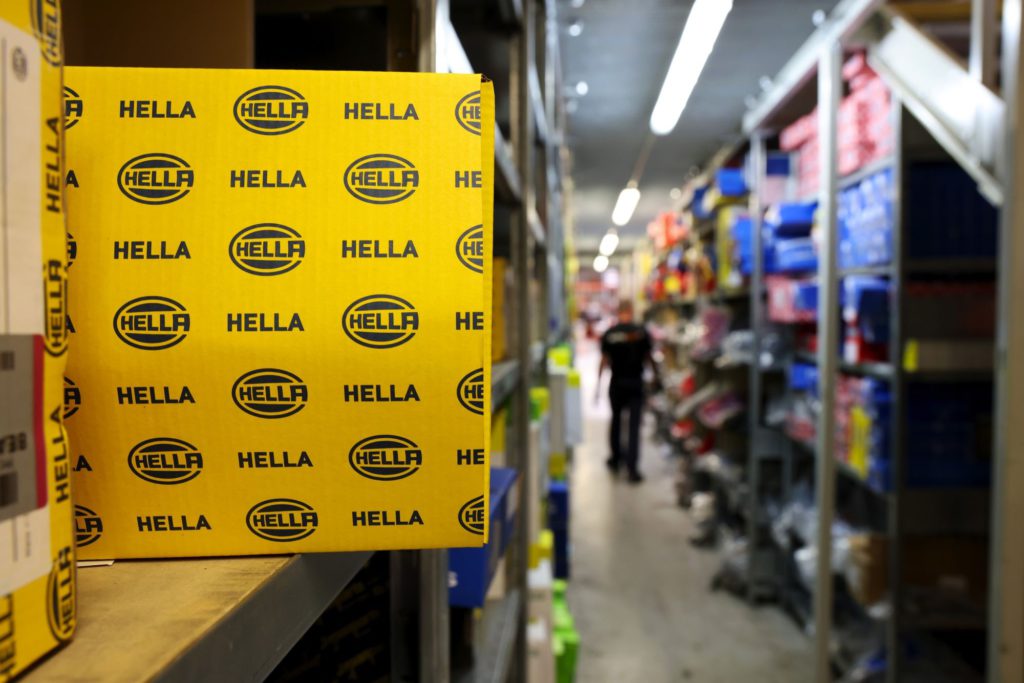
(Bloomberg) — Faurecia SE is exploring the sale of some non-core assets after completing its purchase of German automotive supplier Hella GmbH, according to people familiar with the matter. 

The French auto parts group is working with advisers as it weighs selling its emissions-control unit and Hella’s special applications division, the people said, asking not to be identified discussing confidential information.

The emissions business may fetch about 500 million euros ($534 million), while the Hella unit could be valued at as much as 1 billion euros, the people said.

Deliberations are ongoing and no final decisions on whether to proceed with the disposals have been taken, according to the people. A representative for Faurecia didn’t immediately respond to requests for comment.

Faurecia agreed to buy Lippstadt-based Hella for 6.8 billion euros last year to gain expertise in power and battery electronics, as well as radar sensors for autonomous-driving systems. Automotive suppliers continue to reshape their business as the industry’s shift to electric cars with advanced-assistance systems intensifies with a range of countries planning to ban sales of combustion-engine cars.

A strategic review of Hella’s special applications business, which supplies lighting and electronic components to customers ranging from makers of construction machinery to boat builders, was announced in April.

More stories like this are available on bloomberg.com

©2022 Bloomberg L.P.
‘The Last Hired’: How the Labor Market Is Changing for Black Americans

(Bloomberg) — For Black Americans, job prospects have improved since 2020. That’s the good news. 

The bad news is that the gains eked out since the murder of George Floyd two years ago appear as fragile as ever. Indeed, inflation is threatening to upend progress in the labor market as policymakers respond to a backlash against rising prices.

While the uprisings that drew thousands into the streets in 2020 helped put disadvantages of Black workers in the spotlight, most experts instead point to government aid and the tight US labor market during the pandemic as driving the collective advances for them and other groups. 

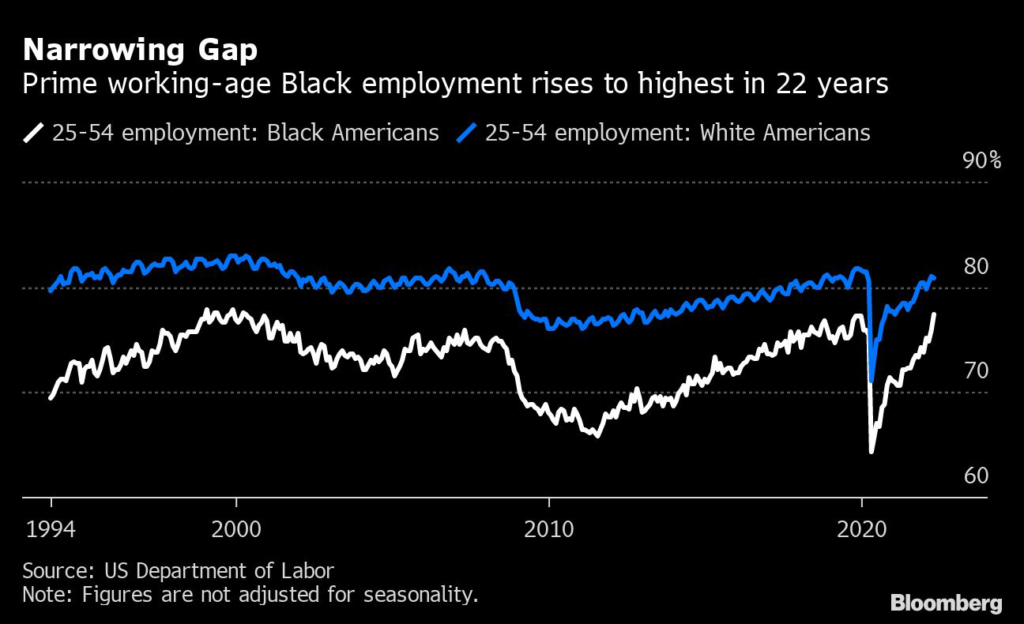
One key measure tracked by economists shows that employment of Black Americans of “prime working age” — 25 to 54 — jumped to 77.4% in April, the highest in 22 years. While that’s still well below the equivalent measure for White Americans, the uptick has reduced the gap between the two figures to the narrowest on record, in data stretching back to 1994.

It’s a sign that the hottest job market in generations is making it “more costly for firms to discriminate against African-American job applicants,” according to Algernon Austin, the director for race and economic justice at the Center for Economic and Policy Research in Washington.

The Black unemployment rate has also returned to pre-pandemic levels. After the 2008-09 recession, it took nine years for Black unemployment to return to levels that prevailed before the downturn.  This time, it only took two.

The figure stood at 5.9% in April — below the 6% registered for the group in February 2020 before Covid-19 shuttered businesses across the US. 

Yet the economic divide between Black and White persists. And, for many, the hope inspired by Black Lives Matter has been drained away by other racist killings, including this month’s mass shooting in Buffalo.

The unemployment rate for Black women, among the hardest-hit workers in the initial months of the pandemic, has plunged to 5% from 16.6% in May 2020. But that’s still well above the 2.8% rate seen by White women.

“On the whole, we’re seeing that frankly a lot of Black workers are able to take advantage of the tightness of the labor market and strong employer demand to get jobs that would have taken much longer to get in other past downturns,” says Joelle Gamble, the chief economist at the US Department of Labor. 

Read more:  A Report Card on Race: How Far We’ve Come, How Far We Have to Go

Part of the difference this time around relates to the response by the US government and the Federal Reserve. 

Instead of choosing a long, drawn-out recovery with all of its disproportionate consequences for Black Americans — like they did in the 2008-09 recession — lawmakers stepped in during Covid outbreaks with massive financial support for US households, transferring trillions of dollars to them via stimulus checks and greatly-expanded unemployment insurance programs. That underwrote ongoing consumer spending in the economy, which in turn provided a foundation for rehiring those newly thrown out of work.

“In this recovery, we’re less likely to see scarring from workers being unemployed for long periods of time,” Gamble says.

Black employment also may have received a boost this time due to the unusual impact the pandemic had on hiring at an industry level, according to Evgeniya Duzhak, an economist at the San Francisco Fed.

Duzhak found, in an analysis posted to the bank’s website on May 16, that Black unemployment didn’t go up on a relative basis during the pandemic as much as would have been expected. That’s “partly because over 25% of Black men are employed in production, transportation, and material moving occupations, and those occupations fared better than the service sector.”

But now, the progress risks coming undone in an all-out effort to tame inflation. 

Economic policy makers in the White House and at the Fed are shifting their priorities from rebuilding the workforce toward curbing price pressures through austerity measures — which threaten to slow or even reverse recent employment progress. 

Republicans and Democrats including Senator Joe Manchin eschewed President Joe Biden’s Build Back Better, a wide-ranging package that included several job creation initiatives and would have added more in public spending, citing the need to quell inflation.

Perhaps even more important is the central bank’s response. Fed Chair Jerome Powell and his colleagues have embarked on a rapid tightening cycle and are warning that inflation-fighting via higher interest rates will probably push up the unemployment rate, and may even ultimately induce another recession.

For observers like William Spriggs, the Howard University economics professor and chief economist for the American Federation of Labor and Congress of Industrial Organizations, that poses an existential risk to the entire effort of building a more inclusive economy, the need for which has been dramatically underscored by the events of the last two years.

“We’re still going to be the last hired, so if you increase the unemployment rate, you just undo all the gains,” Spriggs said. “What’s the point of the tight labor market? It is the necessary condition for Black advancement.”

More stories like this are available on bloomberg.com

©2022 Bloomberg L.P.

Fragile Job Gains for Black Workers at Stake in Inflation Fight

(Bloomberg) — For Black Americans, job prospects have improved since 2020. That’s the good news. 

The bad news is that the gains eked out since the murder of George Floyd two years ago appear as fragile as ever. Indeed, inflation is threatening to upend progress in the labor market as policymakers respond to a backlash against rising prices.

While the uprisings that drew thousands into the streets in 2020 helped put disadvantages of Black workers in the spotlight, most experts instead point to government aid and the tight US labor market during the pandemic as driving the collective advances for them and other groups. 

One key measure tracked by economists shows that employment of Black Americans of “prime working age” — 25 to 54 — jumped to 77.4% in April, the highest in 22 years. While that’s still well below the equivalent measure for White Americans, the uptick has reduced the gap between the two figures to the narrowest on record, in data stretching back to 1994.

It’s a sign that the hottest job market in generations is making it “more costly for firms to discriminate against African-American job applicants,” according to Algernon Austin, the director for race and economic justice at the Center for Economic and Policy Research in Washington.

The Black unemployment rate has also returned to pre-pandemic levels. After the 2008-09 recession, it took nine years for Black unemployment to return to levels that prevailed before the downturn.  This time, it only took two.

The figure stood at 5.9% in April — below the 6% registered for the group in February 2020 before Covid-19 shuttered businesses across the US. 

Yet the economic divide between Black and White persists. And, for many, the hope inspired by Black Lives Matter has been drained away by other racist killings, including this month’s mass shooting in Buffalo.

The unemployment rate for Black women, among the hardest-hit workers in the initial months of the pandemic, has plunged to 5% from 16.6% in May 2020. But that’s still well above the 2.8% rate seen by White women.

“On the whole, we’re seeing that frankly a lot of Black workers are able to take advantage of the tightness of the labor market and strong employer demand to get jobs that would have taken much longer to get in other past downturns,” says Joelle Gamble, the chief economist at the US Department of Labor. 

Read more:  A Report Card on Race: How Far We’ve Come, How Far We Have to Go

Part of the difference this time around relates to the response by the US government and the Federal Reserve. 

Instead of choosing a long, drawn-out recovery with all of its disproportionate consequences for Black Americans — like they did in the 2008-09 recession — lawmakers stepped in during Covid outbreaks with massive financial support for US households, transferring trillions of dollars to them via stimulus checks and greatly-expanded unemployment insurance programs. That underwrote ongoing consumer spending in the economy, which in turn provided a foundation for rehiring those newly thrown out of work.

“In this recovery, we’re less likely to see scarring from workers being unemployed for long periods of time,” Gamble says.

Black employment also may have received a boost this time due to the unusual impact the pandemic had on hiring at an industry level, according to Evgeniya Duzhak, an economist at the San Francisco Fed.

Duzhak found, in an analysis posted to the bank’s website on May 16, that Black unemployment didn’t go up on a relative basis during the pandemic as much as would have been expected. That’s “partly because over 25% of Black men are employed in production, transportation, and material moving occupations, and those occupations fared better than the service sector.”

But now, the progress risks coming undone in an all-out effort to tame inflation. 

Economic policy makers in the White House and at the Fed are shifting their priorities from rebuilding the workforce toward curbing price pressures through austerity measures — which threaten to slow or even reverse recent employment progress. 

Republicans and Democrats including Senator Joe Manchin eschewed President Joe Biden’s Build Back Better, a wide-ranging package that included several job creation initiatives and would have added more in public spending, citing the need to quell inflation.

Perhaps even more important is the central bank’s response. Fed Chair Jerome Powell and his colleagues have embarked on a rapid tightening cycle and are warning that inflation-fighting via higher interest rates will probably push up the unemployment rate, and may even ultimately induce another recession.

For observers like William Spriggs, the Howard University economics professor and chief economist for the American Federation of Labor and Congress of Industrial Organizations, that poses an existential risk to the entire effort of building a more inclusive economy, the need for which has been dramatically underscored by the events of the last two years.

“We’re still going to be the last hired, so if you increase the unemployment rate, you just undo all the gains,” Spriggs said. “What’s the point of the tight labor market? It is the necessary condition for Black advancement.”

More stories like this are available on bloomberg.com

©2022 Bloomberg L.P.

Close Bitnami banner
Bitnami