Bloomberg

Broadcom Builds $60 Billion Hedge Against Chip Turmoil With VMware Pursuit

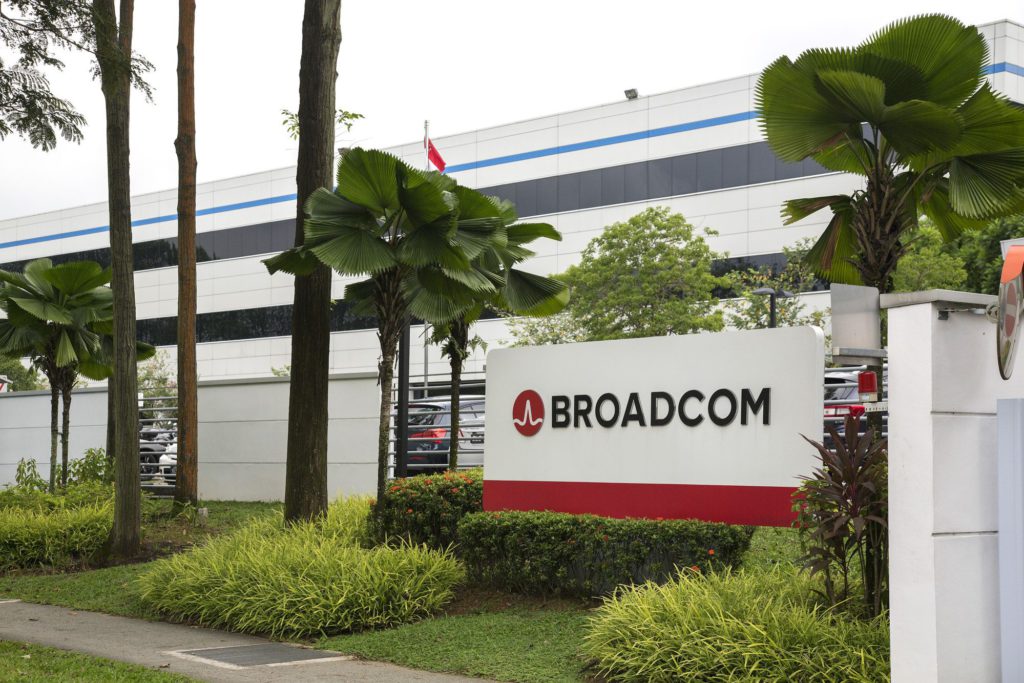
(Bloomberg) — Broadcom Inc. Chief Executive Officer Hock Tan is circling his latest target in a streak of software-company acquisitions, this time pursuing VMware Inc. to add steadier revenue flow and wider margins as a hedge against the dramatic ups and downs of demand in the semiconductor business.

The chipmaker could unveil an agreement of about $60 billion, or $140 a share, to acquire cloud-computing company VMware as soon as Thursday in what is likely to be Broadcom’s biggest deal ever, according to people familiar with the matter. VMware created the market for a type of software that lets businesses run corporate networks more efficiently, and recently has shifted toward serving clients who are moving those applications to the cloud, including through a partnership with web-services giant Amazon.com Inc. VMware also sells software for security, networking and managing mobile devices.

The purchase would align with Tan’s strategy of acquiring and keeping what he calls “franchises”—parts of companies that can maintain a robust market share in a profitable business without excessive investment—while quickly jettisoning any components that don’t fit with his plans. The executive made a name for himself by building Broadcom into one of the largest companies in the chip industry through a series of acquisitions, extracting value from assets that he saw as underperforming by shedding costs and units. Since 2018, Tan has turned his deal playbook on the software industry, starting with his $19 billion buy of CA Technologies, followed by a $10.7 billion purchase of Symantec Corp.’s business-facing product division.

Buying software companies lets a hardware maker like Broadcom tap into markets that generally carry wider profit margins and a more regular flow of sales—many software vendors sell via multiyear subscriptions or contracts and can count on those for recurring revenue—avoiding the volatility of the chip sector, which has been beleaguered by manufacturing snafus, shutdowns and supply shortages in the past several years. Next up could be VMware. While the company still has a market value north of $45 billion, its shares have declined nearly 30% in the past year. If Broadcom completes the VMware deal, it will bring the company’s business model to a 50-50 semiconductor-to-software mix, said Bloomberg Intelligence analyst Woo Jin Ho.

“VMware actually fits into the broader software strategy that Broadcom has been embarking on since 2018. They acquired CA, they acquired Symantec to broaden out the the infrastructure software portfolio, to diversify away from the cyclicality of the chip sector,” Ho said in an interview with Bloomberg Television. “What VMware brings to the table is to extend that infrastructure software more towards the cloud over the long term.”

Chip companies are often at the mercy of purchasing cycles that go up as demand for computers and other devices rises or with accelerating business environments, before falling off, producing lumpy quarterly results. The instability for hardware vendors has been worsened by supply chain shortages that have hurt the availability of components, while Covid-19 and the war in Ukraine also have disrupted shipping routes. 

Software companies generally can count on a more constant and predictable flow of revenue than hardware vendors. Even so, VMware has seen sales growth shrink in the past few years as it struggled to adapt to a market in which its flagship technology—virtualization software that lets customers run more than one application on each server—matured and was then bypassed by newer technologies designed for the cloud. Annual revenue growth has hovered at 9% for the past two fiscal years and is forecast to remain in that neighborhood this year—VMware predicted long-term growth of 8% to 10% at an analyst day presentation. Still, that’s stronger than expected growth in Broadcom’s current infrastructure software portfolio, which has a 5% to 6% growth forecast, Ho said. “VMware would be the crown jewel of Broadcom’s software division,” said Angelo Zino, an analyst at CFRA.

Acquiring VMware would roughly triple the size of Broadcom’s software offerings, according to a note from Sanford C. Bernstein & Co. And software companies also generally offer fatter profit margins. The Philadelphia Stock Exchange Semiconductor Index boasts an average gross margin of about 52%, 20 points narrower than that of the Standard & Poor’s 500 Software Index. VMware’s gross margin in the most recent quarter was 83% to Broadcom’s 66%, according to Bloomberg data.That said, by other measures VMware is running at a profitability level well below the rest of Broadcom’s software assets—it has an approximately 30% non-GAAP operating margin, compared with the roughly 70% Broadcom is getting from the segment, Bernstein said.  That means that should it acquire VMware, Broadcom would likely focus on squeezing costs, as it has with past acquisitions, including its software moves for CA and the Symantec unit.

While there are clear reasons why it makes sense for hardware companies, especially chipmakers, to buy software firms, it’s less clear that the deals help the target companies keep up a strong pace of product innovation. Intel Corp.’s purchase of security software maker McAfee, for example, never lived up to the promised technological synergies the chipmaker pitched, and while VMware thrived for years under its first owner—storage hardware company EMC Corp.—it fared less well once the company now known as Dell Technologies acquired EMC. 

With VMware’s legacy virtualization software fading, to keep up growth the company may need additional investments to return to tech market leadership. That may not be in Tan’s plan for the company. Because he frequently looks to cut costs at businesses Broadcom acquires, VMware may find itself starved for research and development money or other investments.

Broadcom cut the cost base at CA and the Symantec business by 60% to 70%, according to Bernstein. A similar move at VMware could yield $5 billion in savings, the analysts wrote.

In any case, the deal would benefit VMware shareholders like Michael Dell and private equity firm Silver Lake. And if Tan can deliver the benefits he’s sure to promise in announcing the purchase, it might even be a coup for Broadcom’s shareholders.

“It’s worked out great for him because he’s buying these low-growth kind of companies that maybe don’t have the type of margin profile that they should have,” said CFRA’s Zino. “And then he just really cuts a lot of the operating expenses, significantly improves the free cash flow potential and essentially rewards investors over time because he returns a vast majority of that excess free cash flow back to shareholders, primarily through dividend hikes.”

If the deal gets done, it’ll be the biggest move yet in Tan’s quest to create synergies where the market didn’t expect any. The size of the VMware deal would make it higher risk, and potentially higher reward, than most of his past bets.As Bernstein analysts wrote of Tan’s track record in deals: “Hock has yet to do a bad one, software or otherwise.”

More stories like this are available on bloomberg.com

©2022 Bloomberg L.P.

Global Crises Threaten Economic ‘Perfect Storm’: Davos Update

(Bloomberg) — The current combination of threats to the global economy represents “a bit of a perfect storm,” Standard Chartered Plc Chairman Jose Vinals said, adding to a series of dire warnings about the outlook from the World Economic Forum in Davos.

“We’ve had big crises in the past but coming from so many different dimensions this may be quite unique,” he said in an interview with Bloomberg TV. US Commerce Secretary Gina Raimondo said more needs to be done to control inflation, adding that lowering tariffs could be an option and that the Federal Reserve may have to take further action.

Ukraine Foreign Minister Dmytro Kuleba, who is speaking at several events at the gathering in the Swiss Alps on Wednesday, said Kyiv will not trade territory for peace and the goal of the international community should be a complete victory over Russia. The war in Ukraine has overshadowed the first in-person Davos meeting in two years. Surging inflation, food shortages, climate change and migration risks have also been high on the agenda.

Key Developments

  • Climate Change Is Easiest to Talk About at Davos: Green Insight
  • Europe Should “Flex Muscles” on World Stage, Lagarde Says
  • Cyber Attack on Genome Projects is the new Nuclear Threat
  • Klitschko Boxing Heroes Warn That Returning to Kyiv Is Dangerous
  • Pfizer Slashes Drug Prices for Poorest Nations, Expanding Access

All times CET:

ECB’s Knot Supports Lagarde’s Policy Plan (12:20 p.m.)

European Central Bank Governing Council member Klaas Knot said he endorses President Christine Lagarde’s new policy timetable, which foresees an exit from negative rates by the end of the third quarter.

“I’m fully on board, I fully support everything that is in the blog,” the Dutch central banker said at panel discussion. “It nicely charts the policy course.”

The comments by Knot, a hawkish voice on the Governing Council, contrast with his Austrian counterpart Robert Holzmann, who on Tuesday called for a half-point hike in July. That’s double the magnitude implied by Lagarde. The ECB’s deposit rate has been negative since 2014 and currently stands at -0.5%.

Genome Manipulation Is New Nuclear Threat (12 p.m.)

Bioterrorists using cyber attacks to target national genome projects pose a bigger threat than a nuclear strike, the global head of healthcare at KPMG LLP has warned. Were malicious hackers able to infiltrate gene editing experiments and manipulate a virus, the consequences would be worse than the Covid-19 pandemic, KPMG International’s Anna van Pouke said in an interview.

“Imagine that there is someone who finds out how to manipulate a genome,” she said. “We had a mutated virus. We don’t know where it mutated, whether it was in a market or a research lab in China, but you know what it did to the world,” she said.

“Just imagine if we have several cases even more severe than that because of genome manipulation in medication, coming from a lab,” van Pouke said. “If someone hacks the genome project with malicious intentions — a nuclear bomb is nothing compared to that. We need to have cyber security working very hard.”

Greece’s Mitsotakis Shrugs Off Erdogan Jab (12 p.m.)

Greek Prime Minister Kyriakos Mitsotakis brushed off a statement by Turkey’s President Recep Tayyip Erdogan, saying there’s no one named Mitsotakis for him anymore. “We’re neighbors, we always need to talk and we always need to keep channels of communication open,” he said in a one-on-one discussion.

Lagarde: Europe Should ‘Flex Muscles’ (11:45 a.m.)

The war in Ukraine has shown Europe doesn’t understand how powerful it could be on the world stage and the bloc should “flex its muscles” more than it does, ECB’s Lagarde said.

She said the EU’s “monumental market” means it can set the conditions of trade and its competition laws mean it can block mergers around the world. She also noted potential strength as a unified purchasing group and huge pension fund resources that could be better deployed.

Siemens Energy Sees Grids Critical to Green Transition (11:35 a.m.)

Germany’s transition away from cheap Russian gas should take about three to five years with power infrastructure essential to speed up the process, Siemens Energy AG Chairman Joe Kaeser told Bloomberg TV. “If it takes eight years to build a grid, then you have a problem,” he said. “Construction of grids is the critical component to connect renewable energy supply.”

Wind-turbine suppliers such as Siemens Gamesa are currently stuck with a negative profit pool after the industry was caught out by massively rising input costs, Kaeser added. Siemens Energy over the weekend offered to buy the remaining shares in the loss-making unit for $4.3 billion.

Microsoft, Salesforce Add $300 Million for Carbon Removal (11:15 a.m.)

Microsoft Corp. and Salesforce Inc. are committing $200 million and $100 million, respectively, toward buying offsets using carbon-removal technologies before 2030. That adds to $2 billion committed to the sector last month, including investments from Stripe Inc. and Alphabet Inc.

The US government and WEF announced the expansion of First Movers Coalition, a buyers’ club that is supporting technologies to cut emissions from industry. It now boasts 50 global companies and eight countries partners, including India, Japan and the UK. The group is setting out advanced market commitments for green technologies in sectors such as aviation, shipping, trucking, aluminum, steel, cement, chemicals and carbon removal.

Green Shift Needs to Address Inequality, Spain Says (10:30 a.m.)

The climate transition has to address social aspects and inequality in order to ensure popular support, Spanish Minister for the Environmental Transition Teresa Ribera said. “We need to ensure that people benefit from the very first day from the changes,” she said. “Otherwise it’s going to be hard to have the support of the people.”

Ribera warned about a gap of understanding among those calling for climate action and implementing changes, and the workers that will be affected by these changes. “There has been no preparation to create the space for building consensus on how to change.”

EU Must Be More ‘Proactive’: Irish PM (11 a.m.)

The European Union needs to be more proactive in “promoting and supporting” countries that share its values and Albania and North Macedonia should be members of the bloc, according to Irish Prime Minister Micheal Martin.

Speaking on the same panel, Dutch Prime Minister Mark Rutte urged the EU to become a genuine “player” on the global stage and called for a short-term boost in military spending. “The problem we have is that the EU has for too long been a playing field instead of the player,” Rutte said. “I believe we should now step up our game.”

Raimondo Says Tariffs Can Combat Inflation (10:55 a.m.)

Raimondo said the administration is “looking at” reducing tariffs to help combat America’s “untenable” inflation rate. “Tariffs are obviously a tool in the toolbox that any president has to bring down costs,” Raimondo said in a Q&A. “It’s something we are analyzing.”

The US Federal Reserve has the most powerful tools to deal with inflation and “may need to take more action,” she said. “I’m glad I’m not Jay Powell. It’s a very hard job that he has to try to land the plane on inflation, which is is necessary, without putting the brakes on the economy.”

Accenture Sees Training Countering Great Resignation (10:50 a.m.)

The boss of Accenture says the firm is spending $1 billion on training staff in the increasingly competitive market for white-collar workers.

“That’s great for our current employees, but it’s really attractive if you’re going to join Accenture,” Julie Sweet said in an interview with Bloomberg TV. The firm has 700,000 employees, having added 200,000 in the past two years as businesses look to spend more on IT. “Wage inflation is real and paying market is absolutely critical. However, in a tight labor market it’s not all about wages,” she said.

Standard Chartered Chairman Sees ‘Perfect Storm’ (10:45 a.m.)

“What I worry about is the accumulation of different issues and crises,” Vinals told Bloomberg TV, citing challenges including stagflation, food and energy crises, “fragmentation in the global order of trade and capital flows,” and “cracks in global governance.”

“We’ve had big crises in the past but coming from so many different dimensions this may be quite unique,” he said.

HSBC Touts ‘Massive’ Climate Opportunities (10:40 a.m.)

The head of sustainability at HSBC Holdings Plc said the bank is repositioning itself for the “massive value creation” that’s set to come as the global economy decarbonizes.

Celine Herweijer, chief sustainability officer at HSBC in London, said achieving net-zero carbon emissions is “the focus of pretty much every single board meeting since I joined a year ago, every single executive meeting. It’s a huge transformation job across the bank,” she said during a panel.

Water Needs a Price to Be Valued, Coca-Cola CEO Says (10:20 a.m.)

Water needs to be attached to the climate discussion and be given value, Coca-Cola Co. CEO James Quincey said in a panel. One of the great barriers is that some 70% of the water is used by small-scale agricultural farmers and imposing a price on them would be very economically damaging, he said. 

“But unless water has a value, it’s going to be difficult,” Quincey said. “If we could value water in the same way we could value carbon, then the market will be the mechanism to drive the results.”

Gates: Risk of War Pulling Focus from Health (9:50 a.m. CET)

Russia’s war in Ukraine may pull the world’s focus away from key global health issues, exacerbating challenges that linger due to the Covid-19 pandemic, according to Bill Gates, co-chair of the Bill and Melinda Gates Foundation.

“The Ukrainian situation is stretching the world’s resources,” Gates said at a news conference, adding that the pandemic had already pressured budgets, with malaria deaths rising and routine vaccination rates down. “We see that both in terms of resources for health, resources for food, availability of fertilizer. The tragedy of the war goes far beyond the battlefield.”

Siemens Sees Green Investment Opportunities (9:40 a.m.)

Green is the best investment opportunity now, Siemens AG Chairman Jim Hagemann Snabe said on a panel on globalization’s role in decarbonization. Following technological advances over the past two decades — such as generating cheaper electricity with solar — a dramatic boost in investments in energy and food systems as well as transportation needs to happen, he said.

“We need a healthy inflation rate of 2%, then we need to shift investments to green,” Snabe said. “I am optimistic. We have the technologies to shift investments to decarbonization. It’s a leadership moment.” Putting a price on CO2 is the sharpest knife to decarbonize, he said, while high prices for coal and oil are helping too.

Looming Oil Boom ‘Will Wreck the Amazon’ (9:30 a.m.)

Ecuador is about to experience an expansion in oil production that will further damage the Amazon, according to environmental and human rights activist Helena Gualinga.

“Legal and illegal mining have expanded incredibly in Ecuador and there’s an oil expansion coming,” Gualinga told a panel. “We don’t know exactly where that oil will be coming from, but we know the Amazon will be affected.”

Improper drilling for oil means the Ecuadorian Amazon is currently seeing two to five spills per week, she said. Indigenous people are disproportionately affected by the pollution, with children suffering rashes on their bodies as authorities and companies fail to alert communities.

Drug Companies Lobby for Biotech (9:30 a.m.)

Europe needs to do better to promote biotech development, according to pharmaceutical executives. Regulators in Europe “should rather take an opportunity-focused stance. In North America, this is much better,” Bayer AG CEO Werner Baumann said at a panel. Governments need “to play a role and have an open mindset to bring forward biotech as great source of health for the planet,” Royal DSM NV CEO Dimitri de Vreeze said at the same panel.

Baumann pointed to Bayer’s BlueRock unit that is potentially developing a first curative treatment for Parkinson with stem-cell therapy and has already enrolled a number of patients in early-stage trials. “About 1 out of 100 stage one projects is successful” and that type of research need to be incentivized properly, he said.

IMF’s Gopinath See Uneven Recoveries (9:30 a.m.)

Advanced economies will recover more swiftly from the impact of the coronavirus pandemic than emerging and developing countries, according to the IMF’s Gopinath.

“We have the advanced economies that based on our projections will basically get back to where they would have been in the absence of pandemic in 2024, so literally no output losses,” Gopinath said on a Bloomberg panel. “But we have emerging and developing economies that will be around 5% below where they would have been in the absence of the pandemic.”

Nasdaq CEO Expects IPO Market to Pick Up in 2H (9:15 a.m.)

Nasdaq Inc. Chief Executive Officer Adena Friedman says the moribund IPO market may bounce back in the second half of the year if inflation is tamed by the Federal Reserve. She said Nasdaq has a pipeline of about 270 companies that have shown interest in listing at some point.

War Clouds Ownership of Europe’s Biggest Nuclear Plant (9:10 a.m.)

The head of the world’s nuclear watchdog said that Russian demands that Ukraine begin paying for electricity generated at an occupied atomic plant is adding new layers of complexity to the conflict. Russia wrested control over the Zaporizhzhya Nuclear Power Plant — Europe’s biggest such facility — in the early days of the war and has maintained control ever since.

“The plant is in Russian hands but is operated by Ukrainian people and is feeding the Ukrainian grid,” International Atomic Energy Agency Director General Rafael Mariano Grossi told Bloomberg TV. “That brings a lot of problems that are not technical but political in nature.”

While the Kremlin has yet to officially confirm its intentions, comments last week by Russian Deputy Prime Minister Marat Khusnullin suggested to some that the Kremlin may be preparing to hold onto the plant for the long term. IAEA monitors continue trying to gain access to Zaporizhzhya, in order to account for the 30,000 kilograms of plutonium and 40,000 kilograms of enriched uranium last reported at the site.

EU Oil Embargo Seen in ‘Coming Week’ (9 a.m.)

The European Union is pushing to overcome Hungary’s resistance to a ban on Russian oil imports, with Economy Commissioner Paolo Gentiloni hopeful of a deal within a week.

“We are all discussing that Hungary is not supporting the oil embargo, and it’s true but we are working on this,” Gentiloni told Bloomberg TV. Asked if the EU could move to halt Russian oil imports without Hungary, he added: “I don’t like to discuss Plan B when we are working on Plan A.”

Pfizer Slashes Drug Prices for Poorest Nations (9 a.m.)

Pfizer Inc. plans to sell its entire portfolio of brand-name drugs at cost in as many as 45 lower-income countries, one of the most comprehensive and ambitious drug-access programs ever announced by a large pharmaceutical manufacturer.

The initiative will start in five African countries with 23 drugs for cancer, rare illnesses, inflammatory conditions and infectious diseases. It will eventually include all of the New York-based company’s future therapies or vaccines. The drugs will be sold at the cost of manufacturing, Pfizer said, typically a fraction of their price in U.S. or European markets. Chief Executive Albert Bourla plans to speak about the drugmaker’s effort at Davos.

Ukraine Seeks Return of All Territories (8:55 a.m.)

“Ukraine will fight until it returns all of its territories,” President Volodymyr Zelenskiy said at a breakfast organized by the Victor Pinchuk Foundation. The war may turn into a diplomatic dispute after Russia withdraws its forces where they were before the full-scale invasion on Feb. 24. Ukraine won’t make concessions, he said, adding that talks with Russia have stalled.

Russian President Vladimir Putin doesn’t “realize to the very end what is happening, he lives in his informational world,” Zelenskiy said via video link.

Ukraine Says West Shouldn’t Push Partial Victory (8:50 a.m.)

Ukraine’s Kuleba said the transatlantic alliance was “reinvigorated” only because of his nation’s efforts to withstand the Russian invasion and should in turn fully back Ukraine’s desire to achieve a complete victory. The government in Kyiv has previously expressed concern that some allies would prefer it agree to cede some territory in order to bring the war to a quick end.

“We need the West primarily to finally accept the idea that the ultimate goal of this war should be the victory of Ukraine,” Kuleba said at the Victor Pinchuk Foundation event.

“Even some very good friends of Ukraine who help us really a lot they are are still hesitant,” he said. “What is the end goal of their support for Ukraine? Is it not to allow Russia to win? Is it not to allow Ukraine to fail? No, the goal should be very simple and clear — Ukraine must win. Full stop. Period,” Kuleba said.

Inflation Is Top Concern for Ontario Pension Board (8:45 a.m.)

Inflation is the biggest concern for the Ontario Teachers’ Pension Plan Board, according to Chief Executive Officer Jo Taylor.

The board, which manages the retirement savings of about 330,000 teachers, has increased its holdings of commodities and inflation-sensitive assets to deal with that challenge, Taylor said in an interview with Bloomberg Television. It has also reduced its holdings of publicly traded equities, he said.

Ukraine Doesn’t See NATO Securing Grain Passage (8:15 a.m.)

Ukraine’s Kuleba said he saw no desire from NATO now to help secure safe passage of grains through the Black Sea, an effort seen as crucial to counter concerns about food shortages and rising prices.

“If NATO did not close the Ukrainian skies in the most tragic moments of the war, why should they dare to close the Ukrainian sea to allow the free passage of vessels with Ukrainian agricultural products,” he said. “I would wholeheartedly welcome the decision, but I just don’t see the stamina and the bravery to take all the risks associated with this operation.”

The interruption of the agricultural cycle of Ukraine risks a multi-year global food crisis, Kuleba told a breakfast organized by the Victor Pinchuk Foundation, “but in the end, the problem is that you cannot trust Russia even if they sign papers guaranteeing safe passage.”

Randstad Cites Upward Pressure in Wages (8:10 a.m.)

There’s upward pressure in wages in all markets and more so in the US than in Europe, said Randstad NA Chief Executive Officer Sander van’t Noordende in an interview with Bloomberg TV. Van’t Noordende said wage inflation is reaching 5% in US and is around 3% in Europe.

Now that “everybody knows that virtual working works” more people are looking for flexibility and to be able to work from home some of the time, he said. “Spending time together is still important, but it depends on what team you’re part of and what the moment is to be together.”

The head of the employment services provider said 70% of Millennials are looking for a new job as opposed to 40% of older generations.

Inflation May Be Here for Years, Vestas CEO Says (8 a.m.)

Inflationary pressures aren’t going to ease any time soon, Vestas Wind Systems A/S CEO Henrik Andersen said in an interview with Bloomberg TV.

“I don’t see it easing,” according to Andersen, who runs the world’s largest manufacturer of wind turbines. “We have to now get used to that this could continue not only for quarters to come but also for years to come.” Higher costs for materials and transport have erased profits for the wind-turbine industry just as it’s needed to ramp up to achieve global climate goals. Andersen said his company will return to making money once supply chain issues have been normalized.

More stories like this are available on bloomberg.com

©2022 Bloomberg L.P.

China’s Xi Holds Rare Meeting With UN Human Rights Official

(Bloomberg) — Chinese President Xi Jinping held an unusual meeting with a top human rights chief, highlighting the importance his administration places on United Nations official Michelle Bachelet’s landmark visit to China.

Beijing is willing to discuss rights issues and cooperate with all parties on the basis of mutual respect, Xi said in a video call with Bachelet on Wednesday, state broadcaster China Central Television reported. Xi added that each country must follow a path of human rights development that suits it best based on its situation and the needs of its people.

Bachelet told Xi that the UN Human Rights Commission she heads is willing to boost communications and discuss cooperation with China. “I admire the efforts and achievement China has made in the areas of poverty elimination, human rights protection, as well as realizing economic and social development,” she said, according to CCTV.

A UN Human Rights Office spokesperson told Bloomberg News in an emailed excerpt of her comments that Bachelet said human rights must be at the core of “development, peace and security.” 

“China has a crucial role to play within multilateral institutions in confronting many of the challenges currently facing the world, including threats to international peace and security, instability in the global economic system, inequality, climate change and more,” she added, according to the email. 

Xi usually meets only with other heads of state and top leaders such as the UN secretary general. But his government has been harshly criticized for its human rights record, with US accusations of genocide in the remote Xinjiang region that Bachelet will visit becoming a major tension between the world’s two largest economies. 

READ: Blacklists, Trade and More U.S.-China Flashpoints: QuickTake

Beijing vehemently denies the charge, saying it is countering religious extremism and bringing prosperity to the western region that’s home to the mostly Muslim Uyghur people. 

Bachelet’s trip has been criticized for failing to secure guarantees from China that she would have unfettered access to people and places she’ll visit, especially the camps in Xinjiang where a 2019 United Nations assessment estimated 1 million people were held. Beijing says the facilities are vocational training centers that teach valuable job skills to attendees. 

Chinese Foreign Ministry spokesman Wang Wenbin on Wednesday at a regular press briefing in Beijing sidestepped questions on whether Xinjiang was raised during the Xi-Bachelet call, instead referring reporters to the ministry’s statement which didn’t mention Xinjiang.

William Nee, research and advocacy coordinator at Chinese Human Rights Defenders, said earlier that Bachelet will “almost inevitably be forced to engage in a highly chaperoned and choreographed visit.” US Ambassador Nicholas Burns told Bachelet he had “profound concerns” about attempts by Beijing to manipulate the trip, according to multiple people on a Monday call who asked for anonymity as they weren’t authorized to speak.

Bachelet, a 70-year-old former two term president of Chile, told diplomats on the call that her visit wasn’t an investigation but an opportunity to promote human rights, in an apparent effort to lower expectations, the first by someone in her position since 2005.

The Chinese government published a statement in Chinese that included a photo taken Monday of Foreign Minister Wang Yi showing Bachelet a book titled “Xi Jinping’s Excerpts on Respecting and Protecting Human Rights,” though a similar statement in English didn’t explain what the book was about.  

READ: Hacked Data Shows Ethnic Abuse in China’s Xinjiang Camps 

Xi’s video meeting with Bachelet comes a day after tens of thousands of apparently hacked files provided new evidence of the abuse of ethnic Uyghurs in mass detention camps in Xinjiang, including documents detailing a shoot-to-kill policy for escapees.

The “Xinjiang Police Files” published by the Washington-based Victims of Communism Memorial Foundation and shared with a group of global media outlets also contained contained thousands of mugshots of detainees as young as 15.

Bachelet will also visit Kashgar and Urumqi in Xinjiang, then hold a press conference to wrap up the trip.

(Updates with Bachelet’s comments.)

More stories like this are available on bloomberg.com

©2022 Bloomberg L.P.
Tourism Demand Prompts Uber to Launch on Mediterranean Islands

(Bloomberg) — Uber Technologies Inc. is expanding into a trio of popular Mediterranean islands as it prepares for a sharp rebound in post-pandemic travel.

The San Francisco-based ride hailing giant will offer its rides service on Sicily, Malta and Santorini this summer, according to a statement, with further islands in Greece and Spain to be added in the coming months. Uber is also rolling out its explore product for booking activities to Madrid in the first overseas expansion for that offering.

The company’s data show travel rebounding sharply, with leisure touring rising faster than corporate trips, said Anabel Diaz, Uber’s general manager for rides in Europe, the Middle East and Africa. Through April, airport trips had nearly fully recovered across Europe compared to the same period in 2019, rising more than five times year-on-year.

“The reality is what we see today is the demand is actually exceeding expectations,” Diaz said in an interview. 

The explore offering, which lets users book restaurant reservations and tourist attractions in the Uber app, may also roll out to further cities after it’s tested in Madrid, she said.

Both moves come against the backdrop of a broader expansion in Uber’s offering, such as earlier in May, when it debuted a new travel service. It’s also adding local taxis to its platform. 

More stories like this are available on bloomberg.com

©2022 Bloomberg L.P.

Japan State-Backed Fund JIC Is Said to Explore Toshiba Bid

(Bloomberg) — State-backed investment fund Japan Investment Corp. is considering a bid for Toshiba Corp., according to people with knowledge of the matter.

JIC has signed a confidential agreement with the Japanese conglomerate for access to detailed finances as it weighs an offer, said the people, who asked not to be identified as the information is private. The state-backed fund is likely to team up with other suitors and has been approached by private equity funds pitching a joint bid, two of the people said.

Deliberations are ongoing and JIC could decide against proceeding with an offer, the people said.

Shares of Toshiba extended gains to as much as 3.3% and touched their highest level since 2008 on Wednesday after the Bloomberg News report. The stock was 2.4% higher at the close.

A representative for JIC declined to comment. A representative for Toshiba declined to comment on JIC’s interest and reiterated that several partners have signed confidentiality pledges. Toshiba will provide updates and announce the number of non-binding bids received before its annual shareholders meeting, the representative said.

Toshiba is fielding take-private proposals after its shareholders rejected a plan put forward by management to split the company. The conglomerate said this month that 10 potential investors and sponsors have signed confidentiality pacts and non-binding offers are due by May 30.

The company added JPMorgan Chase & Co. and Mizuho Financial Group Inc. to help evaluate the submissions. It had already hired Nomura Holdings Inc. as an adviser. Bain Capital, Blackstone Inc., CVC Capital Partners and KKR & Co. are among buyout firms that are weighing bids for Toshiba, Bloomberg News has reported.

JIC, founded in 2018, aims to enhance Japan’s competitiveness through supporting the growth of next-generation industries and stimulating private sector investment, according to its website. The Japanese government is JIC’s majority shareholder with an investment of about 367 billion yen ($2.9 billion), while 25 investors including Asahi Kasei Corp. and Canon Inc. have contributed 13.5 billion yen in total.

A buyout of Toshiba, which has a market value of about $19.6 billion, could be private equity’s biggest ever deal in the country. The potential deal would add to the $105 billion worth of transactions targeting Japanese companies announced over the past year, according to data compiled by Bloomberg.

Read more: Private Equity Firms Eyeing Toshiba Buyout Face Nuclear Dilemma

(Updates Toshiba’s shares in fourth paragraph.)

More stories like this are available on bloomberg.com

©2022 Bloomberg L.P.

Big Tech Lobbies EU to Send Ukraine Equipment Destroyed by War

(Bloomberg) — Tech companies are urging the European Commission to boost donations of telecom and data center equipment to Ukraine by providing better coordination and funding.

The European lobby group DigitalEurope, which represents nearly 100 companies including Amazon.com Inc and Microsoft Corp., said while attention has been focused on humanitarian aid and weapons, “the Russian armed forces are also destroying vital radio and telecoms equipment – critical infrastructure for a modern state to function,” according to a letter seen by Bloomberg.

SpaceX founder Elon Musk also donated more than 12,000 Starlink dishes to provide broadband to areas where internet has been knocked out, while Alphabet Inc. is providing laptops for remote education and Meta Platforms Inc. used mobility data to help human rights groups to track refugees.

A spokesperson for the European Commission did not respond to an immediate request for comment. 

“There is an urgent need to boost the supply of equipment for telecommunications and data center infrastructure,” DigitalEurope and eight national digital associations wrote to Commission officials including Executive Vice President Margrethe Vestager. “The Commission has the potential to play a much stronger role, to streamline the process and focus the many requests for equipment in a centralized process.”

Tech companies have donated thousands of laptops, servers and cybersecurity software to Ukraine, but they want the EU to better coordinate and possibly fund more donations, especially as Ukraine’s needs become more complicated and expensive, including servicing and rebuilding drones and data center infrastructure. 

More stories like this are available on bloomberg.com

©2022 Bloomberg L.P.

Climate Change Is the Easiest Problem to Solve at Davos

(Bloomberg) —

A war in Europe, food shortages in developing countries and surging global inflation haven’t stopped the rich and powerful at the World Economic Forum in Davos from talking about the climate crisis.

As many as a third of the panel discussions on the main stage are related to global warming. Few chief executive officers get away with an interview that does not touch upon ESG — the investing approach that takes into account environmental, social and governance factors. Even wine served at a party outside the main conference area came with the host’s pitch for his company’s sustainability app.

Why? “It’s a way to deal with the guilt,” said one attendee as he sipped the wine that had just been served. “They know they are messing up the planet.”

It wasn’t long ago that climate change wasn’t even a topic of discussion on a single panel, recalls Laurence Tubiana, one of the architects of the Paris Agreement who is now chief executive officer of the European Climate Foundation. In 2014, only a year before the landmark accord was signed, all climate-related panels happened in a tent outside the main conference area. “It’s totally different now,” she said.

The scientific case to act on reducing emissions has been clear for more than three out of the five decades that WEF’s annual gathering has been happening. But there’s always been some problem that’s more urgent to discuss than climate change.

But many of the crises the world faces today, including food shortages, are made worse because of rising global temperatures. “The crisis is here,” said John Kerry, the US’s climate envoy. “People can see what the impacts are all around the world.” Just this month, South Asia has suffered from killer heat waves and floods, wildfires burned in the US West and extreme temperatures have hit the Middle East and southern Europe. Scientists are now able to quantify the changing climate’s role within days or weeks of some extreme weather events.

That’s made it impossible for elites at WEF to ignore the problem. “I’ve often been critical of the powerful at Davos,” said Johan Rockstrom, a director of the Potsdam Institute on Climate Impact Research. “But I must admit that this time high-level politicians and the biggest economies in the world are really trying to keep two balls in the air at the same time.” At least some countries seem to be committed to ensuring that the short term hit of increased fossil-fuel use during the current energy crisis doesn’t lead to building infrastructure that locks in carbon burn in the long term.

That’s not to say the panel discussions will lead to world-changing solutions right away or that they are even particularly revelatory. A round up of Davos platitudes about rising sea levels and cheap renewables just from this year’s event would put anyone to sleep.

Still, optics matter. Among the handful of Chinese officials who were allowed to leave the country’s strict Covid lockdown was its climate envoy, Xie Zhenhua. He reaffirmed the world’s largest emitter’s promise to do what’s needed to meet the goals of the Paris Agreement, despite China doubling down on coal to combat the energy crisis.

As global emissions continue to rise, the Davos crowd is in agreement that the current system can eventually be the solution, just with some minor tweaks. “On climate, there’s a broad consensus here,” said Adam Tooze, professor of history at Columbia University. Those attending the meeting “imagine they can find a great bunch of technological solutions and capitalism will do its job of creative destruction.”

Spending time talking about these solutions can be a form of therapy. “They want emulation and they want to reinforce one another,” said Tooze. “They don’t want to feel lonely and weird.”

Focusing on climate solutions can also be a way to avoid talking about the really hard subjects. “Globalization, which is at the core of the World Economic Forum, is under threat,” Tubiana said. “People don’t understand how big a threat that is and how to respond to it.”

Russia’s war on Ukraine has brought fresh attention to the risk of China invading Taiwan. If China were to become a pariah state like Russia, what would happen to the huge amount of capital that’s been invested in the Asian giant? “The people coming to Davos don’t want to tackle such politically difficult issues now,” Tubiana said.

In that sense, climate change becomes the easiest global problem to solve for Davos-goers. “It’s a longterm issue and the time horizon over which a conference like this makes sense,” Tooze said. The solutions proposed here “are not radical,” he said. “It’s a place of win-win promises.”

Akshat Rathi writes the Net Zero newsletter, which examines the world’s race to cut emissions through the lens of business, science, and technology. You can email him with feedback.

More stories like this are available on bloomberg.com

©2022 Bloomberg L.P.

Main Street’s Most Prolific Corporate Agitator Finds a New Battlefield In ESG

(Bloomberg) — From his rented one-bedroom apartment in Los Angeles’s Redondo Beach, a couple of blocks from a discount shop and a thrift store, John Chevedden is polishing a speech he’ll give to Alphabet Inc.’s executives and shareholders at its annual meeting next week. 

The former aerospace employee is pressing the $1.4 trillion tech giant to address the hot-button issue of disinformation. Getting other shareholders to back Chevedden’s call, still a fledgling topic for most investors, may be a long shot. But for Main Street’s most prolific corporate agitator, it’s part of a new front he’s battling companies on — their impact on society.

Chevedden, more of a governance warrior than a social activist, has spent almost three decades pressuring the biggest US companies from General Motors Co. to eBay Inc. and JPMorgan Chase & Co. on how they’re run. Wealthier investors such as Carl Icahn — and more recently Elon Musk — spend billions of dollars buying stakes in businesses in order to instigate corporate change. Instead, Chevedden owns just a tiny fraction of a corporation’s stock and then every year, he churns out a hundred or so shareholder proposals, pressuring boardrooms and C-suites on everything from the minutiae of voting bylaws to bigger issues such as executive bonuses. Shareholders then determine the fate of those official requests when they vote at annual meetings. 

Chevedden is part of a cohort of small activist shareholders who’ve been taking aim at corporations long before retail investors caused last year’s meme stocks frenzy. By owning $2,000 worth of a company’s shares for at least three years, they write 500-word proposals and get them placed on ballots to be voted on at annual shareholder elections. Thousands of those meetings are currently underway across the country, the bulk of them beginning in April and running through mid-June.

Critics have mocked Chevedden and others like him, anointing them with the impolite name of corporate gadflies. But there’s motivation in their derision: Corporations have over the years collectively spent millions of dollars on lawyers to fight Chevedden’s relentless stream of proposals from landing on their ballots, sometimes even suing him.

“If I’m a nuisance, I’m one with purpose,’’ the laconic 76-year-old said, listing stock tickers of companies from Netflix Inc. to Texas Instruments Inc. where his proposals have won.

Now, after decades focusing on the unglamorous world of corporate governance — the “G” in environmental, social and governance investing — Chevedden is trying to capitalize on the latest zeitgeist: the “S.” Historically the domain of larger investors including public pension funds and religious investors, social proposals attracted unprecedented support during last year’s shareholder meetings as big money managers such as BlackRock Inc. threw their heft behind requests focused on climate change and racial disparities. Tiny investor Engine No. 1 scored a stunning victory over Exxon Mobil Corp. last year by landing new directors on its board to help it shift towards clean energy, while in recent months, billionaire Icahn has been pressuring McDonald’s Corp. and Kroger Co. on animal welfare.

Since social issues are increasingly getting in the eyes of investors, Chevedden said of his new mantle, “it’s best to go where the votes are.”

Read more:  Investors Crank Up Pressure With Record ESG Proxy Votes

The first shareholder proposal Chevedden ever filed was personal. In 1994, after being laid off from his job as an administrator at Hughes Aircraft Co., he submitted a proposal to Hughes’s owner, General Motors, on its employment practices related to layoffs. He studied books on shareholder activism and spoke to corporate governance experts.Chevedden’s GM proposal lost. But he was hooked by the combined thrill of fighting for the little-guy investor and holding powerful executives to account. Over the following decades, he turned this new hobby into an unpaid profession, submitting more than a thousand shareholder proposals while living off his savings and stock market investments. “I don’t live a lavish lifestyle,’’ said Chevedden, who owns about 200 stocks collectively worth more than $1 million, and drives a Honda Accord. 

Shareholder activism was pioneered by New York brothers Lewis and John Gilbert, who in the 1930s started pressing corporate executives on governance issues. Their work inspired other small investors including the late Evelyn Davis, who for more than 50 years pressured companies and berated chief executives, often appearing in costume at annual meetings.

Small shareholder activists have succeeded in getting companies to enact rules ranging from requiring directors to retain company stock for a certain period of time to having an independent board chair. Occasionally they pair up to file proposals and attend company meetings on each other’s behalf. (Chevedden sometimes partners with a group of three other shareholder activists, who by comparison file only a few dozen proposals each year.) Despite their size, they’ve had outsize influence on corporate America, accounting for about a third of the 2,500 or so proposals that landed on ballots since the start of 2017, according to data compiled by Bloomberg Intelligence.  

Companies fight to keep proposals off ballots by either trying to convince filers to withdraw them, or asking regulators to quash them. Failing that, executives will urge shareholders to vote against the proposals. While corporations aren’t legally required to follow through on winning proposals, many still do, and do take note when resolutions get more than a quarter of votes. 

Chevedden’s proposals have gotten an average of 39% shareholder backing over the past five years, data from Bloomberg Intelligence show. While many of his proposals don’t win, those that do — sometimes with overwhelming investor support — have catalyzed change in the boardroom. His winning requests include getting all Netflix board directors to subject themselves to annual re-election, requiring FedEx Corp.’s board to get approval from shareholders on some severance or termination payments in executive pay packages, and at Goodyear Tire & Rubber Co., removing a requirement for a two-third majority vote for shareholder proposals, according to Bloomberg Intelligence.

The downside of so many governance-oriented proposals getting adopted by companies is that “finding new issues that garner consensus among large shareholders may become more difficult,’’ said Yaron Nili, a law professor at the University of Wisconsin-Madison who wrote a paper on small activist investors. Which is why, as investors flock to ESG — even as it comes under mounting criticism from insiders and Republicans alike — Chevedden has discovered a whole new battleground.

Read more: Charlie Penner, the Investor Reshaping Exxon From the Inside

Chevedden’s initial way in was politics. Four years ago, he started calling on companies, including Fedex and Ford Motor Co., to disclose details of their political contributions and lobbying. “We don’t want companies supporting political candidates or pet projects of the CEO,’’ he said. Since then, more than a third of the 16 proposals Chevedden has filed on lobbying and political spending have won. This year, he has five requests on the ballot.

Next in his path is disinformation. Not only has it fueled hate speech and violence during the pandemic, it’s also created gridlock in government, preventing laws and regulations from being passed, Chevedden said. “Misinformation results in general chaos,’’ he said.

Google parent Alphabet is now in his crosshairs. His proposal is asking the tech giant to report the risks of disinformation — which he says it profits from — and how those risks impact society and the economy at large. A report “will help shareholders understand where the company’s prioritization of profits before people creates a financial risk to their portfolios,’’ Chevedden said in the proposal, which he wrote in partnership with a non-profit called Shareholder Commons. (Another shareholder is asking Alphabet to commission an independent report on how it manages misinformation on its platforms. Meta Platforms Inc., formerly Facebook Inc., is facing a similar proposal from another investor.)In response, Alphabet asked regulators, unsuccessfully, to thwart Chevedden’s proposal from reaching the ballot, and is now recommending that shareholders vote against it at its June 1 meeting. The company also has said addressing misinformation is a top priority, and that it’s doing everything from employing intelligence and security experts to blocking millions of pages and videos that violate policies. “We remain committed to fighting disinformation,” Alphabet said in its proxy statement.  The company has been unscathed by Chevedden’s previous governance-related proposals over the years. (Two misinformation-related proposals filed by other investors with Alphabet in 2018 and 2019 failed to get more than 13% of votes, according to Bloomberg Intelligence data.) 

Two prominent firms that give recommendations to shareholders  — Glass Lewis & Co. and Institutional Shareholder Services — are suggesting investors vote against Chevedden’s proposal at Alphabet. “Although we have a number of concerns regarding the company’s practices and disclosures, we aren’t of the view that adoption of this proposal would necessarily ameliorate these concerns,’’ Glass Lewis said in a report.

Chevedden’s proposal will be one of 21 that will be voted on at Alphabet’s annual meeting. A spokeswoman for the company, based in Mountain View, California, referred to its proxy statement.

Activists like Chevedden view each proposal less as a now-or-never moment, but the beginning of a longer awareness campaign to bring issues into the mainstream with other investors. So even if his Alphabet proposal doesn’t pass — the probable outcome — the septuagenarian is hardly deterred. 

“It’s a feeling of being competent,’’ Chevedden said of his life’s work, noting that he relishes getting his proposals on ballots after corporations and their lawyers fight so hard to quash them. “Where else can someone that’s never gone to law school beat a $2 billion law firm?’’ 

More stories like this are available on bloomberg.com

©2022 Bloomberg L.P.

Insight, Kleiner Perkins Back Motive at $2.85 Billion Valuation

(Bloomberg) — Motive, the technology company formerly known as KeepTruckin, said it reached a $2.85 billion valuation after raising $150 million in equity funding.

The transaction, co-led by Insight Partners and Kleiner Perkins, represents a step up from the $2.3 billion mark the maker of fleet-management software secured last June. 

“Our business is really thriving and given there’s uncertainty in the market, we wanted to make sure we’re capitalized to see through any economic headwinds and can continue to invest,” Motive co-founder and Chief Executive Officer Shoaib Makani said in an interview. The company plans to invest in its artificial-intelligence capabilities, expand in spend management and broaden its enterprise client base, he said. 

Motive’s annual recurring revenue exceeds $250 million and it’s growing at an annualized rate of roughly 70%, Makani said, citing demand from clients seeking to combat inflation. For instance, its artificial-intelligence dash cam identifies unsafe driving behavior and can reduce the likelihood of accidents. Motive’s technology can also promote fuel efficiency by identifying excessive speeding or idling, he said. 

“In many ways, it’s the early innings for Motive,” said Ilya Fushman, a general partner at Kleiner Perkins, referencing the more than 120,000 businesses that the startup currently serves. “The potential is millions over time,” added Fushman, who oversaw Index Ventures’ investment into Motive in 2015 and believes the company’s technology will be embraced within other “physical economy” sectors such as construction and oil and gas. 

Both Fushman and Insight’s Teddie Wardi said they supported Motive’s foray into financial services, which to date has focused on spend management. The startup introduced a corporate card that’s integrated with its fleet-management platform, which it says may help customers detect fraud or misuse.

Read more: KeepTruckin Raises Fresh Funds Valuing Startup at $2.3 Billion

More stories like this are available on bloomberg.com

©2022 Bloomberg L.P.

Uvalde School Shooting Sparks Cries For Action Across Social Media

(Bloomberg) — With former President Donald Trump scheduled to speak at the NRA’s National Meeting this Friday in Houston, in the same state where 19 children and two teachers were killed at the hands of an 18-year old gunman who stormed their school, rallying cries for gun control can be heard across social media.Former President Barack Obama posted a string of tweets that began,“It’s long past time for action, any kind of action. And it’s another tragedy—a quieter but no less tragic one—for families to wait another day.” He added, “Across the country, parents are putting their children to bed, reading stories, singing lullabies—and in the back of their minds, they’re worried about what might happen tomorrow after they drop their kids off at school, or take them to a grocery store or any other public space.” 

From LeBron James to Mia Farrow, an outpouring of grief from celebrities followed an emotionally charged speech by Golden State Warriors’ coach Steve Kerr who called a press conference before tonight’s NBA semifinals game to express outrage at the “50 senators” who have failed to move on a House bill on common-sense gun safety reforms that President Biden is ready to sign into law.Los Angeles Lakers’ LeBron James shared Kerr’s remarks and tweeted, “My thoughts and prayers goes out to the families of love ones loss & injured at Robb Elementary School in Uvalde, TX! Like when is enough enough man!!! These are kids and we keep putting them in harms way at school. Like seriously “AT SCHOOL” where it’s suppose to be the safest!” Oscar winner Matthew McConaughey, who was born in Uvalde and runs a foundation to help high school students in Texas, asked all Americans to take action “so that no parent has to experience what the parents in Uvalde and the others before them have endured.”

Other celebrities taking to Twitter to share their grief include human rights activist George Takei who co-starred in “Star Trek: The Original Series.” He tweeted, “14 children and 1 teacher. There are no words. And there are no actions ever taken.” National Youth Poet Laureate Amanda Gorman wrote, “It takes a monster to kill children. But to watch monsters kill children again and again and do nothing isn’t just insanity—it’s inhumanity.” Actress Mia Farrow retweeted Gorman and said, “Don’t anyone dare do “thoughts and prayers”. We are way past that. We need reasonable gun legislation like every other rational country.And late night talk show host James Corden commented on how shocked he is by America’s inability to act when it comes to gun control. “It doesn’t make sense to me. It doesn’t reflect the country that I think America is. The America I’ve always admired. You have a problem, you solve it. You’re on the forefront of medicine, of technology, of innovation. When there’s a world war, you are the ones we turn to. Yet on this issue America is one of the most backward places in the world.”Corden noted this year there have been no school shootings in England, Japan, and Australia, but this year there have been 27 school shootings in America and 212 mass shootings and we are just five months into the year.

More stories like this are available on bloomberg.com

©2022 Bloomberg L.P.
Close Bitnami banner
Bitnami