Bloomberg

Musk Sees Extinction of Italians on Persisting Low Birth-Rate

(Bloomberg) — The world’s richest man is concerned Italians could become extinct due to one of the world’s lowest birth-rates.

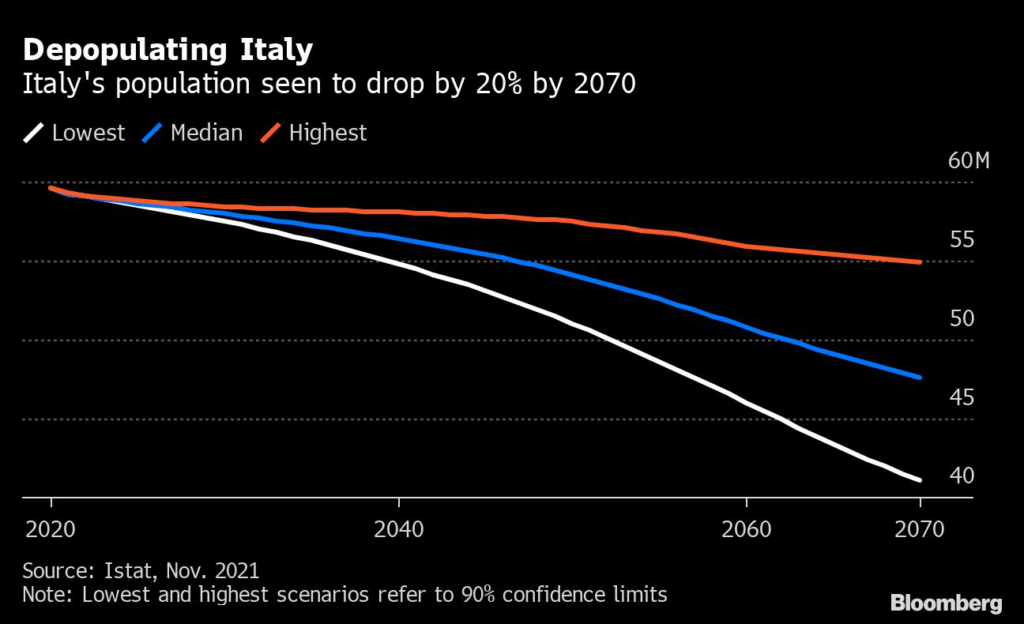
“Italy will have no people if these trends continue,” Tesla Inc. founder Elon Musk, who has warned about the dangers of global depopulation in the past, said on Tuesday. He was answering a tweet by Rome-based cyber security researcher Andrea Stroppa, who had published a demographic trend chart showing birth-rate falling for decades.

Last year Italy reported its lowest ever birth-rate at little more than one child per woman, according to Italian statistical institute Istat. That means Italy counted seven newborns and twelve deaths per thousand inhabitants in 2021, Istat said. While that was partly due to Covid mortality, Istat sees the country’s population dropping by 20% by 2070 — that’s 12 million fewer people.

Musk isn’t new on the low birth-rate topic. 

“Most people believe that we have too many people on the planet. This is an outdated view,”  Musk said in 2019 at the World Artificial Intelligence Conference in Shanghai, debating with Alibaba Group Holding Ltd. Chairman Jack Ma. Assuming AI is fine, assuming there’s a benevolent AI, the biggest problem the world will face in 20 years is a population collapse, he had added.

(Updates with further reading in final paragraph. An earlier version of this story corrected a date in the third paragraph)

More stories like this are available on bloomberg.com

©2022 Bloomberg L.P.

Biden ‘Appalled’ by New Images of Xinjiang Camps, Calls UN Chief’s Visit a Mistake

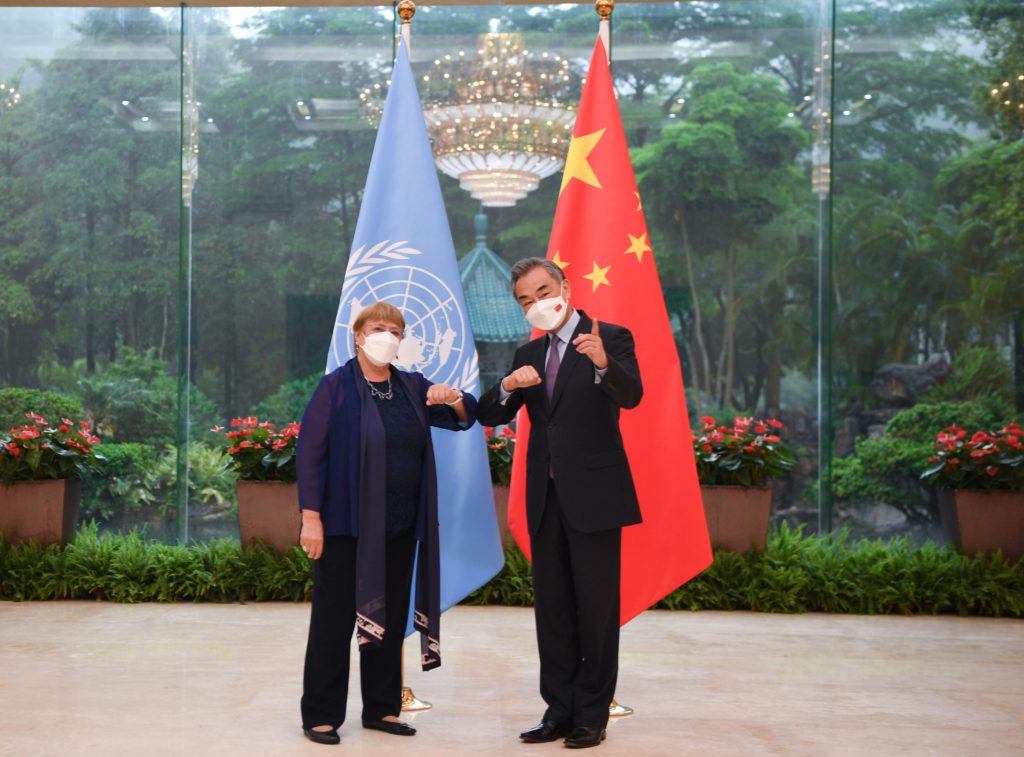
(Bloomberg) — The Biden administration is “appalled” by new images from camps in China’s Xinjiang region and considers the visit of a top United Nations official to the area this week without assurances of unfettered access a mistake, according to the State Department.

The comments by department spokesman Ned Price came after the Victims of Communism Memorial Foundation and the BBC released thousands of images of detained Uyghurs, some under the gaze of baton-wielding guards, and shortly after Michelle Bachelet, the UN high commissioner for human rights, began a controversial and long-delayed trip to China. 

“We are appalled by the reports and the jarring images of the PRC’s internment camps and camps in Xinjiang,” Price told reporters Tuesday, referring to the People’s Republic of China. 

The US has accused China of committing genocide and crimes against humanity in Xinjiang. Beijing has rejected those claims, saying it has provided the region’s majority Uyghur Muslim population with job training in massive education facilities.

Chinese Foreign Ministry spokesman Wang Wenbin said Wednesday at a regular press briefing in Beijing that the US had been “flip flopping” on the Bachelet trip. “The US was once among the most vocal in demanding a visit to Xinjiang by the high commissioner — but now it’s the biggest critic of such a visit,” he said.

“The US is worried their lies about genocide and forced labor in Xinjiang will be debunked,” he added. “They have to use a bigger lie to cover up the old lie.”

Bachelet — a former president of Chile whose family was persecuted by the country’s dictatorship in the 1970s — told diplomats on a call Monday that her trip to Xinjiang wouldn’t be an “investigation” and said that setting high expectations would lead to disappointment, according to participants on the call. 

Price said: “We have no expectation that the PRC will grant the necessary access required to conduct a complete, unmanipulated assessment of the human rights environment in Xinjiang. We think it was a mistake to agree to a visit under these circumstances.”

The UN said that Bachelet — its first human rights chief to visit China since 2005 — will issue a statement and hold a press conference on May 28 after her trip to Xinjiang ends. 

(Updates with Chinese Foreign Ministry comment.)

More stories like this are available on bloomberg.com

©2022 Bloomberg L.P.

M&S’s Quiet Aisles Show Retailer’s Turnaround Has a Way to Go

(Bloomberg) — The calm aisles of a Marks & Spencer Group Plc store in the City of London illustrate the challenges facing a retailer that has been trying to revive its performance since the turn of the millennium. 

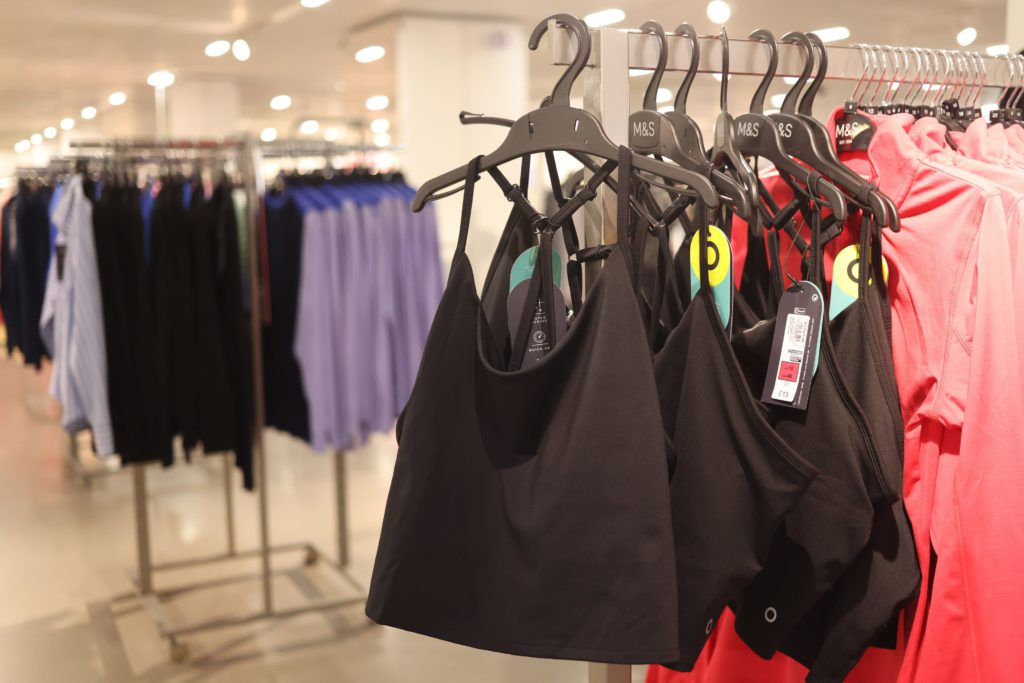
On Tuesday afternoon, the large ground floor was packed with colorful womenswear and accessories. There was no shortage of shoes, ranging from £45 ($56.40) black heels ready for the office to beach-friendly flip-flops selling for nearly £13. In the Simply Food hall in the basement, shoppers had their pick of items like ginger and cayenne pepper cordial, Vietnamese style pork belly, wild Canadian scallops and gooseberry and elderflower yogurt.

The one thing in noticeably short supply was shoppers, with only a dozen or so browsing the wares on the ground floor, and there was no line at the checkout counter. 

“M&S is nice but because their prices are so expensive I don’t really come here a lot,” said Mark Anthoneil, a London bus driver who popped into the Moorgate store to pick up a sandwich and his favorite sweets. “Every now and then I do come in because they’ve got nice stuff.”

Marks & Spencer warned on Wednesday that earnings won’t rise as sales growth is held back by the U.K.’s cost-of-living crisis and other factors. Though last year produced the fastest sales growth in at least a decade and business so far this year has been strong, the downbeat forecast presents a challenge to new Chief Executive Officer Stuart Machin and co-CEO Katie Bickerstaffe as they take over from Steve Rowe.

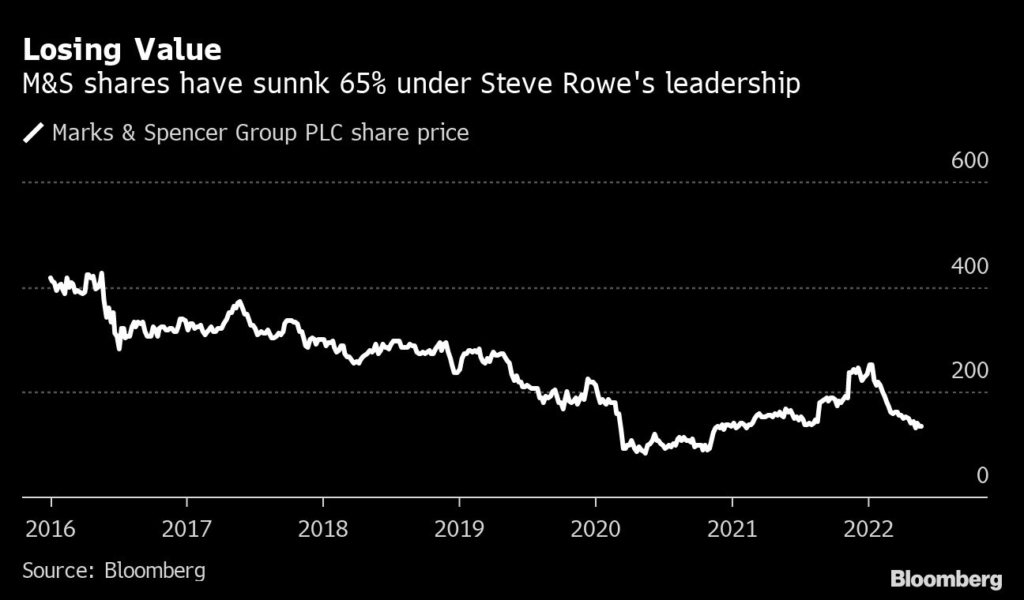
The stock was littled changed in London, having lost about two-thirds of its value under the outgoing CEO.

“People talked about the fact our store estate was an albatross around our necks,” the CEO said on a call with reporters. “In actual fact, it gives us a platform for a really strong omnichannel business, and it’s the reverse, it’s going to be one of the strengths of the new digital business the team will deliver over the next few years.”

As inflation continues to rise, shoppers will have to choose between M&S’s premium offerings and its more budget items, which are still more expensive than the likes of value retailer Primark. In April M&S announced lower prices on its Remarksable value range including bread, milk and ground beef, seeking to focus the customer on a full-basket shop rather than just eye-catching items. 

Amid the cost-of-living squeeze, Anthoneil said he won’t do his main weekly shop in the store but will limit purchases to the items he really likes. 

Marks & Spencer’s food business, which sits alongside the clothing and home operation in the retailer’s portfolio, has done better. Specializing in ready meals and sandwiches, it weathered the pandemic and now benefits from return-to-office trends. 

“I think they will try to turn it into a predominantly food business with a smaller clothing offer on the side,” said Tony Shiret, an analyst at Panmure Gordon. 

Even the food business faces challenges, though. Ocado Group Plc warned Wednesday that growth at its home-delivery joint venture with M&S will be below expectations this year as the cost-of-living crisis hits home.

As shoppers scale back online shopping and return to stores, the problem for M&S remains that too few of those shoppers are choosing its shops.


More stories like this are available on bloomberg.com

©2022 Bloomberg L.P.

Tencent-Backed Ride-Hailing Firm T3 Seeks At Least $750 Million in Round

(Bloomberg) — The operator of Chinese ride-hailing platform T3 Mobility is seeking to raise at least 5 billion yuan ($750 million) in its latest funding round, according to people familiar with the matter.

Nanjing Linghang Technology Co., as the company is formally known, is working with advisers to gauge investor interest in the round, the people said, asking not to be identified discussing a private matter.

T3 raised 7.7 billion yuan from its Series A round funding in October 2021, led by Citic Investment Holdings, according to the ride-hailing firm’s official WeChat account. The company will seek a significant premium to the roughly 24 billion yuan valuation it achieved after that round, though it hasn’t set a precise target, one of the people said. 

Discussions are ongoing and details of the fundraising could change, the people said. A representative for T3 declined to comment.

The fate of T3’s biggest rival, Didi Global Inc., and the broader crackdown-driven stock slump after its ill-starred US initial public offering last year, looms over China’s technology companies. Didi investors voted on Monday to delist its shares in New York, ending an 11-month ordeal that wiped out around $70 billion of its market value.

Founded in 2019, T3 operates in over 80 cities across China with more than 95 million registered users and nearly 600,000 registered drivers on its platform. Its daily orders have surpassed 3 million, the company said on its WeChat account in April. 

Its investors include carmakers China FAW Group Co., Dongfeng Automobile Co., Chongqing Changan Automobile Co. and internet giants Tencent Holdings Ltd. and Alibaba Group Holding Ltd., according to its website. The company is also working to develop autonomous driving technologies.


More stories like this are available on bloomberg.com

©2022 Bloomberg L.P.

Alexander Lebedev Leaves UK News Board After Canada Sanctions

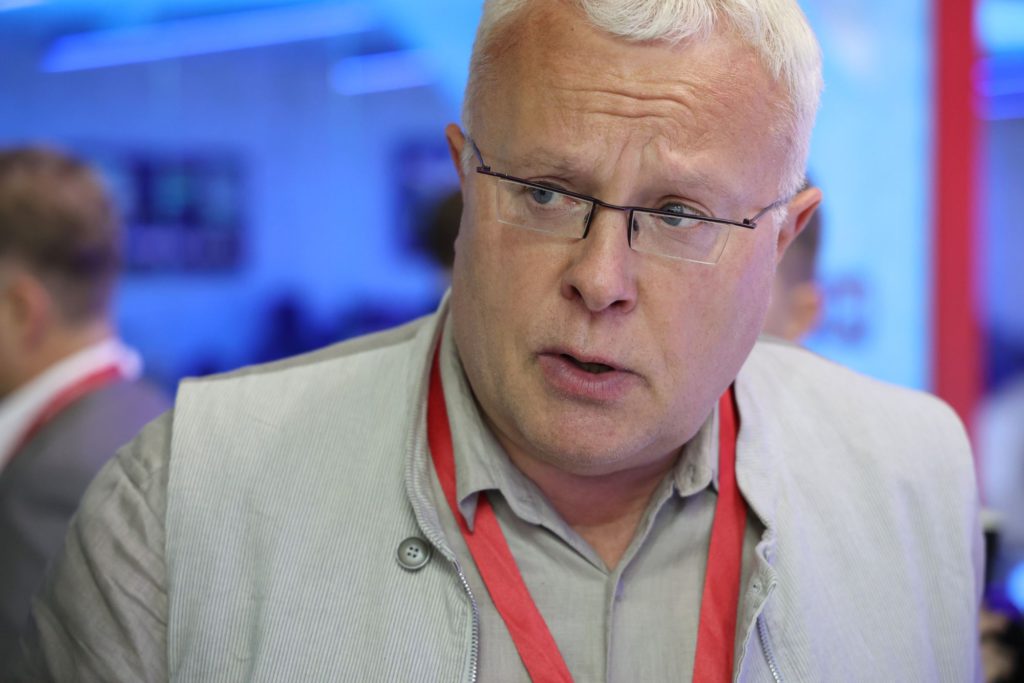
(Bloomberg) — Former KGB agent Alexander Lebedev stepped down from the board of a UK newspaper business days after he was sanctioned by Canada, filings show. 

On Sunday, Lebedev ended his directorship of Independent Print Ltd, according to a filing published Tuesday. The business provides “outsourced campaign and publishing services” to the Evening Standard newspaper and Independent news website, according to its latest available accounts. A newspaper for 30 years, the Independent went digital in 2016 and its primary trading company is now Independent Digital News and Media Ltd. 

“Alexander Lebedev has no role, commercial or otherwise, in the running of either the Independent or the Evening Standard,” said a spokeswoman for the Independent and the Evening Standard by email. 

Alexander Lebedev and his son Evgeny acquired the Independent in 2010 for £1 ($1.25), and bought London’s Evening Standard newspaper in 2009. According to filings, Alexander has never been a director of the Independent’s current main trading business, Independent Digital News and Media. He stepped down from the Evening Standard Ltd and Lebedev Holdings Ltd boards in November 2016, both majority-owned by Evgeny.

But the move underscores a tightening focus on the family which has become politically awkward for Prime Minister Boris Johnson. Johnson appointed Evgeny to the UK’s upper chamber as a Lord in 2020. Since the invasion of Ukraine by Russian President Vladimir Putin, that appointment has come under fierce scrutiny, though Lebedev has criticized the invasion and said he’s not an agent of Russia. 

Independent Print Ltd is 100% owned by Evgeny Lebedev and incurred a loss of £2.8 million in 2020, according to accounts. 

“Independent Print Ltd published The Independent in print format until its closure in 2016,” said a spokesperson for Evgeny Lebedev by email, who declined to comment on why Alexander stepped down. “The company has been retained since 2016 to deal with some of the long-term ongoing issues associated with the wind down of the printed newspaper.”

More stories like this are available on bloomberg.com

©2022 Bloomberg L.P.

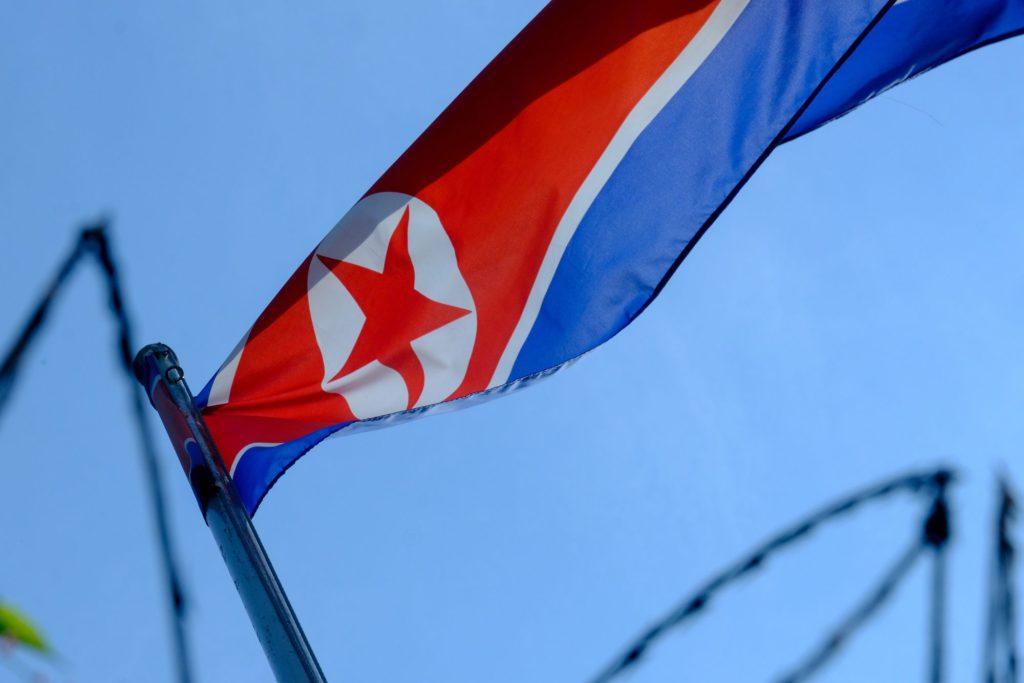
North Korea Fires Suspected ICBM as Biden Wraps Up Asia Tour

(Bloomberg) — North Korea appears to have fired an intercontinental ballistic missile Wednesday in a defiant show of force just hours after US President Joe Biden wrapped up a visit to the region, testing his efforts to strengthen defense ties with South Korea and Japan.

South Korea said a suspected ICBM reached an altitude of about 540 kilometers (335 miles) and traveled a distance of about 360 kms. The flight was far shorter than its last ICBM test in March of a missile that reached an altitude of 6,200 kilometers and traveled 1,080 kilometers to splash down in the sea west of Japan.

North Korea also fired two shorter-range missiles including one that flew about 760 kilometers and reached an altitude of 60 kilometers, its Joint Chiefs of Staff said. All three were launched from an area near Pyongyang’s main airport.

The launch of an ICBM, designed to carry a nuclear warhead to the US mainland, would be one of the biggest provocations North Korea has conducted to coincide with a visit by a sitting American president to the region. 

The White House said Biden was briefed on the launches. The US Indo-Pacific Command said in a statement, that “while this event does not pose an immediate threat to US personnel or territory, or to our allies, the missile launches highlights the destabilizing impact of the DPRK’s illicit weapons program,” referring to North Korea by its formal name.

Kim Jong Un has ignored US appeals to return to the negotiating table, and his regime usually doesn’t comment on what it fired until the next day. The country is barred from ballistic missile launches by United Nations Security Council resolutions.

“Perhaps Kim judged that remaining silent after Biden’s trip to Asia would have been out of character for North Korea,” said Soo Kim, a policy analyst with the Rand Corp. who previously worked at the Central Intelligence Agency. 

“In the face of a successful US-South Korea summit and Washington’s tepidity towards negotiating on Kim’s terms, Kim will continue to show resolve in strengthening and displaying his weapons capabilities,” she said.

Biden and US allies might not have much leverage in trying to slow down the tests or ratchet up global sanctions to punish Pyongyang for its provocations, which could soon include its first nuclear test since 2017. South Korean deputy security adviser Kim Tae-hyo said Seoul has detected signs its neighbor has been operating a detonation device, which indicates an underground nuclear explosion could be near.

The US push to isolate Russia over Vladimir Putin’s war in Ukraine, coupled with increasing animosity toward China, has allowed Kim to strengthen his nuclear deterrent without fear of facing more sanctions at the UN Security Council. There’s almost no chance Russia or China, which have veto power at the council, would support any measures against North Korea, as they did in 2017 following a series of weapons tests that prompted then President Donald Trump to warn of “fire and fury.” 

China and Russia added to tensions by conducting a military drill Tuesday as Biden finished his trip, sending bombers and other aircraft south of the Korean Peninsula and over waters between Japan and South Korea, Seoul said. 

Joint Russia-China Air Drill During Biden Trip Rankles Neighbors

“China and Russia love North Korea’s actions that cause trouble to the South Korea-US-Japan bloc,” said Cheon Seong-whun, a former security strategy secretary for South Korea’s presidential office. He added Pyongyang may feel it has a green light to press ahead on its nuclear program with Moscow and Beijing using their power to block any new sanctions.

North Korea has been firing missiles at a record pace this year. It has tested a variety of missiles designed to evade US-operated interceptors and increase the threat of a credible nuclear strike against the US and its allies in Asia. 

Kim enacted a self-imposed moratorium on tests of nuclear devices and ICBMs to facilitate talks with Trump in 2018. The two met three times and their discussions resulted in no tangible steps to wind down Pyongyang’s atomic arsenal — which only grew larger as their talks sputtered.

Biden on Tuesday wrapped up his first trip as president to South Korea and Japan for discussions with the two US allies that host the bulk of American troops in the region. He and South Korean counterpart Yoon Suk Yeol agreed to start talks on expanding joint military exercises aimed at countering the threat posed by North Korea. 

South Korea “strongly condemned” the launch, its presidential office said in a statement while the foreign ministers of Japan and the US spoke by phone and called the move a threat to peace and stability, the Foreign Ministry in Tokyo said.

Kim Jong Un’s ‘Monster’ ICBM Meant to Overwhelm U.S. Defenses

There was no indication what type of ICBM North Korea fired. South Korea had said its neighbor attempted to shoot its biggest and newest ICBM — a Hwasong-17 — on March 16, which blew up in the skies over Pyongyang shortly after take-off. Eight days later, it launched a Hwasong-15, last tested in 2017, for a successful flight, Seoul said.

Ahead of Biden’s visit, the US, South Korea and Japan had warned that North Korea was preparing to launch an ICBM. 

The three missiles tested Wednesday may have been one that is part of a system to launch warheads from the ICBM, another that was a short-range missile with a maneuverable warhead and a rocket that appears to have failed, said Melissa Hanham, a non-proliferation expert and an affiliate with the Stanford Center for International Security and Cooperation.

(Updates with nuclear test preparation.)

More stories like this are available on bloomberg.com

©2022 Bloomberg L.P.

M&S Says Russia Exit, Cost Pressure to Keep Profit From Rising

(Bloomberg) — Marks & Spencer Group Plc warned that the cost-of-living crisis and a full exit from Russia will prevent its profit from rising this year.

Sales growth will slow due to the squeeze on shoppers from the higher cost of living, the company said Wednesday. Revenue rose at the fastest rate in at least a decade in the year through April 2.

“Given the increasing cost pressures and consumer uncertainty, we do not currently expect to progress from this lower profit base,” the company said Wednesday.  

Chief Executive Officer Steve Rowe is handing over to new CEO Stuart Machin and co-CEO Katie Bickerstaffe, who will have to navigate the cost-of-living crisis and steer the food and clothing retailer’s turnaround efforts after more than a decade of attempts to jumpstart the business. Their biggest tasks will be to tackle M&S’s expensive store portfolio, boost online sales and stay competitive in clothing after being dismissed as old-fashioned, ill-fitting and pricey. 

Ocado Group Plc’s e-commerce joint venture with M&S issued a profit warning Wednesday, cutting its sales growth target for the full year to low single digits, down from around 10% previously and mid-teens before that.

M&S is taking a £31 million ($38.9 million) charge as it ends its franchise in Russia, which contributed £5.2 million pounds to earnings last year. This year M&S won’t get UK business tax relief and results will exclude Russia, the retailer said.

M&S, a stalwart of the British high street, suspended shipments to its franchisee in Russia in March after the outbreak of war in Ukraine, but Fiba Group kept open the 48 M&S stores it operates in the country. The decision to fully exit the Russian franchise ends the public-relations headache for M&S as it was criticized for holding onto ties to the country after many companies had exited.

A household brand with hundreds of stores across the nation, M&S’s successive management teams have repeatedly failed to return the chain to prior levels of annual profit. M&S shares have lost two-thirds of their value since Rowe took over in 2016. The stock was little changed Wednesday.

Rowe’s departure is the end of an era for the executive who has worked his way up from working weekends at retailer when he was 15. Under his leadership with Chairman Archie Norman, M&S has focused on cutting costs, streamlining the store portfolio, investing in online sales, expanding the food business, and improving the range, design and pricing of apparel. They’ve also been trying to reduce the retailer’s reliance on sales promotions.

M&S’s international business ran into other difficulties last year as well with the retailer closing 11 of its franchise stores in France and removing fresh and chilled products from stores in Czech Republic due to supply difficulties after Brexit. 

Machin, who already leads M&S’s food business, will take responsibility for day-to-day leadership of the company as part of the company’s new management team. Bickerstaffe, currently joint chief operating officer, will continue with her existing responsibilities including clothing and home, plus online operations and data. 

The new leadership structure, designed by Norman, is seen as promoting both of the top candidates to succeed Rowe. Among the changes, Chief Financial Officer Eoin Tonge has been given an added role of chief strategy officer. 

Some are skeptical of the plan because it may encourage turf battles.

“It looks to me like it’s going to be a problematic arrangement,” said Tony Shiret, an analyst at Panmure Gordon.


(Updates with details throughout)

More stories like this are available on bloomberg.com

©2022 Bloomberg L.P.

ECB Warns of Corporate Weakness Amid Inflation, Slower Growth

(Bloomberg) — Some companies in the euro area risk being overstretched by the combination of surging commodity prices and lower economic growth caused by Russia’s invasion of Ukraine, the European Central Bank warned. 

The region’s financial system also needs to brace for the possibility of another correction on asset markets as the conflict continues and monetary stimulus is withdrawn to combat record inflation, officials said in their bi-annual Financial Stability Review published on Wednesday. 

“The terrible war in Ukraine has brought immense human suffering,” ECB Vice President Luis de Guindos said in a statement. “It has also increased financial stability risks through its impact on virtually all aspects of economic activity and financing conditions.”

Russia’s attack in late February sent commodity prices soaring while denting confidence among businesses and consumers, damping the rebound from pandemic restrictions. ECB officials are still determined to start raising interest rates in July, with the debate shifting from the timing of lift-off to the pace at which policy should change in the coming months. 

Projections for economic growth this year have been downgraded, while inflation in the 19-nation currency bloc is set to average more than 6%, according to the European Commission. That environment is a particular challenge for companies — including air transport, accommodation, food and beverages — that never properly rebounded from Covid-19 restrictions, the ECB said. 

“These vulnerabilities are compounded by the prospect of tighter financing conditions that would adversely affect the debt servicing capacity of lower-rated firms in particular,” it said in the report.

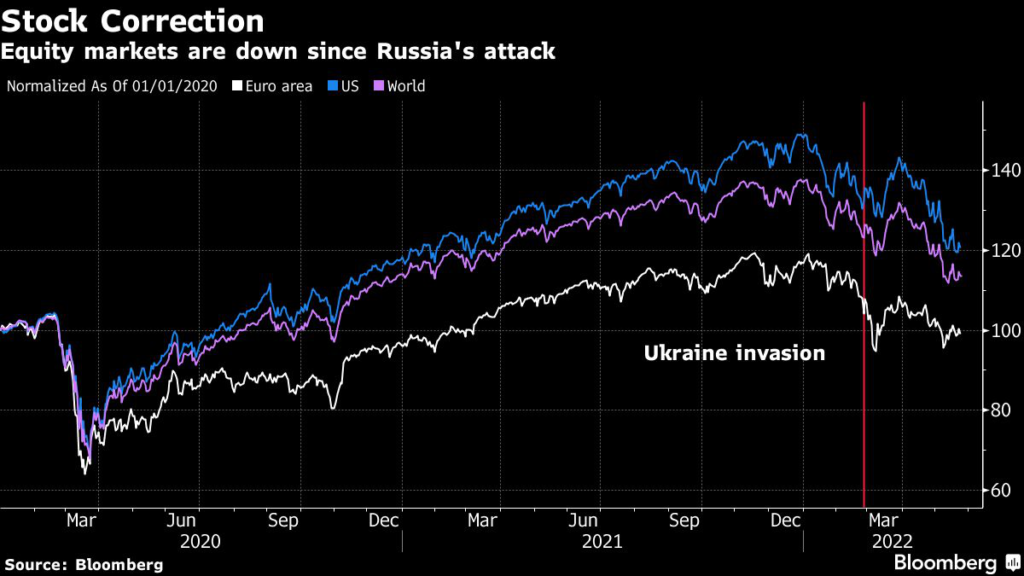
The war in Ukraine and the prospect for tighter monetary policy have contributed to a sell-off on stock markets, with key indexes in the region down more than 10% since the start of the year. Further downward moves can’t be ruled out as the conflict drags on, the ECB said. 

“Despite recent asset price corrections, valuations remain stretched in light of the deterioration in macro-fundamentals, and further sharp corrections are a risk,” according to the report. “Such corrections could be triggered by a further escalation of the war, emerging market stresses or by more persistent inflation than currently foreseen, which might prompt faster monetary policy normalization by major central banks.”

Officials also warned of vulnerabilities in the euro area’s housing sector, where prices jumped at the fastest pace in 20 years in the final quarter of 2021 — helped by low rates, changing preferences because of the pandemic and higher input costs. 

“While house price pressures are being buttressed in the near term by tight supply conditions and continued demand amid household and investor preference for housing, signs of overvaluation render some housing markets prone to price corrections,” it said. 

While the ECB cautioned that the banks could be indirectly affected by the war and its impact on supply chains and commodity prices, analysis suggests that they’re overall “resilient to the second-round effects” of the conflict. 

In a part of the report published earlier this week, officials also warned that the dramatic jump in the size and complexity of crypto markets means the sector is on track to become a risk that must urgently be regulated. While recent volatility has not proved contagious to the rest of the financial system, the threat is rising with institutional investors increasingly involved, they said. 

More stories like this are available on bloomberg.com

©2022 Bloomberg L.P.

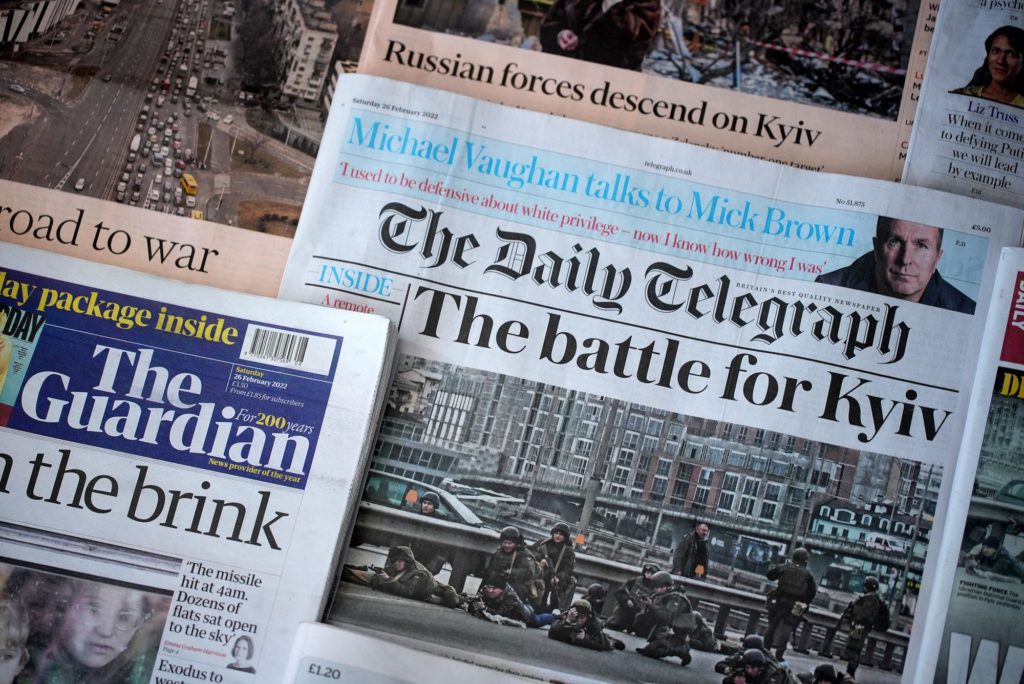
Daily Telegraph Expects Big Tech to Fund Newspaper Earnings

(Bloomberg) — Telegraph Media Group Ltd Chief Executive Officer Nick Hugh is counting on Silicon Valley to pay the British newspaper for content, which could boost growing earnings.

“I would expect there to be some form of payment from platforms on which the publishers are publishing,” Hugh said in an interview with Bloomberg about the newspaper’s 2021 earnings, published Wednesday. Operating profit jumped 25% to £33.3 million ($42 million), beating pre-pandemic numbers, while sales grew 4% to £245 million.

Governments across the globe have been pushing big tech companies to pay for snippets of articles shown on the platforms. Earlier this month, UK ministers said a new Digital Markets Unit should intervene to “address unfair and unreasonable terms” from the biggest tech companies, with a mechanism which could lead to binding arbitration to address pricing disputes. 

It follows a policy introduced in Australia which caused Facebook-owner Meta Platforms Inc. to temporarily cut off news. European publishers have also been pushing regulators for over a decade to force firms such as Google and Facebook to pay to publish content. 

“I would hope that there’s also something in due course about ensuring that the industry as a whole finds business models that work on each platform,” Hugh said, “and that the platforms have got the requirement to ensure that that happens.” 

Although they’ve lured away the lion’s share of digital classified advertising and digital display advertising, technology giants like Alphabet Inc. and Meta do already make some payments to publishers through initiatives like Facebook News. 

“We are committed to supporting the freedom and sustainability of the press,” a spokeswoman for the Department for Digital, Culture, Media and Sport said by email. “Our new digital markets watchdog will be able to ensure fair prices for content in disputes between powerful platforms and news publishers.”

Print Costs

Despite the risk of recession, and inflation in costs like newsprint and energy already hitting the sector, Hugh said he anticipates growth will continue in the current year. He added there are no plans for the business to be sold – a frequent subject of speculation. 

With 7 million registered users and 740,000 subscribers, Hugh said he’s “delighted” with the results and that he’s on track to hit a previously-stated target of 10 million users and 1 million subscriptions by the end of 2023. 

The paper’s revenues are still lower than before Covid-19 stopped commuting and shuttered the country’s high streets. And as print circulations continue to decline across the sector, the Telegraph has outsourced functions outside of journalism and subscriptions. Hugh said a deal signed a year ago to let top rivals at the Daily Mail handle print sales boosted profits. Meanwhile the paper’s printing is done by Rupert Murdoch’s News UK. 

(Updates with quotes from Telegraph media CEO and DCMS)

More stories like this are available on bloomberg.com

©2022 Bloomberg L.P.

EU’s Gentiloni Eyes Deal on Russian Oil Embargo: Davos Update

(Bloomberg) — The European Union is pushing to overcome Hungary’s resistance to a ban on Russian oil imports, with Economy Commissioner Paolo Gentiloni hopeful of a deal in a week.

“We are working on this,” he said in an interview with Bloomberg TV in Davos. Meanwhile, Ukraine Foreign Minister Dmytro Kuleba, who is speaking at several events at the World Economic Forum, said Kyiv will not trade territory for peace and the goal of the international community should be a complete victory over Russia. 

The war in Ukraine has overshadowed the first in-person Davos gathering in two years. Surging inflation, food shortages, climate change and migration risks have been high on the agenda. 

Bloomberg panels on growth and trade featuring the International Monetary Fund’s Gita Gopinath, Siemens AG Chairman Jim Hagemann Snabe and EU Trade Commissioner Valdis Dombrovskis are among the highlights on Wednesday. 

Join us here throughout the day for rolling coverage, and tune into Bloomberg TV for interviews with Irish Prime Minister Micheal Martin, Carlyle Group’s Macky Tall and many others. 

Key Developments

  • Klitschko Boxing Heroes Warn That Returning to Kyiv Is Dangerous
  • Pfizer Slashes Drug Prices for Poorest Nations, Expanding Access
  • Soros Warns ‘Civilization May Not Survive’ Vladimir Putin’s War

All times CET:

War Clouds Ownership of Europe’s Biggest Nuclear Plant (9:10 a.m.)

The head of the world’s nuclear watchdog said that Russian demands that Ukraine begin paying for electricity generated at an occupied atomic plant is adding new layers of complexity to the conflict. Russia wrested control over the Zaporizhzhya Nuclear Power Plant — Europe’s biggest such facility — in the early days of the war and has maintained control ever since. 

“The plant is in Russian hands but is operated by Ukrainian people and is feeding the Ukrainian grid,” International Atomic Energy Agency Director General Rafael Mariano Grossi told Bloomberg TV. “That brings a lot of problems that are not technical but political in nature.”

While the Kremlin has yet to officially confirm its intentions, comments last week by Russian Deputy Prime Minister Marat Khusnullin suggested to some that the Kremlin may be preparing to hold onto the plant for the long term. IAEA monitors continue trying to gain access to Zaporizhzhya, in order to account for the 30,000 kilograms of plutonium and 40,000 kilograms of enriched uranium last reported at the site.

EU Oil Embargo Seen in ‘Coming Week’ (9 a.m.)

“We are all discussing that Hungary is not supporting the oil embargo, and it’s true but we are working on this,” Gentiloni told Bloomberg TV. Asked if the EU could move to halt Russian oil imports without Hungary, he added: “I don’t like to discuss Plan B when we are working on Plan A.”

Pfizer Slashes Drug Prices for Poorest Nations (9 a.m.)

Pfizer Inc. plans to sell its entire portfolio of brand-name drugs at cost in as many as 45 lower-income countries, one of the most comprehensive and ambitious drug-access programs ever announced by a large pharmaceutical manufacturer.

The initiative will start in five African countries with 23 drugs for cancer, rare illnesses, inflammatory conditions and infectious diseases. It will eventually include all of the New York-based company’s future therapies or vaccines. The drugs will be sold at the cost of manufacturing, Pfizer said, typically a fraction of their price in U.S. or European markets. Chief Executive Albert Bourla plans to speak about the drugmaker’s effort at Davos.

Ukraine Seeks Return of All Territories (8:55 a.m.)

“Ukraine will fight until it returns all of its territories,” President Volodymyr Zelenskiy said at a breakfast organized by the Victor Pinchuk Foundation. The war may turn into a diplomatic dispute after Russia withdraws its forces where they were before the full-scale invasion on Feb. 24. Ukraine won’t make concessions, he said, adding that talks with Russia have stalled.

Russian President Vladimir Putin doesn’t “realize to the very end what is happening, he lives in his informational world,” Zelenskiy said via video link.

Ukraine Says West Shouldn’t Push Partial Victory (8:50 a.m.)

Ukraine’s Kuleba said the transatlantic alliance was “reinvigorated” only because of his nation’s efforts to withstand the Russian invasion and should in turn fully back Ukraine’s desire to achieve a complete victory. The government in Kyiv has previously expressed concern that some allies would prefer it agree to cede some territory in order to bring the war to a quick end.

“We need the West primarily to finally accept the idea that the ultimate goal of this war should be the victory of Ukraine,” Kuleba said at the Victor Pinchuk Foundation event.

“Even some very good friends of Ukraine who help us really a lot they are are still hesitant,” he said. “What is the end goal of their support for Ukraine? Is it not to allow Russia to win? Is it not to allow Ukraine to fail? No, the goal should be very simple and clear — Ukraine must win. Full stop. Period,” Kuleba said.

Inflation Is Top Concern for Ontario Pension Board (8:45 a.m.)

Inflation is the biggest concern for the Ontario Teachers’ Pension Plan Board, according to Chief Executive Officer Jo Taylor.

The board, which manages the retirement savings of about 330,000 teachers, has increased its holdings of commodities and inflation-sensitive assets to deal with that challenge, Taylor said in an interview with Bloomberg Television. It has also reduced its holdings of publicly traded equities, he said.

Ukraine Doesn’t See NATO Securing Grain Passage (8:15 a.m.)

Ukraine’s Kuleba said he saw no desire from NATO now to help secure safe passage of grains through the Black Sea, an effort seen as crucial to counter concerns about food shortages and rising prices.

“If NATO did not close the Ukrainian skies in the most tragic moments of the war, why should they dare to close the Ukrainian sea to allow the free passage of vessels with Ukrainian agricultural products,” he said. “I would wholeheartedly welcome the decision, but I just don’t see the stamina and the bravery to take all the risks associated with this operation.”

The interruption of the agricultural cycle of Ukraine risks a multi-year global food crisis, Kuleba told a breakfast organized by the Victor Pinchuk Foundation, “but in the end, the problem is that you cannot trust Russia even if they sign papers guaranteeing safe passage.”

Randstad Cites Upward Pressure in Wages (8:10 a.m.)

There’s upward pressure in wages in all markets and more so in the US than in Europe, said Randstad NA Chief Executive Officer Sander van’t Noordende in an interview with Bloomberg TV. Van’t Noordende said wage inflation is reaching 5% in US and is around 3% in Europe.

Now that “everybody knows that virtual working works” more people are looking for flexibility and to be able to work from home some of the time, he said. “Spending time together is still important, but it depends on what team you’re part of and what the moment is to be together.”

The head of the employment services provider said 70% of Millennials are looking for a new job as opposed to 40% of older generations.

Inflation May Be Here for Years, Vestas CEO Says (8 a.m.)

Inflationary pressures aren’t going to ease any time soon, Vestas Wind Systems A/S CEO Henrik Andersen said in an interview with Bloomberg TV.

“I don’t see it easing,” according to Andersen, who runs the world’s largest manufacturer of wind turbines. “We have to now get used to that this could continue not only for quarters to come but also for years to come.” Higher costs for materials and transport have erased profits for the wind-turbine industry just as it’s needed to ramp up to achieve global climate goals. Andersen said his company will return to making money once supply chain issues have been normalized.

More stories like this are available on bloomberg.com

©2022 Bloomberg L.P.

Close Bitnami banner
Bitnami