Bloomberg

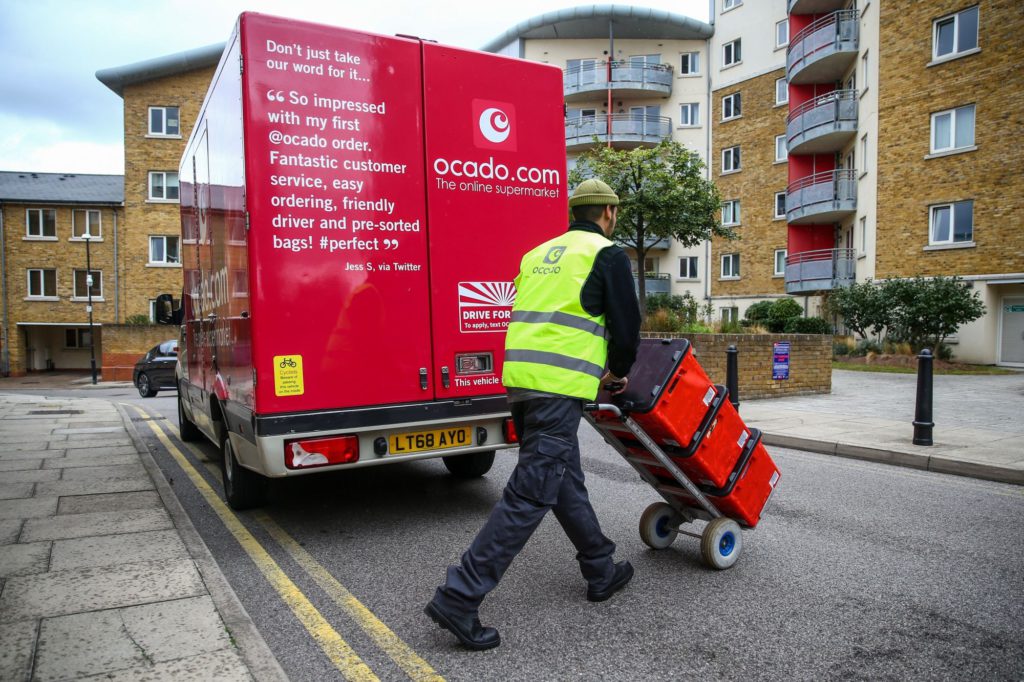
Ocado Sinks as Cost-of-Living Crisis Hits M&S Grocery Venture

(Bloomberg) — Ocado Group Plc shares fell after the UK online grocer cut the sales growth target for its joint venture with Marks & Spencer Group Plc, citing the country’s cost-of-living squeeze.

Ocado Retail now expects growth for the 2022 fiscal year in the low single digits rather than around 10% guided previously, according to a statement Wednesday. 

The shares fell as much as 8% early Wednesday in London.

Ocado flourished during Covid lockdowns as more consumers shopped online from home. With shoppers returning to stores and the higher cost of energy and other staples squeezing spending power, performance has eased. The guidance for sales growth around 10% at Ocado Retail was already reduced from a previous expectation in the mid-teen percentages.

In addition to the venture with M&S, Ocado operates a growing technology licensing business that develops automated warehouses for other grocers.

Separately, M&S on Wednesday warned that the cost-of-living crisis and a full exit from Russia will prevent its profit from rising this year.

More stories like this are available on bloomberg.com

©2022 Bloomberg L.P.

KKR-Backed UK Startup Paddle Strikes $200 Million Deal

(Bloomberg) — UK startup Paddle is making its first acquisition, spending more than $200 million in a mix of cash and equity to buy ProfitWell to grow its payments service.

Founded in 2012 by then 18-year-old Christian Owens, Paddle raised $200 million from investors led by KKR & Co Inc at a $1.4 billion valuation earlier this month. Paddle focuses on building tools for software companies to handle payments including checkout and subscription management.

The deal has already closed, leaving the combined company with about 330 employees, Owens said in an interview. He added that he has known ProfitWell Chief Executive Officer Patrick Campbell for about five years, and that the addition is “heavily complimentary” given ProfitWell’s focus on areas like pricing, revenue recognition and metrics for software-as-a-service companies. 

Paddle currently has offices in London and New York. Owens is also a previous winner of the Thiel Fellowship, which awards $100,000 grants to about two dozen college-age students each year on the condition that the kids drop out to start companies.

Amid fears of a global downturn and plunging technology stocks, Owens said that he has seen a gradual slowdown of growth at the software companies Paddle works with. “We’re still fairly early into those trends,” he added. 

(Corrects founding year of Paddle)

More stories like this are available on bloomberg.com

©2022 Bloomberg L.P.

State-Backed Fund JIC Is Said to Explore Offer for Toshiba

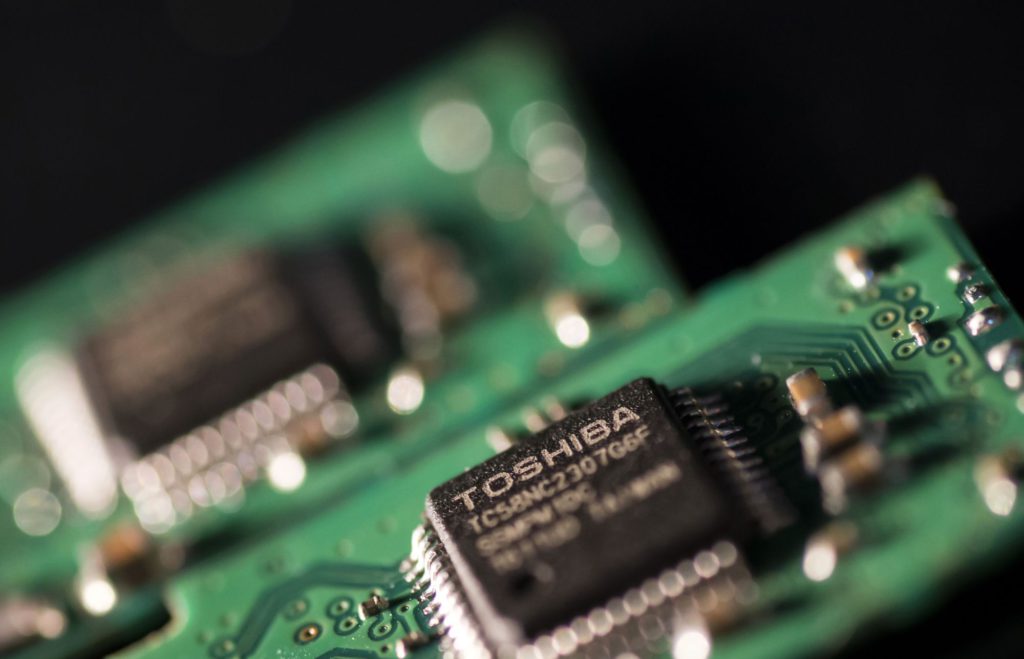
(Bloomberg) — State-backed investment fund Japan Investment Corp. is considering a bid for Toshiba Corp., according to people with knowledge of the matter.

JIC has signed a confidential agreement with the Japanese conglomerate for access to detailed finances as it weighs an offer, said the people, who asked not to be identified as the information is private. Some private equity funds have approached JIC to explore a potential joint bid, the people said.

Deliberations are ongoing and JIC could decide against proceeding with an offer, the people said.

Shares of Toshiba extended gains to as much as 3.3% and touched their highest level since 2008 on Wednesday after the Bloomberg News report.

A representative for JIC declined to comment. A representative for Toshiba declined to comment on JIC’s interest and reiterated that several partners have signed confidentiality pledges. Toshiba will provide updates and announce the number of non-binding bids received before its annual shareholders meeting, the representative said.

Toshiba is fielding take-private proposals after its shareholders rejected a plan put forward by management to split the company. The conglomerate said this month that 10 potential investors and sponsors have signed confidentiality pacts and non-binding offers are due by May 30.

The company added JPMorgan Chase & Co. and Mizuho Financial Group Inc. to help evaluate the submissions. It had already hired Nomura Holdings Inc. as an adviser. Bain Capital, Blackstone Inc., CVC Capital Partners and KKR & Co. are among buyout firms that are weighing bids for Toshiba, Bloomberg News has reported.

JIC, founded in 2018, aims to enhance Japan’s competitiveness through supporting the growth of next-generation industries and stimulating private sector investment, according to its website. The Japanese government is JIC’s majority shareholder with an investment of about 367 billion yen ($2.9 billion), while 25 investors including Asahi Kasei Corp. and Canon Inc. have contributed 13.5 billion yen in total.

A buyout of Toshiba, which has a market value of about $19 billion, could be private equity’s biggest ever deal in the country. The potential deal would add to the $105 billion worth of transactions targeting Japanese companies announced over the past year, according to data compiled by Bloomberg.

Read more: Private Equity Firms Eyeing Toshiba Buyout Face Nuclear Dilemma

(Adds Toshiba shares price in fourth paragraph.)

More stories like this are available on bloomberg.com

©2022 Bloomberg L.P.

Anti-Woke Texas Oil Regulator Fends Off GOP Rival in Runoff

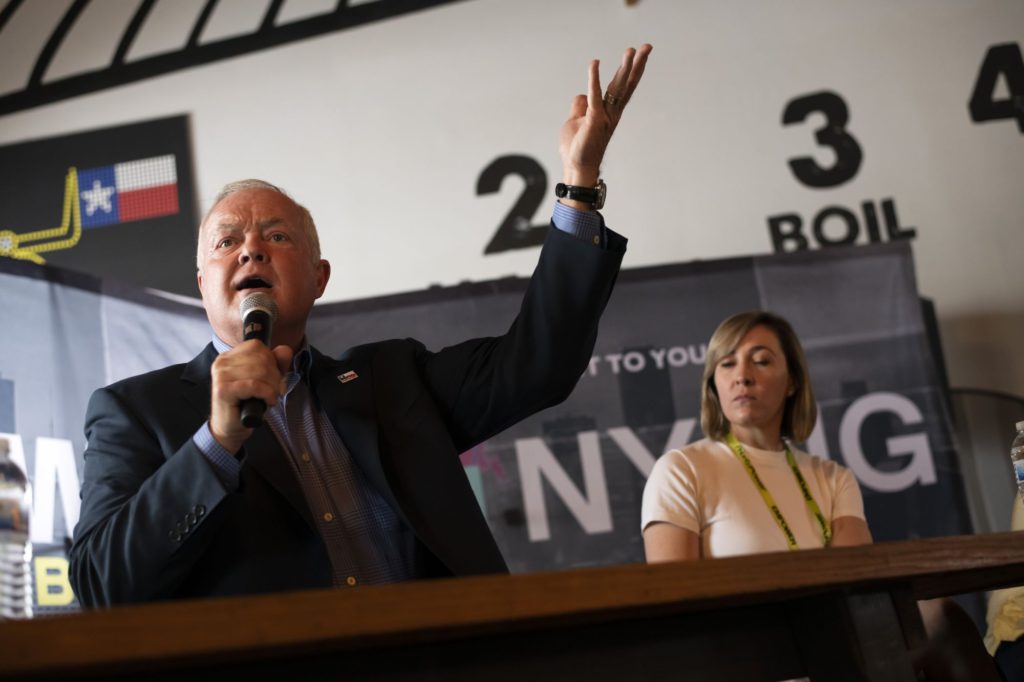
(Bloomberg) — A Texas oil regulator critical of renewable fuel and “woke” ESG investing won the Republican nomination for a seat on the powerful panel that oversees crude output in the nation’s largest energy producer. 

Texas Railroad Commission Chairman Wayne Christian will now face Democrat Luke Warford, along with Green and Libertarian contenders, in the November general election. The Associated Press declared Christian the victor with 66.8% support and more than half the votes counted. 

Christian faced an aggressive challenge by oil and natural gas attorney Sarah Stogner, who sought to portray the incumbent as beholden to energy-industry interests and anathema to robust regulation.

The commissioners, whose mandate to oversee the oil industry trace back to the early days of Texas wildcatting a century ago, have been under fire from some quarters for failing to prevent the catastrophic February 2021 failure of the state’s electricity grid. 

More than 200 died in the disaster that darkened and paralyzed the second-largest US state for the better part of a week.  

The panel, which OPEC took as its model during its 1960 founding, has at times wielded considerable power over global energy markets through its ability to control the flow of Texas crude. 

As recently as 2020 the panel considered — and ultimately rejected — rationing output after a worldwide glut and pandemic-driven demand crash triggered an unprecedented collapse in oil prices.

More stories like this are available on bloomberg.com

©2022 Bloomberg L.P.

Crypto Traders Had Rough Tax Season, Intuit CEO Says

(Bloomberg) — Intuit Inc. Chief Executive Officer Sasan Goodarzi said his predictions that cryptocurrency investors would be hit with surprise obligations this tax season came true.

Many new retail stock and crypto investors “have piles of documents that include all of their trading,” Goodarzi said in an interview. “Not being able to make heads or tails out of ‘What does this mean to my taxes’ — so it creates fear, uncertainty and doubt.”

Intuit, the maker of TurboTax and other consumer finance software, estimated the number of customers filing crypto transactions with their tax returns will more than quadruple this fiscal year compared with a year earlier.

“I think most of these folks are even in a bigger hurt now — last year, it was all the money they may have made and not really understanding the implications,” Goodarzi said Tuesday after Intuit’s earnings were announced. “Now some of it could be the other impact — how much they’re losing.” 

Goodarzi said the company will be working to educate users throughout the year on tax implications of investing.

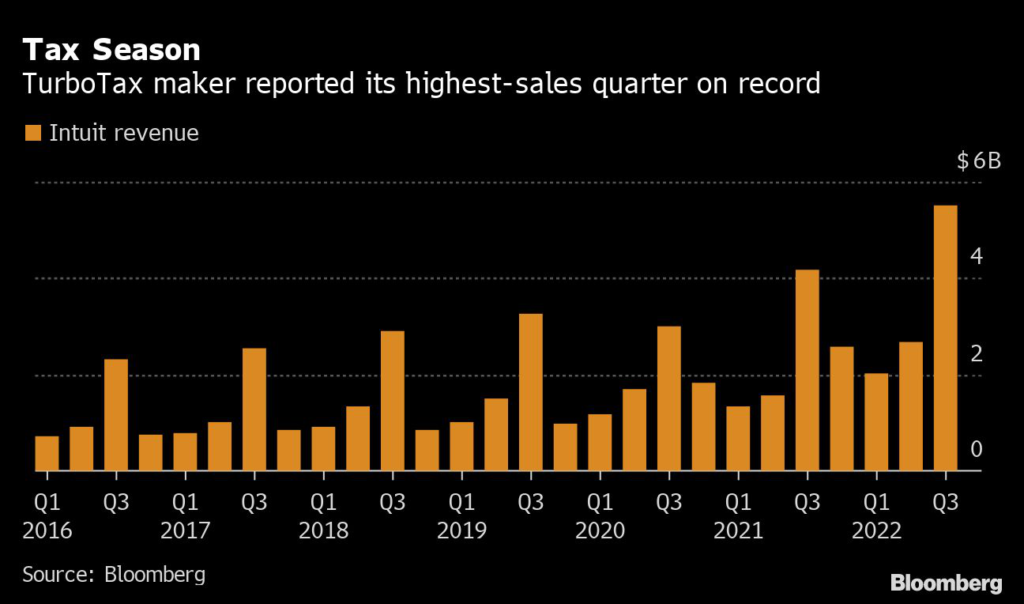
Intuit reported revenue and earnings that topped analysts’ estimates for the fiscal third quarter, which ended April 30 and is typically the firm’s biggest due to tax filing deadlines. Revenue jumped 35% to $5.6 billion, and the software company increased its sales and profit forecast for the fiscal year.

Much of the growth comes from two recent acquisition. Intuit bought email marketing firm Mailchimp last year for $12 billion, and personal finance website Credit Karma in 2020 for $7.1 billion. The two products are now among the fastest-growing in Intuit’s portfolio. Credit Karma revenue increased a record 48% in the quarter.

Intuit shares climbed about 3.5% in extended trading after closing at $358.97. The stock has dropped 44% this year amid a wider selloff in software companies.

Weighing on Intuit’s results was a $141 million payment to settle a lawsuit from state attorneys general across the US alleging the company duped users into paying for TurboTax when they were legally eligible for free tax filing services. 

During a conference call Tuesday, Chief Financial Officer Michelle Clatterbuck said the company was pleased to put the issue behind them. But a separate U.S. Federal Trade Commission lawsuit targeting the company’s TurboTax advertising practices remains open.

Goodarzi called the FTC’s complaint “meritless,” particularly since their allegations overlap with the state attorneys general lawsuit the company has settled. “We’re going to fight them,” he said.

More stories like this are available on bloomberg.com

©2022 Bloomberg L.P.

Ex-Just Eat CEO Mulls Raising VC Fund After Cutting Angel Checks

(Bloomberg) — David Buttress, the former chief executive officer of UK food delivery firm Just Eat, is weighing plans to create his own venture capital fund after a making nearly a dozen investments on his own. 

Buttress joined venture capital firm 83North as a venture partner after stepping down from Just Eat in 2017, and has also made 10 so-called angel investments into startups across food delivery and other sectors. 

“This is something I’ve clearly enjoyed doing,” he said in an interview. “So I’ve actually been in the process of exploring the concept of building my own little fund.” 

Buttress hasn’t formally committed to anything and said “it’s something I’m going to continue to think about.”

As a venture partner with 83North, Buttress has worked with companies such as Asian food delivery startup HungryPanda. He has personally backed companies including virtual restaurant brand Honest Food Company — eventually acquired by Delivery Hero SE — and Egyptian ordering service elmenus. 

He uses his own capital for the investments, with individual checks of as much as $750,000 at a rate of about two deals a year, he said. Alongside focusing on areas such as consumer and food delivery, where he had experience, he’s also branched into health-tech. 

His latest investment is MyJam, a grocery delivery startup, which raised $2.4 million from investors including Buttress, who will chair its board. He said he sees opportunity around grocery delivery for consumers who like to make frequent orders from shops with authentic produce.

Started in 2019 by Syrian founder Moe Ghashim, MyJam partners with neighborhood grocers and plans to grow its product range to more than 6,000 items. The average order size is 59 pounds ($74), Ghashim said in an interview.

More stories like this are available on bloomberg.com

©2022 Bloomberg L.P.

Globant Plans M&A to Boost Push Into Asia and Europe

(Bloomberg) — Argentina’s software giant Globant SA plans more growth through acquisitions that give it access to new markets and technologies, its chief executive officer said after the purchase of one of Uruguay’s biggest tech firms. 

The company looks to continue growing in Asia and Europe, said Martin Migoya in an interview. The purchase of GeneXus SA, one of Uruguay’s oldest software companies, is part of Globant’s strategy of investing in artificial intelligence to accelerate software development. It will also deepen Globant’s reach into Asia, as the Uruguayan company has a third of its clients in Japan, Migoya said. 

Now, Buenos Aires-based Globant, which makes software and develops technology for global companies including Google, Electronic Arts Inc. and Banco Santander SA, is eyeing more targets. The company is looking for acquisitions that would either help it grow in priority locations or expand its reach into new areas of business.

“Our purchases are very strategic,” Migoya said. “They’re not about volume, because next to our revenue most figures look small. But we look at impact, in terms of multiplying connections with other clients.”

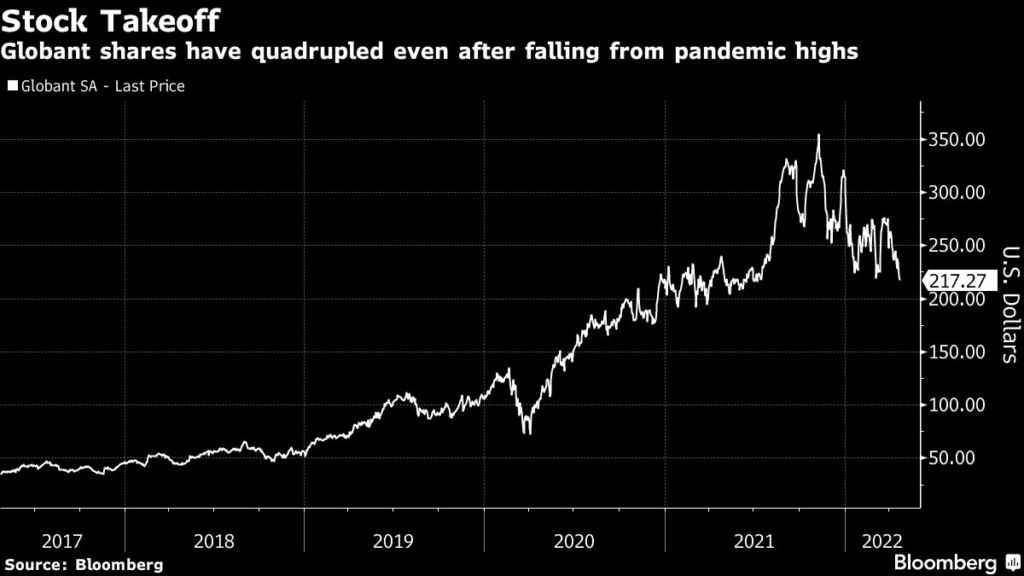
Globant posted $1 billion in annual revenue for the first time last year, and expects sales to soar 70% this year. Migoya declined to disclose the value of the GeneXus purchase. 

Read More: Two Homegrown Companies Defy Argentina’s Gloom: Matthew Winkler

Thematically, the company is looking at the online world known as the metaverse, gaming, crypto and AI for potential targets, but said these may change. The company has also made acquisitions in the crypto space, including the purchase of blockchain specialist Atix Labs Srl last October.

“Crypto is one of the biggest disruptions we’ve seen since the invention of the Internet,” Migoya said. “It’s a paradigm shift of how the world is storing and measuring value. I trust it on a personal level and trust it’s one of the world’s best reserves of value.”

Among the sectors with the most revenue potential, he noted projects related to the metaverse or digital transformation processes that gained momentum during the coronavirus pandemic. 

Other key points from the interview:

  • Migoya said Globant is allowing employees to work remotely indefinitely, while also continuing to invest in its offices around the world for those who choose to work in person.
    • The company has offices in 18 countries and on Thursday it announced the launch of its new Santiago office, as well as a pledge to invest $40 million there in the next three years
  • He added that operations haven’t been significantly affected by the war in Ukraine, though the company is supporting employees in Belarus and offering relocation
  • A data breach last month had limited impact on the company, he added

(Corrects story originally published April 22 to remove erroneous revenue projection in fifth paragraph.)

More stories like this are available on bloomberg.com

©2022 Bloomberg L.P.

Top Soy Processor Bunge Expands Deforestation Tracking in Brazil

(Bloomberg) — Bunge Ltd., the world’s biggest oilseed processor, is using satellite imagery to reduce the sourcing of soybeans from deforested areas in Brazil.

The company can already trace the origins of its direct purchases from Brazil, Argentina and Paraguay. Now, the company will be able to track 64% of crops from its indirect supply chain in key regions, up from 30% last year, according to a statement. The goal is to track 100% of all purchases by 2025.

Companies are cutting back on purchasing grains from deforested areas like the Cerrado and Amazon to reduce their carbon footprint. The Cerrado is known as one of the high-risk areas of deforestation in Brazil and responsible for over half of the country’s output of soybeans and corn. 

“We are seeing more and more demand for a clean carbon footprint, not only offsetting,” said Rob Coviello, Bunge’s chief sustainability officer.

Bunge is tracking indirect purchases by giving resellers access to digital monitoring tools, including satellite imagery that can identify deforestation from farms they buy from.

More stories like this are available on bloomberg.com

©2022 Bloomberg L.P.

Snap’s Gloomy Outlook Leads to Record Stock Tumble, Hits Rivals

(Bloomberg) — Snap Inc. plunged 43%, posting its biggest-ever one-day drop and dragging down social media peers, after the company cut its revenue and profit forecasts, blaming the weaker economic outlook for a sudden slowdown of its advertising business.

“We continue to face rising inflation and interest rates, supply chain shortages and labor disruptions, platform policy changes, the impact of the war in Ukraine, and more,” Chief Executive Officer Evan Spiegel said in a note to staff on Monday. The company will also slow hiring.


Read More: Evan Spiegel’s Full Memo to Staff

The gloomy forecast was a sharp pivot from the tone struck last month in Snap’s first-quarter earnings report, when the company beat projections for user growth and said it planned to keep investing through the economic headwinds to keep up its business momentum.

“The macroeconomic environment has deteriorated further and faster than anticipated,” Snap said late Monday in a filing. “As a result, we believe it is likely that we will report revenue and adjusted Ebitda below the low end of our Q2 2022 guidance range.” The company’s second-quarter revenue forecast, for 20% to 25% year-over-year growth, was already below analysts’ estimates. 

Snap fell to $12.79 at the close in New York on Tuesday, well below its initial public offering price of $17 a share in 2017. The collapse in the stock spread to other internet and social networking stocks, with Meta Platforms Inc. falling 7.6%, Google parent Alphabet Inc. slipping 5% and Twitter Inc. dropping 5.6%. In total, social media stocks shed more than $135 billion in market value following Snap’s dour forecast.

Snap had benefited from a surge in usage of its Snapchat app during the pandemic, when people were looking for entertainment and connection from their homes. Now, as people return to offices and schools, the company is reeling from the same combination of economic pressures that are also beleaguering its competitors. 

Internet platforms are all competing for ad dollars at a challenging time. Advertisers are facing a shaky economy as well as recent privacy changes, such as Apple Inc.’s tracking restrictions, which have slowed businesses that were booming during much of the pandemic.

The companies “are having to bring these unattainable, unrealistic investors’ expectations back down to Earth,” said Dan Suzuki, deputy chief investment officer at Richard Bernstein Advisors, on Bloomberg Television Monday. “Underlying growth is slowing as these companies mature and it gets more competitive.” Suzuki’s firm, which has about $15 billion of assets under management, doesn’t hold Snap stock directly.

Facebook parent Meta last month cut spending because of the economic environment. Twitter recently announced a hiring freeze and other cost cutting measures to try and save cash. “The global macroeconomic environment has become less favorable, the war in Ukraine has impacted our results, and may continue to do so,” Twitter Chief Executive Officer Parag Agrawal said in an email to employees. “Many other companies have been experiencing a similar effect.”


Snap’s Spiegel told staff that company leaders have been asked to review spending, to see if there are any other areas worth cutting. “Our most meaningful gains over the coming months will come as a result of improved productivity from our existing team members,” he wrote.

Santa Monica, California-based Snap will add 500 roles before the end of the year, on top of 900 jobs already offered this year. This compares to about 1,800 new staff added over 2021.

More stories like this are available on bloomberg.com

©2022 Bloomberg L.P.

Elon Musk Drops Out of $200 Billion Club Again as Tesla Tumbles

(Bloomberg) — Elon Musk has once again fallen out of the $200 billion club. 

Musk, the world’s richest person, saw his fortune drop Tuesday by 5.4% to $192.7 billion as shares of Tesla Inc. slid almost 7%. The electric carmaker’s losses outpaced those of the broader S&P 500 Index, which ended the day down 0.8%. 

Read more: Tesla Resumes Plunge as Fears of Slow Production Weigh

While Musk’s wealth is the lowest it’s been since Aug. 26, the Tesla co-founder is still easily the richest of the handful of people worth at least $100 billion, according to the Bloomberg Billionaires Index. Amazon.com Inc.’s Jeff Bezos is second at $127.8 billion. 

Musk, 50, last dipped below the $200 billion threshold in March. But markets promptly staged a rally, lifting his net worth to $288 billion on April 4, according to the wealth index. 

That was the same day that Musk disclosed he’d acquired about 9% of the social media platform Twitter Inc. Days later he launched a takeover bid and eventually secured the board’s approval, but doubts over the acquisition have grown amid a tech stock rout that’s dragged down both companies’ shares. 

Musk said earlier this month the deal would be on hold until Twitter produced public proof about the number of accounts on the platform controlled by bots. Twitter maintains the purchase is moving forward as planned.

More stories like this are available on bloomberg.com

©2022 Bloomberg L.P.
Close Bitnami banner
Bitnami