Bloomberg

Tesla Resumes Plunge as Fears of Slow Production Weigh on Stock

(Bloomberg) — Tesla Inc. is struggling Tuesday as the electric-vehicle maker’s production woes in China refuse to go away, leading another analyst to slash their 12-month price target on the once high-flying stock.

“With about 13,000 units of production per week and higher than average margins, any production loss at Shanghai is bound to have a significant impact on margins and earnings,” said Daiwa analyst Jairam Nathan, who cut his price target to $800 from $1,150.

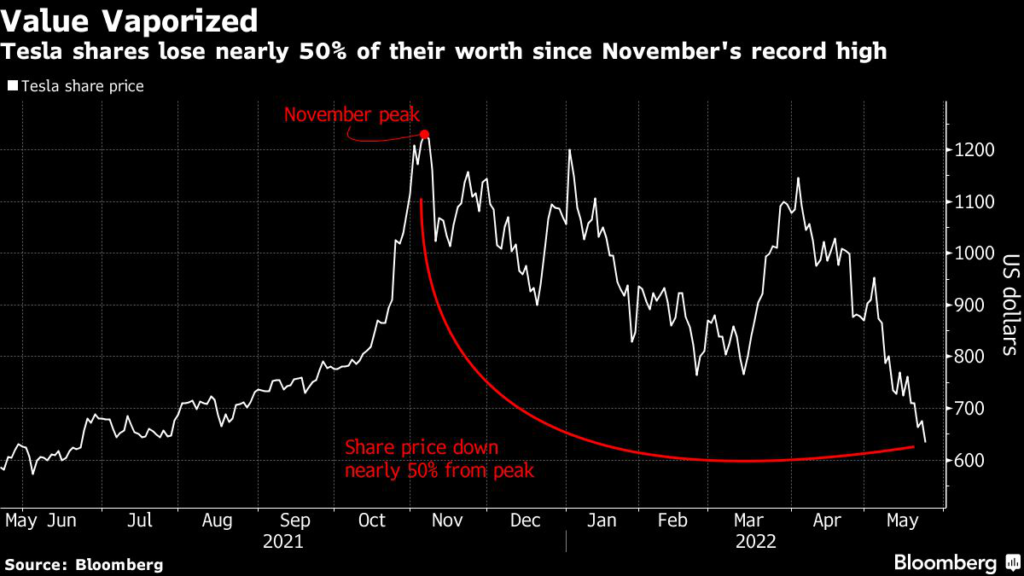
Until recently, Tesla was considered the ultimate growth stock, rising 50% last year and closing at $1,145 on April 4, when CEO Elon Musk announced his 9.2% stake in Twitter Inc. Since then, Musk has been  engaged in highly public attempt to buy the social media platform. And Tesla’s stock has been in a freefall, sinking to around $635 and wiping out almost half its market capitalization since touching a record high in November.

Since Musk revealed his Twitter stake, Tesla shares have plunged 43% compared with a 14% decline in the S&P 500 Index and a 28% drop in the S&P 500 consumer discretionary sector. It’s the eighth worst performing stock in the S&P 500 over that time and the fourth biggest drag in terms of index points. 

Tesla also has dramatically underperformed most of the market’s other major tech growth stocks since April 4, including Facebook parent Meta Platforms Inc., Apple Inc.. Amazon.com Inc. and Google parent Alphabet Inc. Streaming service Netflix Inc. is the only FAANG name to be putting up a worse performance than Tesla since the news broke of Musk’s Twitter position.

All of this helps explain why Musk’s highly-public back-and-forth with Twitter has captivated markets, particularly as he sold $8.5 billion of Tesla stock to pay for the buyout. With the billionaire’s seeming recent reluctance to go forward with the purchase, Musk and Tesla are getting the wrong kind of publicity at a pivotal time for investors. The deal spread, or the difference between Musk’s offer price and Twitter’s share price, is $18, the widest since the takeover plan was announced in April. 

Beyond the Twitter distraction, Tesla’s key Shanghai factory has faced disruptions due to long-running Covid-19 lockdowns in the city. The company also was dropped from the ESG version of the S&P 500 earlier this month, a move that could lead to some forced selling by funds benchmarked to that gauge. And the company has also dealt with the supply shortages and surging raw material costs that other automakers face.

Read more: Tesla Weighs on S&P 500 as Twitter Waffling, China Hit Stock

The broader market environment has also turned against highly valued growth companies with the Federal Reserve raising interest rates to tame inflation. Goldman Sachs on Monday said hedge funds continue to reduce exposure to growth stocks, incrementally rotating away from Apple, Amazon and Tesla.

“Tesla is a high growth company, so the majority of its valuation is driven by future growth expectations,” said Seth Goldstein, equity strategist at Morningstar Research Services. “Even small changes in future growth assumptions can have a large impact on the stock’s valuation.”

More stories like this are available on bloomberg.com

©2022 Bloomberg L.P.

Soros Warns ‘Civilization May Not Survive’ Putin’s War

(Bloomberg) — Billionaire George Soros warned that Russia’s invasion of Ukraine has rattled Europe and could be the start of another world war.

“Other issues that concern all of humanity — fighting pandemics and climate change, avoiding nuclear war, maintaining global institutions — have had to take a back seat to that struggle,” Soros, 91, said Tuesday at the World Economic Forum in Davos, Switzerland. “That’s why I say our civilization may not survive.”

Soros, a Hungarian-born Holocaust survivor, focused his speech on the rise of the “repressive regimes” of Russian President Vladimir Putin and Chinese President Xi Jinping, calling the two countries the “greatest threat to open society.” His philanthropic organization of that name, Open Society Foundations, funds groups promoting justice, democracy, human rights and progressive politics.

The two leaders have made “mind-boggling mistakes,” Soros said. “Putin expected to be welcomed in Ukraine as a liberator; Xi Jinping is sticking to a Zero Covid policy that can’t possibly be sustained.”

The persistent lockdowns in China will disrupt supply chains, which could keep inflation around the world elevated and create a global depression, he said. He added that Xi’s errors may have cost him a third term.

Previous Critiques

Soros has previously used the WEF stage to unleash blistering critiques. At the last meeting, in January 2020, he suggested without evidence that Facebook Inc. might be conspiring to help re-elect Donald Trump, who lost the US presidency later that year.

In 2019, the former hedge fund manager warned of the “mortal danger” of China’s use of artificial intelligence to repress its citizens, a theme he hit again in his speech Tuesday. 

“AI is particularly good at producing instruments of control that help repressive regimes and endanger open societies,” Soros said. “Covid-19 also helped legitimize instruments of control because they are really useful in dealing with the virus.”

He also commented on the state of European politics. Former German Chancellor Angela Merkel made the country the best-performing economy in the region in part thanks to deals with Russia for gas and China for automobile exports, but now “there is a heavy price to pay,” he said.

“Germany’s economy needs to be reoriented,” Soros said. “And that will take a long time.”

The European Union’s REPowerEU package of measures unveiled last week will make Chancellor Olaf Scholz “particularly anxious” because of Merkel’s previous agreements, Soros said. By contrast, Italian Prime Minister Mario Draghi is “more courageous,” even though the country is just about as dependent on Russia gas.

Soros closed his hedge fund in 2011 and converted the firm into a family office, investing solely on behalf of himself, his family members and his network of philanthropies. He has a personal fortune of $8.5 billion, according to the Bloomberg Billionaires Index.

(Updates with comments on European politics starting in ninth paragraph.)

More stories like this are available on bloomberg.com

©2022 Bloomberg L.P.

Miami Mayor Suarez Tells Davos He Still Takes Salary in Bitcoin

(Bloomberg) — Miami Mayor Francis Suarez said he’s still taking his city salary in Bitcoin even after a rout that sent the cryptocurrency down almost 40% over the past two months.

“I will note, for the record, that it’s not my only salary,” he told a panel at the World Economic Forum in Davos, Switzerland, on Tuesday. “It’s a different decision than if a person was deciding to take their salary in Bitcoin if it was the only source of income for them.” 

The Republican mayor, who’s been seeking to promote Miami as a cryptocurrency and tech center, said he’s more focused on the utility of the coin and that the collapse of the TerraUSD stablecoin hadn’t changed his vision for fostering the crypto industry in the city. He first announced his plan to take his paycheck in Bitcoin last year and cautioned that people needed to be aware of the high risk and volatility involved with digital assets, in addition to the possibility of high rewards.

Suarez, a 44-year-old lawyer, stressed the difference that exists between protecting people from fraud, and protecting people from losses. He pointed to the “tremendous volatility” that exists in tech stocks as well. 

“Government has had a tendency over time to try and protect people against losses, and you can’t protect people against losses,” he said. “That’s the American system. That’s what makes investing. That’s the risk component to winning as well.”

Suarez, who also heads the US Conference of Mayors, said in a separate interview that it was flattering to have his name raised as possible US presidential candidate in an editorial published this week by Washington Post commentator George Will. He noted that the US had never seen a president ascend from a mayoralty.

“We’ve also never had a Hispanic president, and I think that’s something that the country would love to see at some point,” said Suarez, the son of Cuban immigrants. “As you see a generational change from the baby boomer generation to my generation, you also wonder what party is going to really do a good job of messaging to connect with that generation.”

While Florida Governor Ron DeSantis, a fellow Republican, is frequently mentioned as a possible presidential candidate and has raised his profile by taking on “cultural war” issues popular with his base, Suarez has bridged the partisan divide on many hot-button issues in recent weeks, saying he believed in nurturing the LGBTQ community in Miami and calling for increased efforts to fight global climate change.

Read More: Miami’s Three Mayors Bridge Partisan Divide With Climate Stance

More stories like this are available on bloomberg.com

©2022 Bloomberg L.P.

Best Buy Staves Off Deeper Rout With Better-Than-Feared Results

(Bloomberg) — Best Buy Co.’s forecast cut was less dramatic than Wall Street feared after last week’s rout in US retailers, helping to stave off more losses for the stock.

Rising wages and supply-chain costs pressured profit in the first quarter and show little sign of abating soon, Chief Executive Officer Corie Barry said Tuesday after the company reported earnings. But that hasn’t pushed expenses too far beyond projections, and sales of key electronic goods are expected to pick up in the second half of the year, she said.

The results offered some solace to investors after Best Buy was caught up in last week’s selloff sparked by worsening profit forecasts at Walmart Inc. and Target Corp. While Best Buy’s fiscal first quarter was expected to be weak as the US economy lapped an injection of government stimulus in early 2021, sales fell less than analysts predicted, and Barry said costs were only “a little higher” than planned. 

“We continue to be in a fundamentally stronger position than we expected to be” before the pandemic, she said on a conference call with analysts. 

Best Buy rose 0.5% at 12:36 p.m. in New York as broader markets fell. The shares had tumbled 29% this year through Monday, while an S&P 500 index of consumer-discretionary stocks declined 31%. Best Buy slid 16% last week alone.  

Worsening Backdrop

The worsening economic backdrop prompted the consumer-electronics retailer to cut its annual forecast for earnings, revenue and same-store sales. The company also revised its outlook for operating profit to between 5.2% and 5.4% of sales, down from the previous prediction of 5.4%.

Barry said she expects “elements of soft demand” this year but not a full-on US recession.

US consumers are “getting a little bit more wary” amid the highest inflation rates in four decades, she said. But technology is becoming more central to consumers’ lives, limiting the extent to which they’re looking to cut spending on Best Buy’s wares. Easing supply-chain constraints should improve availability of popular merchandise such as Apple Inc. products, video-game consoles and speakers later in the year, she said. 

While the company made inroads among lower-income and female shoppers during the pandemic, customer demographics are starting to shift back to their traditional skew toward higher-income men, the CEO said.

Revenue slipped 8.5% to $10.6 billion in the three months ended in late April. That exceeded the $10.4 billion average of analyst estimates. Inventory only rose about 9%, a modest increase compared with the jumps of more than 30% at Walmart and 40% at Target, which prompted markdowns. 

In the first quarter, Best Buy’s adjusted earnings fell to $1.57 a share, trailing the $1.60 average of analyst estimates compiled by Bloomberg. Comparable sales fell 8%, while analysts had expected a 9.4% drop.

“We think investors were bracing for an even larger outlook reduction,” said Scot Ciccarelli, an analyst at Truist Securities, in a note to clients. “However, with such a modest reduction, we suspect investors will be asking, ‘Is that enough?’”

More stories like this are available on bloomberg.com

©2022 Bloomberg L.P.

US Consumers Seen Shrugging Off Economic Gloom: Davos Update

(Bloomberg) — Bank of America Chief Executive Officer Brian Moynihan says US consumers have money to spend and will unlikely be deterred by inflation and economic gloom. 

The upbeat forecast on the second day of the World Economic Forum in Davos, Switzerland provided a counterpoint to the fallout from Russia’s invasion of Ukraine, which is dominating the gathering in the Swiss Alps.

European Commission President Ursula von der Leyen earlier made an urgent appeal for international action to prevent a global food crisis that she said is being maliciously stoked by Russian President Vladimir Putin. European Central Bank President Christine Lagarde told Bloomberg Television that officials won’t rush into withdrawing stimulus and her French colleague echoed her to insist there’s no consensus for a half-point interest-rate hike.

On Wednesday, Bloomberg TV has interviews lined up with EU Economy Commissioner Paolo Gentiloni, Irish Prime Minister Micheal Martin, Carlyle Group’s Macky Tall and many others. Bloomberg is also hosting panels on global growth and trade, featuring IMF’s Gita Gopinath, Siemens AG Chairman Jim Snabe, and EU Trade Commissioner Valdis Dombrovskis. 

Key Developments

  • European Leaders in Davos Decry Russia Using Food as ‘Blackmail’
  • Lagarde Says ECB Won’t Rush as Consensus Shuns Half-Point Hike
  • Food Crisis Risks ‘Messy’ Migration Wave Into Europe, EU Warns
  • Saudi Arabia Says It’s Done All it Can For the Global Oil Market
  • New World Order Adds Fresh Impetus to M&A, Say Davos Dealmakers

All times CET:

Green Energy Boss Sees Finance Flowing (6:05 p.m.)

Rising fossil-fuel prices aren’t stemming the tide of finance going toward renewables, said Mads Nipper, chief executive officer of the world’s biggest developer of offshore wind farms Orsted AS. “The capital will keep flowing through the green sector,” he said. “I’m not concerned about the long-term structural shift back to fossil-fuel assets.”

New investments in carbon-emitting assets wouldn’t make sense from a climate or financial perspective. “From a pure business point of view, it’s insane,” Nipper said. “They’re going to be stranded assets.”

Galp Calls for New-Energy Incentives (6 p.m.)

Portugal’s biggest oil company called on authorities to provide better incentives for renewable project to encourage the transition away from fossil fues. “We’ve got to avoid the stick on oil and gas and put the carrot into the incentives for the new energy system,” Galp Energia SGPS SA Chief Executive Officer Andy Brown said during a panel discussion.

YouTube Sees Misinformation as Constant Problem (5:45 p.m.)

“There will always be incentives for people to be creating misinformation,” YouTube CEO Susan Wojcicki said in an interview. “The challenge will be to keep staying ahead of that and making sure that we are understanding what they are.”

YouTube “has really focused on free speech” and “must ensure that everyone has a right to express their point of view, provided they meet our community guidelines.”

Bank of America CEO Bullish on US Consumers (5:45 p.m.)

The US consumer is still in a strong position, despite inflation and other macroeconomic concerns, Bank of America CEO Brian Moynihan said in an interview on Bloomberg TV, adding that account balances are “multiples bigger” now than before the pandemic.

“Consumers have more money in their accounts,” he said. They have not spent all their pandemic money, and nothing will slow them down right now, he added.

Erdogan Lists Turkey’s Concerns in Call With NATO Chief (5:40 p.m.)

Turkish President Recep Tayyip Erdogan mentioned concerns including support for alleged terrorism in a call with NATO Secretary General Jens Stoltenberg about membership bids by Sweden and Finland, according to the head of the military alliance.

Erdogan “expressed many of the concerns that he has expressed publicly, and that’s about terrorism, it’s about their concerns about the PKK, and also of course the need for Turkey to be able to acquire the weapons that they need,” Stoltenberg told a panel about the May 21 call. “I still hope and work for a quick solution.”

Stoltenberg welcomed efforts to “get more grain out of Ukraine by train, on land, and also the efforts now addressing also if it is possible to get it out on ships.” He added “That is a difficult task, it is not an easy way forward” and urged Russian President Vladimir Putin to end an effective blockade of Odesa and other ports.

Microsoft CEO Says Stronger Regulation Inevitable (5 p.m.)

Microsoft Corp. Chief Executive Officer Satya Nadella said “it’s inevitable to have stronger regulatory regimes around all facets of technology” given the pervasiveness of digital tech in people’s lives, and businesses must “anticipate and adapt to regulation.”

Speaking in an interview at Davos, Nadella said the EU has taken the lead in internet safety and moderation with its General Data Protection Regulation, and companies must align their objectives with the broader good.

Timmermans Cites ‘Incredibly High’ Energy Profits (4:30 p.m.)

EU climate chief Frans Timmermans said companies must carry more of the burden from the surging energy costs that have plunged many of the world’s poorest into a cost-of-living crisis, and warned failure to act could jeopardize support for the green transition.

“The fact that energy companies are now pocketing windfall profits — incredibly high profits — while citizens are suffering because they don’t know how to pay their energy bills” is not helping to create a long-term cooperation between companies and politics, Timmermans said on a Bloomberg panel alongside Spanish Prime Minister Pedro Sanchez and Lithuanian President Gitanas Nauseda.

“Someone who doesn’t know how to make it to the end of the month can’t be bothered with the end of the world,” Timmermans added.

Qatar Wealth Fund Sees Opportunity, No Recession (4 p.m.)

The Qatar Investment Authority is on the hunt for small, growth-stage technology companies in Europe as its regional head plays down recession fears. “If you look at where I would stand today, looking at economic indicators, would I forecast a recession? Probably not,” Ahmed Ali Al Hammadi, the sovereign wealth fund’s chief investment officer for Europe, Russia and Turkey, said on a panel.

Market angst hasn’t deterred the fund from seeking investments in small emerging technology companies in places like France, Germany and Italy that he calls the continent’s “shining stars.” He added “there are rays of hope where valuation is not so sensitive anymore, these companies are smaller in size, and you’re able to get a better value than what you would see probably in the public markets.”

Switzerland Still Mediator, President Says (4 p.m.) 

Swiss President Ignazio Cassis defended his government’s carefully-navigated position on Russia’s invasion of Ukraine, telling a panel discussion that “being neutral doesn’t mean not having any values.” Russian Foreign Minister Sergei Lavrov told Cassis his government’s decision to follow the EU’s lead on sanctions meant the end of Swiss neutrality, but the Swiss president told the audience he disagreed.

“We had to draw a line and say this is not a line we could play in this conflict,” Cassis continued. “It doesn’t mean we’ve lost our role as a mediator. By taking this clear position, we’ve shown which values we uphold and where we want to draw the line and where we want to build bridges.”

Citigroup Sees Greater European Inflation Risks (3:40 p.m.)

Citigroup Inc. has seen European corporate clients become more cautious, according to the bank’s top executive in the region. While there’s still enormous liquidity available to companies across Europe, many are struggling with growth as the continent battles inflation and energy disruptions caused by Russia’s invasion of Ukraine, David Livingstone, head of Citigroup’s businesses in Europe, the Middle East and Africa, said in an interview with Bloomberg Television.

“In the U.S., inflation hasn’t been present like this for four decades,” and the situation is similar in western Europe, Livingstone said. “The distinction in Europe, of course, is energy input volatility — gas prices much higher here. And if there’s further interruption I think that’s going to have very significant inflationary effects and that’s going to pass onto the consumer very quickly.”

Dubai Conglomerate Says Higher Food Inflation Coming (3:15 p.m.)

The chief executive officer of Majid Al Futtaim Holding LLC, the Dubai-based retail and property conglomerate that owns the Carrefour hypermarket franchise in the Middle East, said it would no longer be able to stop passing on price rises to customers.

“It’s not possible any more,” Alain Bejjani said in an interview. The impact of the Ukrainian conflict on global supply chains is “huge.” Saudi Arabia and Dubai are “bright spots” for the company, he said, with demand in those two almost back to pre-Covid levels.

IPO Pipeline ‘Incredibly Strong’: NYSE (3 p.m.)

The number of companies planning to go public on the New York Stock Exchange remains robust even amid the recent market downturn, NYSE President Lynn Martin said.

“The good news is the demand to go public has never been stronger,” Martin told Bloomberg TV. “The pipeline’s incredibly strong,” she said, adding that many companies are just trying to figure out the right moment to sell shares.

Monkeypox Can Be Contained, Officials Say (2:50 p.m.)

Monkeypox isn’t the next Covid-19, and the world already has the tools it needs to contain the outbreak, according to public health experts.

The virus probably won’t trigger the next pandemic, Seth Berkley, chief executive officer of the GAVI Alliance, said in an interview with Bloomberg TV. WHO officials said that the disease can be contained if people are informed of the symptoms so they can recognize it quickly.

Spain’s Economy ‘Much Better Prepared’: Sanchez (2:45 p.m.)

Spain’s economy will suffer from the fallout of the war in Ukraine but the nation is “much better prepared” than some of its European peers due to a relatively low dependence on Russian energy, according to Prime Minister Sanchez.

“It is also true that we have good fundamentals, strong fundamentals of the Spanish economy,” Sanchez said in an interview with Bloomberg TV. Spain gets less than 8% of its gas and less than 5% of its oil from Russia, and renewables account for 57% of installed capacity, Sanchez said.

Luxembourg Defends EU Unity on Sanctions (2:35 p.m.)

The EU shouldn’t go ahead with a Russian oil embargo without Hungary, Luxembourg’s Prime Minister Xavier Bettel told Bloomberg. Solidarity remains key,  he said, adding it wouldn’t be helpful if sanctions packages were agreed only among 26 of the EU’s 27 countries this time, and 25 next time.

“It’s not sanctions a la carte, unity is important,” he said, adding that within those packages there could be modalities, like delays or quantities, for different countries to comply with those sanctions.

Ukraine War Triggering New Fossil-Fuel Drive (2:25 p.m.)

The war in Ukraine is prompting a “headlong plunge” to expand fossil fuel production, US Climate Envoy John Kerry told a panel.

The next eight years will be crucial in terms of the world’s ability to meet the Paris Agreement target, but “we cannot do this if the new theology is to build out massive new gas infrastructure” without abatement, he said.

New World Order Adds Fresh Impetus to M&A (2:20 p.m.)

The emergence of a new geopolitical order in the coming years will help to drive cross-border mergers and acquisitions, according to senior dealmakers. 

“From a US policy perspective, hopefully we will see the emergence of a US-European super block that rearranges the global order and has significant implications for M&A transactions,” Peter Orszag, chief executive officer of financial advisory at Lazard Ltd., said on a panel. A desire to relocate supply chains in the wake of Russia’s war in Ukraine will underpin the trend, said Luisa Gomez Bravo, global head of corporate and investment banking at Banco Bilbao Vizcaya Argentaria SA.

Bridgewater Sees US on Verge of Stagflation (1:30 p.m.)

The US is on the on the verge of stagflation and markets are under-discounting gains in consumer prices, according to Bob Prince of Bridgewater Associates.

“We could very easily be into this very quickly,” Bridgewater’s Prince, who is co-chief investment officer alongside founder Ray Dalio and Greg Jensen, said on the prospect of stagflation. 

The world’s largest hedge fund firm runs the Pure Alpha II fund, which jumped 26.4% through April, outperforming peers.

Ireland’s Varadkar Warns London to Consider Rest of UK (1:10 p.m.)

The UK government needs to consider the impact of imposing decisions on other parts of the UK and its potential impact on the strength of the union, Ireland’s Deputy Prime Minister Leo Varadkar said in a Bloomberg Television interview.

“London and Westminster needs to think about the consequences of imposing things on Northern Ireland and Scotland that they don’t want, and I’m not sure they think about that enough,” the Minister for Enterprise, Trade and Employment said, as a row continues between the UK and EU over the part of the Brexit agreement dealing with Northern Ireland.

“The U.K. is our nearest neighbor, a really important trading partner,” he said, adding that he wants to see a stable and successful UK that is “sure about its place in the world.”

Gopinath Says Food Prices May Continue to Increase (12:45 p.m.)

IMF First Deputy Managing Director Gita Gopinath predicted that restrictions on food exports and a shortage of fertilizer mean global food prices are likely to continue to increase.

IMF officials “worry a lot about what’s going to happen with food prices,” she said on Bloomberg TV. Gopinath also said it’s premature to talk about a global recession, though some regions are being hit harder than others, and a technical recession is possible in some countries, such as in Europe.

World ‘Can Win Ukraine, Climate Change Battles’ (12:30 p.m.)

US Climate Envoy Kerry said the world must not retreat from its goal of tackling climate change even as Russia’s war in Ukraine stokes soaring energy prices. America will help make up Europe’s shortfall of Russian gas and more oil production from the Middle East may be required to quell inflationary pressures, but that does not mean there should be a “massive build out” of fossil-fuel infrastructure, he said.

“If we make the right choices here, we can win all of these battles,” he said. “We can do what we need to do with respect to Ukraine, we can do what we need to do with respect to the climate crisis,” Kerry said. “But we cannot be seduced into believing that this suddenly is an open door to going back and doing what we were doing, which created the crisis in the first place.”

NATO Chief Confident on Sweden, Finland (12:15 p.m.)

NATO Secretary General Jens Stoltenberg said he’s confident that the alliance will find a way to resolve Turkish concerns and accept Finland and Sweden into the military alliance.

Russia’s Putin “wanted less NATO on his borders and launched a war. Now, he’s getting more NATO on his borders and more members,” Stoltenberg said. NATO allies are in talks to overcome Ankara’s opposition to the admission of Sweden and Finland, over their alleged support for autonomy-seeking Kurdish militants who’ve been battling Turkey for years.

Poland Sees Unrest in North Africa Over Grain (11:50 a.m.)

Polish President Andrzej Duda warned of civil unrest in North Africa unless Ukraine is able to ship its grains that are trapped in the country because of the war.

Ukraine accounts for about 80% of grains exports to countries like Egypt, and it’s key to ensure the shipments are made through ports including on the Baltic Sea in Poland, Latvia and Lithuania, he told a panel. If that doesn’t happen, many in northern Africa could face starvation, he said.

Von der Leyen Denounces Russian ‘Blackmail’ (11:30 a.m.)

“Russian artillery is bombarding grain warehouses across Ukraine –- deliberately — and Russian warships in the Black Sea are blockading Ukrainian ships full of wheat and sunflower seeds,” von der Leyen said in a speech, denouncing what she called “Russia’s blackmail.”

Europe is “working hard to get grain to global markets,” including 20 million tons of wheat currently stuck in Ukraine, she said. The bloc is also boosting its own production and working with the World Food Programme make sure vulnerable countries can buy food at affordable prices, she added.

Estonia Sees Turkey Spat Slowing NATO Enlargement (11 a.m.)

Estonian President Alar Karis said he’s confident that negotiations with Turkey will overcome its objections to Sweden and Finland joining NATO. But he told Bloomberg that the dispute over support for Kurdish groups, which Ankara regards as terrorists, could potentially slow down their inclusion in the military alliance.

“Maybe in 6 months,” he said. “Within a year it should be there. But again it’s very difficult to predict especially in this stage of this process.” Asked what would be the repercussion if Turkey refused to budge, he replied “I don’t know, I don’t think about it. NATO’s a collective organization and then we have to sit down and think about it. If it’s right to have a veto from one country or if we should have a voting system, I don’t know.”

Goldman Sees ‘Cyclical Carnage’ in Tech Stocks (10:45 a.m.)

Goldman Sachs sees strong long-term returns in tech once it weathers the current rough patch. “The very big picture for technology — I just want to be super clear — is that we’re facing cyclical carnage at the moment in public markets,” Katie Koch, CIO of public markets equity at Goldman Asset Management, said in a Bloomberg TV interview. “The long-term opportunity here is actually exceptional.” 

Private markets discounting bad news on technology is “still a couple of quarters away,” she added. The market has priced in a lot of bad news in China, but there are selective opportunities in Chinese firms driving climate transition and those in digitalization of the economy, she told a panel on markets.

IBM Warns of Cyber-Attack Risk (10:40 a.m.)

IBM CEO Arvind Krishna said a major cyber attack on “critical infrastructure is going to happen.” Speaking on a panel, he said it was inevitable that “a bad actor, probably a nation state” will hack essential public services. He revealed that digital coverage of the Augusta Masters golf tournament was hit with 40 million cyber attacks.

War Must Not be Excuse for Climate U-Turn: Sanchez (10:30 a.m.)

Spain’s Sanchez warned fellow leaders that the war in Ukraine must not be used as an excuse for backpedaling on climate goals.

“I think it’s very important to reaffirm this commitment today, because perhaps for some leaders this war could be used as an excuse not to fulfill their commitments on climate,” Sanchez said during a Q&A. “We should not forget that for climate change we don’t have a vaccine,” he added. “And for that we need to strengthen multilateralism and not forget the biggest threat that we have ahead of us.”

Enel Seeks Viable Buyer for Russia Unit (10:10 a.m.)

Enel SpA needs to find a “viable buyer” for its Russian unit after starting the selling process in the wake of Russia’s invasion of Ukraine, CEO Francesco Starace said in an interview on Bloomberg Television.

Starace also said “we need to be prepared for shocks” on Russia fossil-fuel supply. “We have to be prepared for the worst. This is not a simple situation,” he added.

Gnodde Says M&A Business ‘Surprisingly Strong’ (9:40 a.m.)

Goldman Sachs Group Inc.’s Richard Gnodde said the M&A pipeline is “still surprisingly strong” as companies continue to look to buy assets as prices fall.

“We really haven’t seen a slowdown,” the chief executive officer of Goldman Sachs International said on Bloomberg TV. About 70% of Goldman’s workforce are now typically in the office and that number is “drifting upwards,” he added.

CATL Sees Switch From Combustion Cars by 2035 (9:30 a.m.)

The world’s biggest maker of electric-vehicle batteries said it expects sales of combustion vehicles to end in major markets by 2035 at the latest.

Contemporary Amperex Technology Co. is pouring billions into rapidly expanding production to meet anticipated demand as batteries displace engines powered by fossil fuels. Chief Manufacturing Officer Jun Ni made the forecast at a panel on Tuesday, in which he didn’t specify any geographical markets. Still, it’s in line with major automakers like Volkswagen AG also planning to eliminate combustion car sales in Europe by 2035.

Swiss Re Quantifies Ukraine War Hit (9:20 a.m.)

Swiss Re expects a hit of $10 billion to $20 billion for the insurance industry from the war in Ukraine, Chairman Sergio Ermotti said in an interview with Bloomberg TV. Between the war and the Covid-19 pandemic, the reinsurer has seen its share of volatility in recent quarters, he said.

“You see more people taking on life-insurance protections, you see people taking on more cyber-risk protections as a consequence of what’s going on in Ukraine,” he added.

UBS Sees Clouds Clearing in the Next Three Months (9:15 a.m.)

UBS CEO Hamers said that he expects to see more clarity in global markets within the next three months as clients digest the fallout from recent geopolitical events. “We had to digest three major shocks: the pandemic shock, the war shock and the energy-transition shock,” he said. “Supply shocks and demand shocks all mixed in one.”

Wealthy clients, he said, aren’t panicking. They are staying invested, though not necessarily putting new money into the market. “I’m not sure they’re worried about what’s coming,” Hamers said. “It’s just they don’t know what’s coming.”

Unilever Sees Commercial Rationale for ESG Moves (9:15 a.m.)

Investors are exhorting us to put sustainability and ESG at the heart of our business model and that’s for hard commercial purposes, said Unilever CEO Alan Jope, citing consumer demand, cost efficiencies and the ability to attract top talent. 

But a lack of clear, harmonized metrics is a major challenge. “We are in danger of letting perfect get in the way of good, of letting complex get in the way of simple, and of local getting in the way of the global,” he said.

BofA’s Moynihan Understands Musk’s ESG Frustration (9:05 a.m.)

Bank of America’s Moynihan said that he can “understand the frustration” of Tesla Inc.’s Elon Musk over ESG metrics that penalize companies for historical or obscure reasons.

Speaking on a panel, Moynihan said his bank faced similar issues with old acquisitions that had overhanging litigation, for example, despite a broader commitment to investors to meet ESG standards. He was responding to a question about Musk’s recent tweet calling ESG an “outrageous scam.”

Unilever’s Jope chimed into the debate, saying “Elon can relax.” Tesla could be “at the top of the pack” at one of the ESG ratings agencies, he said on the same panel. But we shouldn’t be able to “pick and choose” the standards, he added.

Recession Not ECB Baseline, Lagarde Says (9 a.m.)

Lagarde rejected the idea that the euro area is heading for a recession for the time being, while acknowledging the need to be “very attentive” to economic developments. “We don’t have that as a baseline,” she said. 

“We are not in a panic mode,” she added. “We are now at a stage where there is every certainty that we will stop net assets purchases very early in July, deciding so in June, which will then clear the way for rate hikes that will come reasonably shortly after that.”

Lagarde: Monetary Policy at ‘Turning Point’ (8:50 a.m.)

Lagarde said she decided to set out the future path of monetary policy in a blog post on Monday in part to address “expectations that were not necessarily founded.”

Read more: Lagarde’s Rate-Hike Plan Irks Some at ECB Who Want Faster Option

“We are clearly now at a turning point, and I thought it was appropriate at this point to explain what the journey is, what the direction of travel is, what the destination is in the relatively short term and what is our aim point as well,” Lagarde said in an interview with Bloomberg TV.

“I thought it was a good time given the combination of volatility that was out there, expectations that were not necessarily founded and the strong convergence that arose from the Governing Council due to the multiple positions as expressed during the last few days,” she added.

Top Polluters Face $67 Trillion Bill to Hit Climate Goal (8:45 a.m.)

The world’s seven-biggest polluters will have to spend $67 trillion by the end of this decade to stay on the path of achieving climate neutrality mid-century, according to a report from Polish Economic Institute that’s due to be presented in Davos on Tuesday.

The economies — China, the US, the EU, Brazil, India, Russia and Japan — are responsible for 70% of global greenhouse gas emissions. Their efforts are key for the world to meet the goals of the 2015 Paris Agreement to limit warming to “well below” 2 degrees Celsius above preindustrial levels.

With current investment pledges to green their economies, the EU will reach climate neutrality in 2056, followed by the US four years later and China only in 2071 — 11 years later than its target, according to the report. Russia won’t be able to reach climate neutrality until 2086.

Edelman CEO Praises More Intimate, ‘Less Cold’ Davos (7:25 a.m.)

Richard Edelman, chief executive officer of public-relations firm Edelman, said he was a fan of this year’s iteration of Davos saying its smaller scale was provoking better conversations.

“Davos has been actually great because its smaller, CEOs are really looking to talk,” Edelman said in a Bloomberg Television interview. Plus, he said, it is “less cold.”

More stories like this are available on bloomberg.com

©2022 Bloomberg L.P.

Social Media Stocks Sink to Erase $160 Billion on Snap Warning

(Bloomberg) — Social media stocks lost more than $160 billion in market value Tuesday after Snap Inc.’s profit warning, adding to woes for a sector that is already reeling from stalling user growth and rate-hike fears. 

Shares in digital ad-dependent Snap tumbled as much as 41%, their biggest intraday decline ever to trade below its 2017 initial public offering price of $17. The selloff erased about $15 billion in market value. Added to the value of declines for peers including Facebook-owner Meta Platforms Inc., Google-owner Alphabet Inc., Twitter Inc. and Pinterest Inc., the group saw as much as $201.8 billion wiped out at their session lows, before paring some losses. 

The news spurred widespread selling across the advertising and ad-tech space. Among notable decliners, Trade Desk Inc. sank 20%, fuboTV Inc. lost 8%, Magnite Inc. lost 14%, LiveRamp Holdings Inc. slid 9%, Roku Inc. dropped 17%, and Vizio Holding Corp. was down 8.1%. In addition, Omnicom Group Inc. fell 6.4% and Interpublic Group of Cos lost 4.9%.

“At this point, our sense is this is more macro and industry-driven versus Snap specific,” Piper Sandler analyst Tom Champion wrote in a note. 

Others on Wall Street agreed, with Citi analyst Ronald Josey saying “a slowing macro is likely impacting advertising results across the broader Internet sector, although we believe platforms more exposed to brand advertising—like Twitter, Google’s YouTube, and Pinterest—are likely experiencing a greater impact overall.”

The owner of the Snapchat app, which sends disappearing messages and adds special effects to videos, reported quarterly user growth in April that topped estimates. But with the company saying just a month later that it won’t meet prior forecasts for revenue and profit, analysts noted a rapid deterioration of the economic environment.

Snap and platforms like Facebook and Google are competing for advertising dollars at a challenging time. Spiraling inflation is putting pressure on companies and consumer spending, while recent privacy changes, such as Apple Inc.’s tracking restrictions, have slowed businesses that were booming during much of the pandemic.

User growth is another a big focus for social media firms as they vie to attract new customers to target ads in an already saturated market. In February, Facebook-parent Meta posted the biggest one-day wipeout in market value for any U.S. company ever after saying that user additions stalled.

And broader concerns for the tech sector have also been hitting social media stocks, with the Federal Reserve’s path of rate hikes particularly weighing on technology stocks that are valued on future growth expectations.

Nasdaq 100 Index declined more than 3.2% on Tuesday, set to reverse Monday’s advance for the gauge. The tech-heavy index is down 29% this year, wiping out several hundred billions in value from the likes of Apple to other so-called growth peers like Netflix Inc.

(Updates share price moves throughout.)

More stories like this are available on bloomberg.com

©2022 Bloomberg L.P.
Glossier Founder Emily Weiss to Step Down as CEO of Beauty Brand

(Bloomberg) — Glossier Inc. Chief Executive Officer Emily Weiss is stepping down from the top role at the beauty brand she founded and ran for the past eight years.

Kyle Leahy, a former executive at Cole Haan and Nike Inc. who joined Glossier as chief commercial officer in November, will take over as CEO effective immediately, Weiss said in an interview.

Weiss, who is preparing to go on maternity leave, said she’d considered the move for some time and will exit her day-to-day role to lead the Glossier board as executive chairwoman. She plans to remain involved in decision-making on product, marketing and retail upon her return. Glossier Chief Marketing Officer Ali Weiss, no relation to Emily, will leave her position as well, in July.

“There’s probably never a perfect time to make such a big change,” Emily Weiss said. “I smile saying that. It’s a big shift and yet somehow, honestly, it just felt very natural.”

Glossier has undergone a significant restructuring this year. In January, it laid off more than a third of its corporate workforce, more than 80 people, including much of its tech team. After the cuts, Weiss told the staff that management had made some errors as the company hired too many employees and became “distracted” with other projects. She said Glossier had invested a lot in building proprietary technology for its digital platform.

Since then, Glossier has moved to refocus on its beauty business, selling its serums, mascara and lipstick. In April, it made a splash by signing teenage pop star Olivia Rodrigo to a long-term deal to link up on promotion and product development. Glossier now has a section of its website devoted to the 19-year-old sensation, who in the past year has set streaming records on Spotify and won three Grammy Awards with her debut album.

Building Infrastructure

Most of Glossier’s sales remain through e-commerce, and Leahy said her priority is to build the infrastructure needed to meet demand. She plans to extend Glossier’s distribution through wholesale partners globally, which the company has long shied away from in favor of its own website. Glossier will also open more stores, in addition to its four permanent shops in Los Angeles, Seattle, Miami and London. 

“We’ve built brand demand through our own channel, as a direct-to-consumer business,” Leahy said. “We see there’s now opportunity for us to take that brand, expand upon it and bring it to more people in more places.”

Weiss, a former stylist and beauty writer, started Glossier as an offshoot of her beauty blog Into the Gloss in 2014. Early on, she got her products into the makeup cabinets of celebrities like Kim Kardashian and Karlie Kloss. Glossier (pronounced glossy-ay) shook up the beauty business by selling items online-only in an industry that has always prioritized in-person trials, whether at a department-store beauty counter or specialty shop. It was all boosted by savvy influencer marketing and packaging that defined the “Millennial Pink” trend.

Executives declined to share revenue figures for last year, though the company previously said it first broke $100 million in sales in 2018. The company has raised more than $260 million to date, with its most recent round valuing the business at $1.8 billion last July. Investors include hedge fund Lone Pine Capital and venture firms Sequoia Capital, Forerunner Ventures and Index Ventures SA. Management isn’t currently seeking additional funding.

Buzz about a potential initial public offering has softened since executives first brought up the idea in 2018. Leahy said the company is concentrating on building an “enduring, self-sustaining business.”

“We have several runways for growth,” Leahy said. “Ultimately it’s about making sure that we have the right flying formation and organization to do that.”

More stories like this are available on bloomberg.com

©2022 Bloomberg L.P.
Billionaire Must Stand Trial in Largest US Tax-Evasion Case

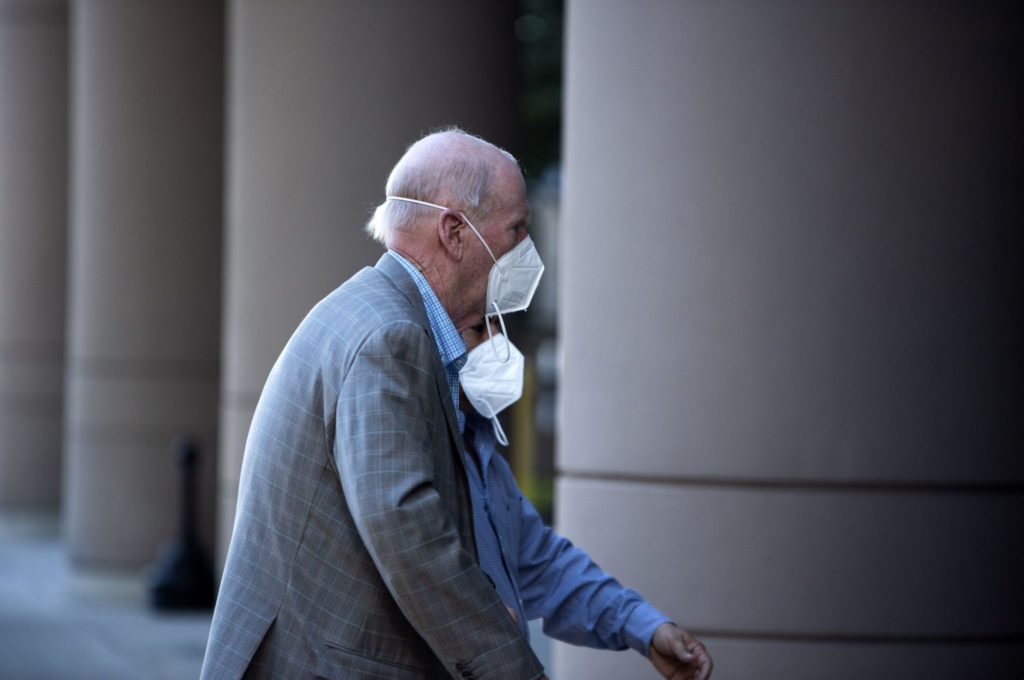
(Bloomberg) — The judge overseeing billionaire Robert Brockman’s tax evasion case, the largest against an individual in US history, rejected his claims that dementia leaves him incompetent to stand trial.

US District Judge George C. Hanks Jr.’s decision means Brockman, 80, must defend a 39-count indictment accusing him of evading taxes on $2 billion of income and other crimes. Brockman’s lawyers argued his progressive dementia, caused by Alzheimer’s and Parkinson’s disease, has accelerated recently. If his condition worsens, they could file a new incompetency claim.

“The court finds that despite Brockman’s recent health problems, the government has met its burden of establishing that Brockman is competent to stand trial,” Hanks ruled Monday in federal court in Houston.

Testing shows Brockman is “exaggerating his symptoms of severe dementia and his cognitive abilities are not as poor as reflected by his cognitive test results,” the judge wrote. “In other words, Brockman is malingering to avoid prosecution.”

The judge agreed with prosecutors who claimed that while Brockman has some cognitive impairment, he has exaggerated his decline since 2018 as US investigators focused on whether he controlled billions of dollars in a Bermuda charitable trust. They said Brockman functioned at a high level even after his October 2020 indictment. Brockman later stepped down as chief executive of Reynolds & Reynolds, a software company.

Hanks’s ruling follows an eight-day competency hearing in November, when doctors, medical experts and colleagues testified about Brockman’s cognitive state. Defense witnesses said that neuroimaging studies show Brockman suffers from progressive dementia.

Prosecution witnesses said that while Brockman may have early Alzheimer’s disease, he faked the severity of his dementia for years. In a court filing, prosecutors said he led a double life, “presenting to select doctors as severely cognitively impaired, while simultaneously leading a normal, unimpaired life.”

Offshore Holdings

In an unusual twist, Hanks heard testimony from a UK lawyer, Evatt Tamine, who oversaw Brockman’s offshore holdings for more than a decade. Tamine signed an immunity deal with US prosecutors in 2018. Tamine, who faces his own probes in Bermuda and Switzerland, testified that he believed Brockman was innocent of the tax-evasion and money-laundering charges against him.

As lawyers on both sides waited for Hanks to rule, Brockman’s condition deteriorated, according to a May 2 filing by his lawyers. 

He entered Houston Methodist Hospital on April 18 and was diagnosed with a urinary tract infection, pneumonia and sepsis, according to the filing. He was unable to swallow, and had a feeding tube in his stomach, his lawyers wrote. “While it is too soon to determine the cognitive impact that these medical events may have, sepsis in particular can trigger delirium and accelerate cognitive decline,” they wrote. 

The Justice Department has investigated Brockman for five years. Prosecutors said most of the income he failed to pay taxes on came from investments in Vista Equity Partners, founded by billionaire Robert F. Smith.

An entity tied to Brockman launched Smith into the private equity world with an investment in Vista beginning around 2000 that later grew to at least $1 billion. In 2020, Smith signed a non-prosecution agreement that required him to admit to tax crimes, agree to pay $139 million and cooperate against Brockman.

Brockman must also contend with the Internal Revenue Service, which imposed a $1.4 billion tax assessment against him in October. In January, he sued the US to halt the agency’s immediate assessment of that levy. Days later, he filed a separate lawsuit in Tax Court.

The case is U.S. v. Brockman, 21-cr-09, U.S. District Court, Southern District of Texas (Houston).

(Updates in 10th paragraph with Brockman’s recent medical condition)

More stories like this are available on bloomberg.com

©2022 Bloomberg L.P.
Wall Street Is Buying Treasuries Again in Bet Worst Is Over

(Bloomberg) — Across Wall Street, from BlackRock Inc. to T. Rowe Price Group Inc., some veterans of the bond market’s booms and busts are seeing signs that it’s safe to start buying again. 

Few are eager to call the bottom just yet, not with inflation still surging at a four-decade high and the Federal Reserve only at the early stages of an aggressive cycle of monetary policy tightening to contain it.

But yields have jumped so much this year, nearly doubling those on 10-year Treasuries, that it recalls past buying opportunities that paid off when the tide turned. On top of that, there are indications that the economy is cooling, with big-box retailers reporting a shift in consumer spending and home sales on the decline. And the drubbing taken by risky assets from growth stocks to cryptocurrencies has turned Treasuries into a haven again, delivering gains to those who bought when yields peaked earlier this month.

All of that has longtime money managers seeing reasons to start cautiously increasing their exposure, with some preparing to step up the pace if yields overshoot what they see as a fair level. At JPMorgan Asset Management, the head of global rates said the worst of the rout is likely over because the Fed’s rate hikes are largely already priced in.

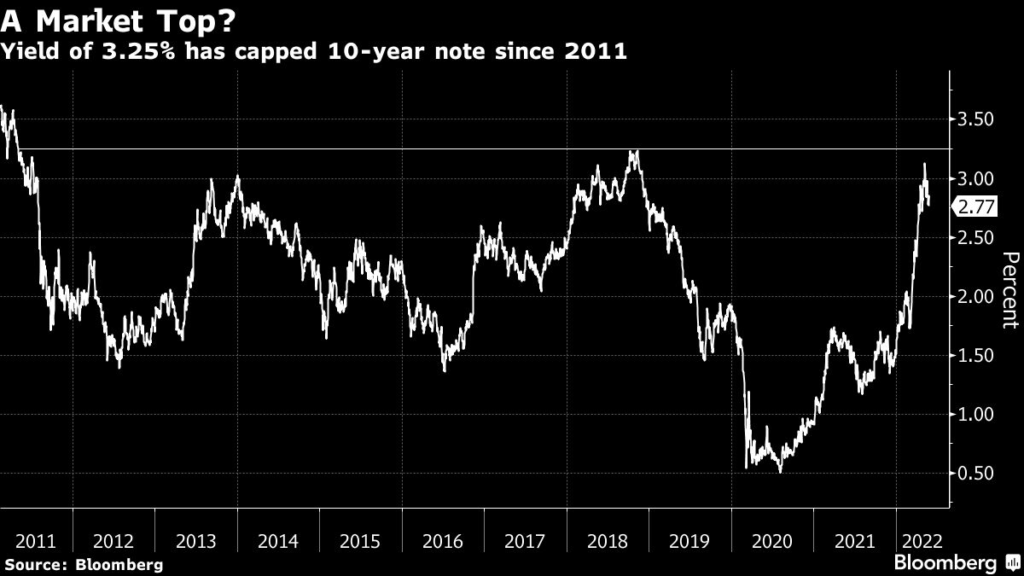
“We are getting to a point where a lot of bad news is priced in,” said David Giroux, head of investment strategy at T. Rowe Price Investment Management, who said the environment is now reminiscent of 2013 and 2018, when 10-year yields topped out at over 3%. “We have reduced cash and have been buying Treasuries.”

The shift in sentiment has been evident over the past two weeks amid speculation that China’s Covid-19 lockdowns, the war in Ukraine and tighter monetary policy worldwide will exert a drag on growth. On Tuesday, 10-year yields dropped as much as 13 basis points to 2.72%, the lowest since April 27 and down from as much as much as 3.2% on May 9. 

The Treasury market is still facing considerable uncertainty, and it’s possible that yields could push above the peaks of the past decade if the Fed finds itself fighting against persistent inflation. Speaking last week, Fed Chair Jerome Powell said the central bank was prepared to push policy beyond neutral — the level that’s not seen as affecting growth one way or another — until there’s “clear and convincing” evidence that inflation is coming down. The central bank in June will also begin cutting its bond holdings by not buying new securities to replace those that mature, potentially adding fresh headwinds to the market.

Goldman Sachs Group Inc.’s analysts have also sounded a cautious note, forecasting that the 10-year yield will end the year around 3.3%.

“Our duration committee is not quite at the point where we say it’s a greenlight,” said RJ Gallo, a senior portfolio manager at Federated Investment Management who has been with the asset manager since 2002. “The economy still has momentum and inflation is not coming down rapidly.”

Yet there are some signals the Fed’s moves are starting to tighten financial conditions. Gauges of corporate credit risk have risen, making it more costly for heavily indebted companies to borrow. Mortgage rates are slowing the housing market, while the stock market drop this year threatens to further erode already dampened consumer confidence.

“We are not completely out of the woods with inflation — so therefore there’s a chance you could possibly see slightly higher yields from here,” said Yvette Klevan, a portfolio manager in the global fixed-income team at Lazard Asset Management who has been working in the investment field since 1982. Yet, she added: “I’d argue that at roughly 3% on the 10-year Treasury, a lot is already baked in.” 

Read more: Bond Investors Demand Compensation as QT, Risk Looms

At BlackRock, the world’s largest asset manager, funds have “added a little more interest-rate exposure in recent weeks,” said Rick Rieder, the chief investment officer of global fixed income. “People are fearful of much higher rates and we have taken the other side of that.”

Such buying when rate-hike fears are cresting has been lucrative in the past. In 1994, when the Fed’s hikes pushed its benchmark from 3% to 6% in just 12 months, bonds tumbled as traders priced in that the aggressive moves would continue. But growth slowed enough that the central bank started cutting rates in 1995, driving Treasuries to an 18% gain that year. 

“It’s in our DNA to look for value in a gloomy bond market, and after a dismal ‘94 bonds did well the following year,” said Mark Lindbloom, a portfolio manager at Western Asset Management. “We know from past cycles that the Fed tightens too far, and we think we’re near the point where higher interest rates slow consumer and business demand.”

Western had been burned from buying bonds earlier this year. Still, it seized on the most recent spike in yields to add to its holdings of both short and long-dated Treasuries.

“We’re a bit beaten up and bloody,” Lindbloom said. “But my history as an active manager says that usually means there is opportunity.”

(Updates yield in sixth paragraph.)

More stories like this are available on bloomberg.com

©2022 Bloomberg L.P.

Snap Co-Founders’ Wealth Plunges $3.2 Billion on Profit Warning

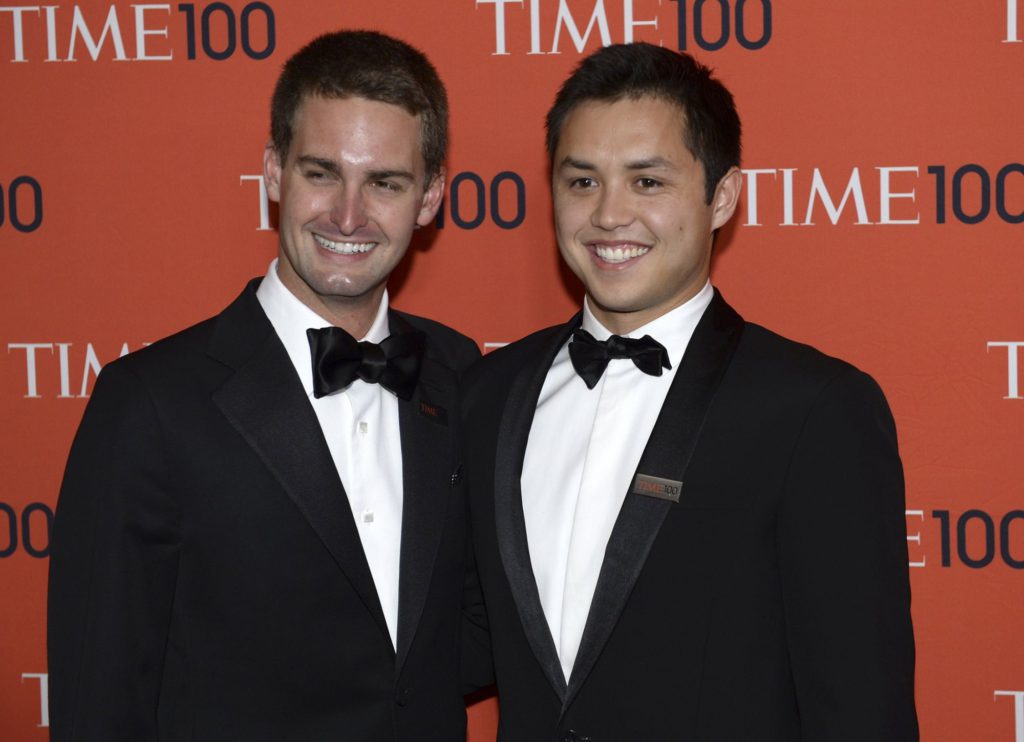
(Bloomberg) — Like the disappearing “snaps” that users post on its social-media app, Snap Inc.’s Evan Spiegel and Bobby Murphy just saw a big chunk of their fortunes vanish. 

Shares of Snap tumbled 41% in New York trading Tuesday — its biggest intraday decline ever — after the company cut revenue and profit forecasts, slashing the wealth of its two co-founders as well as other billionaire social media owners. 

Read more: Social Media Stocks Sink to Erase $165 Billion on Snap Warning

Spiegel, 31, who is chief executive officer, saw $1.4 billion or 30% of his fortune disappear, while Chief Technology Officer Murphy dropped $1.8 billion or 36%. They are among the largest wealth declines of any US billionaires by percentage this year, according to the Bloomberg Billionaires Index. 

Spiegel and Murphy now worth $3.4 billion and $3.1 billion, respectively, according to wealth index. 

It wasn’t just Snap’s billionaires who took a hit. Shares of Facebook owner Meta Platforms Inc. fell as much as 10%, shaving 8% or $5.7 billion off the fortune of CEO Mark Zuckerberg. 

The losses add to a string of precipitous declines for some of America’s wealthiest entrepreneurs amid a rout in tech stocks. Netflix Inc.’s Reed Hastings’s wealth has fallen by 53% since the start of the year, one of the largest drops among US tech billionaires. 

As recently as September, Spiegel was worth $15.3 billion and ranked among the 140 richest people in the world, according to the Bloomberg index. He and his wife, supermodel Miranda Kerr, recently used part of their fortune to forgive the college debt of graduates of the Otis College of Art and Design in Los Angeles. 

Spiegel owns slightly more than 10% of the Santa Monica, California-based social media company, which he created with Murphy in 2011 while he was a student at Stanford University. Their Snapchat app took off for what was then a relatively novel feature: the ability to post “snaps” containing photos or videos that would quickly disappear.

Spiegel has sold more than $1.6 billion worth of Snap shares since the company went public in 2017, while Murphy has unloaded about $640 million worth, according to data compiled by Bloomberg. 

More stories like this are available on bloomberg.com

©2022 Bloomberg L.P.

Close Bitnami banner
Bitnami