

Bloomberg

Macron Blasts New US Subsidies Law Before Dinner at White House

(Bloomberg) — Emmanuel Macron took aim at a new US law that he says unfairly subsidizes North American electric-vehicle production, threatening to overshadow the French president’s trip to Washington.

The so-called Inflation Reduction Act and a separate law meant to incentivize semiconductor production “are very good for the US economy, but they weren’t properly coordinated with European economies,” Macron said on Good Morning America on Thursday ahead of a meeting with President Joe Biden. “They create just the absence of a level playing field.”

The European Union has said it may take the US to the World Trade Organization over the climate and tax law, which aims to boost domestic production of electric cars. Last week, Macron’s finance minister accused Washington of pursuing a “Chinese-style” industrial policy that discriminates against non-US companies.

Macron and the rest of the EU are struggling to maintain unity with the US as they coordinate their responses to Russia’s war in Ukraine and an intensifying energy crisis that threatens to throw the region into a recession. The EU’s competition chief warned of the risks a new trade war with the US could inflict on the bloc. 

Weakens Allies

Macron believes that the climate law weakens America’s allies and it’s not in the US interest to impoverish European countries, according to a person familiar with the president’s thinking who spoke on the condition of anonymity. When Macron speaks with Biden, he’ll push for exemptions for the EU that would create a level playing field and better coordination on trade matters. 

French officials have said there is little hope the Americans will take concrete actions to allay their concerns. The law, which has drawn criticism from auto-making nations worldwide, is unlikely to be amended.

Macron has long pushed for a so-called Buy European Act, which would reserve public tender offers and subsidies for manufacturers on the continent. The idea has always run into opposition in the EU, but failure to win American concessions could give the bloc’s subsidy push new momentum.  

A senior administration official told reporters earlier this week that Washington sees a role for possible European subsidies to aid EU businesses who won’t benefit from tax credits in the American law. 

If the US law goes ahead as-is, France stands to attract €10 billion ($10.3 billion) less investment and create 10,000 fewer jobs, according to estimates by the French government. 

Margrethe Vestager told reporters in Paris on Thursday that the climate law could be very damaging for European businesses, as well as in other major economies, including Japan and South Korea. But she said avoiding a subsidy race in an absolute priority and the EU is working constructively with the US to find solutions as soon as possible.

“One war at a time is what we can master,” Vestager said, noting the energy crisis in Europe sparked by Russia’s invasion of Ukraine. “We have found solutions on very difficult issues before and we should be able to do it again because I don’t think the geopolitical situation we are in allows for big democracies to have a fallout.”

–With assistance from Ania Nussbaum and William Horobin.

More stories like this are available on bloomberg.com

©2022 Bloomberg L.P.

Sam Bankman-Fried Says He Has ‘Close to Nothing’ Left After $26 Billion Wipeout

(Bloomberg) — Sam Bankman-Fried, who at one point was worth $26 billion, claims he now has “close to nothing.”

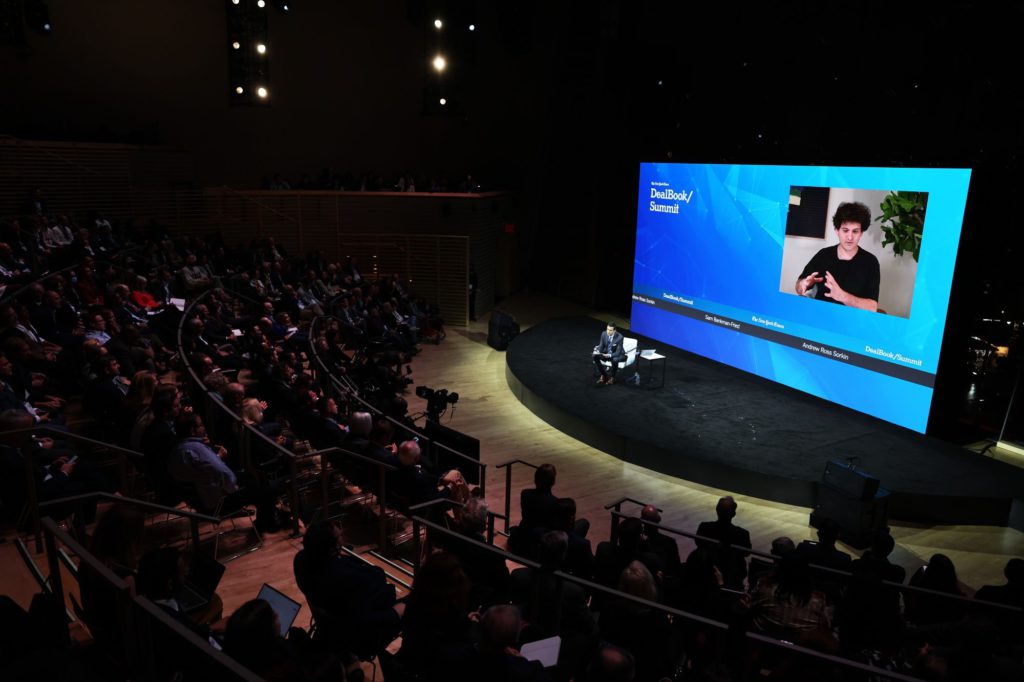
The fallen crypto mogul held all his assets in his now-bankrupt FTX exchange and sister trading house Alameda Research, he said in a video interview with columnist Andrew Ross Sorkin at the New York Times DealBook Summit on Wednesday.

Bankman-Fried, 30, who remains in the Bahamas, said he’s left with just one working credit card linked to a bank account with $100,000. He added that he’s disclosing everything and has no hidden funds. 

Once considered the crypto industry’s wunderkind, Bankman-Fried is now at the center of legal and regulatory probes into whether his empire mishandled customer funds. The restructuring expert who took over FTX in bankruptcy, John J. Ray III, has said it was the worst failure of corporate controls he’d ever seen.

In a sworn declaration last month, Ray said advisers told financial institutions to freeze withdrawals and reject any instructions from Bankman-Fried. The documents also indicated that Alameda had lent $1 billion to Bankman-Fried and that FTX Group funds were used to buy homes and other personal items for employees.

Bankman-Fried was asked about the company’s real estate purchases, including reports that his parents were provided with a home.

“I don’t know the details of the house for my parents — I know it was not intended to be their long-term property, it was intended to be the company’s property,” he said. Other purchases were made so employees who relocated to the Bahamas “had an easy way to find a comfortable life that they’d be willing to move and help build out the product.”

Bankman-Fried became one of the world’s wealthiest people in just a few years after starting Alameda and then FTX, which had more than 1 million customers globally before its collapse. He won backing for his exchange from hedge funds and venture capitalists, while Alameda posted trading profits that he said he would use to sway politics and support nonprofits that align with his “effective altruism” philosophy. 

Then it all came crashing down. As he told it, his swift demise began in early November when crypto news site CoinDesk reported on Alameda’s balance sheet, showing that a token issued by FTX, FTT, made up about a quarter of the trading house’s $14.6 billion in assets.

In just about a week, his empire spiraled into bankruptcy, wiping out his fortune, which at the time was about $16 billion.

The Bloomberg Billionaires Index initially dropped the value of Bankman-Fried’s stakes in FTX and Alameda to zero once he agreed to a takeover offer from Changpeng Zhao’s Binance. 

The index also removed his Robinhood Markets Inc. stake — one of his last remaining assets of value — from the wealth calculation after reports that it was held through Alameda and may have been used as collateral for loans.

It’s all but impossible to verify whether Bankman-Fried is telling the truth, and the Bloomberg index may not have tracked all of his assets. A report in November said he had more than $500 million with venture capital firms including Sequoia and was an investor in media startup Semafor. But if those assets were held through Alameda, they might have been wiped out by its losses.

“I’ve had a bad month. This has not been a fun month for me,” Bankman-Fried said on Wednesday. “There’s going to be a time and a place for me to think about myself and my own future. But I don’t think this is it.”

(Updates with bankruptcy context starting in fourth paragraph.)

More stories like this are available on bloomberg.com

©2022 Bloomberg L.P.
Tesla to Expand Vehicle Lineup With Delivery of First Semi Truck

(Bloomberg) — Tesla Inc. is poised to hand over the first of its electric Semi trucks, a milestone for the automaker more than five years after it first unveiled the big rigs.

Little is known about the “delivery event,” which will be held Thursday evening at Tesla’s battery factory near Reno, Nevada. Chief Executive Officer Elon Musk typically appears at Tesla events, though he hasn’t specified whether he’ll be there.

While electric passenger cars get most of the buzz, the move to electrify big rigs could be transformative for an industry known for high emissions and hefty fuel costs. Adding driver assistance features also can help operators save on labor expenses.

Big fleet operators like PepsiCo Inc., Walmart Inc., Meijer Inc. and J.B. Hunt Transport Services Inc. were among the companies that placed non-binding reservations for the Semi five years ago. Some of the first deliveries will go to PepsiCo’s Frito-Lay plant in Modesto, California.

Tesla shares rose 1.8% at 9:42 a.m. in New York. The stock is down about 45% this year through Wednesday’s close.

See also: Tesla Has California to Thank for Its First Semi Truck Delivery

During Tesla’s last earnings call, Musk said the company is tentatively planning to produce 50,000 Semis for North America in 2024. He appears to have taken the product off the back burner after the passing of the Inflation Reduction Act, which makes tax credits of as much as $40,000 available to commercial vehicles.

The Semi has a central seating position for the driver, an estimated range of 500 miles per charge and its own “Tesla Semi” chargers, according to Tesla’s website. The introduction will add a fifth vehicle to Tesla’s lineup — which currently features the passenger models S, X, 3 and Y — and fulfills Musk’s longstanding pledge to move into heavy-duty trucks.

As he predicted in his “Master Plan, Part Deux” opus from 2016, “the Tesla Semi will deliver a substantial reduction in the cost of cargo transport, while increasing safety and making it really fun to operate.”

(Updates with opening shares in fifth paragraph.)

More stories like this are available on bloomberg.com

©2022 Bloomberg L.P.
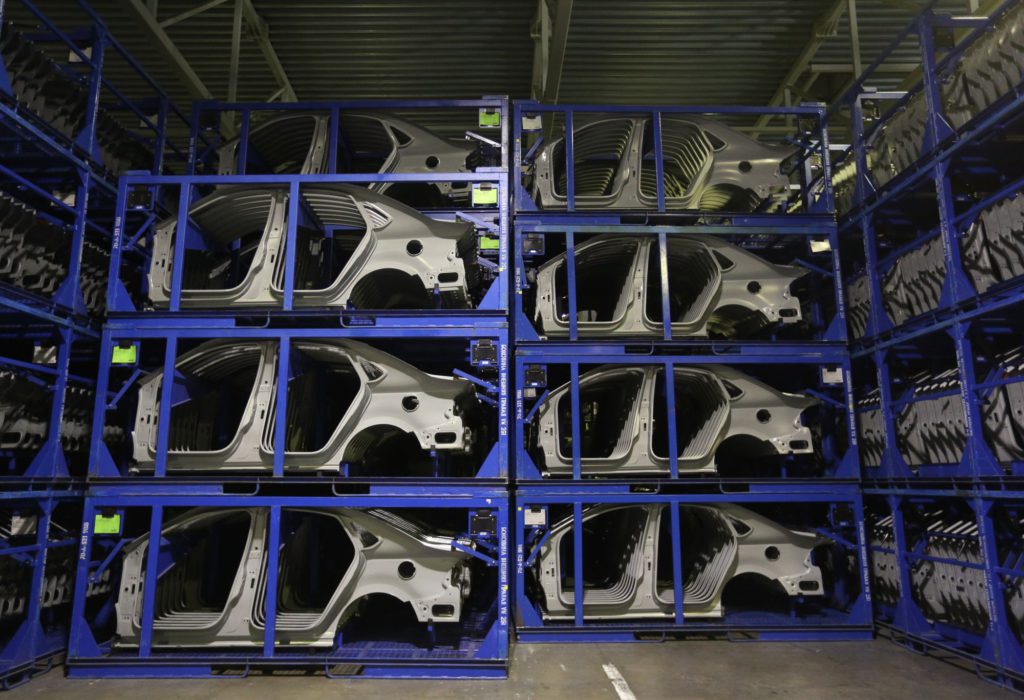
Billionaire Riberas’s Car Parts Maker Eyes Scrap in Green Bet

(Bloomberg) — Gestamp Automoción SA, a Spanish car parts manufacturer, has acquired a stake in a scrap recycling firm in a bet on booming demand for greener metals.

Gestamp bought a 33.33% stake in privately-held Gescrap Group for an undisclosed sum, according to a regulatory filing Thursday. Half the stake was acquired from a group controlled by Gescrap founder Iñaki Velasco and the other half from the holding family of the billionaire Riberas family, who are also the top holder of Gestamp.

“Our customers are asking that parts manufacturers use steel and aluminium that have the lowest CO2 emissions possible,” Gestamp Chairman Francisco Riberas told Bloomberg News. “Metal scrap will be absolutely essential to that,” Riberas said, adding that the European steel sector will have to commit to Co2 reduction. 

The move comes as carmakers take steps to recycle car components amid pressure to reduce emissions. Renault SA is setting up a new unit dedicated to the recycling business, which aims to bring in more than €2.3 billion ($2.2 billion) in sales by 2030, while Stellantis NV aims to use 35% recycled materials in its vehicles by 2027.

Gescrap is a leading European processor of metallic scrap from the automotive industry with operations in countries including the US, Mexico and Brazil. It currently buys around 75% of Gestamp’s metal waste, processes it and resells it to steel manufacturers. 

With Thursday’s deal, the car-parts maker aims to expand Gescrap’s offering to other industries while also focusing on scrap from other sectors, such as windmills. Gestamp also plans to help Gescrap focus on higher added value metals, to increase margins, Riberas said.

Financial details, provided by Gestamp Chief Financial Officer Ignacio Mosquera Vázquez, include:

  • Gescrap 2021 revenues of €900 million, adjusted earnings before interest, taxes, depreciation and amortization of €55 million
  • Gescrap 2021 Ebitda margin 6%
  • Gestamp will fully consolidate Gescrap earnings

More stories like this are available on bloomberg.com

©2022 Bloomberg L.P.
Netflix Strategy Shift Spurs Worst-to-Best Comeback for Stock

(Bloomberg) — Netflix Inc.’s turnaround plan is winning over investors, who have turned one of the worst-performing stocks early this year into one of the best in the second half.   

The catalyst for the comeback has been the streaming-video company’s introduction of a lower-priced, advertising-supported subscription tier, which is expected to help the Los Gatos, California-based company to attract new customers and retain old ones. 

The new plan comes at a time when a high level of inflation is eating into disposable incomes at households and streaming services seem one of the first luxuries consumers are choosing to cut down on. 

“The ad-supported pricing tier option of $6.99 seems well timed as consumers are looking for ways to cut costs,” said Jane Edmondson, co-founder and CEO at EQM Indexes, the Amplify Online Retail ETF’s index provider. 

Netflix, which had added millions of paying users during pandemic-induced lockdowns, started losing subscribers this year. After shocking Wall Street with two consecutive earnings reports, the company pledged to take drastic steps to turn its business around: cracking down on password sharing and launching the cheaper plan with ads.

The stock plunged 72% from the start of the year to its low point in May, the biggest drop in the Nasdaq 100 Index over that period, only to surge 84% since then. The gain from the low is the third-largest in the benchmark.

This year’s woes in streaming video also have hit one of Netflix’s big competitors, Walt Disney Co., which in August said it would raise the price of its flagship Disney+ service by 38% to $11 a month and also introduce an ad-supported version. Netflix too raised the price of its standard ad-free offering, boosting it in January by about 11% to $15.49 a month in the US, and later said the increase was one of the factors that caused it to lose customers.  

Netflix traded at an average of about 79 times forward earnings over the past decade as it built a cult following around shows such as Tiger King and Stranger Things. While it’s still not cheap by any means, now it’s valued at about 27 times. 

“Valuations got ahead of themselves, with pandemic success stories like ‘Tiger King’ helping add millions of new subscribers,” Edmondson said. 

About a year ago the company had hit a record market value of $306 billion. Despite its recent rally, the stock is still down 49% this year and is valued at about $136 billion.

The company’s turnaround plan also seems to have won over some analysts. The stock now has 22 buy recommendations, 24 holds and 4 sells, according to Bloomberg data. This is up from 16 buys, 29 holds and 7 sells as of June 30. 

“Netflix managed to create a smooth viewing experience that is less disruptive than we expected, and we think this offering should be able to gain traction with consumers,” Mark Mahaney, an analyst at Evercore ISI, said in a note in mid-November.

Mahaney, one of the analysts who upgraded the stock in recent months, said he remains confident in his initial forecast that the basic plan with ads could generate 10 million new subscribers and $1 billion to $2 billion in additional revenue for Netflix by 2024. 

“The revenue growth from this new tier within Netflix’s subscription service will likely be a growing process over the next few years, but by 2025, the global ad growth could be much more significant and account for a significant fraction of the company’s total revenue,” said Pedro Palandrani, director of research at Global X ETFs. “Considering some users will switch to the ad-support tier and some will return to Netflix, this move is about retaining users just as much as it is about signing up new ones.”

Tech Chart of the Day

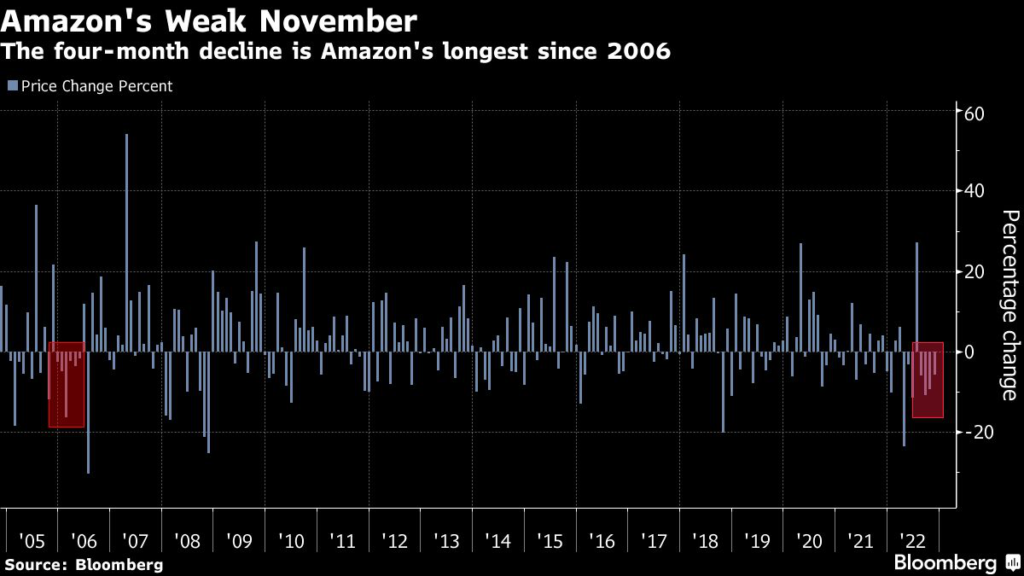
While Amazon.com Inc. rose 4.5% Wednesday, that wasn’t enough to erase a lengthy stretch of monthly declines for the e-commerce and cloud-computing giant. The stock fell 5.8% over the month of November, its fourth straight negative month. That represents the longest such streak since a six-month stretch of declines that ended in May 2006. The stock, which has fallen 42% this year, was trading up 1.9%.

Top Tech Stories

  • Taiwan Semiconductor Manufacturing Co. will offer advanced 4-nanometer chips when its new $12 billion plant in Arizona opens in 2024, an upgrade from its previous public statements, after US customers such as Apple Inc. pushed the company to do so, according to people familiar with the matter.
  • Apple Inc.’s most important iPhone assembly plant remains in a closed-loop operation that curtails workers’ movement on campus, potentially complicating the effort to resume full production.
  • Elon Musk’s Neuralink Corp. aims to start putting its coin-sized computing brain implant into human patients within six months, the company announced at an event at its Fremont, California, headquarters Wednesday.
    • Musk met with Apple Chief Executive Officer Tim Cook at the iPhone maker’s headquarters on Wednesday, signaling a detente in a brewing war between the technology companies.
    • The European Union’s executive arm will conduct a stress test at Twitter Inc.’s headquarters early next year as the bloc’s digital chief warned Musk he has “huge work ahead” to comply with content moderation laws.
    • Musk risks giving a helping hand to Russian President Vladimir Putin if Twitter’s recent staff cuts prevent the platform from rooting out propaganda about the war in Ukraine, one of the European Union’s top officials warned.
  • Salesforce Inc. co-Chief Executive Officer Bret Taylor is stepping down after just a year in the top post alongside co-founder Marc Benioff, the latest potential successor to leave the company.
  • Snowflake Inc., whose software helps businesses organize data in the cloud, fell 10% in late trading after giving a disappointing sales forecast, a sign that corporate customers are slowing technology investments in an uncertain economy.
  • Hewlett Packard Enterprise Co. has expressed takeover interest in cloud computing company Nutanix Inc., according to people familiar with the matter.

–With assistance from Tom Contiliano and Ryan Vlastelica.

(Updates at market open.)

More stories like this are available on bloomberg.com

©2022 Bloomberg L.P.
HPE  Expressed Interest in Cloud Provider Nutanix and Held Talks

(Bloomberg) — Hewlett Packard Enterprise Co. has expressed takeover interest in cloud computing company Nutanix Inc., according to people familiar with the matter. 

HPE has held talks with Nutanix in recent months, said the people, who asked to not be identified because the matter isn’t public. The talks between the companies have been on and off and it’s unclear whether they will be able to reach an agreement over price, they added. Nutanix could also opt to stay independent or another potential buyer could emerge, the people added. 

Nutanix rose 4.3% to $29.46 in New York trading on Thursday morning, giving the company a market value of about $6.7 billion. HPE fell 2.9% to $16.29, for a market value of about $21 billion. 

A representative for HPE declined to comment. A spokesperson for Nutanix said the company didn’t comment on rumors and speculation.

San Jose, California-based Nutanix sells cloud software and services to companies, according to its website. On Wednesday, it reported revenue of about $434 million for the first quarter of its fiscal year, topping estimates by 15%.

HPE this week projected revenue for the current quarter that beat analyst expectations, suggesting corporations are continuing to upgrade their technology infrastructure in an uncertain economy. 

The Wall Street Journal reported last month that Nutanix was exploring a sale after getting takeover interest.

In September, the company said it planned to implement a series of governance changes that included ensuring all directors stand for election each year, and amending its shareholder voting rights.

The changes were applauded by activist investor Legion Partners Asset Management, which owns a 0.6% stake in Nutanix. Last month, Legion also encouraged the board to properly evaluate alternatives, including all potential partners, after reports of the inbound interest surfaced.

(Updates with share trading.)

More stories like this are available on bloomberg.com

©2022 Bloomberg L.P.

FTX Missing Billions Remain Mystery After Bankman-Fried Grilling

(Bloomberg) — Mystery continues to shroud the missing billions at bankrupt crypto exchange FTX after its disgraced founder Sam Bankman-Fried denied trying to perpetrate a fraud while admitting to grievous managerial errors.

In his first major public appearance following the Nov. 11 implosion of FTX and sister trading house Alameda Research, Bankman-Fried said he “screwed up” at the helm of the exchange and should have focused more on risk management, customer protection and links between FTX and Alameda.

“I made a lot of mistakes,” the 30-year-old said Wednesday by video link at the New York Times DealBook Summit. “There are things I would give anything to be able to do over again. I didn’t ever try to commit fraud on anyone.”

Bankman-Fried’s participation was controversial given there are outstanding questions about how Bahamas-based FTX ended up with an $8 billion hole in its balance sheet and whether it mishandled customer funds. Reports that FTX lent client money to Alameda for risky trades have stoked such concerns.

Interviewed by New York Times columnist Andrew Ross Sorkin, who said Bankman-Fried was joining from the Bahamas, the fallen crypto mogul didn’t give a straight answer about whether he had at times lied.

Bankman-Fried told the summit that he “didn’t knowingly commingle funds.” At the same time, he said that FTX and Alameda were “substantially more” linked than intended and that he failed to pay attention to the trading house’s “too large” margin position.

He said he wasn’t running Alameda and added that he was “nervous about a conflict of interest.” No person was in charge of position risk at FTX, he said, describing the lack of oversight as a mistake.

Bankman-Fried reiterated during a taped interview on Good Morning America that was broadcast Thursday that he wasn’t aware of any improper transactions involving funds from the exchange and Alameda while his crypto empire collapsed.     

Out of Control

The comments shed little light on the question of where client funds ended up as Bankman-Fried stuck to a hard-to-parse account of how Alameda ran up a massive margin position on the exchange. 

The restructuring expert who took over the firm in bankruptcy, John J. Ray III, has painted a picture of FTX as a mismanaged, largely out-of-control company bathed in conflicts and lacking basic accounting practices, calling it the worst failure of corporate controls he’d ever seen.

Bankman-Fried faces a complex web of lawsuits and regulatory probes into alleged wrongdoing. Some observers speculate his public comments could be used against him in litigation.

The spotlight has also fallen on an apparent company culture of working and playing hard. Bankman-Fried said there were no wild parties and that he saw no illegal drug use. He added that he’s been prescribed drugs over time to help with focus and concentration.

Crypto Contagion

The digital-asset sector is braced for widening contagion from FTX, which once boasted a $32 billion valuation before sliding into bankruptcy. It owes its 50 biggest unsecured creditors a total of $3.1 billion and there may be more than a million creditors globally.

A crypto lender, BlockFi Inc., filed for bankruptcy Monday after being buffeted by the wipeout. Embattled brokerage Genesis is striving to avoid the same fate.

BlackRock Inc. Chief Executive Larry Fink said earlier at the DealBook summit that most crypto companies will probably fold in the wake of FTX’s collapse. The world’s biggest asset manager was among firms stung by the chaotic unraveling of Bankman-Fried’s tangled web of 100-plus FTX-related entities.

Bankman-Fried has provided convoluted accounts on social media and in interviews with other news outlets about what led to FTX’s woes. Advisers overseeing the ruins of his business have slammed non-existent oversight.

Potential Hack

As if such travails weren’t enough, the exact breakup of a $662 million outflow from FTX as it tumbled into bankruptcy remains another enigma. Bankman-Fried said in the summit interview that there was improper access to FTX after its spiral.

Treasury Secretary Janet Yellen, another speaker at the summit in New York, called the FTX debacle “the Lehman moment within crypto,” referring to the collapse of investment-banking giant Lehman Brothers in 2008.

Crypto markets have stabilized somewhat after lurching lower in November as the turmoil around FTX thickened. Even so, a gauge of the top 100 tokens is down more than 60% this year, hit by tightening monetary policy and a series of crypto blowups of which FTX is the most spectacular.

Bankman-Fried’s fortune at one point reached $26 billion, and just weeks ago he was described as the John Pierpont Morgan of digital assets, willing to throw around his wealth to bail out the industry. He said during the interview that he’s down to one credit card and $100,000 in the bank.

Pressed on whether he had been straight about FTX, Bankman-Fried said: “I was as truthful as I’m knowledgeable to be.”

–With assistance from Allyson Versprille, Jenny Surane, Gregory Korte and Annie Massa.

(Updates with comment from a Good Morning America interview in the eighth paragraph.)

More stories like this are available on bloomberg.com

©2022 Bloomberg L.P.
Google Takes Fight to Topple Record Fine Over Android to EU’s Top Court

(Bloomberg) — Google will take its appeal of the record €4.3 billion ($4.5 billion) European Union antitrust fine over its dominance in the Android mobile market to the bloc’s top court. 

The penalty hits at the heart of the US tech giant’s power over the Android mobile-phone ecosystem, and in September judges at a lower court mostly sided with the European Commission’s arguments but reduced the overall fine to €4.1 billion.

“There are areas that require legal clarification,” Google said in a statement Thursday. “Android has created more choice for everyone, not less, and supports thousands of successful businesses in Europe and around the world.”

The Android case is one of a trio of decisions that have been the centerpiece of the bloc’s antitrust chief Margrethe Vestager’s bid to rein in the growing dominance of Silicon Valley. She’s fined Alphabet Inc.’s Google more than €8 billion and has since opened new probes into the company’s suspected stranglehold over digital advertising.

–With assistance from Jillian Deutsch and Stephanie Bodoni.

More stories like this are available on bloomberg.com

©2022 Bloomberg L.P.
Bankman-Fried Says He Wasn’t Aware of Improper Use of FTX Funds

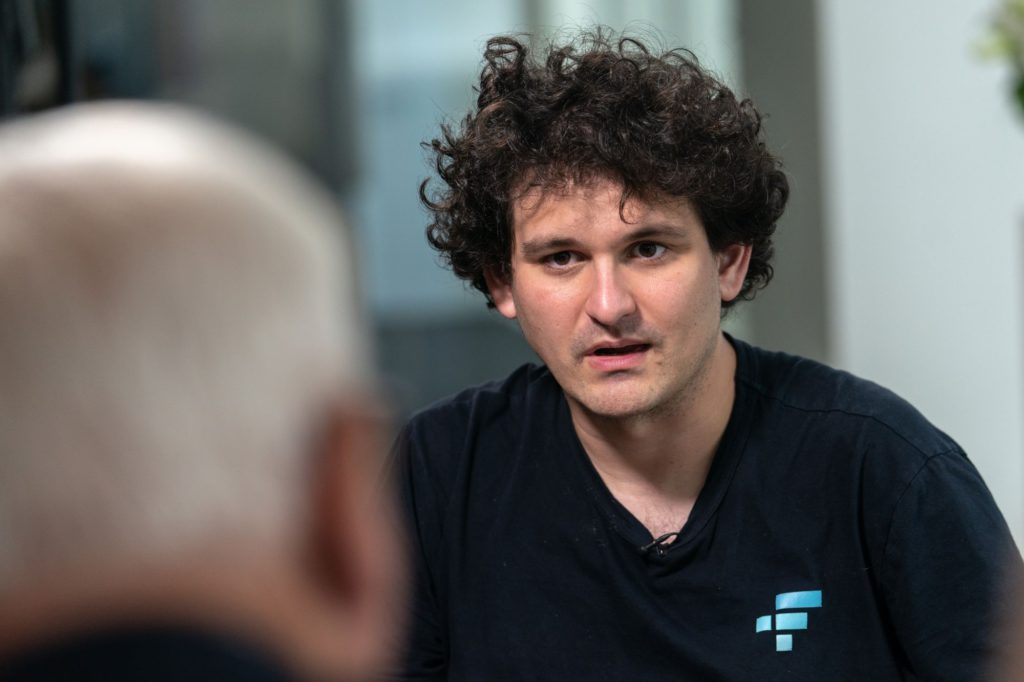
(Bloomberg) — FTX founder Sam Bankman-Fried reiterated that he wasn’t aware of any improper transactions involving funds from the exchange and his Alameda Research trading business while his crypto empire collapsed. 

“I did not know of any improper use of customer funds,” Bankman-Fried said in response to a question during a taped interview on Good Morning America. 

The comments were the latest by Bankman-Fried from a series of interviews that disavow any improper action. He participated Wednesday at the New York Times DealBook Summit via a video link from the Bahamas.

Read more: FTX Missing Billions Remain Mystery After Bankman-Fried Grilling

The comments have shed little light on the question of where client funds ended up as Bankman-Fried stuck to a hard-to-parse account of how Alameda ran up a massive margin position on the exchange. 

Bankman-Fried’s fortune at one point reached $26 billion, and just weeks ago he was described as the John Pierpont Morgan of digital assets, willing to use his wealth to bail out the industry. He said during the interview that he’s down to one credit card and $100,000 in the bank.

The restructuring expert who took over the firm in bankruptcy, John J. Ray III, has painted a picture of FTX as a mismanaged, largely out-of-control company bathed in conflicts and lacking basic accounting practices, calling it the worst failure of corporate controls he’d ever seen.

“I think I got a little cocky,” Bankman-Fried said during the Good Morning America interview. 


More stories like this are available on bloomberg.com

©2022 Bloomberg L.P.

Elon Musk Warned by EU Official to Keep Putin Propaganda Off Twitter

(Bloomberg) — Elon Musk risks giving a helping hand to Russian President Vladimir Putin if Twitter Inc.’s recent staff cuts prevent the platform from rooting out propaganda about the war in Ukraine, one of the European Union’s top officials warned.

Failing to take on fake or misleading content online could “lead to the very quick abuse” of Twitter, European Commission Vice President Vera Jourova, who’s spearheading efforts to tackle online disinformation, said in an interview with Bloomberg. This includes making sure the platform doesn’t become a hub for Russian propaganda.

“By not acting actively against the propaganda, which means to remove the pieces of propaganda, the disinformation, then you are actively supporting the war,” she said. “This would be a very tricky and maybe dangerous endeavor or adventure for Mr. Musk” who “wants to be seen as somebody who is helping Ukraine.” She cited Musk’s Starlink satellite system, which has been providing internet communications for both Ukrainian citizens and its military. 

Read More: Zelenskiy Invites Musk to Ukraine to See Russia’s Devastation

The comments are the latest warning shot over the possible side-effects of mass resignations and layoffs after Musk closed his $44 billion purchase of the world’s most influential social media platform — including its ability to abide by a raft of EU legislation including the bloc’s strict General Data Protection Regulation and new Digital Services Act. 

“If the network is easily used by Russian propaganda” then “you are very probably breaching the rules of sanctions because you might be distributing the content developed by the sanctioned media, like Russia Today and Sputnik,” said Jourova, a former Czech politician.

Twitter is the only platform Jourova uses, having decided years ago to leave Meta Platforms Inc.’s Facebook. Now, she’s wondering whether to keep her account after material such as Chinese pornography recently appeared on her feed.

Meanwhile, Jourova said the billionaire owner, who has vowed to bring “free speech” back to Twitter, shouldn’t underestimate the EU and the hefty sanctions Twitter could eventually face if it fails to abide by the bloc’s EU rules. 

The DSA, which targets harmful content and disinformation on platforms, is still in its infancy and Twitter has a lot to do in coming months to comply before enforcement kicks in starting next year.

Fines under the law could go to up to 6% of Twitter’s annual global sales, while GDPR breaches can come with fines of as much as 4%. The commission has also vowed to conduct a “stress test” next year on Twitter’s efforts to comply with content moderation laws. 

“I feel that there is not enough understanding from Mr. Musk and maybe some other people around him, that Europe is advanced,” said Jourova. And “that after many years of thorough analyzing how to approach the digital sphere, we decided to regulate, and that we mean it, that the regulation has to be respected by everybody who wants to do business on EU territory.”

Explainer: How EU Could Frustrate Musk’s Plans for Twitter: QuickTake

(Updates with further Jourova comments from sixth paragraph)

More stories like this are available on bloomberg.com

©2022 Bloomberg L.P.

Close Bitnami banner
Bitnami