Bloomberg

KPMG Fined £3.4 Million by UK Regulator Over 2010 Rolls-Royce Audit

(Bloomberg) —

The UK’s Financial Reporting Council fined KPMG and its partner Anthony Sykes over its 2010 audit of Rolls-Royce Group Plc, the latest in a long list of audit scandals surrounding the firm.

KPMG was ordered to pay £3.4 million ($4.3 million), reduced from an original fine of £4.5 million because the firm admitted its shortcomings, the Financial Reporting Council said Tuesday in a statement. An external independent expert will also assess the firm’s policies, guidance and procedures for audit work. Sykes must pay a sanction of £112,500, which was also reduced for admissions and early disposal from  £150,000. 

The FRC found that KPMG failed to address two sets of payments made by Rolls-Royce to agents in India. These payments were later part of a bribery and corruption case under which Rolls-Royce paid large fines.

KPMG, like other members of the so-called Big Four accounting firms, has been facing ongoing criticism over the quality of its work. The company is battling an accumulation of disciplinary action over its audits of Carillion Plc, including a £1.3 billion suit by its administrators. KPMG was fined more than £14 million earlier this month over misconduct on major work it carried out for Carillion and data services company Regenersis. 

Read more: KPMG Sued for $1.8 Billion Over Negligent Carillion Audits

KPMG Chief Executive Officer Jon Holt said in a statement that he’s sorry the firm’s audits didn’t meet the professional standards required. The firm is now investing “significantly” in training, controls and technology to improve quality and resilience in its audit practice, he said.


More stories like this are available on bloomberg.com

©2022 Bloomberg L.P.

SoftBank Nominates Venture Capital Veteran Chao to Its Board

(Bloomberg) — SoftBank Group Corp. named venture capitalist David Chao to join its board as the Japanese tech investor tries to regain its footing from money-losing investments. 

Chao is a co-founder and general partner at DCM, a venture capital firm with over $4 billion under management. The firm has invested in more than 400 tech companies in the U.S. and Asia since 1996, according to its website. Chao will replace Lip-Bu Tan whose term will end in June as an outside director, SoftBank said in a filing.

Chao also co-founded telecoms services firm Japan Communications Inc. and was previously an account executive at Recruit Holdings Co., Japan’s largest human resources ad agency. 

SoftBank reported a record annual loss at its Vision Fund unit earlier this month, amid a selloff in tech shares that deflated the value of its portfolio companies. The company is reining in spending and trying to save its fire power for a few promising bets, its founder Masayoshi Son has said.

SoftBank plans to re-elect the remaining eight members of the board while Chao’s appointment will be subject to approval at the upcoming annual general meeting of shareholders on Jun. 24. 


More stories like this are available on bloomberg.com

©2022 Bloomberg L.P.

Samsung to Spend $360 Billion on Chips, Biotech Over 5 Years

(Bloomberg) — The Samsung group plans to raise spending by more than 30% to 450 trillion won (about $360 billion) over the half-decade to 2026 to shore up businesses from chips to drugs, as South Korea’s conglomerates grapple with growing economic and supply shocks.

The corporate giant — whose units from Samsung Electronics Co. to Samsung Biologics Co. dominate Korea’s economy — promised in a statement to create 80,000 jobs through 2026, mostly in semiconductors and biopharmaceuticals.

Samsung, run by the scion of one of Korea’s oldest and wealthiest families, is one of a handful of so-called chaebol that are outlining investment plans as the country’s new president takes office. President Yoon Suk Yeol, who began his five-year term May 10, has been a vocal supporter of the conglomerates and made them a key pillar in his economic growth plans. 

Also Tuesday, Hyundai Motor Group, South Korea’s largest automaker, announced plans to spend 63 trillion won by 2025 in areas including electric cars, robotics, aviation technology and hydrogen-powered vehicles. Retail and chemical giant Lotte Group said it will pour about 37 trillion won into boosting the nation’s economy, from hotels and duty-free stores to hydrogen power generation and an EV rental businesses. 

“It’s a classic way of Korean companies to appeal to a new president,” said Park Ju-gun, head of Leaders Index, a Seoul-based research institute. “Investors need to check whether the promised amount of investments are actually executed or not.” 

Read more: Samsung in Talks to Hike Chipmaking Prices by Up to 20%

Along with the heads of other prominent chaebol, Samsung is expected to shoulder part of the responsibility for driving growth in a country dealing with rising inflation and supply chain disruptions due to the pandemic and war in Ukraine. 

Samsung Group’s latest investment blueprint, which overlaps with public pledges made in 2021, comes about a year after family scion Jay Y. Lee walked out of jail. The conglomerate’s leader, who was serving a sentence on graft charges, was paroled just months ahead of presidential election earlier this year. 

The conglomerate is focusing particular attention on its technology flagship, the crown jewel of a sprawling empire that spans shipbuilding, technology, health care and finance. Samsung Electronics, the world’s largest maker of smartphones, displays, memory chips and consumer appliances, unveiled plans last year to invest $151 billion through 2030 to delve deeper into advanced chipmaking.

Much of that will go toward its semiconductor division, which is expanding rapidly in an effort to compete with Intel Corp. and Taiwan Semiconductor Manufacturing Co. in making chips for global names such as Nvidia Corp. and Qualcomm Inc.

Read more: Samsung Struggles to Go Green in Coal-Addicted South Korea

Samsung Electronics and SK Hynix Inc. had previously pledged more than 510 trillion won of investment in semiconductor research and production in the years to 2030 under a national blueprint devised by the previous president’s administration.

In a statement, the group said about 360 trillion won will be spent domestically while the rest will be invested overseas. Samsung Electronics is building an advanced $17 billion US chip plant in Texas, a win for the Biden administration as it prioritizes supply chain security and greater semiconductor capacity on American soil. 

Last week, Joe Biden stopped by Samsung’s most advanced chipmaking facility on his first trip to Asia as US president, hailing joint efforts on safeguarding supply chain security.

(Updates with Hyundai, Lotte budgets from the fourth paragraph)

More stories like this are available on bloomberg.com

©2022 Bloomberg L.P.

Toyota to Suspend More Production Due to Shanghai Shortages

(Bloomberg) — Toyota Motor Corp. is suspending more production due to parts shortages caused by the Covid-19 lockdown in Shanghai, a sign that supply-chain bottlenecks could persist even as the city starts to gradually reopen. 

The world’s biggest automaker issued a statement Tuesday listing production lines that will be suspended in Japan, including at five plants early next month on top of stoppages already announced for May. 

“The shortage of semiconductors, spread of Covid-19 and other factors are making it difficult to look ahead,” Toyota said in the statement. “Due to parts supply shortages caused by the lockdown in Shanghai, we have decided to suspend operations in May and in June.”

Toyota’s global production plan for June stands at about 850,000 vehicles, 250,000 of which will be made in Japan and the rest overseas. The company aims to produce an average of 850,000 units a month through August and is keeping its fiscal year output target of 9.7 million vehicles. 

“We will continue to make every effort possible to deliver as many vehicles to our customers at the earliest date,” Toyota said. 

Shanghai, which went into lockdown in March to combat a Covid outbreak, has been moving to officially ease restrictions that have severely disrupted business activity and kept millions of people stuck in their homes.  

While curbs are loosening, the lockdown may continue to cause “a considerable amount of damage to global supply chains” as backlogs hinder the movement of goods, according to the U.K.-based Business Continuity Institute. 

Earlier in May, Toyota forecast a 20% decline in operating profit for this fiscal year due to an unprecedented increase in logistics and raw materials costs. 

The company’s shares were little changed Tuesday. 

(Updates with more details throughout and comment from consultancy.)

More stories like this are available on bloomberg.com

©2022 Bloomberg L.P.

Ukraine Latest: Biden Says Putin Trying to Erase Ukraine Culture

(Bloomberg) — US President Joe Biden said leaders are navigating “a dark hour in our shared history” due to Russia’s war in Ukraine, adding President Vladimir Putin’s invasion appears to be aimed at obliterating the culture of his neighbor. 

Lithuania is seeking support for a naval coalition that would enforce a protective corridor for grain shipments from Ukraine and break a Russian blockade of the Black Sea, news reports said.

A Russian diplomat in Geneva quit over Moscow’s conduct in a rare protest by a public official. A court in Kyiv sentenced a Russian soldier to life in prison for murdering a Ukrainian civilian, ending the first war-crimes trial stemming from the invasion. 

(See RSAN on the Bloomberg Terminal for the Russian Sanctions Dashboard.)

Key Developments

  • Putin’s State Oil Champion Suffers Biggest Production Drop
  • Russia Diplomat Quits in Rare Public Protest Over War in Ukraine
  • Europe’s Plan to Replace Russian Gas Stumbles on LNG Bottlenecks
  • Russia Loosens More Capital Controls as Ruble Continues Surge
  • Zelenskiy Issues Davos Demand to Shun Russia, Invest in Ukraine
  • Putin’s War Means Russia’s Rich Aren’t Welcome at Davos Anymore

All times CET:

Putin’s State Oil Champ Sees Production Drop (6:00 a.m.)

Russia’s largest refiner’s primary throughput was down by nearly 28% in the first days of May compared with prewar levels, according to Bloomberg calculations based on industry data.  

Rosneft PJSC’s chief executive officer, Igor Sechin, has been in Putin’s inner circle for decades, and the company’s subsidiaries account for about two-thirds of Russia’s production cuts since the invasion of Ukraine, data from the Energy Ministry show. 

Biden Tells Quad Meeting Putin Is Causing Humanitarian Crisis (3:51 a.m.)

Biden said at the opening of a leaders’ summit in Tokyo among fellow Quad members Australia, India and Japan that Russia’s “brutal and unprovoked war against Ukraine has triggered a humanitarian catastrophe.”

“It appears to me that Putin is just trying to extinguish culture,” Biden said, adding, “he’s not even aiming at military targets anymore.” Biden is seeking support from Quad leaders as they battle the fallout the war that has rattled economies and caused a food crisis.

Royal Navy Could Escort Grain Ships, The Times Reports (1:03 a.m.)

Britain is in talks with allies about sending warships to the Black Sea to protect freighters carrying Ukrainian grain, The Times of the UK reported. The foreign ministers of Lithuania and the UK discussed the idea to break Russia’s blockade that could include NATO countries reliant on grain, it said.

Lithuanian Foreign Minister Gabrielius Landsbergis told the Guardian newspaper this week his country was seeking a naval coalition “of the willing” to lift the Russian Black Sea blockade on Ukrainian grain exports.

US Taps Italy’s Mafia Fight for Russia Wealth Crackdown (11:15 p.m.)

The US is taking some lessons on cracking down on sanctions evasion from the Italians, who have honed their skills fighting the mafia, according to a Treasury official.

“They have a great history, wealth of experience, doing that in response to their own organized-crime entities,” Brian Nelson, the under secretary of Terrorism and Financial Intelligence, said in an interview. “They are clear-eyed about the work ahead.”

Italy has seized three yachts and a number of properties connected to Russian oligarchs, Nelson said, and the US is trying to adopt those tactics in identifying people trying to evade sanctions on Russia.

Lavrov Talks Up China Ties (11:05 p.m.)

Russia’s economic relationship with China will develop even faster after Western countries cut trade ties, and its economy needs to become independent of the West in key industries, Foreign Minister Sergei Lavrov told students at a Moscow-area elite school, according to a transcript on the ministry’s website.

Even if Western countries “come back to their senses” and resume some form of cooperation, Russia will “think very seriously whether we need it or not really,” Lavrov said. The economy is developing alternatives to imports, and boosting trade in local currencies with China, India, Iran and other partners, he said.

“To hope that McDonald’s will come back, to put it in crude terms, means again to sit and to do nothing, to wait for them to come and supply us with spare parts, some components, semiconductors,” Lavrov said.

Zelenskiy Asks World to Press Russia to Swap War Prisoners (9:30 p.m.)

Zelenskiy said several thousand Ukrainian troops, including those who were trapped at a steel plant in the besieged city of Mariupol, are now in Russia’s captivity, and he called on world leaders to persuade Russia to agree to a prisoner swap. 

“We are ready for a swap even tomorrow, we do not need Russian soldiers,” Zelenskiy said in a video address to the World Economic Forum in Davos. 

He also urged other countries to help Ukraine reopen its ports for grain exports, and to help what he said are 500,000 Ukrainians deported by Russia to Russian territory return to the country. 

Finland and Sweden’s Envoys Say Membership Would Strengthen NATO (8:54 p.m.)

Finland and Sweden’s military capabilities would help strengthen NATO across the board, including in Turkey, the two countries’ ambassadors to the US said.

Sweden’s Karin Olofsdotter and Finland’s Mikko Hautala told an event at the Brookings Institution that they are in discussions with Turkey over their nations’ respective bids to join NATO, after Turkish officials signaled misgivings about the move.

Twenty Nations Sending More Weapons, Austin Says (7:46 p.m.)

US Defense Secretary Lloyd Austin said 20 nations have agreed to send more security assistance to Ukraine. “We are intensifying our efforts,” Austin told reporters after more than 40 nations participated in a Zoom meeting of the Pentagon-hosted Ukrainian Defense Contact Group.

Denmark has committed to sending a Harpoon anti-ship missile system, while Italy, Greece, Norway and Poland will be providing artillery systems, Austin said.

General Mark Milley, chairman of the US Joint Chiefs of Staff, said the Pentagon’s stockpile of critical munitions remain adequate after drawdowns to send weapons to Ukraine. “We are doing OK and our risk is managed appropriately,” Milley said.

Putin Confidant Gives PhosAgro Stake to Spouse (7:32 p.m.)

Vladimir Litvinenko, the former chairman of OAO PhosAgro, transferred a 20.6% stake in the Russian fertilizer producer to his spouse Tatyana Litvinenko, the company said. Litvinenko cut his holdings to 0.39%, it said.

Latvia Wants NATO Brigade to Deter Russia (5:48 p.m.)

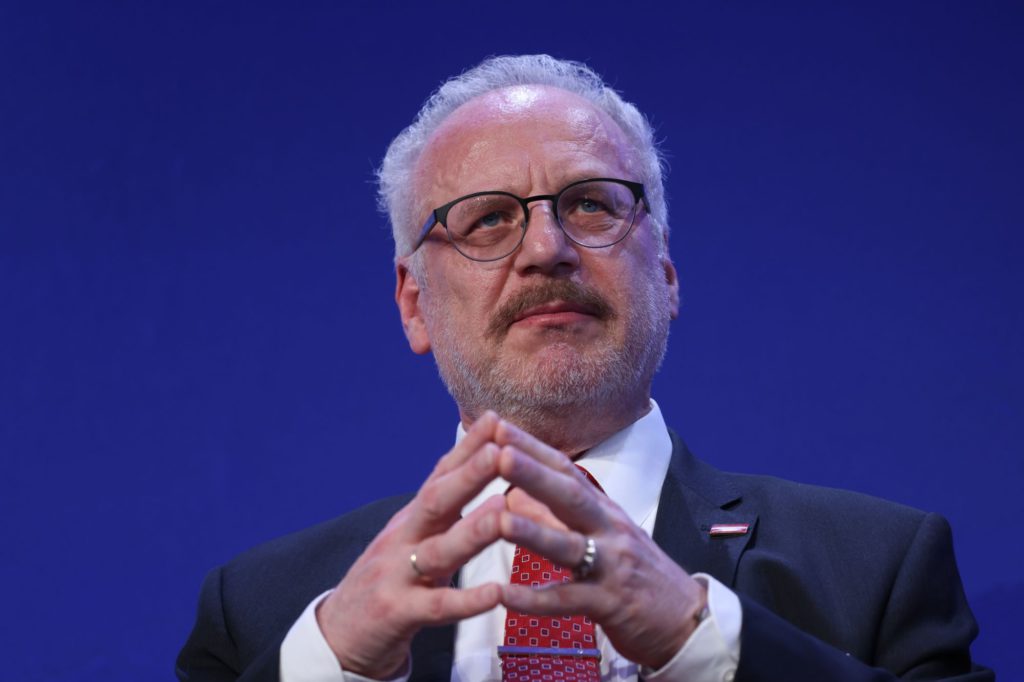
Latvia needs a NATO brigade, a military contingent that would amount to as many as 5,000 troops, to deter Russia from a potential attack, President Egils Levits said on the sidelines of the World Economic Forum in Davos, Switzerland. 

“Russia is not provoked by strength, but Russia is provoked by weakness,” Levits said on the sidelines of the World Economic Forum in Davos, Switzerland, on Monday. “So we are looking also for NATO troop presence at a brigade scale,” he said, a level that “can deter Russia.” 

EU Stalemate Deepens on Russian Oil Embargo (4:15 p.m.)

The European Union is increasingly unlikely to approve a ban on Russian oil when the bloc’s leaders meet next week as Hungary continues to oppose the measure, according to people familiar with the matter.

Hungarian Prime Minister Viktor Orban had said several weeks earlier that it would take a summit of European leaders to forge an oil embargo deal, but his government is signaling now that any progress will likely slip to next month at the earliest, said the people. 

EU Member States Disagree Over Aid Package for Ukraine (4:05 p.m.)

European Union nations are wrangling over how to design a plan for a new aid package of 9 billion euros ($9.6 billion) for Ukraine. 

Some countries including Germany want to offer grants instead of loans as the European Commission, the EU’s executive arm, proposed, people familiar with the discussion said. In addition, Austria, Luxembourg, Finland, Malta, Denmark, Hungary and Greece are reluctant to spell out the financial instrument that would be used to support Kyiv in the conclusions that will be reached at next week’s EU summit.

Russian Envoy Resigns in War Protest (3:59 p.m.)

A diplomat at Russia’s United Nations mission in Geneva resigned in protest of Vladimir Putin’s invasion of Ukraine, becoming the country’s first envoy to publicly criticize the war.

“Putin has become both a war criminal and a dictator,” Boris Bondarev, 41, who was involved in disarmament work at the mission, said in a phone interview. “I can’t work with colleagues who seriously talk about launching nuclear strikes on the suburbs of Washington to scare the Americans into surrendering. These conversations have become more and more frequent.”

While some officials such as the Kremlin’s climate envoy Anatoly Chubais have quietly left their positions since the war started, Bondarev posted a resignation statement in English and Russian on Facebook, saying he’d “never been so ashamed of my country as on February 24” when Putin announced the invasion. He said he’d waited until now to leave his post because he’d wanted to ensure his family’s safety.

Ukraine Says Food Crisis Will Start to Bite in July (3:10 p.m.)

Ukraine was unable to export 5 million tons of wheat that it had planned to from its current crop because Russia is blocking its ports, Ukrainian Agriculture Minister Mykola Solskyi said in comments over the weekend to Voice of America that were also posted Monday on the ministry’s website. 

“The world will start to feel this acutely sometime in mid-July.” he said, adding that farmers are facing problems exporting last year’s crop and harvesting the current crop, half of which is located in occupied territories and areas of active fighting. 

Russian Soldier Sentenced in First War Crimes Case (12:50 p.m.)

Vadim Shyshymarin was sentenced to life in prison by a Kyiv court for killing a Ukrainian citizen in the Sumy region just after Russia’s invasion began in late February, news service Interfax reported.

The 21-year-old “violated the laws and customs of war,” the court ruled, according to Interfax. He had earlier pleaded guilty and asked the widow of the man he killed to pardon him. The Kremlin didn’t have a immediate response to the verdict in a case that’s gotten little coverage inside Russia.

Ukraine is seeking an international tribunal to try thousands of cases of alleged Russian war crimes and ways to swap captured soldiers, like Shyshymarin, for Ukrainians who defended Mariupol and are currently held by Russia. 

Ukraine Calls for Further Russian Isolation (11:35 a.m.)

Zelenskiy reinforced his call for a blockade of oil, technology and other trade with Russia, including no exceptions to sanctions against the country’s banking sector. He said the international community needs to establish a precedent to deter the Kremlin now as well in the future.

“If brute force dominates, then there is no need to gather in Davos,” he said in a keynote address. “Brute force does not discuss, It kills.” He said that Ukraine was open for companies that leave Russia. “You will have access not only to a market of 40 million consumers but also to the EU market,” he said, with reference to his country’s bid for membership in the trading bloc.


More stories like this are available on bloomberg.com

©2022 Bloomberg L.P.

Venture Capital’s Billions Are Taking Over London Finance

(Bloomberg) — In the City of London’s 1980s heyday most well-behaved investment bankers paid little heed to King’s Cross, then a seedy, drug-ridden den of vice a few miles away from their trading floors and wine bars. Today the area attracts tech giants, startups and global investors, even as the centuries-old heart of London’s financial world stands still.

At the heart of the renaissance is Alphabet Inc., which has built Google’s £1 billion ($1.24 billion) UK headquarters and housed artificial-intelligence powerhouse DeepMind in the area. The British base of Meta Platforms Inc. is close by. Early investors LocalGlobe and Balderton Capital are based locally; they have funded fintech firms ranging from Wise Plc to Revolut Ltd.

Startups are springing up in an area that woos a young, diverse crowd with slick, modern shops and restaurants. In the City, the pubs may still be busy — when workers are in their offices — but public listings have dried up, dampening the appeal of traditional finance. Staff have noticed, with 57% of new hires into venture capital jobs in 2021 moving from investment banking, according to recruitment firm Dartmouth Partners. Venture capital firms hired more juniors in 2021 than in any other year it has tracked, Dartmouth said.

The shifting fortunes of the two areas highlights the changing face of London’s financial sector, an industry that has powered the British capital for centuries. A growing disparity between the private and public markets is affecting everything from where people work to the future of pension investments for the UK’s young labor force.

It’s a revolution with an international face. The likes of Sequoia Capital, Silicon Valley’s top venture shop, and its US rival General Catalyst have set up London offices in the past year, building teams to chase European deals and invest ever-earlier in British and continental firms.

“The UK is a great place to start a company now, from a talent perspective and funding perspective,” said Alex Lim, a managing partner at Blossom Capital, an investor in $40 billion payments firm Checkout.com, the UK’s most valuable startup. The country still lags behind several US locations, said Lim, who recently relocated to London from California. “But it’s rapidly catching up.” 

UK-based startups raised $9 billion in the first quarter of 2022, according to KPMG’s latest Venture Pulse report, continuing a consistent run that has seen venture funding outshine public markets over the past year.

A government-backed report found that in 2015 the City of London produced £46.7 billion worth of goods and services, just over £3 billion more than Camden and Islington, the London boroughs home to King’s Cross. That shows the balance is tipping, says Saul Klein, co-founder of King’s Cross-based venture capital firm LocalGlobe. The City of London is being eclipsed “for the first time in 2,000 years,” Klein said. “This is when this neighborhood becomes the center of London.”

The boom is being at least partly underwritten by the UK’s own government, which launched a rescue fund for startups, the Future Fund, at the start of the pandemic in early 2020 and injected £1.14 billion into 1,190 companies via convertible loans. It now holds an equity stake in 335 of those, the British Business Bank, which administers the fund, said in a statement.

They include Century-Tech, an AI education specialist; Ripple Energy, which enables customers to own shares of a wind farm; and Vaccitech Plc, a University of Oxford spin-off that designed AstraZeneca Plc’s Covid-19 vaccine. Vaccitech listed in New York a year ago.

Why Are Companies Not Listing in London?

Over in the City, things are very different. London may be leading all other European cities with $25.5 billion in fresh investment for unlisted tech firms, but it’s proving harder to convince highly valued operations to go public in London.

“The UK is still by far the largest venture capital market in Europe, and is continuing to go from strength to strength,” said Ed Lascelles, partner at Albion, a venture capital firm. “But when companies get to a certain size, the sophistication, the sheer amount of money available for them is just much greater from the US than for any other location.”

Higher valuations in the US are luring UK startups to list across the Atlantic, among them electric-vehicle manufacturer Arrival SA, online health firm Babylon Holdings Ltd. and used car dealer Cazoo Group Ltd. That means most of the returns generated by these British companies are limited to investors in US equities. 

“Institutional investors in the US are the ones that are really accruing the value,” said Dom Hallas, executive director of startup advocacy group Coadec.Read More on London’s Markets:

  • British Companies Want to List Anywhere But in London Right Now
  • London Looks For a Way to Drag Its Stock Market Out of the Past
  • The Making of a New Government-Funded Moonshot Model

To be sure, global listing activity is down in a year dominated by worries about rising inflation, interest rates and Russia’s invasion of Ukraine. Initial public offerings in the UK tally about $793 million this year, after posting their worst first quarter since 2009, according to data compiled by Bloomberg. Only three London offerings, all by special purpose acquisition companies, have raised more than $100 million. 

That in turn is beginning to drag down the lofty valuations of fast-growing startups, and there are signs that 2022 will be a subdued year in private technology markets across the globe, including the UK. A steep tech selloff is making venture capitalists more cautious about financing startups. But sharp market swings are also a disincentive for unicorns eyeing an IPO, pushing them back towards private fundraising.

Where Are the Finance Jobs in London? 

This abundance on the private side is attracting talent to venture capital from traditional banking jobs, despite the attractive pay and bonus packages in long-established firms.

When the pandemic hit, Lily Shaw worked on JPMorgan Chase & Co’s foreign exchange trading desk. Two years later, as offices reopened, she had taken up a new role as an early-stage investor at North American venue capital firm Omers Ventures. 

“Sitting on the trading floor looking at quants coding my job away, I often found myself asking why I was in a seat where my personal views would probably not even count five years away,” Shaw said.

Shaw accepts that she is now behind former colleagues in terms of pay, but says she is highly motivated by the work she is doing. “Now, I get to spend my time meeting a bunch of interesting people actually designing solutions to build a better future.”

Lizzie Louis, executive director at Dartmouth Partners, talks of a “candidate-driven market” in which Gen Z applicants take a different view of employment than millennial predecessors, and the growth of private equity means there is a wider range of jobs available to them.

“Investment banking is no longer the sole option for this talent pool — they have several alternate and attractive opportunities available,” Louis said.

In the City itself, leaders see no reason to panic. Start-ups funded by venture capital directly benefit investment banks, said Julian Morse, CEO of Cenkos Securities. “Venture capital tends to come first and if they do well they’re ready for the quoted markets. It’s different stages of the risk profile.”

Alasdair Haynes, CEO of Aquis Exchange Plc, was unfazed by the rise of King’s Cross and venture capital. “Anything which adds to London’s status and growth is ultimately good for the ‘City’,” he said.

“The City is a concept as much as a geographical location.”


More stories like this are available on bloomberg.com

©2022 Bloomberg L.P.

Florida Can’t Stop Social Media Companies From Banning Politicians, Court Rules

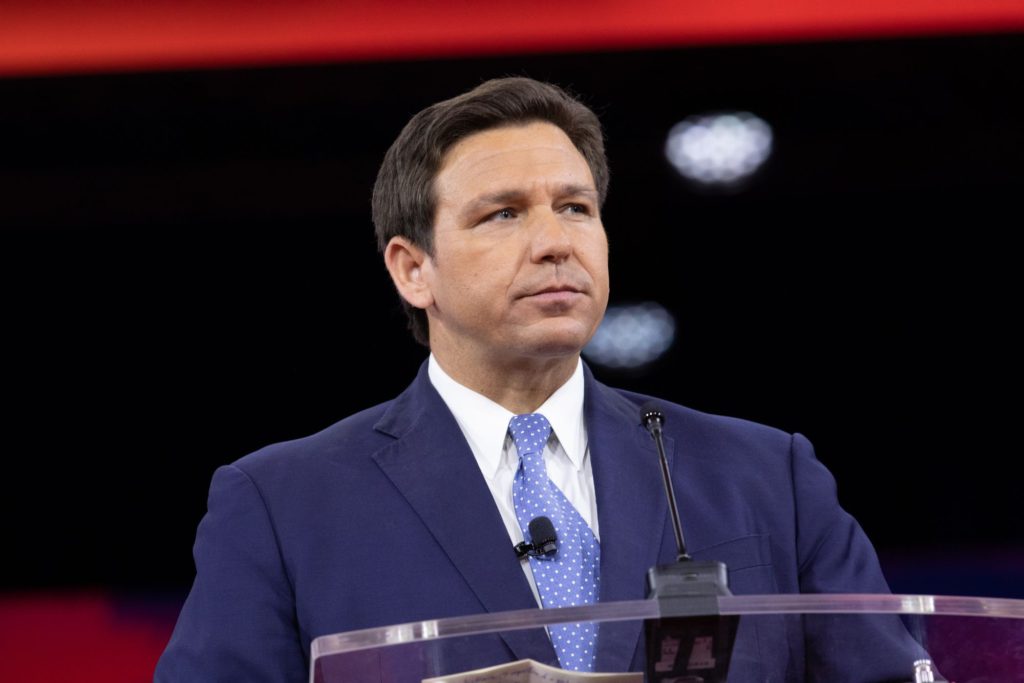
(Bloomberg Law) — It’s unconstitutional for Florida to stop social media platforms from banning politicians, a federal appeals court said Monday.

The state’s Republicans crafted a law last year to ensure politicians could remain active on social media platforms such as Twitter and Facebook after those companies suspended former President Donald Trump‘s accounts.

Trump sued to restore his social media accounts, filing separate class-action lawsuits last year in federal court in Florida against the tech giants and Facebook’s Mark Zuckerberg, Twitter’s Jack Dorsey and Google’s Sundar Pichai.

Monday’s decision is in separate litigation brought by tech trade groups. The Eleventh Circuit ruled that social media companies are private actors whose rights are protected by the First Amendment, upholding part of an injunction against the state law that sought to penalize social media companies for banning political candidates from their platforms.

But the state has a legitimate interest in ensuring that a platform’s users “aren’t misled about platforms’ content-moderation policies,” the appeals court said, lifting part of the preliminary injunction ordered June 30 by Judge Robert Hinkle pertaining to the companies’ disclosure obligations.

“Put simply, with minor exceptions, the government can’t tell a private person or entity what to say or how to say it,” the appeals court said in an opinion signed by Judge Kevin Newsom of the US Circuit Court of Appeals for the Eleventh Circuit.

The companies’ “so-called ‘content moderation’ decisions constitute protected exercises of editorial judgment,” the court said.

“We further conclude that it is substantially likely that one of the law’s particularly onerous disclosure provisions—which would require covered platforms to provide a ‘thorough rationale’ for each and every content-moderation decision they make—violates the First Amendment,” the court said.

But the court lifted the preliminary injunction against the law’s other disclosure provisions regarding publishing a platform’s standards, changes to a platform’s rules, view counts, free advertising for candidates, or a user’s access to their data after receiving notice of removal from a platform.

Hinkle found the law signed May 24, 2021, by Gov. Ron DeSantis (R) violated the First Amendment and didn’t apply equally to all social media providers.

Florida’s Authority

Florida Attorney General Ashley Moody said the opinion “recognized the state’s authority to rein in social media companies.”

“We will continue to vigorously defend Florida’s authority to demand accountability from Big Tech,” she said in a statement posted to her Twitter account.

The law (S.B. 7072) had been one of DeSantis’ legislative priorities last year. Had it taken effect July 1, it would have imposed $250,000 daily fines on social media companies that block a statewide candidate for more than 14 days. Blocking candidates in local elections would have carried a $25,000 daily fine.

It would have let individual users seek up to $100,000 in damages for claims that a platform’s content standards weren’t applied consistently to their posts or profiles.

While promoting the measure, DeSantis and Florida’s Republican-led Legislature cited Twitter’s permanent suspension of Trump, and YouTube’s removal of a panel DeSantis hosted with scientists who opposed masks and business closures during the pandemic. They also said social media platforms function as public spaces and so must remain open to all.

“These platforms essentially assert that in their interactions with users they are a law unto themselves, assuming the authority to silence whomever they want,” attorneys for the state said in a Dec. 20 brief.

“Nothing in federal law requires States to meekly stand by when private interests assert such authority to restrict the ‘free flow of information and ideas.’”

A statement Monday from Bryan Griffin, deputy press secretary in the governor’s office, said, “Although the Eleventh Circuit approved some provisions of the law, we are nevertheless disappointed that the Court continues to permit censorship. The Court’s central holding that social media platforms are similar to newspapers and parades, rather than common carriers that transmit others’ messages, is stupefying. Floridians know differently. Our office is currently reviewing the options for appeal. We will continue to fight big tech censorship and protect the First Amendment rights of Floridians.”

First Amendment Protection

The Computer & Communications Industry Association and NetChoice sued the state in May 2021. The trade groups’ members include Twitter Inc., Facebook Inc., Amazon.Com Inc., Google, and Pinterest.

The tech trade groups also challenged a 2021 Texas law restricting content moderation by social media companies, which they allege would force them to host extremist content. Earlier this month, the Fifth Circuit put on hold a temporary injunction against key parts of the law that a lower-court judge issued in December.

The tech groups filed an emergency request to the US Supreme Court seeking to block the Texas law.

CCIA and NetChoice applauded Monday’s opinion in the Florida case.

“The First Amendment protects platforms and their right to moderate content as they see fit—and the government can’t force them to host content they don’t want,” Carl Szabo, vice president and general counsel of NetChoice, said in an emailed statement. “This makes it even more likely that the US Supreme Court will overturn the 5th Circuit’s split decision on the similar Texas law.”

The law firm Cooper & Kirk PLLC represents defendant Patrick Gillespie, deputy secretary of business operations for the Florida Department of Management Services. The other defendants are Florida Attorney General Ashley Moody and members of the Florida Elections Commission.

CCIA and NetChoice are represented by the law firms Kirkland & Ellis LLP, DLA Piper, and Wilson Sonsini Goodrich & Rosati P.C.

The Florida case is NetChoice v. Moody, 11th Cir., No. 21-12355, 5/23/22.

To contact the reporter on this story: Jennifer Kay in Miami at jkay@bloomberglaw.com

To contact the editors responsible for this story: Tina May at tmay@bloomberglaw.com; Carmen Castro-Pagán at ccastro-pagan@bloomberglaw.com

(3 Added comment from the governor’s office deputy press secretary)

More stories like this are available on bloomberg.com

©2022 Bloomberg L.P.
Parent of Social Platform Uplive Is Discussing Deal With E.Merge SPAC

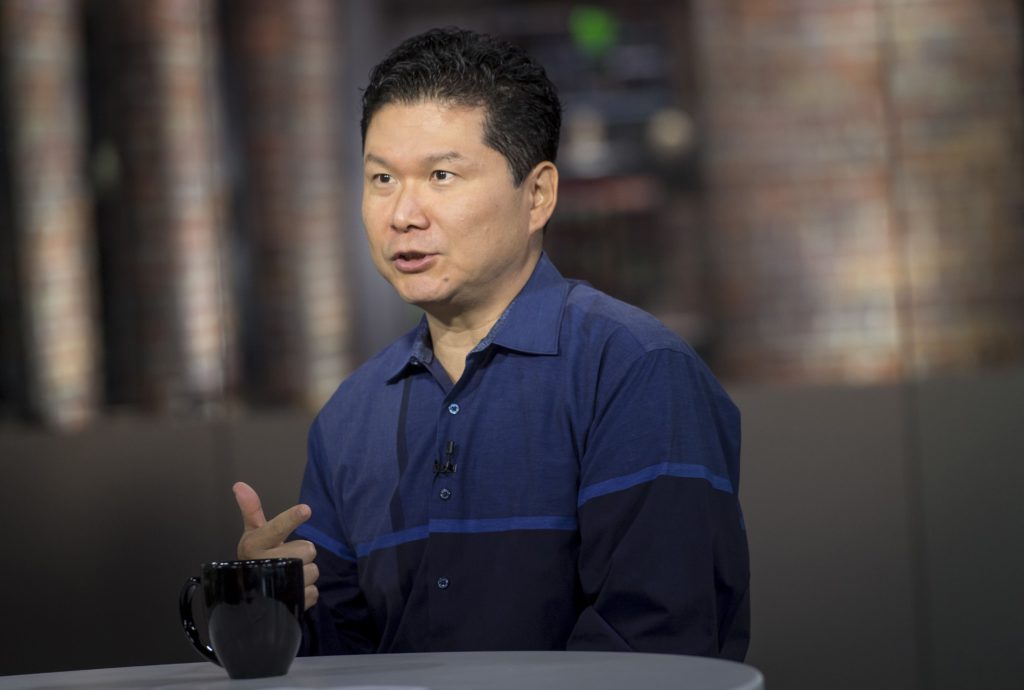
(Bloomberg) — Asia Innovations Group Ltd., the startup that operates social platform Uplive, is in talks to go public through a merger with E.Merge Technology Acquisition Corp., according to people with knowledge of the matter. 

Any transaction is set to value the combined company at more than $2 billion, said one of the people, requesting anonymity discussing private negotiations. E.Merge is poised to begin formally canvassing private investment in public equity, or PIPE, investors, for capital to support the transaction, some of the people said. Its company’s revenue more than doubled in 2021 to about $300 million, some of the people said. Terms aren’t finalized and it’s possible a deal is not consummated. 

An E.Merge representative declined to comment. An Asia Innovations Group representative didn’t immediately respond to a request for comment. 

Asia Innovations Group is led by co-founders Xingzhi “Andy” Tian, Ouyang Yun and Mingling Liu. “Our widespread growth in the first quarter of 2022 shows we are meeting our users’ needs for accessible digital products that foster authentic human connection,” Tian, who is chief executive officer, said in a statement last month. 

Founded in 2013, Asia Innovations Group says it serves more than 500 million registered users in over 150 countries and regions. In addition to Uplive, it operates dating apps CuteU and Lamour, online marketplace Hekka and voice-based social app Haya, as well as gaming and payments offerings. The company has received investment from firms including Kleiner Perkins, Yorkville Capital Management, Nicoya Capital Group, White Star Capital and Instagram co-founder Mike Krieger, according to PitchBook data. 

E.Merge Technology, led by co-CEOs Jeff Clarke and Guy Gecht, raised $600 million in a July 2020 initial public offering. At the time, E.Merge said it would focus its search on companies in the software and internet technology industries. 

Other social networking companies that have struck deals to go public through SPAC mergers include dating app Grindr LLC, former President Donald Trump’s Truth Social and Nextdoor Holdings Inc. 

More stories like this are available on bloomberg.com

©2022 Bloomberg L.P.

Neighborhood Covid Enforcers Keep Large Parts of Shanghai in Lockdown

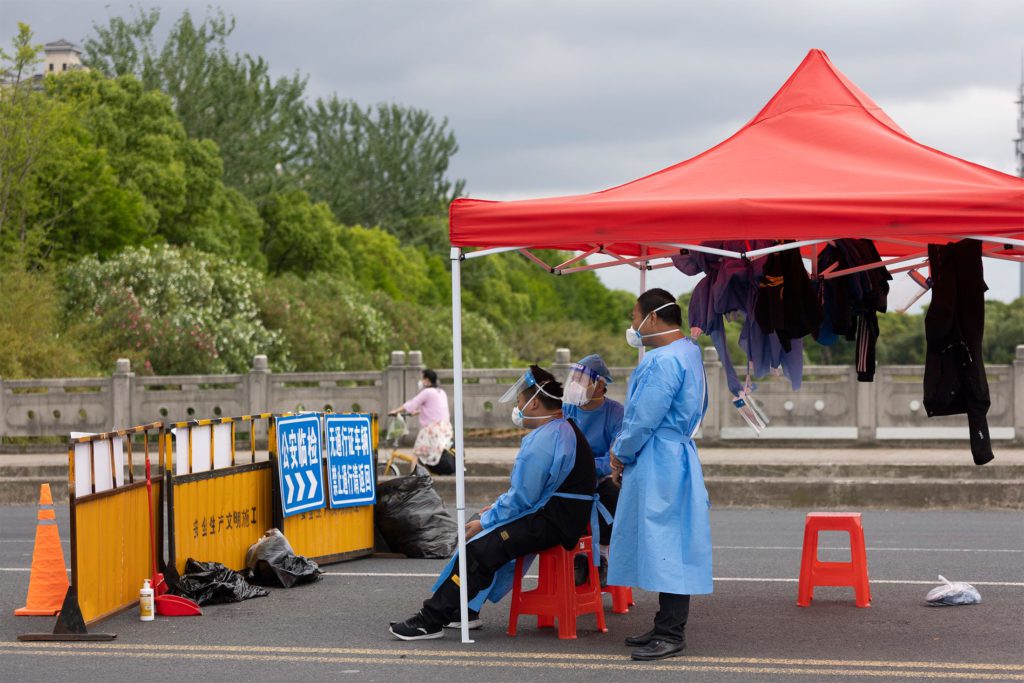
(Bloomberg) — Shanghai has been officially easing a lockdown that kept its 25 million residents home-bound for nearly two months following a decline in Covid-19 cases, but an army of zealous grassroots volunteers who police housing compounds are still banning many people from going outside.

Neighborhood committees around the city are imposing strict and arbitrary curbs on movement, including limits on who can leave their apartment blocks and for how long — amid concerns about a rebound in cases. The moves are seeing simmering frustrations boil over as people push for freedoms that top city officials have promised, while local cadres fear repercussions if residents return home with an infection.

Nearly 85% of Shanghai’s residents, or 21 million people, live in compounds or districts that are free of the virus, according to a tally released by the municipal government. These so-called ‘preventive’ areas were supposed to have the lowest level of movement restrictions, allowing people to leave their apartment complexes and walk around their neighborhoods.

For millions of people, that isn’t happening. According to about a dozen residents across the city, many are still facing a variety of restrictions from their local committees. In some cases, they can only venture 20 meters (66 feet) — about the length of a bowling alley — from their housing complexes.

The experiences suggest Shanghai’s path to exiting weeks of isolation will be bumpy, reflecting the challenges for China as it continues to deploy the Covid Zero framework despite the very real risk of a rebound in infections.

Xi in a Bind Over Who to Blame for Shanghai’s Covid Outbreak

There are legions of neighborhood committees across China, ubiquitous grassroots organizations that function as coordinators of all sorts of government policies. They are responsible for everything from enforcing lockdowns to household registrations, and have been competing with one another to eradicate the virus from their jurisdictions.

Tiptoeing Forward

In some areas of Shanghai, residents are restricted to 20-minute time slots, three times a day to venture out, with the distances one can go limited. One committee in the eastern part of the city last week recognized the effort required to be deemed a ‘preventive area,’ and told residents the curbs were needed to limit risks from the surrounding areas. 

Some aren’t allowed out at all. The authority in Minhang district, in the city’s southwest, banned people from leaving their homes or compounds between May 25 and 26, regardless of their lockdown status. The reason given was that another round of mass testing is set to be carried out, according to an official notice.

Elsewhere in the city, neighborhood committees restricted the number of family members that could leave their compounds, and put in place rules about the purpose and length of the trips. Some required households to share special leave passes during designated time slots. 

Another committee mandated that they could only be used once, with each building given a single pass. Trips were limited to shopping at a nearby Walmart Inc. store, and could last only three hours. 

Covid Punishments 

The varied lockdown measures imposed by neighborhood committees suggest that low-level government officials, who work closely with them, are concerned that they’ll be penalized if new cases pop up in their jurisdictions.

Why China Is Sticking With Its Covid Zero Strategy: QuickTake

China has punished more than 4,000 officials in relation to some 51 local Covid outbreaks, according to a Bloomberg analysis of data released by state media and Communist Party disciplinary authorities. Most of the more than 15 officials reprimanded over the Shanghai lockdown so far have been low-ranking bureaucrats, with none exceeding a district-level rank.

The city’s vice mayor said last week that Shanghai aims to return to normal life and restore full factory production by mid-to-late June. On Sunday, officials laid out the criteria they will use to categorize Covid risk levels in neighborhoods, as authorities seek to try and end the lockdown ordeal for residents. 

The restrictions have been hugely disruptive for industry and business, too, with manufacturers like Tesla Inc. shut down or delayed for weeks. Airbnb Inc. said Monday it was closing its operations in China because of the aggressive approach to containing Covid. Beijing has flagged more than $21 billion in tax relief to bolster the economy, which is being hammered by Covid Zero.

Read more: Airbnb to Shut China Business as Lockdowns Continue

Overall, Shanghai is finally seeing its outbreak dwindle. There were 480 new cases reported for Monday, a decrease from 558 a day earlier, and none were found outside of government quarantine. 

One woman, fed up with the restrictions, used a megaphone to urge her neighbors to “lift the lockdown by ourselves,” according to a widely circulated video on the social media app WeChat. 

Another showed residents pouring out of their compound after government representatives listened to their complaints and unlocked the gates. Since none had been given a pass, however, they all took pictures and then went back inside. 

(Updates the daily infection rates in the 15th paragraph)

More stories like this are available on bloomberg.com

©2022 Bloomberg L.P.

UN Rights Chief Says Her Rare China Trip Isn’t a Probe

(Bloomberg) — The United Nations’ human rights chief told diplomats her trip to Xinjiang this week wouldn’t be an “investigation,” in an apparent attempt to manage expectations of her landmark visit to China.

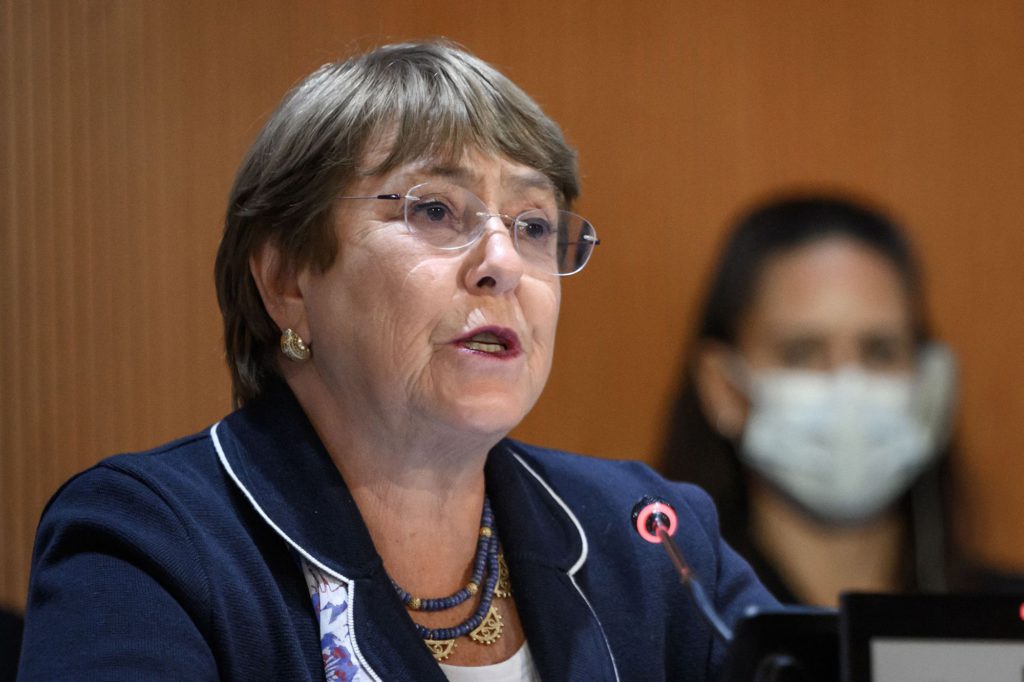
Michelle Bachelet said her trip aimed to promote, protect and respect human rights, according two people who attended the Monday video call with some 100 participants, who were mostly Beijing-based diplomats. The people asked not to be identified discussing the sensitive issue. 

Bachelet said setting high expectations would lead to disappointment, according to the people, addressing concerns raised mainly by Western diplomats on the call over whether she’d be granted unfettered access to Xinjiang. 

Rights groups and countries including the US have accused Beijing of putting mostly Muslim ethnic Uyghurs in mass detention camps in the far western region as part of a campaign of “genocide.” China rejects charges that human rights abuses or genocide occur in Xinjiang, which has become one of the biggest points of tension between the world’s two largest economies. 

US Ambassador Nicholas Burns expressed to Bachelet “profound concerns” about China’s human rights record in Xinjiang and attempts by Beijing to manipulate the trip, according to multiple people on the call who asked for anonymity as they weren’t authorized to speak. 

A diplomat who attended the Monday call said some countries appeared to have prepared statements defending China, and the organizer also took questions in batches — allowing Bachelet to avoid answering anything too sensitive.

The UN Human Rights Office confirmed in a statement that Bachelet met with diplomats. It added that it doesn’t provide detailed itineraries of such visits.

Bachelet met Chinese Foreign Minister Wang Yi on Monday, the Foreign Ministry in Beijing said in a statement. The government of the Asian nation “made the protection of citizens’ legitimate rights and interests its basic task,” the statement said, adding that it also “made safeguarding the ethnic minorities’ rights an important part of its work.”

Still, Bachelet said she’d make the most of being in China, where her arrival in Beijing this week marked the first time a UN human rights chief had visited the country since 2005. 

The UN official also confirmed she’ll visit a detention center in Xinjiang and has set up meetings independently of Chinese authorities, one of the people said. Bachelet added that she will produce a report on Xinjiang, separate to the delayed one her office is already working on, without sharing publication dates of either.  

She’ll also deliver a lecture at Guangzhou University in the southern province of Guangdong, visit Kashgar and Urumqi in Xinjiang, and hold a press conference on Saturday to wrap up the trip, the UN Human Rights Office said in a Friday statement. 

Chinese Foreign Ministry spokesman Wang Wenbin said Monday at a regular press briefing in Beijing that Bachelet would travel in a “closed loop as agreed by the two sides” without traveling press. China is battling virus outbreaks in several cities, as it clings to a Covid Zero policy of eliminating the virus. 

Bachelet’s visit has taken years to arrange, after being delayed by the pandemic and negotiations over access. Discussions between China and Europe about a trip to Xinjiang by a group of ambassadors reached a deadlock last year, with an official from the region complaining the envoys wanted to meet “criminals.” China routinely has police follow reporters who travel to the region.

The State Department this month outlined plans to boost pressure on China over what it called “horrific abuses” of Uyghur and other ethnic minorities in Xinjiang. A US law set to take effect next month would ban the import of goods from Xinjiang unless companies can prove they weren’t made with forced labor. 

Washington is also weighing the unprecedented step of imposing severe Treasury Department sanctions on Hangzhou Hikvision Digital Technology Co., which makes surveillance systems used in Xinjiang.

(Updates with comments from a diplomat who attended the call and details of Bachelet-Wang meeting.)

More stories like this are available on bloomberg.com

©2022 Bloomberg L.P.
Close Bitnami banner
Bitnami