Bloomberg

Japan’s Rakuten Prepares to List Its Securities Unit

(Bloomberg) — Rakuten Group Inc. said it’s preparing a listing for its Rakuten Securities unit as the Japanese company diversifies beyond e-commerce.

The company said a listing for the securities business would help it expand the ecosystem for Rakuten offerings, which range from e-commerce to finance and wireless services. The date of the prospective listing has not yet been set.

Hiroshi Mikitani, the company’s chief executive officer and founder, has been expanding Rakuten’s businesses while facing competition from Amazon.com Inc. in its core e-commerce operation. The US online retailer has invested heavily in Japan as one of its key overseas markets.

Mikitani has made an enormous wager on wireless services by building a fourth mobile network in Japan to compete with leaders NTT Docomo Inc. and SoftBank Corp. Rakuten’s operating loss tripled in the first quarter from a year earlier, missing analyst projections.

Some analysts see potential for the company to cut losses in mobile in the quarters ahead however, and then boost revenue by cross-selling financial services and other offerings to its customers.

“Their percentage of users who use two or more services reached a record high of 74.8%,” Amir Anvarzadeh, an analyst at Asymmetric Advisors, wrote last week. “This is precisely why we think those who value the mobile unit purely as a stand-alone one miss this crucial fact and the importance of the mobile interface in selling many other services.”

Rakuten shares were little change on Tuesday. They had dropped 34% this year through Monday’s close.

More stories like this are available on bloomberg.com

©2022 Bloomberg L.P.

Here’s Snap CEO Evan Spiegel’s Internal Memo to Staff in Full

(Bloomberg) — Social media stocks were sent spiralling downward after Snap Inc. cut revenue and profit forecasts below the low end of its previous guidance. The company’s shares plunged 29%, which dragged down stocks of other social media companies reliant on advertising. Snap CEO Evan Spiegel sent staff an internal memo warning of a hiring slowdown in response to a “challenging macroeconomic environment.”

Here’s the memo, in full:

Team,

Thank you so much for your hard work executing through this challenging macroeconomic environment. Like many companies, we continue to face rising inflation and interest rates, supply chain shortages and labor disruptions, platform policy changes, the impact of the war in Ukraine, and more.

Today we filed an 8-K, sharing that the macro environment has deteriorated further and faster than we anticipated when we issued our quarterly guidance last month. As a result, while our revenue continues to grow year-over-year, it is growing more slowly than we expected at this time. We believe it is now likely that we will report revenue and adjusted EBITDA below the low end of the guidance range we provided for this quarter.

We believe that the progress we’ve made growing our revenue, combined with the strength of our balance sheet, has positioned us well for the current environment. The fundamentals of our business remain strong, our community is growing and engaged, and we are excited about the many opportunities ahead. As a result, 2022 remains a significant investment year for Snap, despite the ongoing market volatility.

Responsibly managing our expenses will allow us to invest through this period of time and emerge stronger as a business. Moving forward, we will be taking steps to reprioritize our investments — continuing to invest across our business priorities, but in many cases doing so at a slower pace than we had planned given the operating environment.

  • We will continue to hire new team members, including recruiting for open roles.
  • We will slow our pace of hiring for unopened roles for the remainder of the year, as well as push some planned hiring into next year.
  • We expect to hire more than 500 new team members between now and the end of the year, representing nearly 10% company-wide headcount growth over the next seven months. This is in addition to over 900 offers already accepted this year, up 41% year-over-year, and the roughly 2,000 people added to our team in the trailing 12 months.
  • We will continue to backfill existing positions that become available as a result of attrition if those roles remain a high priority for our teams.
  • We will also evaluate the remainder of our 2022 budgets and leaders have been asked to review spending to find additional cost savings.

Our most meaningful gains over the coming months will come as a result of improved productivity from our existing team members, as we work together and help our new team members get to know Snap and learn how to contribute to their full potential.

Thank you so much for all your hard work and commitment to our community and partners. Through many ups and downs over the past decade you have made clear your ability to see through the short term and invest in our long term success.

Evan

More stories like this are available on bloomberg.com

©2022 Bloomberg L.P.

Snap Falls After Cutting Revenue Forecast, Slowing Hiring

(Bloomberg) — Snap Inc. cut its revenue and profit forecasts below the low end of its previous guidance, sending shares plunging as much as 31% and pushing other social media stocks down.

The company will also slow hiring, filling 500 roles before the end of the year, Chief Executive Officer Evan Spiegel said in a note to staff. “Like many companies, we continue to face rising inflation and interest rates, supply chain shortages and labor disruptions, platform policy changes, the impact of the war in Ukraine, and more,” he wrote in the memo obtained by Bloomberg.

Read More: Evan Spiegel’s Full Memo to Staff

Snap benefited from a surge in usage of its Snapchat app during the pandemic, when people were looking for entertainment and connection from their homes. Now, as people return to offices and schools, the company is reeling from the same combination of economic pressures that are also facing its competitors. 

“The macroeconomic environment has deteriorated further and faster than anticipated,” Snap said in a filing. “As a result, we believe it is likely that we will report revenue and adjusted Ebitda below the low end of our Q2 2022 guidance range.”

The company’s second-quarter forecast, for 20% to 25% year-over-year revenue growth, was already below analysts’ estimates. The warning immediately hit other companies reliant on advertising, including Meta Platforms Inc., Twitter Inc., Alphabet Inc. and Pinterest Inc. 

The companies “are having to bring these unattainable, unrealistic investors’ expectations back down to Earth,” said Dan Suzuki, deputy chief investment officer at Richard Bernstein Advisors, on Bloomberg Television Monday. “Underlying growth is slowing as these companies mature and it gets more competitive.” Suzuki’s firm, which has about $15 billion of assets under management, does not hold Snap stock directly.

The platforms are all competing for ad dollars at a challenging time. Advertisers are facing a shaky economy as well as recent privacy changes, such as Apple Inc.’s tracking restrictions, which have slowed businesses that were booming during much of the pandemic.

Facebook parent Meta last month cut spending because of the macroeconomic environment. Twitter recently announced a hiring freeze and other cost cutting measures to try and save cash. “The global macroeconomic environment has become less favorable, the war in Ukraine has impacted our results, and may continue to do so,” Twitter Chief Executive Officer Parag Agrawal said in an email to employees. “Many other companies have been experiencing a similar effect.”

Spiegel told staff that company leaders have been asked to review spending, to see if there are any other areas worth cutting. “Our most meaningful gains over the coming months will come as a result of improved productivity from our existing team members,” he wrote.

(Updates with CEO memo to staff in the first paragraph)

More stories like this are available on bloomberg.com

©2022 Bloomberg L.P.

‘Downton Abbey’ Opens in Second Place as Some Fans Stay Home

(Bloomberg) — “Downton Abbey: A New Era” opened in second place domestically this weekend and with a much weaker debut than its 2019 predecessor as a key demographic for the film, older women, proves to be one of the most difficult to persuade back into theaters.

  • The film, from Comcast Corp.’s Focus Features division, generated $16 million in domestic ticket sales, Comscore Inc. said Monday. That was below the $20 million forecast from Boxoffice Pro and in line with low-to-mid-teen millions the studio had projected.
  • This movie, which picks up the story of the TV series and 2019 feature film, was the best test so far for whether older women would come back to cinemas. Almost 75% of the audience for the first “Downton Abbey” movie, which opened to $31 million, was female, while 60% was over 35 years old, Boxoffice Pro said. The recovery for theaters has mostly been led by younger men and women seeing superhero films.

Key Insights

  • Comcast undertook a major marketing push across its media outlets to get the word out. The promotions included advertising during the Kentucky Derby, an hour-long behind-the-scenes program on NBC and cast appearances on the “Today” show that included a re-creation of the dining room from the film. It also started a TikTok account for the movie, which has about 80,000 followers, to develop a younger fan base, according to the studio. The movie opened in more than 3,800 theaters, the largest number ever for a release from Focus Features.
  • Some “Downton Abbey” fans may wait until the movie is available for home viewing, which could be in as few as 17 days, depending on ticket demand. Online availability has hurt the box office performance of movies recently. In 2021, Warner Bros. films that appeared on HBO Max the same day they premiered in theaters generated ticket sales that were about 8% lower than if they’d been exclusives in theaters, according to modeling by Bruce Nash, founder of the movie data site the Numbers.
  • “Doctor Strange in the Multiverse of Madness,” the latest Marvel installment from Walt Disney Co., was on top of the box office for the third straight week. It sold $32.3 million in domestic tickets over the weekend, Comscore said. It will likely be dethroned by the Paramount Global movie “Top Gun: Maverick,” which debuts over the Memorial Day holiday weekend after numerous Covid-related delays.

(Updates with final ticket sales in first and sixth bullets.)

More stories like this are available on bloomberg.com

©2022 Bloomberg L.P.

Fed’s George Says Inflation Will Guide Moves After Rates Hit 2%

(Bloomberg) — Sign up for the New Economy Daily newsletter, follow us @economics and subscribe to our podcast.

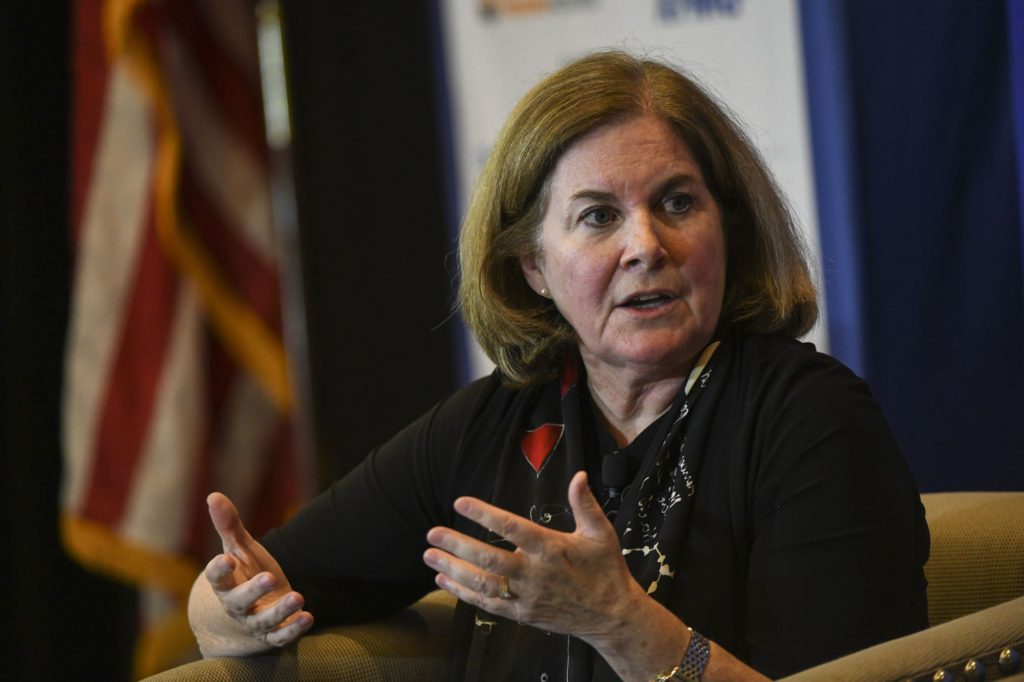
Federal Reserve Bank of Kansas City President Esther George said she expects the central bank to raise interest rates to 2% by August, with the further course of tightening being guided by how surging inflation cools off.

“Fed policymakers have emphasized a commitment to act expeditiously to restore price stability, and I expect that further rate increases could put the federal funds rate in the neighborhood of 2% by August,” George said Monday night in prepared remarks to the bank’s agriculture symposium. “Evidence that inflation is clearly decelerating will inform judgments about further tightening.”

The Fed raised interest rates by 50 basis points earlier this month — to a target range of 0.75% to 1% — and Chair Jerome Powell has signaled it was on track to make similar-sized moves at its meetings in June and July. That’s a plan which both hawks and doves on the policy-setting Federal Open Market Committee have since embraced to curb the hottest inflation since the 1980s.

George, who has been known as a longtime policy hawk who more recently moved to the center, criticized monetary policy for having “belatedly” shifted to fight inflation, which she called a “top priority” for the Fed to return to its 2% goal.

While some of the price gains have been related to supply difficulties such as a shortage of semiconductors, and more recently the Russian invasion of Ukraine, George said an ‘’unusually tight” labor market has contributed to rising prices even in sectors of the US economy where demand hasn’t fully recovered to pre-pandemic levels.

She cited air travel and hairdressing as two sectors where prices have surged despite weaker demand. Service employers have struggled to hire amid a spate of retirements as well as a significant drop in immigration, she said.

“The inflation we are now experiencing is obviously both too high and too broad to dismiss,” George said.

“The central bank’s job is to prevent persistent imbalances from feeding into inflation and unmooring inflation expectations,” she said. “By influencing interest rates, the Federal Reserve primarily affects the demand side of the imbalance. The evolution of its efforts alongside other factors will affect the course of monetary policy, requiring continuous and careful monitoring.”

More stories like this are available on bloomberg.com

©2022 Bloomberg L.P.

Adobe’s Narayen Says Company ‘Always Looking’ for Acquisitions

(Bloomberg) — Adobe Inc. Chief Executive Officer Shantanu Narayen touted the software company’s nearly $5 billion in cash on its balance sheet and said it is always in the market for acquisitions.

“We’re always looking,” Narayen said Monday in an interview with Bloomberg Television. “Our criteria continues to be making sure that there’s great technology, that there’s a culture match, and that financially it’s a good deal for our shareholders.”

Adobe, the maker of creative and marketing software including Photoshop, bought Frame.io Inc. last year for $1.3 billion, and acquired Workfront Inc. in 2020 for $1.5 billion. Both companies make video collaboration software tools. Narayen said the deals “have turned out to be phenomenal.”

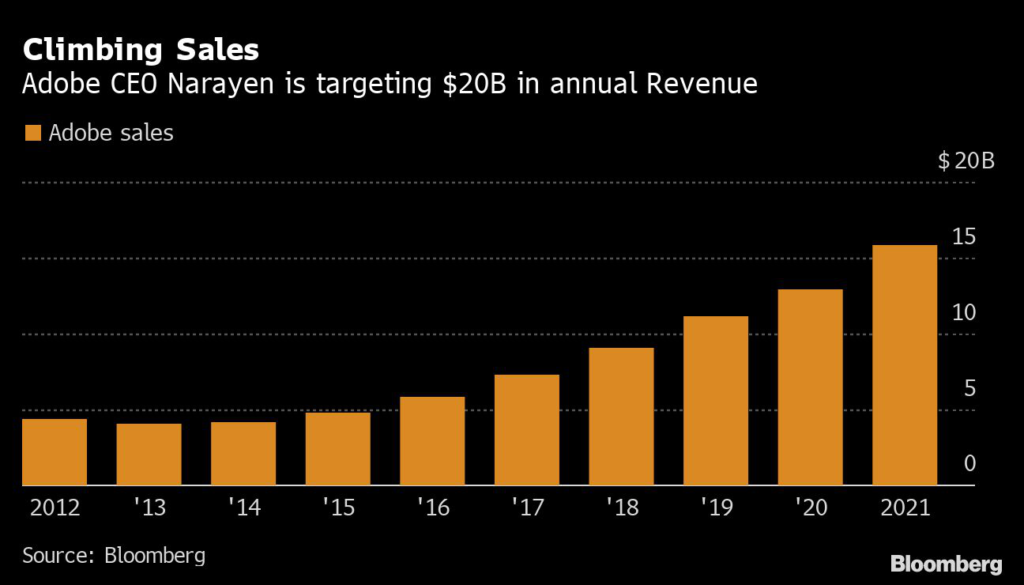
Adobe, with the aid of acquisitions, has expanded its marketing, analytics and e-commerce products, which Narayen is counting on to spur the company’s effort to reach $20 billion in annual revenue. While Adobe estimates the market may be worth as much as $110 billion, it faces strong rivals such as Salesforce Inc. and Twilio Inc. as well as a sluggish global economy that may be curtailing spending in these areas.

A number of smaller tech companies will be “shaken up” by the current valuation downturn, but it’s an opportunity for larger more-diversified firms like Adobe, Narayen said. “We have a tremendous balance sheet, we have a tremendous opportunity,” he said.

Adobe is one of the industry’s longtime success stories, but has faced rare investor skepticism this year over fears that businesses are reducing their spending and that smaller competitors, including Canva Inc. and Lightricks Ltd., are making in-roads among new customers. Adobe shares have fallen about 28% in 2022 amid a broad decline in software stocks. 

Narayen shrugged off the competition. “We are the largest company in that space, we have an incredible portfolio,” he said. “We’re going to win because we created these markets, we have a vision for the market.”

Adobe said in March it was revising prices for its signature creative suite, the first major overhaul since 2017. The new structure will reflect features Adobe has added in the past five years, including new collaboration capabilities, executives said.

More stories like this are available on bloomberg.com

©2022 Bloomberg L.P.

Asia Manufacturers Say the Pandemic-Driven Trade Boom Is Fading

(Bloomberg) — Clothing companies and gadget makers are among manufacturers across Asia seeing early signs of cooling demand from their global customers as soaring inflation takes hold.

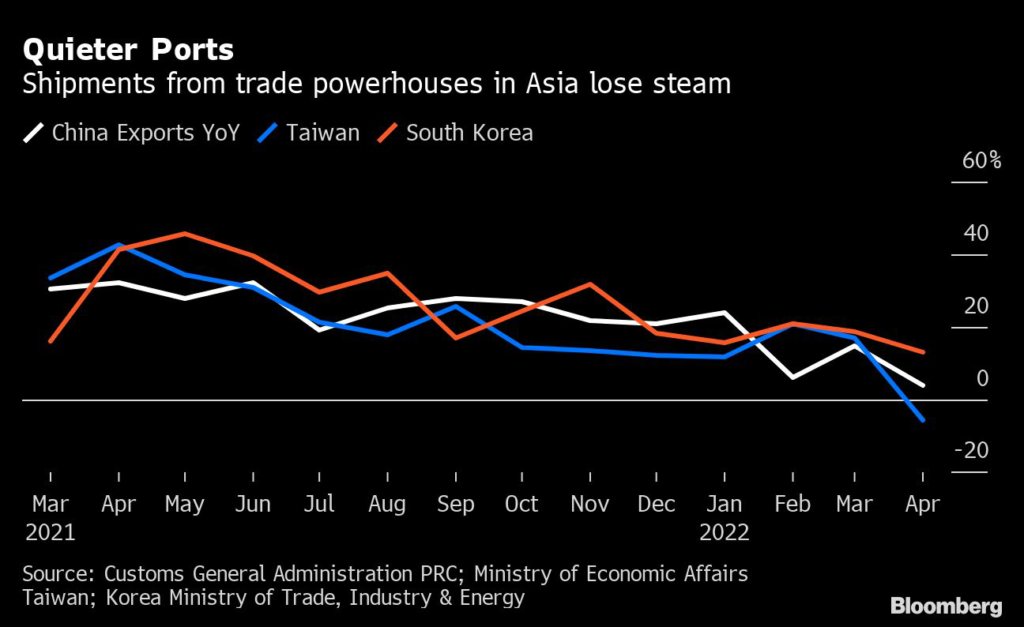
Bumper exports from Asia, especially China, were a major dynamo in the global economy’s recovery from the pandemic. Recent data suggest that’s fading due to supply blockages linked to China’s aggressive Covid lockdowns and Russia’s invasion of Ukraine. Well-stocked inventories have been another headwind. 

Producers say pent-up demand is switching from buying goods to buying services at the same time that rising interest rates and inflation combine to curb discretionary spending. 

One of those producers seeing signs of an early shift is Lever Style, a Hong Kong-listed maker of apparel for leading global brands. While overall demand remains robust, orders for delivery in the final quarter look weaker, according to Executive Chairman Stanley Szeto.

“I am seeing that growth tapering off big time in another few months,” he said. “We get orders months and quarters before they are actually shipped and we are seeing people becoming very tentative in buying inventory and ordering.”

While some of the spending shift reflects a normalization of habits, some of it also reflects softening underlying demand as inflation and interest rates rise — conditions that are bound to impact spending decisions, Szeto said. Fading government stimulus and volatile financial markets are also having an impact, he added.

“There is a perfect storm coming,” he said. “I can see all the macroeconomic conditions working against the consumer.”

The slowdown isn’t yet at the point of a trade recession. Both analysts and manufacturers say underlying demand remains solid and consumers have money to spend. Household expenditures in the US, for example, continued to power ahead at least through April. Shanghai is easing its lockdown, which is expected to lift pressure off the nation’s exporters.

Still, the overall downshift is notable. The World Trade Organization in April lowered its projection for growth in merchandise trade this year to 3%, down from its previous projection of 4.7%. Asia’s manufacturing sector contracted in April for the first time since June 2020, according to closely watched PMI data.

The Bloomberg Trade Tracker shows the latest evidence of a softening in shipments: Throughput at some of the world’s busiest ports took another hit in April. Nine of the Tracker’s 10 indicators across shipping, sentiment, and exports are below long-run averages. The tenth — tallying Korean exports — looks better only on paper given that there were two extra working days in the period compared with last year.

“The outlook has turned quite challenging for this year and the next at least,” said Priyanka Kishore of Oxford Economics. “Even before the start of the war, we were talking about a rotation from goods to services trade,” she said.

Steve Chuang, whose Hong Kong-based company makes products such as power systems for camper vans and other recreational vehicles, saw his order book hit records in 2020 and 2021 as people were forced to vacation closer to home.

That’s now changing, said Chuang, founder and chief executive officer of ProVista Group. The firm’s broad offerings include automobile electronics and energy storage power products, and its biggest markets are the US and Europe.

“You can feel the inflation. The spending power in our major markets is becoming very soft,” Chuang said. “Trade will still grow, but it won’t be like the last two years.”

Even the usually reliable American spenders are showing signs of holding back. Retail giants Walmart Inc. and Target Corp. this month suffered big stock losses as their earnings reports showed general merchandise sales weakening.

The picture could get bleaker: Goldman Sachs models show Asia trade slowing further in the months ahead. HSBC economists say the region’s trade boom is showing its first cracks, while Nomura’s leading index of Asia exports plunged in May by the most since the first half of 2020.

What Bloomberg Economics Says

“Asia’s supply chains will continue to be buffeted by two shocks from China — reduced costs of production and logistics (due to the demand shock) and constraints on supply and increased delivery times (due to the supply shock).”

–Chang Shu, chief Asia economist 

For the full report, click here

It’s clear that consumers have become more careful with their spending, said Christopher Tse, chief executive officer of Musical Electronics Ltd., a Hong Kong-based company that makes consumer electronics like Bluetooth speakers and high-power home stereo systems for the US market, among other products.

“We have seen a cooling of orders beginning in March,” Tse said. While his sales of healthcare-related products are holding up, there’s less demand for items such as high-power speaker systems.

“Inflation is impacting, interest rates are going up,” Tse said. “Buyers are very cautious these days.”

More stories like this are available on bloomberg.com

©2022 Bloomberg L.P.

Broadcom in Talks to Acquire Cloud Company VMware

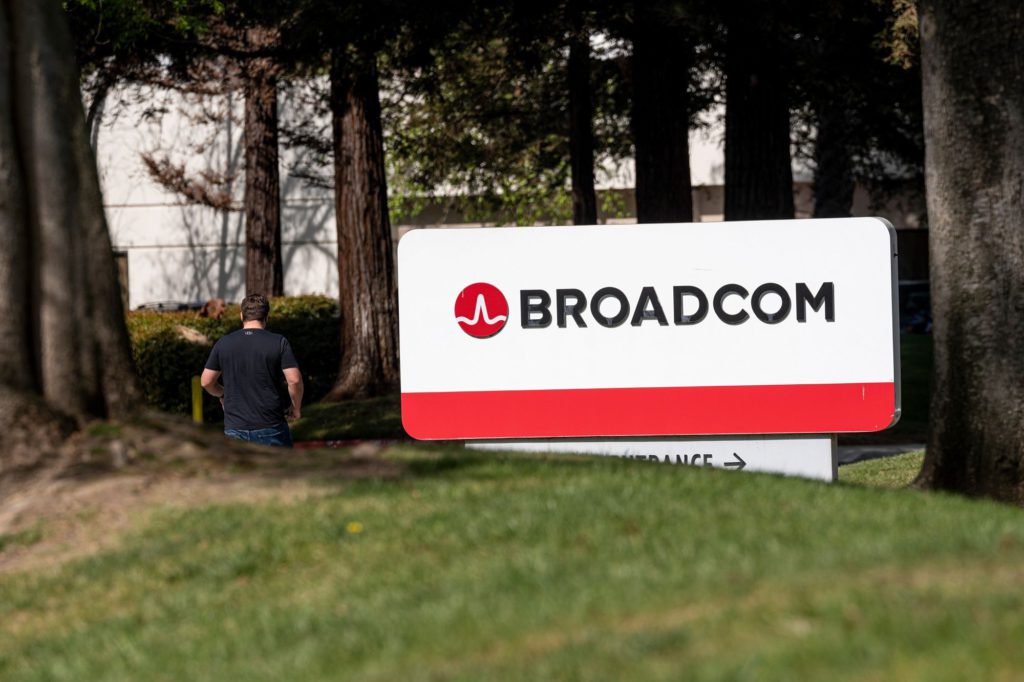
(Bloomberg) — Broadcom Inc. could announce an agreement to acquire cloud-computing company VMware Inc. as soon as this week, according to people familiar with the matter, setting up a blockbuster tech deal that would vault the chipmaker into a highly specialized area of software.

The offer is likely to be mostly in the form of stock but would include a large cash element, said one of the people, who asked not to be identified because the matter isn’t public. Financing for the transaction is in place, the person added. 

VMware, backed by billionaire Michael Dell, currently has a market valuation of about $50.3 billion. The takeover discussions are ongoing, and there’s also still no guarantee that the talks will lead to an agreement. Representatives for the two companies didn’t immediately respond to requests for comment.

The Wall Street Journal reported that the bid could be around $140 a share, or $60 billion. An acquisition at that price implies a price-to-earnings ratio of at least 17, and that’s consistent with recent software deals, according to Bloomberg Intelligence analyst Woo Jin Ho. 

Shares in VMware rose 25% to $119.43 on Monday in New York after Bloomberg News first reported that the talks were underway. That was the biggest one-day gain since 2007. Broadcom, which has a valuation of about $215 billion, fell 3.1% to $526.36. 

A deal for VMware would rank among the biggest-ever acquisitions of a technology company. The industry has been one of the bright spots for bankers in recent months, even as the overall pace of dealmaking slows from 2021’s record pace.

Takeovers of technology companies globally are up 46% this year to $263 billion, according to data compiled by Bloomberg. The tally was buoyed by Microsoft Corp.’s agreement in January to buy video game publisher Activision Blizzard Inc. for $69 billion. A consortium backed by Vista Equity Partners is acquiring software maker Citrix Systems Inc. for $13 billion, while Elon Musk announced a $44 billion deal for Twitter Inc. last month.

The transaction would extend a run of acquisitions for Broadcom Chief Executive Officer Hock Tan, who has built one of the largest and most diversified companies in the chip industry. Software has been a key focus in recent years, with Broadcom buying CA Technologies in 2018 and Symantec Corp.’s enterprise security business in 2019.

Read more: Dell becomes kingmaker in Broadcom, VMware deal

In March, Tan told analysts on a post-earnings call Broadcom had the capacity for a “good size” acquisition.

“Investors have been increasingly focused on Broadcom’s appetite for another strategic or platform enterprise software acquisition — especially given the recent compression in software valuation,” Wells Fargo analysts wrote after the Bloomberg report. “An acquisition of VMware would be considered as making strategic sense; consistent with Broadcom’s focus on building out a deepening enterprise infrastructure software strategy.”

Structuring the Broadcom offer as mostly stock will let VMware shareholders participate in the upside from the substantial synergies that the deal is expected to yield, the person familiar with the situation said. Even without factoring in synergies, the transaction could boost earnings by 5% to 10%, Bloomberg Intelligence’s Ho said in a report Monday. 

Broadcom makes a wide range of electronics, with its products going into everything from the iPhone to industrial equipment. Data centers in particular are a vital source of growth, and bulking up on software gives the company more ways to target that market. VMware makes virtual software that allows users to access systems remotely. The companies don’t have overlapping products, but are often used together to manage data centers.

Broadcom has faced antitrust scrutiny over its contracts requiring equipment makers to use its chips in set-top boxes and broadband internet devices. The company settled with European competition authorities in 2020 and with the US Federal Trade Commission last year.

The Information reported last month that the FTC is again looking into Broadcom’s use of agreements that require companies to use its hardware exclusively. Given Broadcom’s history, antitrust regulators would be likely to probe whether a deal with VMware would give the combined company greater leverage to demand exclusivity with customers.

Broadcom was previously in talks to acquire SAS Institute Inc., a closely held software company valued at $15 billion to $20 billion. But those discussions ended last year without a deal.

Tan also was thwarted in his biggest takeover attempt of them all: a bid to buy rival chipmaker Qualcomm Inc. He had to walk away from that deal in 2018 after Broadcom encountered resistance from the Trump administration. One concern was Broadcom’s Singapore headquarters, and the company has since switched its domicile to the US. It’s now based in San Jose, California, about 20 miles from VMware’s Palo Alto headquarters.

VMware, founded in 1998, is a pioneering Silicon Valley company that has already changed hands more than once. It invented so-called virtualization software, which consolidated applications and workloads on a smaller number of server computers by using each server to handle more than one program.

But as more tasks moved to the cloud, VMware struggled to keep up growth and carve out a key role for itself. The company eventually forged a close partnership with Amazon.com Inc., one of the biggest providers of cloud storage and services. 

VMware was acquired by storage technology giant EMC Corp. in 2004. That company then sold a portion of its stake as part of VMware’s initial public offering three years later. The business passed to Dell Technologies Inc. when that company acquired EMC in 2016. VMware then spun off from Dell last year.

Michael Dell and private equity firm Silver Lake remain top investors in VMware, according to data compiled by Bloomberg.

Software would help decrease Broadcom’s reliance on chips. But its previous forays into that market haven’t always been applauded by investors. Tan has argued that he looks for businesses that are “franchises” — ones that hold a strong market position and can be made more profitable without pouring in huge investments.

Shares of Broadcom and VMware had both slid roughly 18% this year through the end of last week, hurt by a broader rout. But they haven’t been hit as hard as many tech stocks. The Philadelphia Stock Exchange Semiconductor Index is down 27% this year. 

Chipmakers like Broadcom have enjoyed booming sales in recent years, fueled by the spread of semiconductors into more products — as well as by the need for work-from-home technology during the pandemic. But Tan has warned that the boom times probably won’t last. 

Even after giving an upbeat sales forecast in March, Tan said that the semiconductor industry won’t be able to stay on its current trajectory. He expects the chip business to decelerate to historical growth rates of about 5%.

“If anyone tells you otherwise, don’t believe it, because it has never happened,” he said on a conference call at the time. Industry leaders claiming that the semiconductor industry can grow at the current rate for an extended period are “dreaming,” he said.

(Updates shares startng in fifth paragraph.)

More stories like this are available on bloomberg.com

©2022 Bloomberg L.P.

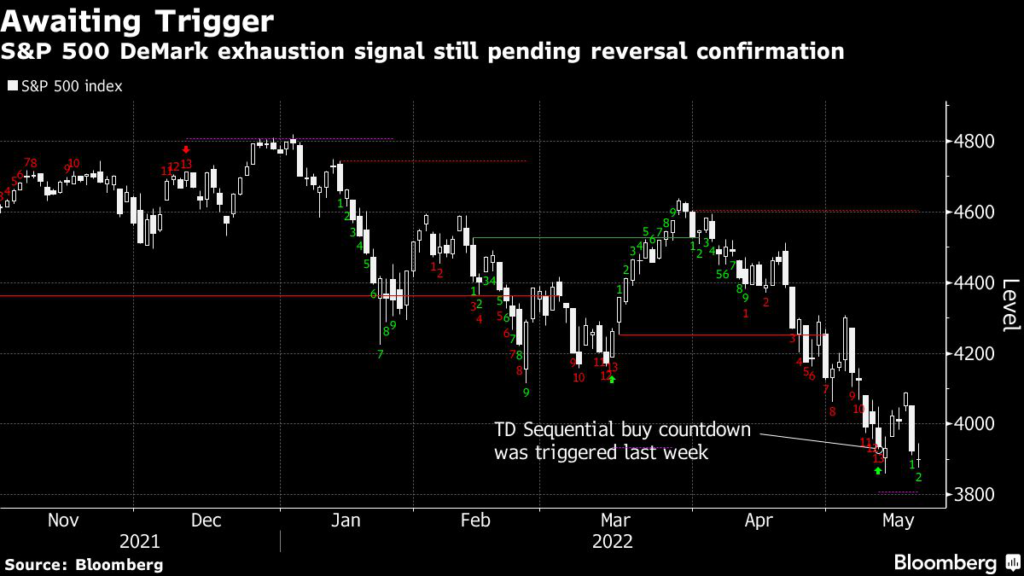
Stocks Climb in Risk-On Day While Bonds Decline: Markets Wrap

(Bloomberg) — Stocks rose after President Joe Biden signaled he’d reconsider China tariffs imposed by the Trump administration. The dollar and bonds fell.

Big banks led gains in the S&P 500 after JPMorgan Chase & Co.’s chief Jamie Dimon said “storm clouds” over the US economy may dissipate. The euro climbed after European Central Bank Chief Christine Lagarde said higher interest rates are coming in July.

“The markets have been due for a rally for quite some time,” wrote Paul Nolte, portfolio manager at Kingsview Investment Management. “It is not likely to mean the end of the decline that began at the start of the year, but a respite from the persistent selling of the past two months.”

Read: HSBC’s Major Says Inflation Wrong-Footed Wall Street on Yields

Separately, Biden said the US military would intervene to defend Taiwan in any attack from China, comments that appeared to break from the longstanding policy of “strategic ambiguity” before they were walked back by White House officials. Meanwhile, his administration announced that a dozen Indo-Pacific countries will join the US in a sweeping economic initiative designed to counter China’s influence in the region.

Russia’s blockade of Ukraine’s ports is a “declaration of war” that threatens to trigger mass migration and a global food crisis, a United Nations official said, adding to the dire warnings on the opening day of the World Economic Forum in Davos. A diplomat at Russia’s UN mission in Geneva has resigned in protest at President Vladimir Putin’s invasion of Ukraine, becoming the first envoy to publicly criticize the war.

Equities have been volatile as investors assess the impact of China’s Covid policies and monetary tightening on the outlook for the world’s largest economies. Beijing reported a record number of cases, reviving concerns about a lockdown, and adopted multiple measures to further stabilize the economy.

Minutes of the most recent Federal Reserve rate-setting meeting will give markets insight this week into the US central bank’s tightening path. St. Louis Fed President James Bullard said the central bank should front-load an aggressive series of rate hikes to push rates to 3.5% at year’s end, which if successful would push down inflation and could lead to easing in 2023 or 2024.

“The macro backdrop remains challenging, but a lot of bad news has been absorbed. We are probably approaching a near-term bottom in risk assets,” Barclays Plc strategist Ajay Rajadhyaksha wrote in a note.

Here are some key events to watch this week:

  • Eurozone S&P Global PMIs Tuesday
  • US new home sales, S&P Global PMIs Tuesday
  • Reserve Bank of New Zealand rate decision Wednesday
  • FOMC minutes Wednesday
  • ECB publishes its Financial Stability Review Wednesday
  • Bank of Korea rate decision Thursday
  • US GDP, initial jobless claims Thursday
  • US core PCE price index; personal income and spending; wholesale inventories; University of Michigan consumer sentiment Friday

Some of the main moves in markets:

Stocks

  • The S&P 500 rose 1.9% as of 4 p.m. New York time
  • The Nasdaq 100 rose 1.7%
  • The Dow Jones Industrial Average rose 2%
  • The MSCI World index rose 1.5%

Currencies

  • The Bloomberg Dollar Spot Index fell 0.7%
  • The euro rose 1.2% to $1.0687
  • The British pound rose 0.8% to $1.2579
  • The Japanese yen was little changed at 127.90 per dollar

Bonds

  • The yield on 10-year Treasuries advanced eight basis points to 2.86%
  • Germany’s 10-year yield advanced seven basis points to 1.02%
  • Britain’s 10-year yield advanced eight basis points to 1.97%

Commodities

  • West Texas Intermediate crude rose 0.2% to $110.50 a barrel
  • Gold futures rose 0.5% to $1,858 an ounce

More stories like this are available on bloomberg.com

©2022 Bloomberg L.P.

Didi Shareholders Vote to Delist From NYSE in Wake of China’s Tech Crackdown

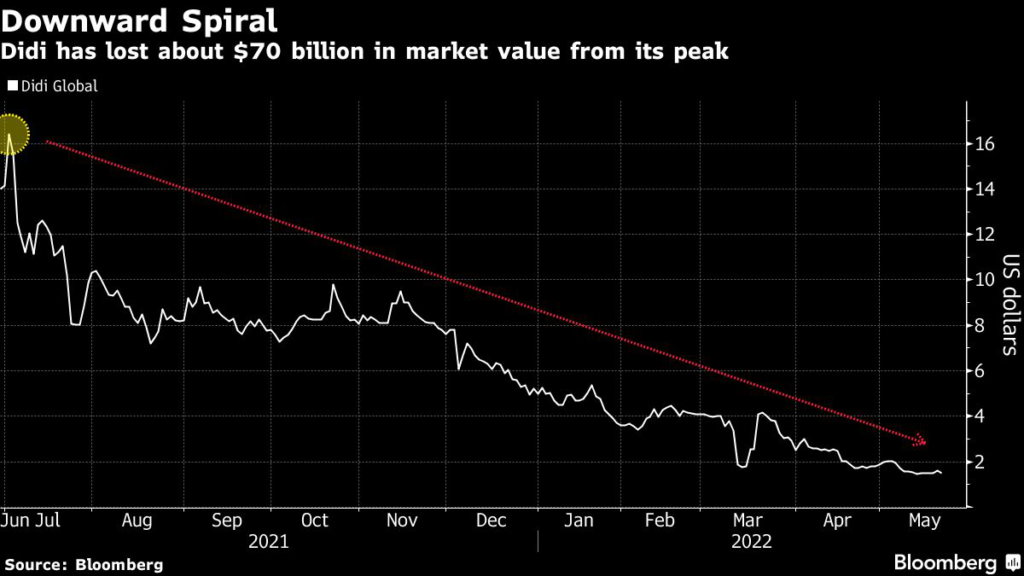
(Bloomberg) — Didi Global Inc. secured the blessing of shareholders to delist from the New York Stock Exchange, capping an 11-month ordeal that wiped out around $70 billion of its market value and turned the ride-hailing giant into a symbol of China’s tech crackdown.

It plans to file the required paperwork with the US Securities and Exchange Commission on or after June 2 in order to delist, Didi said in a statement Monday. Its shares closed 4% lower, after gaining as much as 10% at the trading open.

The shareholder vote clears the way for the company to work with Chinese regulators who are demanding an overhaul of its data systems. That would allow the company to begin preparing for a Hong Kong share float, the best outcome investors have said they can hope for.

“This news is well anticipated and is sort of a relief rally,” said Brendan Ahern, chief investment officer at Krane Fund Advisors LLC. “The move is in order to allow its regulatory overview to take place, which then begs the question if and when the company could relist and there’s been talk about the company potential re-listing on the Hong Kong stock exchange.”

Didi’s biggest shareholders, which include SoftBank Group Corp., Tencent Holdings Ltd. and Uber Technologies Inc., have watched Didi’s shares fall about 90% since going public, when it was valued around $80 billion. After delisting, the company will likely see its stock traded over the counter on the so-called pink-sheets market, home to penny stocks and other riskier businesses. 

Read more: Didi’s Move From NYSE to Hong Kong — What to Know: QuickTake

Some investors could be forced to sell because their mandates don’t allow them to hold unlisted shares. Hedge funds have already reduced their Didi holdings by 29% to about $231.9 million during the first quarter, according to a Bloomberg analysis of filings. Even those who are free of such mandates, such as SoftBank, may question whether it’s worth holding onto the shares given uncertainty over Beijing’s punishment, increased competition from smaller rivals and stalled expansion overseas.

It is still unclear what actual punishment awaits Didi, which has been in talks with the Cyberspace Administration of China about a fine and other penalties.

Didi’s shareholders, which also include the likes of Fidelity Investments and Blackrock Inc., have so far avoided commenting on the delisting.

“The Didi issue fundamentally boils down to a lack of communication between the company and Chinese regulators at the time of its IPO last year. China isn’t trying to destroy its homegrown tech companies but its roll out of new regulations have at times been clumsy. Didi is one such case,” said Kevin T. Carter, chief investment officer at EMQQ Global.

(Updates share price and adds additional comment in last paragraph)

More stories like this are available on bloomberg.com

©2022 Bloomberg L.P.

Close Bitnami banner
Bitnami