
Bloomberg

Stocks Rise, Bonds Fall as Risk Appetite Returns: Markets Wrap

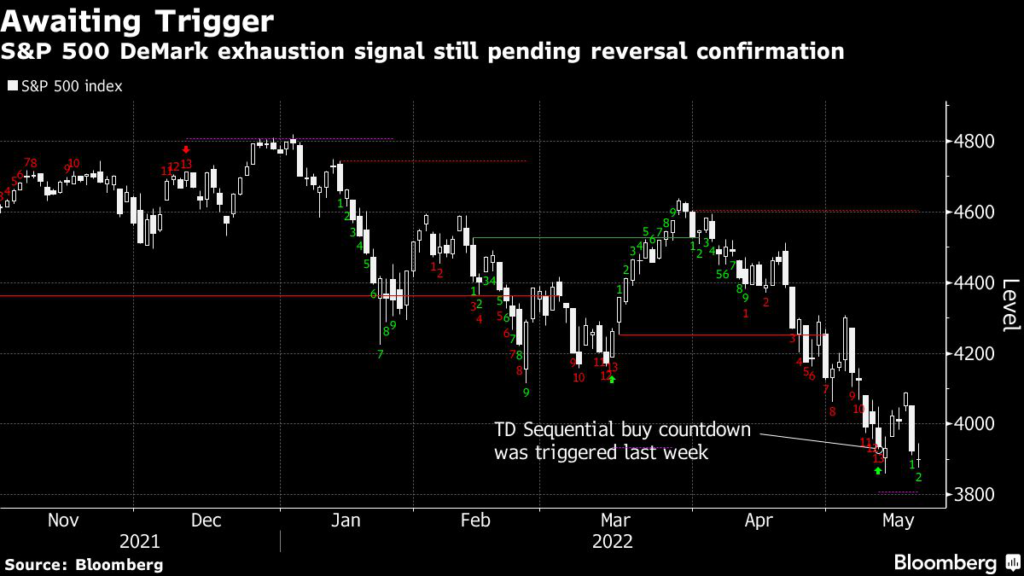
(Bloomberg) — Stocks advanced after President Joe Biden signaled he’d reconsider China tariffs imposed by the Trump administration. The dollar and Treasuries retreated.

The S&P 500 rose, following a late Friday rebound that saved the index from a bear market. Shares of big banks rallied after JPMorgan Chase & Co.’s chief Jamie Dimon said “storm clouds” over the US economy may dissipate. Tech companies underperformed. The euro jumped after European Central Bank Chief Christine Lagarde said higher interest rates are coming in July. The yuan climbed.

Traders interpreted Biden’s comments that he’ll discuss the US tariffs on Chinese imports with Treasury Secretary Janet Yellen when he returns from his Asia trip as a signal there could be a reversal of some Trump-imposed measures. 

“Today’s appetite for risk has been sparked by the US President’s announcement that trade tariffs imposed on China by the previous Trump administration will be discussed,” said Pierre Veyret, a technical analyst at ActivTrades. “Investors see this as a possible de-escalation of the trade war between the two economic superpowers, and this has revived trading optimism towards riskier assets.”


Separately, Biden said the US military would intervene to defend Taiwan in any attack from China, comments that appeared to break from the longstanding policy of “strategic ambiguity” before they were walked back by White House officials. Meanwhile, his administration announced that a dozen Indo-Pacific countries will join the US in a sweeping economic initiative designed to counter China’s influence in the region.

In a keynote speech at the World Economic Forum’s annual meeting in Davos, Ukrainian President Volodymyr Zelenskiy reinforced his call for embargoes on oil, technology and other trade with Russia, and said there should be no exceptions in sanctions on the country’s banking sector. International Monetary Fund Chief Kristalina Georgieva acknowledged that risks to the global economy have intensified but pushed back against concerns of a recession.

Equities have been volatile as investors assess the impact of China’s Covid policies and monetary tightening on the outlook for the world’s largest economies. Beijing reported a record number of cases, reviving concerns about a lockdown, and adopted multiple measures to further stabilize the economy.

Minutes of the most recent Federal Reserve rate-setting meeting will give markets insight this week into the US central bank’s tightening path. St. Louis Fed President James Bullard said the central bank should front-load an aggressive series of rate hikes to push rates to 3.5% at year’s end, which if successful would push down inflation and could lead to easing in 2023 or 2024.

“As macro-economic concerns stemming from aggressive monetary tightening, the Russia-Ukraine conflict and China’s stringent Covid lockdowns persist, we anticipate great volatility in the market,” Louise Dudley, portfolio manager global equities at Federated Hermes Ltd., said in a note.

Here are some key events to watch this week:

  • Eurozone S&P Global PMIs Tuesday
  • US new home sales, S&P Global PMIs Tuesday
  • Reserve Bank of New Zealand rate decision Wednesday
  • FOMC minutes Wednesday
  • ECB publishes its Financial Stability Review Wednesday
  • Bank of Korea rate decision Thursday
  • US GDP, initial jobless claims Thursday
  • US core PCE price index; personal income and spending; wholesale inventories; University of Michigan consumer sentiment Friday

Some of the main moves in markets:

Stocks

  • The S&P 500 rose 0.7% as of 9:30 a.m. New York time
  • The Nasdaq 100 rose 0.1%
  • The Dow Jones Industrial Average rose 0.8%
  • The Stoxx Europe 600 rose 0.7%
  • The MSCI World index rose 0.7%

Currencies

  • The Bloomberg Dollar Spot Index fell 0.6%
  • The euro rose 0.8% to $1.0652
  • The British pound rose 0.7% to $1.2562
  • The Japanese yen rose 0.1% to 127.73 per dollar

Bonds

  • The yield on 10-year Treasuries advanced four basis points to 2.82%
  • Germany’s 10-year yield advanced four basis points to 0.99%
  • Britain’s 10-year yield advanced six basis points to 1.95%

Commodities

  • West Texas Intermediate crude was little changed
  • Gold futures rose 0.7% to $1,860.80 an ounce

More stories like this are available on bloomberg.com

©2022 Bloomberg L.P.
GameStop Launches Wallet for Crytpocurrencies and NFTs

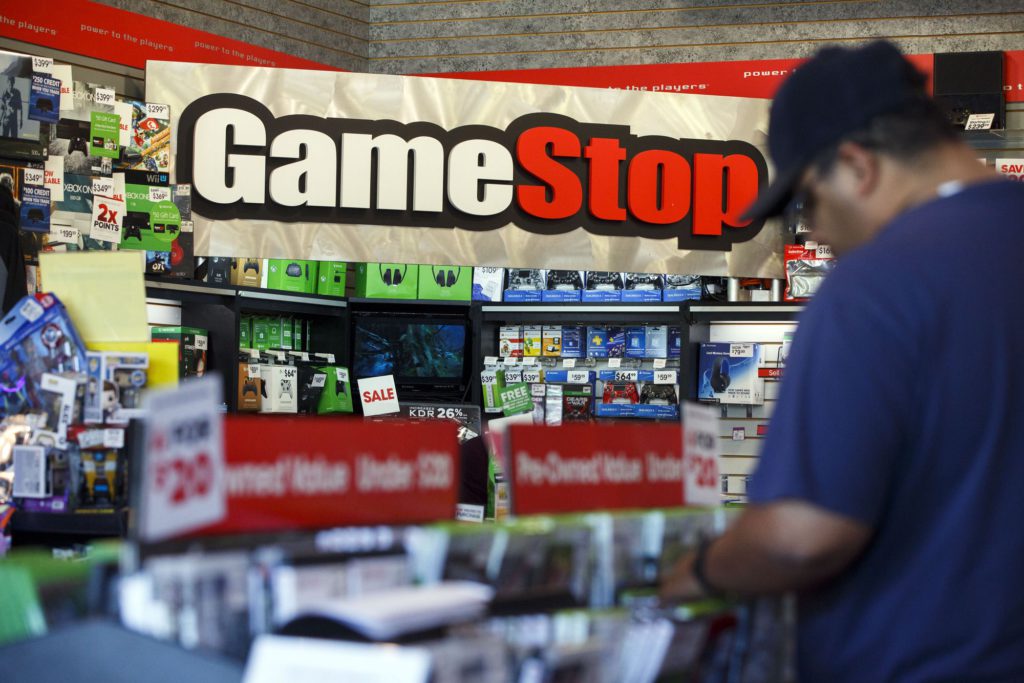
(Bloomberg) — GameStop Corp. said on Monday it has launched a digital asset wallet that will allow gamers to store, send and receive cryptocurrencies and nonfungible tokens.

The digital wallet will be able to be used across decentralized apps, which run on a blockchain and aren’t controlled by a central authority, without players having to leave their web browsers, the company said in a statement. The GameStop wallet is a self-custodial Ethereum wallet, meaning the user controls the keys to their assets, not a third party. The wallet extension can be downloaded from Google’s Chrome web store and will allow transactions on GameStop’s NFT marketplace, which is expected to launch in the second quarter of the company’s fiscal year.

GameStop shares rose around 2.2% in early trading in New York. They are down about 36% so far this year.

Chairman Ryan Cohen has been shifting the beleaguered company’s strategy toward digital sales and away from brick-and-mortar stores. In February, GameStop said it’s teaming up with Australian startup Immutable X on a new marketplace for NFTs and is setting up a $100 million fund to promote NFT projects.  

More stories like this are available on bloomberg.com

©2022 Bloomberg L.P.
GameStop Launches Wallet for Cryptocurrencies and NFTs

(Bloomberg) — GameStop Corp. said on Monday it has launched a digital asset wallet that will allow gamers to store, send and receive cryptocurrencies and nonfungible tokens.

The digital wallet will be able to be used across decentralized apps, which run on a blockchain and aren’t controlled by a central authority, without players having to leave their web browsers, the company said in a statement. The GameStop wallet is a self-custodial Ethereum wallet, meaning the user controls the keys to their assets, not a third party. The wallet extension can be downloaded from Google’s Chrome web store and will allow transactions on GameStop’s NFT marketplace, which is expected to launch in the second quarter of the company’s fiscal year.

GameStop shares rose around 2.2% in early trading in New York. They are down about 36% so far this year.

Chairman Ryan Cohen has been shifting the beleaguered company’s strategy toward digital sales and away from brick-and-mortar stores. In February, GameStop said it’s teaming up with Australian startup Immutable X on a new marketplace for NFTs and is setting up a $100 million fund to promote NFT projects.  

More stories like this are available on bloomberg.com

©2022 Bloomberg L.P.
Scott Minerd Says Art and Real Estate Top Stocks for 5-Year Horizon

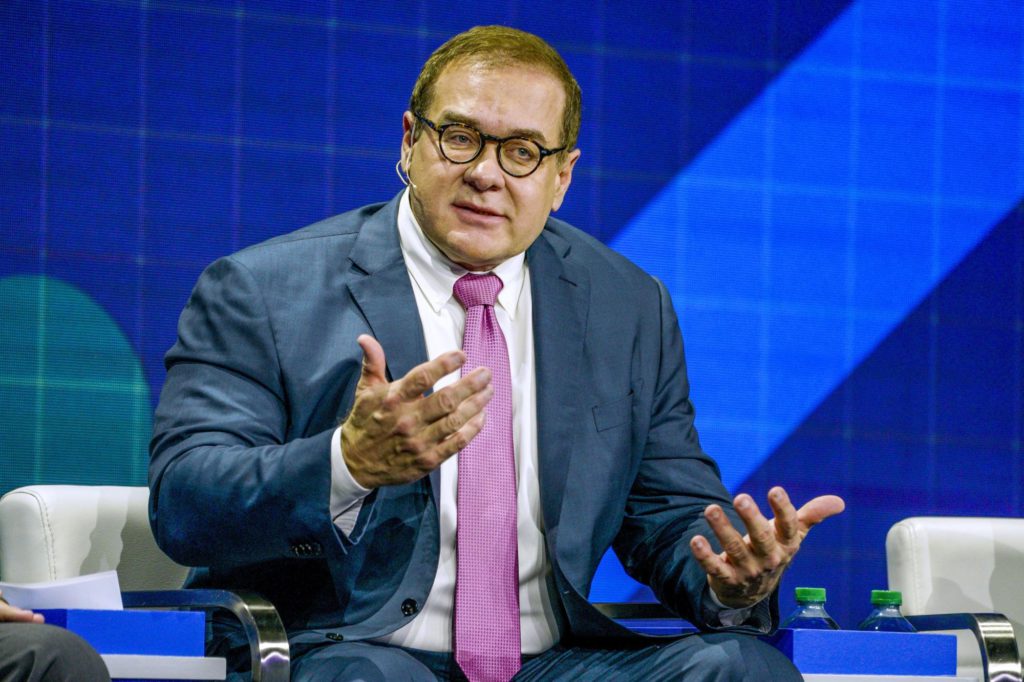
(Bloomberg) — Scott Minerd, chief investment officer at Guggenheim, tells CNBC that if he was given $10,000 with a five year investment horizon he would not invest in stocks but would probably put the money into art or real estate. Furthermore, he added that he would like to see stocks lower before he would invest.

Minerd continued by saying he believes the Fed will continue on “auto-pilot” unless there is a panic sell off in the markets. If the decline in the markets continues to be orderly, the Fed will keep going. However, if the markets were to fall 20% in a week or two, the Fed would pivot.

The tech sector is fairly valued but in for further pain according to him because markets don’t typically stop when fairly valued, they “tend to overshoot.” He notes that the VIX needs to be above 40 and closer to 50 “to get a real bottom.”

Speaking on crypto, he says that Bitcoin and Ethereum will be survivors but that the “majority of crypto is garbage.” He doesn’t believe we have had the correct prototype yet for crypto if it is going to be a currency.

More stories like this are available on bloomberg.com

©2022 Bloomberg L.P.

BMW Sticks to Output Targets Despite Growing Supply-Chain Woes

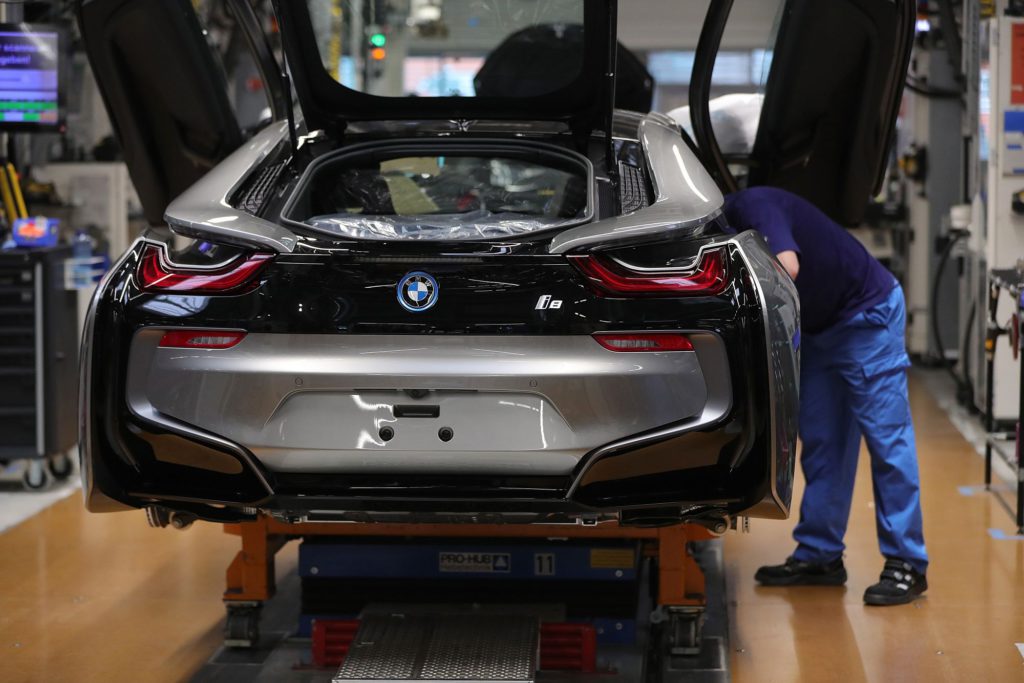
(Bloomberg) — BMW AG’s production chief said the carmaker will meet its output targets for 2022 even as congestion at Chinese ports, closures in Ukraine and other supply-chain problems continue to weigh on sales.

Speaking in an interview, Milan Nedeljkovic said the world’s biggest luxury-car maker is switching to alternative Chinese ports and modes of transportation to deal with the disruptions caused by stringent coronavirus restrictions. He said BMW still expects to maintain output at roughly the same level as last year.

“We can still compensate lost volume and component scarcity,” Nedeljkovic said, saying he was confident to deliver on the output goal set at the beginning of the year. 

While BMW’s production network felt the strain from the supply-chain situation during the first quarter, it fared better than rivals. The Munich-based carmaker’s deliveries declined 7.3% during the the first three months of the year, less than half the rate of peers Mercedes-Benz AG and Volkswagen AG’s premium brand Audi. BMW’s result builds on last year’s comparative success in navigating the unprecedented chip crisis. 

The semiconductor shortage remains the carmaker’s most pressing issue, Nedeljkovic said. In addition, the engineer, 53, needs to prepare BMW’s production network for looming gas shortages in case Germany is forced into rationing.   

“Short-term, it is very difficult for the automotive industry and suppliers to do without gas,” he said. Carmakers primarily use gas in their paint shops but also to manufacture certain components.

For its plant in Leipzig, BMW is looking into hydrogen for production processes as infrastructure is put in place nearby. In the US, BMW’s Spartanburg plant uses bio methane mostly for heating. 

BMW’s new assembly facility in Debrecen, Hungary, won’t use any fossil fuel when it goes into operation in 2025. 

More stories like this are available on bloomberg.com

©2022 Bloomberg L.P.
Johnson Pledges Help for Britons Struggling With Inflation

(Bloomberg) —

UK Prime Minister Boris Johnson said his government will look after people trying to cope with the surging cost of energy and basic goods, although he refrained from giving a timetable for action. 

With China’s Covid-19 lockdowns and Russia’s invasion of Ukraine driving up the price of everything from oil to bread and cars to consumer electronics, Johnson is under increasing pressure to help Britons manage a spike in costs.

The economic squeeze coincides with an investigation into whether he and others in his government broke pandemic lockdown laws at his office, a scandal that has grabbed headlines and proved a major distraction for the government.

“We have got to do what we can — and we will — to look after people through the aftershocks of Covid, through the current pressures on energy prices that we are seeing post-Covid and with what’s going on in Russia,” Johnson told reporters at a school in southeast London on Monday.

Johnson’s comments come after he set alarm bells ringing — including among some members of his ruling Conservative Party — by insisting that the government has limited options for tackling surging living costs and plunging consumer confidence. Some government ministers have floated the idea of imposing a one-time tax on energy companies, a move that opinion polls suggest is popular with voters. But Johnson signaled he was wasn’t enamored with the proposal.

“I’m not attracted, intrinsically, to new taxes,” the premier said. All the same, there is “more that we are going to do” but “you’ll just have to wait a little bit longer.” 

As Johnson Faces Parties Verdict, Cost of Living Crisis Spirals

Last week, the opposition Labour Party tried to change government plans to force a windfall tax on North Sea oil and gas firms to help people who have been plunged into poverty, a move rejected by Conservative lawmakers. But attitudes in government are changing. 

Speaking to LBC radio earlier Monday, Treasury Chief Secretary Simon Clarke said a windfall tax remains an option if energy companies don’t invest in securing the future security of domestic energy supplies.

“The sector is realizing enormous profits at the moment,” he said. “If those profits are not directed in a way which is productive for the real economy, then clearly all options are on the table. If it doesn’t happen, then we can’t rule out a windfall tax.”

Michael Lewis, chief executive of energy giant E.ON UK, said on Sunday that increasing state-funded benefit payments would ease the pressure on those dealing with ballooning costs. On Monday Clarke ruled out increasing the return of the £20 increase in Universal Credit, which was introduced during the pandemic but withdrawn in October.

“That is not going to return,” Clarke told BBC radio Monday. “The question is how we best now look at the next range of solutions to deal with the challenges we’re facing.”

Meanwhile Johnson has not yet received a report by a senior civil servant due this week into a series of parties in Downing Street and across government offices in Whitehall that took place when Covid-19 restrictions were in place, his spokesman Max Blain said.

Plans to publish the full report earlier this year were dropped after London’s Metropolitan Police announced in January it had launched a criminal investigation into allegations of law-breaking across government. In January mandarin Sue Gray published her interim report, and last week the police said they had wrapped up their inquiry, allowing the final report to be released. 

The conclusion of the Met Police investigation resulted in 126 fines being issued to 83 people, including the prime minister and Chancellor of the Exchequer Rishi Sunak. 

Johnson Didn’t Try to Influence ‘Partygate’ Report, Zahawi Says

The Labour Party is calling on Johnson to explain why he met Gray ahead of the report’s publication, questioning its independence. Officials in 10 Downing Street suggested it would be useful for Gray to meet the prime minister to discuss the process for publishing the report, Blain said. Johnson insisted Gray was “of course” able to act independently but declined to answer questions about the meeting. 

The report is expected in the next few days and then Johnson will make a statement to the House of Commons in response to its findings. 

Asked if the report was still independent, the premier told reporters in London, “Of course, but on the process you are just going to have to hold your horses a little bit longer.”

(Updates with further comments from Johnson from second paragraph.)

More stories like this are available on bloomberg.com

©2022 Bloomberg L.P.
Moonpig Jumps as Acquisition Taps Experience-Gift Trend

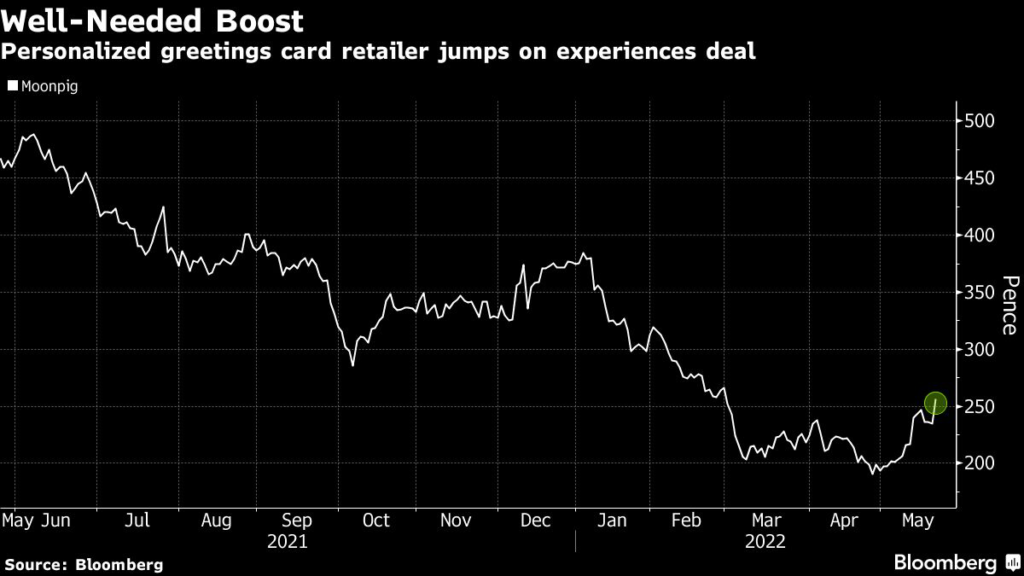
(Bloomberg) — Online greetings card retailer Moonpig Group Plc announced the purchase of Smartbox Group UK Ltd as it taps into the growing demand for experience gifts over physical products, sending its shares up by as much as 14%. 

London-based Moonpig will pay 124 million pounds ($155.8 million) for the owner of the Red Letter Days and Buyagift brands, it said in a statement Monday. 

The U.K. gift-experiences market is worth about 6 billion pounds a year and is growing at a faster rate than total gifting as consumers increasingly gravitate toward presents such as days out, meals and activities, according to Moonpig.

“We see this as a good use of Moonpig’s strong cash generation – buying a growing, profitable, and high-margin asset,” Jefferies analyst Andrew Wade, who has a buy rating on the company, wrote in a note to clients.

Moonpig’s rise on Monday trimmed its year-to-date decline to 32%. The stock has slumped along with the broader technology sector amid concerns around rising interest rates. It lifted its medium-term Ebitda margin guidance slightly as a result of the deal.

The stock was up 9% to 256.20 pence a share as of midday in London versus its February 2021 initial public offering price of 350 pence. 

(Updates share price.)

More stories like this are available on bloomberg.com

©2022 Bloomberg L.P.
Megadeals Come Roaring Back as Broadcom Eyes VMware Takeover

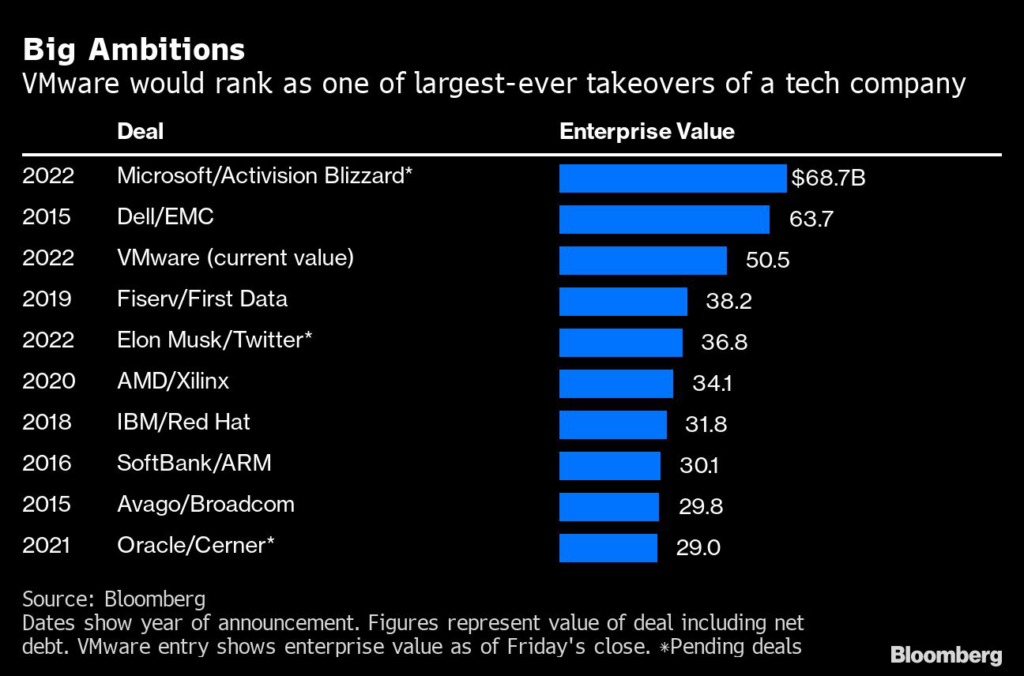
(Bloomberg) — Broadcom Inc.’s pursuit of enterprise software provider VMware Inc. is set to rank as one of the technology sector’s largest-ever takeovers. 

The potential purchase, first reported by Bloomberg News, would be the latest in a series of transactions this year valued at upwards of $50 billion including debt. Megadeals have come roaring back as ambitious chief executives plot blockbuster acquisitions that would transform their industries, even as overall M&A volumes remain down compared to last year’s record pace.

In January, Microsoft Corp. agreed to take over video game publisher Activision Blizzard Inc. for $69 billion. HDFC Bank Ltd., India’s most valuable lender, announced a deal last month for a $60 billion all-stock merger with the nation’s biggest mortgage financier. Blackstone Inc. is also teaming up with Italy’s billionaire Benetton family in a bid to take highway operator Atlantia SpA private. 

Takeovers of technology companies have been a bright spot for bankers this year, with transaction volumes jumping 46% to $263 billion, according to data compiled by Bloomberg. Broadcom, led by famously acquisitive CEO Hock Tan, wants VMware to gain highly specialized software that powers data centers used for cloud computing. 

Tan is hoping a big deal outside Broadcom’s core chip business will allow his empire to grow without attracting attention from regulators in Washington, who have been closely scrutinizing big tech companies. He’s pursuing a megamerger in spite of the uncertainty facing global tech stocks.

The S&P 500 Information Technology Sector index has fallen 25% this year. Broadcom stock is down 18% over the period, while VMware has fallen 17%.

Here’s how an acquisition of VMware might stack up against the biggest-ever deals in the tech industry. Even using its enterprise value at Friday’s close, buying VMware would rank as the third-largest takeover of a tech company on record — and Broadcom may need to offer a healthy premium, potentially moving the deal even higher up the rankings.

More stories like this are available on bloomberg.com

©2022 Bloomberg L.P.

Coinbase’s $51 Billion Nosedive Isn’t Only About Crypto Winter

(Bloomberg) — Coinbase Global Inc. has gone from one of the stock market’s most hotly anticipated debuts to one of its most spectacular crashes in a little more than a year, leaving some analysts and investors bewildered by poor execution at the largest US cryptocurrency exchange.

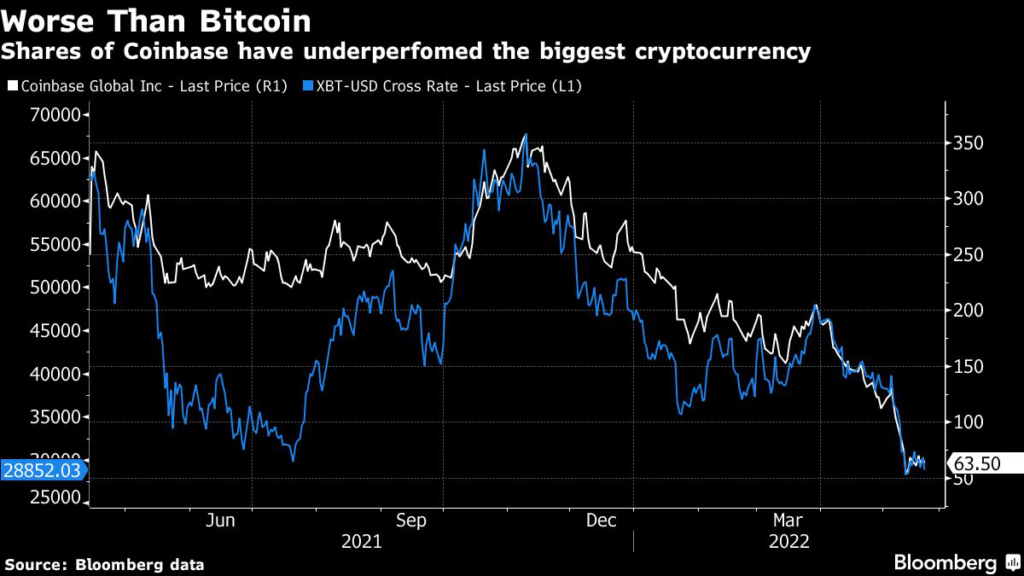
The firm’s market value has shrunk by about $51 billion since the end of its first day of trading last April. Coinbase shares fell to an all-time low earlier in May, and even after recovering somewhat are still down about 80% from their debut. That’s a steeper drop than Bitcoin’s 53% slump in the same period.

The recent bear market and regulatory pressure in crypto have played a big role. Last year, a promising yield-account product called Lend drew ire from the Securities and Exchange Commission, leading the company to scrap it and prompting a public rant by Chief Executive Officer Brian Armstrong. And as crypto prices crashed in the past six months, trading volumes dropped across most exchanges.

But poor execution played a part as well. Coinbase’s new nonfungible-token marketplace took months to launch — then fizzled. The company missed analysts’ revenue projections in the first three months of the year and guided for sequentially declining trading volume this quarter — in part because it has lost ground to rivals. Coinbase’s market share slipped to 4.8% of monthly crypto trading volume currently from 7.1% in November, as some users went to rivals such as DigiFinex and FTX US, according to researcher CryptoCompare.

Coinbase is expected to lose about $1.4 billion this year, according to analysts in a Bloomberg survey. Financial performance at some rivals has held up better, and competition from other exchanges is heating up. 

“FTX’s revenues have not declined,” Sam Bankman-Fried, CEO of the exchange, said in an email. “Partially this is because of longstanding market-share growth, partially FTX has been more conservative on expenses, and will remain strongly net profitable this year.”

Some analysts believe Coinbase’s costs are too high. The company recently said it will slow down its hiring, and it could perhaps pause its expansion of sales and support staffs, John Todaro, an analyst at Needham & Co., said in an interview. Coinbase has ballooned to 4,948 full-time employees, from about 1,700 just a year ago. Hiring helped drive the company’s total operating costs to $1.7 billion in the first quarter, up 9% from the previous three months.

“They’ve grown expenses quite a bit,” Todaro said. “And I think the market was giving a little bit of an unfavorable reaction. If we are in a crypto winter, you don’t want to be going into that doubling, tripling the headcount. I think Coinbase management understood that.”

‘Slowing Down’

While Coinbase “may be slowing down our hiring, we have no intention of slowing our pace of product development,” a spokesperson said in an email.

In a memo to employees on May 17, Coinbase’s chief product officer, Surojit Chatterjee, said the company will be increasing its focus “on critical revenue-generating products” — a possible indication it’s backpedaling from its strategy of diversifying away from trading fees. Coinbase will double down on core products while seeking improvements in developer productivity, he said.

“This does not mean we plan to stop investing in strategic and venture projects,” Chatterjee said in a tweet about the memo. “We believe the down market is a great time to build for the longer term.” Coinbase is continuing to support at least one part of its diversification strategy, staking, which lets people earn yields on their digital coins.

The company’s new NFT marketplace — which was supposed to fuel growth through a new revenue stream — hasn’t gained traction. After attracting $75,000 in trading volume when it opened to all users on May 4, activity has since dropped, with volume of just $17,000 on May 19, according to tracker Dune. (All major NFT marketplaces have seen a decline in trading volume, however.) Coinbase’s marketplace has about 2,900 active unique users, according to Dune.

“Very little” of Coinbase’s NFT marketplace activity can be captured by tools like Dune, a company executive said during its latest earnings call.

Nick Tomaino, an early Coinbase employee who is now founder of venture fund 1confirmation, said on Twitter this month that he would consider selling his Coinbase shares if the company doesn’t make a strong move in NFTs in the coming year.

In a recent filing, the company said that customers could be treated as “general unsecured creditors” in the event of a bankruptcy, prompting concern from investors that the topic was even raised. CEO Armstrong said on Twitter that his company included the language in response to new regulatory requirements, and that “we have no risk of bankruptcy.”

Coinbase, in trying to come back from its stock slump, has two big strikes against it, said Chris Brendler, an analyst at D.A. Davidson Cos. “It has the dual problem of being not profitable on a consistent basis, and it’s also in crypto, which is also an area the market doesn’t like today,” he said.

Still, the company may be able to bounce back — as long as the rest of the market does as well.

“If it’s just a mild crypto winter, they could probably weather the storm,” said Mizuho Securities analyst Dan Dolev. “It really depends on how low crypto and Bitcoin goes.”

More stories like this are available on bloomberg.com

©2022 Bloomberg L.P.

Meta to Publish Political Ad Targeting Data Ahead of Midterms

(Bloomberg) — Facebook parent Meta Platforms Inc. will expand the types of information it shares publicly about political advertising in the months leading up to the 2022 U.S. midterm elections. 

Meta will soon include targeting data for political and issue ads as part of its public advertising archive, meaning anyone will be able to see how political committees or other political groups target their messages to voters. The move is meant to help people — especially researchers and journalists — better understand how campaigns use Meta’s services to try to influence voters during election cycles, said Jeff King, Meta’s vice president of business integrity. 

The archive will include data on which targeting options advertisers used, such as focusing on people in a specific location or with particular interests. Meta will also show whether an advertiser used a custom audience — a list of users connected to a campaign’s email list, for example — or asked Meta to help target the ads using a “lookalike audience.” The archive currently shows data on who saw an ad, but not on how the ad was targeted. 

The company has offered some of this data to researchers, but will make all of it publicly available starting in July. The information will be included on ads from as far back as August 2020, King added. 

Meta has been considering other possible political ad changes following the 2020 U.S. general election. The company banned all new political ads in the week before the 2020 election as a way to try to prevent misinformation, but that strategy is being reconsidered, Bloomberg reported in February. 

More stories like this are available on bloomberg.com

©2022 Bloomberg L.P.

Close Bitnami banner
Bitnami