
Bloomberg

Britain’s Crypto List: Here’s Who to Watch

(Bloomberg) — The UK’s crypto landscape is maturing, and regulators and lawmakers are taking a greater interest in the industry. The Financial Conduct Authority is gearing up to create new rules for digital assets, and crypto companies are trying to make sure those guardrails aren’t too disruptive.

Bloomberg Crypto spoke with some of the UK industry’s key players, from the sector’s top enforcer to a prominent crypto skeptic. Here are the stories of six of them, in part two of a two-part series.

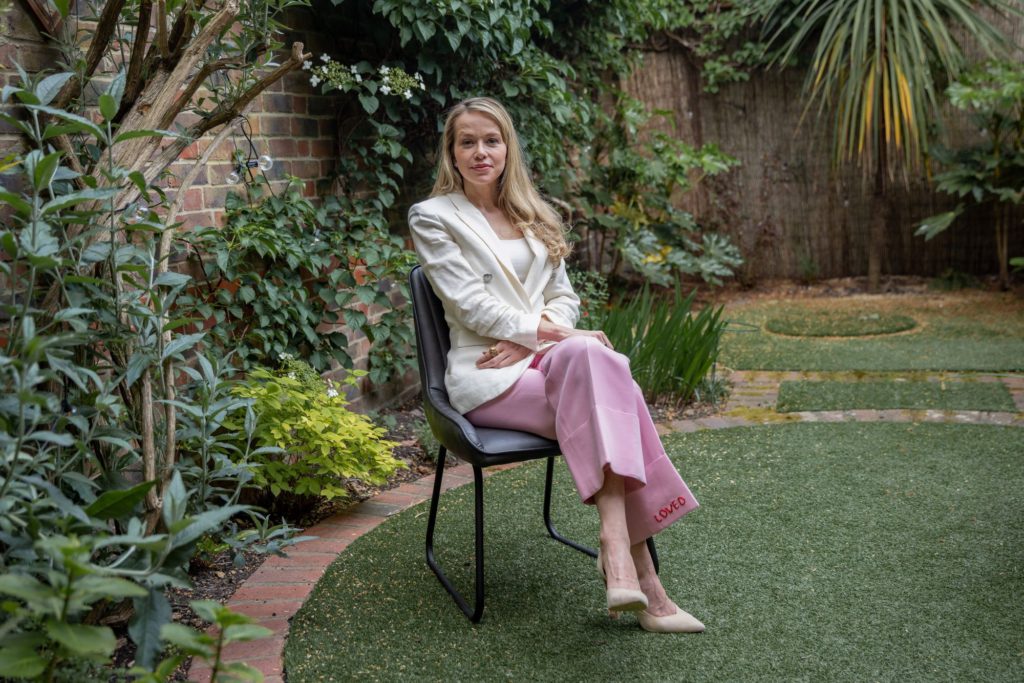
Sarah Green

Age: 45Job: Law Commissioner for Commercial and Common Law at the Law Commission of England and WalesLocation: Bristol and London

While the European Union debates stronger regulatory measures for cryptocurrencies and other digital assets, Sarah Green is preparing to lead a project on behalf of the Law Commission of England and Wales to evaluate the legal status of decentralized autonomous organizations, or DAOs — producing research which could set a global precedent on how to legislate for the seemingly infinite networks of anonymous groups on the internet.

DAOs spiked in popularity as decentralized finance applications became more prominent within the cryptosphere. The groups are run by communities of stakeholders, using smart contracts on blockchain networks to execute key functions, such as voting on how various crypto platforms are run. 

“One of the concerns is that if we don’t move on this, and we don’t make it clear what each party’s liability is going to be and what their legal status is going to be if they set up DAOs in this jurisdiction, is that people will do it elsewhere,” Green said in an interview. “That would cause quite a dramatic loss of potential revenue, both for the economy and certainly for English and Welsh law.”

The Commission plans to publish its proposed rules for digital assets — including cryptocurrencies and nonfungible tokens — this summer, based on conversations with users, developers and legal advisers. The UK Parliament will then consider the recommendations. 

Green, who has written about digital assets, smart contracts and blockchain issues, said assessing how the law could evolve to include crypto was one of the main reasons she was appointed as a commissioner in 2020. She had previously held professorships at the University of Bristol and University of Oxford, where she first started looking into blockchain and crypto.

“Particularly when I was at Oxford, I spent a lot of time arguing with other lawyers who were negative about it and said it’s just a flash in the pan,” said Green. “In short, I suppose I’m very bullish about it. I don’t think it’s going to take over, but I do think it’s going to become a really integral part of mainstream economy.”


Sarah Pritchard

Age: 45Job: Executive Director, Markets at the Financial Conduct AuthorityLocation: London

Pay attention to Pritchard if you’re wondering how the UK’s top financial regulator plans to tackle crypto. She’s the executive in charge of the watchdog’s response to the sector, which includes mapping out how the organization might shape the country’s future regulatory framework for digital assets and supervise firms in the space.

“I look at my own diary for the last month and there are several substantive, strategic meetings on crypto per week, every week,” said Pritchard in an interview. “Whereas if you turn back the clock 11 months, to the day when I first joined, that wasn’t the case. So it just shows the real significant attention that we are paying to it.”

Pritchard first came across crypto at the National Crime Agency seven years ago, where she rose up the ranks to become director of its National Economic Crime Centre before moving across to the FCA last summer. She not only sees the possible benefits of blockchain but also the importance of “making sure there are minimized risks of financial crime from the get go.”

The FCA is at a key turning point as it gears up to gain additional powers in the crypto space later this year. Its previous work on digital assets was limited to scrutinizing firms that applied for registration under anti-money laundering standards, with only 34 of more than 100 applicants making the cut. The watchdog recently completed its first Crypto Sprint, an over-subscribed two-day session of listening and discussions with industry players about what comes next.

“What’s most interesting to me is the range of applications, or the range of different scenarios, in which there may need to be a regulatory touch point on all things crypto. It’s such a broad term,” Pritchard said. “It’s important to make sure that we’re taking steps to minimize harm before that harm becomes significant, because significant harm in a market is not good for anybody.”

Andrei Brasoveanu

Age: 35Job: Partner at AccelLocation: London

Romania-born Brasoveanu is a partner at the venture capital firm Accel, where he focuses on investing in companies in areas ranging from so-called web3 applications to cryptocurrencies and enterprise software. Before that, he worked at Foundation Capital and high-frequency trading firm KCG-Virtu Financial.  

Brasoveanu became fascinated with mathematics as a child and later went to Princeton on a full math scholarship, graduating summa cum laude. He also holds an MBA from Harvard Business School. 

More recently, Brasoveanu led Accel’s investments in startup Sorare, which he describes as a “business situated at the intersection of nonfungible tokens and global fantasy sports” and Sky Mavis, the creator of play-to-earn game Axie Infinity. Other crypto investments include Tenderly, a development platform for decentralized apps (or dapps) and the blockchain analytics firm Nansen. 

“We’re very much optimizing for 10 years plus — we’re keen to back companies that can define entire generations and redefine the categories they are in,” Brasoveanu said in an interview. “We are not optimizing for a very good token launch.”

Stephen Diehl

Age: 35Job: Software EngineerLocation: London

Diehl, one of the UK’s most prominent crypto skeptics, has been working with policymakers including the European Central Bank and US Congressional members to counterbalance the industry’s influence over how digital assets and other emerging technologies should be regulated.

The American-born software engineer is best known for his popular blog featuring his insights into the harms of web3 — a term which refers to a next generation of the internet powered by blockchain technology — which he says garners hundreds of thousands of views a year. 

“I’ve seen different facets of the way the global financial system works enough to have an informed opinion,” said Diehl, who worked his way up from a rank and file software engineer to become the CTO of a tech startup. “I try my best to represent what I think a vast majority of people in my industry think, but don’t say so publicly.”

Diehl said in an interview that he struggles to find coherence among regulators when it comes to the crypto sector. Despite there being no common ground on even the most basic issues, like the appropriate definition of a cryptocurrency, countries are embracing digital assets. In the UK, the Financial Conduct Authority has likened crypto to gambling products that can cause investors to lose all their money. “That’s pretty much the most extreme thing they can do,” Diehl said.

Ultimately, Diehl doesn’t expect crypto to stick around for long. He called stablecoins, a type of cryptoasset typically tied to the value of a fiat currency and backed by sometimes murky reserves, “a ticking time bomb waiting to happen.” 

“The public has no idea what they’re getting into when they’re buying these things,” he said. “They’re probably the most risky products that we can possibly sell to the public, and the fact that they’re being heralded as a means for financial inclusion is even more scary.”

Diana Biggs

Age: 41Job: Chief Strategy Officer at DeFi TechnologiesLocation: Zug, Switzerland

From leading innovation efforts at London-based HSBC Holdings Plc to launching cryptocurrency exchange-traded products on the continent, Diana Biggs’s career straddles the divide between traditional and digital finance.

Biggs developed an interest in technology in high school. She built websites in the 1990s and got involved in North American seasonal publication 2600: The Hacker Quarterly. After earning an MBA in London, Biggs landed at consultancy Oliver Wyman’s London office before working for several startups. An introduction to Bitcoin by her younger brother in 2013 became a turning point.

“There’s just some issues with the existing financial system that I wanted to address,” she said in an interview. “I started going to Bitcoin meetups and met an investor who was looking to start a crypto exchange in London. He asked me if I would move back, and I did,” said Biggs, who was in the US at the time. 

That business was Uphold, a digital money platform where she was head of growth for Emea until 2016. But as the UK’s preference in fintech turned to “blockchain, not Bitcoin,” Biggs did another career about-face. She dabbled in venture capital investing before joining HSBC to start its innovation team. By 2020, she was back in crypto full-time as CEO of ETP provider Valour. When DeFi Technologies bought Valour last year, Biggs took up her current role. 

Does her time in traditional finance give her an edge in crypto, as the sector goes mainstream? “Understanding the system is very useful, just for everyone’s sanity,” Biggs said. “Sometimes both sides don’t engage with each other. But the more that we can get that engagement across, the better, so that we’re not repeating the same mistakes. A lot of these ideas aren’t brand new.”

As for the UK’s appeal, crypto companies are in wait-and-see mode. Valour recently opened a new office in London, and while the Treasury’s recently-announced push to make Britain a crypto hub offers hope, Biggs said she’s holding out for a reversal of the 2021 ban on crypto derivatives for retail investors. “I would imagine that it would be difficult for the UK to continue the momentum of being a global crypto hub, and still not allow retail investors access to these products,” she said.

Marieke Flament

Age: 40Job: CEO at NEAR FoundationLocation: Zug, Switzerland and London

Flament, a French computer engineer who joined Swiss blockchain project NEAR Foundation last year as its chief executive officer, has been engaging with regulators and government leaders to shape the future of crypto. 

But Flament wasn’t always bullish on digital assets. She recalled having a conversation with a headhunter in 2015 for a role at Circle, a blockchain-focused financial services and payments company, thinking “this must be a joke.”

Flament’s skepticism came from the view that crypto was associated with criminal activity, she said in an interview. But when she saw that Sean Neville and Jeremy Allaire, who were considered pioneers in internet software, were leading Circle, she decided to give the sector another chance.

Upon further reflection, she realized that “Bitcoin was actually going to be something very big.”

Flament went on to work at Circle for three years as its managing director for Europe and global chief marketing officer. It was her first foray into crypto.

Flament holds an MBA from London Business School and a master’s from TelecomParisTech and Shanghai Jiao Tong University. Prior to joining Circle, she worked at Expedia’s Hotels.com, Boston Consulting Group and luxury giant LVMH.


More stories like this are available on bloomberg.com

©2022 Bloomberg L.P.
Hedge Funder Still Chases Madoff Cash as New Bad-Asset Wave Hits

(Bloomberg) — Wasim Rehman is a go-to person for investors desperate for an exit in the messy world of trading troubled, hard-to-sell assets — a sector that’s set to explode as sanctions against Russia and the ongoing equities meltdown create mountains of illiquid holdings.

But Rehman — who has invested in more than 200 funds in liquidations in the 13 years since retiring at age 28 as the youngest partner of hedge fund giant Marshall Wace — has a message for those tempted by the steep discounts of so-called side-pockets that money managers create to separate out their problem bets:  Sometimes it takes more than just patience.

Take his 2014 purchase of claims tied to fraudster Bernie Madoff, mastermind of the biggest financial con job in history. The drawn-out effort to unwind that investment forced Rehman, one of the biggest players in the secretive world of side-pockets, to come out of the shadows, turn activist against the executives responsible for liquidating the assets and even prepare to take his battle to the courts. Rehman says it could still take years before he turns a profit on his bet.

“This is one of the worst-run liquidations I have experienced and to date is the only situation in which I have taken an activist approach,” the London-based investor said in an interview.

Rehman’s ordeal is a cautionary tale for investors after sanctions against Russia following its invasion of Ukraine trapped funds with billions of dollars of holdings of stocks, bonds and currencies they can’t easily offload. The ongoing selloff in growth stocks also threatens to lock investors in unlisted securities bought by hedge funds.

Already, hedge funds like EDL Capital have separated Russian shares, while Coatue Management has created a side-pocket for bets in private companies. UK regulators have been talking with retail funds about separating frozen Russian assets from core investments, according to a consultation document in March, to help new investors avoid exposure to such  assets and let existing holders redeem the rest of their investment.

The Russian side-pockets may be too toxic even for him, Rehman says, pointing to the legal complications that may be involved in their unwinding. It’s also unclear how they can be bought without violating sanctions, he said.

Investors like Rehman buy hard-to-sell assets at a deep discount and hope to turn a profit if those funds are liquidated at higher values. Profits can be handsome. Jared Herman, president of Hedgebay Securities that brokers in private and illiquid assets, said investors typically get 15% to 20% annual returns but in some cases profits can exceed 50% or fall to zero.

The process is tedious. Disposing off illiquid assets has always been a murky area of finance where patience is tested, deep research and connections are required and ugly litigations are frequent. “Most investors tell me that they get the direction right but what they almost always get wrong is the duration,” Herman said.

Rehman’s Madoff case is a classic example of how bad things can get. 

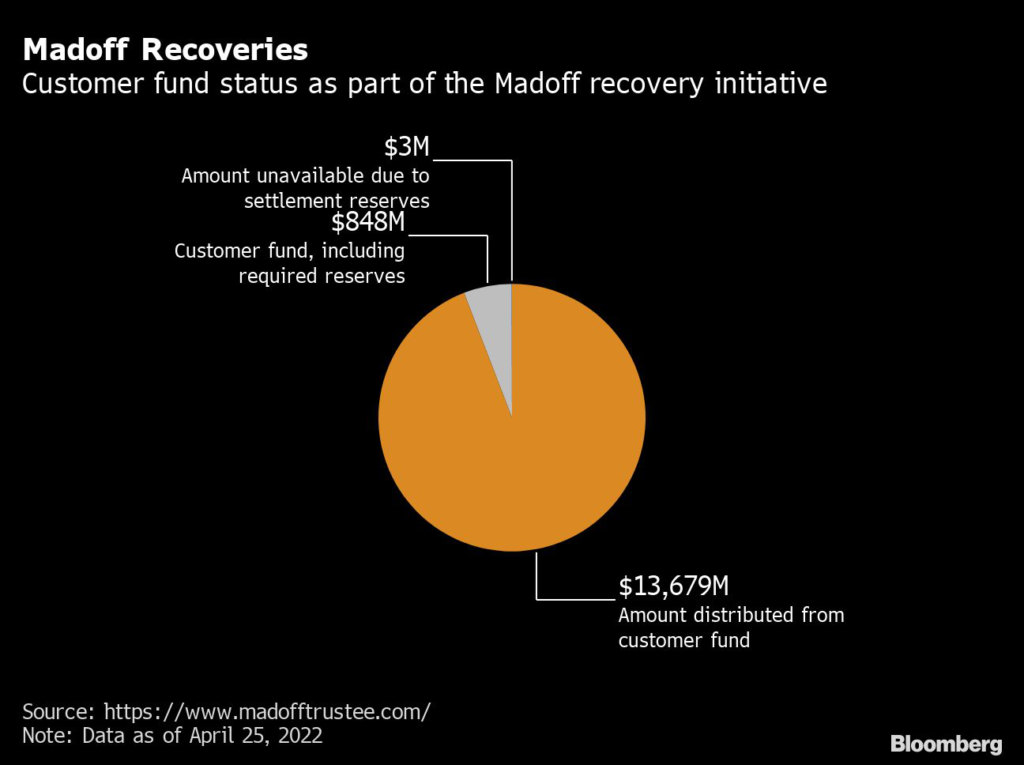
In real dollars, the Madoff Ponzi scheme lost around $19 billion and trapped investors in numerous side-pockets and funds under liquidation. Some of them are still ongoing and billions of dollars have yet to be recovered.

The scale of the fraud was extraordinary. Madoff conned thousands of clients including seasoned investors, friends, charities and religious groups who gave him money that fueled fake super-sized returns, believing he ran $65 billion. It ended with him being sentenced to 150 years in jail, he and his wife attempting suicide and his son killing himself. Madoff died last year in prison at the age of 82. 

Rehman’s Madoff-linked ordeal began with the purchase in 2014 of claims tied to a Guernsey-based fund called FIM Long-Invest. Started in 1997, FIM was a so-called fund-of-funds that collected money from investors and allocated the capital to several funds for diversified exposure. It had tens of millions of dollars invested in Kingate Global, which was tied to Bernard L Madoff Investment Securities, the Ponzi scheme that collapsed in December 2008. 

In March 2010, FIM announced it would wind up, and appointed liquidators to sell the assets and distribute the cash generated among investors. Rehman, who bought some of those claims from FIM investors wanting out, is still waiting for that cash. Last year, he and at least one another investor, took matters into their own hands and sought the resignations of Anthony Sanderson and Paul Pybus, joint liquidators from Price Bailey Ltd. 


“We appear to be trapped as shareholders in a voluntary liquidation,” they wrote in their complaint to the Guernsey Financial Services Commission, a copy of which was reviewed by Bloomberg. “The joint liquidators have awarded service contracts to one of their personal companies at an amount that represents poor value for money. Transfer rules, EGM notice periods, EGM requirements have all been interpreted and manipulated at the will of the joint liquidators to suit their personal interests and elongate the liquidation.” 

Pybus and Sanderson resigned in April. They did not respond to several emails requesting comments, and neither did Price Bailey. Rehman confirmed the contents of the complaint. A spokeswoman for the Guernsey regulator declined to comment on the complaint, citing “strict confidentiality obligations.” 

Even after the resignations of the joint liquidators, Rehman’s recovery depends on the outcome of Kingate’s liquidation, which itself has been running for 14 years. 

“I am a patient and passive investor and this was a last resort given the dreadful treatment of shareholders and the serious concerns I have on how the liquidation has been conducted for many years,” Rehman said. “Although the liquidators have resigned, the questions we posed in February 2021 remain unanswered and are still cause for serious concern.”Most side-pockets are less complicated than the one Rehman is grappling with. The investment vehicles emerged from the depth of the financial crisis in 2008 after hedge funds got trapped in an avalanche of illiquid assets. Investors estimate that $200 billion to $360 billion were side-pocketed in 2008 — or as much as 20% of the industry then. While the vast majority of those side-pockets have been unwound, some complex liquidations remain, trapping billions of dollars. 

Hedge funds have grown since then to manage more than $4 trillion and a repeat of 2008-like event would lock about $800 billion. To top that, more and more yield-hungry investors have migrated to bet on illiquid and private market assets amid historically low interest rates, creating a potential blind spot should funds start to face withdrawals as global markets and economies tank.   

“Should we enter into a cycle of redemptions and liquidations, we may start to see more side-pockets and hard-to-value assets emerging from portfolios,” said Nicolas Roth, head of alternative assets at Geneva-based private bank Reyl & Cie, who has helped clients deal in side-pockets. They “can be the expression of some excesses in the system and deviation from mandates from managers.”

Read More

Investors Look to Hedge-Fund Playbook to Deal With Russia Assets

Hedge Fund EDL Separates Hard-to-Sell Russian Bets After Losses

Coatue Ends Quarter Down 10% After Side-Pocketing Investor Cash

The niche sector of side-pockets has exploded over the years, with dozens of firms drawn to it by its rich pickings. Rehman is among the sector’s most-influential players. 

He began his finance career as an equities trader at Goldman Sachs Group Inc. in 2001 after studying mathematics at the University of Cambridge. He worked on the Technology, Media and Telecom team at the firm and later focused on special-situations investing. Marshall Wace hired him two years later and made him a partner in 2005. Rehman, who is currently pursuing a PhD in quantum mechanics, left in 2009 to invest his own money in illiquid assets and fund liquidations.

FIM is not Rehman’s only Madoff-linked investment. He still holds bets tied to Kingate, Fairfield Sentry and Fairfield Sigma. Rehman has successfully realized gains in claims he bought tied to Thema International Fund Plc, the Irish investment fund that helped open the floodgates of European cash for Madoff’s firm in the early 1990s, as well as Hermes International Fund Ltd. 

Some 2008-era liquidations are still ongoing, says Hedgebay’s Herman. These include a Harbinger Capital Partners side-pocket created to park a soured bet on a Vietnamese casino, Grand Ho Tram Strip, in which the firm invested more than $450 million, and a minority stake in a telecommunications company previously known as LightSquared into which it poured at least $2 billion. Side-pockets tied to Highland Capital Management and Bennelong Asset Management also remain.

“We transact in these things and people still have them and they still exist,” Herman said.

Eventually, many of the bets that turned illiquid and are sold to investors like Rehman in the secondary market may lead to handsome profits but the wait can be excruciatingly long. 

Take Enron Corp. for example. Once the biggest U.S. energy trader, Houston-based Enron filed for bankruptcy in 2001. Its liquidation took more than a decade but its unsecured creditors got a 53% payback, or more than $21 billion in cash and stocks — triple the recovery estimated by the estate in charge of overseeing the process. 

Some subordinated debt issued by Lehman Brothers before its collapse in 2008 could lead to a windfall of several hundred million pounds for Deutsche Bank AG and other distressed-debt investors. The notes were changing hands for next to nothing more than five years ago. The wait continues, however. 

For buyers of such distressed assets, a lot more may be heading their way.  

“The lesson for many hedge fund investors in 2008 was ‘get the hell out first,’” said Andrew Beer, founder of New York-based Dynamic Beta Investments. “Early movers got cash and late movers got side-pockets.  Given the environment over the past few years, I suspect we’ll see a repeat of the side-pocket nightmare of 2008.”


More stories like this are available on bloomberg.com

©2022 Bloomberg L.P.
Hedge Funder Has Madoff Warning Amid Exploding New Bad Assets

(Bloomberg) — Wasim Rehman is a go-to person for investors desperate for an exit in the messy world of trading troubled, hard-to-sell assets — a sector that’s set to explode as sanctions against Russia and the ongoing equities meltdown create mountains of illiquid holdings.

But Rehman — who has invested in more than 200 funds in liquidations in the 13 years since retiring at age 28 as the youngest partner of hedge fund giant Marshall Wace — has a message for those tempted by the steep discounts of so-called side-pockets that money managers create to separate out their problem bets:  Sometimes it takes more than just patience.

Take his 2014 purchase of claims tied to fraudster Bernie Madoff, mastermind of the biggest financial con job in history. The drawn-out effort to unwind that investment forced Rehman, one of the biggest players in the secretive world of side-pockets, to come out of the shadows, turn activist against the executives responsible for liquidating the assets and even prepare to take his battle to the courts. Rehman says it could still take years before he turns a profit on his bet.

“This is one of the worst-run liquidations I have experienced and to date is the only situation in which I have taken an activist approach,” the London-based investor said in an interview.

Rehman’s ordeal is a cautionary tale for investors after sanctions against Russia following its invasion of Ukraine trapped funds with billions of dollars of holdings of stocks, bonds and currencies they can’t easily offload. The ongoing selloff in growth stocks also threatens to lock investors in unlisted securities bought by hedge funds.

Already, hedge funds like EDL Capital have separated Russian shares, while Coatue Management has created a side-pocket for bets in private companies. UK regulators have been talking with retail funds about separating frozen Russian assets from core investments, according to a consultation document in March, to help new investors avoid exposure to such  assets and let existing holders redeem the rest of their investment.

The Russian side-pockets may be too toxic even for him, Rehman says, pointing to the legal complications that may be involved in their unwinding. It’s also unclear how they can be bought without violating sanctions, he said.

Investors like Rehman buy hard-to-sell assets at a deep discount and hope to turn a profit if those funds are liquidated at higher values. Profits can be handsome. Jared Herman, president of Hedgebay Securities that brokers in private and illiquid assets, said investors typically get 15% to 20% annual returns but in some cases profits can exceed 50% or fall to zero.

The process is tedious. Disposing off illiquid assets has always been a murky area of finance where patience is tested, deep research and connections are required and ugly litigations are frequent. “Most investors tell me that they get the direction right but what they almost always get wrong is the duration,” Herman said.

Rehman’s Madoff case is a classic example of how bad things can get. 

In real dollars, the Madoff Ponzi scheme lost around $19 billion and trapped investors in numerous side-pockets and funds under liquidation. Some of them are still ongoing and billions of dollars have yet to be recovered.

The scale of the fraud was extraordinary. Madoff conned thousands of clients including seasoned investors, friends, charities and religious groups who gave him money that fueled fake super-sized returns, believing he ran $65 billion. It ended with him being sentenced to 150 years in jail, he and his wife attempting suicide and his son killing himself. Madoff died last year in prison at the age of 82. 

Rehman’s Madoff-linked ordeal began with the purchase in 2014 of claims tied to a Guernsey-based fund called FIM Long-Invest. Started in 1997, FIM was a so-called fund-of-funds that collected money from investors and allocated the capital to several funds for diversified exposure. It had tens of millions of dollars invested in Kingate Global, which was tied to Bernard L Madoff Investment Securities, the Ponzi scheme that collapsed in December 2008. 

In March 2010, FIM announced it would wind up, and appointed liquidators to sell the assets and distribute the cash generated among investors. Rehman, who bought some of those claims from FIM investors wanting out, is still waiting for that cash. Last year, he and at least one another investor, took matters into their own hands and sought the resignations of Anthony Sanderson and Paul Pybus, joint liquidators from Price Bailey Ltd. 


“We appear to be trapped as shareholders in a voluntary liquidation,” they wrote in their complaint to the Guernsey Financial Services Commission, a copy of which was reviewed by Bloomberg. “The joint liquidators have awarded service contracts to one of their personal companies at an amount that represents poor value for money. Transfer rules, EGM notice periods, EGM requirements have all been interpreted and manipulated at the will of the joint liquidators to suit their personal interests and elongate the liquidation.” 

Pybus and Sanderson resigned in April. They did not respond to several emails requesting comments, and neither did Price Bailey. Rehman confirmed the contents of the complaint. A spokeswoman for the Guernsey regulator declined to comment on the complaint, citing “strict confidentiality obligations.” 

Even after the resignations of the joint liquidators, Rehman’s recovery depends on the outcome of Kingate’s liquidation, which itself has been running for 14 years. 

“I am a patient and passive investor and this was a last resort given the dreadful treatment of shareholders and the serious concerns I have on how the liquidation has been conducted for many years,” Rehman said. “Although the liquidators have resigned, the questions we posed in February 2021 remain unanswered and are still cause for serious concern.”Most side-pockets are less complicated than the one Rehman is grappling with. The investment vehicles emerged from the depth of the financial crisis in 2008 after hedge funds got trapped in an avalanche of illiquid assets. Investors estimate that $200 billion to $360 billion were side-pocketed in 2008 — or as much as 20% of the industry then. While the vast majority of those side-pockets have been unwound, some complex liquidations remain, trapping billions of dollars. 

Hedge funds have grown since then to manage more than $4 trillion and a repeat of 2008-like event would lock about $800 billion. To top that, more and more yield-hungry investors have migrated to bet on illiquid and private market assets amid historically low interest rates, creating a potential blind spot should funds start to face withdrawals as global markets and economies tank.   

“Should we enter into a cycle of redemptions and liquidations, we may start to see more side-pockets and hard-to-value assets emerging from portfolios,” said Nicolas Roth, head of alternative assets at Geneva-based private bank Reyl & Cie, who has helped clients deal in side-pockets. They “can be the expression of some excesses in the system and deviation from mandates from managers.”

Read More

Investors Look to Hedge-Fund Playbook to Deal With Russia Assets

Hedge Fund EDL Separates Hard-to-Sell Russian Bets After Losses

Coatue Ends Quarter Down 10% After Side-Pocketing Investor Cash

The niche sector of side-pockets has exploded over the years, with dozens of firms drawn to it by its rich pickings. Rehman is among the sector’s most-influential players. 

He began his finance career as an equities trader at Goldman Sachs Group Inc. in 2001 after studying mathematics at the University of Cambridge. He worked on the Technology, Media and Telecom team at the firm and later focused on special-situations investing. Marshall Wace hired him two years later and made him a partner in 2005. Rehman, who is currently pursuing a PhD in quantum mechanics, left in 2009 to invest his own money in illiquid assets and fund liquidations.

FIM is not Rehman’s only Madoff-linked investment. He still holds bets tied to Kingate, Fairfield Sentry and Fairfield Sigma. Rehman has successfully realized gains in claims he bought tied to Thema International Fund Plc, the Irish investment fund that helped open the floodgates of European cash for Madoff’s firm in the early 1990s, as well as Hermes International Fund Ltd. 

Some 2008-era liquidations are still ongoing, says Hedgebay’s Herman. These include a Harbinger Capital Partners side-pocket created to park a soured bet on a Vietnamese casino, Grand Ho Tram Strip, in which the firm invested more than $450 million, and a minority stake in a telecommunications company previously known as LightSquared into which it poured at least $2 billion. Side-pockets tied to Highland Capital Management and Bennelong Asset Management also remain.

“We transact in these things and people still have them and they still exist,” Herman said.

Eventually, many of the bets that turned illiquid and are sold to investors like Rehman in the secondary market may lead to handsome profits but the wait can be excruciatingly long. 

Take Enron Corp. for example. Once the biggest U.S. energy trader, Houston-based Enron filed for bankruptcy in 2001. Its liquidation took more than a decade but its unsecured creditors got a 53% payback, or more than $21 billion in cash and stocks — triple the recovery estimated by the estate in charge of overseeing the process. 

Some subordinated debt issued by Lehman Brothers before its collapse in 2008 could lead to a windfall of several hundred million pounds for Deutsche Bank AG and other distressed-debt investors. The notes were changing hands for next to nothing more than five years ago. The wait continues, however. 

For buyers of such distressed assets, a lot more may be heading their way.  

“The lesson for many hedge fund investors in 2008 was ‘get the hell out first,’” said Andrew Beer, founder of New York-based Dynamic Beta Investments. “Early movers got cash and late movers got side-pockets.  Given the environment over the past few years, I suspect we’ll see a repeat of the side-pocket nightmare of 2008.”


More stories like this are available on bloomberg.com

©2022 Bloomberg L.P.
Hedge Funder Invokes Specter of Madoff as New Bad Assets Explode

(Bloomberg) — Wasim Rehman is a go-to person for investors desperate for an exit in the messy world of trading troubled, hard-to-sell assets — a sector that’s set to explode as sanctions against Russia and the ongoing equities meltdown create mountains of illiquid holdings.

But Rehman — who has invested in more than 200 funds in liquidations in the 13 years since retiring at age 28 as the youngest partner of hedge fund giant Marshall Wace — has a message for those tempted by the steep discounts of so-called side-pockets that money managers create to separate out their problem bets:  Sometimes it takes more than just patience.

Take his 2014 purchase of claims tied to fraudster Bernie Madoff, mastermind of the biggest financial con job in history. The drawn-out effort to unwind that investment forced Rehman, one of the biggest players in the secretive world of side-pockets, to come out of the shadows, turn activist against the executives responsible for liquidating the assets and even prepare to take his battle to the courts. Rehman says it could still take years before he turns a profit on his bet.

“This is one of the worst-run liquidations I have experienced and to date is the only situation in which I have taken an activist approach,” the London-based investor said in an interview.

Rehman’s ordeal is a cautionary tale for investors after sanctions against Russia following its invasion of Ukraine trapped funds with billions of dollars of holdings of stocks, bonds and currencies they can’t easily offload. The ongoing selloff in growth stocks also threatens to lock investors in unlisted securities bought by hedge funds.

Already, hedge funds like EDL Capital have separated Russian shares, while Coatue Management has created a side-pocket for bets in private companies. UK regulators have been talking with retail funds about separating frozen Russian assets from core investments, according to a consultation document in March, to help new investors avoid exposure to such  assets and let existing holders redeem the rest of their investment.

The Russian side-pockets may be too toxic even for him, Rehman says, pointing to the legal complications that may be involved in their unwinding. It’s also unclear how they can be bought without violating sanctions, he said.

Investors like Rehman buy hard-to-sell assets at a deep discount and hope to turn a profit if those funds are liquidated at higher values. Profits can be handsome. Jared Herman, president of Hedgebay Securities that brokers in private and illiquid assets, said investors typically get 15% to 20% annual returns but in some cases profits can exceed 50% or fall to zero.

The process is tedious. Disposing off illiquid assets has always been a murky area of finance where patience is tested, deep research and connections are required and ugly litigations are frequent. “Most investors tell me that they get the direction right but what they almost always get wrong is the duration,” Herman said.

Rehman’s Madoff case is a classic example of how bad things can get. 

In real dollars, the Madoff Ponzi scheme lost around $19 billion and trapped investors in numerous side-pockets and funds under liquidation. Some of them are still ongoing and billions of dollars have yet to be recovered.

The scale of the fraud was extraordinary. Madoff conned thousands of clients including seasoned investors, friends, charities and religious groups who gave him money that fueled fake super-sized returns, believing he ran $65 billion. It ended with him being sentenced to 150 years in jail, he and his wife attempting suicide and his son killing himself. Madoff died last year in prison at the age of 82. 

Rehman’s Madoff-linked ordeal began with the purchase in 2014 of claims tied to a Guernsey-based fund called FIM Long-Invest. Started in 1997, FIM was a so-called fund-of-funds that collected money from investors and allocated the capital to several funds for diversified exposure. It had tens of millions of dollars invested in Kingate Global, which was tied to Bernard L Madoff Investment Securities, the Ponzi scheme that collapsed in December 2008. 

In March 2010, FIM announced it would wind up, and appointed liquidators to sell the assets and distribute the cash generated among investors. Rehman, who bought some of those claims from FIM investors wanting out, is still waiting for that cash. Last year, he and at least one another investor, took matters into their own hands and sought the resignations of Anthony Sanderson and Paul Pybus, joint liquidators from Price Bailey Ltd. 


“We appear to be trapped as shareholders in a voluntary liquidation,” they wrote in their complaint to the Guernsey Financial Services Commission, a copy of which was reviewed by Bloomberg. “The joint liquidators have awarded service contracts to one of their personal companies at an amount that represents poor value for money. Transfer rules, EGM notice periods, EGM requirements have all been interpreted and manipulated at the will of the joint liquidators to suit their personal interests and elongate the liquidation.” 

Pybus and Sanderson resigned in April. They did not respond to several emails requesting comments, and neither did Price Bailey. Rehman confirmed the contents of the complaint. A spokeswoman for the Guernsey regulator declined to comment on the complaint, citing “strict confidentiality obligations.” 

Even after the resignations of the joint liquidators, Rehman’s recovery depends on the outcome of Kingate’s liquidation, which itself has been running for 14 years. 

“I am a patient and passive investor and this was a last resort given the dreadful treatment of shareholders and the serious concerns I have on how the liquidation has been conducted for many years,” Rehman said. “Although the liquidators have resigned, the questions we posed in February 2021 remain unanswered and are still cause for serious concern.”Most side-pockets are less complicated than the one Rehman is grappling with. The investment vehicles emerged from the depth of the financial crisis in 2008 after hedge funds got trapped in an avalanche of illiquid assets. Investors estimate that $200 billion to $360 billion were side-pocketed in 2008 — or as much as 20% of the industry then. While the vast majority of those side-pockets have been unwound, some complex liquidations remain, trapping billions of dollars. 

Hedge funds have grown since then to manage more than $4 trillion and a repeat of 2008-like event would lock about $800 billion. To top that, more and more yield-hungry investors have migrated to bet on illiquid and private market assets amid historically low interest rates, creating a potential blind spot should funds start to face withdrawals as global markets and economies tank.   

“Should we enter into a cycle of redemptions and liquidations, we may start to see more side-pockets and hard-to-value assets emerging from portfolios,” said Nicolas Roth, head of alternative assets at Geneva-based private bank Reyl & Cie, who has helped clients deal in side-pockets. They “can be the expression of some excesses in the system and deviation from mandates from managers.”

Read More

Investors Look to Hedge-Fund Playbook to Deal With Russia Assets

Hedge Fund EDL Separates Hard-to-Sell Russian Bets After Losses

Coatue Ends Quarter Down 10% After Side-Pocketing Investor Cash

The niche sector of side-pockets has exploded over the years, with dozens of firms drawn to it by its rich pickings. Rehman is among the sector’s most-influential players. 

He began his finance career as an equities trader at Goldman Sachs Group Inc. in 2001 after studying mathematics at the University of Cambridge. He worked on the Technology, Media and Telecom team at the firm and later focused on special-situations investing. Marshall Wace hired him two years later and made him a partner in 2005. Rehman, who is currently pursuing a PhD in quantum mechanics, left in 2009 to invest his own money in illiquid assets and fund liquidations.

FIM is not Rehman’s only Madoff-linked investment. He still holds bets tied to Kingate, Fairfield Sentry and Fairfield Sigma. Rehman has successfully realized gains in claims he bought tied to Thema International Fund Plc, the Irish investment fund that helped open the floodgates of European cash for Madoff’s firm in the early 1990s, as well as Hermes International Fund Ltd. 

Some 2008-era liquidations are still ongoing, says Hedgebay’s Herman. These include a Harbinger Capital Partners side-pocket created to park a soured bet on a Vietnamese casino, Grand Ho Tram Strip, in which the firm invested more than $450 million, and a minority stake in a telecommunications company previously known as LightSquared into which it poured at least $2 billion. Side-pockets tied to Highland Capital Management and Bennelong Asset Management also remain.

“We transact in these things and people still have them and they still exist,” Herman said.

Eventually, many of the bets that turned illiquid and are sold to investors like Rehman in the secondary market may lead to handsome profits but the wait can be excruciatingly long. 

Take Enron Corp. for example. Once the biggest U.S. energy trader, Houston-based Enron filed for bankruptcy in 2001. Its liquidation took more than a decade but its unsecured creditors got a 53% payback, or more than $21 billion in cash and stocks — triple the recovery estimated by the estate in charge of overseeing the process. 

Some subordinated debt issued by Lehman Brothers before its collapse in 2008 could lead to a windfall of several hundred million pounds for Deutsche Bank AG and other distressed-debt investors. The notes were changing hands for next to nothing more than five years ago. The wait continues, however. 

For buyers of such distressed assets, a lot more may be heading their way.  

“The lesson for many hedge fund investors in 2008 was ‘get the hell out first,’” said Andrew Beer, founder of New York-based Dynamic Beta Investments. “Early movers got cash and late movers got side-pockets.  Given the environment over the past few years, I suspect we’ll see a repeat of the side-pocket nightmare of 2008.”


More stories like this are available on bloomberg.com

©2022 Bloomberg L.P.
Korea Early Exports Show Signs of Cooling as Lockdowns Weigh

(Bloomberg) —

South Korea’s early trade data showed signs of cooling export gains in May as the global economy adjusts to fallout from the war in Ukraine and China’s virus lockdowns weigh on supply chains.

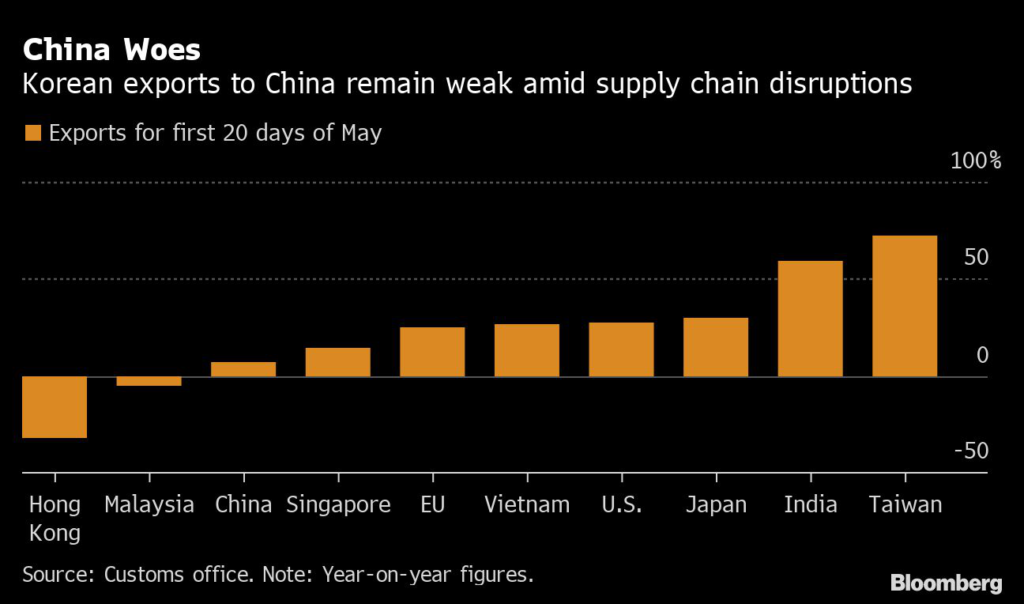
While exports advanced 24.1% in the first 20 days of the month from a year earlier, helped by a rebound in auto shipments, figures for average daily shipments showed just a 7.6% increase, for the smallest gain in preliminary data since the end of 2020. Exports to China continued to show weakness.

The main result was inflated by two extra working days in the period this year, compared with last May, according to a customs office statement Monday. Overall imports rose 37.8%, resulting in a trade deficit of $4.8 billion, as energy costs stay high.

Exports underpin South Korea’s economy and their performance for the first 20 days of a month is considered an early indicator of global demand. The nation ships everything from cars to displays to semiconductors and global trade has been buffeted by higher energy and commodity prices since Russia invaded Ukraine in February.

While the figures suggest continued resilience in demand from around the world, the weakness in exports to China show the ongoing impact of lockdowns in some of the major cities there, causing disruptions in maritime transport and factory operations.

“The slowdown in exports to China is the biggest drag as the lockdowns have hurt demand for imports among consumer-facing industries,” said Cho Yong-won, a researcher at the Korea Institute for Industrial Economics and Trade. “High oil costs, if they continue, may also prompt exporters to rethink plans to increase production as profit margins dwindle.”

Exports to China in the period showed only a single-digit rise, compared with shipments to the US and Japan that stayed robust, increasing 27.6% and 29.7%, respectively. Still, a gain from a year earlier indicates conditions have improved since April when monthly shipments fell.

Korean policy makers are concerned about inflation eating into the bottom line of companies reliant on imported materials and hurting the currency. The country is likely to post another trade deficit this month due to the high costs of energy imports and parts to assemble the products it exports.

Overall semiconductor shipments increased 13.5%, for the smallest gain in preliminary data since the supply snags of September. Oil products jumped 145.1%. Sales of wireless communication devices fell 21.3%. Exports of automobiles rose 17.5%, for the first gain in three months in early figures.

(Adds economist comment)

More stories like this are available on bloomberg.com

©2022 Bloomberg L.P.
Bitcoin Recovers to $30,000 Area After Shedding Weekend Weakness

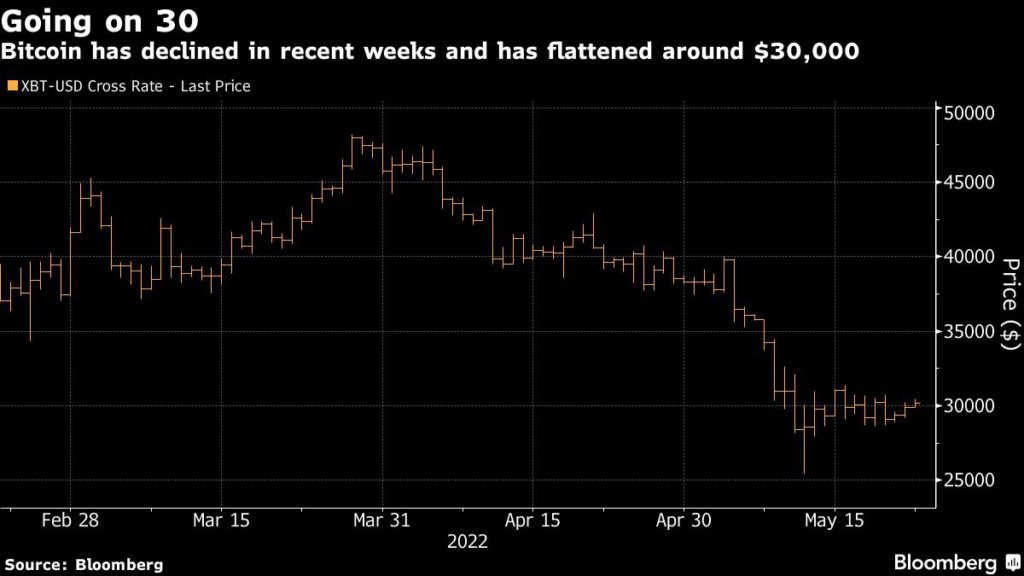
(Bloomberg) — Bitcoin recovered to around $30,000 after spending most of the weekend below that level.

The largest cryptocurrency rose as much as 1.8% to $30,450 on Monday morning in Asia. That’s after it fell for seven straight weeks, the longest losing streak since August 2011, according to data compiled by Bloomberg. That echoed the seven-week decline in the S&P 500.

“If the S&P falls some more, that should create one final flush and a great buying opportunity for Bitcoin,” Fundstrat Global technical strategist Mark Newton said. “There’s a lot of bearishness, and we should be approaching a time when you really want to buy into that in the next couple of months.”

Bitcoin has struggled in recent weeks as the Federal Reserve hikes interest rates and inflation remains high, boosting prospects for more monetary tightening. While the token has been touted in the past as a hedge against inflation, it’s proved in recent months to be highly correlated with risk assets like companies in the Nasdaq 100, which has tumbled amid the changing regime.

“Bitcoin is likely to hover around $29,000 to $31,000 for the next couple of weeks,” said Noelle Acheson and Konrad Laesser of Genesis Global Trading in a note Friday. They added that some economic-data releases, like US gross domestic product or inflation measures, “could change the narrative.”

Rick Bensignor, president of Bensignor Investment Strategies and a former Morgan Stanley strategists, uses DeMark technical indicators — which compare the most recent maximum and minimum prices to the previous period’s equivalent price to measure demand — to argue Bitcoin likely won’t break higher anytime soon.

“I’d still expect another four weeks of heaviness,” he said in a note Monday. The May 12 low around $25,425 and the bounce from that keeps support intact at $28,900, he said.

More stories like this are available on bloomberg.com

©2022 Bloomberg L.P.

Didi Investors to Vote on NY Delisting After Beijing Crackdown

(Bloomberg) — Didi Global Inc. is widely expected to secure a blessing from shareholders on Monday to delist in New York, capping an 11-month ordeal that wiped out around $60 billion of its market value and turned the ride-hailing giant into a symbol of China’s tech crackdown.

The internet firm’s biggest backers including SoftBank Group Corp., Tencent Holdings Ltd. and Uber Technologies Inc. are expected to vote in favor of a delisting at an extraordinary general meeting in Beijing, according to market observers. That would clear the way for the company to cooperate with regulators who are demanding an overhaul of its data systems as part of a cybersecurity review. Only then will Didi be free to begin preparing for a Hong Kong share float, the best outcome investors say they can hope for. 

The retreat is part of what many see as comeuppance for a company known for pushing the limits with Beijing authorities. 

Following years of rapid growth, Didi forged ahead with an initial public offering in June 2021 despite regulatory opposition. Days after the $4.4 billion IPO, the country’s internet overseer forced it off China’s app stores and initiated a sweeping cybersecurity probe into the company, amid concerns of data leaks to a foreign power. The debut was so controversial it triggered an onslaught of regulatory actions constraining Chinese companies from raising capital overseas. 

SoftBank and other major backers are likely to back Didi’s delisting from the New York Stock Exchange in hopes that it will appease Beijing, securing chances of a comeback including an eventual listing in Hong Kong. SoftBank officials were not immediately available for comment.

Shen Meng, director of Beijing-based boutique investment bank Chanson & Co., said investors had little choice but to accept the delisting but will closely track Didi’s fate to see whether they could still trust the Chinese market. It is still unclear what actual punishment awaits Didi, which has been in talks with the Cyberspace Administration of China about a fine and other penalties. 

“Didi’s proposed delisting, if realized, will certainly deal a serious blow to investors’ confidence on Chinese stocks,” he said. “Having said that, if the delisted companies could be ‘reborn’ in Hong Kong with good valuation and liquidity, market concerns over Chinese investment will likely fade away in no time. After all, investors don’t care whether a company is listed in Hong Kong or the US, as long as they can get a good return on investment.” 

Didi’s shareholders, which also include the likes of Fidelity Investments and Blackrock Inc., have so far avoided commenting on the delisting.  

Read more: Didi’s Fate in Limbo As Officials Object to Proposed Penalty

Jitters over Beijing’s crackdown on Didi and other powerful companies such as Alibaba Group Holding Ltd. triggered a global sell-off in Chinese tech companies last year, with investors questioning Beijing’s intentions for an industry it regards as having amassed too much wealth and power.

Didi was founded in 2012 by Cheng Wei, an Alibaba veteran whose brash tactics are credited for making Didi one of the world’s biggest ride-hailing services, and one of the few which managed to fend off competition from Uber. After a heated price war between the two companies, Didi bought Uber’s China operations in 2016. 

The company, valued at around $80 billion at its IPO, will likely see its stock traded over the counter on the so-called pink-sheets market, home to penny stocks and other riskier businesses. 

Some investors could be forced to sell because their mandates don’t allow them to hold unlisted shares. Hedge funds have already reduced their Didi holdings by 29% to about $231.9 million during the first quarter, according to a Bloomberg analysis of filings. Even those who are free of such mandates, such as SoftBank, may question whether it’s worth holding onto the shares given uncertainty over Beijing’s punishment, increased competition from smaller rivals and stalled expansion overseas. SoftBank has plowed more than $12 billion into the company and has seen the value of its 20% stake fall from a peak of $16 billion to under $2 billion. 

Monday’s vote will be carried out on a 1 vote-per-share basis. Didi’s management, SoftBank, Uber and Tencent altogether hold around 48% of Didi’s equity ownership, according to its annual report. Didi said in a May filing that it requires a simple majority to set the delisting in motion, and that the company may postpone the meeting if shareholders push back.

Read more: Didi Plunges 44% After Halting Planned Hong Kong Stock Listing

The ride-hailing giant has explored several alternatives including hiving off data to a third-party Chinese firm and selling a stake to state-backed companies, Bloomberg News has reported.

More stories like this are available on bloomberg.com

©2022 Bloomberg L.P.
‘They’re Just Numbers,’ Indeed Owner’s CEO Says of Record Profit

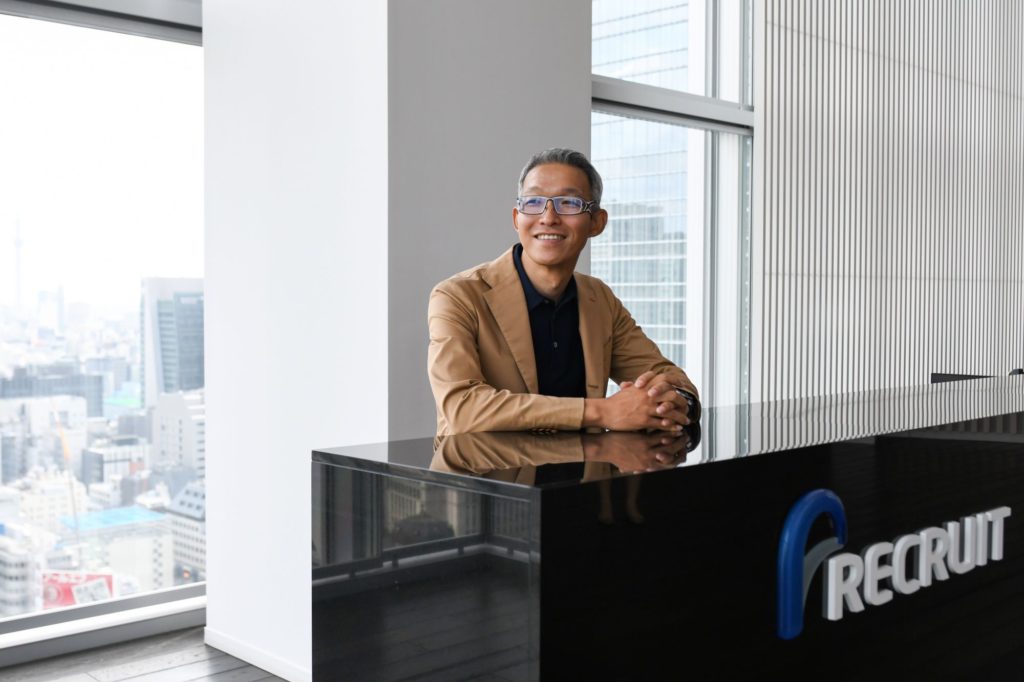
(Bloomberg) — Hisayuki “Deko” Idekoba isn’t really impressed by his own first-year results as chief executive officer of Japan’s Recruit Holdings Co., owner of the world’s top job finder.

“They’re just numbers,” Idekoba said in an interview after the company reported record adjusted profit of 512 billion yen ($4 billion) and a 27% rise in revenue in the fiscal year ended March. “It vexes me that we still haven’t been able to come close to our goal of simplifying hiring.”

Although relatively unknown outside its home market, Recruit is the company behind Indeed.com, as well as Glassdoor, the salary and employer-review website. It’s also Japan’s ninth-biggest company, with a sprawling empire across online travel booking, real-estate listings, payments and other consumer sites — akin to having Booking.com, Zillow, Square and LinkedIn all under a single umbrella.

Its biggest target now: shaking up how companies worldwide hire workers.

Idekoba, who persuaded his bosses to buy Indeed as a startup a decade ago and then spent most of the subsequent years in Austin, Texas, growing the business, is convinced that online hiring can evolve to the point where job seekers can find employment by pushing a single button. It ultimately comes down to getting more data.

“We still need to improve the product,” said Idekoba, who describes the development of online hiring as lagging the web-travel market by a decade and has even gone as far as saying resumes should be eliminated altogether in favor of more advanced tools to match employers and workers. “We need to know our users much better,” he said.

Read more: Boss Behind Indeed, Glassdoor Says Job Hunting ‘Totally Broken’

The pandemic has spurred unprecedented ructions in the global labor market, with US employers raising wages, offering more flexibility and boosting perks to fill positions. Idekoba has previously urged companies to modernize their hiring processes, proposing questions and assessment tests — the results of which can be stored and used by job seekers for future applications — as a better gauge of whether someone can navigate requirements.

The Great Resignation has been a boon for the company’s bottom line, with revenue in Recruit’s high-margin job-portals business almost doubling to $7.7 billion in the latest year with a margin of 38% for adjusted earnings before interest, taxation, depreciation and amortization. By comparison, Recruit’s other two divisions, staffing and online consumer services, have margins below 20%, even though they make up almost 80% of sales.

Even as profit climbs, Recruit’s embrace of human-resources technology has made it much more of a tech company, and exposed to the sector’s corresponding gyrations in stock prices. After climbing 61% in 2021, Recruit has lost about about a third of its value this year.

Asked whether it would make more sense to split Recruit by carving out the consumer businesses, Idekoba declined to comment. Instead, he spoke about the need to offer more sophisticated matching tools, which applies just as much to travelers, home buyers and online shoppers, as they do for job seekers.

One of Japan’s most infamous companies, Recruit’s founder was at the center of a shares-for-favors scandal that brought down a prime minister more than three decades ago. After years of rebuilding the business, Idekoba’s predecessor took the company public in 2014 in part to raise cash and issue public stock that could be used for big acquisitions. 

But apart from the $1.2 billion purchase of Glassdoor in 2018, Recruit hasn’t done any major deals despite having $5.5 billion in cash and equivalents at the end of March. While there are targets in mind, Idekoba says that it’s always better to start with partnerships to get a better sense of whether a merger or acquisition would be mutually beneficial. He’s made his mark so far mark by launching and growing new enterprises within the company.

“The absolute priority is whether it’s good for the user, good for the client and good for society,” Idekoba said.

More stories like this are available on bloomberg.com

©2022 Bloomberg L.P.

MatchMove Buys Singapore Startup Shopmatic for $200 Million

(Bloomberg) — Singapore-headquartered fintech MatchMove Pay Pte. has acquired fellow e-commerce startup Shopmatic Pte. for $200 million, a deal that signals consolidation in the startup ecosystem in India and Southeast Asia.

The combined entity, which will operate as the MatchMove group, will target revenues of $400 million and four million customers in 15 countries, including India, by 2026, the startups said in a joint statement.

“Combining embedded finance tools such as credit card payments with e-commerce features such as social commerce, will smoothen the digitization journey of small and medium businesses,” said Shailesh Naik, MatchMove’s founder and chief executive officer. 

The acquisition is the first in a series planned by MatchMove to create a rounded set of offerings that will help businesses to go fully digital. The startup was last valued at $600 million during a funding round in June 2021, Naik said. “The group is very near profitability,” he said.

E-commerce revenues in the Asia Pacific region are forecast to double to $2 trillion by 2025, according to a Euromonitor report, while embedded finance revenues are expected to reach $140 billion by that time, the companies said in the statement.

The two startups are in complementary domains, have Indian-origin founders and the bulk of their talent is located in India. MatchMove has over 100 customers, mainly in the Southeast Asian region, and its platform allows businesses to customize and embed financial services such as banking and credit card services. 

Shopmatic, which has over a million customers, the bulk of them in India, allows businesses to add e-commerce tools such as digitizing inventory, social commerce and web stores as well as automating their access to the world’s largest marketplaces.

Shopmatic’s co-founder and chief executive officer Anurag Avula will continue to head the e-commerce business, while Naik will lead the group as it scours for other acquisitions. 

“A one-stop digital services shop can better equip businesses in emerging markets to go digital,” said Shopmatic’s Avula.


More stories like this are available on bloomberg.com

©2022 Bloomberg L.P.

‘Downton Abbey’ Opens Weakly as Fans of a Certain Age Stay Home

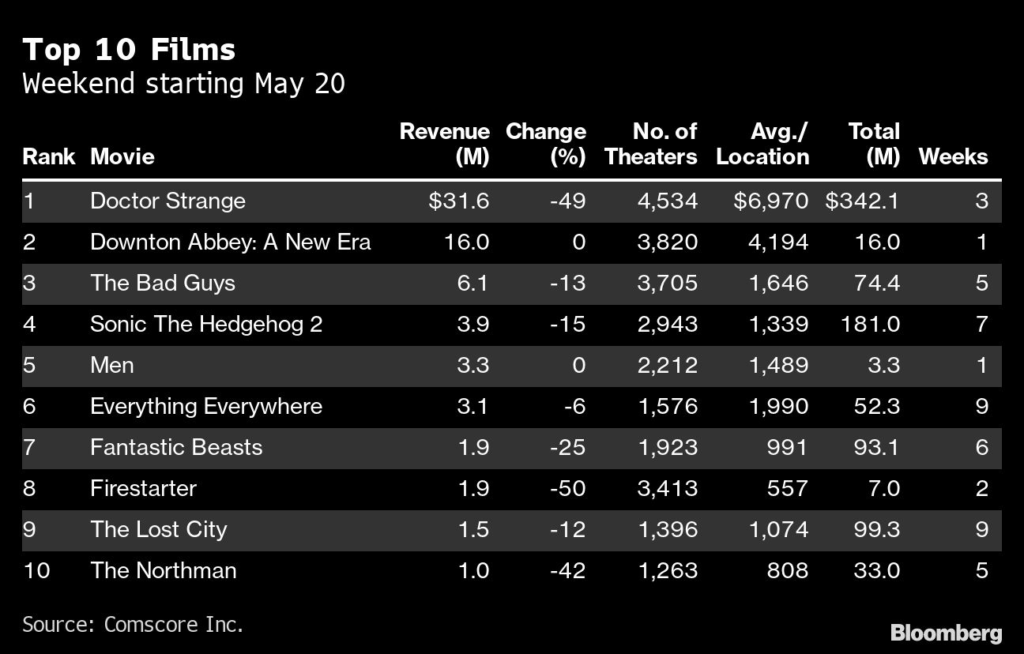
(Bloomberg) — “Downton Abbey: A New Era” opened in second place domestically this weekend and with a much weaker debut than its 2019 predecessor, as a key demographic for the film, older women, proves to be one of the most difficult to persuade back into theaters.

  • The film, from Comcast Corp.’s Focus Features division, generated $16 million in domestic ticket sales, Comscore Inc. estimated on Sunday. That was below the $20 million forecast from Boxoffice Pro and in line with low-to-mid-teen millions the studio had projected.
  • This movie, which picks up the story of the TV series and 2019 feature film, was the best test so far for whether older women would come back to cinemas. Almost 75% of the audience for the first “Downton Abbey” movie, which opened to $31 million, was female, while 60% was over 35 years old, Boxoffice Pro said. The recovery for theaters has mostly been led by younger men and women seeing superhero films.

Key Insights

  • Comcast undertook a major marketing push across its media outlets to get the word out. The promotions included advertising during the Kentucky Derby, an hour-long behind-the-scenes program on NBC and cast appearances on the “Today” show that included a re-creation of the dining room from the film. It also started a TikTok account for the movie, which has about 80,000 followers, to develop a younger fan base, according to the studio. The film opened in more than 3,800 theaters, the largest number ever for a release from Focus Features.
  • Some “Downton Abbey” fans may wait until the movie is available for home viewing, which could be in as few as 17 days, depending on ticket demand. Online availability has hurt the box office performance of movies recently. In 2021, Warner Bros. films that appeared on HBO Max the same day they premiered in theaters generated ticket sales that were about 8% lower than if they’d been exclusives in theaters, according to modeling by Bruce Nash, founder of the movie data site the Numbers.
  • “Doctor Strange in the Multiverse of Madness,” the latest Marvel installment from Walt Disney Co., was on top of the box office for the third straight week. It sold $31.6 million in domestic tickets over the weekend, Comscore estimated. It will likely be dethroned by the Paramount Global movie “Top Gun: Maverick,” which debuts over the Memorial Day holiday weekend after numerous Covid-related delays.

More stories like this are available on bloomberg.com

©2022 Bloomberg L.P.

Close Bitnami banner
Bitnami