
Bloomberg

Cisco Tumbles Most Since 2011 as Supply Upheaval Hits Sales

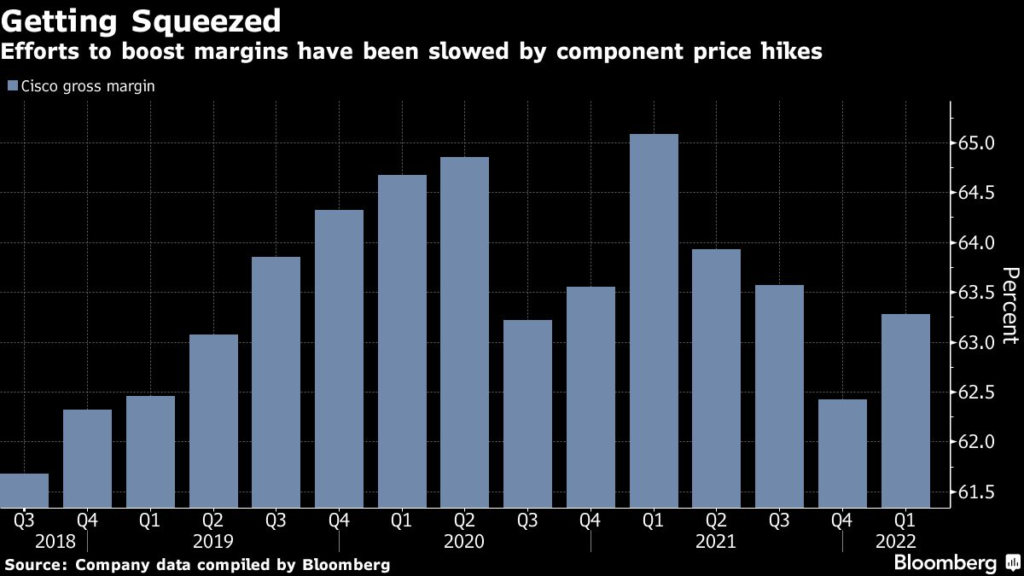
(Bloomberg) — Cisco Systems Inc. spooked investors with a warning that Chinese lockdowns and other supply disruptions would wipe out sales growth in the current quarter, sending its shares plummeting the most in more than a decade and renewing broader concerns about tech spending in a shaky economy.

Cisco shares fell 14% to $41.72 at Thursday’s close, the worst one-day drop since February 2011. The decline weighed on stocks of other networking companies, dealing a fresh blow to an already-battered sector. The shares have plunged 34% this year.

The question for much of Wall Street was whether Cisco’s forecast meant that customers were cutting spending, but the networking-equipment giant said supply woes — and not a pullback in expenditures — was the main problem.

“Even though these top-line numbers don’t look good, there’s a very simple explanation,” Chief Executive Officer Chuck Robbins said on a conference call with analysts. “Customers are not signaling any real shift at this point. There’s no reflection of demand issues in our guidance.”

Robbins acknowledged that Cisco wasn’t prepared for production to be closed down so extensively in China, a move triggered by the country’s Covid Zero policy. 

“We did not have a plan for a country to shut down,” he said. “And so it takes time to go out and create that geographic resilience, but our teams are working on all of those kinds of things right now.”

China’s lockdowns have hurt production from many companies, including Tesla Inc. and Sony Group Corp. Robbins said it’s not yet clear when supplies will return to normal, despite signs that government restrictions are easing in certain areas.

“Shanghai now is saying they’re going to open up June 1 — we don’t know exactly what that means,” he said. When the reopening happens, “there is going to be lots of competition for ports capacity, airport capacity.”


Cisco is the biggest maker of machines that power corporate networks and form the backbone of the internet. Investors look at its outlook as a proxy for corporate spending on infrastructure, which is why the sudden shift was especially jarring.

The company had predicted growth in the current quarter of about 6%. It said Wednesday that sales would actually decline by 1% to 5.5% in the period, which ends in July. Cisco’s earnings forecast also was short of Wall Street predictions.

Other networking related-companies saw their stocks fall following Cisco’s report. Juniper Networks Inc., Broadcom Corp. and Ciena Corp. all dropped about 3%.

Broader chip shortages and the war in Ukraine also have created disruptions for Cisco and its peers.

Like many tech companies, Cisco began cutting ties with Russia after that country invaded Ukraine earlier this year. The company said Wednesday that stopping business in Russia and its ally Belarus cost it about $200 million in revenue during the fiscal third quarter. Historically the region, including Russia, Belarus and the Ukraine, has accounted for about 1% of total sales.

On the conference call with Cisco executives, analysts questioned whether the weak guidance indicated that customers are concerned about their own future prospects and have begun to cut their spending.

Robbins insisted that demand remains robust. That said, the company doesn’t expect supply shortages to be resolved in the current quarter.

The inability to get power supplies from China cost Cisco $300 million in revenue in the third quarter, executives said. And even when the lockdowns end in China, the problem won’t be solved right away.

The tone of the report was a stark contrast from three months ago, when Cisco said orders rose more than 30% for a third consecutive quarter. Since then, investors have become more concerned that inflation and fears of slowing economic growth will make customers more cautious. This past quarter, the company said it orders increased 8%. 

While that’s a much slower rate of expansion, it shows strong growth ahead for a company of Cisco’s size, according to David Heger, an analyst at Edward D. Jones & Co.

“I would be more concerned if that order number was flat or down,” Heger said.

Cisco has implemented a no-cancellation policy on its orders within 45 days of the shipping date, according to Chief Financial Officer Scott Herren. Smaller customers, who tend to be the quickest to tighten their spending budgets, increased orders 19%. The growth and the overall low rate of cancellations give the company confidence that there are no underlying demand issues, Herren said in an interview.

Under Robbins, Cisco has been trying to spur growth with updated hardware, as well as new services and software. The hope is to make the longtime king of networking gear less dependent on one-time equipment sales.

The latest outlook marks a setback in that push. Excluding certain items, earnings will be 76 cents to 84 cents a share in the period, Cisco said. That compares with an average estimate of 92 cents.

For the year, revenue will grow 2% to 3%, the company said, compared with a previous prediction of as much as 6.5%. 

Revenue in the three months ended in April, was $12.8 billion, little changed from a year ago. Earnings per share, minus certain items, was 87 cents. Analysts had projected a profit of 86 cents on sales of $13.3 billion on average.

But without signs that orders truly are slowing, Wall Street may be overreacting to Cisco’s numbers, Heger said.

“Short of some big drop-off in demand, it seems as though the market is overcompensating,” he said.

(Updates with closing share performance in the second paragraph.)

More stories like this are available on bloomberg.com

©2022 Bloomberg L.P.
Applied Materials Gives Weak Forecast as Shortages Drag On

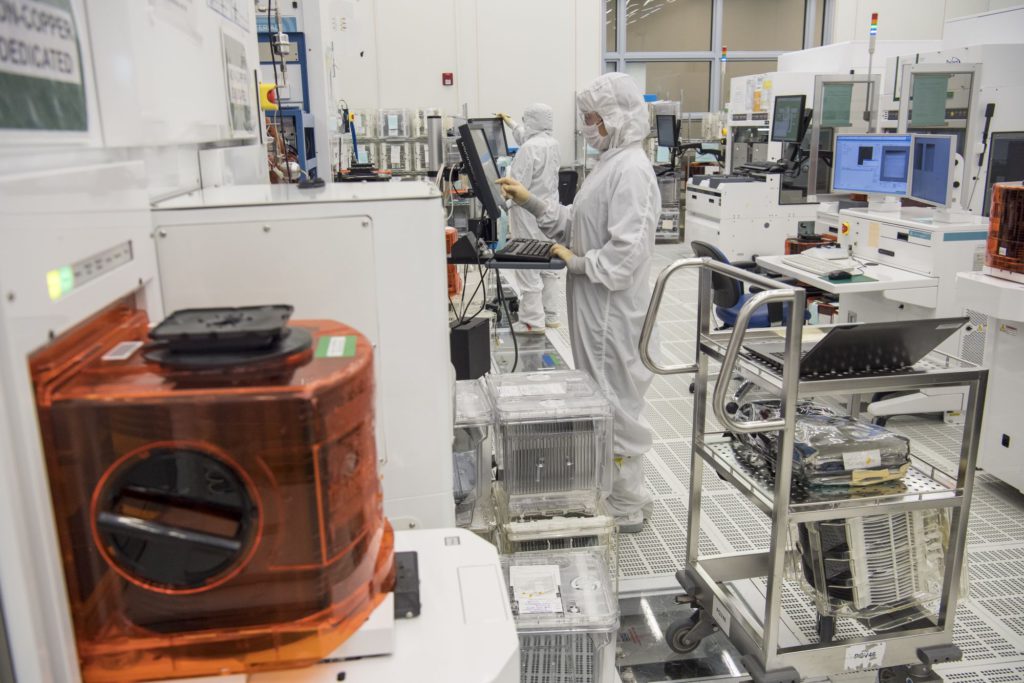
(Bloomberg) — Applied Materials Inc., the biggest maker of machinery used to manufacture semiconductors, slipped in late trading after persistent chip shortages weighed on its forecast for the current quarter.

Sales will be about $6.25 billion in the fiscal third quarter, which runs through July, the company said in a statement Thursday. Analysts estimated $6.69 billion on average, according to data compiled by Bloomberg. Profit will be $1.59 to $1.95 a share in the period, excluding some items, compared with an average prediction of $2.05.

The chip industry is ordering machinery from Applied Materials and its peers at a frantic rate, trying to build enough production capacity to end industrywide shortages that are hurting growth across the economy. But those same shortages are leaving Applied without the components it needs to make its equipment.

Like Cisco Systems Inc., which gave a disappointing forecast Wednesday, Applied said lockdowns in parts of China where critical suppliers are located has cut it off from components needed to finish building machines. While the company has worked on understanding its supply chain better, Shanghai and other parts of coastal China that have seen a resurgence of the Covid pandemic are choke points because they’re home to manufacturing of some parts as well as chip processing, Chief Executive Officer Gary Dickerson said in an interview. 

“Demand is very strong for us, but the biggest issue is supply,” he said. “Even today we have some suppliers that operating at less than 50%.”

Those constraints cost Applied about $150 million of sales in the quarter, he said. 

The stock declined about 2% in extended trading after closing at $110.74 in New York, and have dropped 30% this year.

The Santa Clara, California-based company posted earnings of $1.85 a share, minus certain items, in the second quarter, compared with a prediction of $1.91. Sales rose 12% to $6.25 billion, missing the $6.36 billion projection.

Soaring sales of semiconductors have helped Applied Materials maintain revenue growth as chipmakers order more manufacturing equipment from the company. But that hasn’t allayed investor concern that the industry will overshoot and put too much capacity in place, causing a glut — a regular occurrence in past cycles.

Dickerson has argued that growing use of semiconductors in new types of devices is lessening the industry’s dependence on personal computers and smartphones. That means demand for chips and chipmaking equipment will be more sustained and predictable.

Applied Materials’ customers include Samsung Electronics Co., Taiwan Semiconductor Manufacturing Co. and Intel Corp., making its projections a window into the spending plans and confidence levels of some of the biggest companies in technology.

(Updates with CEO comments in seventh paragraph.)

More stories like this are available on bloomberg.com

©2022 Bloomberg L.P.

Digital-Asset Haven Portugal Ponders ‘Several Models’ for Crypto Taxation

(Bloomberg) — Portugal is embarking on a major change of course as it considers levying taxes on cryptocurrencies, signaling a policy shift for one of Europe’s most crypto-friendly destinations. 

The country’s lack of legislation, combined with its affordable living costs and mild temperatures has attracted a growing number of digital nomads and cryptocurrency companies in recent years. At the moment, Portugal does not tax crypto gains, unless it stems from professional or business activities. 

But this could soon change. 

“The government’s intention is to legislate on this matter,” Finance Minister Fernando Medina told reporters in Lisbon on Thursday. “I don’t want to commit to a deadline. The timetable will be as soon as possible, when we have a consistent proposal and after a wide public debate.”

Medina, a former mayor of Lisbon, insisted that Portugal would still be a competitive destination once the new tax rules come into force. 

“Portugal will adopt a regime that is effective, that is fair, and a regime that fits within the best practices from the point of view of what are the international experiences and also the competitive position of the country,” he said. 

The presence of crypto enthusiasts is palpable in Lisbon, where networking opportunities range from the annual Web Summit, one of the world’s biggest technology conferences, to weekly informal gatherings at bars.

The number of foreign residents living in Portugal rose 40% over the past decade to 555,299 people in 2021, according to Portugal’s National Statistics Institute. Some of these residents also benefit from a flat 20% tax on their income or a 10% tax on their pensions, according to the country’s so-called non-habitual resident program. 

More stories like this are available on bloomberg.com

©2022 Bloomberg L.P.

Buyout Firm Bridgepoint Weighs $2 Billion Sale of Software Provider Kyriba

(Bloomberg) — Bridgepoint Group Plc is considering the sale of portfolio firm Kyriba Corp., in a deal that could value the treasury-management software provider at more than $2 billion, people familiar with the matter said.  

The buyout firm is in the early stages of evaluating options for San Diego-based Kyriba, the people said, asking not to be identified as the matter is private. Bridgepoint may seek to raise more than $3 billion from the sale, one of the people said.

Bridgepoint could launch a sale process in the coming months, another person said. Bridgepoint hasn’t formally mandated an adviser for the sale, according to the person. The business could draw interest from both strategic and financial investors, the people said. 

Kyriba helps corporate finance executives manage foreign exchange processes, improve financial controls and reduce fraud risks. It has more than 2,000 clients across industries including financial services, health care and real estate. Bridgepoint bought a majority stake in the business from its venture capital backers in 2019. 

Investors are still keen to deploy capital in the technology sector despite a recent sell-off which has brought down valuations. Private equity firm Hg agreed this month to acquire UK compliance software developer Ideagen Plc for about 1 billion pounds ($1.3 billion). In April, a consortium of investors offered to buy Basware Oyj in a deal valuing the Finnish software company at about 620 million euros ($652 million). 

Deliberations are ongoing, and there’s no certainty they will lead to a transaction, the people said. A representative for Bridgepoint declined to comment, while a spokesperson Kyriba didn’t immediately respond to requests for comment. 

(Updates with new valuation in second paragraph.)

More stories like this are available on bloomberg.com

©2022 Bloomberg L.P.
Stocks End Lower in Late-Day Slide as Havens Bid: Markets Wrap

(Bloomberg) — US stocks fell in a volatile day of trading as investors weighed prospects for growth against a backdrop of rising prices and tightening monetary policy. Treasuries held gains amid a steady stream of haven bids.

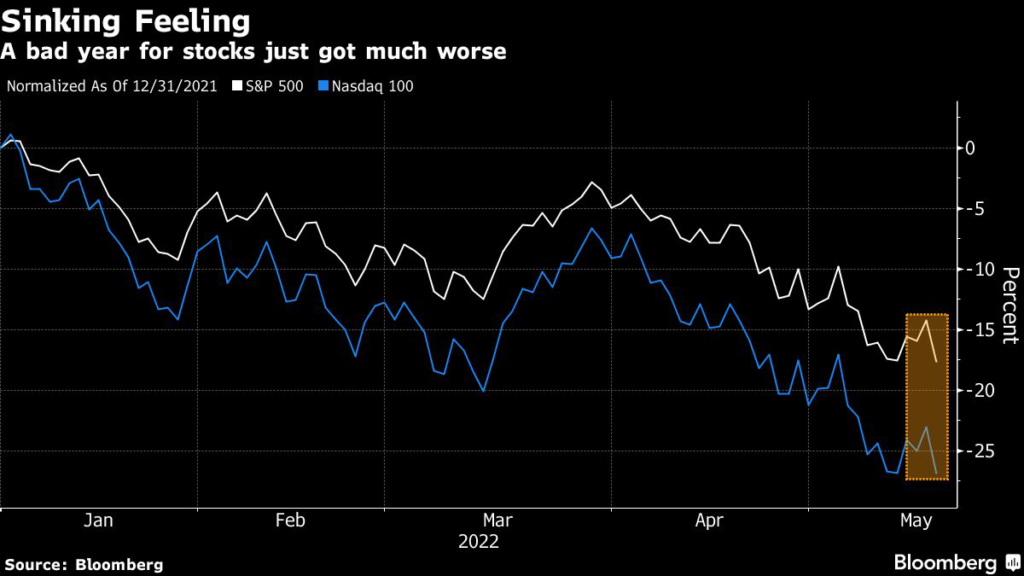
The S&P 500 swung back into the red in the last hour of trading, a day after the biggest single-day drop since June 2020 that erased $1.5 trillion from its market value. The Nasdaq 100 posted modest losses, slipping 0.4% on Thursday. Cisco Systems Inc. slid more than 10% after warning that Chinese lockdowns and other supply disruptions would wipe out sales growth in the current quarter.  

Treasury yields were lower across the board amid a growing sense of angst over the health of the global economy and selloff in equity markets. Weaker than forecast US jobless claims and a sharp decline in a regional Philadelphia Fed survey also spurred a burst of buying. Gold gained while the dollar weakened against all of its Group-of-10 counterparts.

Applied Materials Inc., the biggest maker of machinery used to manufacture semiconductors, fell in post-market trading as persistent chip shortages weighed on its forecast for the current quarter. Ross Stores Inc. dropped more than 15% after the bell as the discount retailer cut its outlook for profit and sales.

The selloff in stocks this week has left the S&P 500 on the brink of notching up its seventh weekly decline, the longest streak since the dotcom bubble burst more than two decades ago. Bets that robust earnings can help investors weather this year’s turbulence were thrown in doubt after US consumer titans signaled a growing impact of high inflation on margins and consumer spending. Meanwhile, Federal Reserve officials reaffirmed this week that tighter monetary policy lies ahead, while investors fretted over stagflation risks.

Commentary

  • “In this bear market, the sour mood has been persistent and hasn’t helped at all in trying to time a market rebound,” said Peter Boockvar, chief investment officer at Bleakley Advisory Group. “But that’s what happens in bear markets, oversold gets more oversold. That said, this level of bearishness can always lead to good bear market rallies.”
  • “The focus has shifted obviously from ‘OK, we will see the Fed aggressively raise rates,’ to ‘Uh oh, what’s going to go on with growth — are we entering a sustained period of stagflation?’” said Chris Gaffney, president of world markets at TIAA Bank. “In some instances, we’re already in a period of stagflation, but the question now is how long will that last. That’s just cast a negative tone on the markets when you’re considering central banks aggressively raising rates and at the same time we’re going into a period of maybe slower growth. That’s what’s causing the selloff.”
  • “The stock market is square in the crosshairs of the Federal Reserve, which no longer has its back and is solely focused on slowing inflation back down to their long-range target of 2%,” Chris Zaccarelli, chief investment officer at Independent Advisor Alliance, said in a note. “As the stock market goes down, the Fed can’t ease policy as long as inflation remains their main concern, and if the stock market rises significantly then then Fed will see that as an impediment to their inflation goals and will be emboldened to raise rates even higher.”
  • Everybody’s afraid that policy makers are “going to get it wrong,” Lori Heinel at State Street Global Advisors said on Bloomberg TV. “We actually are a little bit more dovish in terms of what we think the Fed’s gonna do, and if they move in the summer and then actually do take a bit of a pause, then there’s a chance that we get out of this without a recession.”

Read more: Goldman, JPMorgan Strategists See Recession Fears as Overblown

Read more: Stock Selloff May Be Entering a New Phase: Mohamed A. El-Erian

On the corporate front, Twitter Inc. executives told employees on Thursday that the $44 billion deal to sell the company to billionaire Elon Musk is moving forward as planned. Apple Inc. executives previewed its upcoming mixed-reality headset to the company’s board last week, indicating that development of the device has reached an advanced stage, according to people with knowledge of the matter. Kohl’s Corp. cut its profit and sales outlook in an already tough week for retail companies as inflationary pressures cut into profits.

Elsewhere, the Swiss franc extended its advance versus the dollar after Swiss National Bank President Thomas Jordan said policy makers are ready to act against inflation.

What damage will be done to the US economy and global markets before the Fed changes tack and eases policy again? The “Fed Put” is the theme of this week’s MLIV Pulse survey. Click here to participate anonymously.

Some of the main moves in markets:

Stocks

  • The S&P 500 fell 0.6% as of 4 p.m. New York time
  • The Nasdaq 100 fell 0.4%
  • The Dow Jones Industrial Average fell 0.8%
  • The MSCI World index fell 0.6%

Currencies

  • The Bloomberg Dollar Spot Index fell 0.9%
  • The euro rose 1.2% to $1.0590
  • The British pound rose 1.2% to $1.2495
  • The Japanese yen rose 0.4% to 127.71 per dollar

Bonds

  • The yield on 10-year Treasuries declined four basis points to 2.85%
  • Germany’s 10-year yield declined eight basis points to 0.95%
  • Britain’s 10-year yield was little changed at 1.86%

Commodities

  • West Texas Intermediate crude rose 1.7% to $111.44 a barrel
  • Gold futures rose 1.4% to $1,847.70 an ounce

More stories like this are available on bloomberg.com

©2022 Bloomberg L.P.
Billionaire LA Mayor Hopeful Urges State to Refund Huge Surplus

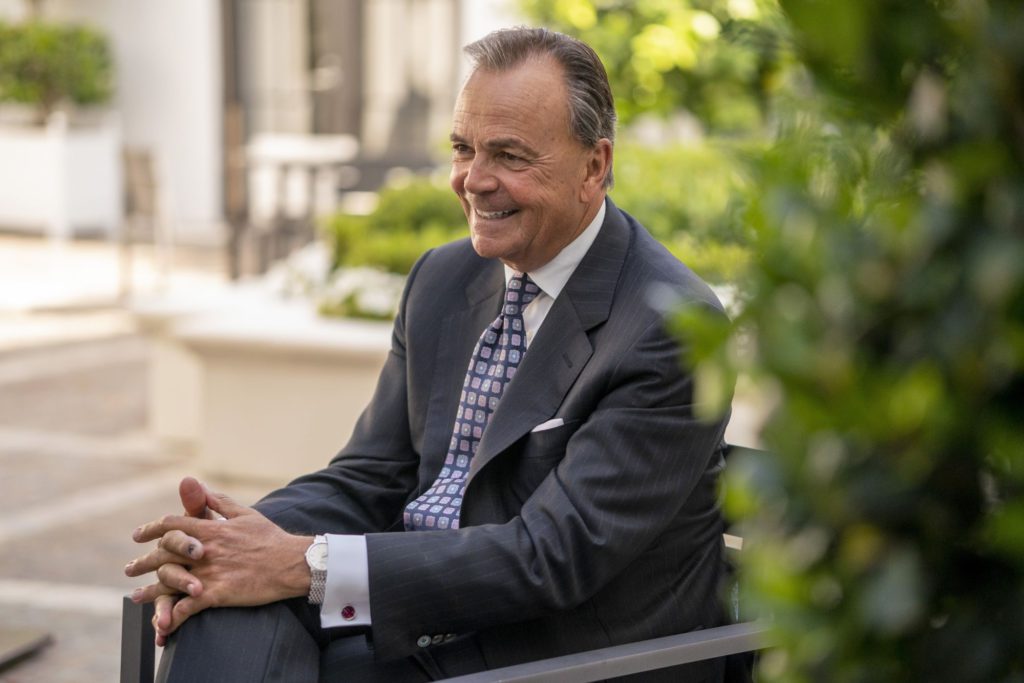
(Bloomberg) — Billionaire Rick Caruso, a leading candidate in the race for Los Angeles mayor, supports giving money back to California taxpayers from a record-busting $98 billion surplus, which was bolstered by the state’s highest-earners.

“I’d return the money to the taxpayers,” Caruso, 63, said during an interview at The Grove shopping mall, one of a number of high-end properties he’s developed in California. “It’s their money. It’s not the state’s.”

Caruso, a former Republican turned Democrat, intends to bring his business acumen to the LA government by using the city’s credit to help finance affordable housing, lower fees for businesses, improve the transportation infrastructure and hire 1,500 more cops to fight a spike in crime. He pledged to eliminate homeless encampments in his first term by adding 30,000 beds at shelters in his first 300 days and building out supportive services. 

Polling shows Caruso is locked in a dead heat with Karen Bass, a six-term Democratic congresswoman, as they both campaign on issues that remain top of mind for voters, such as crime, homelessness and rising costs. Caruso and Bass, who would be the city’s first Black female mayor, are fighting to win over the 40% of still undecided voters, according to a recent survey by the University of California at Berkeley Institute of Governmental Studies and the Los Angeles Times.

If no single person receives more than 50% of the vote to secure an outright win in the June 7 nonpartisan primary, the two leading candidates will square off in November. Mayor Eric Garcetti is barred by term limits from seeking re-election.

Caruso is tapping his estimated $3.7 billion fortune to outspend the other candidates. He’s lent his campaign $22.5 million to buy an avalanche of ads on television, online and mailers, highlighting his story as a grandchild of immigrants who came to America with nothing. Over the past five years, Caruso and his companies have paid an annual average of $22.9 million in taxes, according to information shared by his campaign.

The first-time candidate says his message is reaching a wide audience. Caruso made local headlines for picking up endorsements from community activist Alice Harris, known as ”Sweet Alice,” and rapper Snoop Dogg on the same day this week.

The race comes as the state decides how to spend windfall revenue from high-income taxpayers who reaped capital gains from last year’s soaring stock and real estate market.

California Governor Gavin Newsom and the legislature are debating how to use the massive surplus to help households facing inflation hovering at a four-decade high and gas prices that have soared past $6 a gallon. Lawmakers can tap $49.2 billion of the state’s windfall for any use. Newsom has proposed an $18.1 billion inflation-relief package that includes as much as $800 in rebates for car owners, $1,000 bonuses for health care workers and free public transit. Other funds would go to housing, education and health care. 

Boom times for the rich have accentuated the state’s stark wealth divide — which is visible in the streets of LA, where oceanfront mansions sit next to make-shift shelters for a homeless population exceeding 40,000. Rising costs are exacerbating the city’s housing crisis — only a fifth of LA County residents could afford to buy the median price home in the first quarter, according to the California Association of Realtors. 

“A year ago, I would’ve told you that a candidate like Rick Caruso, even if he spent $25 million, couldn’t win the mayoralty of LA,’’ said Fernando Guerra, director of the Center for the Study of Los Angeles at Loyola Marymount University. “Caruso represents an outsider challenging the governing political establishment. Voters are open to that right now.”

Critics have chipped away at Caruso’s glossy self-portrait by pointing out that he made much of his fortune developing high-end real estate, including the five-star Rosewood Miramar Beach Resort in tony Montecito, with little record of building affordable housing. Planned Parenthood this month sent a letter attacking him for past donations to anti-abortion Republican candidates, an issue facing Democratic voters as the Supreme Court appears ready to overturn Roe v. Wade. Caruso has declared he is pro choice and would support a proposed amendment to California’s constitution codifying abortion rights.

The son of the founder of Dollar Rent A Car, Caruso graduated from the University of Southern California, attended law school at Pepperdine University in nearby Malibu and went into real estate. Now, facing the challenges in the city, Caruso said his wife told him they have to do something about them — or consider leaving.

“Every problem continues to get worse,” he said. “Crime continues to go up. More people are ending up on the streets. You got more businesses moving out, we’ve got more people moving out. There’s a lot that needs to be turned around.”

More stories like this are available on bloomberg.com

©2022 Bloomberg L.P.

Harley-Davidson Halts Motorcycle Shipments for Two Weeks on Part Issue

(Bloomberg) — Harley-Davidson Inc. has told investors privately it will be able to make up for lost production later this year after halting operations because of a problem with a supplier part, according to people familiar with the matter.

The motorcycle maker tumbled Thursday after saying it would halt almost all assembly and shipments for two weeks because of a “regulatory compliance matter” with a part from one of its suppliers.

The decision, made out of “an abundance of caution,” came after Harley received unspecified information from a supplier earlier this week, according to a statement. The interruption does not affect the company’s electric LiveWire bikes. 

The Milwaukee-based company has told some investors that a global Tier 1 supplier initially flagged the issue, according to the people, and Harley has already sent personnel to try to resolve it. The company also said it should be able to make up for lost production later this year, said the people, who asked not to be identified because the information was shared privately.

A spokeswoman for Harley declined to comment beyond the earlier statement.

The work stoppage is a new stumble for Harley, which has already been grappling with chip shortages, high raw-material expenses and other supply-chain snags. Chief Executive Officer Jochen Zeitz, a former Puma SE executive who took the helm in 2020, has slashed costs, exited unprofitable markets and tightened inventory to raise motorcycle prices.

Harley shares fell 9.3% in New York, the biggest decline since February 2021.

The stoppage places a burden on Harley dealers, who have already struggled to get inventory amid the semiconductor crunch, said George Gatto, who owns two Harley stores in the Pittsburgh area.

“It’s peak season for this part of the country so this is the absolutely wrong time for this to happen,” he said in an interview. “We’re already not getting the vehicles we were promised, and now all of a sudden it’s worse.”

Gatto said he has been waiting on nearly complete bikes that are missing certain components to be shipped from the factory. 

Higher supply-chain costs eroded Harley’s operating income in the first quarter, the company said last month. While it expects the chip shortage to ease in the second half, component costs and raw material inflation will continue for the rest of the year, it said in a recent regulatory filing.

More stories like this are available on bloomberg.com

©2022 Bloomberg L.P.

Microsoft Hires Chief Product Officer for Parts of Security Unit

(Bloomberg) — Microsoft Corp. hired a new chief product officer for some of its security and management products as security chief Charlie Bell begins revamping the company’s cybersecurity product divisions. 

Jason Roszak will serve as chief product officer in Microsoft’s Enterprise Management Experience business, which oversees products like the mobile device management program Intune and System Center, which helps companies manage and monitor Windows Server networks, Microsoft said. Roszak spent more than eight years at VMware Inc. and had been a vice president there. Roszak, who is expected to start in June, didn’t immediately reply Thursday to a message seeking comment.

Microsoft, which said in January that it had amassed $15 billion in security software sales in 2021, up almost 45% from a year earlier, is trying to expand and improve its security business to better protect customers from damaging breaches and lure more clients to its programs. Bell joined Microsoft in 2021 after many years at Amazon.com Inc.’s cloud computing unit.

Insider reported Tuesday on several reorganizations Bell announced last week in Microsoft’s security business.

More stories like this are available on bloomberg.com

©2022 Bloomberg L.P.

AOC Is Engaged, She Confirms on Twitter

(Bloomberg) — Democratic lawmaker Alexandria Ocasio-Cortez, who represents parts of New York City’s Queens and Bronx boroughs in the US House, is engaged to longtime partner Riley Roberts.

The congressional member, who is popular on social media, confirmed the news on Twitter, following an initial report by Business Insider. “We got engaged last month in my family’s hometown in Puerto Rico,” she told the publication. “No future details yet, we’re taking some space to savor this time before diving into planning.” She also thanked followers for the support.

Separately, she told followers on Instagram Stories that she was “back at it” after time spent offline due to an unspecified health issue. “I’m back at it today, but was MIA for a bit to recover,” she said. 


More stories like this are available on bloomberg.com

©2022 Bloomberg L.P.

Nick Candy Mulls THG Bid as Retailer Rejects Rival $2.6 Billion Offer

(Bloomberg) — British entrepreneur Nick Candy is considering an offer to acquire THG Plc, while the UK online retailer announced it rejected a rival bid.

THG rejected a proposal of 170 pence a share from UK e-commerce investor Belerion and US hedge fund King Street Capital Management that valued the company at 2.1 billion pounds ($2.6 billion). The offer “significantly undervalued the company,” THG said in a statement. The stock closed at 116.45 pence on Thursday in London trading. 

Separately on Thursday, Candy Ventures Sarl said it is considering an offer. It’s not certain an offer will materialize, or what its terms would be, according to a statement from the entrepreneur’s holding company. The process is in its very early stages, Candy said. UK property developer Candy failed in a bid for Chelsea Football Club earlier this year. 

Candy has some experience investing in technology companies. He built up a stake in podcasting platform Audioboom Plc, which has been the subject of takeover speculation, as well as scooping up augmented reality startup Blippar after it went into administration.

Belerion founder and chief investment officer Iain McDonald is a non-executive director on THG’s board. 

Manchester, UK-based THG said last month it had received approaches from parties looking to acquire the online shopping emporium, but none were acceptable. 

The company, which sells beauty, skincare and health-food products and was co-founded by Matthew Moulding, has endured a tough time since going public. Investors have grown increasingly concerned about corporate governance and the growth prospects of its Ingenuity unit, a platform which helps brands sell their products online. THG has said the business is grappling with a marked increase in raw material costs, particularly whey and freight prices.

Formerly known as the Hut Group, the retailer was founded by Moulding and John Gallemore, who now serves as chief financial officer, in 2004. It started off selling CDs. 

Moulding has kept a tight grip on THG as a major shareholder, landlord, chairman and chief executive officer. In March, THG appointed Charles Allen as chairman, with Moulding relinquishing the role to focus on being CEO. Moulding also pledged to give up his golden share, which allows him to veto a takeover, smoothing the way for THG to move its listing to the premium segment of London’s Stock Exchange. Last year, Moulding hinted that he could take the business private. 

Speculation over THG’s future has weighed on its stock in the past year. SoftBank Group Corp., a major investor, has yet to indicate if it will exercise an option to buy a 20% stake in Ingenuity. In September, THG said it would list its beauty unit in 2022 and that it was considering the same for the nutrition business. That led investors to scrutinize Ingenuity, raising questions about its value.

(Updates with details on Belerion, King Street.)

More stories like this are available on bloomberg.com

©2022 Bloomberg L.P.

Close Bitnami banner
Bitnami
