Bloomberg

FTX US Offers Trading of Old-School Stocks as Crypto Backstop

(Bloomberg) —

FTX US, the cryptocurrency exchange co-founded by Sam Bankman-Fried, is expanding into equities trading as it seeks a cushion for when digital assets retreat while capturing a broader group of retail investors. 

Select users will be able to trade hundreds of US-listed stocks and ETFs with no fees, FTX US said Thursday in a statement. Retail traders can opt to fund their brokerage accounts with asset-backed stablecoins such as USD Coin, in addition to using wire transfers and credit card deposits.

The move can help diversify the exchange’s business when crypto markets takes a downturn, FTX US President Brett Harrison said in an interview. “It’s beneficial for us to have stocks on the platform even if it’s not a profit source for us on Day One,” he said.

The Bloomberg Galaxy Crypto Index has declined more than 60% since early November. The TerraUSD stablecoin and its related digital coin Luna lost almost all their value this month. The implosion will have a long-term negative impact on how the cryptocurrency market is perceived, especially when it comes to stablecoins, Harrison said. 

“This laid bare the fact that people were using the term stablecoins to mean very, very different things,” Harrison said Wednesday during a panel discussion at Bloomberg Intelligence’s Market Structure 3.0 conference.

FTX US said its stock orders will initially be routed through Nasdaq Inc., the second-largest domestic stock exchange, and won’t take “payment for order flow,” a controversial practice where market makers pay brokers to execute their retail orders.

The firm has hinted at a move into stock trading in recent months, as part of its expansion strategy. It has also proposed a way to trade crypto derivatives by removing intermediaries, rattling some long-time participants on Wall Street.

Last week, Bankman-Fried revealed a 7.6% stake in Robinhood Markets Inc. He has said he intends to hold the stock as an investment and not to influence the company for now. 

That disclosure and FTX’s move into stocks come at a critical time for Robinhood, whose shares have plunged by more than 70% since the firm went public last July. As the meme stock trading phenomenon loses steam, crypto has become a key growth driver for Robinhood, making up an increasing portion of its revenue. 

“We recognize that crypto is the higher-margin business and it’s also our specialty,” Harrison said. “We’d like to see to what extent is stocks a missing piece for us in terms of attracting customers.”

More stories like this are available on bloomberg.com

©2022 Bloomberg L.P.

Predicting the Future of Texas’s Grid Is a Texas-Sized Challenge

(Bloomberg) —

A little more than a year after a paralyzing winter freeze, the Texas power market just experienced the stress of extreme heat. Last week, power prices in Houston briefly jumped above $5,000 per megawatt-hour as high temperatures coincided with a number of generators being offline for maintenance.

Yet a few days earlier, power prices in west Texas had been negative $883 dollars per megawatt-hour, because at the time wind generation was abundant and demand was low. 

“Dynamic” is one way to describe the price swings within the Electric Reliability Council of Texas (Ercot), the grid that provides the majority of the state’s power. “Jarring” or “terrifying” might be other words for it, particularly for those buying power in the spot market. 

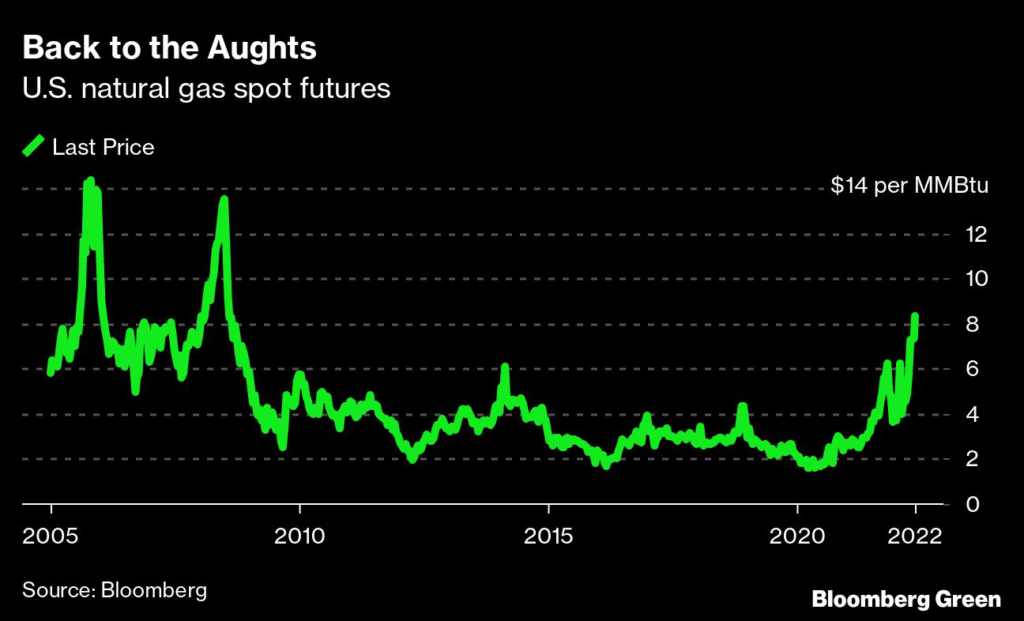
In one respect — high gas prices — Texas’s current power system is a throwback to the aughts. Natural gas prices have increased fourfold since 2020 and are back to the same level they were at in 2008. The gas prices of 2005 to 2008 forced grid operators, regulators and long-term planners in Texas and elsewhere to carefully consider the future power mixes in their markets. 

Gas prices may be back to the levels of 14 years ago, but power markets, and the Texas market in particular, are very different indeed. The state’s coal fleet has shrunk; its nuclear fleet has not grown; the number of bigger combined-cycle gas power plants has expanded, while smaller open-cycle and reciprocating-engine gas plants have dwindled significantly.

Then there are renewables. Over the past decade, installed wind capacity in Texas has nearly tripled. Solar capacity has expanded more than 260 times and battery capacity has increased by a factor of almost 800. All of these technologies are expected to keep growing, too, just in the next two years. By the end of 2023, installed wind capacity could increase another 40% from 2021, with solar tripling and batteries growing seven-fold. 

I am not an energy modeler, so I won’t pretend to construct a long-term forecast for the next decade. I can, however, highlight some possibilities for the future of the Texas grid. I do not imagine that any one will happen wholly to the exclusion of the other; rather, I expect them to act in concert and impact each other in possibly significant ways.

One possibility: Higher prices are here to stay. That includes natural gas prices, which would encourage fuel-switching at the grid level between gas- and coal-fired power and would likely discourage the construction of new gas-fired power plants. Developers of new power generation may look at today’s current prices and be more confident in the economics of wind and solar … but of course, prices for wind and solar equipment are also increasing, because of commodity costs, snarled supply chains, trade cases and labor costs. High prices across the board, in a situation where many technologies compete on the margin, is paradoxically quite uncertain for companies planning many years out. 

Another possibility is that infrastructure arrives in force. The bipartisan law passed in November has tens of billions of dollars for transmission, which would encourage the building of more wind and solar in resource-rich areas and send more power to urban and suburban demand centers. It would also flatten out—or eliminate—situations in which prices in one part of the state are punishingly high, while at the same moment, renewable projects in distant areas are actually penalized for their power output. 

Yet another possibility is that the nature of electricity demand in Texas changes significantly, with consumers opting out of the grid where they can. Buyers of electricity both big and small may decide that the best defense against an uncertain future for the state’s electricity sector is to take control of it for themselves. Many technology companies already meet 100% of their electricity demand from renewables, but smaller companies may decide to generate their own power and store it, lessening their draw on the grid. 

At the same time, power demand could also grow significantly thanks to electric vehicle charging, more use of air conditioning (due to both the changing climate and population growth) and cryptocurrency mining. Ercot has already forecast that by mid-2023, crypto mining will increase demand on the grid by as much as the power needed for all the homes in Houston. Electrification of industrial processes that currently consume fossil fuels could also cause demand to go up substantially, and production of “green” hydrogen using renewably powered electrolyzers could drive it up even more. 

The final possibility is the most intriguing: We don’t really know what the prime movers of supply and demand in the 2030s will be. I promise this is not just an analyst’s cop-out. Even the most thoughtful, thoroughly modeled analysis of the 2021 Texas power system from 15 years earlier would not have imagined solar prices where they are today, the prevalence of batteries, energy demand from data centers, crypto mining or a coming wave of millions of electric vehicles. Some of those factors would have required outlandishly aggressive assumptions to predict today; others simply did not yet exist. 

For those planning the future, the call to action is two-fold. First, be extremely focused on economics and projections of those things you can know about today. Second, be as imaginative as you can in considering future supply and demand. The future will lie somewhere in between.

Nathaniel Bullard is BloombergNEF’s Chief Content Officer.

More stories like this are available on bloomberg.com

©2022 Bloomberg L.P.

A-Rod Invests in Fight Promoter PFL, Joins Board of Directors

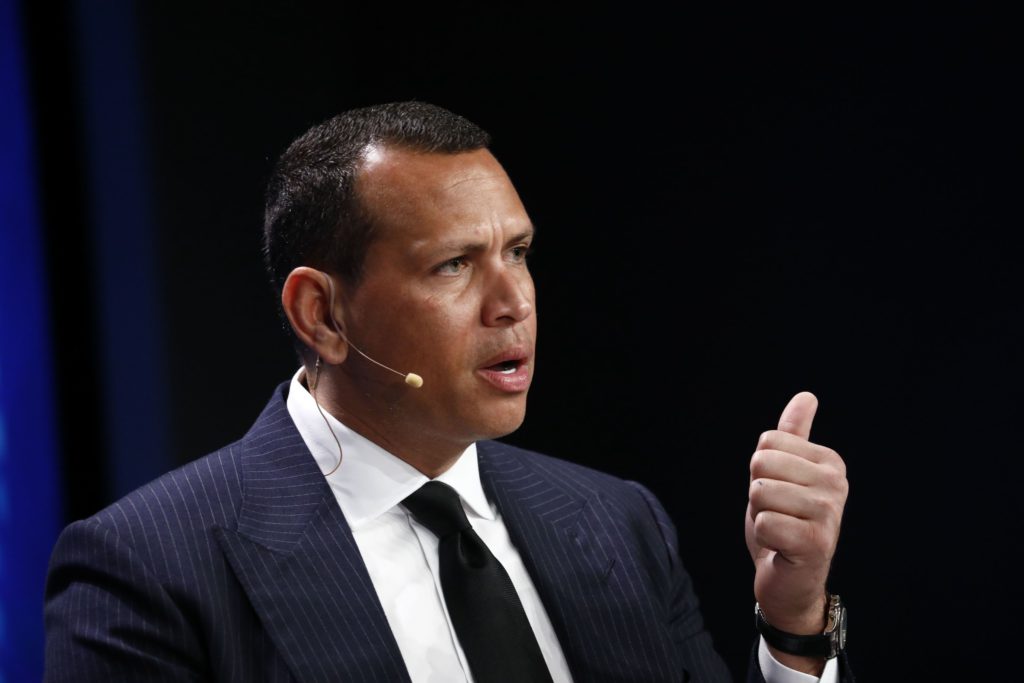
(Bloomberg) — Former baseball star Alex Rodriguez is investing in the Professional Fighters League and joining the mixed-martial-arts fight promoter’s board of directors as the company looks to enter new markets and start a new pay-per-view operation.

The funding round values the PFL at $500 million, according to the league. Private equity firm Waverley Capital Partners, headed by former top Warner Music executive Edgar Bronfman, led the $30 million round. Existing investors include Ares Capital Corp., Elysian Park Ventures, football legend Ray Lewis, rapper Wiz Khalifa and sports-team owners Ted Leonsis and Mark Lerner.

Competition in the MMA industry is heating up as the sport grows globally. Last year, Endeavor Group Holdings Inc. acquired the remaining stake in the Ultimate Fighting Championship, the biggest MMA promoter in the US. Rival One Championship, which was valued at more than $1 billion in January and backed by sovereign wealth funds in Singapore and Qatar, signed a five-year distribution deal with Amazon.com Inc. in April and said it would begin holding events in the US in 2023. 

The PFL has signed shorter-term two-year deals in many markets, including one in the US with Walt Disney Co.’s ESPN that runs through 2023, and has media agreements with the likes of DirecTV in Latin America and Channel 4 in the UK. Unlike traditional fight promoters, the PFL hosts a standard sports calendar, with regular-season matchups and playoffs culminating in world-championship bouts. 

This fresh capital brings the PFL’s total funding to about $200 million. Founder and Chairman Donn Davis said in an interview that this round was small because the business is nearing profitability and the cash will be used for growth instead of operations.

Management will invest in business abroad and start a new “Super Fight” division, separate from its season format. In a new version of the classic pay-per-view model, fighters will get 50% of the revenue from their matches. Its first signing is Kayla Harrison, an undefeated lightweight, and Davis will look to lure more top names in the coming months.

“Media wants more, fans want more and fighters need more outlets,” Davis said. “The world is big enough for more than one winner.”

A-Rod’s Network

Rodriguez has put his money behind all kinds of ventures since transitioning away from baseball and into investment. Over the past year, he has backed an app looking to become a “stock market” for fans of professional athletes, an online brokerage business and a fusion-power startup. His special purpose acquisition company, Slam Corp., has yet to announce a target.

The former New York Yankees great made his biggest splash last year when he and former Walmart Inc. executive Marc Lore signed a $1.5 billion deal for a controlling stake in the NBA’s Minnesota Timberwolves and the WNBA’s Lynx.

As a board member at the PFL, Rodriguez will use his “network and platform” to find ways to support the league’s growth, he said. He has been courting advice from some of the world’s top business leaders since retiring, working primarily out of his office in Miami.

“Sports leagues are really media and content companies,” Rodriguez said. “There is massive demand among fans for the world’s best fighters, and room for everyone in this category.” 

More stories like this are available on bloomberg.com

©2022 Bloomberg L.P.

Cisco Shortfall Jolts Wall Street as Lockdowns Roil Supply

(Bloomberg) — Cisco Systems Inc. spooked investors with a warning that Chinese lockdowns and other supply disruptions would wipe out sales growth in the current quarter, renewing broader concerns about tech spending in a shaky economy.

The outlook sent Cisco shares down as much as 13% in pre-market trading on Thursday and weighed on stocks of other networking companies, dealing a fresh blow to an already-battered sector. Even before Cisco’s latest plunge, its stock was down 24% this year.

The question for much of Wall Street was whether Cisco’s forecast meant that customers were cutting spending, but the networking-equipment giant said supply woes — and not a pullback in expenditures — was the main problem.

“Even though these top-line numbers don’t look good, there’s a very simple explanation,” Chief Executive Officer Chuck Robbins said on a conference call with analysts. “Customers are not signaling any real shift at this point. There’s no reflection of demand issues in our guidance.”

Robbins acknowledged that Cisco wasn’t prepared for production to be closed down so extensively in China, a move triggered by the country’s Covid Zero policy. 

“We did not have a plan for a country to shut down,” he said. “And so it takes time to go out and create that geographic resilience, but our teams are working on all of those kinds of things right now.”

China’s lockdowns have hurt production from many companies, including Tesla Inc. and Sony Group Corp. Robbins said it’s not yet clear when supplies will return to normal, despite signs that government restrictions are easing in certain areas.

“Shanghai now is saying they’re going to open up June 1 — we don’t know exactly what that means,” he said. When the reopening happens, “there is going to be lots of competition for ports capacity, airport capacity.”


Cisco is the biggest maker of machines that power corporate networks and form the backbone of the internet. Investors look at its outlook as a proxy for corporate spending on infrastructure, which is why the sudden shift was especially jarring.

The company had predicted growth in the current quarter of about 6%. It said Wednesday that sales would actually decline by 1% to 5.5% in the period, which ends in July. Cisco’s earnings forecast also was short of Wall Street predictions.

Cisco shares tumbled as low as $39 in late trading. That followed a 4.4% decline in regular trading Wednesday, bringing the stock to $48.36.

Other networking related-companies saw their stocks fall after-hours following Cisco’s report. Juniper Networks Inc. was down as much as 9.6%, Broadcom Corp. fell as much as 4.3%, and Ciena Corp. dropped as much as 12%.

Broader chip shortages and the war in Ukraine also have created disruptions for Cisco and its peers.

Like many tech companies, Cisco began cutting ties with Russia after that country invaded Ukraine earlier this year. The company said Wednesday that stopping business in Russia and its ally Belarus cost it about $200 million in revenue during the fiscal third quarter. Historically the region, including Russia, Belarus and the Ukraine, has accounted for about 1% of total sales.

On the conference call with Cisco executives, analysts questioned whether the weak guidance indicated that customers are concerned about their own future prospects and have begun to cut their spending.

Robbins insisted that demand remains robust. That said, the company doesn’t expect supply shortages to be resolved in the current quarter.

The inability to get power supplies from China cost Cisco $300 million in revenue in the third quarter, executives said. And even when the lockdowns end in China, the problem won’t be solved right away.

The tone of the report was a stark contrast from three months ago, when Cisco said orders rose more than 30% for a third consecutive quarter. Since then, investors have become more concerned that inflation and fears of slowing economic growth will make customers more cautious. This past quarter, the company said it orders increased 8%. 

While that’s a much slower rate of expansion, it shows strong growth ahead for a company of Cisco’s size, according to David Heger, an analyst at Edward D. Jones & Co.

“I would be more concerned if that order number was flat or down,” Heger said.

Cisco has implemented a no-cancellation policy on its orders within 45 days of the shipping date, according to Chief Financial Officer Scott Herren. Smaller customers, who tend to be the quickest to tighten their spending budgets, increased orders 19%. The growth and the overall low rate of cancellations give the company confidence that there are no underlying demand issues, Herren said in an interview.

Under Robbins, Cisco has been trying to spur growth with updated hardware, as well as new services and software. The hope is to make the longtime king of networking gear less dependent on one-time equipment sales.

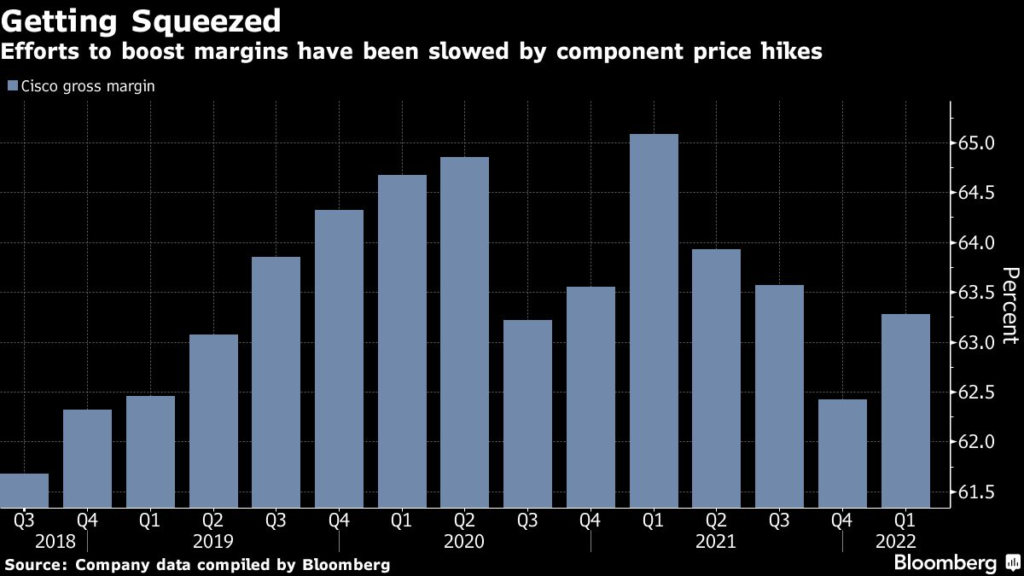
The latest outlook marks a setback in that push. Excluding certain items, earnings will be 76 cents to 84 cents a share in the period, Cisco said. That compares with an average estimate of 92 cents.

For the year, revenue will grow 2% to 3%, the company said, compared with a previous prediction of as much as 6.5%. 

Revenue in the three months ended in April, was $12.8 billion, little changed from a year ago. Earnings per share, minus certain items, was 87 cents. Analysts had projected a profit of 86 cents on sales of $13.3 billion on average.

But without signs that orders truly are slowing, Wall Street may be overreacting to Cisco’s numbers, Heger said.

“Short of some big drop-off in demand, it seems as though the market is overcompensating,” he said.

(Updates with shares in second paragraph)

More stories like this are available on bloomberg.com

©2022 Bloomberg L.P.

Xiaomi Logs First-Ever Quarterly Sales Fall, Hurt by Lockdowns

(Bloomberg) — Xiaomi Corp. posted its first quarterly revenue decline on record, after Beijing’s strict Covid containment policies crippled smartphone sales.

The world’s third-largest smartphone maker logged sales of 73.4 billion yuan ($10.9 billion) in January-March, down 4.6% from the previous year, beating the average analysts’ estimate of 72.5 billion yuan. It swung to a net loss of 587.6 million yuan from a 7.8 billion yuan profit a year earlier.

Chinese smartphone vendors are under pressure at home as the country’s Covid lockdown measures hurt both retail demand and supply chains. The biggest chip factories in Shanghai have had to operate under strict restrictions on workers’ movements since late March following a lockdown of the financial hub.

Slumping consumer confidence due to inflation, geopolitical conflicts, and the pandemic affected last quarter’s earnings, Citigroup analyst Andre Lin wrote in a note ahead of the earnings release. The outlook “remains challenged” in light of rate hikes, currency depreciation in emerging markets, rising inflation and recession concerns, he wrote.

The gap between the Beijing-based smartphone maker and frontrunners Samsung Electronics Co. and Apple Inc. widened in the first quarter, following a 17.8% slump in global shipments, according to research firm International Data Corp. Xiaomi’s local rivals Oppo and Vivo however, sustained steeper falls in the same period, data from IDC showed.

Read more: Apple Suppliers, Top Chipmaker Succumb to China Lockdowns

The lockdown and war in Ukraine could shave about 200 million units off global smartphone shipments this year, with Chinese brands shouldering most of the lost volume, Semiconductor Manufacturing International Corp.’s Co-Chief Executive Officer Zhao Haijun warned last week.

“Pressures such as the supply shortage may start to ease in second quarter of 2022,” China International Capital Corp. analysts Hu Peng and Hanjing Wen wrote in a note to investors ahead of the earnings announcement. “The second half of 2022 is likely to be a peak season for the consumption of electronics products, boosting the firm’s results growth.”

To lower its dependence on smartphones, Xiaomi is trying to boost its sales of connected devices, such as $1,000 air conditioners and $40 door bells. The upcoming June 18 annual shopping festival, when online retailers compete to offer bargains, could revitalize mobile sales. Xiaomi has “strong momentum” in selling smart TVs, tablets, laptops, and connected home appliances, wrote China Construction Bank International Securities analysts Ronnie Ho and Clint Su. “The coming ‘6.18’ promotion event has the potential to support better smartphone sales.”

Still, Xiaomi faces strong headwinds in its efforts to keep its gross margin at the same level as a year ago, due to rising production and freight costs, Bloomberg Intelligence analysts Steven Tseng and Nathan Naidu wrote ahead of the earnings release. “Internet services, an important driver of long-term margin expansion, could also slow down as flagging handset demand may dampen the growth in monthly average users,” said the note.

The downturn in the smartphone business, which makes up roughly 60% of Xiaomi’s sales, came after billionaire co-founder Lei Jun bet $10 billion to build an electric vehicle business from scratch — a costly venture that requires talent recruitment, factory construction and investments in startups.

Growing challenges overseas are also a drag on Xiaomi’s business. Russia’s invasion in Ukraine muted retail sales in both countries. In India, the country’s anti-money laundering agency seized $726 million from a local unit of Xiaomi on a possible breach of foreign-exchange laws last month, exposing the Chinese brand to a legal risk in one of its biggest markets. Xiaomi has said its Indian operations are fully compliant with local laws.

More stories like this are available on bloomberg.com

©2022 Bloomberg L.P.

UN Rights Chief to Proceed With Rare Trip to China Next Week

(Bloomberg) — The United Nations’ human rights chief is planning to proceed with a landmark trip to China next week, people familiar with the matter said, in a highly scrutinized visit that will include a stop in the far west region of Xinjiang.

Michelle Bachelet is set to meet with foreign diplomats in the country on Monday in a virtual meeting while she’s in China, the people said, asking not to be identified to discuss confidential information. The UN Office of the High Commissioner for Human Rights has released few details on the schedule for Bachelet, who is set to become the first UN human rights chief to visit China since 2005.

The UN Human Rights Office didn’t immediately respond to a request for comment. Chinese Foreign Ministry spokesman Zhao Lijian didn’t offer any updates about the trip when asked about it at a regular press briefing Thursday in Beijing.

Bachelet announced earlier this year her intention to visit China and head to Xinjiang, where human rights organizations and some countries including the U.S. have accused Beijing of putting mostly Muslim ethnic Uyghurs in mass detention camps as part of a campaign of “genocide.” China rejects charges that human rights abuses or genocide take place in Xinjiang.

The visit would come after the State Department this month outlined plans to boost pressure on China over what it called “horrific abuses” of Uyghur and other ethnic minorities in Xinjiang, an issue that is becoming one of the biggest points of tension between the world’s two biggest economies.

A U.S. law set to take effect next month would ban the import of goods from Xinjiang unless companies can prove they weren’t made with forced labor. Washington is also weighing the unprecedented step of imposing more severe Treasury Department sanctions on Hangzhou Hikvision Digital Technology Co., which makes cameras and surveillance systems used in Xinjiang.

China Signs Forced Labor Treaties as Xinjiang Scrutiny Grows

Bachelet’s visit has taken years to arrange. It was delayed by the pandemic and talks over how much access she will have. Discussions between China and Europe about a trip to Xinjiang by a group of ambassadors reached a deadlock last year, with an official from the region complaining that the envoys wanted to meet “criminals.”

In February 2021, Australia called on China to give international observers immediate and unfettered access to the region. Foreign Ministry spokesman Wang Wenbin said at the time that Beijing welcomed foreign nationals with “an unbiased view” to visit Xinjiang. “We oppose interference in China’s internal affairs under the pretext of human rights, and oppose the presumption of guilt or any investigation based on it,” he said.

Blacklists, Trade and More U.S.-China Flashpoints: QuickTake

Elizabeth Throssell, a spokeswoman for the UN body, said on Tuesday that Bachelet would visit Guangzhou and Xinjiang, without providing dates. A team dispatched in advance of her visit was still in China and now out of quarantine, she said. 

Bachelet wouldn’t need to quarantine upon her arrival, and the visit would “last six to seven days,” Throssell said, adding that she will meet several “very senior Chinese officials.”  

A long-awaited report by the UN Human Rights Office on the situation in Xinjiang won’t be published before the visit, Throssell said. 

William Nee, research and advocacy coordinator at Chinese Human Rights Defenders, said such a delay was “almost incomprehensible” and expressed concerns over the credibility of the visit.

“Bachelet is walking into a trap,” he said. “She will almost inevitably be forced to engage in a highly chaperoned and choreographed visit and the Chinese government will use her office’s credibility to show to a domestic audience that she agrees with the government’s policies in Xinjiang.”  

(Updates with Chinese Foreign Ministry comment and more context.)

More stories like this are available on bloomberg.com

©2022 Bloomberg L.P.
Julius Baer Braves ‘Bubble-Burst’ Moment in Crypto Wealth Push

(Bloomberg) —

Julius Baer Group Ltd. said it is working on offering services in digital assets to its wealthy clients, and sees the current turmoil in global crypto markets as potentially defining moment for the asset class. 

The Zurich-based private bank wants to place itself at the intersection of “digital assets and the fiat world”, according to a statement on the bank’s updated strategy on Thursday. Pilot programs are currently in place with an eye to offering advice, trading and investing in cryptocurrencies to its rich customers.

“It could well be that at this very instant we are witnessing a bubble-burst moment of the crypto industry, and we all know what happened after the dot-com bubble burst 30 years ago,” Chief Executive Officer Philipp Rickenbacher said during a presentation of the bank’s strategy to investors on Thursday. 

“It paved the way for the emergence of a new sector that indeed transformed our lives; I believe digital assets and decentralized finance hold that same potential,” he said. 

Baer’s shift toward offering crypto services is in stark contrast to Zurich rival UBS Group AG, one of the world’s largest wealth managers which so far has said it’s not interested in advising clients on “speculative” assets. Baer has taken a stake in SEBA Crypto AG, one of the two fully-regulated crypto banks in Switzerland. 

Read More: Julius Baer Boosts Cost Control as War Hits Risk Appetite

Baer said when investing in SEBA in 2019  it was “convinced” that digital assets– a catch all term for cryptocurrencies, blockchain technologies, tokenized assets, and non-fungible tokens– would become a “legitimate sustainable asset class of an investor’s portfolio”. The relationship with SEBA has allowed Baer to refer clients seeking exposure to crypto-related investing and trading without the bank developing out its own infrastructure for custody and risk-management of the asset. 

The bank plans to develop its own research to clients on crypto, DeFi, and blockchain and ultimately provide regulated advice on investing and trading in the asset class, and the platform for them to do so at Baer. 

The pilot programs concern token booking, trading, and compliance to test and learn, and develop the vocabulary around digital assets. 

Speculative Assets

UBS Chief Executive Ralph Hamers said last year that the wealth-management giant would not be actively offering clients the ability to invest or trade in crypto, calling it an untested and speculative asset class. “We don’t advise on speculation,” Hamers said during an earnings call in October. 

“We believe crypto has been ineffective as a portfolio diversifier or inflation hedge,” UBS’s chief investment office led by Mark Haefele said in a note to wealth clients this week as the asset class tumbled on the back of the collapse of stablecoin TerraUSD. 

So far global banks been wary on engaging with the emerging asset class, which is still perceived as too risky and inadequately regulated. Banks are also required to hold high amounts of capital for every cryptocurrency they hold on their balance sheet, making doing business in the asset class costly. Jamie Dimon, JPMorgan Chase CEO, said at the annual shareholder meeting on Wednesday that the bank was working with regulators on clearer rules around crypto.

Rather, traditional finance has looked at the emerging technology applications that have come with the creation of blockchain and crypto coins. 

Baer also wants to invest in this area “where traditional cost-heavy and complex parts of the old banking system are today just rewritten with a few lines of code.” The CEO cited areas such as cross-border payments and escrow services that are ripe for this type of innovation.  

Rickenbacher said the bank is prepared to navigate the disruptions decentralized finance will “inevitably” pose to both clients and the bank’s own operations. 

More stories like this are available on bloomberg.com

©2022 Bloomberg L.P.
K-Pop Group NCT Dream to Lure a Million Customers for Allo Bank

(Bloomberg) — An Indonesian digital bank is expecting to add at least a million customers by making people register for its new app to attend shows by K-pop groups Red Velvet and NCT Dream.

PT Allo Bank Indonesia, which had just 200,000 clients in January, is banking on the music festival starting this Friday to officially launch its app and boost its adoption. Its shares rose 1.7% on Thursday, the most in almost three weeks.

Tapping into the fanbase of K-pop groups has become a common strategy among tech startups seeking to capture young Indonesian consumers. E-commerce platform Tokopedia has used BTS as its brand ambassador, while Shopee made a jingle with Blackpink.

Allo Bank is backed by Indonesian marketplace PT Bukalapak.com, which owns a 11.49% stake, while conglomerate Salim Group holds a 6% indirect stake. PT Mega Corpora is the controlling shareholder with 60.88% stake.

More stories like this are available on bloomberg.com

©2022 Bloomberg L.P.
Commodities Startup Is Betting on Old-School Trading Going Digital

(Bloomberg) — The old-school world of commodities trading is staring at a digital future, according to team of industry veterans and heavyweights looking to bring physical crop deals online.

When it comes to buying and selling materials crucial to building the world and feeding people, phone-based trades and the use of paper documents for cargo ownership are commonplace, while personal relationships are invaluable. But now startups like Vosbor Exchange BV, which includes previous heads of Bunge Ltd. and Glencore Plc’s agriculture unit, are trying to change that.

The Dutch firm, founded by former grain trader Maarten Elferink, has 35 companies testing its online trading platform. It plans to roll it out for actual trades — initially for soybeans, corn, palm oil and wheat — in the coming months, generating pricing data for cash-settled futures.

Vosbor’s board includes agriculture veteran Chris Mahoney, ex-Bunge chief Soren Schroder and Aryan Van Den Blink, who has worked at traders such as agribusiness giant Cargill Inc. and Noble Group.

The company says the platform helps lower costs and risks of physical transactions. But pitching the idea to some wasn’t so easy.

“I’m probably in the older segment of global traders. My initial reaction was ‘Why would we need this?’ but when I spoke to Maarten I realized I’m the one who’s stuck in the past, this is the future,” Schroder said in an interview. “The younger generation of trader will see this as something totally natural.”

There are already a number of digital platforms operating in the physical agriculture space, offering growers a way to sell their output directly and cut out middlemen. Online platforms also exist for other commodities such as metals. Some use blockchain technology to enhance security.

For Vosbor, financial market participants could eventually be brought in to add liquidity for the platform, according to Elferink. The Covid-19 pandemic has also accelerated a push to conduct more business digitally, particularly among a younger generation of traders, he said.

“The millennials that run the desks now, they run their whole lives online, including buying everything they need,” Elferink said. “I don’t want to go to karaoke bars the whole time, I’d rather just make money.”

More stories like this are available on bloomberg.com

©2022 Bloomberg L.P.

Bitcoin Price Chart Suggests Rally Is Looking Shaky 

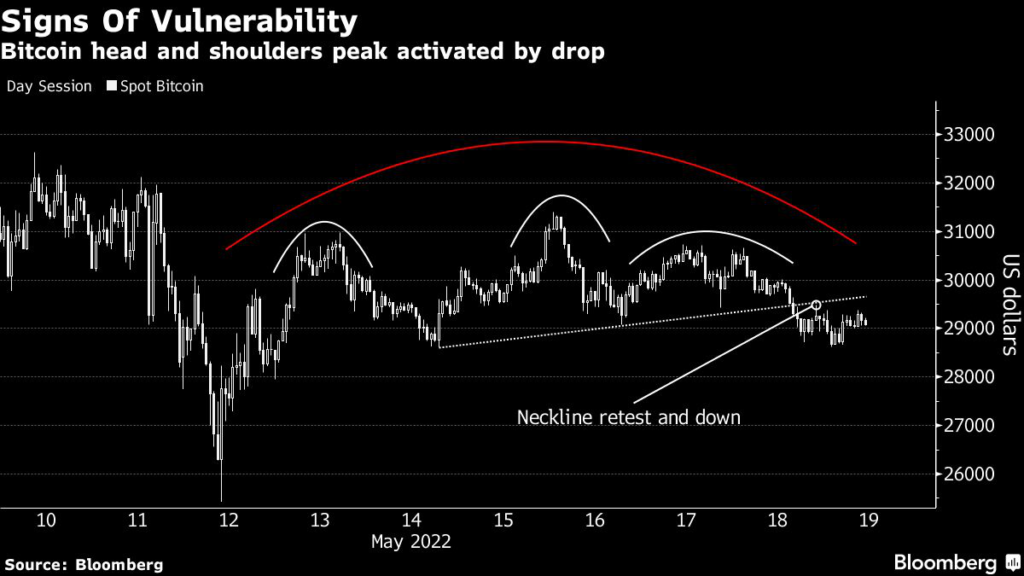
(Bloomberg) — Bitcoin, which which has rebounded about 15% from its crash lows of last week, is looking increasingly vulnerable to another drawdown. The bounce has traced a so-called “saucer top” formation on the hourly chart, within which a bearish “head and shoulders” top has been activated due to the price falling back below the neckline. The pattern suggests Bitcoin would have to advance past $30,800 to shrug off the technical downside risk.

More stories like this are available on bloomberg.com

©2022 Bloomberg L.P.

Close Bitnami banner
Bitnami