Bloomberg

Walmart-Backed PhonePe Buys Indian Wealth Management Firms

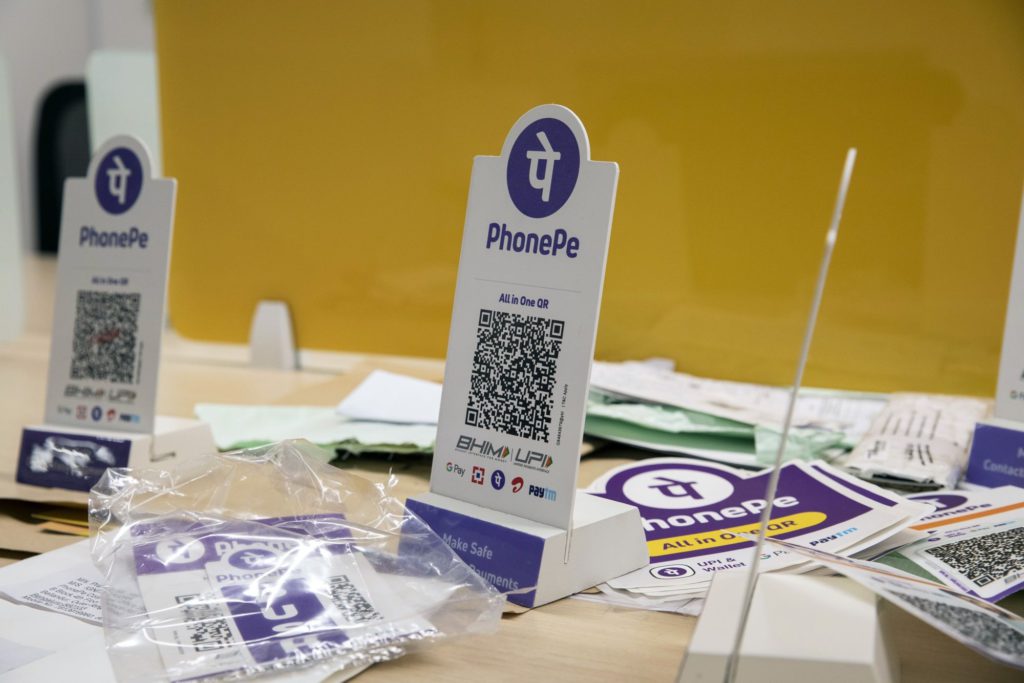
(Bloomberg) — PhonePe, an Indian payments company backed by Walmart Inc., will acquire two wealth management firms for a total enterprise value of $75 million.

The firm will buy WealthDesk for about $50 million and OpenQ for nearly $25 million including debt, people familiar with the matter said, asking not to be identified as the details are private.

A spokeswoman for PhonePe confirmed it was acquiring WealthDesk and OpenQ, and declined to discuss the financial details of the deals.

“The founder of WealthDesk and the entire team will be working as a part of the PhonePe group and both the platforms will remain independent,” PhonePe said in a statement. “Post acquisition, OpenQ will be instrumental in creating the wealth ecosystem for the PhonePe group.”

WealthDesk, founded in 2016 and headquartered in India’s financial capital of Mumbai, allows customers to invest in stocks and exchange traded funds. OpenQ also offers retail and institutional investors trading baskets and investment analytics services.

The acquisitions will help PhonePe, which is majority owned by the Walmart-backed Flipkart, widen its offerings in a lucrative payments market where tech giants including Alphabet Inc.’s Google, Amazon.com Inc. and SoftBank Group Corp.-backed Paytm compete.

Read More: Buffett, Goldman Win From Fintech Gold Rush in India

Amazon last year made its first investment in India’s wealth management space as it participated in a $40 million round by fintech startup Smallcase Technologies Pvt. Google has partnered with Indian banks to grant consumer loans online.

PhonePe, founded in 2015 and led by Sameer Nigam, was partially spun off from Flipkart in 2020. The e-commerce giant owns about an 87% stake in PhonePe, while Walmart directly owns about 10%.

Separately, Mathew Cyriac, who was previously one of Blackstone Inc.’s top dealmakers in India, exited his holdings in WealthDesk, according to people familiar with the matter. Cyriac, the founder of Florintree Advisors, invested in his personal capacity in the company in June last year.

(Updates with Cyriac investment exit in last paragraph and context throughout.)

More stories like this are available on bloomberg.com

©2022 Bloomberg L.P.

Saudi Arabia’s PIF Adds to Games Push With 5% Nintendo Stake

(Bloomberg) — Saudi Arabia’s Public Investment Fund took a 5.01% stake in Nintendo Co., its third investment in a Japanese games company as the industry consolidates. 

The PIF, as the $500 billion fund is known, said the Nintendo purchase was made for investment purposes, according to a filing to Japan’s Finance Ministry. That is the same reason it has given with previous investments and the holding is set to make the Saudi fund Nintendo’s fifth-largest shareholder, according to data compiled by Bloomberg.

The PIF has been building stakes in video game makers and e-sports firms over the past two years, turning to the Japanese market just as a weaker yen has made investments more affordable. The Saudi fund disclosed stakes of more than 5% in two Japan-listed gaming firms this year: Capcom Co., the maker of the Street Fighter and Resident Evil franchises, and online games provider Nexon Co.

“Saudi Arabia has been beefing up efforts to create its own content industry, and this series of investments in Japanese game companies is likely a way for them to learn from Japan,” said Hideki Yasuda, a senior analyst at Toyo Securities.

A Nintendo spokesman said the company learned about the Saudi investment from news reports and would not comment on individual shareholders.

Japan’s gaming companies have been the subject of speculation amid a broader wave of consolidation in the industry, ever since Microsoft Corp. announced the $69 billion Activision Blizzard Inc. purchase. The PIF had in fact bought about 37.9 million shares in Activision and was losing money on the deal — until Microsoft stepped in.

Sony Group Corp. is also buying Bungie Inc., the U.S. video game developer behind the popular Destiny and Halo franchises, for $3.6 billion.

Saudi Wealth Fund Reveals Stake in Capcom, Following Nexon (1)

Kyoto-based Nintendo reported lackluster financial results last week as the creator of Super Mario struggles to revitalize its five-year-old Switch console and manage a global chip shortage. The company projected full-year operating income below analysts’ estimates and said it’s expecting to sell 21 million Switch devices this year, shy of the 21.7 million anticipated.

Its shares have climbed about 10% this year.

(Updates with analyst comment in fourth paragraph)

More stories like this are available on bloomberg.com

©2022 Bloomberg L.P.

Baidu’s Chip Affiliate Eyes Fundraise at $2.5 Billion Valuation

(Bloomberg) — Baidu Inc.’s chip affiliate is looking to raise 2 billion yuan ($317 million) in a new funding round, people familiar with the matter said, as venture capitalists in China shift away from internet businesses and hone in on core technologies like semiconductors, favored by Beijing.

Kunlun is in advanced talks with investors for its second fundraising round, said the people, who asked not to be identified as the information is private. The investment, if finalized, would lift the Beijing-based startup’s valuation to as much as 17 billion yuan ($2.5 billion), one of the people said, up from 13 billion yuan at its first funding round a little over a year ago.

Discussions are still ongoing and details such as the deal size and valuation are subject to change, said the people. Representatives from Kunlun and Baidu declined to comment.

With Chinese regulators stepping up oversight of the country’s once freewheeling internet sector, startups with fundamental technologies like chipmaking are fielding heated interest from investors. The amount of venture capital going into semiconductor startups hit $8.8 billion in 2021 alone, up three-fold from a year ago, according to market research firm Preqin. 

China Venture Funding Hits Record $131 Billion Despite Crackdown

Kunlun, which specializes in artificial intelligence chips, has recently started mass producing microchips that pack more computational power by using 7-nanometer technology. The firm has deployed its AI chips to power Baidu’s core searching services, and the new financing will help it further expand its client base beyond its parent.

Earlier last year, venture firms including IDG Capital and Legend Holdings Ltd.’s venture arm invested 1.5 billion yuan in Kunlun, before it was spun off from the Chinese search giant. 

Chinese leaders are keen to cultivate a home-grown semiconductor industry and reduce their reliance on American technology. Under former President Donald Trump, Washington imposed a series of sanctions on Chinese chipmakers including Semiconductor Manufacturing International Corp. and Huawei Technologies Co.’s HiSilicon unit, cutting off vital equipment and knowhow needed to make the most advanced chips that power everything from mobile phones to data centers.

In response, Chinese president Xi Jinping’s administration pledged to boost spending and drive research into cutting-edge chips and AI as part of its latest five-year plan, laying out a technological blueprint to vie for global influence with the U.S. 

Demand for semiconductors capable of processing information quickly have increased in recent years, fueled by a boom in high-resolution video games, cryptocurrency mining and other data-intensive applications. The global AI chip market is currently led by Nvidia Corp., while the likes of Amazon.com Inc. and Alphabet Inc.’s Google have also invested in their own bespoke server microchips. 

More stories like this are available on bloomberg.com

©2022 Bloomberg L.P.

Yellen Urges US-Europe Cooperation to Reduce China Vulnerability

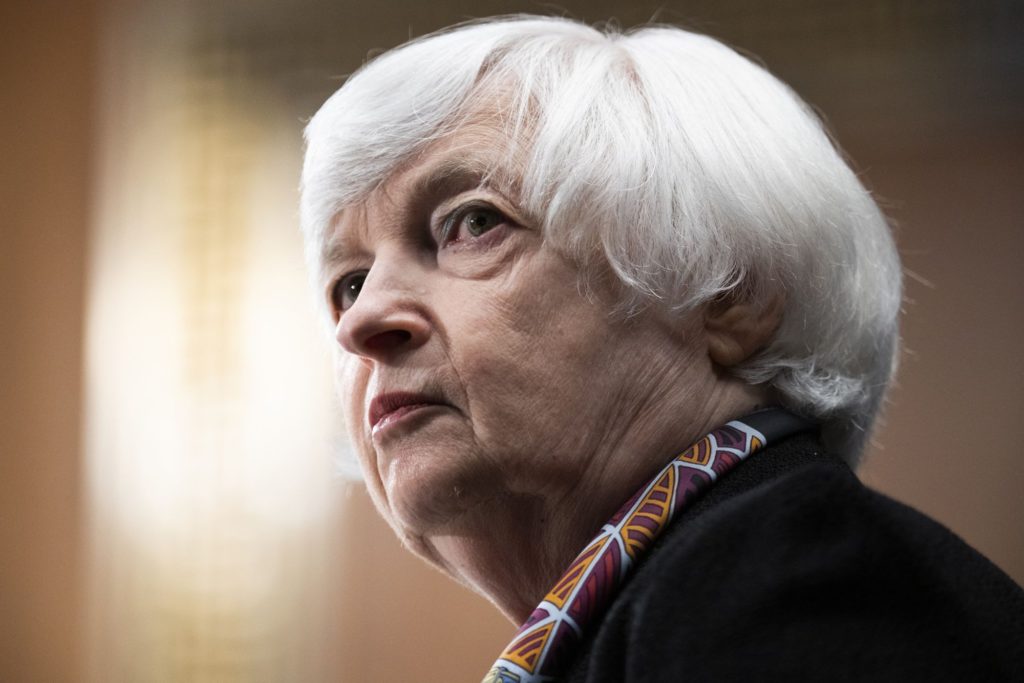
(Bloomberg) — Treasury Secretary Janet Yellen said that western democracies have become “too vulnerable” to countries that use their market positions as geopolitical leverage, and called for the US and Europe to coordinate their approach toward China after having united against Russia.

“We have a common interest in incentivizing China to refrain from economic practices that have disadvantaged us all,” Yellen said in a speech in Brussels on Tuesday. “These practices range from those affecting trade and investment, to development and climate policies, to approaches to provide debt relief to countries facing unsustainable debt burdens.”

Yellen said there’s “a strong case for pursuing common goals jointly, not unilaterally.” In that way, “China is more likely to respond favorably if it cannot play one of us off against another,” she said.

Chinese President Xi Jinping has assiduously sought to persuade the European Union to maintain a “strategic autonomy” amid the deepening US-China superpower rivalry. He delivered that message directly in calls with his German and French counterparts earlier this month.

Wang Wenbin, a spokesman for the Asian nation’s Foreign Ministry, said Wednesday at a regular press briefing in Beijing that “some people in the US have been obsessed with forging small cliques and keeping China down.”

“This is an act against the trend of the times,” he said. “It wins no support and leads nowhere.”

Yellen, delivering an annual lecture at the Brussels Economic Forum, said “We should all aspire to encouraging China to drop objectionable practices. If we can do so, we will stand a better chance of competing with China on a level playing field, which will benefit our businesses and consumers.”

‘Too Vulnerable’

The Treasury chief was speaking little more than a month after her most strident remarks to date on China, blasting Beijing for practices that “unfairly damage” the national-security interests of others.

Read More: Yellen Challenges China in ‘Moment for Choosing’ on World Order

In Tuesday’s remarks, Yellen warned that “we have become too vulnerable to countries using their market positions in raw materials, technologies, or products to exercise geopolitical leverage or disrupt markets for their own gain.”

Russia has weaponized energy, she said, while economies around the world now are dependent on so-called rare earths from China.

“These minerals and materials comprise vital inputs in aviation, vehicle production, battery manufacture, renewable energy systems, and technology manufacturing,” Yellen said. China accounts for 60% of rare-earth mining and nearly 40% of reserves, giving it “geostrategic leverage.”

‘Friend-Shoring’

China is also “building a consequential market share in certain technology products and seeks a dominant position in the manufacture and use of semiconductors,” Yellen said. “And China has employed a variety of unfair trade practices in its efforts to achieve this position.”

“We need to consider how to incentivize the ‘friend-shoring’ of supply chains to a greater number of trusted countries for a variety of products, so we can continue to securely extend market access, with lower risks to our economy, as well as to those of our trade partners,” the Treasury chief said.

Read more: Yellen Calls for Marshall Plan for Ukraine to Meet Massive Need

Yellen also reiterated her appeal for a new approach toward assisting developing nations, a theme she discussed last month at spring meetings of global finance chiefs.

“We need to look beyond our current models, as official development finance, helpful as it may be, will never be sufficient,” she said. “The question is how to tap the much deeper pools of private capital to mobilize the trillions needed to deliver on the aspirations of the next generation.”

(Updates with comment from China Foreign Ministry.)

More stories like this are available on bloomberg.com

©2022 Bloomberg L.P.

Stocks Stall, Futures Dip on Powell’s Hawkish Turn: Markets Wrap

(Bloomberg) — Stocks in Europe struggled to build on Tuesday’s rally as traders assessed hawkish comments from Federal Reserve Chair Jerome Powell and the latest data on inflation and economic activity. 

The Stoxx Europe 600 index was little changed the open, with ABN Amro slumping almost 10% after the Dutch lender reported first-quarter results burdened by rising costs. Siemens Gamesa Renewable Energy SA surged after Bloomberg reported Siemens Energy AG is planning to buy the shares it doesn’t own in its Spanish unit.

US futures dipped after the S&P 500 added 2% in a risk rebound Tuesday. Treasury yields ticked lower and the dollar snapped a three-day losing streak after Powell said the Fed “won’t hesitate” to tighten policy beyond neutral to curb high inflation. MSCI Inc.’s Asia-Pacific equity index rose for a fourth day, the longest such streak since February. Oil held around $113 a barrel and Bitcoin traded near $30,000. 

Rebounds in risk sentiment are proving fragile amid tightening monetary settings, Russia’s war in Ukraine and China’s Covid lockdowns. Powell said that the US central bank will raise interest rates until there is “clear and convincing” evidence that inflation is in retreat. The remarks at a Wall Street Journal live event were some of his most hawkish so far. 

“We’ll have this kind of volatility as people jump in and look at opportunities to buy as markets decline,” Shana Sissel, director of investments at Cope Corrales, said on Bloomberg Television, referring to the Wall Street bounce. The Fed is going to struggle to achieve a soft economic landing, she added.

The latest data from Europe didn’t offer any reassurance. New-vehicle sales shrank for a 10th month in a row as the industry remains mired in supply-chain crises. Meanwhile, UK inflation rose to its highest level since Margaret Thatcher was prime minister 40 years ago, adding to pressure for action from the government and central bank. The pound weakened and gilts declined.

‘Challenging Markets’

Chicago Fed President Charles Evans said he expects the Fed to slow the pace of rate increases to 25 basis-point increments later this year. He anticipates it will complete any 50 basis-point hikes before December.

“This is one of the most challenging markets I have been in in my career,” Henry Peabody, fixed income portfolio manager at MFS Investment Management, said on Bloomberg Television. “I suspect at a certain point of time we’re going to have the liquidity of the markets challenged. They really haven’t been thus far.”

Elsewhere, the Biden administration is poised to fully block Russia’s ability to pay US bondholders after a deadline expires next week, a move that could bring Moscow closer to a default. Sri Lanka, meantime, is on the brink of reneging on $12.6 billion of overseas bonds, a warning sign to investors in other developing nations that surging inflation is set to take a painful toll.

What damage will be done to the US economy and global markets before the Fed changes tack and eases policy again? The “Fed Put” is the theme of this week’s MLIV Pulse survey. Click here to participate anonymously.

What to watch this week:

  • G-7 finance ministers and central bankers meeting Wednesday
  • Eurozone, UK CPI Wednesday
  • Philadelphia Fed President Patrick Harker speaks Wednesday
  • China loan prime rates Friday

Some of the main moves in markets:

Stocks

  • The Stoxx Europe 600 was little changed as of 8:29 a.m. London time
  • Futures on the S&P 500 fell 0.4%
  • Futures on the Nasdaq 100 fell 0.5%
  • Futures on the Dow Jones Industrial Average fell 0.3%
  • The MSCI Asia Pacific Index rose 0.7%
  • The MSCI Emerging Markets Index rose 0.5%

Currencies

  • The Bloomberg Dollar Spot Index rose 0.2%
  • The euro fell 0.3% to $1.0515
  • The Japanese yen rose 0.1% to 129.23 per dollar
  • The offshore yuan fell 0.3% to 6.7614 per dollar
  • The British pound fell 0.6% to $1.2417

Bonds

  • The yield on 10-year Treasuries declined one basis point to 2.98%
  • Germany’s 10-year yield was little changed at 1.05%
  • Britain’s 10-year yield declined two basis points to 1.86%

Commodities

  • Brent crude rose 0.8% to $112.78 a barrel
  • Spot gold was little changed

More stories like this are available on bloomberg.com

©2022 Bloomberg L.P.

China Stocks Pare Declines as Tech Recovers, Automakers Rally

(Bloomberg) — Chinese stocks pared early losses, boosted by automakers, while traders continued to assess fresh support pledges from Vice Premier Liu He for the nation’s battered tech sector.  

The Hang Seng Tech Index was down 0.6% as of 2:40 p.m. in Hong Kong, after falling more than 2% earlier. The benchmark Hang Seng Index and China’s CSI 300 Index both erased losses of as much as 1%. Automakers were among the biggest gainers on the two gauges following a report that Chinese government departments are in talks with firms about extending subsidies for electric vehicles.

The fluctuations show markets are yet to set a direction following Tuesday’s much-anticipated meeting between Liu, China’s top economic official, and some of the nation’s tech giants. Liu said the government will support the development of digital economy companies and their listing overseas. While that sparked a more than 5% rally in a gauge of Chinese stocks trading in the US, the excitement waned in the Asia session.  

Concerns related to Covid-19 also remained in focus as cases rose in Tianjin and a cluster was ballooning in Sichuan province.

“It is difficult to assess if Chinese equities have bottomed, especially with more economic pain to come as authorities persist on the Zero Covid path, but we believe long term value has emerged,” for some sectors, said Eli Lee, head of investment strategy at Bank of Singapore. “Markets are also forward-looking and a lot of negativity has been priced into Chinese tech at this point.” 

READ: China Economy Czar Vows Support for Tech Firms After Crackdown

“Although investors are aware that there won’t be many punitive measures for tech from now, Covid concerns will continue to depress valuations across the board,” said Hou Anyang, fund manager at Frontsea Asset Management. The meeting wasn’t enough to ease worries, he added.

Separately, data showed home prices fell for an eighth month in April amid strict coronavirus lockdowns. The deepening slump is another blow to China’s embattled property sector, which the authorities have sought to support as part of efforts to halt a slowdown in the world’s second-largest economy. 

More than a year into Beijing’s sweeping regulatory crackdown on private enterprise, investors remain wary about getting back into the sector.  

Still, in a sign of emerging optimism, JPMorgan Chase & Co. analysts upgraded a number of tech firms including Alibaba Group Holding Ltd. and Tencent Holdings Ltd. to overweight earlier this week, just two months after deeming the sector “uninvestable.”   

Where China’s stock market goes from here will hinge on whether policy makers follow through on their promises, and the nation’s Covid-19 situation.

Chinese equities may set “lower lows into the year-end” as the US raises interest rates and scuppers global risk appetite, said Ilya Spivak, head of Greater Asia at DailyFX. “Rising interest rates mean people are resistant to taking risk, which means they are that much more responsive to things like regulatory disruptions or Covid lockdowns.”

More stories like this are available on bloomberg.com

©2022 Bloomberg L.P.

Europe Car Sales Slump 20% in April, Dashing Hopes for Recovery

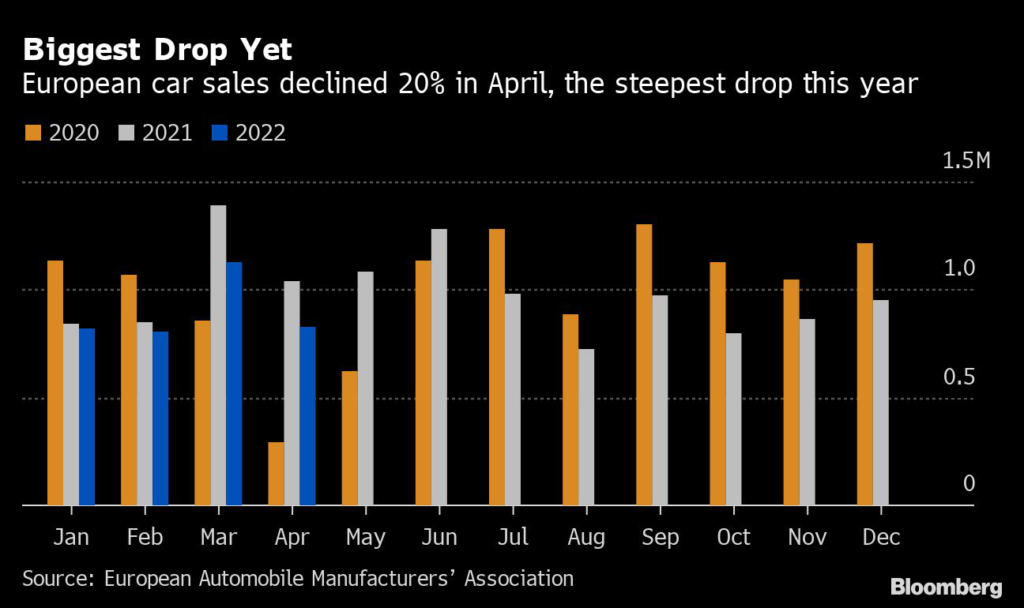
(Bloomberg) — Europe’s new-vehicle sales shrank for a 10th month in a row as the industry remains mired in supply-chain crises that are stoking record inflation and threatening to put off car buyers.

Registrations fell 20% to 830,447 vehicles in April, the European Automobile Manufacturers’ Association said Wednesday, the steepest decline this year. Stellantis NV, the carmaker formed from the merger of PSA Group and Fiat Chrysler, was the hardest-hit among major manufacturers with a 31% drop.

Issues constraining production — chief among them being the global semiconductor shortage — have led forecasters at LMC Automotive to cut their estimate for Western European passenger-car sales each of the last four months. They now expect annual deliveries to shrink 6% this year to less than 10 million units. Back in January, LMC was calling for almost 9% growth. Carmakers have managed to make up for lost volume by charging higher prices, though it’s unclear how much higher they can go.

“Global supply issues show no significant signs of easing, while underlying demand prospects are eroding, too,” LMC wrote in a report this month. “Households will experience a serious squeeze to real income this year. Supply issues do remain the key determinant for registrations for now.”

Across Europe’s biggest markets, Italy posted the sharpest decline, contracting by a third, while registrations in Germany and France dropped by more than a fifth.

The dearth of chips holding automakers back is lasting longer than expected and forcing some buyers to wait 18 months for certain in-demand models. Volkswagen AG Chief Executive Officer Herbert Diess said last week the company is completely sold out with respect to electric cars this year in the U.S. and Europe.

VW’s Diess and Mercedes-Benz Group AG CEO Ola Kallenius are hoping to see semiconductor supply improve in the second half of this year. But hopes for recovery in the coming months also hinge on factors including the potential for more disruptions linked to the war in Ukraine. Global supply chains also are starting to feel the effects of China’s zero-tolerance approach to curbing the coronavirus.

“Container ships are jamming up in Chinese harbors,” says Peter Fuss, a partner at EY’s automotive team. “It will take months to normalize that bottleneck.”

More stories like this are available on bloomberg.com

©2022 Bloomberg L.P.

Stock Rally Cools as Treasuries, Dollar Edge Up: Markets Wrap

(Bloomberg) — A rally in stocks cooled Wednesday amid a tough outlook in China and hawkish comments from Federal Reserve Chair Jerome Powell.

MSCI Inc.’s Asia-Pacific equity index came off session highs, though it remained up for a fourth day, the longest such streak since February. US futures dipped after the S&P 500 added 2% in a risk rebound Tuesday.

Technology shares lead a decline in Chinese markets. The nation’s Covid lockdowns are weighing on sentiment along with concerns that officials aren’t doing enough to ease a clampdown on digital-platform firms.

Treasuries pared an overnight slide, leaving the US 10-year yield at 2.96%. Bonds came under pressure after Powell said the Fed “won’t hesitate” to tighten policy beyond neutral to curb high inflation. The dollar edged up.

Oil was trading around $113 a barrel and Bitcoin dipped below $30,000.  

Rebounds in risk sentiment are proving fragile amid tightening monetary settings, Russia’s war in Ukraine and China’s Covid outbreak. 

“We’ll have this kind of volatility as people jump in and look at opportunities to buy as markets decline,” Shana Sissel, director of investments at Cope Corrales, said on Bloomberg Television, referring to the Wall Street bounce. The Fed is going to struggle to achieve a soft economic landing, she added.

Powell said that the US central bank will raise interest rates until there is “clear and convincing” evidence that inflation is in retreat. The remarks at a Wall Street Journal live event were some of his most hawkish so far.

‘Challenging Markets’

Chicago Fed President Charles Evans said he expects the Fed to slow the pace of rate increases to 25 basis-point increments later this year. He anticipates it will complete any 50 basis-point hikes before December.

“This is one of the most challenging markets I have been in in my career,” Henry Peabody, fixed income portfolio manager at MFS Investment Management, said on Bloomberg Television. “I suspect at a certain point of time we’re going to have the liquidity of the markets challenged. They really haven’t been thus far.”

Elsewhere, the Biden administration is poised to fully block Russia’s ability to pay US bondholders after a deadline expires next week, a move that could bring Moscow closer to the brink of default.

What damage will be done to the US economy and global markets before the Fed changes tack and eases policy again? The “Fed Put” is the theme of this week’s MLIV Pulse survey. Click here to participate anonymously.

What to watch this week:

  • G-7 finance ministers and central bankers meeting Wednesday
  • Eurozone, UK CPI Wednesday
  • Philadelphia Fed President Patrick Harker speaks Wednesday
  • China loan prime rates Friday

Some of the main moves in markets:

Stocks

  • S&P 500 futures fell 0.2% as of 1:13 p.m. in Tokyo. The S&P 500 rose 2%
  • Nasdaq 100 futures fell 0.4%. The Nasdaq 100 rose 2.6%
  • Japan’s Topix index added 0.8%
  • South Korea’s Kospi index rose 0.1%
  • Australia’s S&P ASX/200 Index increased 0.9%
  • Hong Kong’s Hang Seng Index fell 0.6%
  • China’s Shanghai Composite Index lost 0.4%
  • Euro Stoxx 50 futures rose 0.1%

Currencies

  • The Bloomberg Dollar Spot Index rose 0.1%
  • The euro was at $1.0533, down 0.2%
  • The Japanese yen was at 129.01 per dollar, up 0.3%
  • The offshore yuan was at 6.7625 per dollar, down 0.3%

Bonds

  • The yield on 10-year Treasuries fell three basis points to 2.96%
  • Australia’s 10-year bond yield increased two basis points to 3.43%

Commodities

  • West Texas Intermediate crude rose 0.9% to $113.37 a barrel
  • Gold was at $1,809 an ounce, down 0.3%

More stories like this are available on bloomberg.com

©2022 Bloomberg L.P.

China, US Are Racing to Make Billions From Mining the Moon’s Minerals

(Bloomberg) — “There’s going to be a new world order out there, and we’ve got to lead it,” US President Joe Biden said after Russia’s war in Ukraine upended global geopolitics. Far from Earth, that transition is already happening.

Just like in the era of Sputnik and Apollo more than half a century ago, world leaders are again racing to achieve dominance in outer space. But there’s one big difference: Whereas the US and the Soviet Union hashed out a common set of rules at the United Nations, this time around the world’s top superpowers can’t even agree on basic principles to govern the next generation of space activity. 

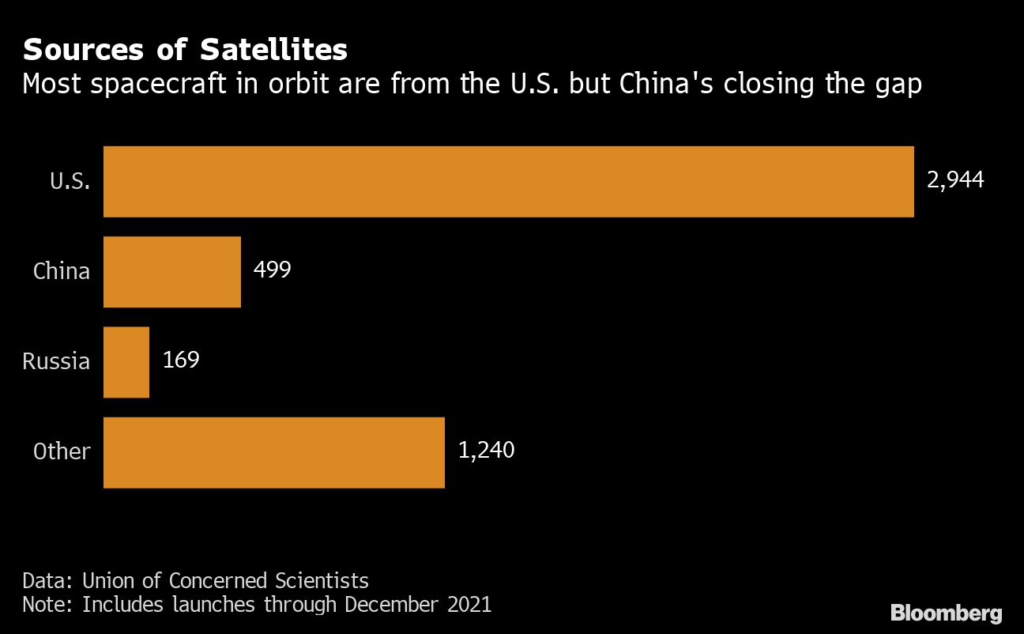
The lack of cooperation between the US and China on space exploration is particularly dangerous in an era where the cosmos are becoming more crowded. Billionaires like Elon Musk and Jeff Bezos along with emerging markets such as Rwanda and the Philippines are launching more and more satellites to bridge the digital divide and explore commercial opportunities.

The stakes are even higher when it comes to the US and China, which are erecting economic barriers in the name of national security as ideological divisions widen over the pandemic, political repression and now Vladimir Putin’s war. Their inability to cooperate on space risks not only an arms race, but also clashes over extracting potentially hundreds of billions of dollars’ worth of resources on the moon and elsewhere.

“Our concern in the West is more about who sets the rules of the road, particularly access to resources,” said Malcolm Davis, a former official with Australia’s defense department who now researches space policy at the Australian Strategic Policy Institute in Canberra. 

“The biggest risk is you have two opposite set of rules,” he said. “You could have a Chinese company on the moon in the 2030s claiming territory with a resource on it, in the same way the Chinese have claimed the entire South China Sea.”

The geopolitics of space, once a frontier that brought rivals together for the good of humankind, are now mirroring the competition on Earth pitting the US and its allies against China and Russia. And just as Beijing and Moscow have blamed American military alliances in Europe and Asia for stoking tensions over Ukraine and Taiwan, Chinese state-run media has warned the US now wants to set up a “space-based NATO.” 

At the center of the dispute is the US-drafted Artemis Accords, a non-legally binding set of principles to govern activity on the moon, Mars and beyond. The initiative, which NASA says is grounded in the 1967 Outer Space Treaty, forms the foundation of the space agency’s effort to put astronauts on the moon this decade and kick-start mining operations of lucrative lunar elements.

So far 19 countries have agreed to support the accords, including four — Romania, Colombia, Bahrain and Singapore — that signed up after Putin’s invasion spurred a US-led effort to isolate Russia. Underscoring the divide, Ukraine was an early Artemis club member after President Volodymyr Zelenskiy’s government signed in late 2020.

The accords are part of an effort by the Biden administration to establish “a broader and comprehensive set of norms” for space, Vice President Kamala Harris said in an April 18 speech at Vandenberg Space Force Base, about 160 miles (250 kilometers) northwest of Los Angeles.

“As we move forward, we will remain focused on writing new rules of the road to ensure all space activities are conducted in a responsible, peaceful, and sustainable manner,” she said. “The United States is committed to lead the way and to lead by example.”

China and Russia have led opposition to the accords, vowing greater space cooperation in early February as part of a “no limits” partnership when Putin visited President Xi Jinping in Beijing shortly before the war began. They are jointly promoting an alternative project on the moon they say is open to all other countries: the International Lunar Research Station.

One of China’s main problems with the Artemis Accords is a provision allowing nations to designate areas of the moon as “safety zones” — regions on the lunar surface that others should avoid. For the Americans and their Artemis partners, the exclusive areas are a way to comply with obligations under the Outer Space Treaty, which requires countries to avoid “harmful interference” in space.

To China, however, the safety zones are thinly disguised land grabs in violation of international law. Beijing wants any rule-making to be settled at the UN, where it can count on support from a wider group of countries eager for friendly ties with the world’s second-biggest economy.

“It’s time the US woke up and smelled the coffee,” the official China Daily proclaimed in a January editorial that criticized how NASA “invented” the concept of safety zones to allow governments or companies to reserve areas of the moon. “The world is no longer interested in its divisive, hegemonic schemes.”

China has good reason to be suspicious of US efforts in space. American legislation first passed in 2011 prevents NASA from most interactions with its Chinese counterpart, and the US has blocked China from taking part in the International Space Station — a move that simply prompted Beijing to build its own. 

“China was left out of that order and now it’s going its own way,” said Lincoln Hines, an assistant professor at the US Air War College who has studied the Chinese space program. “That raises the challenge as to whether you can have a coherent system of rules in outer space when you have two different visions of order and there isn’t any cooperation.”

The head of the Russian space program, Roscosmos director Dmitry Rogozin, in late April suggested that Russia had decided to quit the International Space Station because of Western sanctions on Russia from its invasion of Ukraine.

While Russia’s space program was already in decline before Putin’s war, China is swiftly moving toward Xi’s goal of matching US capabilities in space. China became the first country to send a probe to the far side of the moon in 2019, and last year it became only the second nation after the US to land a rover on Mars.

On March 10, China launched a Long March rocket from the southern island province of Hainan to deliver cargo to the Tiangong, the orbiting spacecraft that Beijing plans to complete this year — making China the only country to operate its own space station. The following month, Xi ordered officials to build a world-leading spacecraft launch site in Hainan. 

“To explore the vast cosmos, develop the space industry and build China into a space power is our eternal dream,” Xi said in the introduction to a white paper on China’s space program released in January, which said China plans to launch a robotic lunar mission around 2025. China may be able to send astronauts to the moon for the first time by 2030, Ye Peijian, chief designer of China’s first lunar probe, told state media at the time. 

“China wants really badly to be seen as the NASA of the future,” said Michelle Hanlon, co-director of the Center for Air and Space Law at the University of Mississippi and editor-in-chief of the Journal of Space Law. “It wants to be that leader. China feels that it’s China’s time.”

As the US, China and other nations target the moon, the need to establish rules to avoid conflict is becoming more urgent.

NASA in April conducted tests for the launch of Artemis I, the first American spacecraft to aim for the moon since Apollo 17 in 1972. While this mission will be fully robotic, NASA’s goal is to send astronauts to the moon around 2025 — including the first woman — and build a base camp on the lunar surface.

Musk’s Space Exploration Technologies Corp. will conduct a test flight from Texas in the next few months of the company’s new Starship rocket, which SpaceX plans to use to take humans to the moon and Mars. 

Japan and South Korea, both Artemis Accords signatories, have lunar missions in the works. So does India, the largest space-faring nation yet to commit to either the American or the Sino-Russian teams. Putin also vowed last month to “restore the moon program.”

Speaking at a Congressional hearing this week, NASA Administrator Bill Nelson warned of growing tensions in space between the US and China.

“They now have a space station and it’s got impressive technology,” he said. “They have declared that they are going to the moon. And I think we are — not unlike the space race we were in with the Soviet Union — I think we are going to have that space race with the Chinese government in the future.’’

Unlike Earth, the moon may contain large amounts of helium-3, an isotope potentially useful as an alternative to uranium for nuclear power plants because it’s not radioactive. Chinese state media in 2019 said the moon is “sometimes referred to as the Persian Gulf of the solar system,” with experts believing 5,000 tons of coal could be replaced by about three tablespoons of helium-3. 

While there’s not yet proof that helium-3 can do what boosters claim, Chinese researchers are already looking for the element in moon rocks brought back to Earth in late 2020 by one of China’s lunar missions. The moon could also prove valuable as a source of water, taken from ice at the lunar poles, to make rocket fuel that could power missions to Mars and other places in the solar system.

For now, the US appears to be ahead in winning over nations to its interpretation of rules for operating in space. As the Artemis Accords gain new signatories, China is still waiting for another leader besides Putin to team up on the International Lunar Research Station. 

Chinese state media reported in March that negotiations were underway with the European Space Agency, Thailand, the United Arab Emirates and Saudi Arabia about taking part in the rival moon base. But Russia’s war in Ukraine will likely make the project much less appealing to some nations. 

The European Space Agency on March 17 suspended a plan to send a Russian-made lander to Mars in September or October, following UK-based satellite operator OneWeb Ltd.’s cancellation of plans to launch its low-Earth orbit satellites aboard Russian rockets.

“The impact on the Russian space program is going to be disastrous,” said Jonathan McDowell, an astrophysicist at the Center for Astrophysics, which is operated by Harvard University and the Smithsonian Institution.

Although China doesn’t need Russian expertise, Xi’s long-term strategic calculus means Beijing is unlikely abandon Moscow in an effort to win more potential partners. Putin’s top space official has already called for greater cooperation with China.

“We work well with our Chinese friends,” Roscosmos director Rogozin said in an interview with Chinese state-run broadcaster CGTN released on April 4. “To be friends in space, we must be friends on Earth.”

The same appears to hold true for adversaries. In a sign of what could go wrong without a common set of rules in space, the US and China traded accusations in recent months over two incidents last year involving satellites launched by Musk’s SpaceX that Beijing said came dangerously close to its orbiting space station.

After China lodged a complaint with the UN, the US said a notification wasn’t necessary — implying Beijing exaggerated the risk. That irked China even more, with Foreign Ministry spokesman Zhao Lijian saying the US didn’t reply to emails to discuss the incident and wasn’t “showing the due responsible attitude as a space power.”

The episode points to China’s bigger problem with the Artemis Accords: Beijing is upset about being left out of the process and pressured to accept principles that were crafted by the US instead of at the UN, according to Jessica West, senior researcher and managing editor for the Space Security Index project at Project Ploughshares, the peace research institute of The Canadian Council of Churches. 

The conflict over who makes the rules, she added, shows the world has lots of work left to avoid a clash in space.

“I’m not sure people expected the explosion of space activity that happened,” West said. “We’re just not adequately prepared.” 


(Updates throughout)

More stories like this are available on bloomberg.com

©2022 Bloomberg L.P.

Cerebral CEO Fights for His Job Amid US Prescription Probe

(Bloomberg) — Kyle Robertson, the entrepreneur who grew Cerebral Inc. into a $4.8 billion behemoth in online mental health and became a prominent face of the fast-growing industry, is fighting for his job.

Major investors with board seats overseeing Cerebral, which is the subject of a federal investigation into its prescribing practices, are planning to remove Robertson from the board and replace him as chief executive officer, according to people familiar with the matter. That move could come as early as Wednesday, said one of the people, all of whom requested anonymity discussing the potential ouster.

The showdown comes after Cerebral announced late Monday that it would stop prescribing almost all controlled substances. The investors’ plan calls for naming David Mou, the company’s president and chief medical officer, as CEO, one of the people said.

For now, Robertson still has the CEO title, though his access to the company’s internal communications systems was revoked late Monday, said one of the people.

Robertson cofounded Cerebral in 2019 and transformed it into one of the world’s fastest growing startups. One early TV ad featured Robertson, who has no formal medical training, sitting on a couch with his psychiatrist father and psychotherapist mother. When the company launched a partnership with Olympic gymnast Simone Biles, Robertson appeared alongside her on NBC’s Today Show, and in photos posted to Twitter and LinkedIn. A representative for Biles didn’t reply to a request for comment.

Under Robertson’s leadership, Cerebral drew key investments, including from SoftBank Vision Fund 2, Len Blavatnik’s Access Industries and WestCap Group. All three investors have seats on Cerebral’s board; their representatives didn’t respond to requests for comment.

But the CEO’s style alienated some employees, who said the startup’s drive for growth had imperiled patient care.

Read more: ADHD Drugs Are Convenient To Get Online. Maybe Too Convenient 

Cerebral came in for heightened scrutiny after Bloomberg Businessweek reported in March that many of the nurse practitioners it employed said they feared the company was over-prescribing the addictive amphetamines used to treat attention deficit/hyperactivity disorder. Others raised concerns about the company’s aggressive advertising on social-media platforms, including TikTok. After that report appeared, the federal Drug Enforcement Administration interviewed at least two employees, according to people familiar with the conversations.

Earlier this month, Cerebral received a grand jury subpoena from the US Attorney’s office for the Eastern District of New York. A company spokeswoman said at the time that a federal investigation was focused on possible violations of the Controlled Substances Act and that the company intended to cooperate fully with the probe. “To be clear, at this time, no regulatory or law enforcement authority has accused Cerebral of violating any law,” the spokeswoman said. 

Rules Changed

Cerebral and Robertson, who launched a publication focusing on startups while attending the University of Pennsylvania’s Wharton School of business, got into the business of prescribing controlled medications after federal officials relaxed previous rules requiring in-person examinations for such prescriptions.

That change, which came at the beginning of the Covid-19 pandemic, was designed to make it easier for people to access mental health care. And some Cerebral patients have said the company’s approach – using coordinators to handle patients’ incoming calls, allowing nurse practitioners to often prescribe drugs after just one 30-minute evaluation and distributing medications by mail – improved their lives greatly.

At the same time, some of Cerebral’s own nurses questioned whether the company was making ADHD medicines, such as Adderall, too easy to obtain. Experts say such medication can be subject to abuse by those who don’t have the disorder.

After criticism surfaced in Businessweek and other media outlets, Truepill, an online pharmacy favored by Cerebral, stopped filling prescriptions for Adderall and other controlled substances. Then a recently departed executive alleged in a lawsuit that Mou, then just Cerebral’s chief medical officer, told employees that the firm’s goal was to prescribe stimulants to 100% of its ADHD patients as part of a plan to increase customer retention. The company has denied those allegations.

Earlier this month, Cerebral said it would stop writing new prescriptions for Adderall and other ADHD drugs. Days later, the company said it had received the grand jury subpoena. US Attorney Breon Peace’s office has declined to comment.

Then, on Monday, Robertson announced to Cerebral employees that it would stop writing prescriptions for most controlled substances. He wrote in an email that they’ll be discontinued for new patients beginning on May 20 and for existing patients on Oct. 15. He said Cerebral will continue, when appropriate, to prescribe Suboxone and Narcan, which treat opioid addiction and overdoses.

Robertson has said Cerebral’s launch was rooted in his own struggle with anxiety and depression as a gay man. “Finding the right care was nearly impossible,” he said in the commercial he appeared in. As CEO, he has displayed a leadership style that employees described as abrasive.

Medical staff said they felt Robertson ignored their expertise and recruiters said he micromanaged them as they attempted to staff the company. Robertson told Businessweek in March that he’d begun working with an executive coach to resolve issues.

In an email sent to employees on Monday afternoon, Robertson said the company’s decision to stop prescribing most controlled substances was the result of “the evolving landscape around the accessibility of mental health care, and the ability for patients to return to an in-person or hybrid care model.”

Telehealth Tips

Bloomberg News is examining the costs and benefits of an evolving field. Share your story at telehealth@bloomberg.net


(Updates with additional details, beginning in second paragraph)

More stories like this are available on bloomberg.com

©2022 Bloomberg L.P.
Close Bitnami banner
Bitnami