Bloomberg

China Stocks Slide as Liu’s Vows Underwhelm, Covid Woes Continue

(Bloomberg) — Tech stocks led a broad decline in China markets on Wednesday as support pledges from Vice Premier Liu He lacked fresh detail and new virus outbreaks around key cities weighed on investor sentiment.

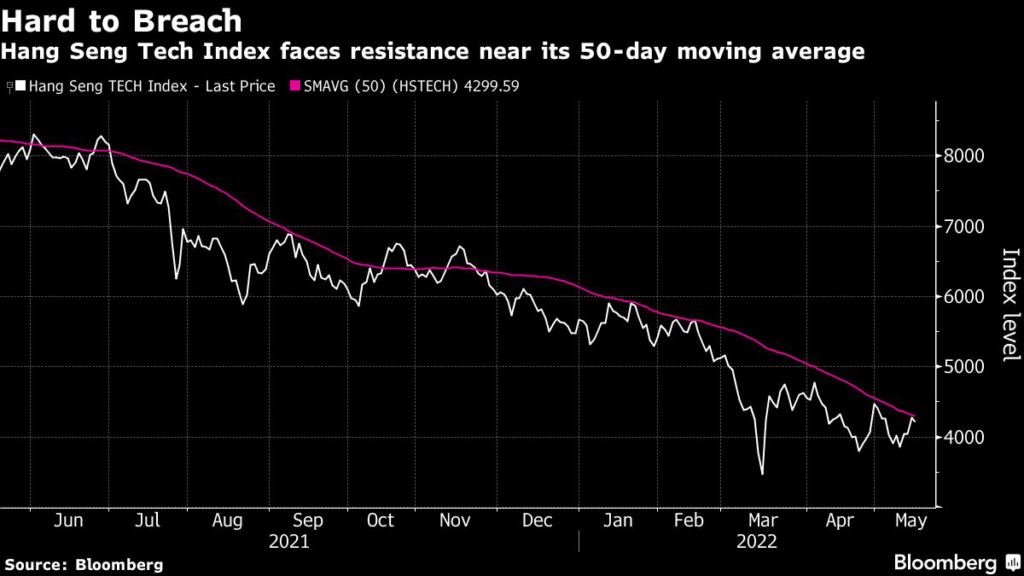
The Hang Seng Tech Index fell as much as 2.3%, having rallied nearly 6% in the previous session. Hong Kong’s benchmark Hang Seng Index and China’s CSI 300 Index both slid as much as 1%. 

The pullback suggests Tuesday’s much-anticipated meeting between Liu, China’s top economic official, and some of the nation’s tech giants disappointed traders awaiting bolder policy shifts. Concerns related to Covid-19 remained in focus as cases rose in Tianjin and a cluster was ballooning in Sichuan province.

“Although investors are aware that there won’t be many punitive measures for tech from now, Covid concerns will continue to depress valuations across the board,” said Hou Anyang, fund manager at Frontsea Asset Management. The meeting wasn’t enough to ease worries, he added.  

READ: China Economy Czar Vows Support for Tech Firms After Crackdown

At a Tuesday conference, Liu said the government will support the development of digital economy companies and their listing overseas. While that sparked a more than 5% rally in a gauge of Chinese stocks trading in the US, the excitement waned in the Asia session.

Meanwhile, data showing home prices fell for an eighth month in April amid strict coronavirus lockdowns added to investor woes. The deepening slump is another blow to China’s embattled property sector, which the authorities have sought to support as part of efforts to halt a slowdown in the world’s second-largest economy.

“It is difficult to assess if Chinese equities have bottomed, especially with more economic pain to come as authorities persist on the Zero Covid path,” said Eli Lee, head of investment strategy at Bank of Singapore. 

More than a year into Beijing’s sweeping regulatory crackdown on private enterprise, investors remain wary about getting back into the sector.

Still, in a sign of optimism, JPMorgan Chase & Co. analysts upgraded a number of tech firms including Alibaba Group Holding Ltd. and Tencent Holdings Ltd. to overweight earlier this week, just two months after deeming the sector “uninvestable.”  

Where China’s stock market goes from here will hinge on whether policy makers follow through on their promises, and the nation’s Covid-19 situation.

Chinese equities may set “lower lows into the year-end” as the US raises interest rates and scuppers global risk appetite, said Ilya Spivak, head of Greater Asia at DailyFX. “Rising interest rates mean people are resistant to taking risk, which means they are that much more responsive to things like regulatory disruptions or Covid lockdowns.”

More stories like this are available on bloomberg.com

©2022 Bloomberg L.P.

As Musk Tweets, Advisers Plug Away to Keep Twitter Deal on Track

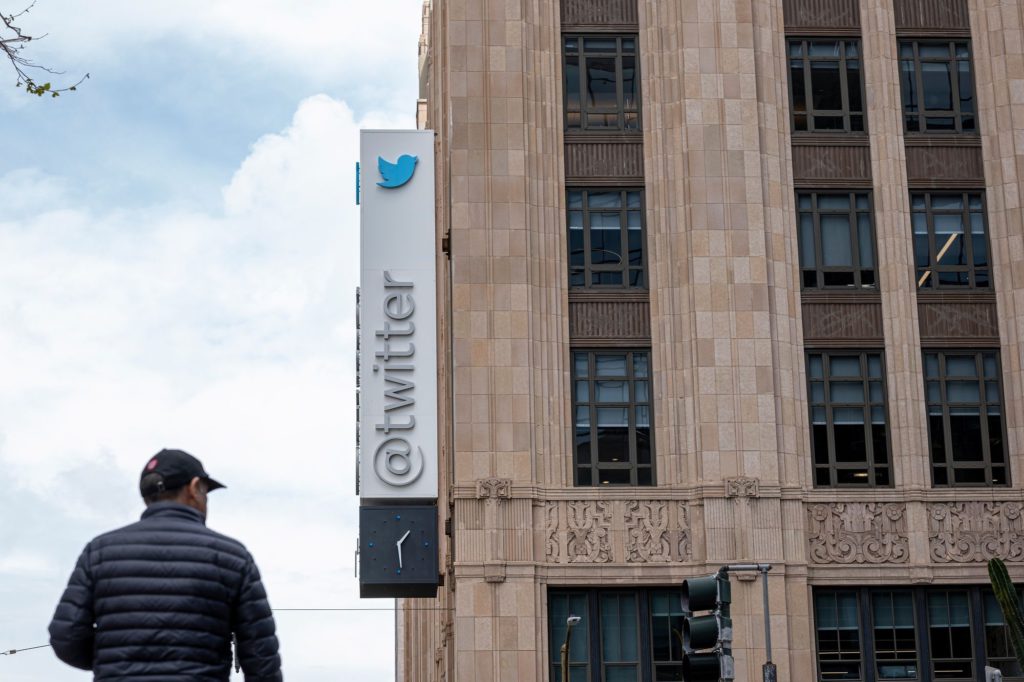
(Bloomberg) — In public, Elon Musk’s erratic tweets have sent Twitter Inc.’s shares flailing, as traders bet that the billionaire is preparing to walk away from or re-negotiate his $44 billion takeover of the social-media company. Behind the scenes, it’s more like business as usual, as advisers on both sides plug away at the day-to-day work of closing a megadeal.

One potential sign that the deal is still on track: the 139-page filing that hit early Tuesday, detailing how the offer came together and Twitter’s rationale for accepting it. That document was the result of weeks of coordinated work by both Musk and Twitter’s teams, according to people familiar with the matter. Musk himself signed off on the final version — complete with a deal price of $54.20 a share — before it was filed, the people said.

The situation is similar at the banks that promised to finance the transaction, said the people, who asked not to be identified because the details are private. While texts are flying among bankers in disbelief at Musk’s antics, their days are still filled with preparing documents needed to proceed with and close the purchase, the people said.

Twitter’s board has tried to inject clarity into the situation by unanimously recommending that its shareholders approve the transaction. The directors added in a statement Tuesday to Bloomberg News, “We intend to close the transaction and enforce the merger agreement.”

Public Tumult

The disconnect between the public tumult around the transaction — including Twitter’s stock price — and the smoother private negotiations is yet another example of how Musk’s unconventional approach to dealmaking is shaping the process.

Musk’s tweet last Friday that the deal was on hold came as a surprise to advisers on both sides who had no idea he might be having second thoughts, the people said. Some advisers said they were trying to dismiss his tweets as “noise,” and advising colleagues to do the same, hoping that the world’s richest man is providing a form of entertainment rather than seriously reconsidering his plans.

A spokesperson for Twitter declined to comment. A representative for Musk didn’t immediately respond to a request for comment.

Breakup Fee

The proposed takeover includes a $1 billion breakup fee for each party, which Musk will have to pay if the deal falls apart due to financing issues.

The merger agreement includes a specific performance provision that allows Twitter to force Musk to consummate the deal, according to the filing. That could mean, should the deal end up in court, that Twitter might secure an order obligating Musk to complete the merger rather than winning monetary compensation for any violations of it.

Twitter’s board has no reason to renegotiate the deal or reconsider the price, people familiar with the matter said, and it plans to enforce its rights under the merger contract to keep the deal intact.

Twitter Chief Executive Officer Parag Agrawal is attempting to run the company as normal despite the very unusual circumstances. His decision to cut costs and fire two top product executives last week came as a surprise to employees, leading to speculation that Musk was behind the decisions.

Agrawal dismissed those notions in a tweet thread last week. “While I expect the deal to close, we need to be prepared for all scenarios and always do what’s right for Twitter,” he wrote. “I won’t use the deal as an excuse to avoid making important decisions for the health of the company, nor will any leader at Twitter.”

Positive Meeting

In a recent meeting at Twitter’s San Francisco office between Musk and Twitter executives, including Agrawal and finance chief Ned Segal, the group discussed operational matters and the tone was generally positive, according to a person familiar with the details of the gathering.

On the platform, meanwhile, Agrawal and Musk have been sparring over how the social media giant handles so-called automated bots. In one exchange, Musk responded to a lengthy thread on the company’s methodology by posting a poop emoji.

At the very least, the bankers who got involved knew that Musk can be unpredictable. He signed the deal without doing any due diligence on his target, rushed together a financing package in days, and hasn’t abandoned his penchant for tweeting in the middle of the night.

Navigating the chaos successfully may ultimately prove lucrative for bankers.  

Twitter advisers Goldman Sachs Group Inc. and JPMorgan Chase & Co. stand to collect a combined $133 million in fees if the deal closes.

For the advisers, the kudos — in addition to the potential fees windfall — of signing onto a marquee transaction can also offset the risk, people close to the deal said. Watching an acquirer use social media to attack the company he’s agreed to buy, though, pushes the boundaries of what they expected to happen. 

More stories like this are available on bloomberg.com

©2022 Bloomberg L.P.

China Economy Czar Vows to Back Tech Firms After Crackdown

(Bloomberg) — China’s top economic official gave an unusual public show of support for digital platform companies Tuesday, suggesting Beijing may be ready to let up on a year-long clampdown on technology giants as it battles a slowing economy.

The government will support the development of digital economy companies and their public listings, Vice Premier Liu He, who is President Xi Jinping’s most senior economic aide, said after a symposium with the heads of some of the nation’s largest private firms. Baidu Inc. founder Robin Li, Qihoo 360 Technology Co.’s Zhou Hongyi and NetEase Inc. chief William Ding were among the tech luminaries spotted at the forum, according to a video posted online.

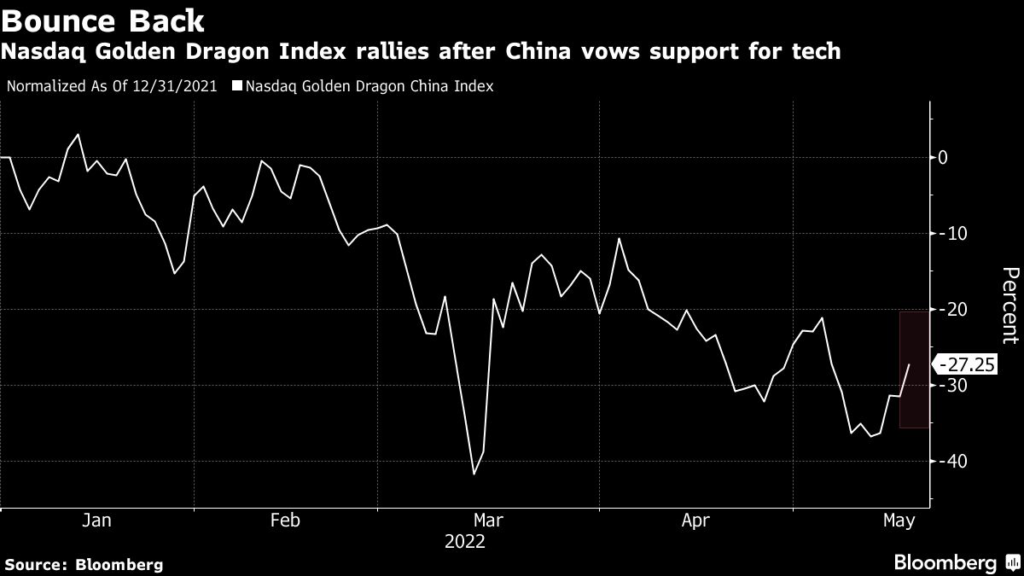
Liu’s remarks reported by state media were short on detail but signal further easing of the regulatory risk for China’s technology behemoths including Baidu and Tencent Holdings Ltd., as investors await clues on whether a rout in their shares is near an end. The Hang Seng Tech Index rallied as much as 6% Tuesday on optimism the meeting would affirm Beijing’s intention to dial back some of its restrictions. Chinese internet stocks jumped in US trading after Liu’s comments, taking the Nasdaq Golden Dragon China Index to its highest level in about two weeks.

The meeting between Liu and tech company representatives was facilitated by the Chinese People’s Political Consultative Conference, an advisory body that includes some executives among its members. The relationship between government and markets “should be handled well,” Liu was reported as saying.

Beijing has made stability its core priority in a year plagued by geopolitical uncertainty and the heavy economic impact of coronavirus outbreaks — particularly as its top officials prepare for a key leadership transition toward the end of 2022 where Xi is expected to ensure a third term as party chief.

Beijing is enlisting the technology industry — the biggest growth driver of the past decade — to revitalize an economy struggling with rolling urban lockdowns hitting consumption and causing supply-chain bottlenecks. China’s economic activity collapsed last month, with industrial output and consumer spending sliding to the worst levels since the pandemic began and economists warning that recovery is not in sight.

The latest comments may inject much-needed confidence in the capital markets, where more than $1 trillion of the combined value of Tencent and Alibaba Group Holding Ltd. was at one point wiped out after Beijing began a broad regulatory campaign aimed at the sector in late 2020. Investor sentiment has swung wildly in recent weeks amid debates over the possible easing of the crackdown. 

Liu vowed in March to stabilize battered financial markets, promising to ease a regulatory onslaught that started with the dramatic cancellation of Ant Group Co.’s record IPO before snowballing into an assault on every corner of China’s technosphere.

Investors remain wary as they weigh a mixed bag of developments, which have included a restart of gaming approvals and also the deepening of a campaign to rein in the little-understood algorithms that internet companies employ to serve content and gather data. The Hang Seng Tech Index has rallied 23% from a three-year low hit in mid-March.

Signs of a turnaround in the tech sector may be already underway. On Monday, JPMorgan Chase & Co. analysts upgraded a number of tech firms including Alibaba and Tencent to overweight from underweight just two months after deeming the sector “uninvestable”. 

(Updates with US stock action in the third paragraph. A previous version of the story corrected the spelling of 360 founder’s name.)

More stories like this are available on bloomberg.com

©2022 Bloomberg L.P.

Alibaba, Baidu Jump in US as China Vows Support for Tech

(Bloomberg) — Chinese internet stocks jumped in US trading after a senior Communist Party official reaffirmed support for the industry, stoking optimism that regulators may ease a yearlong clampdown.

The Nasdaq Golden Dragon China Index climbed 5.2% to its highest level in about two weeks. E-commerce giant Alibaba Group Holding Ltd. rose 6.4% while search engine operator Baidu Inc. and video-game maker NetEase Inc. gained 4.8% and 1.5% respectively. JD.com Inc. rose 4.2% after reporting better-than-expected revenue growth in the first quarter. The rally tracked a 5.8% gain in the Hang Seng Tech Index on Tuesday, the most this month. The gauge opened down 0.2% in Hong Kong on Wednesday.

Chinese Vice Premier Liu He said the government will support the development of digital economy companies and their public listings, in a remarks reported by state media after a symposium with the heads of some the nation’s largest private firms. The top economic official gave similar assurances two months ago, when he also vowed to keep markets stable and stimulate the economy.

Read more: China Economy Czar Vows Support for Tech Firms After Crackdown

“This should definitely help investors’ sentiment,” said Henry Guo, an analyst at M Science LLC. “How sustainable the rally depends on how quickly the China economy can recover post this pandemic lockdown. But I believe the worst is already behind us and investors are starting to become constructive on China ADRs.”

Moves by Shanghai to tentatively unravel a punishing lockdown also boosted sentiment, with the Chinese financial hub reporting a third consecutive day of no new virus cases in the broader community. China is largely sticking to its Covid Zero strategy, even though a slew of data have showed mounting economic costs.

Some market participants are already turning more positive on Chinese equities, with JPMorgan Chase & Co. on Monday upgrading ratings on more than a dozen tech companies, saying uncertainties facing the group are starting to abate.

To be sure, many investors remain on the sidelines waiting for clearer signals while continuing to assess the nation’s Covid lockdown situation and economic recovery. The Nasdaq Golden Dragon China Index has declined 28% this year.

“The government’s comments about the tech industry were very vague, but people are happy about it. So this feels like another of the group’s periodic rallies. Until they back away from ‘zero-tolerance’ though, people are going to be wary about chasing the group,” according to Adam Crisafulli, founder of Vital Knowledge.

(Updates with Hang Seng Tech Index open on Wednesday in second paragraph)

More stories like this are available on bloomberg.com

©2022 Bloomberg L.P.

Sea Surges After Gaming Sales Defy Post-Covid Internet Slowdown

(Bloomberg) — Sea Ltd. rose more than 14% after reporting core gaming revenue grew faster than expected, offsetting a slowdown across the rest of the Southeast Asian internet giant’s business as online activity retreats from pandemic-era heights.

Sea’s gaming arm, its most profitable division, posted sales of $1.14 billion, versus projections for less than $930 million. Its shares climbed to their highest in almost two weeks, helped by a broader rally in New York.

But the Singaporean company’s large e-commerce business underperformed. Consumers emerging from prolonged lockdowns are cutting back on online purchases, especially with the war in Ukraine and rising interest rates clouding the global economic outlook. Sea revised its full-year outlook for e-commerce sales, its main source of revenue, to $8.5 billion to $9.1 billion from its previous guidance of $8.9 billion to $9.1 billion. The company also posted a wider loss for the first three months as expenses soared.

Overall, the results were better than feared, Citigroup analysts wrote. Investors are now betting on Sea’s overseas forays — particularly into higher-growth arenas such as Indonesian commerce and fintech — to shore up growth over the longer term. The company, backed by Tencent Holdings Ltd., should improve monetization in its online retail business after expansions into Latin America and Taiwan, according to Bloomberg Intelligence.

Sea Ltd ADRs Soar Following Results and Outlook: Street Wrap

What Bloomberg Intelligence Says

Sea’s strong cash position supports aggressive e-commerce and fintech global expansion plans, boding well for revenue growth from 2022, particularly after Covid-19 accelerated the digital boom in Southeast Asia, Latin America and other new markets. Fintech may contribute significantly to sales in the next few years as Sea integrates its financial-services and main businesses via a digital-bank license, bank subsidiary and partnerships — aided by new-user acquisitions in the food-delivery sector. Having Tencent — China’s largest social-network and games provider — as an anchor investor, brings credibility to its strategy.

– Nathan Naidu, analyst

Click here for the research.

Key Insights

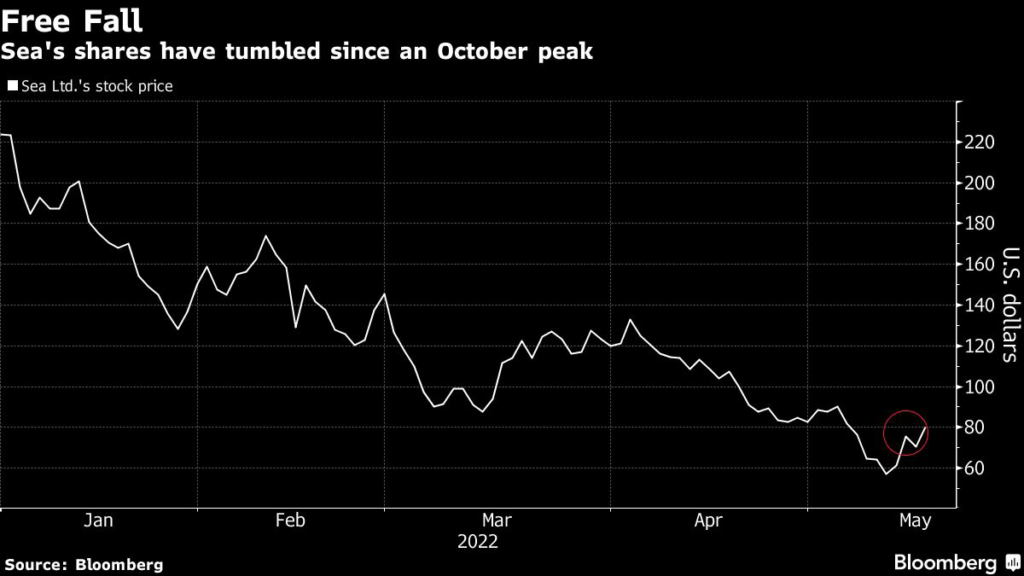
  • The pandemic triggered a rally in online shopping and gaming shares as consumers spent more time and money online, helping Sea become Southeast Asia’s most valuable company. But the broader tech selloff, the shutdown of its e-commerce operation in India and disappointing earnings have wiped 81% off its value since a peak in October.
  • First-quarter revenue from Shopee, Sea’s e-commerce unit, rose 64% to $1.5 billion, versus estimates of $1.7 billion.
  • Revenue from gaming arm Garena gained 45%. The company said in March it expects Garena to post $2.9 billion to $3.1 billion in bookings in 2022, set to be its first decline ever.
  • Sea plans to diversify its portfolio across game genres, Chief Executive Officer Forrest Li said during a conference call. Moonlight Blade, a third-party massive multiplayer online role-playing game, is set to be introduced on mobile and PC in Thailand in the coming months after launching in Taiwan last year, he said. The company is also exploring publishing partnerships and making early investments in game studios.
  • Revenue from SeaMoney, Sea’s digital financial services unit, more than quadrupled to $236 million.

Get More

  • Net loss in the first three months widened to $579.8 million from $422.7 million a year earlier. Total revenue climbed 64% to $2.9 billion, the slowest pace of growth in more than four years.
  • Research and development expenses increased 141% to $340.4 million, mainly because of higher staff cost from increased headcount and investment in technologies.
  • Sales and marketing expenses jumped 48% to $1 billion.
  • Shopee’s gross merchandise value, the sum of transactions flowing through its platform, grew 39% to $17.4 billion.
  • Total payment volume for Sea’s mobile wallet rose 49% to $5.1 billion.
  • Sea Ltd Widens FY E-Commerce Revenue Forecast

Market Reaction

  • Shares of Sea jumped 14.1% in New York on Tuesday. They are still down more than 60% this year.

More stories like this are available on bloomberg.com

©2022 Bloomberg L.P.

Japan’s Automakers Are Least Prepared for Zero-Emissions Shift

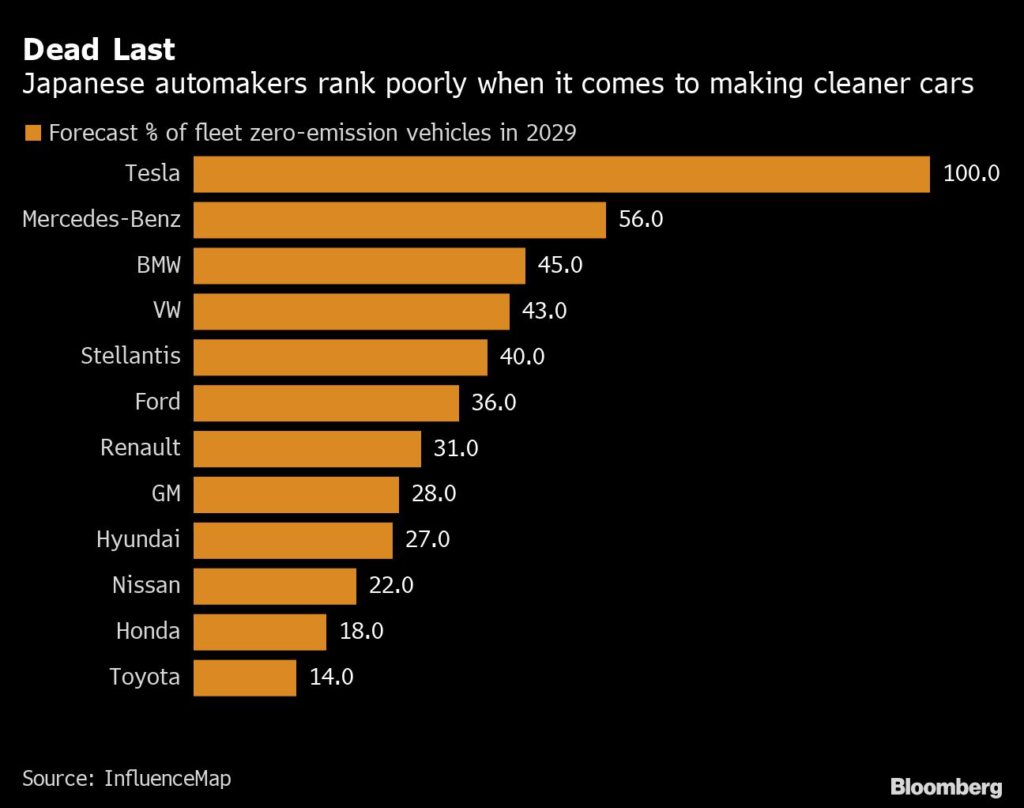
(Bloomberg) — Japanese automakers Toyota Motor Corp., Nissan Motor Co. and Honda Motor Co. are the least prepared for a zero-emissions vehicle transition compared with their global competitors, according to research released Wednesday from climate think tank InfluenceMap.

By 2029, just 14% of Toyota’s worldwide production is forecast to be battery-electric vehicles, rising to 18% for Honda and 22% for Nissan, according to the study, which is based on an examination of future production data from IHS Markit. 

That compares with South Korea’s Hyundai Motor Co., which is forecast to achieve 27% EV production levels globally by 2029 and Ford Motor Co. and Volkswagen AG, at 36% and 43% respectively.

Japanese automakers have lagged behind global peers in rolling out electric cars and the country’s EV penetration rate is barely 1%. Honda has budgeted 5 trillion yen ($39 billion) over the next decade to make cleaner cars. Subaru Corp. has said it will spend around 250 billion yen on EV battery capacity over the next five years.

Toyota, and the Japan Automobile Manufacturers Association, which is chaired by Toyota, meanwhile continue to promote hydrogen as one of the key solutions to carbon neutrality, along with electric cars.

Across all automakers, hydrogen-powered vehicles are forecast to account for just 0.1% of global production by 2029, the study found.

“The fact that Toyota and Nissan are the two lowest-scoring companies highlights the strong link between negative climate policy engagement and low levels of electric vehicle production forecasts,” InfluenceMap program manager Ben Youriev said.

“In Toyota’s case, it continues to strongly push combustion-engine powered hybrids — even in highly developed markets like Japan and the US — despite recent warnings from Intergovernmental Panel on Climate Change scientists that electric vehicles powered by low-emissions electricity offer the largest decarbonization potential for land-based transport on a life cycle basis.”

More stories like this are available on bloomberg.com

©2022 Bloomberg L.P.

Bill Hwang Seeks Probe of Morgan Stanley Over Short Squeeze

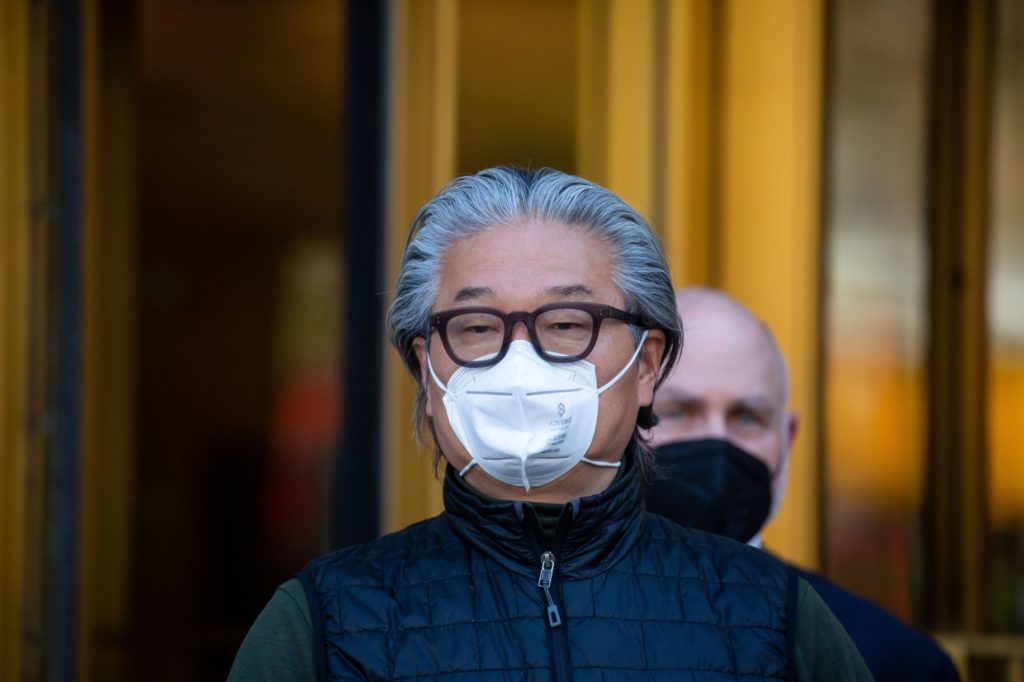
(Bloomberg) — Before Bill Hwang sent a slate of stocks on a manic climb last year, he had already started bleeding billions of dollars on a bearish bet after seeking Morgan Stanley’s help.

It’s an untold chapter that played out just before Hwang’s famously bullish trades came tumbling down in early 2021, wiping out his Archegos Capital Management and leading to criminal charges. Months before all of that, Archegos was trying to exit a wager against a Chinese online broker and sought help from Pawan Passi, the Morgan Stanley banker placed on leave as the US probes whether Wall Street is too loose-lipped when handling big trades.

Hwang had placed a massive short bet on Futu Holdings Ltd. using swaps, and wanted to close out his position around the end of 2020. He told Morgan Stanley he needed to buy a large block of shares to unwind the position, according to people with knowledge of the episode. But before Hwang managed to defuse the bet, Futu’s price skyrocketed, gaining more than 400% in the two months after that Christmas. That jump took an almost $4 billion bite out of Hwang’s portfolio.

Archegos alerted US authorities to that costly episode after the emergence of the block-trading probe this year, one of the people said. The firm has sought a review of whether someone at the bank might have tipped off outsiders to its plan to buy Futu stock in bulk.

Indeed, it remains unclear who squeezed Hwang’s short bet and whether they even knew they were targeting him. Futu’s price surge coincided with last year’s so-called meme stock frenzy, in which an army of retail traders organized themselves on message boards and set out to identify and lift shares targeted by short sellers.

Still, the review sought by Archegos is yet another way that big US probes of Wall Street keep intersecting. The government’s examination of whether financial firms are handling blocks discreetly was underway for a while before it ramped up in the wake of Archegos’s collapse and liquidation, people with knowledge of the matter have said. Now, Hwang is looking to make another link, turning the scrutiny back toward banks.

Shorting Angst

The US investigation of block trades does focus on whether Wall Street bankers have tipped off hedge funds to any pending deals. But Morgan Stanley, which has said it’s cooperating, hasn’t had any discussions with the government about a potential Futu transaction with Archegos as part of that inquiry, a person with knowledge of the matter said. 

Neither Passi nor the bank has been accused of wrongdoing. Representatives for Morgan Stanley, Archegos and the Justice Department all declined to comment. Passi didn’t return a request for comment.

Ironically, within weeks of getting burned on Futu, Hwang became the scourge of other short sellers by driving up the price of Chinese online-education company then known as GSX Techedu Inc., which some of the world’s most famous short sellers were betting against. When Hwang was eventually outed as their antagonist, they cursed his name and publicly called for probes into that, too.

Passi canvassed the market through parts of January 2021. In the end, Morgan Stanley didn’t manage to acquire a large enough block of Futu’s stock to help Archegos unwind its ill-fated bets, the people said. The hit to Archegos’s portfolio was soon dwarfed by its highly leveraged gains on almost every other part of its portfolio, which in relatively short order soared, sputtered and crashed.

The Archegos and block-trading probes do have a common theme — seeking to head off fraud and manipulation, US Securities and Exchange Commission Chair Gary Gensler noted in an interview last week. “It’s about protecting markets,” he said.

For a time after Archegos’ collapse, some in the market suspected Hwang was the one who had driven up Futu so spectacularly at the start of 2021. After all, that move traced the arc of his bullish bets. But in this case, the Justice Department’s investigation found he was on the losing side of the surge.

A brief nod to that trade is buried in the indictment prosecutors unveiled against Hwang in April — charges that he is fighting. A single line notes he shorted Futu, betting the Hong Kong-based brokerage platform would lose value, and identifying it as one of the top positions in his portfolio. Hwang’s bet against a single stock was a rarity. His long-short strategy generally placed highly concentrated bets on stocks he was convinced could rise, which he then hedged by shorting exchange-traded funds tied to indexes.

Futu got its listing on the US market with a stock offering in 2019. The company, seen as the Chinese take on Robinhood, soon benefited from a retail investing mania that took hold during early Covid-19 lockdowns.

By the start of November 2020, the price had more than doubled from the IPO to around $30. But in just over three more months it jumped to $191. It even raised $1.24 billion in April 2021 after selling shares at $130 apiece. Since then, the stock has crumbled back to about $32.

Hwang had initially sought out another Morgan Stanley executive who referred him to Passi, according to people with knowledge of the conversations. Passi remained in close contact with Archegos head trader William Tomita about the status of his efforts. Tomita is one of the Archegos executives who is cooperating with the DOJ in its Archegos case.

It’s not clear when Archegos began setting up its bet against Futu or how it structured the trade. The firm often favored the use of swaps. But its $4 billion hit from the trade is startling — a figure that almost equaled Futu’s total market capitalization in late 2020.

That speaks to the dangers of short-selling. An investor who buys a stock is limited in how much they might lose: the value of that stake. But an investor who shorts a stock — especially with leverage — can lose multiples of what they paid to set up the trade, if the price climbs dramatically.

Prosecutors described Archegos’s final weeks in their indictment. By last March, the firm’s attempts to artificially prop up a highly leveraged and unusually concentrated portfolio of bullish bets lost steam, according to the government. As prices started slipping, Hwang and colleagues allegedly stepped up efforts to manipulate prices and avoid margin calls, and then misled banks about the brewing crisis at the firm until everything came crashing down.

Banks that had helped Archegos place bullish bets ended up racing to unwind those positions and were saddled with hefty losses. Credit Suisse Group AG suffered a $5.5 billion hit, Nomura Holdings Inc. $2.9 billion and Morgan Stanley $911 million.

(Updates Futu’s stock price and chart from 15th paragraph.)

More stories like this are available on bloomberg.com

©2022 Bloomberg L.P.

Your Employees Want You to Be on Social Media

(Bloomberg) — CEOs who think having a Twitter account is optional may want to think again.

Employees prefer working for business leaders who are active on social media by a ratio of 4 to 1, according to a survey by Brunswick Group, an advisory firm. Executives who are vocal online are seen as more transparent and accessible, a perception crucial for retention and recruitment, the firm found.

Far from a frivolous sideshow, platforms like Twitter and LinkedIn have increasingly become a way for C-suite executives to communicate directly with staff, investors and the public. 

Tesla Inc.’s Chief Executive Officer Elon Musk has famously leveraged his Twitter following over the years, including into a bid to take over the platform itself, while Adam Aron of AMC Entertainment Holdings Inc. took to the site to ride the meme-stock frenzy that sent the company’s stock price soaring. Aviva Plc’s CEO Amanda Blanc last week addressed sexist comments she received during a shareholders meeting in a post on LinkedIn.

Brunswick surveyed 3,600 employees of companies with staff of more than 1,000 and 2,800 readers of financial publications. 

Some 82% of employees will research a CEO’s online presence when considering joining the company and nearly 80% of employees and over 90% of financial news readers expected leaders to communicate on social media when a crisis hits. 

Nearly 90% of employees and financial readers use social media every month compared to just 70% that use traditional media sources, according to Brunswick, adding to both the importance and risk of these platforms.

“Stakeholders expect executives to use social media to lead,” according to the report on the findings. “But it has never been more important to get it right.”

More stories like this are available on bloomberg.com

©2022 Bloomberg L.P.
Singapore’s Jungle Ventures Raises $600 Million to Back Startups

(Bloomberg) — Singapore’s Jungle Ventures has raised $600 million to continue backing early-stage startups in Southeast Asia and India, amid a market rout pummeling valuations of tech companies.

The sum includes a new $450 million venture capital fund, which exceeded its target of $350 million, the company said in a statement on Wednesday. Investors also committed $150 million for additional follow-on investments. New investors include Mizuho Bank Ltd. and StepStone Group, while existing backers including Temasek Holdings Pte, International Finance Corp. and German development finance institution DEG put in capital again.

“We like to be a lead investor in seed to Series B funding rounds to help our companies with concentrated efforts with a 20-year horizon,” Jungle Ventures founding partner Amit Anand said in an interview. “We’ll see through this crisis by remaining consistent through ups and downs, rather than trying to catch a wave.”

Founded by Anand and Anurag Srivastava in 2012, Jungle Ventures now has more than $1 billion of assets under management. The firm hired Sandeep Uberoi from Bank of America Merrill Lynch last year to head strategy, corporate development and fundraising. He was named a managing partner along with Yash Sankrityayan in December, adding to the firm’s senior management team that includes managing partner David Gowdey.

More stories like this are available on bloomberg.com

©2022 Bloomberg L.P.
Marc Andreessen Laments American ‘Vetocracy’

(Bloomberg) — The US has lost its ability to build big projects and produce goods, venture capitalist Marc Andreessen lamented Tuesday during an appearance at a technology conference in Washington, hosted by autonomous vehicle software company Applied Intuition.

The billionaire investor cited examples of major accomplishments from an earlier era—like the Hoover Dam, the Golden Gate Bridge and the Manhattan Project—and said that the US, which “has always prided itself on production,” has let its advantages atrophy in recent decades. It’s a thesis that Andreessen, who co-founded the venture firm Andreessen Horowitz, has been speaking and writing about since the first few months of the Covid-19 pandemic, when he saw that the country was struggling to provide enough protective equipment to health care workers. 

The problem, he said, is that “a cultural political change” has led to a “vetocracy,” or “a set of systems in which a lot of people have the ability to say no.” He cited stymied examples such as San Francisco’s inability to build significant numbers of new residential units in a housing crunch and the glacial pace of California’s expensive high-speed rail project. “If this were China, that train would be running today,” he said. “It’s astonishing to me.”

Andreessen’s comments come two years after he published his manifesto, “It’s Time to Build,” which hit on many of the same themes, and was broadly influential in Silicon Valley. Andreessen generally believes that freer markets would often solve America’s problems. For example, while most insurance-covered health care services remain exorbitantly expensive, Andreessen said, laser eye surgery has gotten cheaper and better over time because it’s elective and therefore something consumers pay for directly, an argument that competition drives innovation and better services.

As for the recent slump in technology stocks, he said it’s too soon to tell what the effect will be on the Silicon Valley startup scene. The past three years have been a surprising time for tech: The pandemic, instead of killing startups, boosted them. “It’s maybe the weirdest thing we’ve ever seen,” he said. “The pandemic was fantastic, which is just not supposed to happen.”

Now that some venture investors are getting spooked by the volatility in the public markets, Andreessen said he’s seen some startup fundraising deals stall out, while others are continuing on as though nothing has changed. In the next six months, the longevity of the slump will become clearer. For now, “I have no idea which way this goes,” he said.

More stories like this are available on bloomberg.com

©2022 Bloomberg L.P.

Close Bitnami banner
Bitnami