
Bloomberg

Apple Executive Who Left Over Return-to-Office Policy Joins Google AI Unit

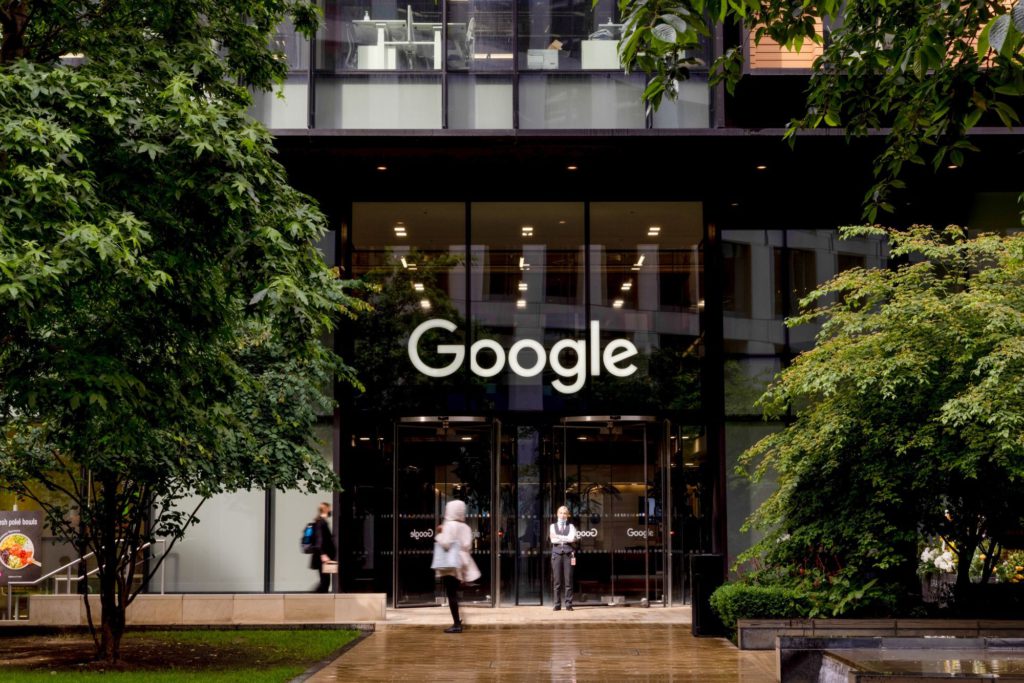
(Bloomberg) — An Apple Inc. executive who left over the company’s stringent return-to-office policy is joining Alphabet Inc.’s DeepMind unit, according to people with knowledge of the matter. 

Ian Goodfellow, who oversaw machine learning and artificial intelligence at Apple, left the iPhone maker in recent weeks, citing the lack of flexibility in its work policies. The company had been planning to require corporate employees to work from the office on Mondays, Tuesdays and Thursdays, starting this month. That deadline was put on hold Tuesday, though. 

Goodfellow’s jump to Google is a coup for the DeepMind division, which is bringing him on as an individual contributor, said the people, who asked not to be identified because the hiring isn’t yet public. Goodfellow is known as one of the foremost machine learning researchers, and the move is a reunion of sorts. He worked as a senior researcher at Google until 2019.

DeepMind declined to comment on the hire. Alphabet’s return-to-office policy is generally looser than Apple’s. Though the search-engine giant is also asking employees to come back to the office, it’s approving exemptions for most employees seeking to work from home. Goodfellow hasn’t yet started the new job. 

Goodfellow was a director of machine learning within Apple’s Special Projects Group and supervised engineers working on autonomous technology. The director level is one of the most senior at Apple. The company has about 1,000 directors of a total of 170,000 employees — a figure that includes retail workers.

Read more: Apple workers push back on office return

Goodfellow is the most senior employee known to leave over the company’s return-to-office policy, but more departures are expected as the rules go into effect. For now, though, Apple’s desire to have its employees in offices three days a week is up in the air. The rule, adopted in April, had been slated to go into effect May 23. On Tuesday, Apple told employees that the deadline was delayed for “the time being,” but workers are still expected in the office two days per week. 

For months, some Apple employees have complained about the return-to-office drumbeat, saying they’re more productive at home and that remote work saves time and energy that would be spent commuting. Apple was primarily a remote-work company since the beginning of the pandemic in 2020. 

“Everything happened with us working from home all day, and now we have to go back to the office, sit in traffic for two hours and hire people to take care of kids at home,” a different former Apple employee told Bloomberg last month. That worker also left, in part, because of the stringent return-to-the-office push. 

When Goodfellow departed Apple, he cited the policy in an internal note to staff. The executive is credited with creating GANs, or generative adversarial networks. The networks allow computers to create images or data sets with remarkable accuracy, making research much more effective. They’ve been used in fields as far-flung as video games and astronomy, but most people may be familiar with their use in “deepfake” photos or videos.

DeepMind, widely considered a leading AI research hub, is famous for its software that conquered the game Go. The lab’s research has been used to improve some Google services, like YouTube bandwidth, and has recently moved more into health-care and biology applications, spinning out a new company working on drug discovery.

More stories like this are available on bloomberg.com

©2022 Bloomberg L.P.
Musk’s SpaceX Vies for Military Satellite Launches as Defense Giants Reset

(Bloomberg) — Elon Musk’s Space Exploration Technologies Corp. is expected once again to vie against a joint venture of defense giants Boeing Co. and Lockheed Martin Corp. for shares of at least 39 U.S. military and intelligence satellite launches in fiscal years 2025 through 2027.

Other competitors may also emerge for the third phase of the national security space launch program, which is laid out in new Air Force budget projections. Northrop Grumman Corp. and Jeff Bezos’s Blue Origin LLC bid unsuccessfully in the previous phase so they may try again.

Musk forced his way into the lucrative defense launch business after campaigning vigorously in Congress and the courts, where he denounced the Boeing-Lockheed joint venture, United Launch Alliance, as a monopoly of the two biggest U.S. defense contractors. After settling a lawsuit against the Air Force in 2015, closely held SpaceX was certified to compete for launches. 

United Launch Alliance won 25 of the 42 military launches planned for Phase 2 through fiscal 2024, with the other 17 going to SpaceX. SpaceX’s missions this year included carrying two national security payloads developed by the National Reconnaissance Office, which is in charge of spy satellites.

To an extent, SpaceX may now be the established leader because the Boeing-Lockheed team is offering its new Vulcan family of rockets, which haven’t yet flown.

The White House has proposed giving the Air Force the biggest percentage increase among the military services in its fiscal 2023 budget, largely to develop new space-based systems such as a “Resilient Missile Warning and Tracking” program intended to spot the maneuvering of Chinese hypersonic weapons. The Space Force’s research and development budget alone would grow to $15.8 billion, up from $11.3 billion requested for this year. The launch program will send these developing systems into space.

The Phase 3 acquisition strategy is currently being crafted to determine “the contract type, period of performance and total number of launches under development,” Captain James Fisher, a Space Force spokesman, said in a statement. It will be a full and open competition “so it may include additional competitors beyond the current Phase 2 providers,” he said. 

The award would be made by Sept. 30, 2024, Fisher said.

As for the remaining Phase 2 missions, eight are planned for fiscal 2023, including three for the Space Force, three for the recently absorbed Space Development Agency and two for the National Reconnaissance Office, Fisher said. Twenty are planned in fiscal 2024, including seven NRO and 13 Space Force launches, Fisher said.

(Updates with number of launches in fourth paragraph)

More stories like this are available on bloomberg.com

©2022 Bloomberg L.P.

Cerebral Investors Push for Founder’s Dismissal

(Bloomberg) — Investors in Cerebral Inc., the online mental health startup that’s the subject of a federal investigation into its prescribing practices, have pushed to dismiss its founder and chief executive officer, Kyle Robertson, according to people familiar with the matter.

Robertson remains CEO, though his access to the company’s internal communications systems was revoked late Monday, said one of the people, all of whom requested anonymity discussing the attempted ouster.

News of the power struggle emerged just hours after Cerebral said late Monday night that its clinicians would no longer prescribe most controlled substances. The company didn’t immediately respond to requests for comment.

Cerebral, which is backed by investors including SoftBank Vision Fund 2, Len Blavatnik’s Access Industries and WestCap Group, has been valued at $4.8 billion. In a Bloomberg Businessweek story that was published in March, dozens of the company’s clinicians and other staff expressed fears that the company was over-prescribing the amphetamines used to treat ADHD.

Agents from the federal Drug Enforcement Administration have spoken with at least two Cerebral employees about its handling of controlled substances, according to two people familiar with the conversations. The company confirmed it was subpoenaed by the US Attorney’s office earlier this month. A spokesperson said at the time that “no regulatory or law enforcement authority has accused Cerebral of violating any law.”

In an email sent to employees on Monday afternoon, Robertson said the company’s decision to stop prescribing most controlled substances was the result of “the evolving landscape around the accessibility of mental healthcare, and the ability for patients to return to an in-person or hybrid care model.”

A copy of Robertson’s email was reviewed by Bloomberg News. He wrote that Cerebral will discontinue controlled substance prescriptions for new patients beginning on May 20 and for existing patients on Oct. 15. He said Cerebral will continue to prescribe Suboxone and Narcan, which are treatments for opioid addiction and overdoses.

(Updates with additional detail, beginning in second paragraph)

More stories like this are available on bloomberg.com

©2022 Bloomberg L.P.
Goldman, JPMorgan Could Get $133 Million for Advising Twitter on Musk Deal

(Bloomberg) — Goldman Sachs Group Inc. and JPMorgan Chase & Co. are set to earn a combined $133 million in fees for advising Twitter Inc. on its $44 billion acquisition by Elon Musk — if the deal closes. 

Twitter agreed to pay Goldman Sachs $80 million, the bulk of which will get paid once the deal closes, according to a US securities filing on Tuesday. The bank got $15 million of that when the deal was announced. JPMorgan is poised for a $53 million payout, $5 million of which was payable after the lender delivered its opinion to Twitter’s board on April 25. The rest hinges on the deal closing. 

The bulk of the fees could be at risk: Musk declared in a tweet Tuesday he won’t proceed with his takeover unless the social media giant can prove bots make up fewer than 5% of its users, casting uncertainty over the deal. Twitter said in a statement that it’s “committed to completing the transaction on the agreed price and terms as promptly as practicable.”

While the proposed takeover includes a $1 billion breakup fee for each party, Musk can’t just pay the fee and walk away. The merger agreement includes a specific performance provision that allows Twitter to force Musk to consummate the deal, according to the filing. 

If the deal goes through, the payouts would be a welcome windfall for investment banks grappling with a slowdown in dealmaking. In the first quarter, revenue from advising on mergers and acquisitions gained from a year earlier at the five biggest banks, bolstered by deals announced in 2021.

More stories like this are available on bloomberg.com

©2022 Bloomberg L.P.

CBS Parent Paramount Jumps After Buffett Bets $2.6 Billion

(Bloomberg) — Paramount Global surged in New York trading Tuesday after Warren Buffett’s Berkshire Hathaway Inc. reported purchasing an 11% stake in the media company, becoming the largest holder of nonvoting shares.

Shares of Paramount rose 15% to close at $32.32 in New York, the biggest one-day gain since March 2020, when the company was known as ViacomCBS Inc.

Berkshire invested $2.61 billion for 68.9 million Class B shares of New York-based Paramount, according to a regulatory filing with the US Securities and Exchange Commission. The voting shares are controlled by National Amusements Inc., led by Shari Redstone, Paramount’s chairwoman. 

Berkshire may be betting on Paramount as a potential acquisition target. Like other media companies, Paramount is pushing hard into streaming: It’s the owner of the Paramount+ and Pluto online TV services. But Bloomberg Intelligence analyst Geetha Ranganathan said the company’s best path may be to tie up with another company.

“Despite its streaming success, we expect Paramount to remain subscale, suggesting that it eventually will have to sell itself to a bigger media company or a deep-pocketed tech giant,” Ranganathan said in a note. The company’s “digestible size (enterprise value around $35 billion), streaming success and content-production capabilities that include a film studio make Paramount an attractive target.”

Berkshire also disclosed new stakes in banking companies Ally Financial Inc. and Citigroup Inc. Buffett’s assistant didn’t respond to a request for comment. Paramount also didn’t immediately respond.

The investment takes advantage of the media company’s deflated share price, according to Cathy Seifert, an analyst with CFRA Research. Through Monday’s close, Paramount was down 7.2% this year, less than the S&P 500’s 16% drop. 

“Given the year-to-date weakness in the communication services space and the disruption in the streaming space, valuations have been compressed and may look more attractive,” Seifert wrote in an email.

Berkshire has increased its position in media and technology companies over the past several months. The company has invested in Activision Blizzard Inc., a video-game publisher that agreed to be acquired by Microsoft Corp., as well as HP Inc., a computer manufacturer.

The investment in Paramount “fits the profile,” Edward James analyst Jim Shanahan said in a phone interview.

(Updates shares, adds analysts’ comments starting in seventh paragraph.)

More stories like this are available on bloomberg.com

©2022 Bloomberg L.P.
US Stocks Rally; Treasury Curve Flattens on Fed: Markets Wrap

(Bloomberg) — US stocks regained session highs as investors weighed comments from Federal Reserve Chair Jerome Powell on the outlook for higher interest rates. Short-term Treasuries underperformed, extending a flattening in the yield curve.

The S&P 500 rose to the highest closing level in more than a week amid a broad-based rally, as solid economic data boosted risk sentiment. The Nasdaq 100 jumped more than 2%, with Apple Inc., Tesla Inc. and Nvidia Corp. bouncing back from a tech-led selloff Monday. 

Treasury yields climbed Tuesday, with more policy-sensitive front-end tenors leading the way higher reflecting expectations for a series Fed rate hikes, as Powell said the central bank won’t hesitate to raise rates above neutral if needed. No one should doubt the US central bank’s resolve to curb the highest inflation in decades, Powell said. He also noted that financial conditions have tightened quite a bit.

WATCH: Fed Chair Powell says he wants to keep pushing until inflation comes down.

“The market is in the middle of a powerful moment where it’s digesting a major and relatively rapid change in expectations for monetary policy and what financial conditions should look like to keep inflation under control,” Lauren Goodwin, economist and portfolio strategist at New York Life Investments, said by phone. “And so we’ve already seen a lot of tightening in market financial conditions.”

Earlier, St. Louis Fed President James Bullard, a hawk and Federal Open Market Committee voter, said he backs the central bank’s plan to hike interest rates in half-percentage-point steps — moves that are already reflected in rates markets for the upcoming three FOMC meetings. 

Risk sentiment caught a tailwind Tuesday after data showed U.S. retail sales grew at a solid pace last month, the latest evidence that consumers remained resilient in the face of inflation and higher rates. Another report showed factory production rose at a solid pace for a third month in April. 

The dollar stayed lower, weakening against all of its Group-of-10 counterparts except the yen, while European currencies led gains. The risk mood in Europe got a lift from data showing the economy in the euro area expanded more than initially estimated at the start of the year, defying headwinds from the early days of the war in Ukraine. 

Commentary

  • “Retail sales were much stronger than expected, especially including revisions,” said Dennis DeBusschere, the founder of 22V Research. “This has been a worry of ours — the consumer staying too hot for the Fed. The consumer momentum and strength has been much stronger than just about anyone would have thought.”
  • “The takeaway from this morning’s retail sales print was confirmation that spending during the second quarter has started on solid footing,” wrote BMO’s Ian Lyngen.
  • “Inflation may be weighing down market sentiment and causing concern for the Fed, but it doesn’t seem to be slowing down the consumer at the moment,” said Mike Loewengart, managing director of investment strategy at E*Trade from Morgan Stanley. “That’s not to say that higher prices won’t start to creep into these numbers. After all we did see a decline month over month. And with a mixed bag on the retail earnings front today, it remains to be seen how investors will digest this read on the consumer.”
  • “Going into ‘23, ‘24, yeah there’s a recession out there somewhere but I don’t see that in the near-term,” Scott Clemons, chief investment strategist at Brown Brothers Harriman, said on Bloomberg TV. “The backdrop is just too strong.”

Stocks briefly dipped to session lows in morning trading amid reports that New York City raised its Covid-19 alert level to high amid increasing pressure on the health care system, a move that it signaled Monday could be imminent. 

On the corporate front, Citigroup Inc. jumped after report showed Warren Buffett’s Berkshire Hathaway took a stake in the lender. Walmart Inc. tumbled after cutting its profit outlook due to inflationary pressures. Boeing Co. rose after the Wall Street Journal reported that the black box for a China Eastern Airlines Corp. jet suggested the plane took an intentional nosedive.

US-listed Chinese tech stocks jumped Tuesday, after a state television report that top officials reaffirmed support for internet companies. JD.com Inc., China’s second-largest e-commerce operator, rose after revenue growth beat estimates.

Meanwhile, Shanghai reported three days of zero community transmission, a milestone that could lead officials to start unwinding a punishing lockdown. Flareups elsewhere in China showed how hard it is to tackle the omicron strain.

Cryptocurrencies weathered the latest stablecoin turbulence, with Bitcoin rising above the $30,000 mark. Oil hovered around $114 a barrel in New York amid news that the US government will allow Chevron Corp. to negotiate its oil license with Venezuela.

What damage will be done to the US economy and global markets before the Fed changes tack and eases policy again? The “Fed Put” is the theme of this week’s MLIV Pulse survey. Click here to participate anonymously.

What to watch this week:

  • G-7 finance ministers and central bankers meeting Wednesday
  • Eurozone, UK CPI Wednesday
  • Philadelphia Fed President Patrick Harker speaks Wednesday
  • China loan prime rates Friday

Some of the main moves in markets:

Stocks

  • The S&P 500 rose 2% as of 4 p.m. New York time
  • The Nasdaq 100 rose 2.6%
  • The Dow Jones Industrial Average rose 1.3%
  • The MSCI World index rose 2%

Currencies

  • The Bloomberg Dollar Spot Index fell 0.7%
  • The euro rose 1.1% to $1.0545
  • The British pound rose 1.3% to $1.2482
  • The Japanese yen fell 0.2% to 129.38 per dollar

Bonds

  • The yield on 10-year Treasuries advanced 10 basis points to 2.98%
  • Germany’s 10-year yield advanced 11 basis points to 1.05%
  • Britain’s 10-year yield advanced 15 basis points to 1.88%

Commodities

  • West Texas Intermediate crude fell 1.9% to $112.06 a barrel
  • Gold futures were little changed

More stories like this are available on bloomberg.com

©2022 Bloomberg L.P.
Walmart Gets Hammered by Worst Drop Since 1987 on Forecast Cut

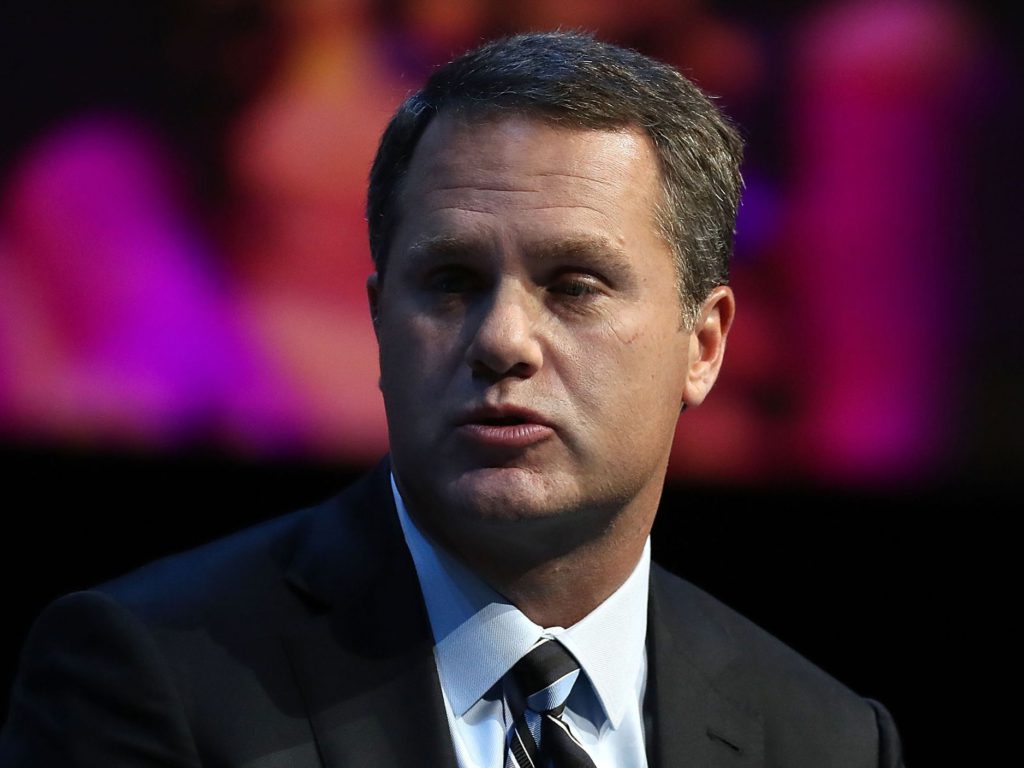
(Bloomberg) — Walmart Inc. tumbled the most in almost 35 years after cutting its full-year profit forecast due to inflationary pressures, especially in food and fuel.

The worsening outlook shook Wall Street’s faith in Walmart’s ability to cope with higher costs for merchandise, transportation and labor. The results also underscored the pressure on US consumers as soaring prices send sentiment to the lowest in a decade. Walmart and peers already were facing tough comparisons to early 2021, when federal stimulus payments bolstered household spending during the coronavirus pandemic.

Chief Executive Officer Doug McMillon set the stage for more price increases at the world’s largest retailer, saying the company would seek to balance customers’ needs with the goal of delivering profit growth. His goal is to raise prices while seeking to stay below competitors and limiting the price bumps on entry-level food items.

“Price leadership is especially important right now,” McMillon told analysts. He pledged to vowed to put the disappointing quarter “behind us and have a strong year.” 

The shares sank 11% to $131.35 at the close in New York, the biggest drop since October 1987. Walmart had gained 2.4% so far this year through Monday, bucking a selloff of US stocks.

Earnings are likely to drop about 1% this year, the retailer said in a statement Tuesday, abandoning its previous forecast for a mid-single-digit gain. In the first quarter, adjusted profit sank to $1.30 a share, below the lowest of 29 analyst estimates compiled by Bloomberg.

While revenue growth remained robust, U.S. sales of groceries accounted for much of the growth — and they tend to have lower margins than general merchandise, sales of which fell. The results are a “clear negative,” Adam Crisafulli, an analyst at Vital Knowledge, said in a note to clients. 

“One of the world’s largest and most sophisticated companies proved unable to escape the same corporate margin pressures hurting most firms and even the sales performance isn’t as good as it looks,” he said. That’s because revenue was “driven mostly by food inflation while the discretionary merchandise category slumped 10-11%,” he said.  

Unique Perspective

Walmart’s size gives it a unique perspective on the US economy, and analysts pressed the company Tuesday for insight on whether shoppers are pulling back their spending as they get squeezed by the highest inflation in four decades. The retailer said it’s seeing some consumers switch to cheaper private-label brands in the grocery, but at the same time, there’s growing demand for some high-end items like video-game consoles.

“The operating backdrop has become increasingly complex,” Edward Kelly, an analyst at Wells Fargo & Co., said in a report in which he referred to Walmart by its ticker symbol. “Consumers are starting to make tougher choices, and while WMT is well positioned for trade down as a value player, it needs to take more price.”

Surging fuel prices — spurred in part by Russia’s invasion of Ukraine — pushed up costs faster than Walmart was able to pass them along to consumers last quarter, McMillon told analysts. He also called out labor challenges and temporary overstaffing due to Covid, higher costs for containers and storage, excess inventory, and a shift in spending away from general merchandise, which typically has higher profit margins than groceries.

For the current quarter, Walmart said it now expects earnings to be “flat to up slightly” compared with a prior view of a low- to mid-single-digit increase.

Read more: Walmart’s wipeout costs the world’s richest family $17 billion

Same-store sales at US Walmart stores rose 3% in the first quarter, excluding fuel, topping analyst estimates for 2% growth. Revenue climbed 2.4% to $141.6 billion, while Wall Street had expected $139.1 billion.

Walmart’s revenue gains are consistent with new government data released Tuesday showing that US retail sales grew at a solid pace in April despite rising prices.

For the full year, Walmart raised its forecast for same-store sales growth at US Walmart stores to about 3.5%, up from a prior view of “slightly above 3%.”

E-commerce grew 1% in the quarter. The online business got a substantial boost during pandemic lockdowns, but demand has been slowing as shoppers venture back into stores.

(Updates to include closing price.)

More stories like this are available on bloomberg.com

©2022 Bloomberg L.P.
Stocks Extend Gains; Treasury Curve Flatter on Fed: Markets Wrap

(Bloomberg) — US stocks regained session highs as investors weighed comments from Federal Reserve Chair Jerome Powell on the outlook for higher interest rates. Short-term Treasuries underperformed, extending a flattening in the yield curve.

The S&P 500 bounced higher as a broad-based rally remained intact. Treasury yields climbed, with more policy-sensitive front-end tenors leading the way higher reflecting expectations for a series Fed rate hikes, as Powell said the central bank won’t hesitate to raise rates above neutral if needed. 

The dollar stayed lower, weakening against all of its Group-of-10 counterparts except the yen. 

Powell said no one should doubt the US central bank’s resolve to curb the highest inflation in decades, including pushing rates into restrictive territory if needed. He also noted that financial conditions have tightened quite a bit.

WATCH: Fed Chair Powell says he wants to keep pushing until inflation comes down.

“The market is in the middle of a powerful moment where it’s digesting a major and relatively rapid change in expectations for monetary policy and what financial conditions should look like to keep inflation under control,” Lauren Goodwin, economist and portfolio strategist at New York Life Investments, said by phone. “And so we’ve already seen a lot of tightening in market financial conditions.”

Earlier, St. Louis Fed President James Bullard, a hawk and Federal Open Market Committee voter, said he backs the central bank’s plan to hike interest rates in half-percentage-point steps — moves that are already reflected in rates markets for the upcoming three FOMC meetings. 

Risk sentiment caught a tailwind Tuesday after data showed U.S. retail sales grew at a solid pace last month, the latest evidence that consumers remained resilient in the face of inflation and higher rates. Another report showed factory production rose at a solid pace for a third month in April. The risk mood in Europe got a lift from data showing the economy in the euro area expanded more than initially estimated at the start of the year, defying headwinds from the early days of the war in Ukraine. 

Commentary

  • “Retail sales were much stronger than expected, especially including revisions,” said Dennis DeBusschere, the founder of 22V Research. “This has been a worry of ours — the consumer staying too hot for the Fed. The consumer momentum and strength has been much stronger than just about anyone would have thought.”
  • “The takeaway from this morning’s retail sales print was confirmation that spending during the second quarter has started on solid footing,” wrote BMO’s Ian Lyngen.
  • “Inflation may be weighing down market sentiment and causing concern for the Fed, but it doesn’t seem to be slowing down the consumer at the moment,” said Mike Loewengart, managing director of investment strategy at E*Trade from Morgan Stanley. “That’s not to say that higher prices won’t start to creep into these numbers. After all we did see a decline month over month. And with a mixed bag on the retail earnings front today, it remains to be seen how investors will digest this read on the consumer.”
  • “Going into ‘23, ‘24, yeah there’s a recession out there somewhere but I don’t see that in the near-term,” Scott Clemons, chief investment strategist at Brown Brothers Harriman, said on Bloomberg TV. “The backdrop is just too strong.”

Stocks briefly dipped to session lows in morning trading amid reports that New York City raised its Covid-19 alert level to high amid increasing pressure on the health care system, a move that it signaled Monday could be imminent. 

On the corporate front, Citigroup Inc. jumped after report showed Warren Buffett’s Berkshire Hathaway took a stake in the lender. Walmart Inc. tumbled after cutting its profit outlook due to inflationary pressures. Boeing Co. rose after the Wall Street Journal reported that the black box for a China Eastern Airlines Corp. jet suggested the plane took an intentional nosedive.

US-listed Chinese tech stocks jumped Tuesday, after a state television report that top officials reaffirmed support for internet companies. JD.com Inc., China’s second-largest e-commerce operator, rose after revenue growth beat estimates.

Meanwhile, Shanghai reported three days of zero community transmission, a milestone that could lead officials to start unwinding a punishing lockdown. Flareups elsewhere in China showed how hard it is to tackle the omicron strain.

Cryptocurrencies weathered the latest stablecoin turbulence, with Bitcoin rising above the $30,000 mark. Oil hovered around $114 a barrel in New York amid news that the US government will allow Chevron Corp. to negotiate its oil license with Venezuela.

What damage will be done to the US economy and global markets before the Fed changes tack and eases policy again? The “Fed Put” is the theme of this week’s MLIV Pulse survey. Click here to participate anonymously.

What to watch this week:

  • G-7 finance ministers and central bankers meeting Wednesday
  • Eurozone, UK CPI Wednesday
  • Philadelphia Fed President Patrick Harker speaks Wednesday
  • China loan prime rates Friday

Some of the main moves in markets:

Stocks

  • The S&P 500 rose 1.9% as of 3:42 p.m. New York time
  • The Nasdaq 100 rose 2.5%
  • The Dow Jones Industrial Average rose 1.3%
  • The MSCI World index rose 2%

Currencies

  • The Bloomberg Dollar Spot Index fell 0.7%
  • The euro rose 1.1% to $1.0549
  • The British pound rose 1.4% to $1.2486
  • The Japanese yen fell 0.2% to 129.38 per dollar

Bonds

  • The yield on 10-year Treasuries advanced eight basis points to 2.96%
  • Germany’s 10-year yield advanced 11 basis points to 1.05%
  • Britain’s 10-year yield advanced 15 basis points to 1.88%

Commodities

  • West Texas Intermediate crude fell 1.6% to $112.37 a barrel
  • Gold futures were little changed

More stories like this are available on bloomberg.com

©2022 Bloomberg L.P.
DAI Is King Of Decentralized Stablecoins After Terra Collapse

(Bloomberg) — Just when you thought the world of cryptocurrency stablecoins couldn’t get more complicated, it does. 

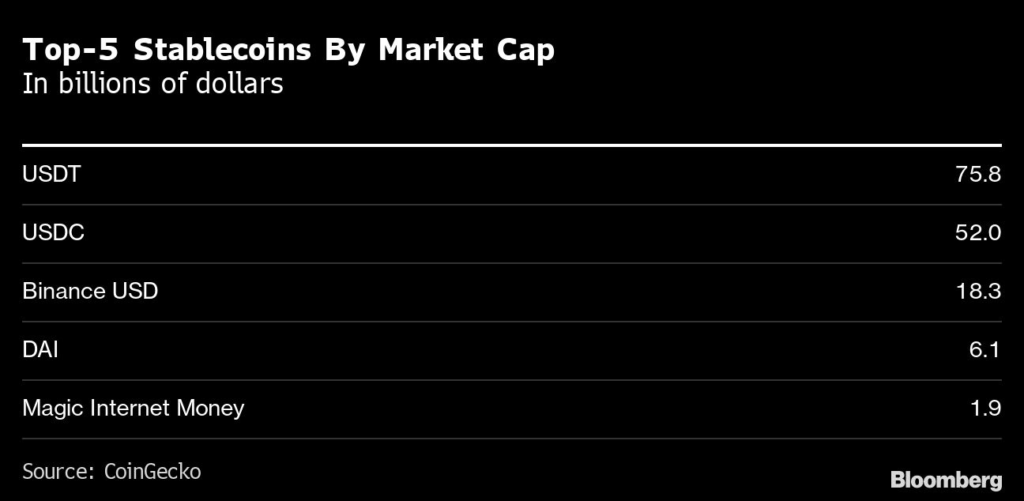
A so-called governance token named MKR, which is used to help run the decentralized DAI stablecoin, has surged about 40% in value over the past week in the wake of the collapse of the algorithmic stablecoin TerraUSD that shook cryptocurrency markets. DAI is part of the ecosystem of the MakerDAO, one of the first decentralized autonomous organizations in crypto, which in theory acts like a community of pooled interests with no central control.

The idea of decentralized decision making, while long a theme in crypto, is particularly attractive given the amount of sway over TerraUSD, or UST, by Terraform Labs co-founder Do Kwon. UST was also billed as a decentralized coin, though it attempted to use algorithms to balance supply to maintain a 1-to-1 peg to the dollar. That failed when the built-in arbitrage mechanism no longer worked as demand for Terra’s Luna token tumbled. Maybe more importantly, DAI seeks to overcollateralize assets. 

“This is directly related to UST blowing up,” said Henry Elder, head of decentralized finance at asset manager Wave Financial. “UST imploded pretty much the moment demand flattened out, leaving Maker as the undisputed king of decentralized stablecoins for the time being.”  

Stablecoins can be a bridge between two worlds that weren’t designed with mixing in mind — cryptocurrencies and traditional finance. That makes them useful as a way to lock in gains from crypto trading or as a safe harbor if investors think a downturn is coming. They also make it easier to move funds onto crypto exchanges and have become a key component of the world of DeFi.

DAI requires overcollateralization via Ethereum-based coins. For example, users have had to deposit $150 worth or more of Ether to get $100 worth of DAI. If the price of Ether drops, they have to add more collateral or face liquidation.

MKR directly benefits when DAI does well. Certain fees that MakerDAO collects go towards buying up MKR on secondary market and burning it. 

Created in 2017, DAI is the oldest decentralized stablecoin. It has survived the crypto winter of 2018 and the tribulations of the Covid lockdown of 2020.

“Market seems to be valuing stability/moderation in stablecoinland,” said Michael Bucella, general partner at BlockTower Capital. “Likely a relative value play, DAI is ‘performing well’ and has been stress tested before, is one of the few decentralized money plays remaining.”

More stories like this are available on bloomberg.com

©2022 Bloomberg L.P.

Twitter Loses Three More Senior Employees Ahead of Musk’s Takeover

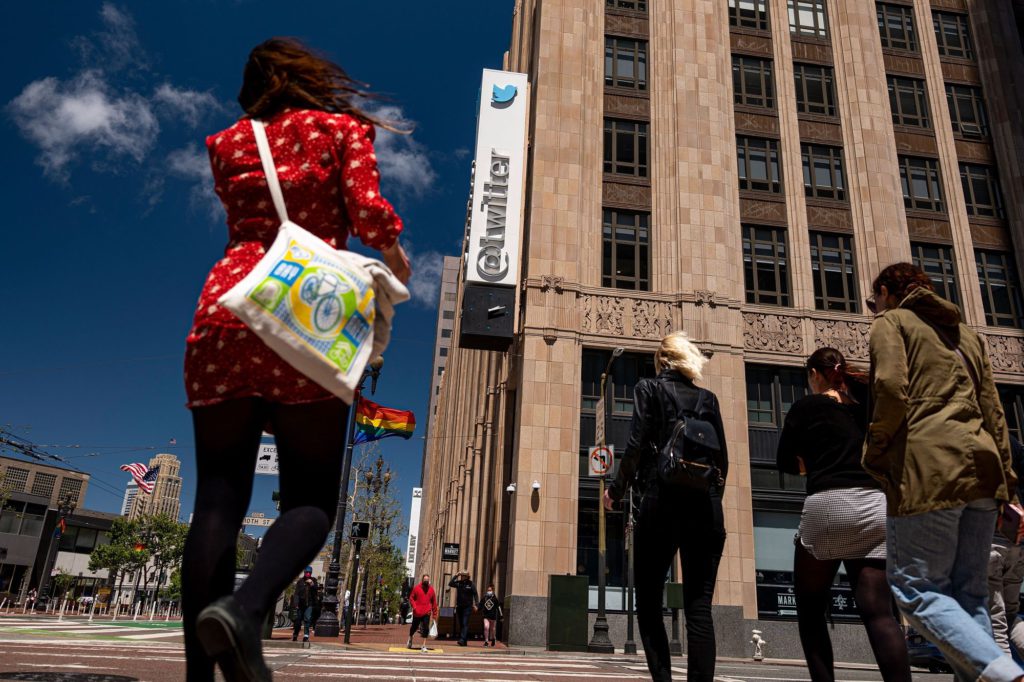
(Bloomberg) — Twitter Inc. is losing three more senior employees, including two vice presidents, a reflection of the uncertainty inside the social media company as staffers wait for Elon Musk’s $44 billion acquisition to close.

Ilya Brown, a VP of product management; Katrina Lane, VP of Twitter Service; and Max Schmeiser, head of data science, are all leaving the company, according to internal memos described to Bloomberg. All three chose to exit on their own, according to the memos.

A Twitter spokeswoman confirmed the executives’ departures.

Less than a week ago, Twitter shook up its product organization, including firing two top product executives by Chief Executive Officer Parag Agrawal. Twitter also instituted budget cuts and implemented a hiring freeze last week, and while the company said it was not planning layoffs, Agrawal told employees in an email, “Leaders will continue making changes to their organizations to improve efficiencies as needed.”

Twitter employees are in a state of limbo as the San Francisco-based company waits for Musk, the billionaire CEO of Tesla Inc., to finalize his deal to take the social network private for $54.20 a share. At all-hands meetings over the past month, Twitter executives have faced questions about stock compensation and job security. During one presentation, leadership tried to motivate employees by reminding them why they should bother showing up for work.

Complicating matters has been Musk’s provocative tweeting and public comments. He has criticized Twitter executives and is now saying the company may be misleading the public about how many bot and spam accounts are included in Twitter’s calculation for total users.

Musk has said the deal is “on hold” until he gets more information. Twitter said it’s committed to completing the sale. The shares, which had dropped for seven straight trading days, rose 2.9% to $38.47 in the late afternoon New York time on Tuesday. That’s still far below the offer price, indicating investor skepticism that the deal will come to fruition. 

The Twitter spokeswoman said about the departing employees: “We are thankful for all of their hard work and leadership,” according to her emailed statement. “We continue to be focused on providing the very best experience to the people on Twitter.”

(Updates with Twitter shares in seventh paragraph.)

More stories like this are available on bloomberg.com

©2022 Bloomberg L.P.

Close Bitnami banner
Bitnami