

Bloomberg

Biden Condemns White Supremacy ‘Poison’ Sown in Media, Politics

(Bloomberg) — President Joe Biden called the massacre of shoppers in a mostly Black neighborhood in Buffalo, New York, “terrorism” and called on Americans to reject White supremacy, as well as the politicians and media figures who promote it. 

“I condemn those who spread the lie for power, for political gain and for profit,” Biden said in Buffalo on Tuesday after meeting with families of victims of the attack, which killed 10 and wounded three. Eleven of the victims were Black, and the alleged shooter is White.

“White supremacy is a poison. It’s a poison, through — it really is — running through our body politic, and it’s been allowed to fester and grow right in front of our eyes,” Biden said.

The massacre at a supermarket on Saturday is being investigated as a racially-motivated hate crime. While Biden called the incident “terrorism,” he did not name any individuals or institutions that he believes spread the racist rhetoric known as “replacement theory.” The Senate’s top Democrat, Chuck Schumer, urged Fox Corp. Chairman Rupert Murdoch to ban the ideology from his network.

Schumer, in a letter to company executives, accused Fox News of promoting White nationalist “Great Replacement” rhetoric.

The attack has renewed calls among congressional Democrats for stricter gun control legislation and stronger hate-crime laws, and has prompted infighting within the Republican Party over the violent and racially polarizing language some of its leaders and media stars use in public messaging.

Biden called the shooting “violence inflicted in the service of hate and the vicious thirst for power to find one group of people inherently inferior to any other group.

“A hate that, through the media and politics, the internet, has radicalized angry, alienated, lost, and isolated individuals into falsely believing that they will be replaced,” he said. “That’s the word, ‘replaced’ by the other.”

Biden later told reporters that “anybody who echoes replacement theory is to blame — not for this particular crime —  but it serves no purpose, no purpose except profit and/or political benefit. And it’s wrong, it’s simply wrong.”

Representative Liz Cheney, a Wyoming Republican, accused her party’s leadership of enabling “white nationalism, white supremacy and antisemitism” after the shooting and demanded they root it out.

Representative Adam Kinzinger, an Illinois Republican, accused Representative Elise Stefanik of New York, who replaced Cheney as the No. 3 House Republican a year ago, of pushing “replacement theory,” which posits that Democratic elites seek to dis-empower White Americans.

Kinzinger cited a Stefanik ad posted on Facebook showing images of migrants crossing the border over the text: “Radical Democrats are planning their most aggressive move yet: a PERMANENT ELECTION INSURRECTION.”

Stefanik senior adviser Alex DeGrasse on Monday said that any attempt “to blame the heinous shooting in Buffalo on the congresswoman is a new disgusting low for the Left, their Never Trump allies, and the sycophant stenographers in the media.”

Kinzinger and Cheney are the only Republicans on the House committee investigating the Jan. 6, 2021, insurrection at the Capitol instigated by former President Donald Trump. The Republican National Committee censured them for their participation.

The alleged gunman, an 18-year-old White man identified as Payton Gendron, reportedly wrote in a manifesto that shoppers at the supermarket came from a culture seeking to “ethnically replace my own people.” Authorities have not yet confirmed the authenticity of the document.

The suspect spoke explicitly about his plans to commit a terrorist act on the popular chat app Discord since at least last December, according to logs of his posts reviewed by Bloomberg.  

“No more,” Biden said. “We need to say as clearly and forcefully as we can that the ideology of White supremacy has no place in America.”

Intractable Issues

Congressional action on such intractable, divisive issues as guns or White nationalist extremism is highly unlikely with midterm elections just months away. 

That leaves Biden with little to offer in the way of policy changes to yet another community in mourning from racist violence. The visit comes as the president grapples with daunting challenges — inflation, record-high gasoline prices, a shortage of baby formula and an overall increase in violent crime — that have Democrats poised for a wipe-out in the November election.  

Democrats have repeatedly tried and failed to enact new gun-control measures — such as universal background checks and an assault weapons ban — in the decade since a gunman killed 26 people, most of them first-graders, at the Sandy Hook elementary school in Newtown, Connecticut.

Multiple proposals have been blocked due to opposition from Republicans and a handful of moderate Democrats.

Efforts to advance bipartisan background-check legislation sputtered last year in the evenly divided Senate, even after a mass shooting that targeted Asian-owned businesses in the Atlanta area. 

The inaction has led Biden to resort to executive measures, which are limited in scope, to address the problem. 

The president last month announced a rule to crack down on the manufacture and sale of so-called “ghost guns” that are homemade and lack serial numbers, making them hard to trace. 

Biden nominated Steven Dettelbach to lead the Bureau of Alcohol, Tobacco, Firearms and Explosives. The former federal prosecutor would be the first permanent agency chief since 2015, if confirmed by the Senate. 

“We can keep assault weapons off our streets. We’ve done it before,” he said Tuesday.

Charlottesville Echoes

The apparent motives in the Buffalo shooting pose another challenge for Biden, who said he was inspired to run for president by the 2017 White nationalist march in Charlottesville, Virginia, that was fueled by replacement theory adherents. Gunmen who carried out mass shootings in Pittsburgh and El Paso in recent years also cited an immigrant “invasion” as their motivations. 

Just under 62% of single-incident hate crimes reported in 2020 targeted people based on their race or ethnicity, Federal Bureau of Investigation data show. Anti-Black racism drove a plurality of those crimes. That year also saw a 6.1% overall increase in hate crimes from 2019, though the 2020 number is likely an undercount.

Slightly more than 3,800 of the 6,900 known offenders in hate crimes reported in 2020 were White, per the FBI report.

Yet preventing hate crimes often falls to state and local authorities. Homeland Security Secretary Alejandro Mayorkas said his department had issued an “unprecedented number” of alerts to police departments warning of people who are “descending into violence by reason of an ideology of hate, or false narrative.” 

DHS also is providing grants to help state and local governments combat domestic extremism, Mayorkas said.

Senate Judiciary Committee Chair Dick Durbin said Monday that the panel would soon hold a hearing on domestic terrorism. “We have to break down these groups. They are recruiting young people into their ranks,” he told Bloomberg Television.

The suspect in the Buffalo shooting was investigated less than a year ago by New York state police after they received a report he made threats at his high school, according to the Washington Post.

New York State leaders said Sunday they would explore new regulations on social media companies and gun manufacturers in response to the shooting, which the gunman live-streamed via Twitch.

More stories like this are available on bloomberg.com

©2022 Bloomberg L.P.

Apple Delays Plan to Have Staff in Office Three Days a Week

(Bloomberg) — Apple Inc. delayed a plan to require workers to come back to the office three days a week, citing a resurgence in Covid-19 cases, marking the latest setback in its efforts to return to normal.

The company informed employees Tuesday that it’s delaying the requirement, which had been slated to go into effect on May 23, according to a memo seen by Bloomberg. However, the company is still expecting workers to come to the office two days per week. The company said the requirement is being delayed for “the time being” and didn’t provide a new date. 

Apple was set to require employees to work from the office on Mondays, Tuesdays and Thursdays beginning next week — a policy that had been controversial among some staff. Already, employees have been coming in two days a week as part of a ramp-up effort that began in April. For now, that mandate isn’t changing.

The company also told staff that they must again wear masks in common areas — at least in Silicon Valley offices. Separately, retail employees were informed Tuesday that about 100 US stores will again require mask wearing by staff members as well. Apple had dropped that requirement in March when cases eased.

A spokesman for the Cupertino, California-based tech giant declined to comment. 

While the delay is related to Covid-19’s recent rebound, some Apple employees have complained about the return-to-work plan, saying that it limits productivity. They’ve said that commute time takes away hours that could be put toward their work. Employees have also complained that the office return ignored the lack of a vaccine for young children.

(Updates with Apple retail stores reinstating mask mandate in fourth paragraph.)

More stories like this are available on bloomberg.com

©2022 Bloomberg L.P.
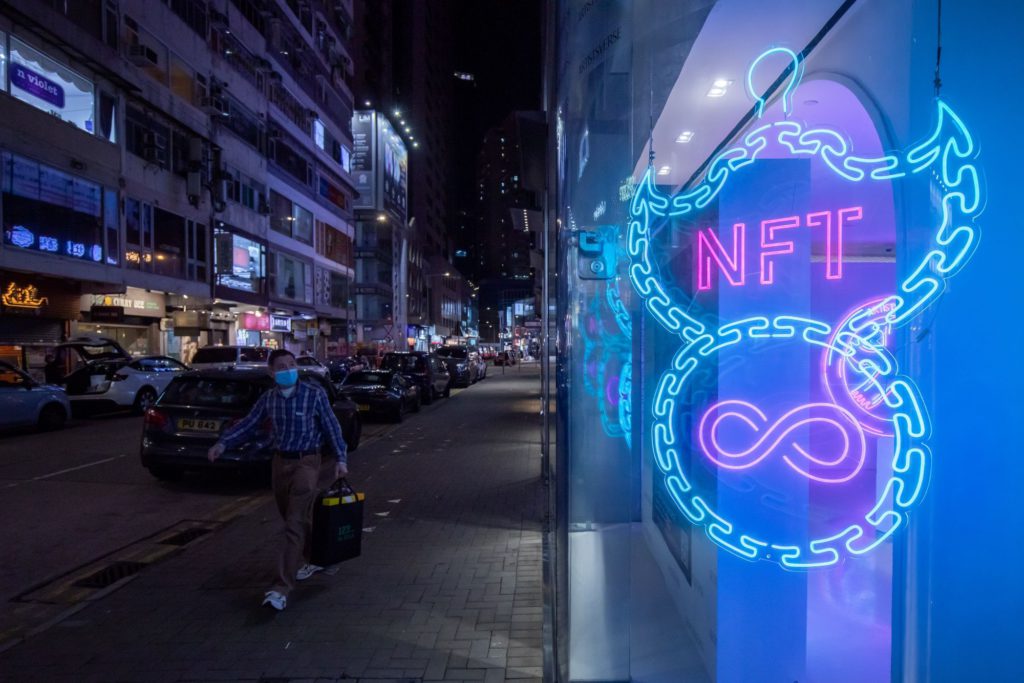
Crypto Analytic Firm Nansen Buys NFT Portfolio Tracker Ape Board

(Bloomberg) — Blockchain data-analytics firm Nansen has bought a top portfolio tracker in the decentralized-finance and nonfungible-token space and says it has aggressive growth plans in what could be a consolidation period for cryptocurrencies in the next year or so.

  • Terms weren’t disclosed, though Nansen said it’s an eight-figure deal in US dollars. No regulatory approvals are needed, according to Nansen.
  • The next 12 to 18 months will likely mark a consolidation period for crypto, according to a Nansen representative; the firm has a war chest and plans to continue being aggressive with growth to build an all-in-one market-intelligence platform.
  • “Obtaining data from the cryptocurrency ecosystem, specifically, DeFi protocols and blockchains is complex and fragmented,” said Alex Svanevik, CEO of Nansen; “Across the Web3 landscape, investors are forced to utilize an assortment of different tools in order to obtain a singular piece of data that will help inform their investment strategy. With this acquisition, we take a big step towards bringing all the market intelligence a trader, institution, or business needs under one roof.”
  • The NFT market has been tepid lately; while total dollar volume traded was up 13% in the first quarter from the prior quarter, the qualified volume of dollars traded dropped 4.6% and active wallets tumbled 25%, according to a report from Nansen.

More stories like this are available on bloomberg.com

©2022 Bloomberg L.P.

SpaceX Said in Talks to Raise Fresh Funds at $125 Billion Value

(Bloomberg) — Elon Musk’s SpaceX is raising a funding round that would value the launch and satellite company at $125 billion, according to people familiar with the matter.

The funding round that’s in the works would give SpaceX the mantle of being the highest valued US startup on record, according to data from CBInsights.

This is a jump from its last valuation of $100 billion that the company reached late last year in a funding round, one of the people added, asking not to be identified because the matter is private. 

Investors are in talks to buy new shares in the company at the same time that employees are offering to sell shares via a private placement at the same valuation, the people said. It’s not uncommon for secondary share sales at big private companies to be done concurrently with a regular funding round. 

The shares are being offered in a so-called employee tender offer at $70 each, the people said. That compares with a split-adjusted $56-a-share during a sale in October at a valuation of about $100 billion.

It’s unclear whether Musk is selling stock as part of the employee tender, the people said. The size of the offering couldn’t immediately be determined.

Read more: Musk Seeks to Scrap Tesla Margin Loan With New Twitter Funding

SpaceX didn’t respond to requests for comment. The New York Post reported the share-placement plan earlier.

Musk has been seeking a variety of funding sources to complete his agreement to purchase Twitter Inc. On Tuesday, he declared he wouldn’t proceed with the deal unless the social media company can prove bots make up fewer than 5% of its users. 

(Updates with new information on primary capital raise starting in first paragraph)

More stories like this are available on bloomberg.com

©2022 Bloomberg L.P.
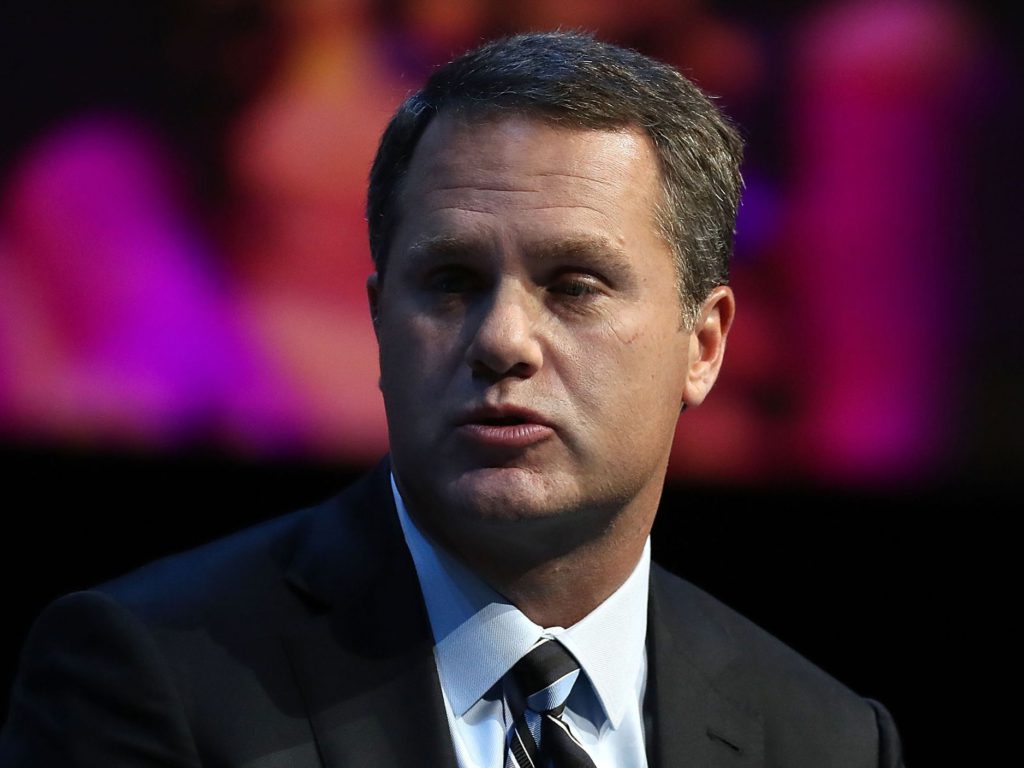
Walmart Gets Crushed With Worst Drop Since 2000 on Forecast Cut

(Bloomberg) — Walmart Inc. tumbled the most in more than 20 years — and was headed for the worst rout since 1987 — after cutting its full-year profit outlook due to inflationary pressures, especially in food and fuel. 

The disappointing performance shook Wall Street’s faith in Walmart’s ability to cope with higher costs for merchandise, transportation and labor. The results also underscored the pressure on US consumers as soaring prices send sentiment to the lowest in a decade. Walmart and peers already were facing tough comparisons to early 2021, when federal stimulus payments bolstered household spending during the coronavirus pandemic.

Chief Executive Officer Doug McMillon set the stage for more price increases at the world’s largest retailer, saying the company would seek to balance customers’ needs with the goal of delivering profit growth. His goal is to raise prices while seeking to stay below competitors and limiting the price bumps on entry-level food items.

“Price leadership is especially important right now,” McMillon told analysts. He pledged to vowed to put the disappointing quarter “behind us and have a strong year.” 

The shares sank almost 11% to as low as $132.21 in New York for the biggest intraday drop since February 2000. Walmart had gained 2.4% so far this year through Monday, bucking a selloff of US stocks.

Earnings are likely to drop about 1% this year, the retailer said in a statement Tuesday, abandoning its previous forecast for a mid-single-digit gain. In the first quarter, adjusted profit sank to $1.30 a share, below the lowest of 29 analyst estimates compiled by Bloomberg. 

Unique Perspective

Walmart’s size gives it a unique perspective on the US economy, and analysts pressed the company Tuesday for insight on whether shoppers are pulling back their spending as they get squeezed by the highest inflation in four decades. The retailer said it’s seeing some consumers switch to cheaper private-label brands in the grocery, but at the same time, there’s growing demand for some high-end items like video-game consoles.

“The operating backdrop has become increasingly complex,” Edward Kelly, an analyst at Wells Fargo & Co., said in a note to clients in which he referred to Walmart by its ticker symbol. “Consumers are starting to make tougher choices, and while WMT is well positioned for trade down as a value player, it needs to take more price.”

Surging fuel prices — spurred in part by Russia’s invasion of Ukraine — pushed up costs faster than Walmart was able to pass them along to consumers last quarter, McMillon told analysts. He also called out labor challenges and temporary overstaffing due to Covid, higher costs for containers and storage, excess inventory, and a shift in spending away from general merchandise, which typically has higher profit margins than groceries.

For the current quarter, Walmart said it now expects earnings to be “flat to up slightly” compared with a prior view of a low- to mid-single-digit increase.

Same-store sales at US Walmart stores rose 3% in the first quarter, excluding fuel, topping analyst estimates for 2% growth. Revenue climbed 2.4% to $141.6 billion, while Wall Street had expected $139.1 billion.

Walmart’s revenue gains are consistent with new government data released Tuesday showing that US retail sales grew at a solid pace in April despite rising prices.

For the full year, Walmart raised its forecast for same-store sales growth at US Walmart stores to about 3.5%, up from a prior view of “slightly above 3%.”

E-commerce grew 1% in the quarter. The online business got a substantial boost during pandemic lockdowns, but demand has been slowing as shoppers venture back into stores.

More stories like this are available on bloomberg.com

©2022 Bloomberg L.P.
Bitcoin Lingers at $30,000 as Traders Assess Stablecoin Fallout

(Bloomberg) —

Bitcoin lingered near $30,000 on Tuesday in cautious trading as the fallout over a collapsed stablecoin continued to keep sentiment in check.

The world’s largest cryptocurrency rose as much as 2.7%  and traded at $30,139 as of 12:47 p.m. in New York. Other coins from Ether to Avalanche also posted modest gains.

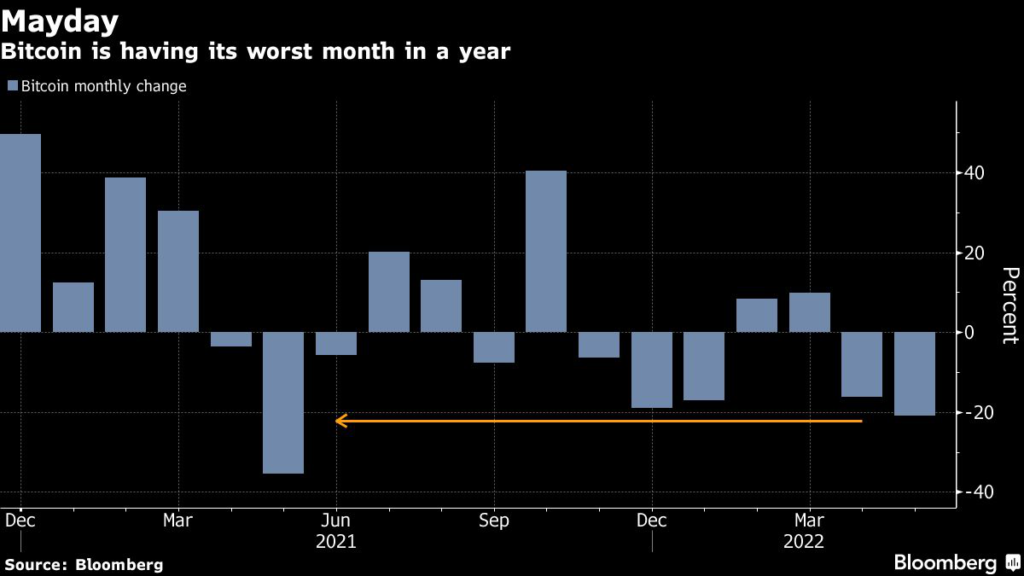
Bitcoin is nursing a 21% loss so far in May — the worst monthly slump in a year — following last week’s crypto sector turmoil over the collapse of the TerraUSD algorithmic stablecoin, also known by its ticker UST, and Tether’s brief dip from its dollar peg. 

“Small amounts of dip buying tentatively gave Bitcoin a boost, but too much of the retail and institutional world still have massive wounds from the recent collapse,” Edward Moya, senior market analyst at Oanda, wrote in a note.

The stablecoin drama has spurred debate about the future for digital assets and the lessons to learn from the collapse of the Terra ecosystem. 

Stablecoin “regulation seems likely” and could lower risk, Goldman Sachs Group Inc. strategists Isabella Rosenberg and Zach Pandl wrote in a note. An alternative “government-backed medium” may even displace them, they said.

Investors have fled from cryptocurrencies and stablecoins alike since the crash began. The total circulation of Tether, the largest and most systemically important stablecoin, has dropped by more than $7 billion since May 7 when Terra’s de-peg became apparent, data from CoinGecko show.

Though TerraUSD and Tether’s stablecoins operate differently, the subsequent drop in Tether’s own dollar-peg to 96 cents on May 12 triggered a wave of redemptions, prompting regulators to question whether such assets are suitable for mainstream adoption. During the fiasco, Tether said it would continue to honor redemptions of USDT at a one-to-one value on its own site, while exchanges were beholden to the token’s actual market value at the time.

“The after effects of UST’s collapse could be felt for a long time and will likely expand regulatory oversight of the stablecoin space,” said blockchain data provider Kaiko in a Monday research note.

The tokens aren’t ready to be used by consumers to make payments, Rohit Chopra, director of the U.S. Consumer Financial Protection Bureau, added in a Bloomberg Television interview.

On-Chain Data

The tick higher in Bitcoin prices has been accompanied by slightly brighter signs from blockchain trends, according to Darshan Bathija, chief executive officer and co-founder of Singapore-based crypto exchange Vauld.

On-chain data show the number of addresses holding between one to 10 Bitcoins has increased from 689,000 to 694,000 between May 9 and May 19, an “indication of confidence in the cryptocurrency’s recovery,” Bathija said.

The total market value of virtual coins has dropped about $420 billion dollars this month to $1.36 trillion, according to CoinGecko data. Bitcoin is 56% off its record high from November last year.

More stories like this are available on bloomberg.com

©2022 Bloomberg L.P.
Stocks Gain as Economic Data Boost Risk Sentiment: Markets Wrap

(Bloomberg) — US stocks rose in a broad-based advance as solid economic data helped buoy risk appetite for markets roiled by concerns over surging prices and policy tightening. Treasuries fell with the dollar. 

A pullback from session highs stabilized, with all but one of the 11 major industry groups in the S&P 500 advancing. The Nasdaq 100 outperformed benchmarks as Apple Inc., Tesla Inc. and Nvidia Corp. bounced back from a late-day tech-led selloff Monday. Citigroup Inc. jumped after report showed Warren Buffett’s Berkshire Hathaway took a stake in the lender. Walmart Inc. tumbled after cutting its profit outlook due to inflationary pressures.

Risk sentiment caught a tailwind Tuesday after data showed U.S. retail sales grew at a solid pace last month, the latest evidence that consumers remained resilient in the face of inflation and higher rates. Another report showed factory production rose at a solid pace for a third month in April.

Treasury yields climbed to day’s highs after the retail sales data. The dollar weakened against all of its Group-of-10 counterparts except the yen.  

The risk mood in Europe got a lift from data showing the economy in the euro area expanded more than initially estimated at the start of the year, defying headwinds from the early days of the war in Ukraine. 

Commentary

  • “Retail sales were much stronger than expected, especially including revisions,” said Dennis DeBusschere, the founder of 22V Research. “This has been a worry of ours — the consumer staying too hot for the Fed. The consumer momentum and strength has been much stronger than just about anyone would have thought.”
  • “The takeaway from this morning’s retail sales print was confirmation that spending during the second quarter has started on solid footing,” wrote BMO’s Ian Lyngen.
  • “Inflation may be weighing down market sentiment and causing concern for the Fed, but it doesn’t seem to be slowing down the consumer at the moment,” said Mike Loewengart, managing director of investment strategy at E*Trade from Morgan Stanley. “That’s not to say that higher prices won’t start to creep into these numbers. After all we did see a decline month over month. And with a mixed bag on the retail earnings front today, it remains to be seen how investors will digest this read on the consumer.”
  • “Going into ‘23, ‘24, yeah there’s a recession out there somewhere but I don’t see that in the near-term,” Scott Clemons, chief investment strategist at Brown Brothers Harriman, said on Bloomberg TV. “The backdrop is just too strong.”

St. Louis Fed President James Bullard, a hawk and FOMC voter, said Tuesday he backs hiking interest rates in half-percentage-point steps and that this will tackle an inflation rate that’s near a four-decade high. Five more Federal Reserve officials are slated to speak throughout the day, including Chair Jerome Powell.

Stocks briefly dipped to session lows amid reports that New York City raised its Covid-19 alert level to high amid increasing pressure on the health care system, a move that it signaled Monday could be imminent. 

US-listed Chinese tech stocks jumped Tuesday, after a state television report that top officials reaffirmed support for internet companies. JD.com Inc., China’s second-largest e-commerce operator, rose after revenue growth beat estimates.

Meanwhile, Shanghai reported three days of zero community transmission, a milestone that could lead officials to start unwinding a punishing lockdown. Flareups elsewhere in China showed how hard it is to tackle the omicron strain.

Cryptocurrencies weathered the latest stablecoin turbulence, with Bitcoin rising above the $30,000 mark. Oil in New York fell on news that the US government will allow Chevron Corp. to negotiate its oil license with Venezuela.

What damage will be done to the US economy and global markets before the Fed changes tack and eases policy again? The “Fed Put” is the theme of this week’s MLIV Pulse survey. Click here to participate anonymously.

What to watch this week:

  • Fed Chair Jerome Powell among slate of Fed speakers Tuesday
  • Reserve Bank of Australia releases minutes of its May policy meeting Tuesday
  • G-7 finance ministers and central bankers meeting Wednesday
  • Eurozone, UK CPI Wednesday
  • Philadelphia Fed President Patrick Harker speaks Wednesday
  • China loan prime rates Friday

Some of the main moves in markets:

Stocks

  • The S&P 500 rose 1.4% as of 12:28 p.m. New York time
  • The Nasdaq 100 rose 1.8%
  • The Dow Jones Industrial Average rose 0.9%
  • The MSCI World index rose 1.7%

Currencies

  • The Bloomberg Dollar Spot Index fell 0.7%
  • The euro rose 1.1% to $1.0550
  • The British pound rose 1.3% to $1.2482
  • The Japanese yen was little changed at 129.25 per dollar

Bonds

  • The yield on 10-year Treasuries advanced eight basis points to 2.96%
  • Germany’s 10-year yield advanced 11 basis points to 1.05%
  • Britain’s 10-year yield advanced 15 basis points to 1.88%

Commodities

  • West Texas Intermediate crude fell 0.4% to $113.73 a barrel
  • Gold futures rose 0.2% to $1,818.30 an ounce

More stories like this are available on bloomberg.com

©2022 Bloomberg L.P.
Elon Musk Has a Bigger Problem Than Twitter Bots: A Huge Debt Burden

(Bloomberg) — Elon Musk may be directing his buyer’s remorse at Twitter Inc.’s bot problem. But underpinning the deal is a $13 billion debt bill that’s looking like a bigger burden by the day.

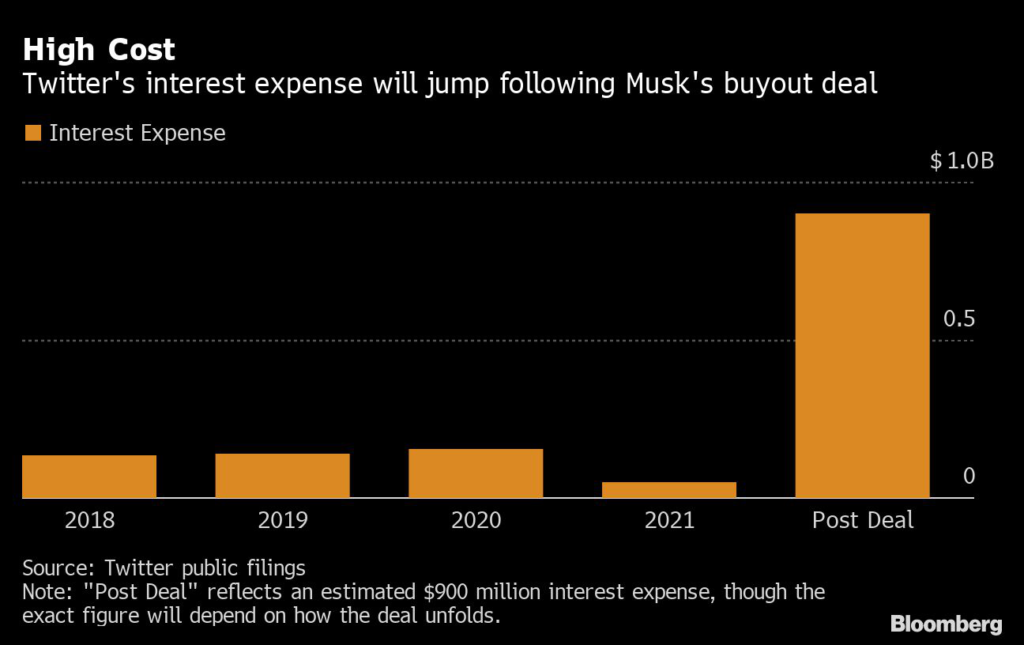
The package, drummed up in a rush and signed by banks before the end of the billionaire’s beloved April 20 weed holiday, will leave the social media platform with an annual interest expense approaching $1 billion, giving the company an alarmingly small margin for error.

To sober-minded credit analysts, second thoughts about the deal are to be expected.

The purchase will be funded with a leveraged loan and high-yield bonds. CreditSights estimates this will dramatically increase Twitter’s annual interest expense to around $900 million, while Bloomberg Intelligence sees $750 million to $1 billion.

With numbers like those, Twitter looks poised to burn cash, boosting the pressure on Musk to transform the company by finding new sources of revenue and slashing costs. That’s even the case with Wall Street analysts estimating record earnings in 2022, though those rosy forecasts could be imperiled if predictions for a US recession — Musk said Monday one is already under way — come true.

“This is just a bad capital structure to put on a business like Twitter that has never proven to be highly profitable,” said John McClain, portfolio manager at Brandywine Global Investment Management. “It’s been a public company for quite some time and they never have seemed to really figure out how to attractively monetize the consumer.”

Musk himself is casting doubt over his own deal, saying this week that he won’t proceed unless Twitter proves bots make up fewer than 5% of its users. 

Debt is only one of three components of Musk’s financing. He’s found 19 other equity investors to join him in $27.25 billion of equity commitments. And he’s taken out a $6.25 billion margin loan against his Tesla shares, but he’s currently trying to replace that by bringing in preferred equity investors, which could include Apollo Global Management Inc. and Sixth Street.

Bankers pulled all-nighters and worked through the Easter and Passover holiday weekend, rushing to meet Musk’s April 20 deadline to build the financing package. What they cooked up will take Twitter far deeper into debt, boosting its interest costs from $53.5 million during the past 12 months.

That gives Musk little room for error, though he’s not on the hook for the debt. As is typical in a leveraged buyout, Twitter will be stuck repaying if anything goes wrong, while Musk and his fellow equity investors can only lose the cash they put into the deal.

“Leverage is really high and free cash flow is going to be negative out of the gate, so that certainly adds an element of risk to the deal,” Jordan Chalfin, a senior analyst at credit research firm CreditSights, said in an interview. “Twitter really needs to grow into their capital structure and drive earnings higher in order to cover both their capital expenditures and their interest expense.”

Confused by Musk’s Twitter LBO? Here’s What’s Weird: QuickTake

Fears are also growing that a recession could be on the horizon, which would make this an even worse time to load debt onto Twitter, as most of its revenue comes from advertising. “In a poor macroeconomic background, the first things that companies pull in terms of marketing budgets is advertising spending,” said Bloomberg Intelligence analyst Robert Schiffman. 

Meanwhile, selling corporate debt has gotten more difficult in recent weeks. Rising rates have hit junk bonds the hardest, and the average yield, a proxy for the cost of borrowing, has increased by more than a full percentage point since banks agreed to the Twitter deal to about 7.6%. The leveraged loan market has cooled, too.

Analysts see Twitter posting record earnings before interest, taxes, depreciation and amortization of $1.67 billion in 2022. Twitter has forecast roughly $925 million of capital expenditures. Deduct that and Twitter’s newly increased interest expense from its Ebitda, and the company would be burning through cash.

If Musk successfully grows Twitter, the debt load would become more manageable over time, and the company could hit neutral cash flow in 2023 and positive cash flow in 2024, Chalfin said. If Musk can’t make good on his promises to turn around the company, the debt load could become a problem.

Twitter does have about $6.3 billion in cash and short-term investments that could support burning cash for a few years, Bloomberg Intelligence’s Schiffman said.

(Adds 7th paragraph on Musk casting doubt on the deal)

More stories like this are available on bloomberg.com

©2022 Bloomberg L.P.
Wayfair Freezes Hiring for 90 Days Citing Economic Uncertainty

(Bloomberg) — E-commerce marketplace Wayfair Inc. said it’s freezing corporate hiring for 90 days, the latest pandemic winner to pause its plans for growth as businesses fret over a slowing economy. 

Wayfair is in a “strong position,” a spokesperson said in response to a question about hiring. But the company sees “a great deal of uncertainty in the overall economy.” The Boston-based company has almost 17,000 full-time employees, according to regulatory filings. 

Online retailers boomed during the pandemic with Wayfair and rival Amazon.com Inc. having no shortage of consumers ordering goods at home thanks to pandemic restrictions and unprecedented amounts of fiscal stimulus. That led Wayfair to report a 55% jump in revenue in 2020 to $14.1 billion in 2020 as demand boomed, but sales declined 3% to $13.7 billion in 2021. 

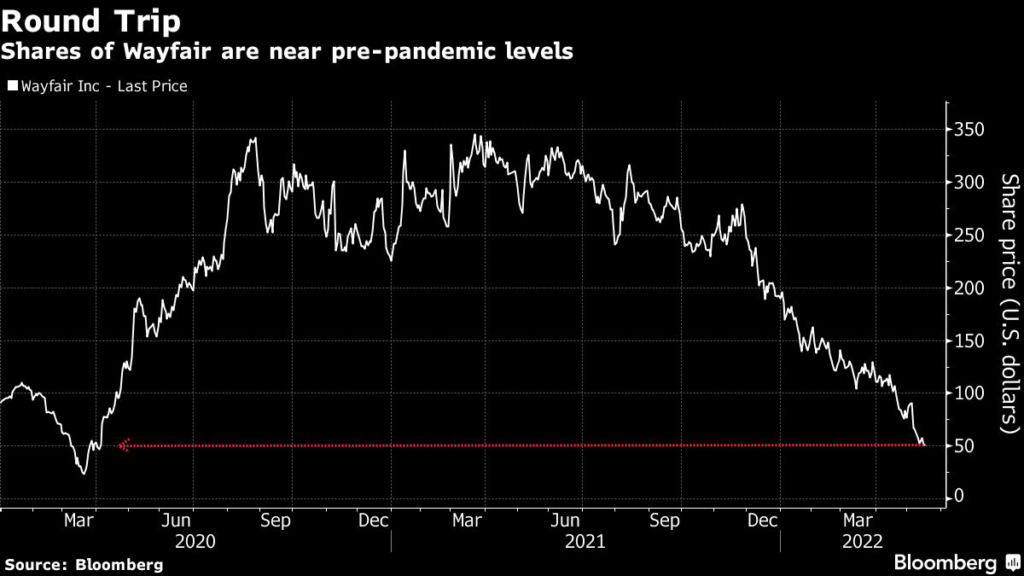
The luster of pandemic winners like Wayfair and Canadian e-commerce platform Shopify Inc. is fading, with their shares declining more than 70% this year. Other tech companies, which are seeing their stocks pummeled amid an overall stock market decline fueled by concerns about rising inflation and interest rates, are also rethinking hiring plans. Twitter Inc. announced a hiring freeze last week and Facebook parent Meta Platforms Inc. slowed its hiring pace in an effort to cut costs earlier this month. Even Uber Technologies Inc., a company that’s never shied away from losing huge sums in the name of growth, is now issuing sober memos about “unit economics.”

In a recent call with analysts to discuss earnings, Wayfair Chief Executive Officer Niraj Shah said that due to rising prices across retail and a “mix of troubling geopolitical events,” customers are more focused on where they are spending their money. Even with consumer spending on retail still climbing, “shoppers are nonetheless diverting a larger share of their wallets to non-discretionary categories and re-prioritizing experiences like travel,” he said.  

Wayfair reported a first-quarter loss of $319 million, compared with a profit of $18.2 million a year earlier. Revenue was $2.99 billion, down 14% and active customers decreased to 25 million compared with 33 million a year ago. 

In the current quarter Wayfair said so far revenue is down in the mid-to-high teens compared with last year. Costs associated with labor, energy and transportation will also weigh on margins, the company said. 

More stories like this are available on bloomberg.com

©2022 Bloomberg L.P.

Crypto Can Complement Mobile Money in Africa, Kenyan Banker Says

(Bloomberg) — Cryptocurrency can supplement mobile money in Africa if regulators can be convinced of its benefits, according to the chief executive of Kenya’s biggest lender by market value.

Many central banks on the continent have warned against trading cryptocurrency, while some have made it outright illegal. The Central African Republic is the only African nation to have adopted the digital assets and the South African Reserve Bank is formulating rules to protect investors.

“Africa will benefit substantially from leapfrogging on the fourth industrial technologies, and cryptocurrency is one of them,” Equity Group Holdings Plc Chief Executive Officer James Mwangi said Tuesday at the Bloomberg Invest: Focus on Africa conference. “Cryptocurrency can as well complement the mobile money wallet, but essentially, we need to talk to the regulators.”

In Kenya, mobile money transactions — which were only made possible through the willingness of the regulator to try out new technology — have surpassed the use of hard currency, Mwangi said. In the same way, the use of new technology can help increase Africa’s competitiveness because the continent lacks legacy systems, he said.

“We are hoping that the use of technology, particularly data and artificial intelligence, will be a major basis of leapfrogging because we are not talking about existing manufacturing capacity, we are starting afresh,” he said.


More stories like this are available on bloomberg.com

©2022 Bloomberg L.P.

Close Bitnami banner
Bitnami
