Bloomberg

Bitcoin Edges Past $30,000 as Traders Assess Stablecoin Fallout

(Bloomberg) —

Bitcoin edged above $30,000 on Tuesday in cautious trading as the fallout over a collapsed stablecoin continued to keep sentiment in check.

The world’s largest cryptocurrency rose 2% to about $30,500 as of 9:08 a.m. in London. Other coins from Ether to Avalanche also posted modest gains.

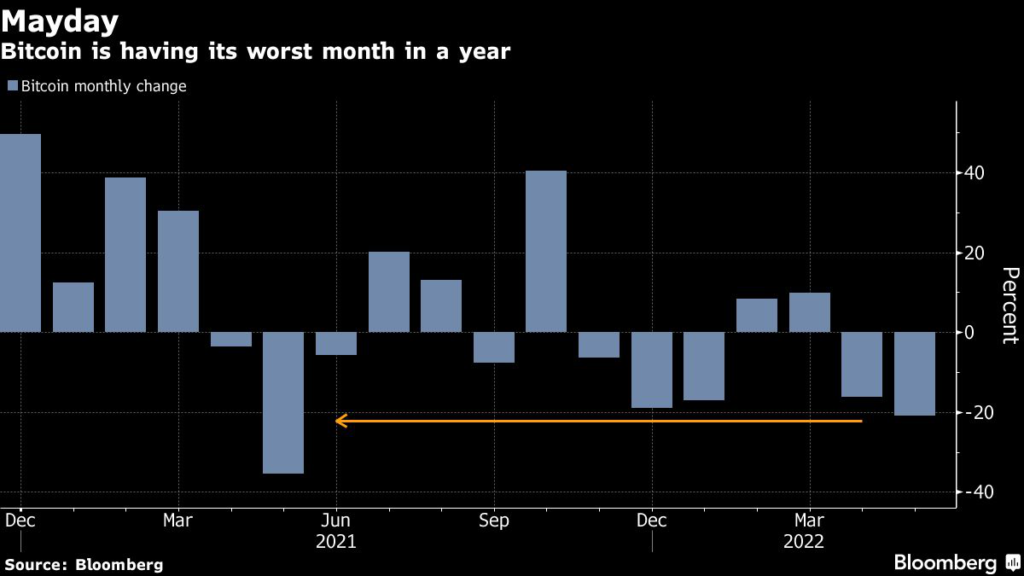
Bitcoin is nursing a 21% loss so far in May — the worst monthly slump in a year — following last week’s crypto sector turmoil over the collapse of the TerraUSD algorithmic stablecoin, also known by its ticker UST, and Tether’s brief dip from its dollar peg. 

“Small amounts of dip buying tentatively gave Bitcoin a boost, but too much of the retail and institutional world still have massive wounds from the recent collapse,” Edward Moya, senior market analyst at Oanda, wrote in a note.

The stablecoin drama has spurred debate about the future for digital assets and the lessons to learn from the collapse of the Terra ecosystem. 

Stablecoin “regulation seems likely” and could lower risk, Goldman Sachs Group Inc. strategists Isabella Rosenberg and Zach Pandl wrote in a note. An alternative “government-backed medium” may even displace them, they said.

Investors have fled from cryptocurrencies and stablecoins alike since the crash began. The total circulation of Tether, the largest and most systemically important stablecoin, has dropped by more than $7 billion since May 7 when Terra’s de-peg became apparent, data from CoinGecko show.

Though TerraUSD and Tether’s stablecoins operate differently, the subsequent drop in Tether’s own dollar-peg to 96 cents on May 12 triggered a wave of redemptions, prompting regulators to question whether such assets are suitable for mainstream adoption. During the fiasco, Tether said it would continue to honor redemptions of USDT at a one-to-one value on its own site, while exchanges were beholden to the token’s actual market value at the time.

“The after effects of UST’s collapse could be felt for a long time and will likely expand regulatory oversight of the stablecoin space,” said blockchain data provider Kaiko in a Monday research note.

The tokens aren’t ready to be used by consumers to make payments, Rohit Chopra, director of the U.S. Consumer Financial Protection Bureau, added in a Bloomberg Television interview.

On-Chain Data

The tick higher in Bitcoin prices has been accompanied by slightly brighter signs from blockchain trends, according to Darshan Bathija, chief executive officer and co-founder of Singapore-based crypto exchange Vauld.

On-chain data show the number of addresses holding between one to 10 Bitcoins has increased from 689,000 to 694,000 between May 9 and May 19, an “indication of confidence in the cryptocurrency’s recovery,” Bathija said.

The total market value of virtual coins has dropped about $420 billion dollars this month to $1.36 trillion, according to CoinGecko data. Bitcoin is 56% off its record high from November last year.

More stories like this are available on bloomberg.com

©2022 Bloomberg L.P.

Shanghai and iPhone City Ease Curbs: China Lockdown Tracker

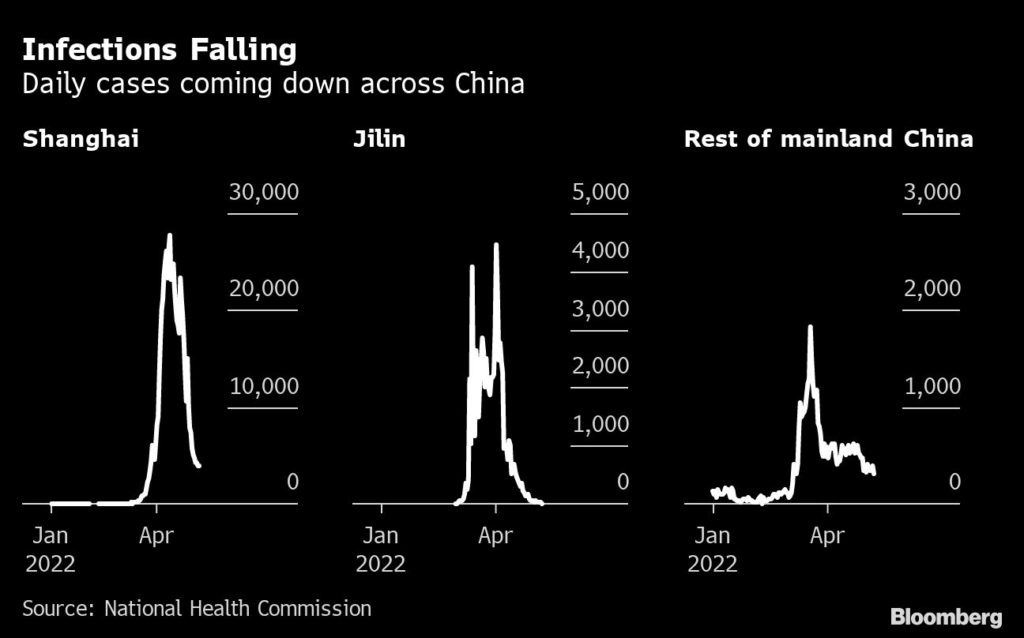
(Bloomberg) — China’s lockdown of Shanghai looks to be slowly coming to an end, though most of the city’s 25 million residents won’t be allowed to move about freely for a few more weeks.  

The emergence of the highly contagious omicron variant has spurred increasingly stringent pandemic curbs in China since March, in some cases snap lockdowns that carried heavy costs for the local population and economy. The pattern of transmission and restrictions across the country could offer insight into what regions may be vulnerable to disruption in the days ahead.

Of China’s top 50 cities by economic size, only Beijing and Shanghai currently have widespread restrictions in place. Dalian and Harbin, cities in the north, resumed in-person teaching at schools on Tuesday, while Harbin is also allowing people to eat in restaurants. Many cities and provinces require regular Covid-19 testing to access public spaces or take public transport. 

Covid-19 data for Monday, May 16

  • Twenty-five of China’s 31 mainland provinces have had cases in the past week, but only six had more than 20 infections, including Beijing, Henan, Jiangsu, Liaoning and Sichuan
  • Case numbers continue to fall in Shanghai, though it’s still by far the largest outbreak in China
  • Hotspots to watch out for are Tianjin, which reported 28 infections during a mass testing drive, and a small city called Guang’an in Sichuan province, which is within a two hour drive of Chongqing
  • Zhengzhou in Henan — which is where the main iPhone factory in China is located — came out of “strict management” last week, and continues to normalize

Movement Indicators

  • Nationwide subway usage in the top 11 cities was down 46% from the same time last year, with no one using the subways in Shanghai. Excluding Shanghai, ridership in China is down 16%, with 101 subway stations closed in Beijing, according to local media
  • Ridership on the Chongqing subway looks to be holding up despite an outbreak nearby, while Zhengzhou’s is recovering.
  • CHINA INSIGHT: Virus-Risk Areas Fall to 22% of GDP But at a Cost

Affected Companies

  • More than 180 firms around the world have have mentioned “China” and “lockdowns” in their first-quarter earnings calls or financial statements, up from 50 in the previous quarter, according to a Bloomberg News analysis of transcripts and filings. These include Toyota Inc. and other major car companies, Under Armour Inc., LG Household & Health Care Ltd., and General Electric Co.
  • READ MORE: More Than 180 Companies Say They’ve Been Hit by China Lockdowns
  • China Lockdowns Squeeze Factories Far and Wide: Supply Lines
  • Not a Single Car Was Sold in Shanghai Last Month
  • US Firms in China May Reconsider Investment After Lockdowns

More stories like this are available on bloomberg.com

©2022 Bloomberg L.P.

Stocks, US Futures Rise as Bonds Fall; Dollar Dips: Markets Wrap

(Bloomberg) — Stocks in Europe rose Tuesday along with US equity futures as some semblance of risk appetite returned to markets roiled by concerns about global economic growth, surging prices and policy tightening.

Travel and basic resources led a broad-based advance of the Stoxx Europe 600, setting the gauge on course for a third day of gains. Contracts on the S&P 500 and Nasdaq 100 bounced back after a Wall Street drop. Treasury yields rose and the dollar retreated. 

Bond yields across Europe jumped, with the 10-year U.K. rate surging 10 basis points after data showed a decline in average earnings, intensifying a cost-of-living squeeze.

A challenging global economic outlook amid elevated food and fuel costs and tightening monetary settings continues to shape sentiment, although one bond-market measure — the five-year breakeven rate — is signaling inflation may have peaked. Oil has jumped to about $114 a barrel and an index of agricultural prices is at a record high.

“All-in-all, the price action is suggestive of a market that can’t decide what it wants to do,” said Jeffrey Halley, a market analyst at Oanda. “Concerns around recessions make me feel that a decent correction lower from the dollar and US yields is increasingly likely. I’m still not sure it provides markets with a reason to turn long once again on equities.”

An Asian share index rose for a third day — it’s longest winning streak since mid-March — amid a jump in some technology firms and as investors assessed China’s efforts to stamp out Covid. China’s tech companies rallied on optimism Beijing may ease up on a yearlong clampdown following a meeting between regulators and corporate giants.

Meanwhile, Shanghai reported three days of zero community transmission, a milestone that could lead officials to start unwinding a punishing lockdown. Flareups elsewhere in China showed how hard it is to tackle the omicron strain.

Cryptocurrencies weathered the latest stablecoin turbulence, leaving Bitcoin near $30,000.

Weak Data

US data Monday showed New York state manufacturing activity unexpectedly shrank in May for the second time in three months. That followed Chinese figures revealing a collapse in economic activity due to Covid-linked curbs.

The economic reports have fanned concerns of a downturn in the global economy alongside persistent price pressures that are forcing the Federal Reserve and a slew of other central banks to tighten monetary policy. 

“With inflation showing little sign of letting up, the Fed is under pressure to accelerate the pace of tightening,” Lisa Shalett, chief investment officer at Morgan Stanley Wealth Management, said in a note. Taken together with the impact of Russia’s war in Ukraine and China’s Covid struggles, this backdrop “suggests global growth may be decelerating more quickly than forecast,” she said.

New York Fed President John Williams downplayed deteriorating liquidity conditions in financial markets, saying it was to be expected as investors grapple with uncertainty over global events and shifting U.S. monetary policy. Fed speakers including Chair Jerome Powell are due to speak later Tuesday. 

What damage will be done to the US economy and global markets before the Fed changes tack and eases policy again? The “Fed Put” is the theme of this week’s MLIV Pulse survey. Click here to participate anonymously.

What to watch this week:

  • Fed Chair Jerome Powell among slate of Fed speakers Tuesday
  • Reserve Bank of Australia releases minutes of its May policy meeting Tuesday
  • G-7 finance ministers and central bankers meeting Wednesday
  • Eurozone, UK CPI Wednesday
  • Philadelphia Fed President Patrick Harker speaks Wednesday
  • China loan prime rates Friday

Some of the main moves in markets:

Stocks

  • The Stoxx Europe 600 rose 0.7% as of 8:22 a.m. London time
  • Futures on the S&P 500 rose 0.6%
  • Futures on the Nasdaq 100 rose 0.8%
  • Futures on the Dow Jones Industrial Average rose 0.4%
  • The MSCI Asia Pacific Index rose 1.4%
  • The MSCI Emerging Markets Index rose 2%

Currencies

  • The Bloomberg Dollar Spot Index fell 0.2%
  • The euro rose 0.3% to $1.0462
  • The Japanese yen fell 0.1% to 129.32 per dollar
  • The offshore yuan rose 0.5% to 6.7650 per dollar
  • The British pound rose 0.7% to $1.2402

Bonds

  • The yield on 10-year Treasuries advanced four basis points to 2.92%
  • Germany’s 10-year yield advanced seven basis points to 1.00%
  • Britain’s 10-year yield advanced nine basis points to 1.82%

Commodities

  • Brent crude fell 0.1% to $114.10 a barrel
  • Spot gold was little changed

More stories like this are available on bloomberg.com

©2022 Bloomberg L.P.

BofA Clients Hoard Cash at 2001 High as Stagflation Woes Surge

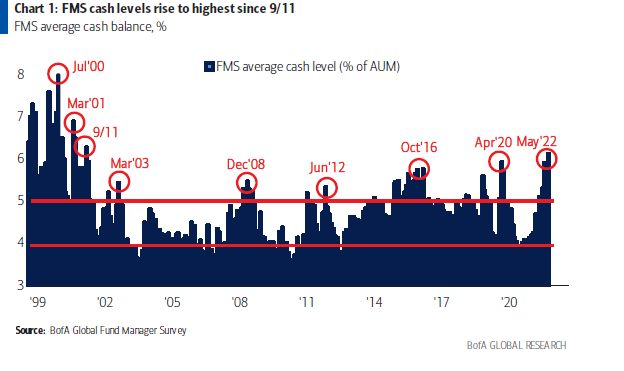
(Bloomberg) — Investors are piling into cash as global growth optimism sinks to an all-time low and stagflation worries rise, according to Bank of America Corp.’s latest fund manager survey. 

Cash levels among investors hit the highest level since September 2001, the May survey showed, while stagflation fears were at their highest since August 2008. Hawkish central banks are seen as the biggest tail risk by investors, followed by a global recession, BofA strategists said, after surveying 288 panelists with $872 billion in assets under management during the second week of May.

The results come after the longest weekly losing streak for the world’s stocks since the global financial crisis as central banks turn off the monetary taps at a time of stubbornly high inflation. While equities have seen a small rebound since Friday as valuations get more attractive, strategists including Michael Wilson at Morgan Stanley say more losses lie ahead.

BofA’s Michael Hartnett also said investors believe stocks are prone to an imminent bear market rally, but ultimate lows have not yet been reached. Fears of a recession were followed by the risks from inflation and the war in Ukraine, the survey showed. The bearishness has been extreme enough to trigger BofA’s own buy signal, a contrarian indicator for detecting entry points into equities. 

The survey also showed the biggest “short” in technology stocks since August 2006. Frothy tech shares have been particularly punished in the latest selloff amid concerns about future earnings as rates rise. 

Overall, investors are very long cash, commodities, healthcare and consumer staples, while being very short technology, equities, Europe and emerging markets, the survey showed. 

More stories like this are available on bloomberg.com

©2022 Bloomberg L.P.

Inflation Hits Vodafone’s Outlook: The London Rush

(Bloomberg) — Here’s the key business news from London-listed companies this morning.

Vodafone Plc: The telecommunications giant expects macroeconomic challenges, particularly inflation, to impact its financial performance in the year ahead, after reporting slightly lower than expected organic service revenue growth.

  • Vodafone said it’s “actively pursuing” opportunities with its listed infrastructure arm Vantage Towers AG, amid shareholder pressure to increase its deal making

ContourGlobal Plc: KKR & Co Inc has agreed to buy the power generation company, valuing its share capital at about £1.75 billion. 

  • The deal has been recommended by ContourGlobal’s board and at 263.6 pence per share in cash, offers a premium of 36% to Monday’s closing price

M&C Saatchi Plc:   AdvancedAdvT Limited has offered to buy the advertising agency, now looking for the support of the company’s shareholders after it wasn’t able to win the recommendation of its board.

  • The offer values M&C Saatchi at £253.6 million based on Monday’s closing price

Imperial Brands Plc: The tobacco company reported an uptick in earnings after trimming losses in its “Next Generation” vaping products.

Outside The City

Liz Truss will make a statement in the House of Commons today, setting out her plan to introduce laws that would override parts of the Northern Ireland protocol if negotiations fail to make headway after months of stalemate with the EU. Boris Johnson said he’s prepared to unilaterally amend the agreement over Northern Ireland, though would prefer a negotiated solution.

In Case You Missed It

Todd Boehly’s £4.25 billion takeover of Chelsea FC has hit a snag amid disagreements between the government and Roman Abramovich over the terms of the deal, a person familiar with the matter told Bloomberg.

And the market for existing homes in Hackney is finally showing signs of slowing down after more than 10 years of almost uninterrupted price growth. 

Looking Ahead

Inflation data for April is due tomorrow as prices increase at record rates. Analysts expect the retail price index compared to a year ago to enter double digits.

Also on Wednesday, luxury clothes brand Burberry Group Plc reports amid concerns that lockdowns in China might impact one of the industry’s key customer bases.

More stories like this are available on bloomberg.com

©2022 Bloomberg L.P.

China Offers Property-Buying Perks to Families With Three Kids

(Bloomberg) — Chinese cities are making it easier for families with more children to own multiple properties, as authorities struggle to revive the housing market and boost birth rates.

Hangzhou, the eastern city where internet giant Alibaba Group Holding Ltd. is based, said Tuesday that households with three children are now allowed to buy one more residence. The third child has to be born after May 31 last year. Such families can also enjoy precedence over other prospective buyers when purchasing new homes. 

The move makes Hangzhou the first major residential market to bundle property easing with birth rates, after at least seven smaller cities rolled out similar policy tweaks since April. China surprisingly allowed all couples to have a third child last year when births dropped to 10.6 million, the lowest since 1950. 

“Such a policy can spur home buying and encourage having more children at the same time,” said Gao Yuansheng, an analyst at China Index Holdings. “It again shows that China supports ‘real’ housing demand for multi-children families.”

The emerging policy trend is in line with the Chinese government’s years-long principle that “houses are for living in, not for speculation,” a stance it maintained after vowing last month to rekindle demand for homes.

Covid outbreaks have exacerbated a housing slowdown that began last year during a crackdown on excessive leverage in the industry. The central bank on Sunday lowered the floor on mortgage rates for first-time homebuyers, a move that analysts say may do little to arrest the slump. 

Hangzhou also made purchasing existing homes in central areas easier, after its secondary property market weakened in the first quarter, Gao said. The city’s new-home values still rose in April. 

Other cities may also turn to policies that offer housing incentives for families with more children, said Yan Yuejin, research director at E-house China Research and Development Institute. “Local governments have moved away from universal loosening, and the measures have become more targeted and meticulous,” he said.

More stories like this are available on bloomberg.com

©2022 Bloomberg L.P.

Europe’s First Homegrown Battery Plant Begins Shipments

(Bloomberg) — Swedish battery-maker Northvolt AB became the first European firm to start commercial shipments to a carmaker last week, giving shape to the continent’s five-year push to counter Asian dominance in supplying energy cells for electric vehicles. 

The first deliveries, which came from Northvolt’s plant in Skelleftea, Sweden, were made on schedule, a spokesman said. The company is hiring about 150 people per month at the plant, which currently employs about 1,000 workers, he added. 

While Northvolt’s launch marks a success for Europe kickstarting an independent battery industry, skyrocketing prices for raw materials including lithium and cobalt have become a concern. For years, China has fostered closer ties with mining companies in Africa and South America, potentially exposing manufacturers elsewhere to supply bottlenecks. 

Northvolt, which plans to scale up production over the rest of the year, recently said it had secured more than $50 billion in contracts from electric-car manufacturers including BMW AG, Volkswagen AG, Volvo Car AB and Polestar. Wigardt said the total headcount at the Skelleftea plant will likely reach 4,000, up from a previous estimate of 3,000.

On Monday the company also said it had started commercial EV battery recyling at Hydrovolt in Fredrikstad, Norway, a joint venture with Hydro. Hydrovolt is Europe’s largest electric-vehicle battery recycling plant, with capacity to process around 25,000 batteries annually.

Read more: Hydrovolt Starts Commercial EV Battery Recycling at Fredrikstad

More stories like this are available on bloomberg.com

©2022 Bloomberg L.P.

Gambling Firms Face Concerns Over Kids Playing Virtual Reality Poker

(Bloomberg) — During a round of poker in a virtual reality casino earlier this month, one player at the table was berated with sexually explicit language.

The player, dressed in a purple top and a white anime-style haircut, was highly likely to be a child, based on their voice and their reaction to the abuse. While playing rounds of Texas hold ‘em, a Bloomberg News reporter saw users smoking virtual cigars and passing around digital guns while the suspected child played with a toy donkey next to their chips. In another poker game, a player said they were in the fifth grade, which would probably mean they were aged either 10 or 11.

The virtual casino built by Pokerstars VR is owned by one of the biggest betting groups in the world, Dublin-based Flutter Entertainment Plc. Launched in 2018, it has about 40,000 to 50,000 daily players and is accessed via headsets including Meta Platforms Inc.’s Oculus Rift and Quest products, or HTC’s Vive.

“There is a zero-tolerance approach to any player that acts in breach our of terms of service and community standards, circumvents our age rating, uses toxic language or behaves inappropriately, all of which can lead to permanent bans,” a Flutter spokesperson said. “We are investing to enhance player protections, including the roll-out of AI-driven tools to support our moderators, and are working closely with Meta and other technology partners to continually raise standards.’’   

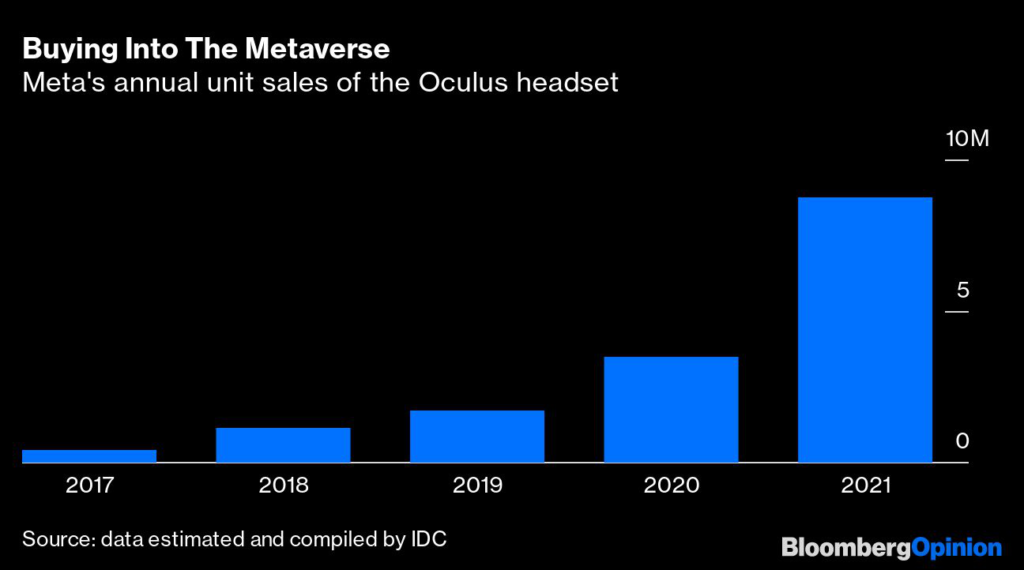
Facebook and Instagram-owner Meta is the world’s top VR headset maker, with 80% market share according to research firm IDC. It asks users to be aged 13 and over. Pokerstars VR was the 14th most popular “experience’’ on the Oculus Quest chart in mid-May.  More than a quarter of US teens own a VR device, according to investment bank Piper Sandler. 

Gambling regulators have placed strict age restrictions on betting for money, with a minimum of 18 to visit a casino or game online in Britain. Playing virtual poker where no money changes hands is treated more like a videogame and is not illegal in the UK or US, and none of the major companies behind the virtual casinos have broken any laws. Now activists and politicians are increasingly focusing on how to regulate gateways into gambling. 

“If you took a child into a casino there would be a public outcry,” said Carolyn Harris, a UK MP and chair of a cross-party gambling harm group. “This is no different. This is giving children access to what a real casino is like. They need to protect children and vulnerable people and the government has to take responsibility for that.”

Pokerstars VR makes it clear to users before entering its virtual casino that players must be 18 or older to play. It employs moderators, and players can report others they suspect of being underage. Flutter employs five full-time moderators but it’s planning to hire more. The other betting game available via Meta’s Oculus is Poker VR, where anyone above the age of 13 is welcome, according to its terms of service. Neither title lets people play with real money but Pokerstars VR charges for extra virtual chips and decorative items like guns and toys.  Reviews for both titles on the Oculus store and game service Steam reveal user complaints about rooms full of players apparently under the age of 18. 

“It’s incredibly concerning,’’ said Andy Burrows, head of child safety online policy for the UK’s National Society for the Prevention of Cruelty to Children. “The harm here is about exposure to age-inappropriate content, to age-inappropriate experiences.”  Although the money is virtual, “it can socialize them into gambling habits and run the risk of normalizing that behavior. But also, we know that virtual currencies are a route for exploitation, and we know that abusers will look to offer gifts,’ he said.Poker VR developer Mega Particle, based in California, didn’t respond to a request for comment. 

“Quest devices are designed for children ages 13 and up, and some experiences are only for people 18 and up,” said a spokesperson for Meta. “We strongly encourage parents who choose to allow children 13 and up to use the headset to monitor their use, limit the time they spend using the headset, and ensure they take breaks.” 

What the Metaverse Is, Who’s In It and Why It Matters

Virtual reality headsets have been around for decades, but have recently exploded in popularity, with customers spending over $1 billion in Meta’s Oculus Quest store, in part driven by the hype of the so-called metaverse, a virtual universe that blends various aspects of digital technologies such as gaming, VR and social media. Facebook’s parent company spent $10 billion developing metaverse products last year, and JPMorgan estimates the market will someday reach sales of $1 trillion a year.   

Although the metaverse does not truly yet exist, various digital hubs are being created where companies are marketing various virtual reality experiences. Poker rooms run by Decentral Games have become some of the busiest venues in its Decentraland world, with guests buying virtual items that can later be sold for cryptocurrency. 

On the Internet Nobody Knows You’re a Kid – Yet: Parmy Olson 

Traditional gambling firms are keen to tap into the trend. Flutter rival Entain Plc, domiciled on the Isle of Man with its head office in London, is preparing to open a “lab” in the UK capital as part of a £100 million ($122 million) program to develop faster, more captivating games in virtual reality. The announcement played up the facility’s proximity to the local headquarters of youth-focused platforms Snap Inc. and TikTok. Entain owns 24 betting brands including Ladbrokes, and owns half of US unit BetMGM.

Entain will work on using 5G wireless from the likes of Verizon Communications Inc to deliver “more immersive” experiences, the company said. It also means more instantaneous interactions and the possibility to squeeze in ever more bets. The former CEO of Verizon Media Group, a division since sold to Apollo Global Management, previously said 5G means “more in-game betting opportunities.”

Entain doesn’t operate any virtual reality casino games yet. It plans to convert two of its traditional British betting shops into virtual reality arcades this year, and it will also launch “virtual sports clubs” where players wearing Oculus headsets can bet on fixtures. Currently, they offer a VR horse racing experience called JockeyCam for fans who have turned up to track events.   

Entain said it’s upgrading player protections to “stay ahead of the rate of innovation,” including with the use of technology it says can quickly identify risks, adding that “all emerging technologies will of course be subject to the same stringent identity and age checks that are already in place across all of our products.’’

Given the full-on experiences virtual reality can provide, Burrows said companies should be paying closer attention to safety.

“The immersive and experiential nature of these services means that the risks to children are heightened compared to existing or previous forms of technology,’’ he said. “Correspondingly the requirement for companies to be delivering an effective safeguarding response should be there too. But it’s clearly lacking.’’ 

Facing increased activism in response to problem gambling, British and Irish lawmakers are drawing up stricter laws to clamp down on their homegrown gambling firms, now some of the world’s largest. In an April speech Andrew Rhodes, the head of the UK regulator, the Gambling Commission, honed in on “the spate of novel products we now see coming to market, often in the unregulated spaces between established markets.”

With “hangers-on, trying to make a quick buck,” the boundaries between digital products and gambling are blurring, Rhodes said. However, UK gambling law doesn’t classify games that don’t permit customers to win a prize or money or things of monetary value as gambling, so the current VR products may not count.

The speed with which the world of gambling has changed was underscored in one exchange during a Pokerstars game seen by Bloomberg, when a young player was accused of being spoiled for having an Oculus headset, which costs around £300. 

“So what? I bought it for myself,” the player said. “I bought it with my money.’’

“Man, when I was in 5th grade, there wasn’t even the internet,’’ came the response. 

More stories like this are available on bloomberg.com

©2022 Bloomberg L.P.

Kids Are Playing Poker Online in Virtual Reality Games — Legally

(Bloomberg) — During a round of poker in a virtual reality casino earlier this month, one player at the table was berated with sexually explicit language.

The player, dressed in a purple top and a white anime-style haircut, was highly likely to be a child, based on their voice and their reaction to the abuse. While playing rounds of Texas hold ‘em, a Bloomberg News reporter saw users smoking virtual cigars and passing around digital guns while the suspected child played with a toy donkey next to their chips. In another poker game, a player said they were in the fifth grade, which would probably mean they were aged either 10 or 11.

The virtual casino built by Pokerstars VR is owned by one of the biggest betting groups in the world, Dublin-based Flutter Entertainment Plc. Launched in 2018, it has about 40,000 to 50,000 daily players and is accessed via headsets including Meta Platforms Inc.’s Oculus Rift and Quest products, or HTC’s Vive.

“There is a zero-tolerance approach to any player that acts in breach our of terms of service and community standards, circumvents our age rating, uses toxic language or behaves inappropriately, all of which can lead to permanent bans,” a Flutter spokesperson said. “We are investing to enhance player protections, including the roll-out of AI-driven tools to support our moderators, and are working closely with Meta and other technology partners to continually raise standards.’’   

Facebook and Instagram-owner Meta is the world’s top VR headset maker, with 80% market share according to research firm IDC. It asks users to be aged 13 and over. Pokerstars VR was the 14th most popular “experience’’ on the Oculus Quest chart in mid-May.  More than a quarter of US teens own a VR device, according to investment bank Piper Sandler. 

Gambling regulators have placed strict age restrictions on betting for money, with a minimum of 18 to visit a casino or game online in Britain. Playing virtual poker where no money changes hands is treated more like a videogame and is not illegal in the UK or US, and none of the major companies behind the virtual casinos have broken any laws. Now activists and politicians are increasingly focusing on how to regulate gateways into gambling. 

“If you took a child into a casino there would be a public outcry,” said Carolyn Harris, a UK MP and chair of a cross-party gambling harm group. “This is no different. This is giving children access to what a real casino is like. They need to protect children and vulnerable people and the government has to take responsibility for that.”

Pokerstars VR makes it clear to users before entering its virtual casino that players must be 18 or older to play. It employs moderators, and players can report others they suspect of being underage. Flutter employs five full-time moderators but it’s planning to hire more. The other betting game available via Meta’s Oculus is Poker VR, where anyone above the age of 13 is welcome, according to its terms of service. Neither title lets people play with real money but Pokerstars VR charges for extra virtual chips and decorative items like guns and toys.  Reviews for both titles on the Oculus store and game service Steam reveal user complaints about rooms full of players apparently under the age of 18. 

“It’s incredibly concerning,’’ said Andy Burrows, head of child safety online policy for the UK’s National Society for the Prevention of Cruelty to Children. “The harm here is about exposure to age-inappropriate content, to age-inappropriate experiences.”  Although the money is virtual, “it can socialize them into gambling habits and run the risk of normalizing that behavior. But also, we know that virtual currencies are a route for exploitation, and we know that abusers will look to offer gifts,’ he said.Poker VR developer Mega Particle, based in California, didn’t respond to a request for comment. 

“Quest devices are designed for children ages 13 and up, and some experiences are only for people 18 and up,” said a spokesperson for Meta. “We strongly encourage parents who choose to allow children 13 and up to use the headset to monitor their use, limit the time they spend using the headset, and ensure they take breaks.” 

What the Metaverse Is, Who’s In It and Why It Matters

Virtual reality headsets have been around for decades, but have recently exploded in popularity, with customers spending over $1 billion in Meta’s Oculus Quest store, in part driven by the hype of the so-called metaverse, a virtual universe that blends various aspects of digital technologies such as gaming, VR and social media. Facebook’s parent company spent $10 billion developing metaverse products last year, and JPMorgan estimates the market will someday reach sales of $1 trillion a year.   

Although the metaverse does not truly yet exist, various digital hubs are being created where companies are marketing various virtual reality experiences. Poker rooms run by Decentral Games have become some of the busiest venues in its Decentraland world, with guests buying virtual items that can later be sold for cryptocurrency. 

On the Internet Nobody Knows You’re a Kid – Yet: Parmy Olson 

Traditional gambling firms are keen to tap into the trend. Flutter rival Entain Plc, domiciled on the Isle of Man with its head office in London, is preparing to open a “lab” in the UK capital as part of a £100 million ($122 million) program to develop faster, more captivating games in virtual reality. The announcement played up the facility’s proximity to the local headquarters of youth-focused platforms Snap Inc. and TikTok. Entain owns 24 betting brands including Ladbrokes, and owns half of US unit BetMGM.

Entain will work on using 5G wireless from the likes of Verizon Communications Inc to deliver “more immersive” experiences, the company said. It also means more instantaneous interactions and the possibility to squeeze in ever more bets. The former CEO of Verizon Media Group, a division since sold to Apollo Global Management, previously said 5G means “more in-game betting opportunities.”

Entain doesn’t operate any virtual reality casino games yet. It plans to convert two of its traditional British betting shops into virtual reality arcades this year, and it will also launch “virtual sports clubs” where players wearing Oculus headsets can bet on fixtures. Currently, they offer a VR horse racing experience called JockeyCam for fans who have turned up to track events.   

Entain said it’s upgrading player protections to “stay ahead of the rate of innovation,” including with the use of technology it says can quickly identify risks, adding that “all emerging technologies will of course be subject to the same stringent identity and age checks that are already in place across all of our products.’’

Given the full-on experiences virtual reality can provide, Burrows said companies should be paying closer attention to safety.

“The immersive and experiential nature of these services means that the risks to children are heightened compared to existing or previous forms of technology,’’ he said. “Correspondingly the requirement for companies to be delivering an effective safeguarding response should be there too. But it’s clearly lacking.’’ 

Facing increased activism in response to problem gambling, British and Irish lawmakers are drawing up stricter laws to clamp down on their homegrown gambling firms, now some of the world’s largest. In an April speech Andrew Rhodes, the head of the UK regulator, the Gambling Commission, honed in on “the spate of novel products we now see coming to market, often in the unregulated spaces between established markets.”

With “hangers-on, trying to make a quick buck,” the boundaries between digital products and gambling are blurring, Rhodes said. However, UK gambling law doesn’t classify games that don’t permit customers to win a prize or money or things of monetary value as gambling, so the current VR products may not count.

The speed with which the world of gambling has changed was underscored in one exchange during a Pokerstars game seen by Bloomberg, when a young player was accused of being spoiled for having an Oculus headset, which costs around £300. 

“So what? I bought it for myself,” the player said. “I bought it with my money.’’

“Man, when I was in 5th grade, there wasn’t even the internet,’’ came the response. 

More stories like this are available on bloomberg.com

©2022 Bloomberg L.P.
US Equity Futures Rise, China Tech Bolsters Asia: Markets Wrap

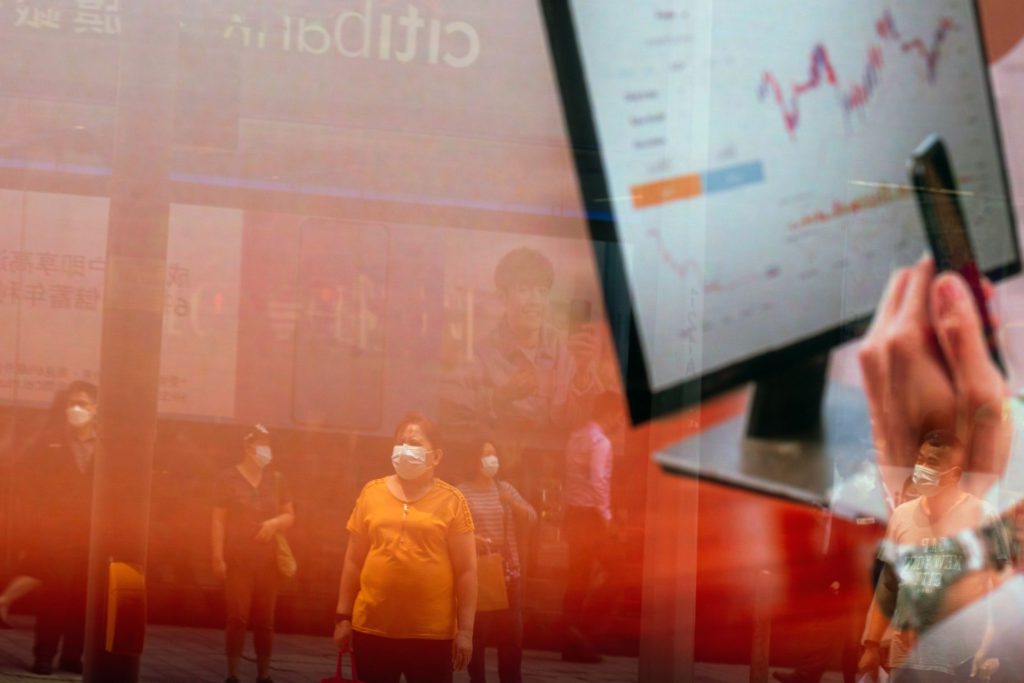
(Bloomberg) — Asian stocks rose Tuesday amid a jump in some technology firms and as investors assessed China’s efforts to stamp out Covid.

An Asian share index rose for a third day — it’s longest winning streak since mid-March. US and European futures bounced back after a Wall Street drop. 

China’s tech companies jumped on optimism Beijing may ease up on a yearlong clampdown following a meeting between regulators and corporate giants.

Meanwhile, Shanghai reported three days of zero community transmission, a milestone that could lead officials to start unwinding a punishing lockdown. Flareups elsewhere in China showed how hard it is to tackle the omicron strain.

A challenging global economic outlook amid elevated food and fuel costs and tightening monetary settings continues to shape sentiment. Oil has jumped to about $114 a barrel and an index of agricultural prices is at a record high.

Treasury yields climbed and the dollar held a retreat. Cryptocurrencies weathered the latest stablecoin turbulence, leaving Bitcoin near $30,000.

US data Monday showed New York state manufacturing activity unexpectedly shrank in May for the second time in three months. That followed Chinese figures revealing a collapse in economic activity due to Covid-linked curbs.

The economic reports have fanned concerns of a downturn in the global economy alongside persistent price pressures that are forcing the Federal Reserve and a slew of other central banks to tighten monetary policy.

“With inflation showing little sign of letting up, the Fed is under pressure to accelerate the pace of tightening,” Lisa Shalett, chief investment officer at Morgan Stanley Wealth Management, said in a note. Taken together with the impact of Russia’s war in Ukraine and China’s Covid struggles, this backdrop “suggests global growth may be decelerating more quickly than forecast.”

New York Fed President John Williams downplayed deteriorating liquidity conditions in financial markets, saying it was to be expected given rising volatility as investors grapple with uncertainty over global events and shifting U.S. monetary policy.

What damage will be done to the US economy and global markets before the Fed changes tack and eases policy again? The “Fed Put” is the theme of this week’s MLIV Pulse survey. Click here to participate anonymously.

What to watch this week:

  • Fed Chair Jerome Powell among slate of Fed speakers Tuesday
  • Reserve Bank of Australia releases minutes of its May policy meeting Tuesday
  • G-7 finance ministers and central bankers meeting Wednesday
  • Eurozone, UK CPI Wednesday
  • Philadelphia Fed President Patrick Harker speaks Wednesday
  • China loan prime rates Friday

Some of the main moves in markets:

Stocks

  • S&P 500 futures rose 0.3% as of 12:37 p.m. in Tokyo. The S&P 500 fell 0.4%
  • Nasdaq 100 futures rose 0.5%. The Nasdaq 100 fell 1.2%
  • Japan’s Topix index added 0.2%
  • Australia’s S&P/ASX 200 index increased 0.1%
  • South Korea’s Kospi rose 0.8%
  • Hong Kong’s Hang Seng Index gained 2.3%
  • China’s Shanghai Composite Index rose 0.3%
  • Euro Stoxx 50 futures increased 0.8%

Currencies

  • The Bloomberg Dollar Spot Index was steady
  • The euro was at $1.0433
  • The Japanese yen was at 129.35 per dollar, down 0.2%
  • The offshore yuan was at 6.7865 per dollar, up 0.2%

Bonds

  • The yield on 10-year Treasuries rose three basis points to 2.91%
  • Australia’s 10-year bond yield rose four basis points to 3.43%

Commodities

  • West Texas Intermediate crude was at $113.74 a barrel, down 0.4%
  • Gold was at $1,822.69 an ounce

More stories like this are available on bloomberg.com

©2022 Bloomberg L.P.
Close Bitnami banner
Bitnami