

Bloomberg

Bitcoin’s Plunge Exposes Idea of Uncorrelated Asset as ‘Big Lie’

(Bloomberg) — A selloff in cryptocurrencies resumed Monday, with Bitcoin dropping back below $30,000 with global equity markets remaining under pressure. 

The largest cryptocurrency fell as much as 6.2% and was trading at $29,835 as of 4:54 p.m. in New York. Other tokens including Ether and Avalanche were on the back foot too. U.S. equities fell as investors assessed the latest signs of economic malaise from the US and China.

Overall, however, digital-asset markets were still calmer compared with the worst of last week’s turmoil over the collapse of the TerraUSD, UST, stablecoin. Deus Finance’s DEI token lost its peg to the dollar on Monday, though it only had a market value of about $63.5 million, compared with about $18 billion for UST. 

“I think it will continue to trade with the equity market and risk assets,” said David Donabedian, chief investment officer of CIBC Private Wealth Management. “That’s the big lie that’s been exposed, the idea that it’s some new asset class that’s going to help diversify your portfolio has been blown to smithereens.” 

Bitcoin dipped to a low of $25,425 on Thursday after the TerraUSD algorithmic stablecoin unraveled, throwing the entire ecosystem that supports it into disarray. At its height, the market panic engulfed the $76 billion stablecoin Tether, a key cog in cryptoassets that briefly dipped from its dollar peg. 

“We have witnessed the rapid decline of a major project, which sent ripples across the industry, but also a new found resiliency in the market that did not exist during the last market downswing,” Changpeng Zhao, chief executive officer of crypto exchange Binance Holdings Ltd., tweeted on Sunday. 

One difference between the current environment and other prolonged downturns such as the “crypto winter” in 2018 is the amount of institutions now involved in the market, which may be a source of support, said Paul Veradittakit, an partner at digital asset manager Pantera Capital.

“Compared to 2018, there are more institutional investors with exposure to crypto and most see this as a buying opportunity,” said Veradittakit.

Ebbing Rally

Monday’s price action saw Bitcoin give back some of a Sunday rally. The total market value of cryptocurrencies has dropped by about $326 billion in the past seven days to roughly $1.33 trillion, according to data from CoinGecko. Bitcoin is some 57% off its November all-time high. 

While crypto markets may have digested the worst of the TerraUSD fallout, the asset class faces other challenges — most notably, rising global interest rates and tighter liquidity conditions.

Bitcoin’s current lower support is at $27,000, “which can likely stabilize price action in the coming days,” said Edul Patel, chief executive officer of Mudrex, an algorithm-based crypto investment platform. 

More stories like this are available on bloomberg.com

©2022 Bloomberg L.P.
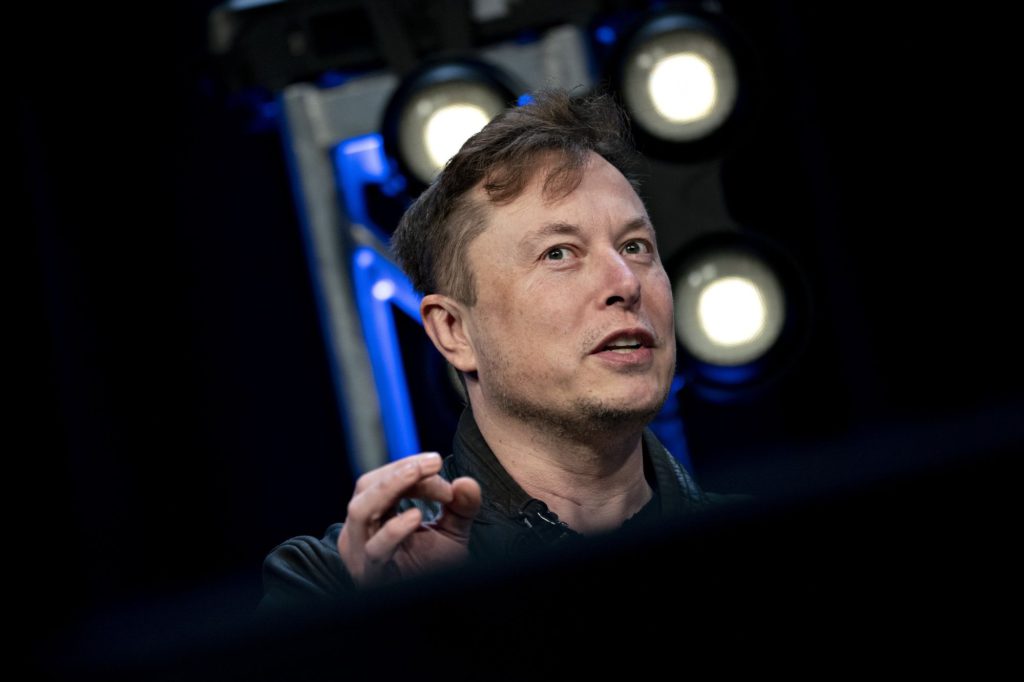
Musk Says Twitter Deal at Lower Price Is ‘Not Out of the Question’

(Bloomberg) — Elon Musk stoked speculation that he could seek to renegotiate his takeover of Twitter Inc., saying a viable deal at a lower price wouldn’t be “out of the question.”

Twitter shares fell 8.2% at the close of trading in New York. The stock has been dropping on speculation that Musk could walk away from the $44 billion acquisition. That concern has grown in the past week as Musk has questioned Twitter’s publicly disclosed data on the percentage of spam and fake accounts on its social-media service.

Musk pressed further on that front Monday at a Miami tech conference, estimating that fake users make up at least 20% of all Twitter accounts. That was the low end of his estimate on the number of bots on the network, and he asked rhetorically if it could be as high as 90%, according to a livestreamed video of his remarks posted by a Twitter user.

“Currently what I’m being told is that there’s just no way to know the number of bots,” Musk said at the conference. “It’s like, as unknowable as the human soul.”

Twitter declined to comment. The San Francisco-based company reports quarterly that spam accounts make up less than 5% of total users. 

Musk, chief executive officer of Tesla Inc. and SpaceX, last week said his bid to buy Twitter was “temporarily on hold” pending details about how many spam and fake accounts are on the platform. Over the weekend, he tweeted that he planned to do his own analysis of Twitter’s user base by using a random sample of 100 user accounts. Shortly after, Musk claimed that Twitter’s legal team called to complain that he had violated their non-disclosure agreement by publicly sharing the company’s methodology. 

Twitter CEO Parag Agrawal disputed that on Monday in a tweet thread that offered more details on the company’s approach to spam accounts. Agrawal said Twitter manually checks thousands of accounts every quarter to determine how many should be counted as spam, but added that the process could not be conducted externally because of user privacy concerns.

Agrawal said Twitter “shared an overview of the estimation process with Elon a week ago.” Musk replied to the CEO’s tweet thread by first asking why Twitter doesn’t just call users to verify their identity — and then by posting a poop emoji.

Read more: Twitter wipes out all gains since Musk disclosed stake

Musk spoke at a conference hosted by a podcast called “All-In” run by Chamath Palihapitiya, Jason Calacanis, David Sacks and David Friedberg. The $7,500-per-person event was sold out, and organizers said journalists were excluded from attending. Musk appeared at the Miami summit via videoconference.

The 50-year-old billionaire began buying Twitter shares in January and disclosed a 9.2% stake in the company on April 4. Twitter’s board accepted Musk’s $44 billion bid to buy the company and take it private on April 25, but the deal is months away from closing, and Twitter’s shares are trading far below the offer price.

The spread between Musk’s $54.20-a-share bid and Twitter’s share price continues to widen, wiping out all the gains the stock had made since Elon Musk disclosed his stake in the social media platform.

QuickTake: Why Elon Musk and Twitter CEO Are Sparring Over Bots

(Updates share price in second paragraph; adds Musk comment, background about bots.)

More stories like this are available on bloomberg.com

©2022 Bloomberg L.P.

Rivian Drops on Word of Lawsuit With Key Seat Supplier for Vans

(Bloomberg) — Rivian Automotive Inc. fell almost 7% Monday on word the electric-vehicle startup is in a dispute with a key seat supplier that could jeopardize its delivery van contract with patron Amazon.com Inc.

Rivian alleged in a lawsuit that Commercial Vehicle Group Inc., a New Albany, Ohio-based auto parts manufacturer, threatened to stop supplying seats unless the carmaker agreed to pay “approximately twice the agreed-upon price,” according to a copy of the complaint. 

Shares of Rivian fell 6.9% Monday to close at $24.86 and are down 76% so far this year. Commercial Vehicle dropped 2.4% to $6.45. 

The suit involves supplies of vehicle components such as the driver seat, jump seat and trim used for battery-powered vans Rivian is building for Amazon. The tech giant, which is one of Rivian’s biggest investors, has ordered 100,000 of the startup’s electric delivery vans, the first 10,000 of which are due by the end of this year.

A spokesperson for Rivian said Commercial Vehicle Group has “continued to supply seats to Rivian” and that the two companies are “discussing a resolution.” Commercial Vehicle had no immediate reply to a request for comment. The suit was reported earlier Monday by The Wall Street Journal. 

Irvine, California-headquartered Rivian alleged in the suit, which was filed in March, that it had fewer than 100 seat packages left for installation and that it faced “imminent shutdown” of its entire production line for battery-powered vans. It also claimed Commercial Vehicle Group would not allow it to place new orders for additional seat packages at the higher prices.

The case is Rivian Automotive LLC v Commercial Vehicle Group Inc., 22-002806-CB, State Of Michigan, Third Judicial Circuit, County of Wayne.

More stories like this are available on bloomberg.com

©2022 Bloomberg L.P.
Take-Two Tops Earnings Estimates, But Gives Tepid Forecast

(Bloomberg) — Take-Two Interactive Software Inc. gained in late trading after fourth-quarter earnings topped analysts’ estimates, boosted by games such as NBA 2K22, though a forecast for the coming year suggests that an industrywide slump is poised to crimp sales.

The shares climbed as much as 4.3% after Take-Two posted earnings of $1.09 a share, excluding some items. That compared with an average projection of 99 cents. The stock had been down 38% this year through Monday’s close.

Revenue in the coming year will be $3.75 billion to $3.85 billion, with earnings of as much as $4.45 a share, Take-Two said. Both would be short of analyst projections.

The video-game industry is getting punished by widespread hardware shortages and inflation — as well as users spending less time playing games than they did during the height of the pandemic. Consumer spending on video games in the U.S. from January through March dropped 8% from the same period last year, according to the research firm NPD Group.

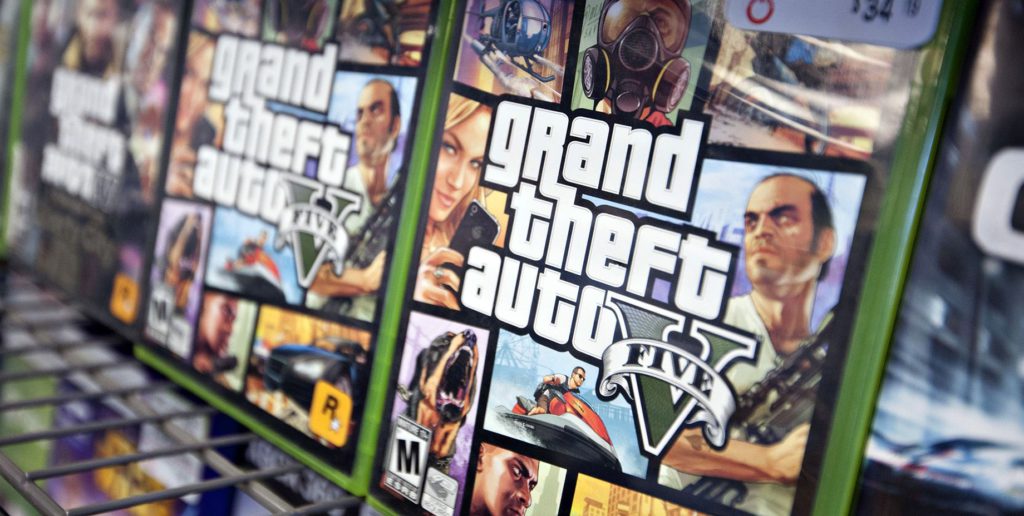
Take-Two is the parent company of several video-game labels, including Rockstar Games and 2K. Its biggest hits include the NBA 2K series and Grand Theft Auto V, which has sold more than 160 million copies and is one of the most lucrative properties in entertainment history.

Game delays at a number of publishers have taken a recent toll on video-game sales. Take-Two said Monday that one of its smaller titles, Kerbal Space Program 2, will be pushed back until 2023. That game went through turmoil in 2020 after Take-Two cut ties with the company that was working on it. Take-Two poached about a third of the game developer’s staff, and the business — Star Theory Games — ultimately closed its doors.

In its earnings report, Take-Two said that new titles WWE 2K22 and Tiny Tina’s Wonderlands outperformed expectations, as did back-catalog sales for the 2018 game Red Dead Redemption 2.

Take-Two is a participant in this year’s wave of consolidation, announcing in January that it plans to buy the mobile-game company Zynga for $11 billion. Analysts are watching to see if Take-Two will make other moves, such as a possible takeover of Ubisoft Entertainment SA, which is rumored to be on the market. Analysts are also looking for more news on the next Grand Theft Auto, which Take-Two said earlier this year was in development at Rockstar Games.

Take-Two posted fourth-quarter revenue of $845.8 million, missing the average estimate of $870.1 million.

Adjusted revenue for the fiscal first quarter, which runs from April to June, will be $700 million to $750 million. Analysts had estimated $788.1 million. The company forecast earnings of 60 cents to 70 cents a share, compared with an average analyst estimate of 96 cents.

Chief Executive Officer Strauss Zelnick summed up the year by saying Take-Two took “pivotal steps” to invest in talent, broaden its product lineup and agree to a “transformational pending combination with Zynga.”

(Updates with shares starting in first paragraph.)

More stories like this are available on bloomberg.com

©2022 Bloomberg L.P.
Twitter Wipes Out All Gains Since Elon Musk Disclosed His Stake

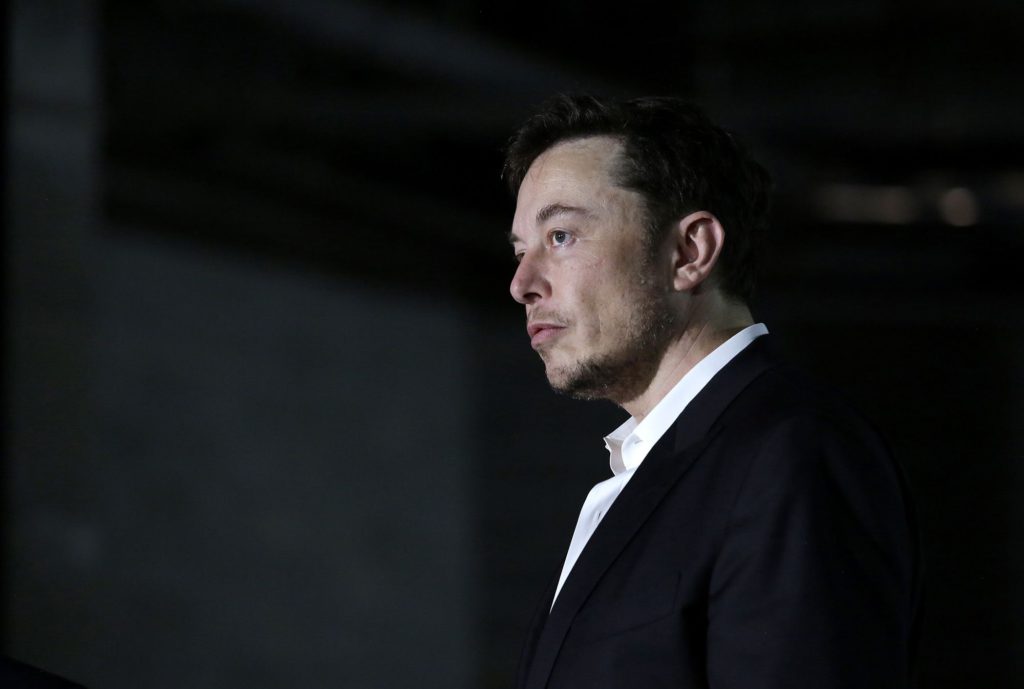
(Bloomberg) — Twitter Inc. shares fell again on Monday, wiping out all the gains the stock had made since Elon Musk disclosed his stake in the social media platform. 

Shares of the the San Francisco, California-based company fell 8.2% to $37.39, with the stock posting a seventh straight daily decline. It ended the session below the $39.31 closing price on April 1, the last trading session before Musk disclosed his 9% stake in the firm. 

Musk, who is an avid Twitter user with over 93 million followers, bid to take the company private for $54.20 per share last month. But uncertainty around the deal, fueled in part by comments from Musk, have weighed on shares and driven doubts about whether the acquisition will be completed. On Monday, Musk said a viable deal at a lower price wouldn’t be “out of the question,” adding to speculation about whether he could seek to renegotiate his takeover.

“The stock price tells you that the deal is in severe trouble,” said Steve Sosnick, chief strategist at Interactive Brokers. “If the deal was healthy, there would be no reason for it to be trading around a 40% discount to the offer price. The price is imputing a very low likelihood of the deal getting done at $54.20, and suggesting it could fall apart.”

The gap between Musk’s buyout price and the market value, a proxy for confidence about whether the deal will close, widened to a record of $16.81 on Monday.

On Friday, Musk took to the platform to claim that his offer was “temporarily on hold” to get data on the amount of fake accounts on the social media platform. He later said that he was “still committed” to the deal. The stock closed 9.7% lower on Friday in its worst session since Oct. 27.

In a phone interview, Sosnick said that Musk talking about bots was a sign of buyer’s remorse, comparing it to “knowing that a house has mold, but then signing the contract without a home inspection.” He suggested Musk was trying to lower the price of the deal.

Twitter Chief Executive Officer Parag Agrawal sent a flurry of tweets on Monday detailing the company’s efforts to identify and remove spam accounts and said external estimates aren’t possible. Musk responded to Agrawal, asking how advertisers “know what they’re getting for their money?”

(Updates trading to market close, adds commentary)

More stories like this are available on bloomberg.com

©2022 Bloomberg L.P.
U.S. Stocks Extend Losses in Late Session Selloff: Markets Wrap

(Bloomberg) — Stocks fell back toward session lows in the last hour of trading Monday as investors assessed the latest signs of economic malaise in the US and China. 

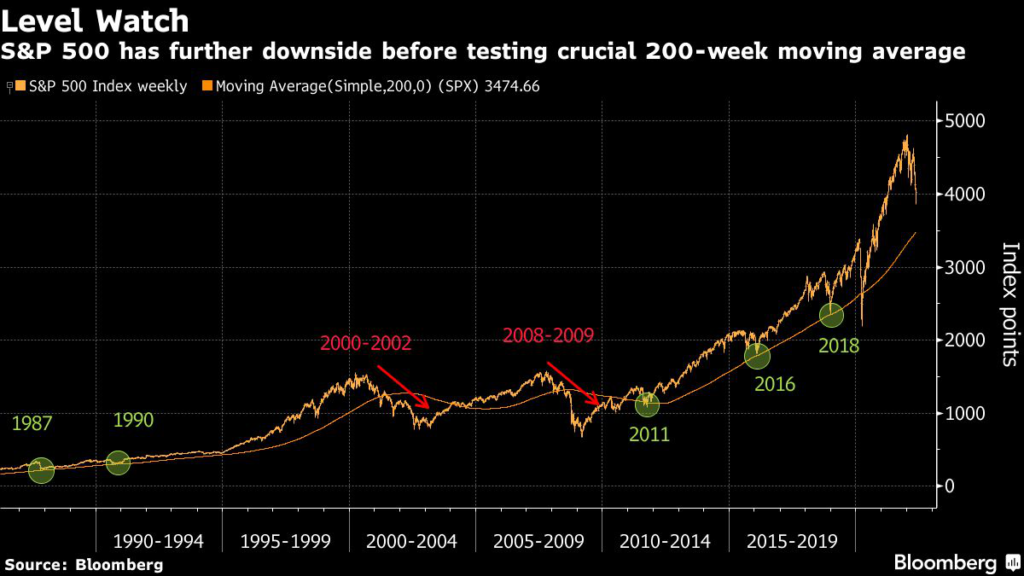
The S&P 500 dropped, dragged lower by a slide in megacaps including Tesla Inc., Amazon.com Inc. and Apple Inc. The tech-heavy Nasdaq 100 dropped more than 1%. Equity markets gave up earlier gains in a seesaw session amid data showing China’s industrial output and consumer spending hit the worst levels since the pandemic began, hurt by Covid lockdowns. New York state manufacturing activity unexpectedly contracted in May, stoking concerns of slowing economic activity that may complicate the Federal Reserve’s policy path. 

Adding to those growth concerns, New York City is preparing to hit a high Covid-transmission level in the coming days that would have it reconsidering mask requirements in public places. 

The risk of an economic downturn amid price pressures and rising borrowing costs remains the major worry for markets. Goldman Sachs Group Inc. Senior Chairman Lloyd Blankfein urged companies and consumers to gird for a US recession, saying it’s a “very, very high risk.”  That said, while the US market is pricing in 40% odds of a recession, history shows the S&P 500 tended to rally in the absence of the worst case, according to a study by UBS Group AG. 

Read more: JPMorgan’s Kolanovic Says Stock Markets Overprice Recession Risk

Market commentary

  • “You’ve got investors pulling back from the market in the expectation that we’re going to have a recession,” David Donabedian, chief investment officer of CIBC Private Wealth Management, said by phone. “It’s hard to, frankly, make a strong argument against that, the idea that we’ll have a recession. We know that that’s what Federal Reserve tightening produces most of the time, it’s a recession. And so you have to have a good answer to the question of why would this time be different, and it’s not that easy to come up with that answer, frankly.”
  • “With inflation showing little sign of letting up, the Fed is under pressure to accelerate the pace of tightening,” Lisa Shalett, chief investment officer at Morgan Stanley Wealth Management, said in a note. “This is increasingly problematic as the complicating factors from the Russia-Ukraine conflict and the China COVID response are also intensifying. All told, this suggests global growth may be decelerating more quickly than forecast.”

In corporate news, Twitter Inc. shares fell Monday, erasing all the gains the stock made since Elon Musk disclosed his stake in the social media platform. JetBlue Airways Corp. made a hostile $3.3 billion cash bid for Spirit Airlines Inc., appealing directly to shareholders to prevail over a rival offer for the discount carrier. Verizon Communications Inc. plans to raise prices on its wireless bills for the first time in two years. McDonald’s Corp. said it will pull out of Russia after more than 30 years of operation in the country and will take a write-off of $1.2 billion to $1.4 billion for the move.

Cryptocurrencies dipped as the mood in stocks weakened. That took Bitcoin back to around the $30,000 level.

What to watch this week:

  • Fed Chair Jerome Powell among slate of Fed speakers Tuesday
  • Reserve Bank of Australia releases minutes of its May policy meeting Tuesday
  • G-7 finance ministers and central bankers meeting Wednesday
  • Eurozone, UK CPI Wednesday
  • Philadelphia Fed President Patrick Harker speaks Wednesday
  • China loan prime rates Friday

Some of the main moves in markets:

Stocks

  • The S&P 500 fell 0.4% as of 4 p.m. New York time
  • The Nasdaq 100 fell 1.2%
  • The Dow Jones Industrial Average was little changed
  • The MSCI World index fell 0.1%

Currencies

  • The Bloomberg Dollar Spot Index fell 0.3%
  • The euro rose 0.2% to $1.0432
  • The British pound rose 0.4% to $1.2317
  • The Japanese yen was little changed at 129.12 per dollar

Bonds

  • The yield on 10-year Treasuries declined three basis points to 2.88%
  • Germany’s 10-year yield declined one basis point to 0.94%
  • Britain’s 10-year yield declined one basis point to 1.73%

Commodities

  • West Texas Intermediate crude rose 3.2% to $114.08 a barrel
  • Gold futures rose 0.9% to $1,825.10 an ounce

More stories like this are available on bloomberg.com

©2022 Bloomberg L.P.

Affluent California City Had Grid Woes Ahead of Wildfire, Sensor Maker Says

(Bloomberg) — An affluent Southern California city ravaged by a wildfire last week had been experiencing sudden voltage swings more frequently in the past six months — including a brownout minutes before the blaze was reported, according to home sensor maker Whisker Labs Inc.

Plug-in sensors in dozens of Laguna Niguel houses detected voltage drops from utility power lines on May 11, plunging to 83.9 volts from 120 volts for almost a second at 2:41 p.m., according to the device developer. Reports of the fire came three minutes later.

It’s not clear if the fire was tied to the electrical system. An investigation into the blaze is ongoing. The incident destroyed at least 20 homes and forced about 900 residents to flee the Orange County community 54 miles (87 kilometers) south of Los Angeles.

Edison International’s southern California utility declined to comment on Whisper Labs findings. Southern California Edison had reported a “circuit activity” on one of its power lines near the start of the fire using its own grid surveillance and is reviewing all information made available to the utility in its investigation, spokesman David Song said.

Whisker Labs Chief Executive Officer Bob Marshall said the frequency of voltage swings have been rising in the wealthy enclave since October, making it a clear “hot spot” in California for the phenomenon. Households in the area equipped with the sensors are seeing about two grid defaults a month on average, almost double from the start of the year, according to a Whisker Labs presentation.

“We cannot say that this fault caused the fire,” Marshall said, adding that “these faults have been occurring more and more frequently and it’s been building up.”

Whisker Lab’s CEO said he briefed State Farm General Insurance Co. executives on his findings Thursday because the insurer covers homes in the area. The insurer provides Whisker Lab’s Ting sensors to customers to act as a detector for electrical anomalies inside homes and on the utility grid.

More stories like this are available on bloomberg.com

©2022 Bloomberg L.P.
Stocks Extend Losses Amid Drop in Megacaps, Tech: Markets Wrap

(Bloomberg) — Stocks headed back toward session lows in the last hour of trading Monday as investors assessed the latest signs of economic malaise in the US and China. 

The S&P 500 fell, dragged lower by a slide in megacaps including Tesla Inc., Amazon.com Inc. and Apple Inc. The tech-heavy Nasdaq 100 dropped more than 1%. Equity markets gave up earlier gains in a seesaw session amid data showing China’s industrial output and consumer spending hit the worst levels since the pandemic began, hurt by Covid lockdowns. New York state manufacturing activity unexpectedly contracted in May, stoking concerns of slowing economic activity that may complicate the Federal Reserve’s policy path. 

Adding to those growth concerns, New York City is preparing to hit a high Covid-transmission level in the coming days that would have it reconsidering mask requirements in public places. 

The risk of an economic downturn amid price pressures and rising borrowing costs remains the major worry for markets. Goldman Sachs Group Inc. Senior Chairman Lloyd Blankfein urged companies and consumers to gird for a US recession, saying it’s a “very, very high risk.”  That said, while the US market is pricing in 40% odds of a recession, history shows the S&P 500 tended to rally in the absence of the worst case, according to a study by UBS Group AG. 

Read more: JPMorgan’s Kolanovic Says Stock Markets Overprice Recession Risk

Market commentary

  • “You’ve got investors pulling back from the market in the expectation that we’re going to have a recession,” David Donabedian, chief investment officer of CIBC Private Wealth Management, said by phone. “It’s hard to, frankly, make a strong argument against that, the idea that we’ll have a recession. We know that that’s what Federal Reserve tightening produces most of the time, it’s a recession. And so you have to have a good answer to the question of why would this time be different, and it’s not that easy to come up with that answer, frankly.”
  • “With inflation showing little sign of letting up, the Fed is under pressure to accelerate the pace of tightening,” Lisa Shalett, chief investment officer at Morgan Stanley Wealth Management, said in a note. “This is increasingly problematic as the complicating factors from the Russia-Ukraine conflict and the China COVID response are also intensifying. All told, this suggests global growth may be decelerating more quickly than forecast.”

In corporate news, Twitter Inc. shares fell Monday, erasing all the gains the stock made since Elon Musk disclosed his stake in the social media platform. JetBlue Airways Corp. made a hostile $3.3 billion cash bid for Spirit Airlines Inc., appealing directly to shareholders to prevail over a rival offer for the discount carrier. Verizon Communications Inc. plans to raise prices on its wireless bills for the first time in two years. McDonald’s Corp. said it will pull out of Russia after more than 30 years of operation in the country and will take a write-off of $1.2 billion to $1.4 billion for the move.

Cryptocurrencies dipped as the mood in stocks weakened. That took Bitcoin back to around the $30,000 level.

What to watch this week:

  • Fed Chair Jerome Powell among slate of Fed speakers Tuesday
  • Reserve Bank of Australia releases minutes of its May policy meeting Tuesday
  • G-7 finance ministers and central bankers meeting Wednesday
  • Eurozone, UK CPI Wednesday
  • Philadelphia Fed President Patrick Harker speaks Wednesday
  • China loan prime rates Friday

Some of the main moves in markets:

Stocks

  • The S&P 500 fell 0.5% as of 3:47 p.m. New York time
  • The Nasdaq 100 fell 1.3%
  • The Dow Jones Industrial Average was little changed
  • The MSCI World index fell 0.2%

Currencies

  • The Bloomberg Dollar Spot Index fell 0.3%
  • The euro rose 0.2% to $1.0432
  • The British pound rose 0.4% to $1.2317
  • The Japanese yen rose 0.1% to 129.04 per dollar

Bonds

  • The yield on 10-year Treasuries declined three basis points to 2.88%
  • Germany’s 10-year yield declined one basis point to 0.94%
  • Britain’s 10-year yield declined one basis point to 1.73%

Commodities

  • West Texas Intermediate crude rose 2.9% to $113.71 a barrel
  • Gold futures rose 0.9% to $1,823.60 an ounce

More stories like this are available on bloomberg.com

©2022 Bloomberg L.P.
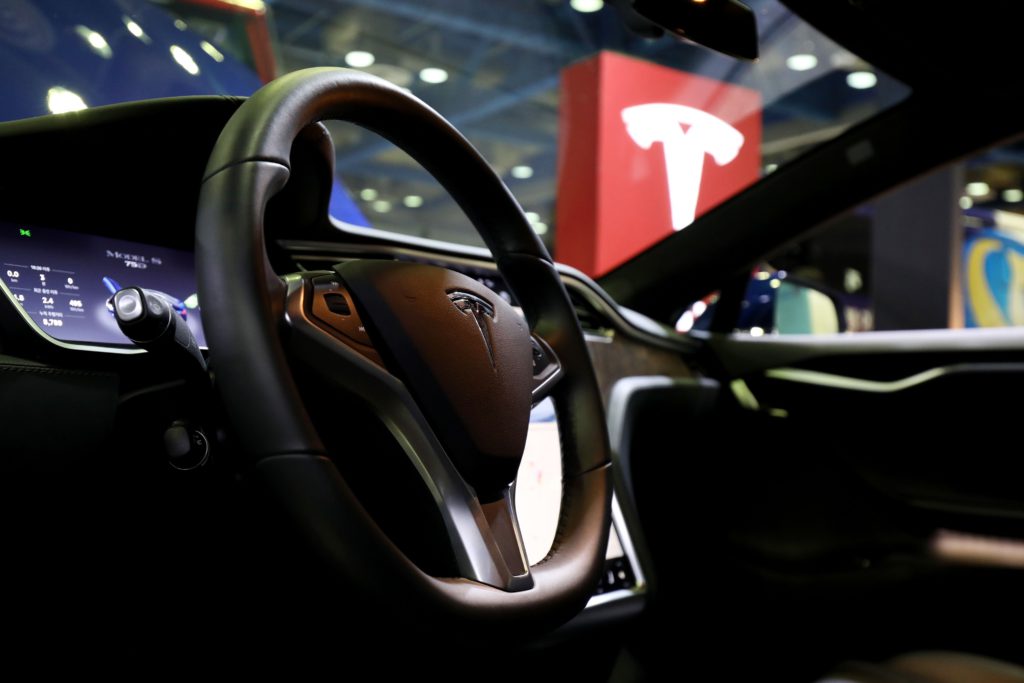
Hacker Shows Off a Way to Unlock Tesla Models, Start Engine

(Bloomberg) — Tesla Inc. customers might love the carmakers’ nifty keyless entry system, but one cybersecurity researcher has demonstrated how the same technology could allow thieves to drive off with certain models of the electric vehicles.

A hack effective on the popular 3 and Y model Tesla cars would allow a thief to unlock a vehicle, start the engine and speed away, according to Sultan Qasim Khan, principal security consultant at the Manchester, UK-based security firm NCC Group. By redirecting communications between a car owner’s mobile phone, or key fob, and the car, outsiders can fool the entry system into thinking the owner is located physically near the vehicle. 

The hack, Khan said, isn’t specific to Tesla, though he demonstrated the technique to Bloomberg News on one of its car models. Rather, it’s the result of his tinkering with Tesla’s keyless entry system, which relies on what’s known as a Bluetooth Low Energy (BLE) protocol. 

There’s no evidence that thieves have used the hack to improperly access Tesla vehicles. The carmaker didn’t respond to a request for comment. NCC provided details of its findings to its clients in a note on Sunday, an official there said.

Khan said he had disclosed the potential for attack to Tesla and that company officials didn’t deem the issue a significant risk. To fix it, the carmaker would need to alter its hardware and change its keyless entry system, Khan said. The revelation comes after another security researcher, David Colombo, revealed a way of hijacking some functions on Tesla vehicles, such as opening and closing doors and controlling music volume. 

BLE protocol was designed to conveniently link devices together over the internet, though it’s also emerged as method that hackers exploit to unlock smart technologies including house locks, cars, phones and laptops, Khan said. NCC Group said it was able to conduct the attack on several other carmakers and technology companies’ devices.

Kwikset Corp. smart locks that use keyless systems with iPhone or Android phones are impacted by the same issue, Khan said. Kwikset said that customers who use an iPhone to access the lock can switch on two-factor authentication in lock app. A spokesperson also added that the iPhone-operated locks have a 30-second timeout, helping protect against intrusion.

Kwikset will be updating its Android app in “summer,” the company said.

“The security of Kwikset’s products is of utmost importance and we partner with well-known security companies to evaluate our products and continue to work with them to ensure we are delivering the highest security possible for our consumers,” a spokesperson said. 

A representative at Bluetooth SIG, the collective of companies that manages the technology said: “The Bluetooth Special Interest Group (SIG) prioritizes security and the specifications include a collection of features that provide product developers the tools they need to secure communications between Bluetooth devices. 

“The SIG also provides educational resources to the developer community to help them implement the appropriate level of security within their Bluetooth products, as well as a vulnerability response program that works with the security research community to address vulnerabilities identified within Bluetooth specifications in a responsible manner.”

Khan has identified numerous vulnerabilities in NCC Group client products and is also the creator of Sniffle, the first open-source Bluetooth 5 sniffer. Sniffers can be used to track Bluetooth signals, helping identify devices. They are often used by government agencies that manage roadways to anonymously monitor drivers passing through urban areas.  

A 2019 study by a British consumer group, Which, found that more than 200 car models were susceptible to keyless theft, using similar but slightly different attack methods such as spoofing wireless or radio signals. 

In a demonstration to Bloomberg News, Khan conducted a so-called relay attack, in which a hacker uses two small hardware devices that forward communications. To unlock the car, Khan placed one relay device within roughly 15 yards of the Tesla owner’s smartphone or key fob and a second, plugged into his laptop, near to the car. The technology utilized custom computer code that Khan had designed for Bluetooth development kits, which are sold online for less than $50.

The hardware needed, in addition to Khan’s custom software, costs roughly $100 altogether and can be easily bought online. Once the relays are set up, the hack takes just “ten seconds,” Khan said. 

“An attacker could walk up to any home at night – if the owner’s phone is at home – with a Bluetooth passive entry car parked outside and use this attack to unlock and start the car,” he said. 

“Once the device is in place near the fob or phone, the attacker can send commands from anywhere in the world,” Khan added. 

(Updated to fix typo in seventh paragraph, include additional detail about the nature of a relay attack.)

More stories like this are available on bloomberg.com

©2022 Bloomberg L.P.

Microsoft Doubles Salary Budget to Retain Staff as Cost of Living Rises

(Bloomberg) — Microsoft Corp. plans to “nearly double” its budget for employee salaries and boost the range of stock compensation it gives some workers by at least 25%, an effort to retain staff and help people cope with inflation.

The move will mainly affect “early to mid-career employees,” the software giant said in a statement Monday.

“As we approach our annual total rewards process, we are making a significant additional investment this year to compensate our employees globally,” the Redmond, Washington-based company said. “While we have factored in the impact of inflation and rising cost of living, these changes also recognize our appreciation to our world-class talent who support our mission, culture and customers, and partners.”

In addition to contending with cost-of-living increases and a tight Seattle housing market, Microsoft is locked in a fierce battle for talent with companies like Amazon.com Inc., Google and Facebook owner Meta Platforms Inc., as well as startups. Fields like cybersecurity, artificial intelligence, the metaverse and cloud computing have been especially competitive. Moreover, the pandemic has led many workers to relocate and reconsider employment options.

“Time and time again, we see that our talent is in high demand because of the amazing work that you do,” Chief Executive Officer Satya Nadella said in a memo that was obtained by Bloomberg. 

Microsoft’s salary package is composed of base salary, bonus and stock. The changes will apply to a substantial part of the company’s workforce, which stood at 181,000 as of June 30, 2021.

The stock increase will apply to employees at Level 67 in the company’s internal scale, or below, Nadella said. Level 67 is the last tier before an employee is made a company partner, putting them in a higher pay scale. The salary budget increases will vary by country and “the most meaningful increases will be focused where the market demands.”

The company didn’t discuss pay figures, so it’s hard to tell what the new compensation levels will translate to in dollar figures. But the Glassdoor website estimates that a new graduate working as a software engineer at Microsoft makes about $163,000.

Cross-town rival Amazon.com Inc. in February said it would more than doubling the maximum base salary it pays employees to $350,000 from $160,000 to cope with a competitive labor market.

Insider reported the company was considering the increases last week.

(Updates with CEO memo in fifth paragraph.)

More stories like this are available on bloomberg.com

©2022 Bloomberg L.P.

Close Bitnami banner
Bitnami