Bloomberg

Another Stablecoin Loses Peg as Algorithm Fails to Keep Pace

(Bloomberg) — Deus Finance’s DEI token has lost its 1-to-1 peg to the dollar, becoming the latest failure of an algorithmic stablecoin during a period of crypto market stress.

DEI is currently trading at 70 cents, according to data tracker CoinGecko. With a market value of about $63.5 million, the token is tiny compared with the more than $18 billion TerraUSD stablecoin that shook crypto markets when it become depegged last week. 

Unlike after the TerraUSD break, the drop below the peg by DEI hasn’t exacerbated concern about a broader crypto market contagion. Bitcoin fell less than 4% on Monday, while popular DeFi tokens such as Solana and Cardano were down similar amounts. 

Read more: Crypto Hedge-Fund Head Predicted Terra’s $60 Billion Implosion

Put out by Deus Finance, a marketplace for financial services, DEI is different from TerraUSD, or UST, in that it’s a fractional reserve stablecoin, backed by coin collateral, consisting of 20% DEUS tokens and 80% of other stablecoins, such as USDC.

Deus’s team is working to restore the peg, according to a Tweet.

The depegging comes several months after Deus Finance was hacked, with some coins stolen.

UST is currently trading at about 6 cents. Last week, even the world’s biggest stablecoin, Tether — which is not algorithmic and claims to have full reserves — lost its dollar peg before regaining it. Crypto bellwether Bitcoin is trading at less than $30,000, down from over its all-time high of almost $69,000 in November.

EXPLAINER: What Are Stablecoins? Why Did TerraUSD Go So Wobbly?: QuickTake

More stories like this are available on bloomberg.com

©2022 Bloomberg L.P.

Musk and Twitter CEO Tussle Over Prevalence of Spam Accounts

(Bloomberg) — Elon Musk sparred with Twitter Inc. Chief Executive Officer Parag Agrawal over over the prevalence of spam bots on the platform, with the company’s would-be owner saying the number is far higher than acknowledged. 

Musk, who has agreed to buy Twitter for $44 billion, said last week that he was putting the deal “on hold” until he had more information about how the company measures bot accounts. The billionaire said Monday that he estimates at least 20% of Twitter accounts are actually spam. In a Twitter thread, meanwhile, Agrawal said the number is less than 5% when measuring daily users — a figure the company has previously cited in quarterly filings. 

Musk tweeted over the weekend that he was going to run his own test to determine the number of bots on Twitter by sampling 100 random accounts that follow the @Twitter handle. He then tweeted that he picked that sample size because it’s the same sample size Twitter uses to determine its own bot prevalence. 

Agrawal contradicted that claim Monday, saying Twitter has human reviewers look at “thousands of accounts” to determine the prevalence of bots, but added that he couldn’t share more specifics because of privacy concerns. “Unfortunately, we don’t believe that this specific estimation can be performed externally, given the critical need to use both public and private information,” he wrote. 

He added that Twitter shared this methodology with Musk last week.

The issue has emerged as a key concern for Twitter management and investors, with some analysts saying it could derail Musk’s takeover deal — or knock down the price. Twitter fell as much as 7.9% to $37.51 on Monday, putting it well below the $54.20-a-share Musk offer that was approved by the board last month. 

In his Twitter thread Monday, Agrawal said that measuring spam accounts was complicated because some accounts that look like spam are actually real humans, and vice versa. Twitter also allows bots on the service, so simply setting up an automated account is not against the rules. 

Musk was not impressed with Agrawal’s response. He first replied, “Have you tried calling them?” as a way to confirm a user account isn’t spam. Then he simply replied to Agrawal with a poop emoji. 

To view the source of this information click here.

More stories like this are available on bloomberg.com

©2022 Bloomberg L.P.

Crypto First? What Happens When a Blockchain Like Terra Dies

(Bloomberg) — The crypto world has been riveted by the rapid collapse of the TerraUSD stablecoin. But its implosion may bring about something just as noteworthy: the death of a major blockchain.

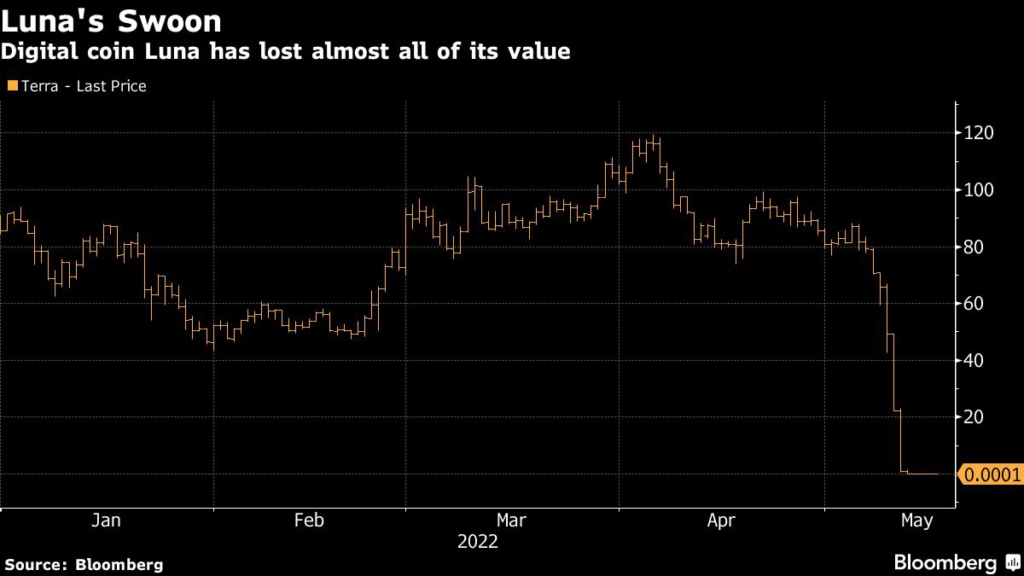
The Terra blockchain — the platform supporting scores of decentralized applications that let users swap crypto coins and earn yields — was halted and then restarted twice in recent days, as the value of its main cryptocurrency, Luna, and the related TerraUSD (UST) stablecoin collapsed following a wave of selling pressure. Along the way, incentives for various parties to support the chain evaporated, sending the ecosystem that nurtured more than 110 applications connected with more than 4 million digital wallets into disarray. While the chain is running again and there are efforts in the works to keep it working — including a new plan proposed Monday by co-founder Do Kwon to start up a new version of the blockchain without UST — the attempt may prove futile with Luna near zero. Meanwhile, many of its functions have been disabled.

“Terra in its current form is dead for all practical purposes,” said Kyle Samani, co-founder of Multicoin Capital. 

The demise of a crypto ecosystem of the size and depth of Terra — once valued at more than $40 billion — would mark a milestone in the history of blockchain, the digital-ledger technology that was initially created to support Bitcoin more than a decade ago and is now the bedrock of the myriad cryptocurrencies that have cropped up since. 

Meet the Hedge-Fund Manager Who Warned of Terra’s $60 Billion Implosion

Scores of smaller blockchains have turned into the walking dead before, with their coins trading for less than $1 and only a sprinkling of users — victims of poor design, conflicts among developers or hacks. They still have a smattering of loyal fans, many of whom dream the networks will one day come back and their coins’ values will skyrocket, making them rich. Now Terra is facing the same predicament, but on a much grander scale.

“I think volume will dry up and it will trade infrequently, then die,” said John Griffin, a finance professor at University of Texas at Austin. “Once there is no economic incentive to maintain the blockchain, someone turns off the electricity.” 

Read more: Crypto Hedge-Fund Head Predicted Terra’s $60 Billion Implosion

Essentially, a blockchain is a database that can host hundreds or thousands of applications and record related financial transactions. They are typically open-source, created by and improved on by a community of developers and supported by operators of computers that verify transactions and get rewarded with tokens or coins specially created for use on that particular blockchain. The tokens can also function as rewards for improving code, developing new apps and so-called staking, when holders provide their coins to a computer operator ordering exchanges in exchange for earning yield. And investors often receive a blockchain’s native token or a related coin in exchange for their financial support.

Death Spiral

Blockchains, then, are fragile financial ecosystems of validators, users, developers, investors and others, with their participation directly linked to the chain token’s well-being and appreciation. The expectation is that as more participants get involved and activity increases, coin values will increase, attracting more users and creating a virtuous circle. But if a chain’s token collapses, everyone’s economic incentive to support the chain evaporates, too. If the loss of value appears to be permanent, only a few ideological fans remain — everyone else leaves. That’s how a blockchain can end up dying.

In the case of Terra, one of the network’s cornerstones was its UST stablecoin, which stopped working as intended about a week ago. UST was designed to use algorithms and trader incentives in relationship with Luna to keep a 1-to-1 peg with the dollar, but these mechanisms broke down as selling hit UST, triggering even deeper declines in Luna. 

Read more: ‘Everything Broke’: Terra Goes From DeFi Darling to Death Spiral

With Luna’s value collapsed, actvity is drying up across the blockchain. Staking has all but stopped: Only 0.01% of all Luna is staked nowadays, according to tracker Terra Station. Terra’s total value locked in apps such as the DeFi platform Anchor Protocol has fallen precipitously, sliding from more than $31 billion as recently as April into negative territory, according to DeFi Llama, another tracker. And the Terra Dapp Expo — an event slated for June and designed to showcase the blockchain’s thriving developer ecosystem — has been canceled.

“Need a week or two to think about what’s going to happen next,” developers from Nexus Protocol, which helps Terra users earn yields, told Bloomberg in a message via Twitter. “Our team is grieving, our community is grieving.”

Polygon, a rival blockchain project, is already seeing an influx of developers fleeing Terra, said Mudit Gupta, chief information security officer at Polygon, He said he’s already spoken to six projects from the Terra ecosystem and about 25 developers who are considering moving to another network.

“A chain is considered dead when new developers are not coming to build on it and existing developers gradually move out,” Gupta says.

Not everyone has given up the chain for dead. Terra’s co-founder, Do Kwon, is still attempting to revive the effort and come up with plan B. Initially, there were hopes of a UST bailout; but those hopes have died. 

Kwon has proposed reconstituting the chain while admitting that “we will lack the ecosystem to build back up from the ashes” of Luna. But even some of Terra’s onetime investors don’t like the idea of changes such as forking — copying the existing blockchain to start afresh.

Read more: Do Kwon Proposes Creating Another Blockchain From Terra’s Ashes

“Minting, forking don’t create value,” Zhao “CZ” Changpeng, chief executive officer of world’s biggest crypto exchange, Binance, which invested into Terra’s blockchain project in 2018, said on Twitter. 

As revival hopes continue among Terra’s diehards, “the final demise could take quite a while, but the only direction from here is down—absent a miracle,” said Aaron Brown, a crypto investor who writes for Bloomberg Opinion.

(Adds details about latest blockchain revamp plan in second and thuird-from last paragraph.)

More stories like this are available on bloomberg.com

©2022 Bloomberg L.P.

A Crypto First? What Happens When a Blockchain Like Terra Dies

(Bloomberg) — The crypto world has been riveted by the rapid collapse of the TerraUSD stablecoin. But its implosion may bring about something just as noteworthy: the death of a major blockchain.

The Terra blockchain — the platform supporting scores of decentralized applications that let users swap crypto coins and earn yields — was halted and then restarted twice in recent days, as the value of its main cryptocurrency, Luna, and the related TerraUSD (UST) stablecoin collapsed following a wave of selling pressure. Along the way, incentives for various parties to support the chain evaporated, sending the ecosystem that nurtured more than 110 applications connected with more than 4 million digital wallets into disarray. While the chain is running again and there are efforts in the works to keep it working — including a new plan proposed Monday by co-founder Do Kwon to start up a new version of the blockchain without UST — the attempt may prove futile with Luna near zero. Meanwhile, many of its functions have been disabled.

“Terra in its current form is dead for all practical purposes,” said Kyle Samani, co-founder of Multicoin Capital. 

The demise of a crypto ecosystem of the size and depth of Terra — once valued at more than $40 billion — would mark a milestone in the history of blockchain, the digital-ledger technology that was initially created to support Bitcoin more than a decade ago and is now the bedrock of the myriad cryptocurrencies that have cropped up since. 

Meet the Hedge-Fund Manager Who Warned of Terra’s $60 Billion Implosion

Scores of smaller blockchains have turned into the walking dead before, with their coins trading for less than $1 and only a sprinkling of users — victims of poor design, conflicts among developers or hacks. They still have a smattering of loyal fans, many of whom dream the networks will one day come back and their coins’ values will skyrocket, making them rich. Now Terra is facing the same predicament, but on a much grander scale.

“I think volume will dry up and it will trade infrequently, then die,” said John Griffin, a finance professor at University of Texas at Austin. “Once there is no economic incentive to maintain the blockchain, someone turns off the electricity.” 

Read more: Crypto Hedge-Fund Head Predicted Terra’s $60 Billion Implosion

Essentially, a blockchain is a database that can host hundreds or thousands of applications and record related financial transactions. They are typically open-source, created by and improved on by a community of developers and supported by operators of computers that verify transactions and get rewarded with tokens or coins specially created for use on that particular blockchain. The tokens can also function as rewards for improving code, developing new apps and so-called staking, when holders provide their coins to a computer operator ordering exchanges in exchange for earning yield. And investors often receive a blockchain’s native token or a related coin in exchange for their financial support.

Death Spiral

Blockchains, then, are fragile financial ecosystems of validators, users, developers, investors and others, with their participation directly linked to the chain token’s well-being and appreciation. The expectation is that as more participants get involved and activity increases, coin values will increase, attracting more users and creating a virtuous circle. But if a chain’s token collapses, everyone’s economic incentive to support the chain evaporates, too. If the loss of value appears to be permanent, only a few ideological fans remain — everyone else leaves. That’s how a blockchain can end up dying.

In the case of Terra, one of the network’s cornerstones was its UST stablecoin, which stopped working as intended about a week ago. UST was designed to use algorithms and trader incentives in relationship with Luna to keep a 1-to-1 peg with the dollar, but these mechanisms broke down as selling hit UST, triggering even deeper declines in Luna. 

Read more: ‘Everything Broke’: Terra Goes From DeFi Darling to Death Spiral

With Luna’s value collapsed, actvity is drying up across the blockchain. Staking has all but stopped: Only 0.01% of all Luna is staked nowadays, according to tracker Terra Station. Terra’s total value locked in apps such as the DeFi platform Anchor Protocol has fallen precipitously, sliding from more than $31 billion as recently as April into negative territory, according to DeFi Llama, another tracker. And the Terra Dapp Expo — an event slated for June and designed to showcase the blockchain’s thriving developer ecosystem — has been canceled.

“Need a week or two to think about what’s going to happen next,” developers from Nexus Protocol, which helps Terra users earn yields, told Bloomberg in a message via Twitter. “Our team is grieving, our community is grieving.”

Polygon, a rival blockchain project, is already seeing an influx of developers fleeing Terra, said Mudit Gupta, chief information security officer at Polygon, He said he’s already spoken to six projects from the Terra ecosystem and about 25 developers who are considering moving to another network.

“A chain is considered dead when new developers are not coming to build on it and existing developers gradually move out,” Gupta says.

Not everyone has given up the chain for dead. Terra’s co-founder, Do Kwon, is still attempting to revive the effort and come up with plan B. Initially, there were hopes of a UST bailout; but those hopes have died. 

Kwon has proposed reconstituting the chain while admitting that “we will lack the ecosystem to build back up from the ashes” of Luna. But even some of Terra’s onetime investors don’t like the idea of changes such as forking — copying the existing blockchain to start afresh.

Read more: Do Kwon Proposes Creating Another Blockchain From Terra’s Ashes

“Minting, forking don’t create value,” Zhao “CZ” Changpeng, chief executive officer of world’s biggest crypto exchange, Binance, which invested into Terra’s blockchain project in 2018, said on Twitter. 

As revival hopes continue among Terra’s diehards, “the final demise could take quite a while, but the only direction from here is down—absent a miracle,” said Aaron Brown, a crypto investor who writes for Bloomberg Opinion.

(Adds details about latest blockchain revamp plan in second and thuird-from last paragraph.)

More stories like this are available on bloomberg.com

©2022 Bloomberg L.P.
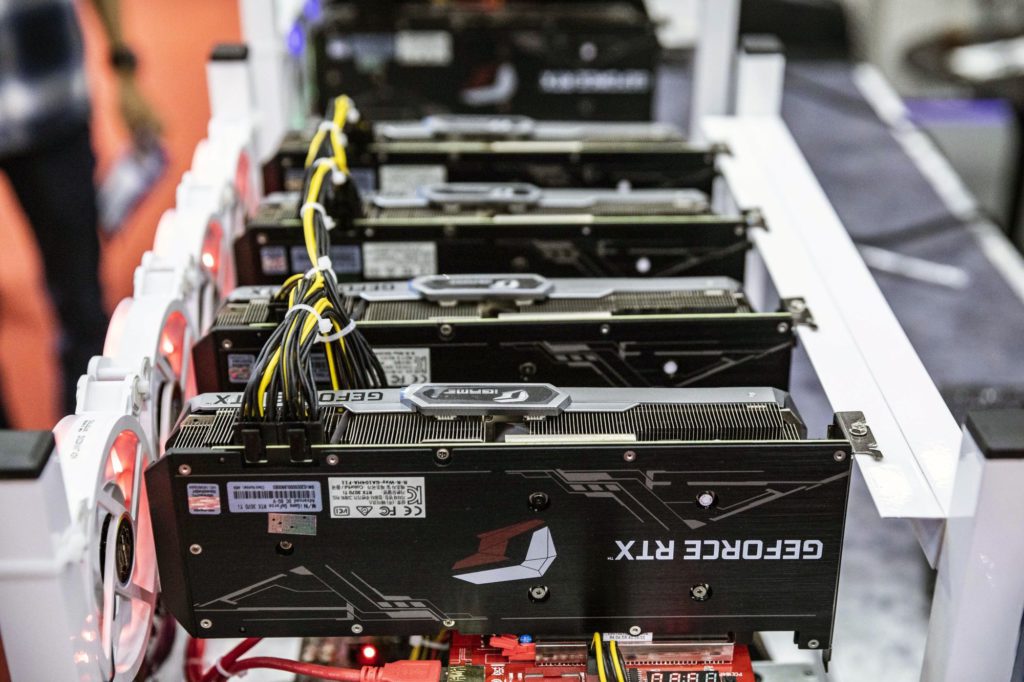
Do Kwon Proposes Creating Another Blockchain From Terra’s Ashes

(Bloomberg) — Terraform Labs co-founder Do Kwon offered another proposal to revive its troubled Terra blockchain by getting rid of the failed TerraUSD stablecoin and revamping the project into a new network.

Kwon wants to copy the blockchain’s code to create a new network, called Terra, and to distribute new tokens to former Terra supporters like key app developers, those whose computers order transactions on the network, and those who still hold TerraUSD, Kwon wrote in a post on a research forum.

This is Kwon’s second proposal to revive the network. Many stakeholders who lost money when TerraUSD collapsed are hoping for a way out of the crisis. But many long-time crypto experts aren’t hopeful. Zhao Changpeng, chief executive officer of the world’s biggest crypto exchange and an early Terra investor, Binance, said in a tweet that forks — the copying of the blockchain that Kwon is proposing — “don’t create value.”

The Luna Foundation Guard, the entity set up by Terraform Labs to maintain TerraUSD’s peg to the dollar, used up roughly $2.9 billion in crypto reserves since May 7 trying to stabilize the token, data compiled by Bloomberg based on figures released Monday on LFG’s unverified Twitter account show. The reserves stood at almost $3.2 billion before, according to the data. 

“The Terra ecosystem was great in terms of transactional execution, maintaining low costs per transaction and teams building upon it,” said Min Park, general partner at Lunatic Capital, which invests in projects built on Terra. “This [proposal] ensures the continuation of works and progress for the time being of projects present and future. However, we would recommend to our teams that not being reliant on one ecosystem would be a great way to reduce concentration risk.”

Unlike collateralized stablecoins such as Tether, UST primarily used algorithms and trader incentives involving its sister coin Luna to maintain a 1-to-1 peg with the dollar. As the token grew in prominence, its backers started to build a massive war chest of Bitcoin and other cryptocurrencies as an additional backstop to UST.

More stories like this are available on bloomberg.com

©2022 Bloomberg L.P.
Bitcoin Fans Seen Bottom-Fishing After Terra-Driven Meltdown

(Bloomberg) — It turns out that after the Terra stablecoin imploded last week and cryptocurrency prices plummeted, Bitcoin enthusiasts saw some buying opportunities.

Investors added $299 million to products focused on the world’s largest digital asset in the span as Bitcoin tumbled roughly 14%, according to data compiled by CoinShares. Funds focused on Solana, Ether, Polkadot and others, meanwhile, saw outflows.

The flows into Bitcoin suggest investors were flocking to its “relative safety,” wrote James Butterfill, investment strategist at the firm. And the cash infusions are “a strong signal that investors saw the recent UST stablecoin de-peg and its associated broad selloff as a buying opportunity.” 

Bitcoin, which spawned the cryptocurrencies industry, is often thought of as the most resilient of digital assets. It’s the oldest, biggest and arguably has the greatest name recognition. In addition, it has a devoted group of fans, who often refer to themselves as Bitcoin maximalists, and who are betting the coin is the currency of the future. 

The cash additions came during a rough stretch for digital assets. Charts for cryptocurrencies looked like drawings of waterfalls last week, with prices plunging as the Terra algorithmic stablecoin unraveled. Amid the mayhem, two Terra exchange-traded products — one from 21Shares and another from VanEck — suspended operations.

At its height, the selloff also engulfed the $76-billion stablecoin Tether, which is a key trading transmission vehicle in the crypto ecosystem. And the week saw the highest liquidation volume in Bitcoin futures since December, according to Arcane Research. 

“Without question, this is one of the most significant events in crypto history,” said Chiente Hsu, co-founder and CEO at ALEX, a DeFi platform. “I highly doubt we would’ve seen Bitcoin dip below its $28k support level were it not for the contagion of fear Terra created,” Hsu said, citing the coin’s drop last week below that threshold.

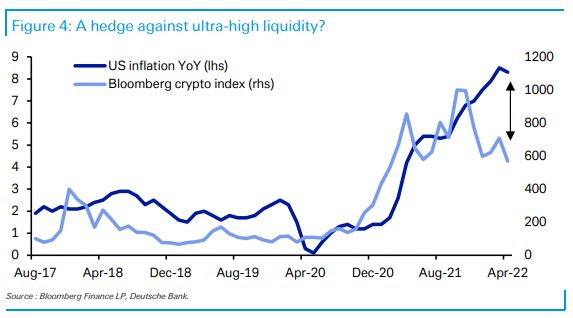
Still, what happened in the crypto market shouldn’t have come as a surprise, according to Deutsche Bank’s Marion Laboure and Galina Pozdnyakova. Cryptos are increasingly correlated to tech and US equities. US stocks also sold off last week, with the S&P 500 losing 2.4% in the five-day stretch through Friday. In addition, the idea that Bitcoin could be seen as a hedge against inflation has been “debunked,” they wrote in a note. 

“When Federal Reserve turned hawkish and prospects of higher rates deflated valuations, cryptocurrencies followed suit,” the pair wrote. “In May, they have tanked, despite the latest 8.3% gain in the US Consumer Price Index (CPI).”

Things have calmed down since last week, though Bitcoin is starting the week lower, falling as much as 6.3% to trade at $29,072 on Monday. Other coins have been caught up in the downtrend too, with Bitcoin Cash dropping more than 6% as of 1:50 p.m. in New York, and Solana and Avalanche each also falling. 

Scott Sheridan, CEO of tastyworks, says Bitcoin is going through a maturation process. He likened it to periods of turbulence for the stock market, whereby companies were able to establish themselves as sturdy. 

“Bitcoin is going through a very similar period right now where it’s being put to the test to see not only if the underlying concept of Bitcoin is viable but also if it can withstand the volatility that can come in a free market,” he said. Still, he added, “I’m also not entirely sure this current phase we’re in is over.”

More stories like this are available on bloomberg.com

©2022 Bloomberg L.P.
Biden Gets Rare Shot to Boost Mideast Ties After UAE Changeover

(Bloomberg) — Sign up for our Middle East newsletter and follow us @middleeast for news on the region.

The Biden administration sent some of its highest-level officials to the United Arab Emirates — some for barely an hour — to pay respects to the country’s late ruler and hold talks on Monday with his successor, a transition that gives Washington a chance to sooth relations frayed over security and oil. 

Vice President Kamala Harris, Secretary of State Antony Blinken, Defense Secretary Lloyd Austin and Central Intelligence Agency Director William Burns were all part of the official American delegation offering their country’s condolences. 

Flying all the way from Washington, Harris spent only about an hour outside of her plane in the Gulf nation. Blinken re-routed to the UAE after being in Europe. 

The high-wattage turnout wasn’t only to pay homage to a vital US ally in the region. The visits aimed to build on efforts behind the scenes to strengthen the bilateral relationship, a US official said. 

“This stature and rank of this delegation is normally sent only to the closest of American allies,” said Norman Roule, a former senior CIA official who’s now a non-resident Fellow at the Belfer Center for Science and International Affairs at Harvard. “The makeup of this group is meant to make a statement,” he said.


The US outreach also gives the administration a chance to show that its foreign policy bandwidth isn’t entirely taken by events in Ukraine and that it knows even its domestic challenges — inflation and high fuel costs chiefly among them — can be aided by a stronger relationship with Gulf allies. 

“This is a security relationship, this is a green energy relationship, this is a foreign-policy relationship. That’s the message the US is sending to Emiratis, the GCC, Iran, and the region, but also Russia and China,” Roule said.

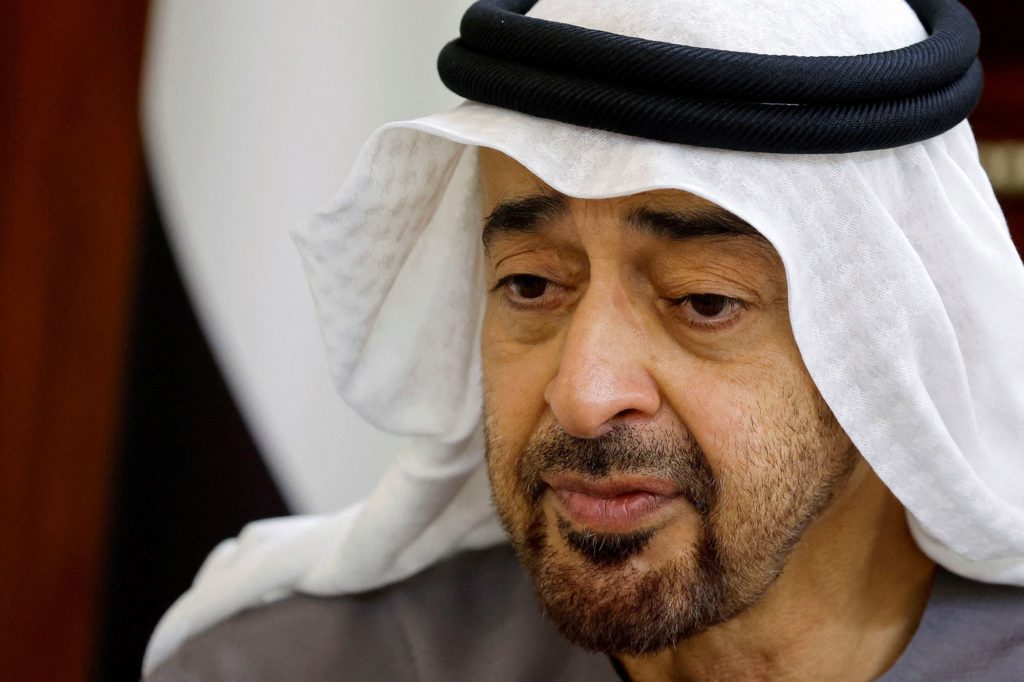
And it wasn’t just the US: UK Prime Minister Boris Johnson and French President Emmanuel Macron are among the world leaders offering their condolences and meeting with new ruler Sheikh Mohammed bin Zayed Al Nahyan. That is on top of Saudi Arabia Crown Prince Mohammed Bin Salman, who the Saudi Press Agency said was flying in on behalf of his father, the king. 

Sheikh Mohammed, who has long controlled the levers of power in the UAE, presides over the world’s fourth-richest wealth fund and about 6% of proven reserves of crude oil. A powerful regional figure, he’s frequently used his clout to intervene in regional conflicts with one of the Middle East’s best-equipped militaries.

UAE Prince Who Reshaped Region Named Ruler of Oil-Rich Power

It wasn’t immediately clear whether any American officials would cross paths with Crown Prince Mohammed, the de facto Saudi ruler who Biden has so far refused to speak with directly. The US blames the crown prince for ordering the killing of Washington Post columnist Jamal Khashoggi in 2018, though pressure has built on the Biden administration to foster better ties with the kingdom in order to rein in energy prices. 

The US has urged Gulf states to pump more crude as Russia’s invasion of Ukraine convulses global markets, only to be rebuffed by regional leaders who say their oil-production alliance with Russia limits room for maneuver.

There are other stresses on the relationship as well. Riyadh and Abu Dhabi oppose Washington’s moves to reenter a nuclear deal between Iran and world powers, saying it will embolden Iran’s regional proxies like the Houthi rebels in Yemen. Tensions also escalated after attacks on the two Gulf states by Iranian-backed Houthis as the fighters confront a Saudi-led military alliance seeking to oust them from the Yemeni capital. 

The UAE transition leaves open so far the question of who will become the new crown prince of the emirate of Abu Dhabi and effective new leader-in-waiting. 

The brother of the new ruler, influential National Security Adviser Sheikh Tahnoon bin Zayed, is a contender. One of the ruler’s sons could also be chosen, including Sheikh Khaled bin Mohammed bin Zayed, whose responsibilities have grown in recent years. 

The next generation faces major challenges, including how to continue the UAE’s energy transition and meet its 2050 net-zero target, the first announced by a major Gulf crude producer.

More stories like this are available on bloomberg.com

©2022 Bloomberg L.P.

Stablecoins Not Ready for Consumer Payments, US Watchdog Says

(Bloomberg) — The recent collapse of a popular stablecoin shows that the tokens aren’t ready to be used by consumers to make payments, according to a key US watchdog. 

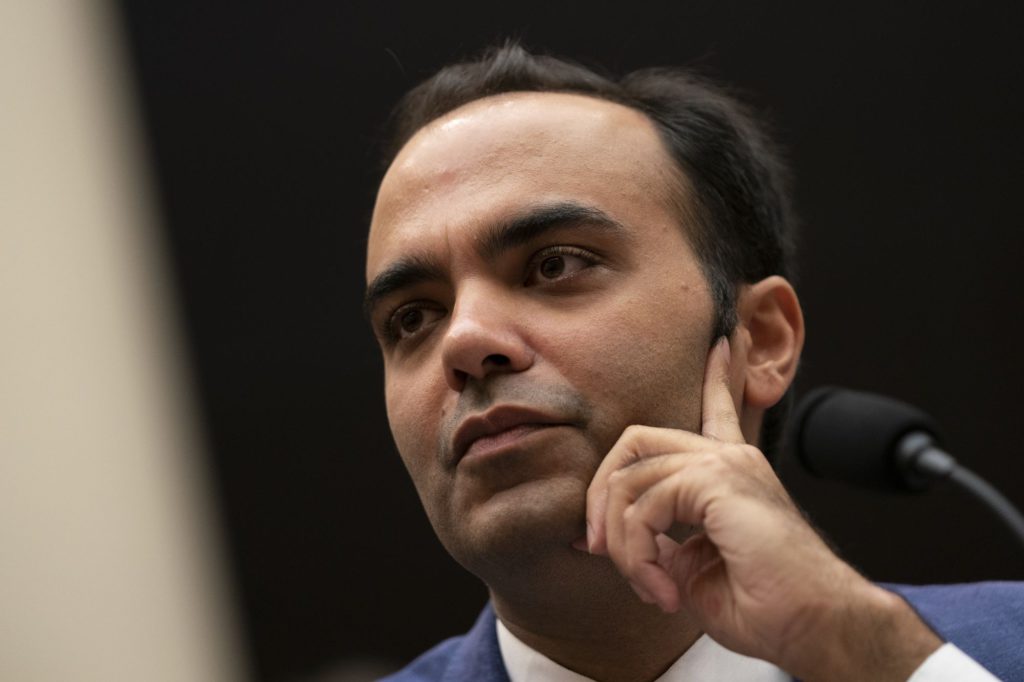
“People wonder: Is it going to be one day used for consumer payments?” Rohit Chopra, director of the Consumer Financial Protection Bureau, said in a Bloomberg TV interview Monday. “Many are thinking it’s not ready yet.”

Chopra’s comments come a week after TerraUSD, or UST, lost its peg to the U.S. dollar. Unlike other stablecoins that are backed by cash or other assets, the Terra coin primarily relied on algorithms. The experiment failed and now a backer of the token has burned through nearly $3 billion of cryptocurrency reserves in an unsuccessful bid at restoring the coin.

Chopra said there may be “movement” on crypto regulation this year. Regulators are studying a range of issues, including rules for stablecoins, following an executive order from President Joe Biden. 

“A lot of people thought that a stablecoin was just going to be as good as a dollar,” Chopra said. “But they’re learning that it’s not.” 

More stories like this are available on bloomberg.com

©2022 Bloomberg L.P.
US-EU Trade, Techology Disputes Persist Despite Unity on Russia

(Bloomberg) — The US and EU celebrated a transatlantic partnership reinvigorated in part by its unprecedented cooperation against Russia’s invasion of Ukraine, but the public unity masks festering trade and technology disputes. 

When the second Trade and Technology Council wrapped up outside Paris on Monday, EU and US officials focused on their coordination on sanctions and export controls against Moscow.

The TTC “has allowed us to push back against the harmful behavior of non-market economies like Russia,” US Commerce Secretary Gina Raimondo told reporters. Work through the TTC allowed both sides to “hammer Russia with extreme export controls, essentially cutting them off from all the advanced technology that they need to conduct their military operations” in Ukraine, she said.

But the EU and US still face unresolved trade fights started under the presidency of Donald Trump, questions over how to work with China and upcoming showdowns over tech regulation. The EU’s digital and competition chief Margrethe Vestager acknowledged that the two sides don’t see eye-to-eye on certain topics.

“We can disagree within the Trade and Technology Council, because the starting point of agreeing is usually disagreeing,” Vestager said on Sunday. Eventually, she added, they might find alignment. 

Tough Trade

Lingering issues related to Trump-era steel and aluminum tariffs underscore the limits of the transatlantic goodwill. The dispute started in 2018, when Trump imposed duties on steel and aluminum from Europe, Asia and elsewhere, citing risks to national security. 

And while a truce has since been reached on the tariffs, the US has refused to remove EU steel and aluminum from the list of products considered a threat to its national security. The EU always rejected the premise that production from the bloc presents a national security threat.

Ahead of the TTC, the EU wanted to tackle the issue by pushing for a line in draft TTC conclusions seen by Bloomberg saying that “specific products traded between the EU and US cannot be considered a national security threat.” The line was absent from the final conclusions.

The EU’s trade chief, Valdis Dombrovskis, acknowledged that an agreement on steel and aluminum tariffs should be finalized by October of next year, but that work could be handled outside the TTC. Officials have taken that route with other contentious debates including talks on data flows, where the EU and US are still working out technical details after a political agreement.

Tech Talks

Vestager also said there’s no ambition to restart trade talks with the US after the failed Transatlantic Trade and Investment Partnership, saying “we’ve moved beyond it.”

“It seems sort of a bit old school to think about a traditional free trade agreement,” Vestager said. “We have a completely different chance of shaping a relationship where trade plays a different role and in that combination with technology enables us to address some of the questions that we’re both struggling with.”

Officials said the next meeting in December is when the TTC needs to deliver more concrete results. “This is the first step but we need to enhance the process to go beyond just information sharing,” said the EU’s internal market commissioner, Thierry Breton

Progress has been made in some areas, particularly on technology issues. The EU agreed to coordinate principles of semiconductor subsidies, something the bloc was previously hesitant about. 

Raimondo, who previously spoke out against the Digital Markets Act for unfairly targeting US companies, told Bloomberg that the EU and US will be able to harmonize approaches. “We are definitely moving into an era of more tech regulation,” she said.

But it’s not certain how long the two will stay on the same page. Some of the language against disinformation was toned down due to domestic concerns from the US.

And there could be a fight coming after the EU raised the idea of forcing internet streaming services like Netflix and YouTube to pay a fee to telecom companies to help them invest in expensive 5G infrastructure. The US has fought against similar ideas in the past.

“Like all of these ideas, they have some merit,” Raimondo said, but she added that it’s at a “very preliminary” stage of discussion.

More stories like this are available on bloomberg.com

©2022 Bloomberg L.P.
Twitter CEO Tweets About Spam Accounts in Apparent Response to Elon Musk

(Bloomberg) — Twitter Inc. CEO Parag Agrawal sent a flurry of tweets on Monday afternoon in an apparent response to would-be owner Elon Musk’s move last week to put his offer “on hold” to ascertain the amount of fake accounts on the social media platform. 

NOTE: Elon Musk Sows Doubt Over His $44 Billion Twitter Takeover (4)

To view the source of this information click here

More stories like this are available on bloomberg.com

©2022 Bloomberg L.P.
Close Bitnami banner
Bitnami

