
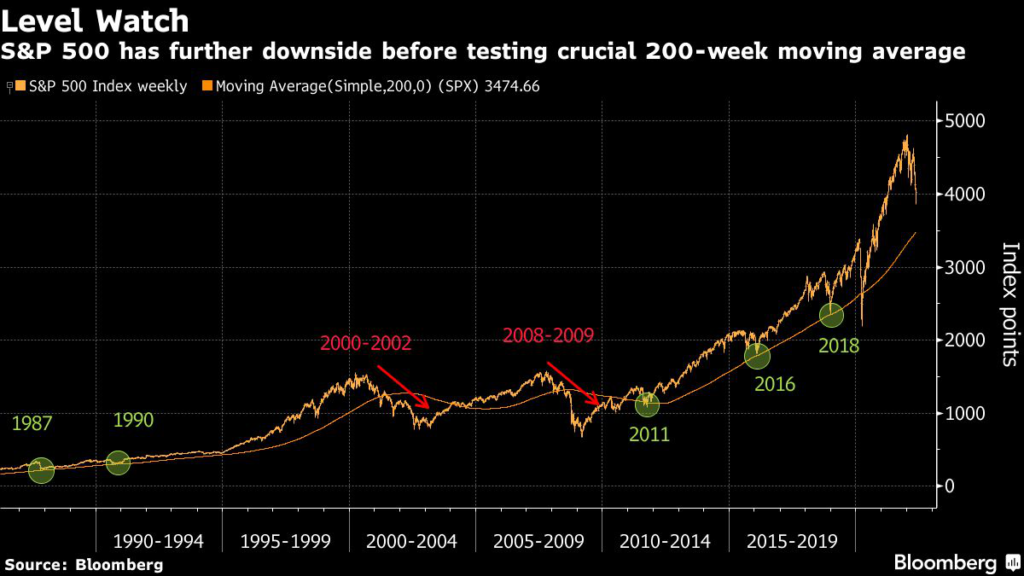
Bloomberg

Stocks Turn Lower in Seesaw Session; Bonds Gain: Markets Wrap

(Bloomberg) — Stocks resumed declines and Treasuries gained as investors assessed the latest signs of economic malaise from the US and China.

The S&P 500 turned lower after briefly erasing gains, weighed down by declines in megacaps including Tesla Inc., Apple Inc. and Amazon.com Inc. The tech-heavy Nasdaq 100 underperformed major benchmarks, falling more than 1%. Data Monday showed New York state manufacturing activity unexpectedly contracted in May for the second time in three months, stoking concerns of slowing economic activity that may complicate the Federal Reserve’s policy path. 

Adding to those growth concerns, New York City is preparing to hit a high Covid-transmission level in the coming days that would have it reconsidering mask requirements in public places. About 8% of people tested for Covid-19 over the last seven days have been positive.  Meanwhile, China’s industrial output and consumer spending hit the worst levels since the pandemic began, hurt by Covid lockdowns.

The risk of an economic downturn amid price pressures and rising borrowing costs remains the major worry for markets. Goldman Sachs Group Inc. Senior Chairman Lloyd Blankfein urged companies and consumers to gird for a US recession, saying it’s a “very, very high risk.” Traders remain wary of calling a bottom for equities despite a 17% drop in global shares this year, with Morgan Stanley warning that any bounce in US stocks would be a bear-market rally and more declines lie ahead.

Read more: Williams Downplays Worsening Market Liquidity as Fed Tightens

Market commentary

  • “There’s still a lot of concerns. We got some disappointing data from China today,” Esty Dwek, chief investment officer at Flowbank, said on Bloomberg TV. “We just see that there’s a lack of buyers in this market. There’s still a lot of fear and so we probably have a little bit more to go on the downside.”
  • “You’ve got investors pulling back from the market in the expectation that we’re going to have a recession,” David Donabedian, chief investment officer of CIBC Private Wealth Management, said by phone. “It’s hard to, frankly, make a strong argument against that, the idea that we’ll have a recession. We know that that’s what Federal Reserve tightening produces most of the time, it’s a recession. And so you have to have a good answer to the question of why would this time be different, and it’s not that easy to come up with that answer, frankly.”
  • “With inflation showing little sign of letting up, the Fed is under pressure to accelerate the pace of tightening,” Lisa Shalett, chief investment officer at Morgan Stanley Wealth Management, said in a note. “This is increasingly problematic as the complicating factors from the Russia-Ukraine conflict and the China COVID response are also intensifying. All told, this suggests global growth may be decelerating more quickly than forecast.”

In corporate news, Twitter Inc. shares fell Monday, erasing all the gains the stock made since Elon Musk disclosed his stake in the social media platform. JetBlue Airways Corp. made a hostile $3.3 billion cash bid for Spirit Airlines Inc., appealing directly to shareholders to prevail over a rival offer for the discount carrier. Verizon Communications Inc. plans to raise prices on its wireless bills for the first time in two years. McDonald’s Corp. said it will pull out of Russia after more than 30 years of operation in the country and will take a write-off of $1.2 billion to $1.4 billion for the move.

Cryptocurrencies dipped as the mood in stocks weakened. That took Bitcoin back to around the $30,000 level.

What to watch this week:

  • Fed Chair Jerome Powell among slate of Fed speakers Tuesday
  • Reserve Bank of Australia releases minutes of its May policy meeting Tuesday
  • G-7 finance ministers and central bankers meeting Wednesday
  • Eurozone, UK CPI Wednesday
  • Philadelphia Fed President Patrick Harker speaks Wednesday
  • China loan prime rates Friday

Some of the main moves in markets:

Stocks

  • The S&P 500 fell 0.5% as of 12:39 p.m. New York time
  • The Nasdaq 100 fell 1.1%
  • The Dow Jones Industrial Average was little changed
  • The MSCI World index fell 0.2%

Currencies

  • The Bloomberg Dollar Spot Index fell 0.2%
  • The euro rose 0.1% to $1.0424
  • The British pound was little changed at $1.2272
  • The Japanese yen was little changed at 129.14 per dollar

Bonds

  • The yield on 10-year Treasuries declined five basis points to 2.87%
  • Germany’s 10-year yield declined one basis point to 0.94%
  • Britain’s 10-year yield declined one basis point to 1.73%

Commodities

  • West Texas Intermediate crude rose 2% to $112.68 a barrel
  • Gold futures rose 0.1% to $1,810.80 an ounce

More stories like this are available on bloomberg.com

©2022 Bloomberg L.P.

Grocery App Flink Agrees Deal to Buy Carrefour-Backed Cajoo

(Bloomberg) — German rapid delivery startup Flink SE has agreed on a deal to buy French competitor Cajoo, a move that would give it access to French grocery chain Carrefour SA and strengthen its position in the competitive market.

The acquisition will accelerate Flink’s expansion in France, giving it 30 micro-fulfillment centers in the country across nine cities to reach six million consumers, according to a statement Monday. As part of the deal, Carrefour, which has a minority stake in Cajoo, will become a direct shareholder and exclusive partner of Flink.

The deal valued Flink at more than $5 billion, according to a person familiar with the matter who asked for anonymity because the matter is private, adding that Flink’s annual revenue is currently 500 million euros ($521 million). A Flink representative declined to comment.

That announcement confirmed a previous Bloomberg News report, which said the deal would value Cajoo in the double-digit million euro range.

Backed by U.S. food delivery leader DoorDash Inc., Flink — worth several billion euros in its last funding round — competes with a spate of rivals to deliver consumers their groceries and produce in minutes in countries including Germany and France.

An acquisition of Cajoo comes at a time investors are decreasingly willing to fund loss-making businesses and provide Flink with a key strategic partner in France.

Carrefour’s partnership with Flink is similar to a deal the company struck with German supermarket chain Rewe.

Cajoo offers rapid grocery delivery in some large cities in France, and has struck a deal with Carrefour and a partnership with Uber Technologies Inc.

In France, Flink competes with the likes of Gopuff and Gorillas Technologies GmbH. It’s not the first step toward consolidation in France, coming after Gorillas acquired French competitor Frichti earlier this year, Bloomberg News reported.

Flink last raised $750 million in December from investors led by DoorDash in a partnership that may also yield commercial cooperation.

(Updates with confirmation from statement, details on deal in fourth paragraph)

More stories like this are available on bloomberg.com

©2022 Bloomberg L.P.
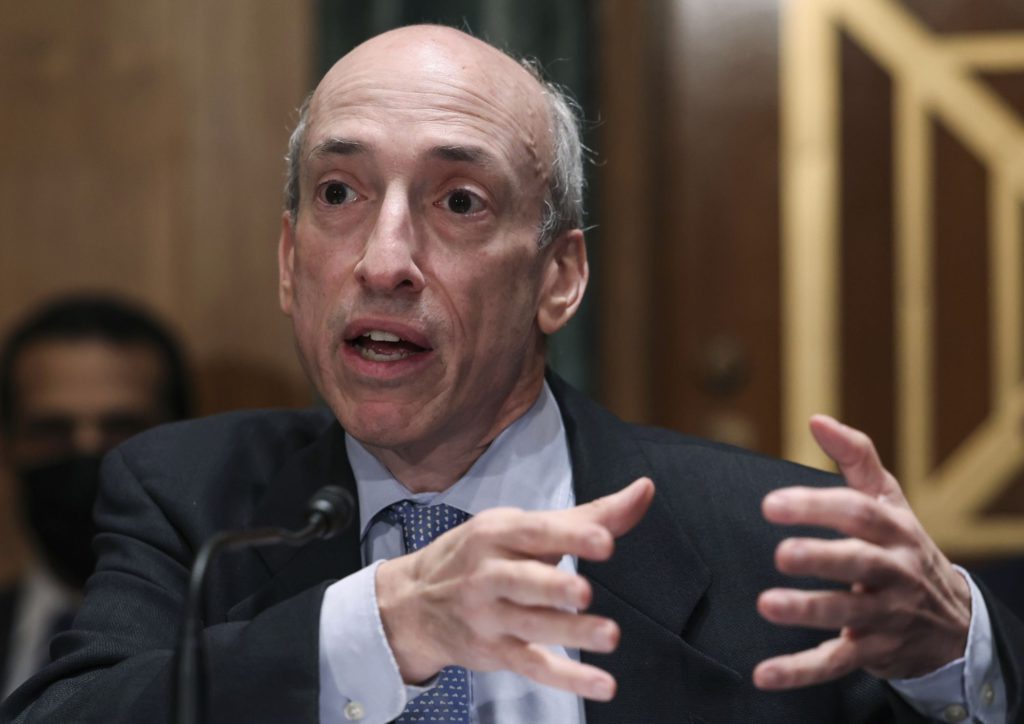
Wall Street Bond Traders Get New Warning From SEC Chief

(Bloomberg) — Wall Street bond traders are getting another warning that they might soon have less time to report their transactions to regulators.

Securities and Exchange Commission Chair Gary Gensler repeated his call to slash the amount of time that traders have to report many bond transactions as part of a bid to increase visibility into fixed-income markets. Speaking at an event on Monday, Gensler said that he thought the current 15-minute limit was too long.

“We can shorten this time frame,” Gensler said during a Financial Industry Regulatory Authority event. “That’s a lifetime in markets.”

Last month Gensler said that more transparency was needed across global bond markets, and that disclosures had generally failed to keep up with technological changes. He also raised the specter of including additional types of securities in the reporting requirements. 

The amount of time that traders have to report fixed-income transactions to FINRA’s Trace system has been a hot-button issue for years. Any changes are likely to take time to implement. Financial firms will have a chance to weigh in as any proposal would have be subject to a complicated rule-making process that includes approval by the SEC, which oversees the industry-backed regulator.

Crypto Regulation

Separately, Gensler previewed how federal regulators are addressing a wrinkle in their efforts to police cryptocurrency markets. He said the SEC and the Commodity Futures Trading Commission are working together on a document that would lay out the division of labor for overseeing a “small handful of tokens” that evoke both agencies’ jurisdictions. The SEC, which oversees securities, and the CFTC, the US derivatives watchdog, each claim some power over digital assets.

(Updates with additional background, crypto regulation comments starting in fifth paragraph.)

More stories like this are available on bloomberg.com

©2022 Bloomberg L.P.
Cost of Failed Terra Stablecoin Rescue Reaches $2.9 Billion

(Bloomberg) —

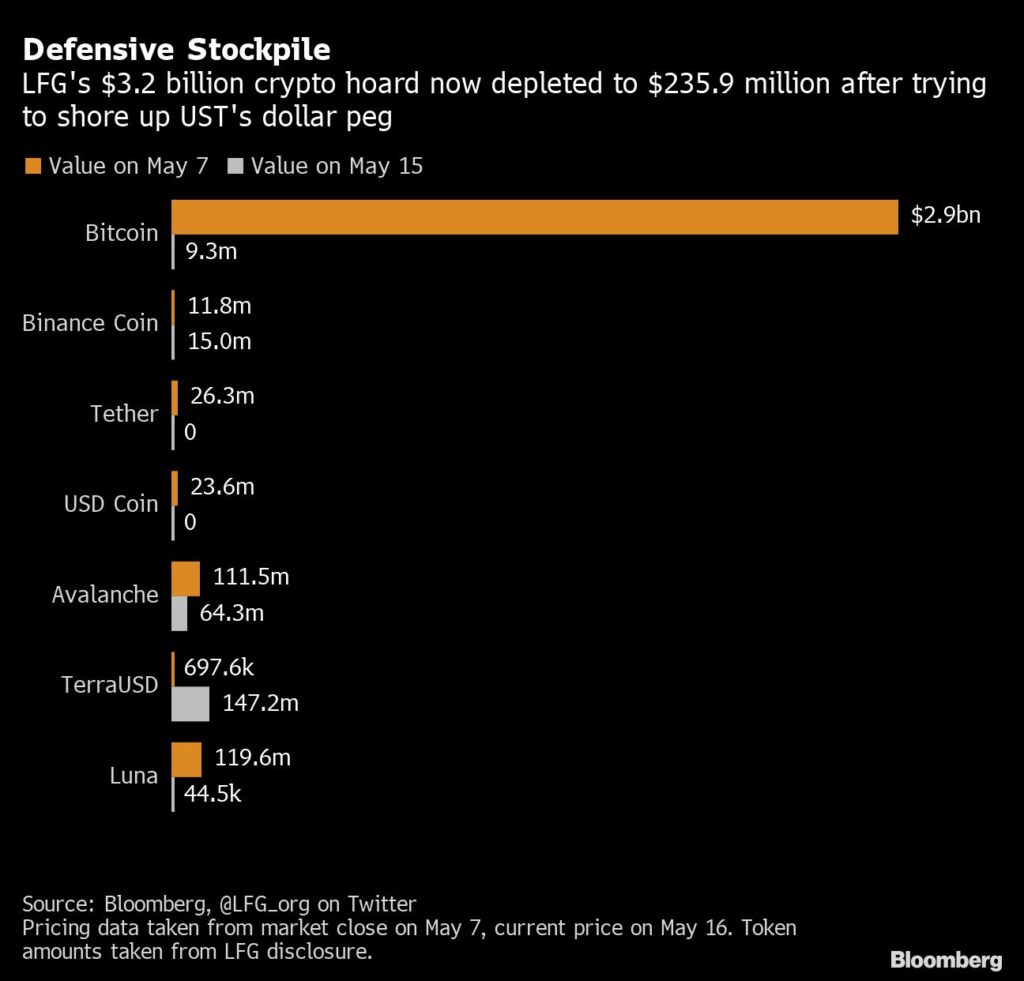
A backer of the collapsed TerraUSD stablecoin has burned through almost all of its more than $3 billion in cryptocurrency reserves in a failed effort to restore its peg to the dollar.  

The Luna Foundation Guard, the entity set up by Terraform Labs to maintain TerraUSD’s peg to the dollar, used up roughly $2.9 billion in crypto reserves since May 7 trying to stabilize the token, data compiled by Bloomberg based on figures released Monday on LFG’s unverified Twitter account show. The reserves stood at almost $3.2 billion before, according to the data. 

Unlike collateralized stablecoins such as Tether, UST primarily used algorithms and trader incentives involving its sister coin Luna to maintain a 1-to-1 peg with the dollar. As the token grew in prominence, its backers started to build a massive war chest of Bitcoin and other cryptocurrencies as an additional backstop to UST.

LFG held 80,394 Bitcoin as of May 7, before TerraUSD (UST) started dropping from its peg, it said in its tweet. Based on the closing price that day, the Bitcoin hoard was then worth $2.88 billion. LFG said it now holds 313 Bitcoin, worth about $9.3 million at current market prices. Its overall crypto reserves have dwindled to about $236 million as of early Monday, Bloomberg-compiled data show. 

The remaining reserves will be used to compensate UST holders, with the smallest ones first in line, LFG tweeted. That’s a tiny fraction of the more than $16 billion in market value UST has lost since it crumbled from its dollar peg. LFG didn’t immediately reply to an email seeking comment. 

Crypto Hedge-Fund Head Predicted Terra’s $60 Billion Implosion

In total, investors may have lost as much as $42 billion in total in the crash of UST and Luna, according to David Carlisle, vice president of policy and regulatory issues at crypto researcher Elliptic. That’s on top of the wider devastation wrought upon apps and developers on the Terra blockchain that underpins the two tokens. 

“The Terra case will light a major fire under an already intensive regulatory debate about the consumer protection, market conduct, and financial stability risks of crypto,” Carlisle said in an email. 

(Updates with Elliptic comment in final paragraph.)

More stories like this are available on bloomberg.com

©2022 Bloomberg L.P.
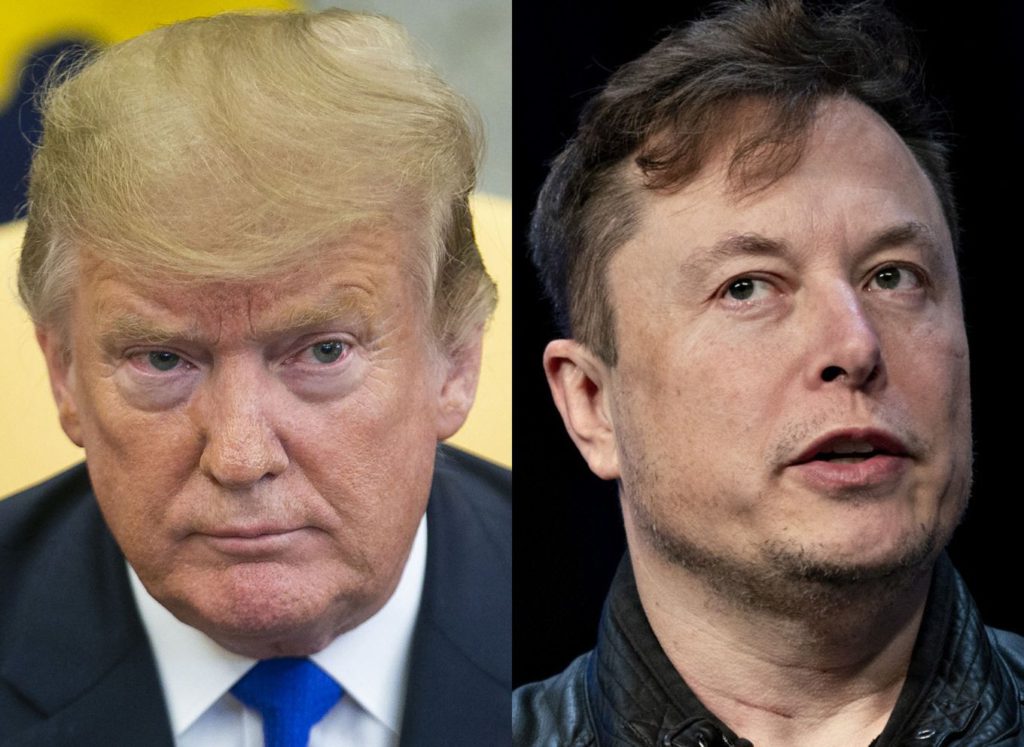
Trump’s SPAC Deal Leaves Door Open for His Return to Twitter

(Bloomberg) — The merger deal bringing Donald Trump’s media venture public carries a range of risks for its investors, including permission for the former president to resume tweeting about politics on rival social media platforms he has denounced like Twitter Inc.

Trump, who will be chairman of the combined company that will bear his name, is free to post on other sites about “political messaging, political fundraising or get-out-the-vote efforts,” according to a filing from Digital World Acquisition Corp. The firm is a publicly traded special-purpose acquisition company or SPAC that’s buying Trump Media & Technology Group.

The terms create an opening for Trump, who’s currently banned from platforms including Twitter, to return to the site. Trump has said he doesn’t plan to return, but last week, Elon Musk, the billionaire who has agreed to acquire Twitter, called the ban “foolish in the extreme” and said he’d reverse it.

Representatives for Trump Media and Digital World didn’t immediately respond to emails requesting comment. A Trump spokesman didn’t immediately respond to a message left for comment.

Stock Rallies 

Shares of Digital World have been volatile in recent months as daily downloads for Trump’s Truth Social platform ebbed, key executives resigned and investors weighed how Musk’s takeover of Twitter could impact the outlook. The SPAC rallied as much as 9.5% in Monday’s trading. 

The filing shows that Trump is “generally obligated” to make social media posts on Truth Social first, and has to delay making the same post on different platforms for six hours. But it exempts messages related to politics, and points out that six hours may not be enough to ensure users read his posts on Truth Social.

“Thereafter, he is free to post on any site to which he has access,” the company said in the filing. “Thus, TMTG has limited time to benefit from his posts and followers may not find it compelling to use Truth Social to read his posts that quickly.”

The potential return to sites that the filing bashes as “woke” and “hostile” could adversely impact Trump Media investors, the company said. Risks range from Trump’s potential distraction, the prospect of him being forced to resign from the board and the inability to court loyal followers to the platform. 

Trump’s Reputation

Trump Media also may face greater risks than its peers, which include “active discouragement of users, harassment of advertisers or content providers, increased risk of hacking of TMTG’s platform and increased stockholder suits.”

Other risks include lawsuits related to Trump himself and an ongoing SEC investigation into the deal. 

The company and Trump signed a license agreement “wherein neither the personal nor political conduct of President Trump, even if such conduct could negatively reflect on TMTG’s reputation or brand or be considered offensive, dishonest, illegal, immoral, or unethical, or otherwise harmful to TMTG’s brand or reputation, shall be considered a breach of the license agreement.”

“TMTG expressly acknowledges the controversial nature of being associated with President Trump and the possibility of any associated controversies affecting TMTG adversely,” the company said.

Details surrounding the media venture had been scarce and the initial rollout of Truth Social was plagued by technical glitches. The companies now expect the deal will be completed in the second half of the year and deliver about $1.25 billion in net proceeds if no shareholders elect to redeem their stock. Investors in SPACs have the right to demand their money back if they don’t like the takeover target or the terms.

More stories like this are available on bloomberg.com

©2022 Bloomberg L.P.
Morgan Stanley Infrastructure in Talks For WideOpenWest

(Bloomberg) — Morgan Stanley’s infrastructure investment arm is in talks to acquire WideOpenWest Inc., a provider of broadband and other cable services, according to people with knowledge of the matter. The stock rose as much as 18%. 

Morgan Stanley Infrastructure Partners is in exclusive talks with WideOpenWest, which does business as Wow!, said one of the people, all of whom requested anonymity discussing confidential information. A transaction hasn’t been finalized, and it’s possible talks end without a deal, the people added. 

Based in Englewood, Colorado, WideOpenWest rose 12% to $20.80 at 10:15 a.m. in New York trading Monday, giving the company a market value of about $1.8 billion. The stock has gained about 17% since Bloomberg News reported in April that it was exploring a sale. The company also has about $758 million in debt. 

The private equity firm Crestview Partners is its largest shareholder, with a 36% stake, according to data compiled by Bloomberg. 

Representatives for Morgan Stanley, Crestview and WideOpenWest declined to comment. 

WideOpenWest says its network spans states including Georgia, Alabama, Michigan, Florida, Tennessee and South Carolina. Crestview has been an investor since 2015, when it acquired a stake from Avista Capital Partners and others.

Read more: Morgan Stanley Raises $5.5 Billion for Third Infrastructure Fund

Morgan Stanley’s infrastructure unit has been active. In October, it purchased clinical-services provider SpecialtyCare. It also co-owned fiber operator Lightpath alongside Altice USA Inc.

(Updates trading in first and third paragraphs. An earlier version of this report corrected its trading gain since April in the third paragraph.)

More stories like this are available on bloomberg.com

©2022 Bloomberg L.P.
Rate Hikes Hit Canada Housing With First Price Drop in Two Years

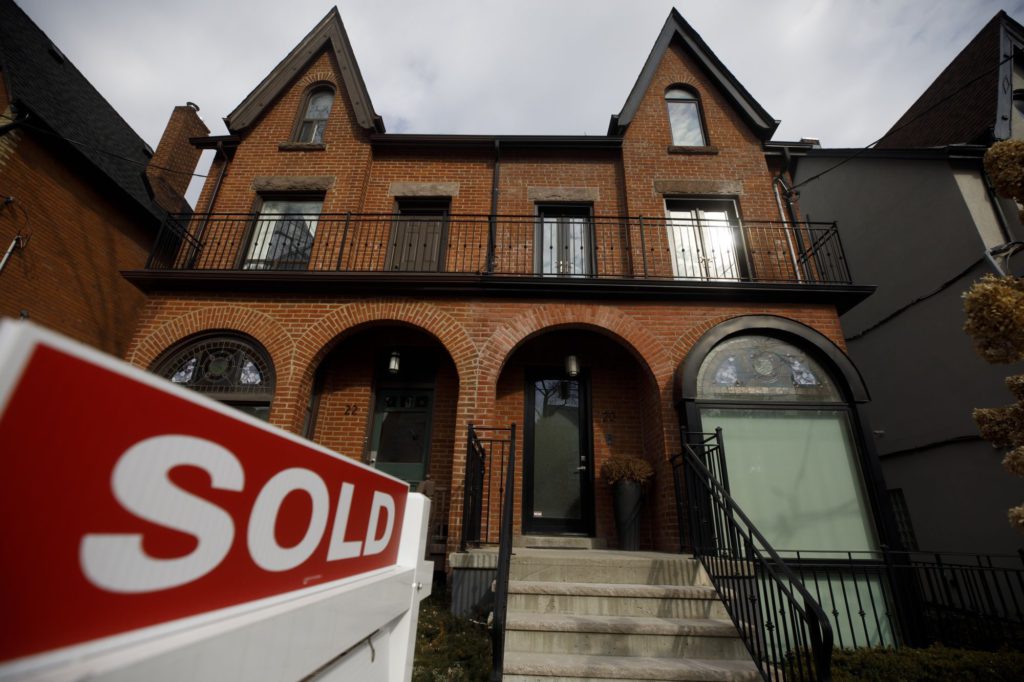
(Bloomberg) — Canadian home prices fell for the first time in two years as a rapid rise in interest rates looks set to threaten one of the world’s hottest housing markets.

Benchmark home prices declined 0.6% in April from the month before, the first drop since April 2020, according to data released Monday from the Canadian Real Estate Association. The number of sales, meanwhile, plunged 12.6%. 

The shift is coming as the Bank of Canada embarks on an aggressive campaign of rate increases to fight inflation running at a three-decade high. Markets are betting that the policy interest rate, which began the year at 0.25%, will have to rise to 3% over the next year. 

The sharp jump in Canadian home prices since the pandemic — they’re up 24% over the past 12 months — was partly driven by emergency-low rates that helped the economy through the Covid-19 crisis. But now rate increases have left the nation’s housing market looking increasingly vulnerable. 

“Following a record-breaking couple of years, housing markets in many parts of Canada have cooled off pretty sharply over the last two months, in line with a jump in interest rates and buyer fatigue,” Jill Oudil, chair of the real estate association, said in a news release accompanying the data.

An inflationary surge is being seen around the world as supply chain problems combine with higher commodity prices caused by Russia’s invasion in Ukraine. Assets from stocks to bonds to cryptocurrencies have plunged in recent weeks as policymakers everywhere scramble to drain stimulus from the economy and get consumer prices under control. A separate release Monday showed Canadian consumer confidence posting its sharpest weekly drop since April 2020.

In the housing market, last month’s price declines were heaviest in the smaller communities around Toronto that saw some of the steepest gains through the pandemic as remote work allowed buyers to look further afield. The suburbs of Oakville and Milton saw benchmark prices decline 5.6% in April from the month before, while prices in the city of London, Ontario, about a two hour drive from Toronto, declined 4%, the data show. 

The slowdown in sales activity, meanwhile, was broad-based, with 80% of local markets nationwide posting a monthly decline in transactions, the data show.

Ian Soucy, a realtor in Ottawa, said he’s been surprised by how much the market has cooled this spring. “Buyers are hesitant, just with the unknown of the interest rates rising,” Soucy said, pointing to the likelihood of another 50-basis-point hike in June. Entry-level townhomes that were “flying off the shelves” as recently as a couple months ago are now sitting on the market for a few weeks, he said.

Nevertheless, even in the midst of the current slowdown Canada’s housing market remains historically tight. 

The country has just 2.2 months of inventory available right now, compared to a longer term average of five months, the data show. But this metric has been moving up, and the ratio of sales to new listings — another measure of market tightness — fell to 66.5% in April. In its release, the real estate board said that ratio was approaching a level traditionally signaling the market is shifting to buyers from sellers.

“After 12 years of ‘higher interest rates are just around the corner,’ here they are,” Shaun Cathcart, the real estate board’s senior economist, said in the press release. “But it’s less about what the Bank of Canada has done so far. It’s about a pretty steep pace of continued tightening that markets expect to play out over the balance of the year.”

(Updates with more detail from 7th paragraph.)

More stories like this are available on bloomberg.com

©2022 Bloomberg L.P.

There’s No Greater Divide Than the Tesla Stock Gap

(Bloomberg) — Tesla Inc. looks more than ever like a mature company, with 11 consecutive quarters of profits and long-term production goals. Yet analysts couldn’t disagree more about where the shares of Elon Musk’s company are going. 

Their price targets — predictions for the electric-vehicle maker’s stock 12 months from now — range from a low of $250 to a high of $1,620, according to data compiled by Bloomberg. That’s the widest gap of any company in the S&P 500 Index. Tesla closed at $769.59 Friday.

“It is so hard to value Tesla because some see it as a tech company getting involved with some massive addressable markets: autonomy, EV, robotics and energy,” said Gene Munster, a former technology analyst who’s now a managing partner at venture-capital firm Loup Ventures. “Others see it as just another car company. And based on which side of the coin you fall on, influences your view.”

Analysts tend to largely agree on S&P 500 companies and the future of their share prices: In only about 1% of the cases is the highest price target more than three times greater than the lowest. The most bullish target on Tesla is 6.5 times greater than the most pessimistic.

Musk’s outsized, Twitter-driven public personality and the undeniable cool factor of Tesla vehicles have helped drive investment in the stock. But that doesn’t help analysts guess how much the company will be earning in coming years.  

“Looking to the second half of this decade and beyond, it’s still difficult to model what long-term sales and earnings growth will look like,” said Garrett Nelson, an analyst at CFRA Research, pointing to the future of its software sales, Optimus robot and solar products as unknowns. He expects the stock to climb to $1,350 in the next year.

And it’s not cheap. Tesla is priced at 58 times estimated earnings for the next year, while all of the big global car companies sell for less than 10 times profit. 

Even assuming Tesla is more of a technology company than an automaker, it looks expensive: The price-earnings multiple is higher than all of the so-called FAANG stocks, which enjoy similar reputations as fast-growing businesses and devoted investor fan bases. 

“The expectations for future car sales that are baked into the stock price have always been ridiculous,” said David Trainer, chief executive officer of research firm New Constructs, who has a sell recommendation on the stock. The gulf between current profits and the future earnings implied by the stock price remains large, he said.  

But bulls have history on their side. Tesla’s shares have climbed more than 22,000% since it went public in 2010, giving investors an annual return of 58%. The S&P 500, on the other hand has returned 373% including dividends in the same period, averaging 15% a year. 

The economic and political backdrop also hasn’t dented investor enthusiasm for its stock. Just last month, Cathie Wood’s Ark Investment Management upped its price target for the stock and now expects it to more than quadruple to $4,600 by 2026.

There’s also Musk’s popularity. The chief executive officer has a huge following with retail investors and that’s not something that can be easily valued. 

“There are almost no other public figures who garner the attention of retail investors more than Elon Musk,” said Robert Schein, chief investment officer at Blanke Schein Wealth Management. 

Tech Chart of the Day

Apple Inc. just finished its seventh straight week of declines, the longest streak since November 2018. After buoying the broader market for most of the year, the stock broke down last week, losing 6.5% in its biggest drop since February. The stock is down 18% this year, underperforming the S&P 500’s 16% drop.

Top Tech Stories


  • JPMorgan Chase & Co. analysts are turning more positive on Chinese Internet stocks, upgrading at least 15 companies just two months after their bearish report on the industry triggered a market selloff and a bout of internal hand-wringing at the biggest US bank.
  • Private equity firm Carlyle Group Inc. is in advanced talks to acquire ManTech International Corp., a government contractor that also does IT services, according to people familiar with the matter
  • New Zealand will accelerate its adoption of electric vehicles and investigate hydrogen as an alternative energy source as it seeks to phase out fossil fuels and play its role in mitigating global warming
  • Vodafone Group Plc shares halted their month-long slide after Emirates state-backed telecom firm e& bought a surprise 9.8% stake on Saturday, becoming the group’s largest shareholder
  • Goldman Sachs Group Inc. and Barclays Plc participated in a $70 million funding round of Elwood Technologies LLP, the cryptocurrency trading platform founded by billionaire Alan Howard, in a collaboration between crypto-native funds and traditional financial institutions

(Updates share move in last paragraph. A previous version was corrected to remove reference to Musk being founder.)

More stories like this are available on bloomberg.com

©2022 Bloomberg L.P.

Stocks Slip on Growth Concerns; Treasuries Gain: Markets Wrap

(Bloomberg) — Stocks declined in early New York trading as investors assessed the latest signs of economic malaise from the US and China amid speculation about the Federal Reserve’s rate-hike trajectory. 

Both the S&P 500 and and tech-heavy Nasdaq 100 retreated. Data Monday showed New York state manufacturing activity unexpectedly contracted in May for the second time in three months, stoking concerns of slowing economic activity that may complicate the Fed’s policy path. Treasury yields dipped along with the dollar.

The New York Fed’s data are the first of several regional Fed manufacturing numbers set for release over the coming weeks. Similarly disappointing figures may temper bets on a steep rate-hike cycle as the Fed battles inflation. Meanwhile, China’s industrial output and consumer spending hit the worst levels since the pandemic began, hurt by Covid lockdowns.

The risk of an economic downturn amid price pressures and rising borrowing costs remains the major worry for markets. Goldman Sachs Group Inc. Senior Chairman Lloyd Blankfein urged companies and consumers to gird for a US recession, saying it’s a “very, very high risk.” Traders remain wary of calling a bottom for equities despite a 17% drop in global shares this year, with Morgan Stanley warning that any bounce in US stocks would be a bear-market rally and more declines lie ahead.

“Trying to time the market is likely to prove time-consuming and loss-making,” said Mark Haefele, chief investment officer at UBS Global Wealth Management. “Investor sentiment is fickle, and markets are likely to remain choppy until we get greater clarity on the three Rs: rates, recession, and risk.”

Cryptocurrencies dipped as the mood in stocks weakened. That took Bitcoin back to around the $30,000 level.

Energy Costs

Food and fuel prices are feeding into rising costs. Wheat jumped by the exchange limit on India’s move to curb exports while oil was held around $110 a barrel. Shanghai is close to the necessary threshold for loosening its six-week lockdown, a development that could spur bets on rising energy demand.

Meanwhile, the European Commission warned the euro area’s pandemic recovery would almost grind to a halt, while prices would surge even more quickly if there are serious disruptions to natural-gas supplies from Russia. Traders are also watching efforts by Finland and Sweden to join the North Atlantic Treaty Organization in the wake of Russia’s invasion of Ukraine. 

What to watch this week:

  • Fed Chair Jerome Powell among slate of Fed speakers Tuesday
  • Reserve Bank of Australia releases minutes of its May policy meeting Tuesday
  • G-7 finance ministers and central bankers meeting Wednesday
  • Eurozone, UK CPI Wednesday
  • Philadelphia Fed President Patrick Harker speaks Wednesday
  • China loan prime rates Friday

Some of the main moves in markets:

Stocks

  • The S&P 500 fell 0.4% as of 9:30 a.m. New York time
  • The Nasdaq 100 fell 0.8%
  • The Dow Jones Industrial Average fell 0.2%
  • The Stoxx Europe 600 fell 0.2%
  • The MSCI World index fell 0.2%

Currencies

  • The Bloomberg Dollar Spot Index was little changed
  • The euro was little changed at $1.0418
  • The British pound fell 0.1% to $1.2245
  • The Japanese yen was little changed at 129.18 per dollar

Bonds

  • The yield on 10-year Treasuries declined two basis points to 2.90%
  • Germany’s 10-year yield advanced three basis points to 0.98%
  • Britain’s 10-year yield advanced two basis points to 1.77%

Commodities

  • West Texas Intermediate crude fell 0.4% to $110.05 a barrel
  • Gold futures fell 0.2% to $1,804.90 an ounce

More stories like this are available on bloomberg.com

©2022 Bloomberg L.P.

Canadian Home Prices Post First Drop in Two Years on Rate Hikes

(Bloomberg) — Canadian home prices fell for the first time in two years as a rapid rise in interest rates looks set to threaten one of the world’s hottest housing markets.

Benchmark home prices declined 0.6% in April from the month before, the first drop since April 2020, according to data released Monday from the Canadian Real Estate Association. The number of sales, meanwhile, plunged 12.6%. 

The shift is coming as the Bank of Canada embarks on an aggressive campaign of rate increases to fight inflation that has soared to a three-decade high. Markets are betting that the policy interest rate, which began the year at 0.25%, will have to rise to 3% over the next year. 

The sharp jump in Canadian home prices since the pandemic — they are up 24% over the past 12 months — was partly driven by emergency-low rates that helped the economy through the Covid-19 crisis. But now rate increases have left the nation’s housing market looking increasingly vulnerable. 

“Following a record-breaking couple of years, housing markets in many parts of Canada have cooled off pretty sharply over the last two months, in line with a jump in interest rates and buyer fatigue,” Jill Oudil, chair of the real estate association, said in a news release accompanying the data.

An inflationary surge is being seen around the world as supply chain problems combine with higher commodity prices caused by Russia’s invasion in Ukraine. Assets from stocks to bonds to cryptocurrencies have plunged in recent weeks as policy makers everywhere scramble to drain stimulus from the economy and get consumer prices under control.


More stories like this are available on bloomberg.com

©2022 Bloomberg L.P.

Close Bitnami banner
Bitnami