
Bloomberg

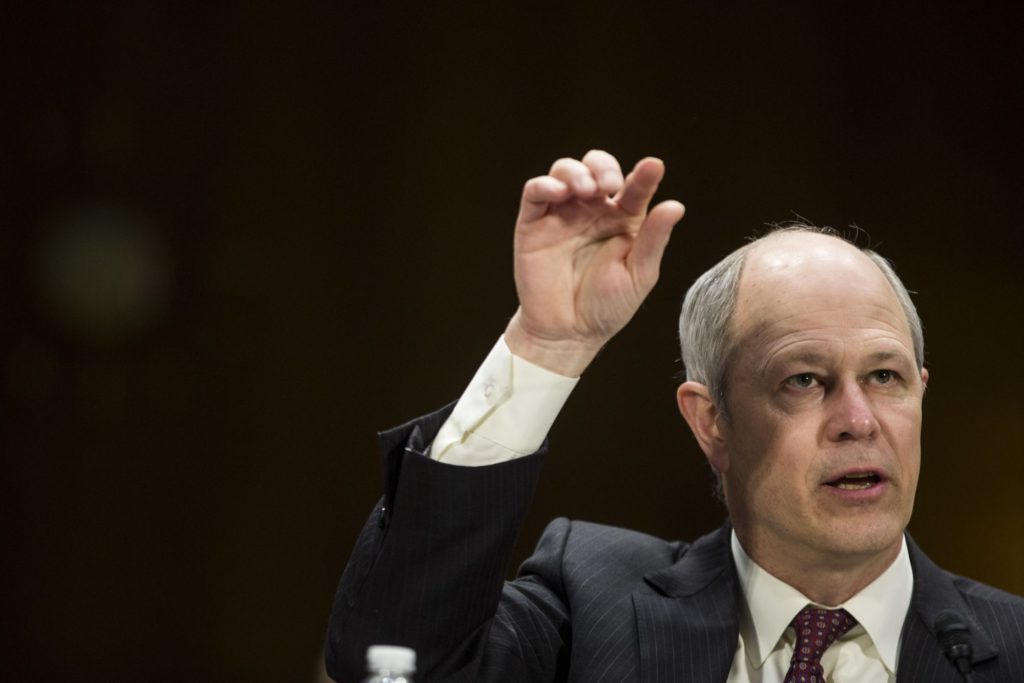
Carlyle Group Is in Advanced Talks to Buy US Government Contractor ManTech International 

(Bloomberg) — Carlyle Group Inc. agreed to acquire ManTech International Corp. in a deal valuing the US government contractor at about $3.9 billion. 

The buyout firm will pay $96 per share in cash, according to a statement Monday, which confirmed an earlier Bloomberg News report. The offer represents a 32% premium to ManTech’s closing price on Feb. 2, the last trading day before reports on a potential sale of the company. 

Shares of ManTech jumped as much as 16% in pre-market trading Monday, hitting as high as $94.90. 

Carlyle and its peers have been sitting on mountains of dry powder, which they have been looking to deploy through mergers and acquisitions in a volatile stock market. Last year, Carlyle was part of a consortium buying medical supply company Medline Industries Inc. for more than $30 billion in one of 2021’s biggest M&A deals. 

Private equity has recently gravitated toward US government contractors with an information technology bent, as they provide a steady stream of recurring revenue. One of Carlyle’s competitors, Veritas Capital, has consolidated several of these companies, including Perspecta Inc. which it acquired in a $7.1 billion deal to merge into its portfolio company Peraton. 

Defense Work

ManTech, based in Virginia, provides IT services including analytics and cybersecurity, primarily to US defense and intelligence agencies. On May 4, it reported first-quarter net income of $31 million on revenue of almost $676 million. That compared with $32 million on $633 million in revenue the previous year.

The sale comes after the retirement of ManTech co-founder George Pedersen, whose family still owns a large stake in the company. Pedersen served as ManTech’s chief executive officer until 2018 and as chairman until 2020, before finally deciding to step down from the board completely in February. Reuters reported that month that Pedersen was exploring options for his stake as part of his estate planning.

“This announcement is an important milestone for ManTech and a testament to our growth and the leadership position we have built since our founding by George Pedersen more than 50 years ago,” ManTech Chairman Kevin Phillips said in the statement.

ManTech would be the latest listed company to leave public markets in what’s been a busy period for private equity takeovers. Dealmaking by buyout firms has been a bright spot this year, even as overall M&A slows compared to 2021’s record-breaking pace. 

Carlyle’s purchase of ManTech values the company at about $4.2 billion including debt, according to Monday’s statement. It has been unanimously approved by ManTech’s board and is expected to close in the second half of 2022. The transaction will be subject to approval by ManTech shareholders as well as regulatory clearance, ManTech said.

Robert W. Baird & Co. advised Carlyle on the deal, while ManTech worked with Goldman Sachs Group Inc. 

(Updates with pre-market trading in third paragraph)

More stories like this are available on bloomberg.com

©2022 Bloomberg L.P.

Carlyle Agrees to Buy US Government Contractor ManTech for $3.9 Billion 

(Bloomberg) — Carlyle Group Inc. agreed to acquire ManTech International Corp. in a deal valuing the US government contractor at about $3.9 billion. 

The buyout firm will pay $96 per share in cash, according to a statement Monday, which confirmed an earlier Bloomberg News report. The offer represents a 32% premium to ManTech’s closing price on Feb. 2, the last trading day before reports on a potential sale of the company. 

Shares of ManTech jumped as much as 16% in pre-market trading Monday, hitting as high as $94.90. 

Carlyle and its peers have been sitting on mountains of dry powder, which they have been looking to deploy through mergers and acquisitions in a volatile stock market. Last year, Carlyle was part of a consortium buying medical supply company Medline Industries Inc. for more than $30 billion in one of 2021’s biggest M&A deals. 

Private equity has recently gravitated toward US government contractors with an information technology bent, as they provide a steady stream of recurring revenue. One of Carlyle’s competitors, Veritas Capital, has consolidated several of these companies, including Perspecta Inc. which it acquired in a $7.1 billion deal to merge into its portfolio company Peraton. 

Defense Work

ManTech, based in Virginia, provides IT services including analytics and cybersecurity, primarily to US defense and intelligence agencies. On May 4, it reported first-quarter net income of $31 million on revenue of almost $676 million. That compared with $32 million on $633 million in revenue the previous year.

The sale comes after the retirement of ManTech co-founder George Pedersen, whose family still owns a large stake in the company. Pedersen served as ManTech’s chief executive officer until 2018 and as chairman until 2020, before finally deciding to step down from the board completely in February. Reuters reported that month that Pedersen was exploring options for his stake as part of his estate planning.

“This announcement is an important milestone for ManTech and a testament to our growth and the leadership position we have built since our founding by George Pedersen more than 50 years ago,” ManTech Chairman Kevin Phillips said in the statement.

ManTech would be the latest listed company to leave public markets in what’s been a busy period for private equity takeovers. Dealmaking by buyout firms has been a bright spot this year, even as overall M&A slows compared to 2021’s record-breaking pace. 

Carlyle’s purchase of ManTech values the company at about $4.2 billion including debt, according to Monday’s statement. It has been unanimously approved by ManTech’s board and is expected to close in the second half of 2022. The transaction will be subject to approval by ManTech shareholders as well as regulatory clearance, ManTech said.

Robert W. Baird & Co. advised Carlyle on the deal, while ManTech worked with Goldman Sachs Group Inc. 

(Updates with pre-market trading in third paragraph)

More stories like this are available on bloomberg.com

©2022 Bloomberg L.P.
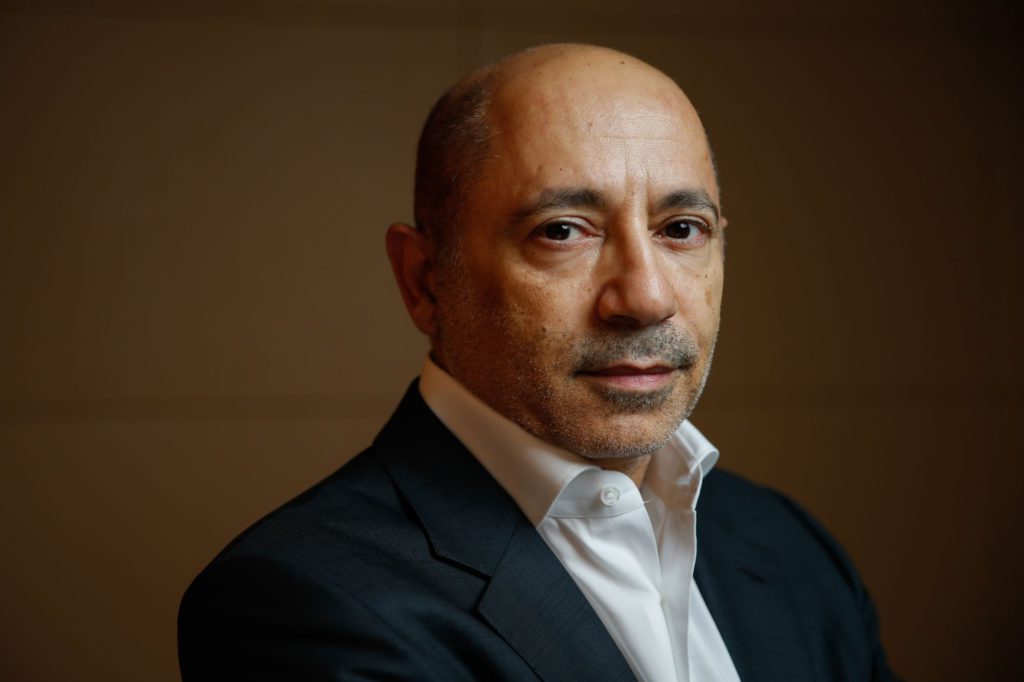
Turk Telekom License Extension Planned Before Likely Sale

(Bloomberg) — Sign up for our Middle East newsletter and follow us @middleeast for news on the region.

Turkey is planning to extend the main license of Turk Telekom after the nation’s sovereign wealth fund obtained a controlling stake in the telecom giant, paving the way for a possible stake sale.

The sovereign wealth fund, formally known as Turkiye Varlik Fonu Yonetimi AS or TVF, is working on the extension with regulators and the ministry of communications, according to people with direct knowledge of the matter.

A renewed license beyond 2026 February expiry would boost the company’s value and could be followed by a secondary public offering or a direct stake sale, the people said, asking not to be identified as the deliberations are confidential. 

Turk Telekom declined to comment. TVF and the ministry weren’t immediately available for comment.

Turk Telekom surged as much as 5.3% to 9.76 liras in Istanbul, the most since April 25, after reversing earlier losses. It was up 4% to 9.64 liras as of 3:35 p.m. local time.

Turkey Set to Borrow Around $1.6 Billion for Turk Telekom Buyout

The planned licensing serves the TVF objective to raise Turk Telekomunikasyon AS’s market capitalization after it fell behind competitors since going public. The company’s enterprise value is 3.9 times its earnings before interest, tax, depreciation and amortization, compared to 5.8 for peers in Europe, according to data compiled by Bloomberg. 

A restructuring of the operator to separate the wholesale arm that owns Turkey’s largest fiber network of more than 360,000 kilometers (about 224,000 miles) from the retail business is also being studied, said the people. 

In January, TVF chief executive Arda Ermut said they were weighing whether to establish a separate infrastructure company to offer equal access to all operators.

“One of the most important motivations for the acquisition of Turk Telekom by Turkey wealth fund is to speed up infrastructure investments and to create an environment to the benefit of all operators in the sector,” the wealth fund said in response to Bloomberg’s questions. 

The wealth fund, headed by President Recep Tayyip Erdogan, also bought a controlling stake in Turkey’s biggest telecom operator Turkcell Iletisim Hizmetleri AS in 2020, marking the biggest step in a the re-nationalization of the country’s telecommunications industry. 

Vodafone Group Plc’s local business is the only domestic operators left in private hands. TVF, which also owns companies such as Turkish Airlines, state pipeline company Botas and state oil and gas producer TPAO, is exempt from antitrust regulations. 

(Adds share price in fifth paragraph, conversion in seventh.)

More stories like this are available on bloomberg.com

©2022 Bloomberg L.P.

Ant Completes China Tech Sector’s First ESG-Linked Loan Deal

(Bloomberg) — Ant Group Co. has completed the first sustainability-linked loan arrangement in China’s tech sector.

The Chinese fintech company spun off from Alibaba Group Holding Ltd. has arranged a sustainability-linked revolving credit line with French bank BNP Paribas SA, according to a statement Monday. Sustainability-linked loans (SLLs) have interest rates that change depending on if corporations are able to meet certain environmental goals. 

Ant and BNP Paribas declined to disclose the size of the credit facility. The deal is the first-ever sustainability-linked loan in China’s technology sector, according to BNP Paribas China. 

Although China likes to tout its status as one of the world’s biggest issuers of green bonds, sustainability-linked loan volume among Chinese firms has grown at a slower pace compared to regional peers. Australia and Singapore were the top markets for SLLs in 2021, according to Bloomberg-compiled data.

For Ant’s sustainability-linked credit facility, the company’s adherence to targets around using renewable energy and donating a percentage of revenue to environmental protection projects will be checked annually. If the targets are met, the interest rate on the loan will be lowered. 

While still viewed as a niche segment within sustainable finance, SLLs are growing quickly in the region. Such borrowing by Asian companies outside of Japan last year was $52.6 billion, more than six times that in 2020. Although SLL activity has fallen nearly 40% this year as inflation drags down fixed-income markets, agrochemicals company Syngenta Group (HK) Holdings Co. completed Asia’s biggest-ever sustainability-linked loan of $4.5 billion earlier this month.

More stories like this are available on bloomberg.com

©2022 Bloomberg L.P.
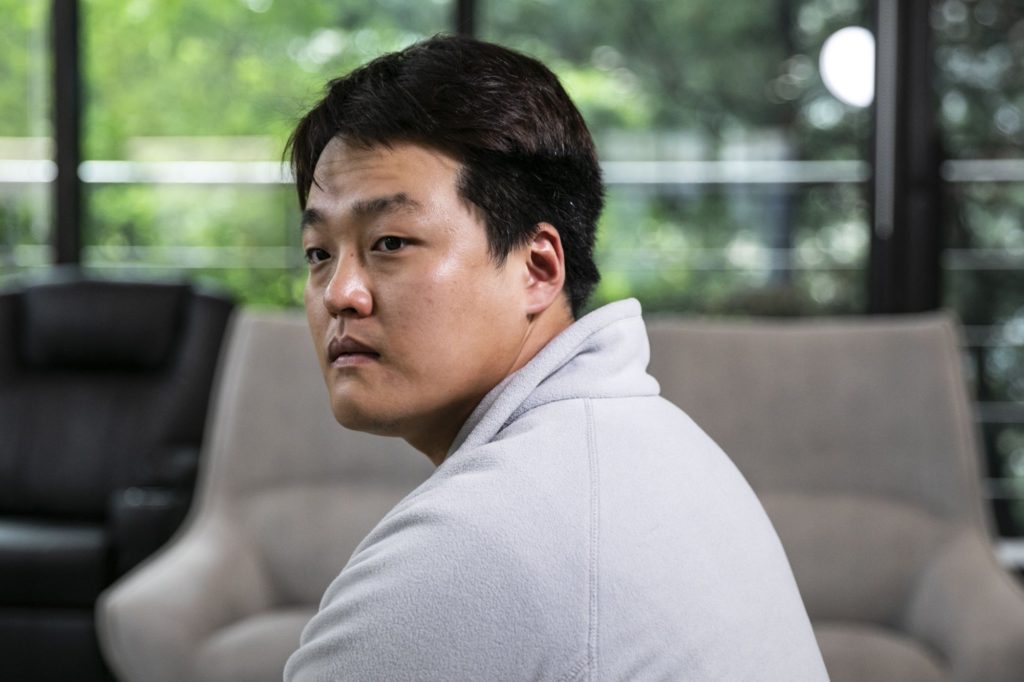
Goldman, Barclays Back Alan Howard’s Crypto Platform

(Bloomberg) — Goldman Sachs Group Inc. and Barclays Plc participated in a $70 million funding round of Elwood Technologies LLP, the cryptocurrency trading platform founded by billionaire Alan Howard, in a collaboration between crypto-native funds and traditional financial institutions.

The financing valued the company at over $500 million, according to a person familiar with the matter. Other investors include Dawn Capital LLP and units of Commerzbank AG and Galaxy Digital Holdings Ltd., the crypto merchant bank headed by billionaire Michael Novogratz, Elwood said in a statement.

While Elwood was founded in 2018 to meet the needs of institutions seeking exposure to digital assets, the platform is entering a new phase “to provide broader mass market involvement,” Chief Executive Officer James Stickland said in the statement.

Bloomberg, the parent company of Bloomberg News, has a partnership with Elwood that connects the crypto trading platform with Bloomberg’s order management system.

(Corrects founding year of Elwood Technologies)

More stories like this are available on bloomberg.com

©2022 Bloomberg L.P.
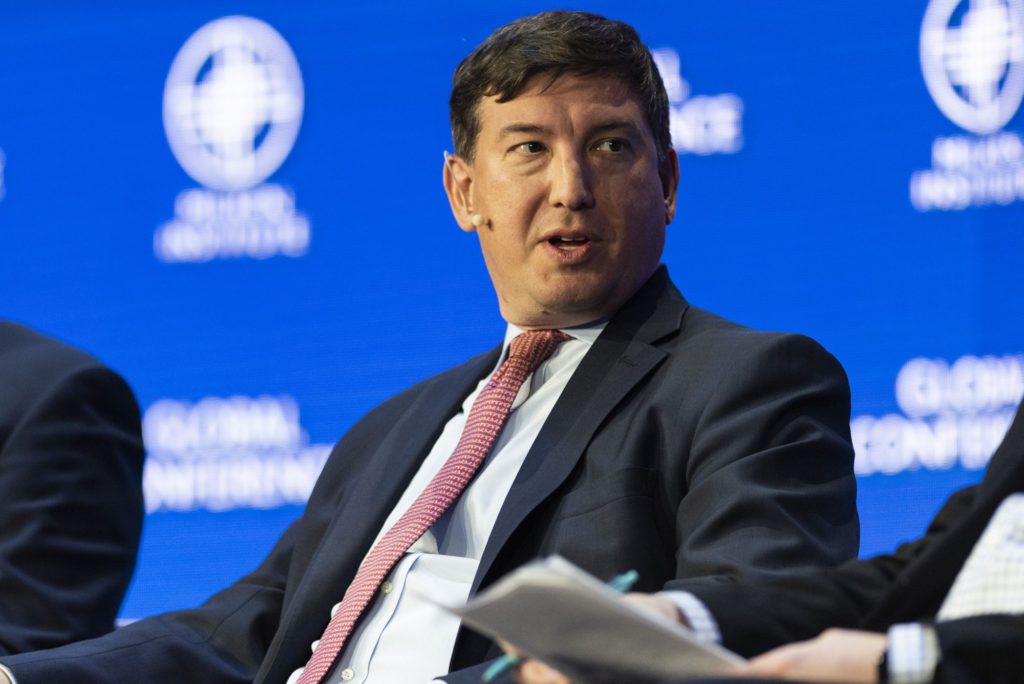
Deutsche Bank Gets WhatsApp Information Request From Regulator

(Bloomberg) — Deutsche Bank AG has been asked by one of its key supervisors to clarify how its staff use private messages for business purposes as regulators worldwide seek to curb the practice.

German financial watchdog BaFin is following up on indications that senior Deutsche Bank executives including management board members have been relying on messaging tools such as WhatsApp and private email accounts to conduct business, people familiar with the matter said. Bafin has asked the lender to provide information about how its employees use the communication methods to determine whether it has been in compliance with banking rules, the people said, asking not to be identified discussing the private matter.

BaFin’s information request comes amid industry-wide scrutiny from US regulators. It also adds to the regulatory headaches that have built up for Deutsche Bank’s Chief Executive Officer Christian Sewing, although he has spent billions of dollars trying to fix the bank’s controls and improve relations with supervisors since assuming his role four years ago. While the CEO has drawn a line under several big litigation risks, new issues keep cropping up and some proxy advisers are recommending shareholders withhold approval for the lender’s leadership at the annual general meeting on May 19.

Sewing himself has used WhatsApp in the past to communicate on issues related to the lender. At one point, he swapped messages with the German businessman Daniel Wruck, whose role in business deals involving Deutsche Bank and its investment arm DWS is now being probed by German investigators, the people said. That exchange was first reported by the Financial Times. 

“We do not comment on our dialog with regulators,” a Deutsche Bank spokesman said by email. A spokeswoman for BaFin declined to comment. 

Deutsche Bank has been clamping down on communications through private messaging tools since the beginning of the year. It has launched an internal investigation after the use of private emails by DWS CEO Asoka Woehrmann, attracted scrutiny, and it recently reminded employees that they shouldn’t delete business-related WhatsApps, Bloomberg News has reported.

The German lender has also begun rolling out a new technical solution that improves oversight of communications through private channels by recording and archiving conversations, one person said, confirming a previous Bloomberg story. The pilot program kicked off in late April and the software has been installed on the devices of 1,750 client-facing staff in the US, the person said. 

Deutsche Bank “responded at an early stage to indications that private short message services were being used for business communications in the industry and the board immediately initiated measures to ensure, in particular, the proper documentation of business transactions and compliance with retention requirements,” it said in a statement provided to Bloomberg. “We already started implementing technical solutions that enable employees to use short messages with cell phones for business communications in a better, more up-to-date manner and in line with legal requirements.”

US financial supervisors in December slapped $200 million in fines on JPMorgan Chase & Co. for failing to comply with rules requiring lenders to keep records of staff messages for regulatory scrutiny. Goldman Sachs Group Inc., HSBC Holdings Plc and Citigroup Inc., have since said they are being probed by US regulators over staffers’ communications as well. 

Swapping business-related messages through communication tools like WhatsApp or private email accounts can violate banking rules because regulators typically require lenders to archive the exchanges in case they need to review them at a later stage. Many banks have been struggling to strike a balance between that requirement and the popularity of messaging apps among staff, including at the highest levels of management.

More stories like this are available on bloomberg.com

©2022 Bloomberg L.P.
Cost of Failed UST Peg Defense: $2.9 Billion in Reserves Spent

(Bloomberg) —

The gigantic cost of the failed attempt to prop up the collapsed TerraUSD stablecoin is coming into clearer focus. 

The Luna Foundation Guard, the nonprofit set up by Terraform Labs to maintain TerraUSD’s peg to the dollar, burned through roughly $2.9 billion in cryptocurrency reserves since May 7 trying to stabilize the token, data compiled by Bloomberg based on figures released Monday on LFG’s unverified Twitter account show. 

LFG held 80,394 Bitcoin as of that day, before TerraUSD (UST) started dropping from its peg, it said in its tweet. Based on the May 7 closing price, the Bitcoin hoard was then worth $2.88 billion. LFG said it now holds 313 Bitcoin, worth about $9.3 million at current market prices. 

LFG also sold off holdings of the Tether and USDC stablecoins in its attempt to bring UST back to its dollar peg, according to its Twitter posting. UST is trading at below 10 cents, data compiled by Bloomberg show. LFG didnt’t immediately reply to an email seeking comment. 

In total, LFG’s crypto reserves stood at almost $3.2 billion on May 7, calculations based on the tweet show. The remaining reserves, worth about $236 million at current prices according to Bloomberg-compiled data, will be used to compensate UST holders, with the smallest ones first in line, LFG said. 

Read more: This Is How the Terra Stablecoin Actually Imploded

More stories like this are available on bloomberg.com

©2022 Bloomberg L.P.
Apollo to Buy Stake in European Life Sciences VC Firm Sofinnova

(Bloomberg) — Apollo Global Management Inc. is acquiring a minority equity interest in Sofinnova Partners, a European venture capital firm that invests in life sciences companies.

The alternative asset manager will commit as much as 1 billion euros ($1.04 billion) in managed capital to Sofinnova’s investment funds, according to a statement obtained by Bloomberg News. 

As part of the deal, Sofinnova will get access to Apollo’s global investment platform, including the firm’s expertise in credit, equities, real estate networks and capital markets, according to the statement. 

Apollo will also get a stronger foothold in life sciences, which Scott Kleinman, co-president of Apollo, called a significant growth area for the firm. 

“Having the Sofinnova expertise to help us do better diligence is really powerful,” Kleinman said in an interview. He added that there’s potential for the two firms to develop products together. 

Apollo owns health-care assets like drugmaker Covis Pharma. 

Besides life sciences, Apollo has identified several areas including financial technology, and software, where it can find opportunities to partner with other funds. Under a similar model, it invested in fintech specialist Motive Partners last year. 

Life-sciences Push

Apollo’s investment is part of a broader industry trend in which private equity firms are buying or partnering with earlier stage life science investors: Carlyle Group Inc. said in April it agreed to buy Abingworth, a life sciences investment firm, while EQT AB in November said it was buying LSP, a life sciences venture capital firm.

“You can sense the desire of everyone — the pharma industry on one end and the big asset managers on the other– to massively increase their exposure to life sciences,” Antoine Papiernik, chairman and managing partner of Sofinnova, said in an interview. 

Neil Mehta, an Apollo partner and global head of strategy, will get a board seat at Sofinnova. 

Sofinnova, founded in 1972, has offices in Paris, London and Milan. It was an early investor in Swiss biotech Actelion Ltd. which eventually sold to Johnson & Johnson for $30 billion in 2017. 

Papiernik added that the firm had been searching for a partner that could help it grow and add resources while still leaving it independent. 

Triago advised Sofinnova on the deal, while Guggenheim Partners worked with Apollo. 

More stories like this are available on bloomberg.com

©2022 Bloomberg L.P.

Itau Flips the Script on Fintechs as New CEO Reshapes the Bank

(Bloomberg) — Latin America’s biggest bank seemed to be losing the race against a raft of upstart fintechs when Milton Maluhy took over as chief executive officer last year.

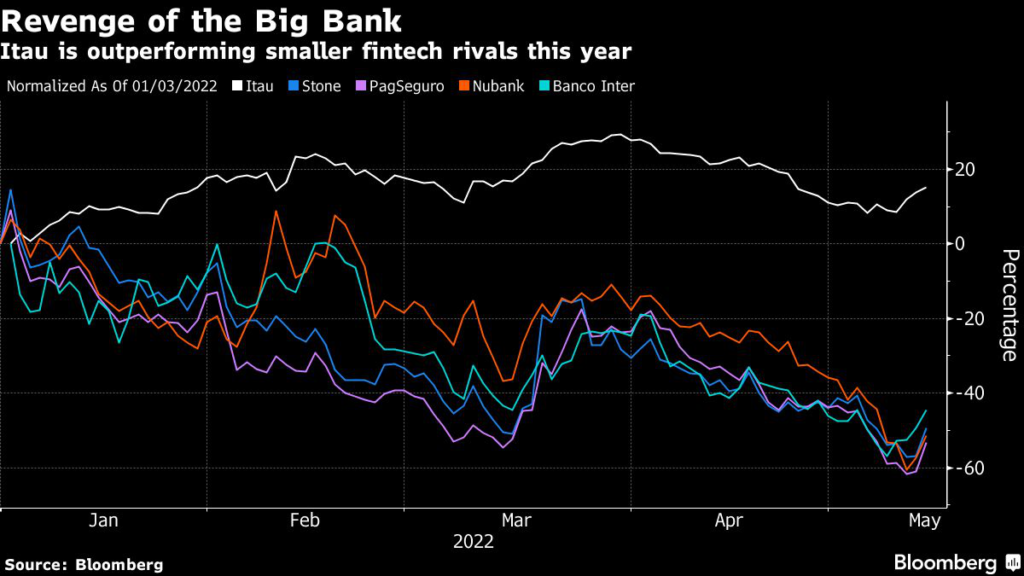
Itau Unibanco Holding SA had plunged almost 35% in the previous two years, shedding 130 billion reais ($25 billion) in market value, while digital competitors such as StoneCo Ltd. were soaring. Investors’ biggest fear was that Maluhy’s company would be left in the dust, a dinosaur that failed to keep pace with the digital revolution. 

It didn’t turn out that way. Rising interest rates and shrinking global liquidity are hammering away at fintech valuations, while industry stalwarts like Itau are seen as safer bets. And so, 15 months into the job, Maluhy can boast a rebounding share price that’s up 18% this year, rising dividends and a list of acquisitions the CEO says will modernize the almost 100-year-old banking giant. 

Meantime, financial-technology firms such as Stone and Nu Holdings Ltd. have tumbled as much as 50% this year on skepticism they can deliver on their promises of growth.

“High interest rates and lower demand for credit will require banks to have a lot of operational resilience,” Maluhy, 45, said in response to e-mailed questions, his first interview with international media since becoming CEO. “It will eventually favor those who accumulated more knowledge about the market and have a solid capital structure.”

Itau’s top executive, who started out at the bank in 2002 and has held jobs in everything from foreign exchange and treasury to credit cards, is pushing for even more changes — and he wants to move fast. 

“We need to build a simpler, more agile and efficient organization,” said Maluhy, who previously led turnarounds at Itau’s operations in Chile and Colombia. “Our focus is to speed up more and more this cultural and digital transformation.”

With that goal in mind, the bank is back hunting for acquisitions and partnerships. And it’s pursuing them aggressively: Analysts at Banco BTG Pactual SA said Itau is in “attack mode” in the technology sector.

While regulators have made clear they would bar outright purchases of financial institutions, the bank is finding ways to cut deals. Itau will shell out as much as 1 billion reais in a joint venture with Totvs SA, which offers software that helps companies manage their businesses. And it struck partnerships with Locaweb Servicos de Internet, a web-services provider, and Omie, which offers business-management programs for companies. 

The objective is to lead the process of digital transformation through investments and, above all, through a cultural change within the bank, Maluhy said.

Still, there are lingering questions about how the bank will fare against headwinds on the horizon.

“Stiffer competition in the fintech industry will remain a key fee risk for Itau, especially for its cards business,” said Diksha Gera, an analyst at Bloomberg Intelligence. Brazil’s ailing economy and political uncertainty will also weigh on growth, she said.

Maluhy, who is also a member of the Bloomberg New Economy Gateway Latin America advisory board, offered his views on other topics as well:

Brazil’s Outlook 

“The war in Ukraine has led to a spike in commodity prices, which means more inflation around the world,” Maluhy said. “But it also results in stronger economic activity in commodity-producing countries such as Brazil. 

“We believe that the central bank will have to raise the Selic rate even further to contain this new inflationary shock, and the backdrop of monetary tightening in the US only contributes in this direction. Rising US rates should put pressure on exchange rates in emerging markets.”

Plans for Latin America 

“Our biggest opportunity lies in expanding the operations we already have in Brazil and other Latin American countries,” he said. “We have operations in Chile, Colombia, Peru, Uruguay, Argentina and Paraguay, which are delivering results and showing important advances. 

“Our priority with international operations has been to generate value for our shareholders. Acquisitions outside Brazil, due to exchange-rate and tax asymmetry, tend to require a large allocation of capital, which negatively impacts the commitment to shareholders.”

Expenses

“Our focus is on efficiency, not simply cutting costs,” the CEO said. “Over the past few years, we’ve been reviewing how to best deploy our resources and adapting. Take the number of employees: At the end of 2018, we had 86,800 direct employees in Brazil. In December 2021, that number jumped to 87,340, with an emphasis on hiring technology professionals.”

Branches

“The brick-and-mortar bank branch has regained a significant role, and proved to be a valuable asset for us in serving our customers, especially in offering more complex and sophisticated products, such as real estate financing,” Maluhy said. “Our goal is to increasingly combine remote and physical service.”

Size and Scope

“Itau has the most complete portfolio of financial products and services on the market, larger than any other player, whether incumbent or fintech,” he said. “Our active customer base is robust, with nearly 60 million people and companies. We have around 3 trillion reais in assets under custody and 1 trillion reais in credit granted.” 

With around 70 petabytes of data, Itau “is on a journey of modernizing our systems and migrating to the cloud on a large scale,” he said.

More stories like this are available on bloomberg.com

©2022 Bloomberg L.P.

Futures Slip, Stocks Waver Amid Growth Concerns: Markets Wrap

(Bloomberg) — US equity futures slipped and stocks in Europe fluctuated as traders weighed China’s latest measures to support its economy after poor data fueled concerns about the outlook for global growth.

Contracts on the S&P 500 and Nasdaq 100 dropped, but were off their session lows. Twitter Inc. shares declined in pre-market trading, on course to wipe out all their gains since billionaire Elon Musk disclosed his stake in the social media platform. The Stoxx Europe 600 index fell as much as 0.8% before paring losses, with declines for tech and travel stocks offsetting gains for basic resources as industrial metals rallied.

China’s industrial output and consumer spending hit the worst levels since the pandemic began, hurt by Covid lockdowns. Officials are taking measured steps to help the economy: China effectively cut the interest rate for new mortgages over the weekend to bolster an ailing housing market, but the one-year policy loan rate was left unchanged Monday.

The risk of an economic downturn amid price pressures and rising borrowing costs remains the major worry for markets. Goldman Sachs Group Inc. Senior Chairman Lloyd Blankfein urged companies and consumers to gird for a US recession, saying it’s a “very, very high risk.” Traders remain wary of calling a bottom for equities despite a 17% drop in global shares this year, with Morgan Stanley warning that any bounce in US stocks would be a bear-market rally and more declines lie ahead.

“Trying to time the market is likely to prove time-consuming and loss-making,” said Mark Haefele, chief investment officer at UBS Global Wealth Management. “Investor sentiment is fickle, and markets are likely to remain choppy until we get greater clarity on the three Rs: rates, recession, and risk.”

In the bond market, the 10-year US yield was little changed around 2.93%. A key question is whether economic worries will help stem this year’s Treasury selloff, which has been driven by inflation and tightening US monetary settings. Yields on European bonds rose.

Cryptocurrencies dipped as the mood in stocks weakened. That took Bitcoin back to around the $30,000 level.

Energy Costs

Food and fuel prices are feeding into rising costs. Wheat jumped by the exchange limit on India’s move to curb exports. Oil was dented by the Chinese figures but held around $110 a barrel. Shanghai is close to the necessary threshold for loosening its six-week lockdown, a development that could spur bets on rising energy demand.

Meanwhile, the European Commission warned the euro area’s pandemic recovery would almost grind to a halt, while prices would surge even more quickly if there are serious disruptions to natural-gas supplies from Russia.

Traders are watching efforts by Finland and Sweden to join the North Atlantic Treaty Organization in the wake of Russia’s invasion of Ukraine. The shift in Europe’s security alliance could exacerbate tensions with Russia.

What to watch this week:

  • New York Fed President John Williams speaks Monday
  • Fed Chair Jerome Powell among slate of Fed speakers Tuesday
  • Reserve Bank of Australia releases minutes of its May policy meeting Tuesday
  • G-7 finance ministers and central bankers meeting Wednesday
  • Eurozone, UK CPI Wednesday
  • Philadelphia Fed President Patrick Harker speaks Wednesday
  • China loan prime rates Friday

Some of the main moves in markets:

Stocks

  • Futures on the S&P 500 fell 0.3% as of 6:56 a.m. New York time
  • Futures on the Nasdaq 100 fell 0.5%
  • Futures on the Dow Jones Industrial Average fell 0.1%
  • The Stoxx Europe 600 fell 0.2%
  • The MSCI World index was little changed

Currencies

  • The Bloomberg Dollar Spot Index was little changed
  • The euro rose 0.2% to $1.0433
  • The British pound was little changed at $1.2255
  • The Japanese yen fell 0.1% to 129.35 per dollar

Bonds

  • The yield on 10-year Treasuries was little changed at 2.92%
  • Germany’s 10-year yield advanced five basis points to 1.00%
  • Britain’s 10-year yield advanced four basis points to 1.78%

Commodities

  • West Texas Intermediate crude fell 0.9% to $109.49 a barrel
  • Gold futures fell 0.3% to $1,802.40 an ounce

More stories like this are available on bloomberg.com

©2022 Bloomberg L.P.

Close Bitnami banner
Bitnami