Bloomberg

Australia’s Slow Warming to Electric Cars May Get Election Boost

(Bloomberg) —

One of the world’s biggest laggards in electric vehicle adoption, Australia, is finally warming to the idea.

On the campaign trail three years ago, Prime Minister Scott Morrison famously told car-loving Australians that EVs were too feeble to tow trailers and boats. Battery-powered cars would be the death of the weekend, he warned.

Back then, not even one in every hundred new vehicles in Australia was electric, and it was rare to spot one on Sydney’s roads. Even tractors outsold them almost 2-to-1, and Morrison went on to claim an unexpected election victory.

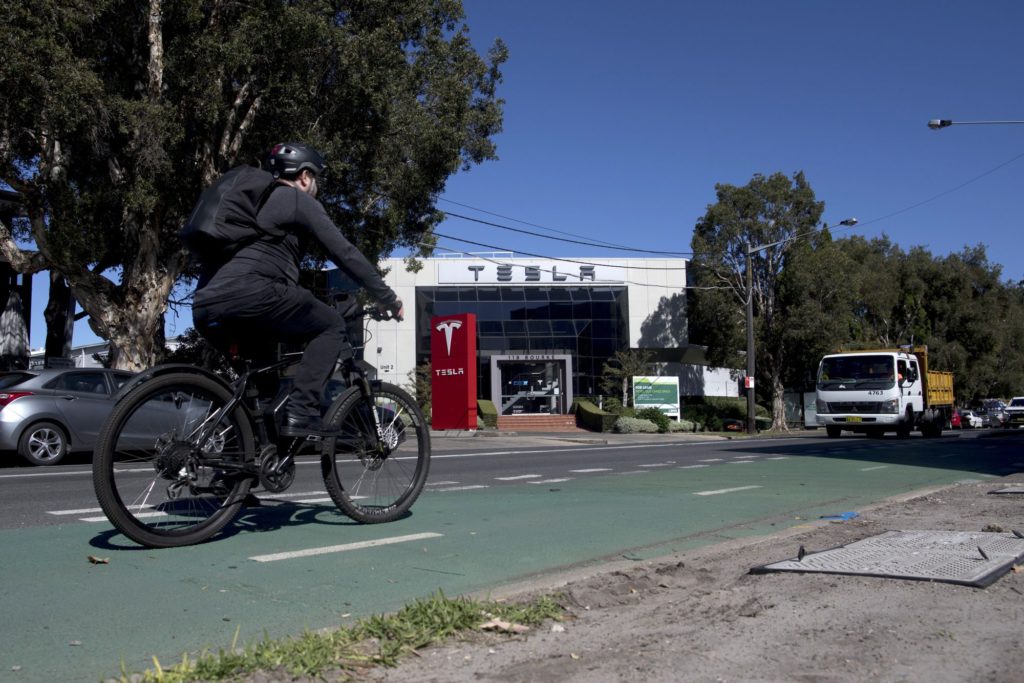
The picture is changing. EV sales in Australia are soaring — led by the almost-ubiquitous Tesla Model 3 — and more brands and models are arriving in the market. A national election on Saturday could prove pivotal: Morrison, who has ruled out subsidies for electric cars, trails in opinion polls. The opposition Labor party, meanwhile, is offering tax exemptions on many EVs.

A surge in demand saw electric vehicle sales in Australia triple last year, to about 20,665, and hasn’t relented in 2022, according to Behyad Jafari, chief executive officer of the Sydney-based Electric Vehicle Council. Politicians now know better than to dismiss EVs out of hand, and a change in government might push adoption closer to global standards, he told me last week.

“A fresh set of eyes could only be more helpful,” Jafari said. “No one dares to be hostile to electric vehicles anymore. The trend is moving in our direction.”

Morrison’s federal government has said its A$250 million ($172 million) Future Fuels Fund should deliver EV charging infrastructure to 50,000 households and fund 1,000 public-charging stations. But there’s no sign of financial support for EV purchases.

Labor is also pledging cash for charging stations on Australian highways, and is going a step further. The party plans to exempt many electric cars from a 5% import tariff, as well as a 47% tax on EVs that are provided by employers to staff for private use.

While Morrison once derided EVs for political gain, Labor leader Anthony Albanese is promoting them to try and win votes. Last month, he visited Tritium, a Brisbane-based maker of fast-chargers for EVs. He called the Nasdaq-listed company, which has a market value of about $1.4 billion, a “great Australian success story.”

Still, plug-in vehicles make up only 2% of all new-car sales in Australia, industry data show. That’s way behind a global average of 13% in the final three months of 2021, and a tiny fraction of the market share in leading adopters like China, Norway and Sweden.

Australia also lacks fuel-efficiency standards that could evict the most polluting vehicles from the market and make more room for EVs. That’s led carmakers to prioritize other nations for new models, meaning those who do switch to electrics face limited choice and need patience — wait times for some deliveries run to months.

Even if there isn’t a change in the national government this weekend, political winds are shifting. Last week, Western Australia announced A$3,500 rebates on EV purchases. That means every Australian state and territory, including the most populous, New South Wales, now has announced some form of EV subsidy, incentive or tax exemption.

Like getting this newsletter? Subscribe to Bloomberg.com for unlimited access to trusted, data-driven journalism and subscriber-only insights.

More stories like this are available on bloomberg.com

©2022 Bloomberg L.P.

JPMorgan Analysts Behind ‘Uninvestable’ Call Upgrade China Tech

(Bloomberg) — JPMorgan Chase & Co. analysts are turning more positive on Chinese Internet stocks, upgrading at least 15 companies just two months after their bearish report on the industry triggered a market selloff and a bout of internal hand-wringing at the biggest US bank.

Analysts led by Alex Yao raised their ratings on companies including Tencent Holdings Ltd. and Alibaba Group Holding Ltd. on Monday, a move that’s likely to raise eyebrows on Wall Street after reports from the team in mid-March called the sector “uninvestable.”

That word was supposed to be removed from the March reports before publication, but slipped through in several cases because of an editorial error, people familiar with the matter said earlier this month. The evocative label helped erase about $200 billion from U.S. and Asian markets and prompted one Chinese technology company to downgrade JPMorgan’s underwriting role on an initial public offering.

Read more: JPMorgan’s ‘Uninvestable’ Call on China Was Published in Error

Monday’s upgrades mark the latest twist in a drama that has highlighted the tough balancing act facing banks as they try to expand their businesses in China while still giving clients access to candid research on the country’s turbulent markets. Internet stocks have been particularly volatile of late as investors weigh the severity of China’s clampdowns on the industry and the impact of strict Covid Zero lockdowns in cities like Shanghai.

“Significant uncertainties facing the sector should begin to abate on the back of recent regulatory announcements,” Yao and his colleagues wrote in their May 16 note. Shares of Meituan, NetEase Inc. and Pinduoduo Inc. were also among those upgraded to overweight from underweight. 

Yao’s team said its bearish view in March reflected the first of a three-stage-cycle. The second phase — where the selloff abates and share prices stabilize — has arrived earlier than expected, the analysts wrote. They added that risk appetite could remain low and it may be difficult for speculative growth names to outperform.

The Nasdaq Golden Dragon China Index hit its closing low for the year on the day of JPMorgan’s March report and at one point rallied more than 50%. It has since given up some of those gains amid persistent worries about regulatory risks and Federal Reserve interest-rate hikes.

Policy developments since mid-March have been supportive, diminishing risks related to regulation, the potential delisting of American depositary receipts and geopolitics, the JPMorgan analysts wrote. They mentioned a March 16 meeting led by China’s Vice Premier Liu He, where authorities vowed to ease their crackdown on the tech sector, as one of the key triggers behind the change in view.

The analysts added that they still expect “significant downside risk” to consensus earnings for the second quarter for some stocks including Meituan and Alibaba as Covid containment measures take a toll on Chinese businesses. 

Investor concerns over the impact of China’s lockdowns remain high, with the latest data showing significant damage to the broader economy.

(Adds background from first paragraph.)

More stories like this are available on bloomberg.com

©2022 Bloomberg L.P.

Video Shows Beijing College Students Protesting Covid Curbs

(Bloomberg) — Video shared on social media appears to show students at one of China’s top universities protesting pandemic restrictions in the country’s capital, a sign of mounting frustration with President Xi Jinping’s zero-tolerance Covid-19 policy. 

A video posted on Twitter by John Alekna, an assistant professor at Peking University according to his Twitter and LinkedIn bios, purportedly showed a crowd of students gathered in a dormitory compound shouting “Same accommodation! Same rights!” 

Alekna tweeted that there was “deep unhappiness” at the Wanliu compound, an apparent reference to a residential area popular with students and staff at the university, one of the most competitive colleges in China. He wrote that “students have been locked up for weeks,” adding “more walls being built brought out a crowd — the construction may have been stopped.”

In a private social media chatroom for university alumni seen by Bloomberg News, members were discussing the incident Monday, which occurred the previous night. They said students at the compound had been barred by Covid restrictions from leaving the residential area, meaning they were cut off from the library, labs and social life on the main campus.

Bloomberg was unable to reach Alekna. Peking University didn’t immediately respond to a request for comment Monday morning.

Shanghai on Brink of Meeting Target to Ease Harshest Covid Curbs 

The Chinese capital has been stepping up restrictions in a bid to quell a small but persistent Covid outbreak. There were 39 new cases reported on Monday, down from 54 a day earlier, and another three rounds of mass testing were announced as infections continue to emerge from outside areas already under quarantine. 

Officials are intent on avoiding the chaos of Shanghai’s intensive, six-week lockdown which has seen pockets of unrest and pushback from residents angry at everything from food shortages to China’s policy of isolating all virus cases and the close contacts in government quarantine.

The video posted by Alekna is reminiscent of scenes in Shanghai, where clips of people protesting in housing compounds have been censored, and metal barriers have been erected to cordon off apartment buildings. In other parts of Beijing, once bustling streets were deserted.

Officials last week denied Beijing would be locked down as rumors spread the move was imminent, prompting long lines to form at supermarkets at people sought to stock up on groceries. Regions of the city have been cordoned off using a virtual “fence,” that restricts access for cabs and ride-hailing services. 

Virtual Fence in Beijing Curbs Cab Access to Covid-Hit Districts

Peking University students have historically held key roles in important demonstrations and political movements in China. They were among the leaders of the Tiananmen Square protest of 1989, which China’s government used the military to suppress. A large number of students marched from the university to the square to call for democratic reforms, among other issues.

(Adds Beijing’s case count for Monday in the sixth paragraph)

More stories like this are available on bloomberg.com

©2022 Bloomberg L.P.

DCP Capital Weighing Sale of $800 Million Electronics Firm MFS

(Bloomberg) — DCP Capital is considering selling its controlling stake in MFS Technology (S) Pte, a Singapore-based flexible printed circuit maker, according to people familiar with the matter.

The private equity firm is working with advisers to gauge interest from financial investors and other companies in the industry, the people said, asking not to be identified discussing a private matter. DCP could seek a valuation for the entire company of about $700 million to $800 million in a deal for the stake, they said.

Deliberations are preliminary and the owner could decide against a sale, the people said. A representative for DCP Capital declined to comment, while MFS Technology didn’t immediately respond to requests for comment on a public holiday in Singapore.

Founded in 1988, MFS Technology manufactures flexible printed circuit board units for automotive, industrial, medical and data storage use, according to its website. In addition to its Singapore headquarters, the firm has manufacturing operations in Malaysia and China and offices in Europe and North America. 

DCP Capital acquired a controlling stake in MFS Technology from Navis Capital Partners and Novo Tellus Capital Partners for an undisclosed amount in 2018, with BDA Partners advising the sellers.

More stories like this are available on bloomberg.com

©2022 Bloomberg L.P.

DOJ’s Kanter Shouldn’t Be Recused on Google Cases, Advocates Say

(Bloomberg) — A coalition of progressive advocacy groups urged the Justice Department to allow the agency’s top antitrust official to take part in antitrust cases against Alphabet Inc.’s Google and reject efforts to recuse him because of his previous work for critics of the search giant. 

Assistant Attorney General Jonathan Kanter has been barred from working on the agency’s monopoly investigations into Google while the Justice Department considers whether he should recuse from the probes, Bloomberg reported. 

Before joining the agency, Kanter represented Microsoft Corp., Yelp Inc. and other Google detractors. The search giant asked the Justice Department in November to look into whether he should be recused.

“Google’s demand that Mr. Kanter recuse himself from scrutiny of the company is an effort by a corporate giant to bully regulators into submission,” the groups said in a letter sent to the Justice Department Friday. “If the DOJ does not grant Mr. Kanter a waiver to continue to participate in scrutiny of the company, it will not only be bending to these petulant and dangerous tactics, but giving other powerful corporate actors incentive to engage in similar behavior.”

The agency has sued Google for allegedly illegally monopolizing the search market in a case set for trial in September 2023. The Justice Department is separately probing the search giant’s dominance in the online advertising industry.

The letter was signed by 28 organizations including the American Economic Liberties Project, an antitrust advocacy group; Progressive Democrats of America; and Our Revolution, an organization forged from Senator Bernie Sanders’ 2016 presidential campaign.

Senator Elizabeth Warren of Massachusetts, a progressive ally of Kanter’s, also called on the Justice Department to allow him to work on the Google cases. 

“Google’s naked attempts to bully law enforcement must be rejected, and the Justice Department should make it clear that no company is above the law,” she said in a statement last week.

More stories like this are available on bloomberg.com

©2022 Bloomberg L.P.

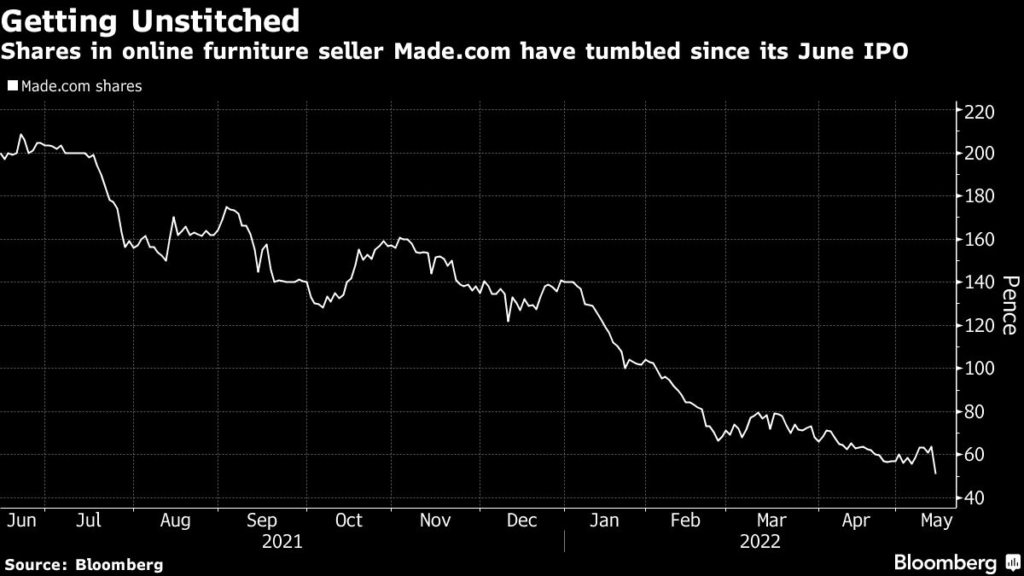
Made.com Plummets on Lower Guidance, Finance Chief Departure

(Bloomberg) — Made.com Group Plc shares plummeted after the UK online furniture retailer revised guidance for the year and said its chief financial officer is leaving.

Made said the start of the year has been worse than anticipated and it expects the market to remain “highly challenging” for the rest of 2022. 

The shares fell 20% Monday to the lowest since the IPO last year.

The cost-of-living crisis is already weighing on consumer confidence and non-essential retailers are likely to be the hardest hit. There’s also less demand for furniture and homewares as the pandemic eases and people spend more time outside the home. Global supply chain problems that have caused long lags in delivery times have heavily impacted the sellers of large ticket items, such as furniture. The overall online furniture and home market is down around 30% to 40% so far this year, the company said. 


Made’s chief financial officer Adrian Evans, who has been with the company since 2017, is leaving next month to be replaced by Patrick Lewis. Lewis is the great grandson of the founder of John Lewis Partnership Plc and spent much of his career at the department store retailer, most recently as CFO. 

It is the latest high-profile departure at Made after Chief Executive Officer Philippe Chainieux stepped down in February for family reasons. He was replaced by Nicola Thompson, chief operating officer. 

Made is now forecasting that gross sales in 2022 could drop as much as 15% or come in flat in a best-case scenario. It expects to achieve 1.2 billion pounds ($1.47 billion) of gross sales later than 2025 as previously targeted. 

The company, which earlier this month said it’s buying online marketplace Trouva, is set to be lossmaking this financial year, which is likely to raise concerns over the path to profitability into 2023, wrote analysts at Morgan Stanley.


More stories like this are available on bloomberg.com

©2022 Bloomberg L.P.

Yen, Supply Chain Chaos Send Japan Manufacturers Home

(Bloomberg) — Japanese manufacturers are increasingly looking to move offshore operations to their home market, according to a Tokyo Steel Manufacturing Co. executive.

The rapidly weakening yen that boosts the competitiveness of Japanese exports, global supply-chain constraints, geopolitical risks and shifting wages patterns are prompting the switch, Kiyoshi Imamura, a managing director of the steelmaker, said in an interview in Tokyo last week. 

Among those moving manufacturing to Japan are makers of everything from auto parts to cosmetics and consumer electronics, he said, with the trend expected to accelerate toward the end of this year.

According to Imamura, more Japanese companies are shifting operations out of China, Southeast Asia and Russia. The move to build new plants in their home country is fueling demand for steel used in construction, with the company receiving nearly 30 orders related to such switches, he said. 

“The yen has fallen so much that Japan’s trade balance won’t be back in the black — under such circumstances, companies judge it’s better to do manufacturing in Japan,” Imamura said. His company has seen orders for steel used in construction rise 10% so far this year, compared with a year earlier, he said.

The yen has declined about 11% against the US dollar since the start of the year, exacerbating rising prices for Japan’s imported commodities.

Even before the yen’s tumble this year, the Japanese government had been supporting relocation of domestic companies’ production bases back to the country. 

The Ministry of Economy, Trade and Industry is funding companies to assist them to invest in new plants that makes crucial products and materials to alleviate the risks of supply-chain bottlenecks. In November, the government also approved 774 billion yen ($6 billion) in funding for domestic semiconductor investment. 

“It might sound a bit bullish, but I think a little construction boom will come,” Imamura said at separate group briefing on Monday. The reshoring trend will last at least two to three years, according to the executive.

“Now that the yen has weakened, it’s no surprise more companies will work on boosting domestic production capacity,” Takayuki Homma, chief economist at Sumitomo Corp. Global Research Co., said in a separate interview. The falling yen, which was increasing export margins, was “offering an option to ship goods from Japan strategically,” he said. 

Surging labor costs in other nations are also a factor. Imamura said Japan’s wages have barely changed over the past 30 years, while wages in Southeast Asia have roughly tripled over the same period. 

Japanese manufacturers have shifted production outside Japan since the 1990s to tap into lower labor costs in Asia and stave off the impact of a strong domestic currency. Japan’s overseas production ratio climbed to a record of 37% in 2018 from 25% in 2001, according to data compiled by Japan Bank for International Corporation. 

Price Spikes

Takeshi Irisawa, an analyst at Tachibana Securities Co. in Tokyo, agreed the trend was a bright spot in Japan’s steel market. Still, he noted the country’s entire demand for steel used in construction was stagnant, and recent spikes in steel prices “will be a setback, making it a little difficult for the lower yen” to be a big driver for Japanese production in the short term.

The companies moving operations to Japan also face other hurdles, including high electricity costs and a shortage of labor due to the nation’s shrinking and aging population, said Homma. They will need to be innovative in both efficiently producing goods with fewer workers and coming up with value-added products. 

Imamura also said more nuclear power generation was essential to revive the competitiveness of manufacturing in the country. He joined calls by Japanese companies to quickly restart nuclear reactors that were idled after the Fukushima disaster more than a decade ago as the nation grapples with soaring energy costs.  

Read: Japanese Steel Producer Calls for Faster Nuclear Power Revival

(Updates with executive comments in ninth paragraph)

More stories like this are available on bloomberg.com

©2022 Bloomberg L.P.

More Than 180 Companies Say They’ve Been Hit by China Lockdowns

(Bloomberg) — China’s Covid Zero policy is having far-reaching effects on global companies, with automakers, tech firms, fashion houses and even breweries feeling the brunt as the country’s weeks-long lockdowns paralyze major industrial hubs and disrupt supply chains. 

More than 180 companies around the world have mentioned terms including “China” and “lockdowns” in their first-quarter earnings calls or financial statements, according to a Bloomberg News analysis of transcripts and filings. It’s a significant jump from fewer than 50 companies in the previous quarter, and the list is still growing as more firms report financial results in the days and weeks ahead. 

Automakers

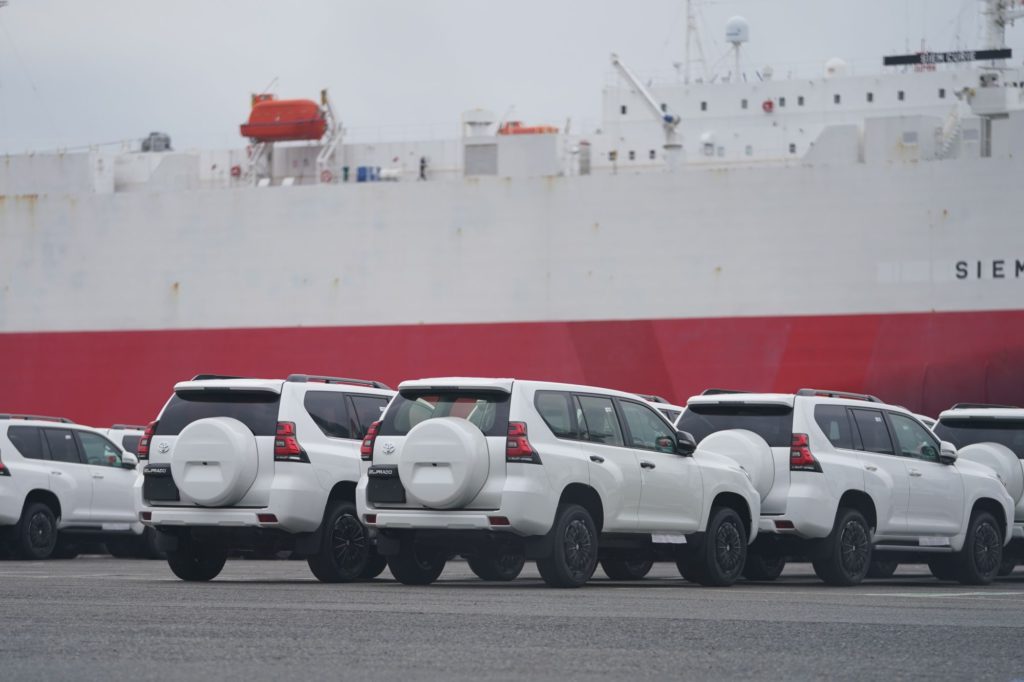
Toyota Motor Corp., based in Japan

  • Lowered May production plan to 700,000 vehicles from 750,000 due to lockdown impact
  • Suspended operations of some production lines in Japan from May 16-May 21 because of Shanghai lockdown

Tesla Inc., based in Texas

  • Shanghai plant closed down for three weeks in April. The factory, which typically ships around 60,000 cars a month, delivered only 1,512 vehicles last month
  • Logistics issues continued in May

Honda Motor Co., based in Japan

  • Operating profit for the year through March missed estimates due to challenges including China lockdowns and rising energy and material costs
  • One of the company’s domestic production lines stopped operation due to Shanghai lockdown
  • Expects to see impacts from restrictions to continue through the end of May

Tata Motors Ltd., based in India

  • Challenges including China lockdowns are expected to limit sales volume improvement in the June quarter, potentially resulting in negative free cash flow

Volkswagen AG, based in Germany

  • Lockdowns have put “a lot of pressure” on supply chains, slowed production and temporarily shut operations at suppliers; production is still at low levels in early May
  • China’s overall market recorded a decline in the first quarter, with deliveries falling 24%

Ford Motor Co., based in Michigan

  • Has about 50 key suppliers in Shanghai and had to spend “a lot of money” on securing premium freight and other channels to work around restrictions
  • Loss in China widened by $38 million in the quarter, wholesales decreased 15%, revenue fell 32%

Medical and Health Care

Dentsply Sirona Inc., a dental and medical equipment manufacturer based in North Carolina

  • China, which accounted for 5% of 2021 sales, represents more than half the regional headwinds facing the firm
  • Impact on sales in March and April to last throughout the year

Becton Dickinson & Co., a New Jersey-based medical device manufacturer

  • Growth in China, its second-largest market, halved last quarter
  • Impact of Covid restrictions could linger this quarter

Danaher Corp., a medical and industrial products manufacturer and services provider based in Washington, D.C.

  • Diagnostics branch saw patient volumes fall in China in the quarter and April as hospitals locked down and focused on Covid
  • Expects a headwind of 2% to 3% on second-quarter revenue growth

Zai Lab Ltd., a Shanghai-based pharmaceutical company

  • Firm likely to see difficulties in the second quarter in China due to “access difficulties” caused by restrictions

Illumina Inc., a California-based company that produces genetic analysis products

  • Firm expects headwinds from China — which accounts for 10% of revenue — to slow growth by 3% in second quarter
  • Greater China first-quarter revenue was flat as clinical demand in hospitals was offset by Covid restrictions

Zimmer Biomet Holdings Inc., an Indiana-based medical equipment manufacturer  

  • Net sales in Asia Pacific declined 13% last quarter, primarily due to the lockdowns

Zoetis Inc., a New Jersey-based animal medicines and vaccines developer  

  • Second-quarter top line to fall slightly from previous quarter as restrictions temporarily pressure day-to-day business in some supply chain activities

Fashion and Cosmetics

Shiseido Co., a cosmetics brand based in Japan

  • Sales in China plunged 21% year-on-year in the quarter mainly due to low store traffic
  • Some outlets were shut, while some others had opening hours cut short

LG Household & Health Care Ltd., a Korean household and personal care products manufacturer

  • Beauty businesses struggled to grow in the first quarter due to political and economic challenges in China, which accounts for half the segment’s sales
  • Sales of beauty products plunged 40% in the quarter as restrictions battered store traffic and travel retail channels
  • “China’s economy faced the worst downward pressure in years due to the Zero-Covid policy,” the company said in a May 11 statement. “The market contraction due to the strengthened lockdown measures in China is still continuing.”

Under Armour Inc., a clothing company based in Maryland

  • Store closures and restricted hours in China caused “significant reductions in retail traffic”
  • Lockdown measures also affected transportation, causing delivery delays
  • Challenges including Covid disruptions saw Asia Pacific revenue plunge 14% in the quarter

PVH Corp., an apparel company based in New York

  • China lockdowns and Hong Kong restrictions led to temporary store closures and pause of online deliveries

Home, Office and Other Consumer Products

Fujifilm Holdings Corp., a Japanese camera, imaging and document products provider

  • Delays in equipment supply and installation for its office solutions business due to partial shutdown of factories in China, tight supply of semiconductors and other parts, as well as logistics disruptions

Olympus Corp., a Japanese camera and imaging products manufacturer

  • Lockdowns, particularly in Shanghai, affected the group’s supply chain and global logistics flows

Sony Group Corp., a Japanese manufacturer of electronics products 

  • Cut its PlayStation 5 sales forecast to about 18 million units this fiscal year from a previous estimate of 22.6 million, citing supply-chain complications

Daikin Industries Ltd., a Japanese air conditioning equipment manufacturer  

  • Business in China was “greatly affected” by lockdowns in Shanghai and other cities
  • Some of the company’s suppliers in China that produce electronic components and semiconductors were out of operation until around April 20
  • Distribution center in Shanghai couldn’t distribute products to dealers across the country

Monster Beverage Corp., an energy drinks maker based in California

  • Net sales in China fell 8.9% in the quarter

Budweiser Brewing Co. Apac Ltd., based in Hong Kong

  • Firm was “disproportionately impacted” in March, with sales volume declining 4.3% as the company has a strong presence in provinces most affected by lockdowns
  • The firm, which has about 30 breweries across China, didn’t see significant supply chain disruptions as they are located close to its wholesalers
  • A couple of operations are running on the so-called closed loop environment, where workers are shuttled between factories and on-site or nearby accommodation each day instead of returning to their residences

Industrial Materials, Components

Minebea Mitsumi Inc., a Japanese manufacturer of parts and devices for telecommunications, aerospace, automotive and household electrical appliance industries

  • Missed operating income forecast in the electronic devices and components segment for the year through March, mainly due to shutdown of some plants in China and shortage of semiconductors
  • Shanghai factory production was particularly impacted in April and May

Microchip Technology Inc., an Arizona-based semiconductor maker 

  • Supply chain partners and some customers were “adversely impacted” in March, April and May
  • Had to redirect manufacturing activities and sourcing to other locations not affected by the lockdowns

Mettler-Toledo International Inc., an Ohio-based weight measuring equipment supplier

  • Its business and supply chain could be significantly affected, including Shanghai’s lockdown, where the company conducts manufacturing and some other businesses

Celanese Corp., a Texas-based chemical and specialty materials producer 

  • Plant near Shanghai was shuttered for a few weeks; some employees were locked down and had to work from home
  • While able to cover the affected production elsewhere, the firm saw more impact from problems around warehouses and logistics because materials weren’t getting in or out of ports in Shanghai

Micro-Star International Co., a Taiwanese computer parts manufacturer 

  • One Chinese subsidiary suspended operations from April 8 and only resumed recently

Novatek Microelectronics Corp., a Taiwanese circuit manufacturer  

  • Lockdowns in major Chinese cities have impacted demand for the firm’s products and disrupted its supply chain

SCG Packaging PCL, based in Thailand

  • Strict lockdowns in major cities led to disruptions at several seaports, factories and also in the supply chain
  • Packaging paper exports declined because of China’s economic slowdown

Fuji Seiki Co., a Japanese manufacturer of plastic molds and moldings systems

  • Delayed filing its first-quarter earnings report amid Shanghai lockdown
  • Employees at its Shanghai unit haven’t been able to go to work since April 1 and so weren’t able to prepare a financial statement for March

Aptiv Plc, an Ireland-based vehicle components manufacturer  

  • Locked down areas include regions where the company has operations, causing production interruptions which adversely affected sales and profitability

Parker-Hannifin Corp., an Ohio-based manufacturer of motion control products

  • Had a number of facilities fully shut down in China, resulting in an estimated $100 million impact on sales in the June quarter

Air Products & Chemicals Inc., a Pennsylvania-based manufacturer of gases

  • Restrictions have modestly impacted customer demand and plant efficiency, as well as increased supply chain costs
  • “We are very concerned about the potential impact of Covid-related restrictions in China” for the second-half, Chief Executive Officer Seifi Ghasemi said on a May 5 call

Waters Corp., a Massachusetts-based provider of liquid chromatography products and services

  • Lockdowns could have negative impact on sales growth if restrictions continue for a prolonged period

Ingersoll Rand Inc., a North Carolina-based firm which makes compression equipment 

  • Shanghai distribution center affected, although the plant has recently been allowed to resume work
  • The company, which relies on China for roughly 15% of sales, is taking “a prudent view” for the coming quarters

Nidec Corp., a manufacturer of small precision motors for commercial and industrial products

  • Sales of small precision motors declined sharply, with estimated lost revenue of about $47 million
  • Impact was particularly large at the end of March, because it had to close its factory for almost a week
  • Supply chain was “completely frozen” due to the closure; couldn’t make many big, last-minute sales in March

TE Connectivity Ltd., a Pennsylvania-based manufacturer of electronic components for the telecommunications, automotive, computer and aerospace industries

  • Lockdowns in China, which accounts for about 20% of sales, to lead to a headwind of about 3% on June-quarter sales
  • Factories in China aren’t operating at full production, and has encountered problems delivering products to customers

General Electric Co., a Massachusetts-based manufacturer of components for aircrafts, cars and energy industries

  • Hit both from demand and output perspectives last quarter, particularly by Shanghai lockdown

Avery Dennison Corp., a California-based maker of tickets, tags and labels

  • Shanghai lockdown could reduce materials business revenue by about $20 million

Logistics and Shipping

Expeditors International of Washington Inc., a logistics company based in Washington

  • The pandemic, including China lockdowns, disrupted supply chains which significantly affected operations and financial results
  • Seeing more vessels anchored at port, further reducing capacity and increasing dwell times at destination

Royal Caribbean Cruises Ltd., a Florida-based cruise company 

  • Has redeployed ships planned for China, which remains closed to cruising

More stories like this are available on bloomberg.com

©2022 Bloomberg L.P.

Vodafone CEO Gains Potential Ally With e&’s 9.8% Stake

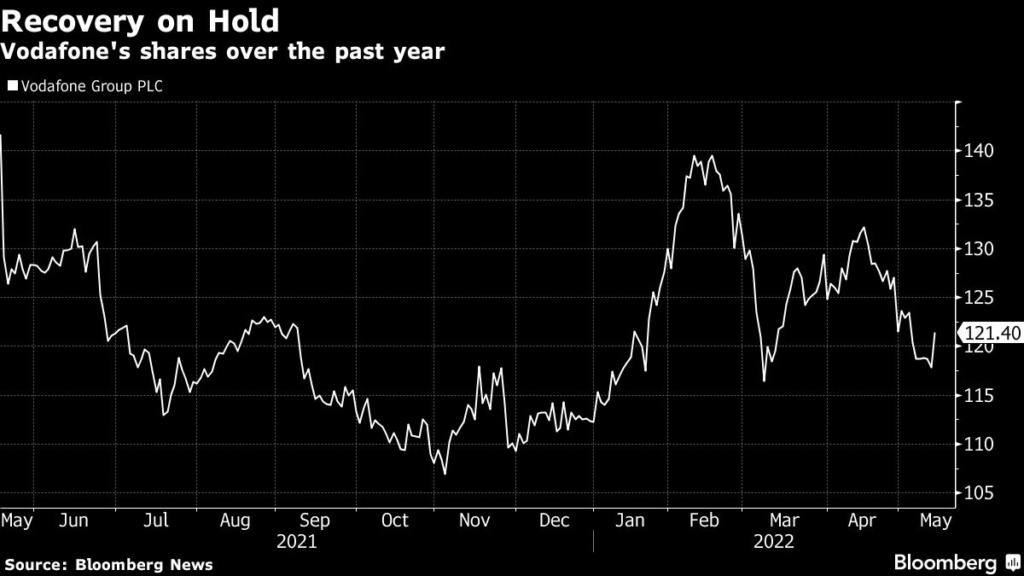
(Bloomberg) — Vodafone Group Plc shares halted their month-long slide after Emirates state-backed telecom firm e& bought a surprise 9.8% stake on Saturday, becoming the group’s largest shareholder.

The sudden arrival of Emirates Telecommunications Group Company PJSC — now known as e& — could tilt the scales in a growing debate about the phone group’s strategy. Vodafone Chief Executive Officer Nick Read is trying to consolidate in key markets while facing pressure from shareholders including Europe’s largest activist fund, Cevian Capital AB. 

A wealthy, supportive shareholder could give Read cover to reset expectations around investment and profits by supporting the share price, Jefferies analyst Jerry Dellis said. That could give him greater freedom to spend to upgrade its network — such as building fiber over and around Vodafone’s cable footprint in Germany. 

“We expect e& to counteract activist pressure, not add to it,” said Dellis in a note to clients. He noted e&’s CEO Hatem Dowidar previously worked at Vodafone for 17 years, including with Read. 

Vodafone shares rose as much as 4.2% in early trading in London on Monday, while shares in e& rose as much as 9.3%. On Saturday e& announced it had taken a $4.4 billion stake — offering about 130 pence ($1.59) a share, according to Bloomberg calculations. The price represents a premium of about 10% to Friday’s closing price for Vodafone shares, which have been trading at only about half of their 2018 high. Vodafone reports full-year results Tuesday. 

Read publicly said he is pursuing deals in the UK, Spain, Italy and Portugal. Since then, rival Orange SA clinched the biggest likely deal in Spain, Read turned down an offer for Vodafone Italy from Iliad SA, and previous talks with CK Hutchison Holdings Ltd. for a deal in Britain have yet to yield results.

Abu Dhabi-based e& said it is supportive of Read’s team and approach, isn’t seeking board seats, and it committed not to launch a takeover bid for the next six months. The Vodafone stake marks a change in e&’s strategy after it set out a plan earlier this year to diversify its investments across regions and currencies. 

Supportive or not, e&’s arrival may trigger new takeover concerns for Vodafone’s board, which recently added three directors with telecom, technology and regulatory experience. 

After e&’s standstill expires, its controlling shareholder, the UAE state, could easily find a way to fund a full acquisition, said New Street Research Analyst James Ratzer in a weekend note to clients. That would face political investigation by the UK, which has tightened takeover rules. 

Read’s biggest move since becoming CEO in October 2018 was to carve out and separately list Vodafone’s tens of thousands of mobile masts in the company Vantage Towers AG. That company now faces its own widespread expectations to consolidate with rivals like the mobile operator-owned tower rivals from Deutsche Telekom AG, Orange, or a pure specialist tower company like Cellnex Telecom SA. 

“Everybody in this sector is talking to everybody, I guess, but there’s nothing to announce in any way at this time,” said Vantage CEO Vivek Badrinath in an interview with Bloomberg. “Many of the combinations have a lot of virtues, the potential combinations that have been discussed,” he said, citing procurement synergies and consolidation of capital. 

Vantage is still 82% owned by Vodafone and reported results largely in line with expectations earlier on Monday, setting out expectations for 3% to 5% sales growth. 

(Updates with Vantage CEO comment in eleventh paragraph)

More stories like this are available on bloomberg.com

©2022 Bloomberg L.P.
Stagflation Risks Are Again Clouding a Global Market Rebound

(Bloomberg) — Fresh signs that major economies are slowing even as prices shoot higher cast a shadow over a nascent risk rally in global markets, just hours into the start of the new trading week.

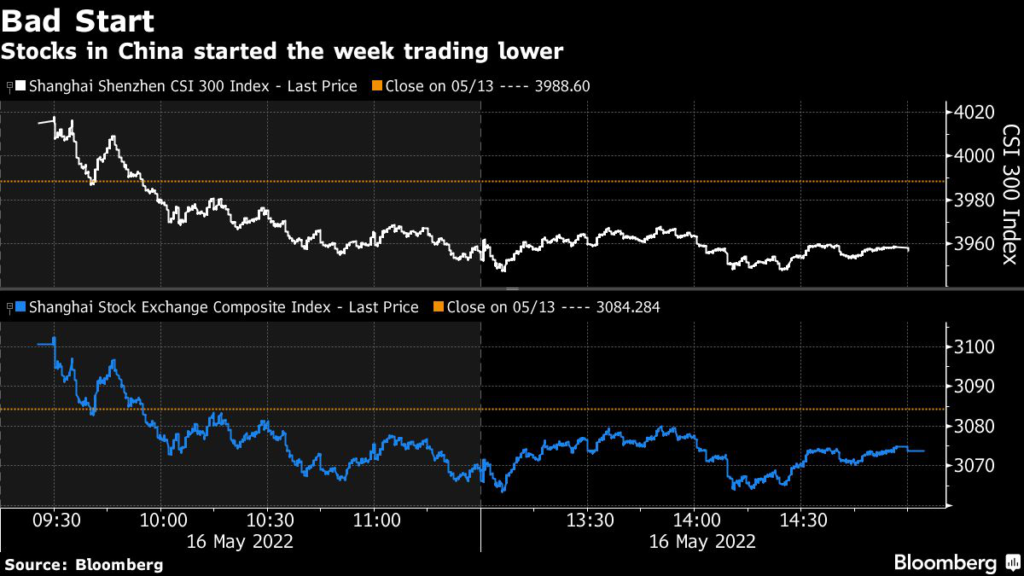
Equities reversed course and came off highs after Chinese economic data released Monday showed a sharp contraction as Covid lockdowns stung. Wheat jumped after India restricted exports, adding to broader commodity price pressure. 

In Japan, producer prices advanced at a double-digit pace for the first time in more than four decades. South Korean bonds fell after the central bank’s governor said a big interest rate-hike couldn’t be ruled out ahead.

Warnings about the fallout from faster inflation have grown louder. Bond market veteran Mohamed El-Erian said stagflation is the base line scenario for the US economy. Goldman Sachs Senior Chairman Lloyd Blankfein said a recession there is a “very, very high risk.” Analysts at the US bank have shifted their preference to better-rated Asian bonds over high-yield notes, citing concerns about headwinds for the global economy.

“The acceleration of the market pullback seems to indicate that investors are starting to anticipate a ‘hard-landing’ of the global economy,” said Charles-Henry Monchau, chief investment officer at Banque Syz in Geneva. “They fear that central banks will fail to tame inflation without triggering a recession or sharp economic downturn.”

Here’s what other market participants are saying:

Recession Talk

“The broad-based recession talk is the major catalyzer,” said Ipek Ozkardeskaya, a senior analyst at Swissquote. “Activity in US and European futures hint that Friday’s rebound was certainly nothing more than a dead-cat bounce.”

Means of Production

“In times like this, I would be steering away from rate-sensitive growth stocks, clearly, and stay with price makers, consumer staples and companies that generally control the means of production,” said Justin Tang, head of research at United First Partners.

Reducing Exposure

The data in China were “quite worrying,” Stephane Monier, chief investment officer at Banque Lombard Odier, said on Bloomberg TV. “In terms of investment for China, we have reduced our exposure in terms of fixed income and, more importantly, it is possible that the renminbi will reach 7 against the dollar at the end of the year.”

Increasingly Persistent 

“New shocks to global growth have led markets,” Barclays analysts including Themistoklis Fiotakis in a note to clients. “The China lockdown and the risk of a natural gas stand-off between Europe and Russia can potentially derail the closure of the activity gap between US and the rest of the world. These risks are becoming increasingly persistent.”

Spill-Over Watch

“The latest figures from China were notably weaker than expected, showing the impact of lockdowns was much bigger than markets had anticipated,” said Tomo Kinoshita, global market strategist at Invesco Asset Management. “We will have to see whether this will only affect China’s domestic demand or will have spill-over effects to other countries. That’s going to be a major focus for markets.”

(Adds chart)

More stories like this are available on bloomberg.com

©2022 Bloomberg L.P.
Close Bitnami banner
Bitnami